About this worksheet
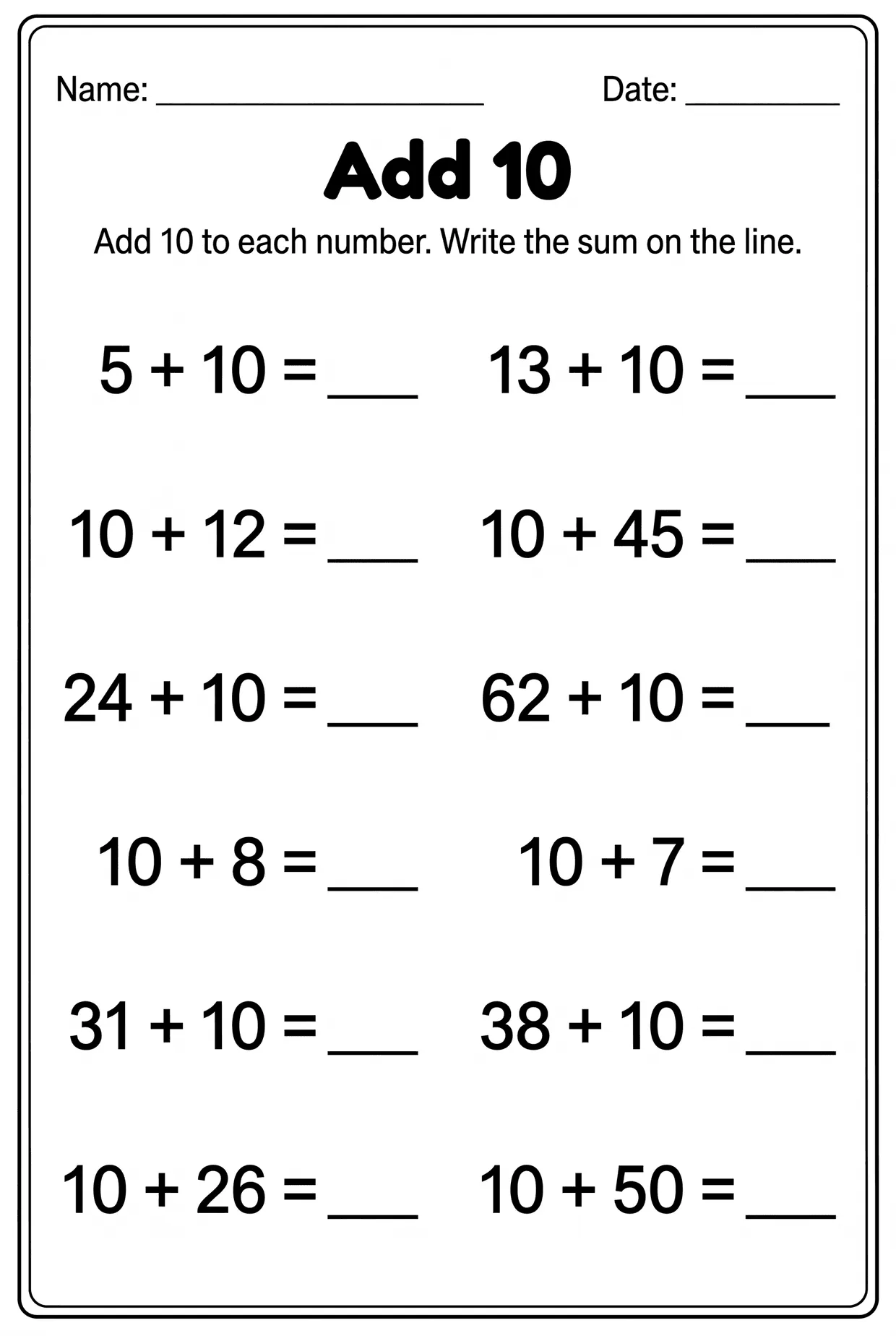
Twelve problems sit in two tall columns under the heading “Add 10,” each one asking the child to add ten and write the sum on the line. The numbers climb as they go: 5 and 13 at the top, then 24, 45, 62 and 50 further down. Ten sometimes comes first and sometimes second, so a child cannot fall into answering on autopilot.
This is the sheet where adding ten stops being counting and starts being a pattern. Once a child sees that 24 and 10 makes 34 because only the tens digit moved, the same trick carries them through most of the mental math in first grade. If your child is still counting up one at a time, cover the ones digit with a finger and ask what changed.
What students will practice
- Add ten to a one- or two-digit number
- Notice that only the tens digit changes
- Work without counting on from one
Details
- Grade level
- Grade 1
- Subject
- Math · Addition
- Standard
- CCSS 1.NBT.5
- Pages
- 1
- Format
- PDF · US Letter and A4 included
- License
- Free for classroom use · Attribution appreciated
- Last updated
- August 23, 2026