About this worksheet
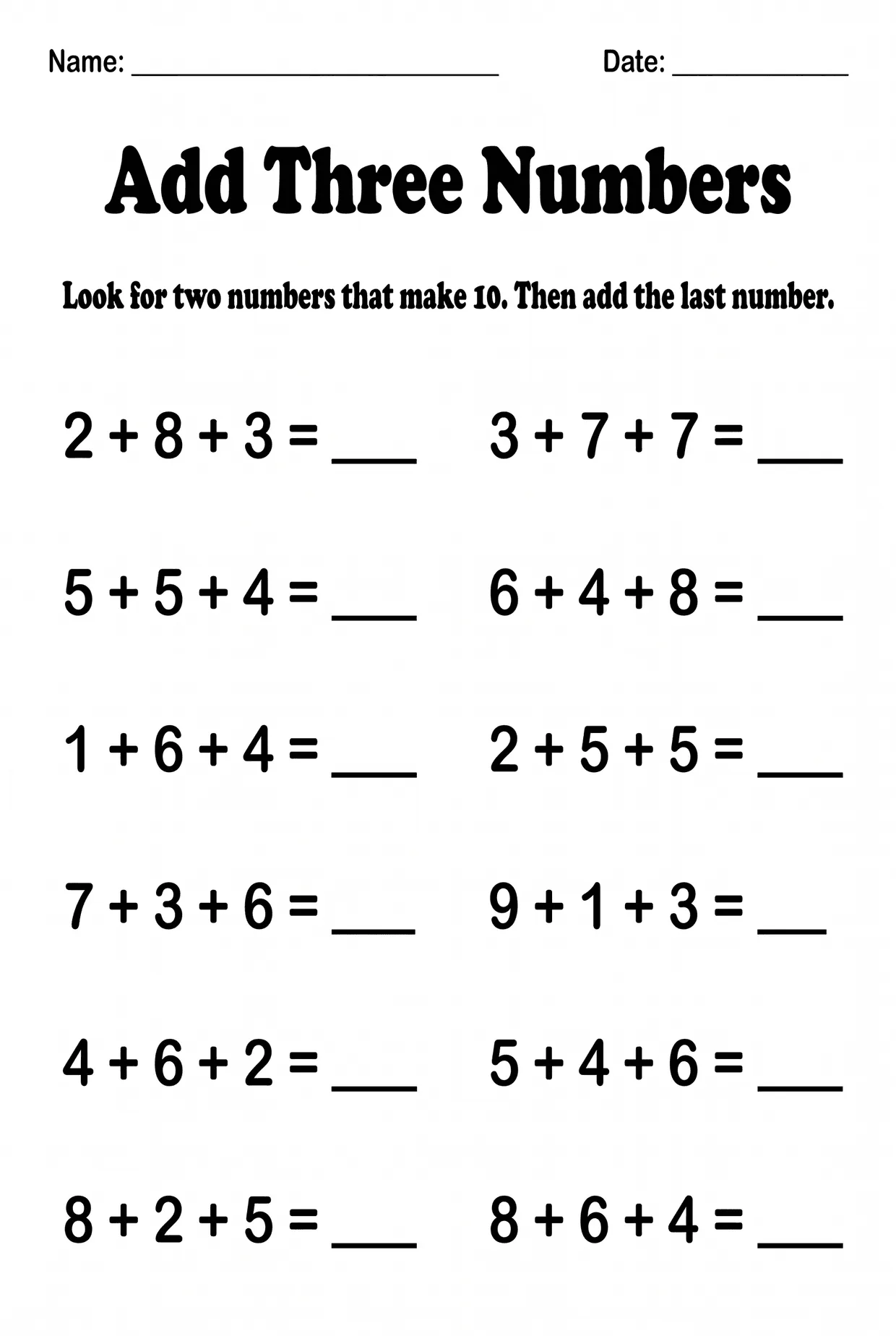
Twelve problems with three addends each, and every one of them hides a pair that makes ten. The instruction says so outright: look for two numbers that make 10, then add the last number. Some pairs sit side by side, as in 2 + 8 + 3, and others are split apart, as in 7 + 3 + 6 or 8 + 6 + 4, which is the harder and more useful case. Every sum lands between 11 and 18.
The point here is not really three-number addition, it is that addends can be rearranged. A child who finds the ten first turns a three-step problem into a one-step problem, and that habit pays off for years. Expect the split pairs to need a prompt the first time through.
What students will practice
- Add three whole numbers with sums to 20
- Spot a pair that makes ten
- Add in any order to make the work easier
Details
- Grade level
- Grade 1
- Subject
- Math · Addition
- Standard
- CCSS 1.OA.2
- Pages
- 1
- Format
- PDF · US Letter and A4 included
- License
- Free for classroom use · Attribution appreciated
- Last updated
- August 23, 2026