About this worksheet
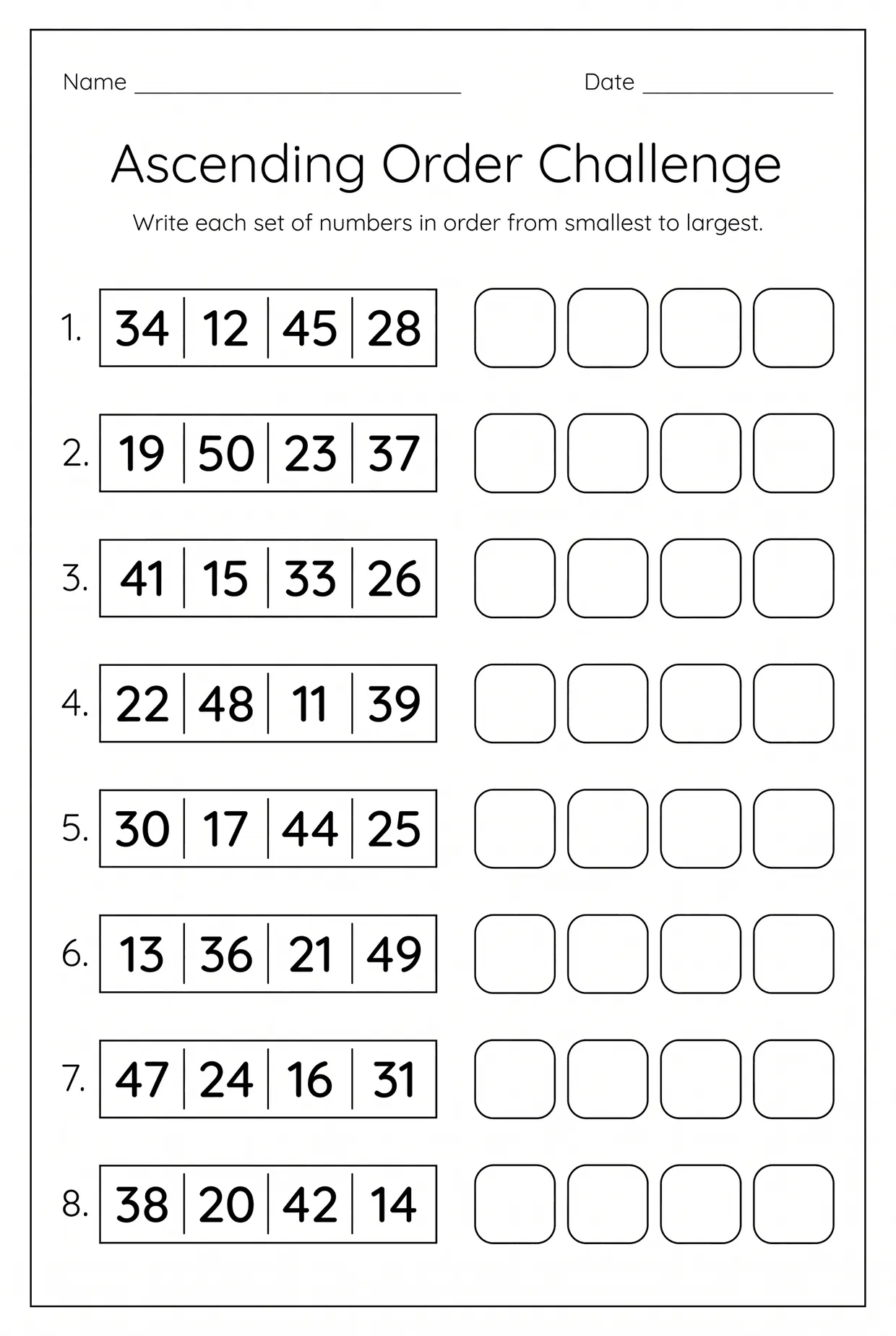
Eight sets of four two digit numbers, every one of them between 11 and 50, laid out in a strip with four answer boxes beside each. This is the step up from ordering within 20, and it asks for something genuinely different.
Once every number has two digits, a child has to look at the tens before the ones, and sets like 34, 12, 45, 28 fall apart quickly for anyone still comparing by the digit they happen to notice first. Each set spreads across the whole range rather than clustering in one decade, so the tens digit is doing most of the deciding and the habit gets built on the easier cases first.
What students will practice
- Compare two digit numbers up to 50
- Use the tens digit before the ones digit
- Arrange four numbers from smallest to largest
Details
- Grade level
- Grade 1
- Subject
- Math · Ordering numbers
- Pages
- 1
- Format
- PDF · US Letter and A4 included
- License
- Free for classroom use · Attribution appreciated
- Last updated
- August 29, 2026