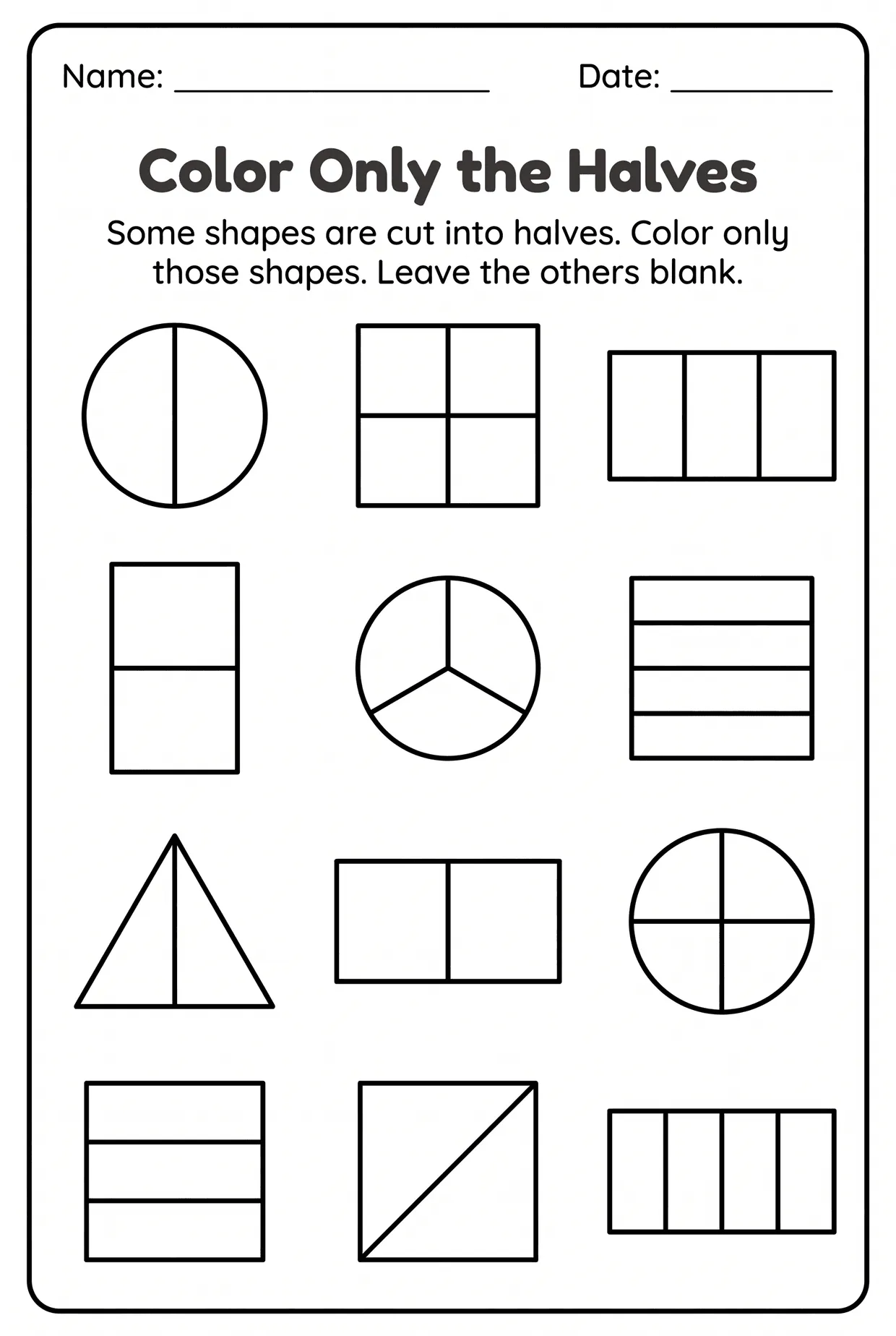
About this worksheet
Twelve outlined shapes are divided into two, three, four or five parts, and only the ones cut into halves get colored. Five of them qualify, including a square split corner to corner on the diagonal, which is the one that makes most children stop and think. The rest stay blank, so the finished page is a picture of what the child knows rather than a wall of color.
Leaving squares empty on purpose is harder than it sounds for a child who wants to color everything, and that restraint is the actual skill being practiced. The sheet is line art on white, so it prints light and works for a whole table of children with any crayons you have.
What students will practice
- Recognize halves among thirds and fourths
- Count the parts before deciding
- Leave the wrong answers blank
Details
- Grade level
- Grade 2
- Subject
- Math · Fractions
- Standard
- CCSS 2.G.A.3
- Pages
- 1
- Format
- PDF · US Letter and A4 included
- License
- Free for classroom use · Attribution appreciated
- Last updated
- September 3, 2026