About this worksheet
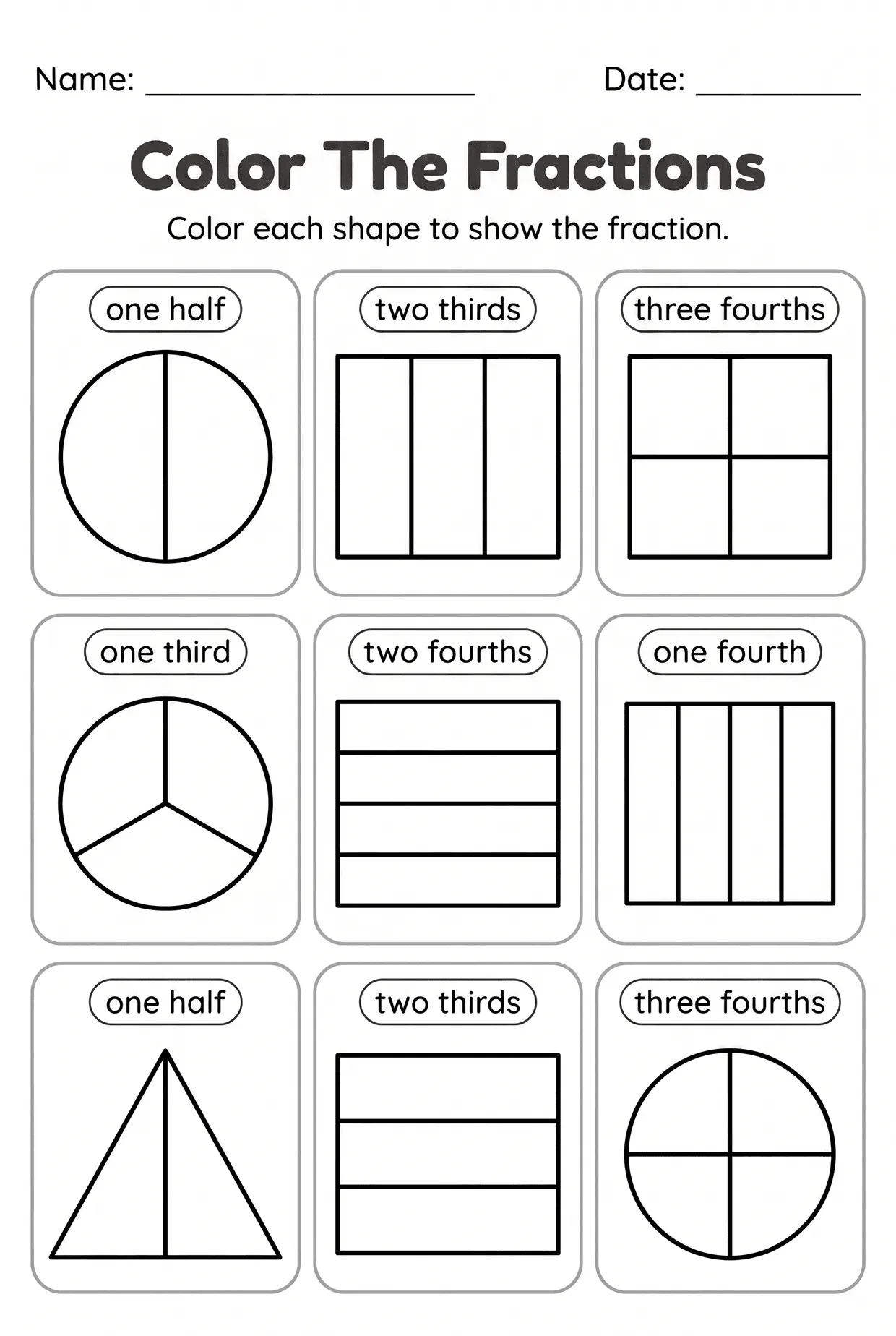
Nine shapes sit in a grid, each in its own rounded frame with a label above it: one half, two thirds, three fourths, one third, two fourths, one fourth. The child reads the words and colors that many parts. The same fraction turns up on different shapes, so two thirds appears once on a tall divided rectangle and again on one split into three rows, which quietly makes the point that a fraction is about how many parts, not what the shape looks like.
Words rather than symbols is what keeps this at second grade, where the vocabulary comes first and the notation comes later. If your child colors two parts for “two thirds” without checking there are three parts in total, that is the moment to slow down and count the pieces first.
What students will practice
- Read a fraction written in words
- Color the matching number of parts
- Work with halves, thirds and fourths
Details
- Grade level
- Grade 2
- Subject
- Math · Fractions
- Standard
- CCSS 2.G.A.3
- Pages
- 1
- Format
- PDF · US Letter and A4 included
- License
- Free for classroom use · Attribution appreciated
- Last updated
- September 3, 2026