About this worksheet
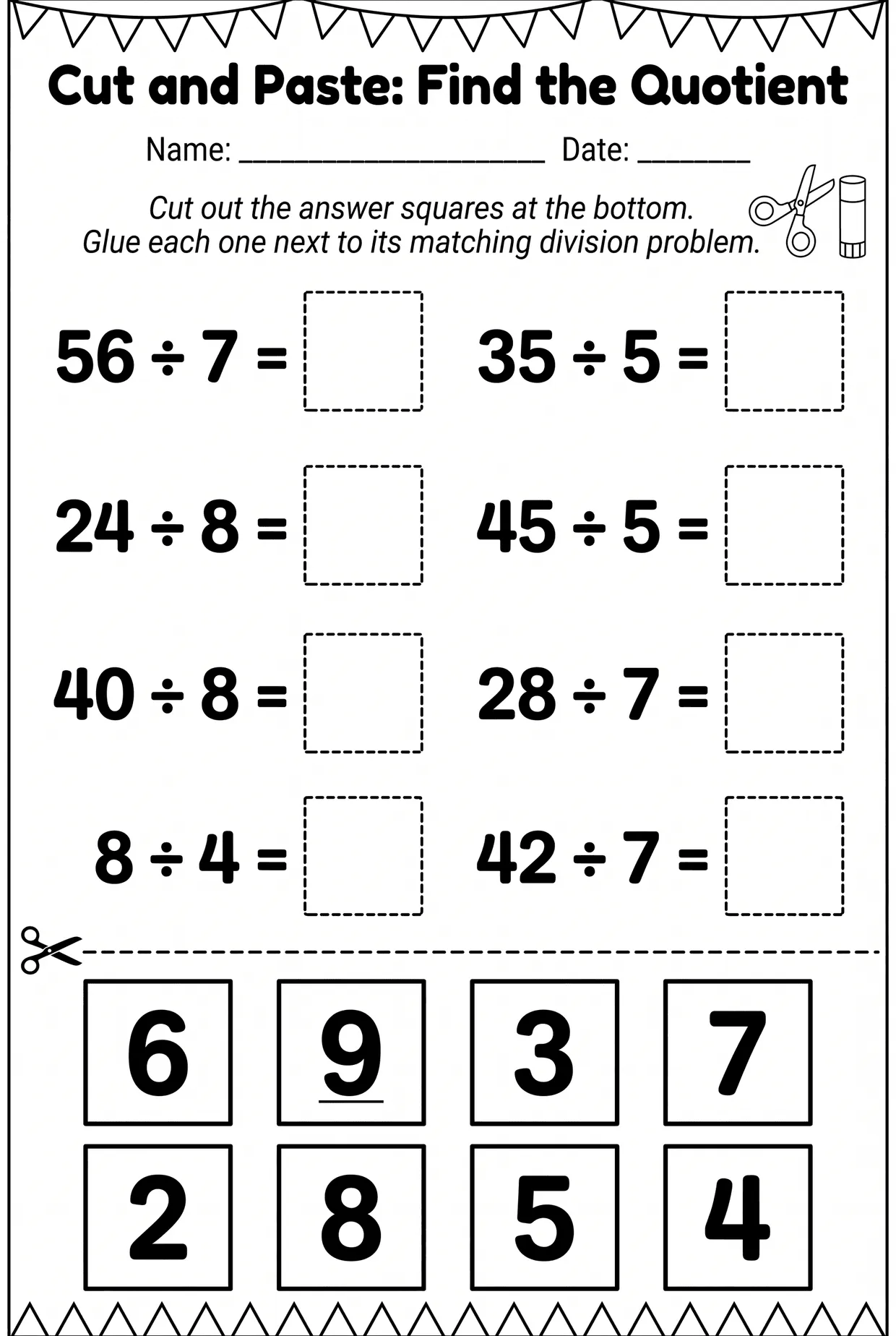
Eight division problems wait with an empty dashed square beside each, and eight numbered squares sit below a cut line at the bottom of the page. A child snips the squares out and glues each one next to the problem it answers.
Every answer is used exactly once, which means a child who has placed seven correctly cannot get the eighth wrong. That constraint does something a plain answer line does not: it lets them reason backwards, solving the problems they are sure of first and using elimination on the rest. For a child who finds a page of division facts daunting, having something to do with their hands is often what gets them started at all.
What students will practice
- Divide within 100 with divisors 4 through 8
- Match a quotient to its division problem
- Use scissors and glue as part of a math task
Details
- Grade level
- Grade 3
- Subject
- Math · Division
- Pages
- 1
- Format
- PDF · US Letter and A4 included
- License
- Free for classroom use · Attribution appreciated
- Last updated
- August 28, 2026