About this worksheet
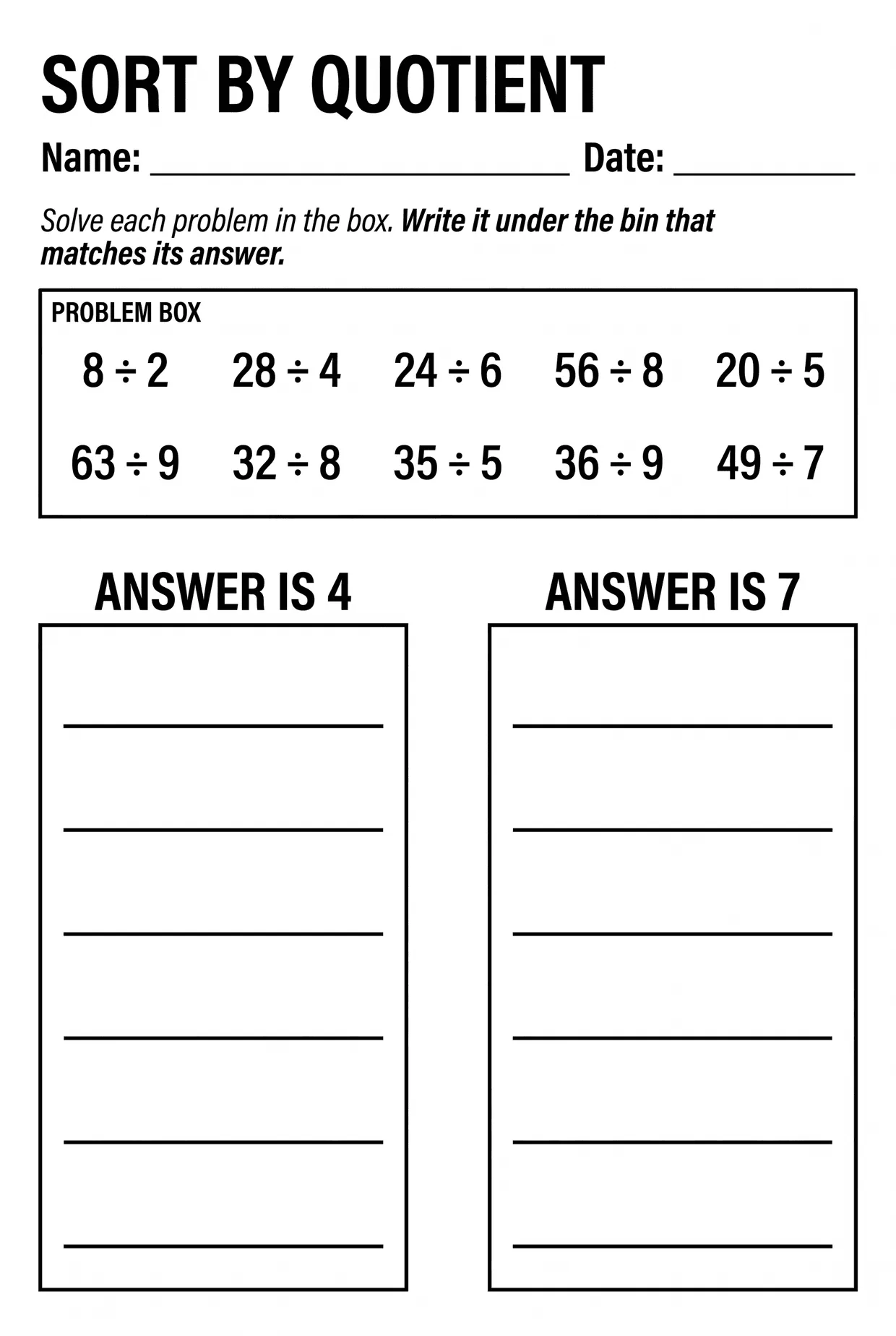
Ten division problems sit together in a box at the top, and two bins below wait to be filled: one for the problems that answer to 4, one for the problems that answer to 7. A child solves each problem, then writes it under the bin it belongs to.
The split is exactly five and five, which makes the sheet quietly self-checking. A child who ends up with six in one bin knows to go back and look again without anyone having to tell them. It also makes a point that a plain answer line cannot: five different problems can all arrive at the same quotient, which is the idea underneath fact families.
What students will practice
- Divide within 100 with divisors 2 through 9
- Sort problems by their quotient
- Notice that different problems can share an answer
Details
- Grade level
- Grade 3
- Subject
- Math · Division
- Pages
- 1
- Format
- PDF · US Letter and A4 included
- License
- Free for classroom use · Attribution appreciated
- Last updated
- August 28, 2026