First grade addition is really a climb from the concrete to the abstract: counting real groups, locking in the small facts, then stretching to sums within 20 and beyond. Hand a child the thirty-problem fluency page before the small facts are automatic and you mostly teach them that math is exhausting.
The ten free worksheets below climb that ladder in order: count two groups, master sums to 10, move into vertical layout, push to 20, then build fluency with volume and a self-checking color page before a final stretch into three-addend column addition. Every one is a printable PDF with no account and no watermark. Drop in wherever your class already is.
Picture Addition Worksheet: Add Two Fruit Groups
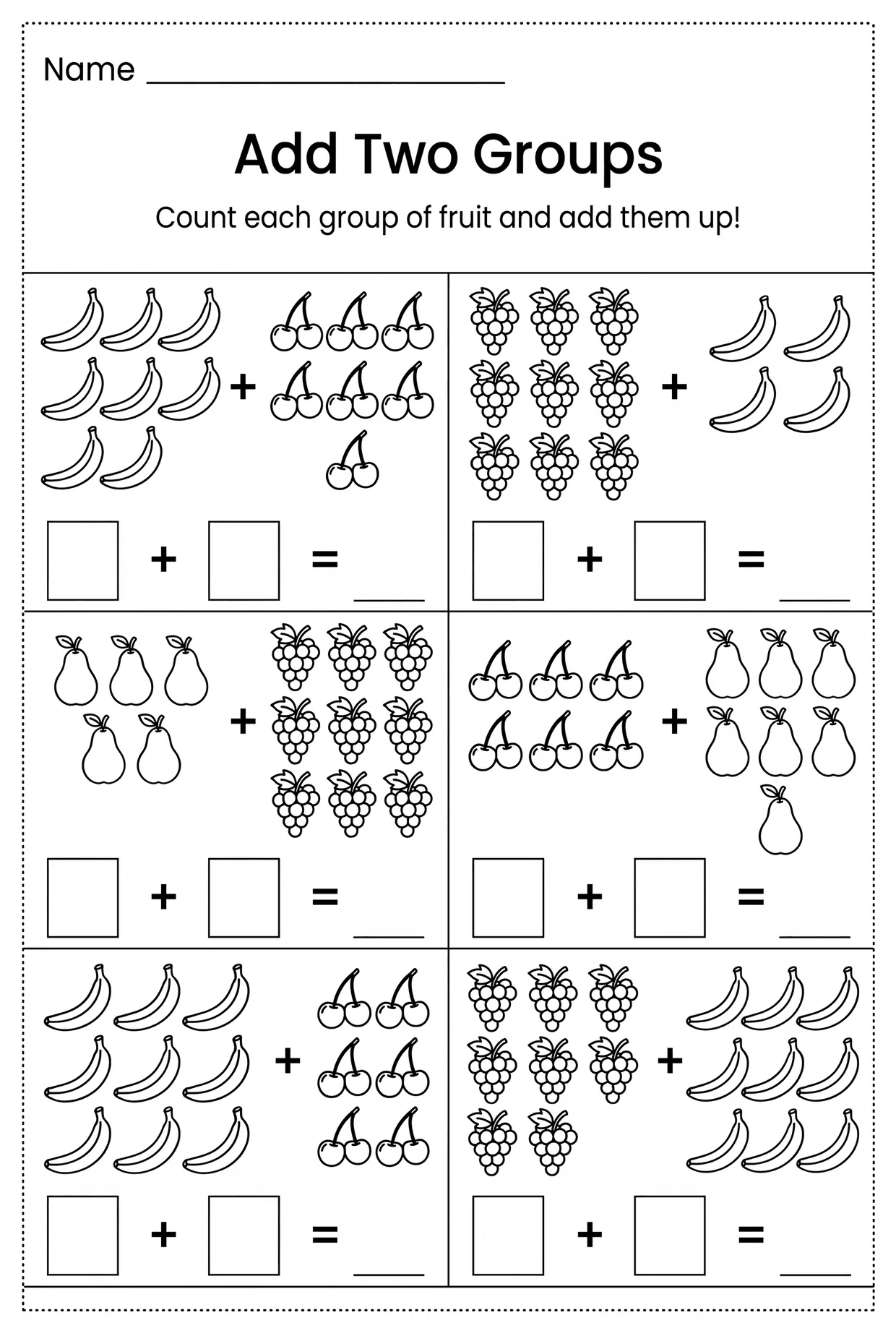
Start here. Kids count each group of fruit, write the number in the box, then add the two groups to find the total. It keeps addition concrete by tying every equation to things you can actually point at and count.
I reach for it first because it bridges counting and adding without asking children to hold abstract facts in their heads yet. The pictures do the heavy lifting while the equation quietly takes shape.
Addition Worksheet: Single-Digit Sums to 10
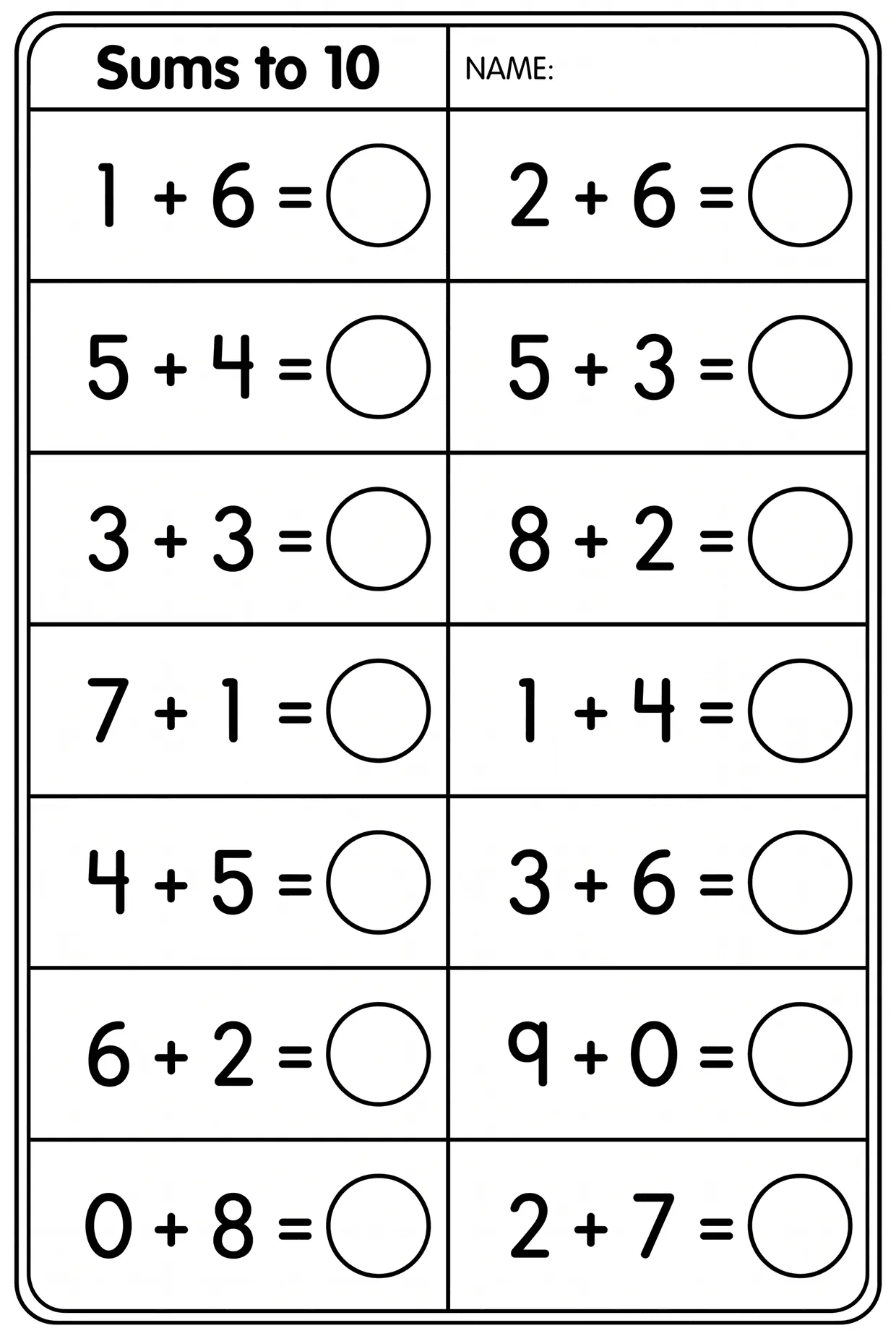
Now the facts everything else is built on: sums to 10. Fourteen clean horizontal problems, each with a circle for the answer. These are the make-ten facts worth coming back to until they are automatic.
Addition Worksheet: Sums to 9 (First Grade)
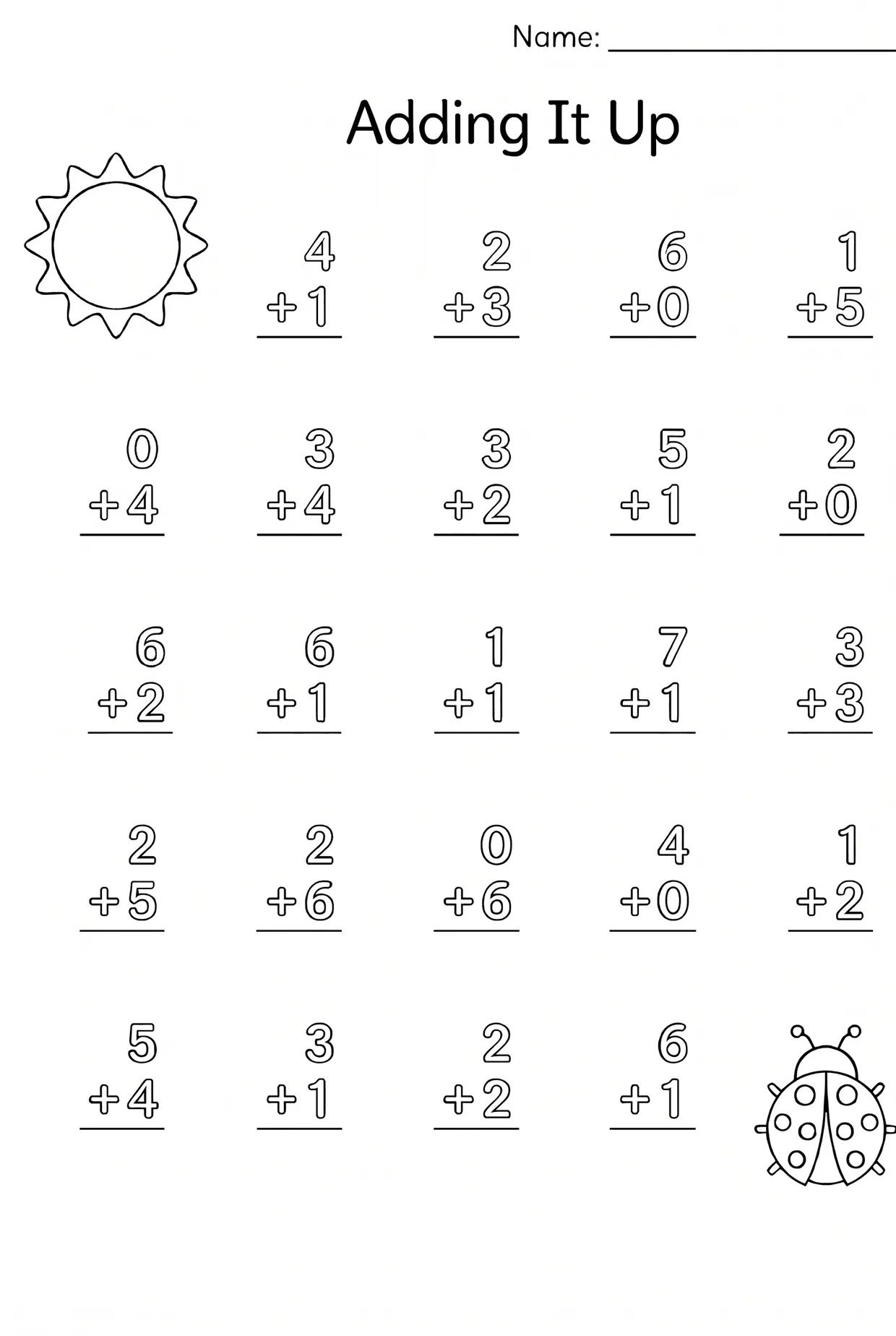
Same small numbers, new layout. Twenty vertical problems with sums of 9 or less introduce the stacked format kids will use for the rest of the year, while the numbers stay friendly enough to keep the focus on recall.
Add It Up: First Grade Addition Worksheet
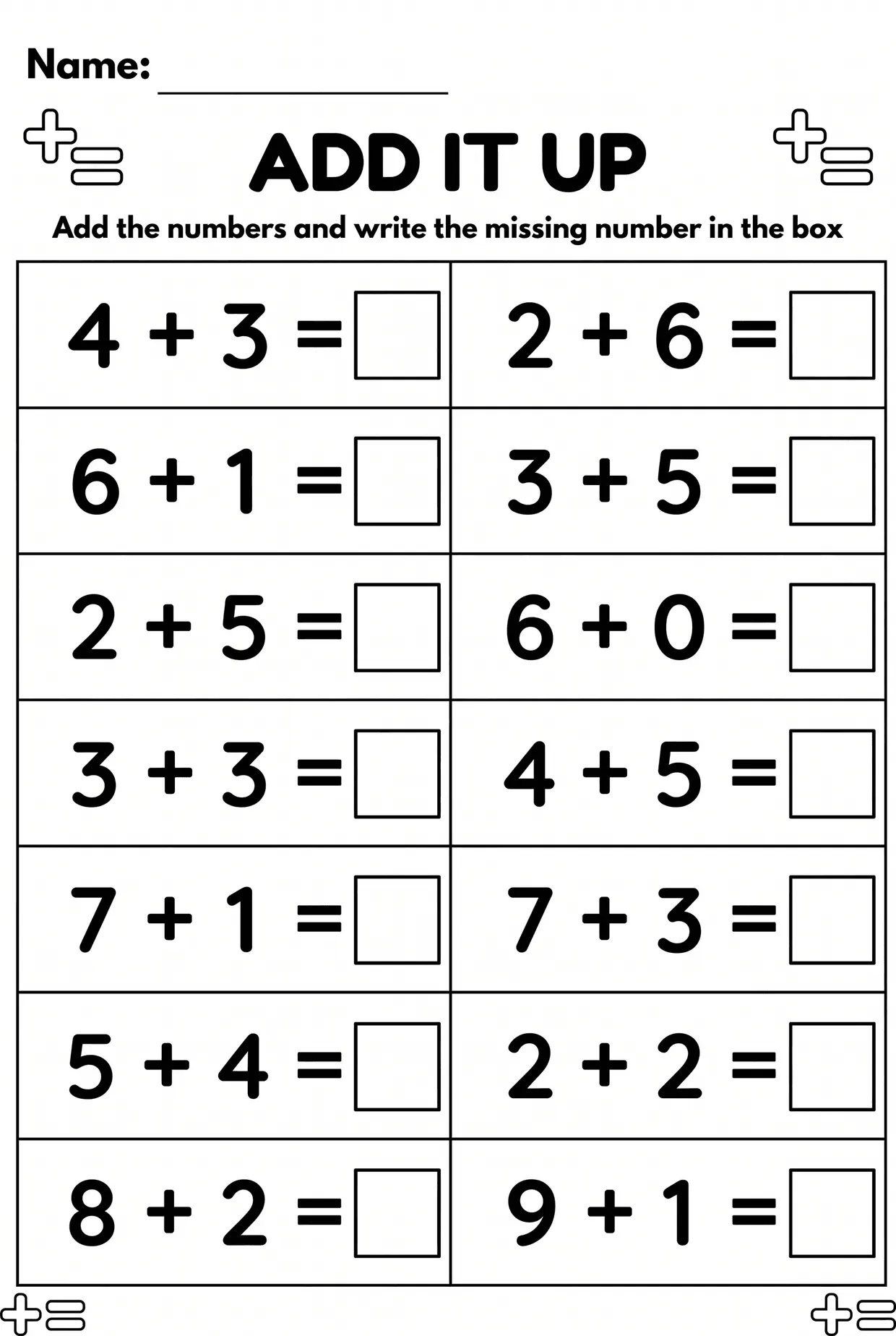
Back to a horizontal layout for sixteen big, uncluttered problems, each with a box for the missing sum. The clean design keeps the focus squarely on the math, making this a dependable check of basic fact fluency.
Addition Worksheet: Add Numbers to 20 (Grade 1)
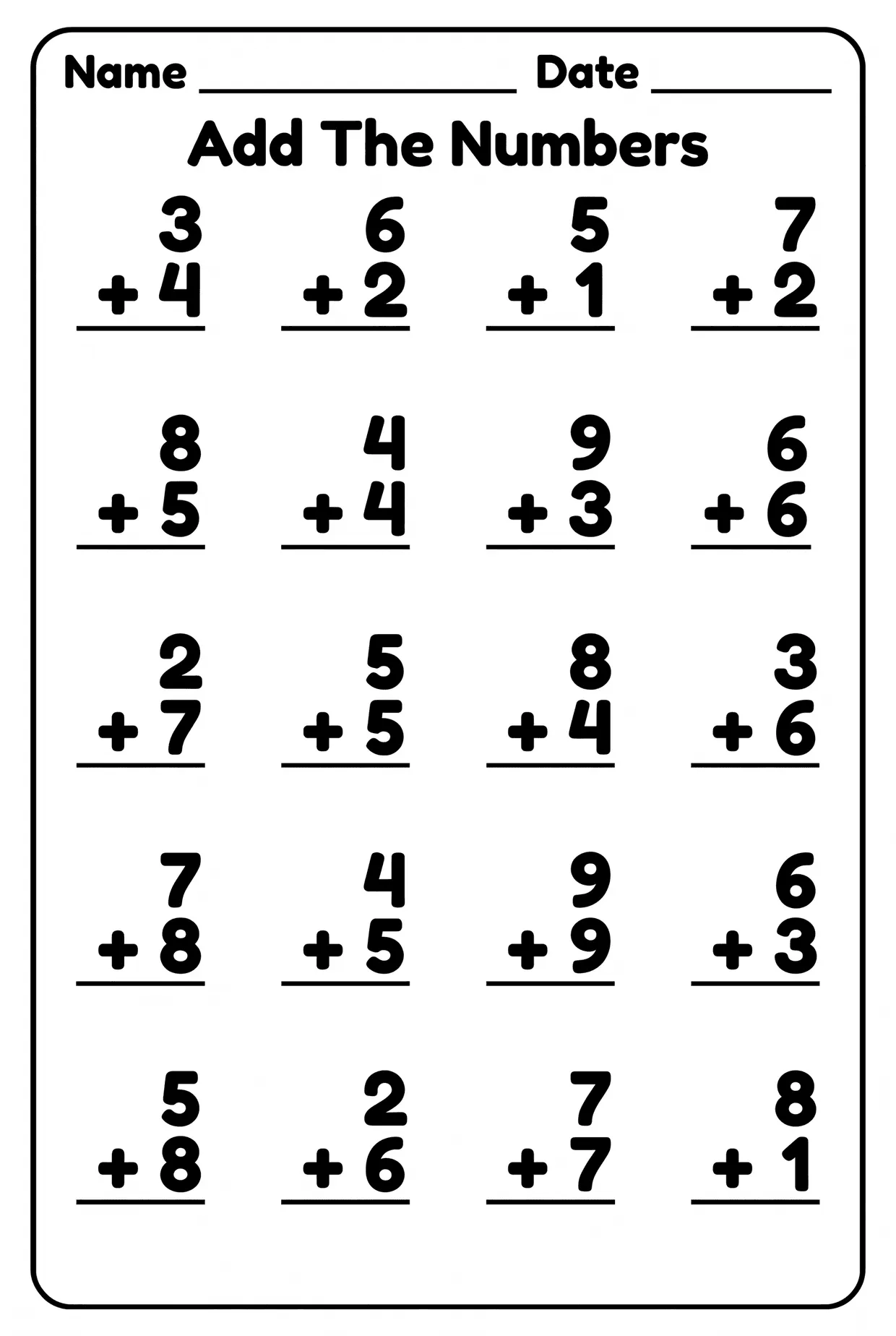
Time to stretch past ten. Twenty vertical problems with sums up to 20, the core first grade fluency target. The bold print and even grid make it easy to work down the page without losing your place.
Space Addition Worksheet: Blast Off, Add to 20
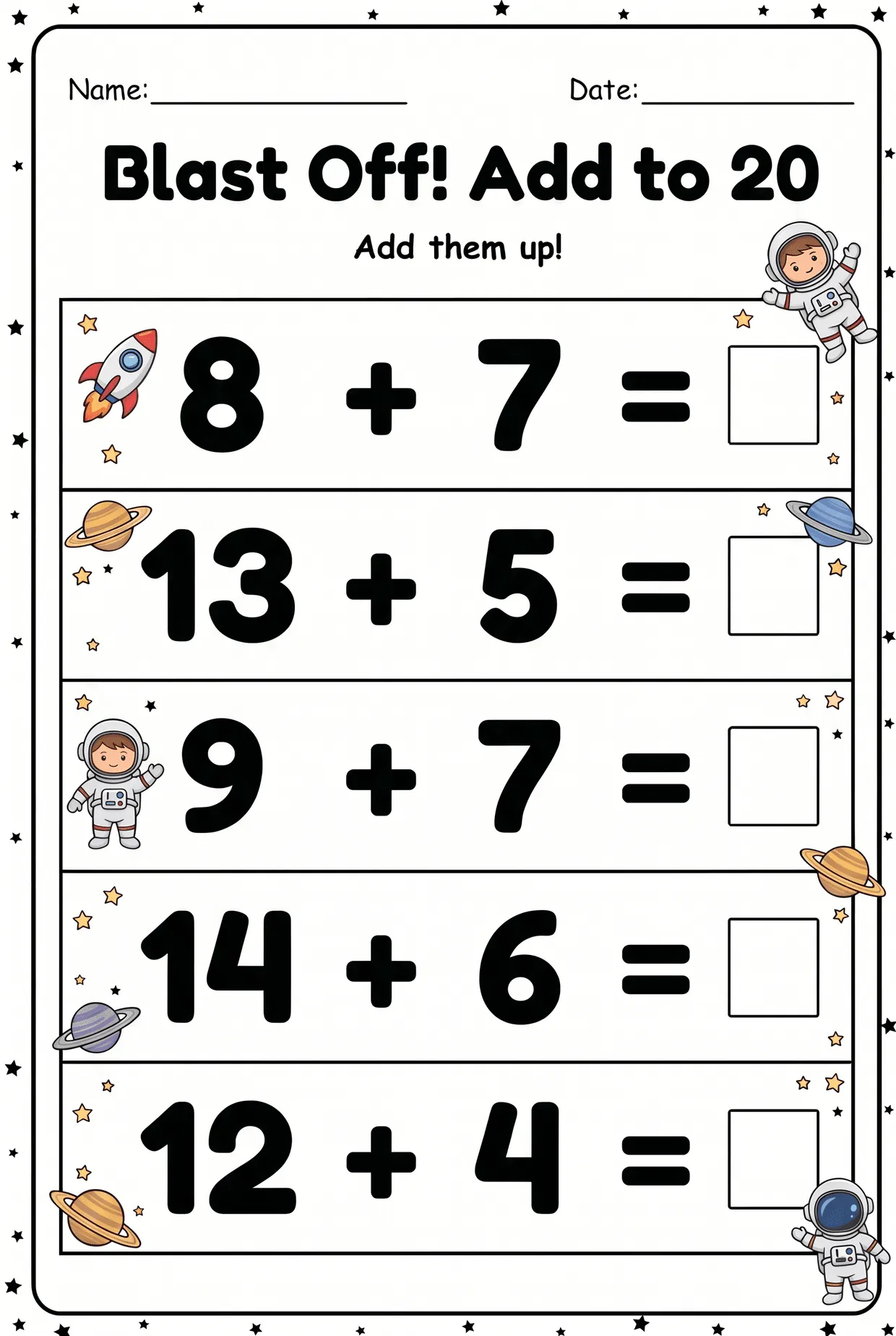
A confidence builder dressed up as a space mission. Five big add-to-20 problems framed by rockets, planets, and cheering astronauts. The short problem set and large numerals make it approachable for kids who need a win.
Beach Day Addition Worksheet: Sums Within 18
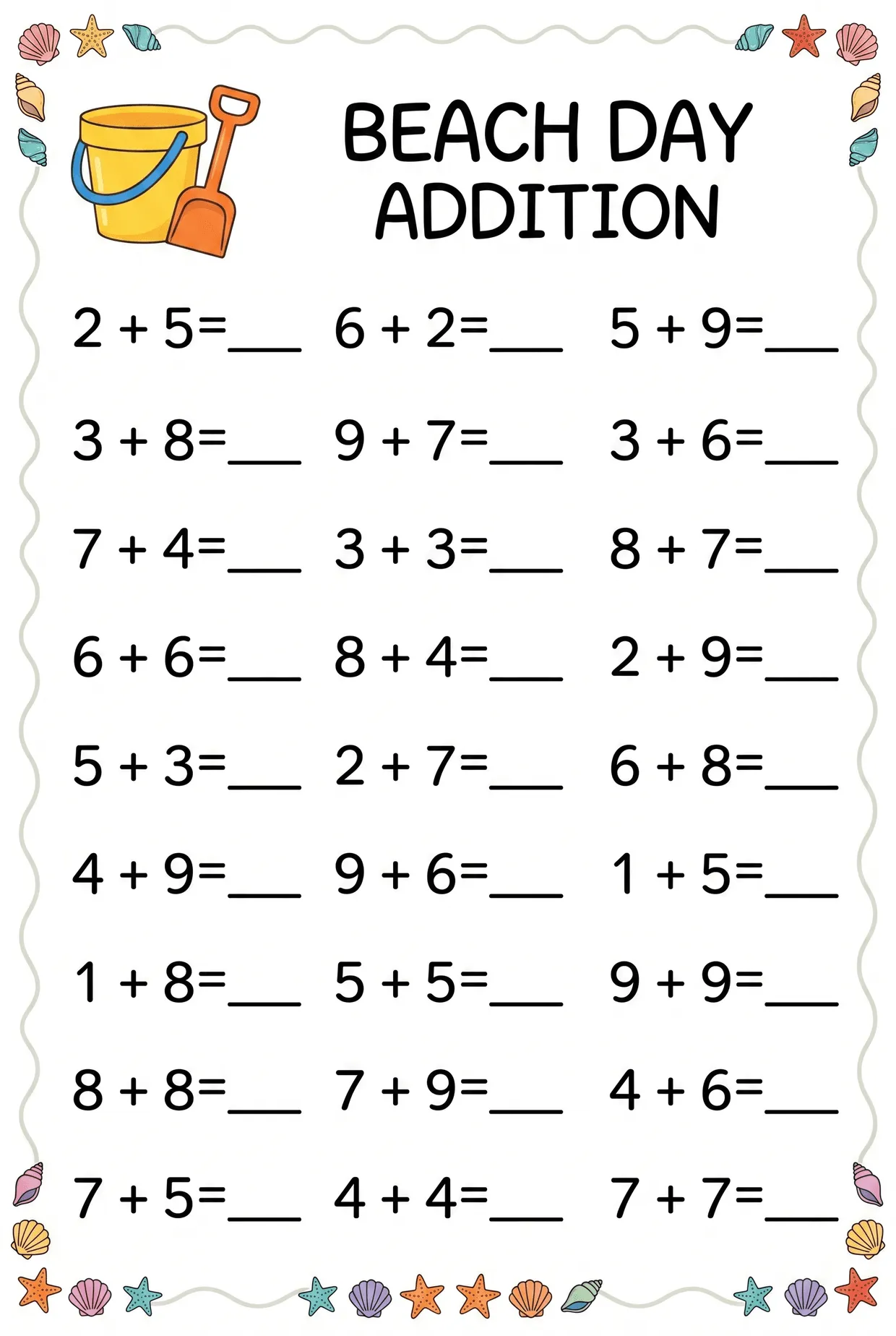
Thirty single-digit problems with sums within 18, wrapped in a sunny beach theme of buckets, shells, and starfish. The volume builds real fluency while the theme keeps it cheerful, ideal for end-of-year or summer practice.
Butterfly Addition Worksheet: Add and Color
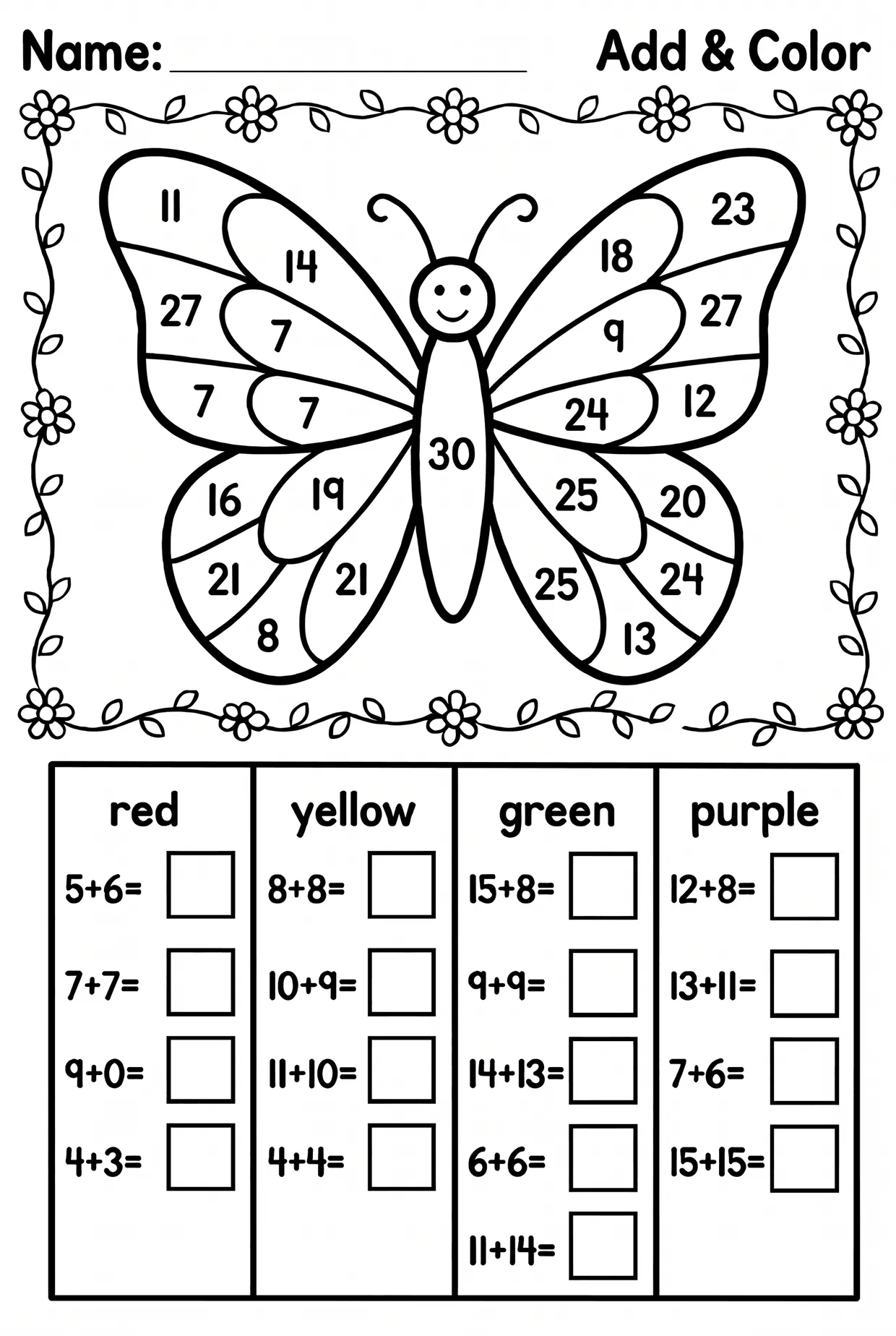
Math that checks itself. Kids solve the facts in the color key, then color each section of the butterfly to match (red, yellow, green, purple). A wrong sum shows up as the wrong color, so the picture quietly catches mistakes for you.
It also reaches a little higher, with sums up to 30, while feeling more like art than arithmetic. A favorite for early finishers and reluctant mathematicians alike.
First Grade Addition Worksheet: Practice Sums
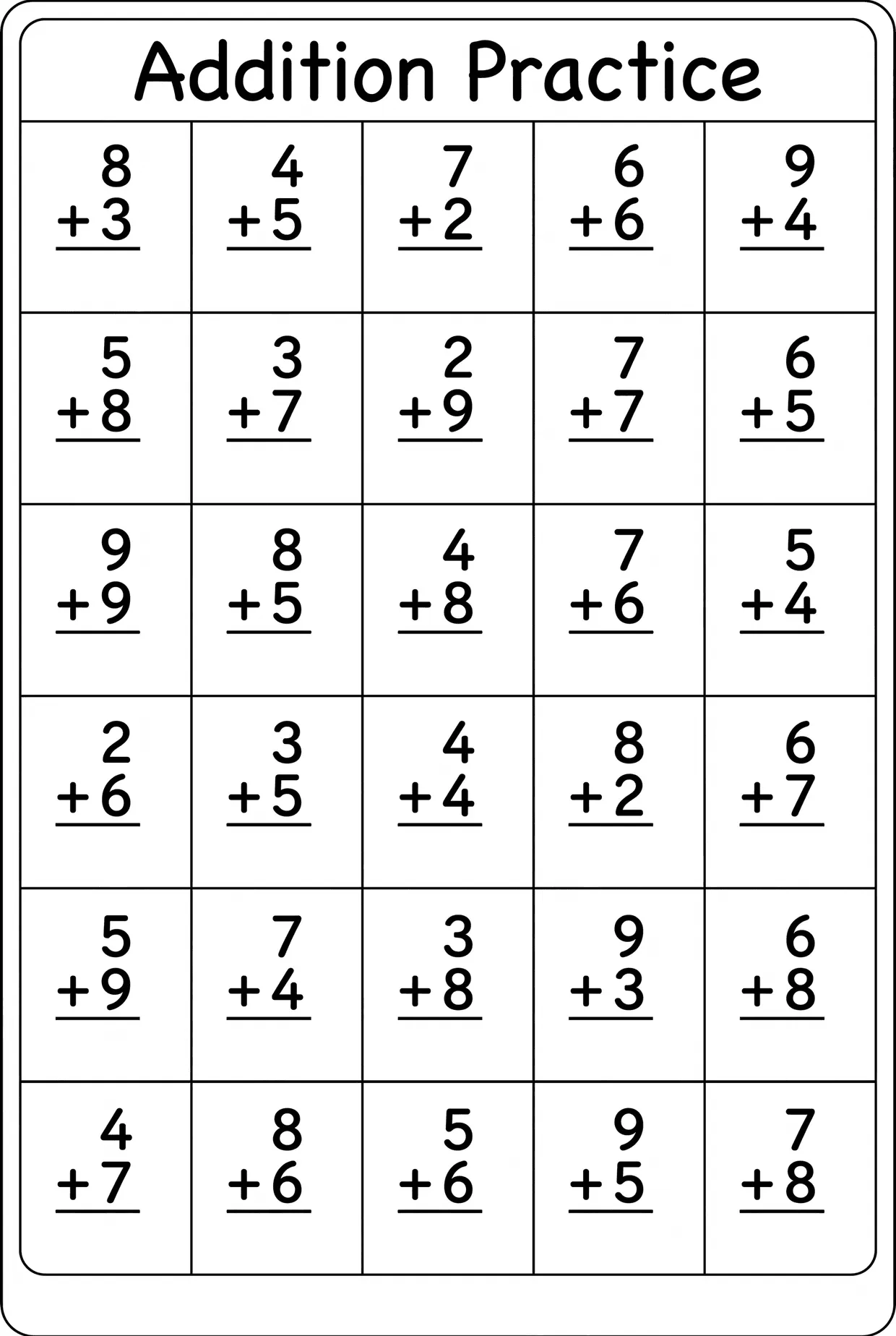
The workhorse. Thirty vertical problems on one page, enough volume to build genuine fact fluency in a single sitting. The clean grid and bold numerals keep it readable for first graders working on their own.
Add Three Two-Digit Numbers: Addition Worksheet
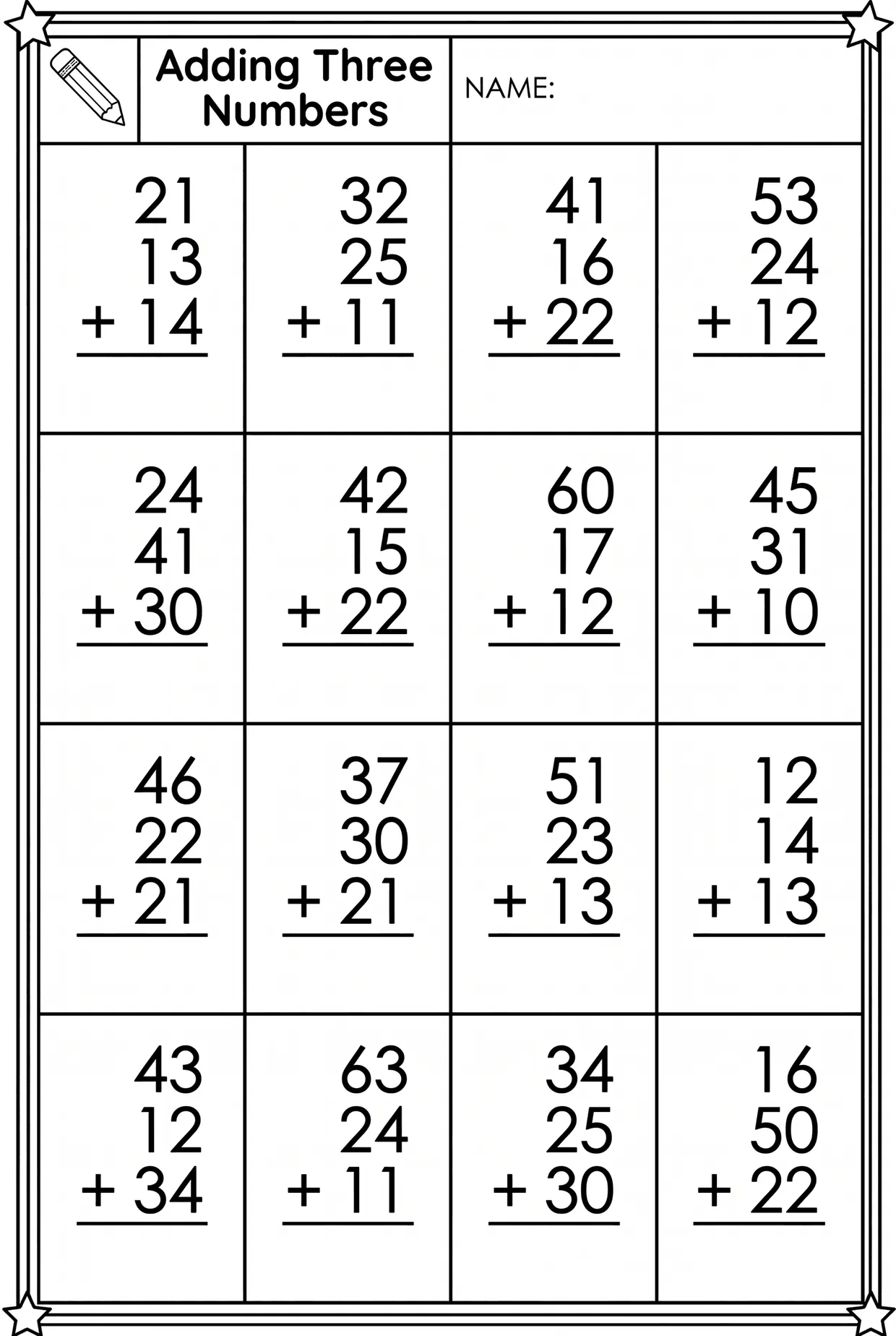
The stretch sheet. Sixteen column problems, each stacking three two-digit numbers chosen so no column ever passes nine. Because there is no regrouping, kids practice lining up tens and ones and adding three numbers without the extra step of carrying.
One more thing.
If your kids finish a unit and you're not sure what to do next, my honest advice: don't move on yet. Spend a week mixing these in as warm-ups. Fluency isn't a unit, it's a habit, and the sheet that builds it is usually the one they ask to do again.