Questions about 4th grade multiplication worksheets
What multiplication is taught in fourth grade?
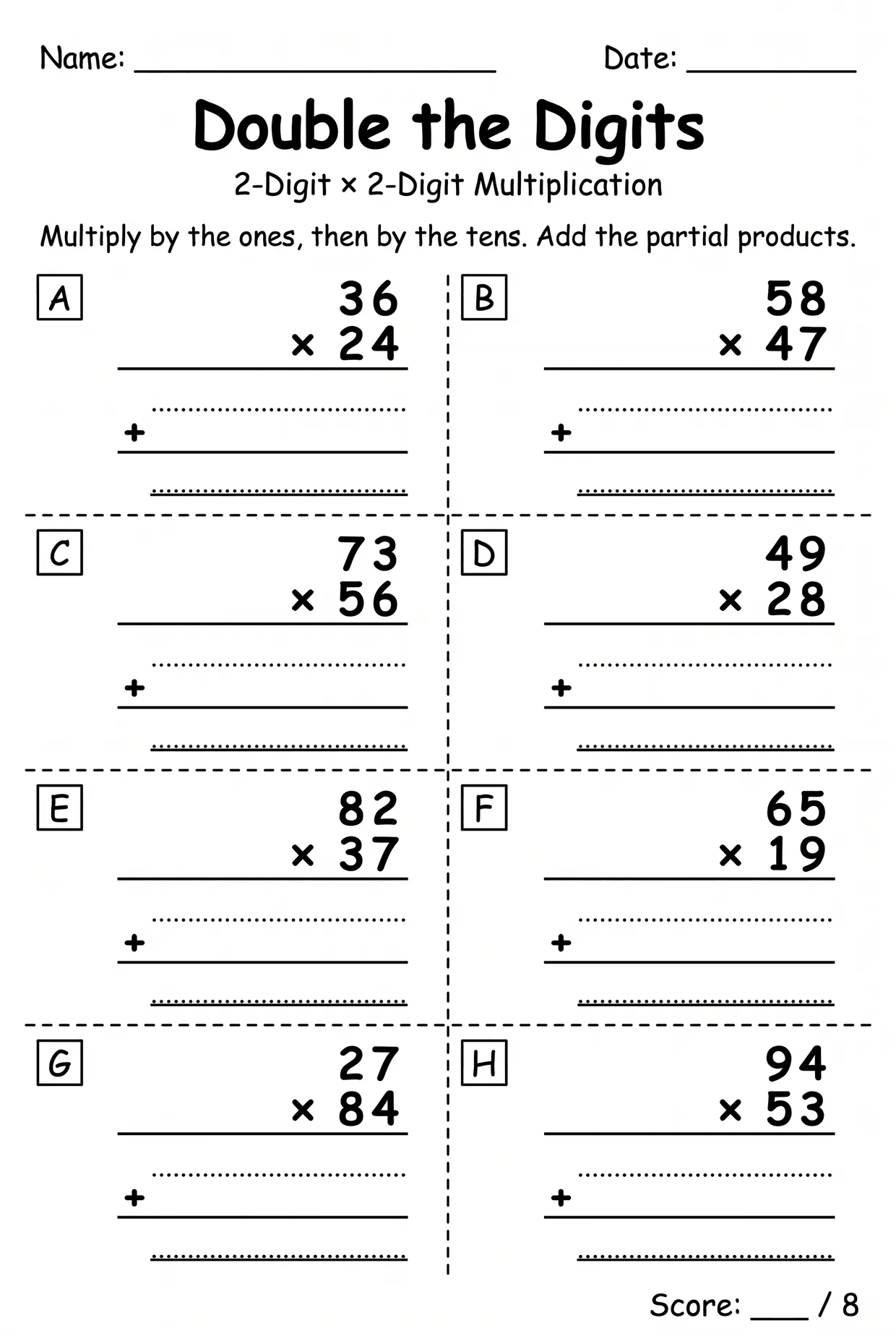
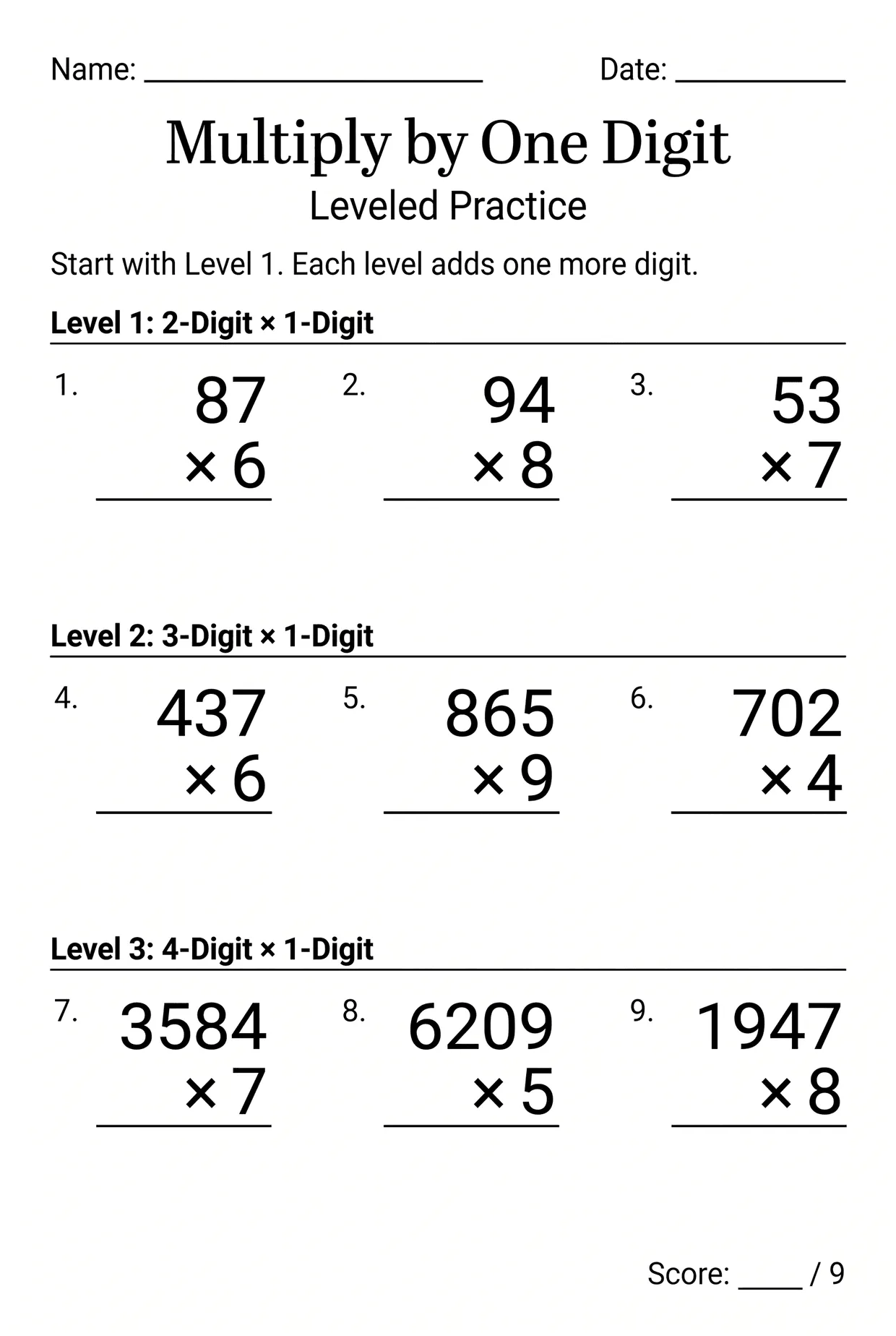
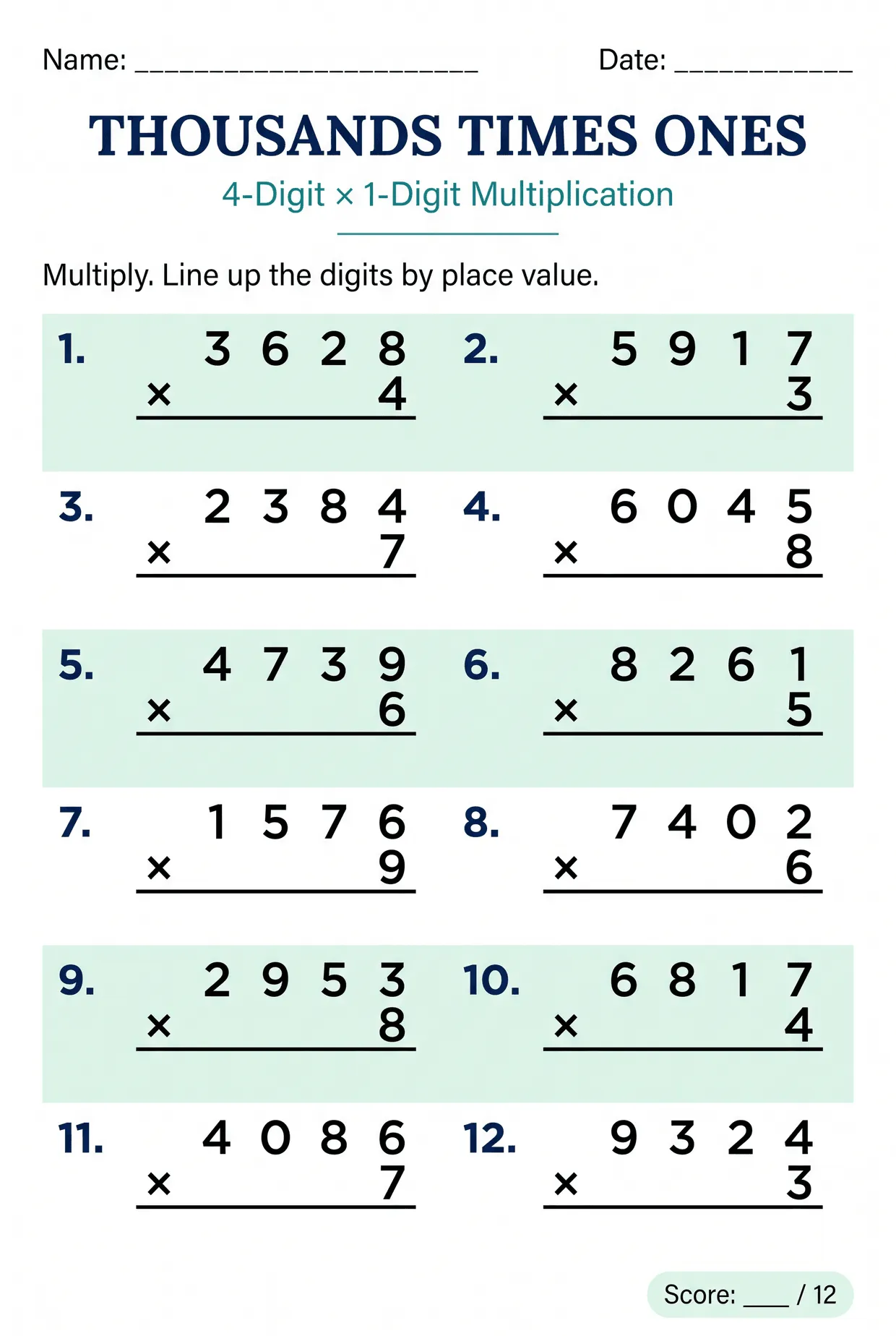
Two kinds of problems: a whole number of up to four digits times a one-digit number, and two two-digit numbers multiplied together (4.NBT.5). Children are expected to use place value and explain their work, not just follow steps, and the pages here follow that path from two-digit numbers up to two-digit by two-digit.
What are partial products?
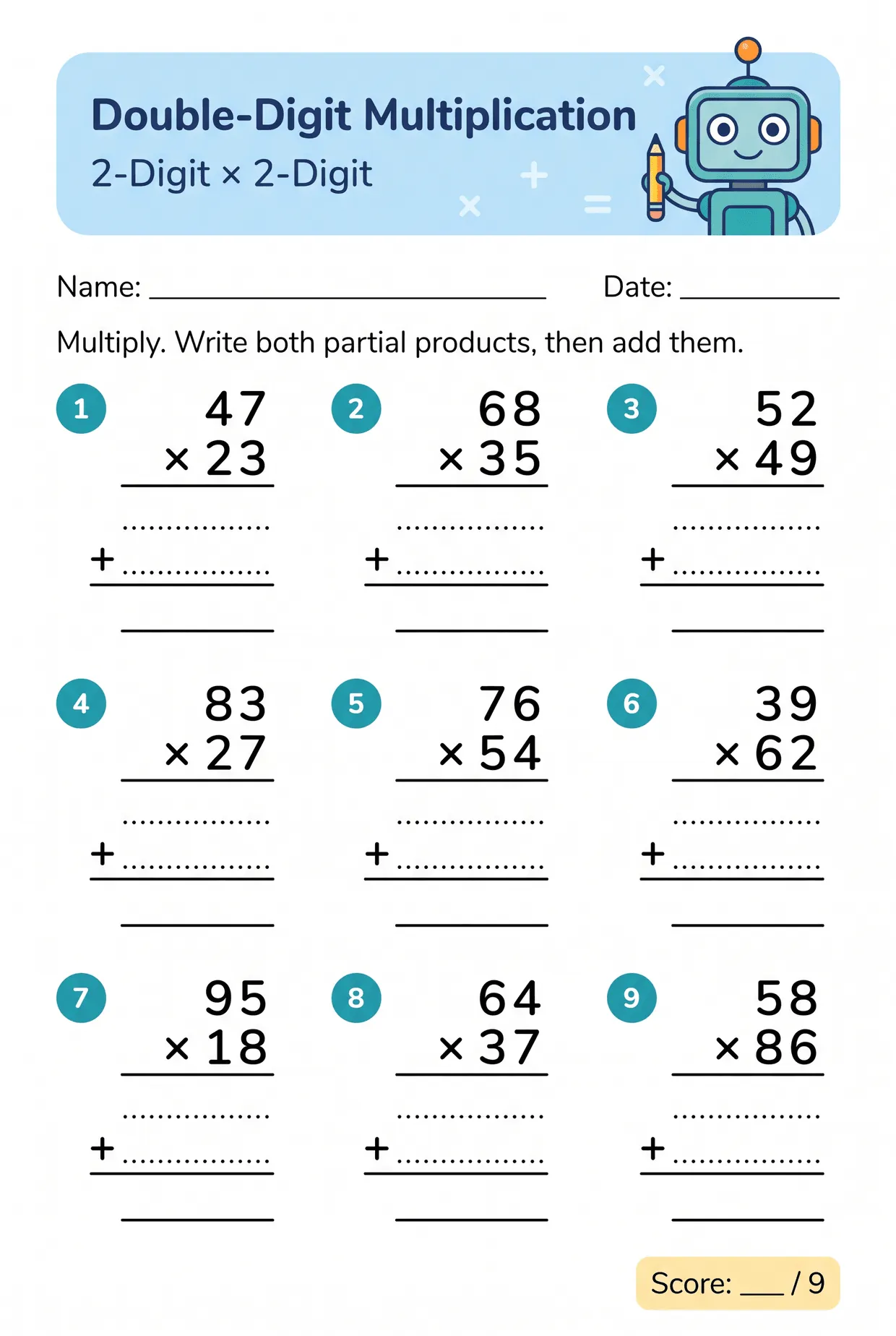
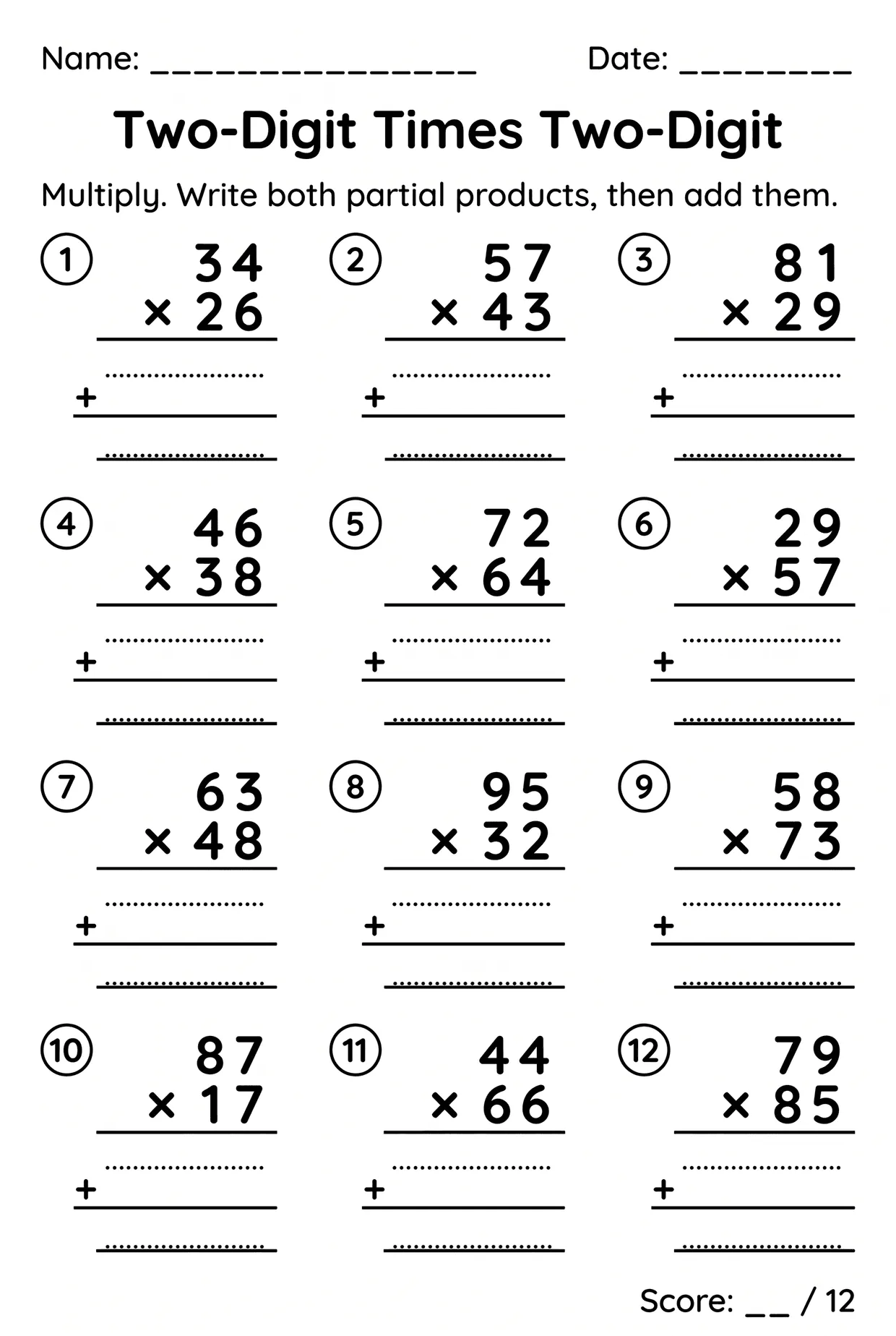
They are the pieces of a bigger multiplication. For 34 times 26, a child multiplies 34 by 6 and then 34 by 20, writes both results, and adds them. Writing each piece on its own line shows exactly where a mistake happened, which is why the two-digit by two-digit pages ask for them.
What helps a child who forgets to add the carried digit?
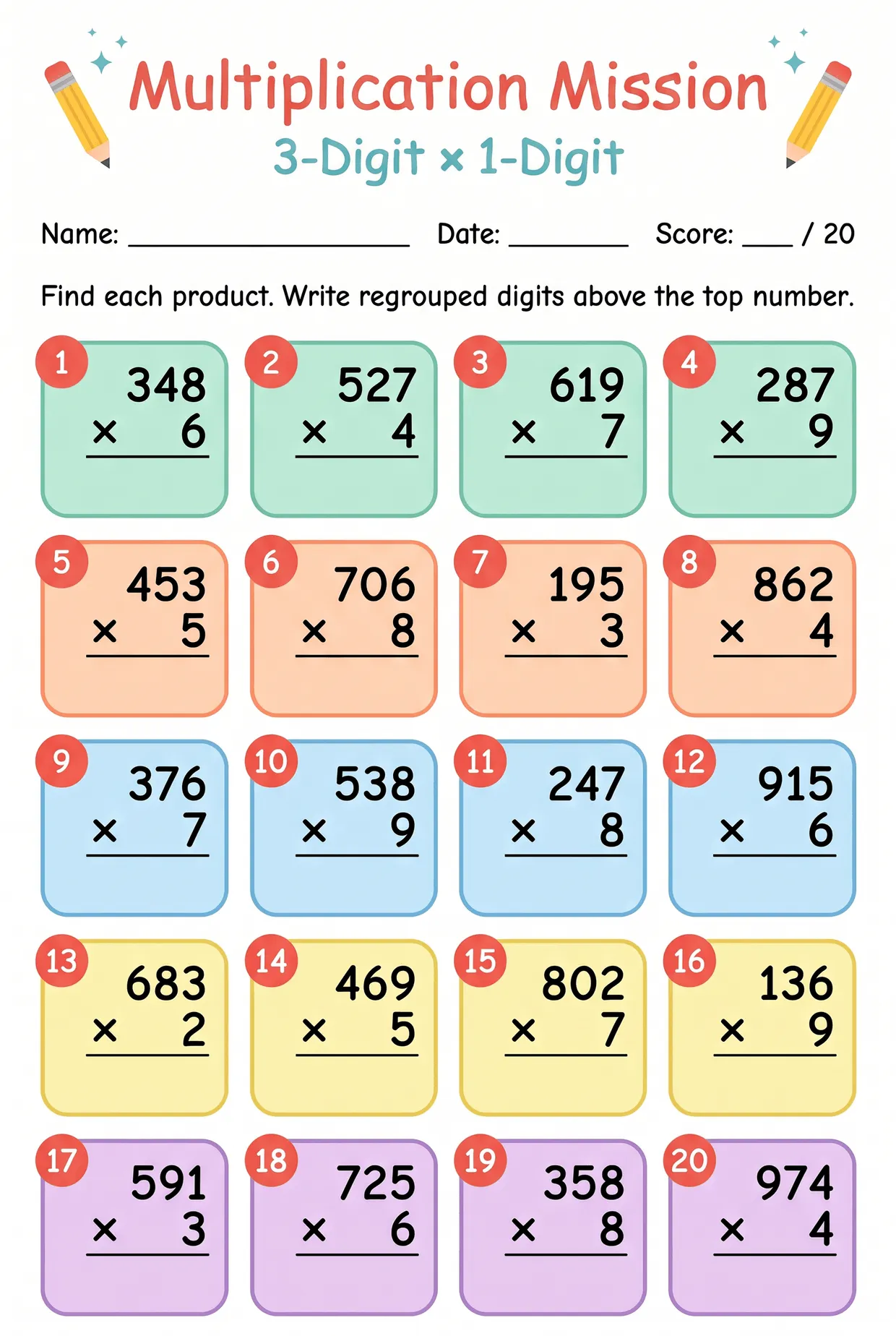
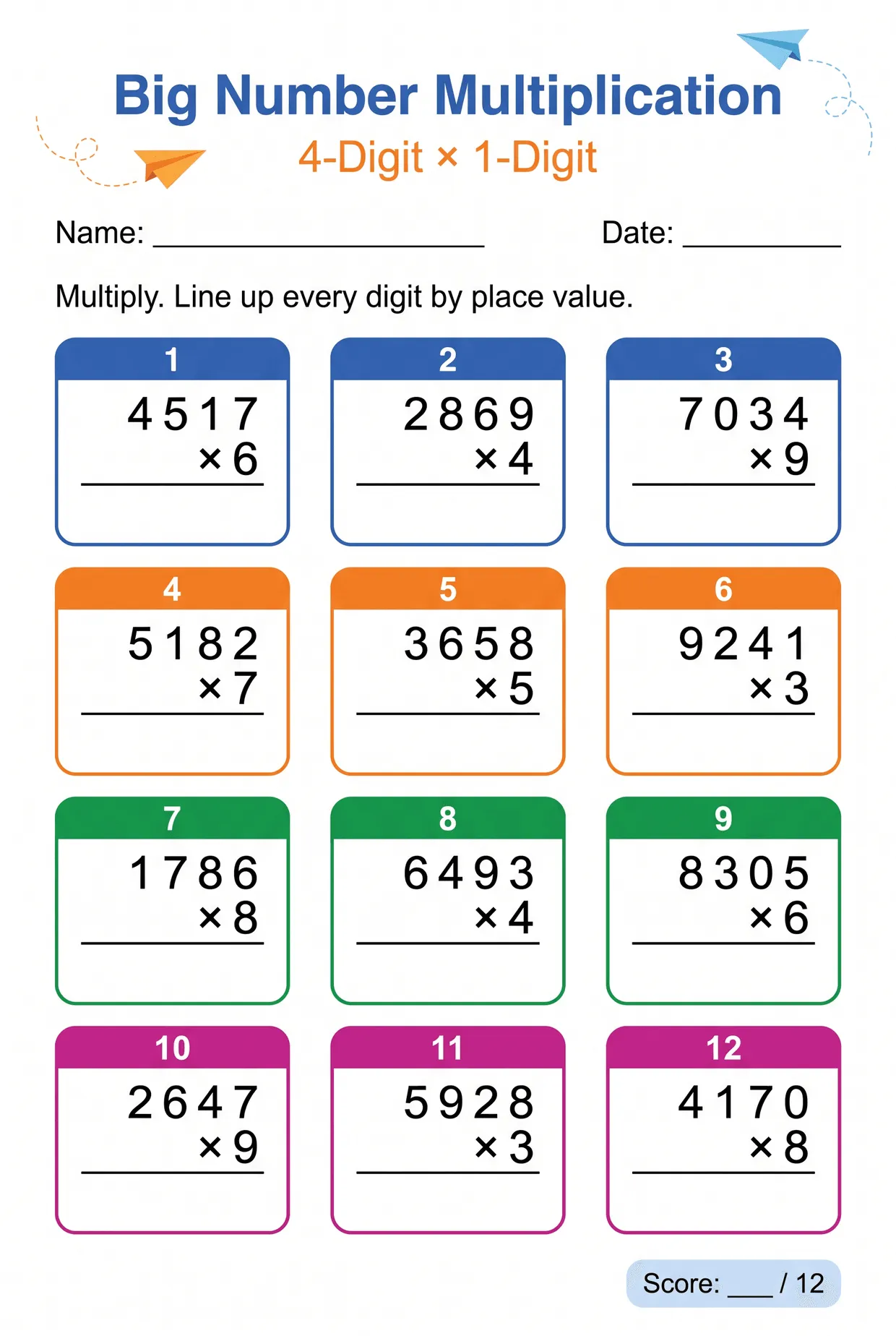
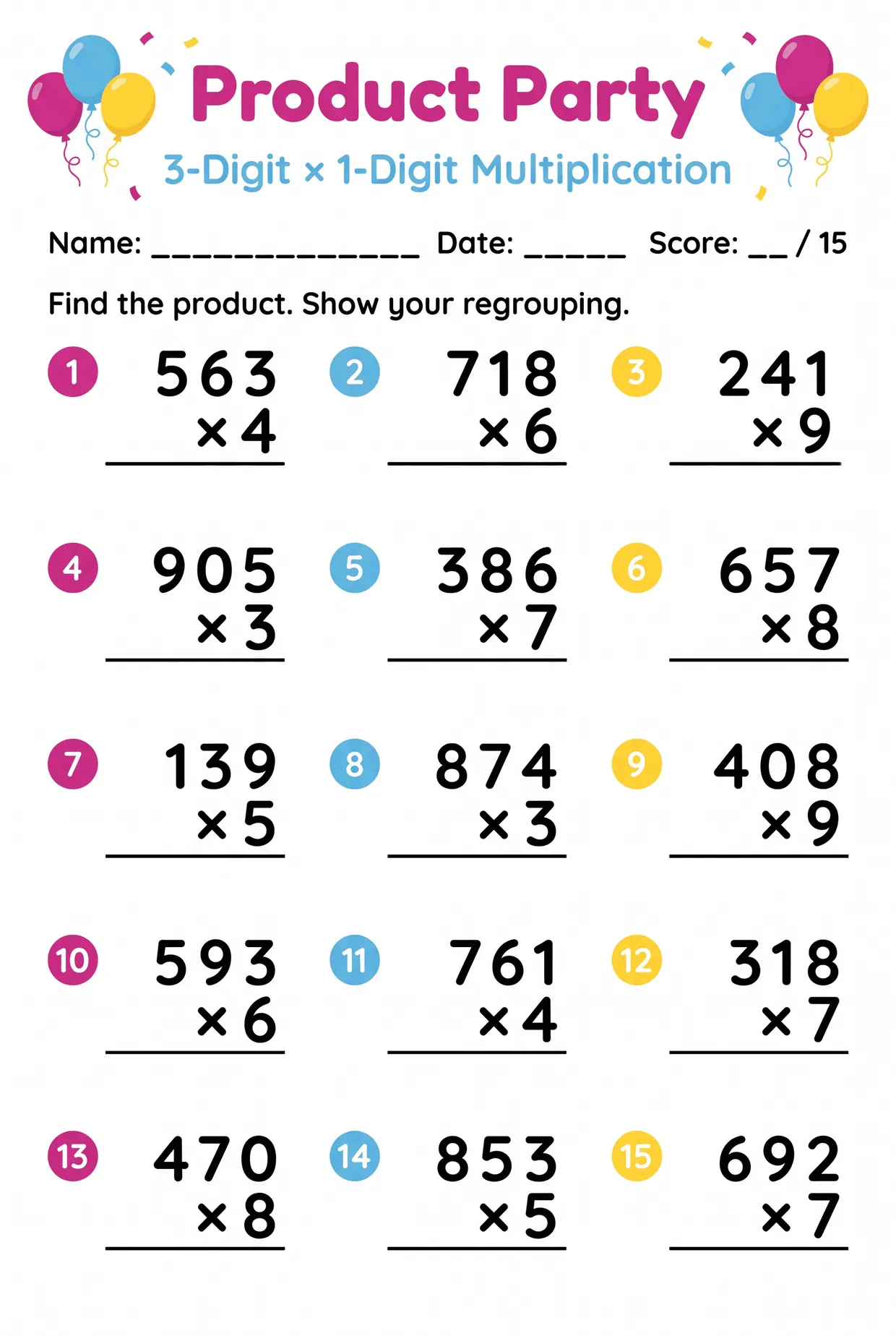
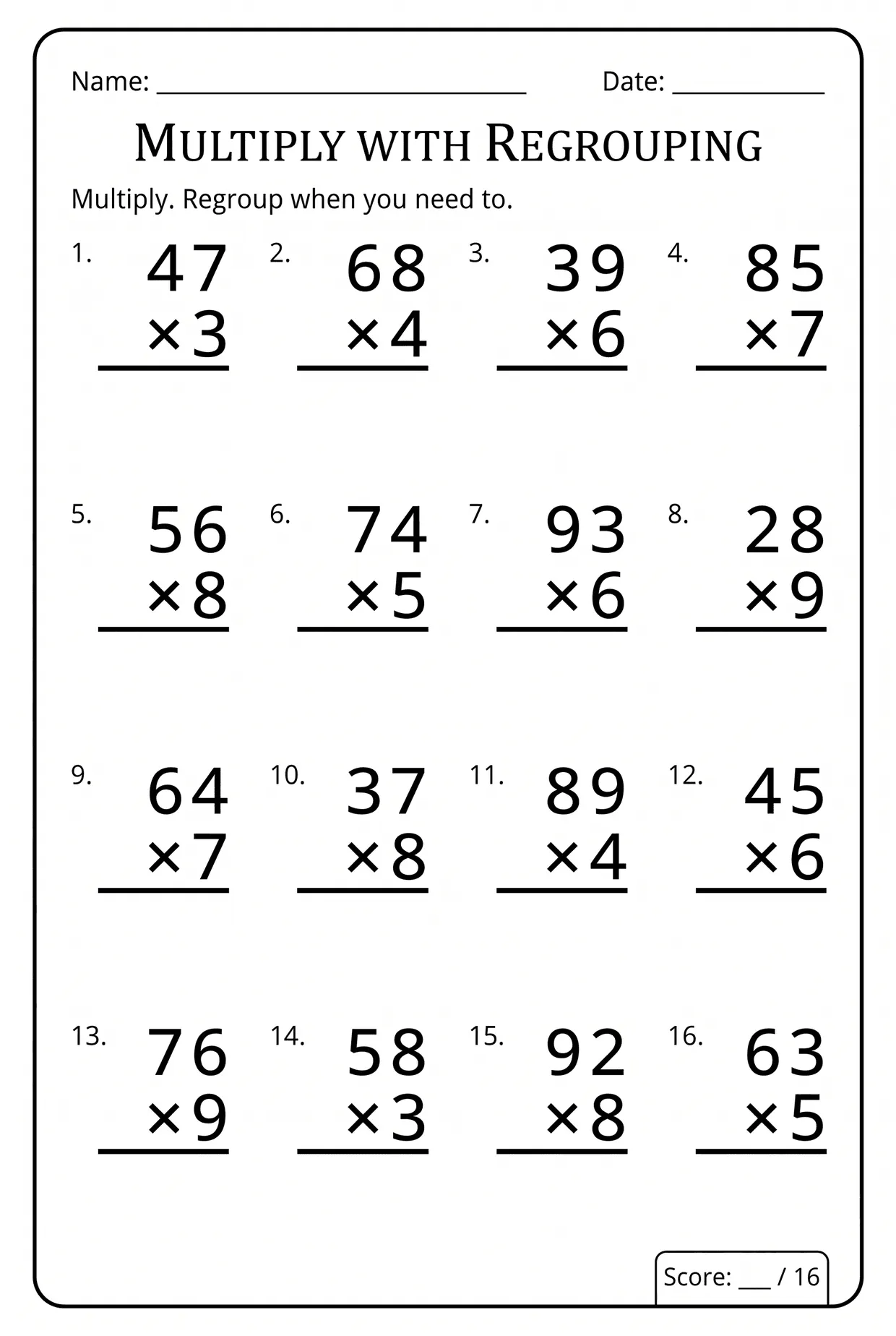
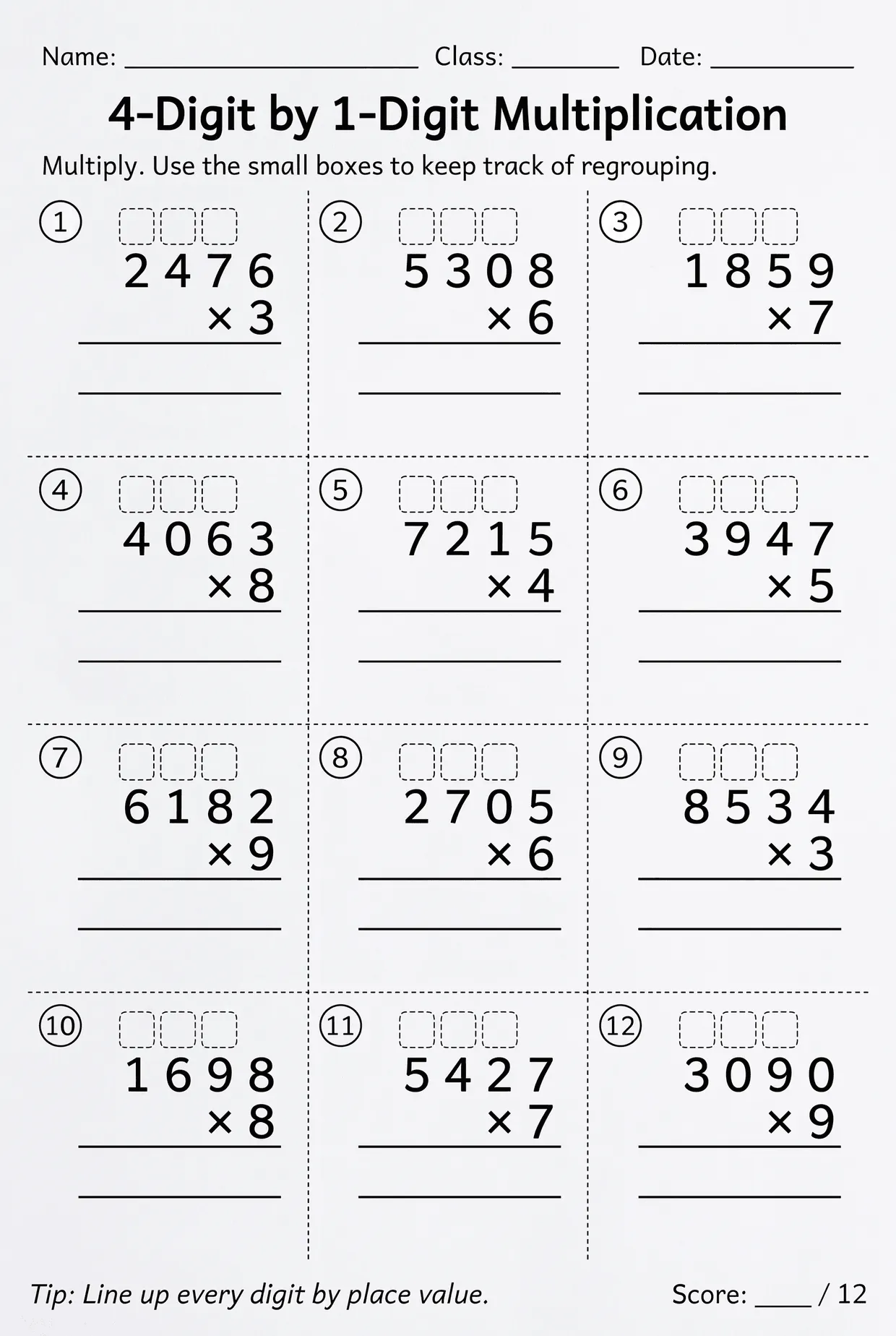
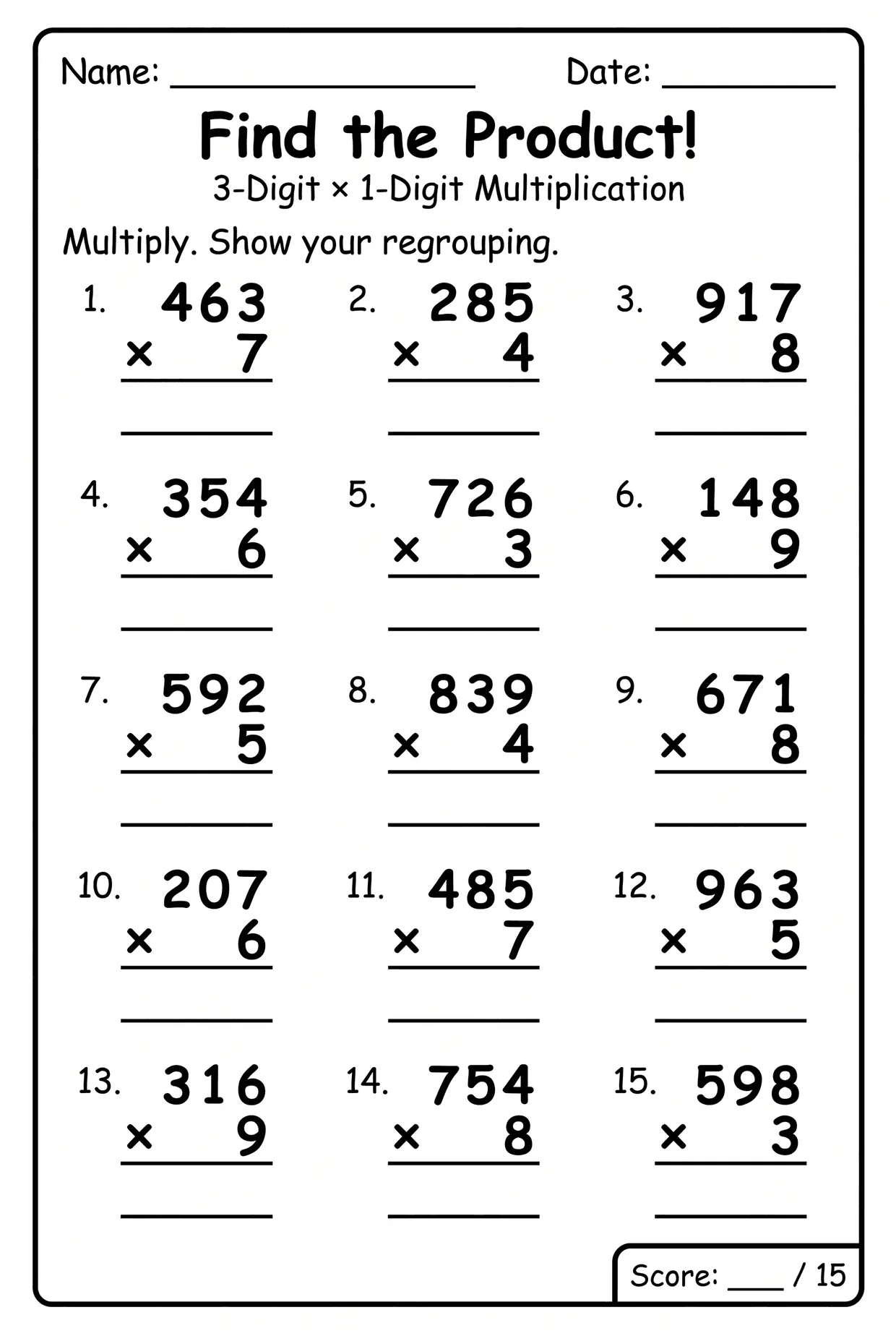
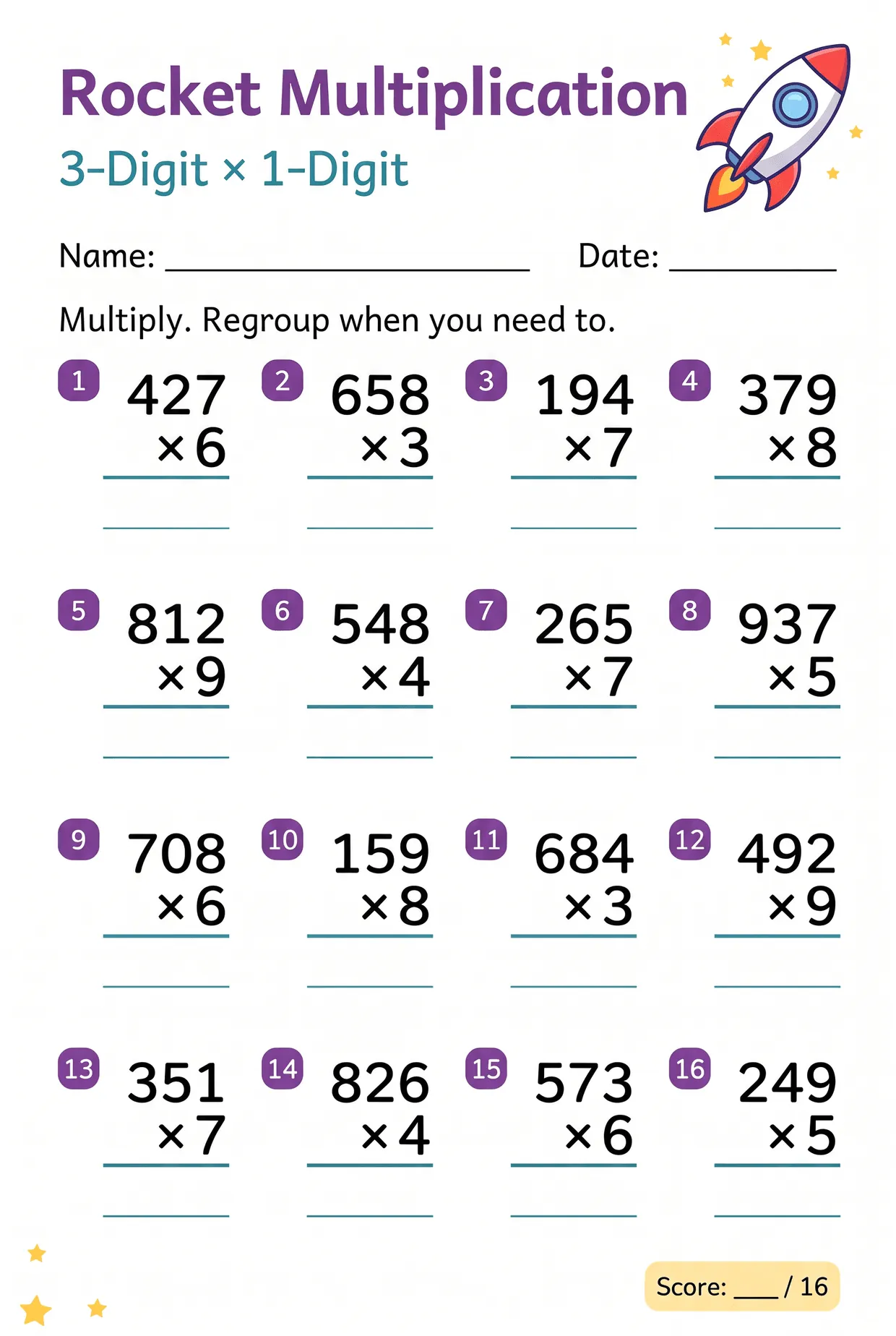
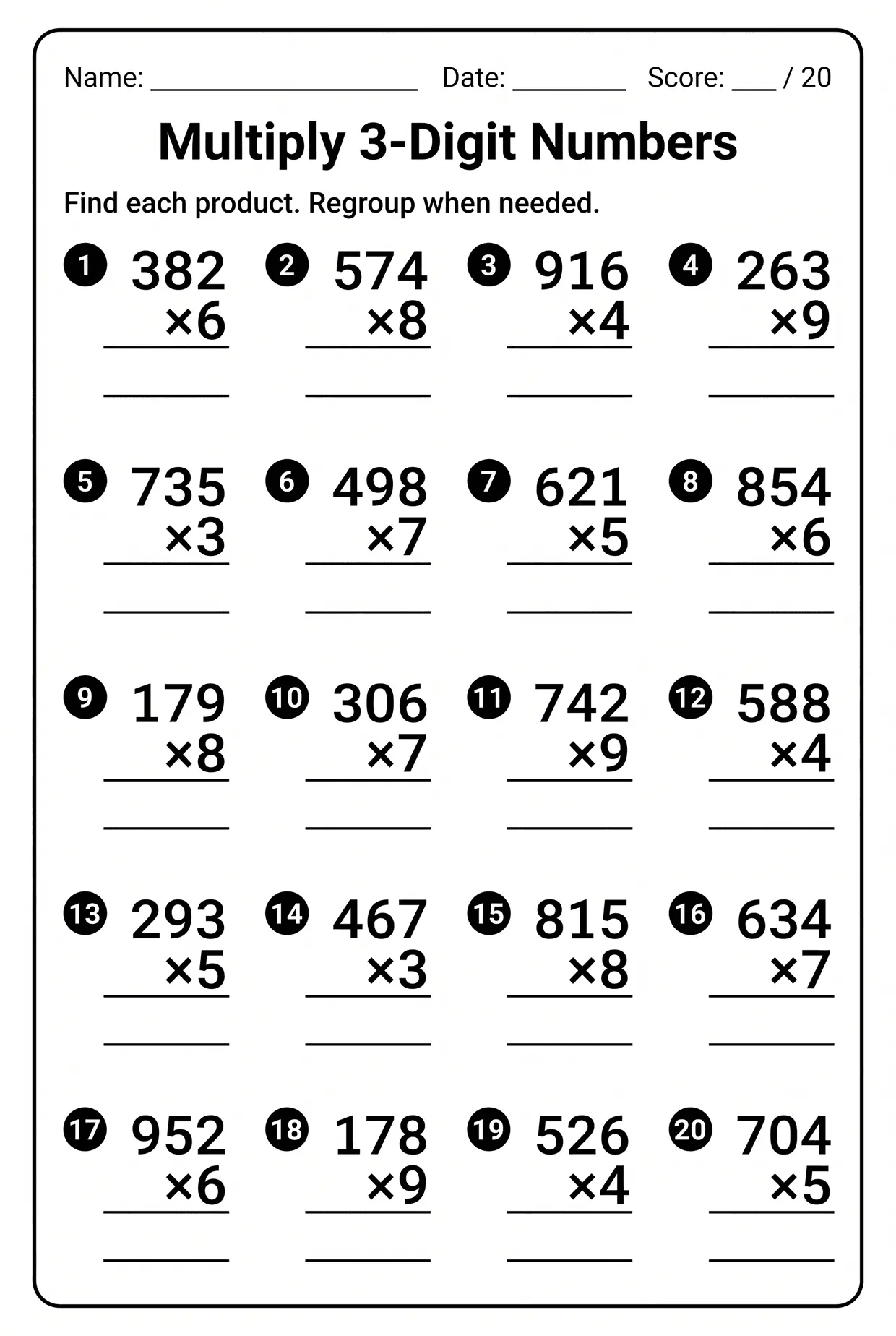
In a problem like 3-digit by 1-digit, the carried number has to be added after the next multiplication, and it is easy to skip it or multiply it by mistake. Have your child write the carried digit small above the next column and cross it out once it is used. The four-digit page with regrouping boxes gives that habit a fixed home.
Should my child know the times tables before multi-digit multiplication?
Yes. Every step of a long problem is a single fact, and a child who has to work out 7 times 8 in the middle of a four-digit problem tends to lose track of the regrouping. If facts are shaky, spend a few minutes on them before each session.
Is my child ready for two-digit by two-digit multiplication?
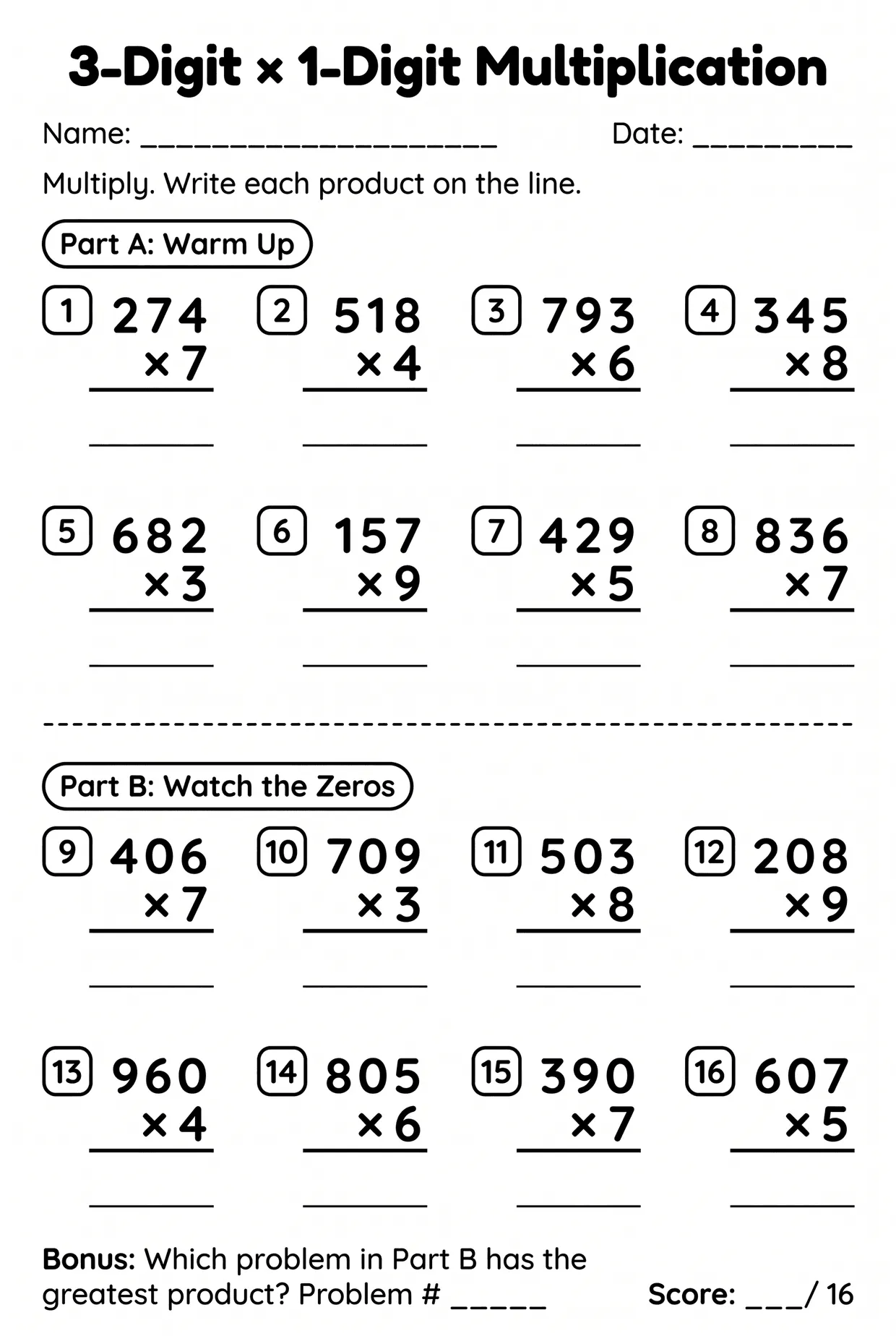
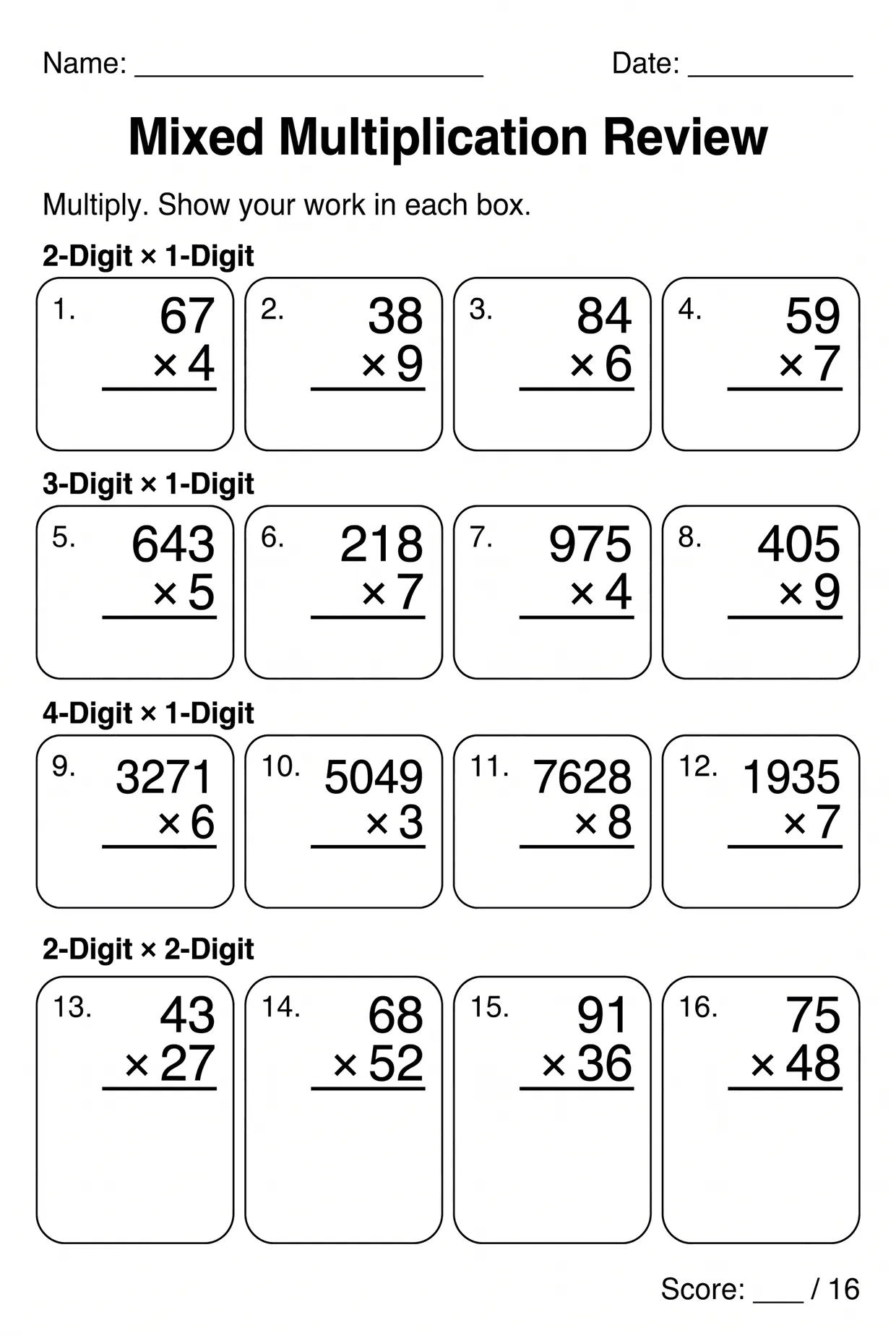
Look for steady accuracy on three-digit by one-digit problems, including ones with zeros, and comfort multiplying by multiples of ten. The second partial product is really a multiply by tens, so a child who can do 34 times 20 is ready. The mixed review page is a handy test before moving on.