Questions about 4th grade reading comprehension worksheets
What should a fourth grader be able to do in reading comprehension?
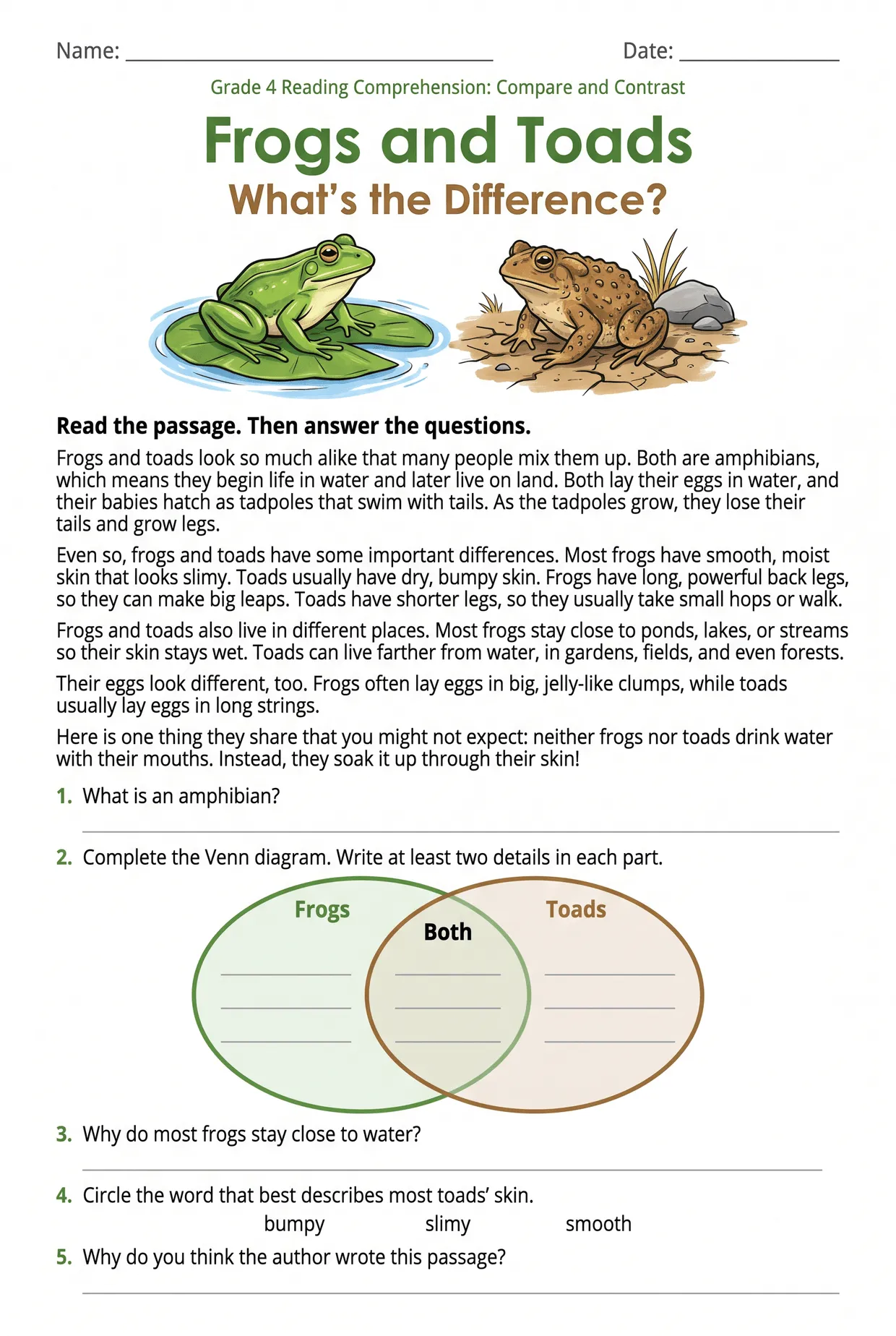
Referring to details and examples when explaining what a text says and when drawing inferences (RL.4.1 and RI.4.1). Children also find the main idea, explain the theme of a story and compare different kinds of texts, and almost every question on these sheets asks for that kind of support.
What is the difference between a fable and a pourquoi tale?
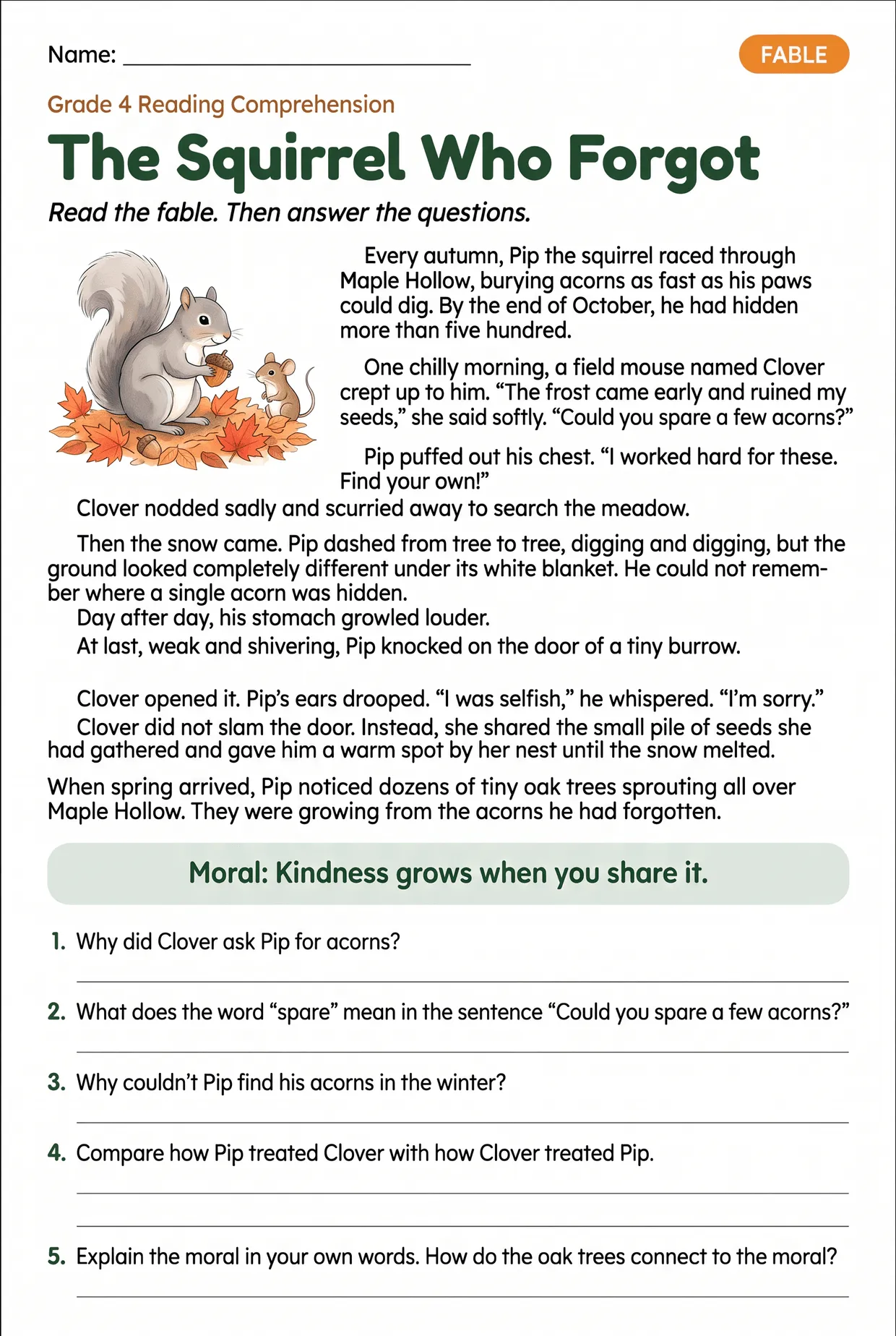
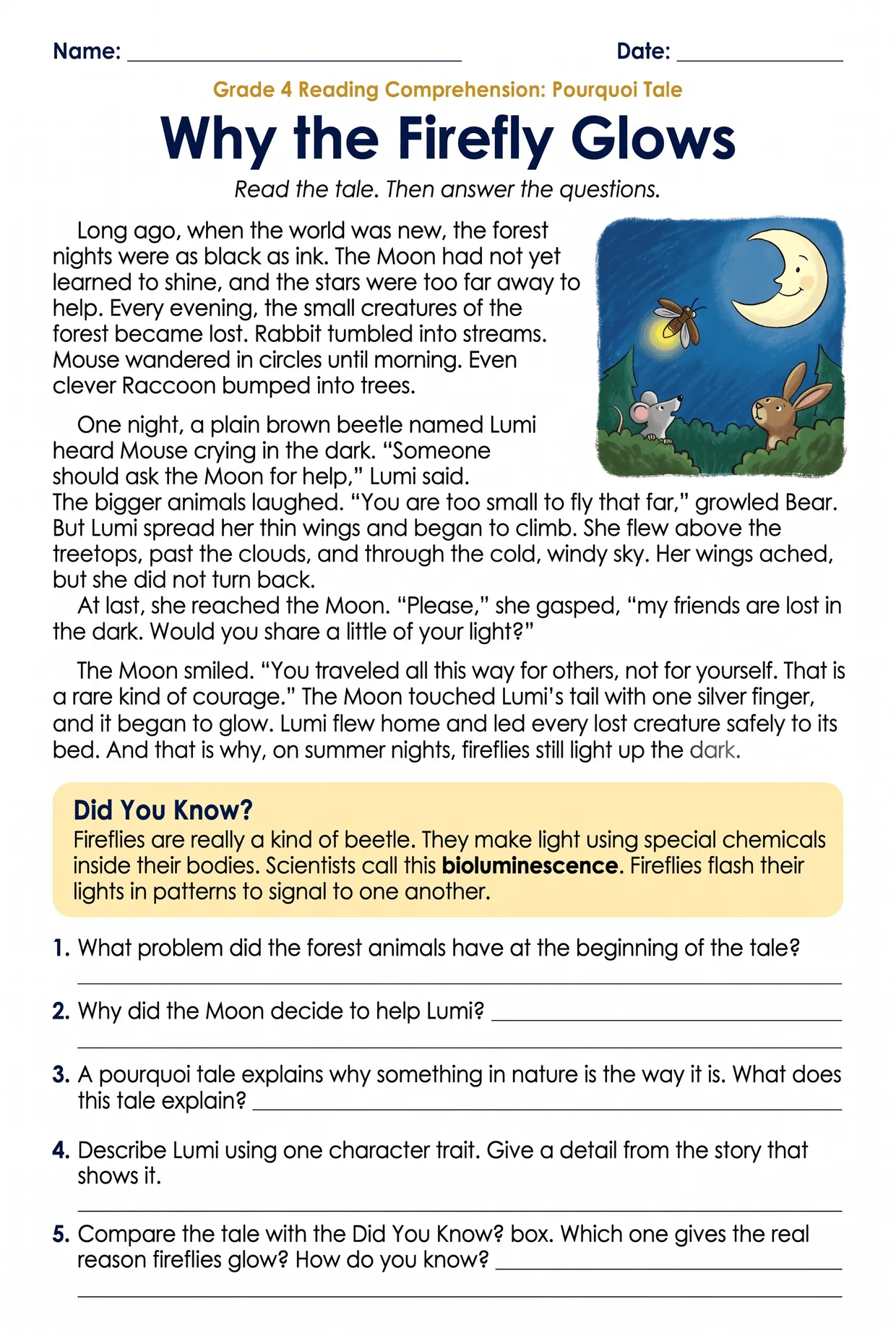
A fable teaches a moral, like the squirrel who will not share his acorns and then cannot find them under the snow. A pourquoi tale explains why something in nature is the way it is, like how the firefly got its glow. The firefly page pairs the tale with a short science box, so a child can compare the story with the real explanation.
My child's written answers are too short. What helps?
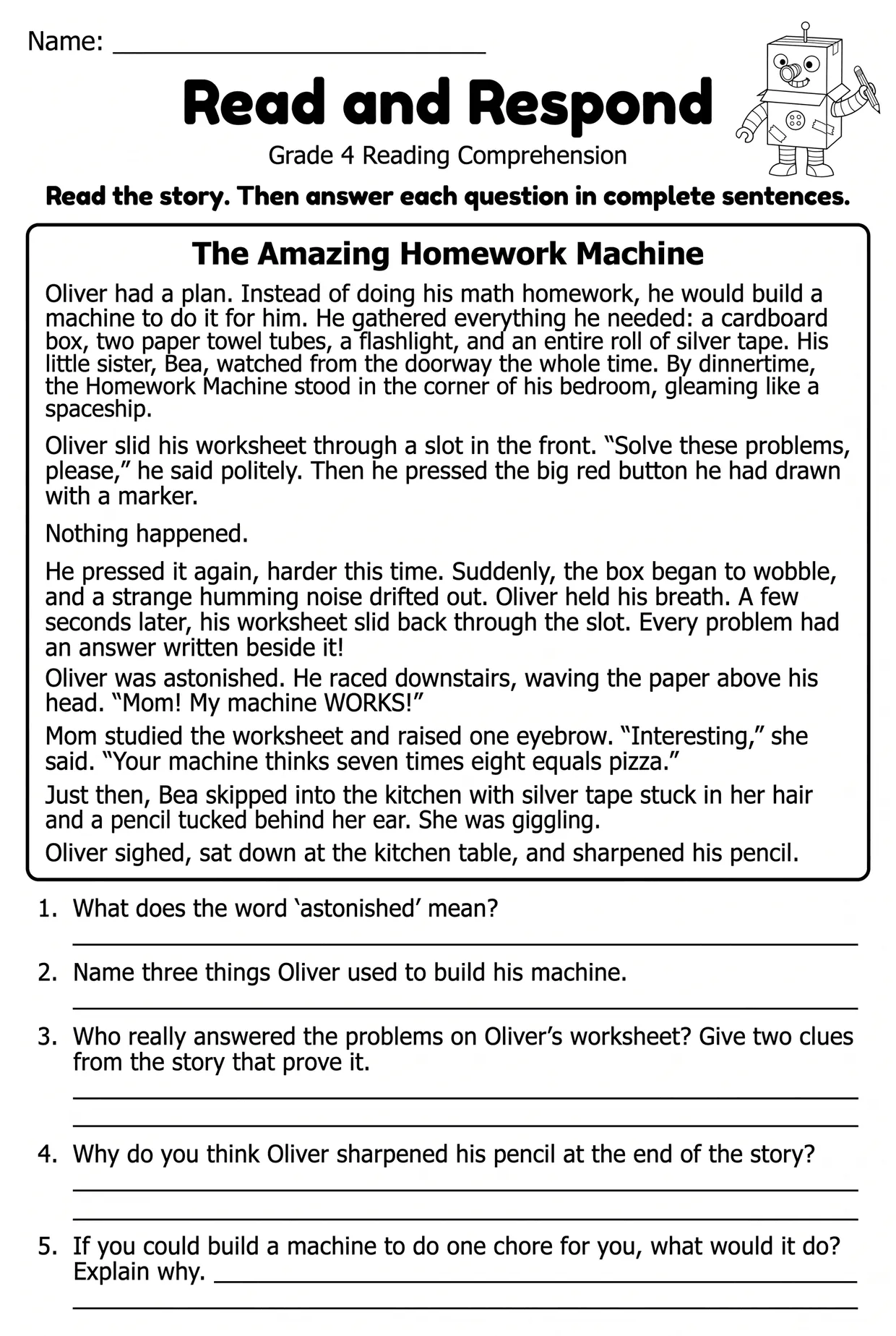
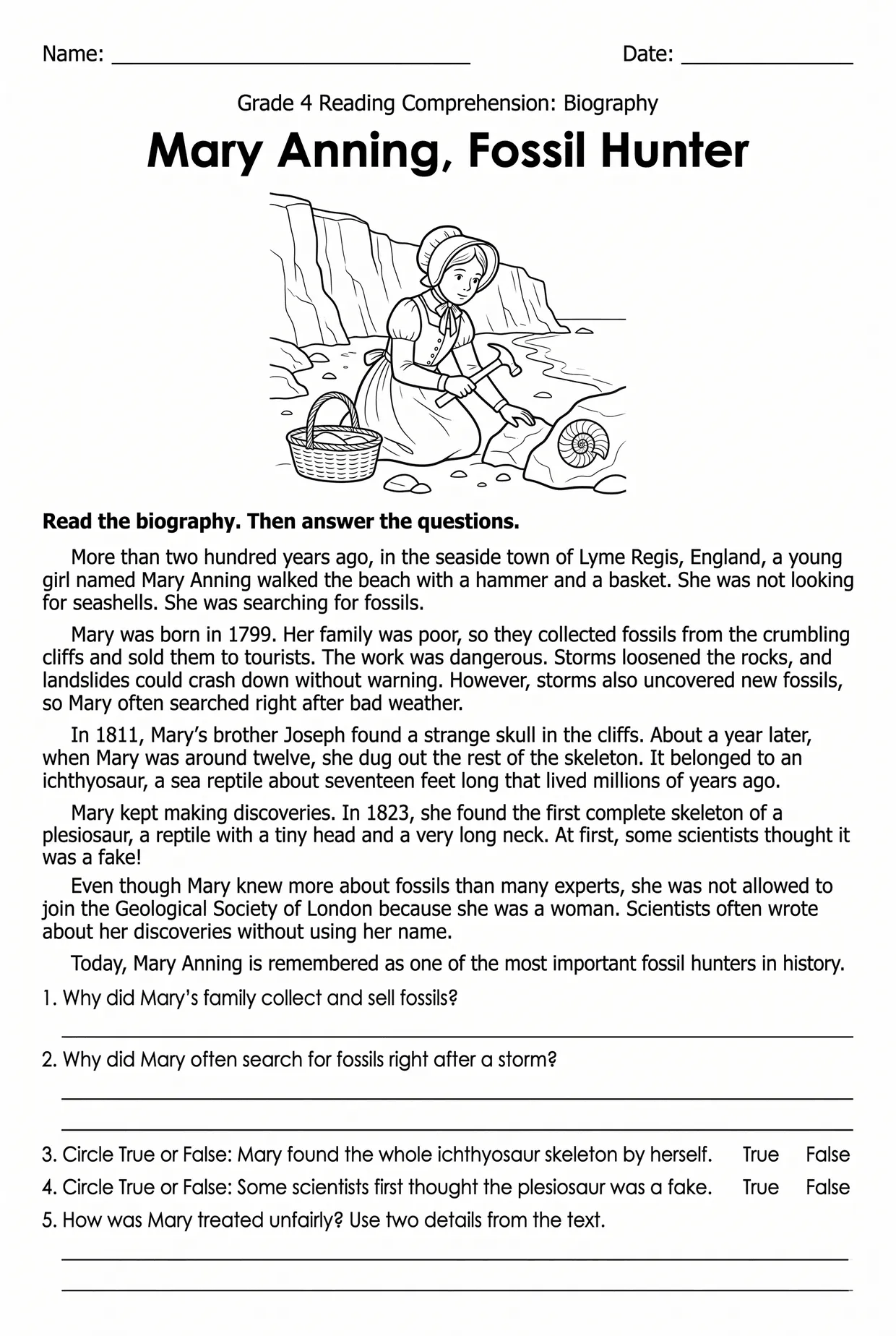
Teach a simple pattern: answer the question, then add because and a detail from the text. The Mary Anning page and the homework machine story both ask for two details, which pushes a child past one-word answers. Reading the answer back aloud helps them hear whether it really explains anything.
Why read plays and poems in fourth grade?
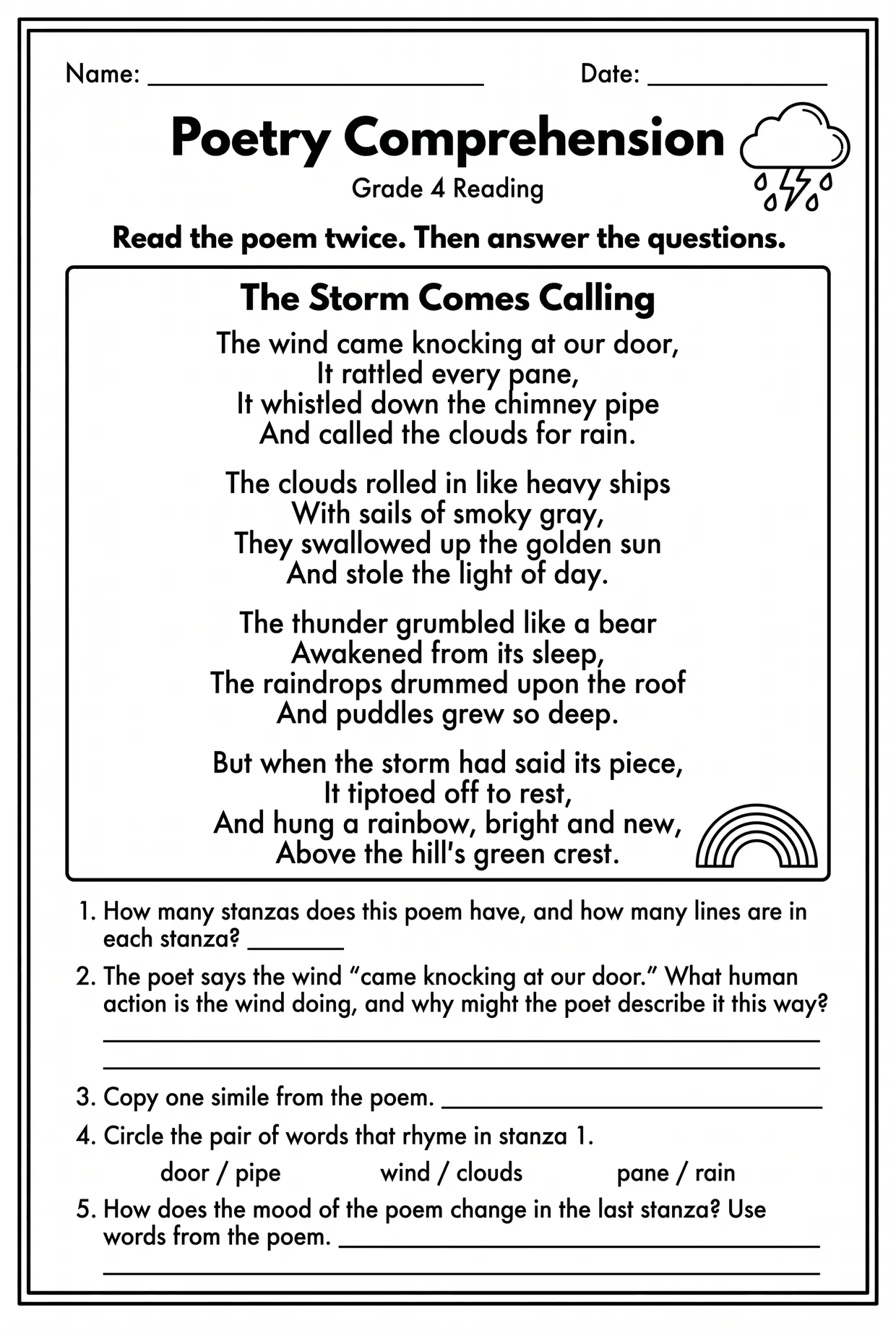
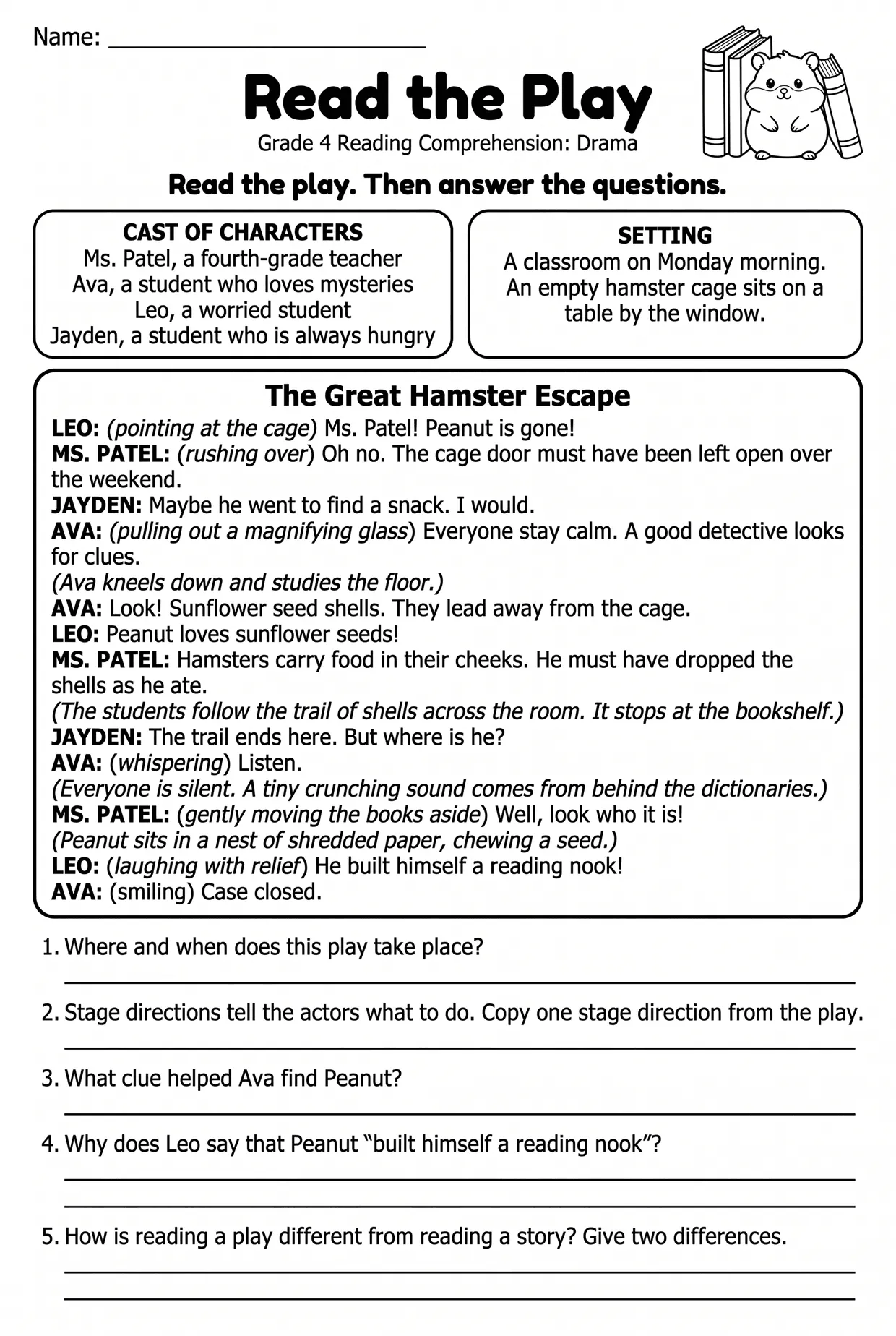
The fourth grade standards (RL.4.5) ask children to explain how poems, plays and stories differ, using words like stanza, cast and stage directions. Reading one of each makes the differences easy to see. The storm poem also brings in simile and personification, which turn up in fiction from here on.
How can a child tell a fact from an opinion?
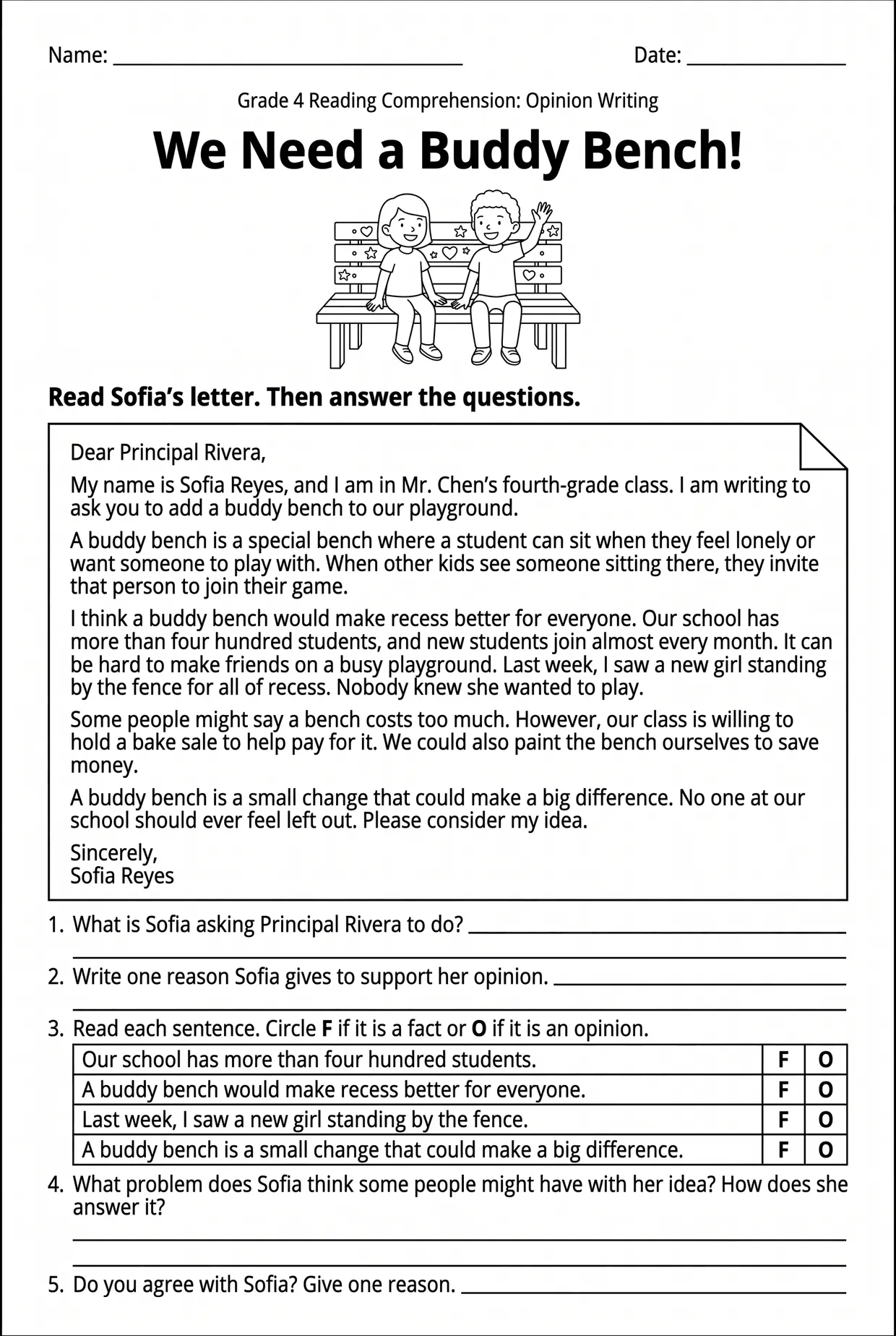
A fact can be checked, and an opinion tells what someone thinks or wants. Sofia's letter about a buddy bench mixes both, which is exactly how persuasive writing works. Have your child test each sentence by asking whether anyone could prove it true.