Spot the Correct Sentence: Punctuation Worksheet
About this worksheet
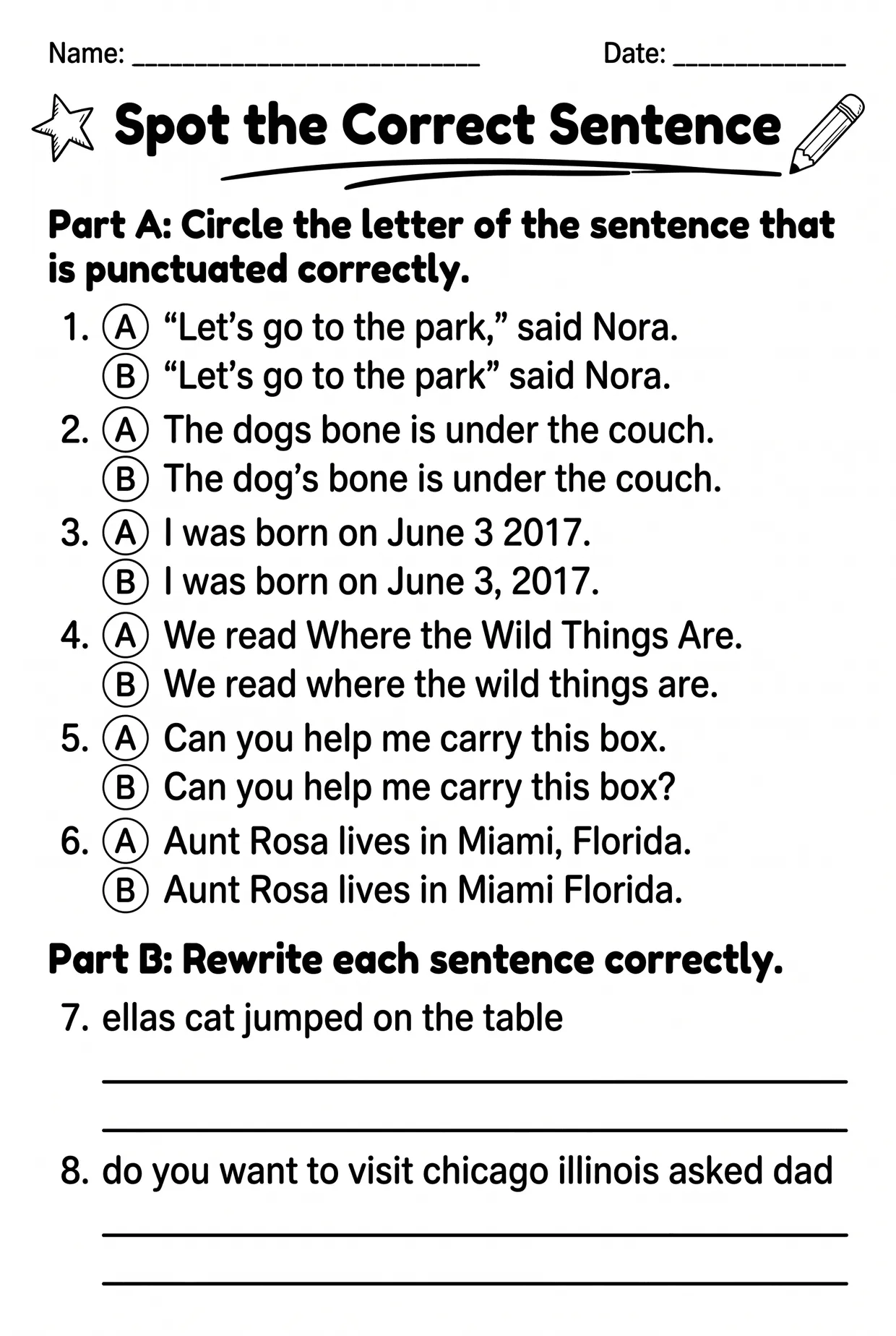
Part A gives six pairs of sentences that differ by a single mark, and the child circles the one that is right. Each pair targets a different rule: quotation marks around speech, the apostrophe in “the dog’s bone,” the comma in “June 3, 2017,” capitals in a book title, a question mark instead of a period, and the comma in “Miami, Florida.” Part B then hands over two sentences with nothing at all and asks for them to be rewritten, including “do you want to visit chicago illinois asked dad,” which needs a capital, two commas, quotation marks and a question mark to come out right.
Choosing between two near-identical sentences is a different skill from producing one from scratch, and this sheet asks for both in that order. The rewrite lines are the ones worth reading carefully, because a child can pick the right answer in Part A by ear and still not know which mark to reach for on a blank line.
What students will practice
- Punctuate dialogue with a comma and quotation marks
- Place an apostrophe in a possessive noun
- Use commas in dates and between a city and a state
Details
- Grade level
- Grade 3
- Subject
- Reading · Punctuation
- Standard
- CCSS L.3.2
- Pages
- 1
- Format
- PDF · US Letter and A4 included
- License
- Free for classroom use · Attribution appreciated
- Last updated
- September 21, 2026