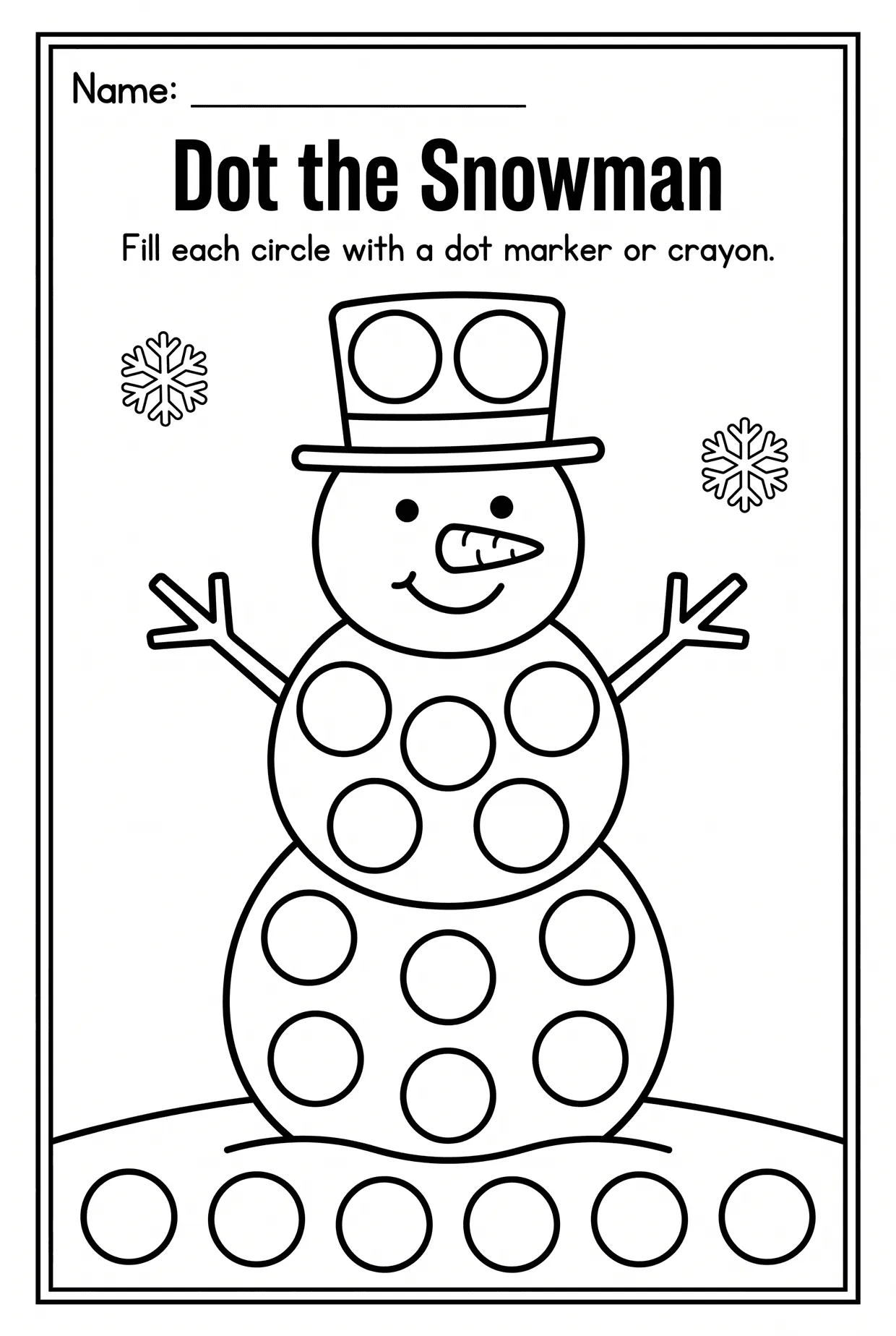
Standing lines are usually the first pre-writing stroke a child learns, before sleeping lines (horizontal), slanting lines and curves. They come first because pulling a crayon straight down is the easiest movement for a small hand, and because so many letters and numbers start with one: l, t, b, d, h, k, 1 and 4, to name a few.
The first nine sheets use long lines that run nearly the full height of the page, most of them from one picture down to another. A picture at each end gives a three year old a reason to get to the bottom. Sheets 10 to 12 make the lines shorter and closer together and mix in different lengths, which takes more control and is closer to the strokes in real letters. The last three take the guides away bit by bit, first by tracing and then drawing on the same page, and finally with only dots to join.
Every line on every page is drawn from top to bottom. Starting at the top is the habit worth building now, because it is how standing lines are formed in almost every handwriting program a child will meet later.
Nine of the fifteen print in plain black and white line art, which keeps a class set light on ink. The other six use soft color pictures, and all of them still work printed in black and white.
Bee to Flower Standing Lines Worksheet for Preschool
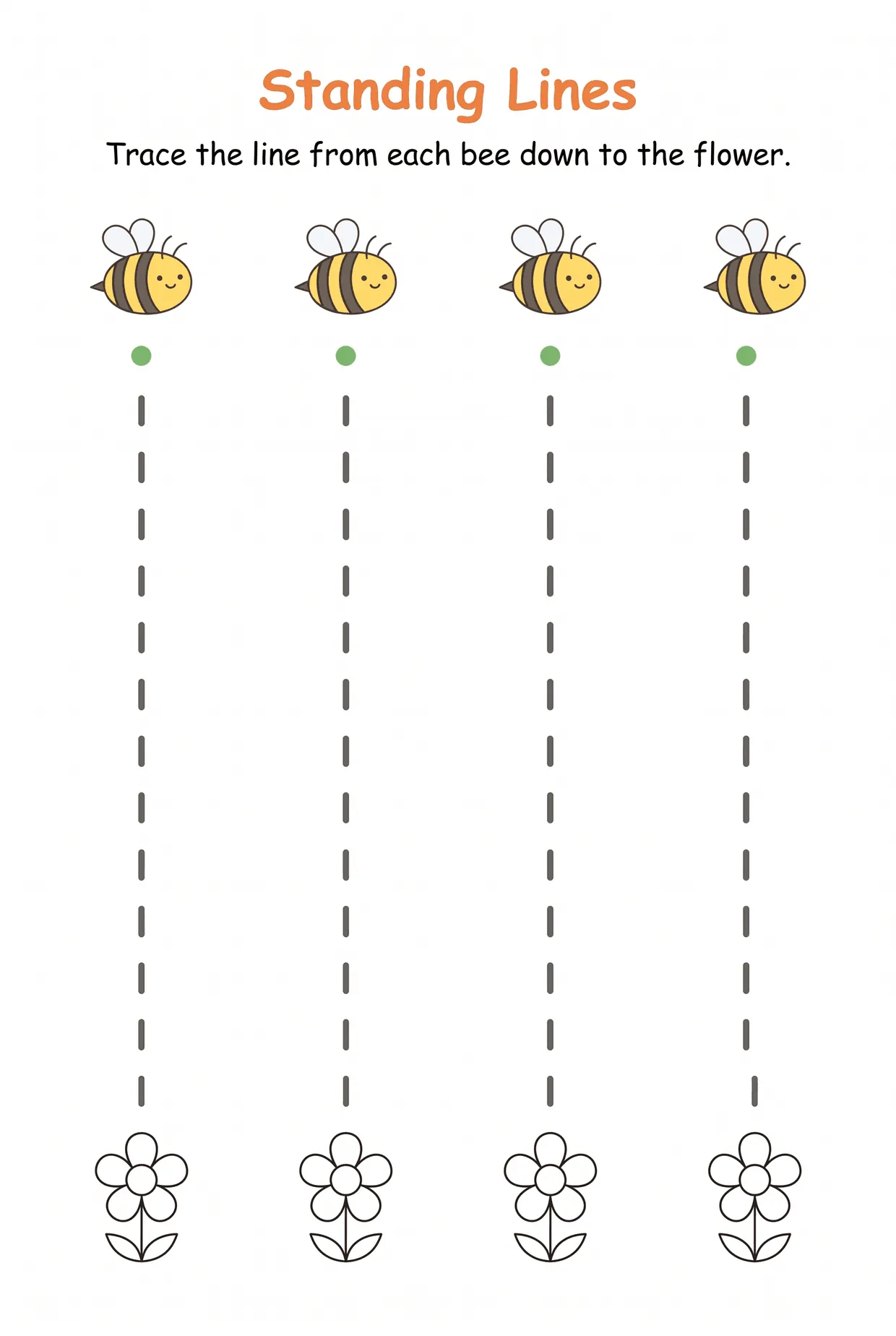
Four bees at the top of the page, four flowers at the bottom, and a dotted line between each pair with a green dot to start on.
Bunny and Carrot Standing Lines Worksheet for Preschool
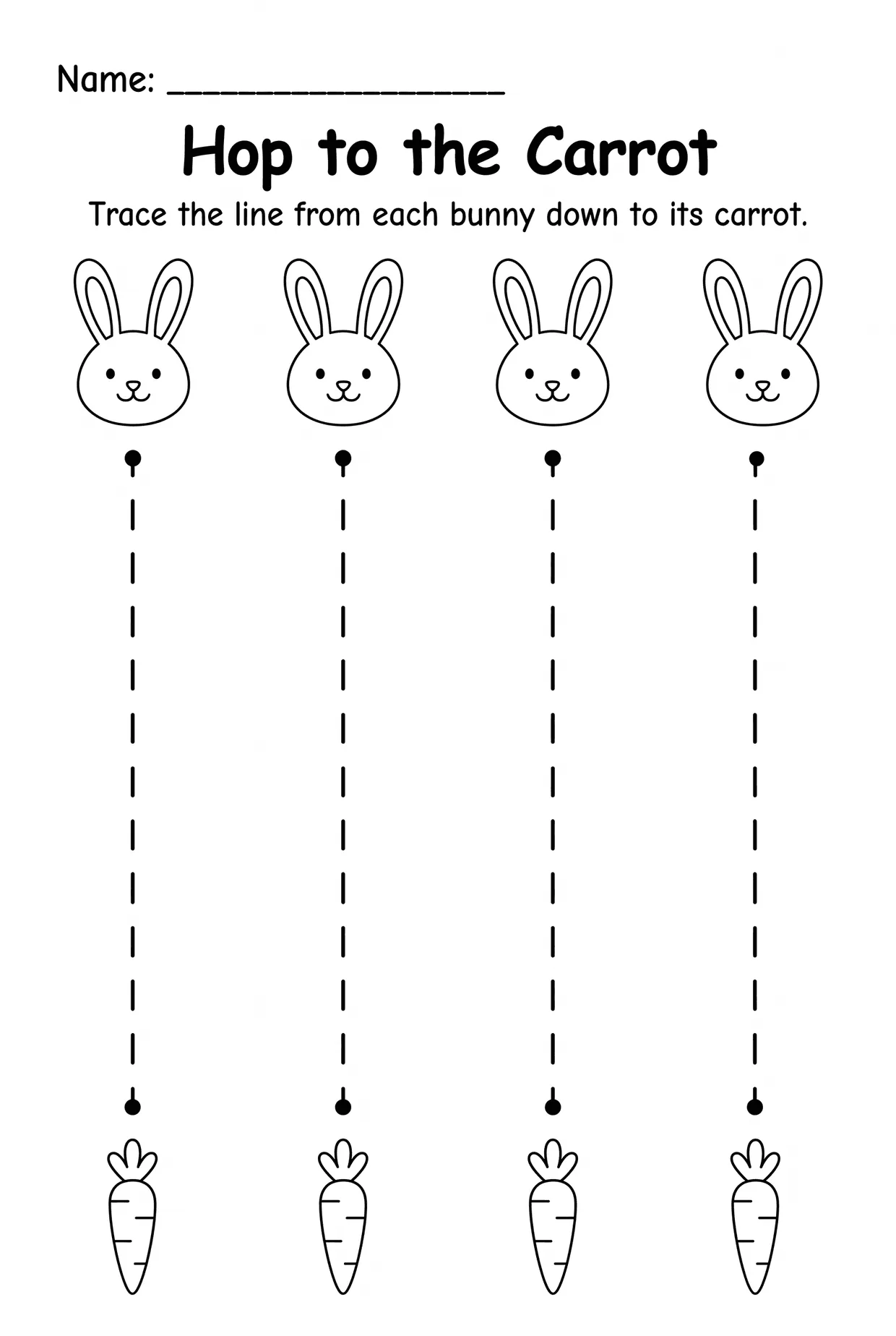
Four bunnies hop down a dashed line to their carrots, with a dot marking the start and another marking the stop.
Gone Fishing Standing Lines Worksheet for Preschool
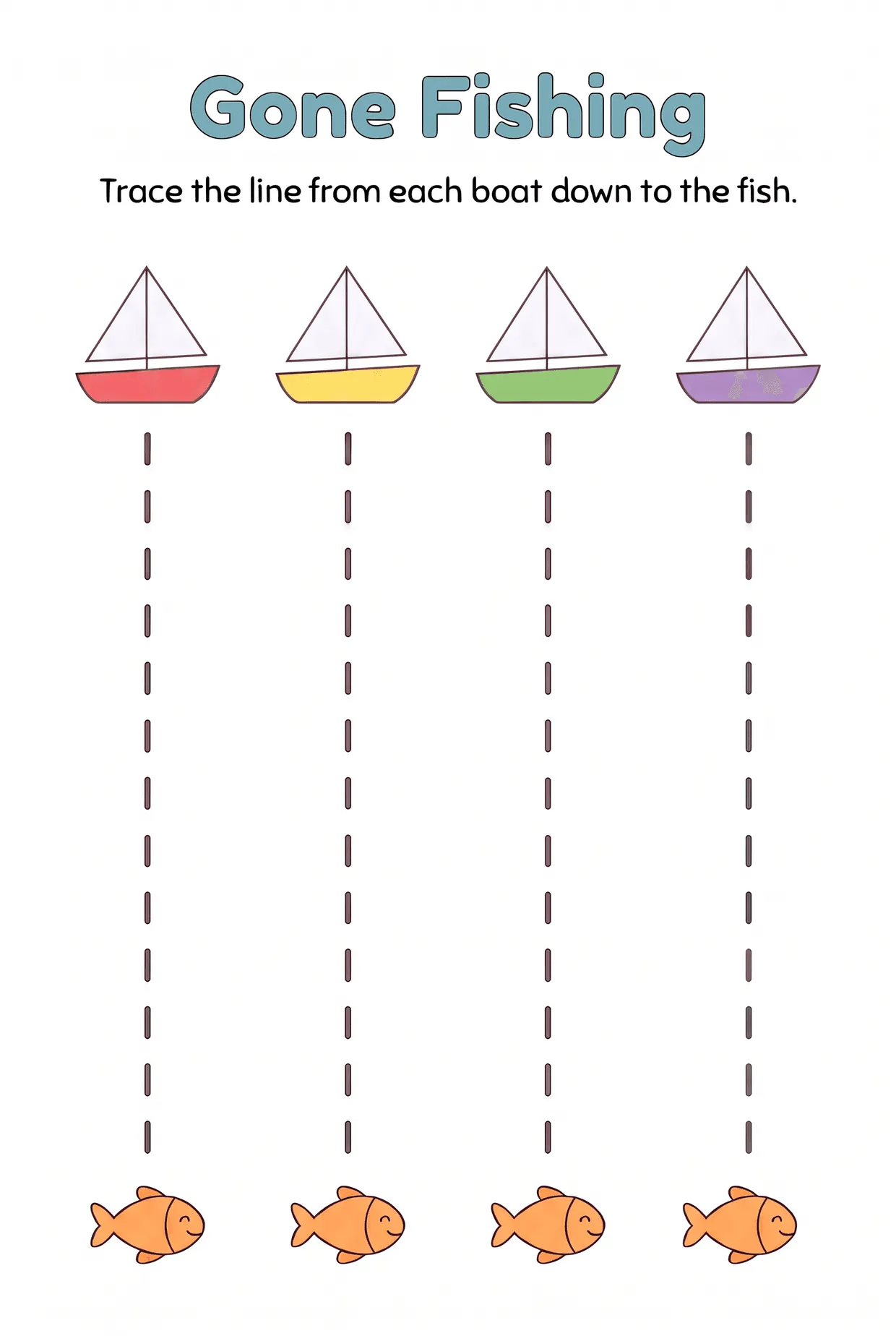
Four sailboats drop a fishing line almost the full height of the page down to an orange fish.
Balloon Strings Standing Lines Worksheet for Preschool
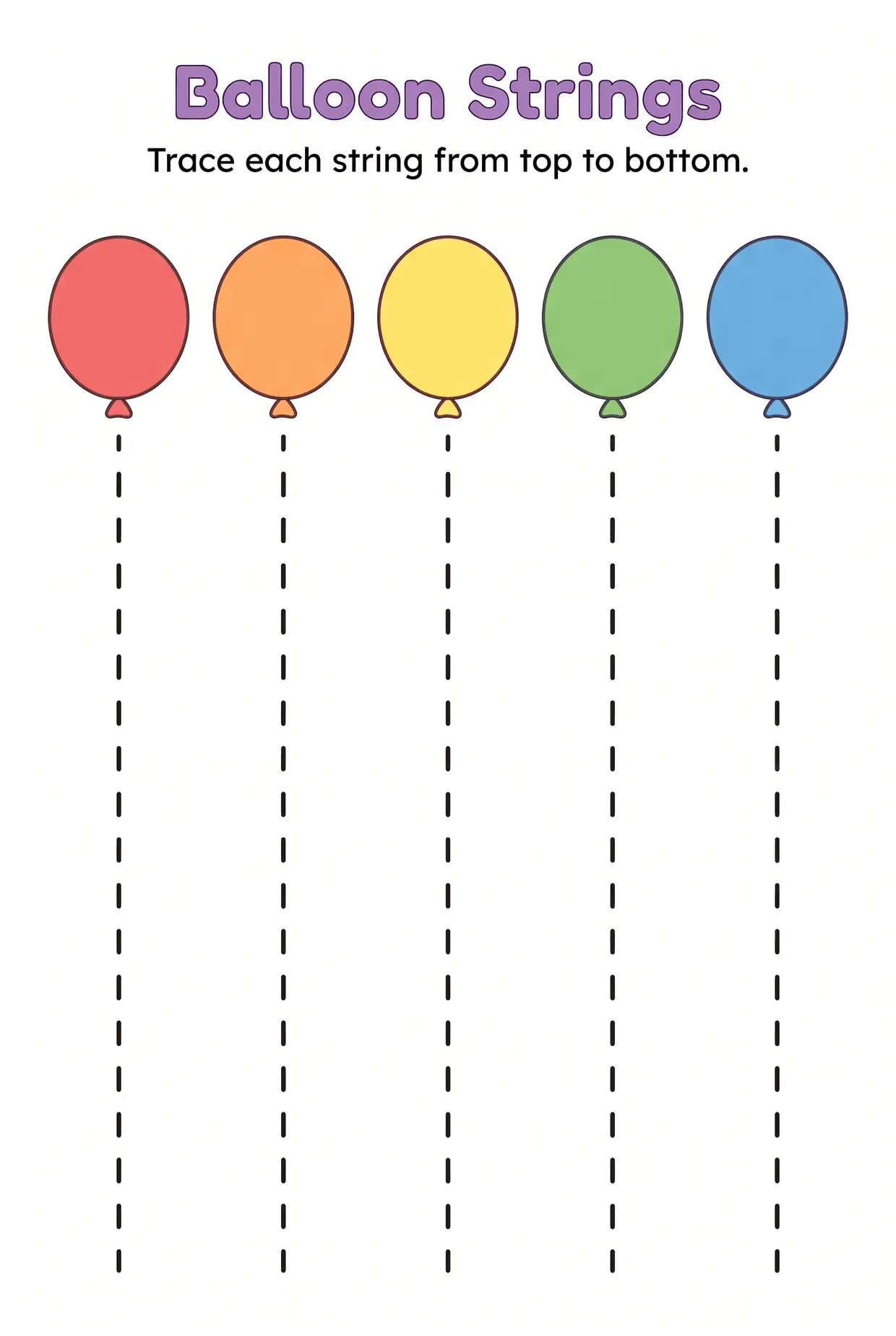
Five rainbow balloons, each with a long string to trace from the balloon to the bottom of the page.
Kite Strings Standing Lines Worksheet for Preschool
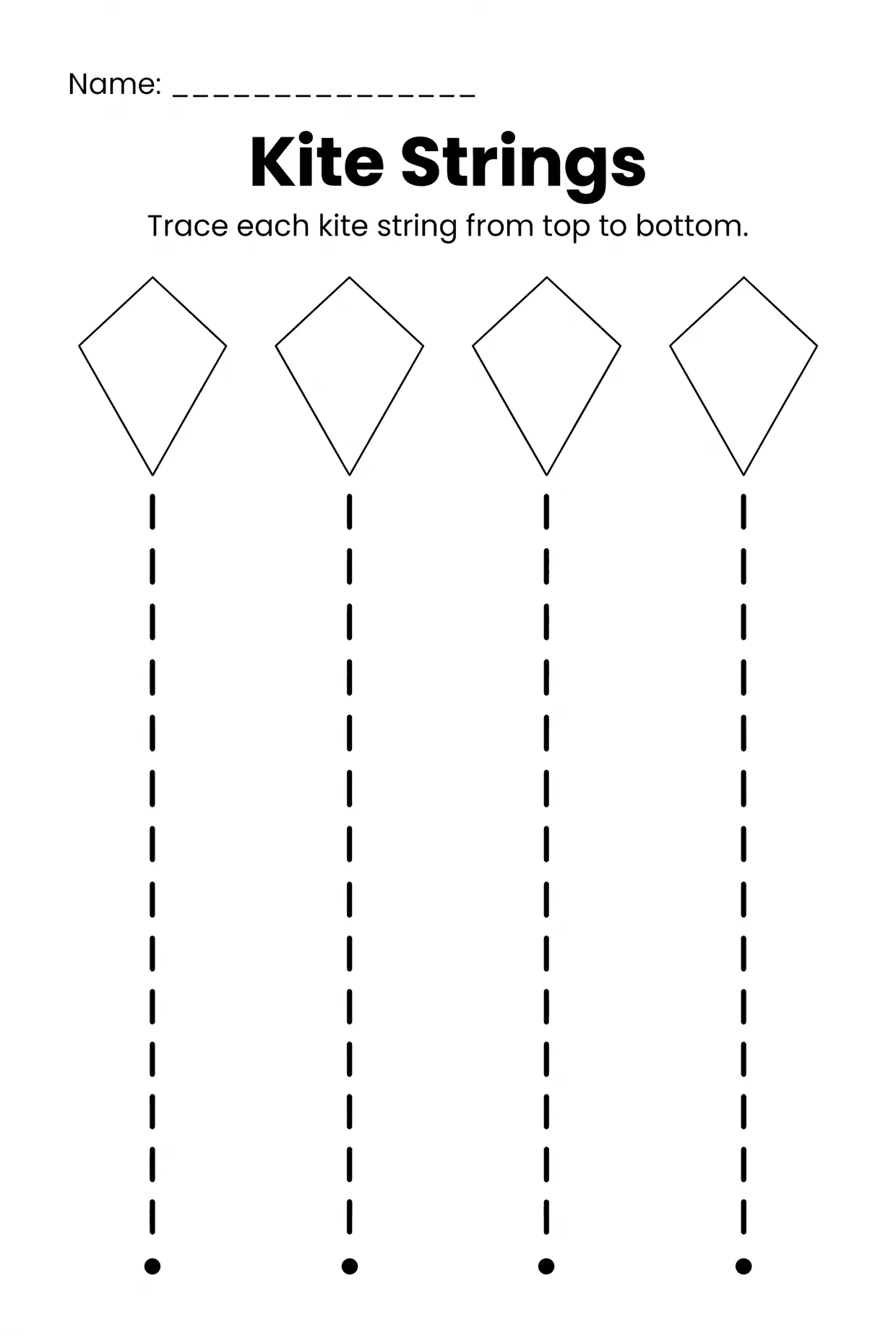
Four kites with dashed strings running down to a dot, printed in black and white so the kites can be colored in afterward.
Rainy Day Standing Lines Worksheet for Preschool
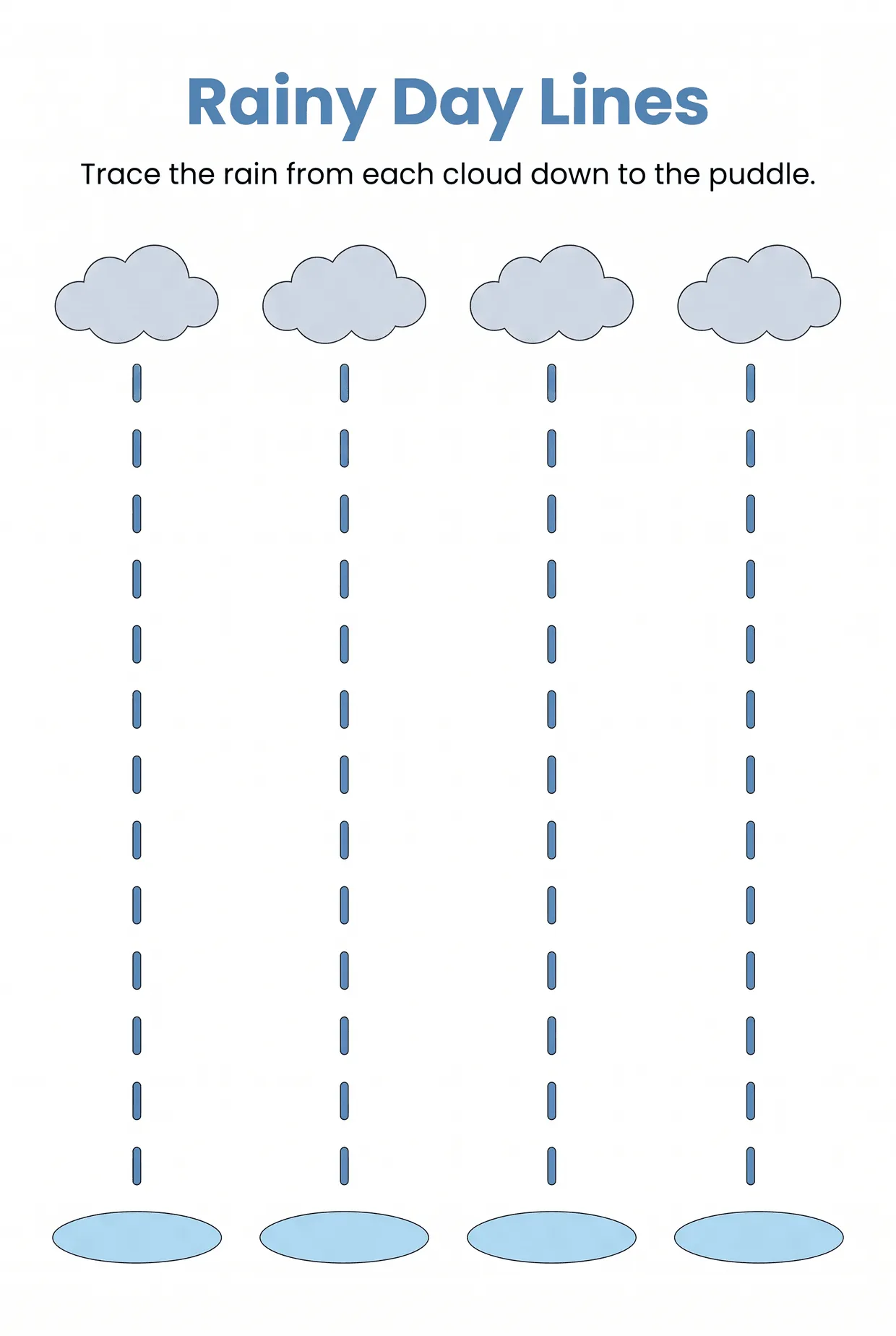
Rain falls in a straight line from four clouds into four puddles.
Falling Leaves Standing Lines Worksheet for Preschool
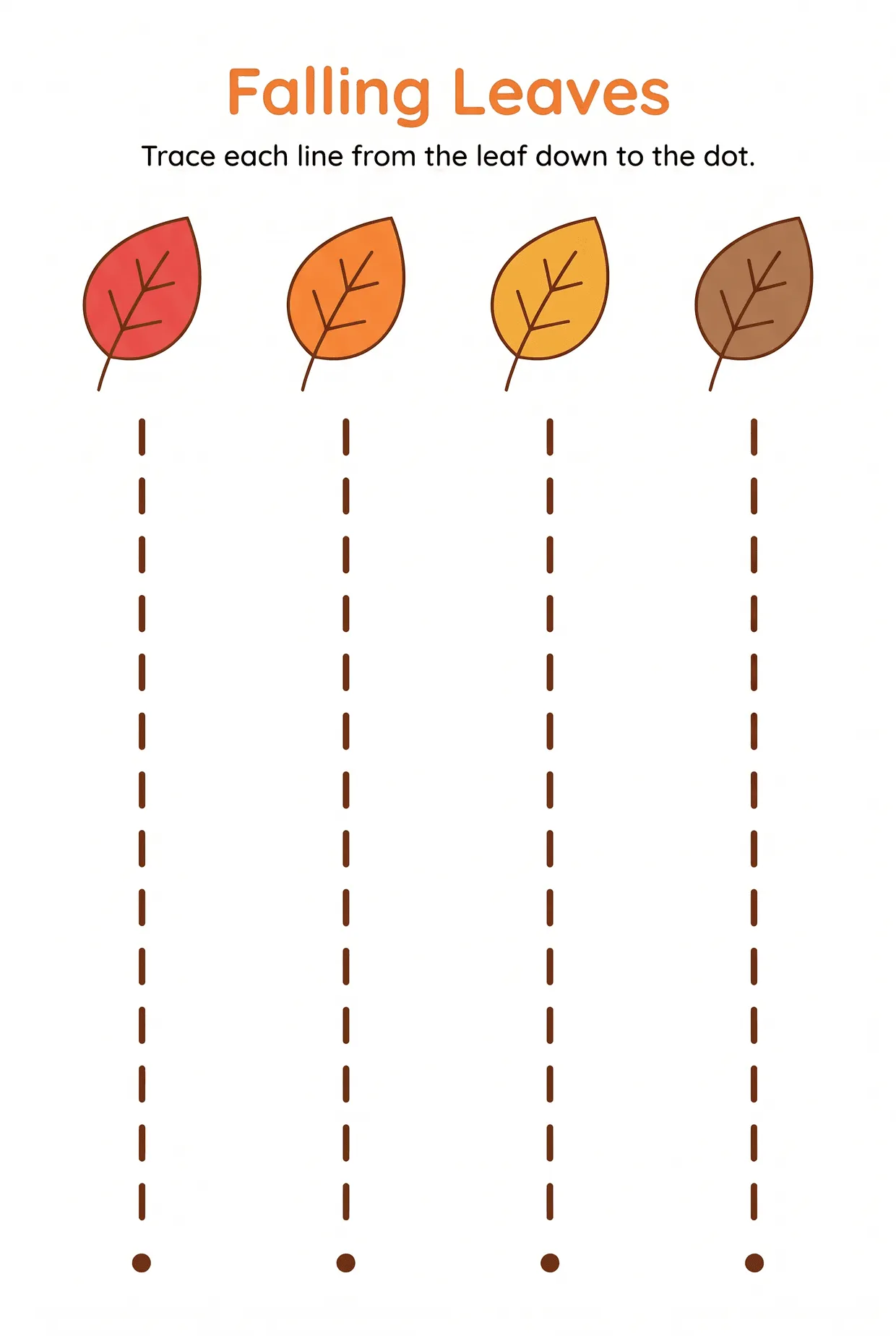
Red, orange, yellow and brown leaves drift down a dotted line to a dot at the bottom.
Crayon Colors Standing Lines Worksheet for Preschool
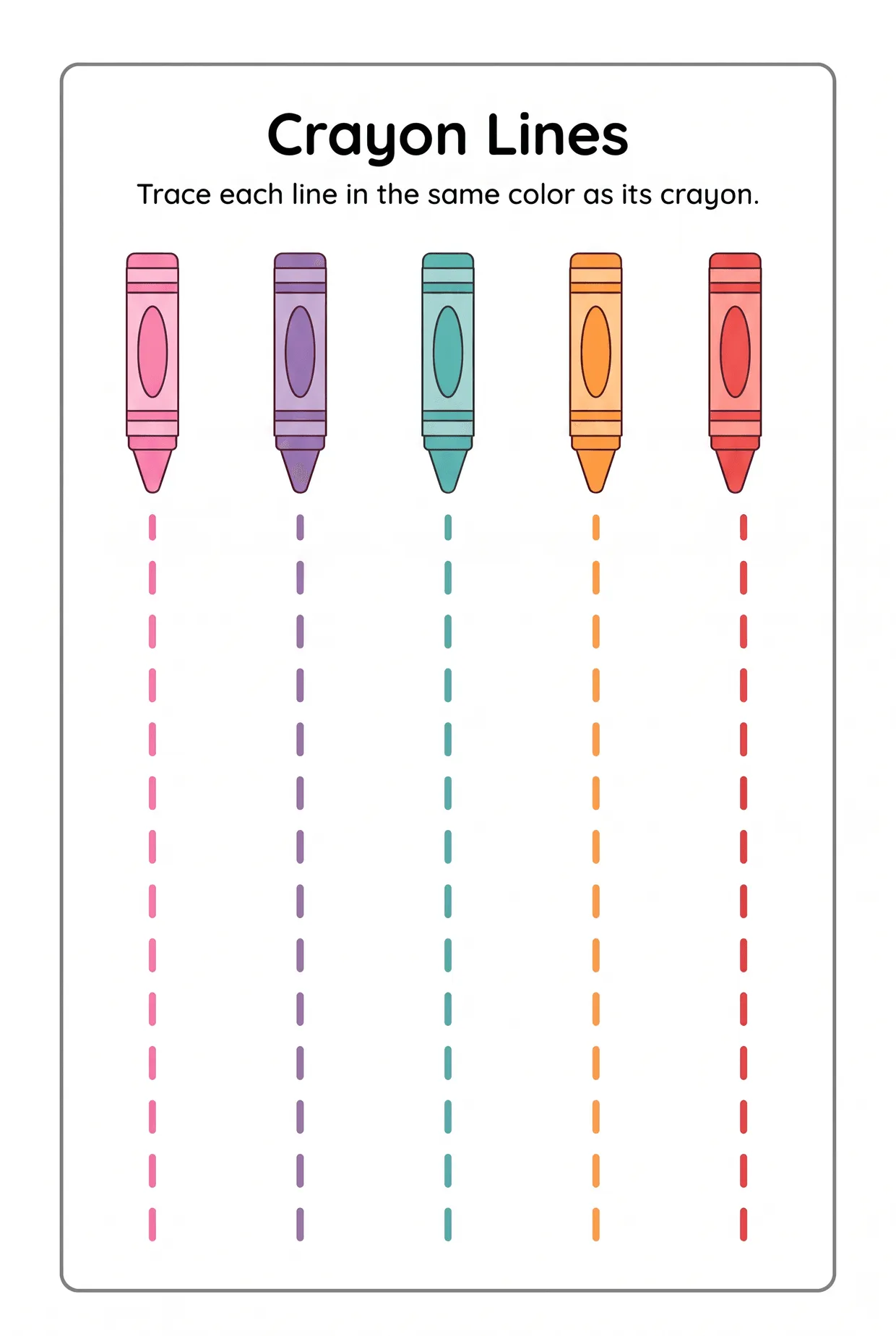
Five crayons over five dotted lines, and each line is traced in the color of its crayon.
Count and Trace Standing Lines Worksheet for Preschool
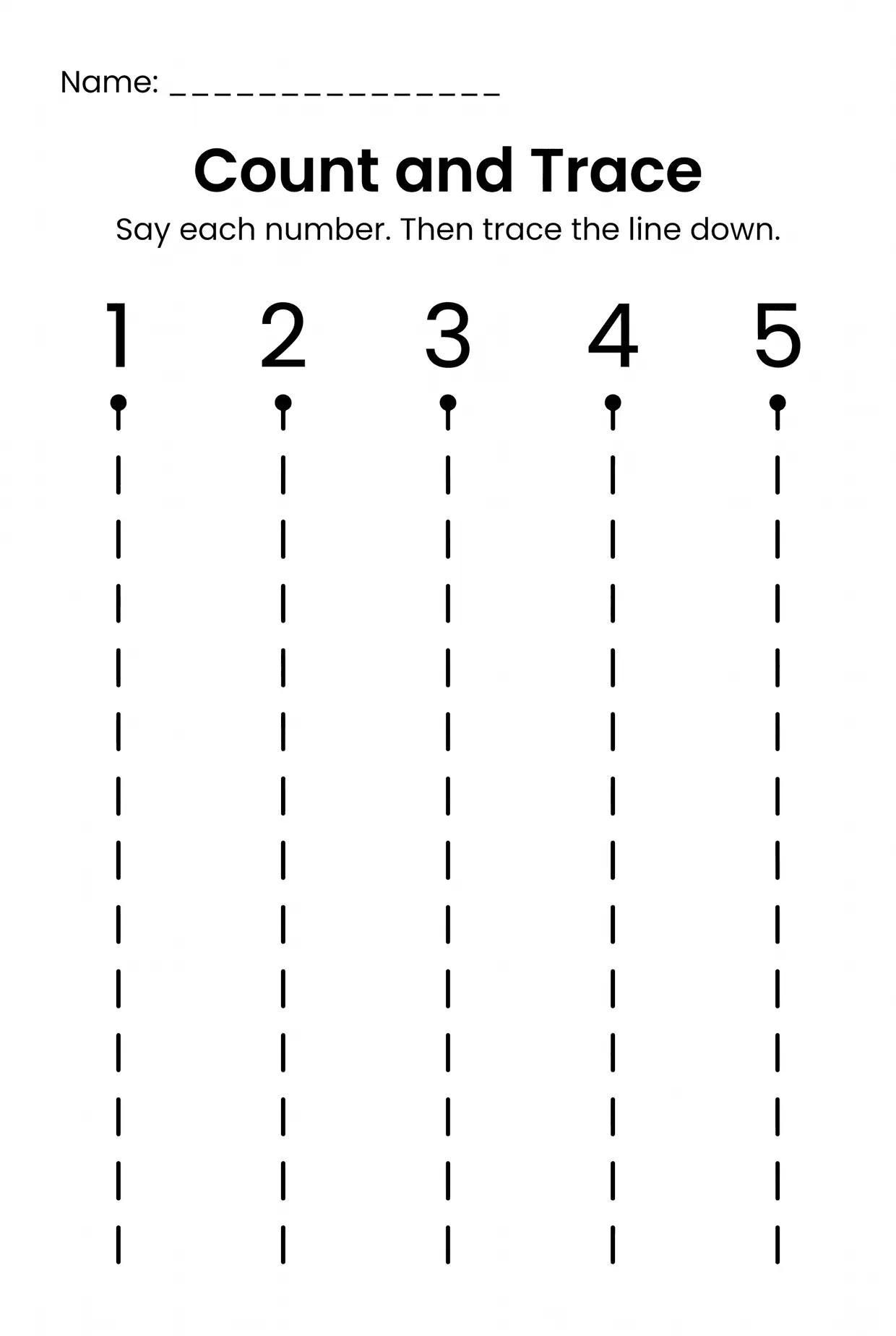
The numbers 1 to 5 across the top, each with a long line to trace under it. Say the number, then trace.
Star Standing Lines Tracing Worksheet for Preschool
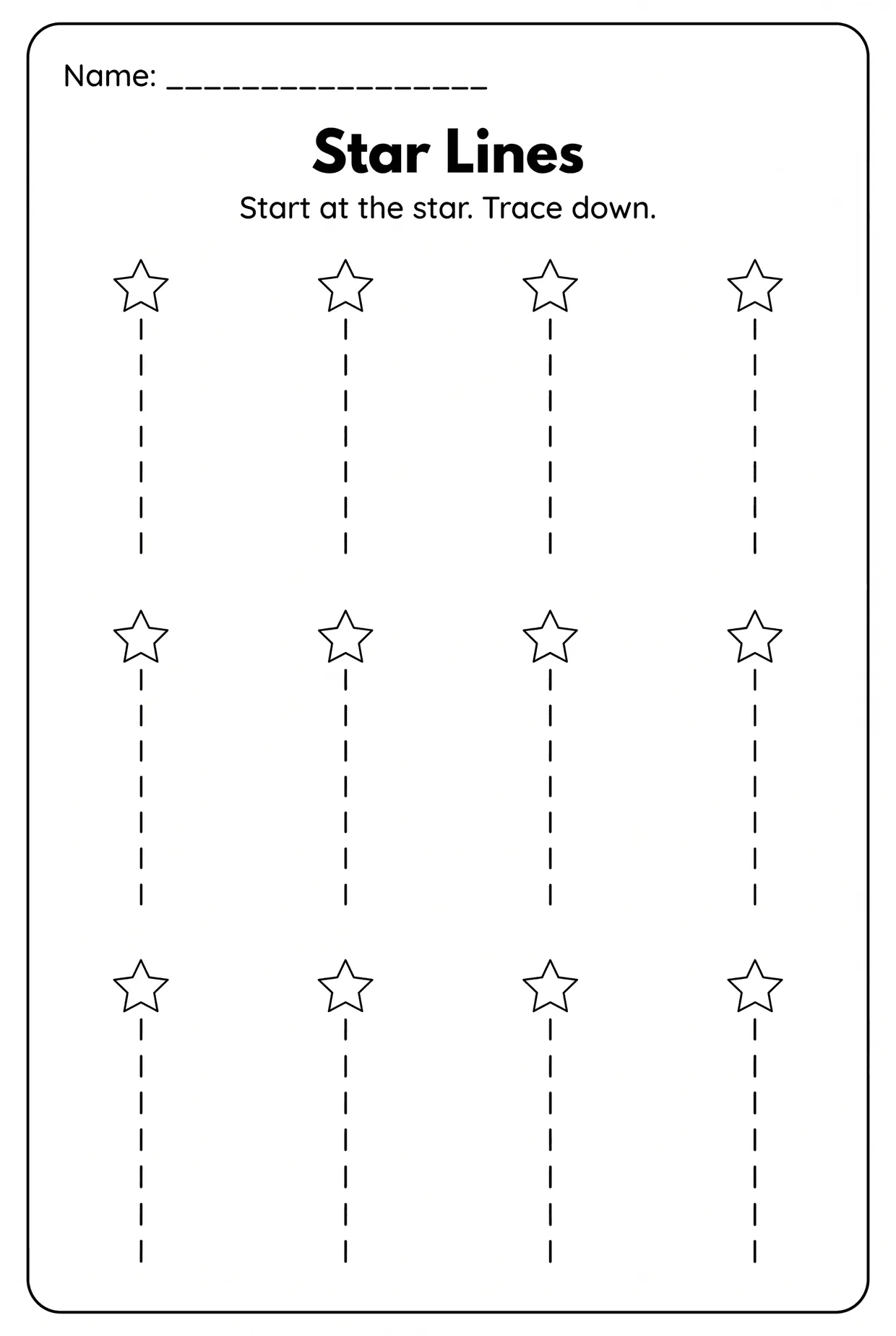
Twelve shorter lines in three rows, each starting under a star.
Short and Tall Standing Lines Worksheet for Preschool
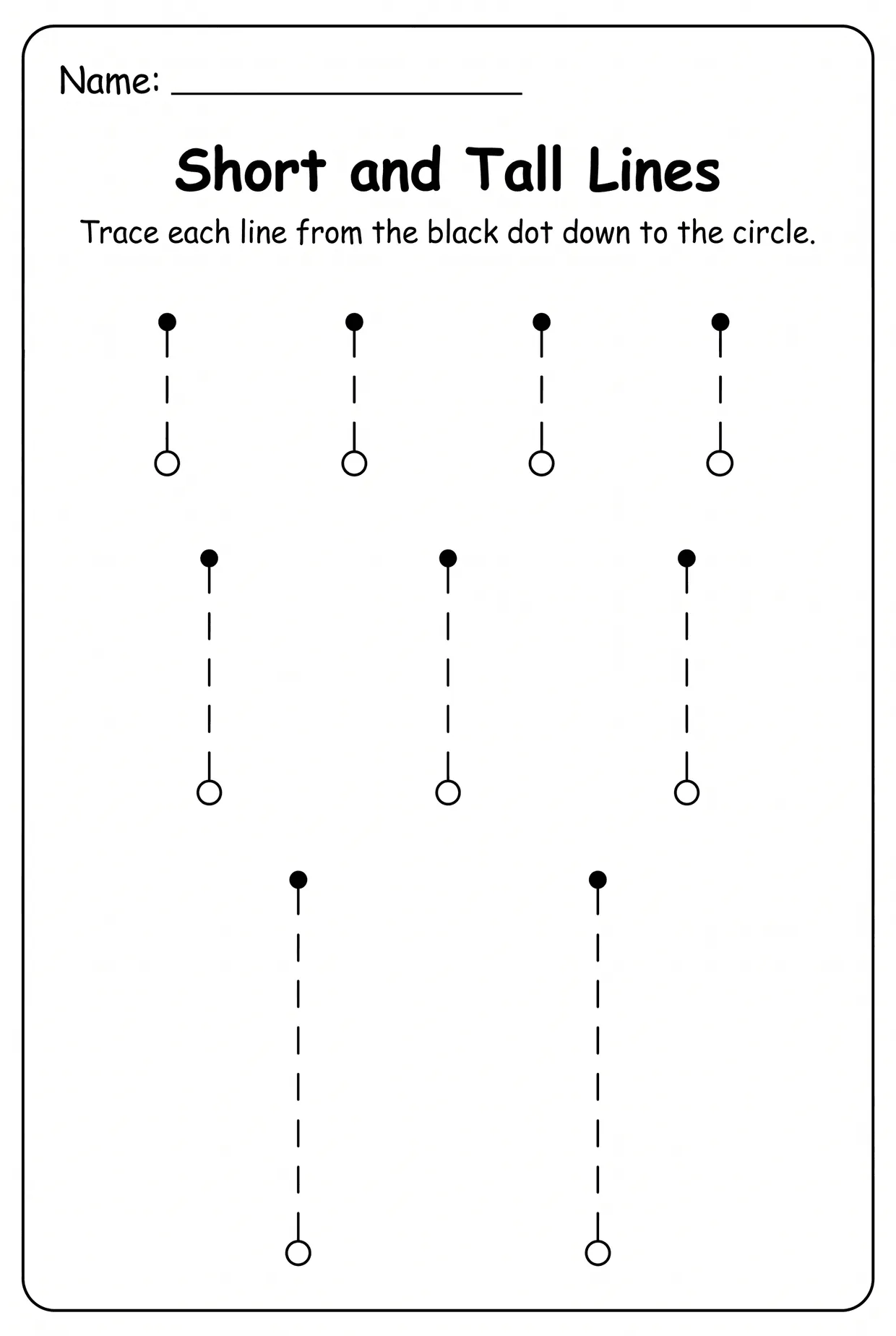
Four short lines, three medium lines and two tall ones, each from a black dot to an open circle.
Lines in Threes: Standing Lines Worksheet for Preschool
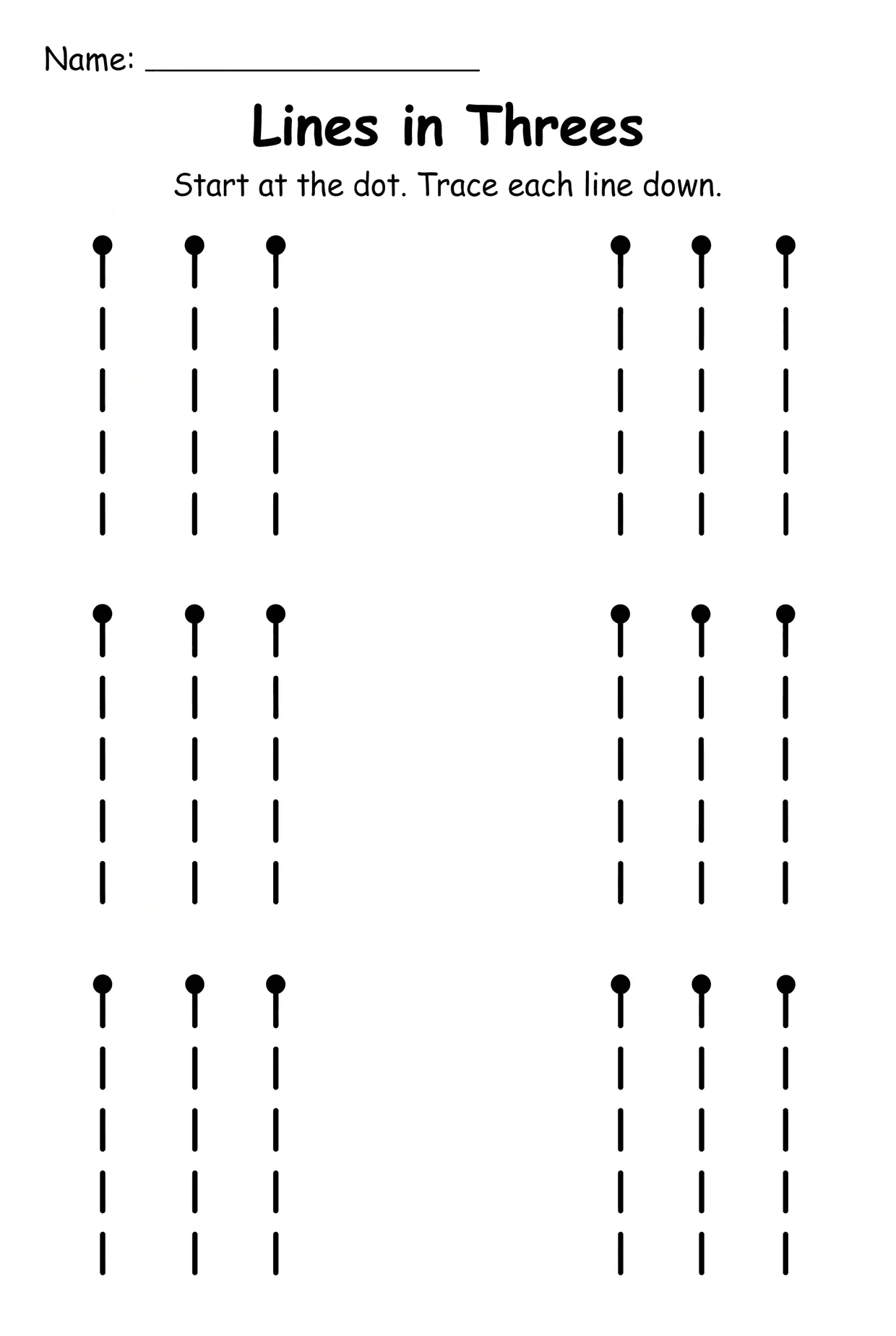
Eighteen short lines in six groups of three, each starting at a dot.
Trace Then Try Standing Lines Worksheet for Preschool
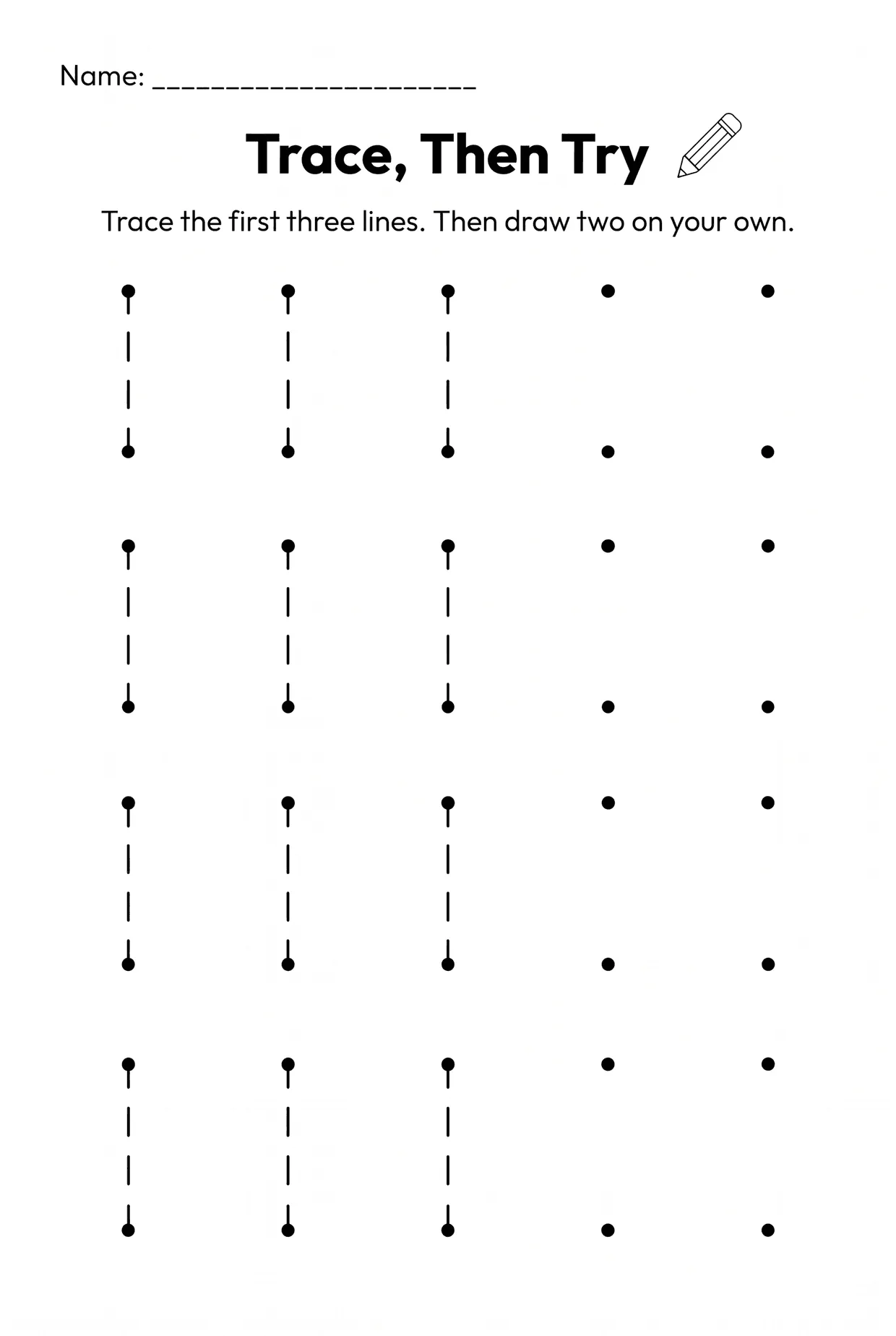
Each row has three lines to trace, then two pairs of dots with nothing between them to join on their own.
Trace and Draw Standing Lines Worksheet for Preschool
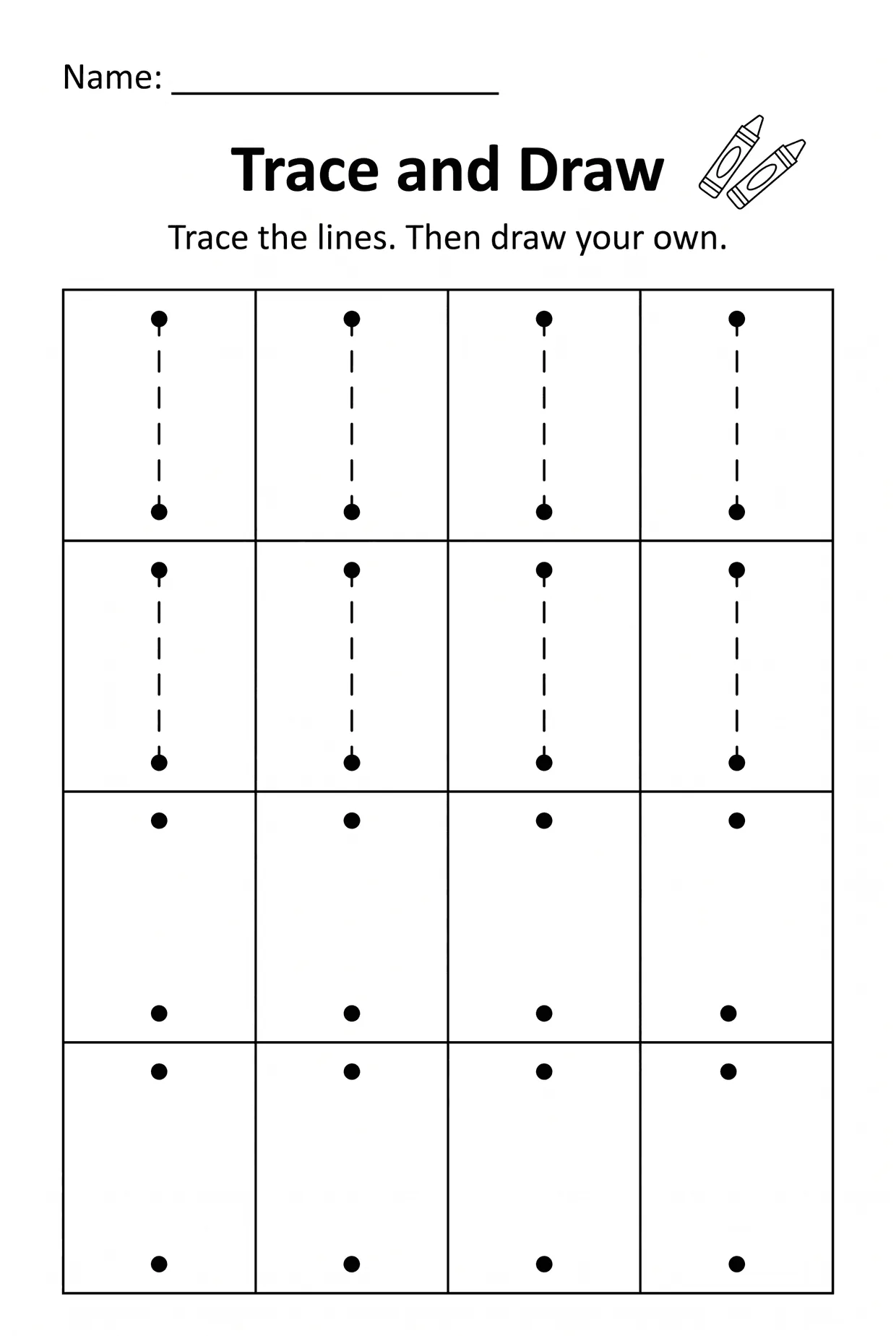
Sixteen boxes. Trace the lines in the top eight, then draw a line between the two dots in each of the bottom eight.
Connect the Dots Standing Lines Worksheet for Preschool
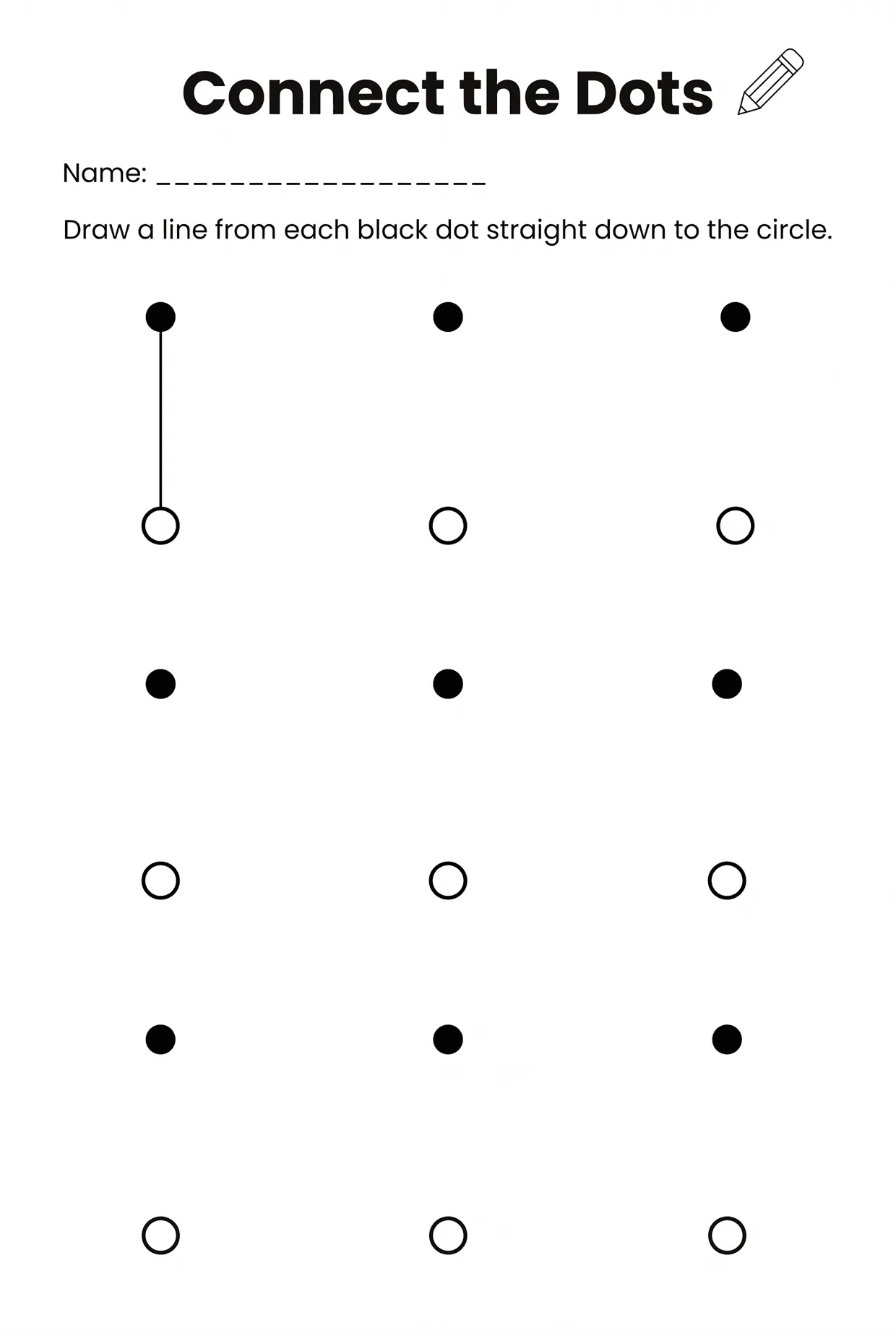
Nine black dots over nine circles, one line drawn as an example, and no dashes to follow for the rest.
One more thing.
If your kids finish a unit and you're not sure what to do next, our honest advice: don't move on yet. Spend a week mixing these in as warm-ups. Fluency isn't a unit, it's a habit, and the sheet that builds it is usually the one they ask to do again.