Math Grade 1
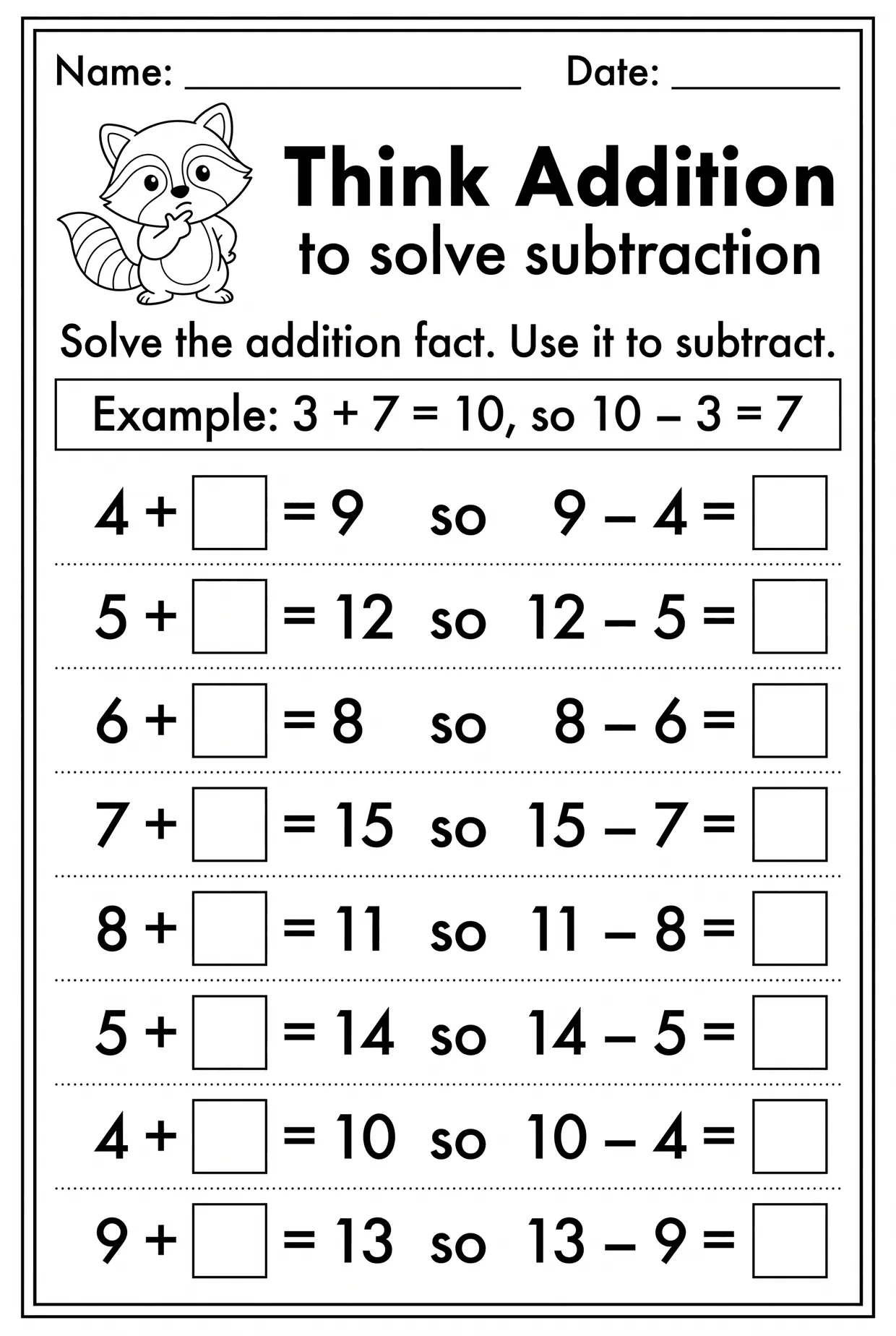
Think Addition to Solve Subtraction Worksheet Grade 1
✓ Your download is starting. Thanks for using Nifty Worksheets!
Free · 1-page PDF
No account · No watermarks
Size:
374
Downloads
4.7★
11 ratings
~10 min
Activity time
1 pg
Total pages
About this worksheet
Eight rows, each pairing an addition problem with a subtraction problem. The child fills in the missing number in 4 + ? = 9, then uses it to finish 9 − 4 = ?. An example at the top shows how 3 + 7 = 10 means 10 − 3 = 7.
Thinking of subtraction as a missing addend is one of the most useful strategies a first grader can learn, because addition usually comes more easily. Once a child knows 7 + 8 is 15, they also know 15 − 7.
The answers to both halves of each row are the same number, which children tend to notice on their own, and that is the connection this page is built to show.
What students will practice
- Use an addition fact to solve a subtraction problem
- See how addition and subtraction are connected
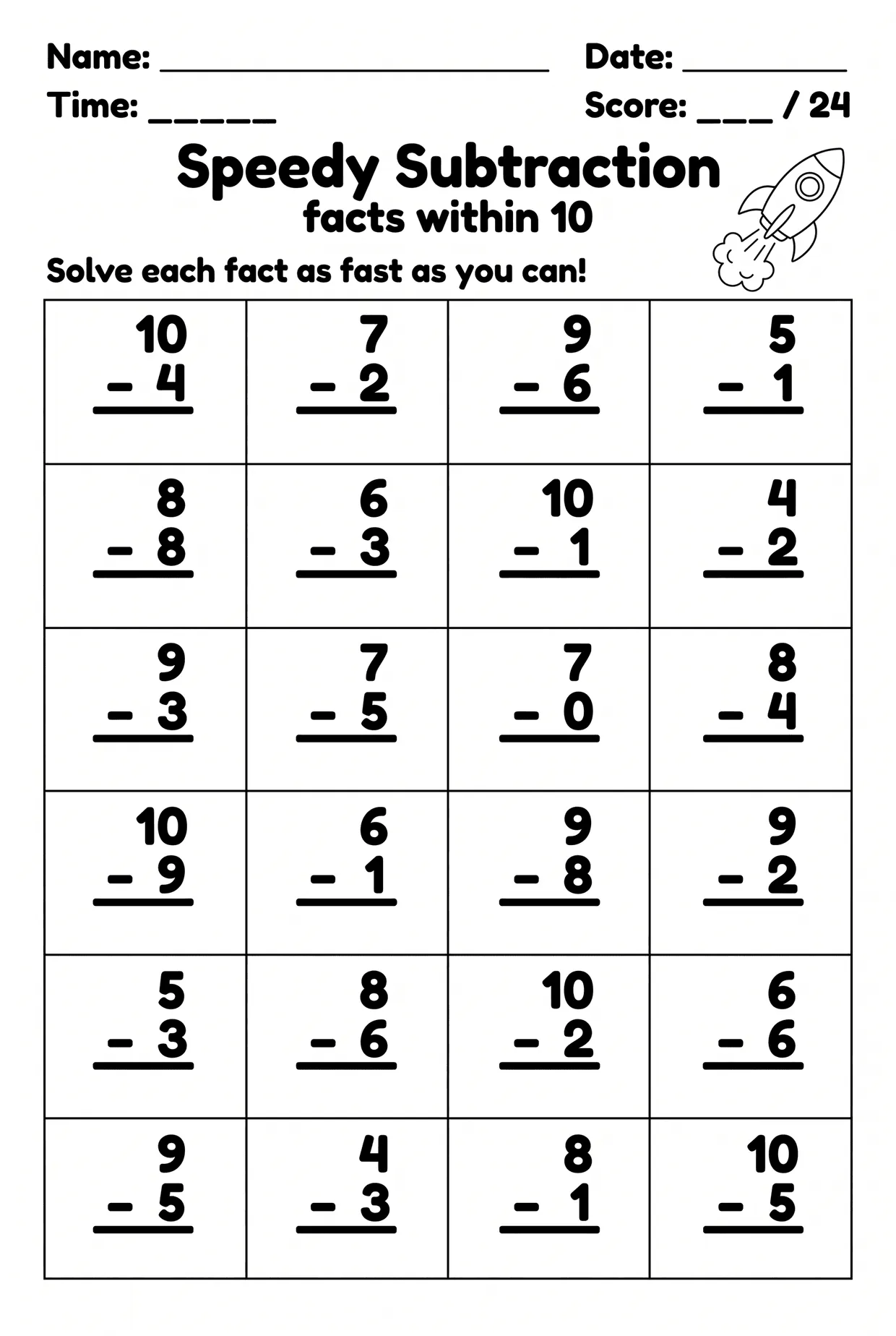
- Subtract within 20
Details
- Grade level
- Grade 1
- Subject
- Math · Subtraction
- Standard
- CCSS 1.OA.4
- Pages
- 1
- Format
- PDF · US Letter and A4 included
- License
- Free for classroom use · Attribution appreciated
- Last updated
- September 26, 2026
Pairs well with