About this worksheet
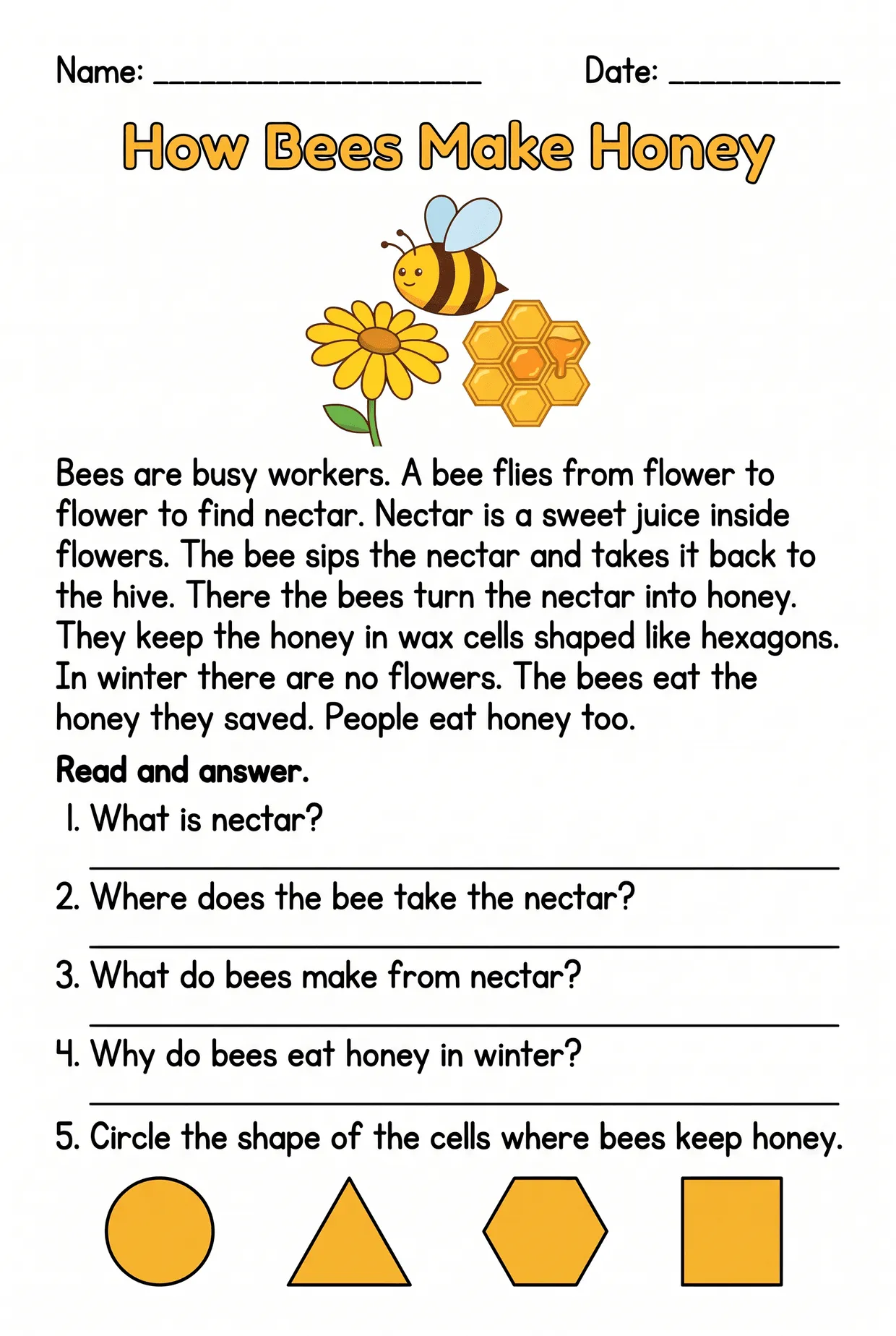
The passage follows one thing from start to finish: a bee leaves the flower with nectar, carries it back to the hive, and the nectar becomes honey stored in wax cells. It ends on the reason any of it matters to the bees, which is that there are no flowers in winter and the saved honey is what they eat.
Question one asks what nectar is, and the passage defines it in the very next sentence after using it, which is the habit worth pointing out: a hard word in nonfiction is very often explained right where it appears. Question four is the only one that needs two facts held together, no flowers in winter and bees eat what they saved, so it is the one to talk through if a child stalls. The circle task at the bottom rewards the reader who caught the word hexagons in passing.
What students will practice
- Define nectar using the sentence that explains it
- Follow a process from flower to hive to honey
- Explain why bees need saved honey in winter
Details
- Grade level
- Grade 2
- Subject
- Reading · Comprehension
- Standard
- CCSS.ELA-LITERACY.RI.2.3
- Pages
- 1
- Format
- PDF · US Letter and A4 included
- License
- Free for classroom use · Attribution appreciated
- Last updated
- August 30, 2026