Questions about 2nd grade reading worksheets
How is second grade reading different from first grade?
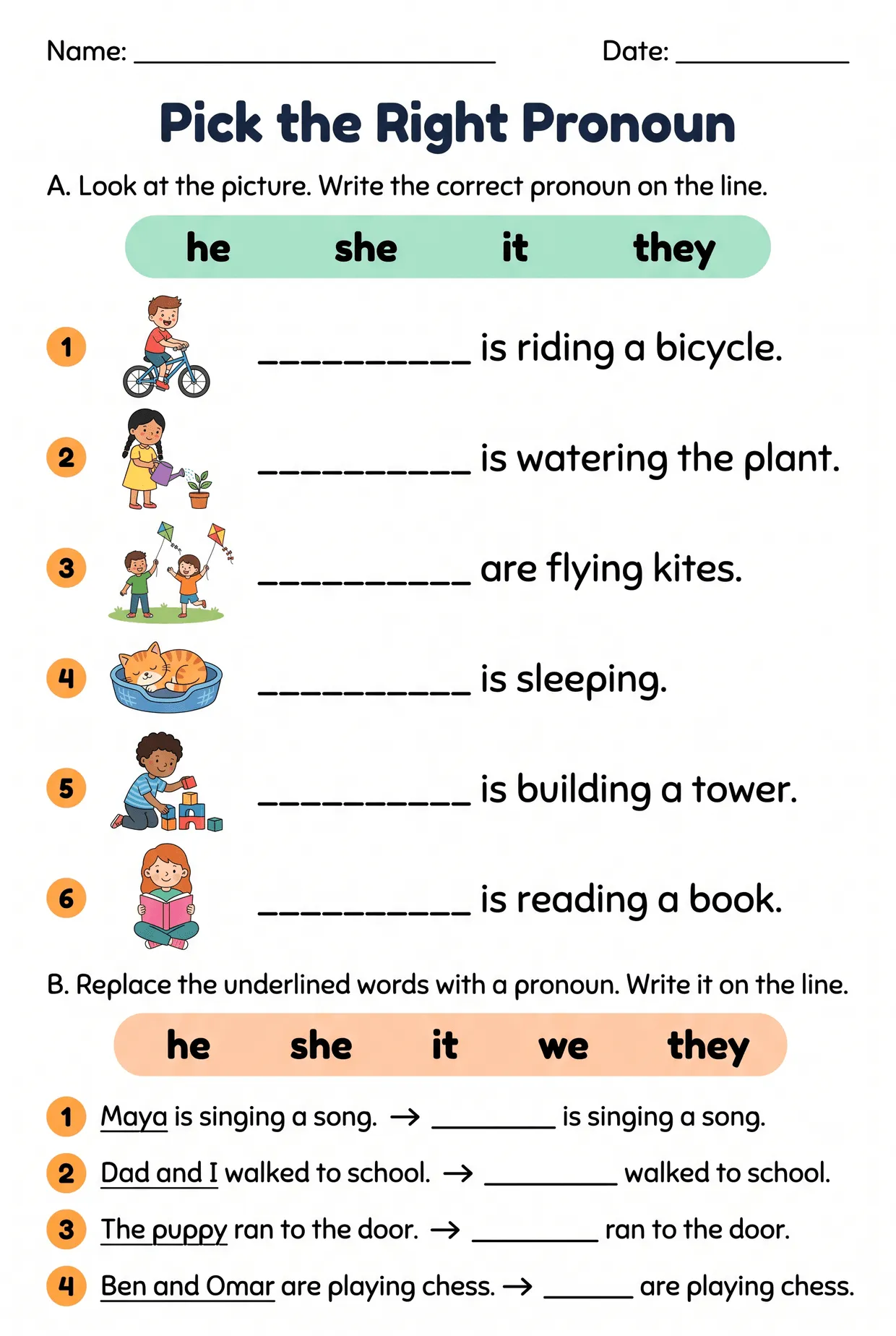
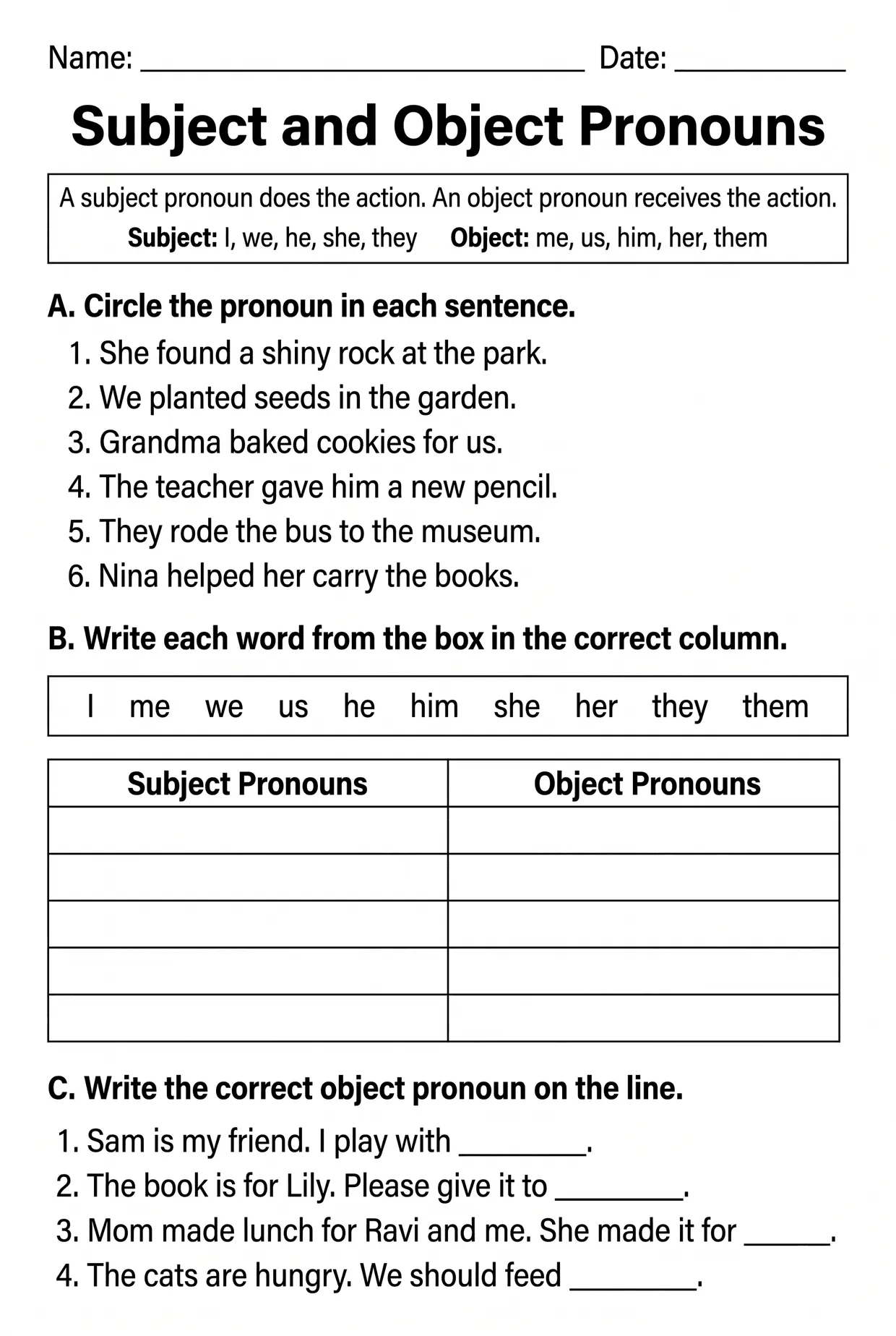
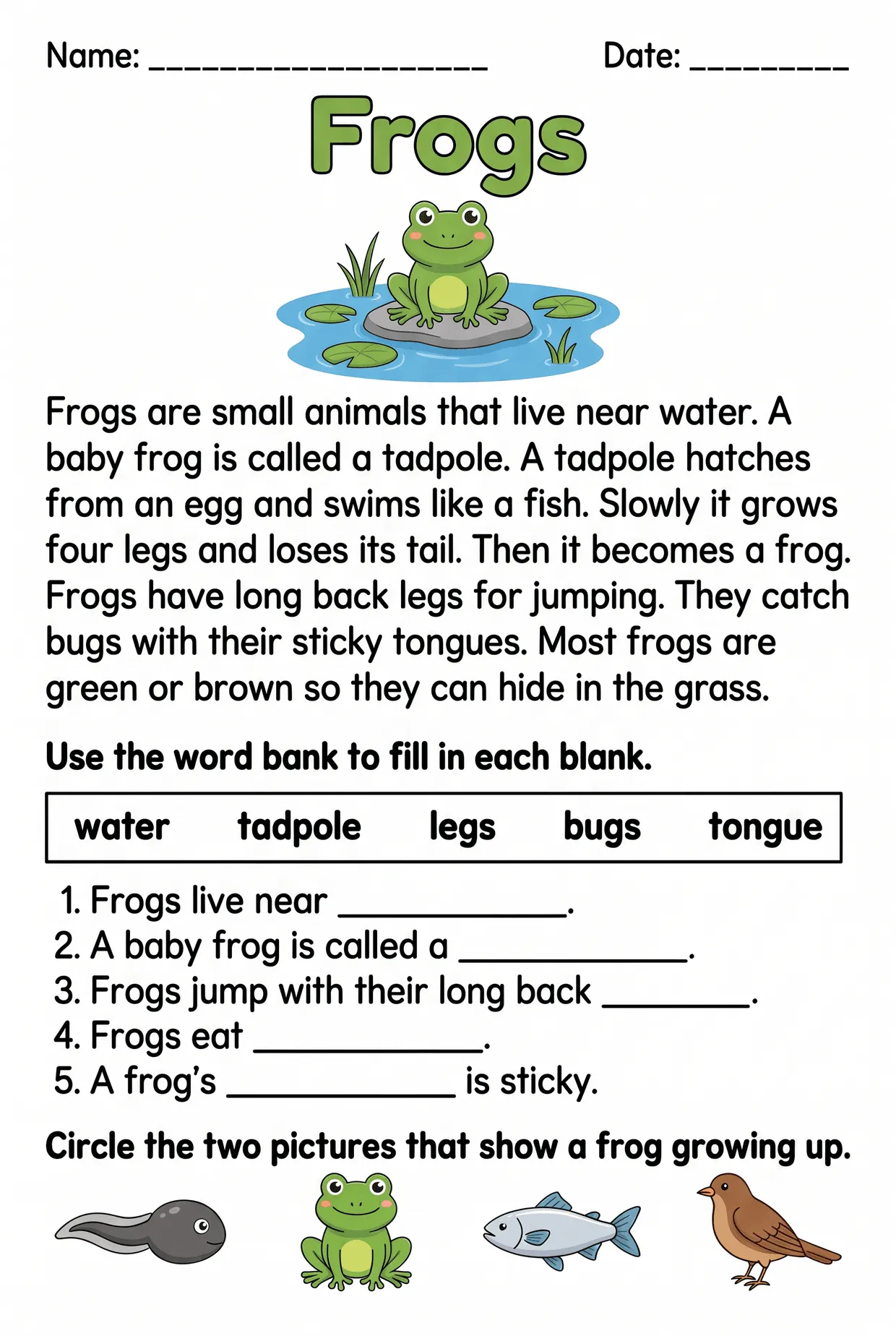
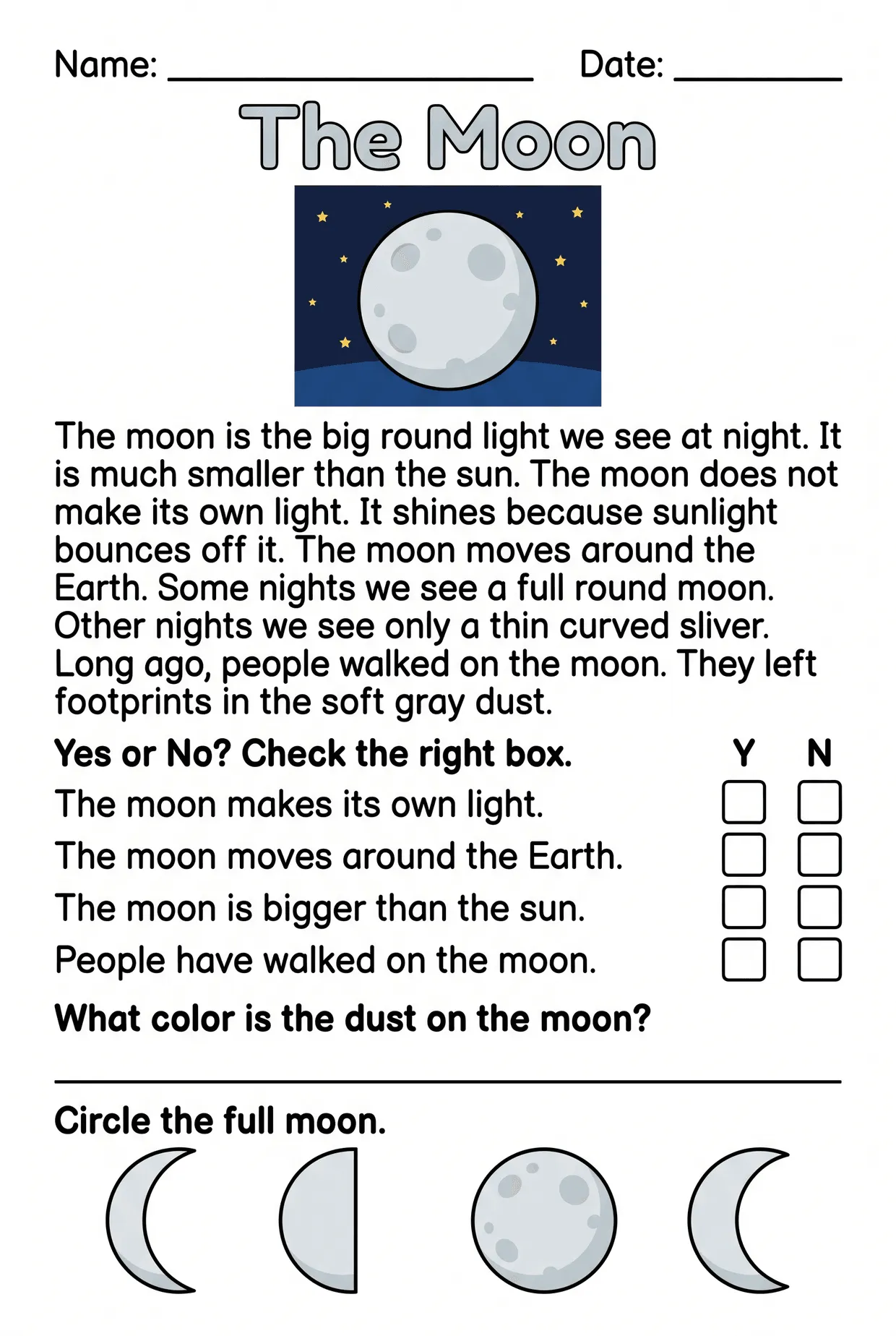
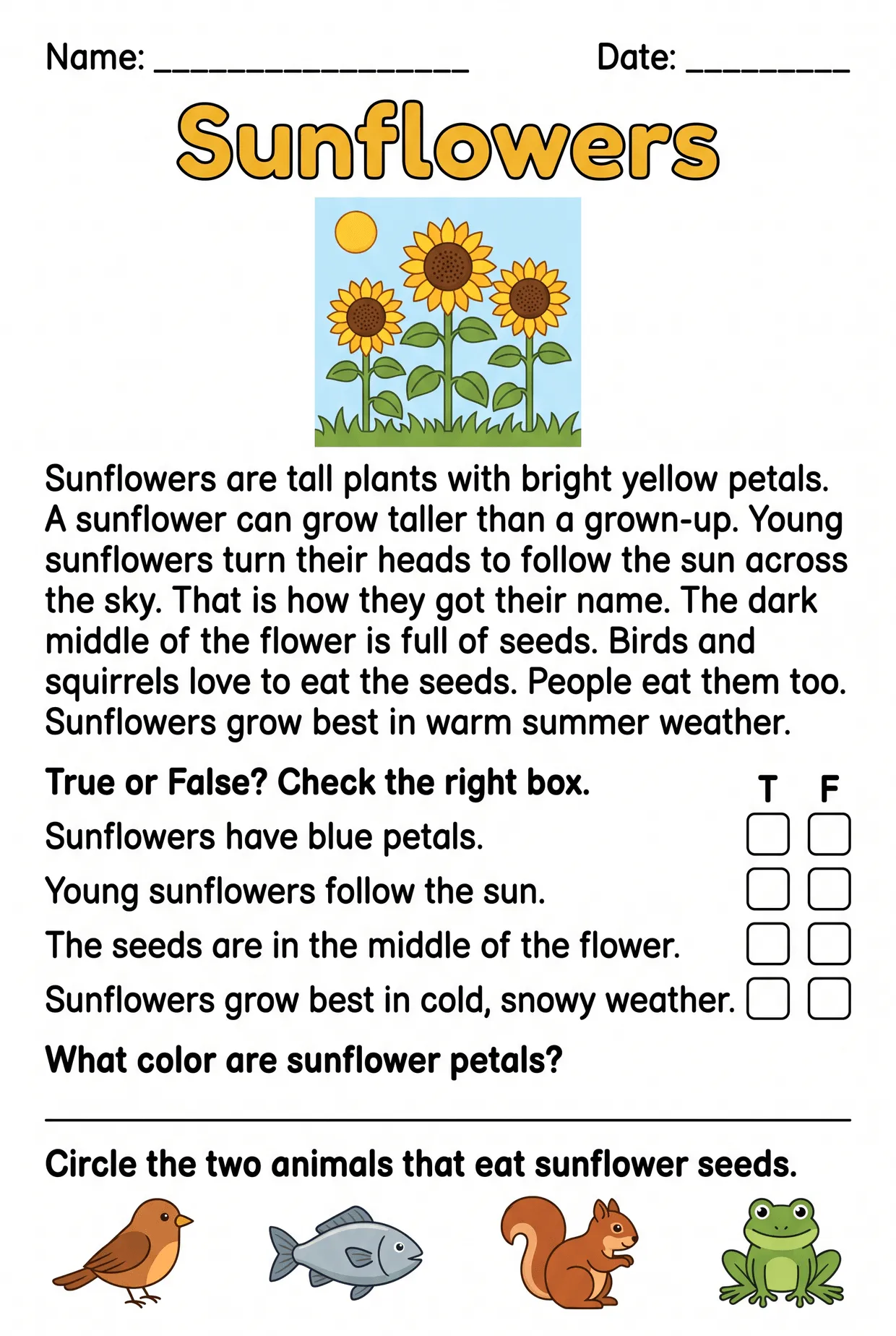
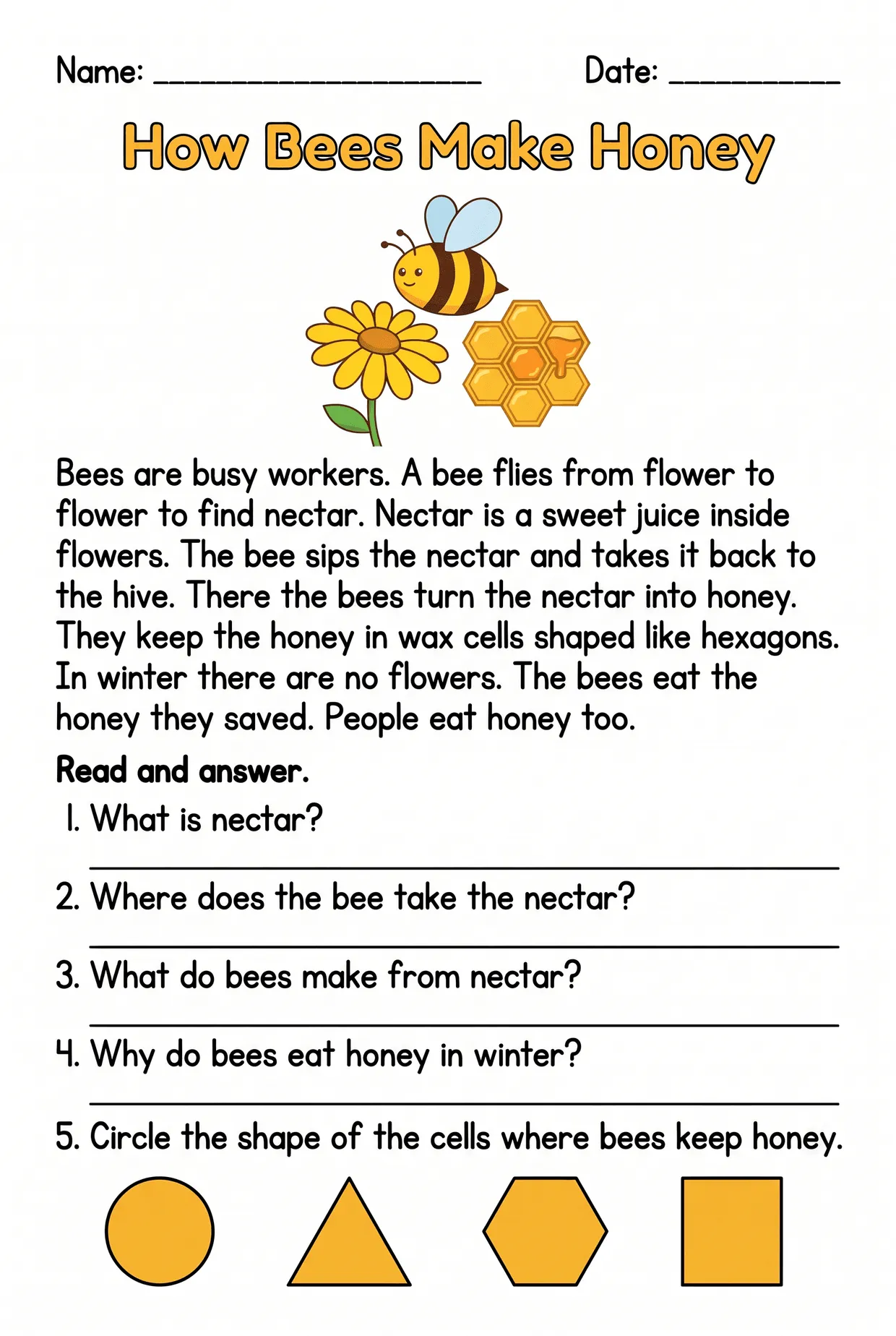
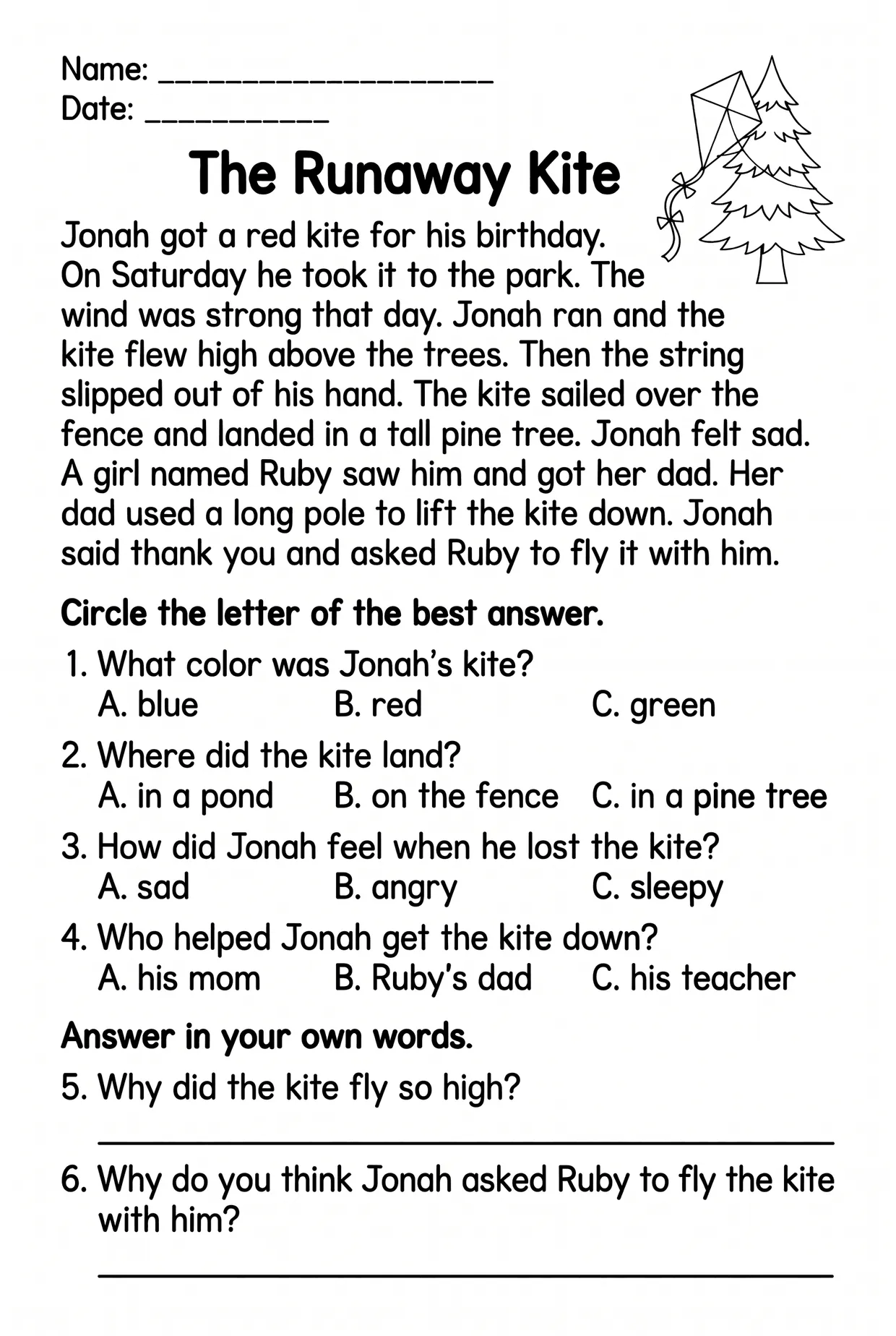
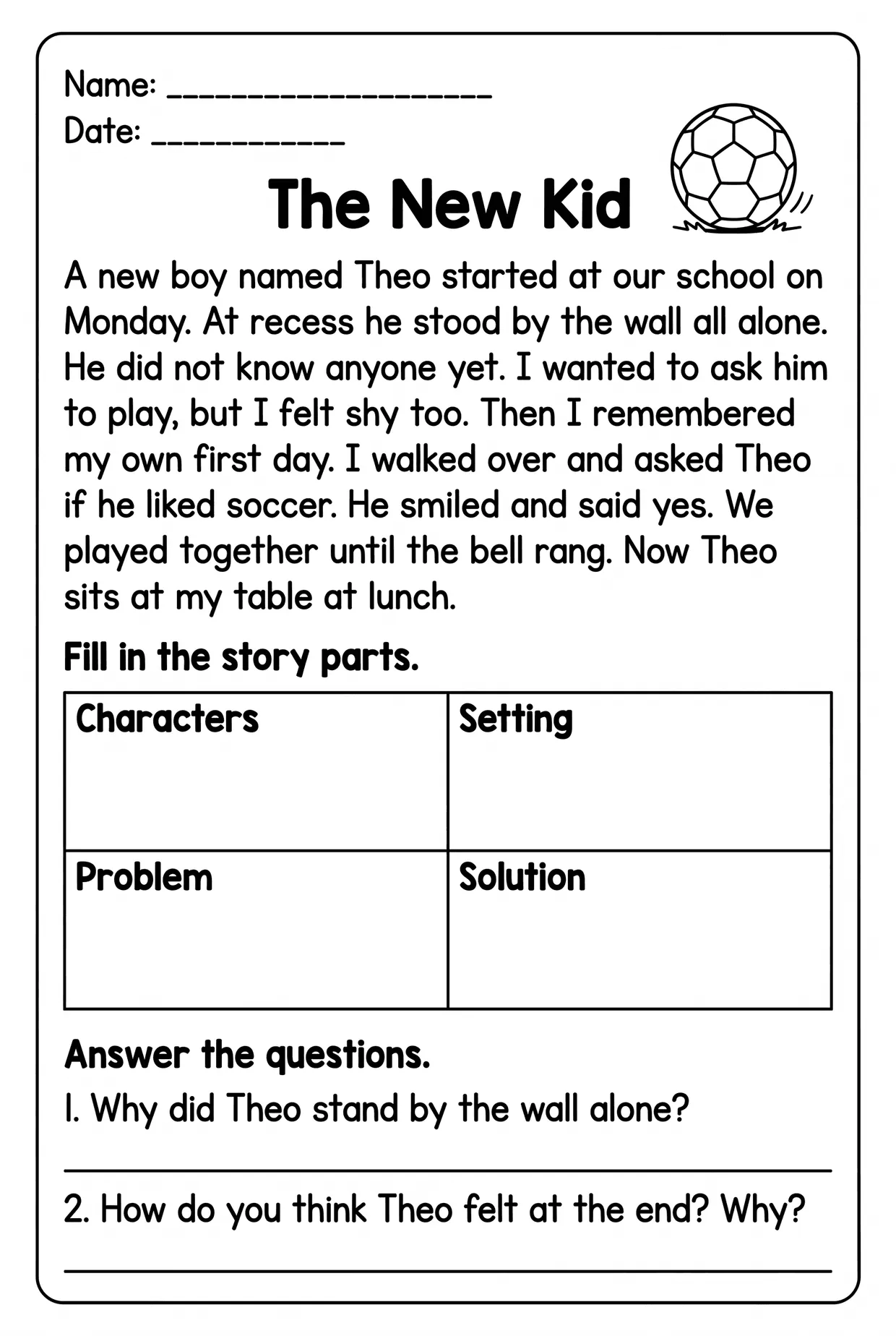
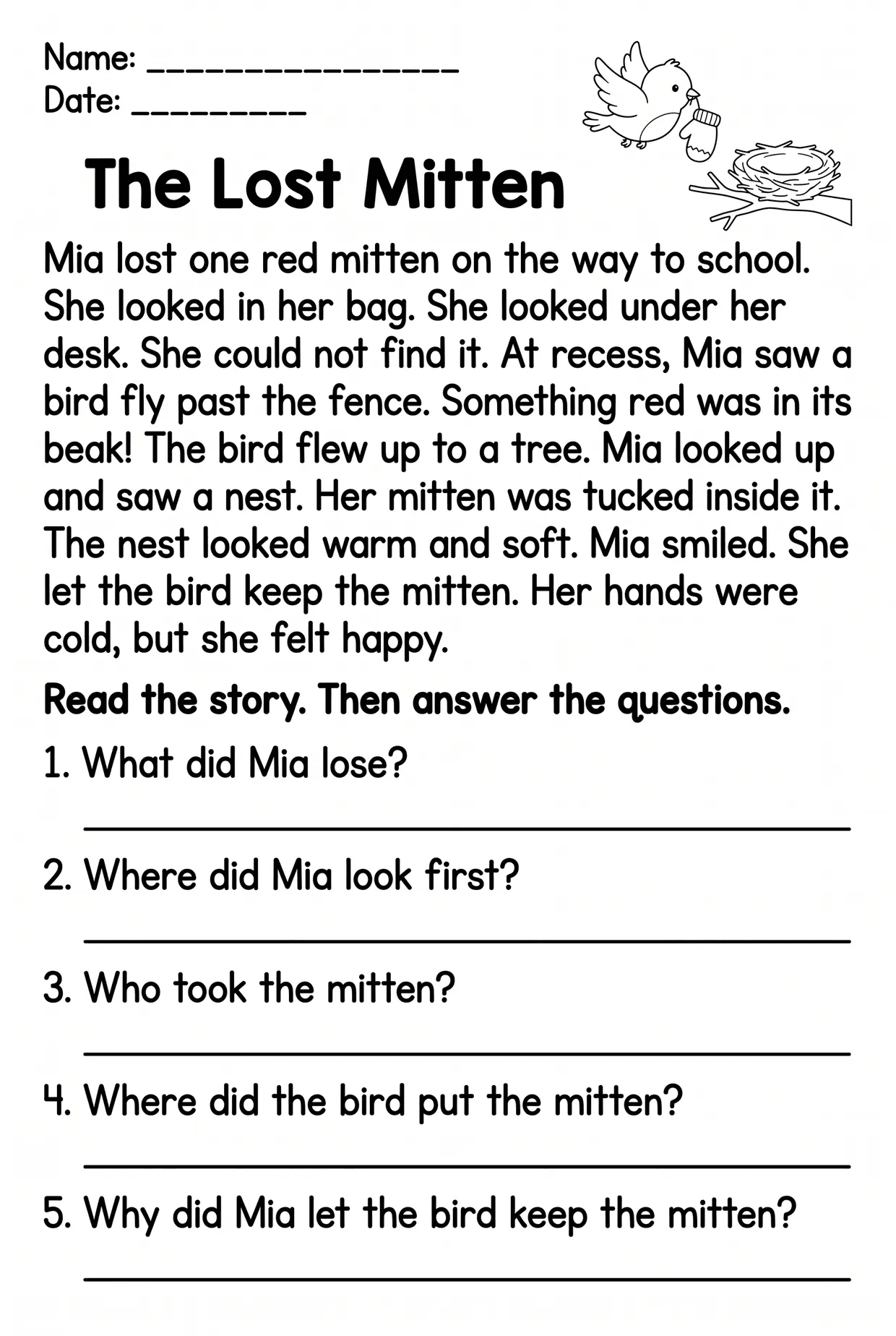
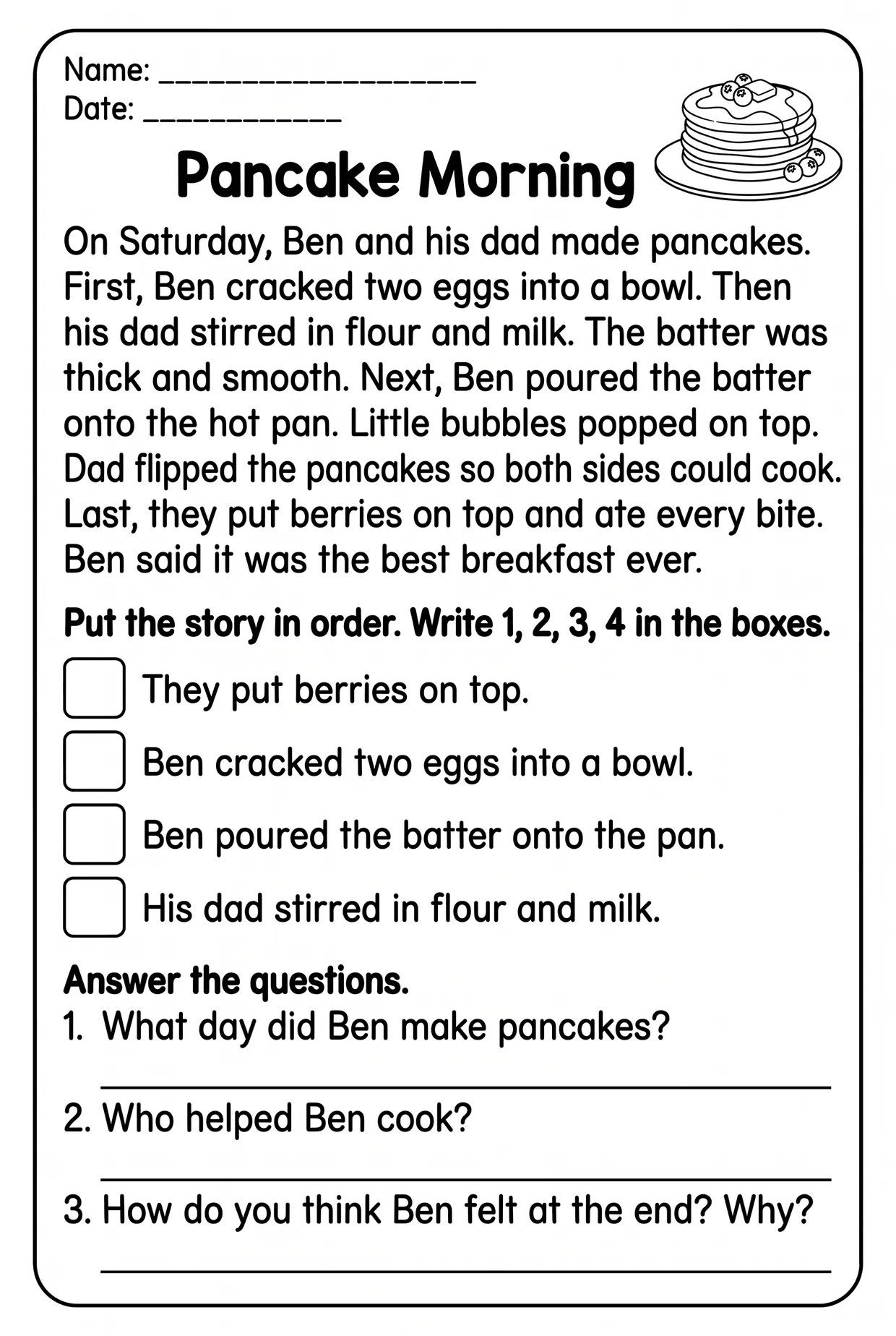
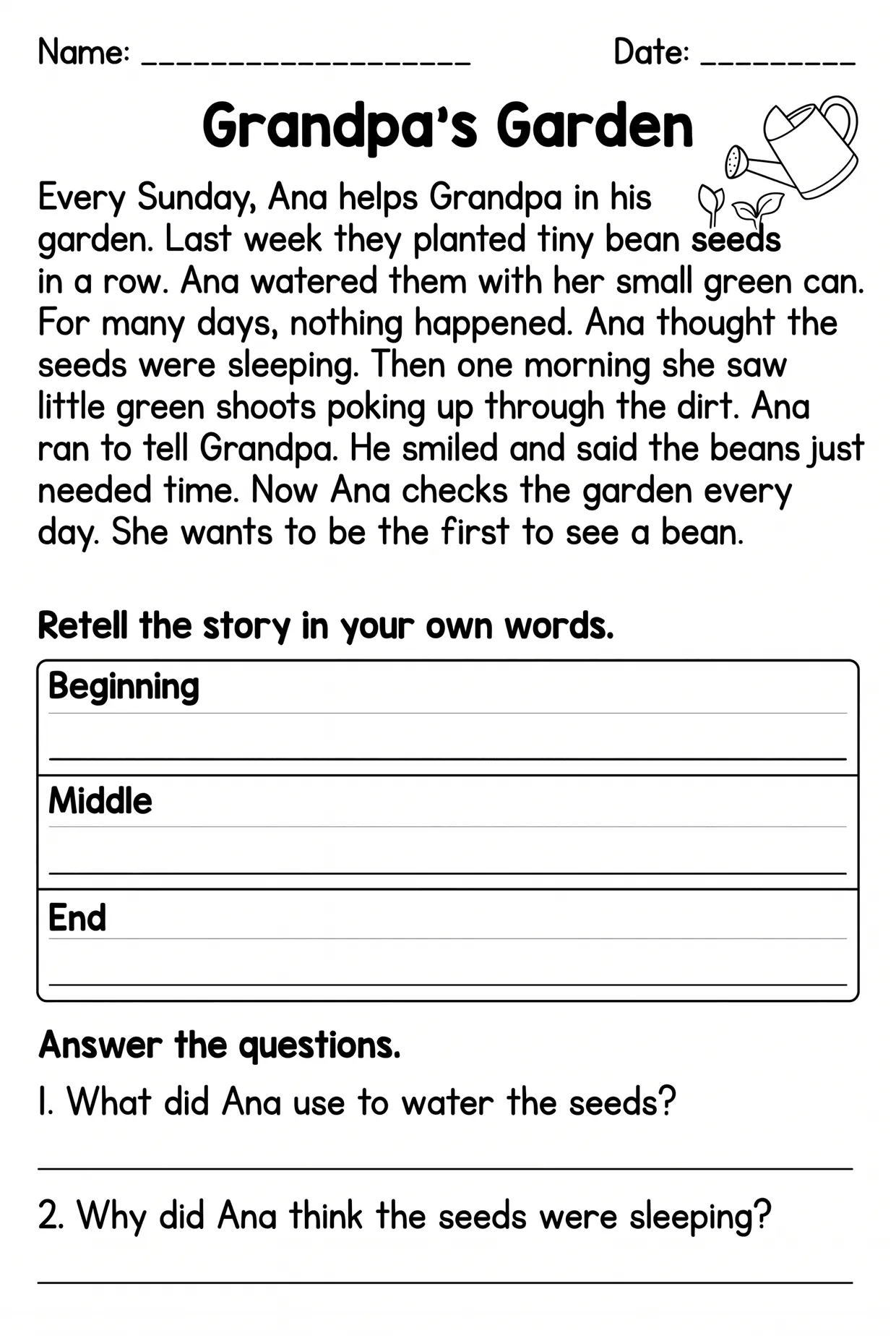
Passages get longer and the questions ask a child to explain, not only to find. Second graders are also expected to read nonfiction for information, recount stories along with their lesson, and handle grammar like past tense verbs and pronoun choice.
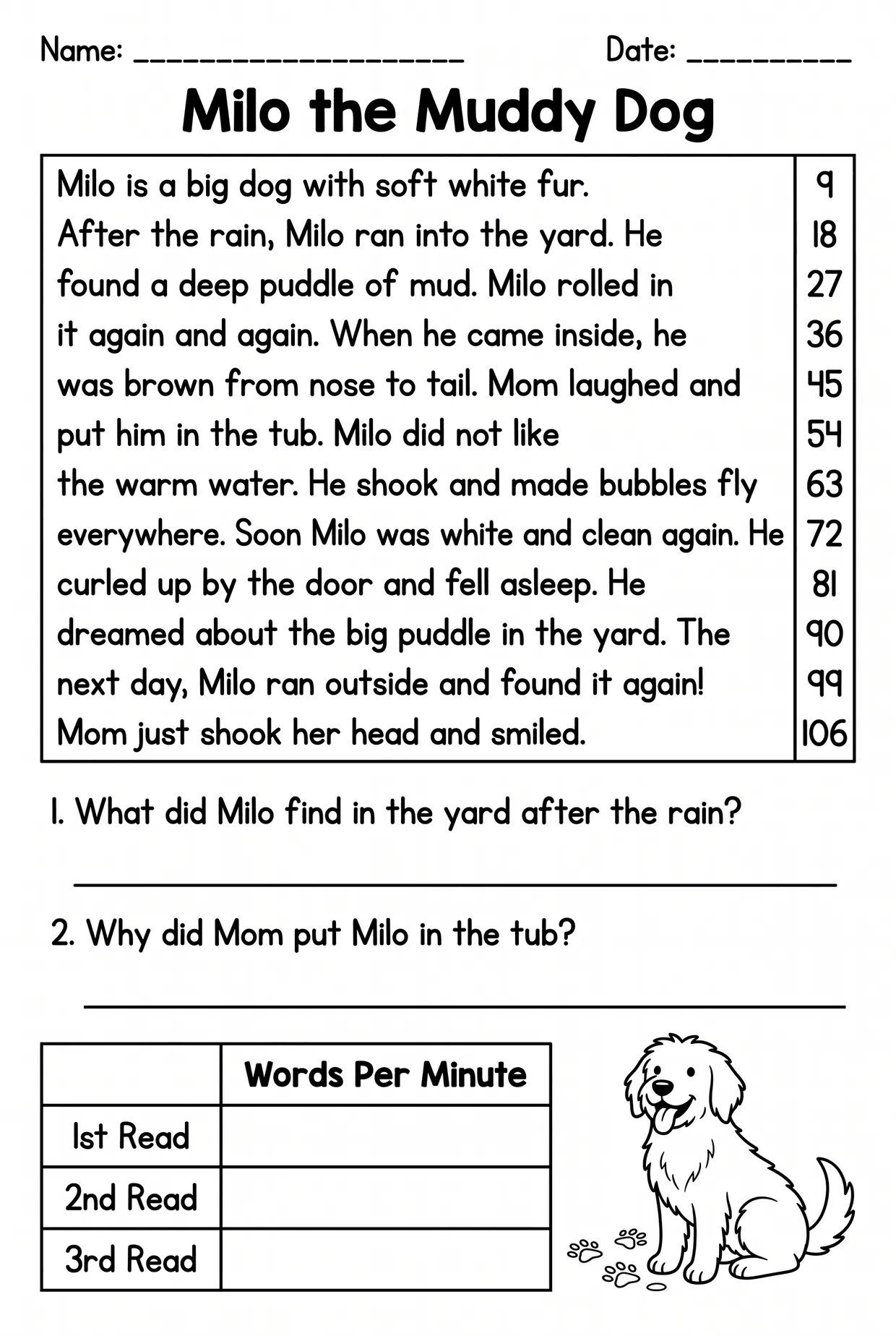
What is a fluency passage for?
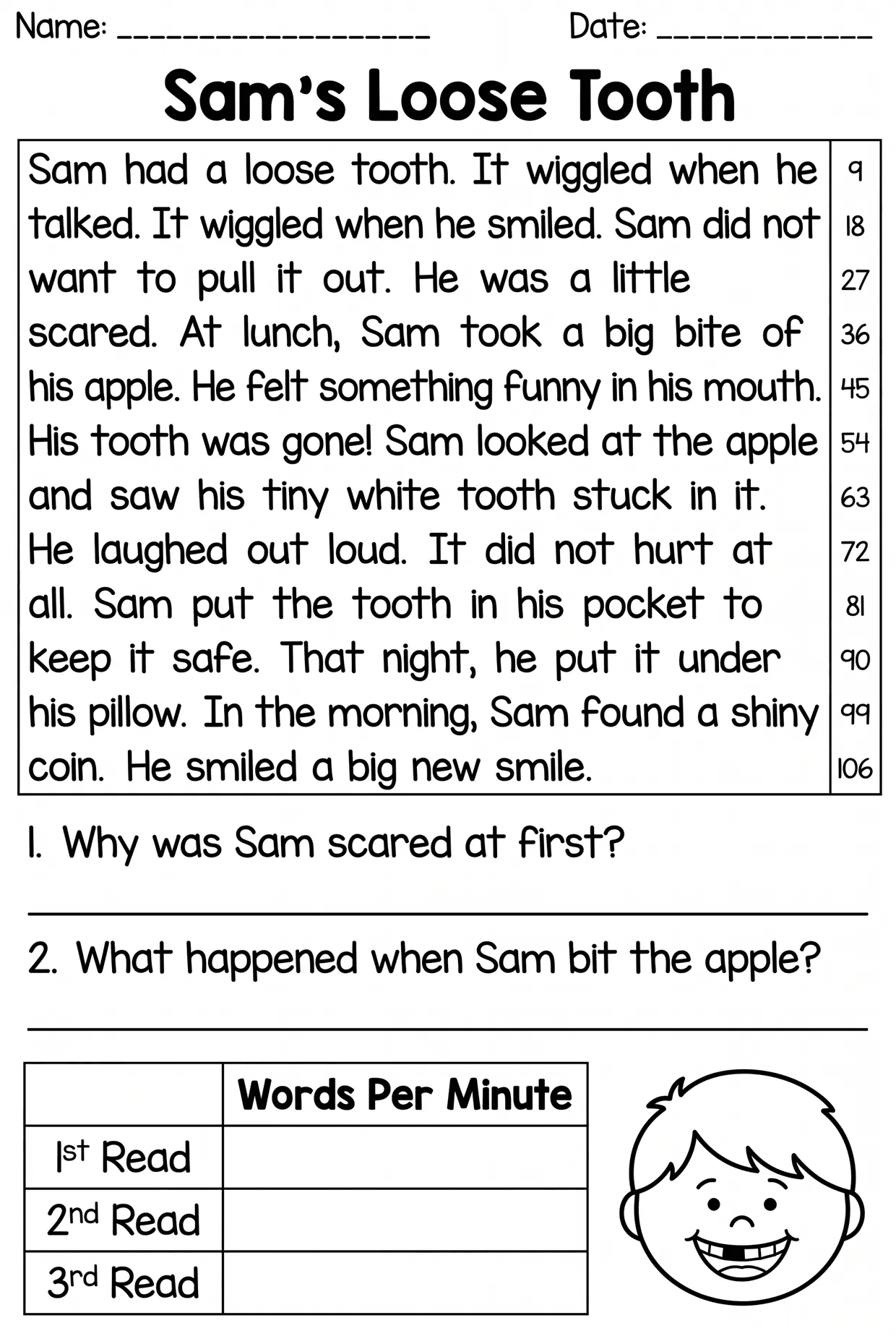
Reading the same short text aloud several times builds speed, accuracy and expression. A good routine is a first read for the words, a second for smoothness and a third with feeling, which most children enjoy once the stumbles are gone.
Is it fine to read the passages together?
Of course. A shared read helps a child who still stalls on longer words, and a solo reread straight after lets them answer on their own. The aim is understanding, so support at the decoding stage is never cheating.
Which grammar does second grade cover here?
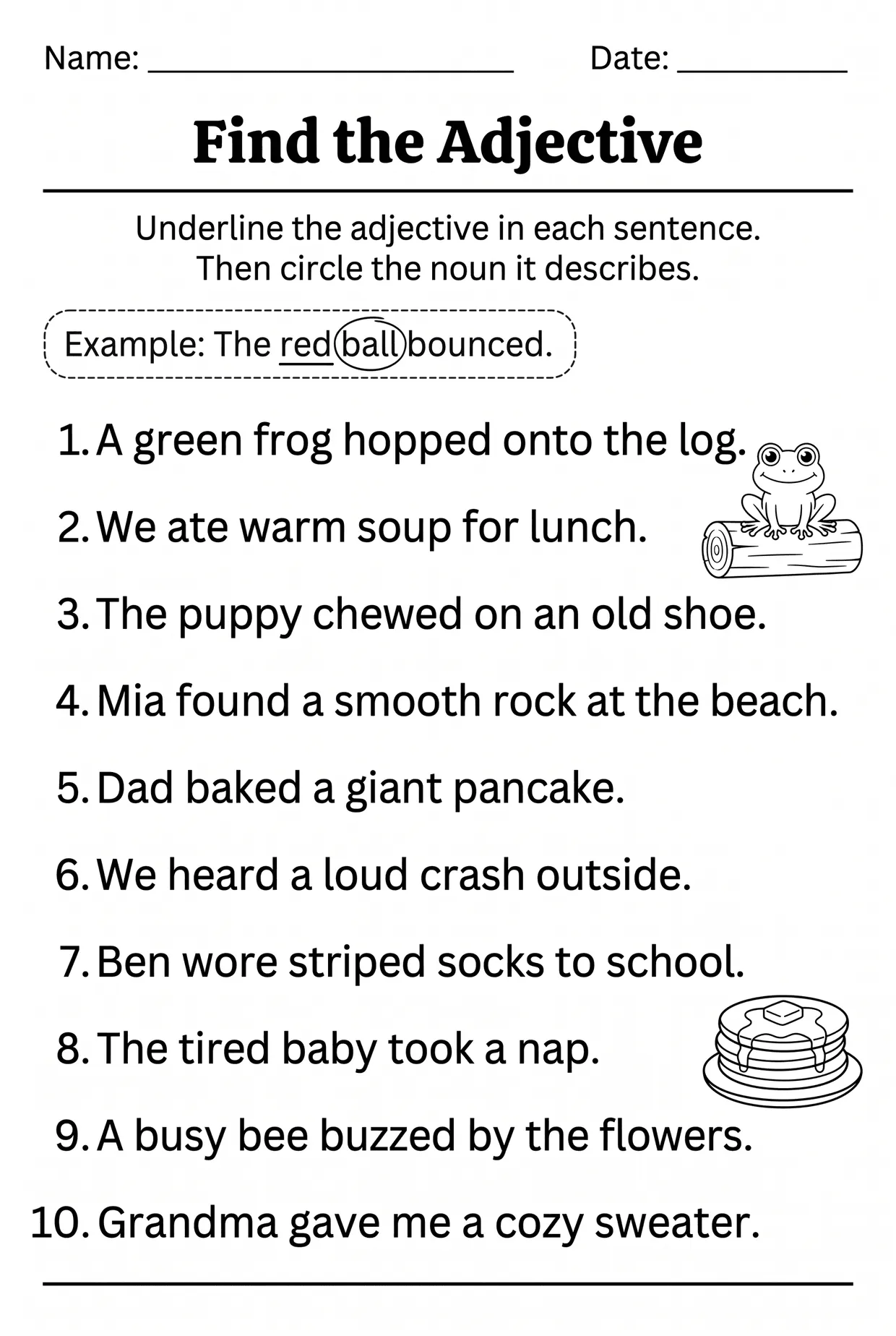
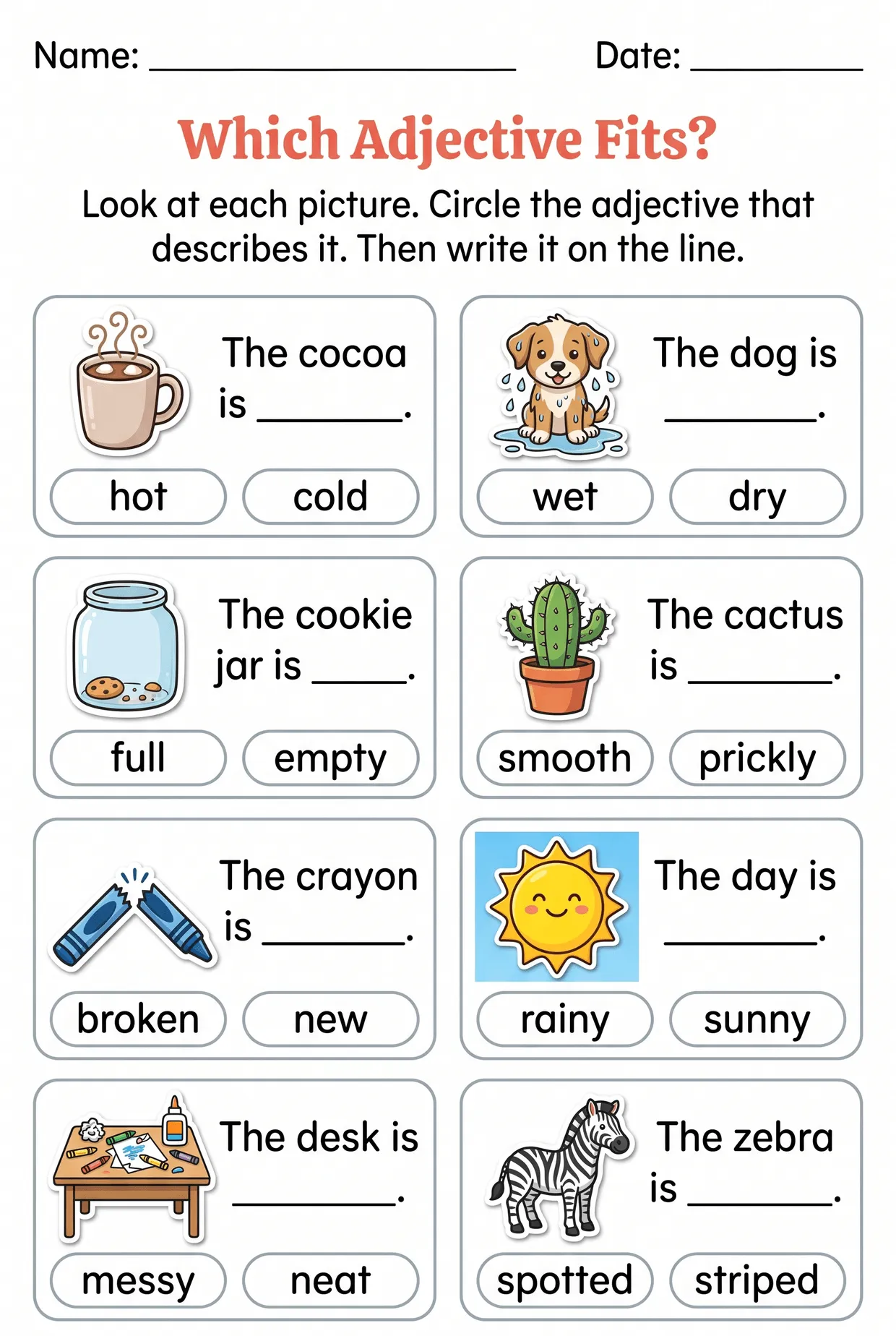
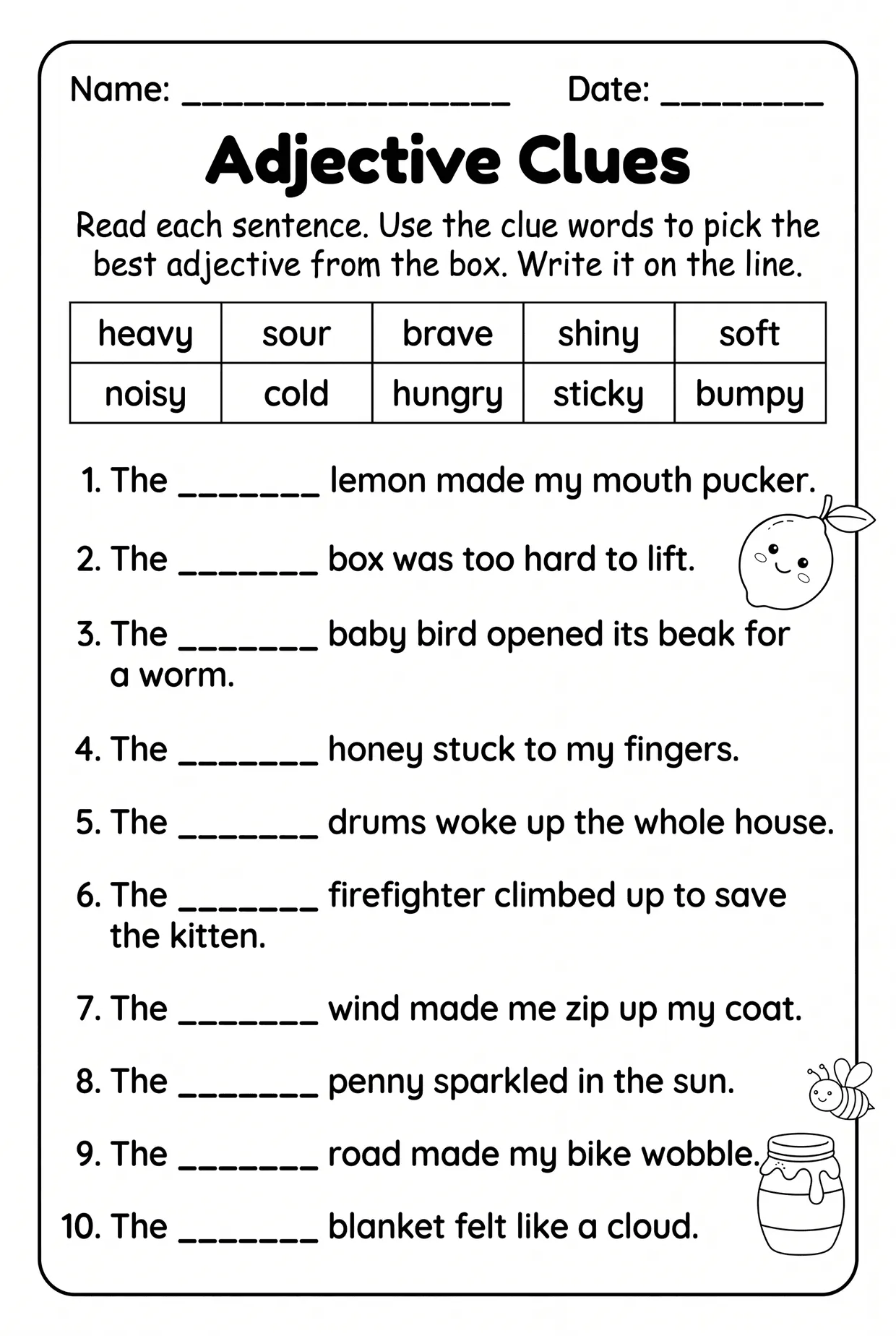
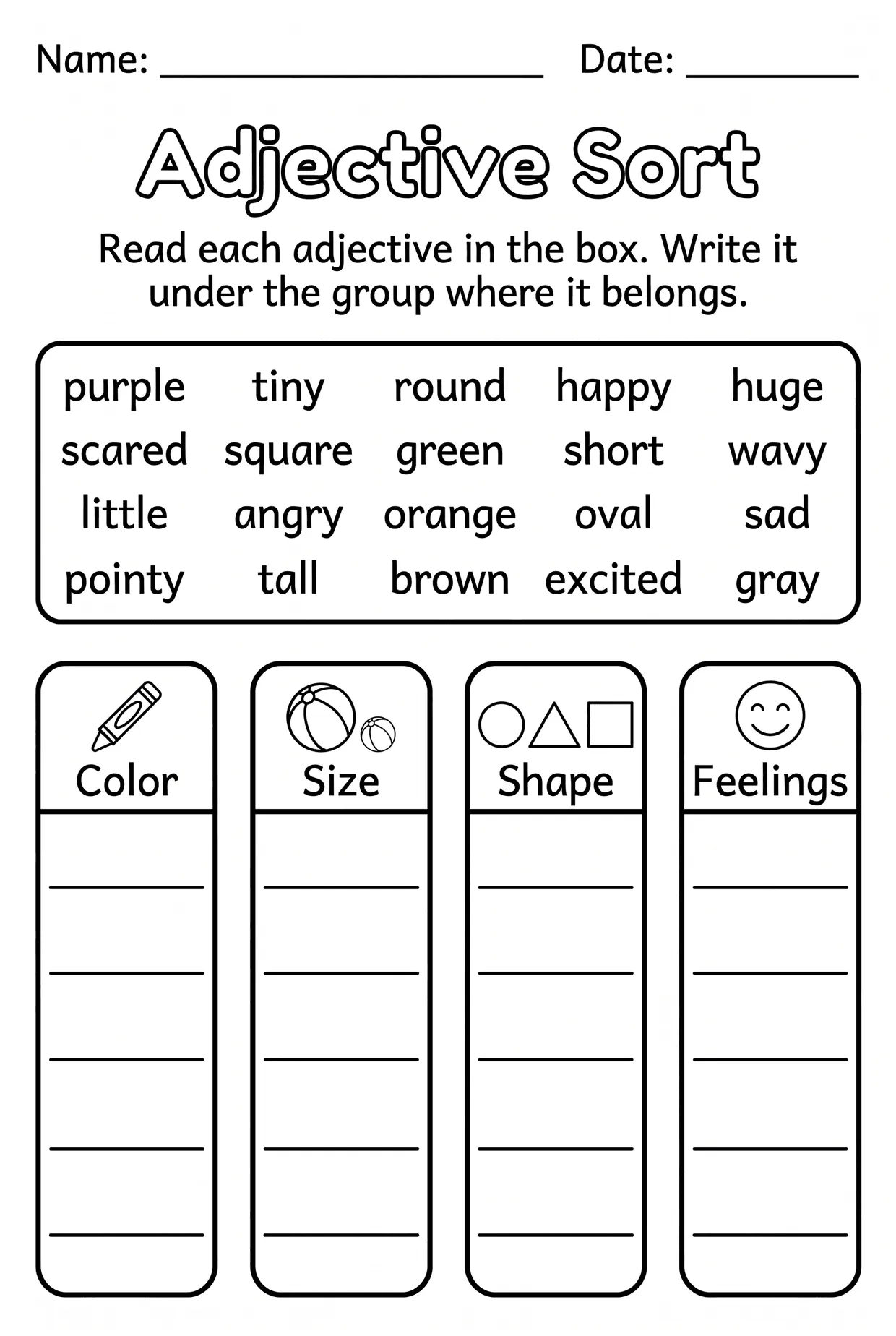
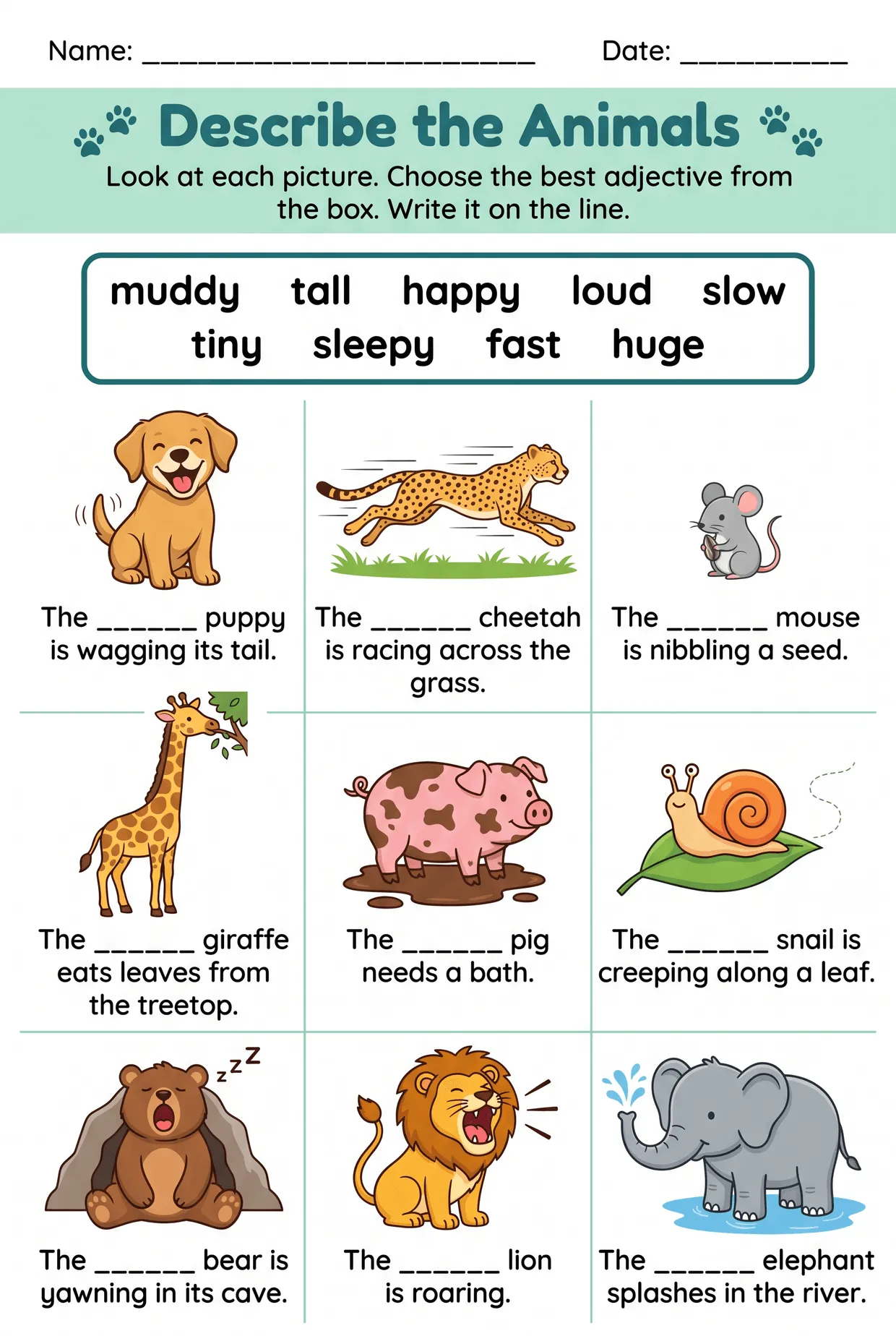
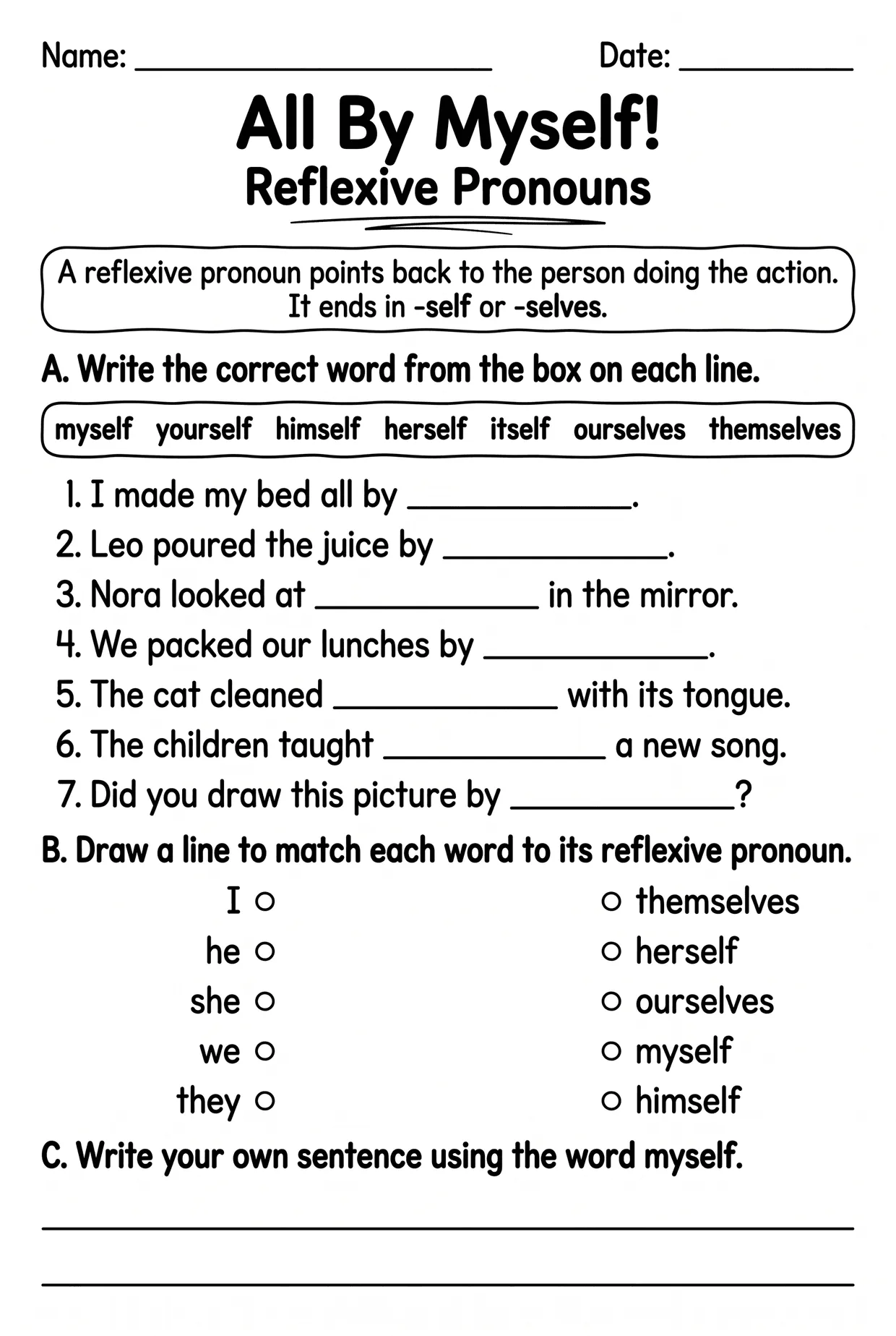
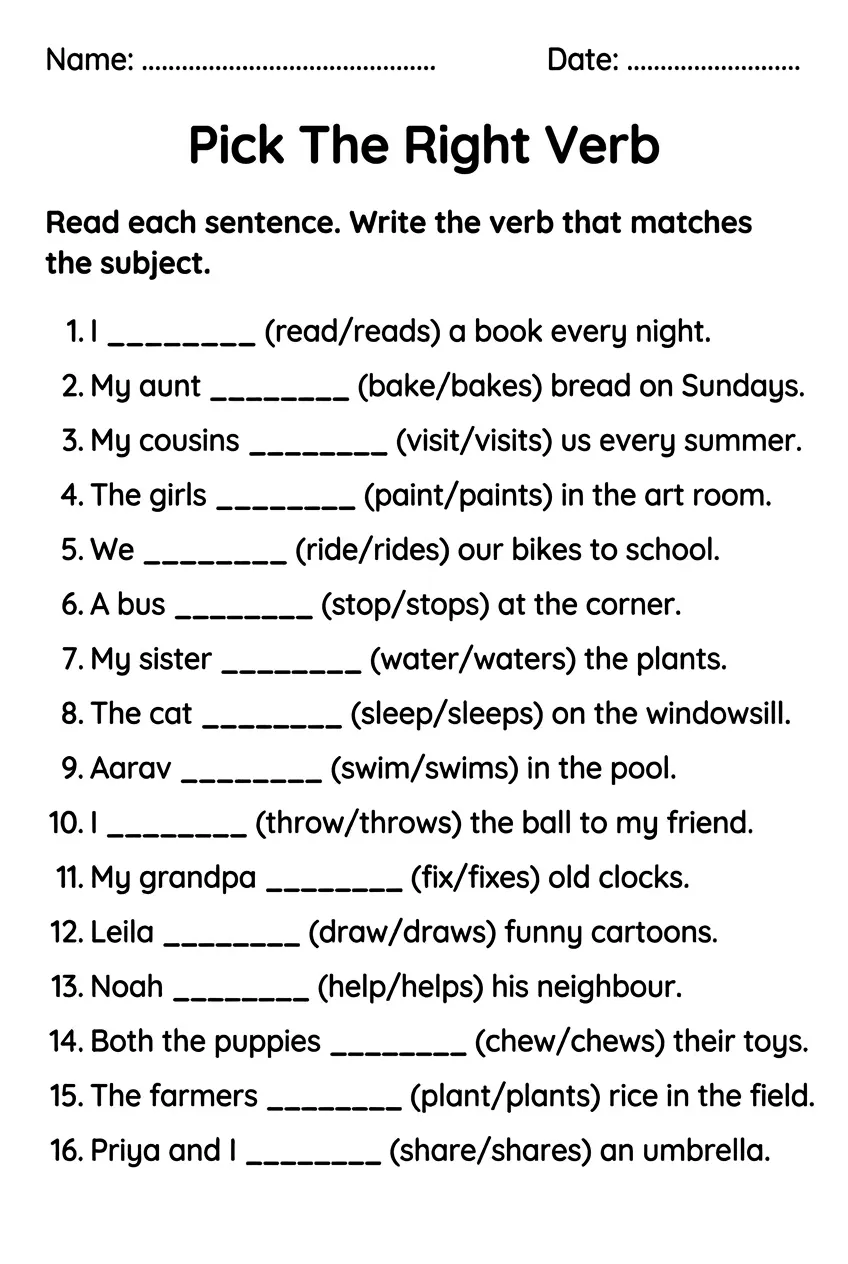
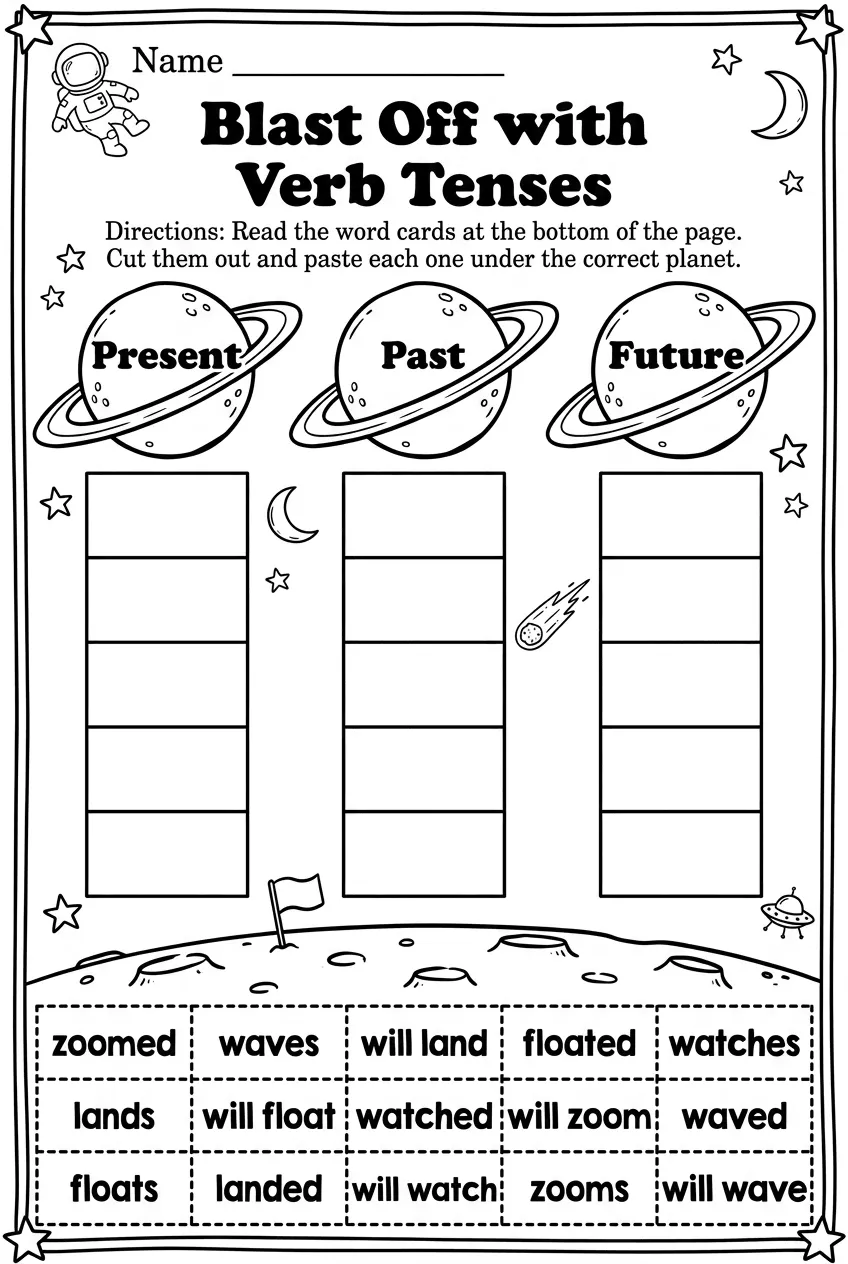
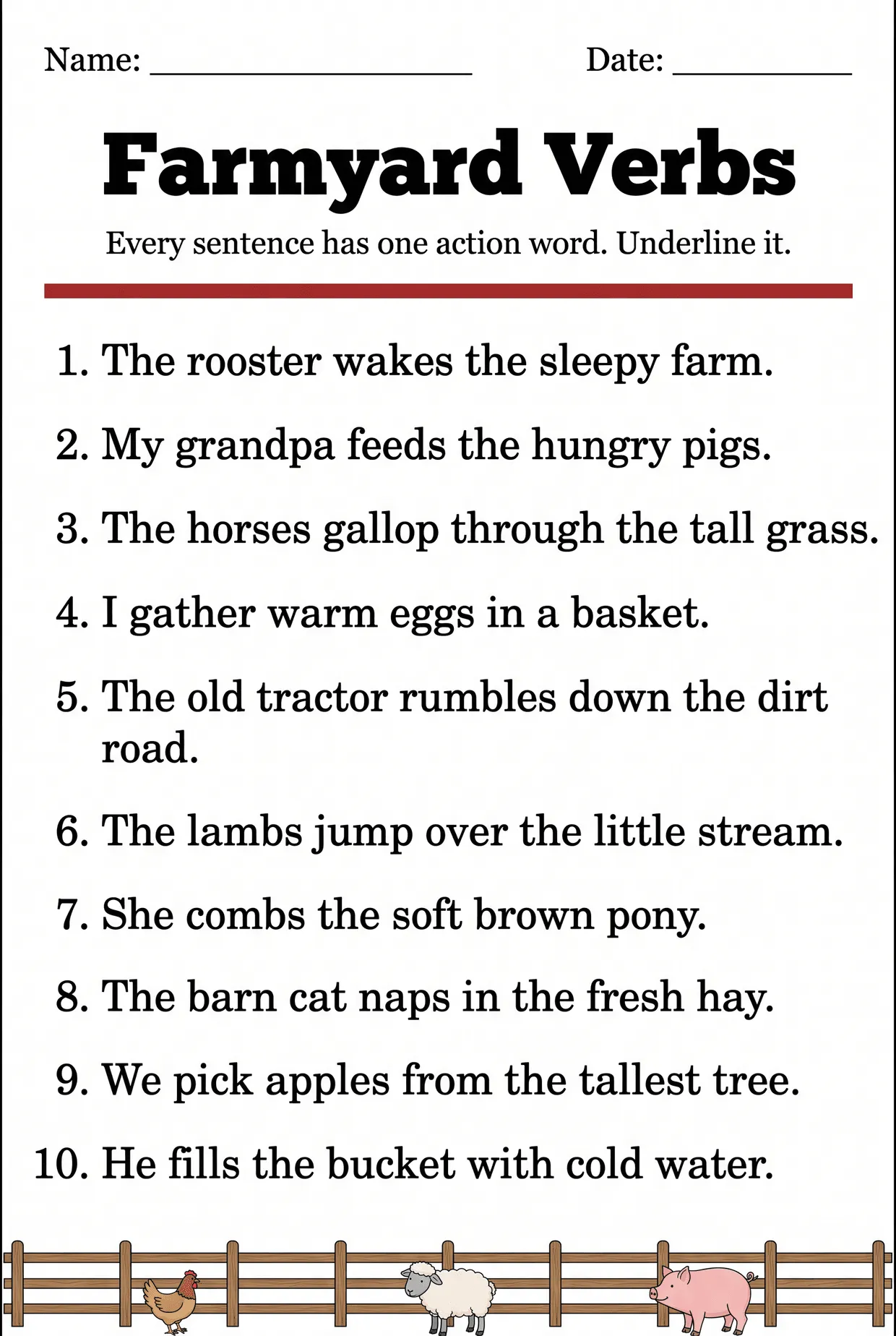
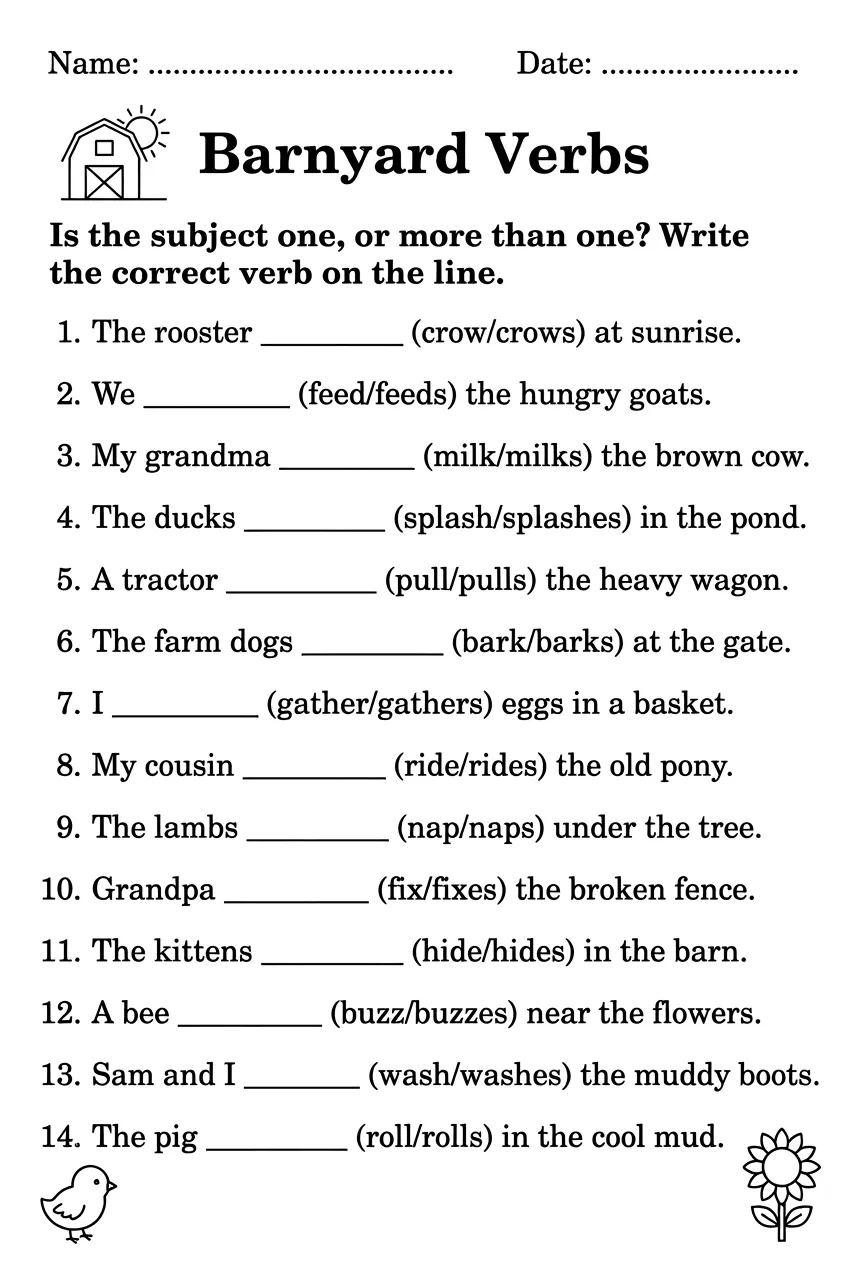
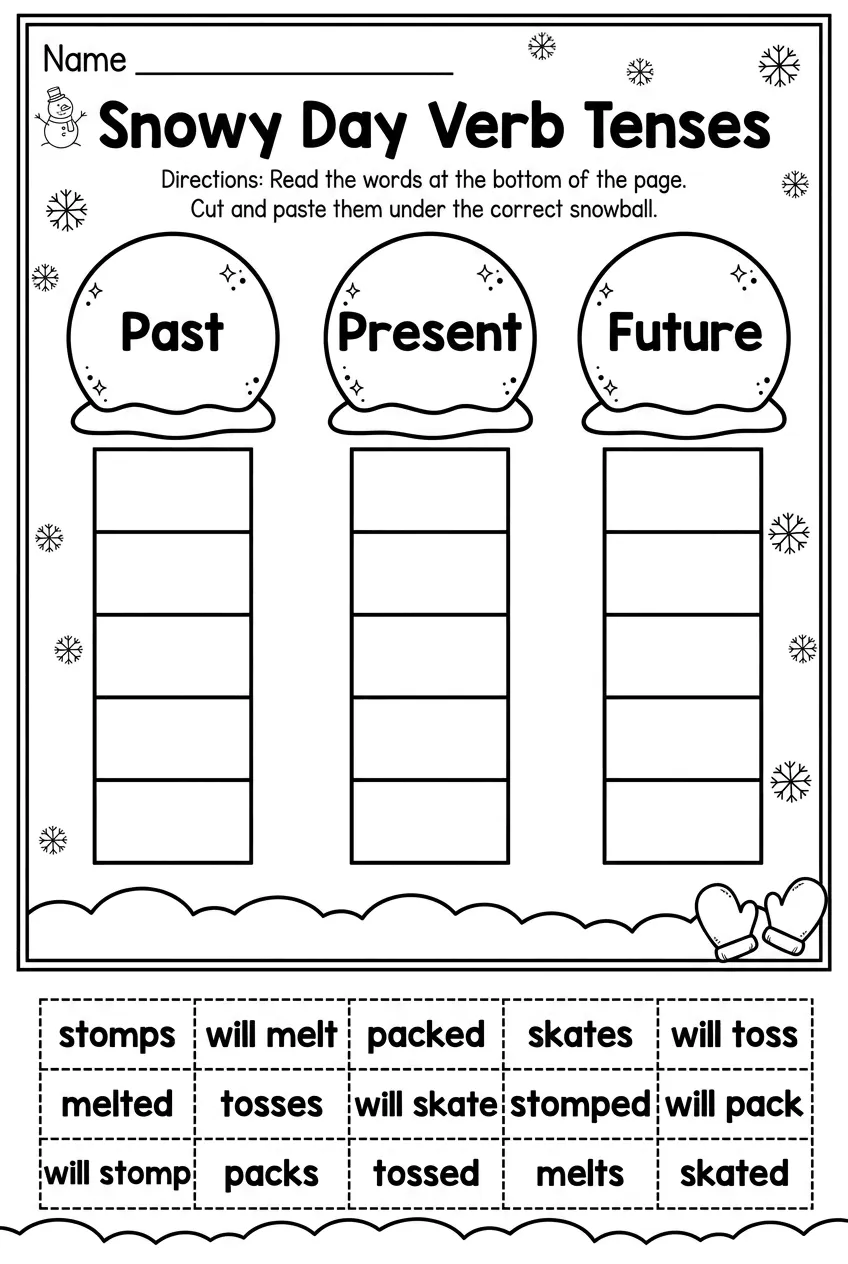
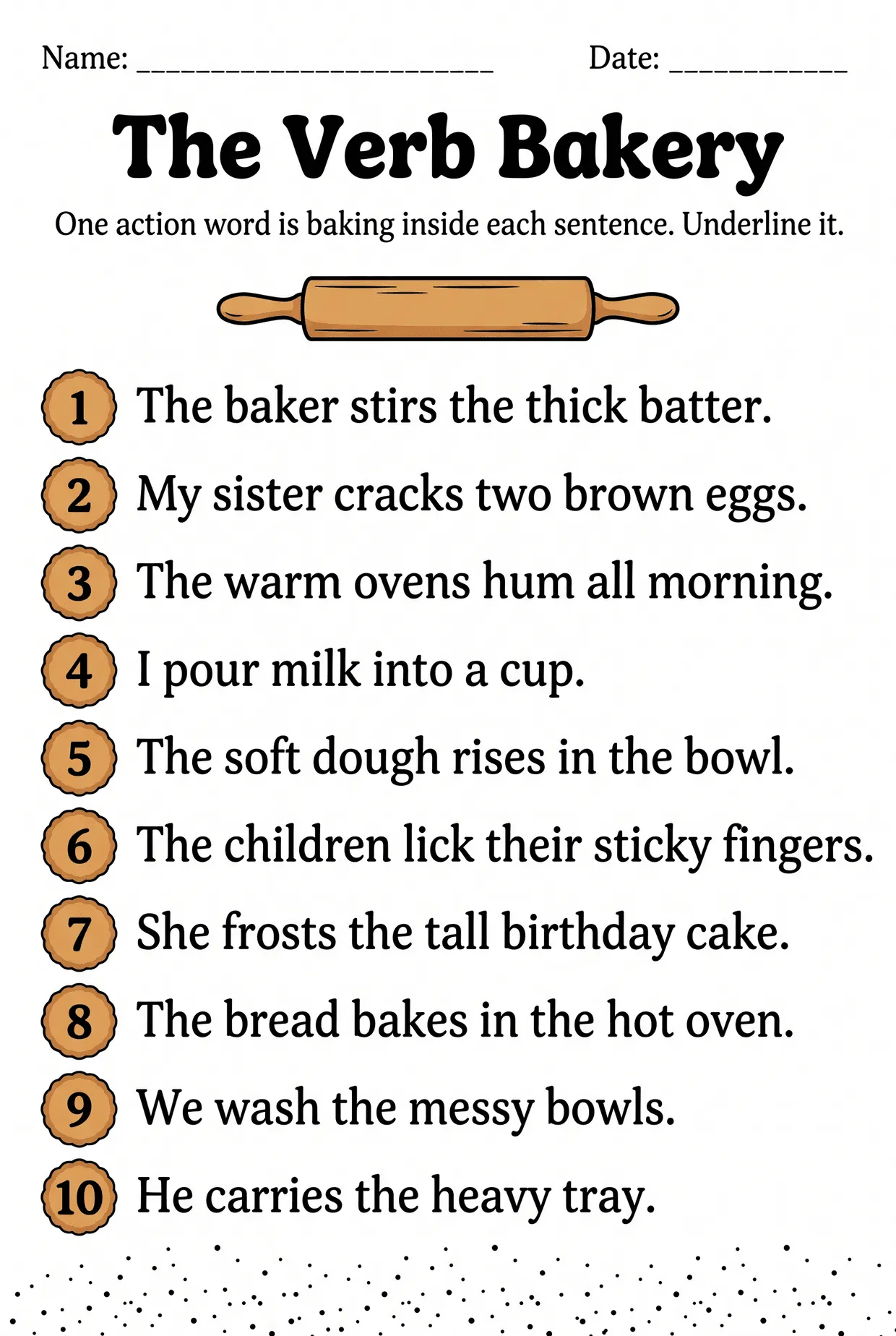
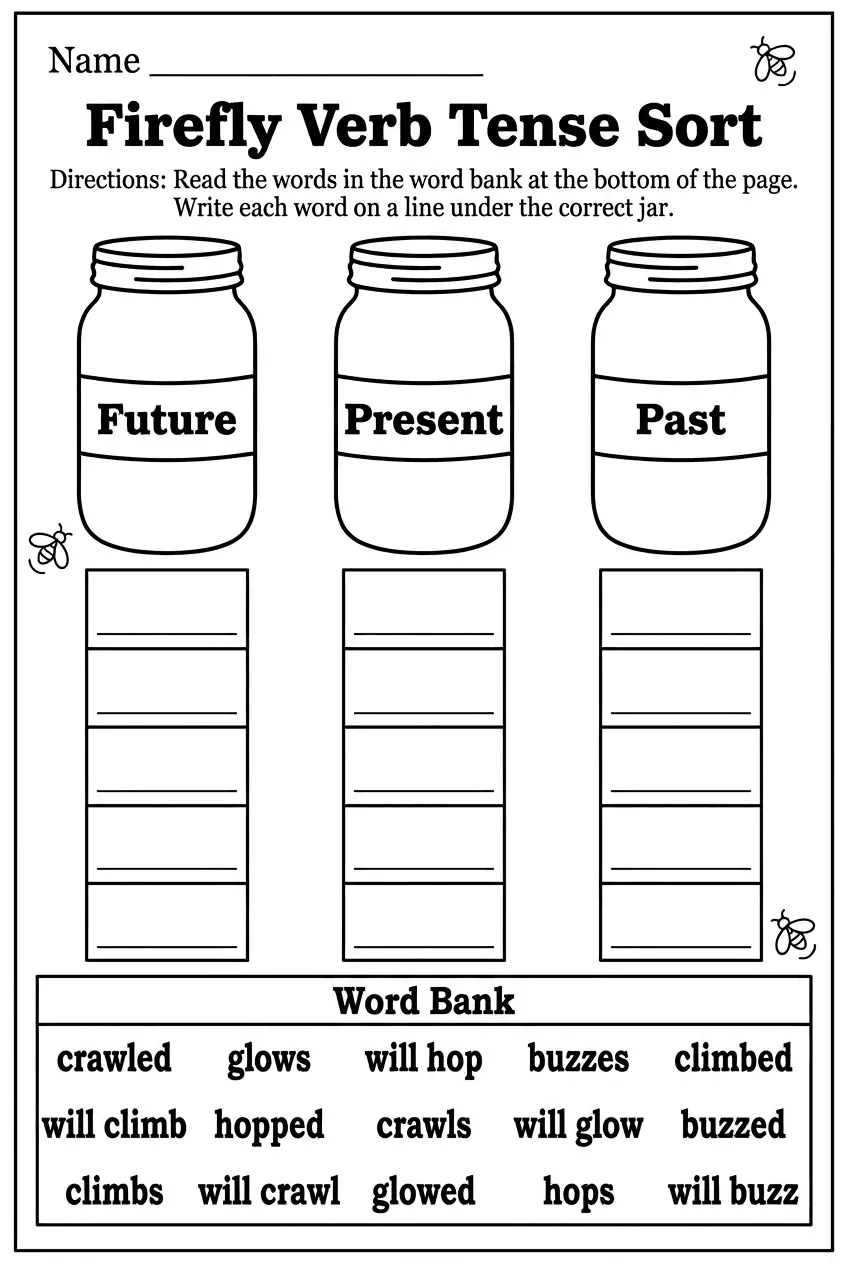
Verb tenses, subject and verb agreement, adjectives, and pronouns including the reflexive kind like himself and themselves. Those line up with the grade 2 language standards, which ask children to form past tense verbs and use reflexive pronouns.
How many pages a week make sense for a second grader?
Three or four short sessions suit most families and classrooms, mixing one story or nonfiction page with one grammar or vocabulary page. Short, regular practice keeps reading feeling easy rather than like a chore.