Reading Grade 3 Conjunctions
Conjunction Check: Quiz and Writing Worksheet Grade 3
✓ Your download is starting. Thanks for using Nifty Worksheets!
Free · 1-page PDF
No account · No watermarks
Size:
1,345
Downloads
4.6★
83 ratings
~15 min
Activity time
1 pg
Total pages
About this worksheet
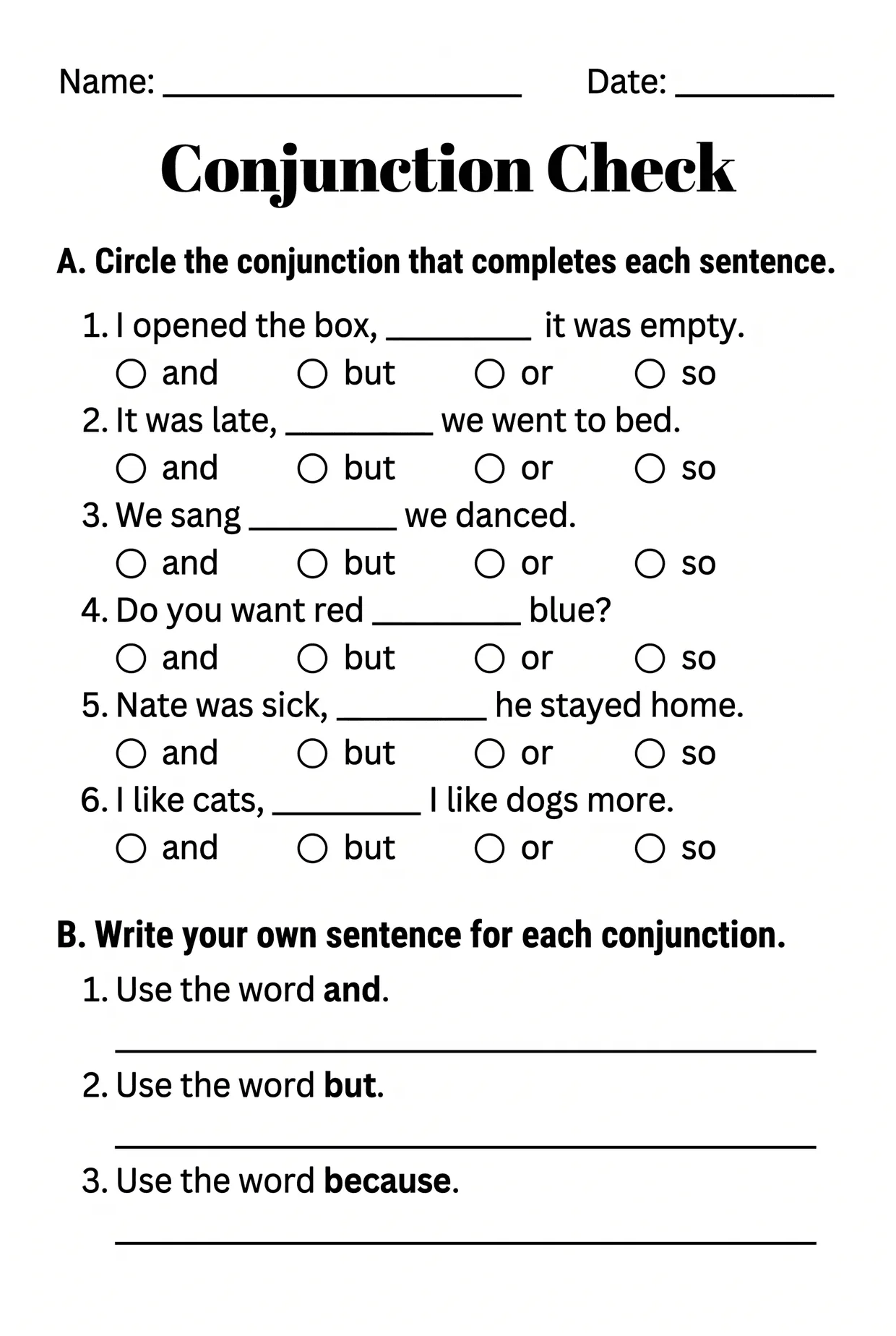
Two short parts. First, six sentences with a blank and the same four choices under each (and, but, or, so), and the child fills in the bubble for the one that fits. Then the page turns into writing: three lines, each asking for a sentence of the child’s own built around and, but or because.
The multiple choice half is quick on purpose. It is the writing half that shows whether conjunctions have really landed, because a child who can recognize but in someone else’s sentence still has to decide what kind of idea it should join in their own.
Sentence six, I like cats, but I like dogs more, is a nice one to read aloud. The first half sounds like it is heading for and, and the second half is what makes it but.
What students will practice
- Choose between and, but, or and so in a sentence
- Tell adding, contrasting and giving a result apart
- Write original sentences with and, but and because
Details
- Grade level
- Grade 3
- Subject
- Reading · Grammar
- Standard
- CCSS L.3.1.h
- Pages
- 1
- Format
- PDF · US Letter and A4 included
- License
- Free for classroom use · Attribution appreciated
- Last updated
- September 13, 2026
Pairs well with