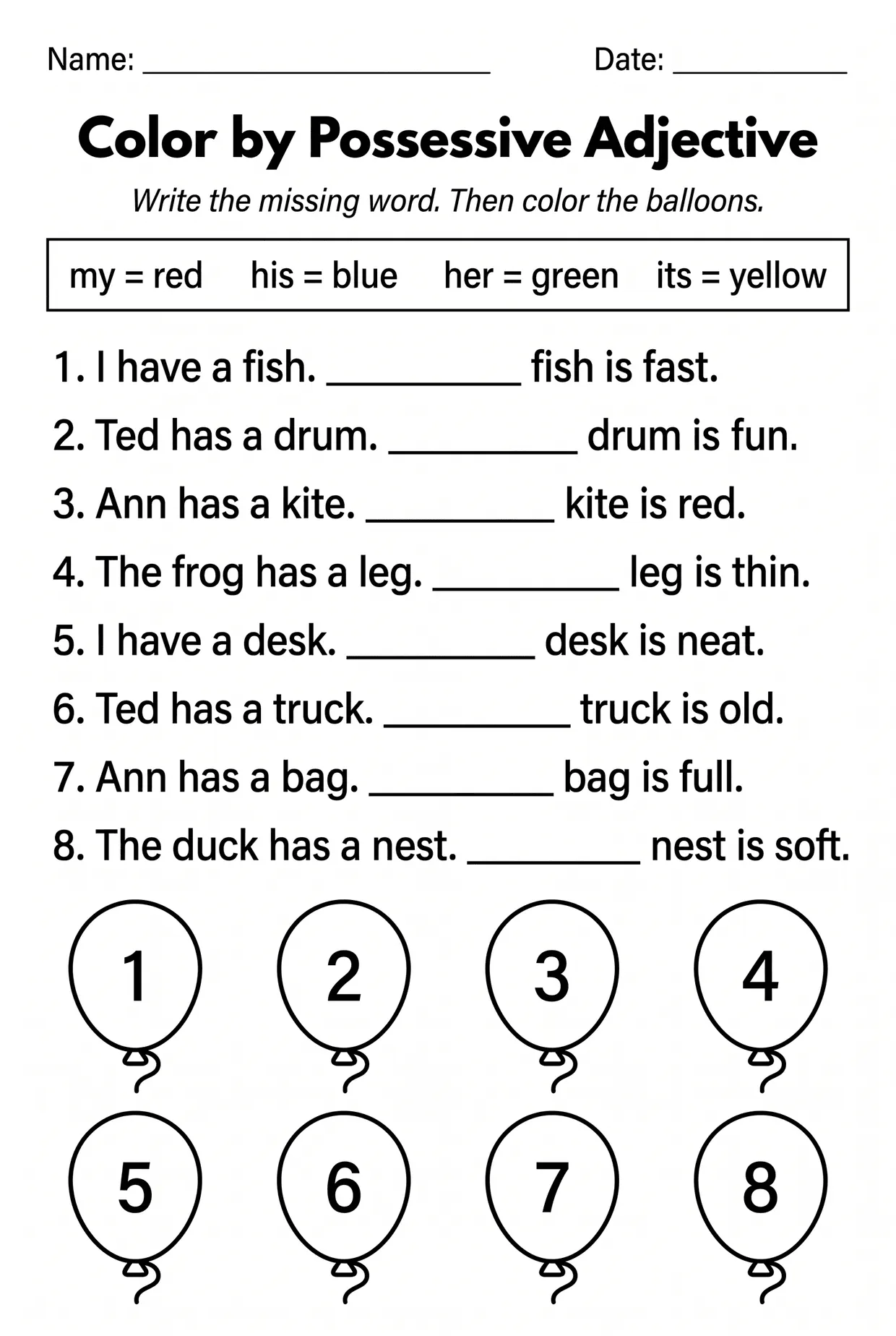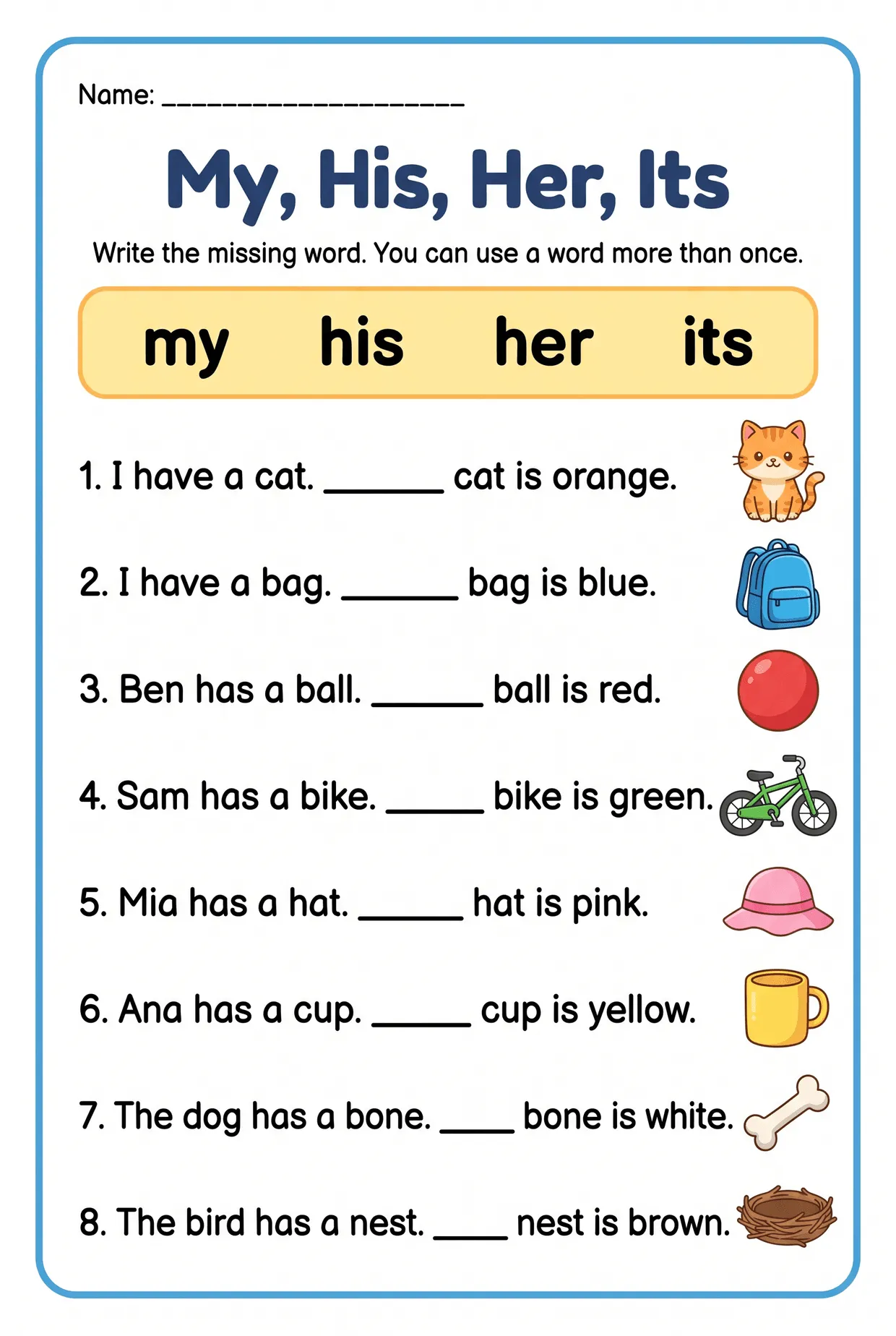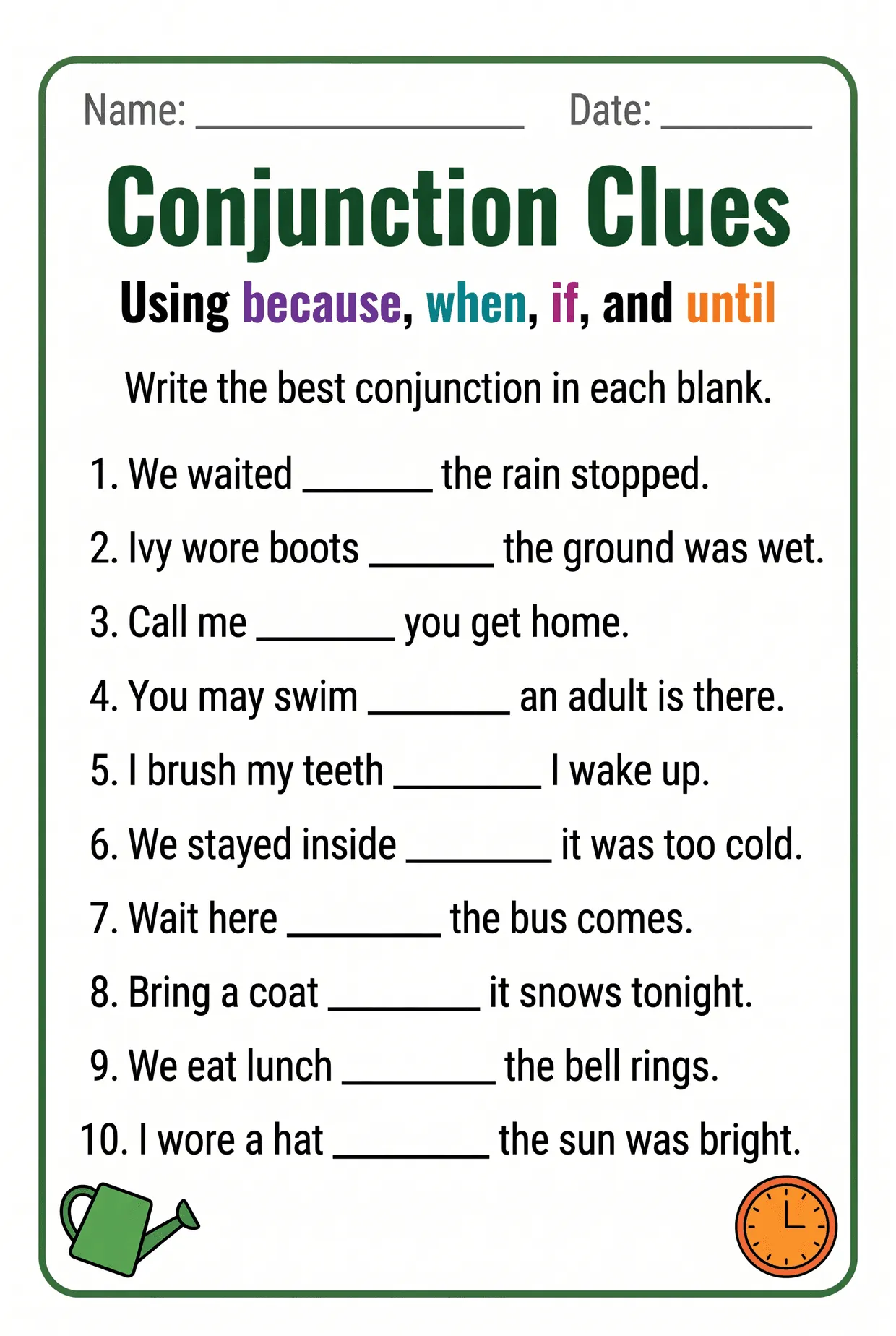
Because, When, If, Until: Conjunctions Worksheet Grade 3
About this worksheet
Ten everyday sentences, each missing its joining word, and four conjunctions to choose from: because, when, if and until. We waited until the rain stopped. Ivy wore boots because the ground was wet. You may swim if an adult is there.
These four go past and, but and so. Each one tells the reader something specific (a reason, a time, a condition, or how long something lasts), which is the jump third grade grammar makes into subordinating conjunctions. A child has to work out what the second half of the sentence is doing before the right word becomes clear.
A few blanks can take more than one answer. We eat lunch when the bell rings and we eat lunch until the bell rings are both real sentences, just with different meanings, and talking that through is some of the best practice on the page.
What students will practice
- Use because, when, if and until in sentences
- Work out whether a sentence needs a reason, a time or a condition
- Choose the best fit when more than one word could work
Details
- Grade level
- Grade 3
- Subject
- Reading · Grammar
- Standard
- CCSS L.3.1.h
- Pages
- 1
- Format
- PDF · US Letter and A4 included
- License
- Free for classroom use · Attribution appreciated
- Last updated
- September 13, 2026