Free Preschool Alphabet Worksheets

To know a letter, a preschooler needs three things: its shape, its name and the sound it makes. Good preschool alphabet worksheets cover all three, so each letter from A to Z gets its own page here, pairing the capital and small letter with a picture word that starts with its sound, so A is for apple and Z is for zebra.

As a letter of the week, each page sets up a few days of short visits: trace the letter and say the picture word together, then spot that letter on cereal boxes and street signs for the rest of the week. Capitals usually come easier, since they are built from straight lines and simple curves, so let the small letter come along more slowly.

Alphabetical order is optional. Plenty of families begin with the letters in a child’s own name, and a teacher can just as easily pull letters to match a class theme. Saying the picture word out loud before tracing is the habit that matters, whatever the order, because it ties each shape to its sound.

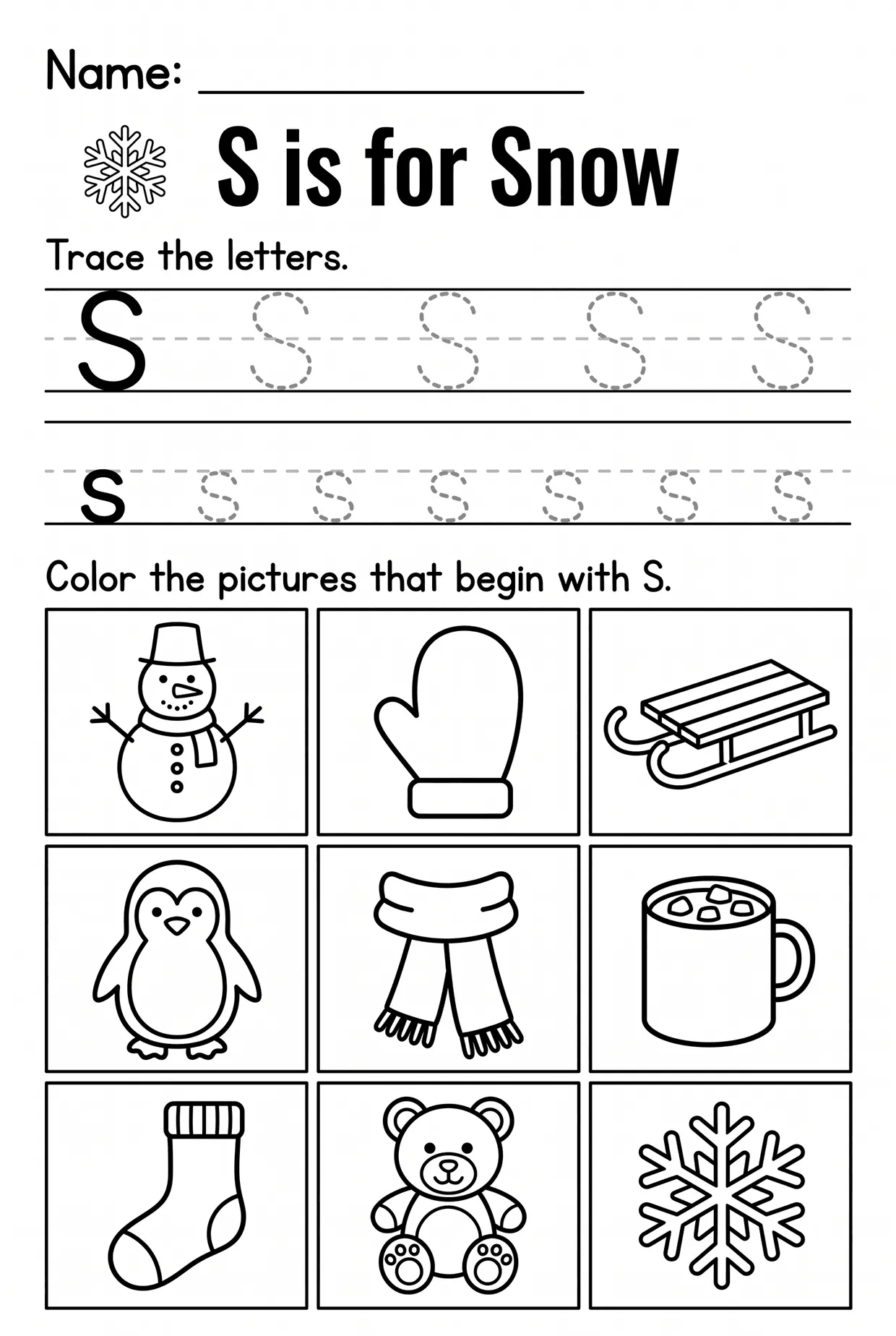
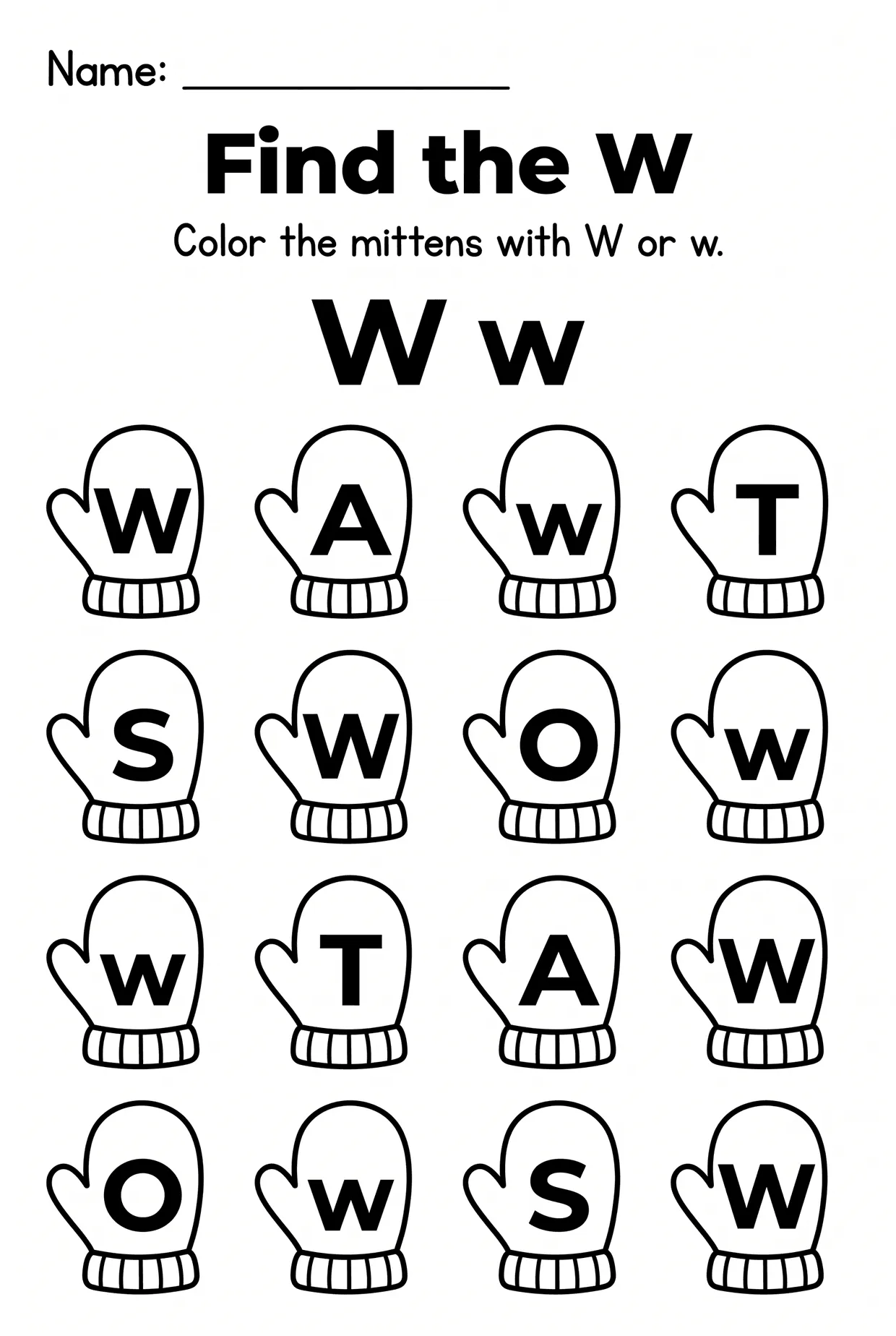
For a child who can trace a letter but not yet pick it out of a crowd, two winter pages help. One hunts through a pile of mittens for every capital and small W, which is harder than it sounds when the other letters look alike. The other traces S and then picks out pictures that start with its sound, like snowman, sled and sock, the bridge from knowing a letter to hearing it in a word.

28 free worksheets Preschool Newest added November 2026
Free sets on this skill Free A–Z Alphabet Tracing Worksheets (Printable) 27
Format
More preschool skills Tracing worksheets for preschool 60Counting worksheets for preschool 32Number worksheets for preschool 18Winter worksheets for preschool 18Standing lines worksheets for preschool 15Big and small worksheets for preschool 10

Questions about alphabet worksheets for preschool

Should my preschooler learn letter names or letter sounds first?

Both, side by side. The name lets a child talk about a letter, and the sound is what lets them read with it later. Each letter page here comes with a picture word, so the sound gets said each time the letter is traced.

Uppercase or lowercase first?

Most preschoolers find capitals easier, because they are built from straight lines and simple curves. Each page has both, with the capital first. If the small letter is a struggle, let a child trace the capital and simply point to its partner for now.

My child mixes up b and d. Is that a problem?

Not at this age. Reversals are normal through preschool and often into kindergarten, because b and d are the same shape facing different ways. The picture words help here: a ball for b and a dog for d give a child a sound to hold on to.

How many letters should we do in a week?

One or two is a comfortable pace for most three and four year olds. A short daily visit to the same letter (tracing it, saying its sound, spotting it on a cereal box) does more than racing through the alphabet. Go back to letters that did not stick before adding new ones.

What comes after tracing the letters?

Finding them. A child who can trace a letter cannot always pick it out of a crowd, so a letter hunt like the winter mitten page is a good next step. After that, listening for a letter at the start of words, as the snow page does with S, is the bridge to reading.