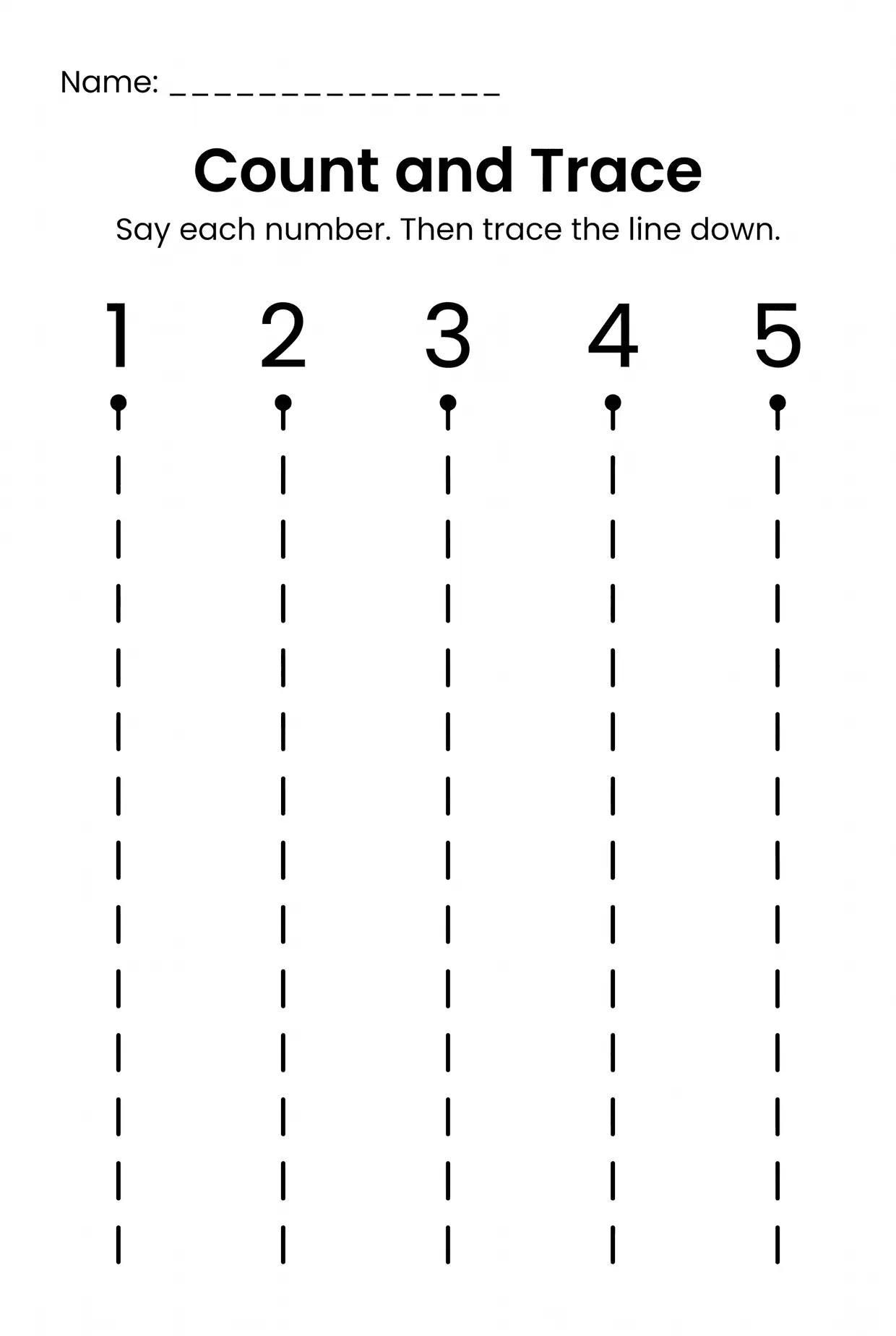
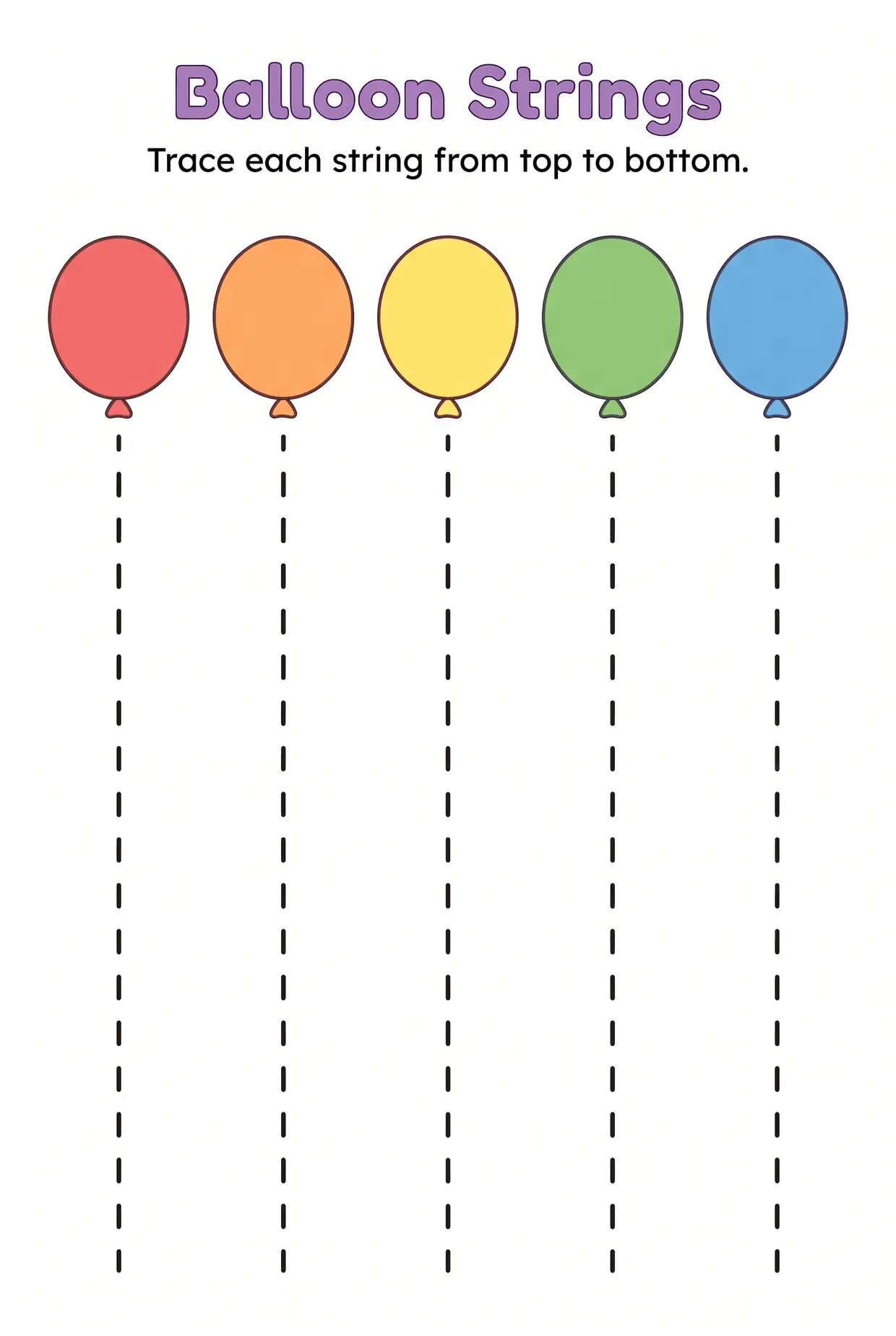
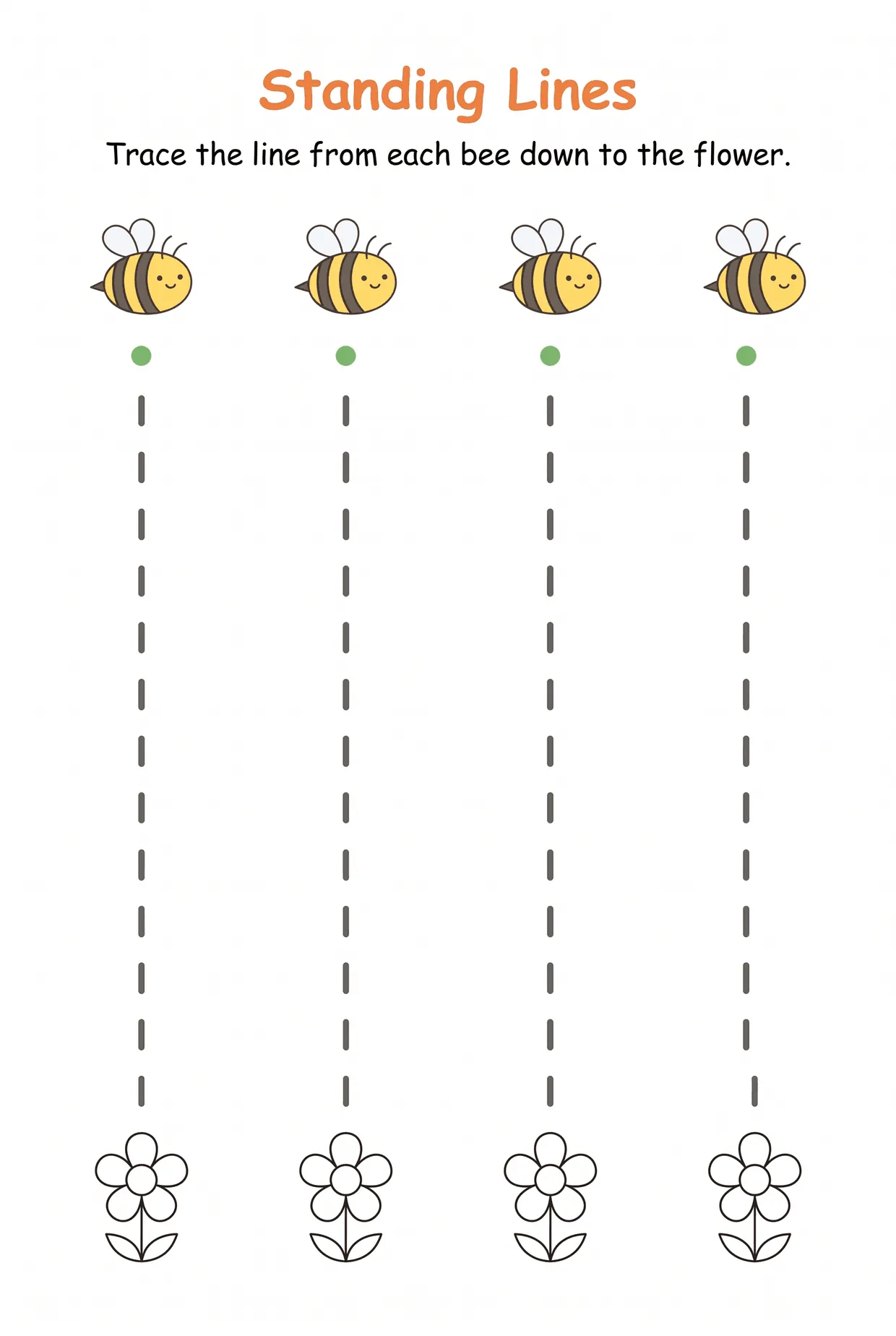
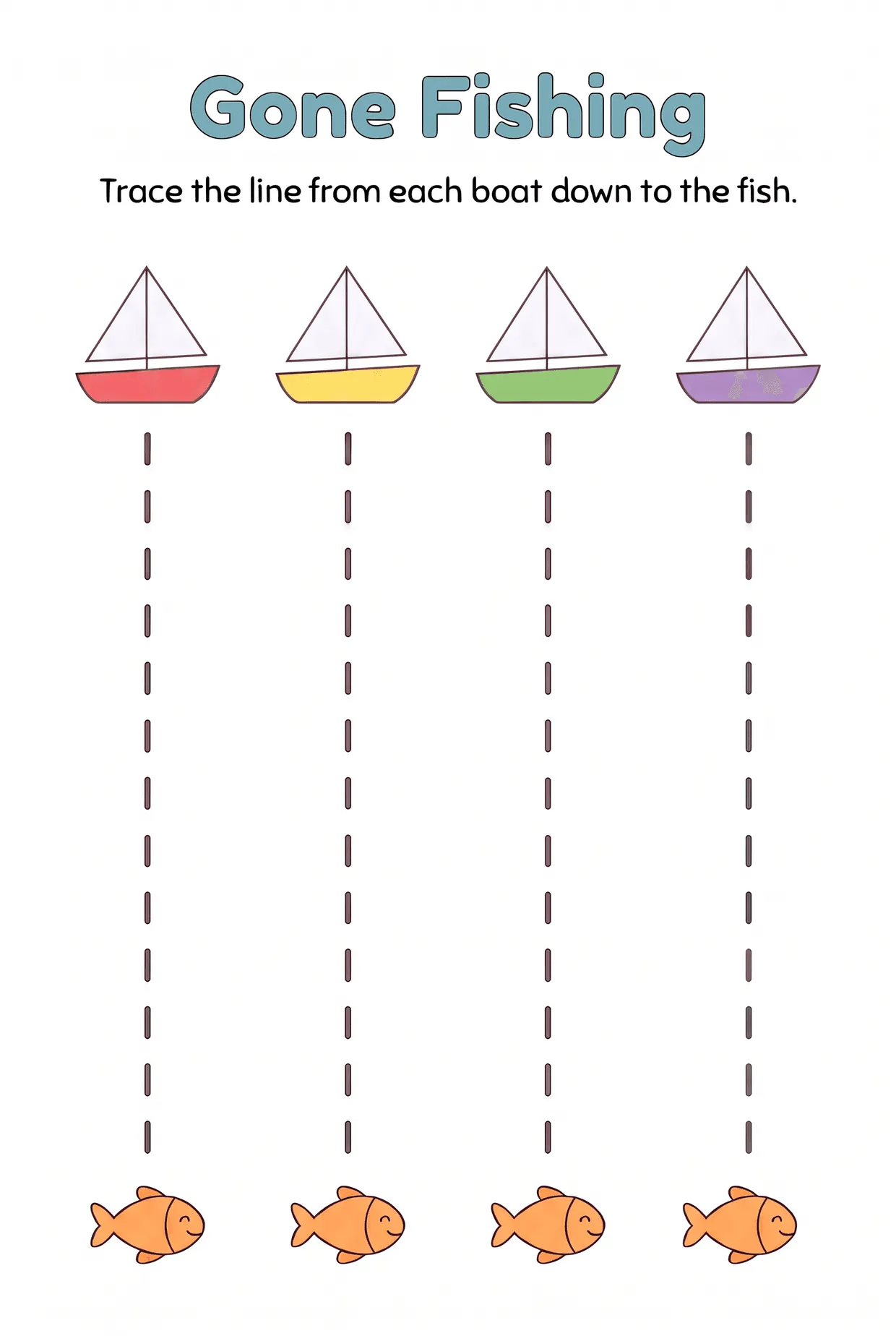
Questions about standing lines worksheets for preschool
Why start with standing lines rather than circles?
A straight down stroke is the easiest line for a young hand to control, because it follows the natural pull of the arm toward the body. A circle asks the hand to change direction the whole way round, which comes later. Standing lines also turn up in more capital letters than any other stroke, so the practice pays off quickly.
My child draws the lines from the bottom up. Should I correct it?
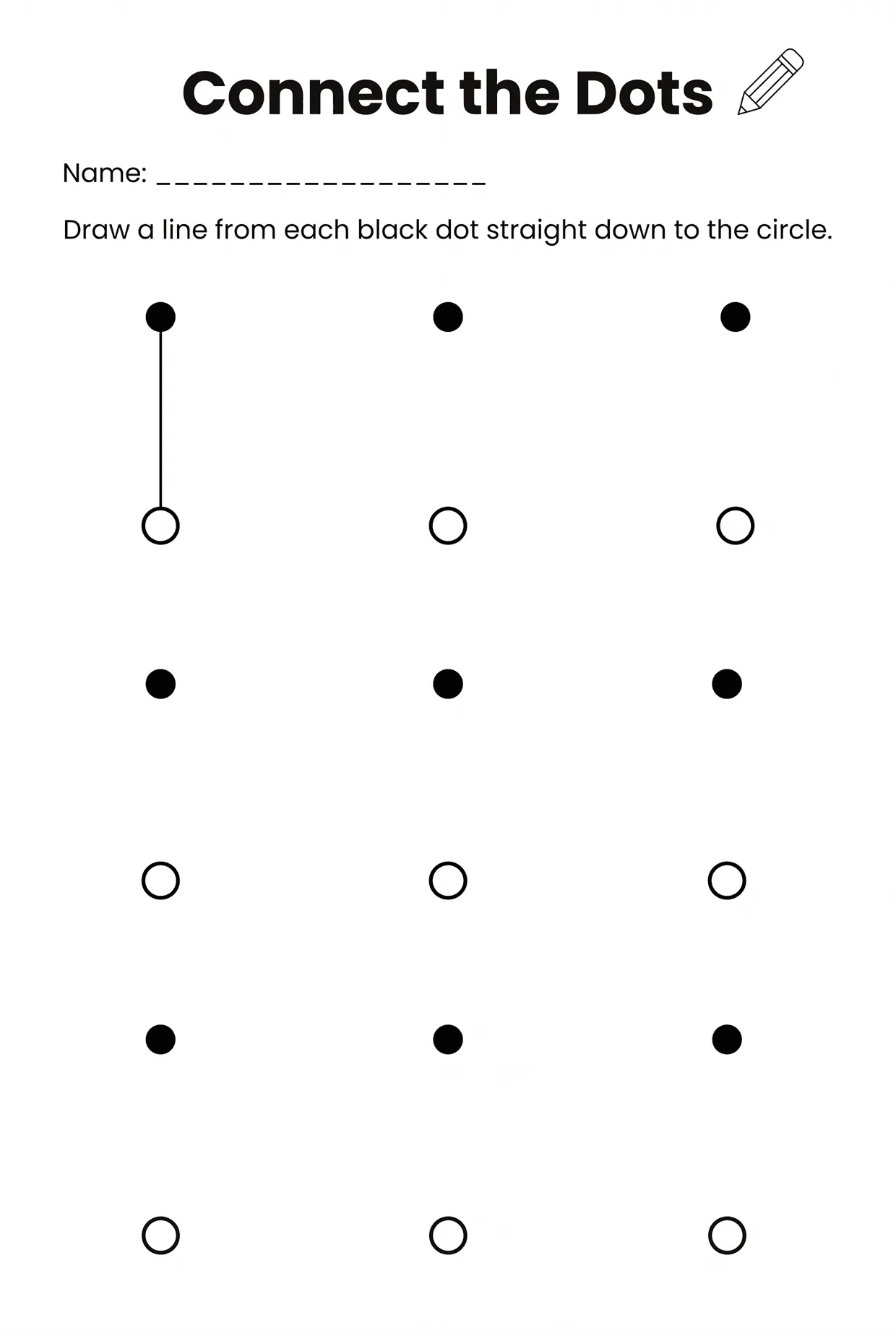
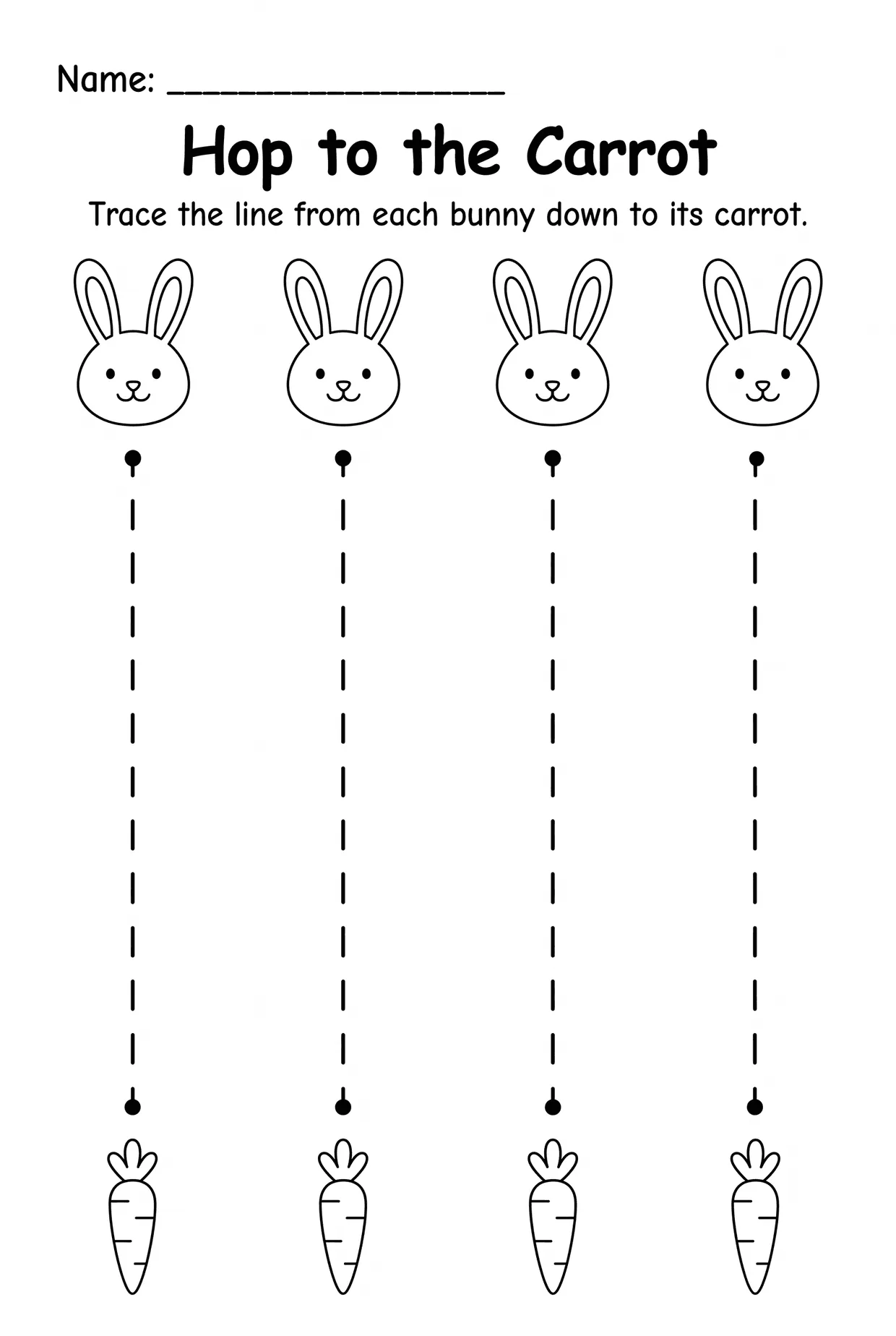
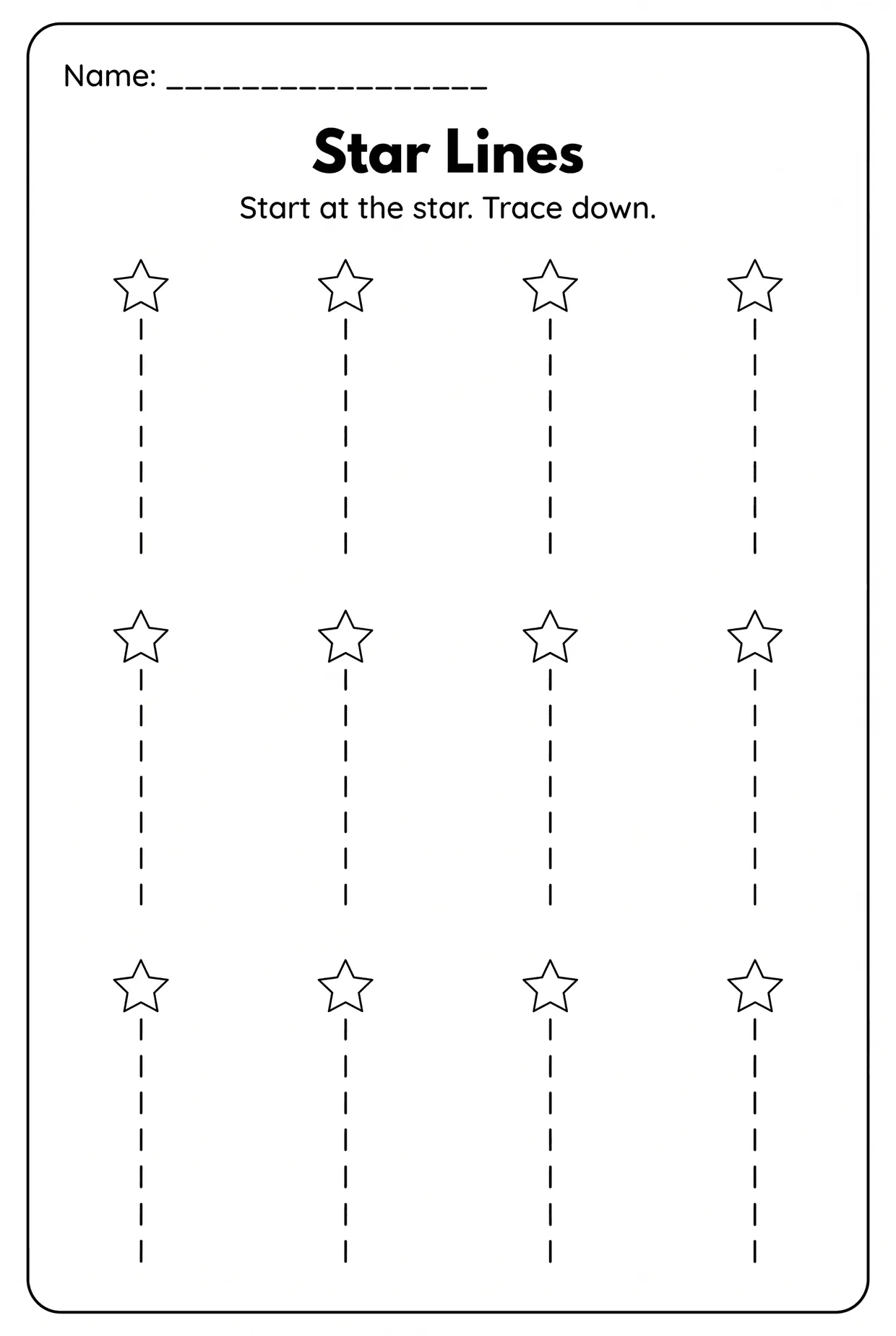
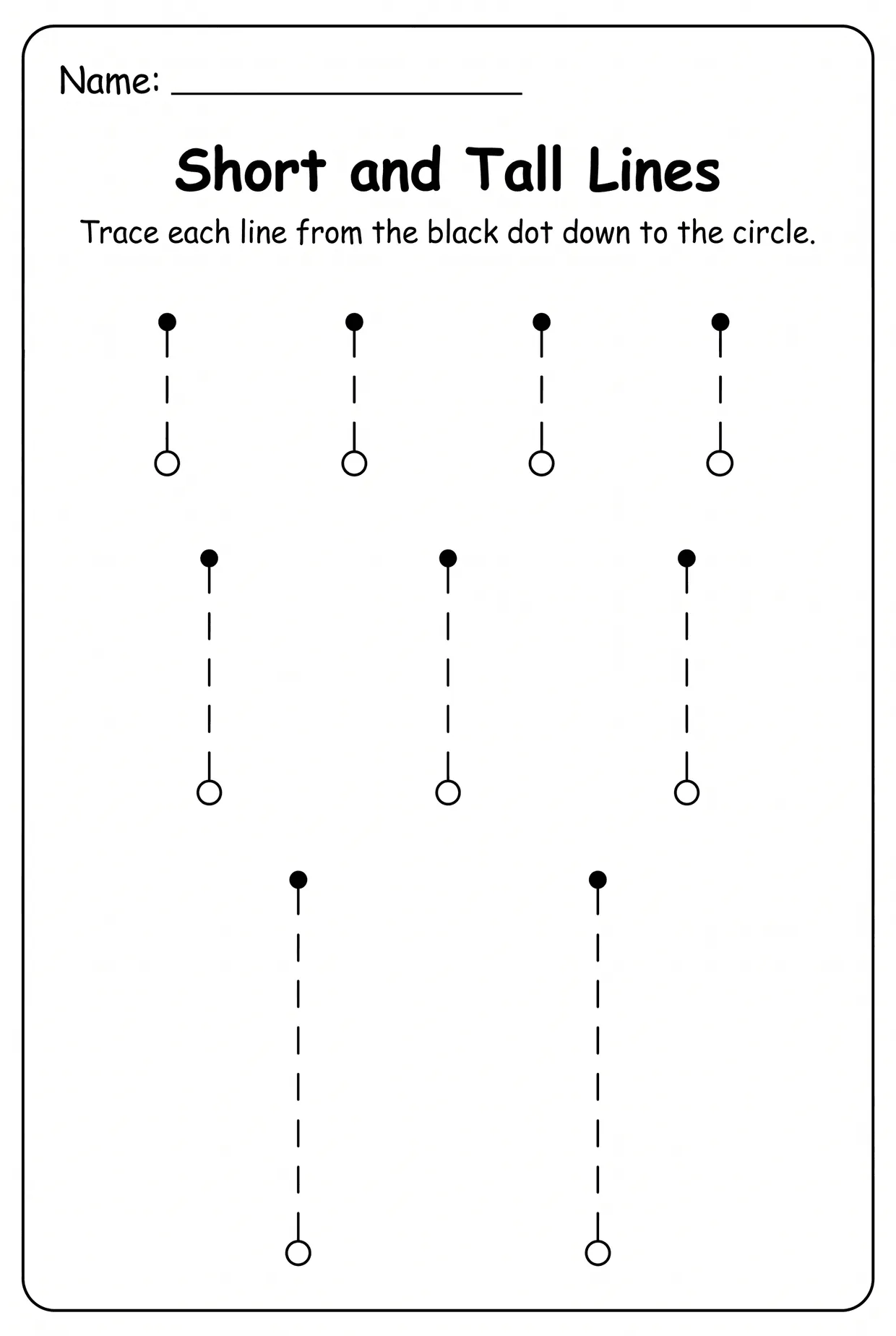
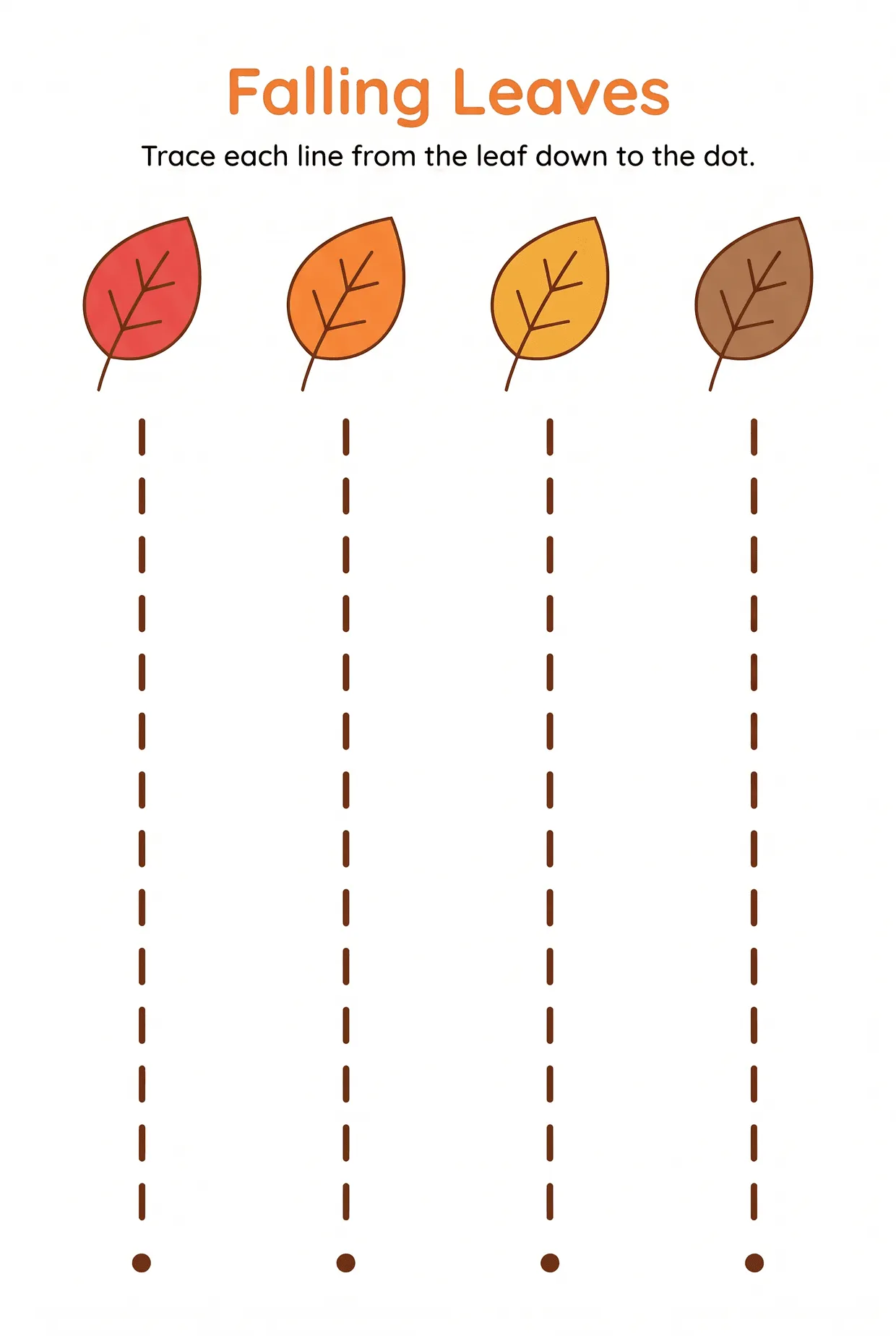
Yes, gently. Letters are written from the top down, so a habit of pushing upward makes handwriting harder later. Point to the starting dot or picture each time and say top, then down, and the dot or picture at the top of every line will keep repeating that start point until it sticks.
When is a child ready to draw lines without dots?
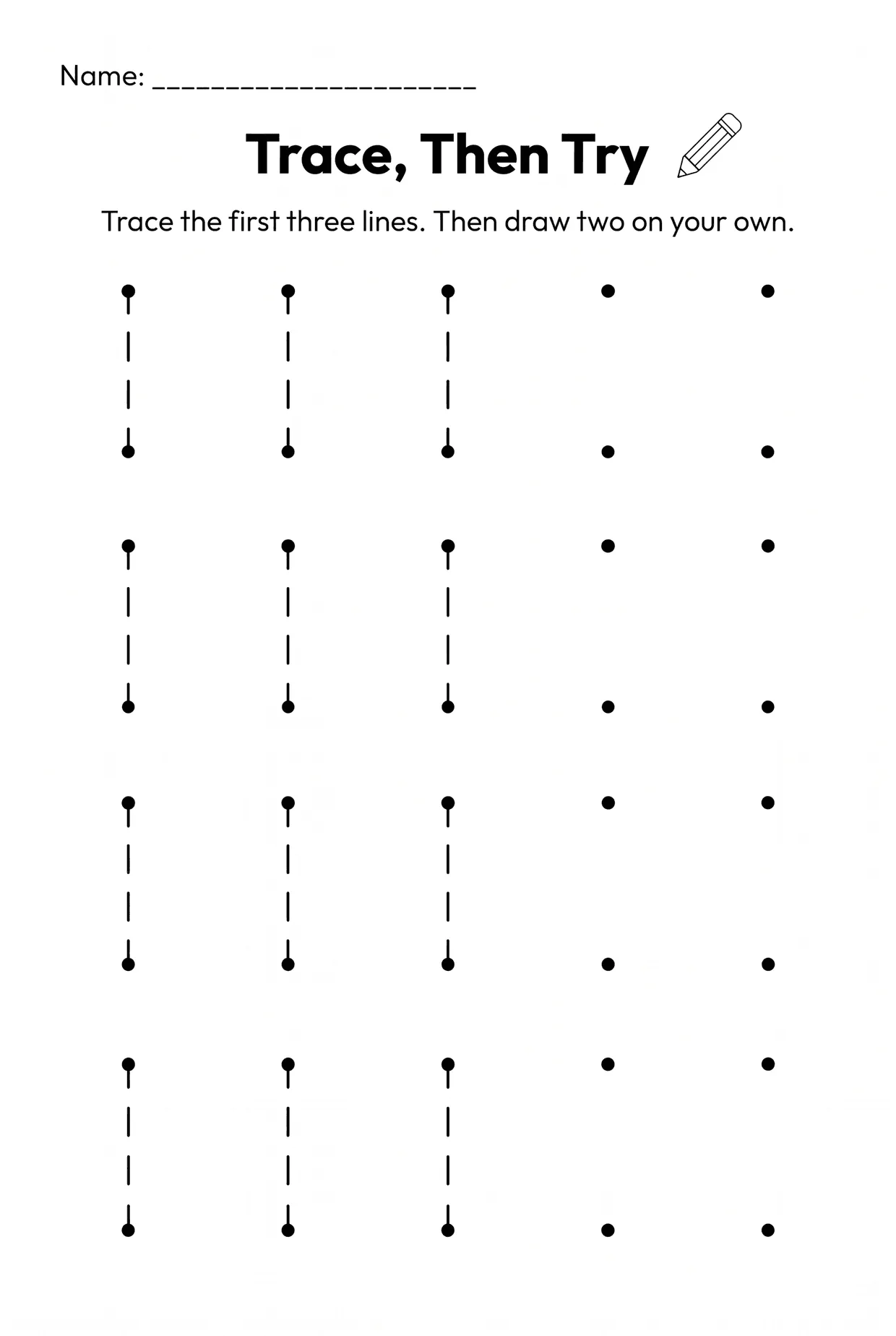
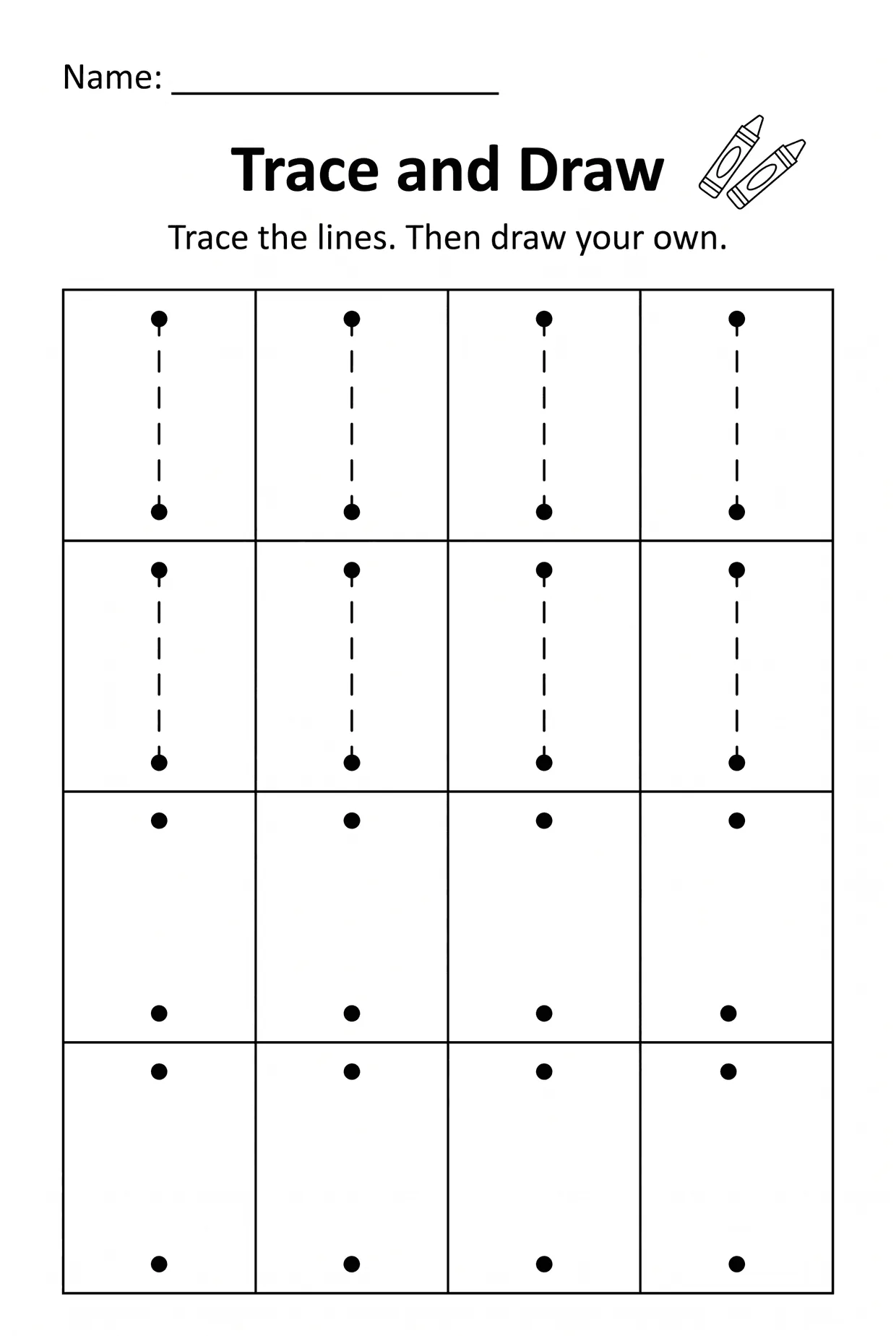
When traced lines stay on the guide most of the way and stop close to the end point. At that stage, move to the pages that trace a few lines and then leave a couple to draw alone. Wobbly freehand lines are fine, since the aim is a confident start and stop rather than a ruler-straight line.
How many lines should a child trace in one go?
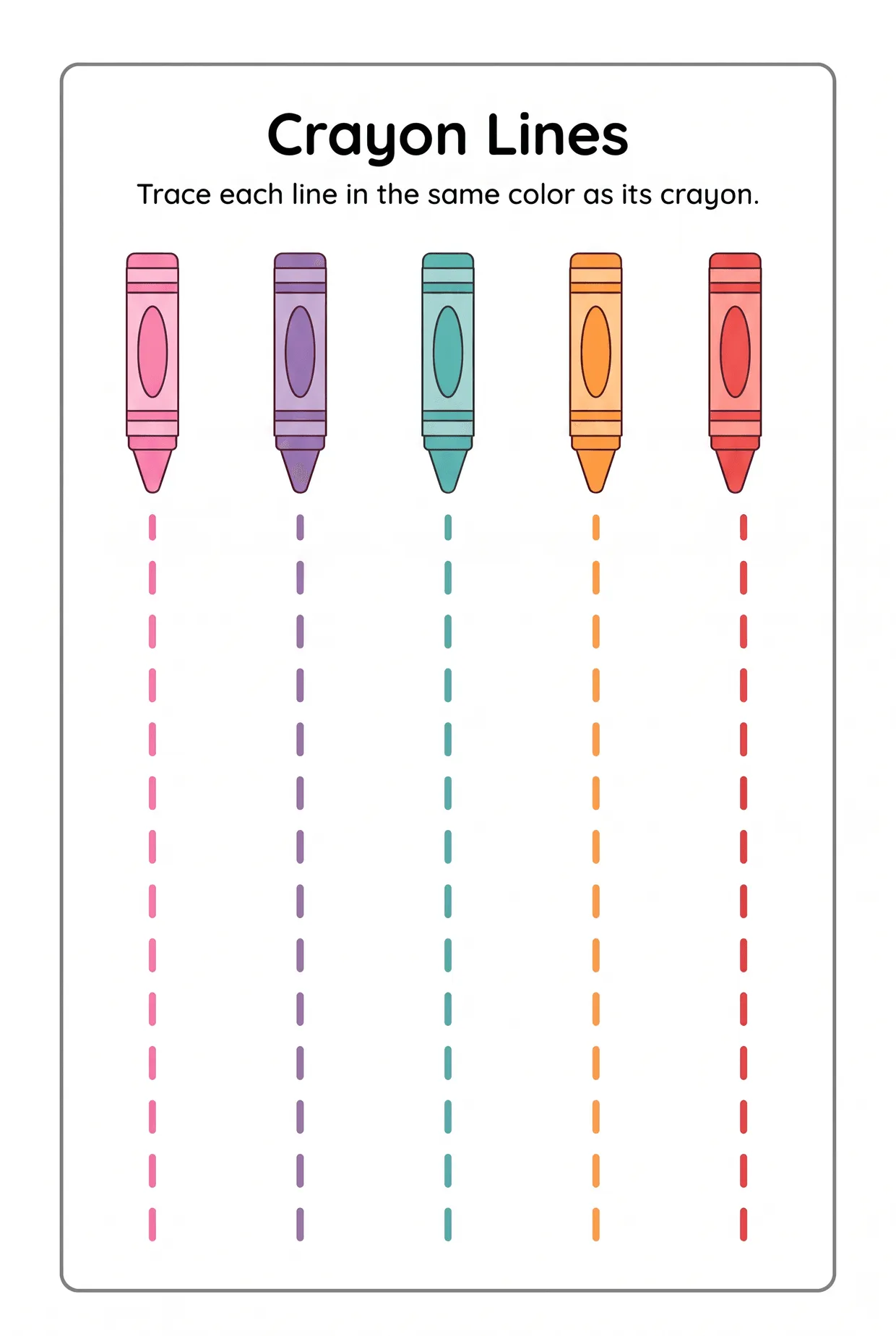
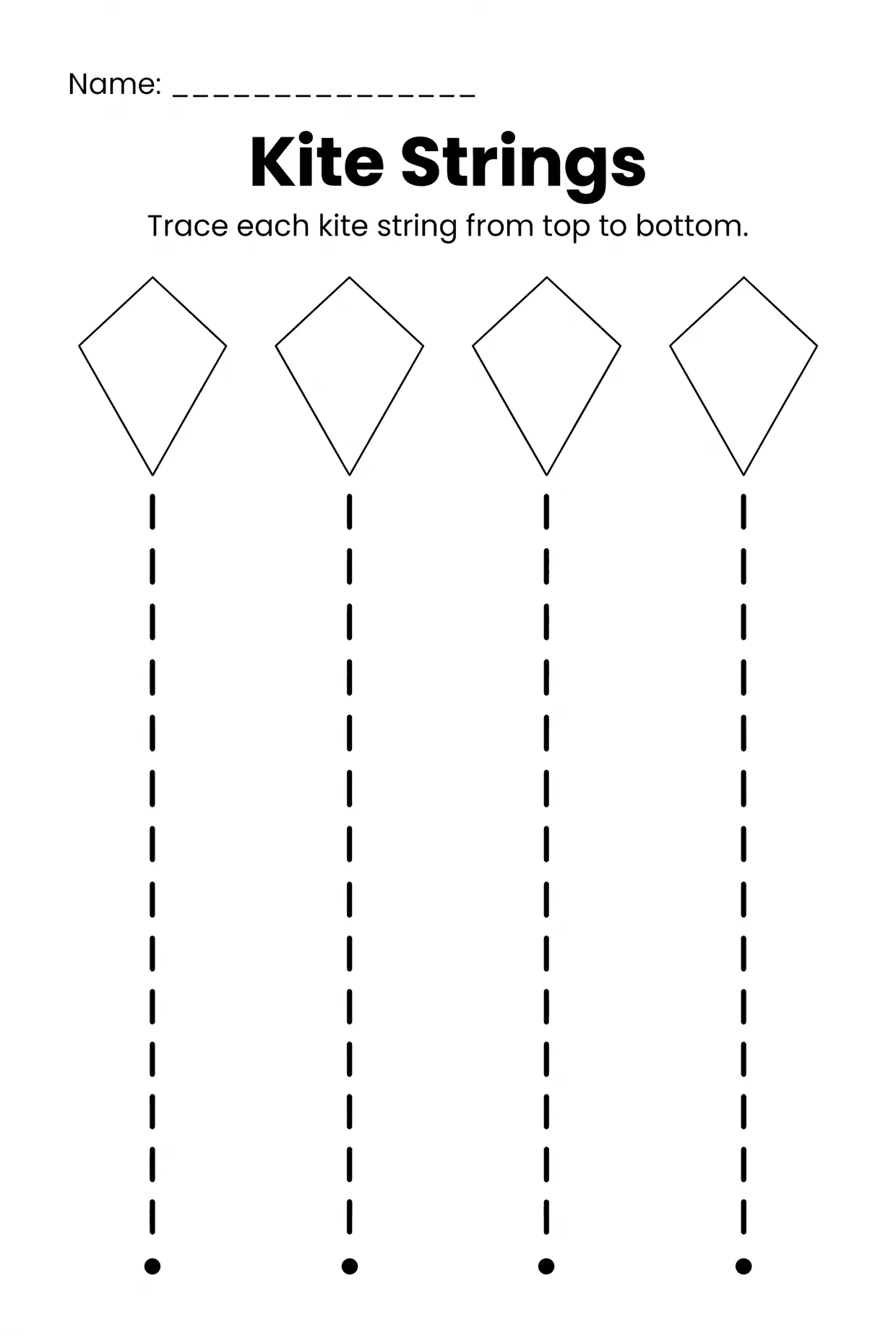
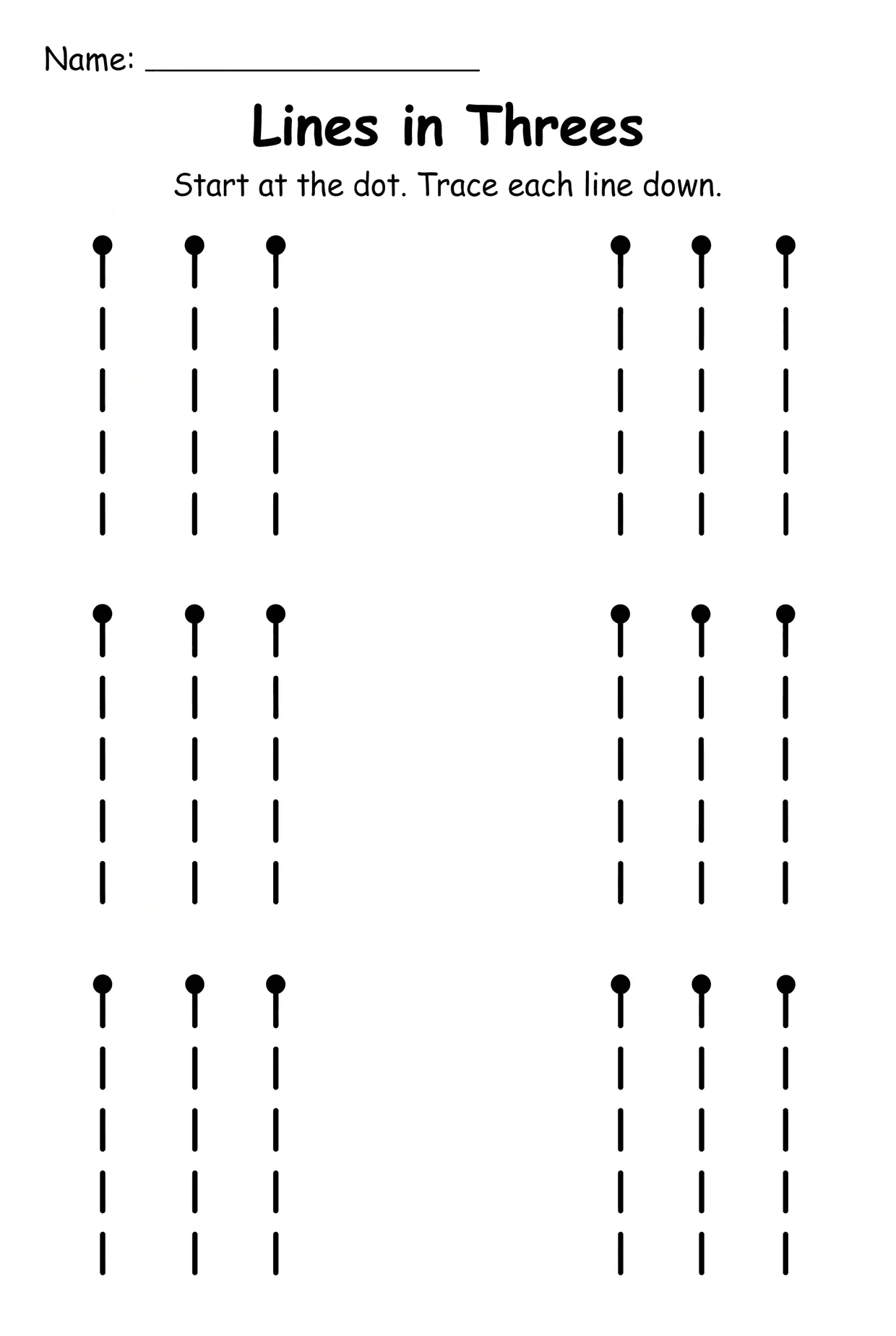
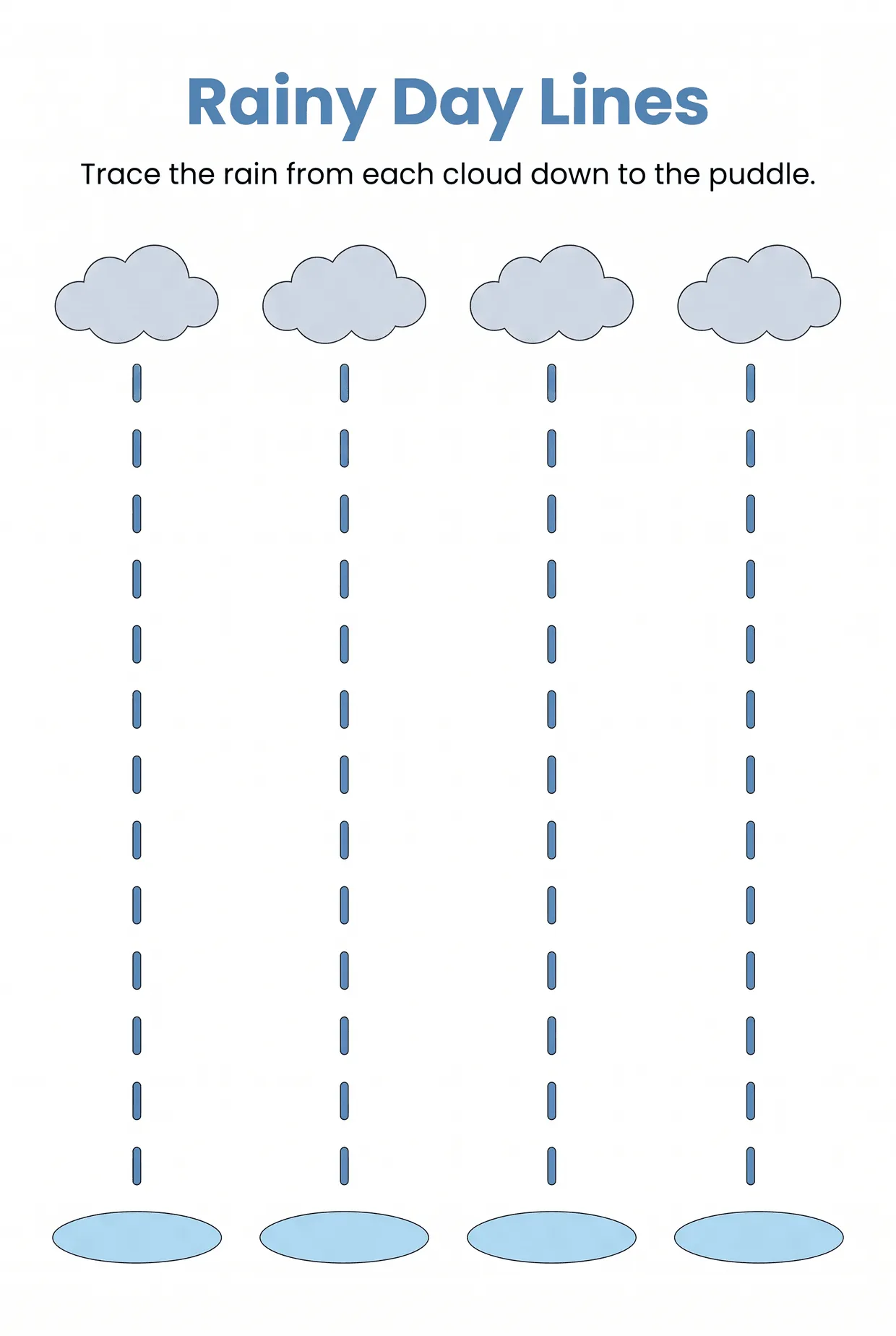
One page is plenty for a three year old, and a few long lines done with care beat a page rushed. Start with the picture pages that have four or five long lines, then move to the busier rows of short lines once a child can stay focused to the end.
What comes after standing lines?
Sleeping lines, which run from left to right, are the usual next step, followed by slanting lines, curves and zigzags. A child who can pull a steady line down and then across already has the two strokes in a plus sign, a capital T and a capital L.