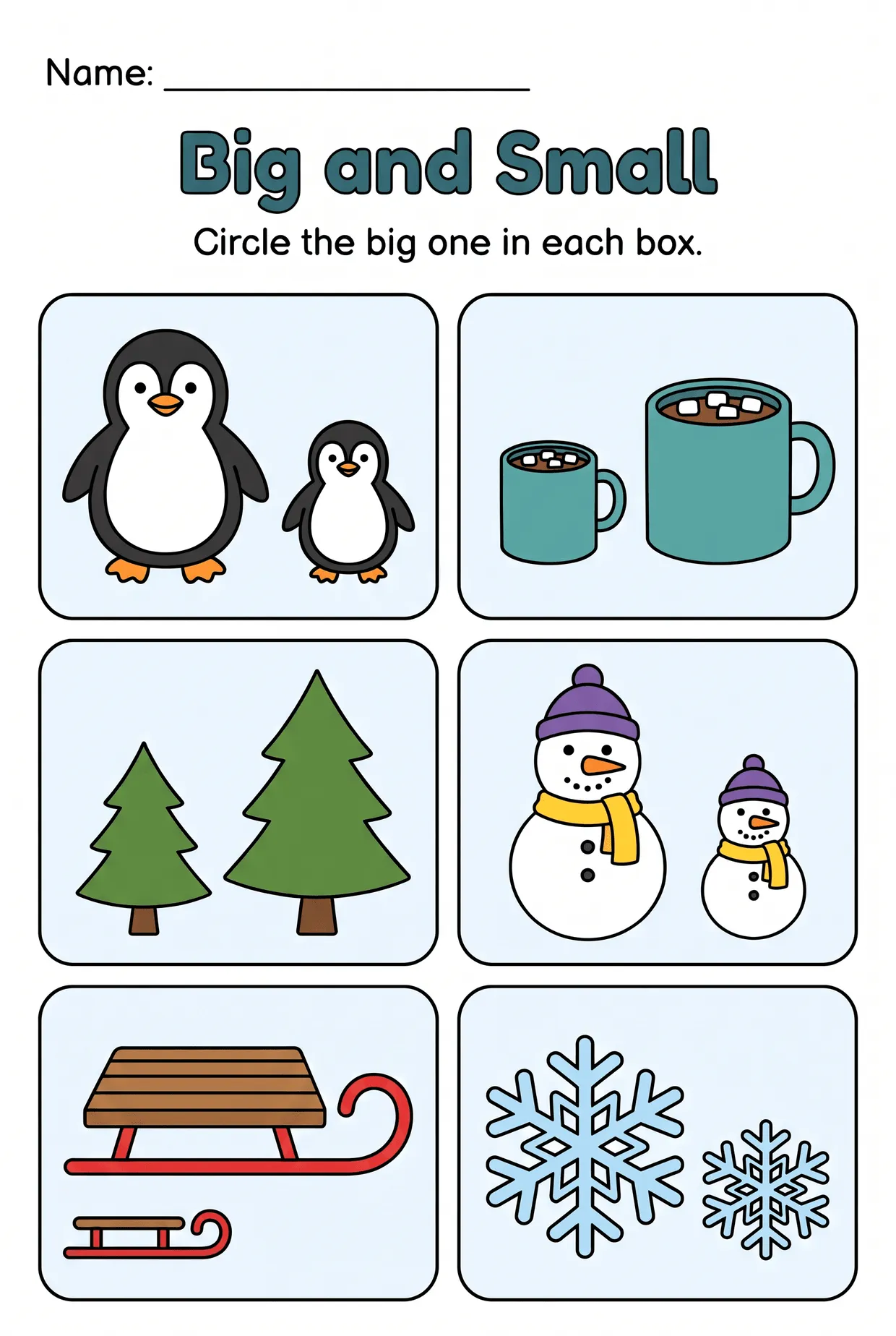
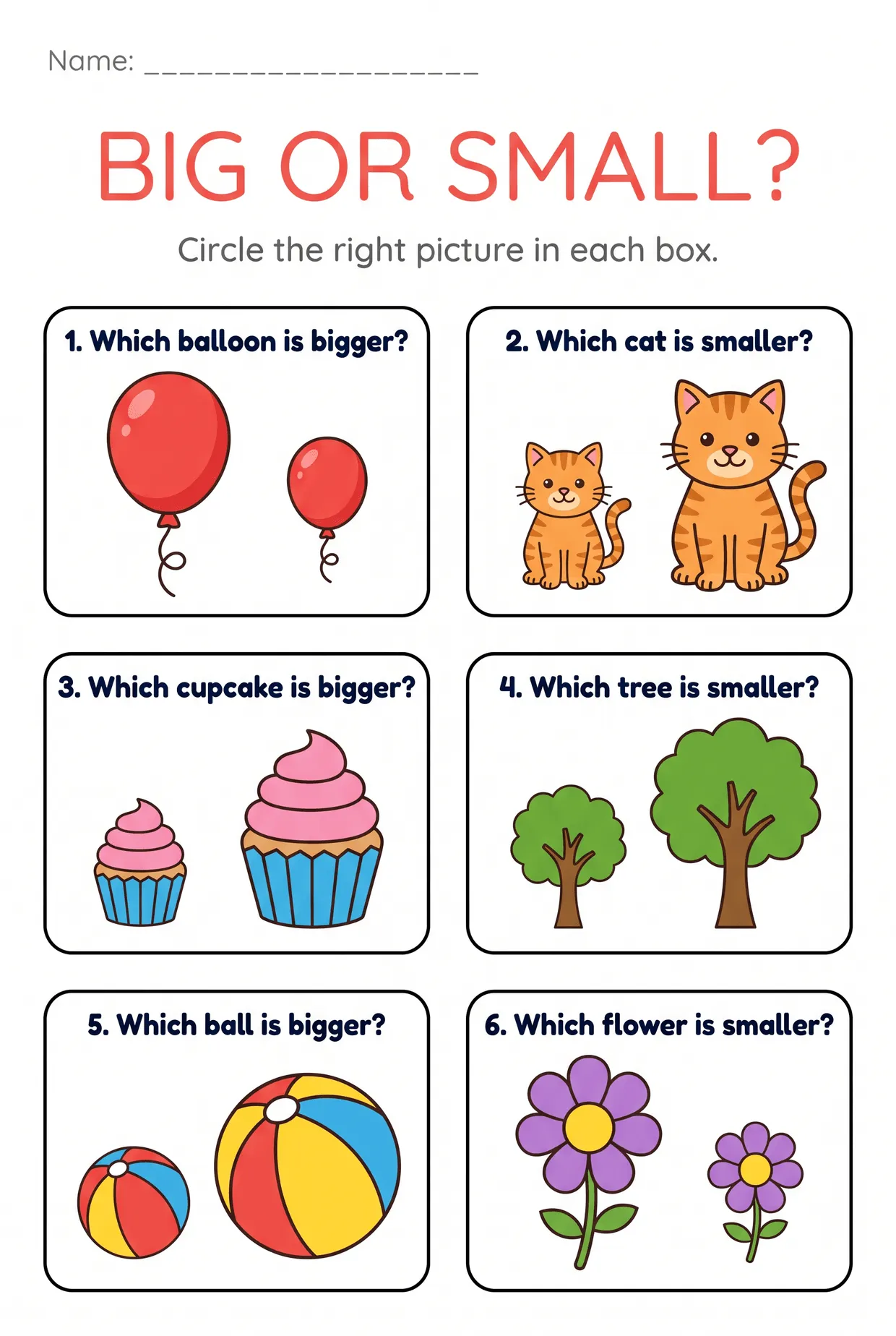
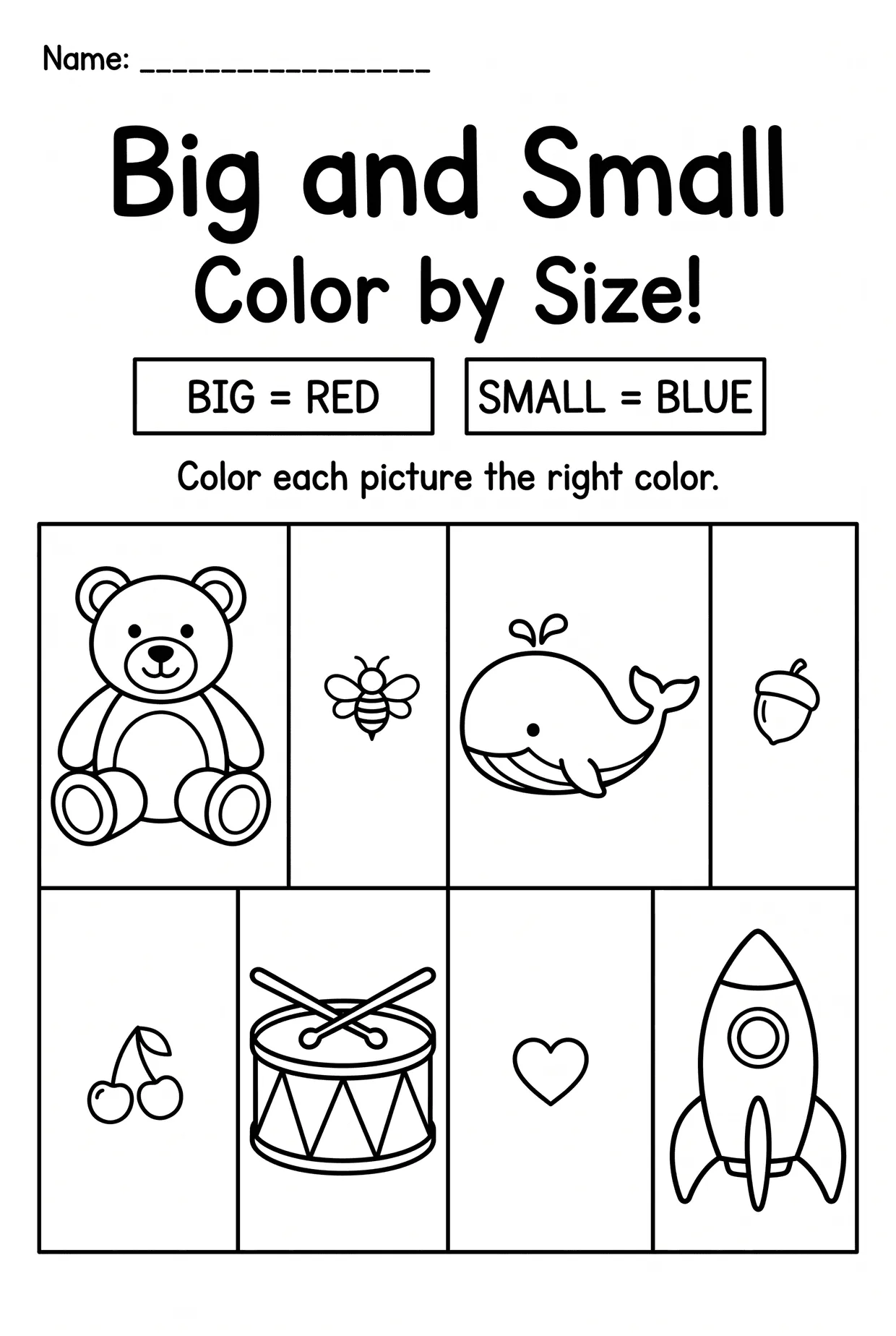
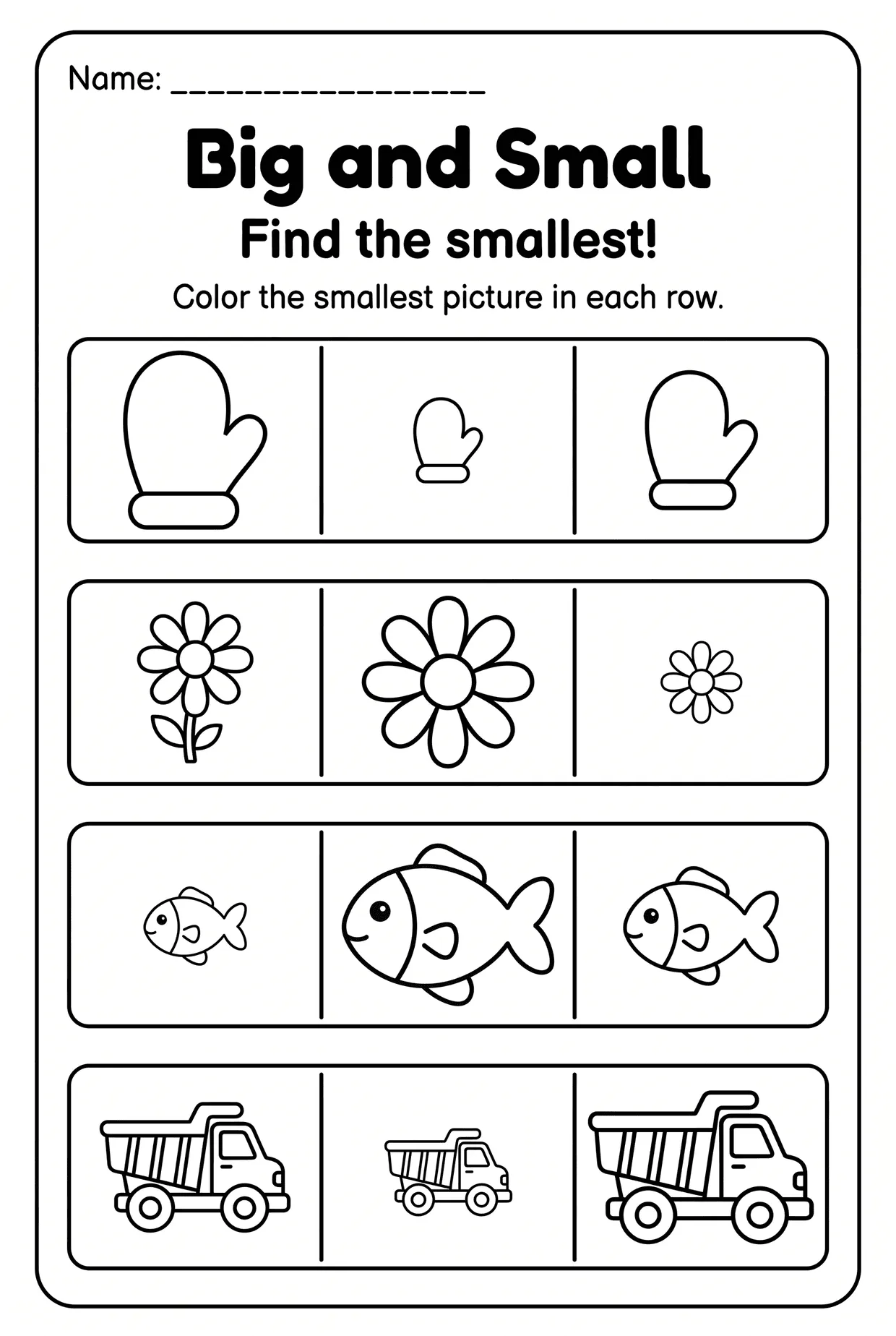
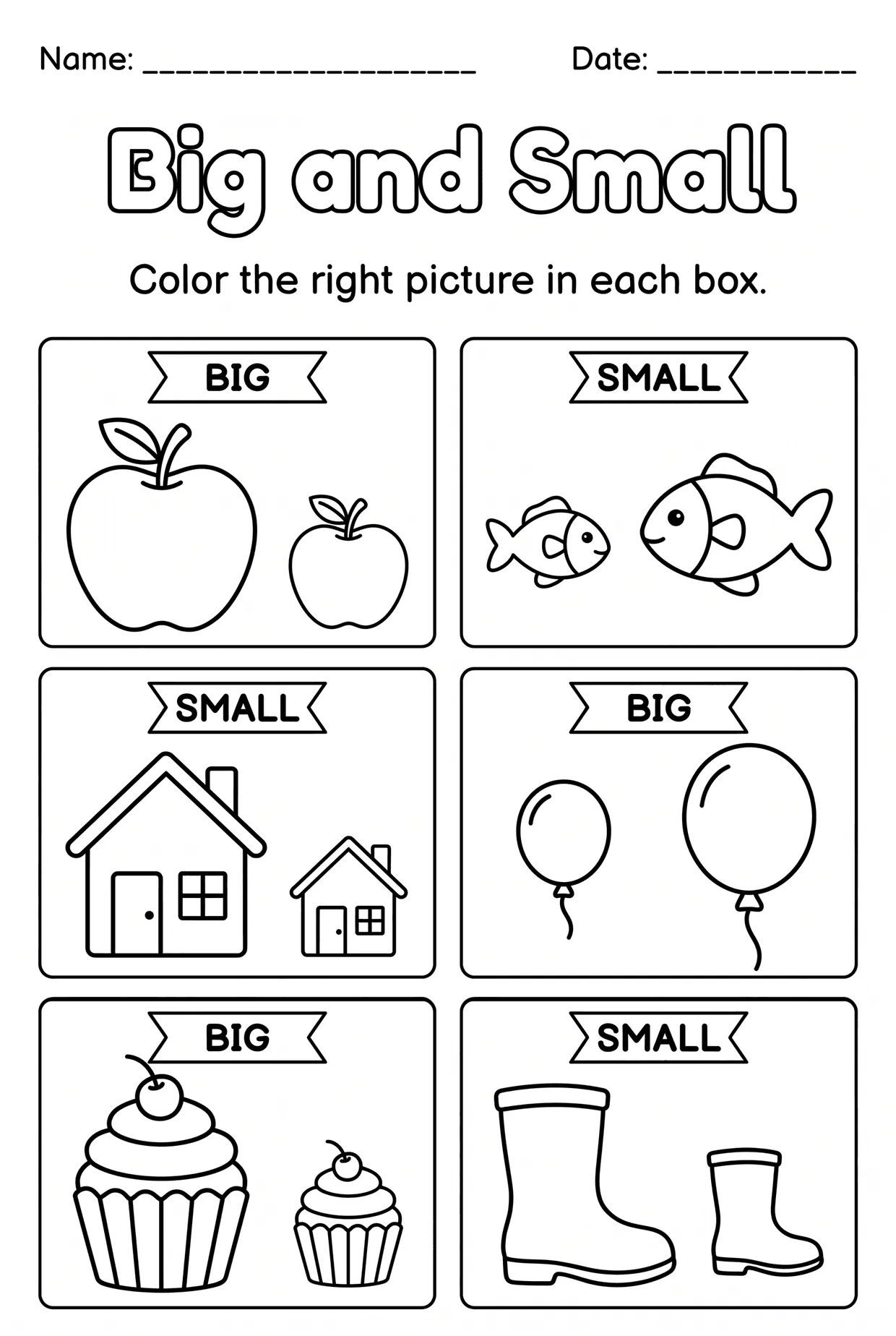
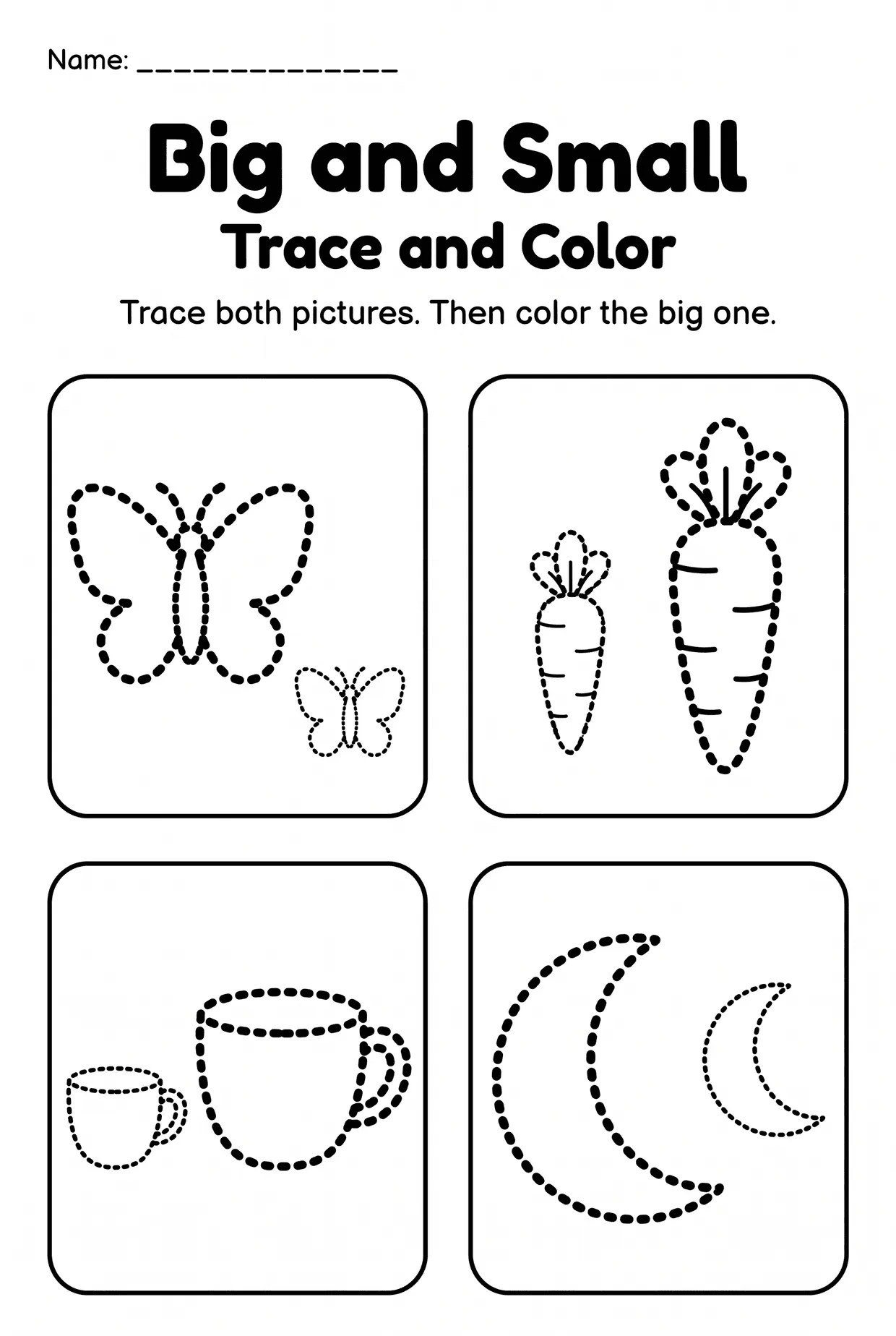
Questions about big and small worksheets for preschool
What should preschoolers learn about size?
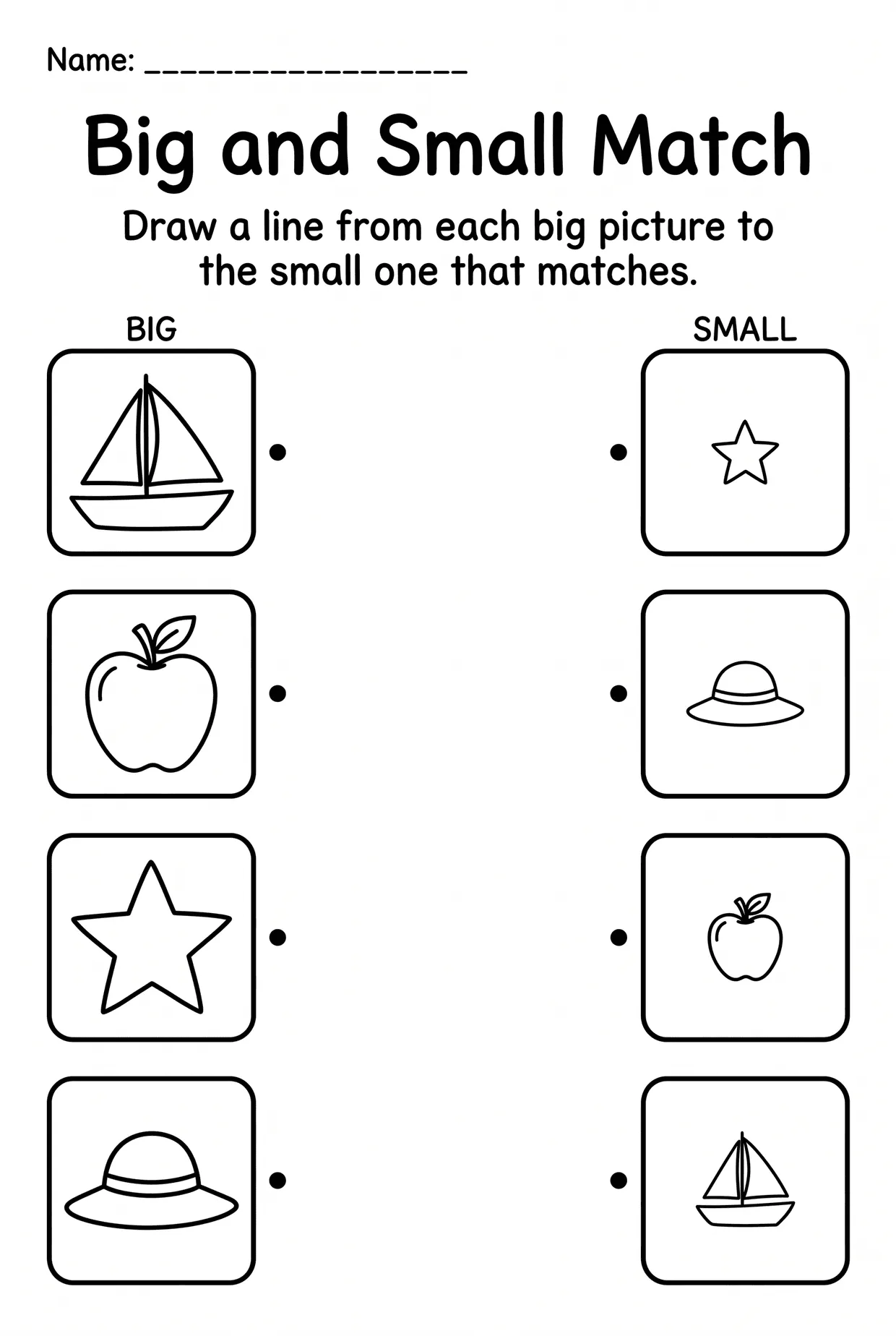
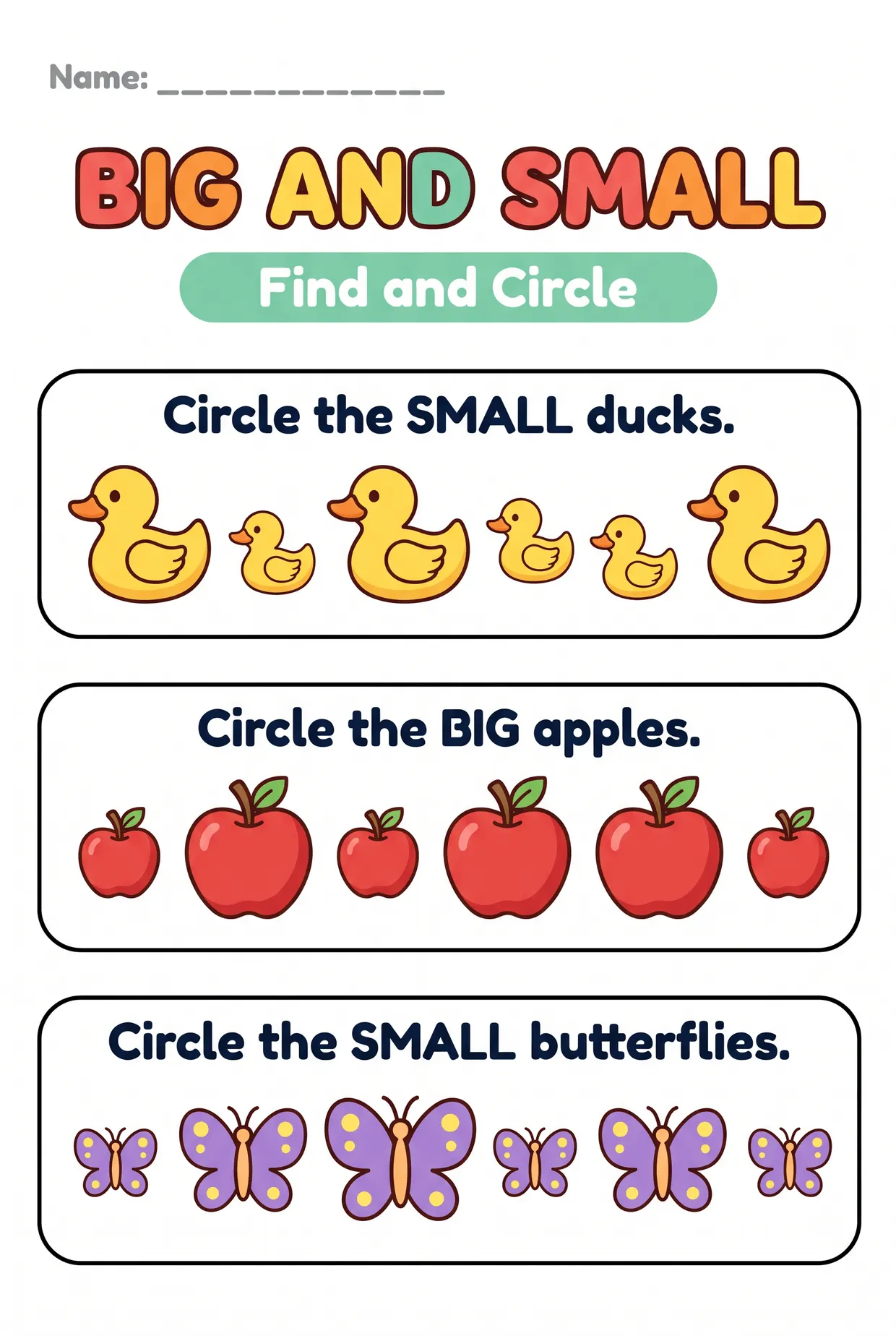
First, to compare two things and say which is big and which is small. Then to use bigger, smaller and smallest when there are more than two. This is the start of measurement, which kindergarten builds on with longer, shorter, heavier and lighter, and the pages in this set cover each step with pictures a child already knows.
Why are three sizes harder than two?
With two pictures, one is big and one is small. With three, the middle one is both at once, bigger than one and smaller than the other. That idea takes time, so stay with pairs until they feel easy, then try the find the smallest page.
What size words should I use besides big and small?
Try large, little, tiny, huge, tall and short in everyday talk. A wider set of size words helps a child describe what they see, and it makes later comparisons like longer and shorter much easier to grasp.
What hands-on activities go with these sheets?
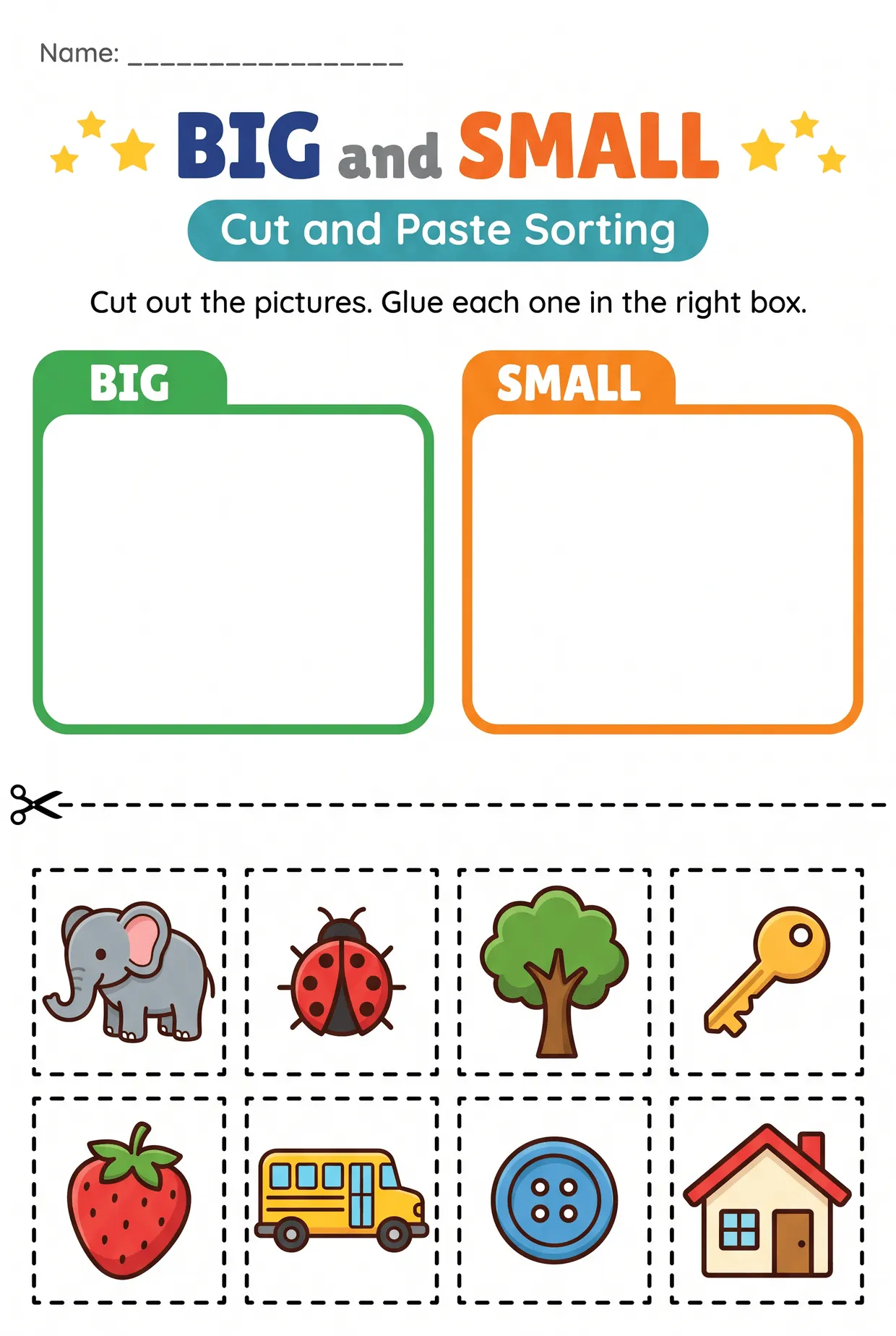
Sort a basket of toys, shoes or spoons into big and small piles, then line three of them up from smallest to biggest. Hold up two objects and ask which is bigger. A few minutes of sorting real things makes the picture pages much easier.
Why ask a preschooler to draw big and small?
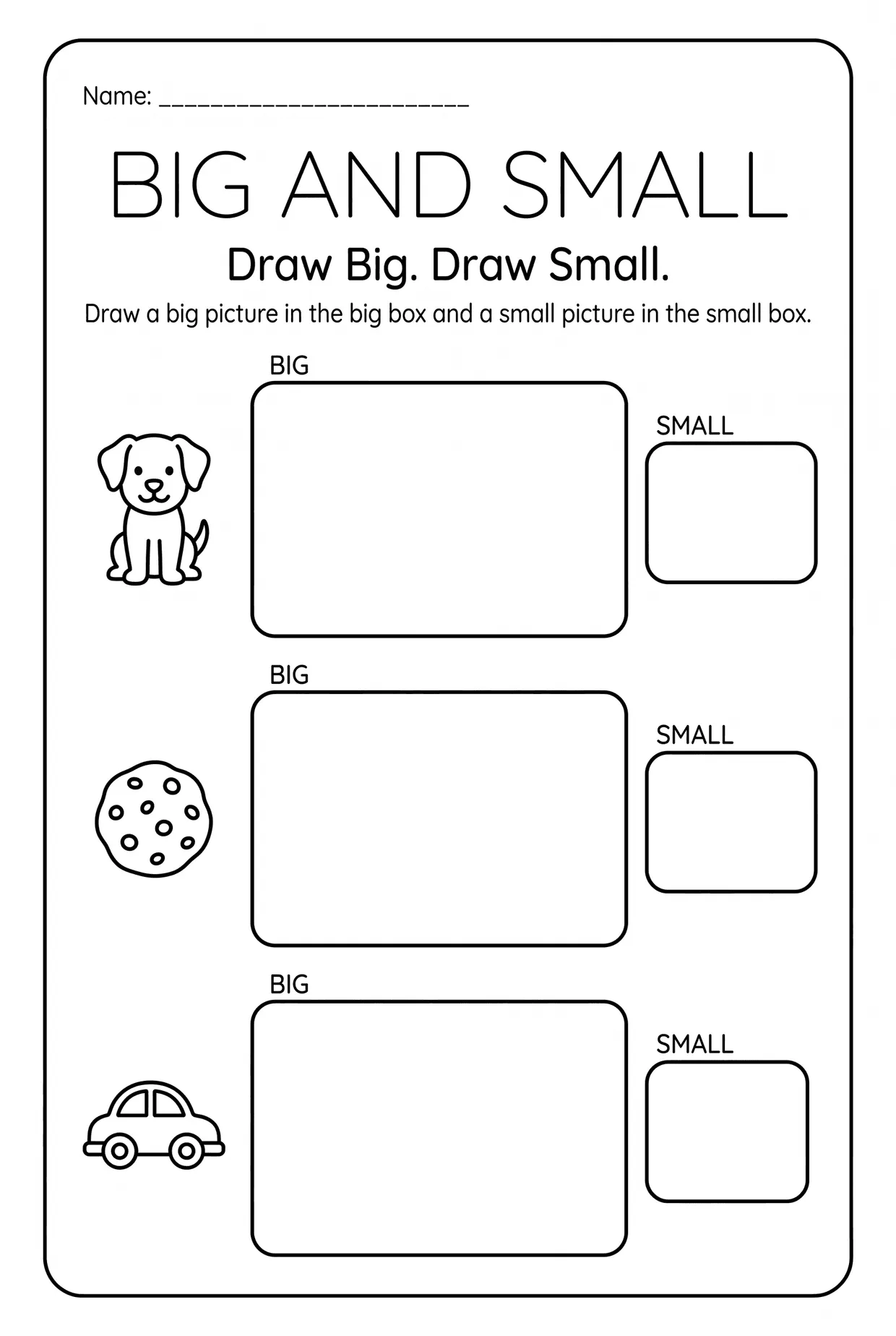
Drawing the same thing twice, once big and once small, makes a child control size on purpose, which shows they understand it rather than guessing. It is good pencil practice as well. The drawings do not need to look like much; the difference in size is what counts.