Free 2nd Grade Place Value Worksheets

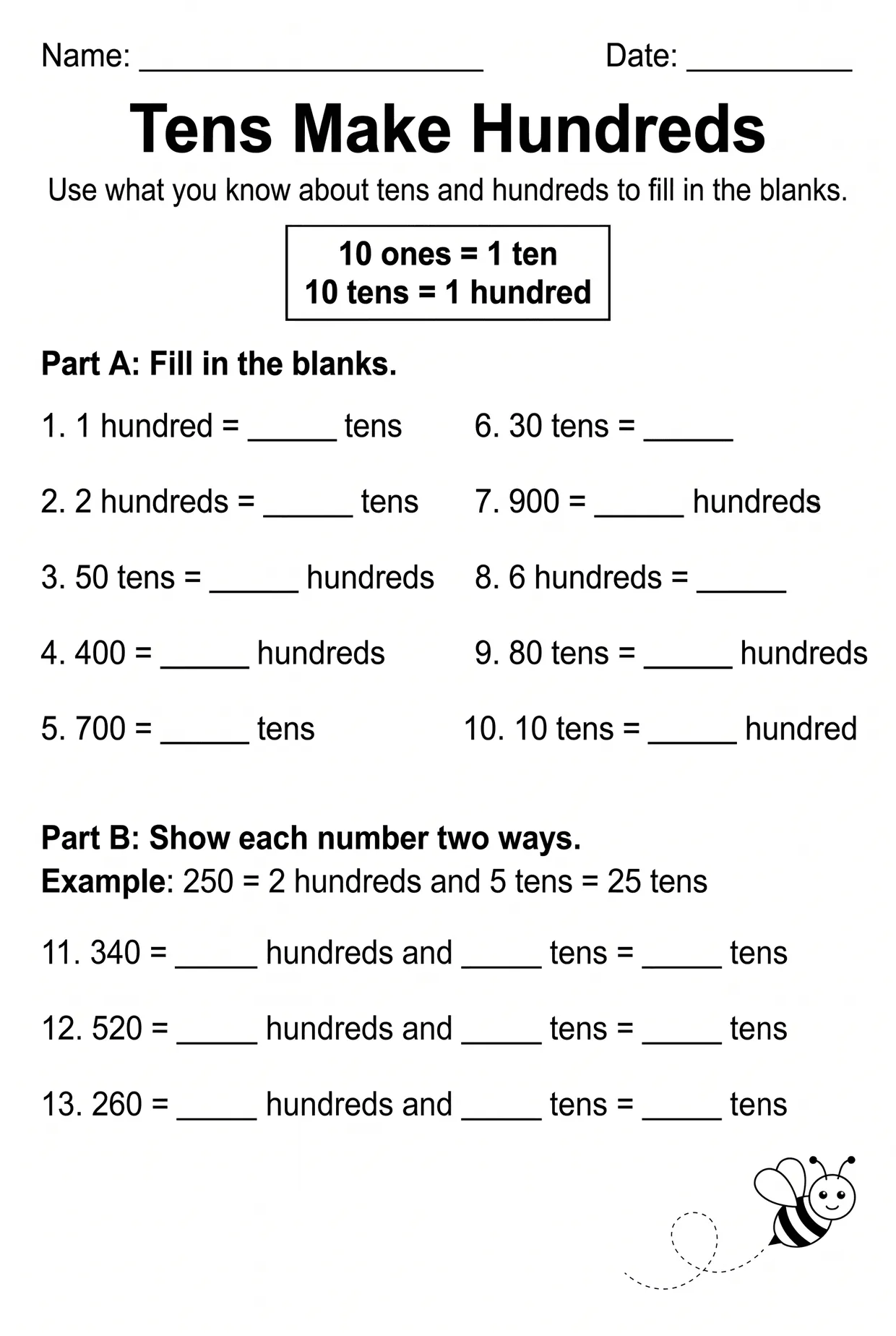
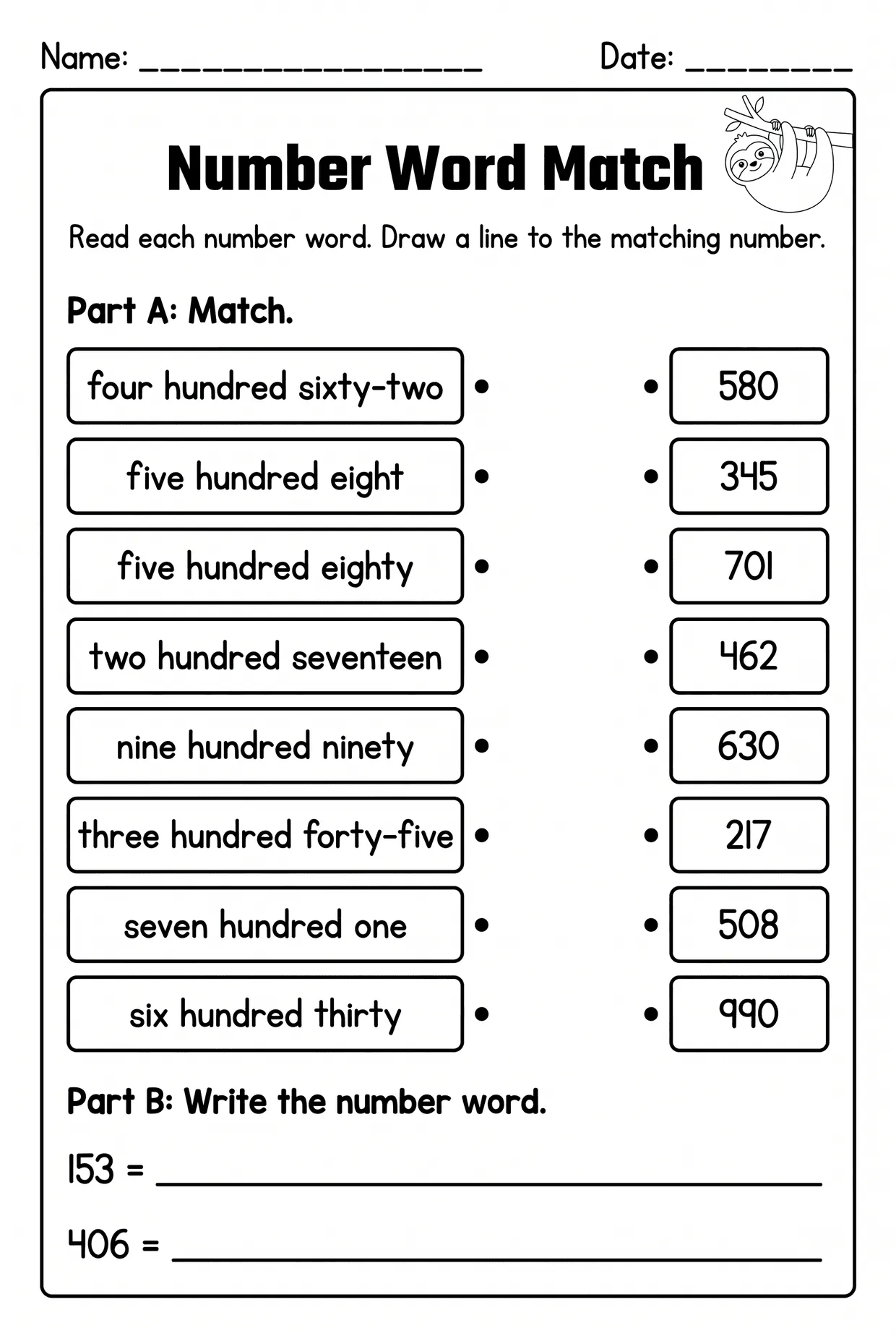
Ask a second grader what the 4 in 472 stands for. Early in the year the answer is often just four. By the end it should be four hundreds, or 400, and these place value worksheets for 2nd grade are built around closing that gap. The standards behind them cover numbers up to 1,000 (2.NBT.1), the idea that ten tens make a hundred, and reading and writing those numbers in standard form, expanded form and words (2.NBT.3).

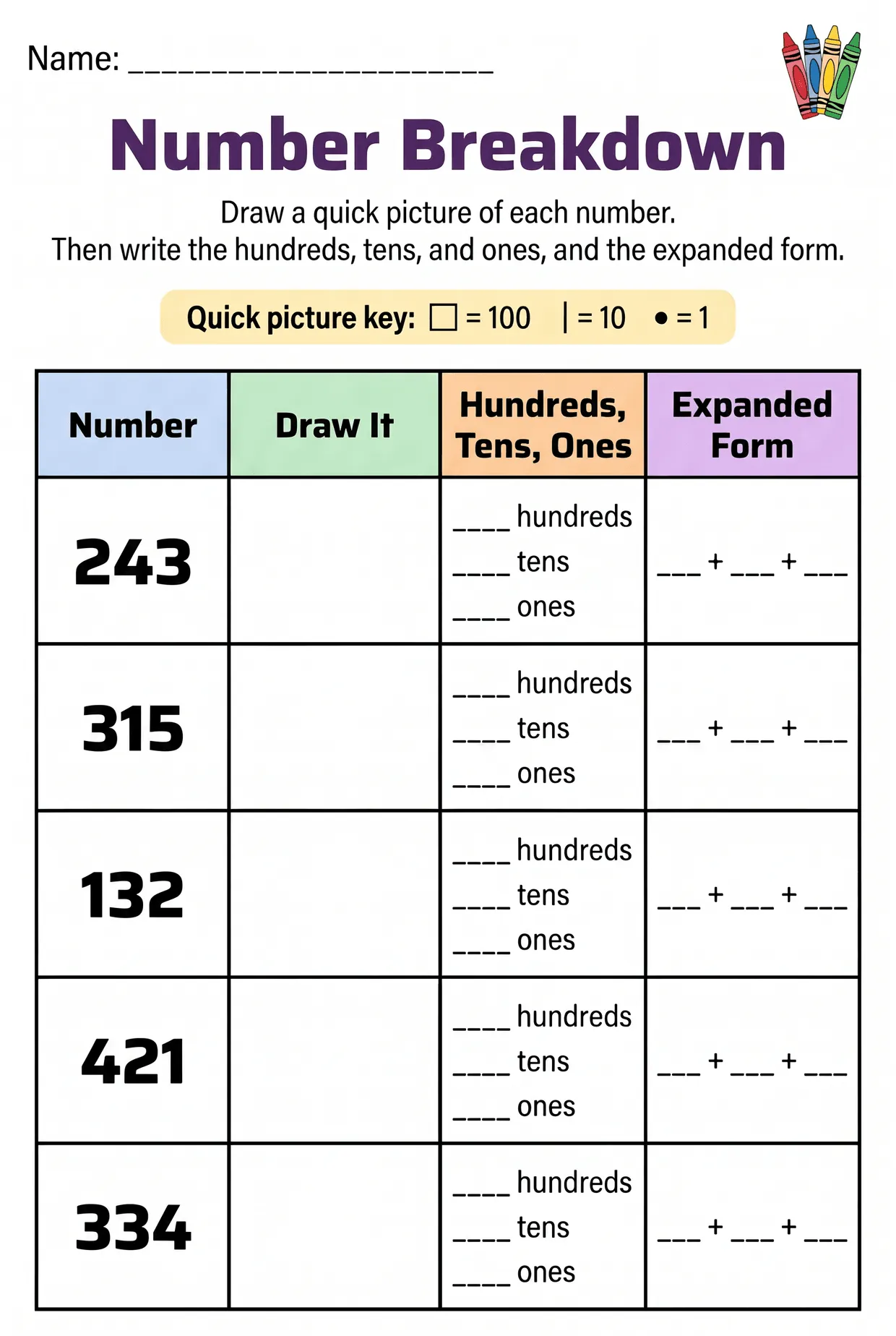
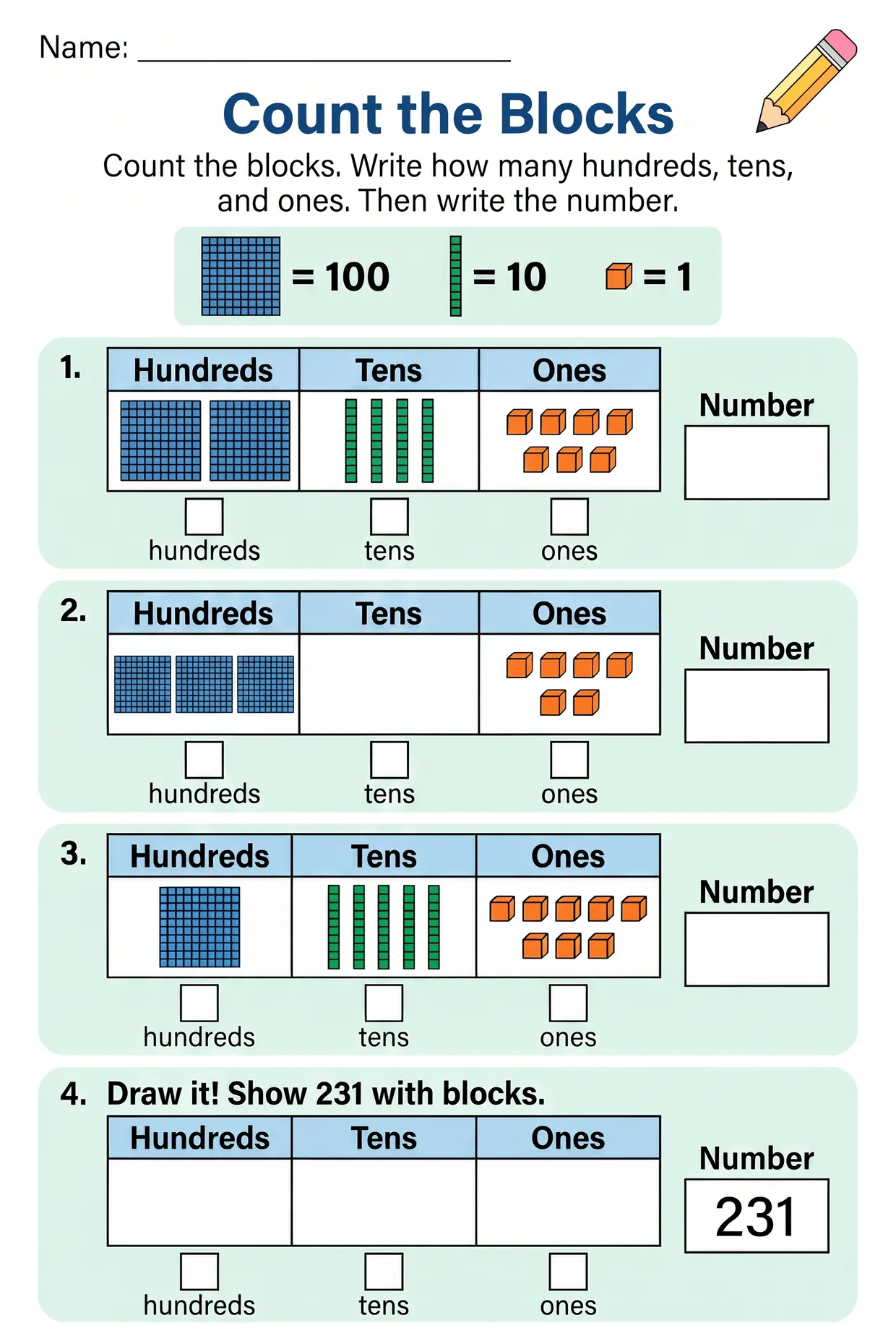
Base ten blocks and quick pictures give a child something to look at before the digits carry the meaning on their own. Counting flats, rods and cubes, or sketching them as squares, lines and dots, ties each place to a real amount.

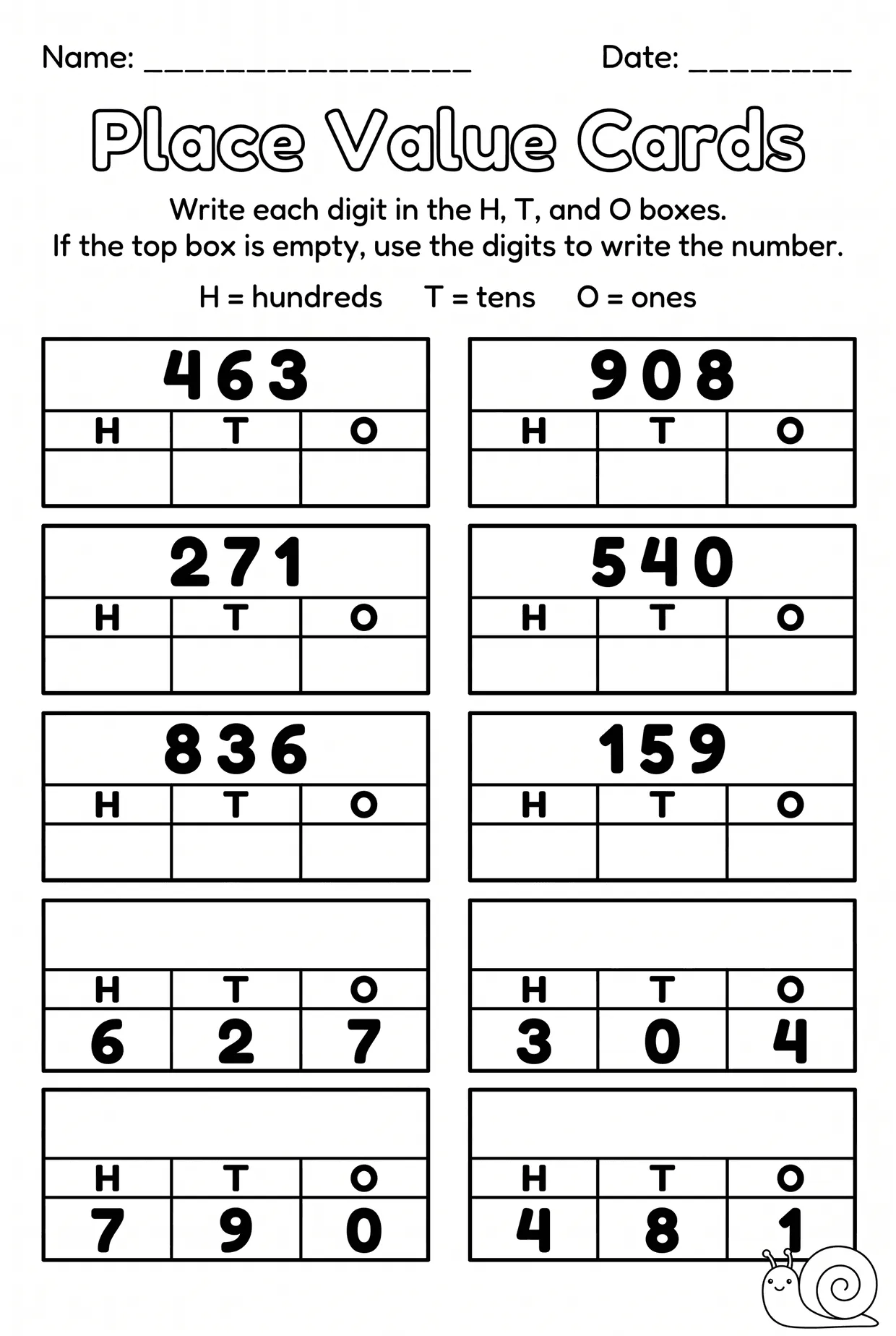
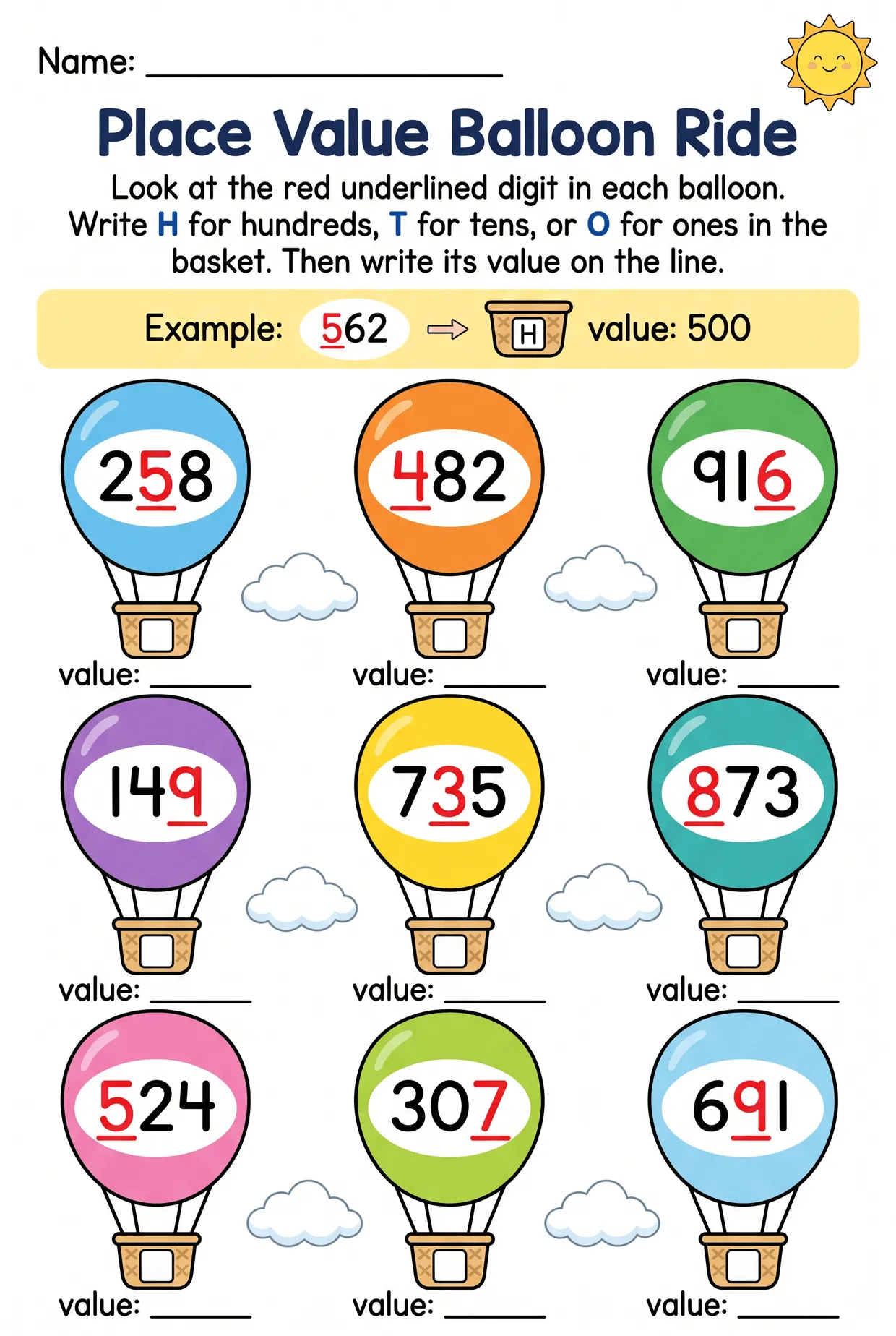
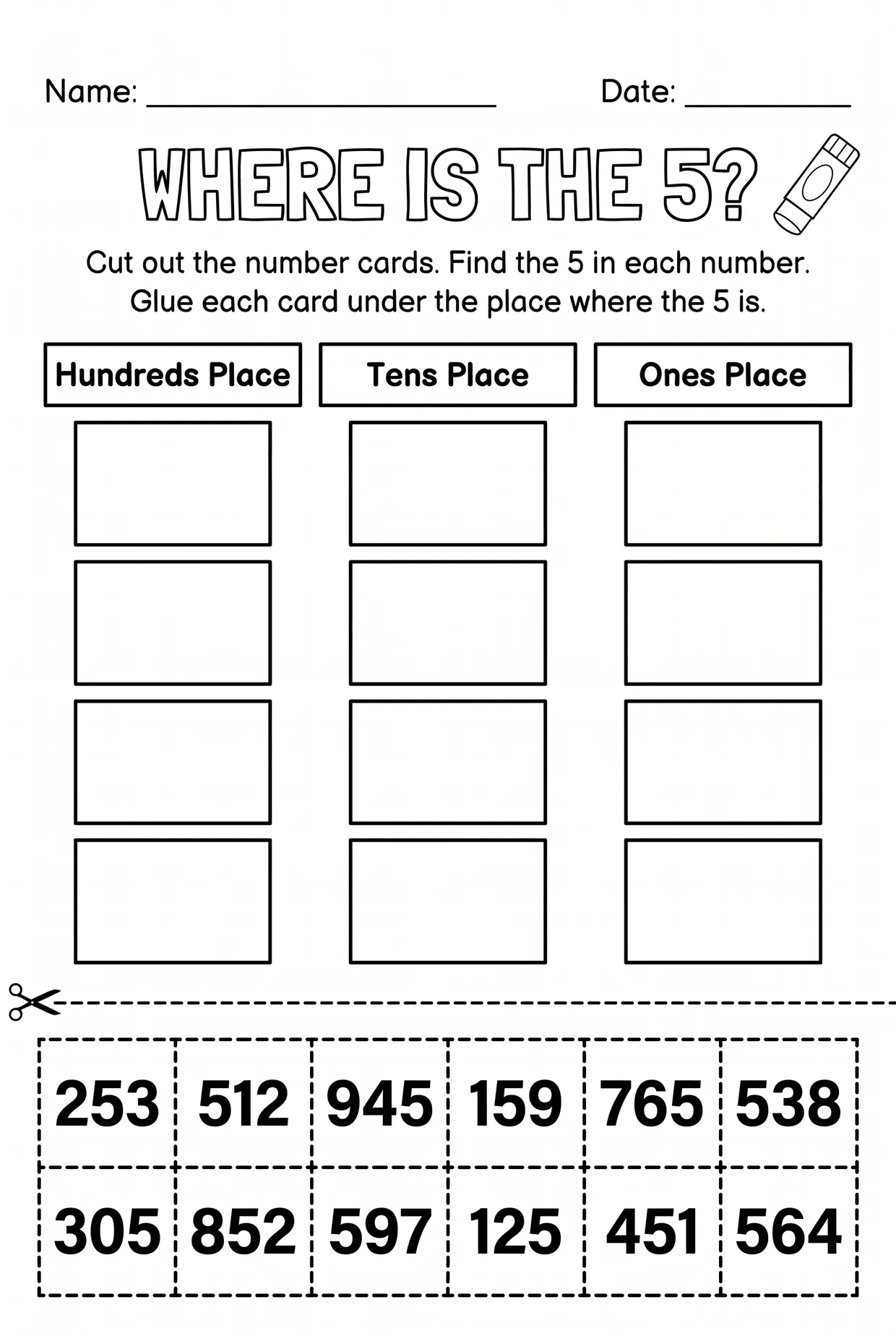
The digit pages ask two different questions about one number: which place a digit sits in, and what it is worth. Mixing those up is the most common slip at this age, and a cut and paste sort turns the job into something hands can do.

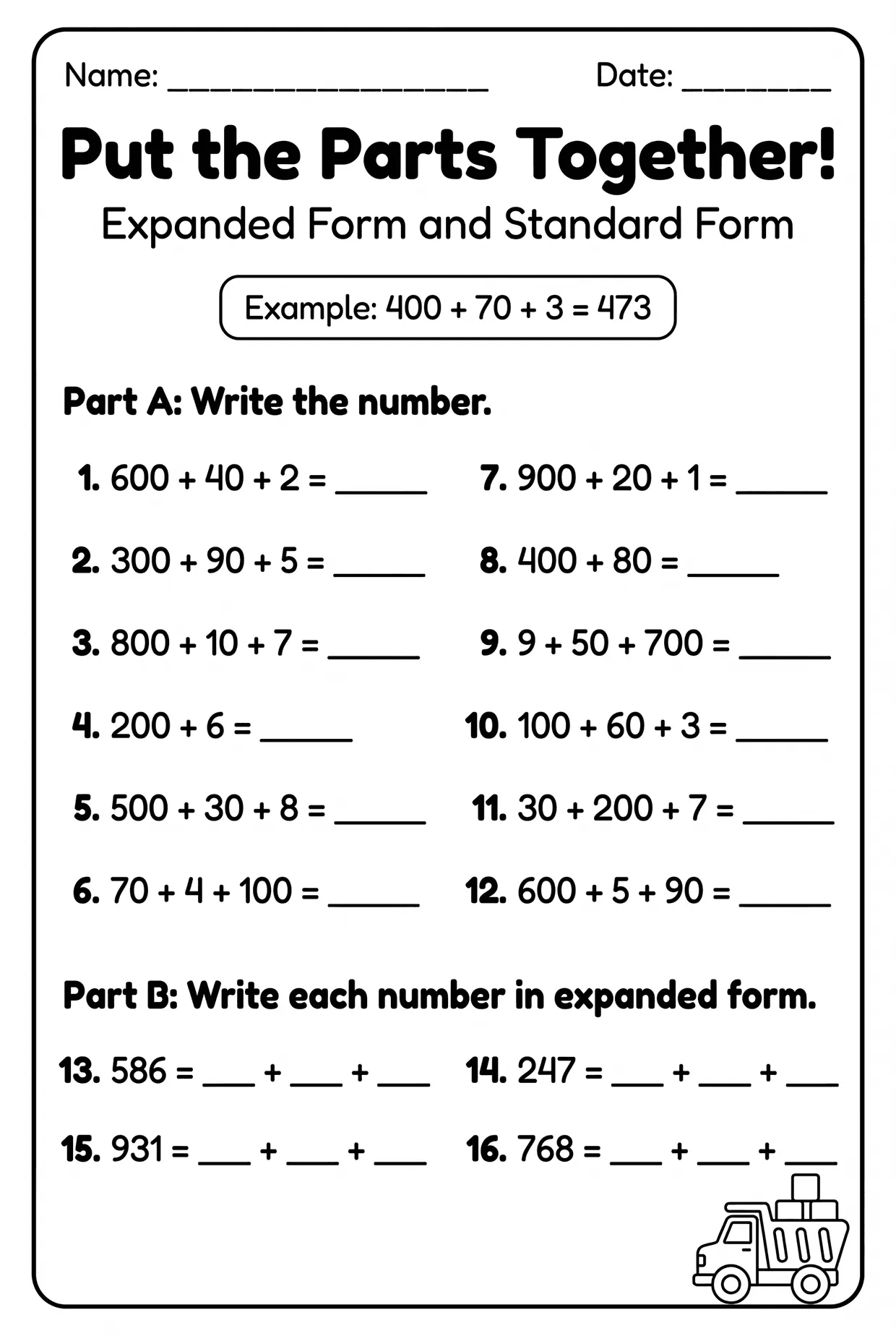
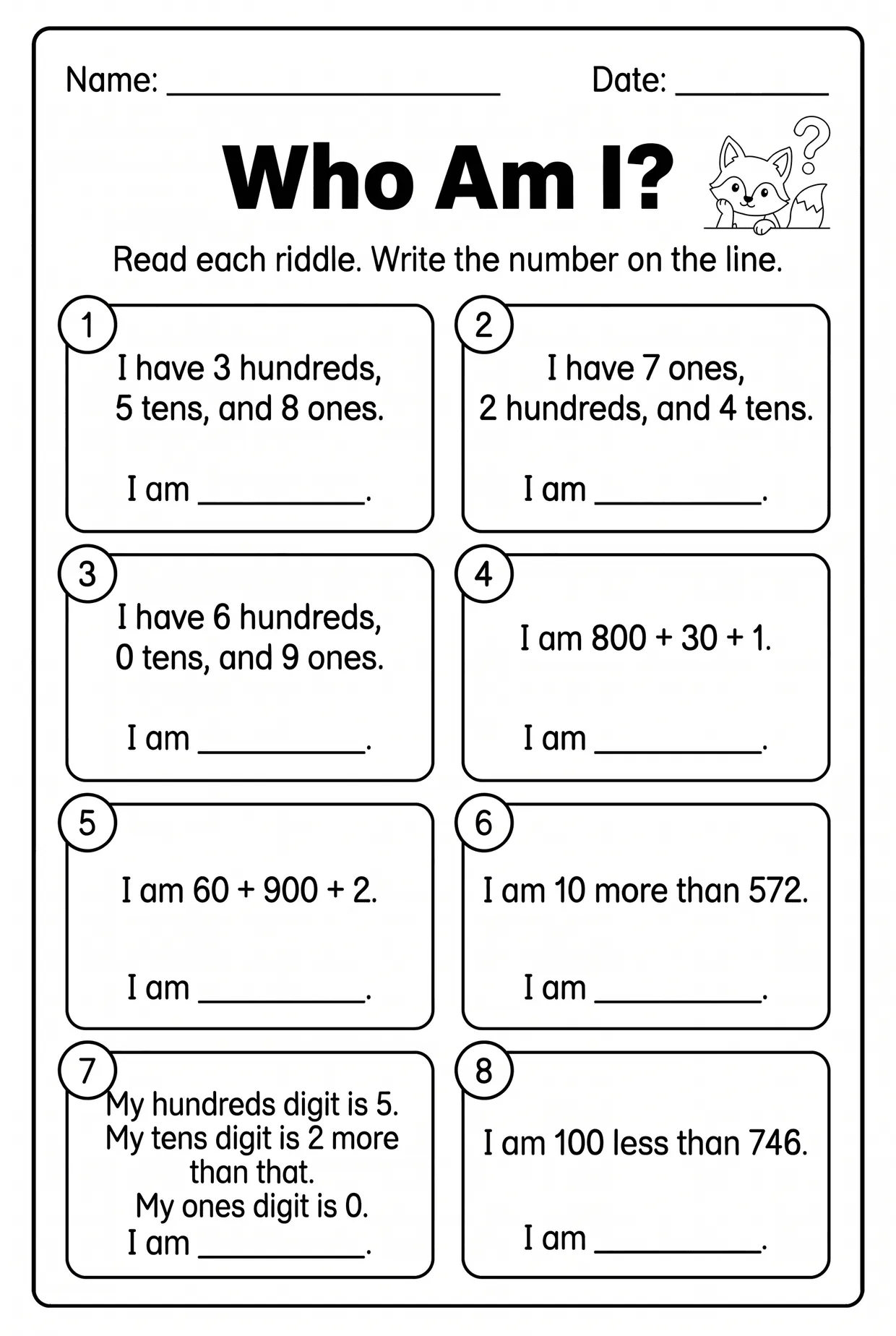
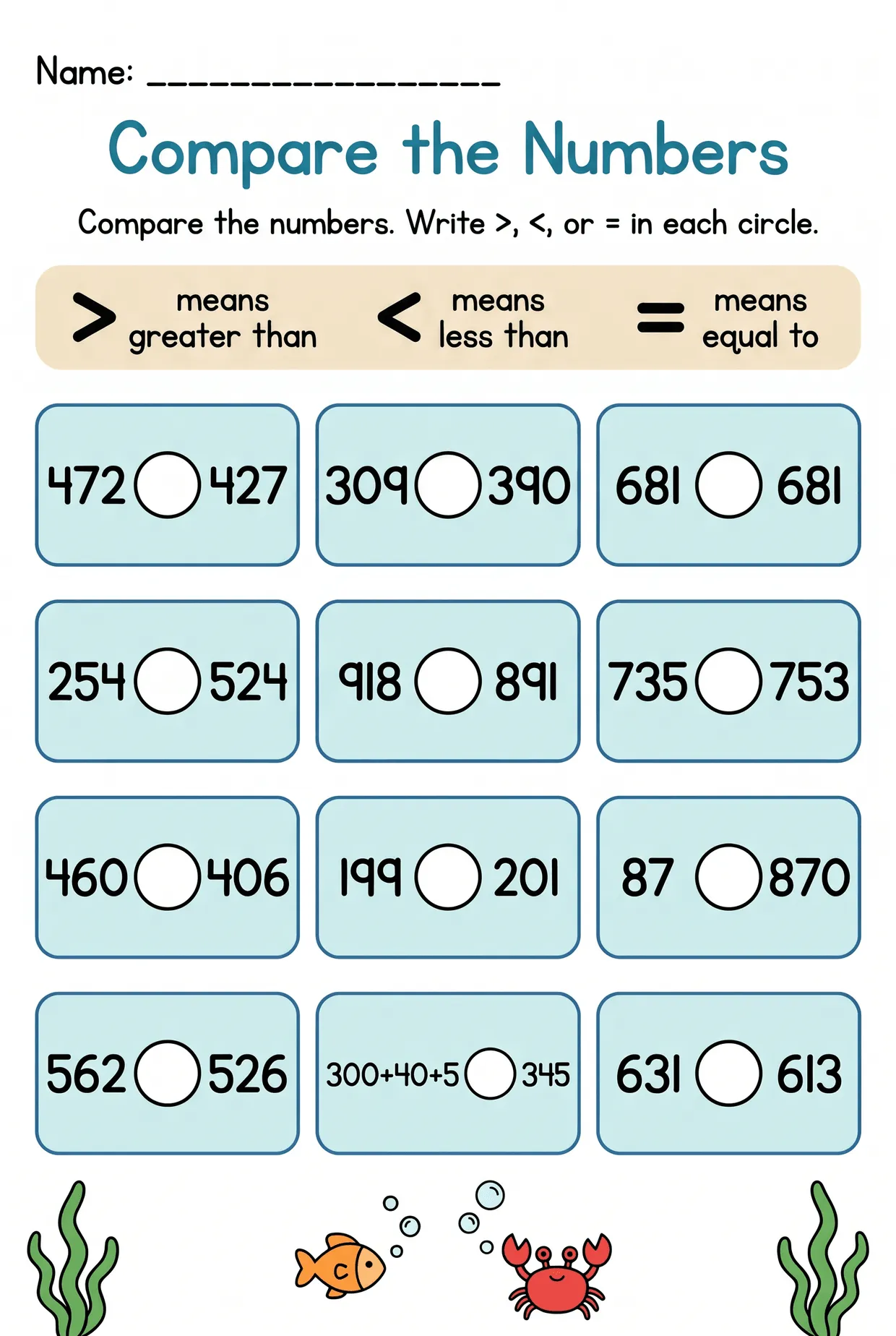
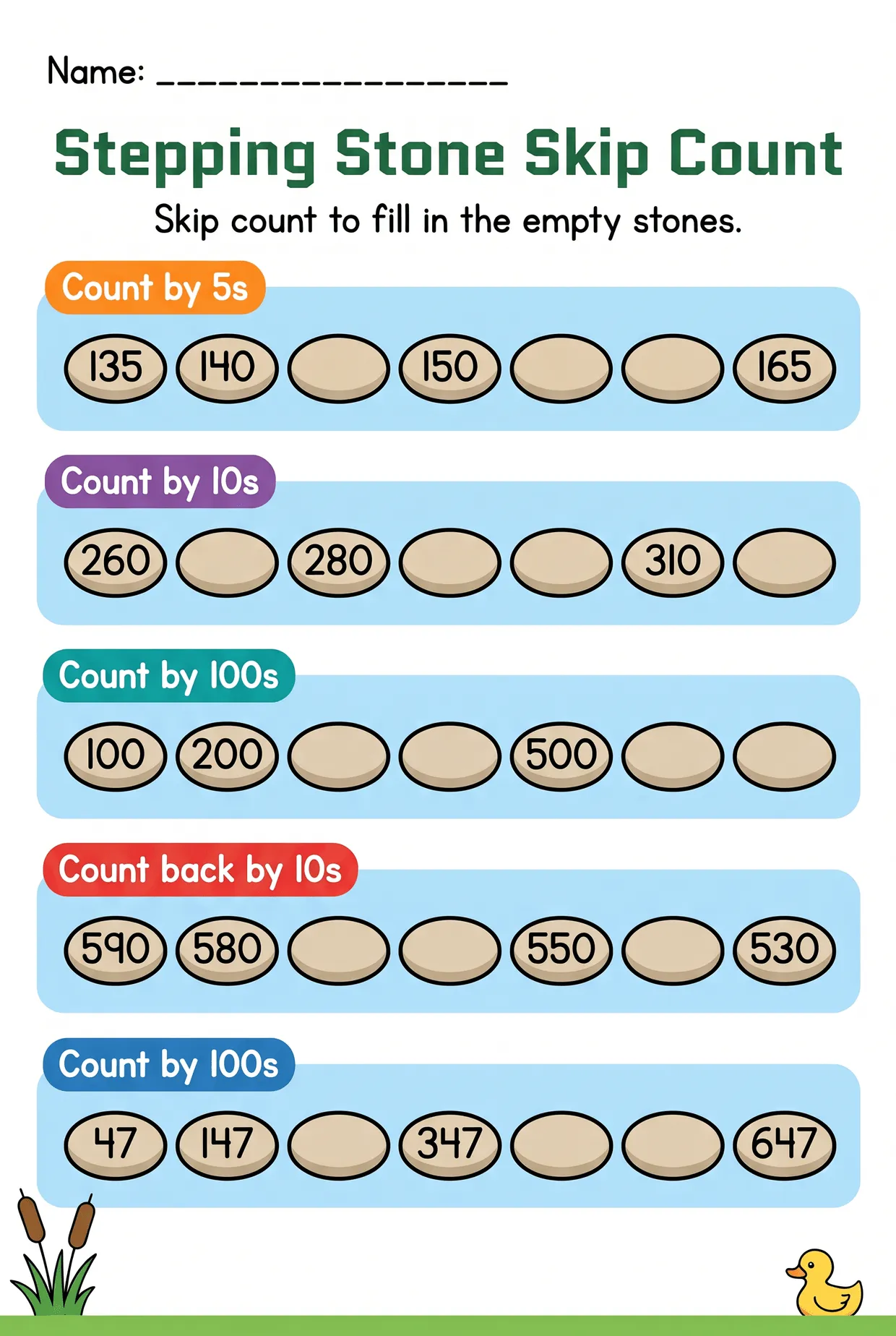
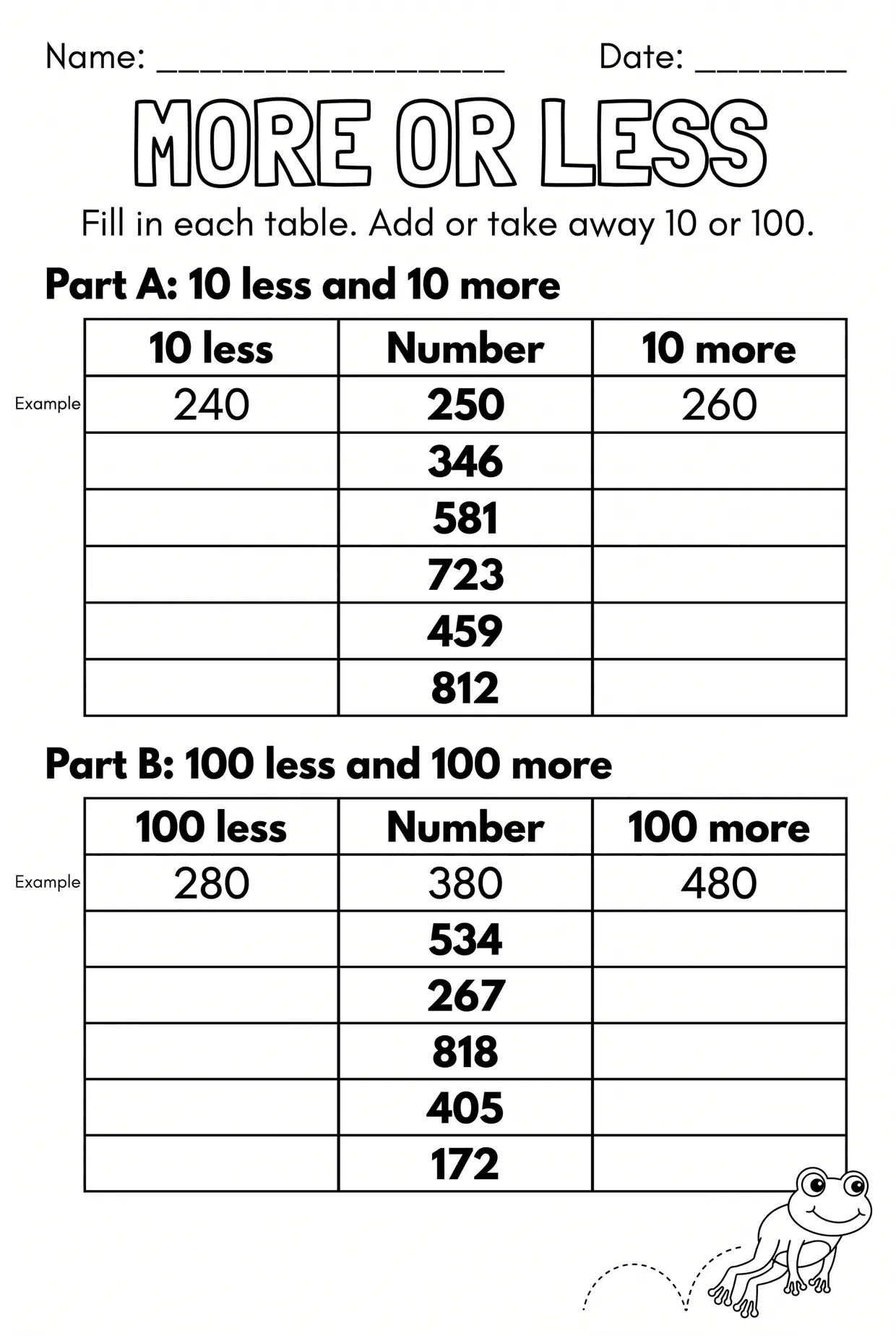
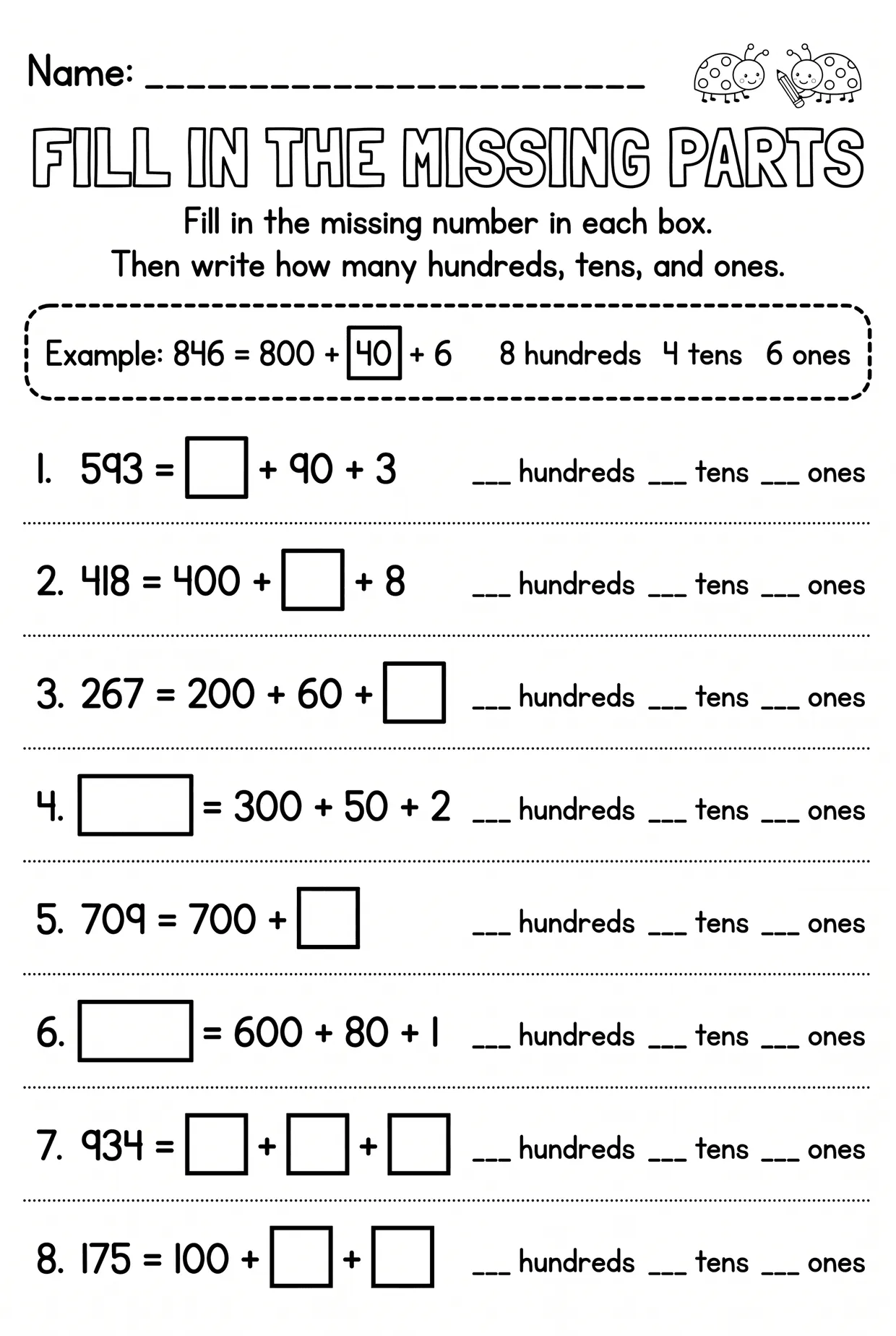
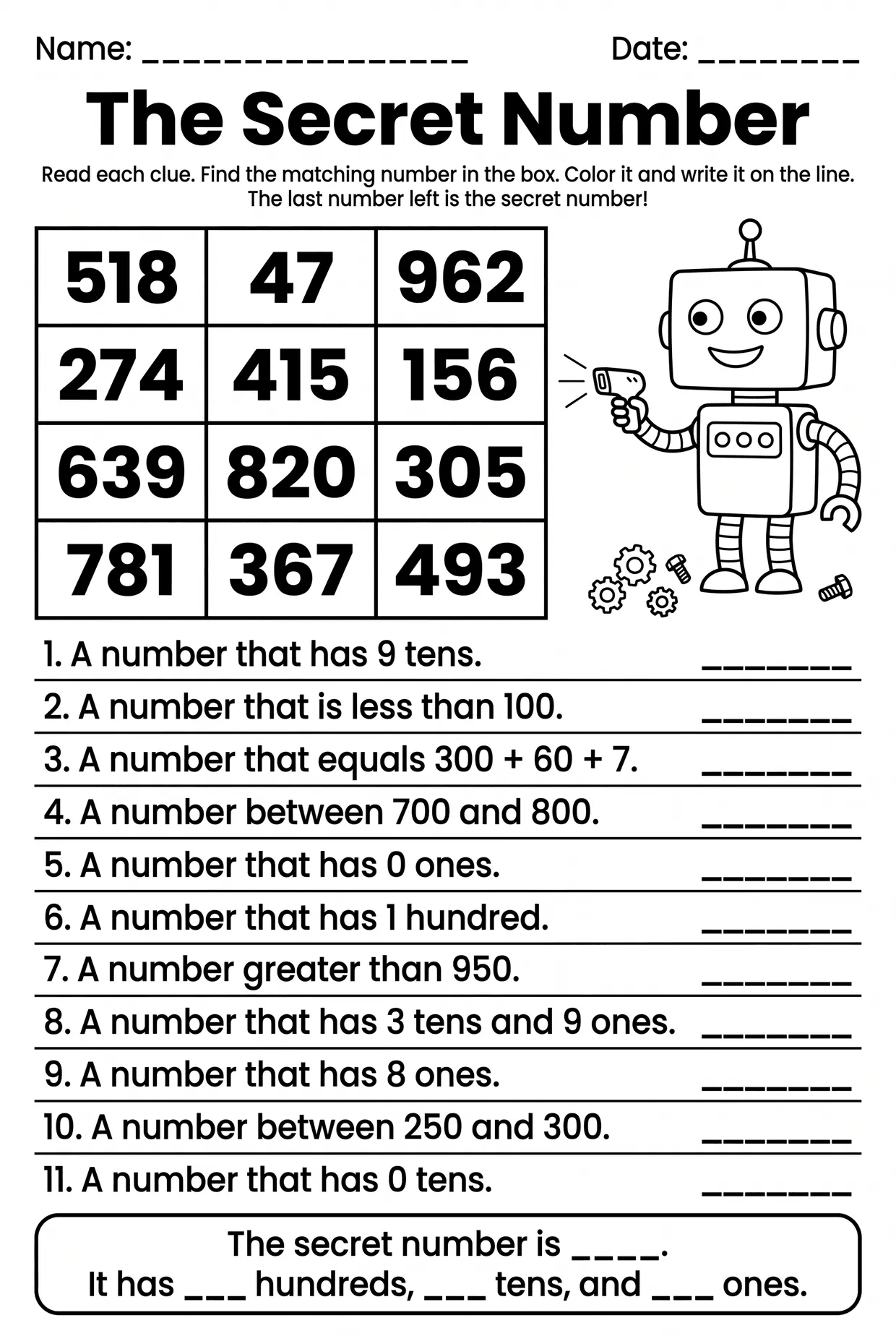
Expanded form shows up from both directions, putting a number together from its parts and pulling it apart again, with some parts written out of order on purpose. Comparing three-digit numbers with greater than and less than (2.NBT.4), skip counting by 5s, 10s and 100s, and finding 10 or 100 more without counting fill in the rest. Riddles and clue grids mix all of it together and make a fair check before three-digit addition and subtraction begin.

15 free worksheets 2nd grade Newest added November 2026
Free sets on this skill 15 Free 2nd Grade Place Value Worksheets 15
Format
More 2nd grade skills 2nd grade multiplication worksheets 372nd grade subtraction worksheets 352nd grade grammar worksheets 162nd grade addition worksheets 152nd grade money worksheets 152nd grade fractions worksheets 112nd grade reading comprehension worksheets 11

Questions about 2nd grade place value worksheets

Which place value skills belong to second grade?

Numbers up to 1,000. Second graders learn that the three digits stand for hundreds, tens and ones, that 100 is a bundle of ten tens, and how to write a number in standard form, expanded form and words. Comparing with >, < and =, and skip counting by 5s, 10s and 100s, sit in the same group of standards (2.NBT.1 to 2.NBT.4).

Why does my child write 3005 for three hundred five?

They are writing exactly what they hear: three hundred, then five. It shows the child does not yet see that the 3 already means 300 just by sitting in the hundreds place. Building the number with blocks, then filling a hundreds, tens and ones chart with a zero in the empty tens column, usually clears it up.

Do we need base ten blocks at home?

They help, but drawing works nearly as well: a square for a hundred, a line for a ten and a dot for a one. Those quick pictures take seconds to sketch, so a child can draw any three-digit number without a box of plastic pieces on the table.

Why is expanded form taught at all?

Writing 586 as 500 + 80 + 6 makes the hidden value of each digit visible on paper. It is also the same move a child makes later when adding or subtracting three-digit numbers one column at a time, so the time spent here pays off in the spring.

How can a parent tell the groundwork is solid before three-digit addition?

Say a number like 607 and ask three quick questions: how many hundreds, tens and ones it has, what 10 more is, and what 100 more is. Quick answers with no counting on fingers mean the child is ready to regroup.