Free 2nd Grade Reading Comprehension Worksheets

Second grade asks readers to hold a whole story in their heads and to explain why things happen in it, not only what happens. This set of grade 2 reading comprehension worksheets gives them three kinds of text to do that with: stories, nonfiction about the natural world, and timed fluency passages, each a few short paragraphs long.

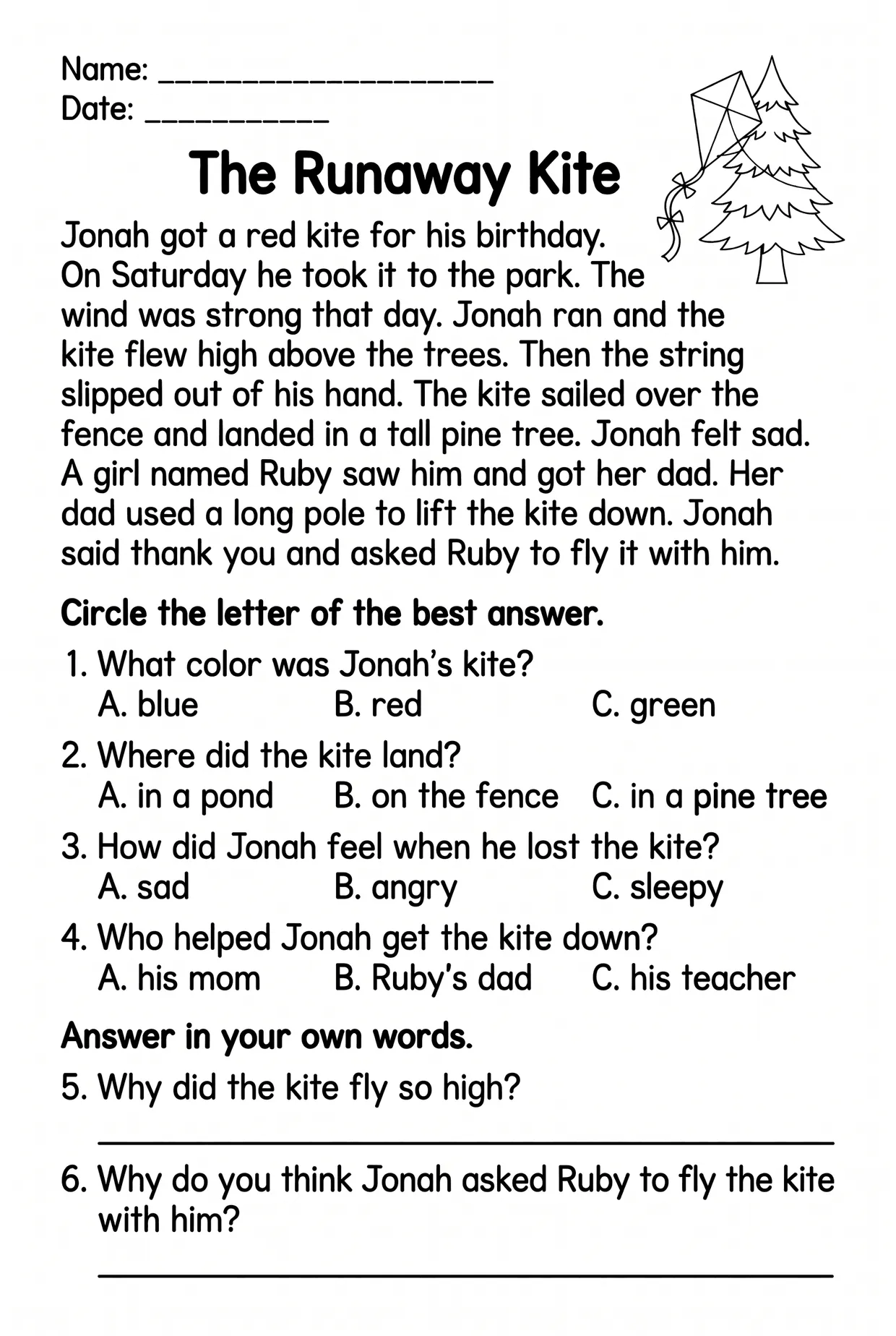
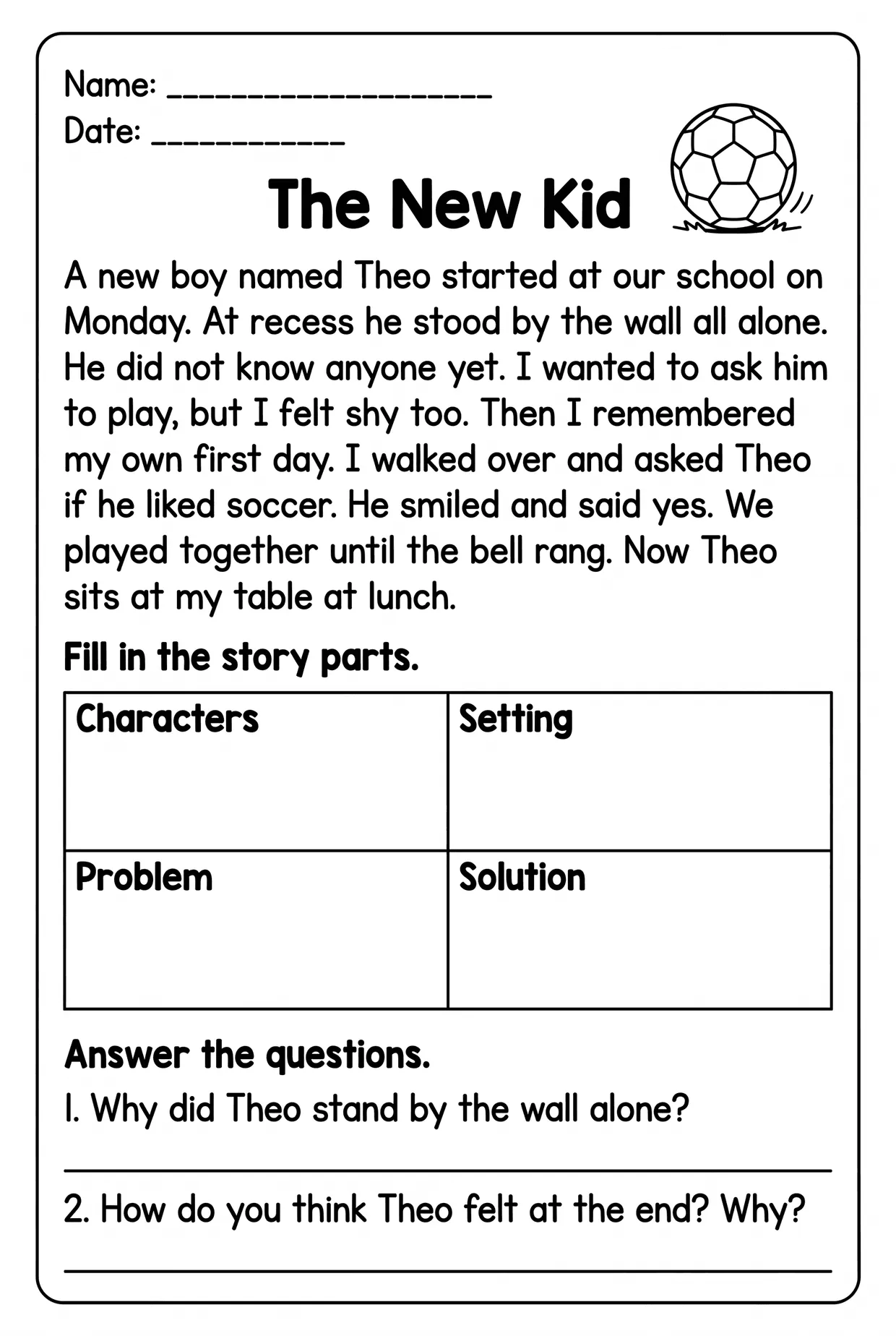
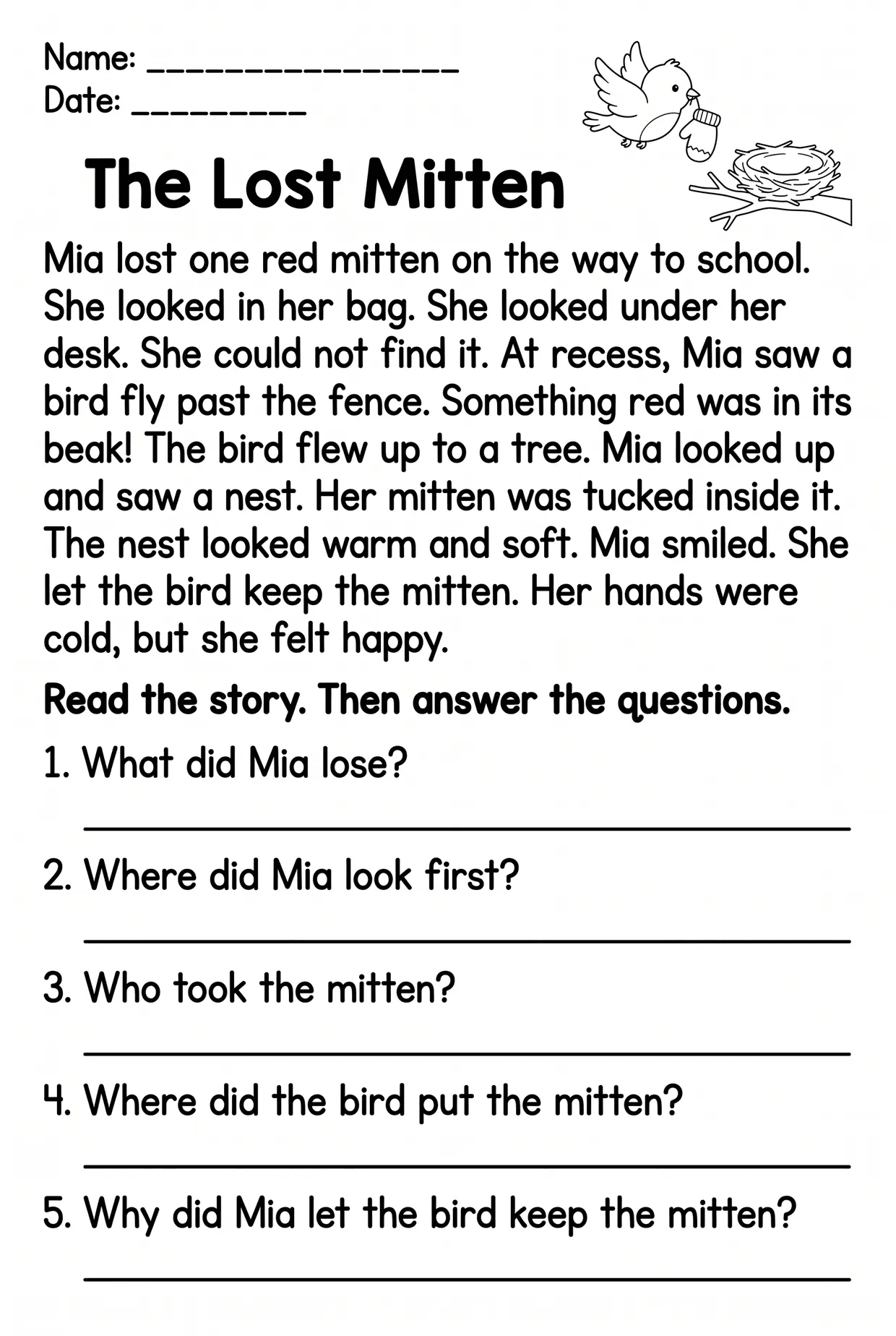
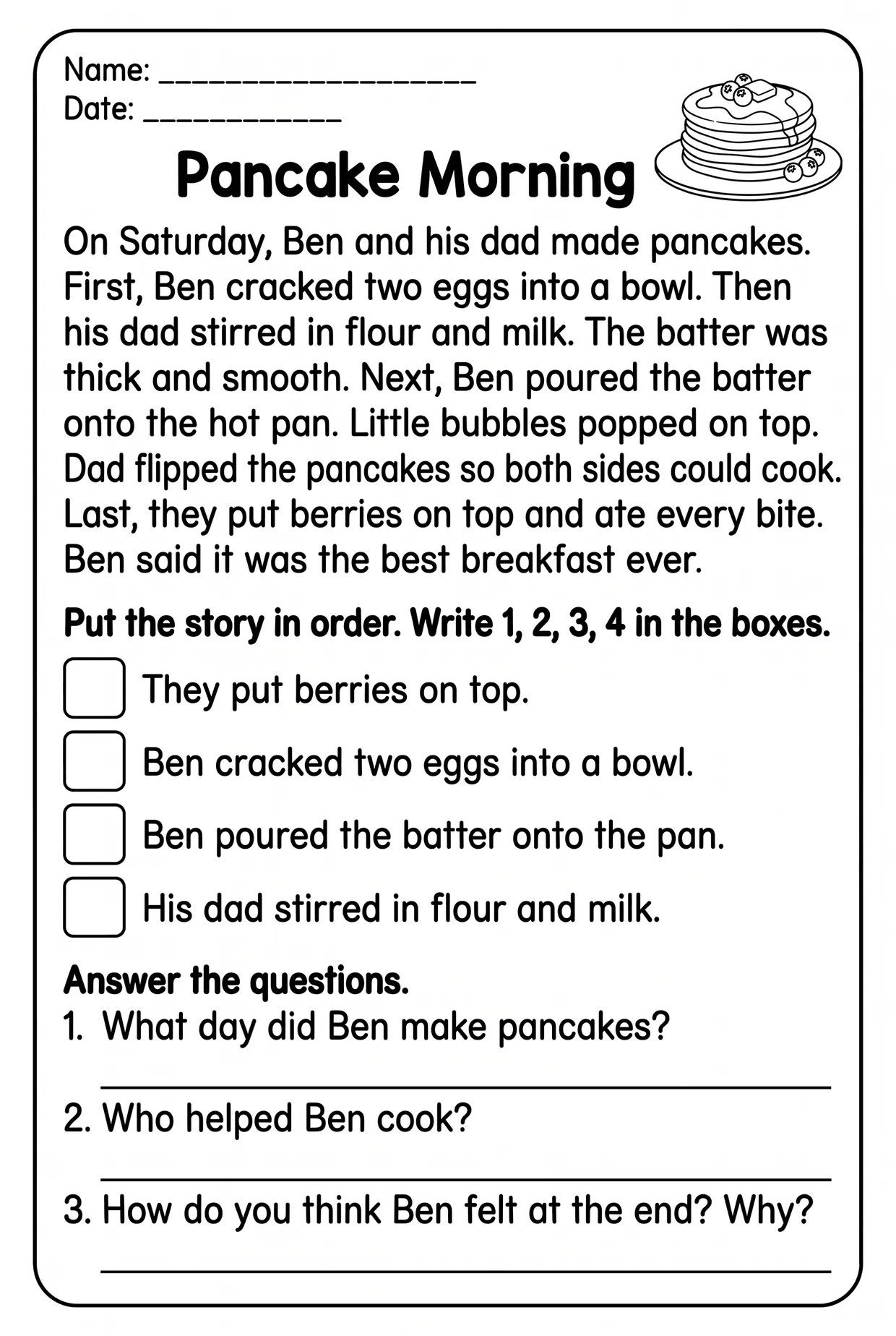
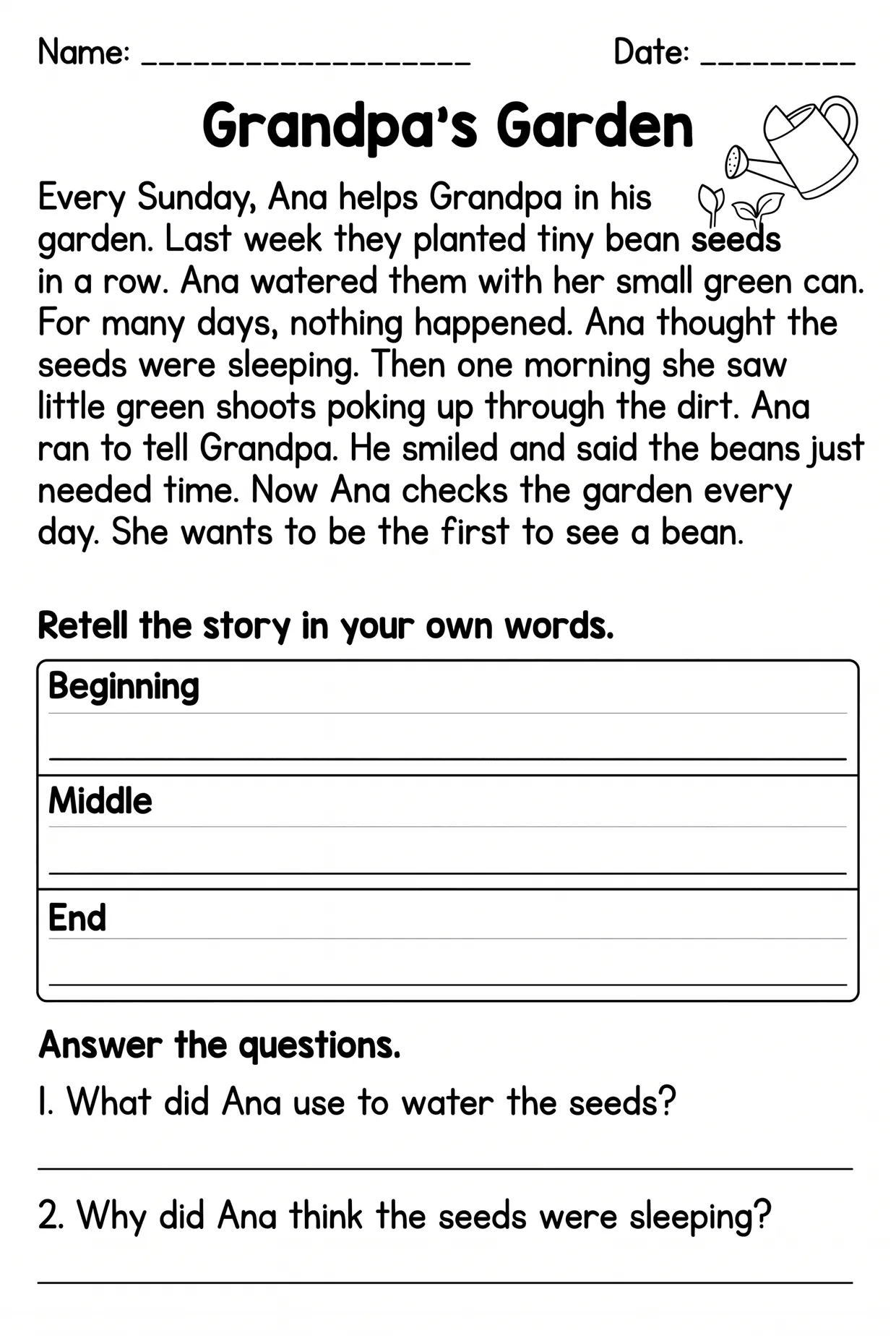
Story pages follow a lost mitten, a runaway kite and a new kid at school from beginning to end. The Grandpa’s garden page asks for a retelling in three parts, the pancake sheet puts events in order, and the new kid page names the characters, setting, problem and solution. The lost mitten closes by asking why a character made a choice, which sends a child back to find the sentence that hints at it.

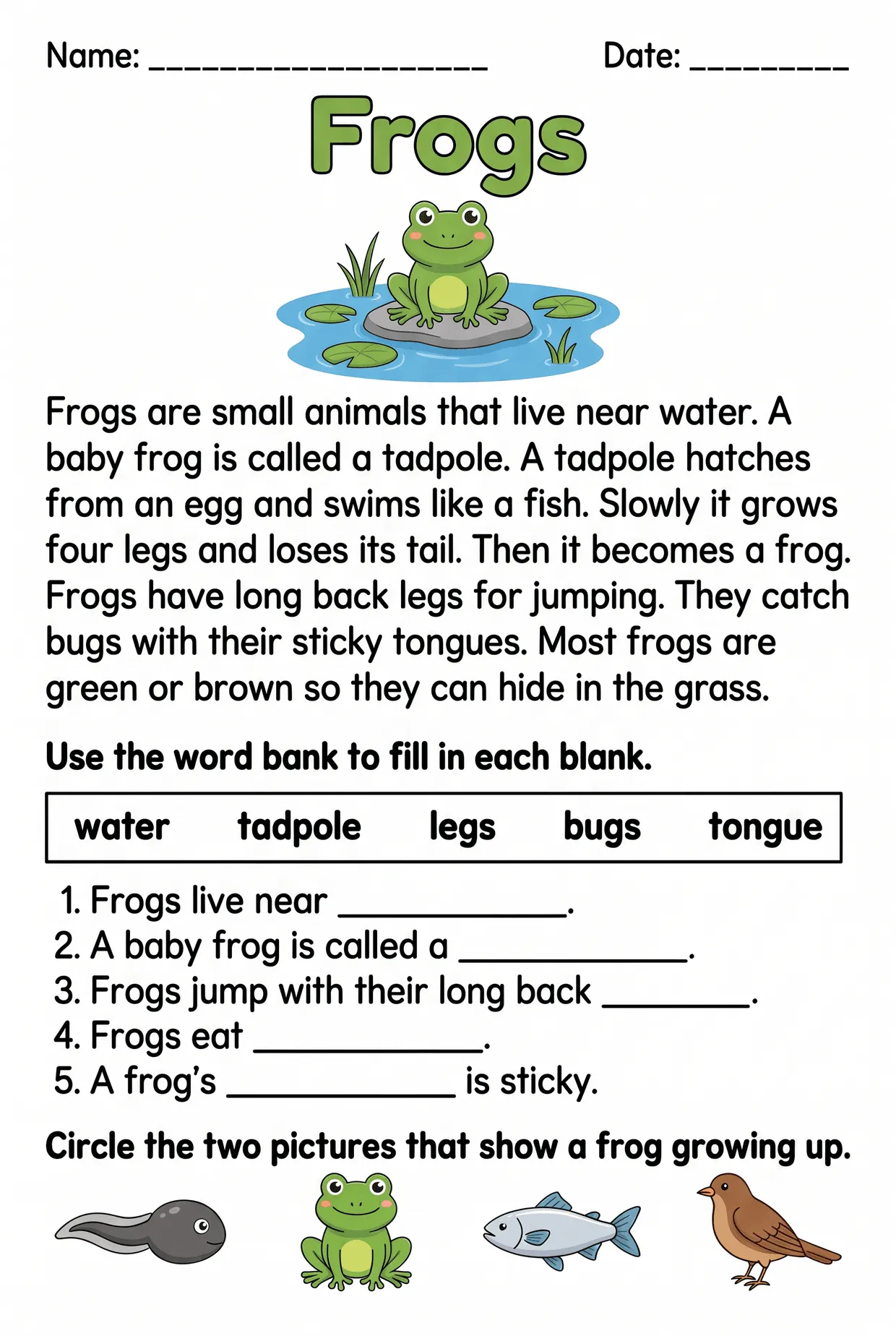
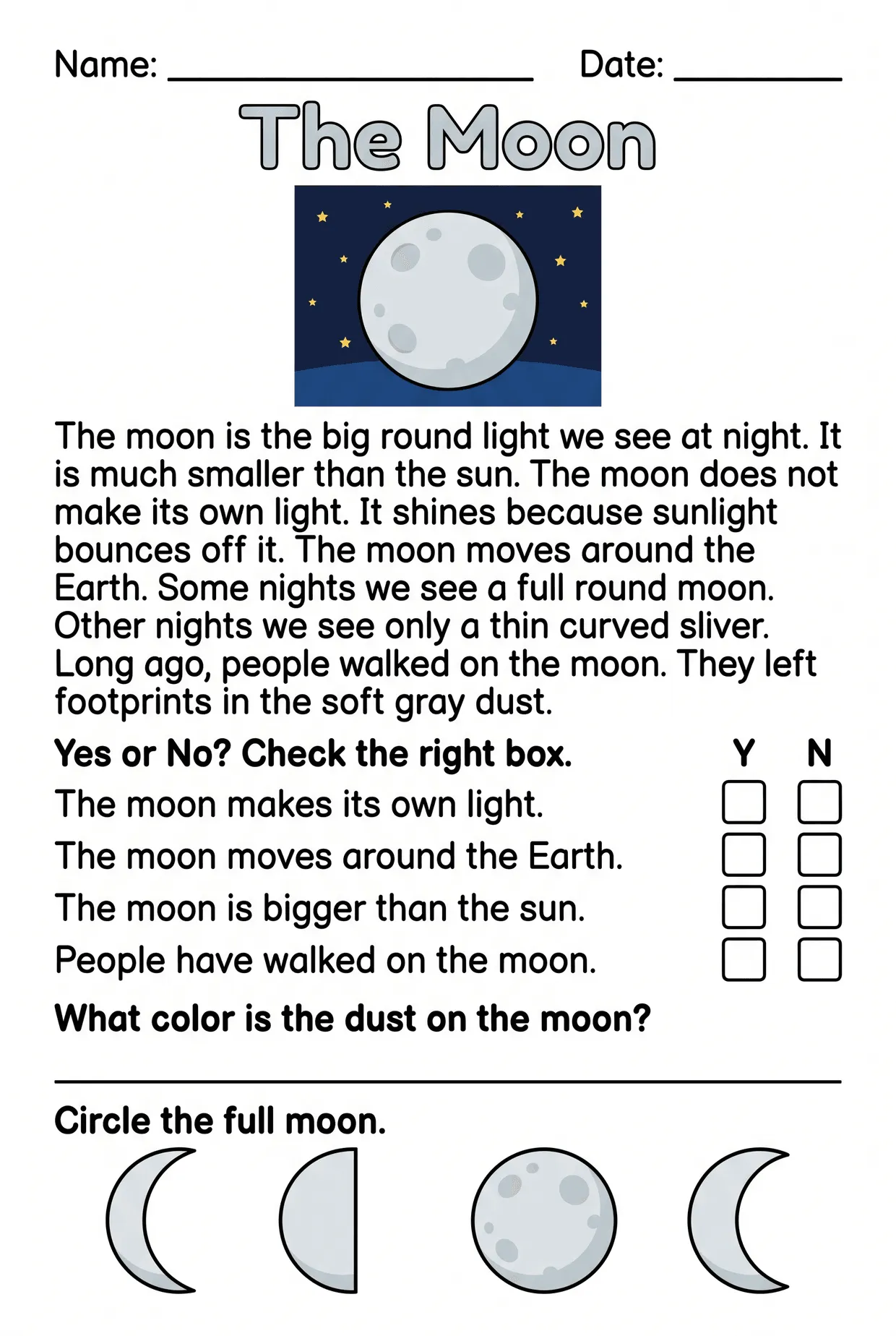
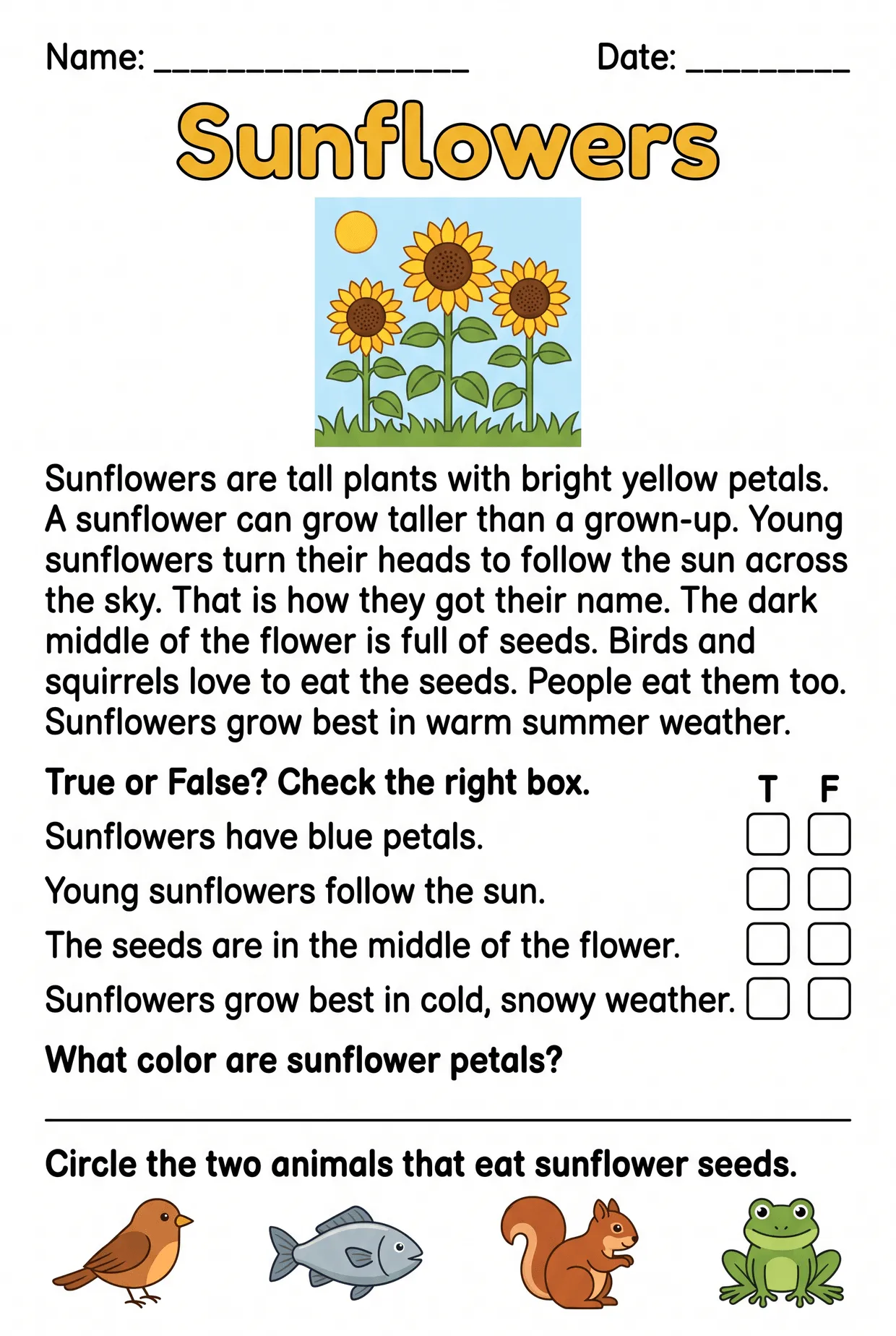
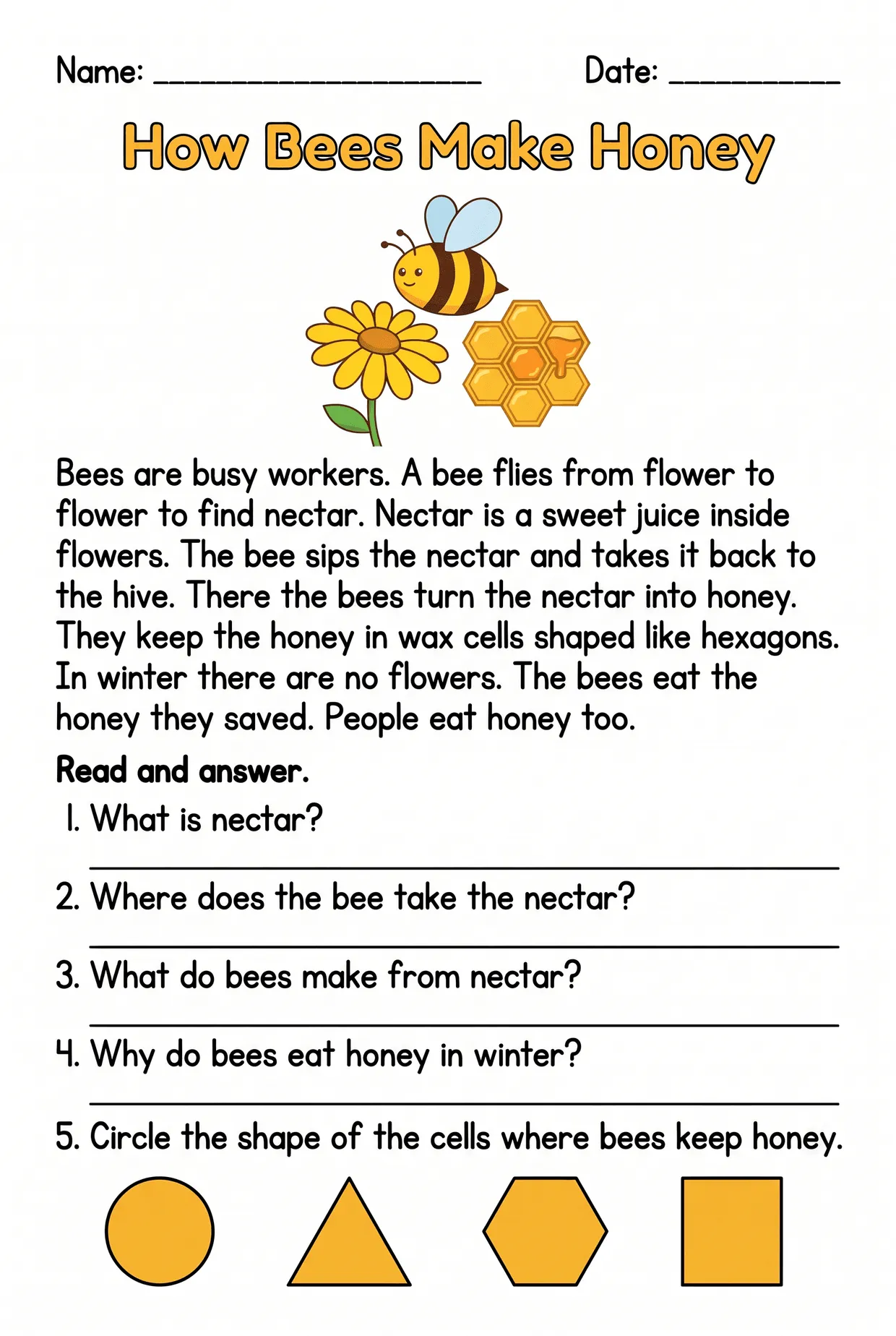
Frogs, bees, sunflowers and the moon make up the nonfiction. Here the questions are about following a process, like bees turning nectar into honey, working out a word from the sentence that explains it, and checking true or false or yes or no statements against what the passage actually says.

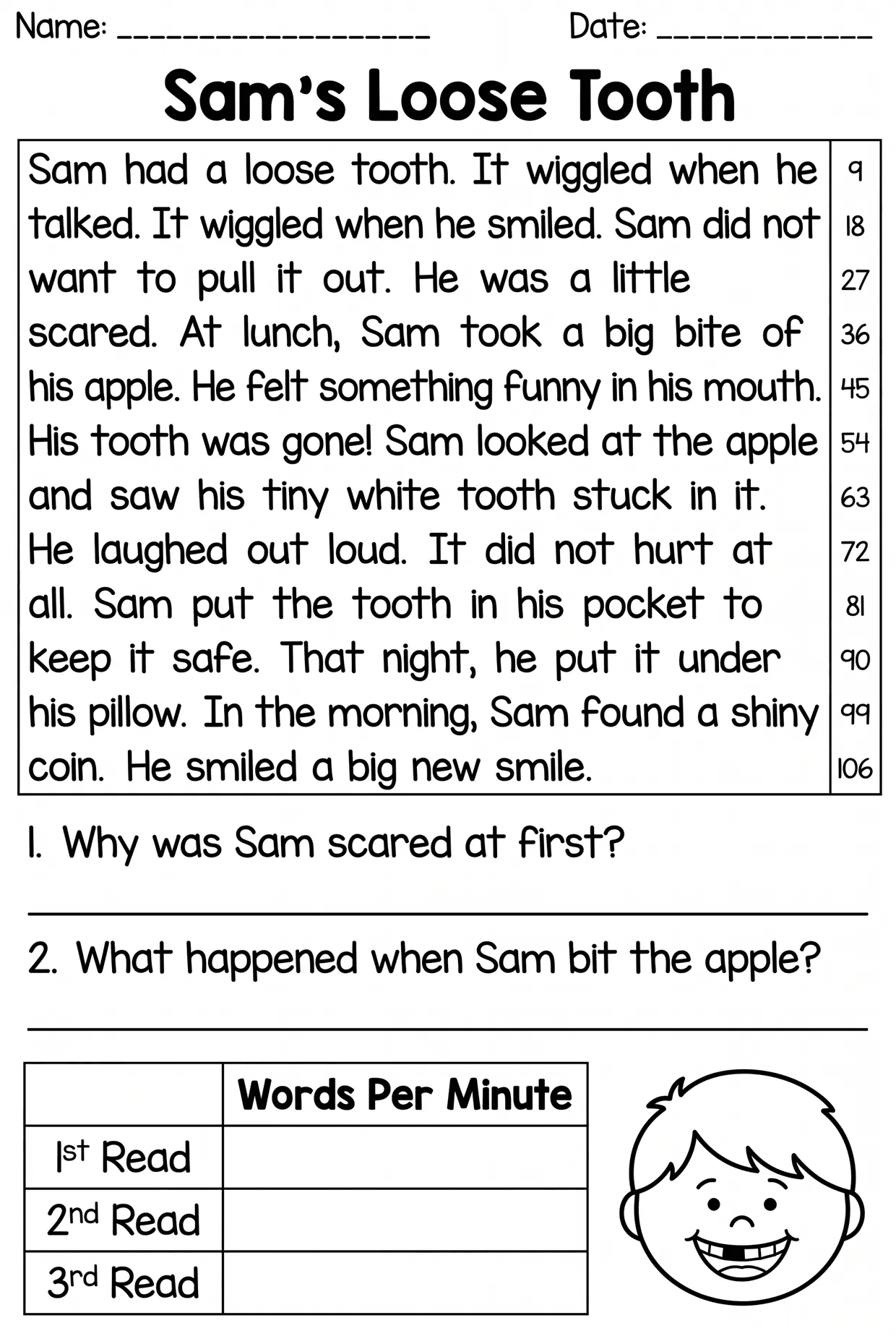
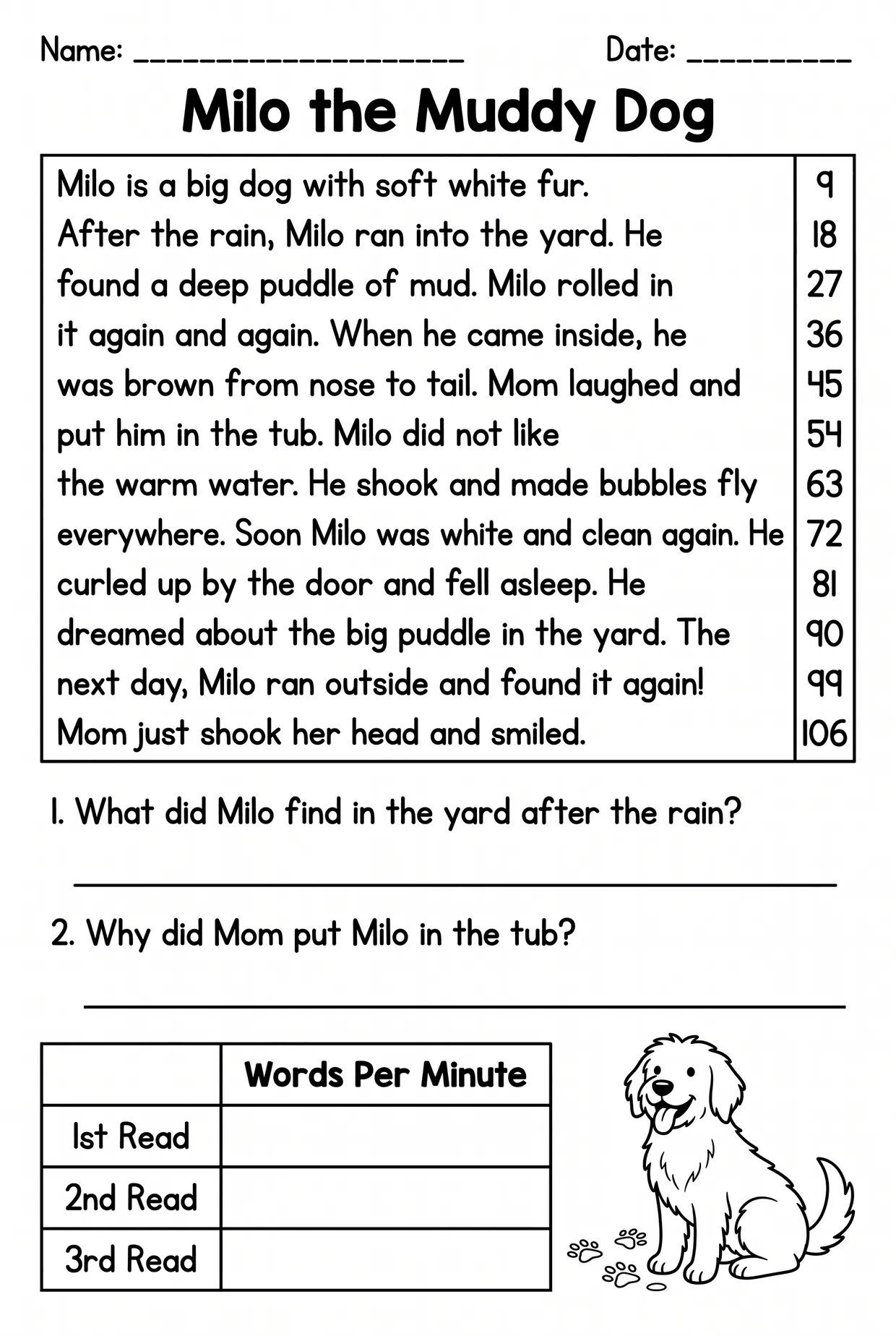
Milo the muddy dog and Sam’s loose tooth are written for timed reading aloud. A child reads for one minute, logs the words read correctly on the words per minute chart, and comes back on another day to watch the number climb. Two questions follow each read, so a faster reader still has to show they understood.

11 free worksheets 2nd grade Newest added August 2026
Free sets on this skill 11 Free 2nd Grade Reading Comprehension Worksheets 11
Format
More 2nd grade skills 2nd grade multiplication worksheets 372nd grade subtraction worksheets 352nd grade grammar worksheets 162nd grade addition worksheets 152nd grade money worksheets 152nd grade fractions worksheets 11

Questions about 2nd grade reading comprehension worksheets

How long are second grade reading passages?

Longer than in first grade, often a few short paragraphs instead of a few sentences. The fluency passages here run to 106 words, a length many second graders can read aloud in about a minute by the end of the year.

Why use a words per minute chart?

It tracks reading fluency. Time one minute of reading aloud, count the words read correctly and log the number, then repeat on another day. Watching the number climb across three reads is motivating, and the questions afterwards check that faster reading still means understanding.

What helps a child retell a story in their own words?

Ask three questions: what happened first, what happened in the middle, and how did it end. Keep each answer to one sentence in the child's own words rather than copied from the page. The beginning, middle and end page for Grandpa's garden gives that a simple structure to fill in.

What are story elements?

The characters, the setting, the problem and the solution. Second grade is when children start naming them for any story they read, and noticing that most stories turn on a problem being solved. The new kid page practices all four on one short story about welcoming a classmate.

My child can read the words but cannot say why a character did something. What helps?

Stop at the moment the character makes a choice and ask what they might be thinking, then find the sentence that hints at it. The lost mitten page ends with this kind of question, and answering it out loud first makes the written answer much easier.