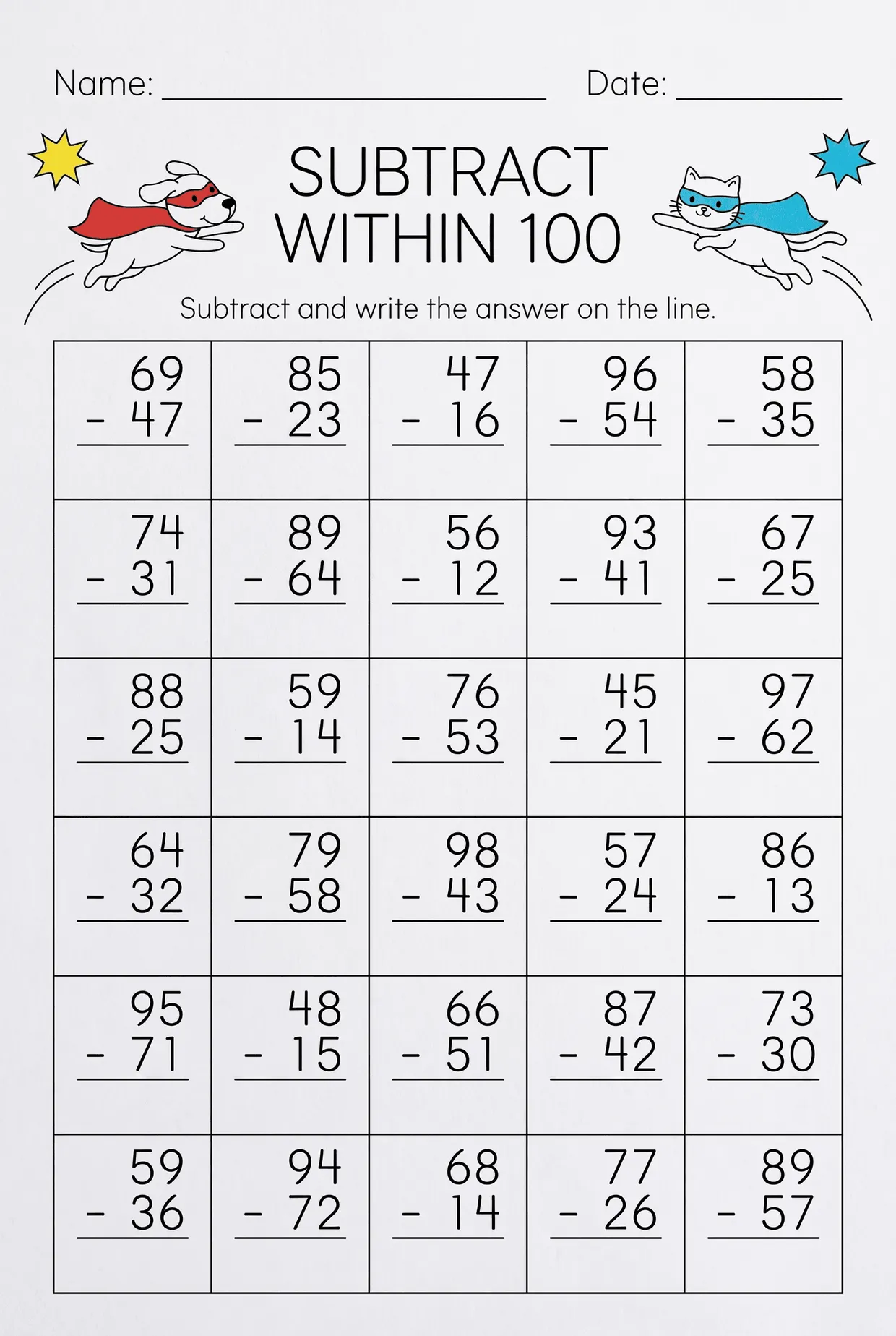
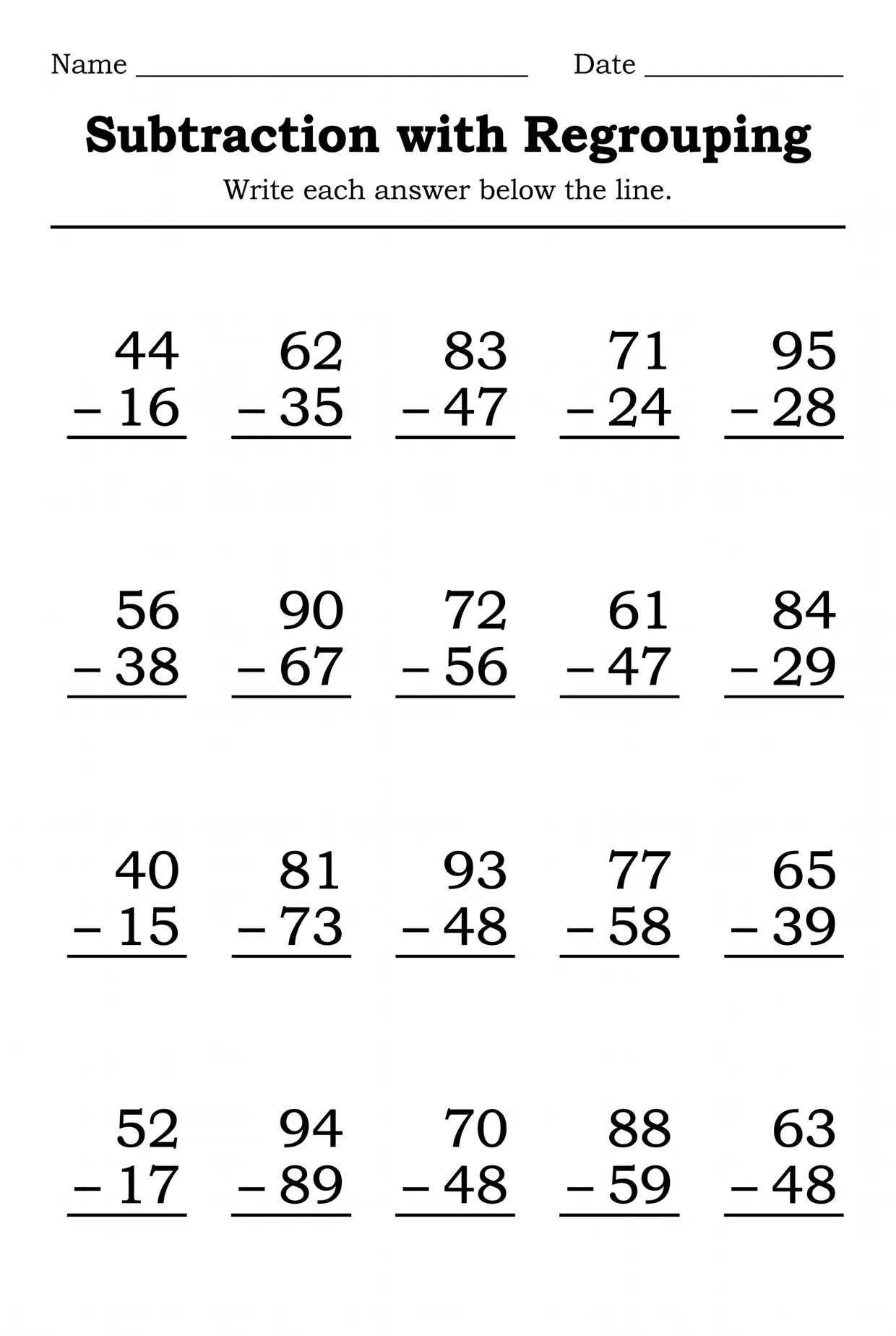
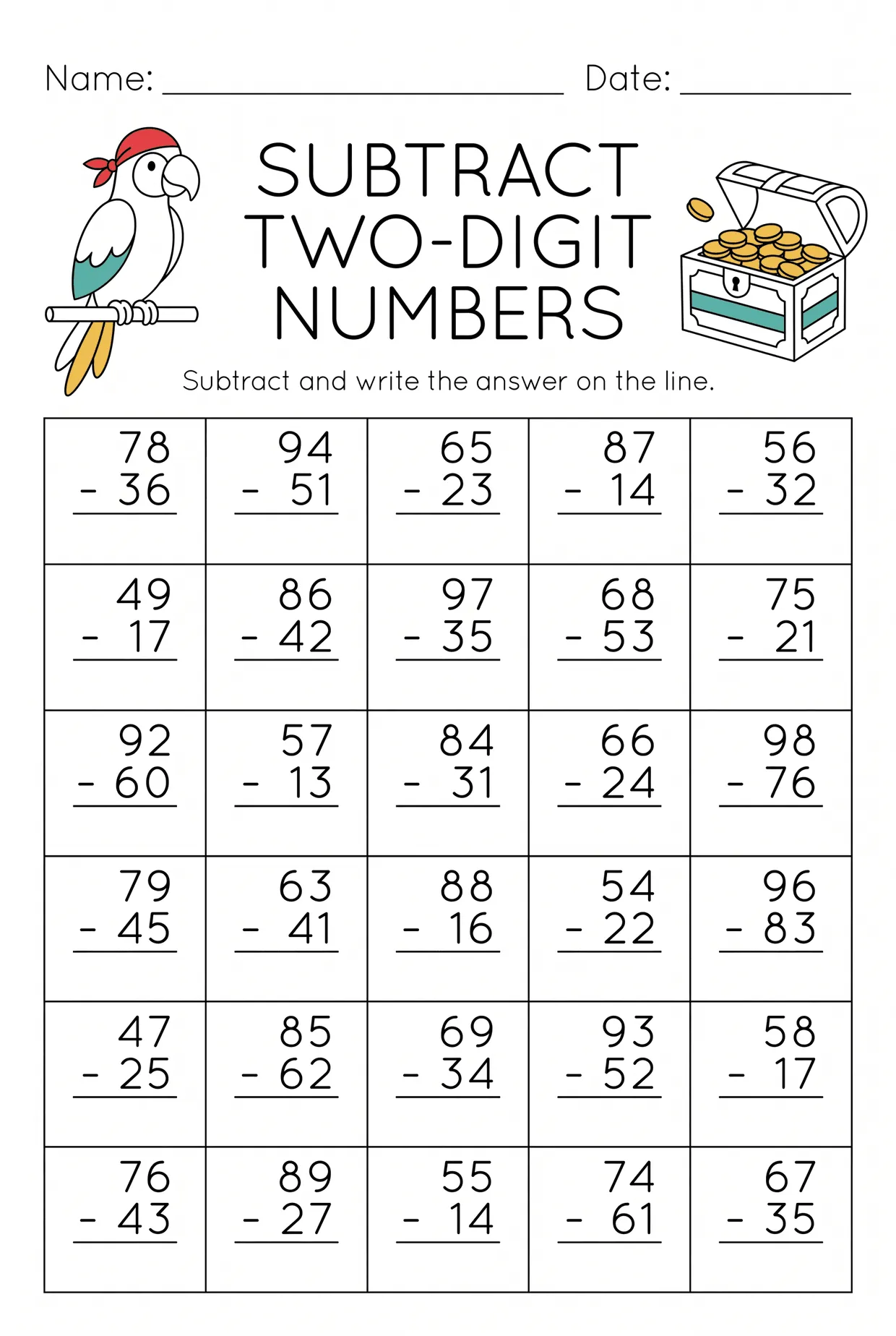
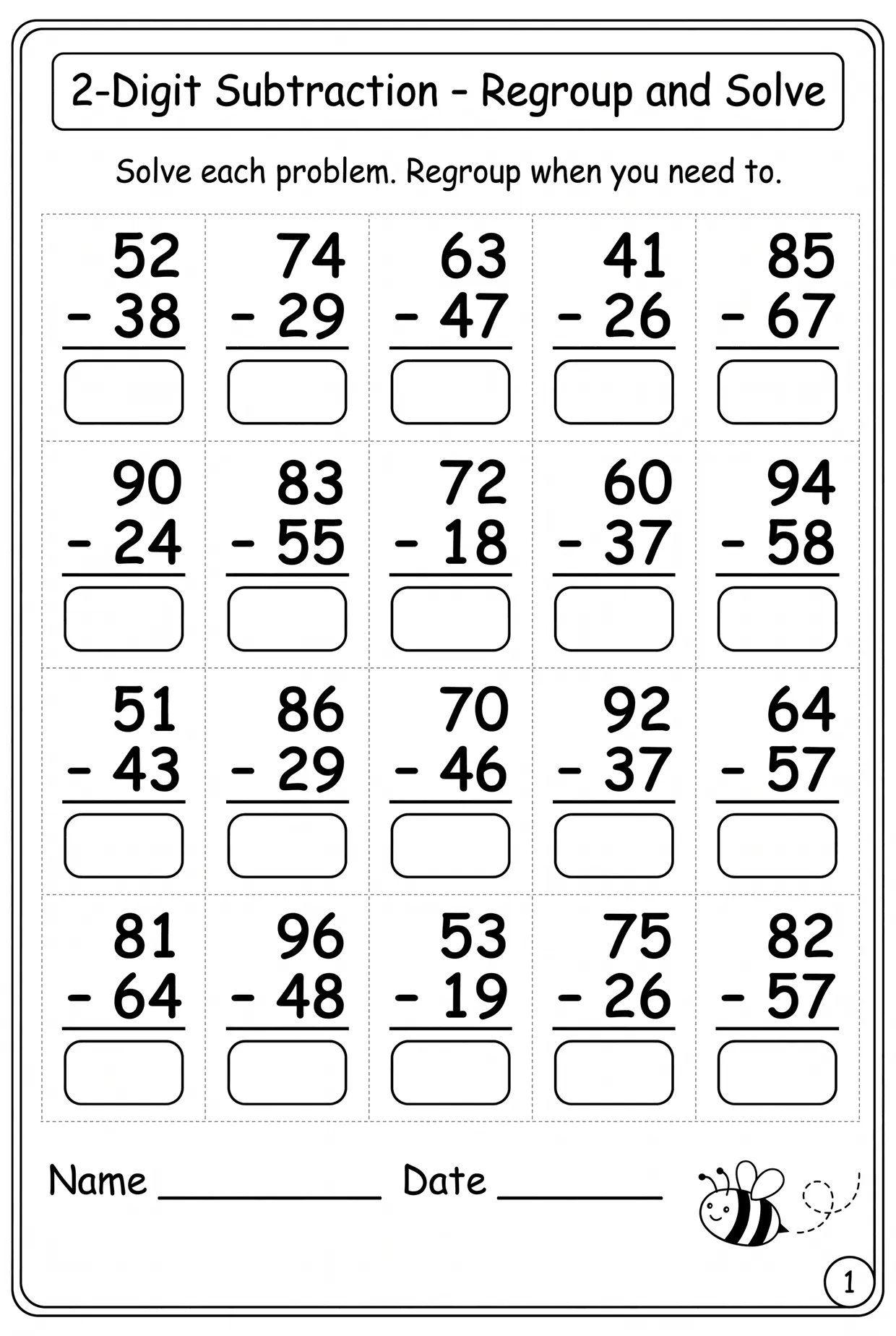


Questions about 2nd grade subtraction worksheets
When should second graders start subtracting with regrouping?
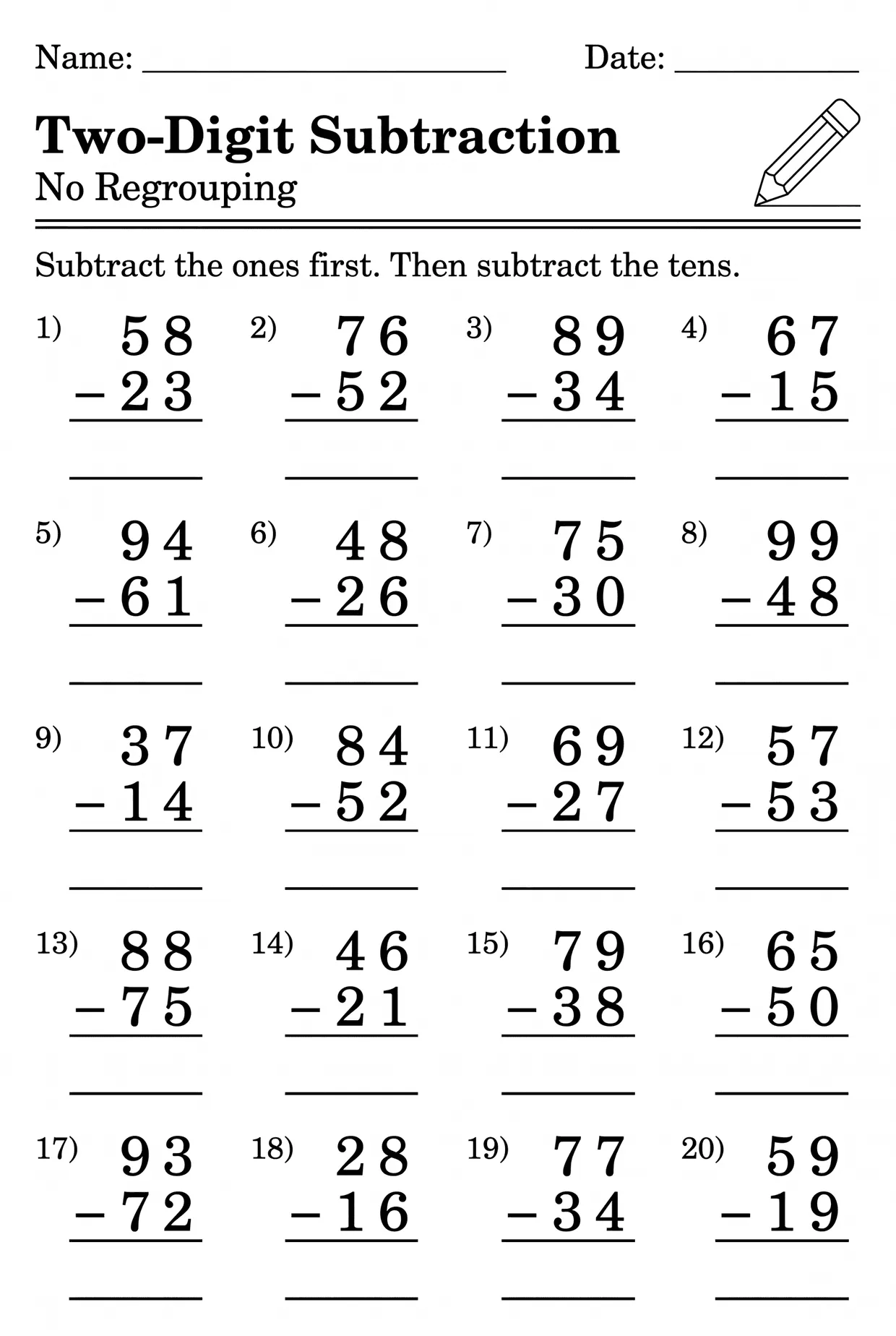
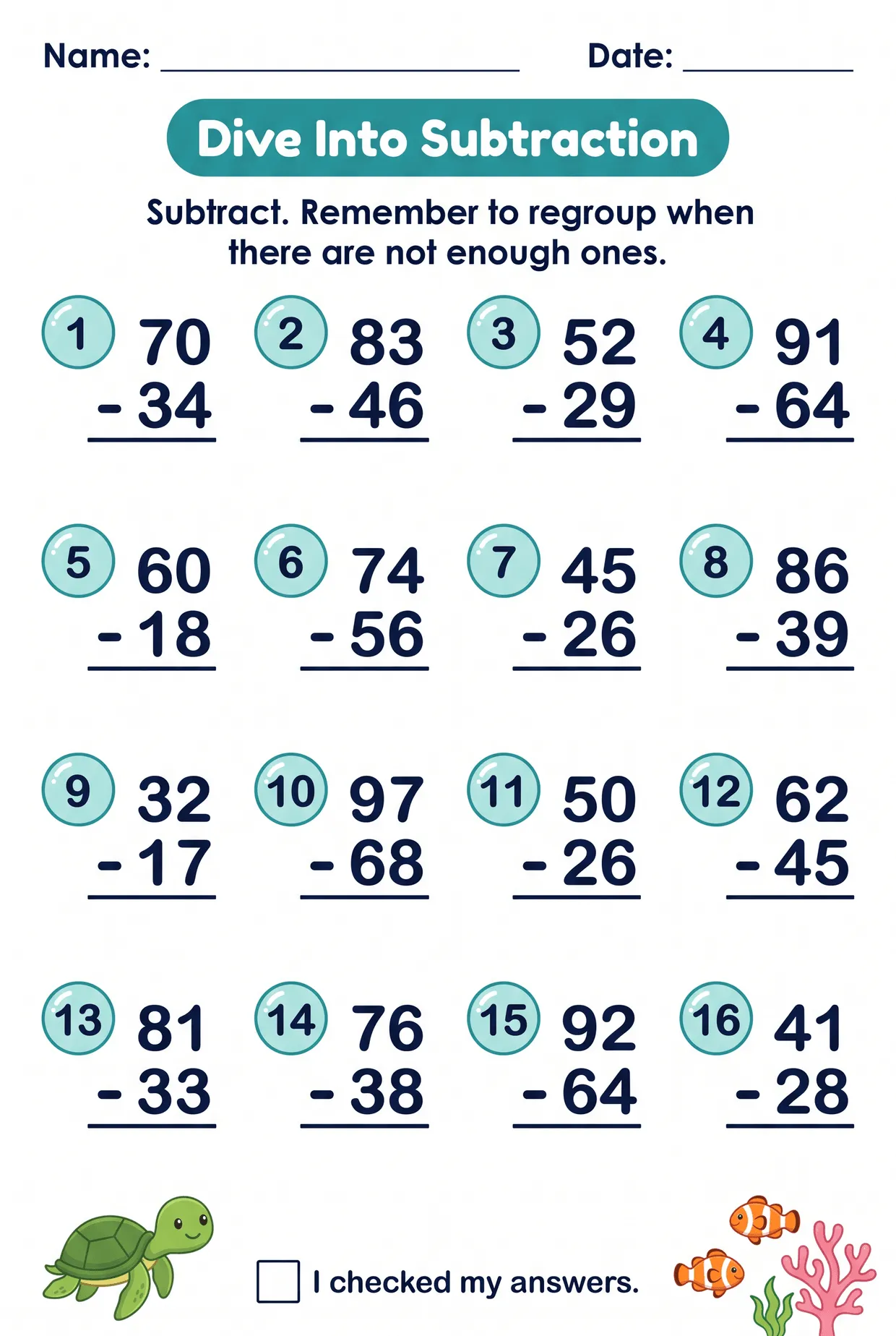
After two-digit subtraction without regrouping feels routine, usually partway through the year. A child should be able to subtract the ones, then the tens, and keep the columns straight without thinking about it. Then regrouping is the only new idea on the page, not one of three.
What makes a child subtract the smaller digit from the bigger one?
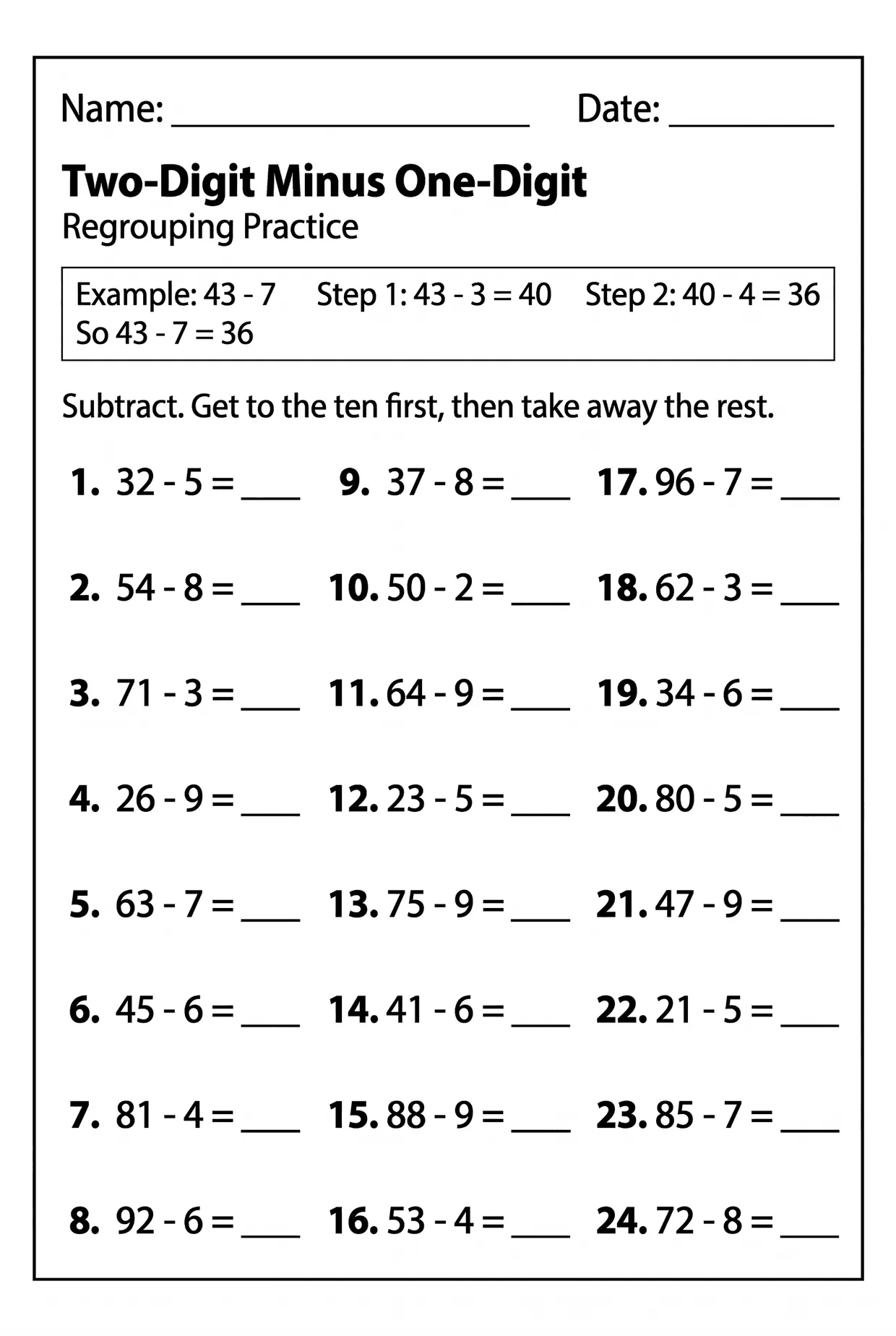
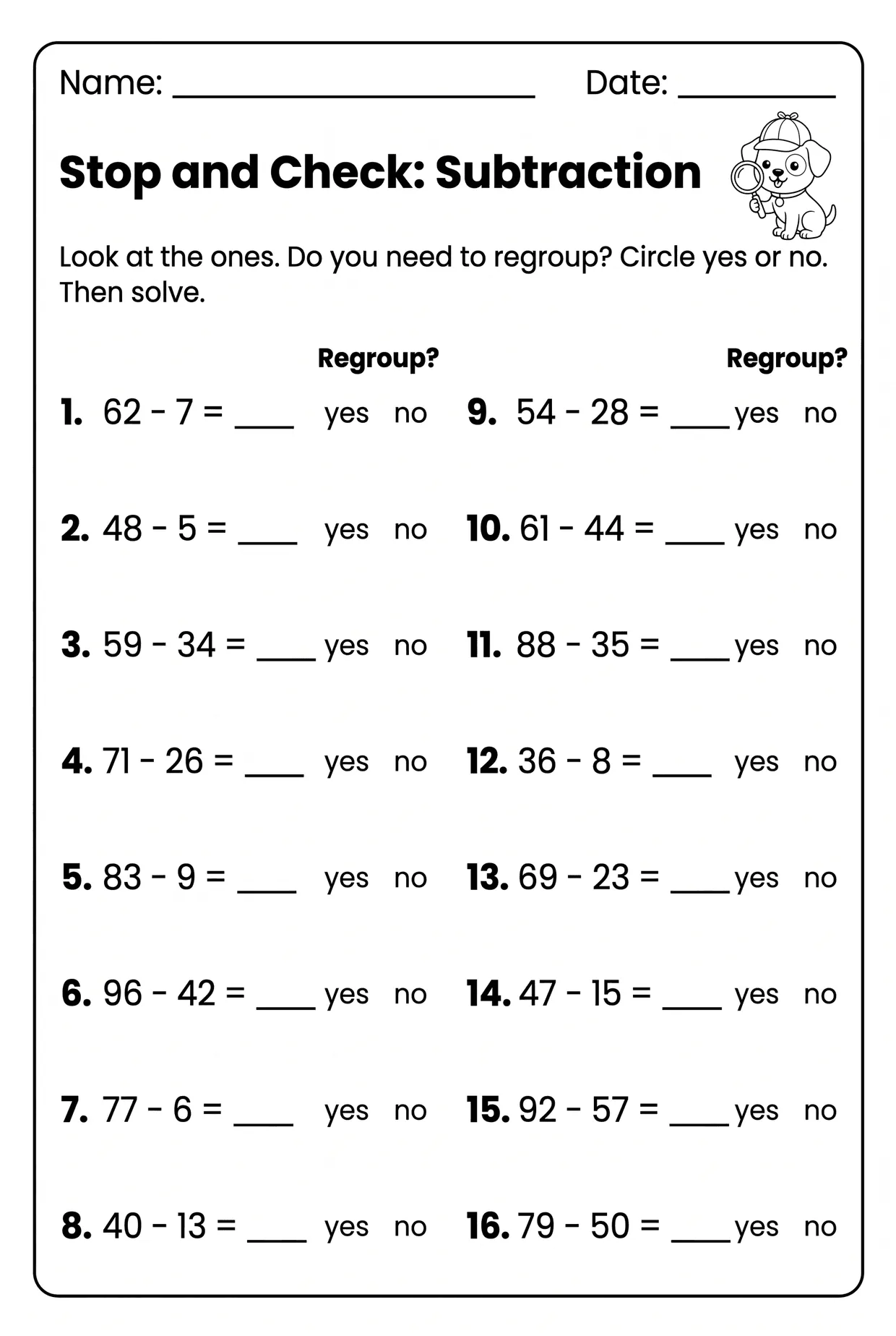
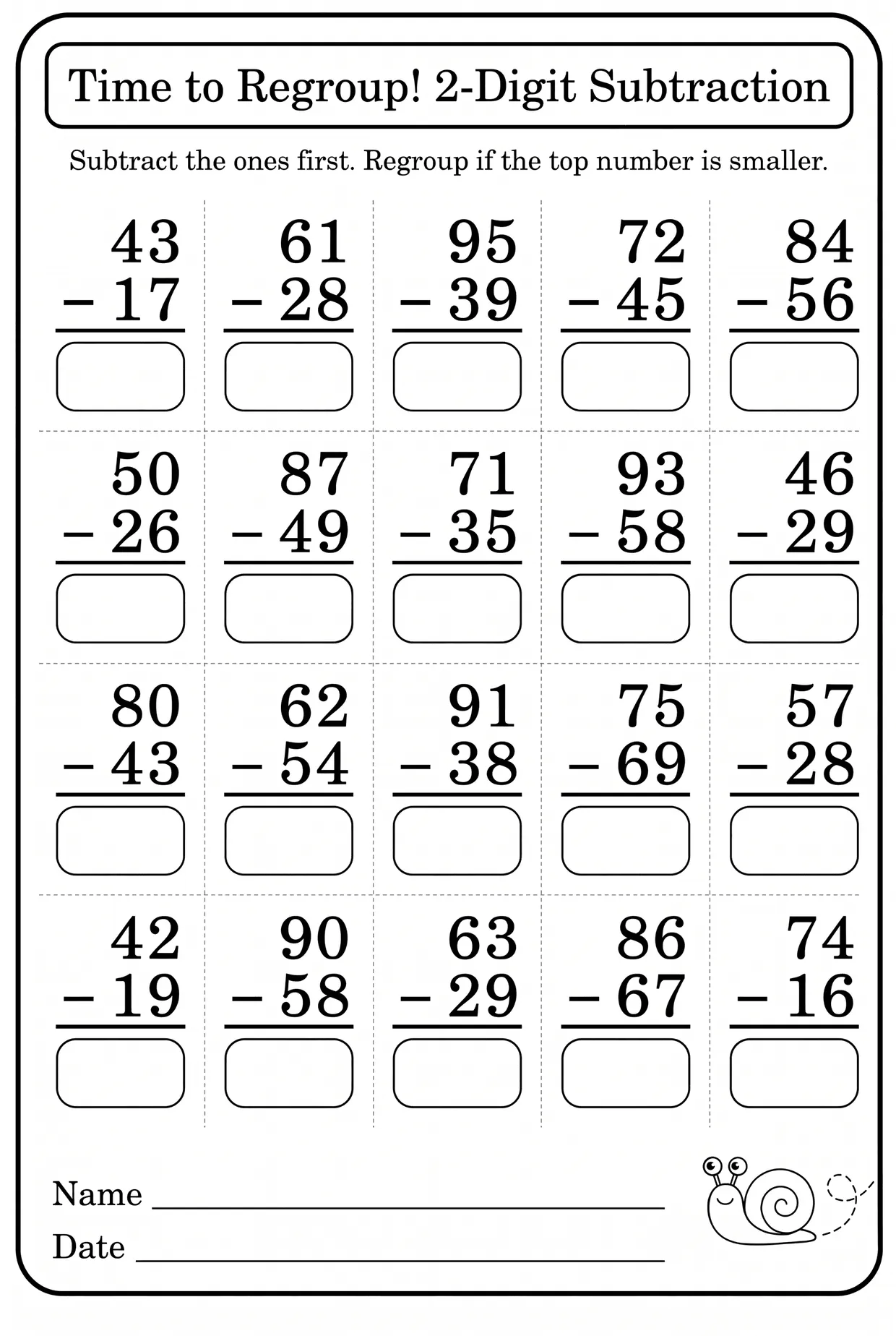
Habit, mostly. In 43 minus 18, taking 3 from 8 looks like the easier job, so a child does that and gets 35. Have them start every problem by asking whether the top ones digit is big enough. The regroup or not page is built around exactly that question.
Why are problems like 70 minus 25 so hard?
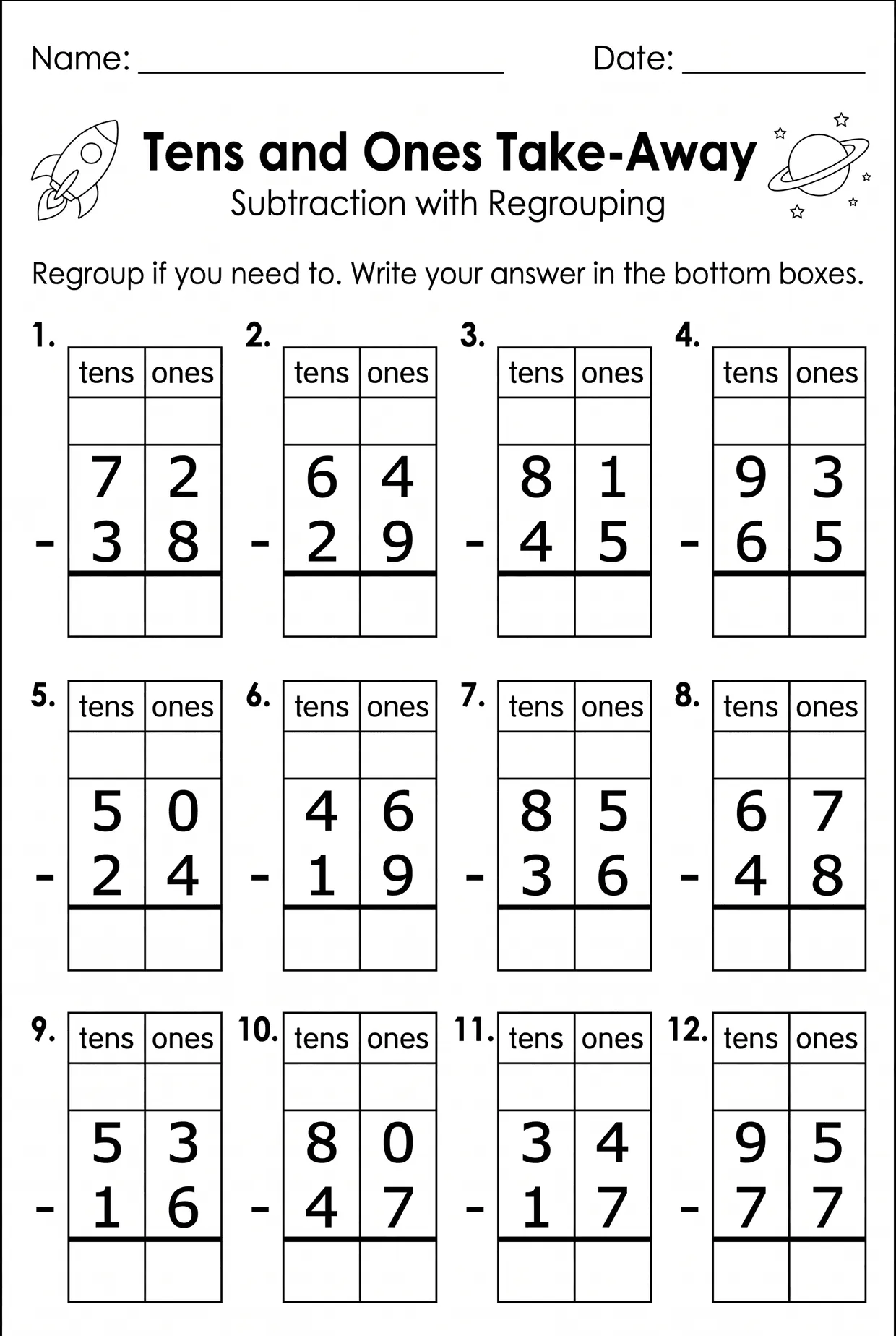
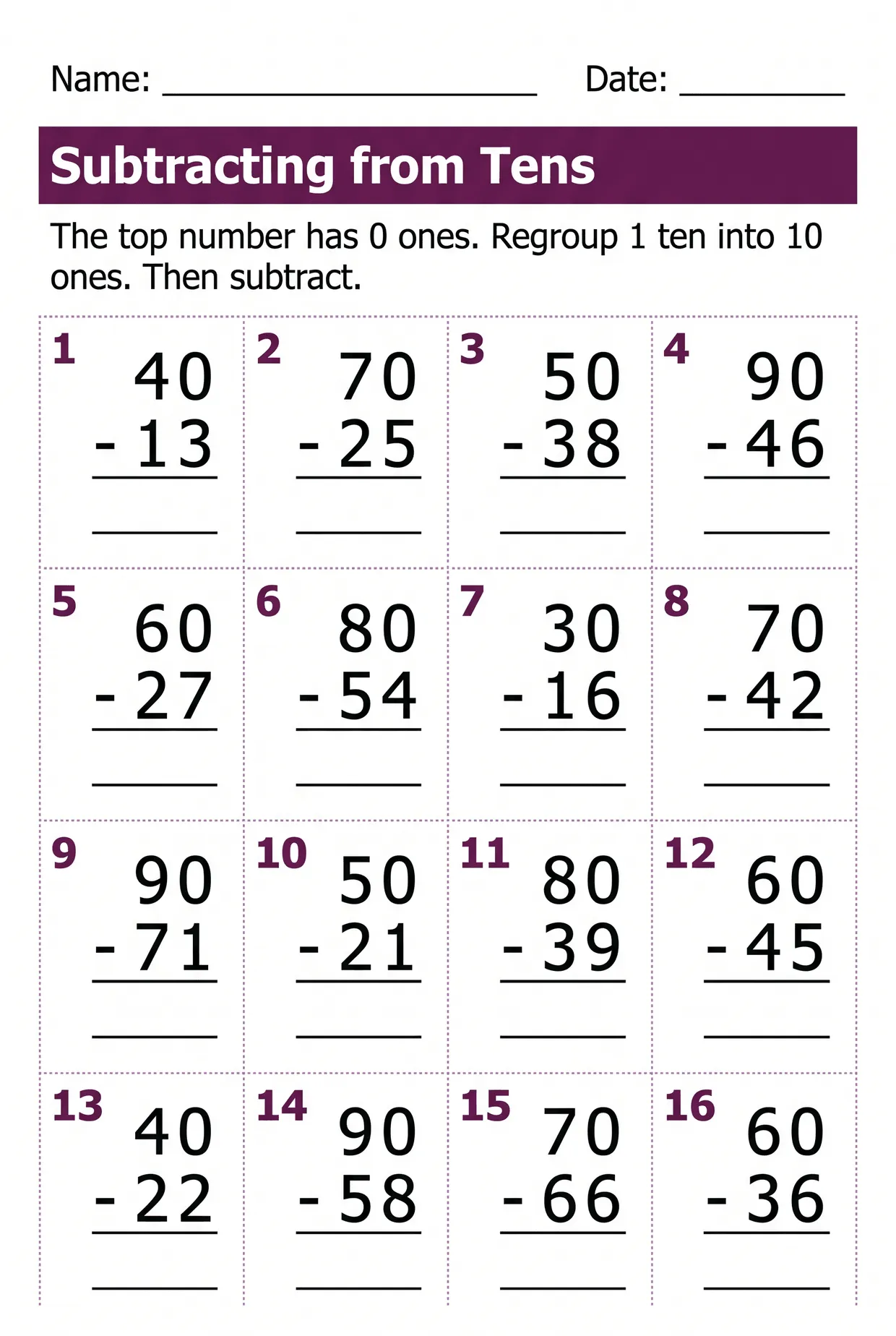
Because there are no ones to start with, so a child has to break a ten into ten ones before anything else can happen. Many children write 5 as the ones answer by taking 0 from 5 instead. A page of subtracting from tens on its own turns the trade into a habit.
What subtraction is expected by the end of second grade?
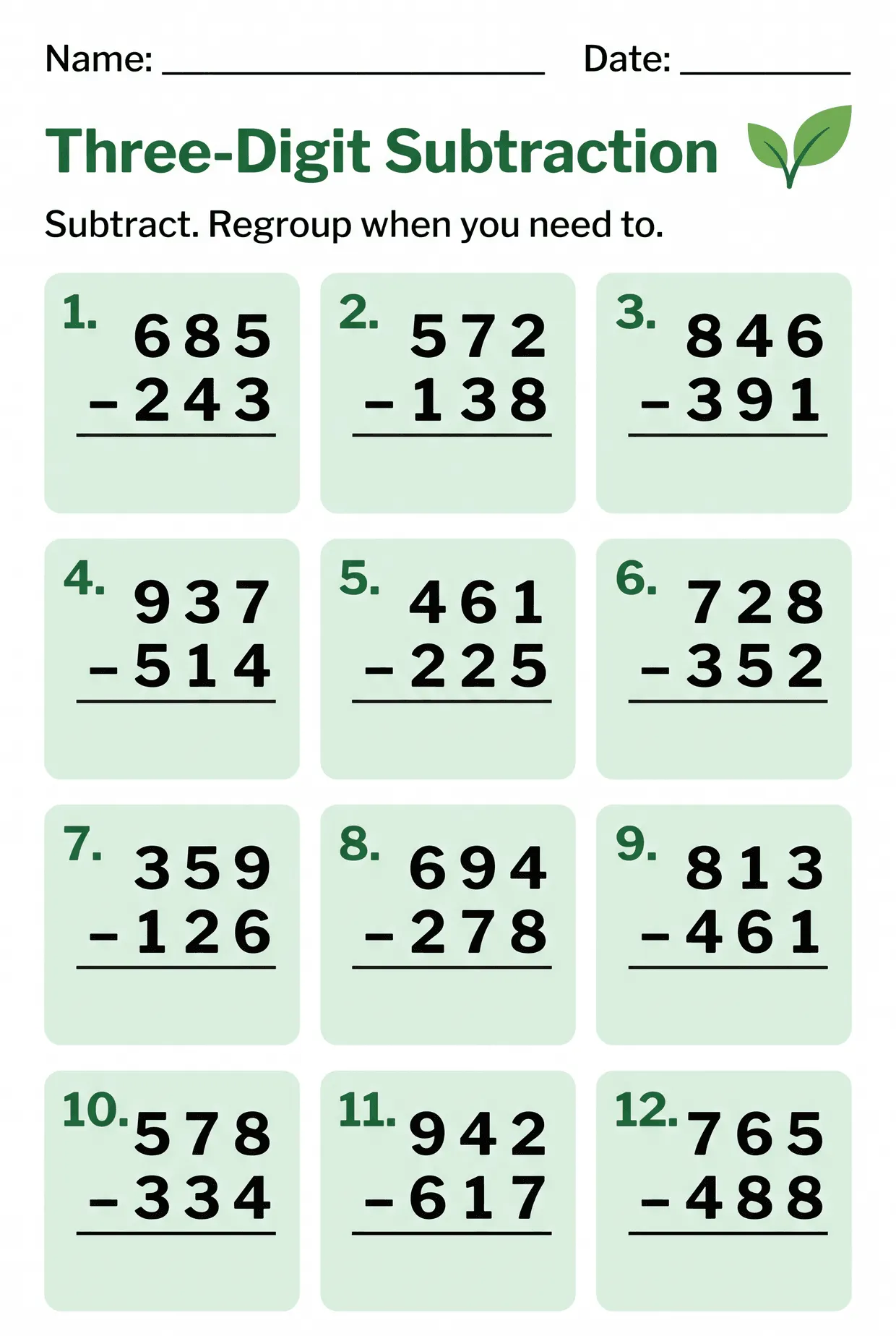
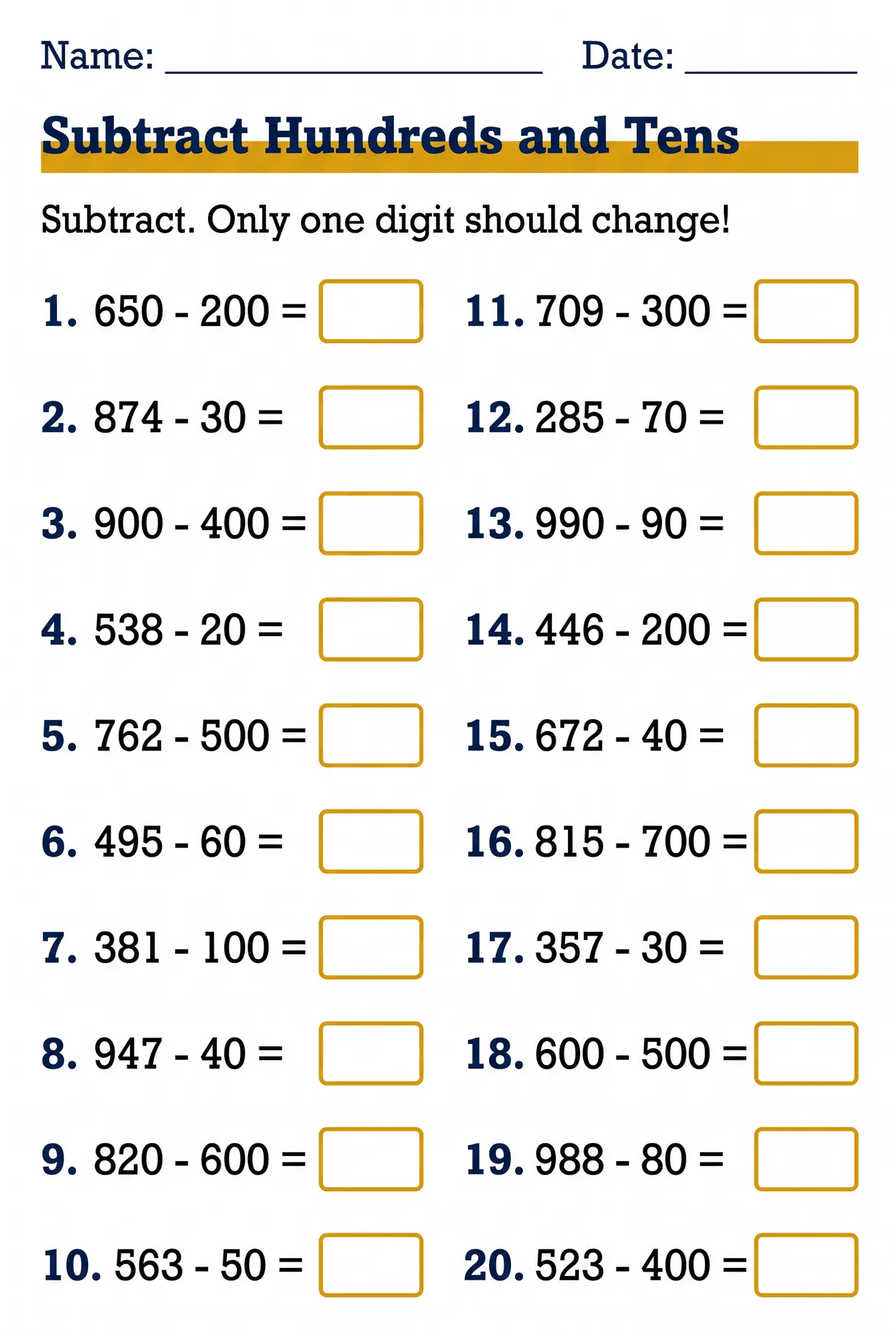
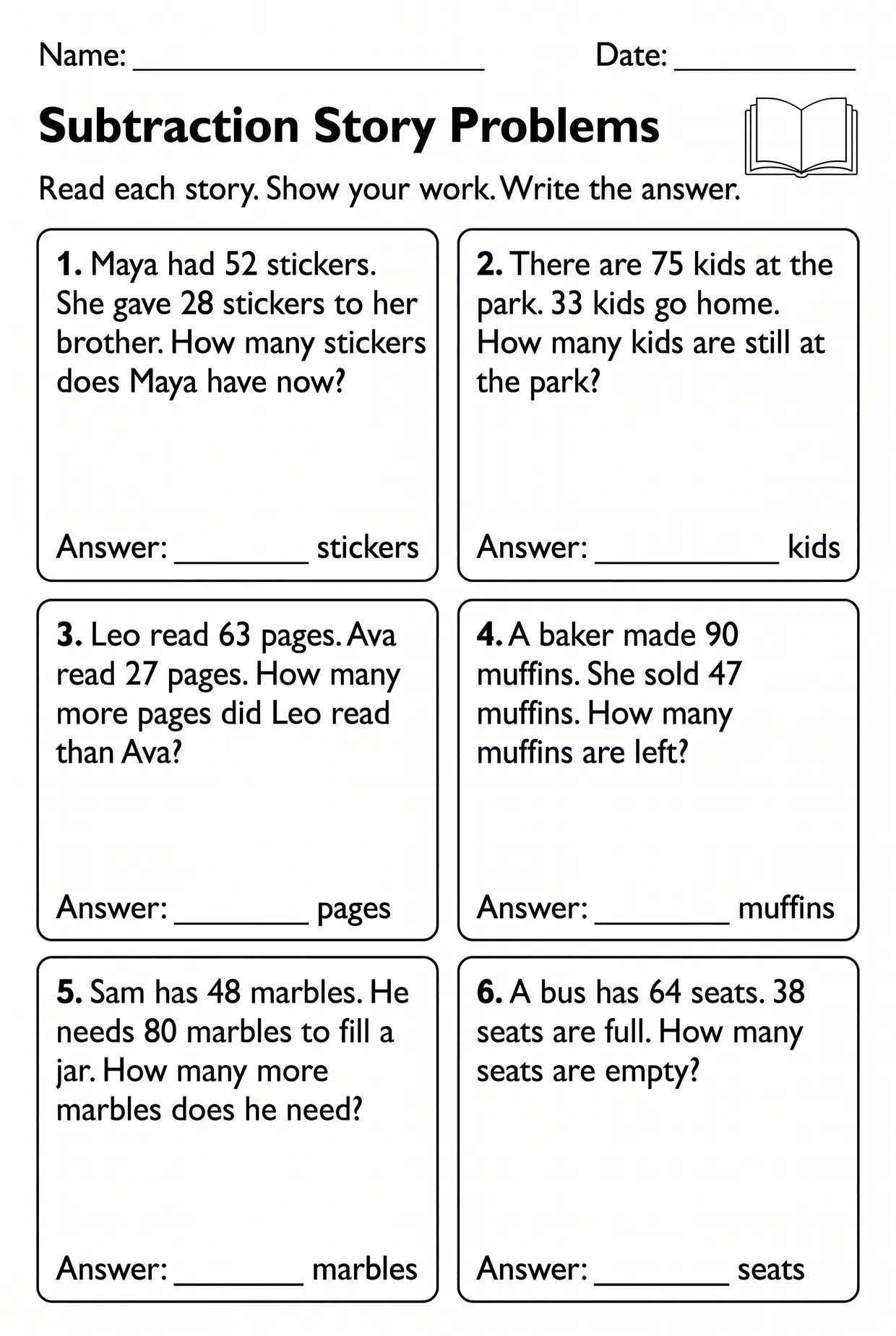
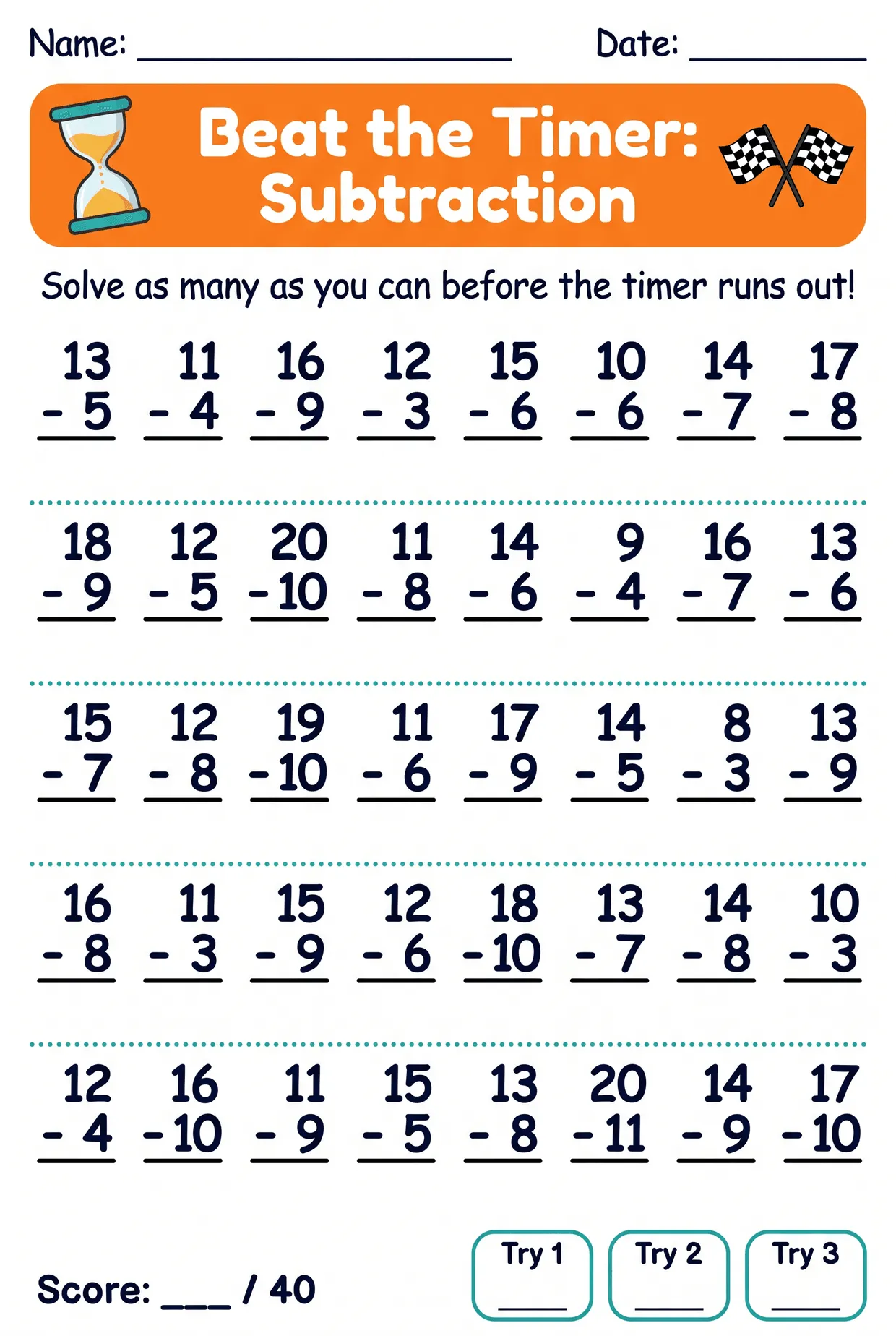
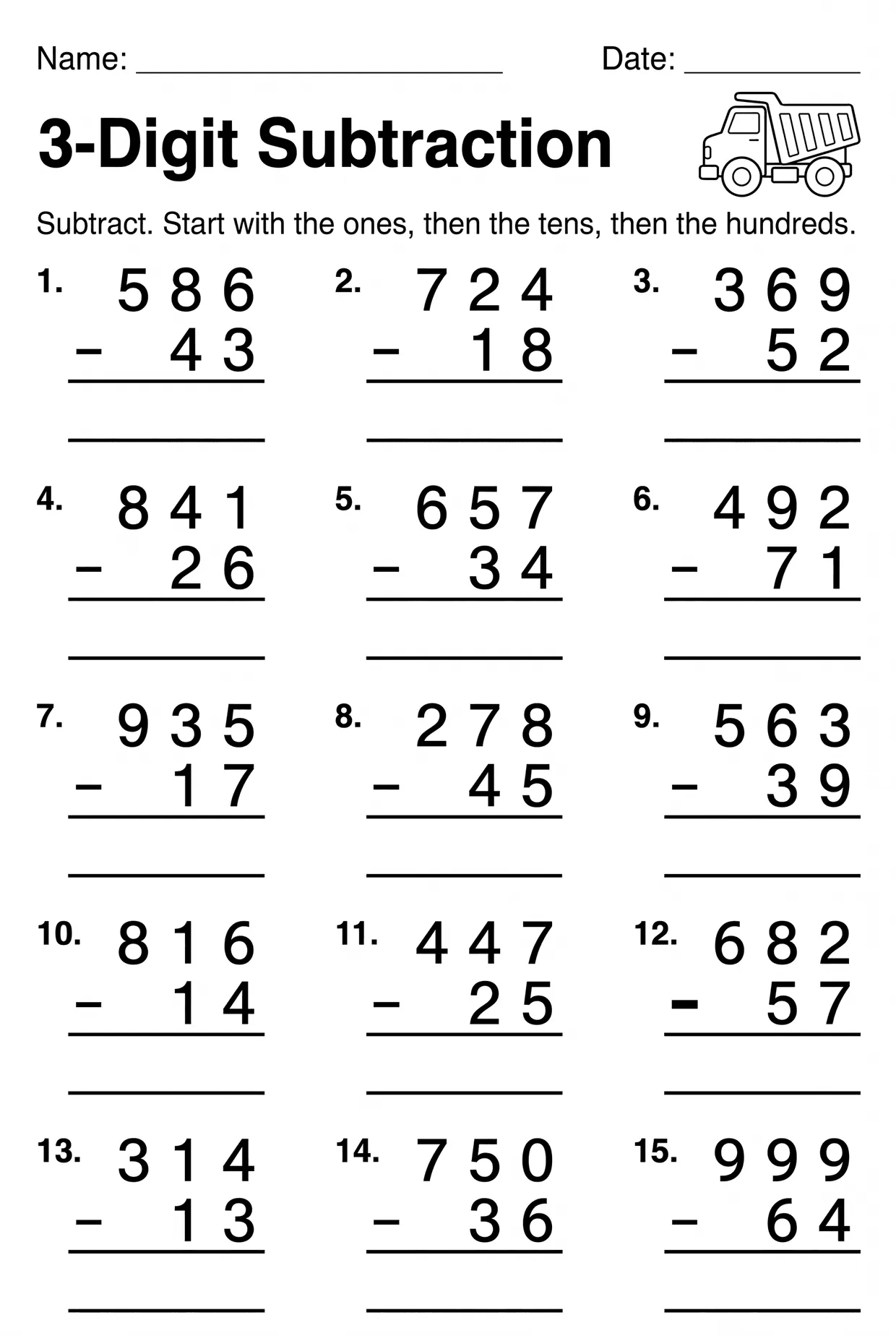
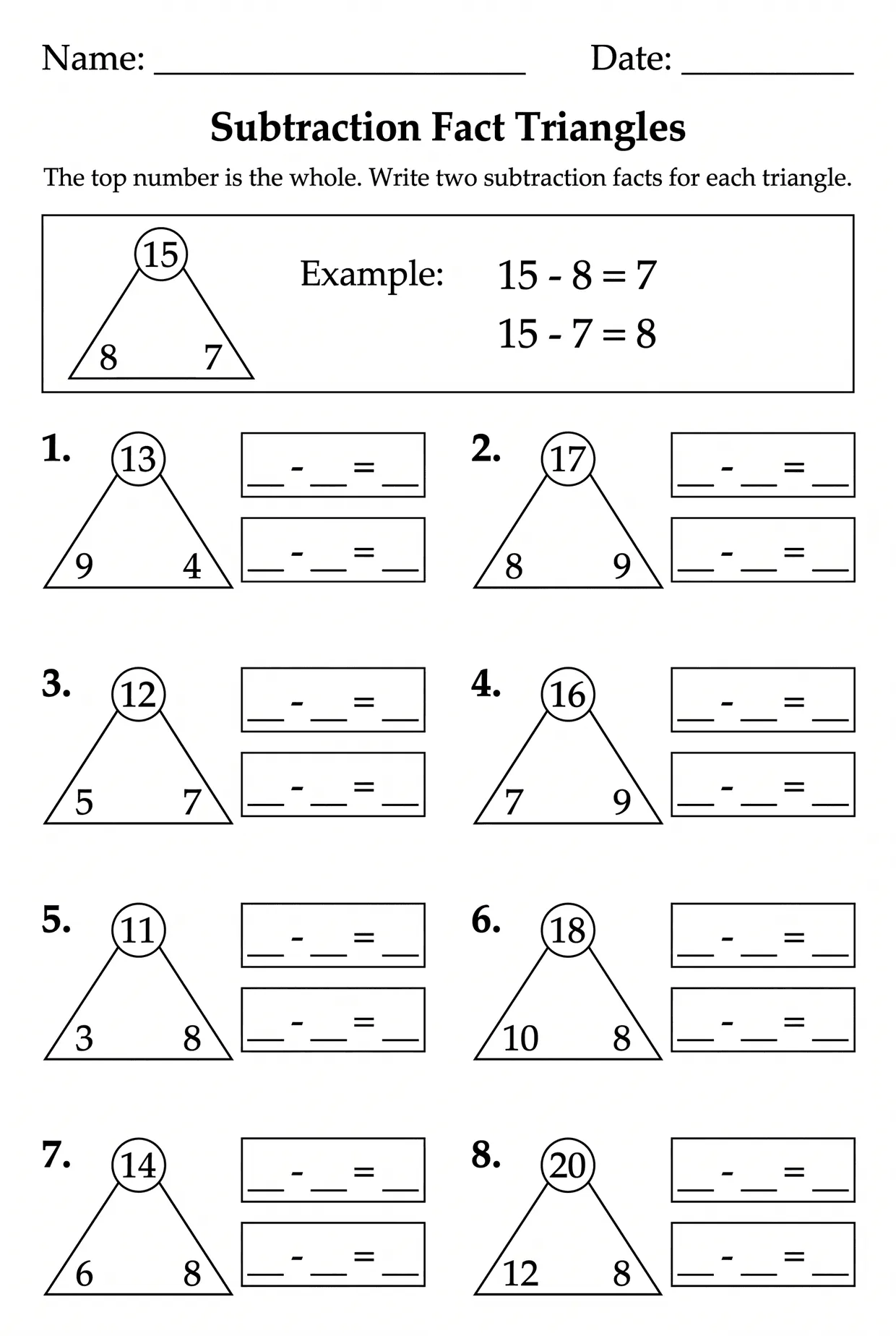
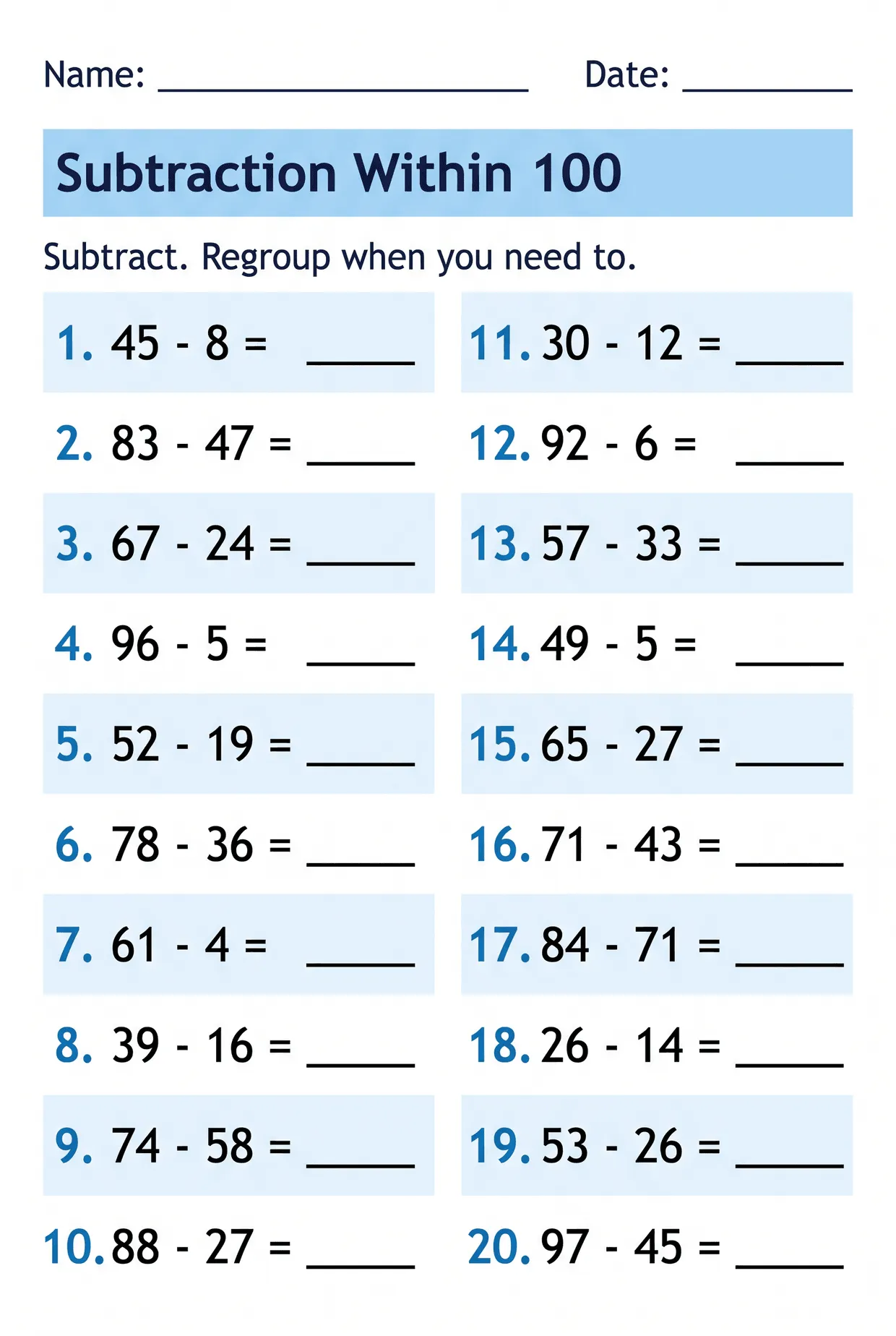
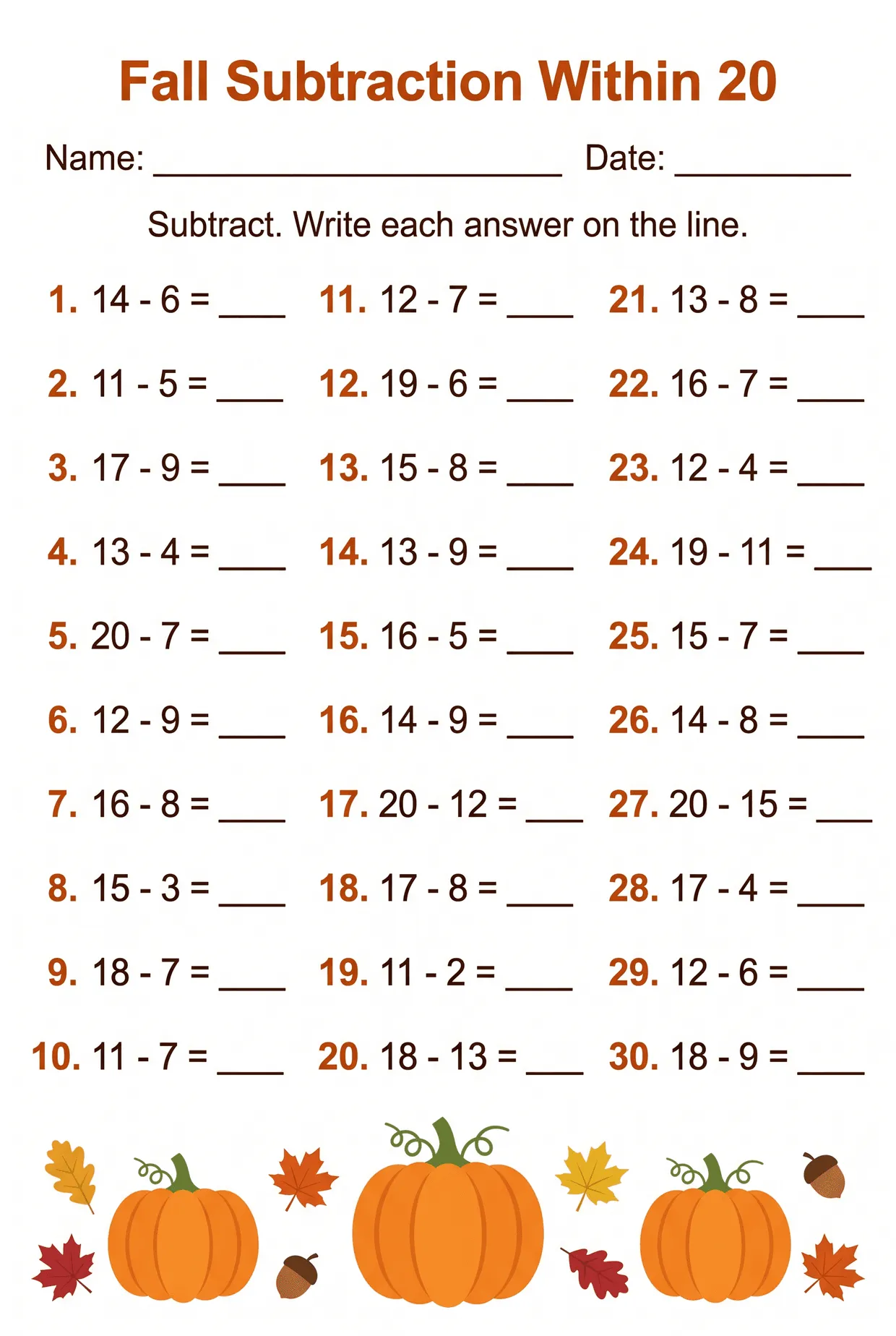
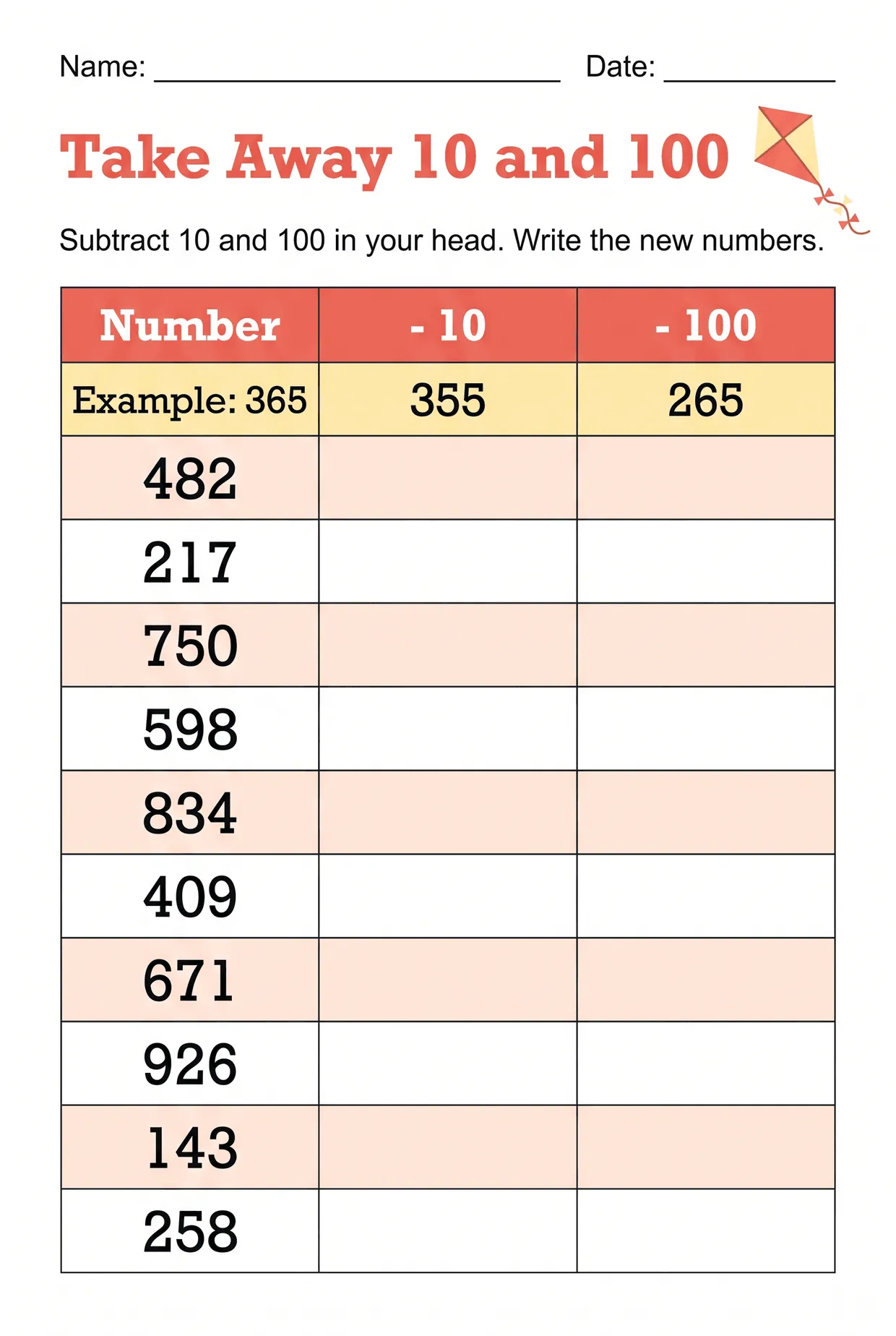
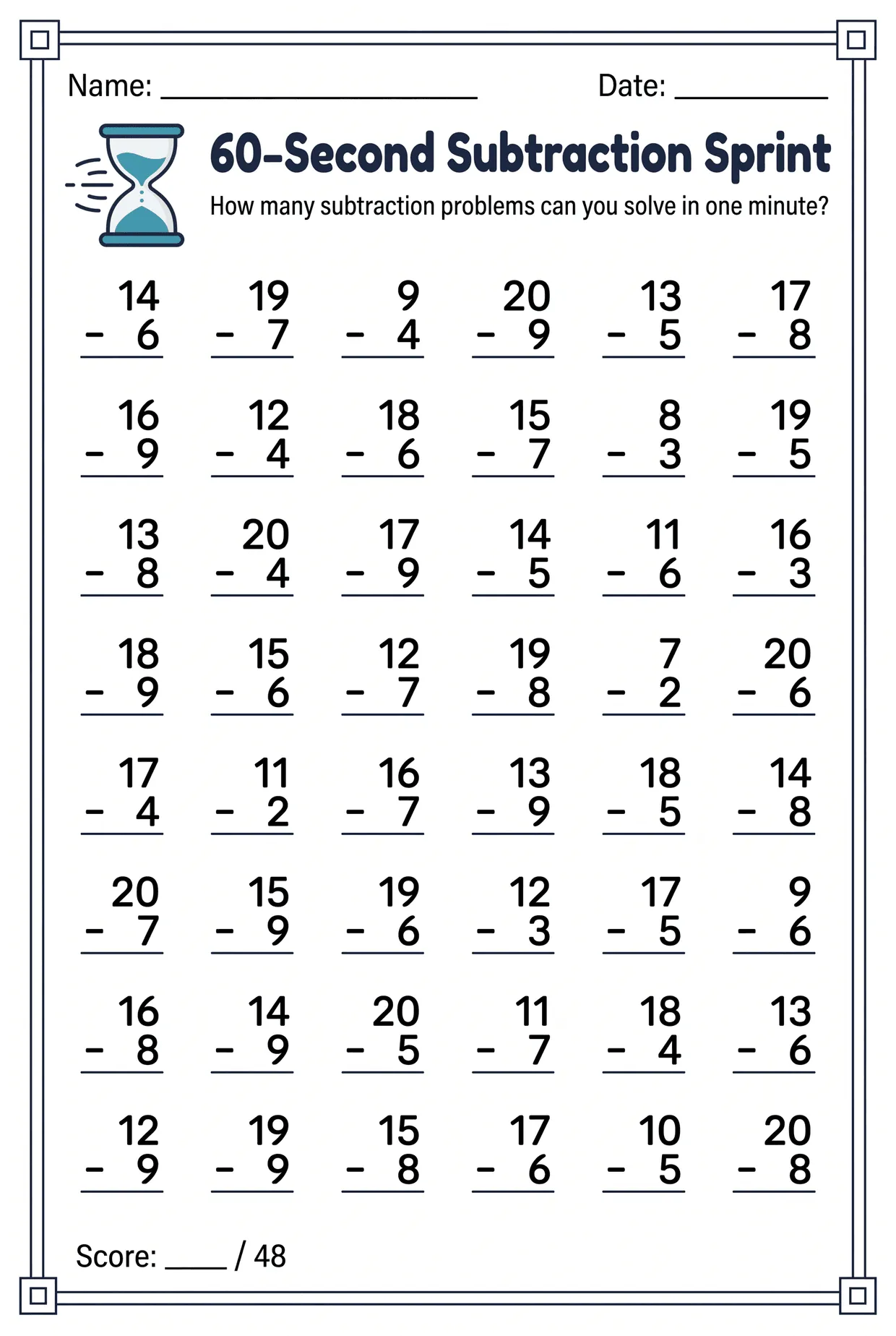
Taking 9 from 16 should not need fingers by the spring. Beyond that, the standards ask for fluent subtraction within 100 (2.NBT.5), subtraction within 1000 using place value (2.NBT.7), and one- and two-step word problems within 100. The sheets on this page move through those skills in roughly that order.
How can a child check a subtraction answer?
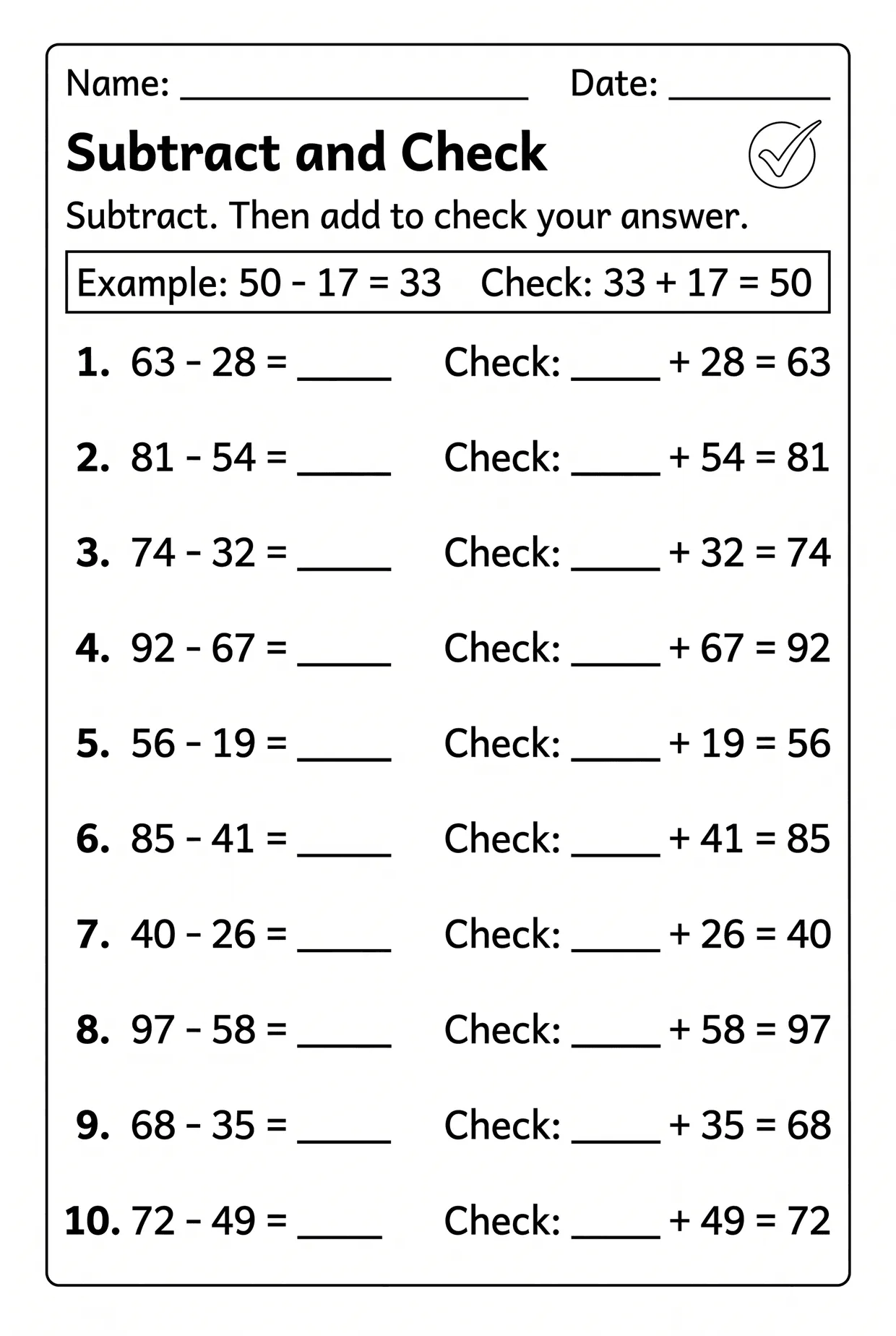
Add the answer to the number that was taken away. If 63 minus 28 is 35, then 35 plus 28 should land back on 63. The check with addition page builds this into every problem, and it is a habit worth keeping all through elementary school.