Questions about 2nd grade addition worksheets
What should a second grader be able to add by the end of the year?
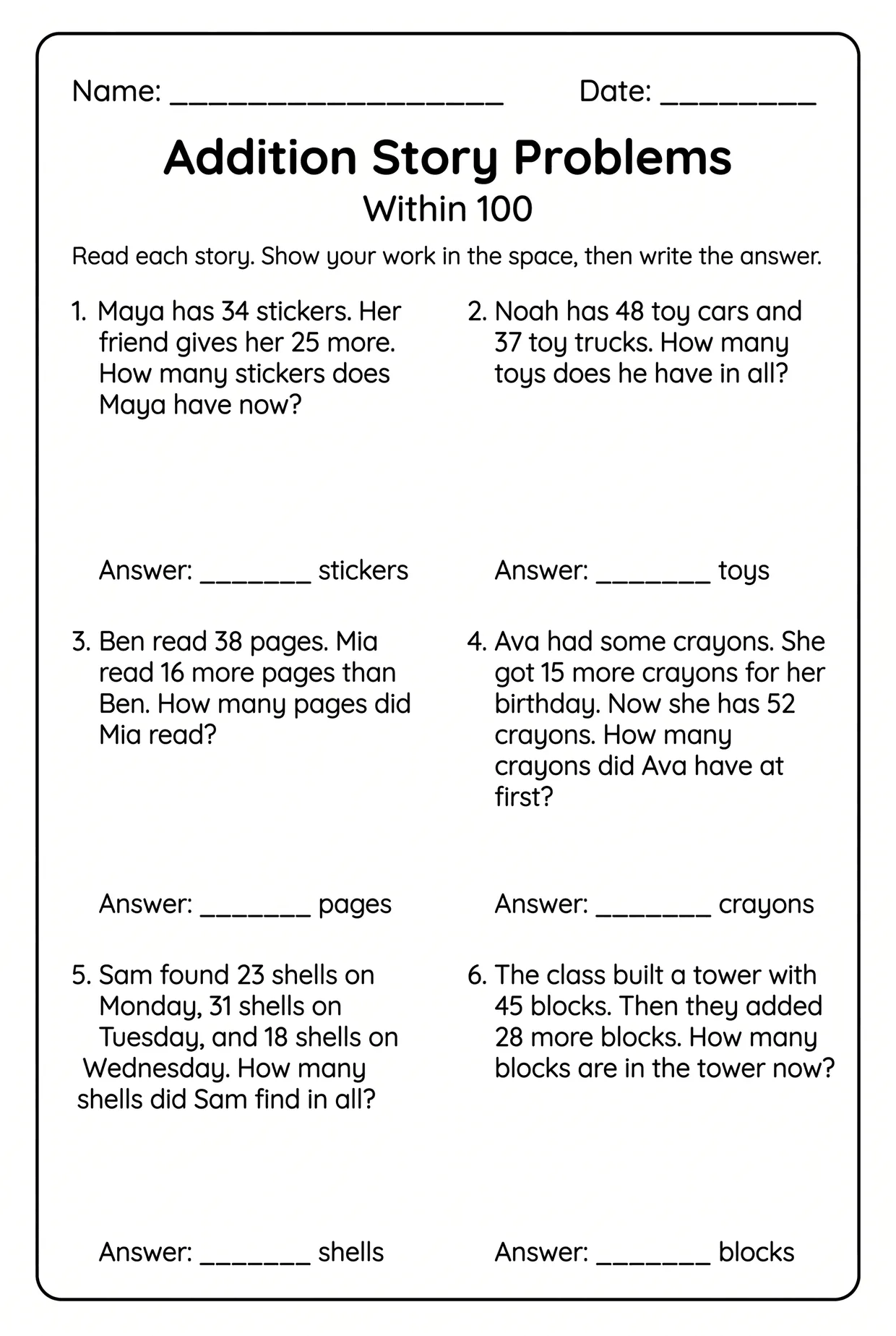
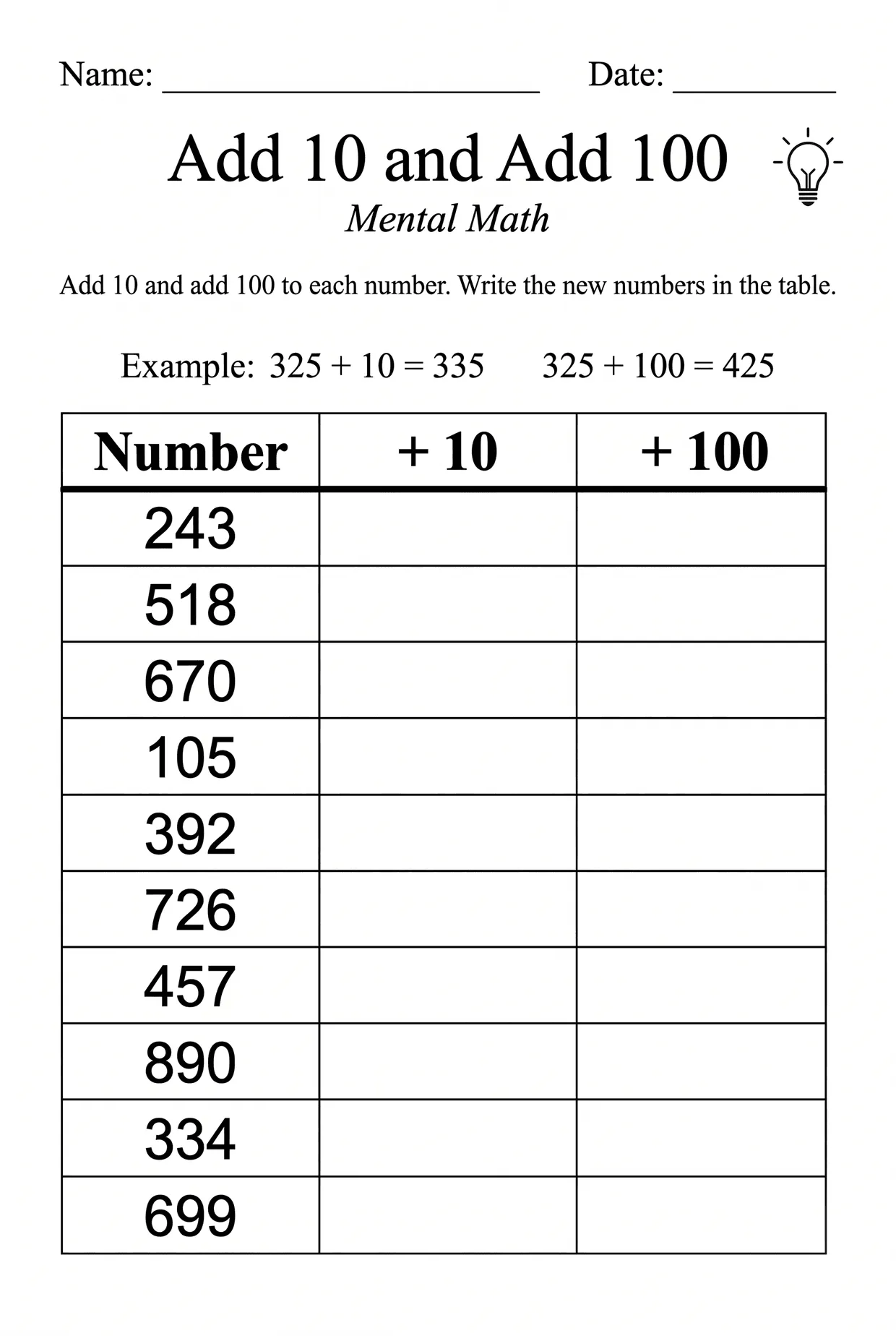
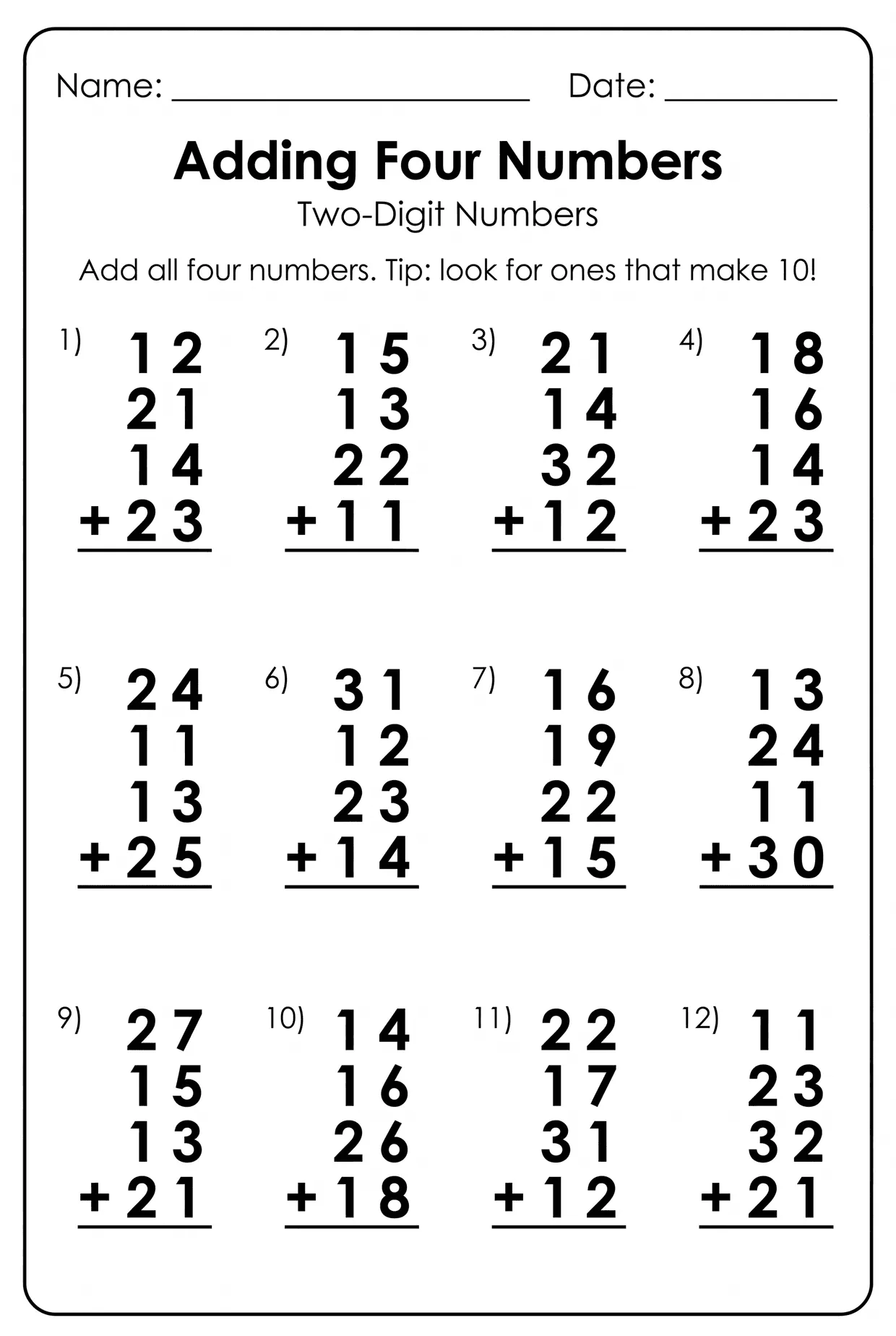
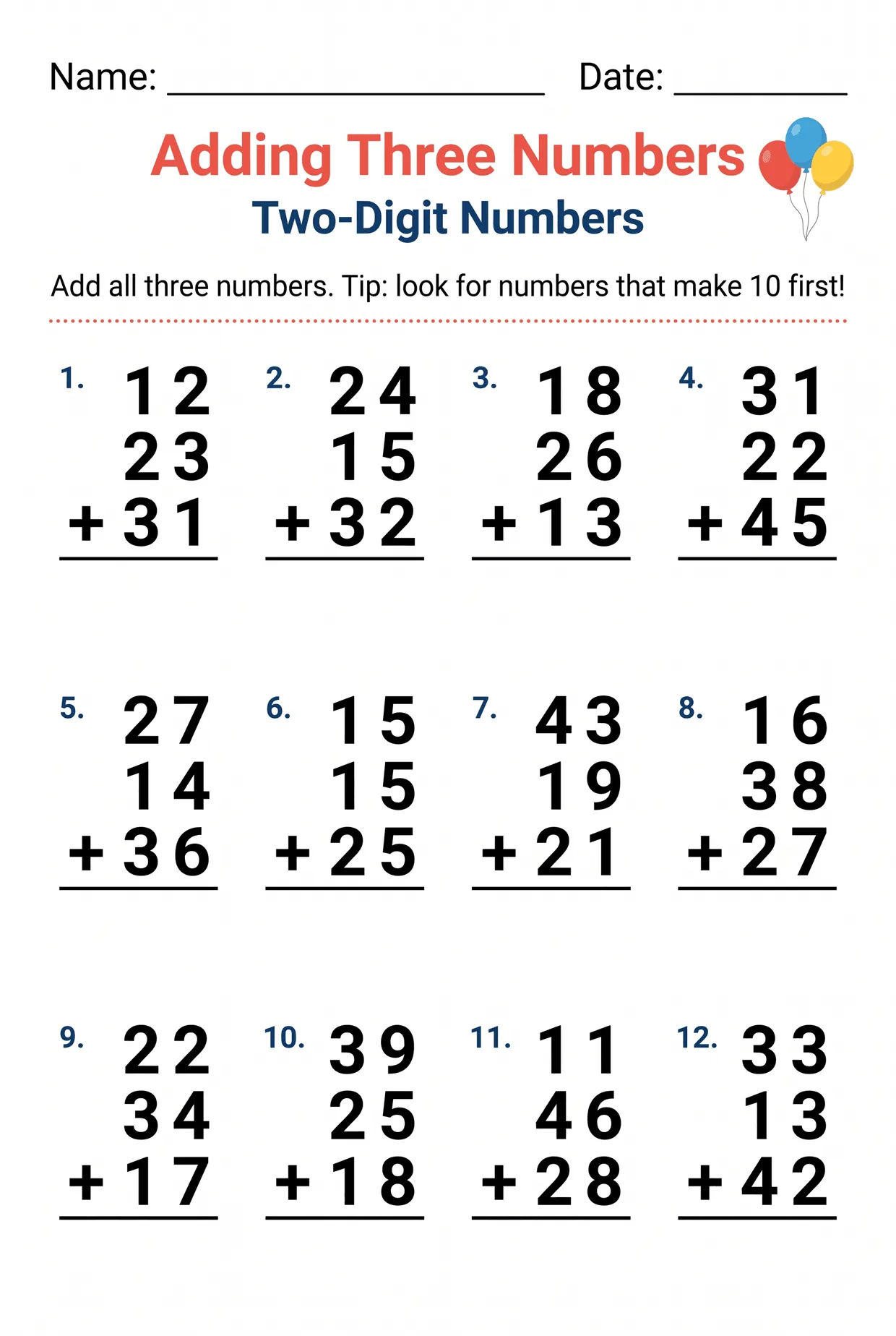
Three skills, roughly in this order: sums within 20 from memory, fluent addition within 100 (2.NBT.5), and addition within 1000 using place value (2.NBT.7). Adding up to four two-digit numbers at once belongs to the same year, and the pages here work through each of those in turn.
What signs show a child is ready for regrouping?
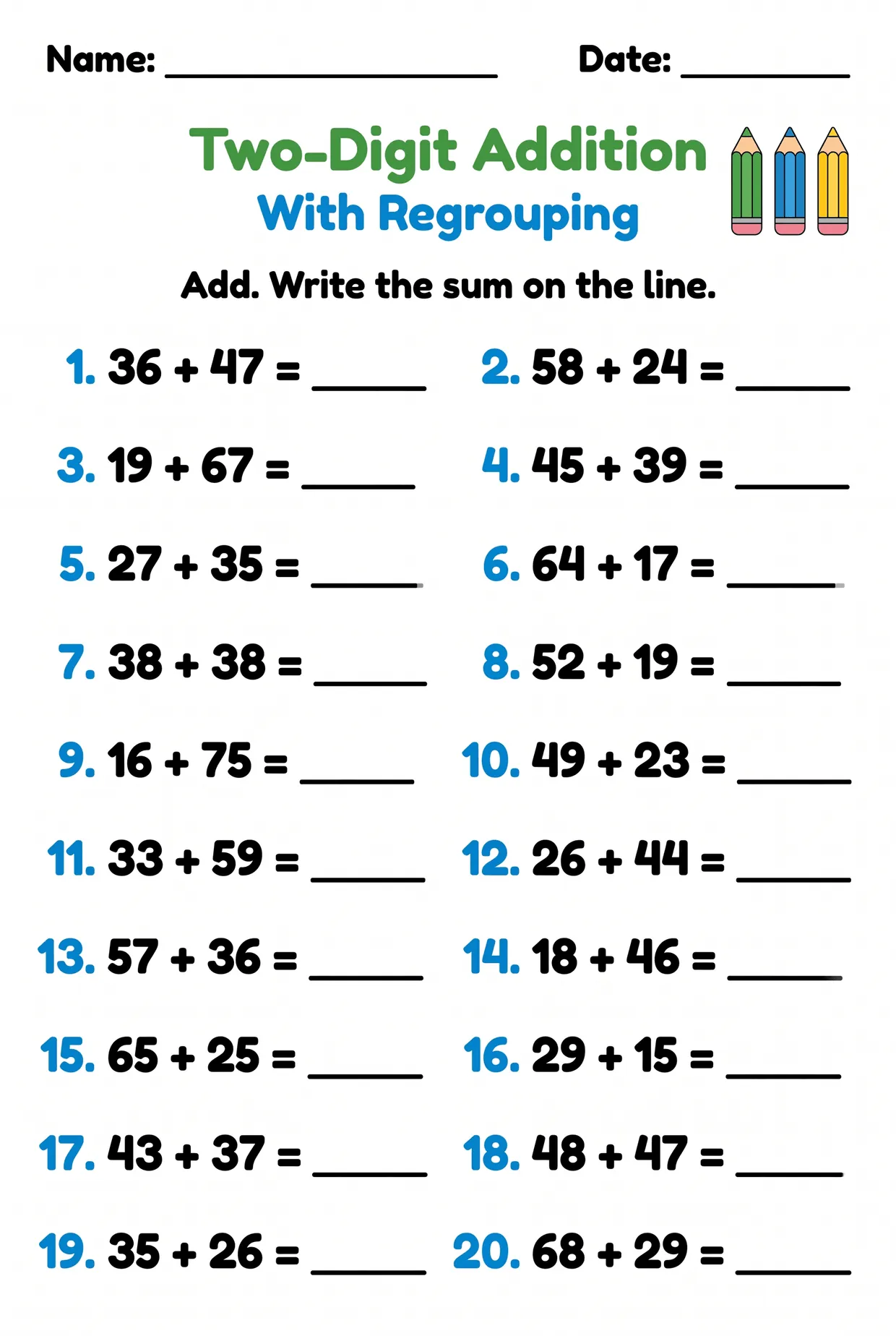
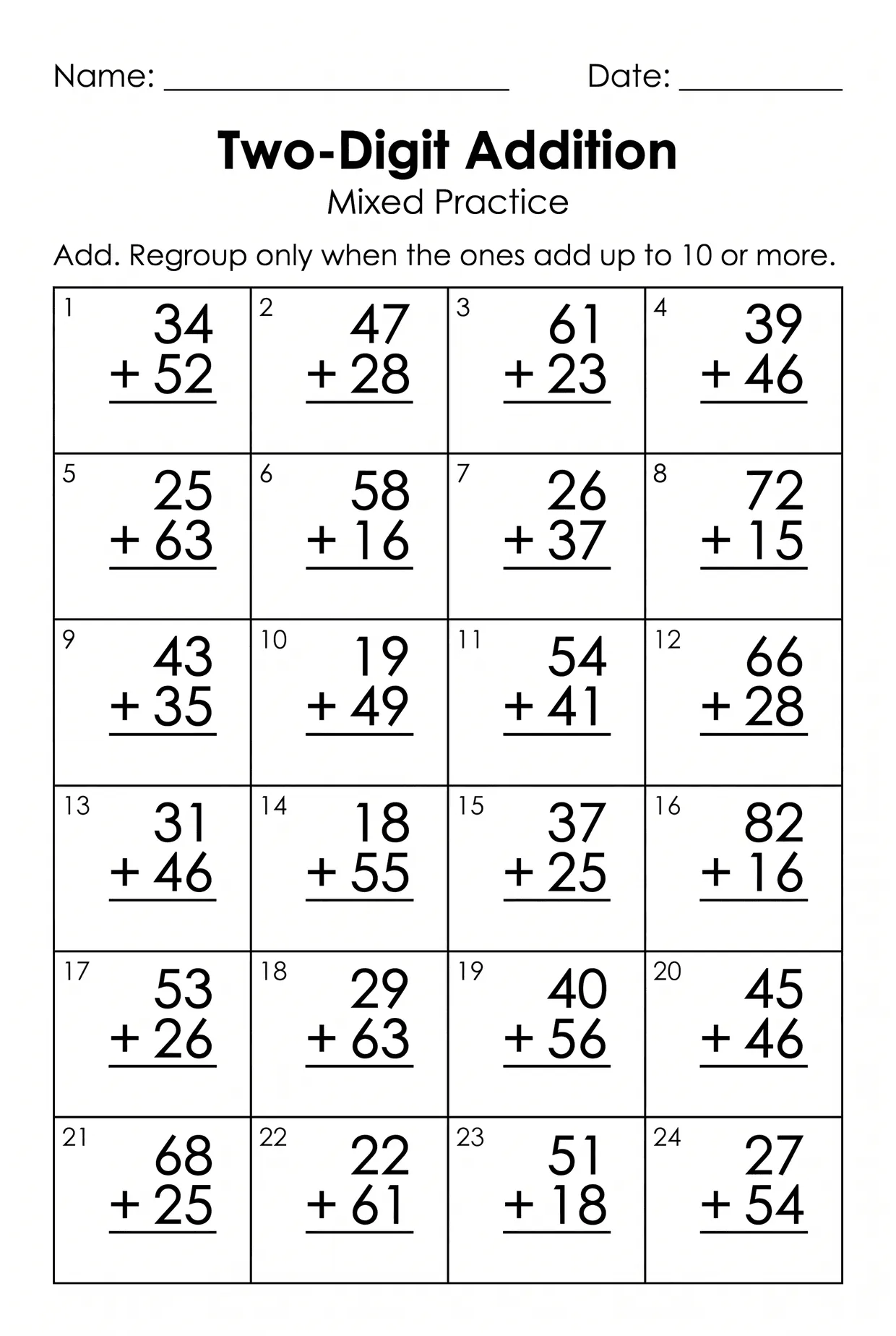
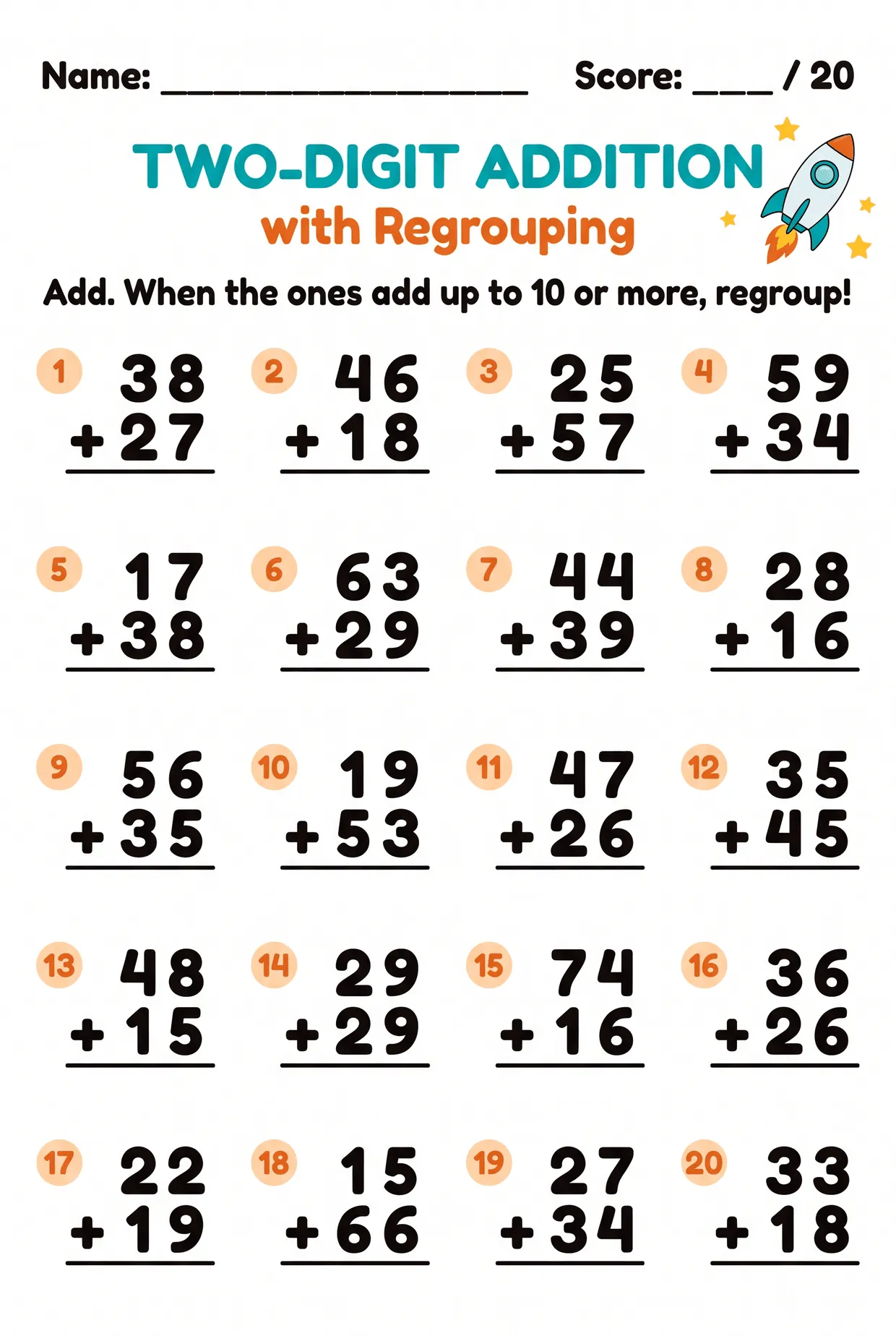
Look for two things: quick recall of facts within 20, and a solid sense that 10 ones make 1 ten. If a child still counts on fingers to add 7 and 6, regrouping turns into two hard jobs at once. The mixed two-digit page is a good test, since it shows whether a child can tell which problems need a regroup.
My child writes 13 in the ones place instead of carrying. What is going wrong?
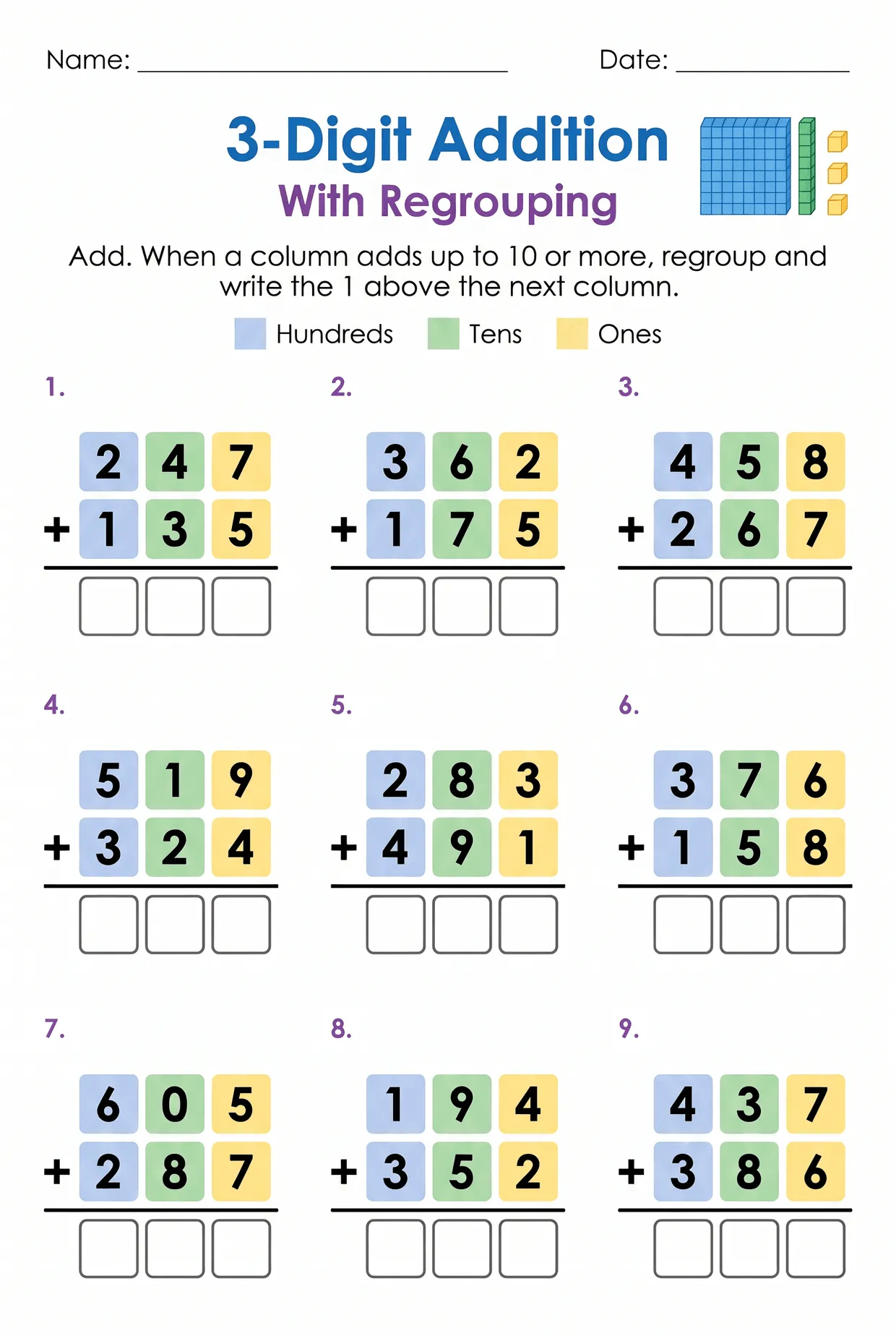
The child is seeing 13 as a single answer rather than 1 ten and 3 ones, which is the classic regrouping mistake. Have them say it out loud: 13 ones is 1 ten and 3 ones, so the 3 stays and the 1 moves up to the tens. Base ten blocks or bundled sticks make the trade visible if it still does not click.
Should second graders still practice addition facts within 20?
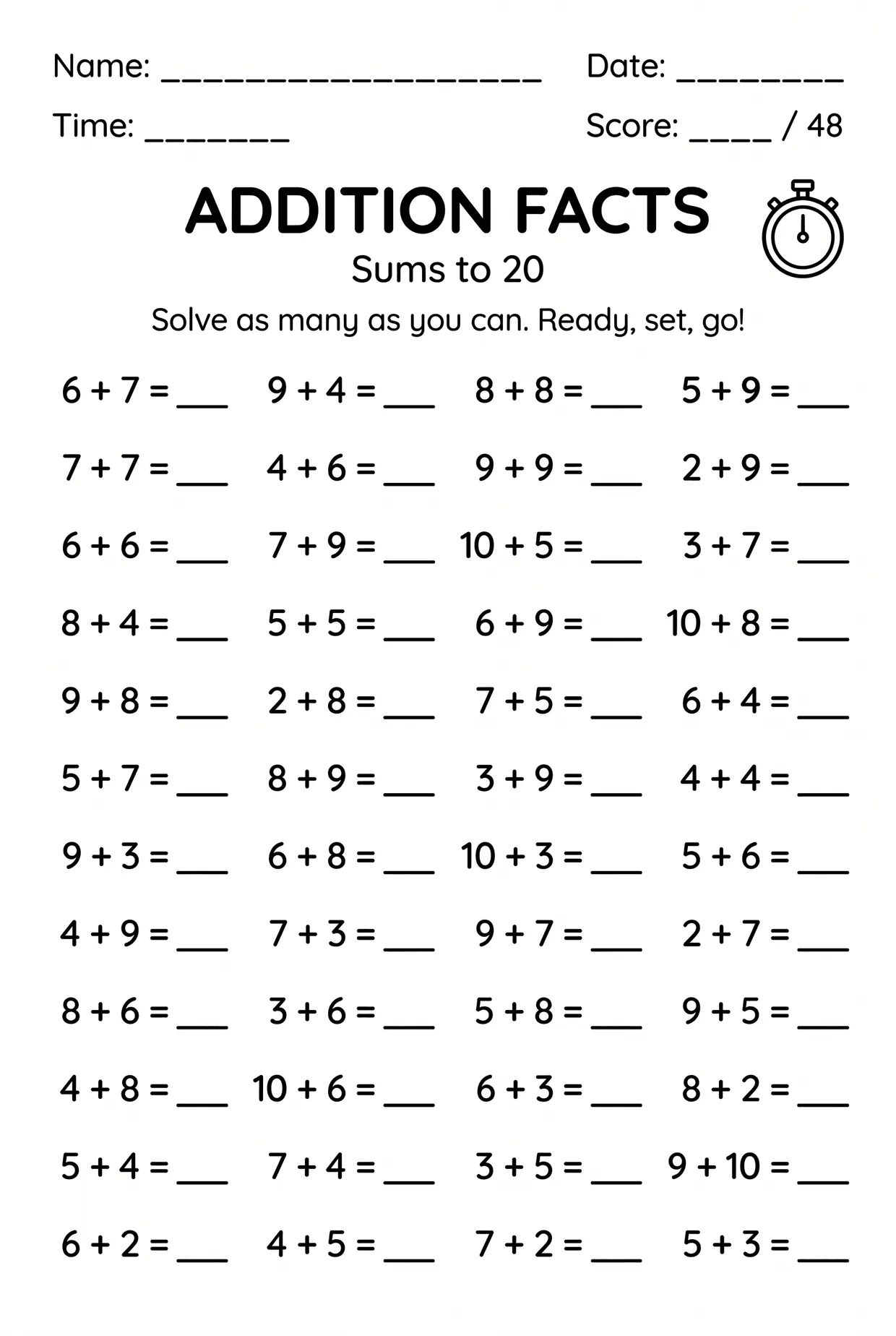
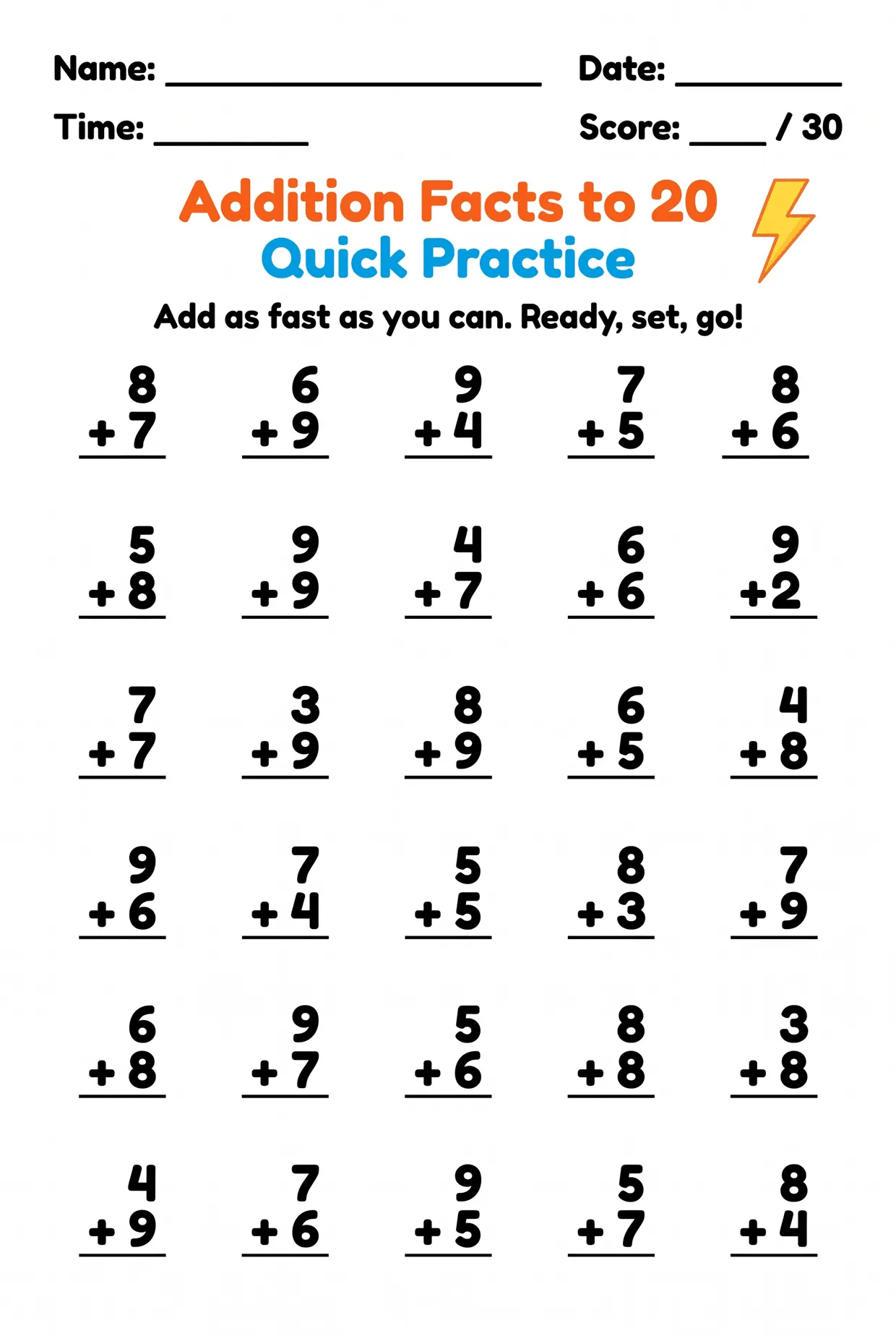
Yes, a few minutes a day. Two- and three-digit addition is built on those facts, and a child who has to stop and count 8 plus 7 in every column loses track of the bigger problem. The timed and quick practice pages make a good warm-up before longer regrouping work.
What makes three-digit addition harder than two-digit?
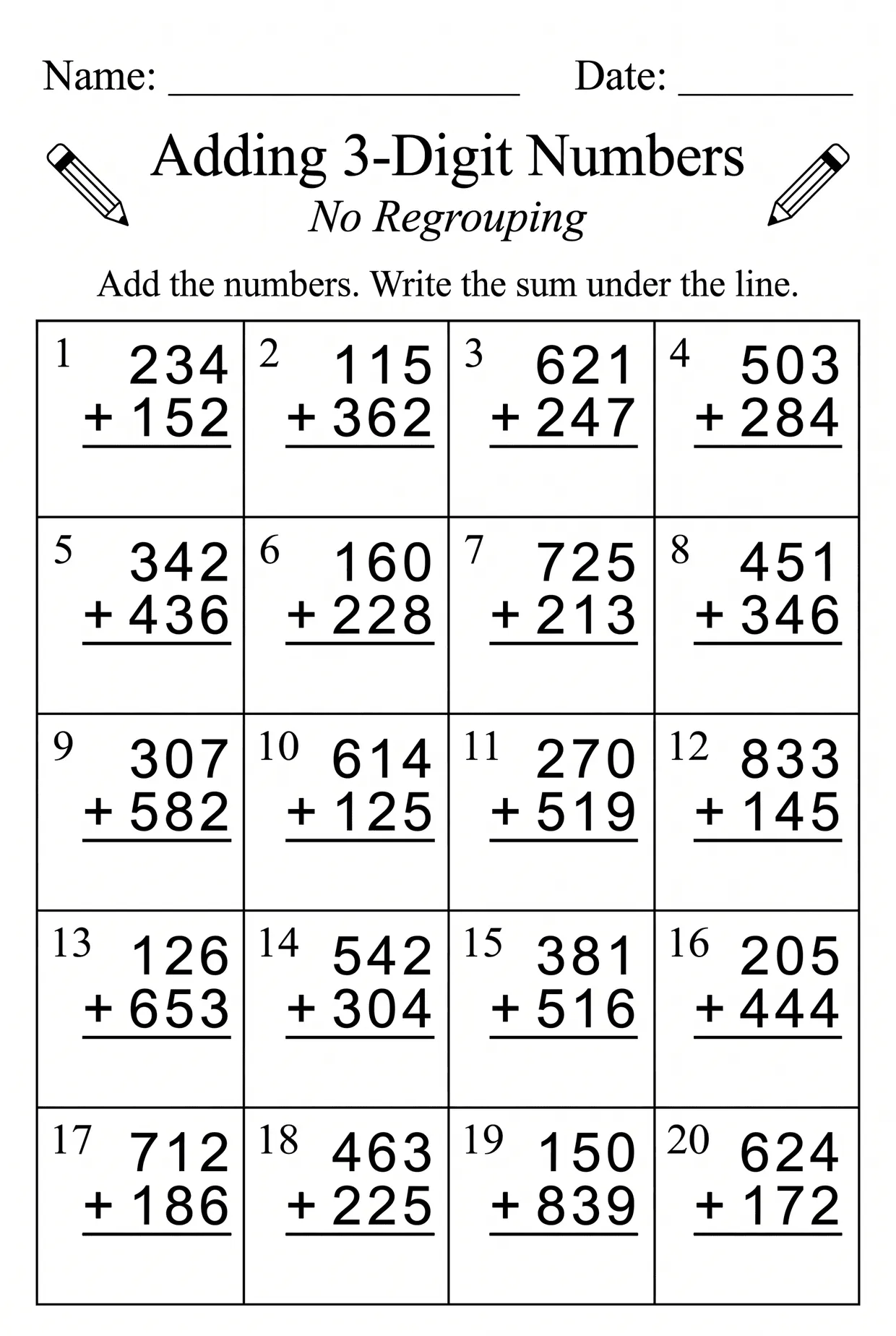
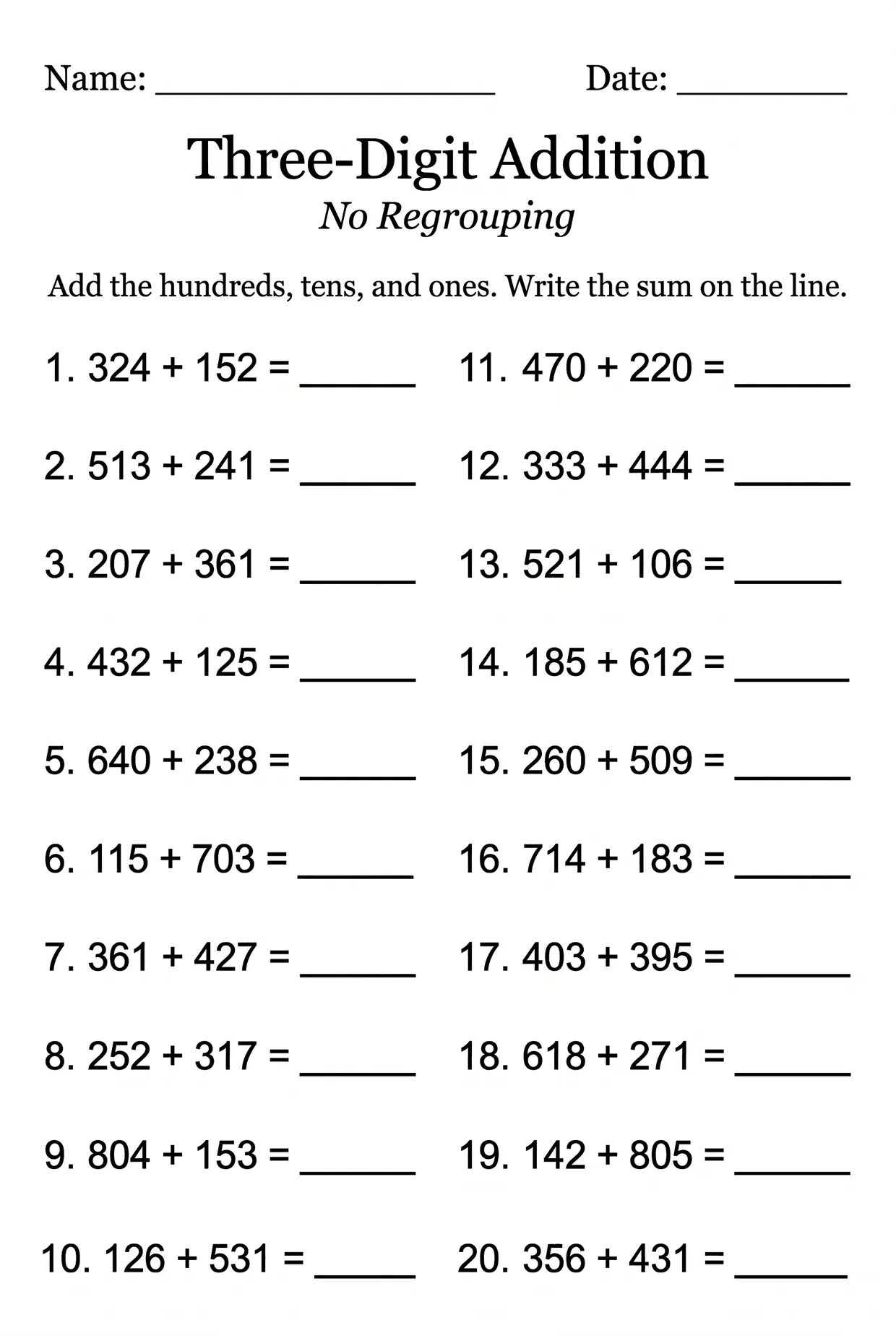
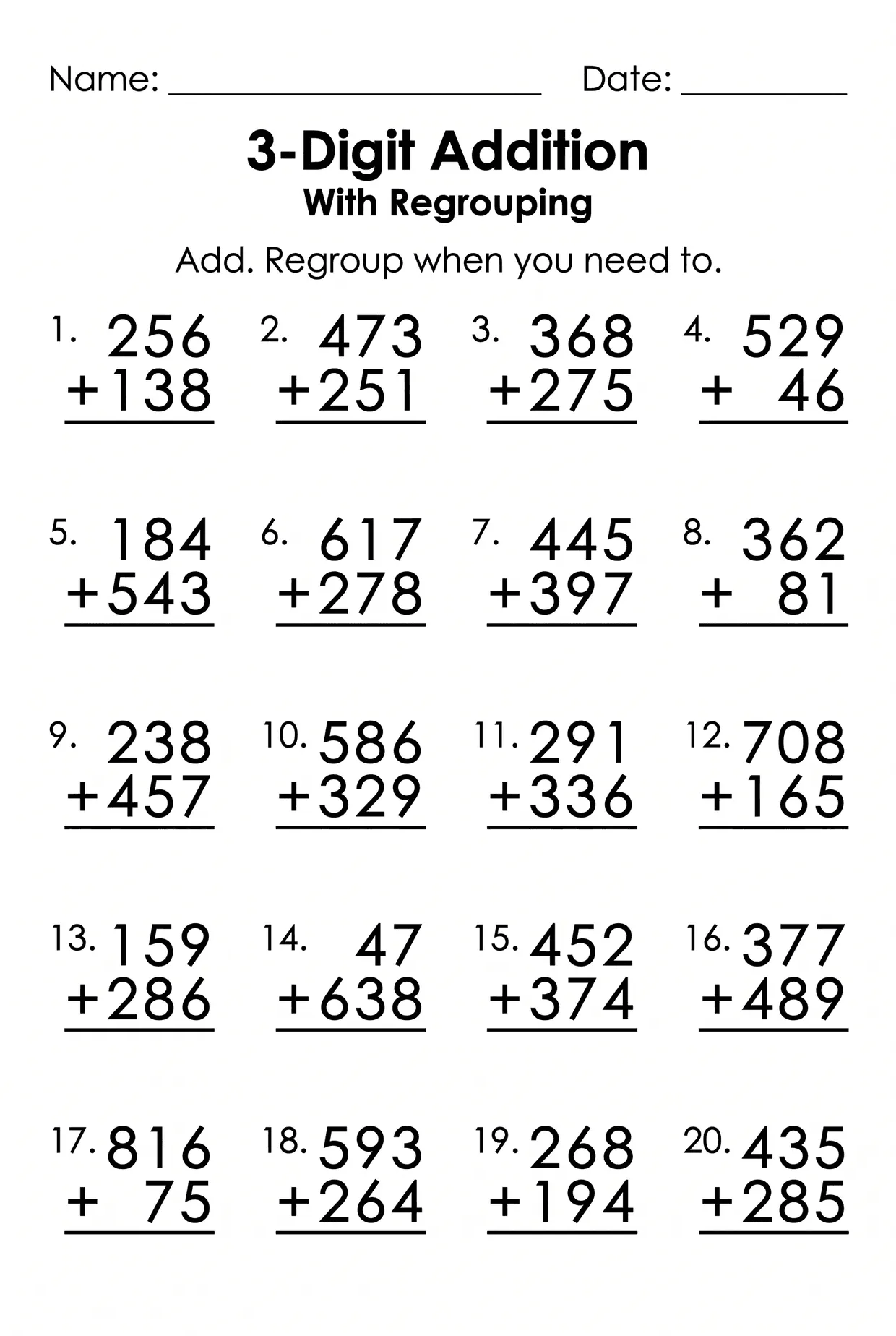
Mostly the extra column. A child now has to keep hundreds, tens and ones lined up, and a regroup can happen twice in one problem. Starting with the pages that need no regrouping lets the routine settle first, so that when carrying arrives it is the only new thing.