



Questions about 2nd grade multiplication worksheets
Do second graders learn multiplication?
Not formally. Common Core puts multiplication facts in third grade, but second graders build the groundwork by adding equal rows in arrays and skip counting by 2s, 5s and 10s. The pages here start there, with arrays, and offer fact pages for children who are ready to go further.
What is an array and why does it help?
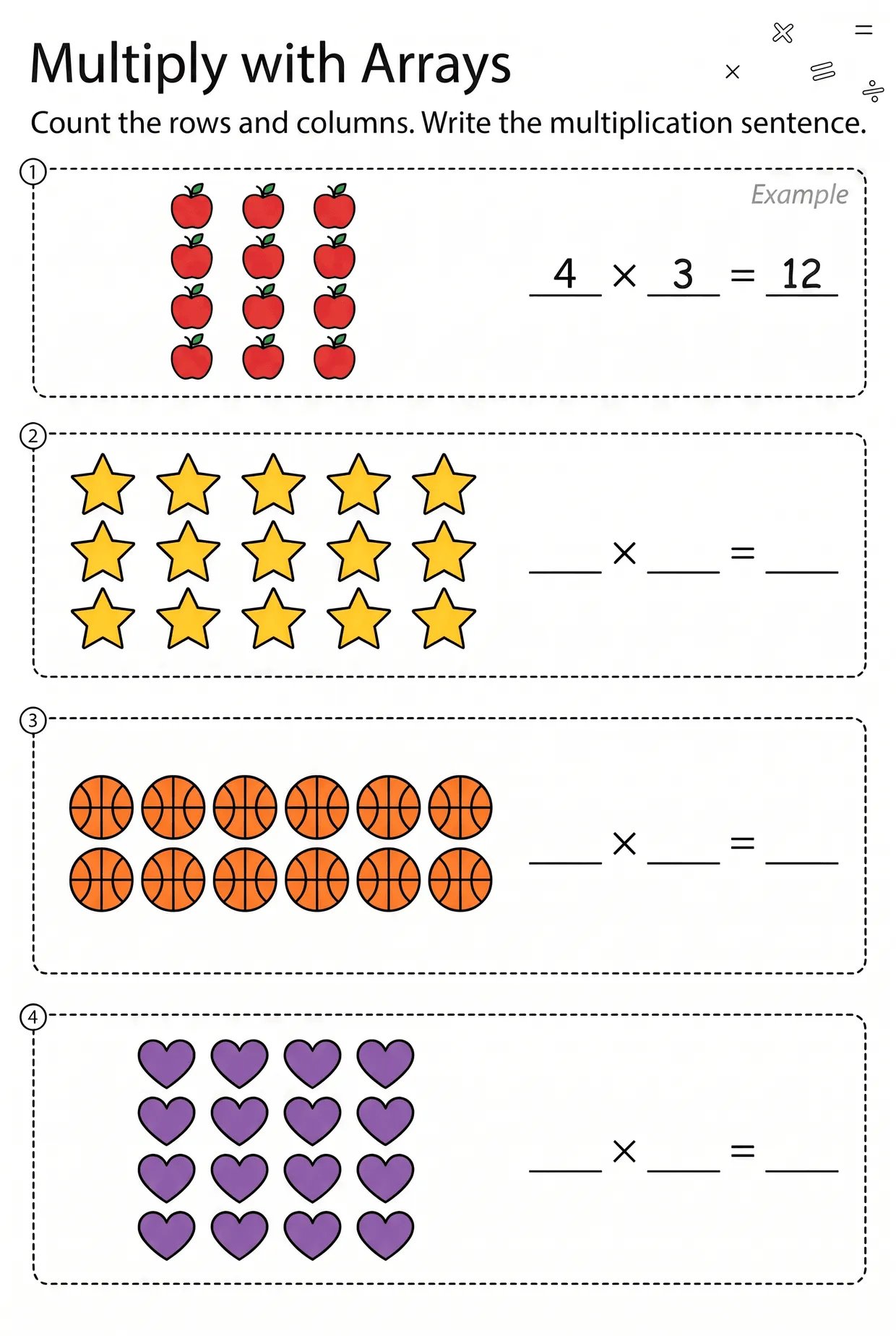
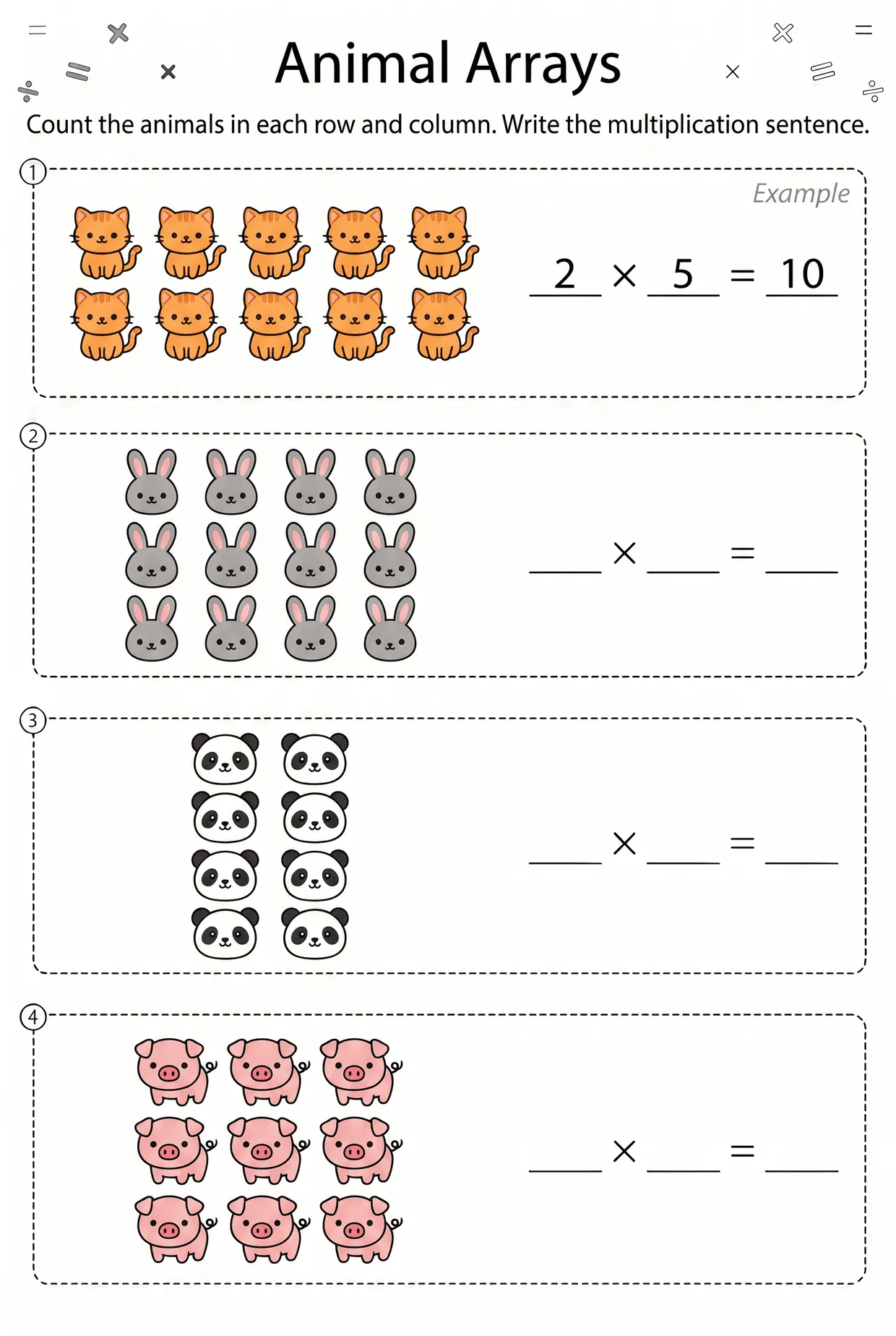
An array is a set of objects in equal rows and columns, like 3 rows of 4 apples. It shows a child that 3 times 4 means three groups of four, and that the total can be found without counting every apple. Turning the array sideways also shows that 4 times 3 gives the same answer.
Which times tables should a second grader try first?
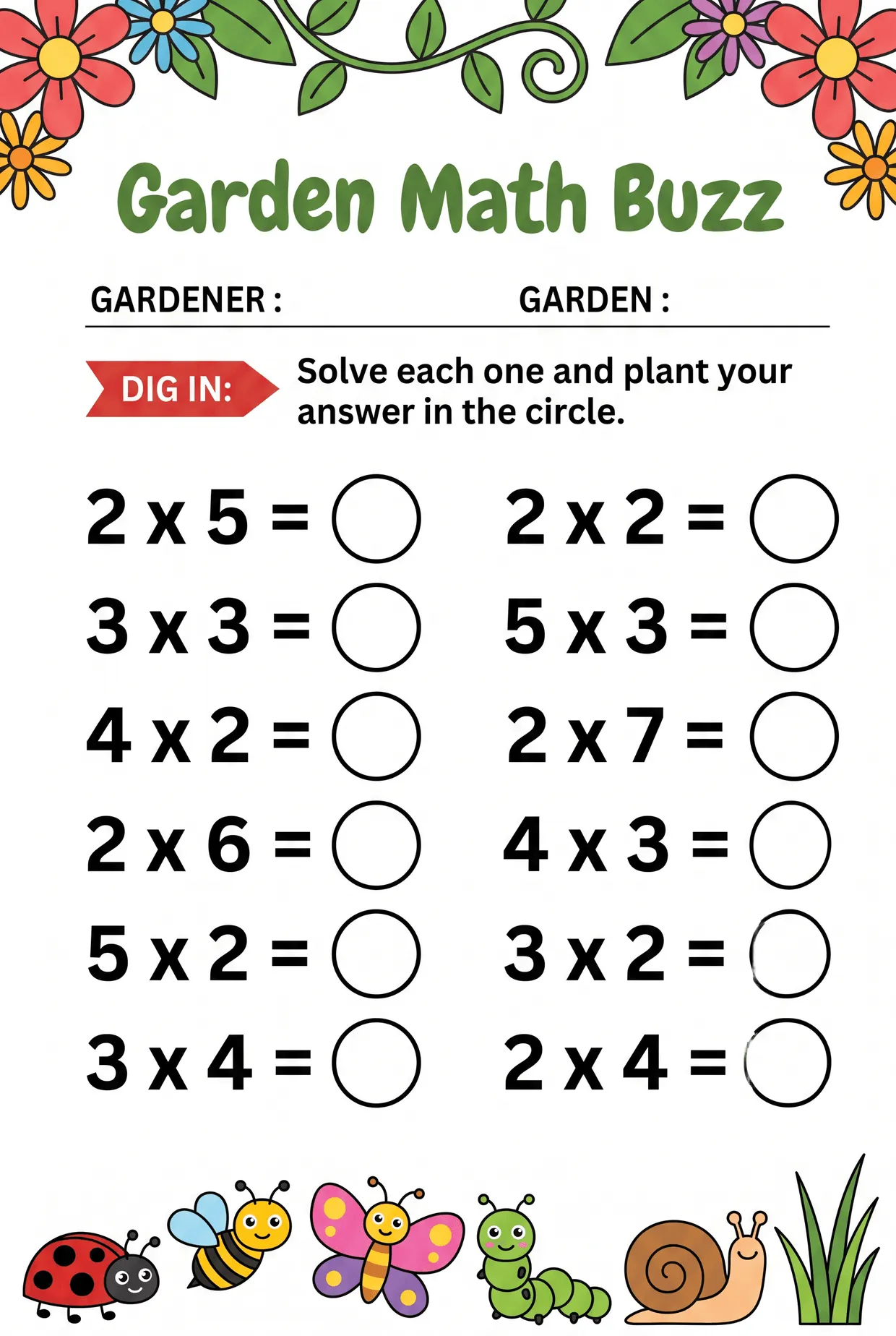
The 2s and 5s come easiest, since a child can already skip count by them, and the 1s are simple once the idea clicks. The 3s and 4s follow. Leave the 6s through 9s for the stretch pages until the smaller tables feel automatic.
My child adds the two numbers instead of multiplying. What helps?
It usually means the times sign has not yet taken on a meaning of its own. Go back to an array and read 3 times 4 as three rows of four, then say the repeated addition out loud: 4, 8, 12. A few minutes with real objects set out in rows usually sorts it out.
How much multiplication practice is right at this age?
One page a few times a week is plenty, ideally a themed sheet of a dozen facts a child can finish in one go. The goal in second grade is understanding equal groups and getting comfortable with the small tables, not speed. Save the timed page for children who are asking for a challenge.