Questions about 2nd grade grammar worksheets
What grammar should a second grader know by the end of the year?
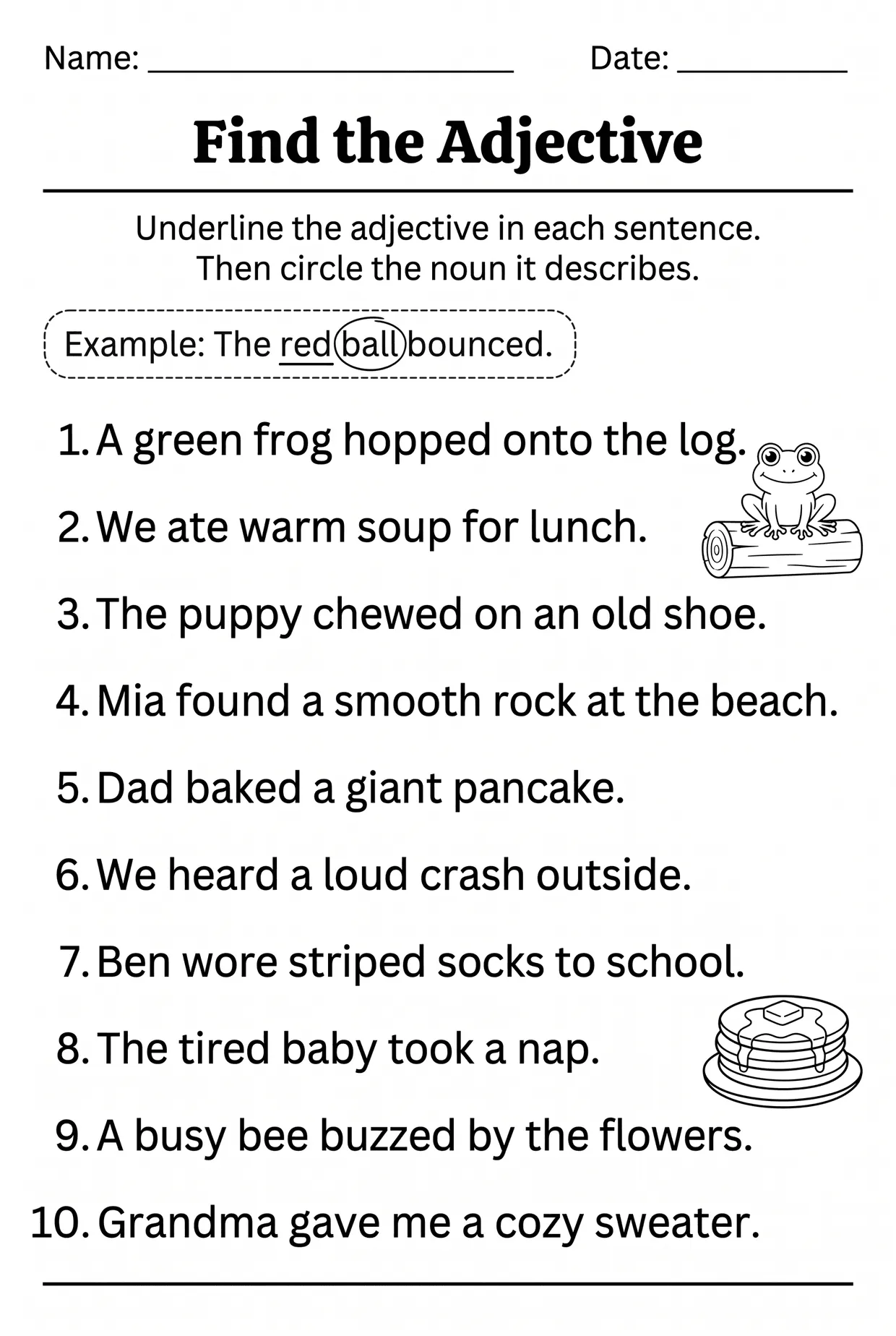
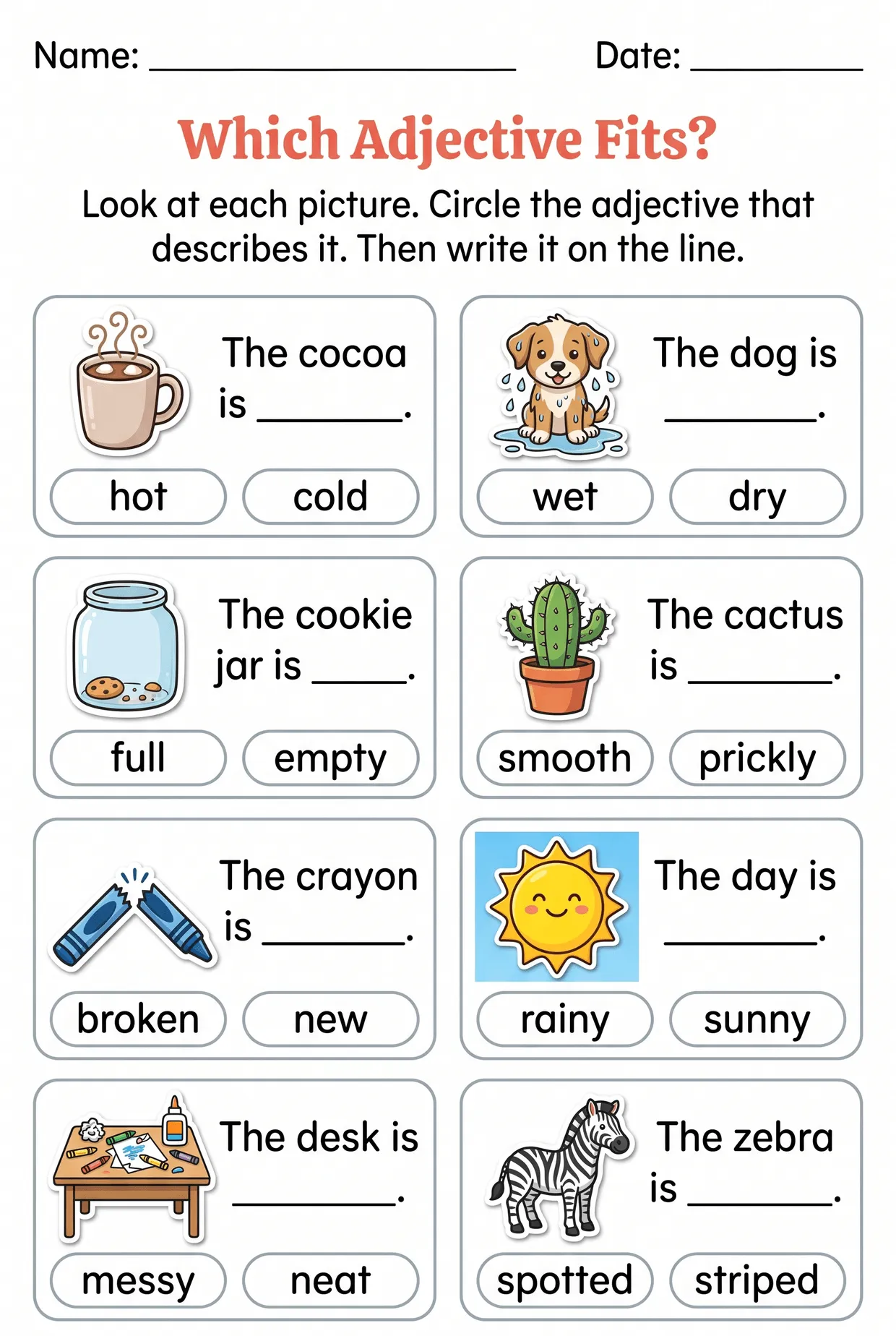
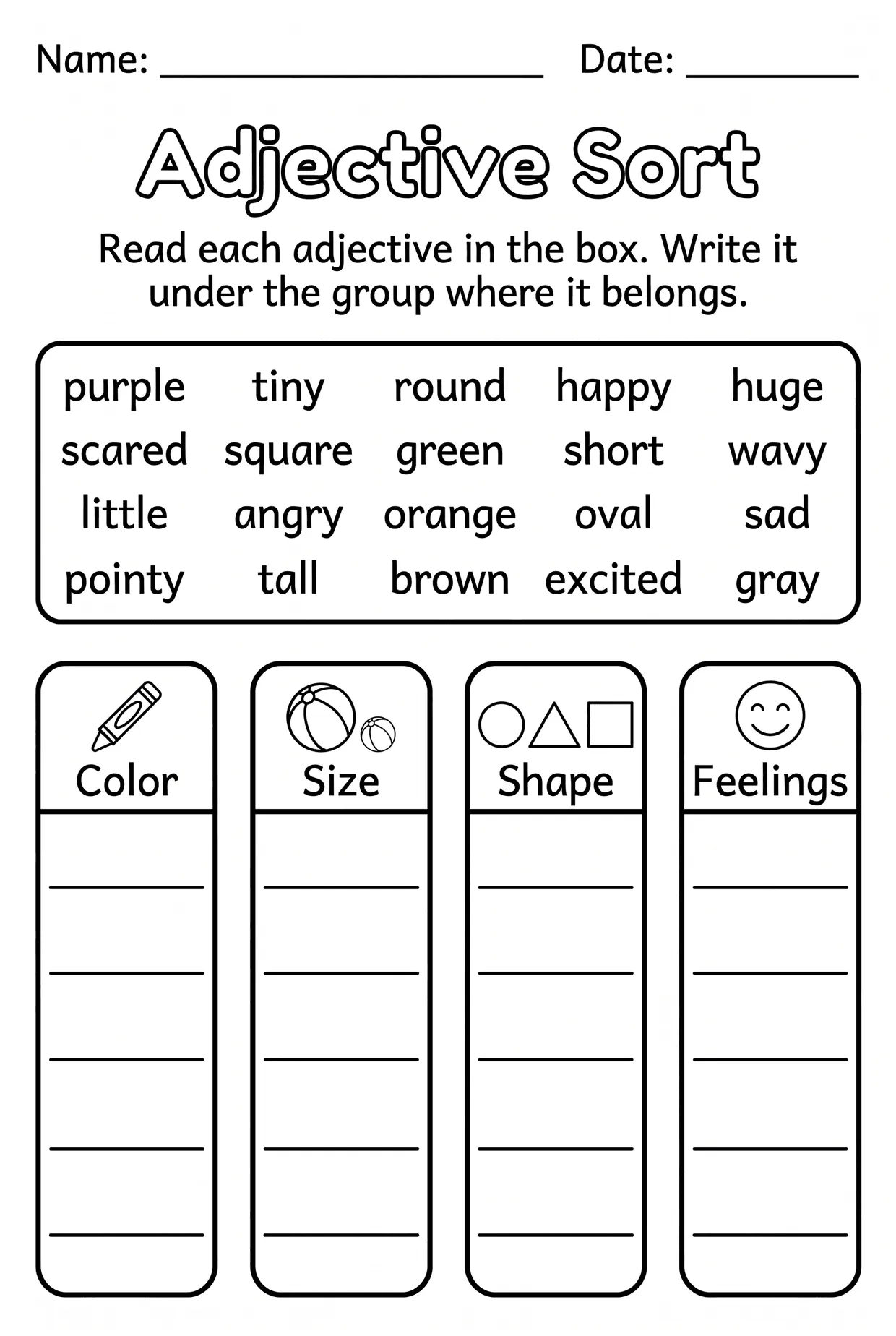
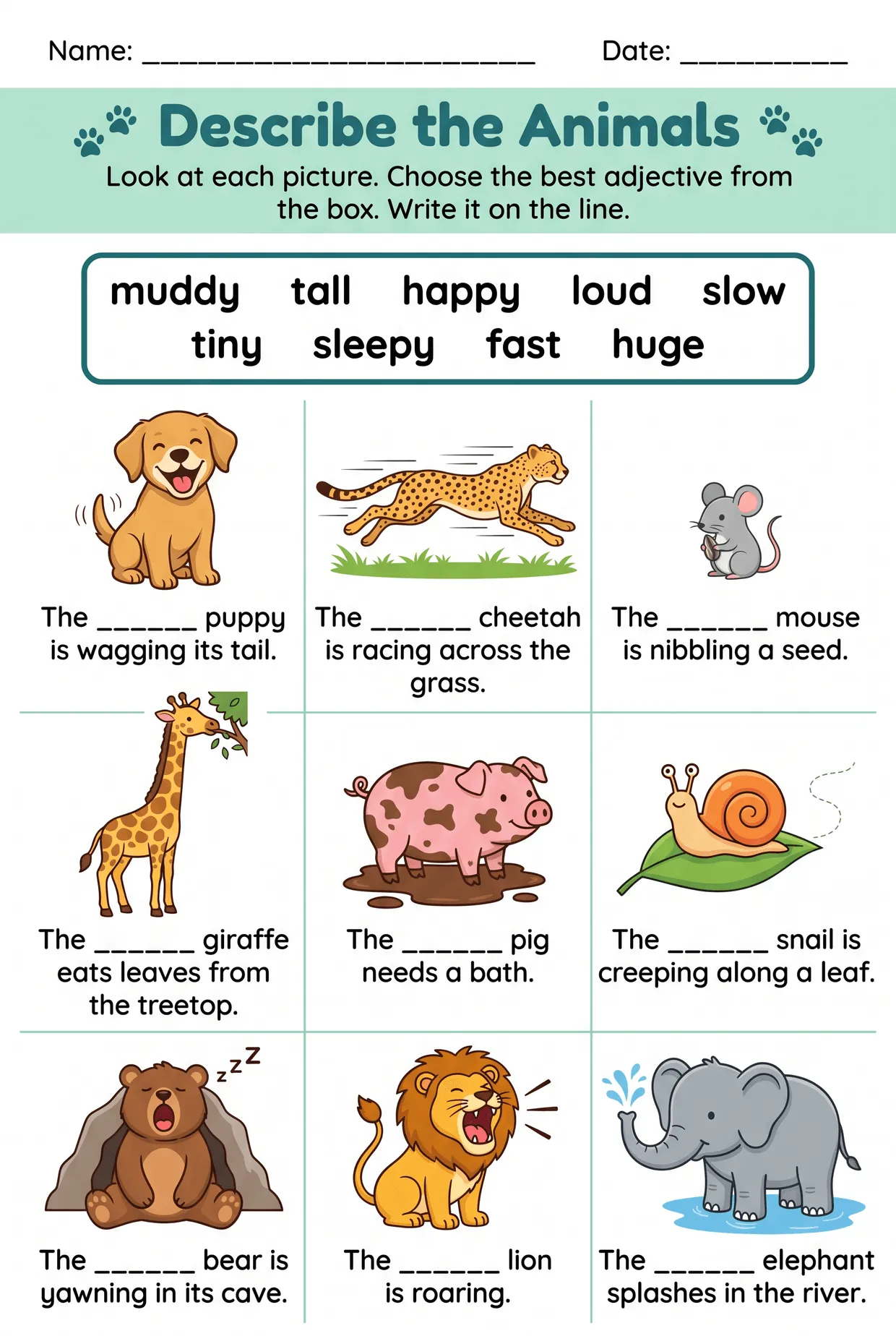
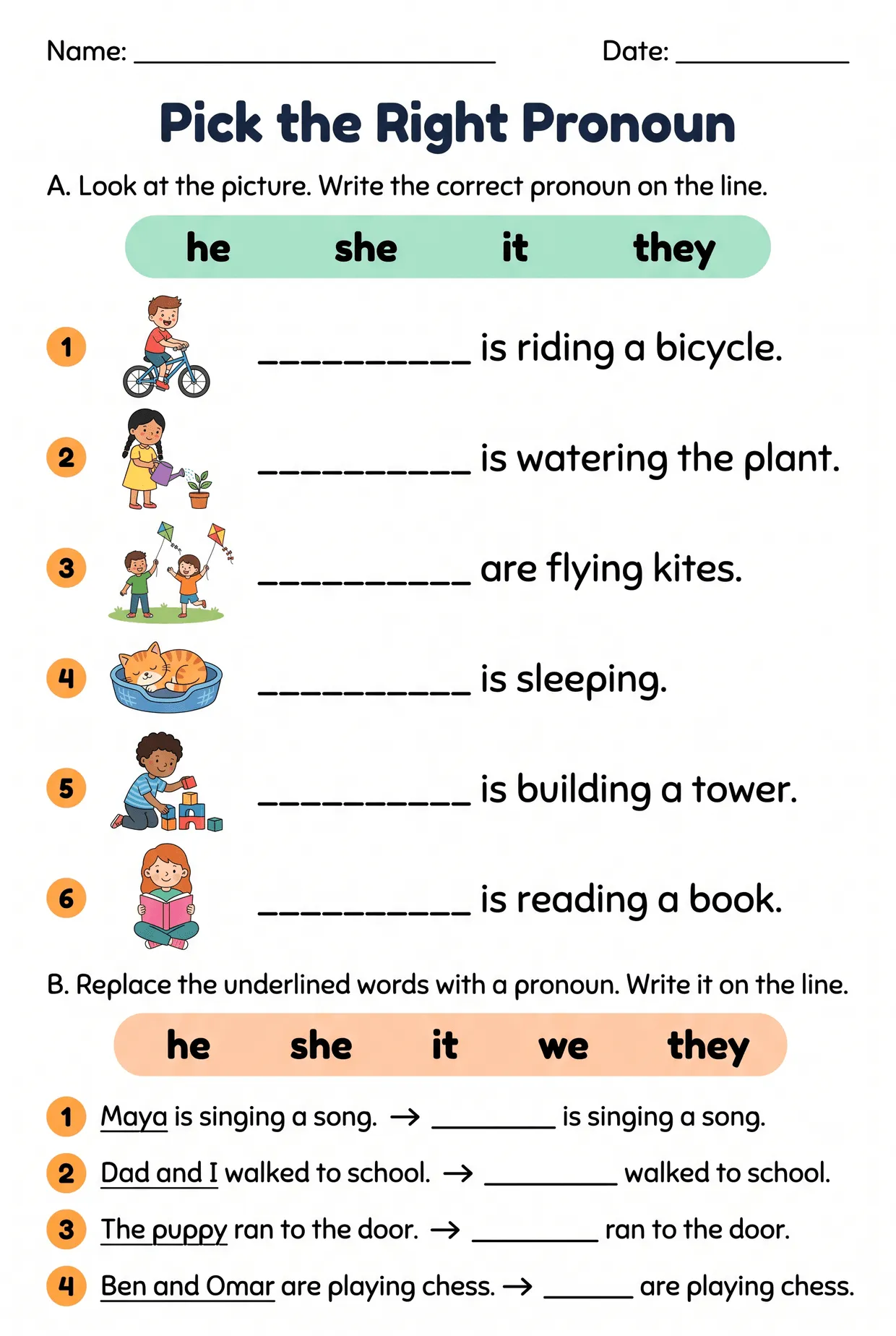
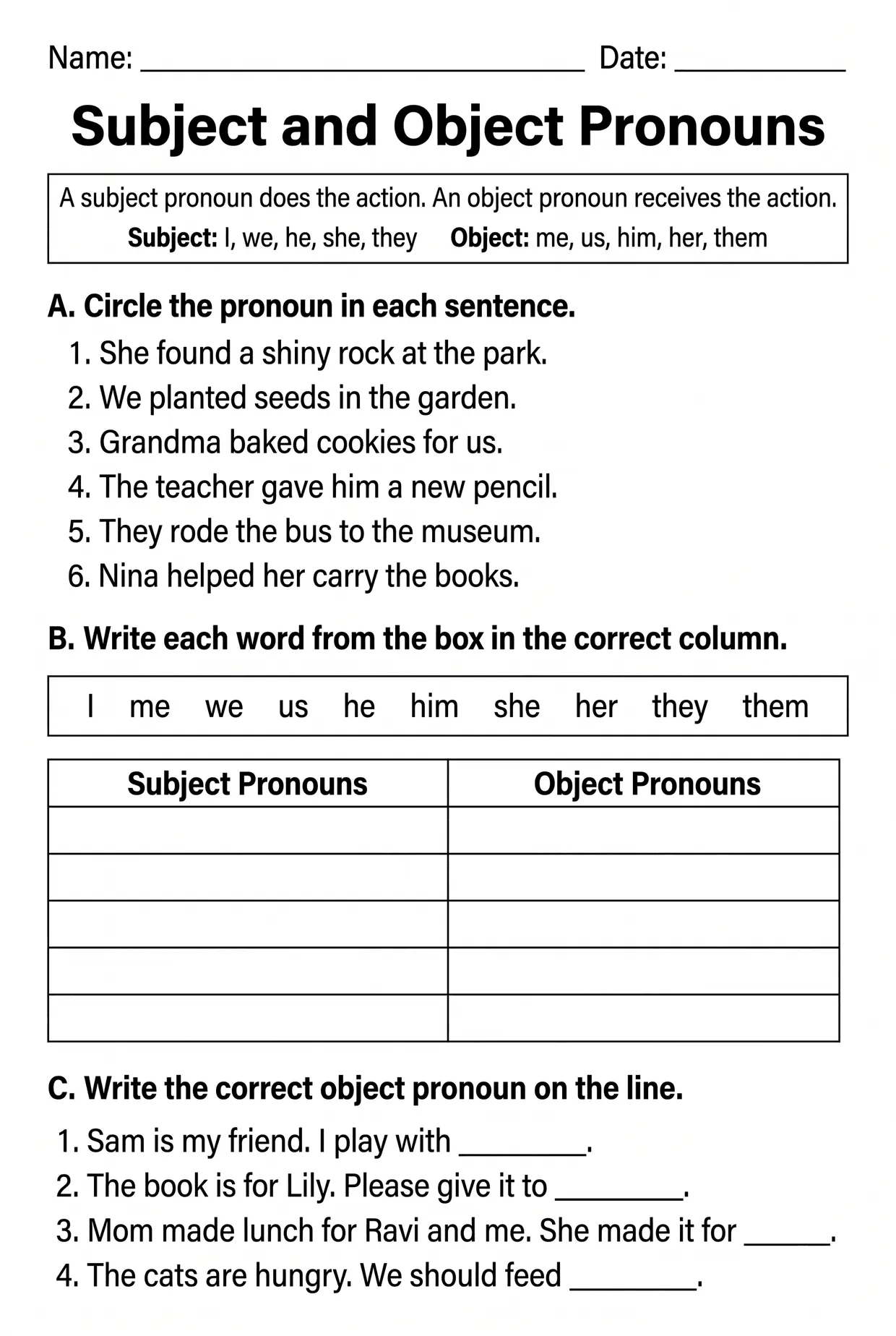
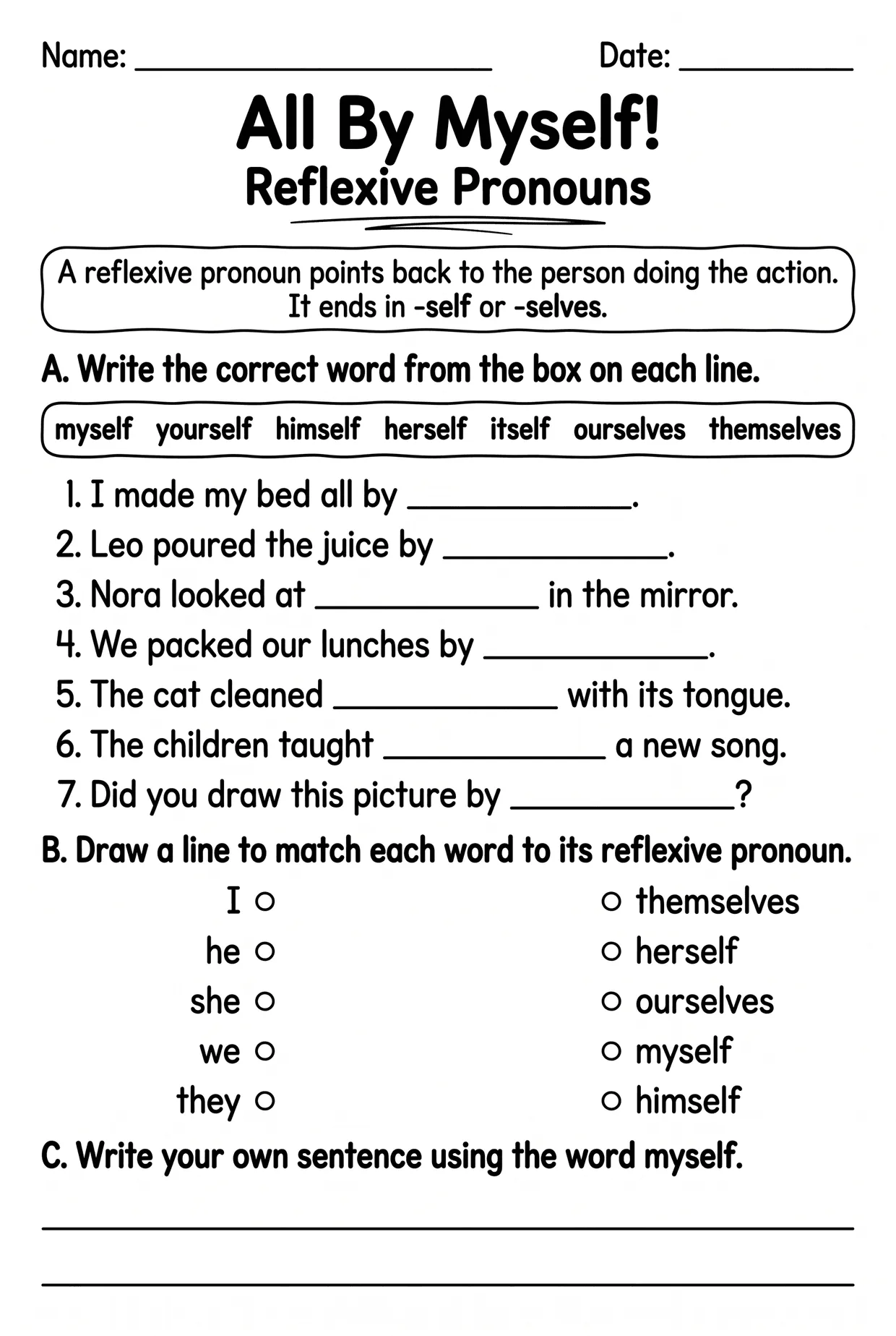
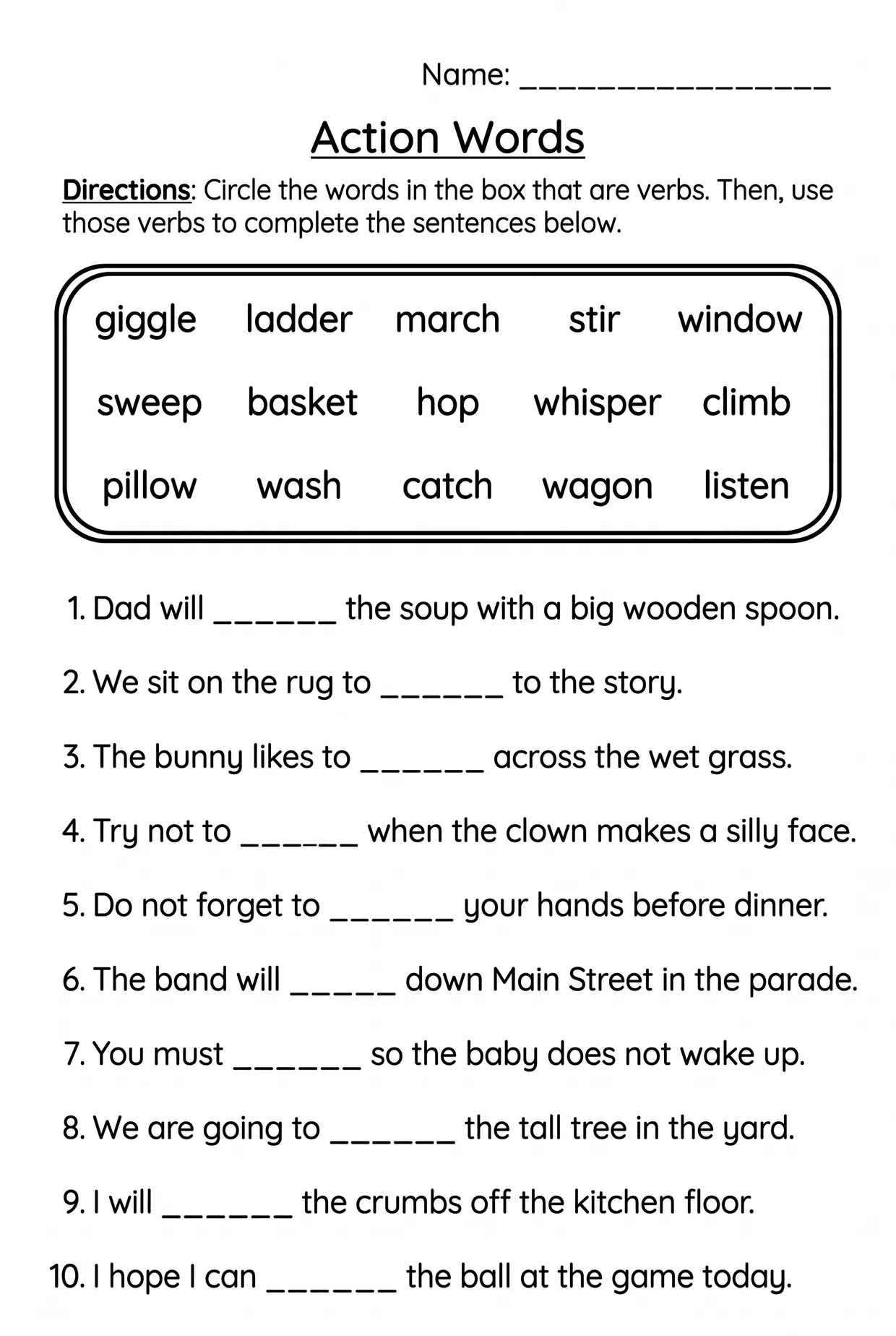
Most second graders can find the verb in a sentence, put it into the past, present or future, make it agree with its subject, and choose a fitting adjective. Reflexive pronouns such as ourselves and themselves are the one pronoun type the grade 2 standard names outright (L.2.1c). The sheets here are organized by those same parts of speech.
My child thinks a verb has to be something a person does. How do I fix that?
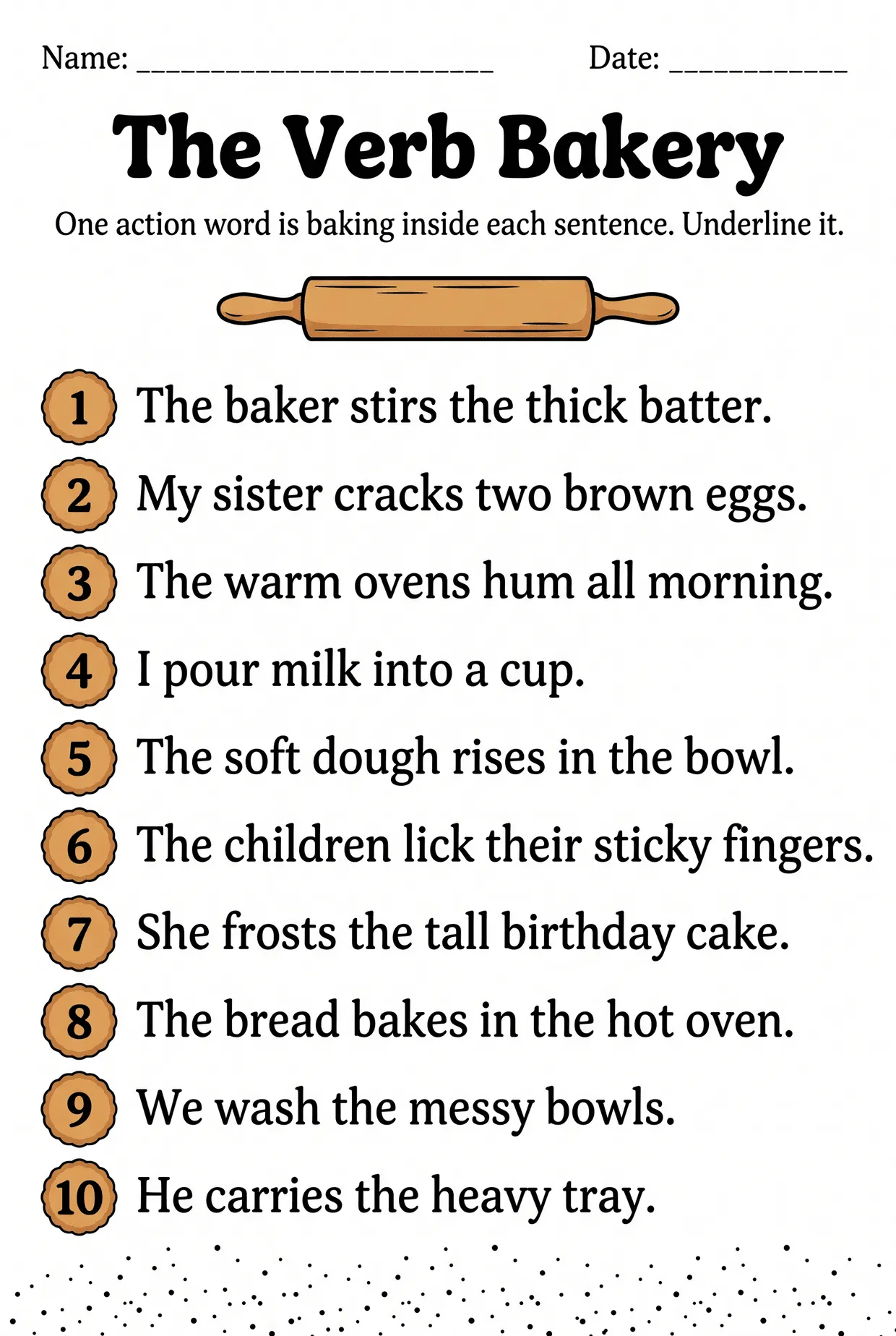
Look for sentences where a thing acts on its own, like the oven hums or the dough rises, and ask what that thing is doing. The bakery page includes both on purpose, and they are the lines second graders most often skip. When a child accepts that a lamp can glow, verbs stop being only about people.
Why does subject verb agreement trip up second graders?
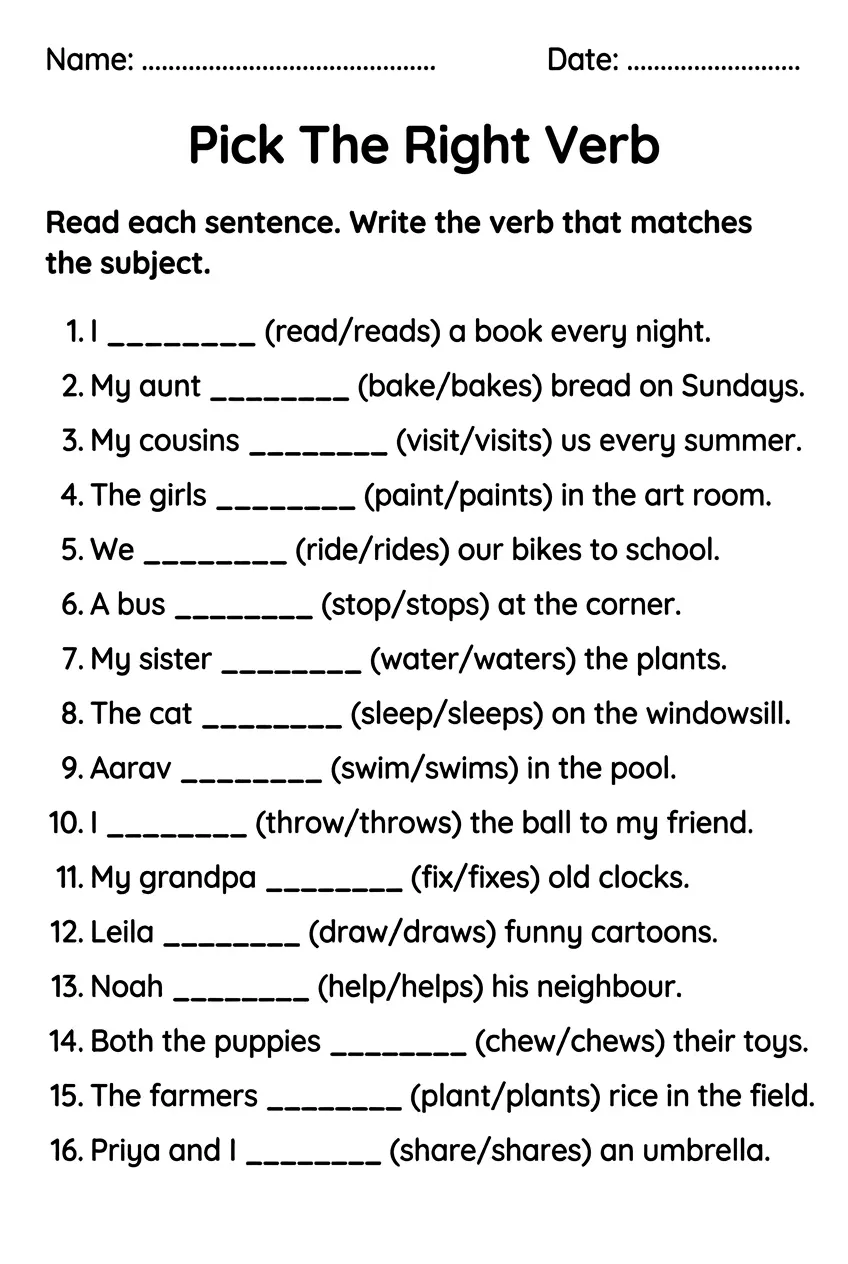
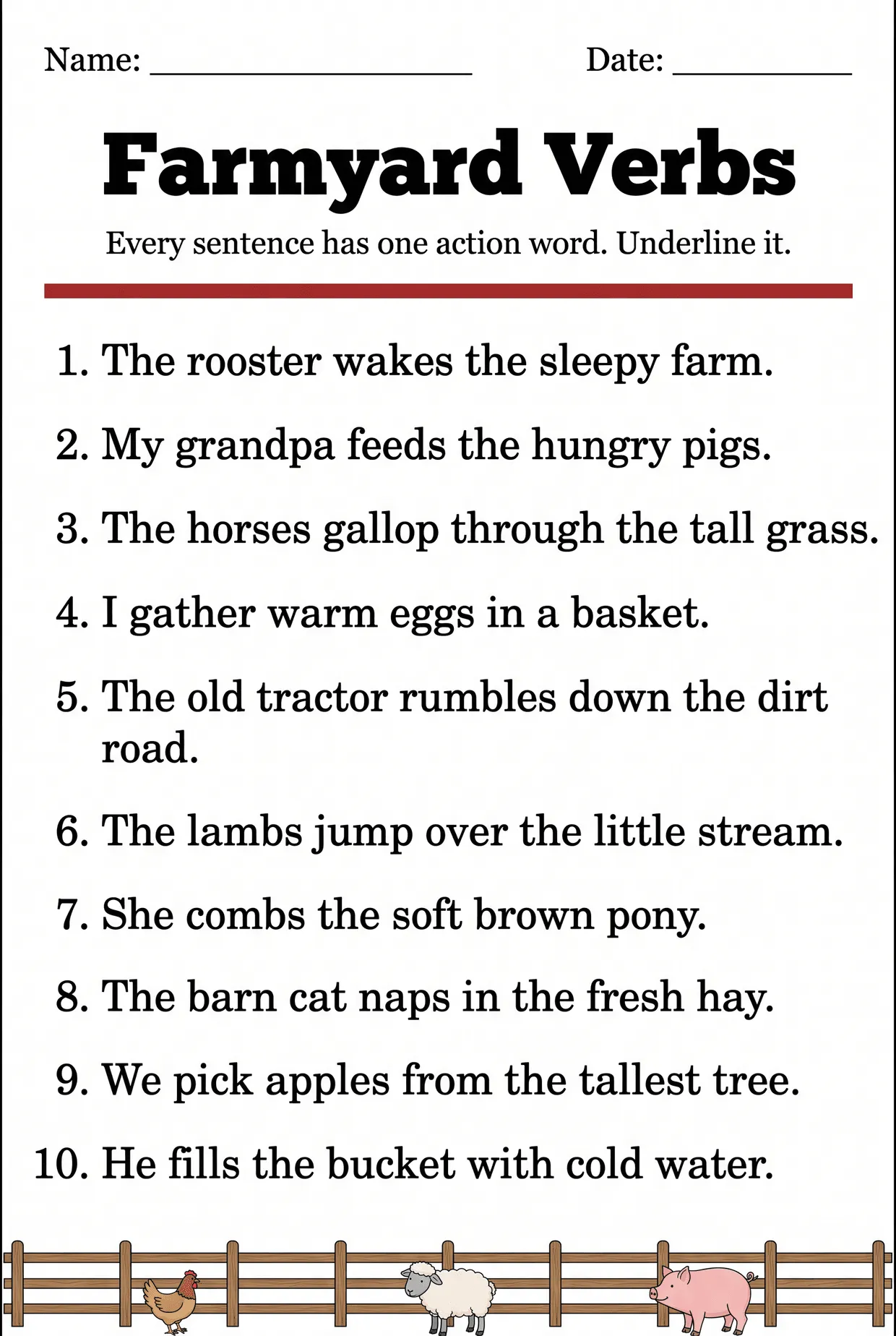
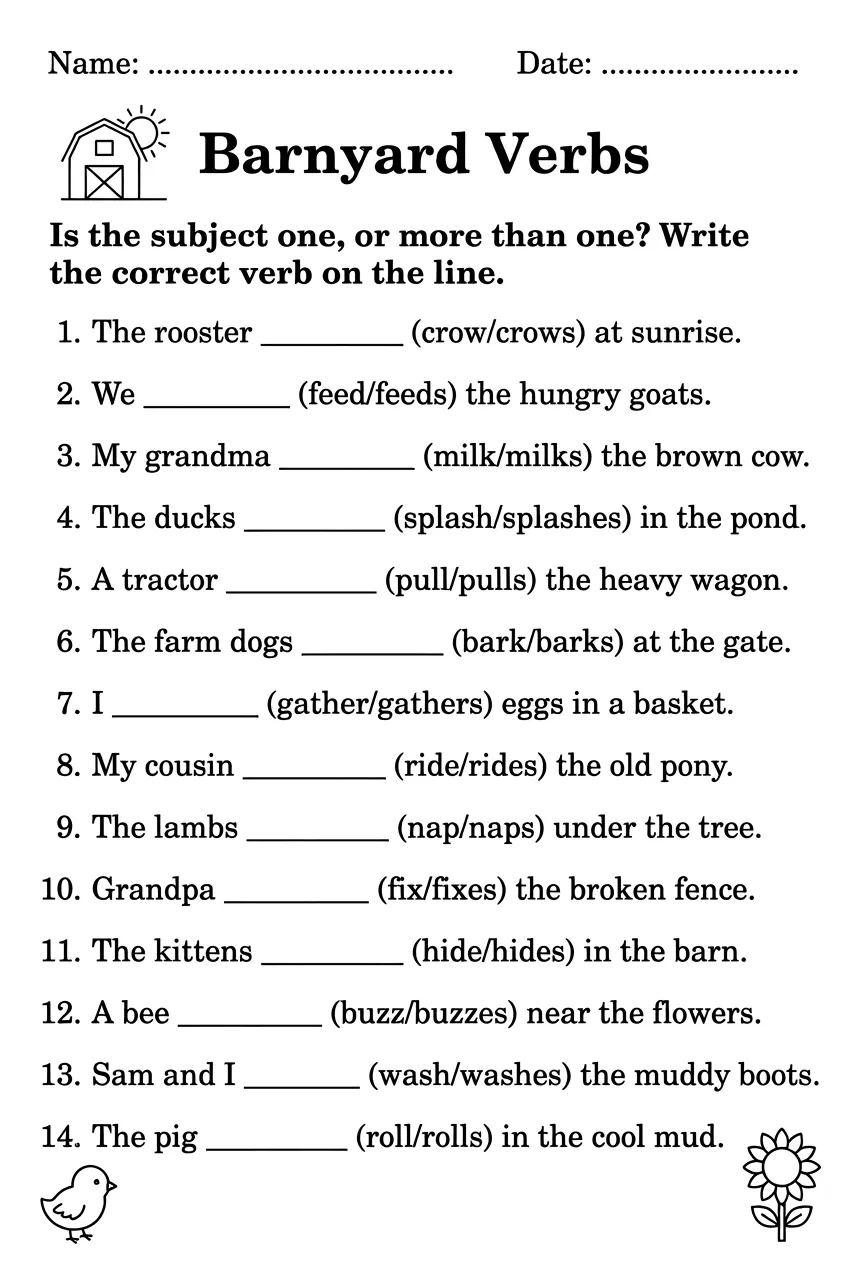
Many children learn that one thing gets an s and stop there, which falls apart with pronouns like you and we, as in you run, we run, she runs. Ask whether the subject is one or more than one, then read the sentence aloud to hear which verb sounds right. The barnyard page is the gentler one, since every subject is an animal or person a child can count.
Should we use the cut and paste tense sort or the write-in one?
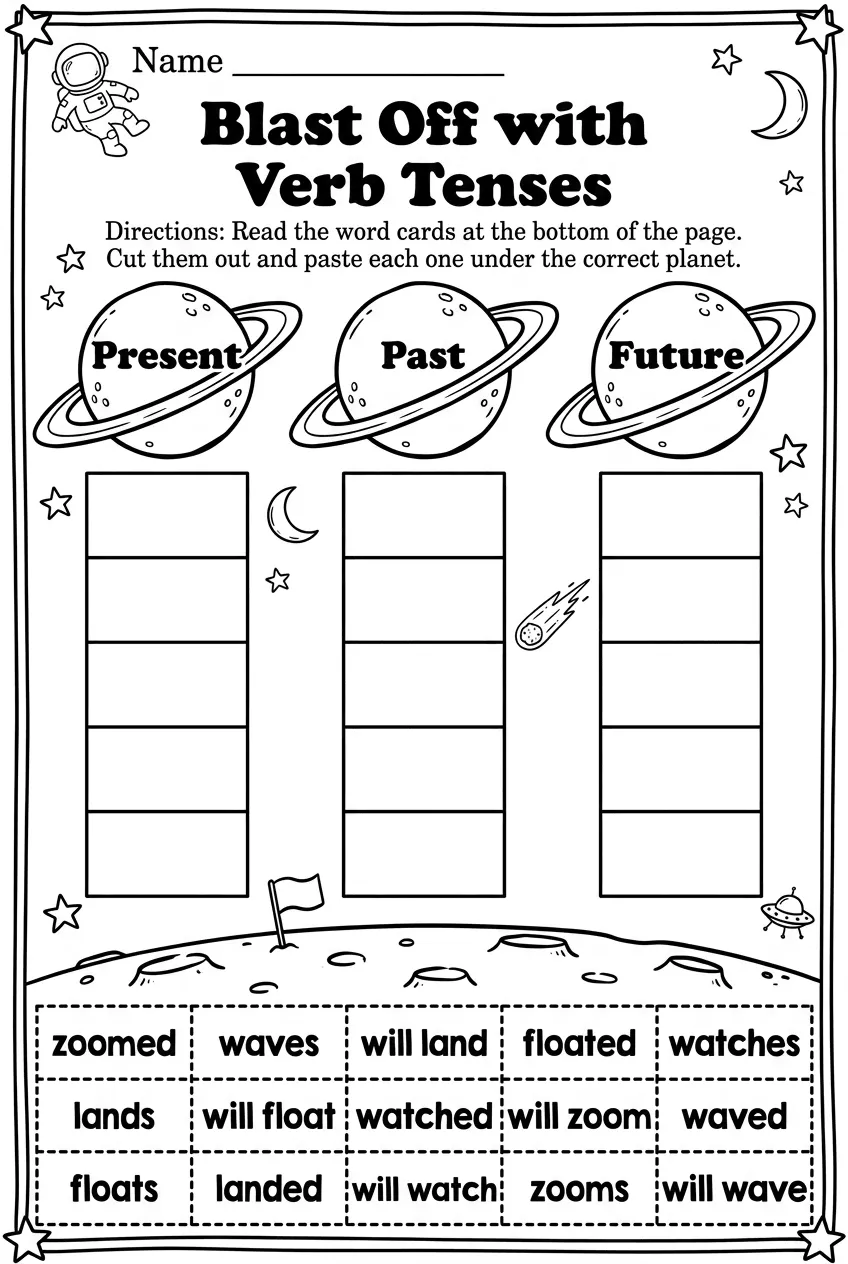
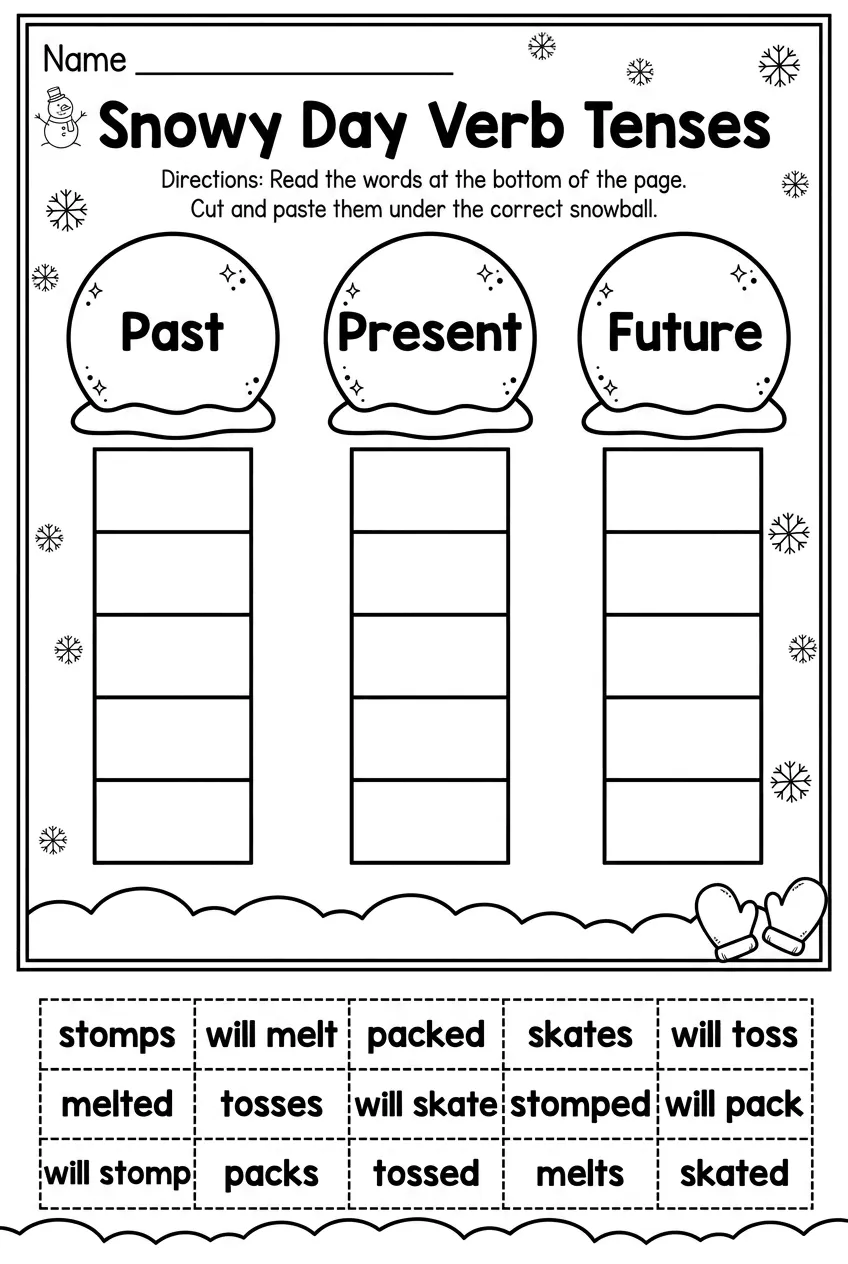
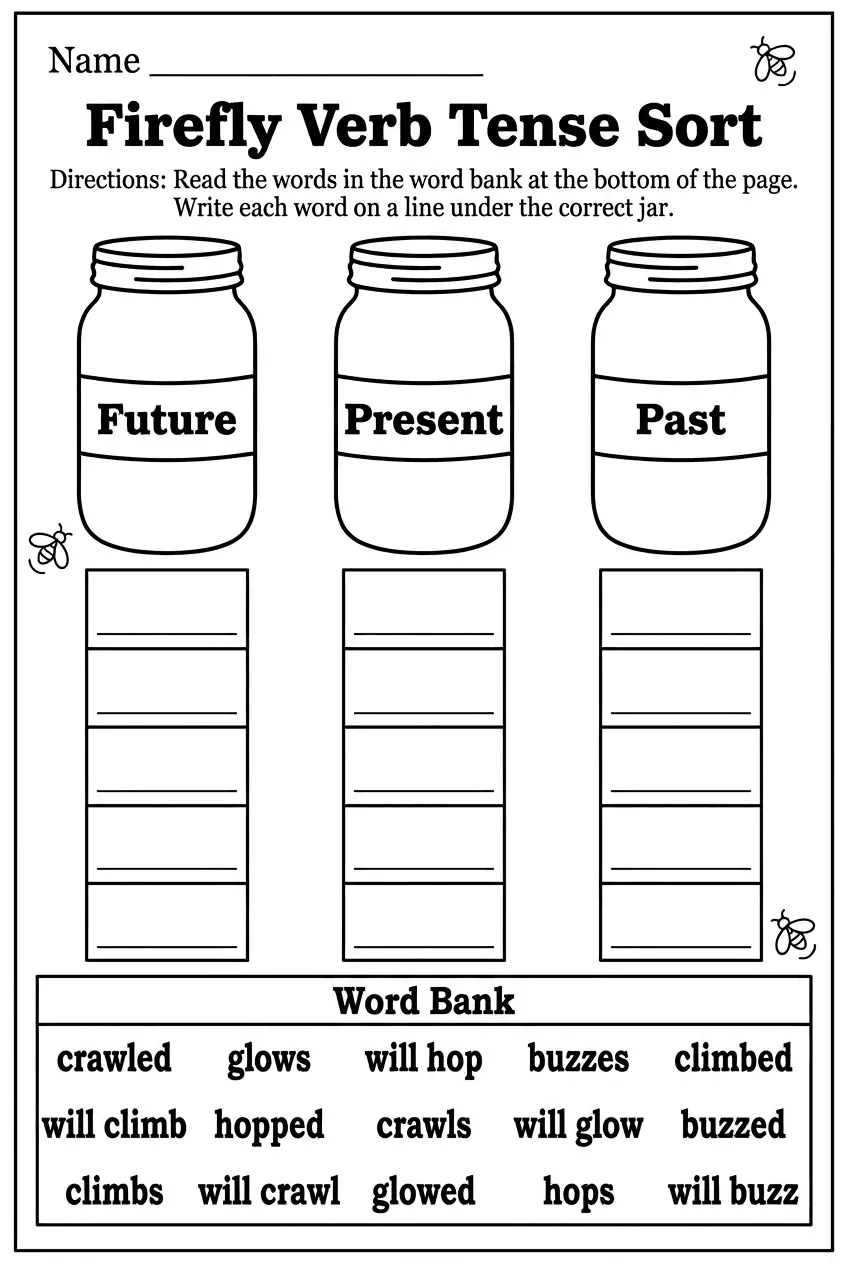
The cut and paste sorts suit a child still learning what past, present and future mean, because the cards can be moved until they look right. The firefly sort asks for more, since copying each word out shows spelling changes like hop becoming hopped. Many classes do the space or snowy day sort first and keep the firefly page for review.
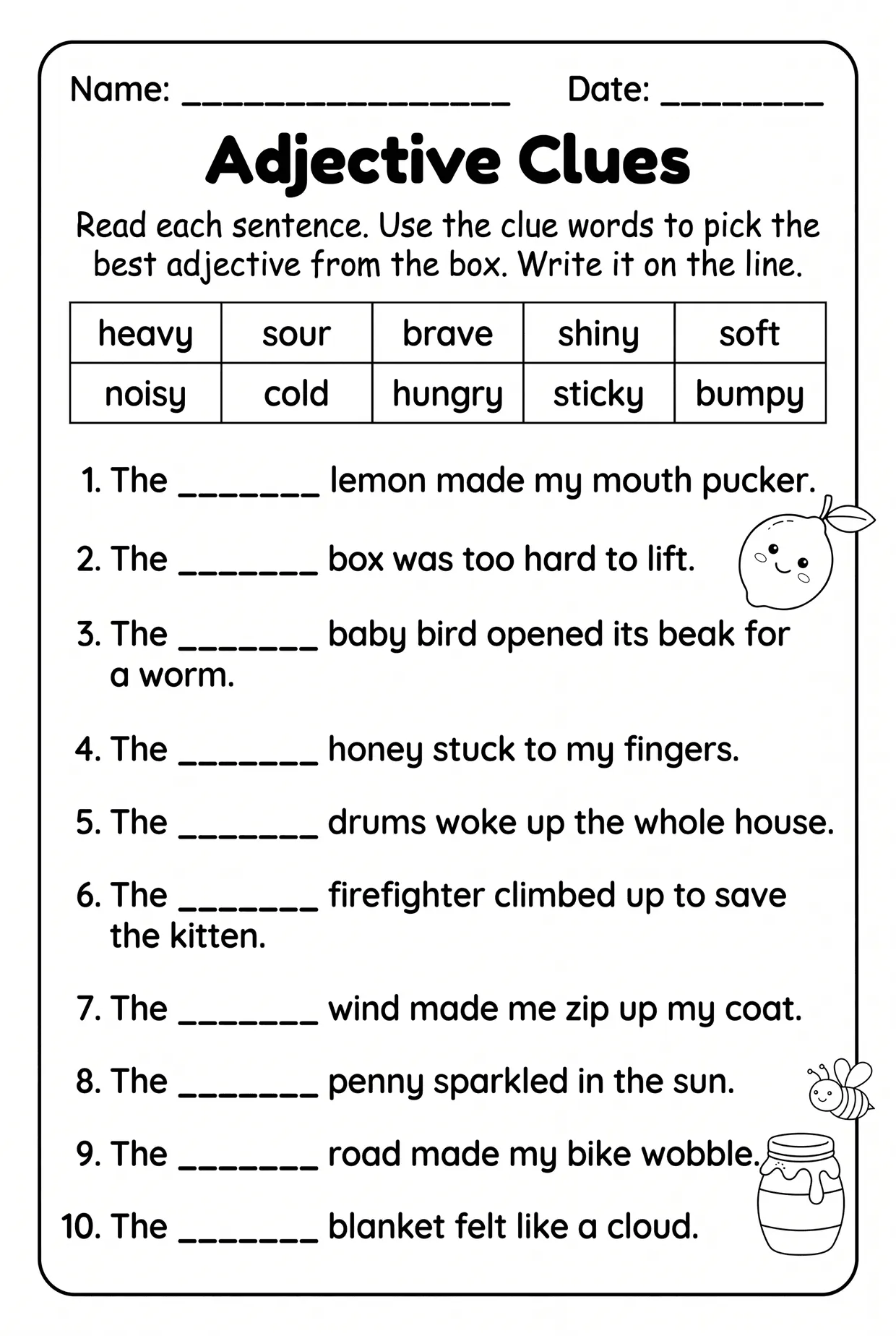
How do context clues help with adjectives?
A context clue is the rest of the sentence pointing toward the right word. On the context clues page the noun alone never settles the answer, so a child reads on to see that a lemon that makes your mouth pucker must be sour. It is early practice for working out unfamiliar words while reading, a skill that keeps growing through third grade.