Questions about 2nd grade money worksheets
What money skills does a second grader need?
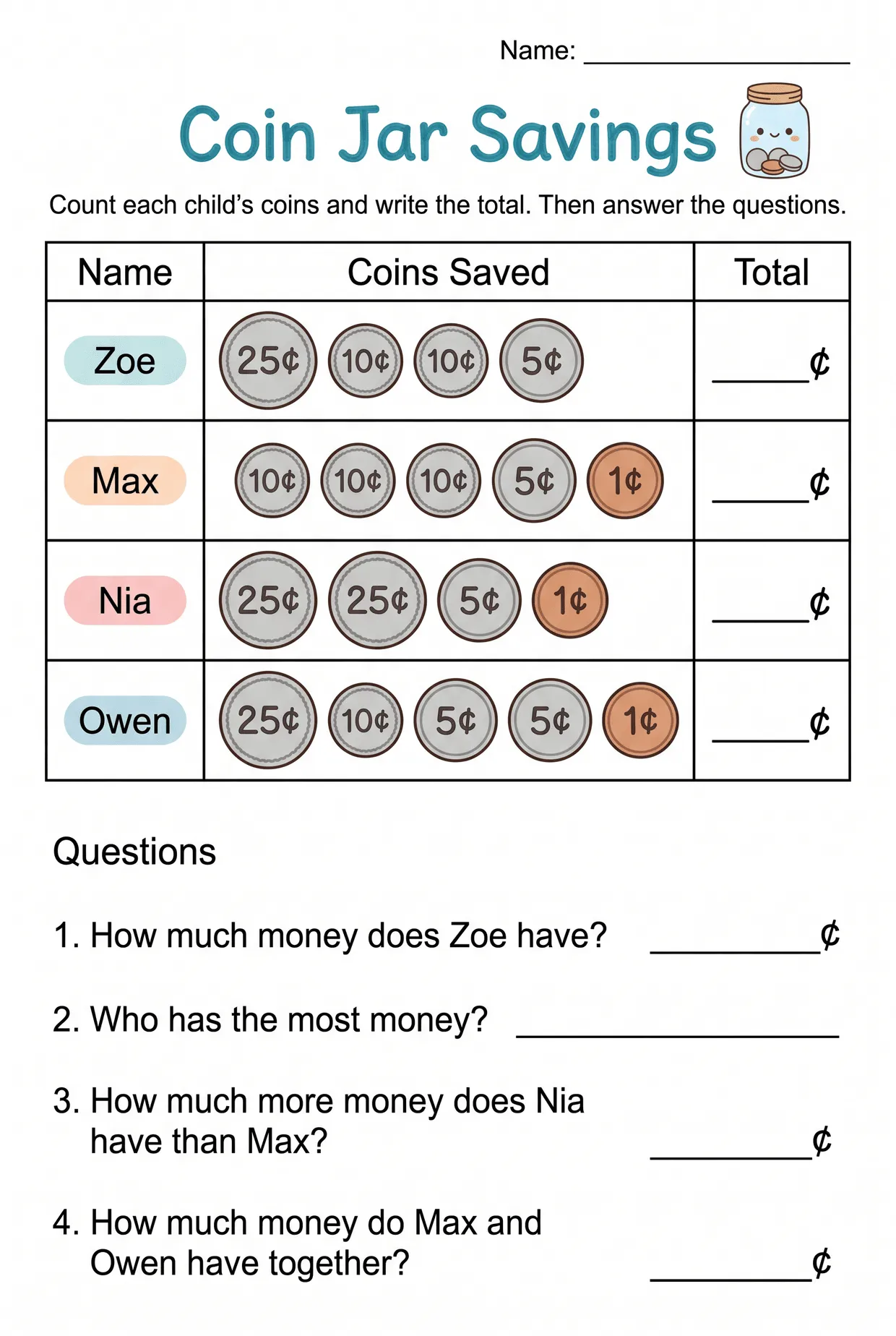
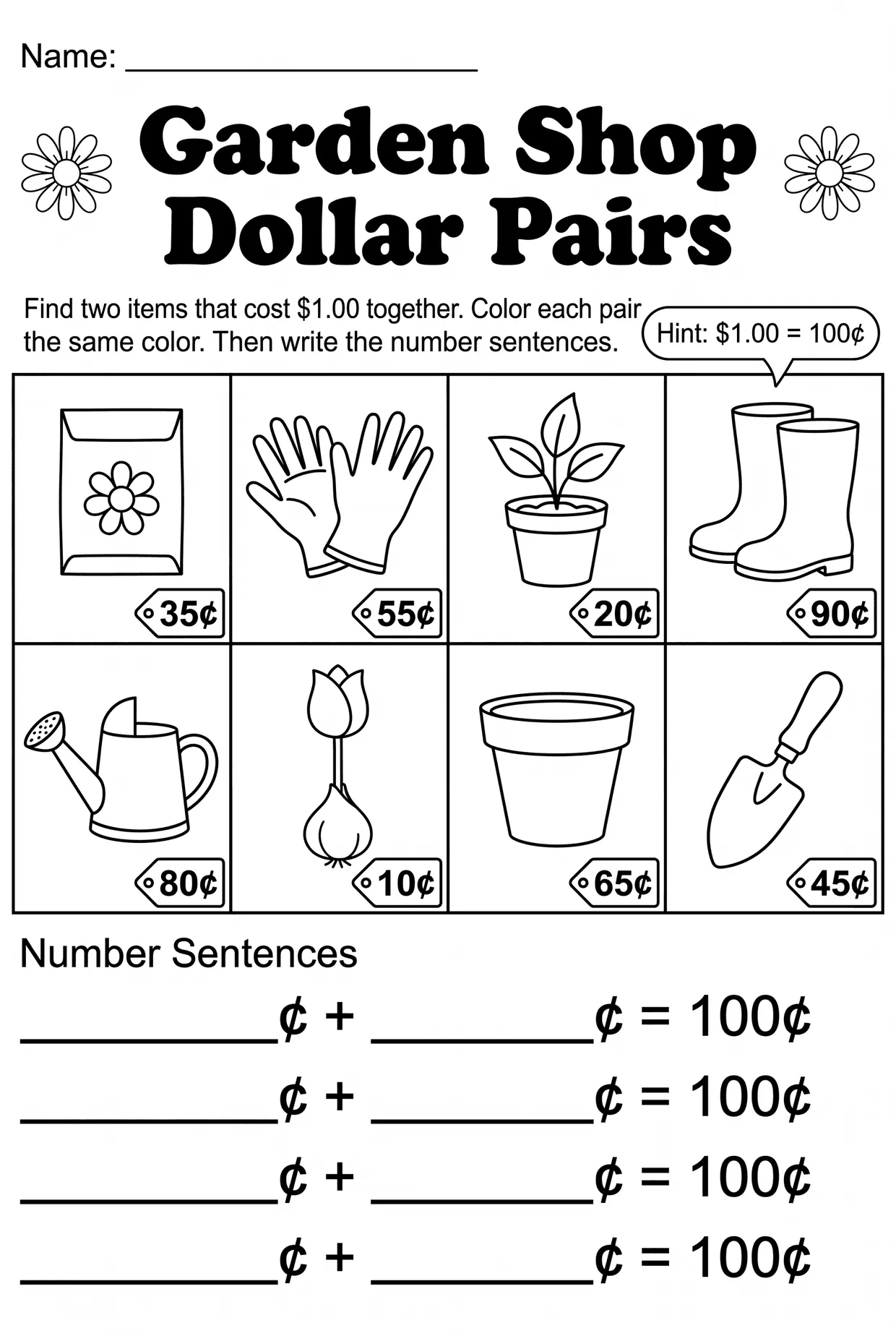
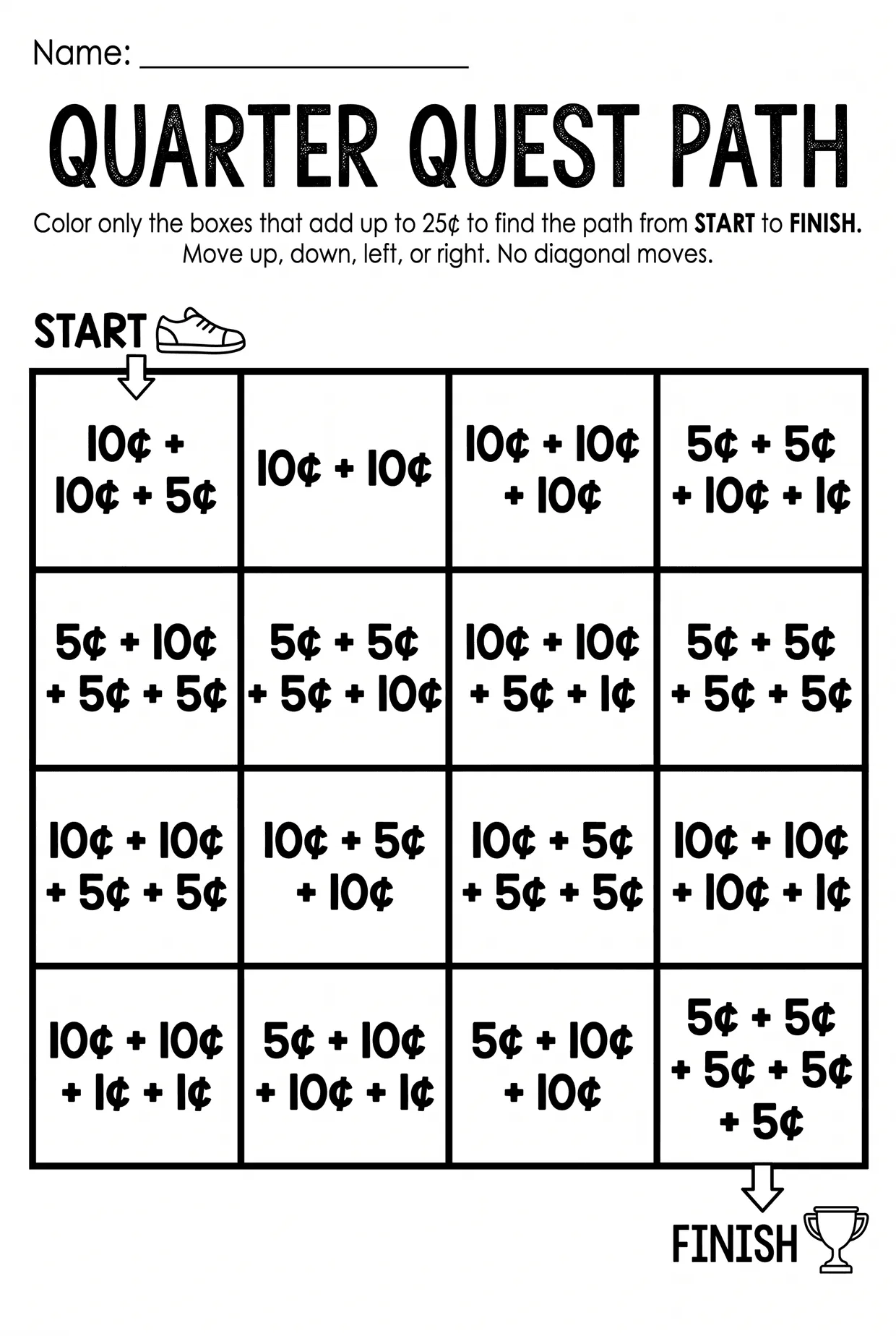
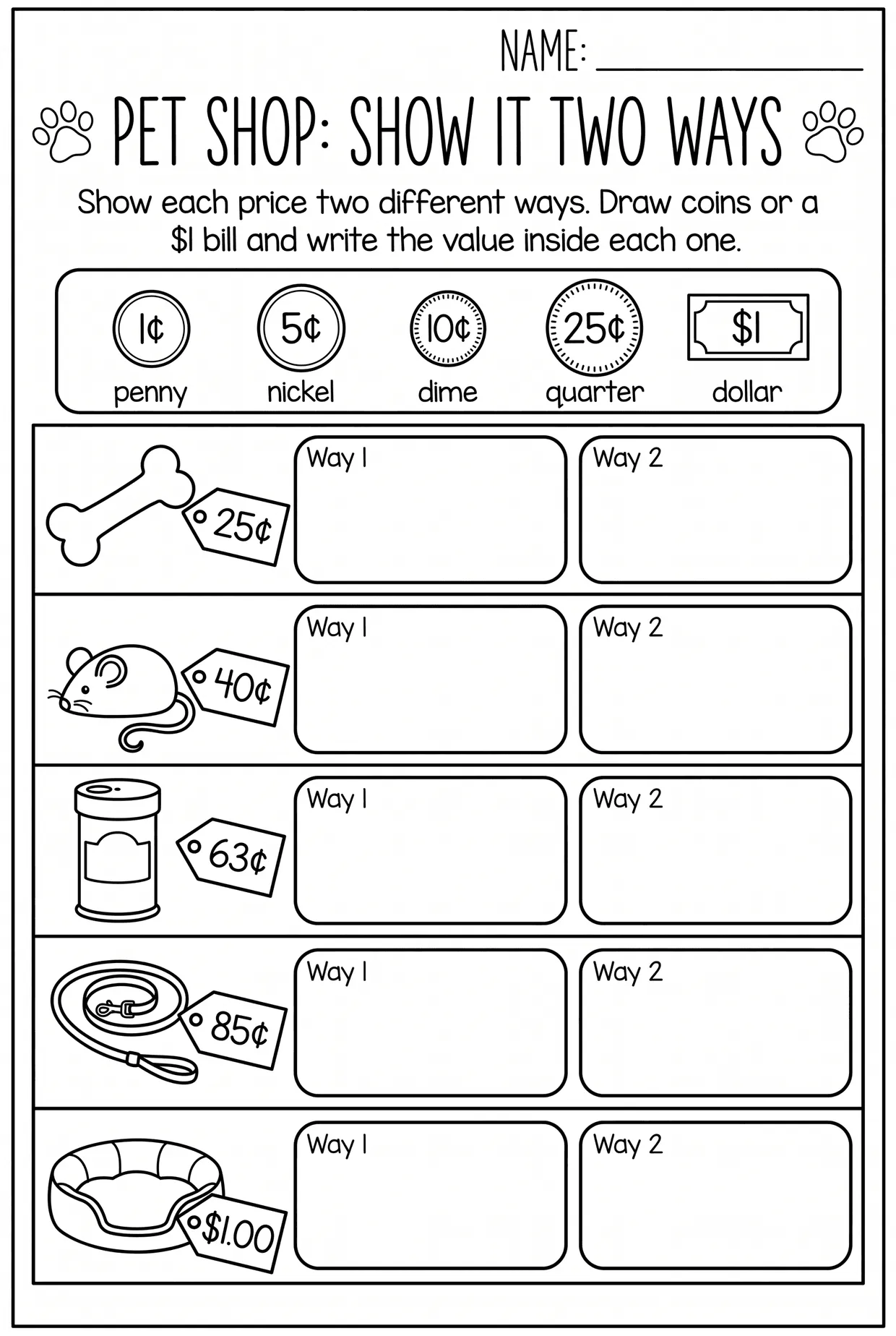
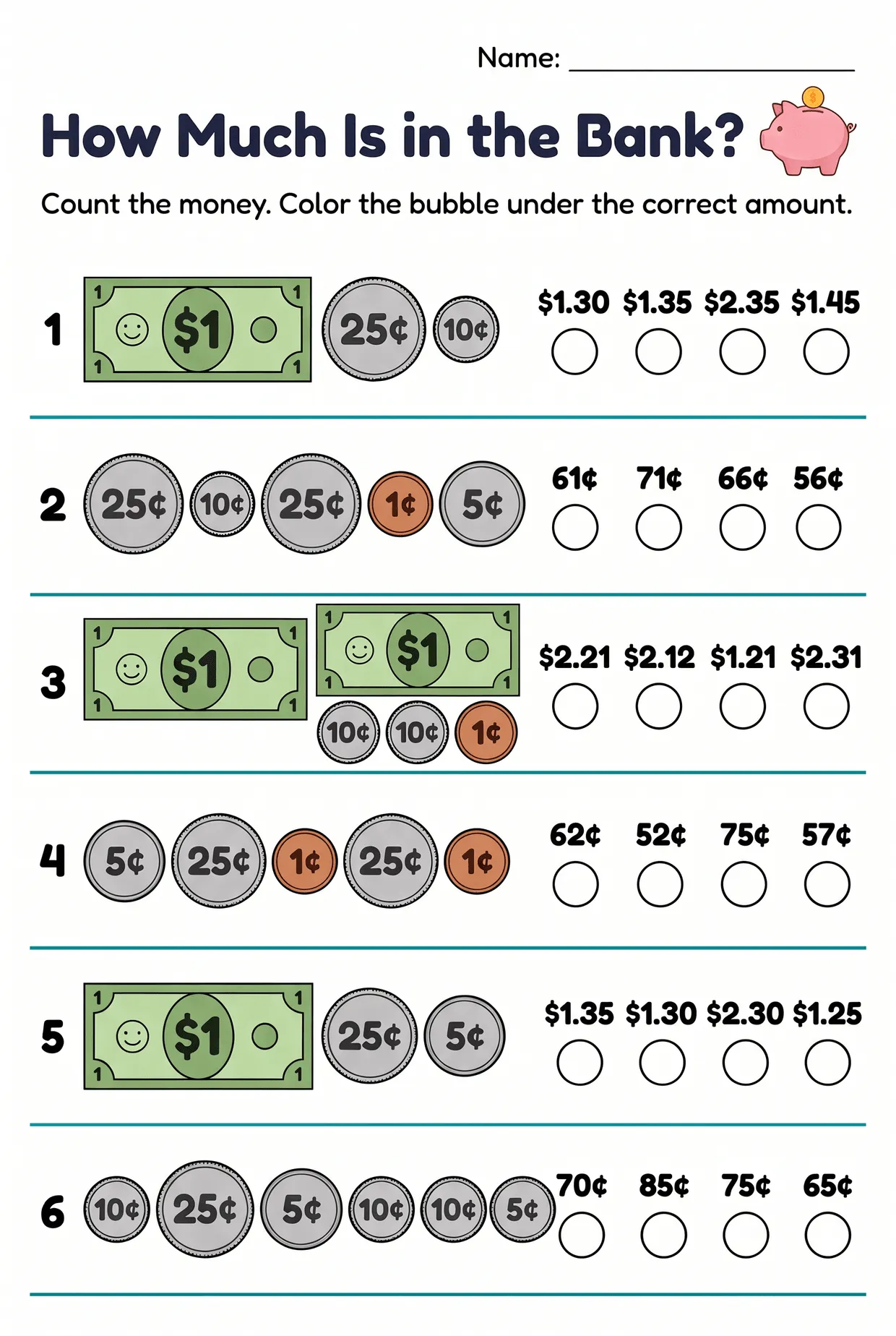
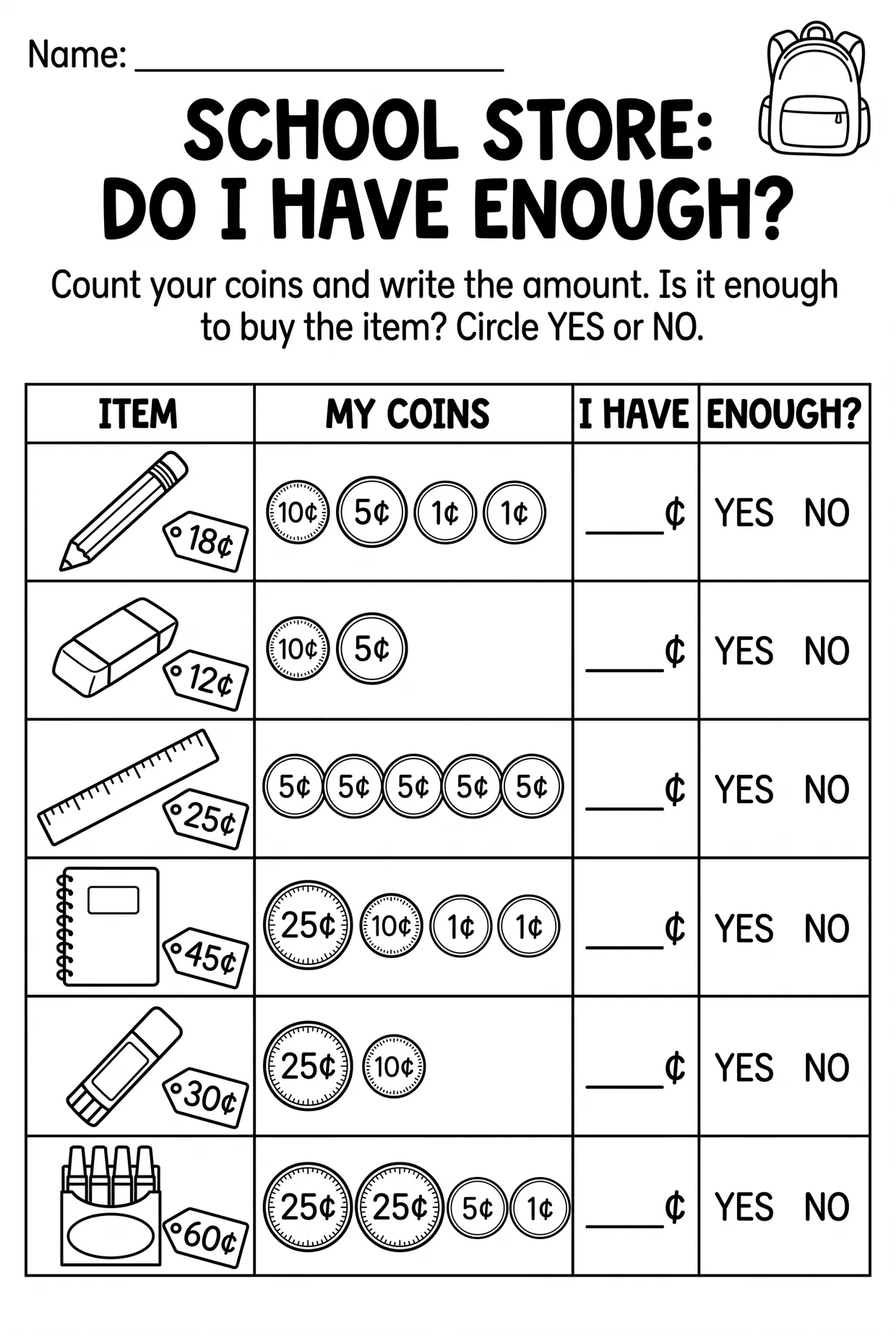
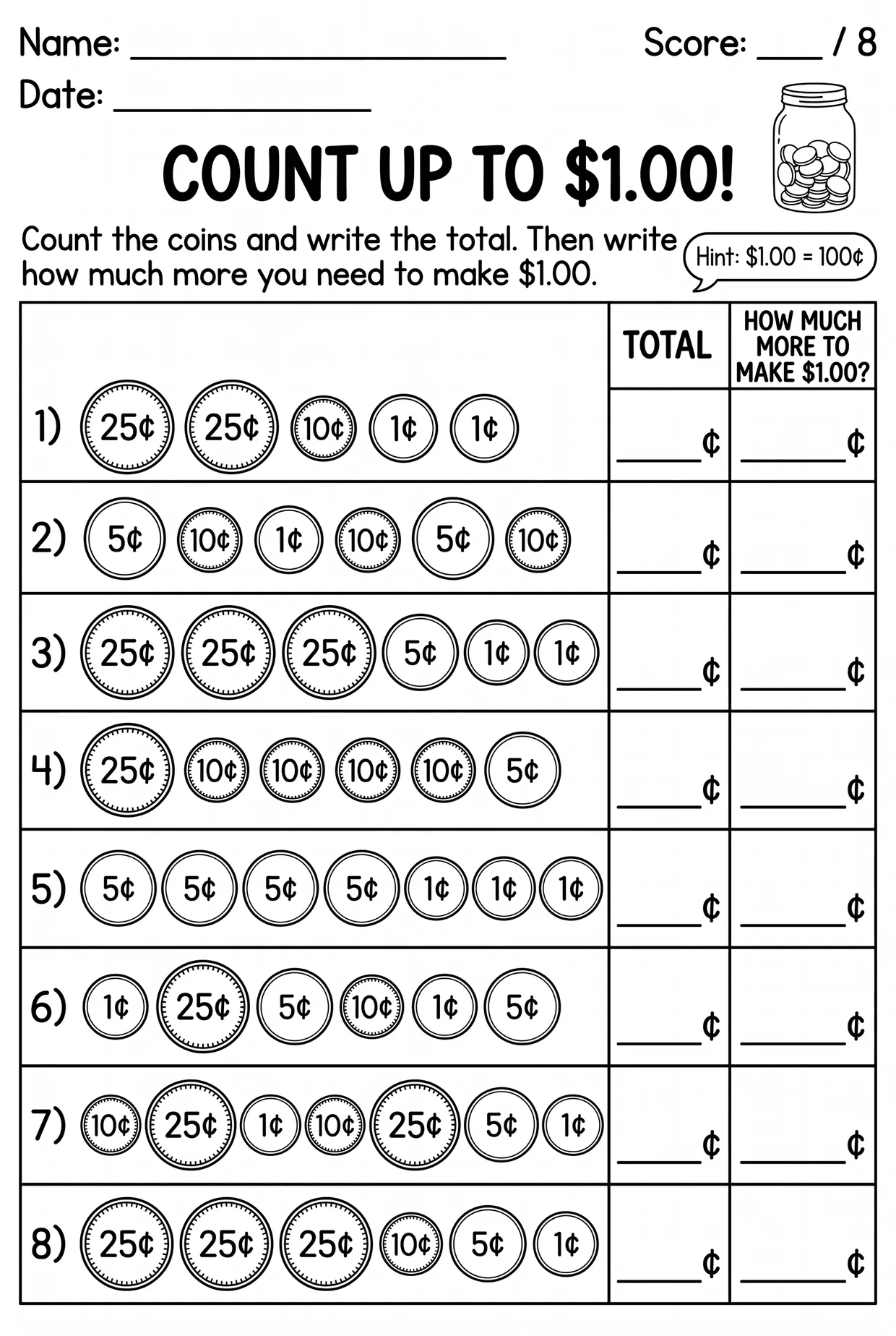
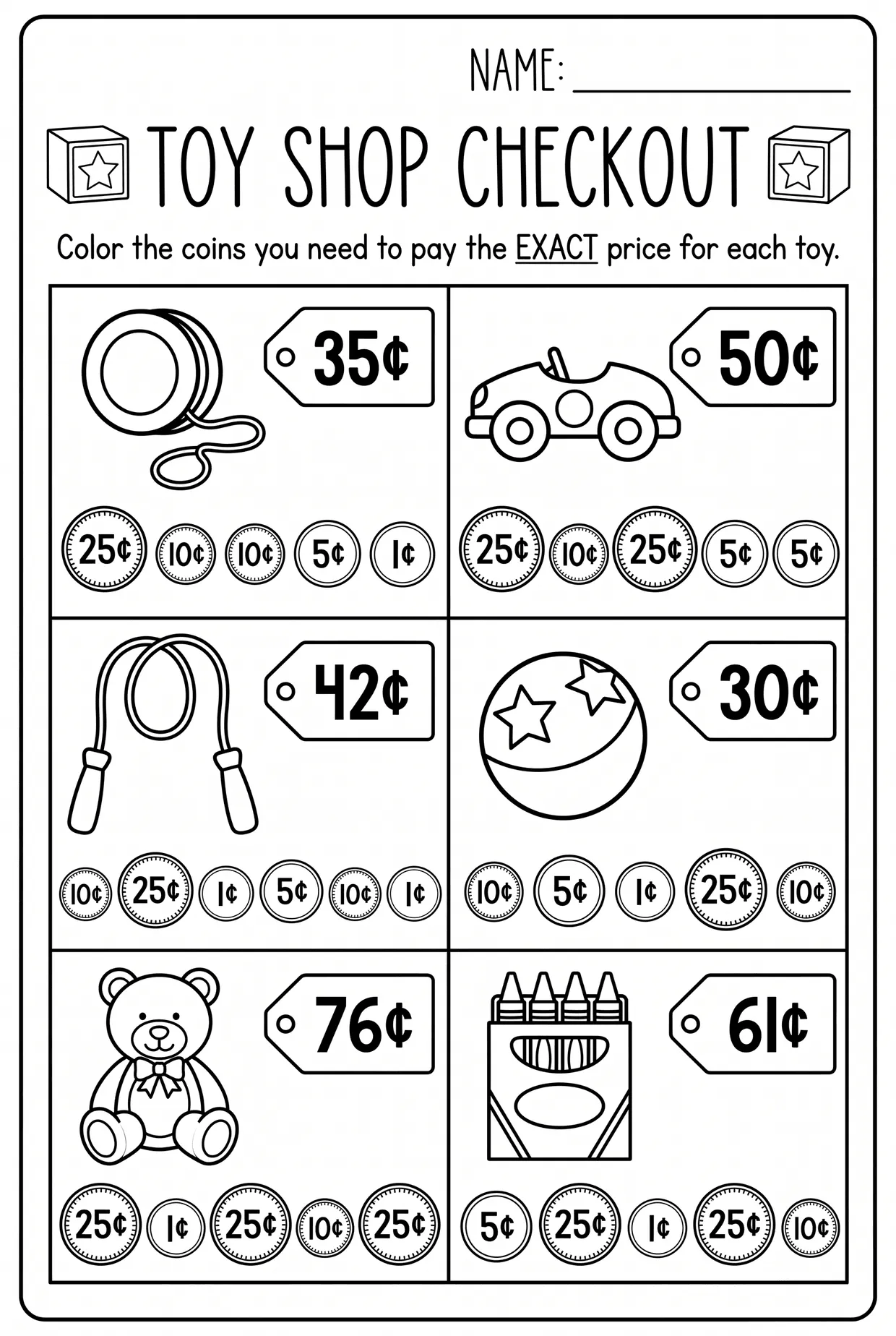
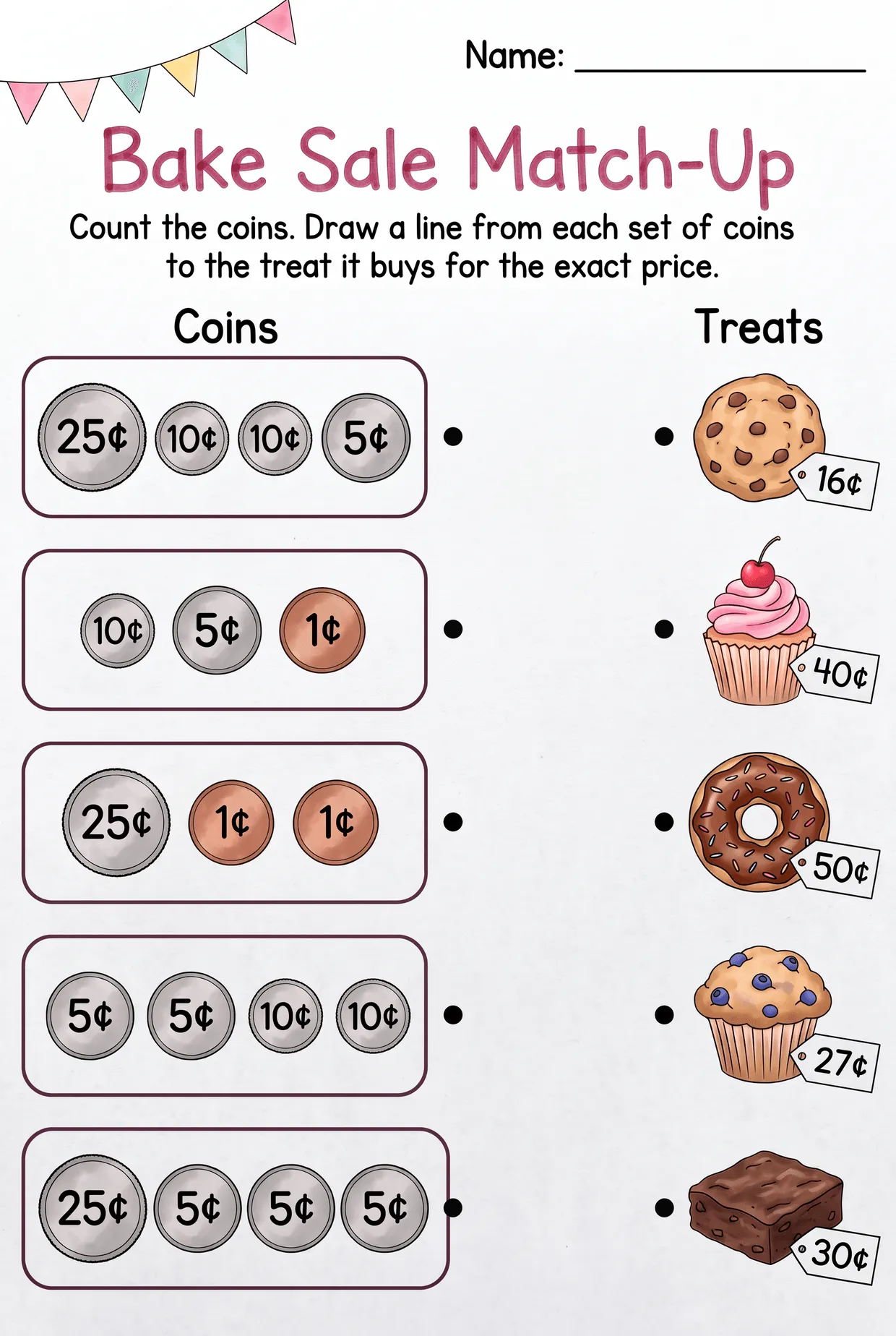
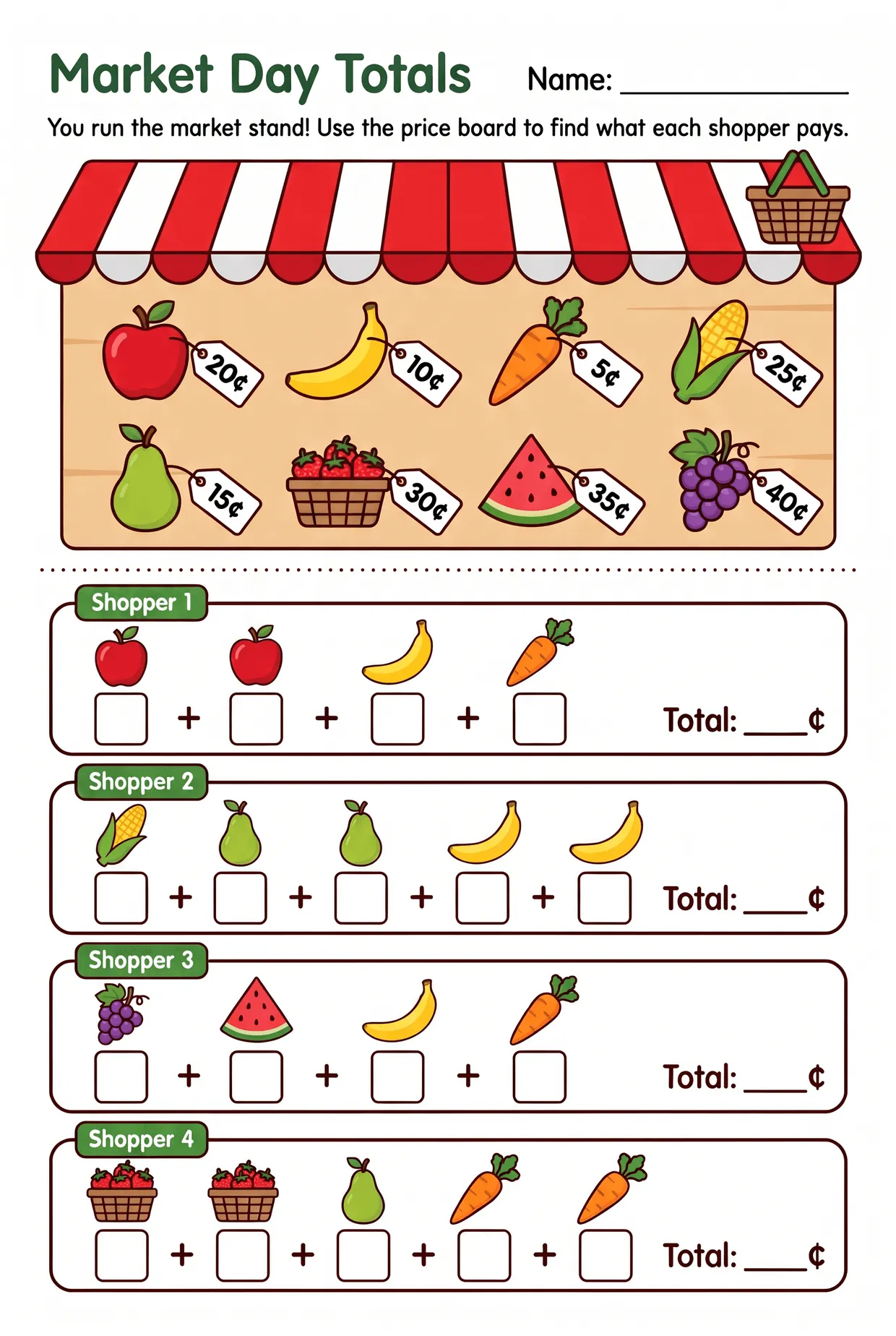
By the end of second grade, children count combinations of quarters, dimes, nickels, pennies and dollar bills, and solve word problems using the cent and dollar signs correctly (2.MD.8). The pages cover both, from counting mixed coins to working out what is left at a lemonade stand.
What is the easiest way to count a pile of mixed coins?
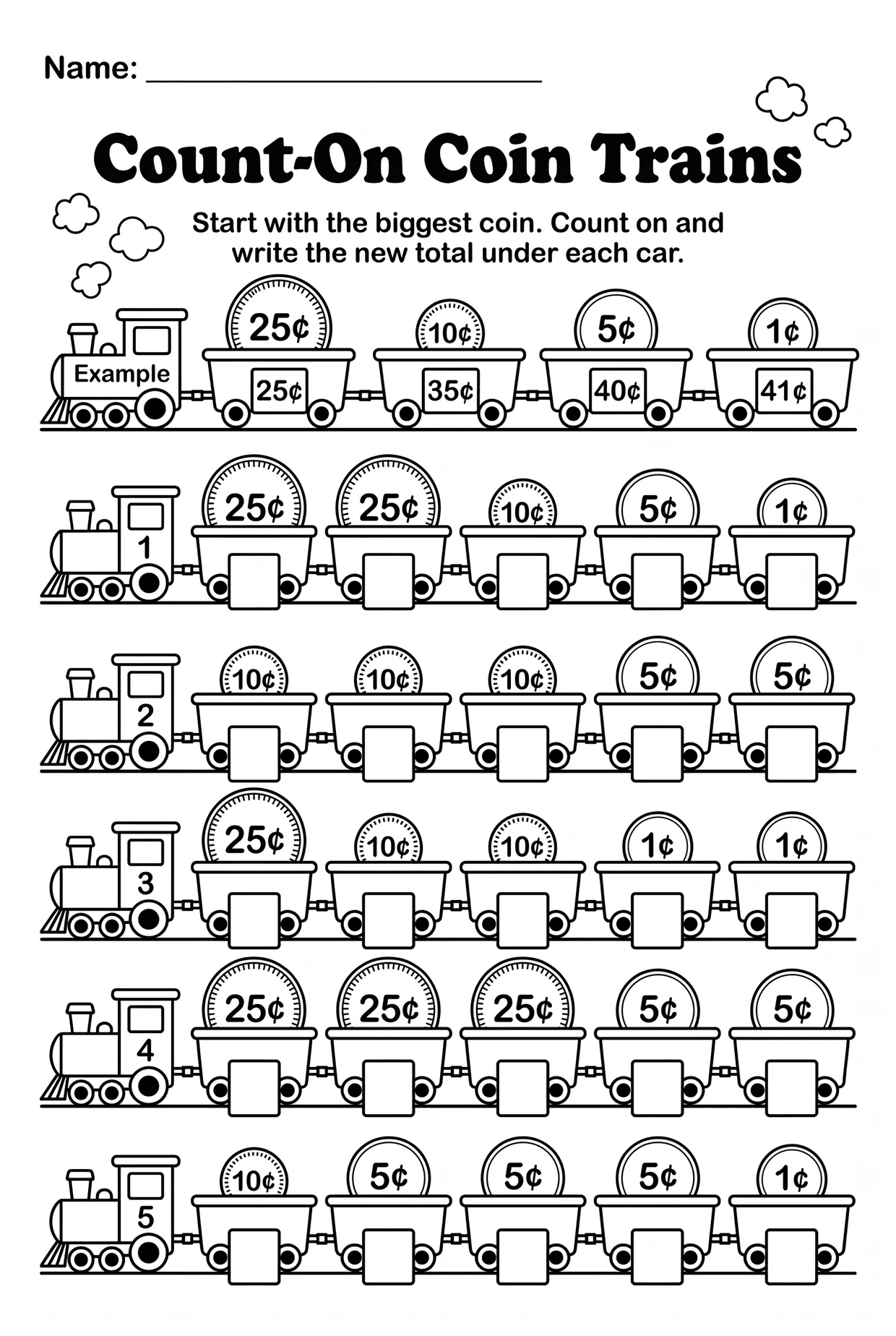
Sort the coins from biggest to smallest value, then count on: start with the quarters, then add the dimes, nickels and pennies. A child who starts with pennies tends to lose track. The coin trains page builds this habit by keeping a running total under each coin.
My child thinks a nickel is worth more than a dime. Why?
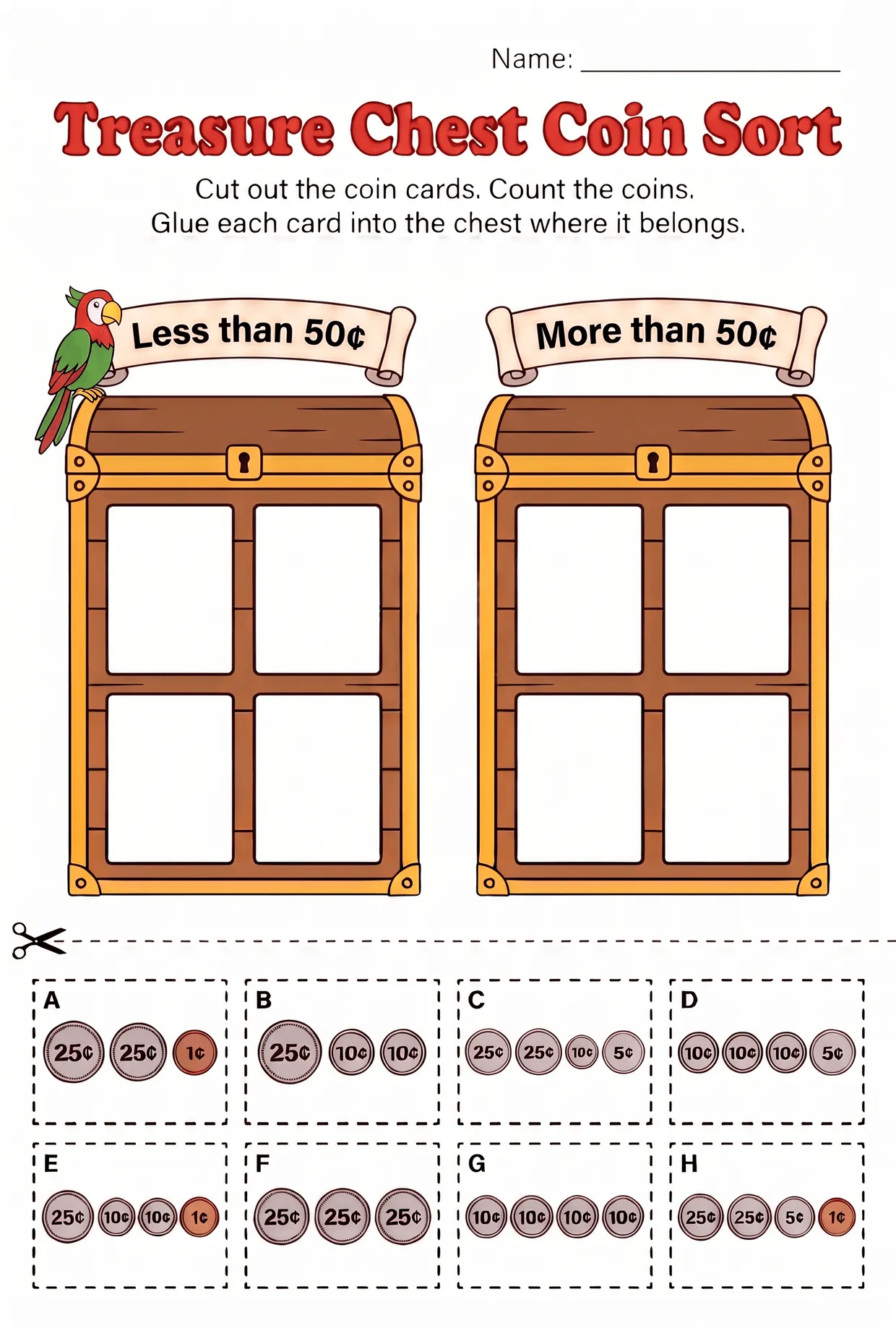
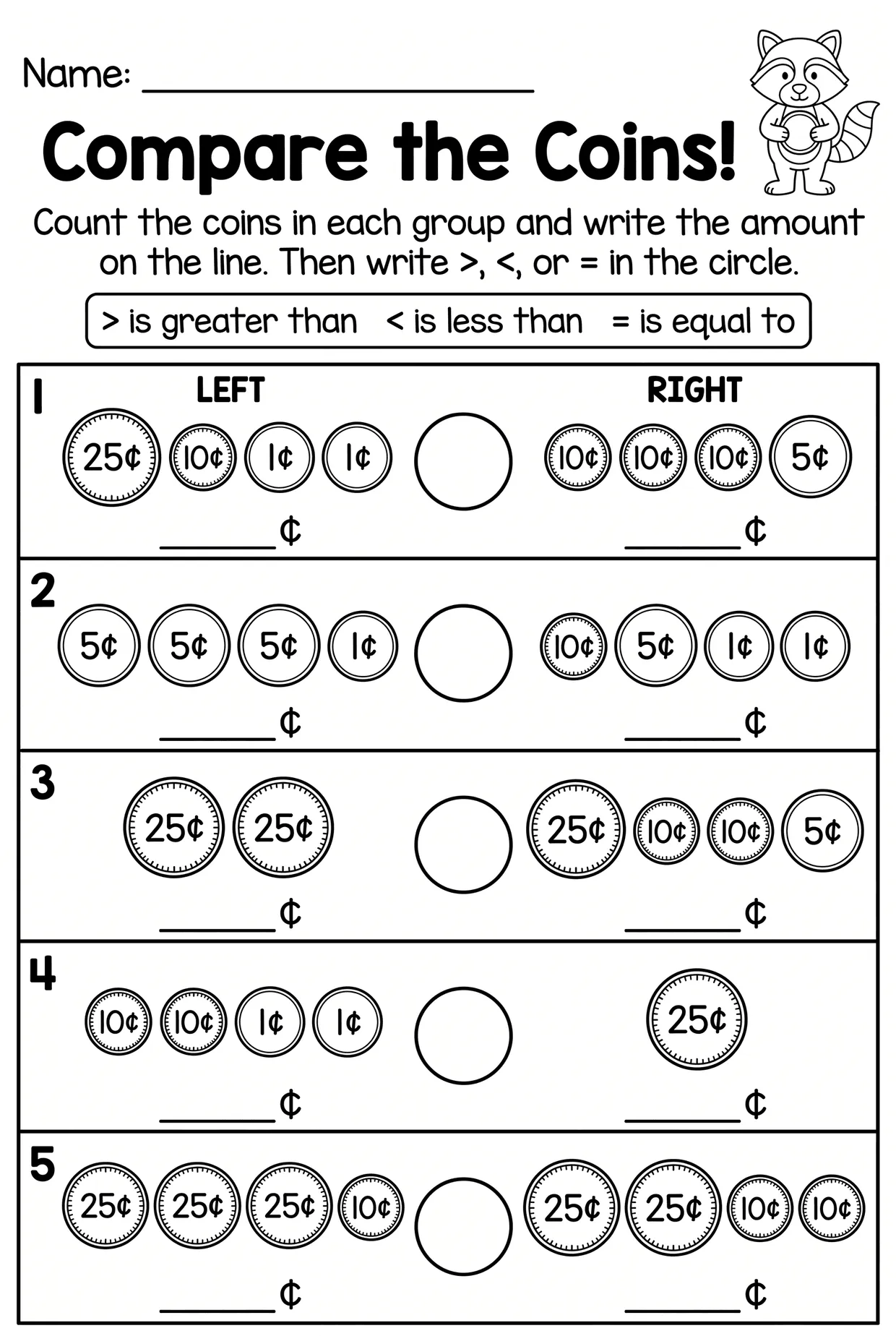
Because the nickel is bigger. Size and value do not match for these two coins, and it trips up nearly every child. Keep real coins on hand, say the value out loud each time a coin is picked up, and try the compare amounts page, which shows that fewer coins can still be worth more.
When is a child ready for money word problems?
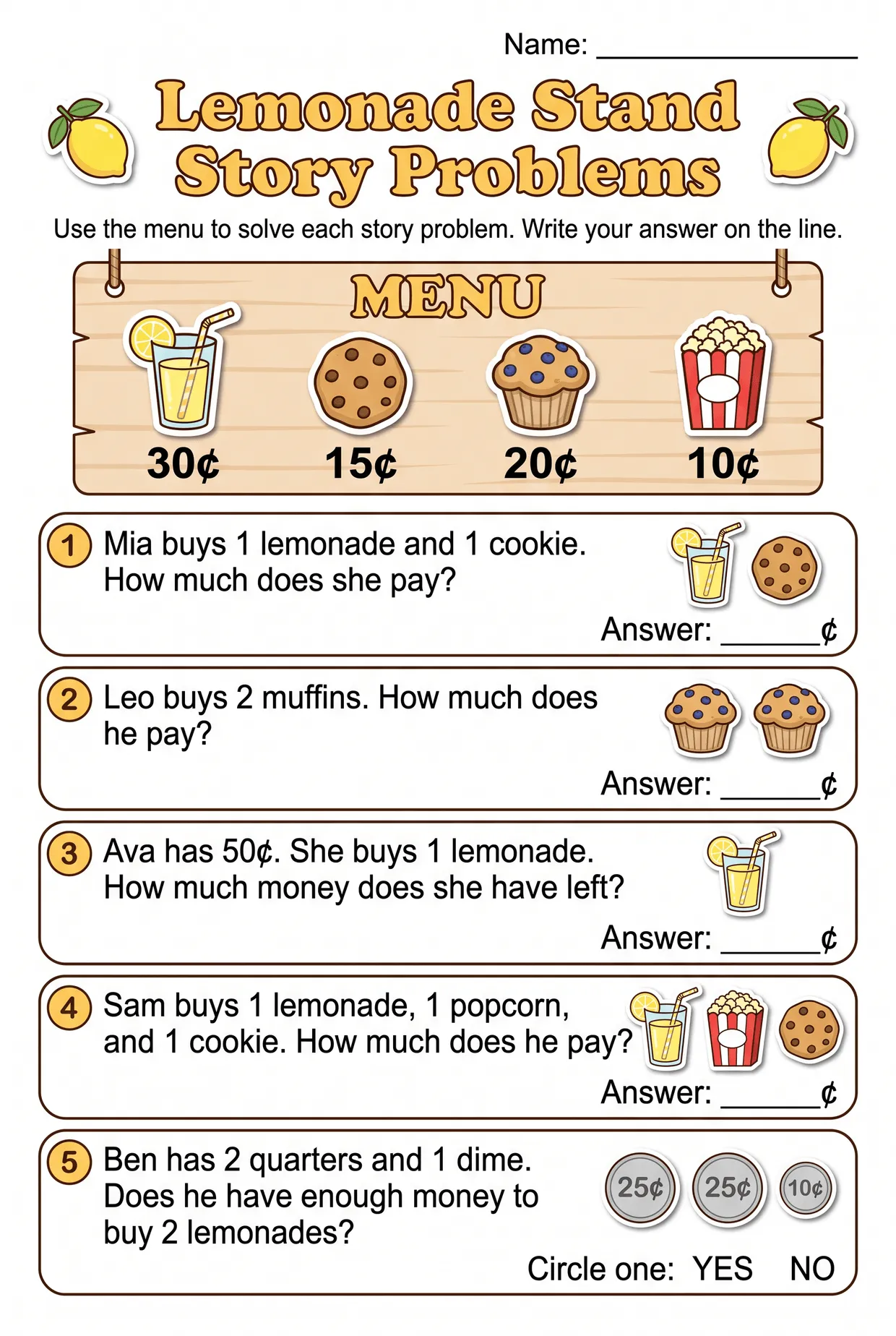
Wait until counting a handful of mixed coins is quick and accurate, and a child can add two amounts in cents. Word problems then add one more job: deciding whether to add or find what is left. The lemonade stand page is a good first try, because the menu keeps the prices in front of the child.
Should we use real coins alongside the worksheets?
Yes, especially at the start. Holding a quarter and a dime makes their values easier to remember than any picture, and a small pretend shop with price tags turns practice into a game. The worksheets then check that the skill holds up on paper.