Questions about 2nd grade fractions worksheets
What do second graders need to know about fractions?
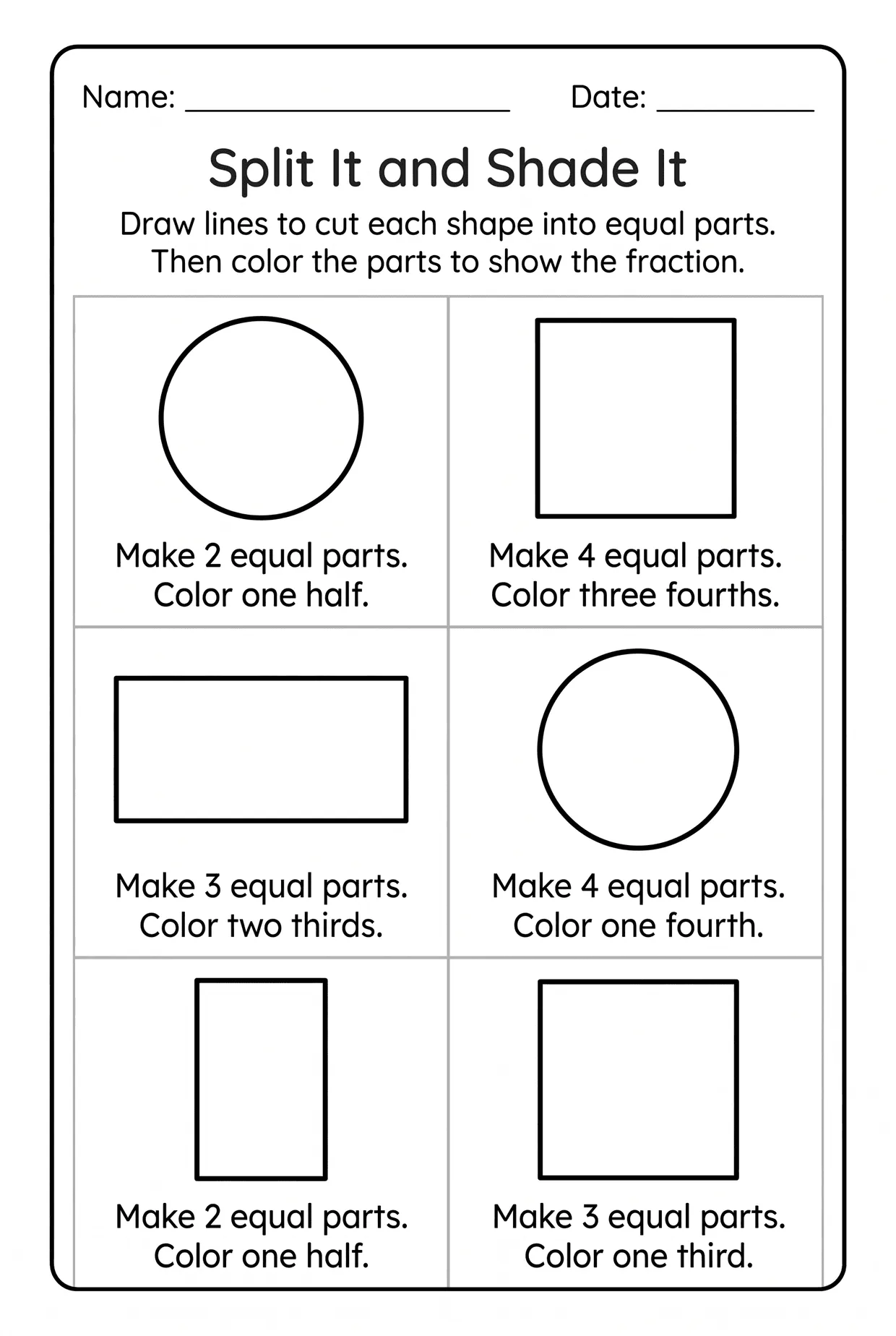
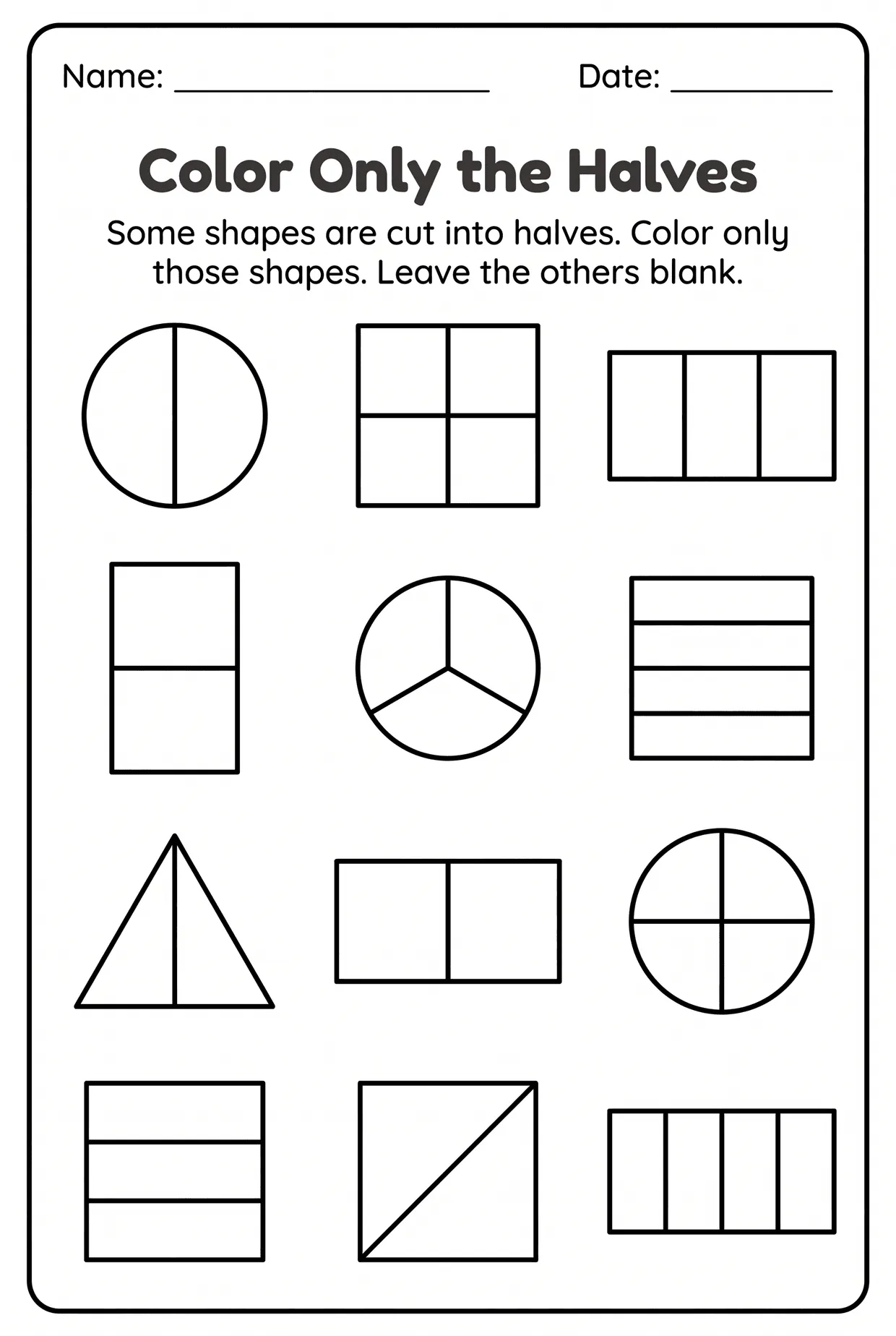
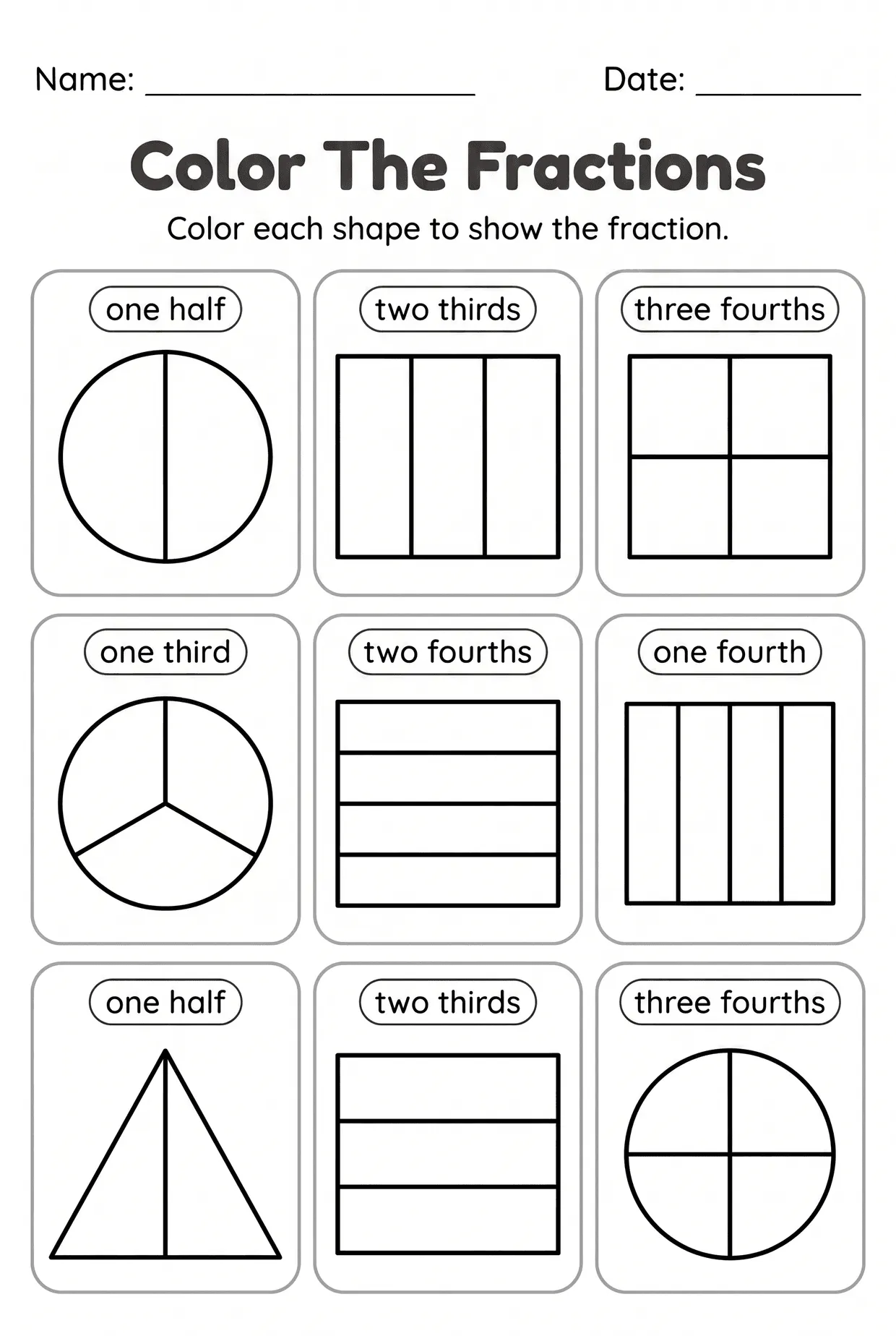
Splitting circles and rectangles into two, three or four equal shares is the heart of it, along with naming those shares with words like halves, thirds and fourths and seeing that a whole is two halves or four fourths. Writing fractions with numbers, like 1/4, mostly waits until third grade, so the pages here lean on pictures and words.
Any shape cut in two looks like halves to my child. Why?
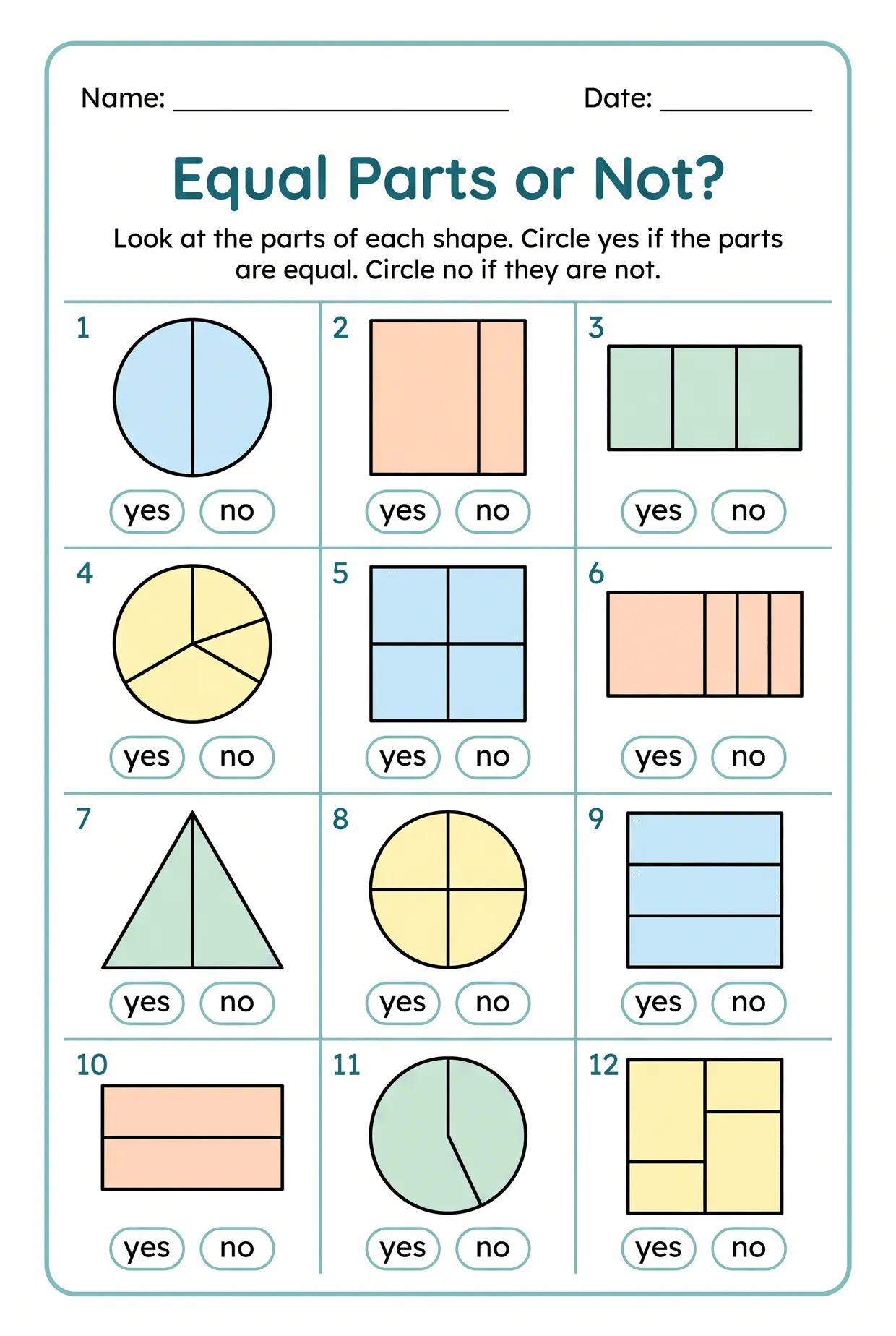
Young children count pieces before they compare sizes, so a shape cut into a big part and a small part still looks like halves to them. Ask whether both people would be happy with their share. The equal parts or not page is built around that question and is worth doing before any naming work.
How can one fourth seem bigger than one half to a child?
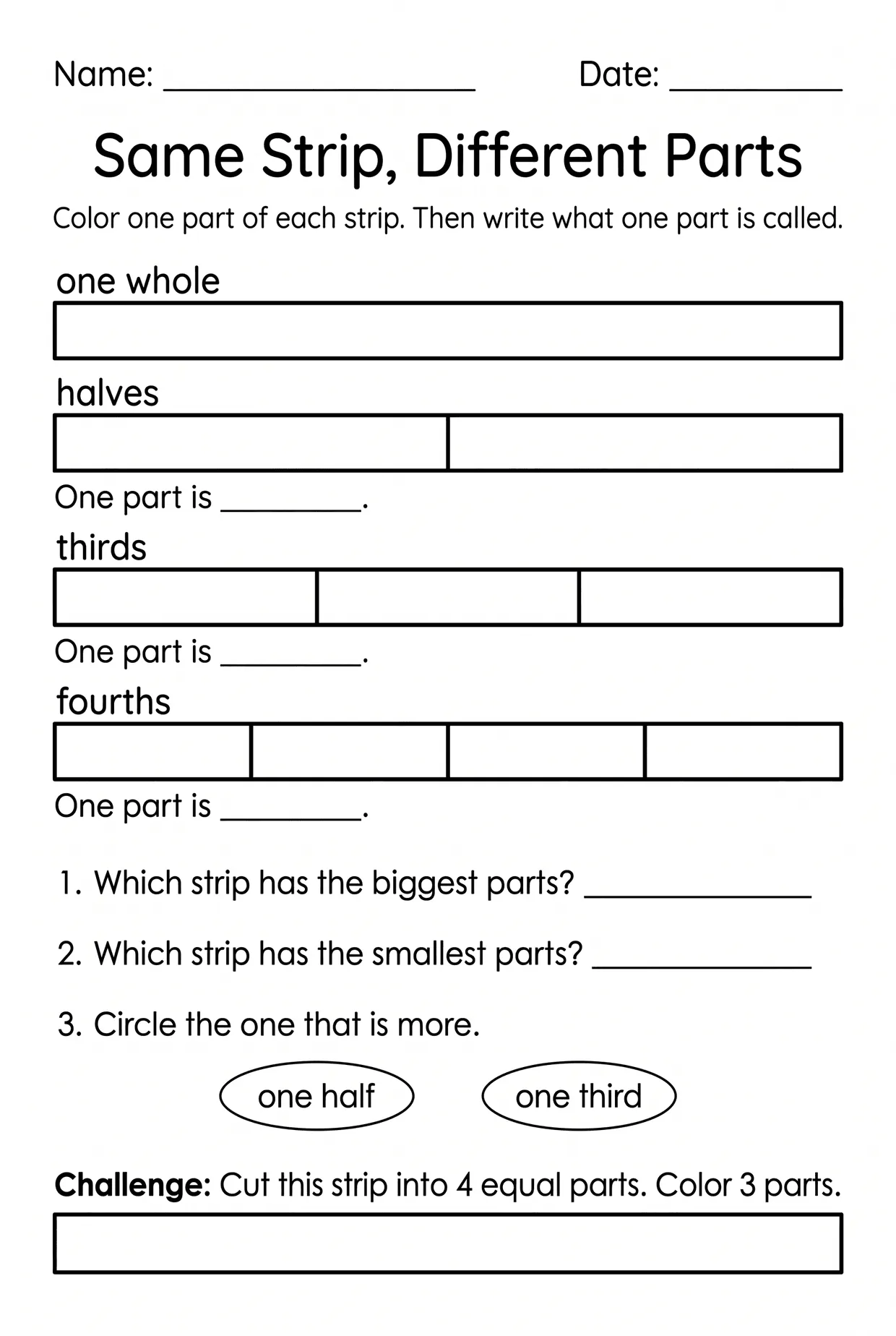
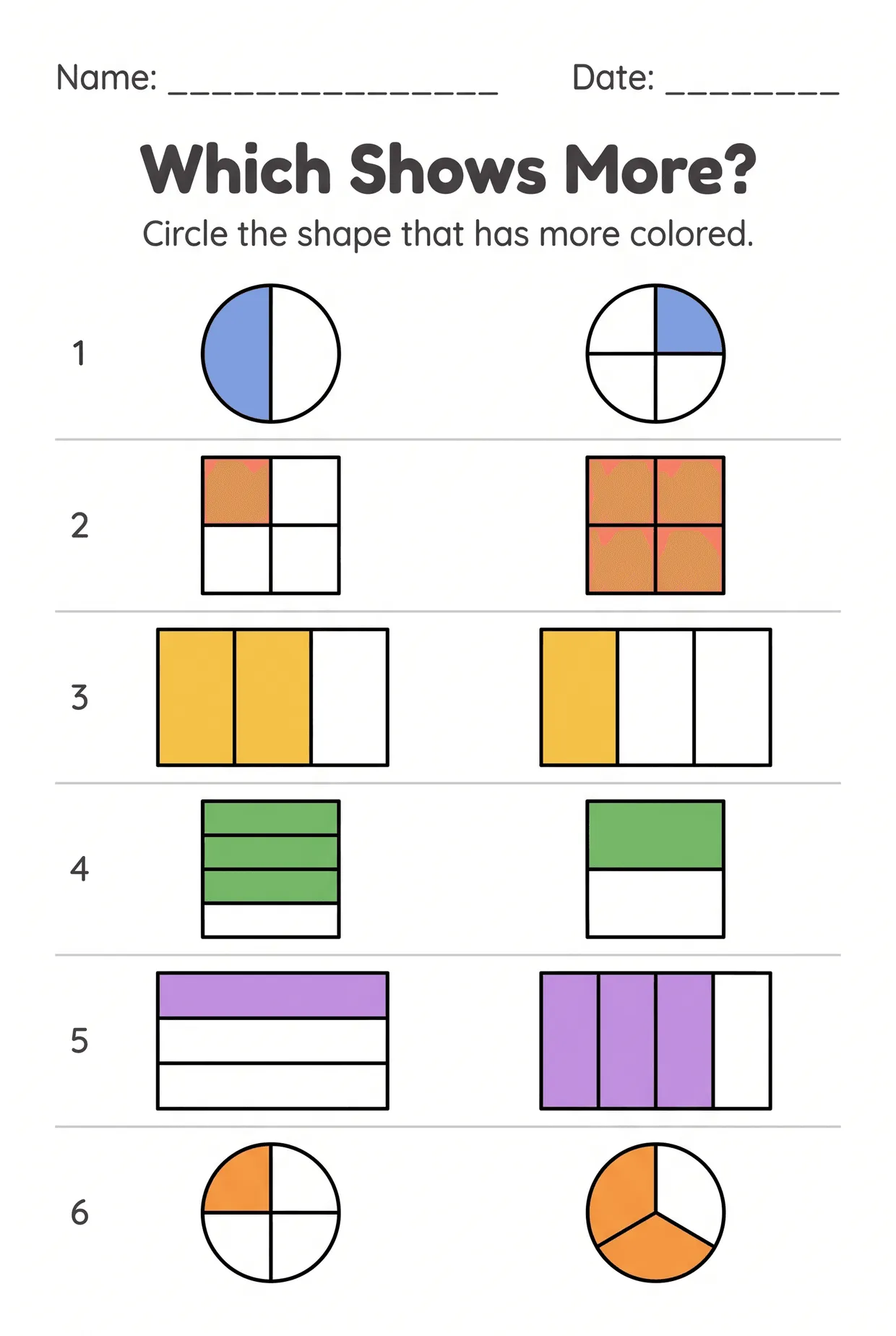
Four is bigger than two, so it seems natural that fourths are bigger too. Fraction strips of the same length fix this quickly: once a child sees the strip cut into four, each piece is plainly smaller than a half. Folding a paper strip at home makes the same point.
Should second graders write fractions as numbers?
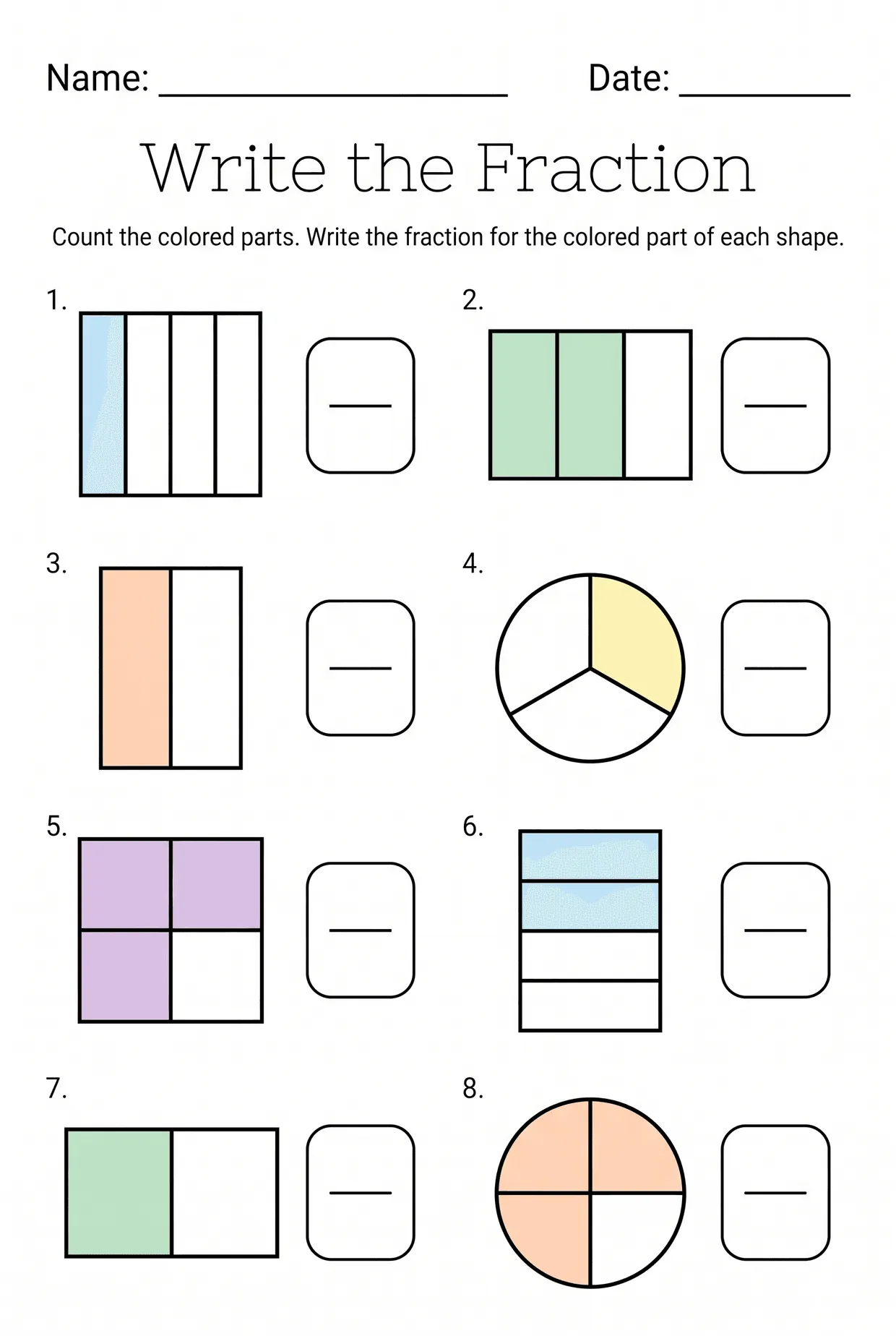
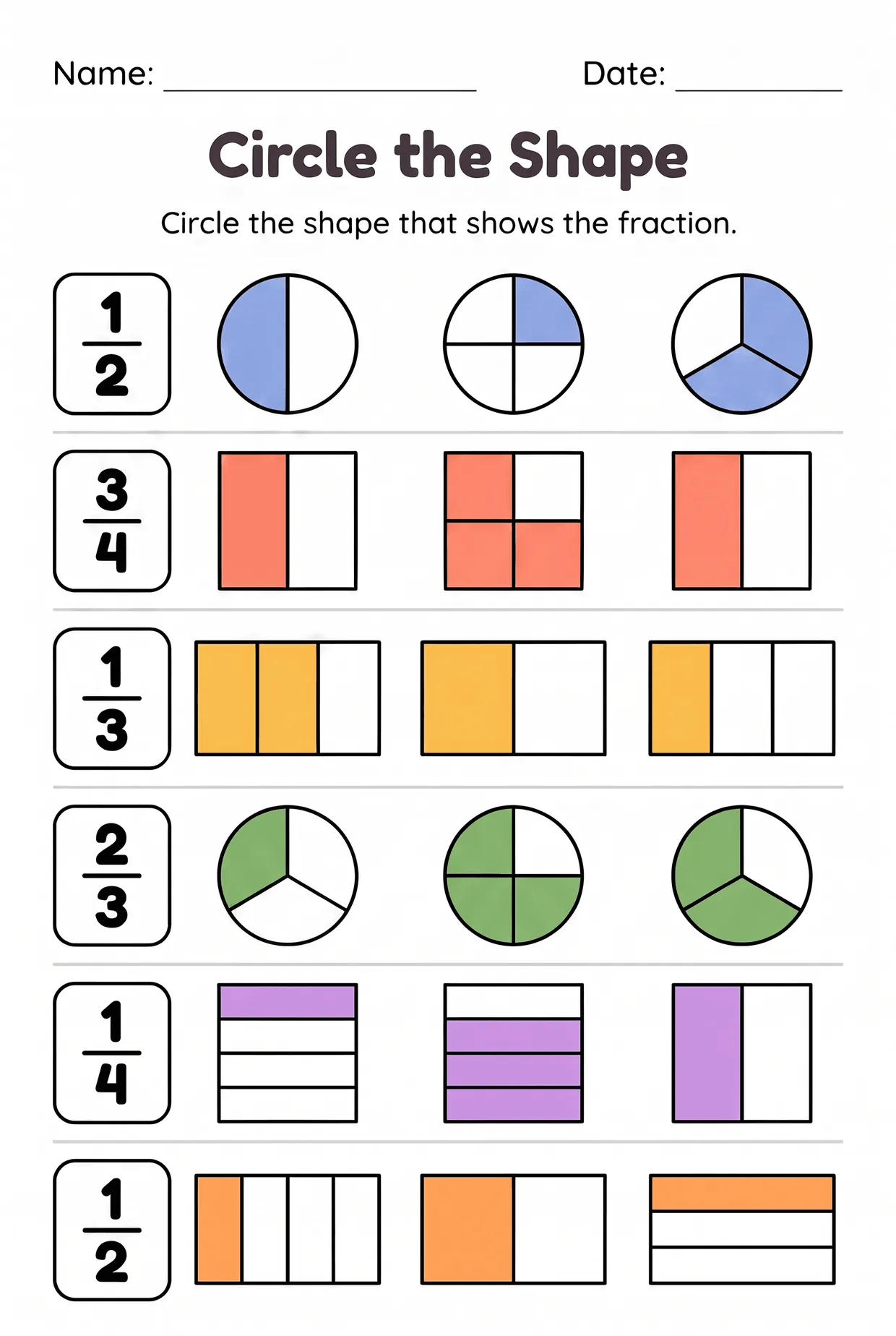
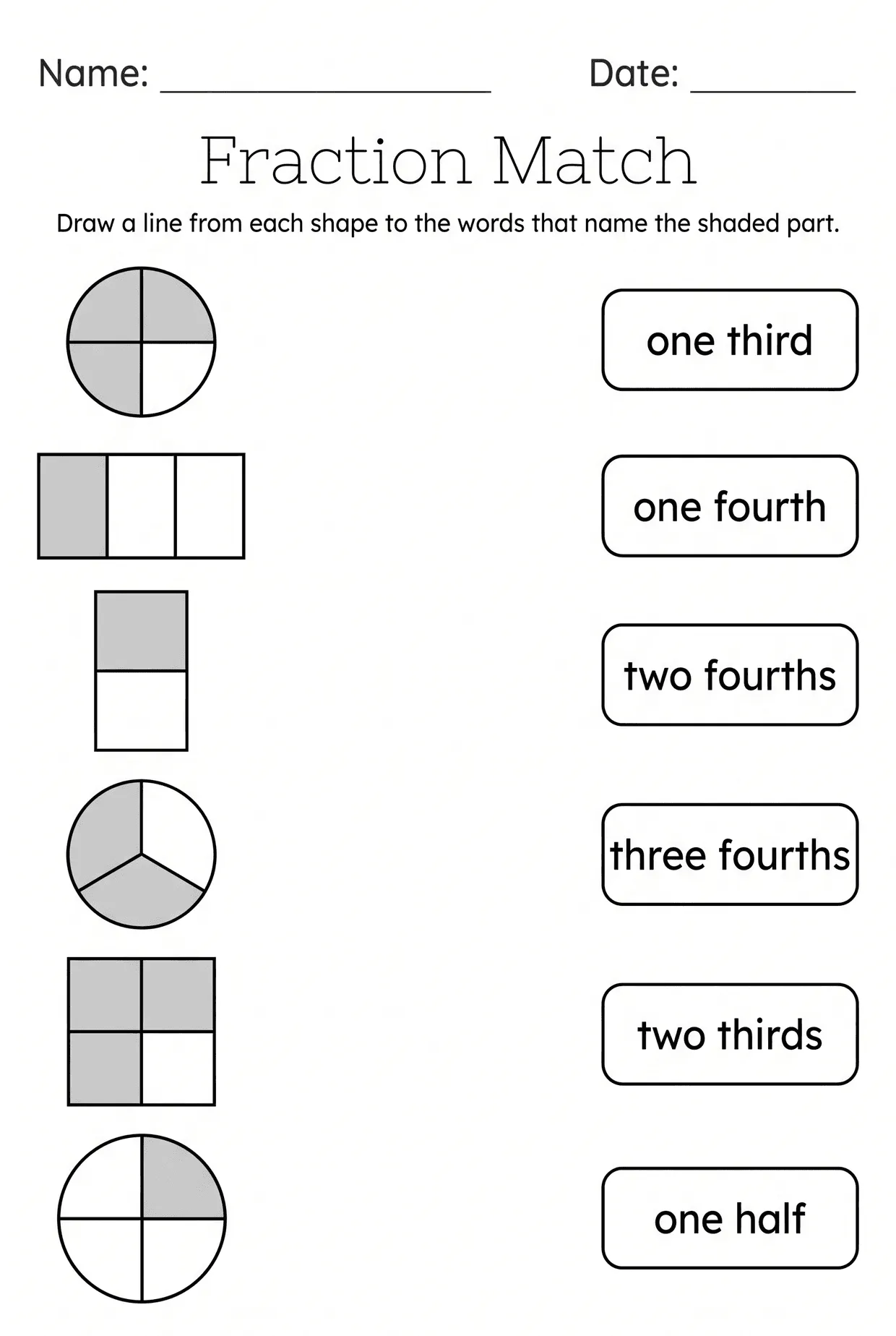
As a preview, yes, but it is not the goal yet. The standard asks children to describe shares in words, so focus on saying one third or three fourths out loud. The write the fraction page is a good next step for a child who already names fractions easily.
How can fractions practice be more hands-on?
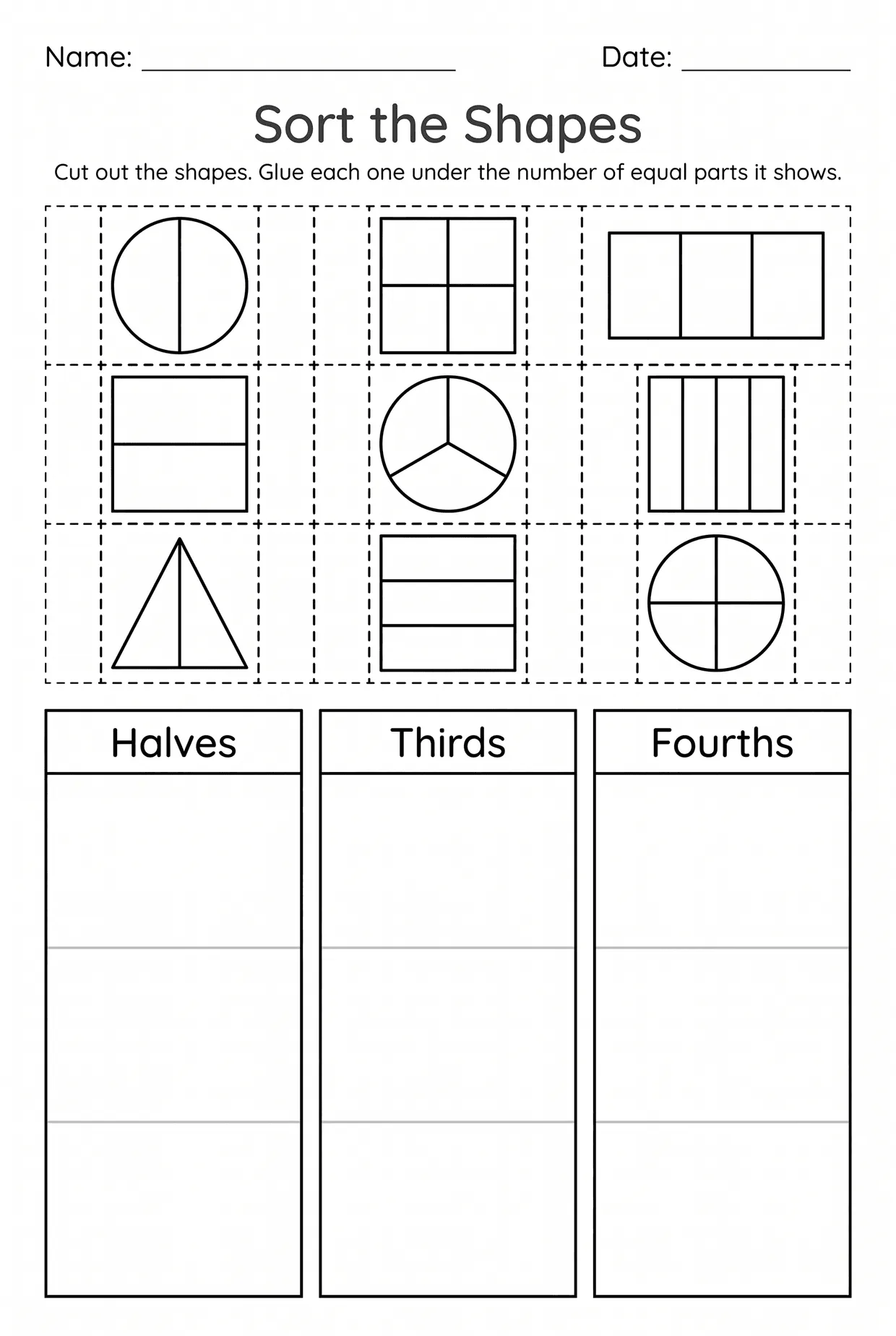
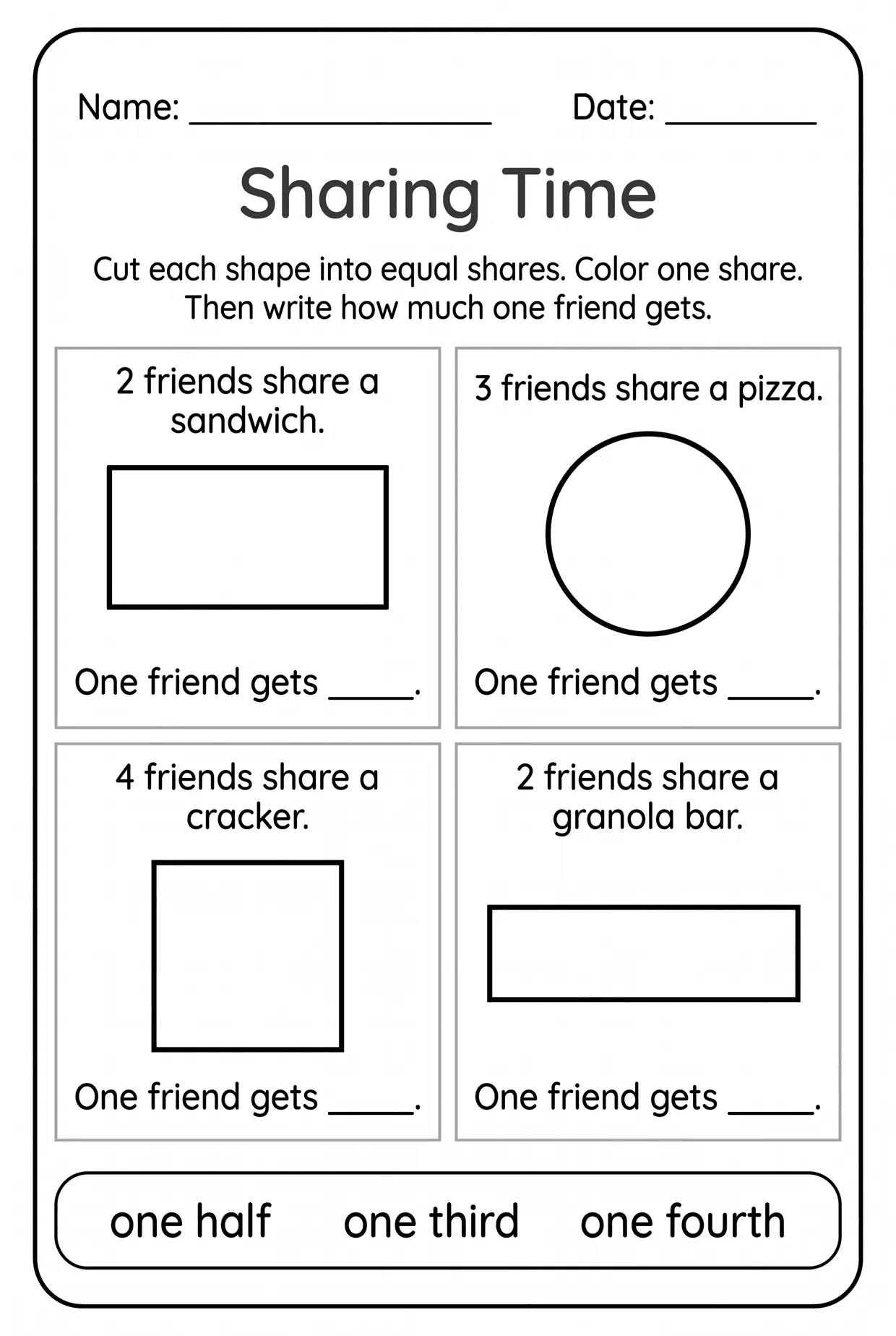
Cut a sandwich, a pizza or a sheet of paper into equal parts and talk about who gets what. Then try the equal shares word problems page, which asks the same kind of question with pictures. The cut and paste sort also keeps hands busy while a child counts parts.