Questions about kindergarten reading comprehension worksheets
Can a kindergartner really do reading comprehension?
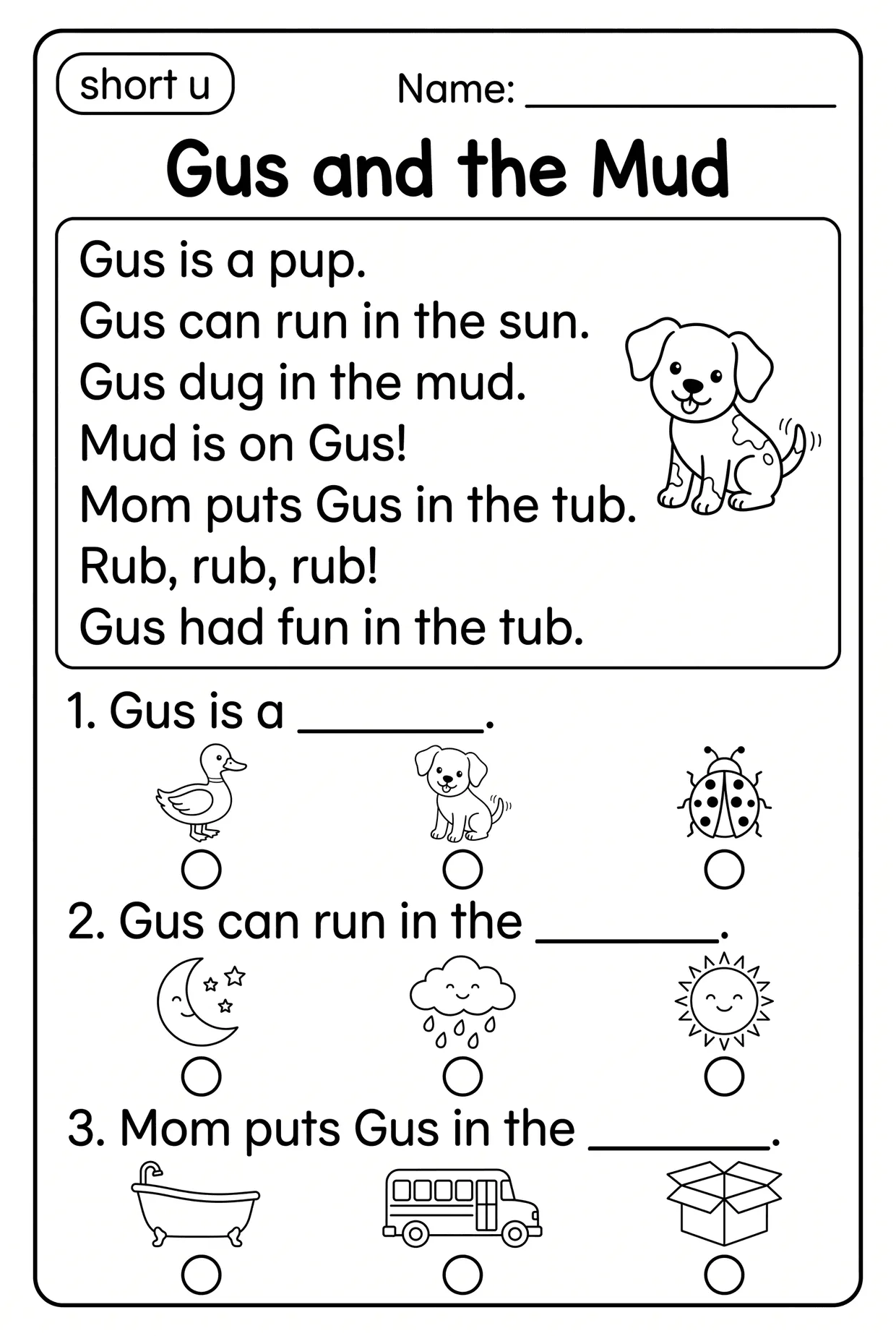
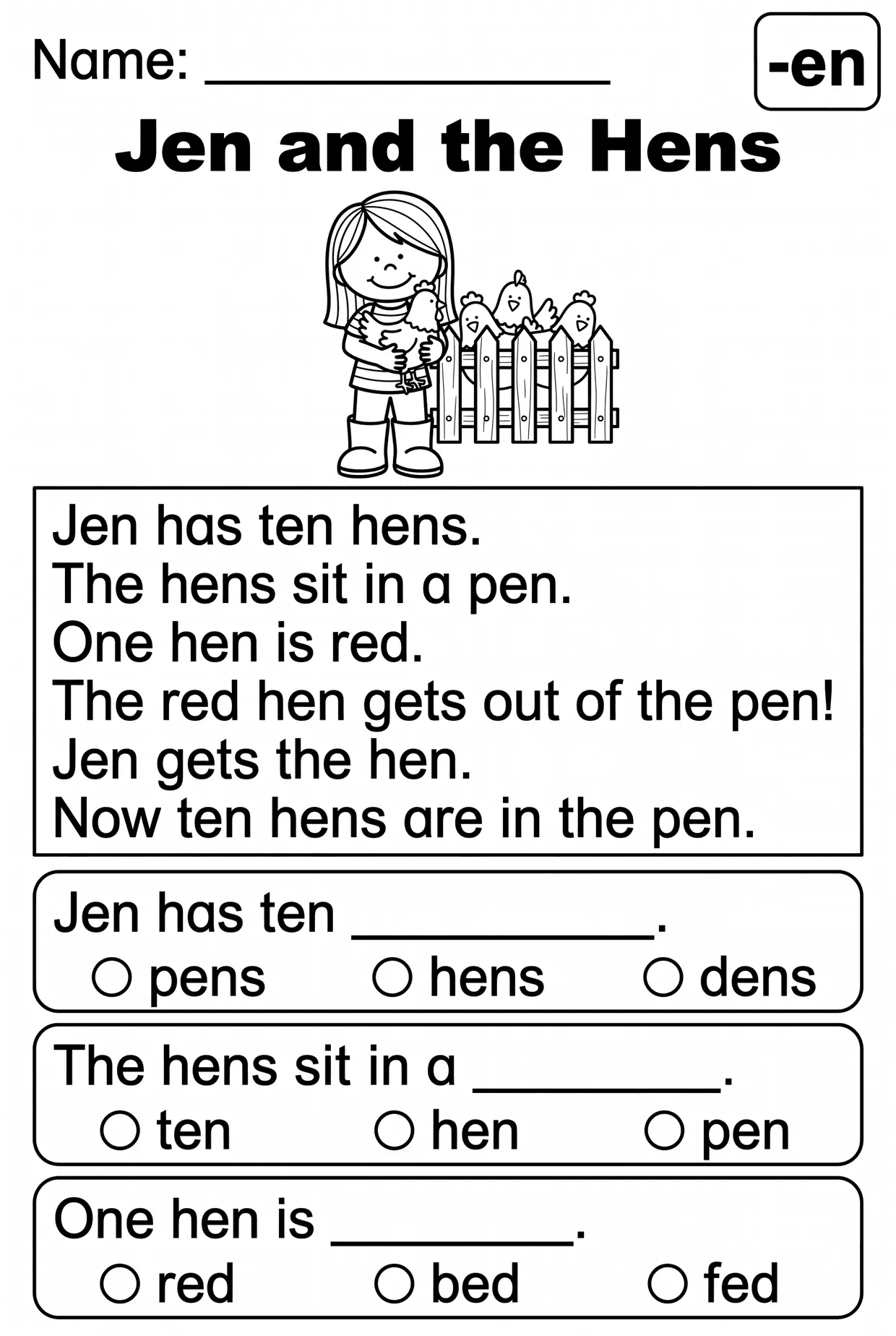
Yes, as long as the text is something they can decode. RL.K.1 asks a five-year-old to answer questions about key details with prompting and support, and that works on a story of five or six short lines built from words like pup, mud and tub. Comprehension at this age is less about long passages and more about noticing that the words carry meaning.
What if my child can read the words but still gets the answer wrong?
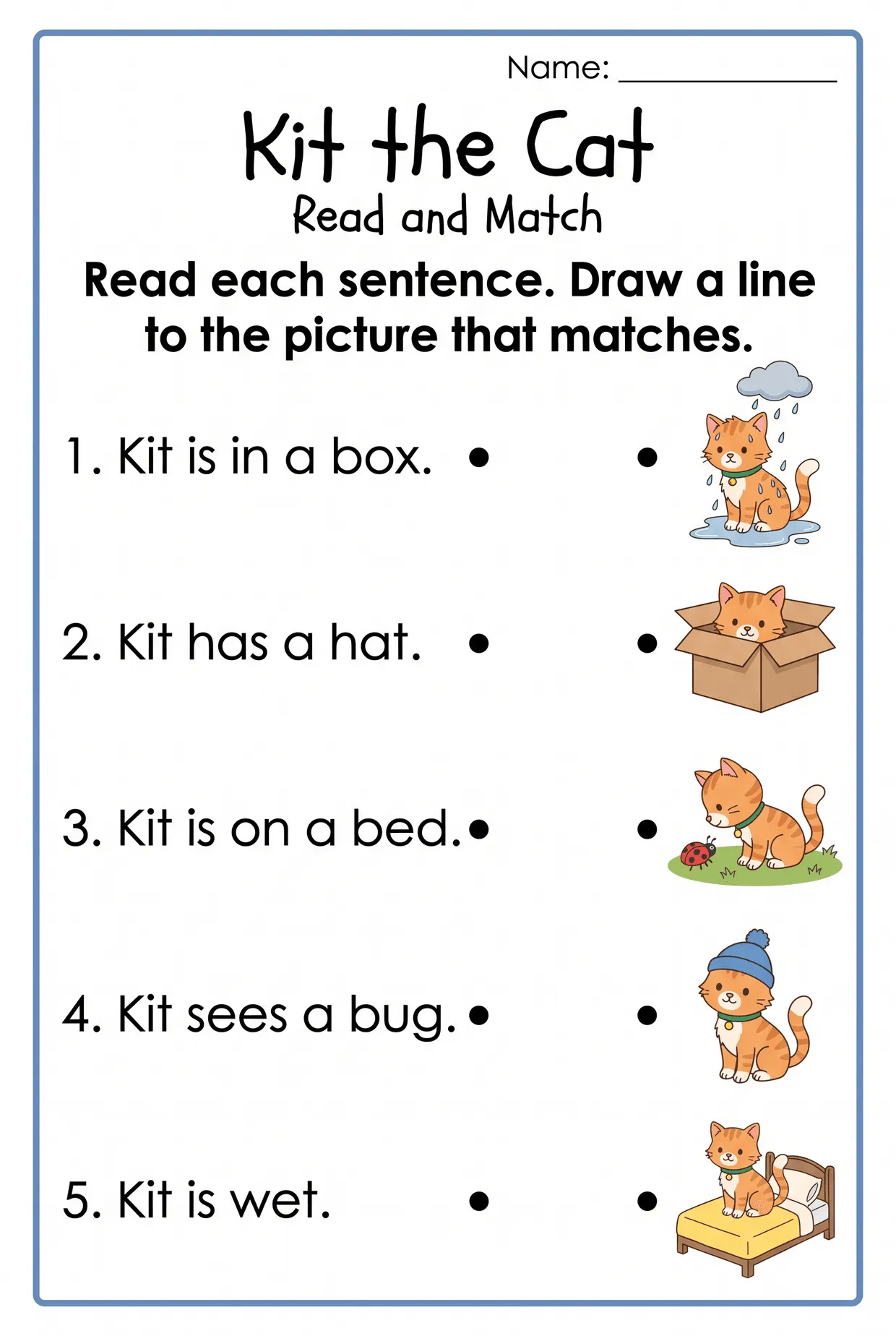
That usually means they read each word as a separate puzzle and never put the sentence back together. Have them read the line again, a little faster, and then say in their own words what it means. The Kit the cat page is good for this, because every sentence starts the same and only the end of the line changes the answer.
Do these pages need much writing?
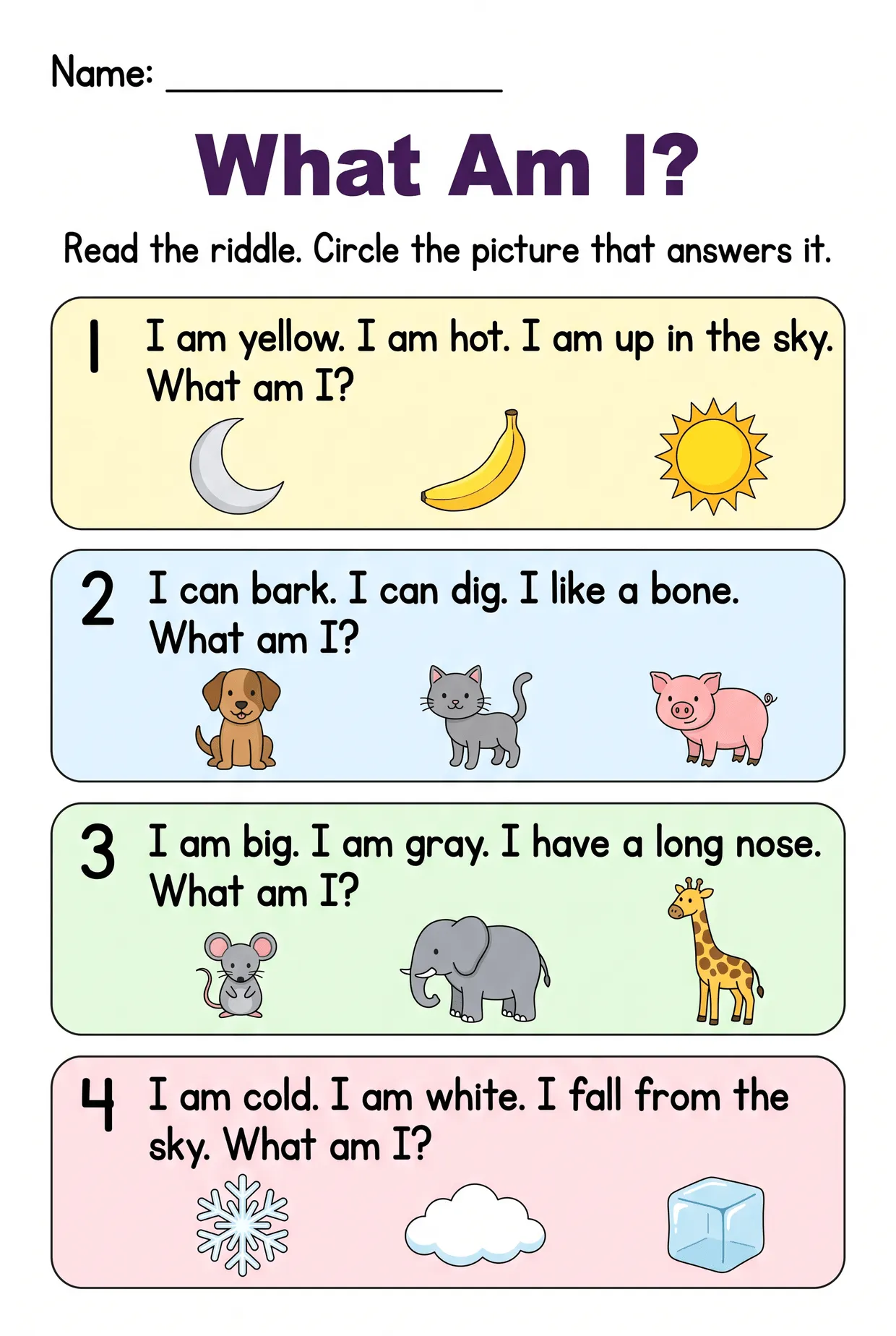
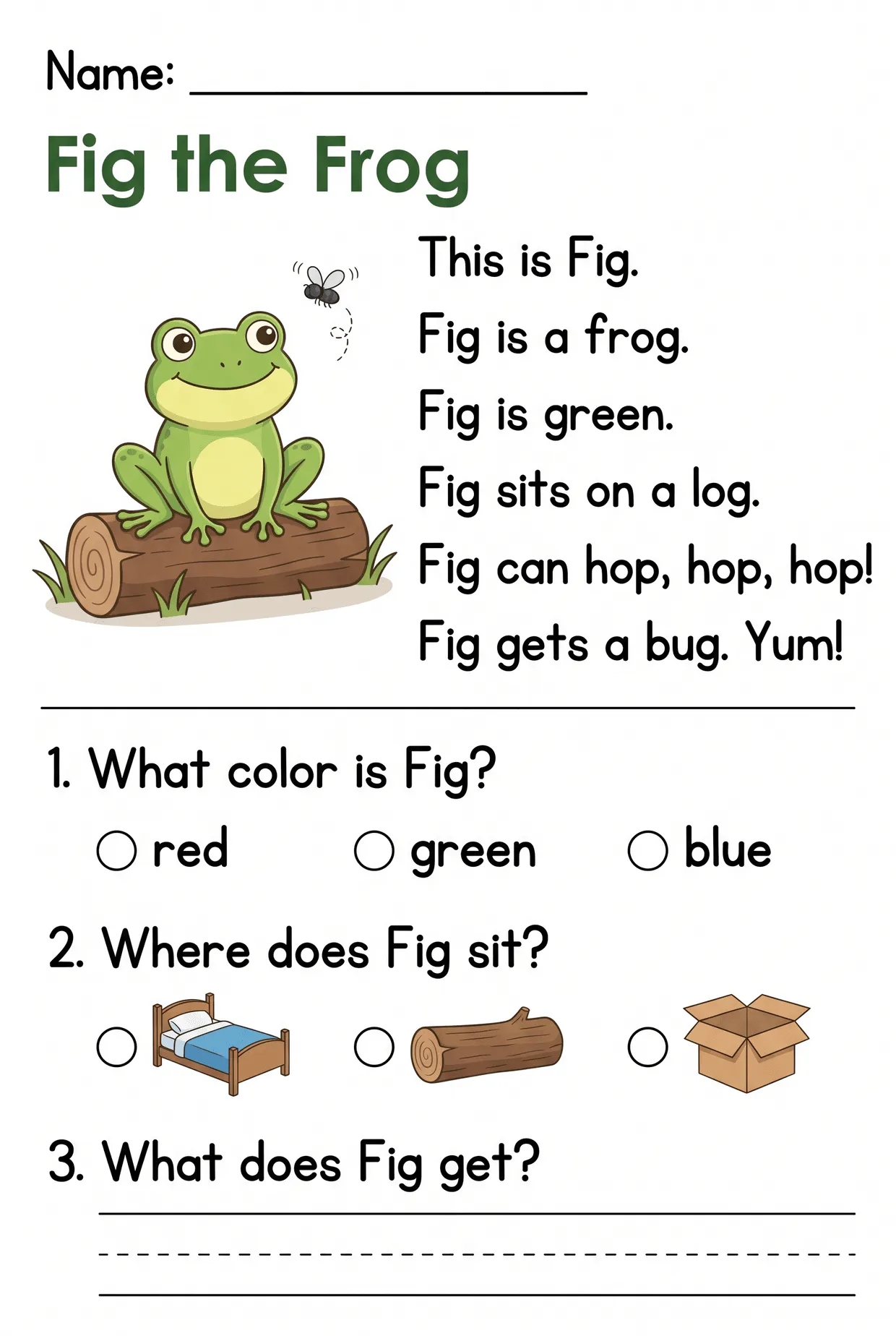
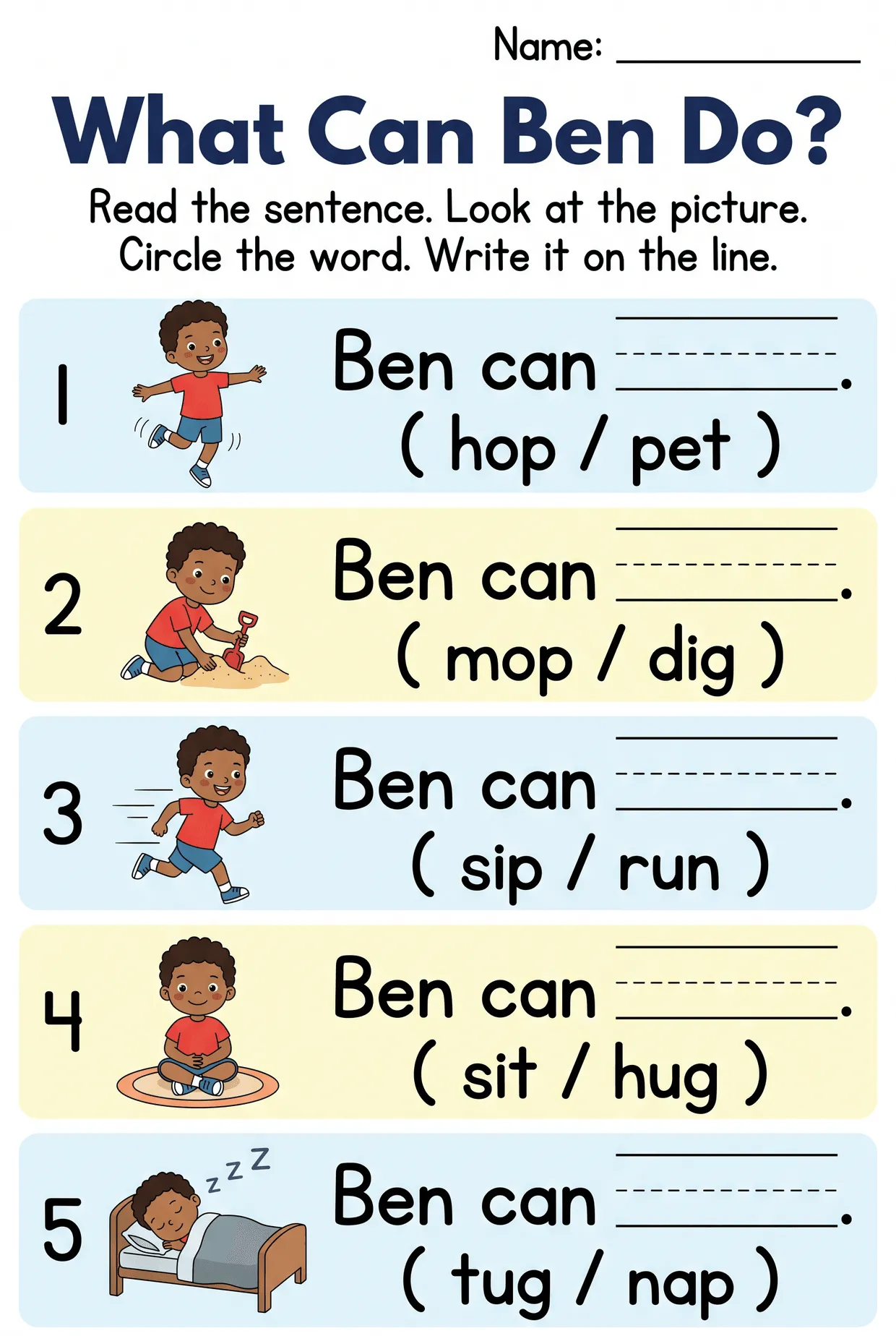
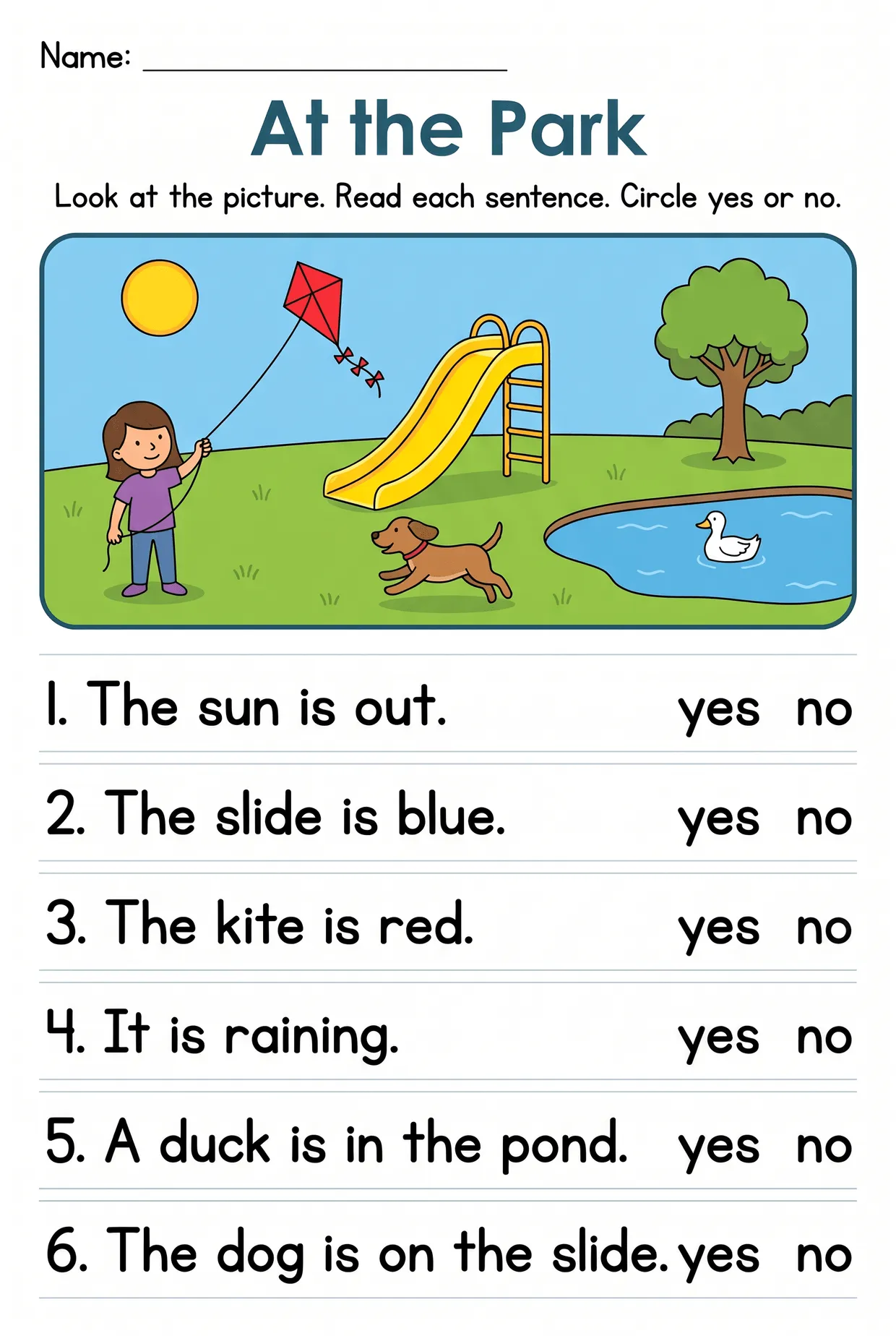
Very little. Most answers are a circled picture, a yes or no, a line drawn to a match or a drawing. Fig the frog asks for one written word at the end, and Ben can asks a child to copy a short verb, which is about as much handwriting as most kindergartners want in one sitting.
Why do some sentences sound a little odd, like a fox in a box?
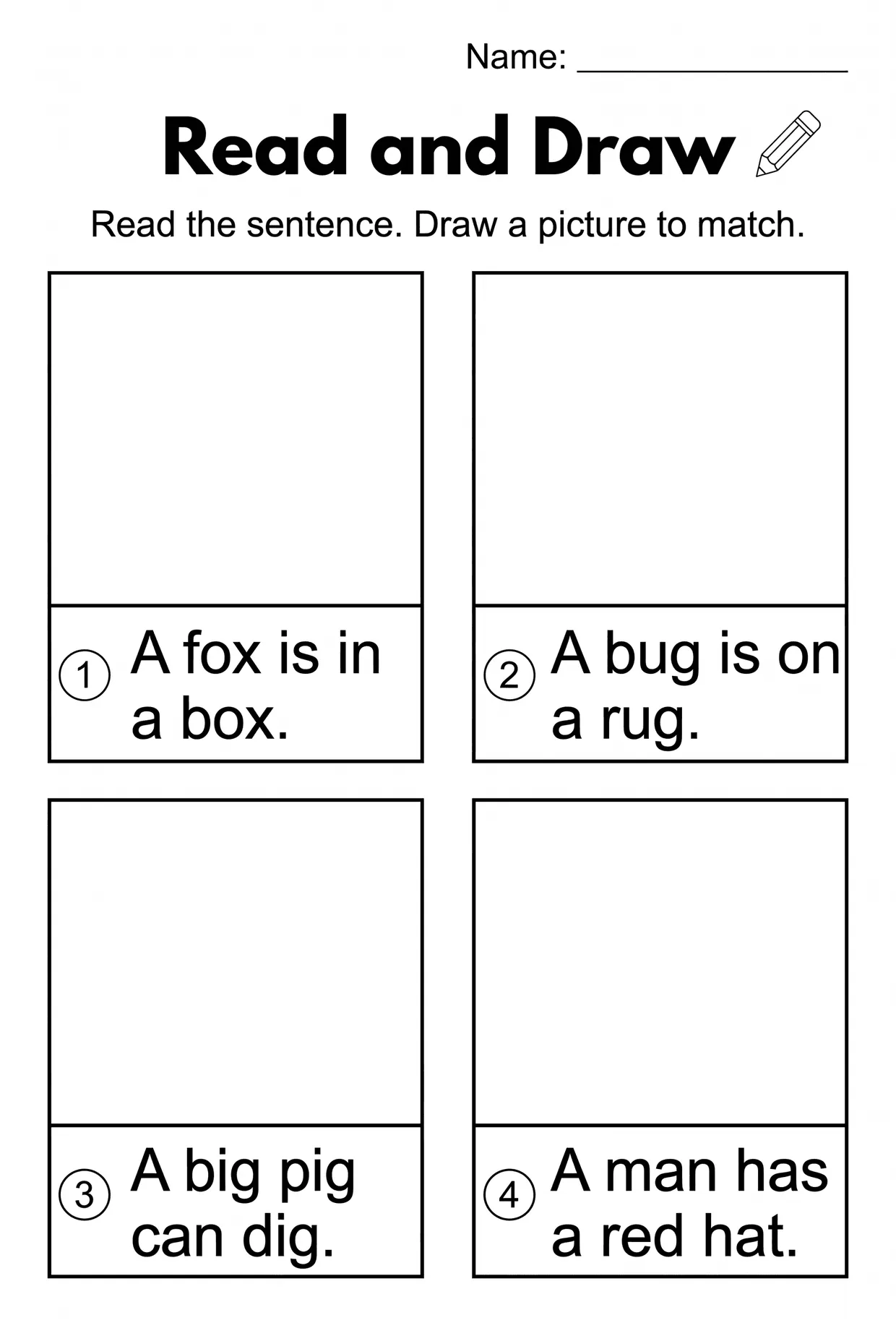
Because they are decodable. Nearly every word follows the short vowel patterns a kindergartner is learning, plus a few sight words like the, is and can. Real books use words a child cannot sound out yet, so these sentences trade a little naturalness for letting the child do all of the reading themselves.
What comes after these pages?
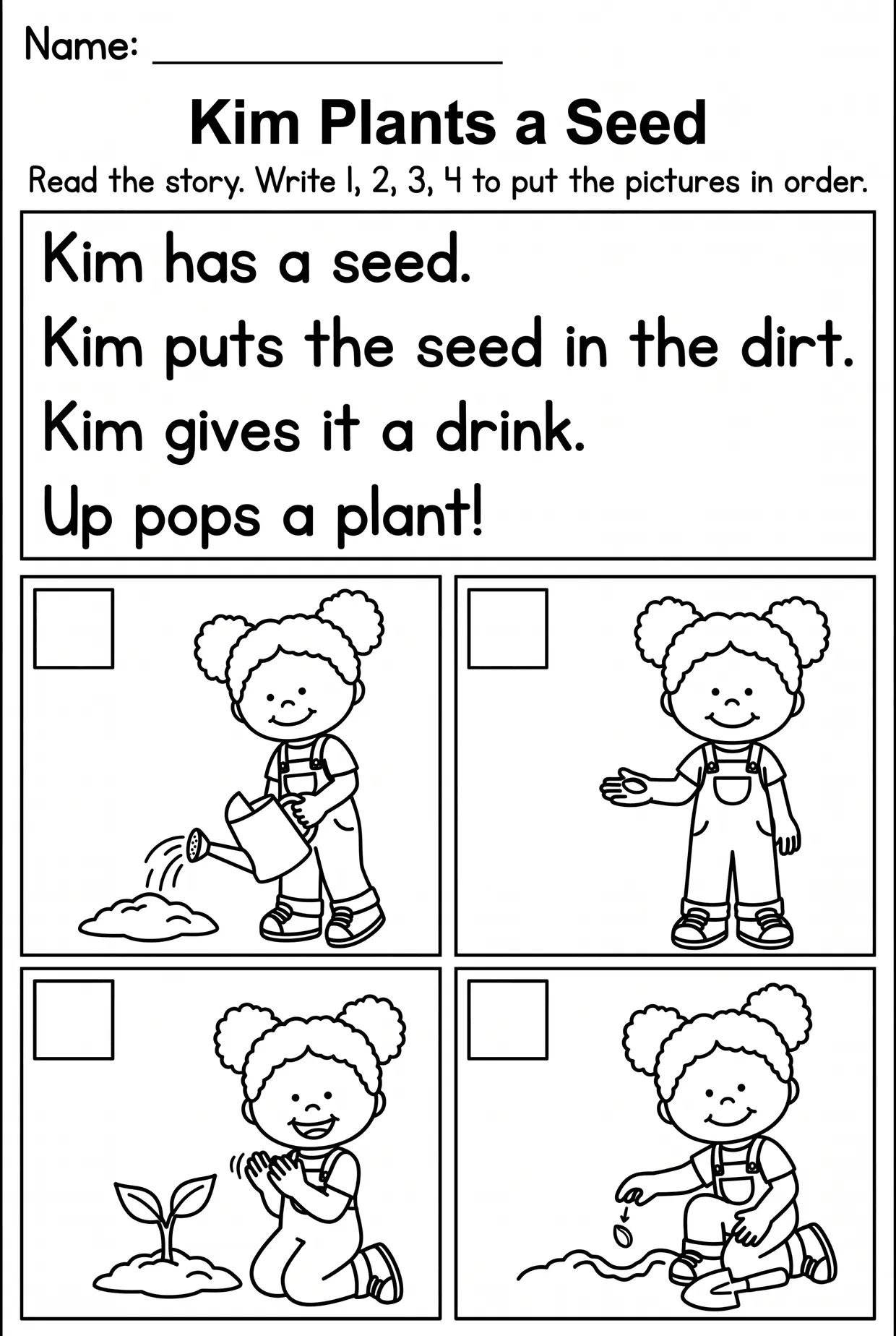
Retelling. Once a child can answer who and where questions about a short story, ask them to tell it back in order with first, next and last. The seed sequencing page is a step toward that, and first grade reading builds on it with longer stories and simple nonfiction.