Free Kindergarten Shapes Worksheets

Kindergarten teachers tend to print shapes in the first weeks of school and again for a math center later in the year, and plenty of parents print them for a quiet afternoon at the kitchen table. The shapes worksheets here suit all three, covering the circle, square, triangle and rectangle, then ovals, hexagons and octagons, plus a first look at solid shapes.

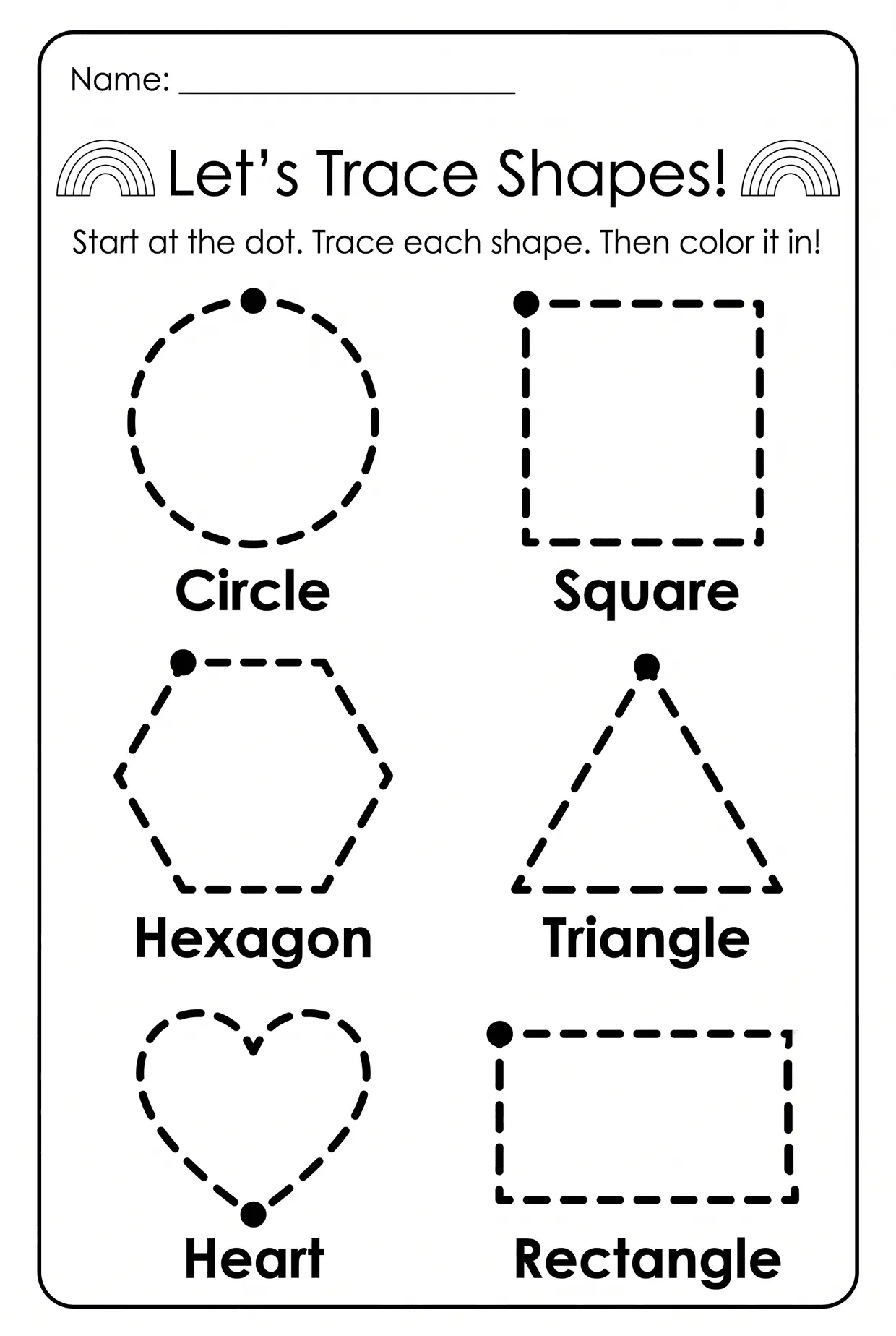
Tracing pages give each shape plenty of repeats, so a child follows the outline again and again and feels how a square differs from a circle. Hearts, stars, arrows and hexagons get the same treatment, and the slow, steady strokes are the ones that letters and numbers need too.

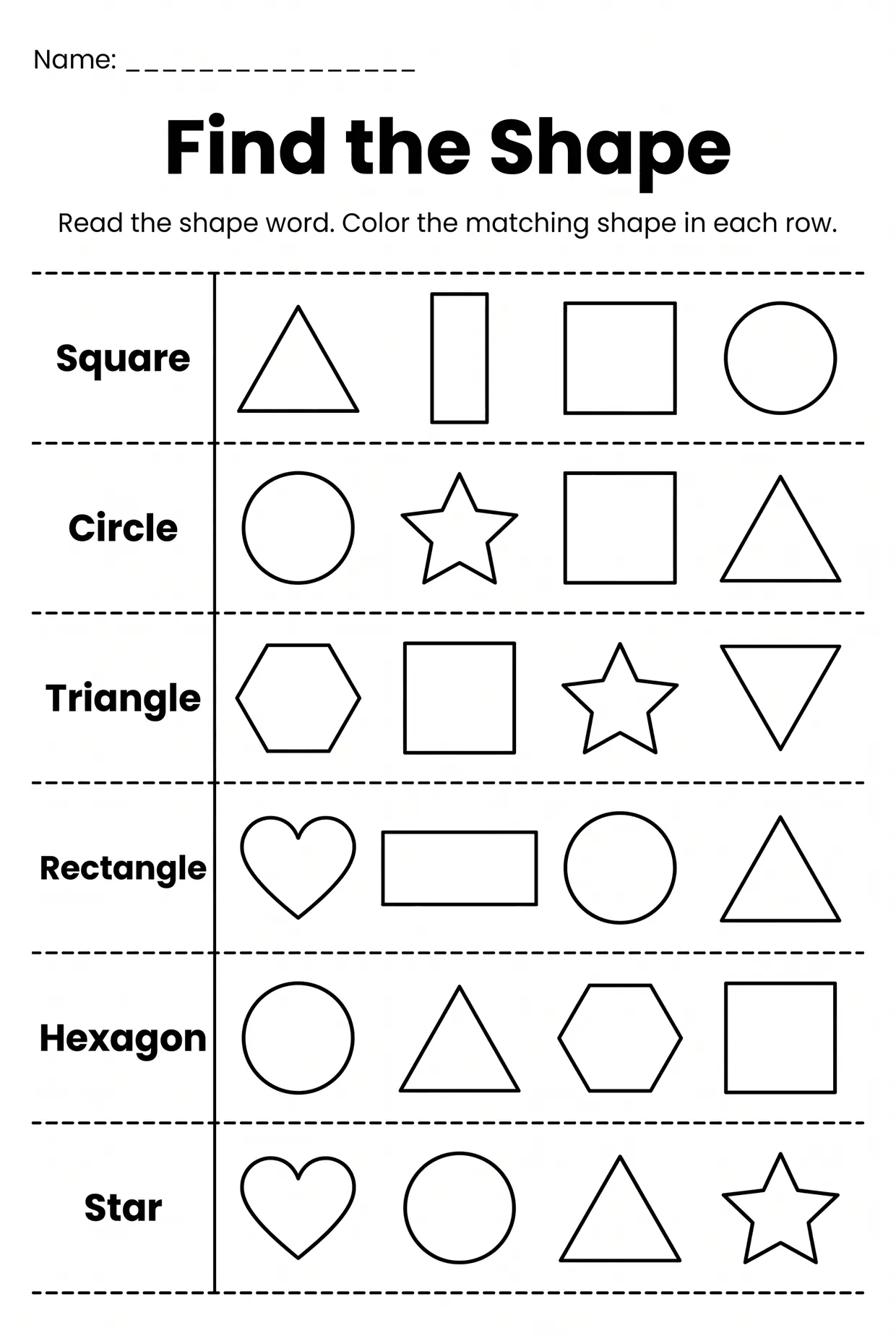
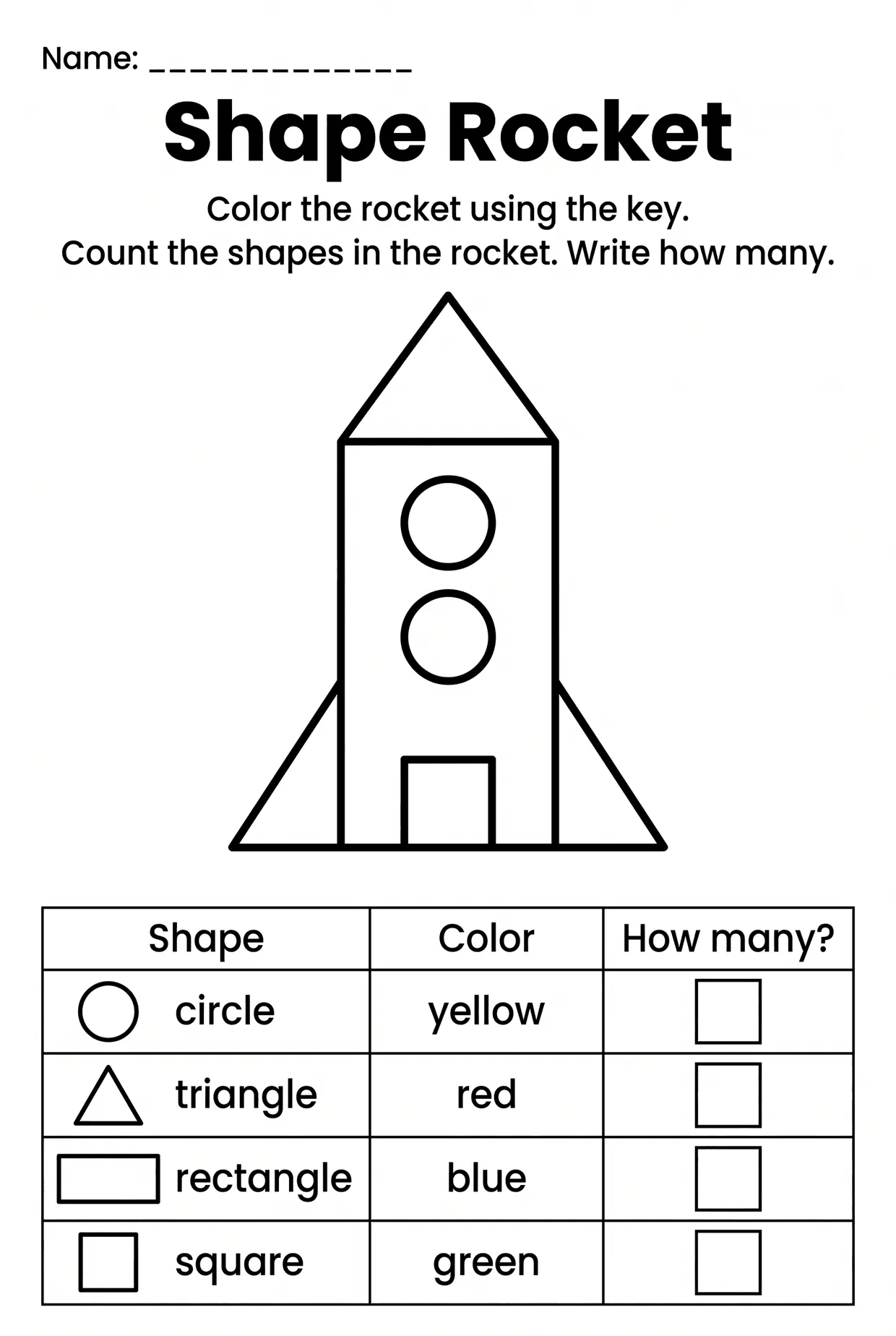
Describing a shape by its sides asks more of a child than recognizing it, which is why the count the sides pages matter: how many sides does a triangle, a pentagon or an octagon have? Coloring by a key and matching identical shapes ask a child to notice what makes each shape what it is, whatever its size or however it is turned, and the shape word pages, including two cut and paste sheets, connect each shape to its written name.

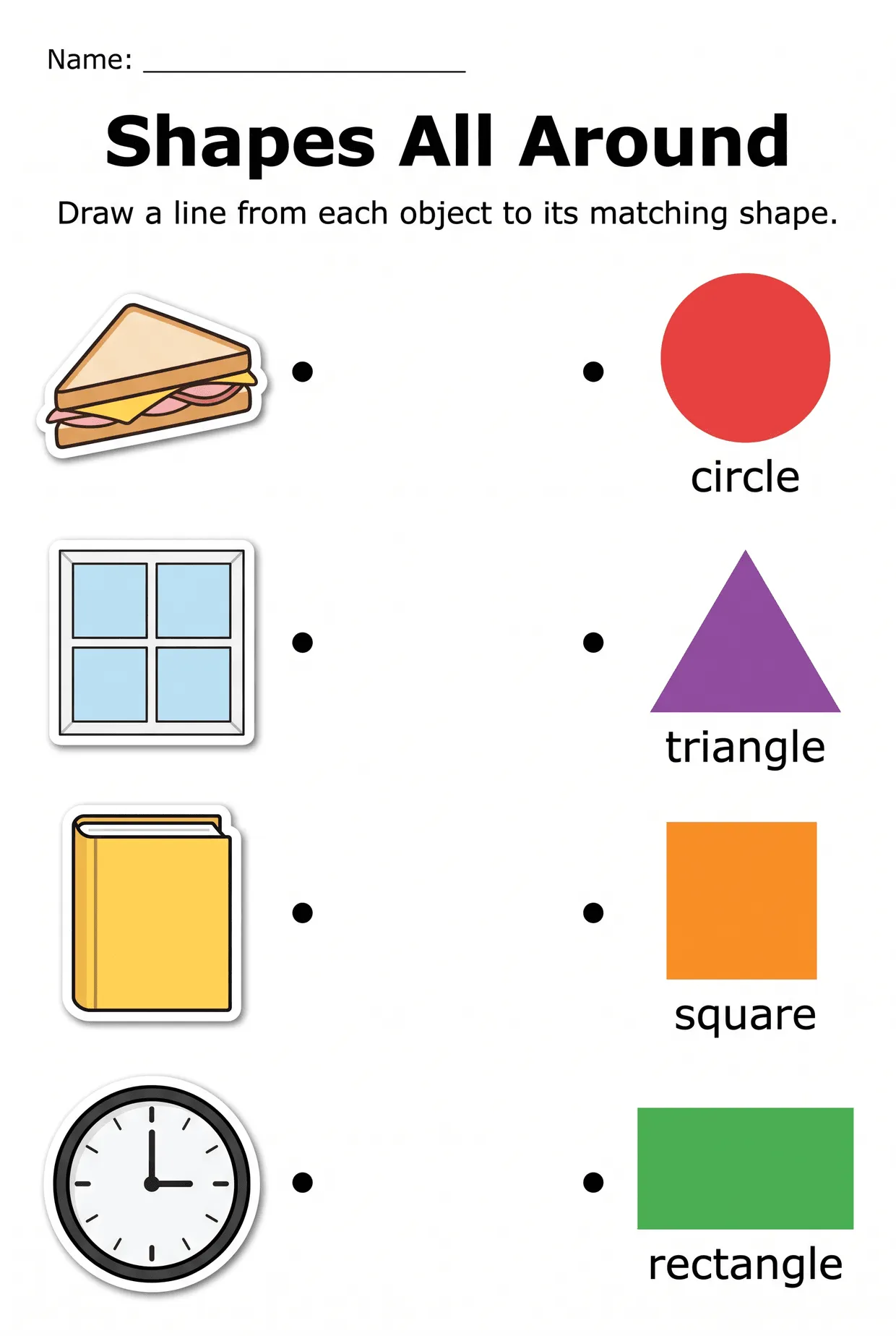
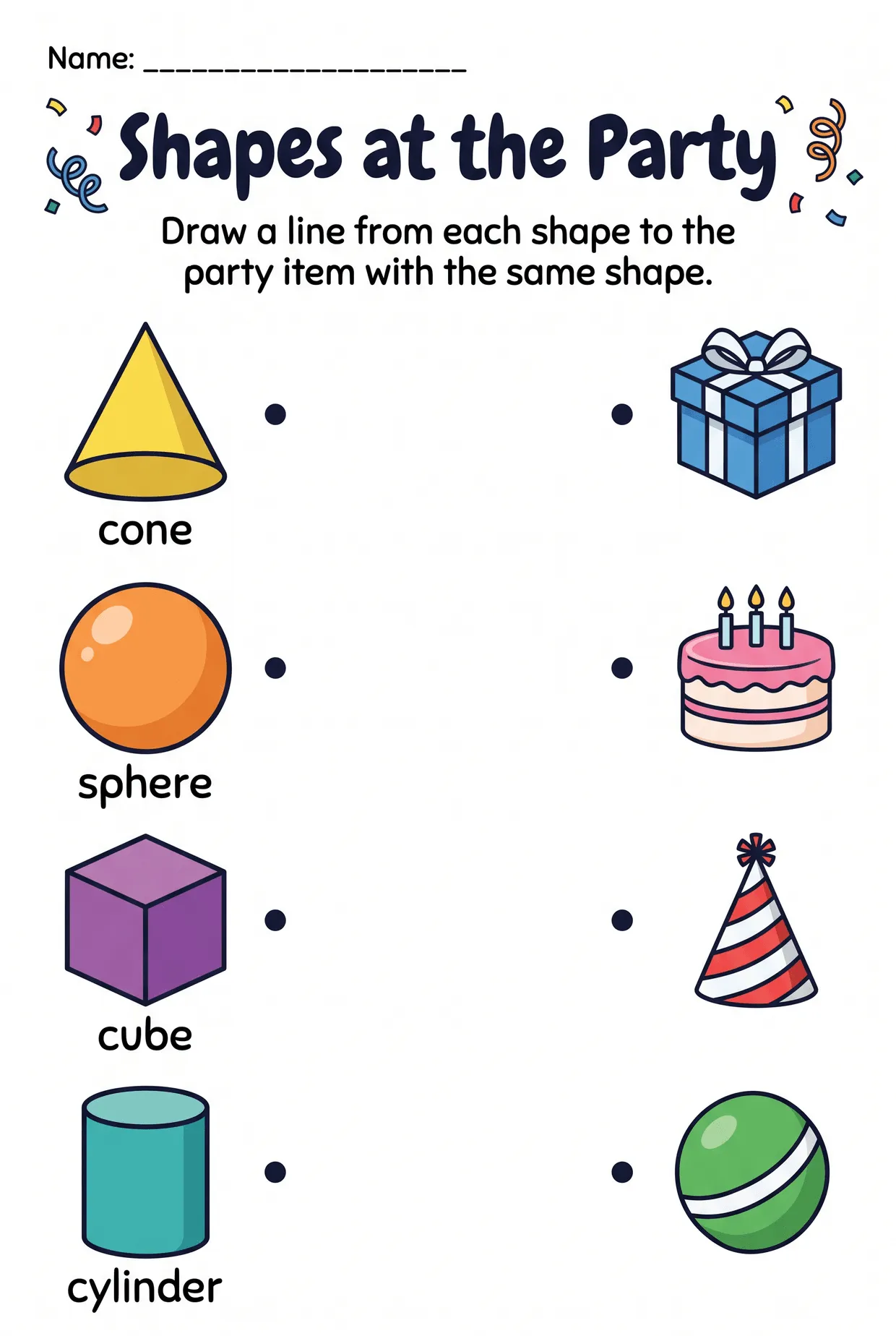
Two pages carry shapes off the paper and into the world. One matches circles, triangles, squares and rectangles to a sandwich, a window, a book and a clock, and a party page matches cones, spheres, cubes and cylinders to a hat, a ball, a gift and a cake. That second page is a child’s first real meeting with solid shapes, the kind that can be picked up and turned over.

18 free worksheets kindergarten Newest added October 2026
Free sets on this skill 13 Free Kindergarten Shapes Worksheets 13
Format
More kindergarten skills Kindergarten vocabulary worksheets 35Kindergarten addition worksheets 33Kindergarten subtraction worksheets 29Kindergarten CVC worksheets 18Kindergarten vowels worksheets 17Kindergarten food worksheets 15Kindergarten greetings worksheets 15Fruits worksheets for kindergarten 14Kindergarten ordinal numbers worksheets 14Kindergarten pattern worksheets 14Kindergarten rhyming words worksheets 14Family worksheets for kindergarten 11Kindergarten reading comprehension worksheets 11

Questions about kindergarten shapes worksheets

Which shapes should a kindergartner know?

Kindergarten geometry (K.G) expects children to name circles, squares, triangles, rectangles and hexagons, plus the solid shapes cube, cone, cylinder and sphere. They should name a shape whatever its size or whichever way it is turned. The pages cover all of those and add extras like ovals, stars and octagons.

My child calls a tilted square a diamond. Is that wrong?

Lots of children do this, and it shows the child is judging a shape by how it sits rather than by its sides. Turn a paper square slowly and ask whether it changed. Counting the sides and corners each time is what settles it, which is why the count the sides pages are worth doing.

What is the difference between flat and solid shapes?

Flat shapes, like a circle or a square, lie on the page. Solid shapes, like a sphere or a cube, take up space and can be picked up and turned. Kindergartners start telling the two apart, and matching a party hat to a cone or a gift box to a cube is an easy way in.

Does tracing shapes help with handwriting too?

Yes. Tracing circles, straight lines and corners uses the same strokes that letters and numbers need, so a page of shapes does double duty. Encourage a slow, steady trace from one starting point rather than a fast scribble around the outline.

How can we practice shapes around the house?

Go on a shape hunt: clocks, windows, books, plates and road signs are full of them. Ask the child to name each shape and say how many sides it has. A few minutes of this after a worksheet makes the names stick.