Free Kindergarten Vowels Worksheets

Why can a kindergartner recite a, e, i, o and u and still read pin as pen? Naming the vowels and hearing them inside a word are two different skills, and the kindergarten vowels worksheets on this page work on both, along with the short sound each vowel makes (the a in cat, the e in bed).

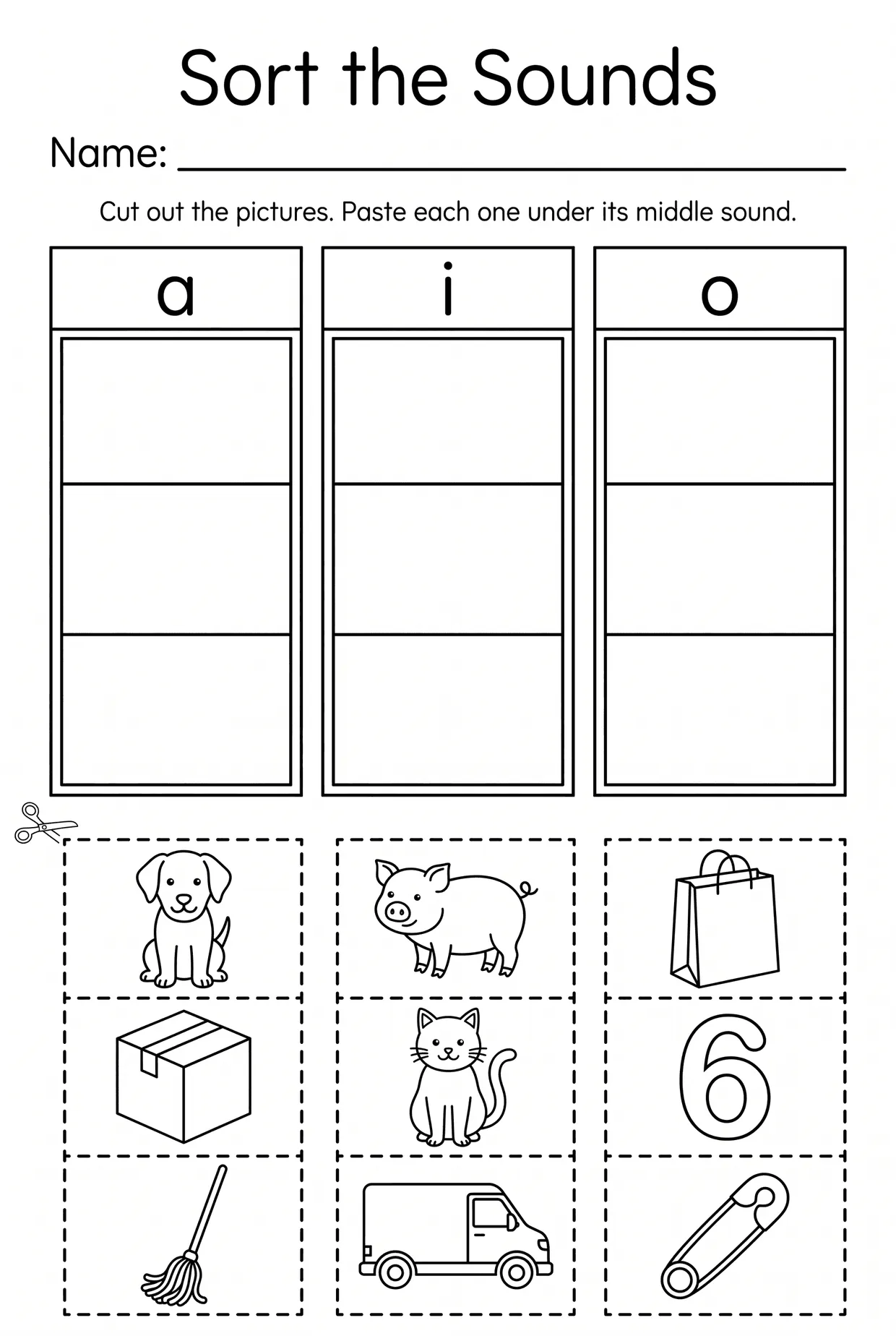
Telling vowels from consonants is its own hurdle, because on the page they are all just letters. Coloring pages hide the vowels among consonants on balloons, flowers, pears and stars, and a child colors only the a, e, i, o and u, with no writing at all. A space hunt does the same with big capitals. The sorting pages split CVC words like map, sun and hen into one vowel and two consonants, showing that every short word has a vowel inside.

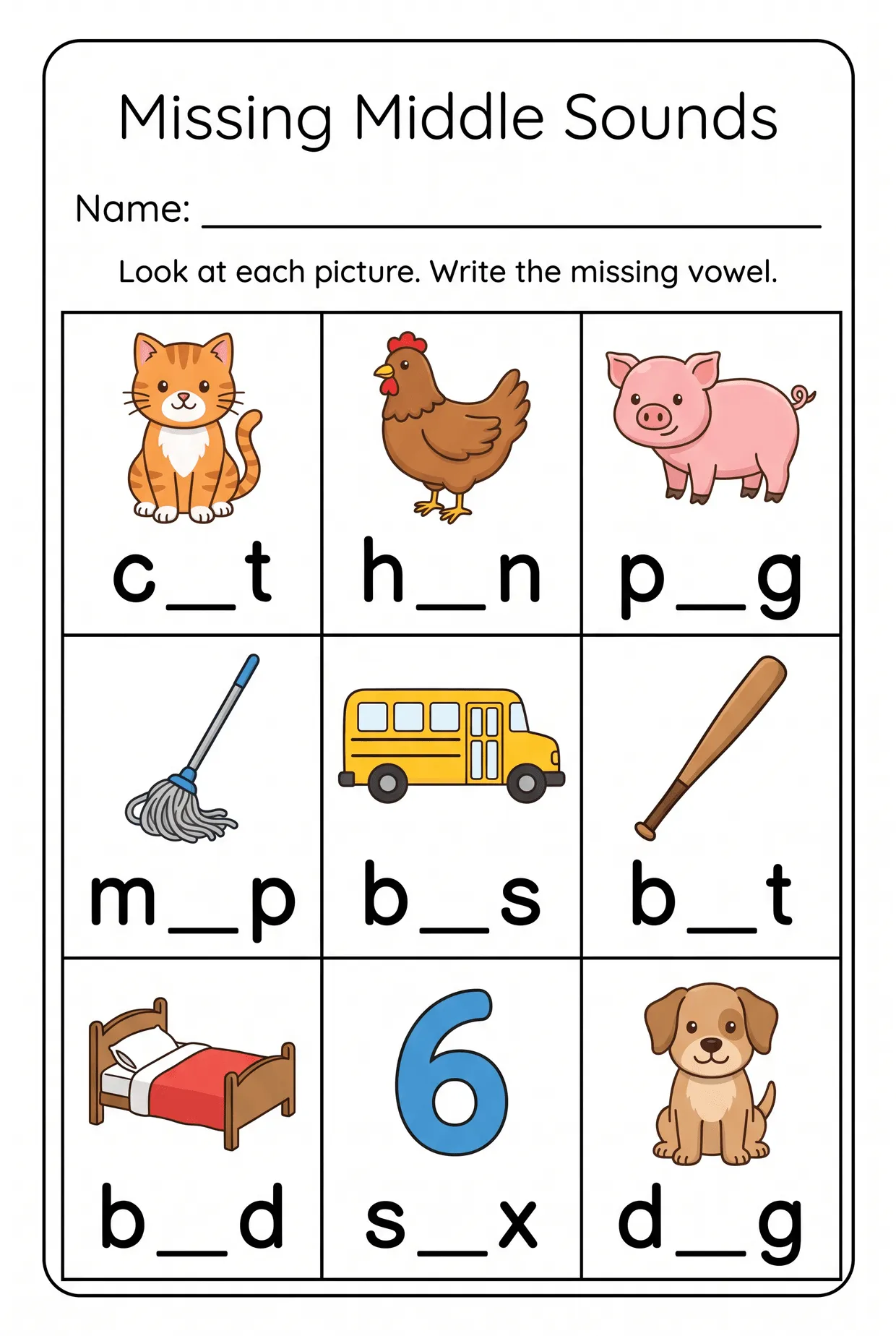
Hearing the middle sound is where most children stall. With no letter to look at, a child has to stretch the word, like caaat, and catch the sound in between. The fill-in pages show a picture, like a pig, a web or a pot, and leave the vowel blank to write.

Short e and short i cause more mix-ups than any other pair, since the sounds sit close together and in some accents nearly match. Pages that mix all five vowels help, because a child has to choose each time rather than coast on a page of one sound, and a child who can tell pin from pen by ear is ready for a lot of real words.

17 free worksheets kindergarten Newest added September 2026
Free sets on this skill 16 Free Vowels Worksheets for Kindergarten 16
Format
More kindergarten skills Kindergarten vocabulary worksheets 35Kindergarten addition worksheets 33Kindergarten subtraction worksheets 29Kindergarten shapes worksheets 18Kindergarten CVC worksheets 18Kindergarten food worksheets 15Kindergarten greetings worksheets 15Fruits worksheets for kindergarten 14Kindergarten ordinal numbers worksheets 14Kindergarten pattern worksheets 14Kindergarten rhyming words worksheets 14Family worksheets for kindergarten 11Kindergarten reading comprehension worksheets 11

Questions about kindergarten vowels worksheets

What do kindergartners need to know about vowels?

By the end of the year, a kindergartner should know the five vowels and the short sound each one makes, and be able to hear that sound in the middle of a three letter word. That middle sound is part of RF.K.2 in the Common Core, which asks children to isolate the vowel in a CVC word. Most reading practice this year rests on those short sounds.

My child can name the vowels but cannot hear them in words. What helps?

Stretch the word out slowly, like caaat, and ask what sound sits in the middle. Saying it in front of a mirror helps too, since each short vowel makes a different mouth shape. The picture pages are made for this, because the picture supplies the word and the child only has to listen for one sound.

Why do short e and short i get mixed up so often?

The two sounds are close, and in some accents they are almost the same. Practice them as a pair with words like pen and pin, or bed and bid, saying each one slowly. The fill-in pages that mix all five vowels are useful here, because the child has to choose rather than guess from a page of one sound.

Should we start with the coloring pages or the writing pages?

Coloring first. Finding the vowels in a field of letters builds quick recognition without the extra load of writing. Once a child colors the right balloons or flowers without hesitating, move to the pages that ask them to write the missing vowel.

How would you explain vowels and consonants to a five year old?

A simple way to say it is that every word needs a vowel, and vowels are the letters that keep your mouth open. The sorting pages make this concrete by splitting a word like sun into its one vowel and two consonants. A child who knows every word has one starts looking for it when reading.