Questions about fruits worksheets for kindergarten
How do kindergartners tell fruits from vegetables?
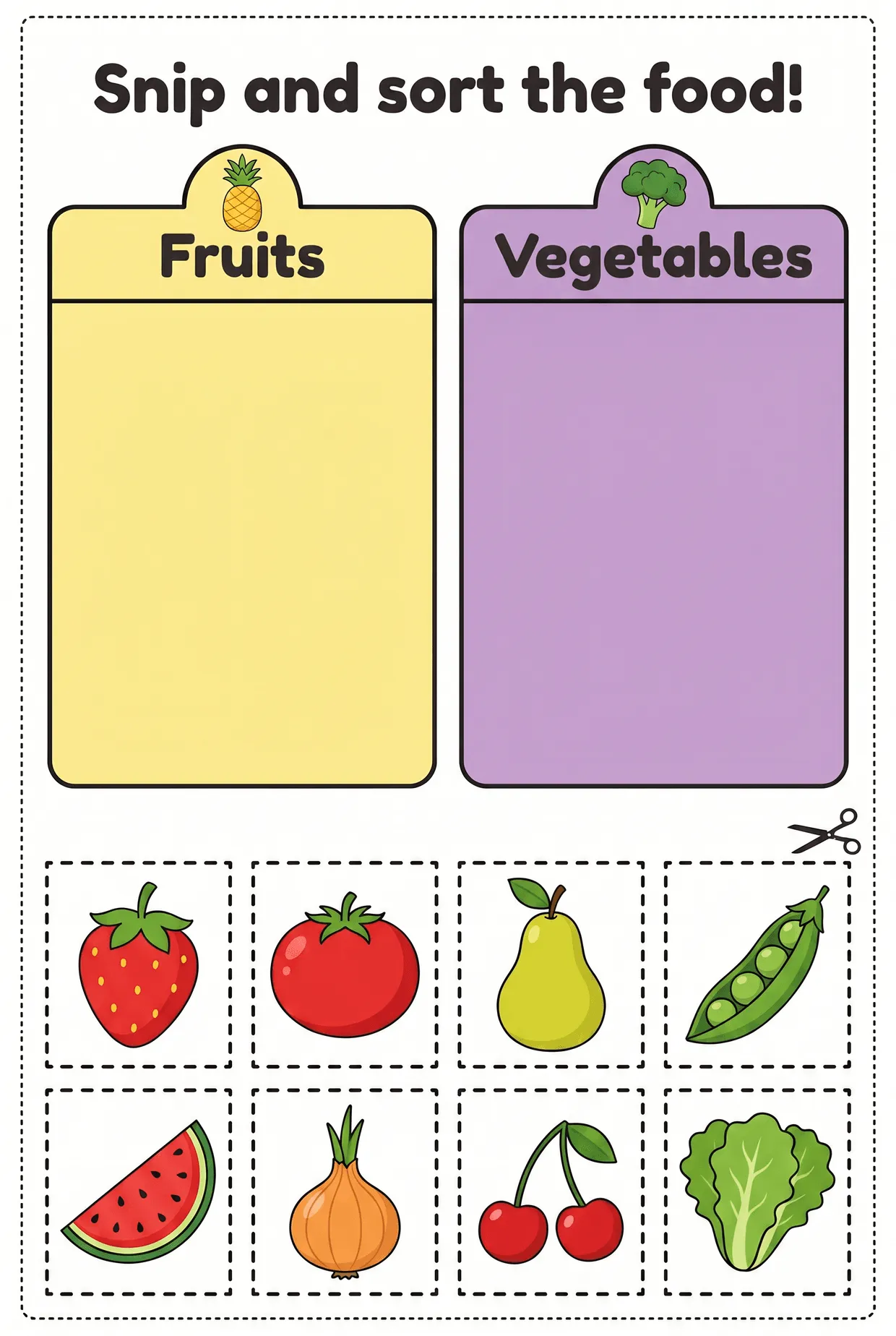
A simple rule for this age is that fruits usually hold seeds and taste sweet, while vegetables are the roots, leaves and stems we eat. It is not perfect, but it gives a child a reason for each choice. Cutting open an apple and a carrot side by side makes the seed idea real.
Is a tomato a fruit or a vegetable?
Botanically it is a fruit, since it holds seeds, but in the kitchen it is treated as a vegetable. For kindergartners, either answer is fine if the child can explain why. It makes a good talking point after a sorting page.
Which fruits worksheet for kindergarten should we start with?
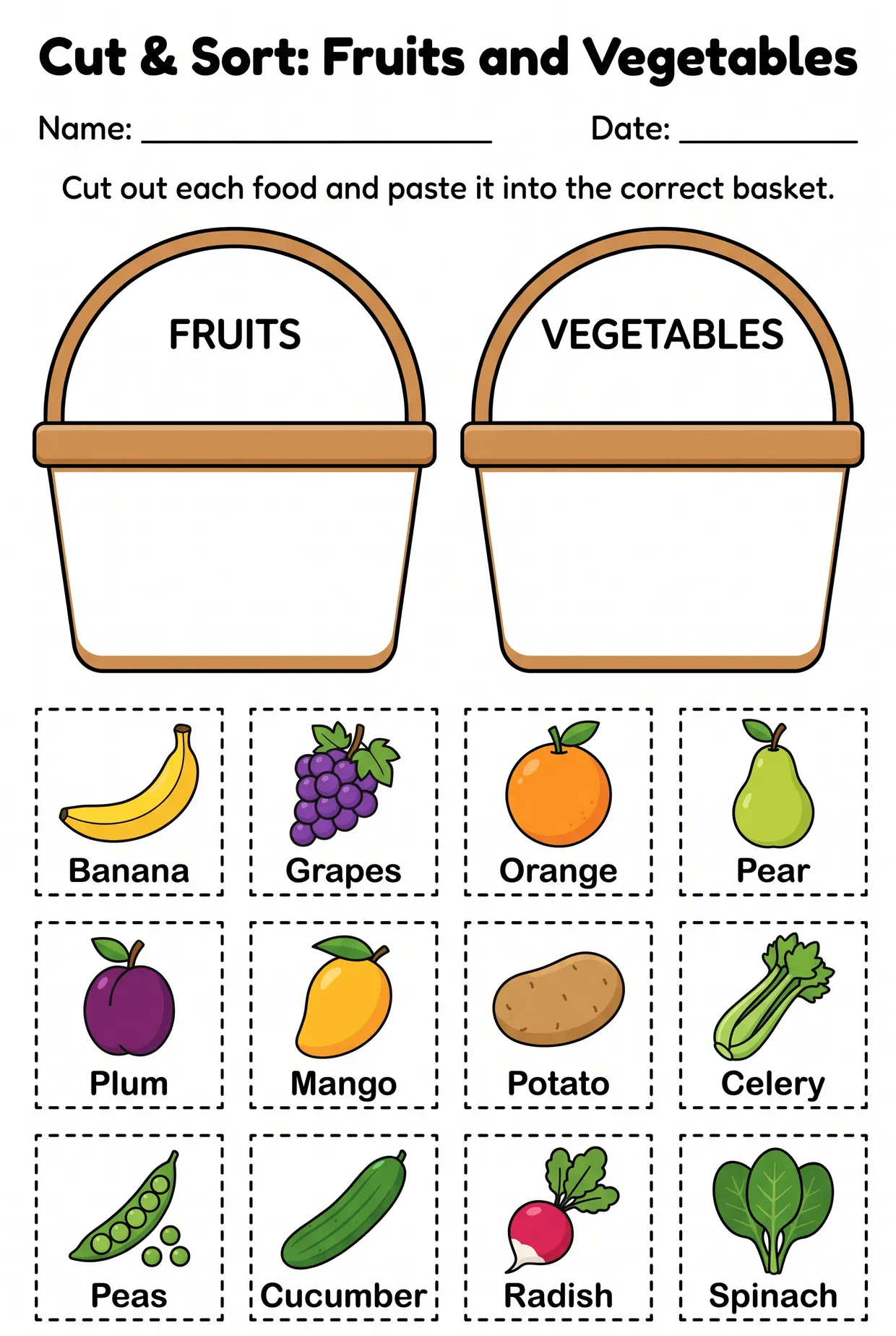
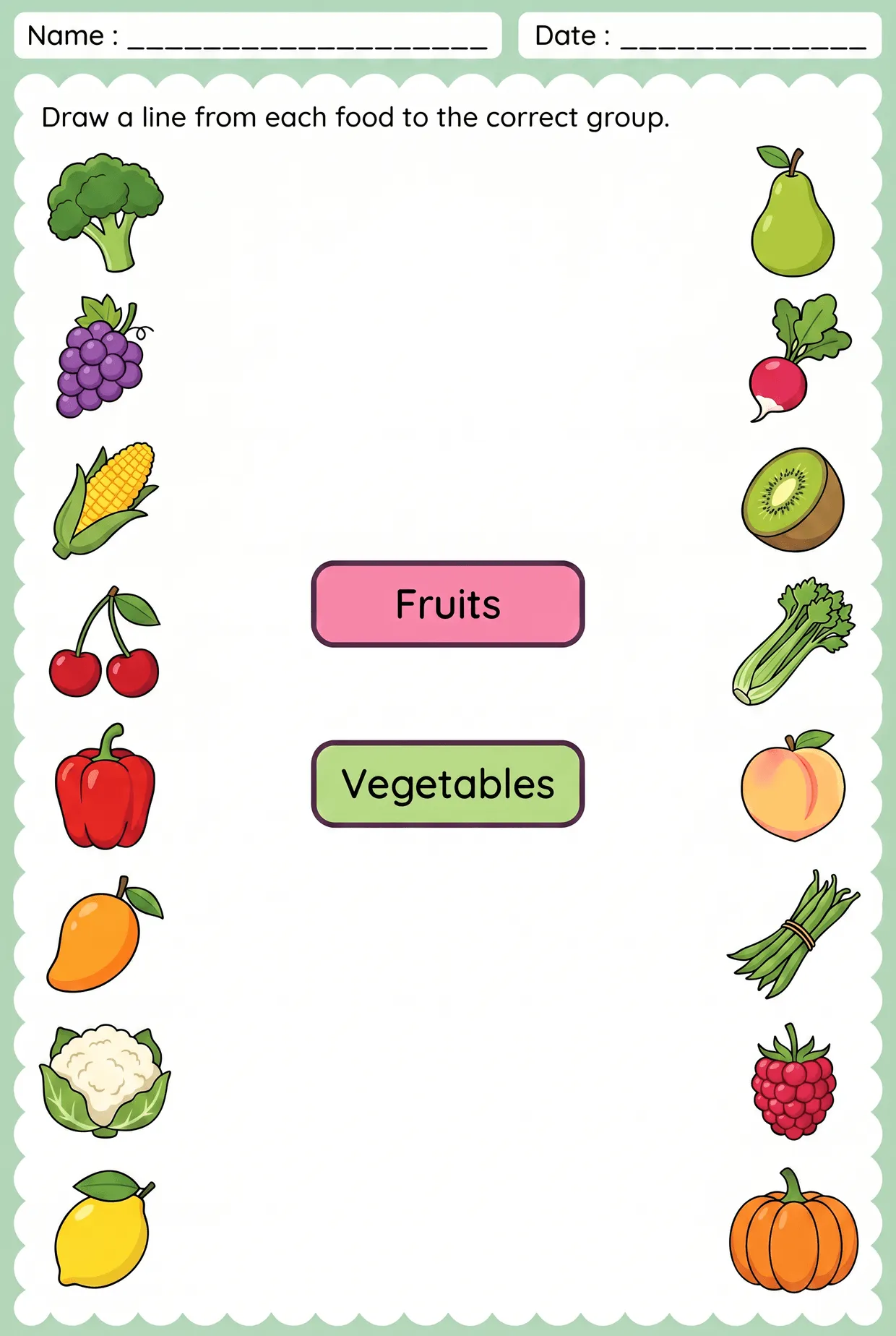
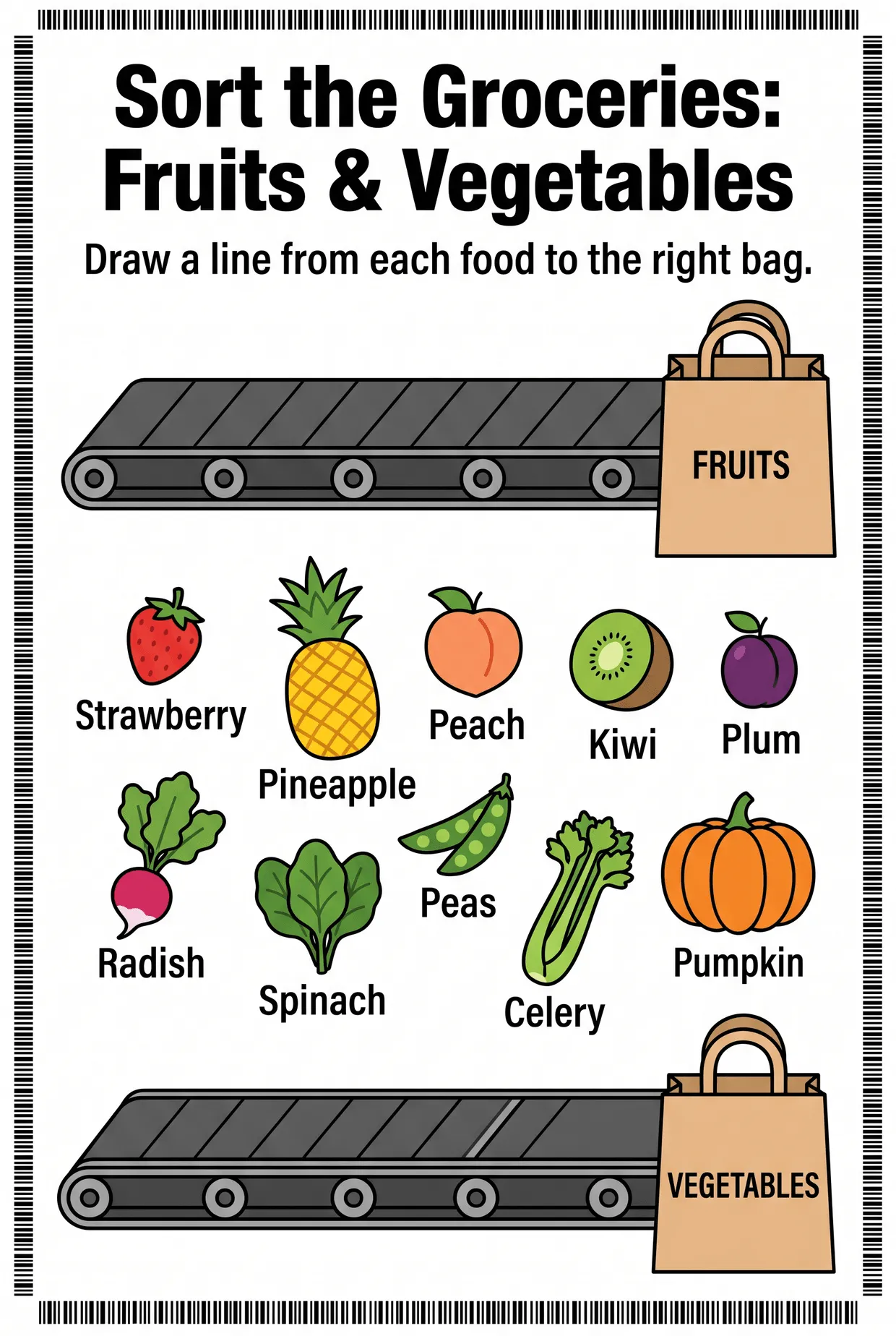
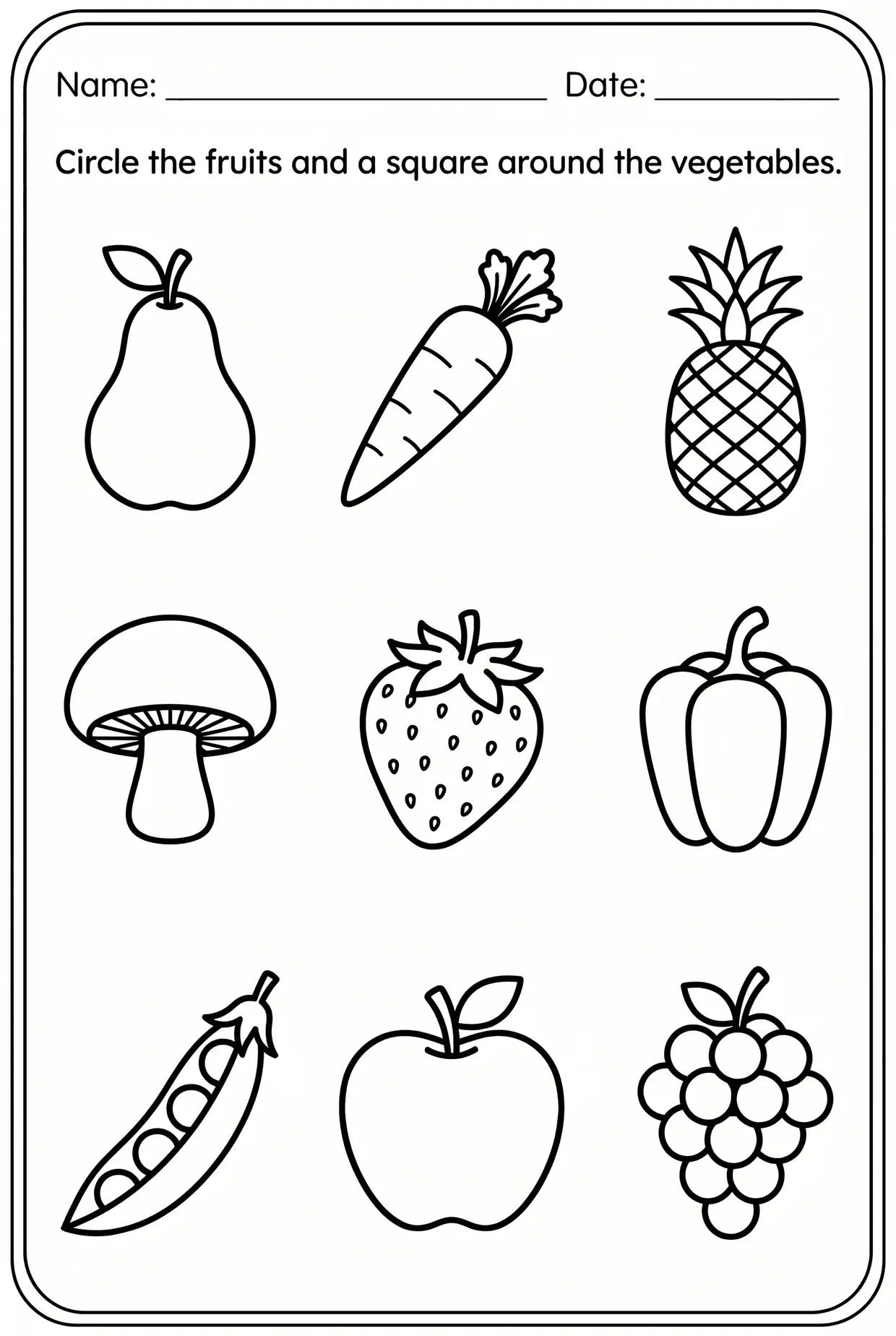
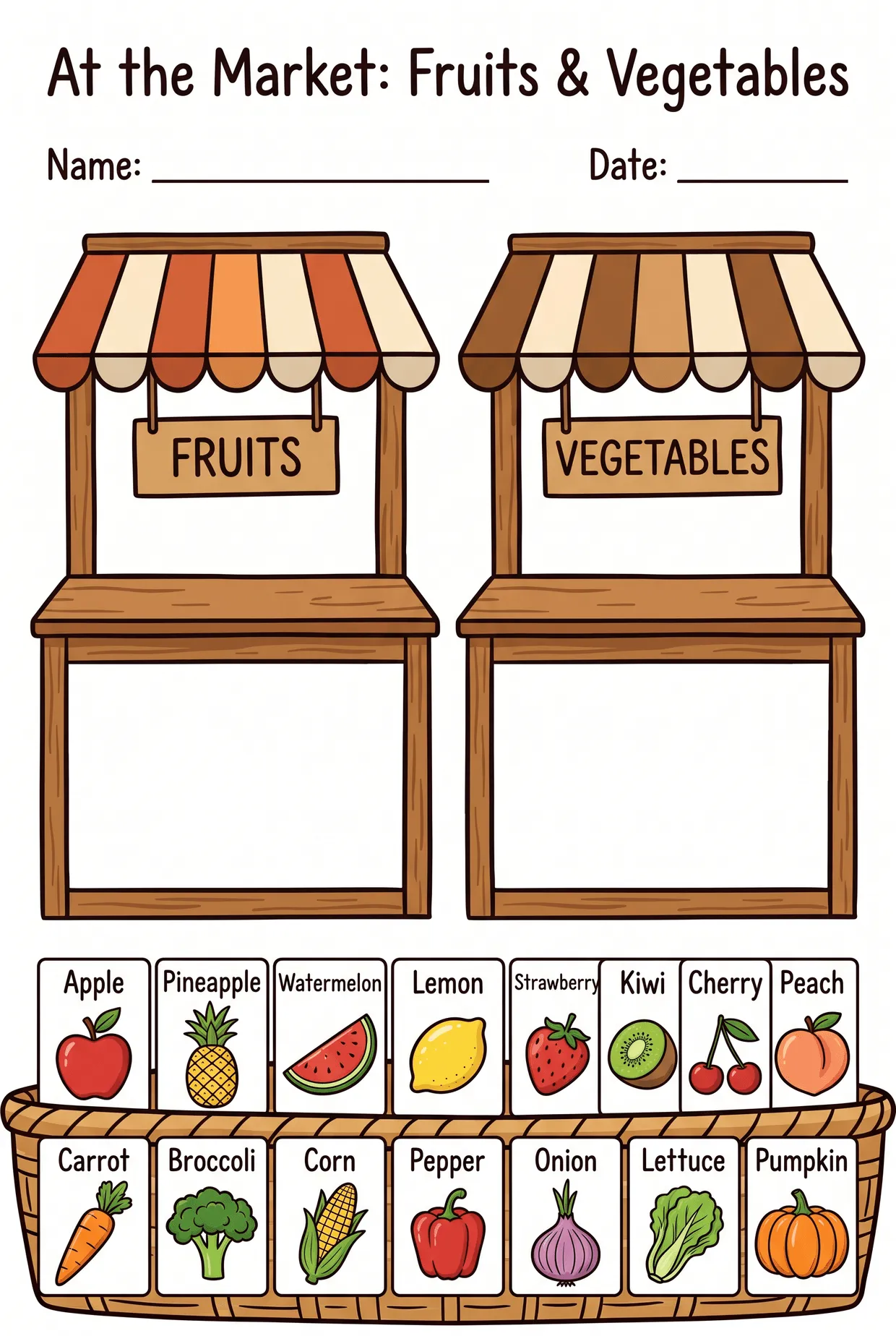
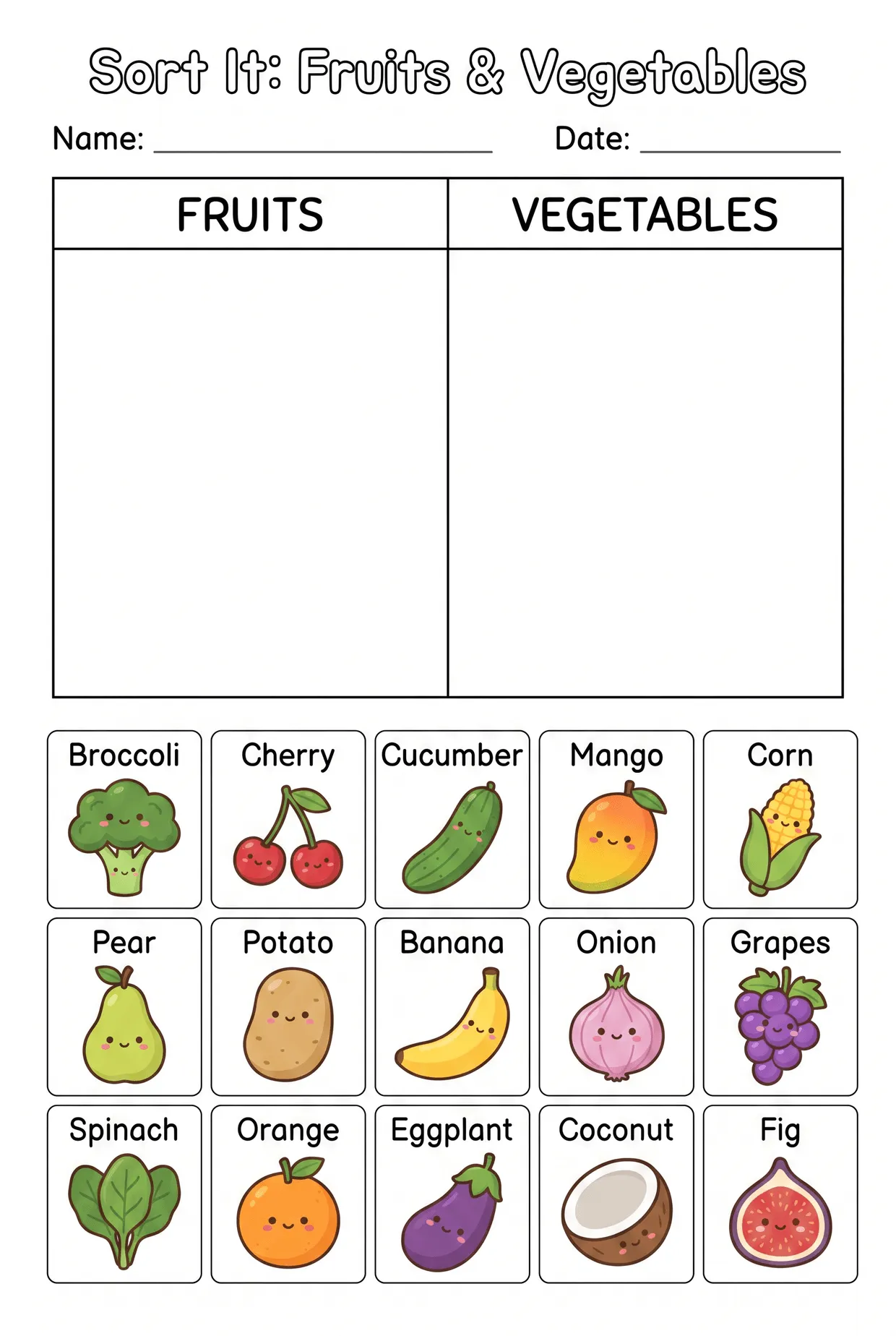
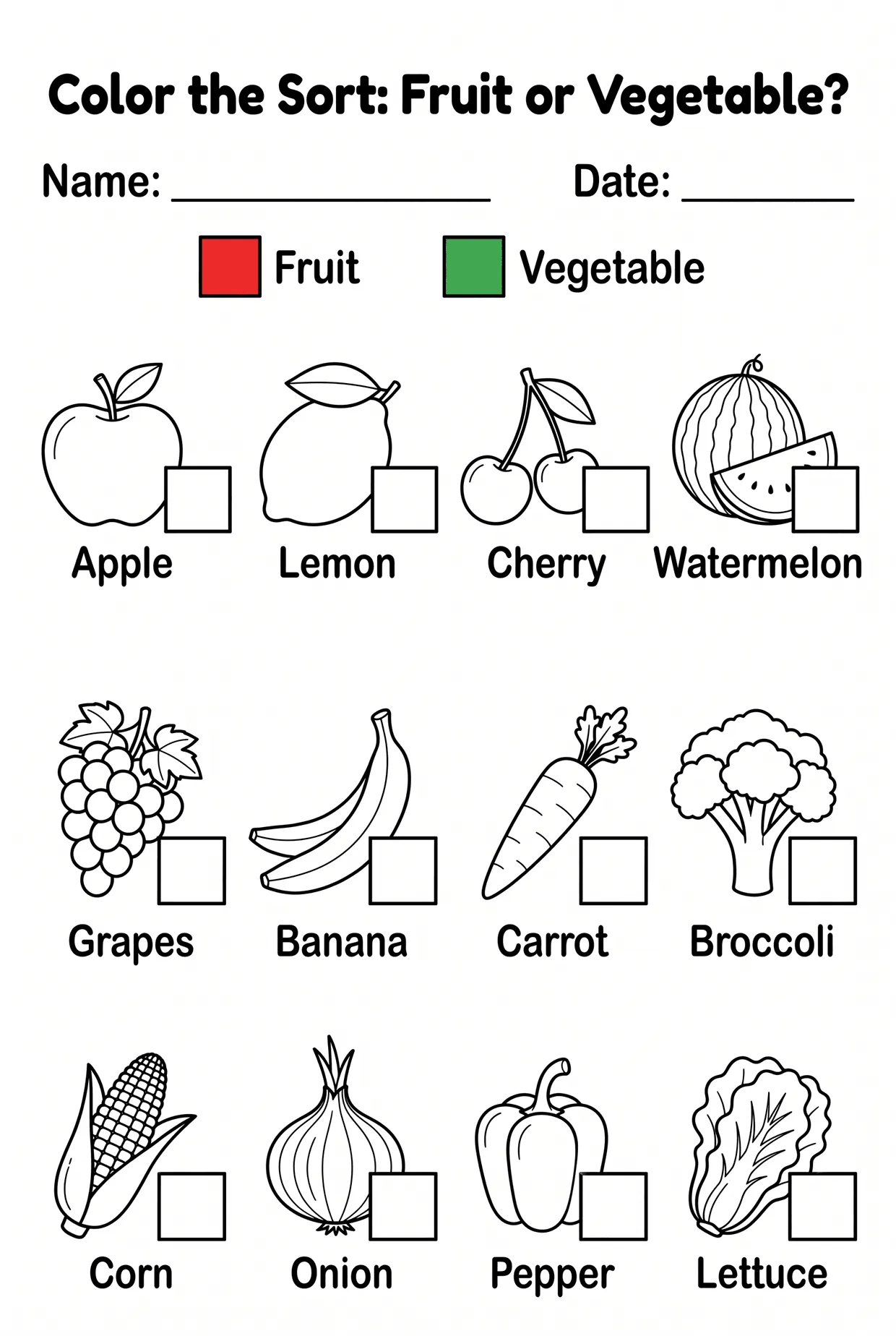
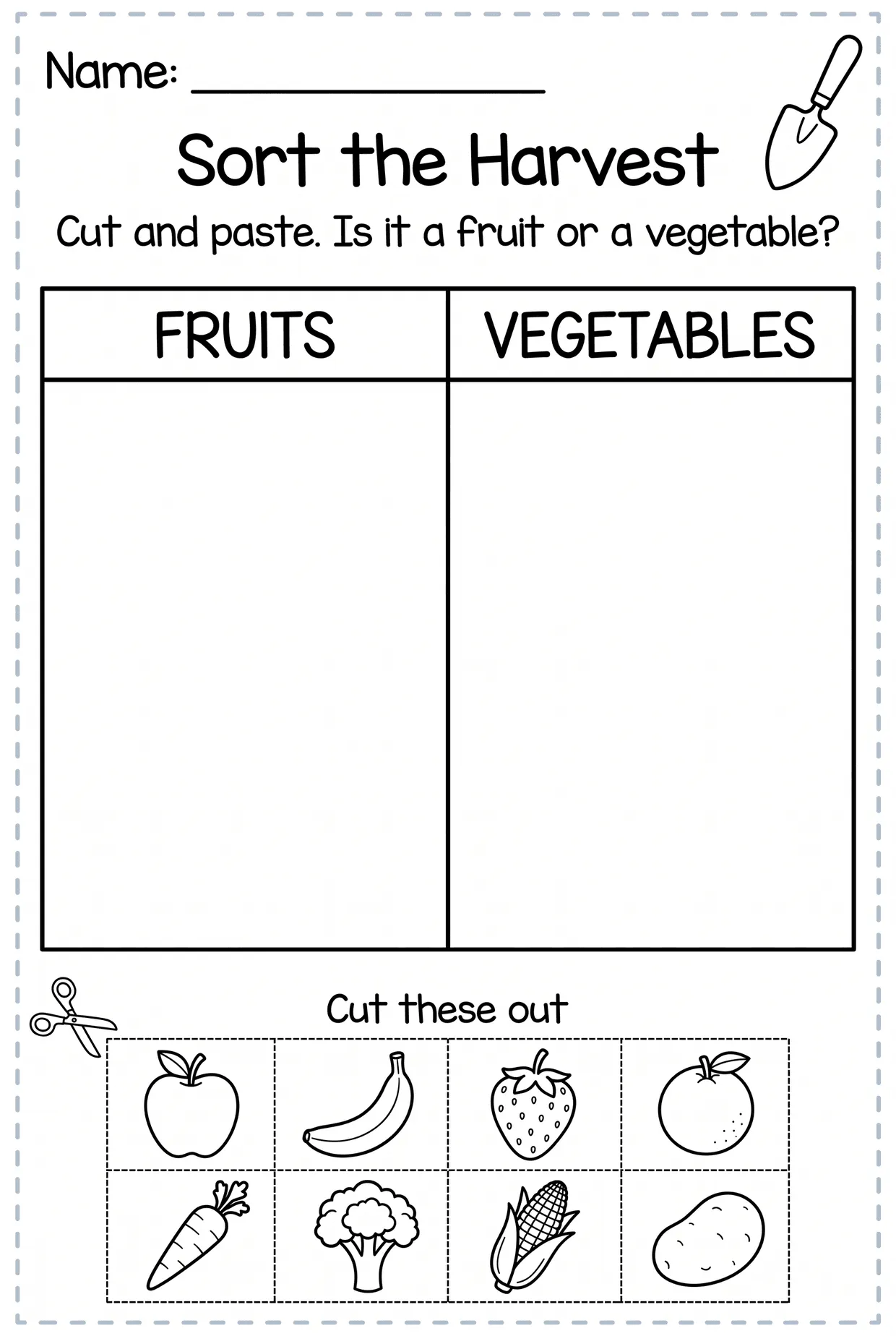
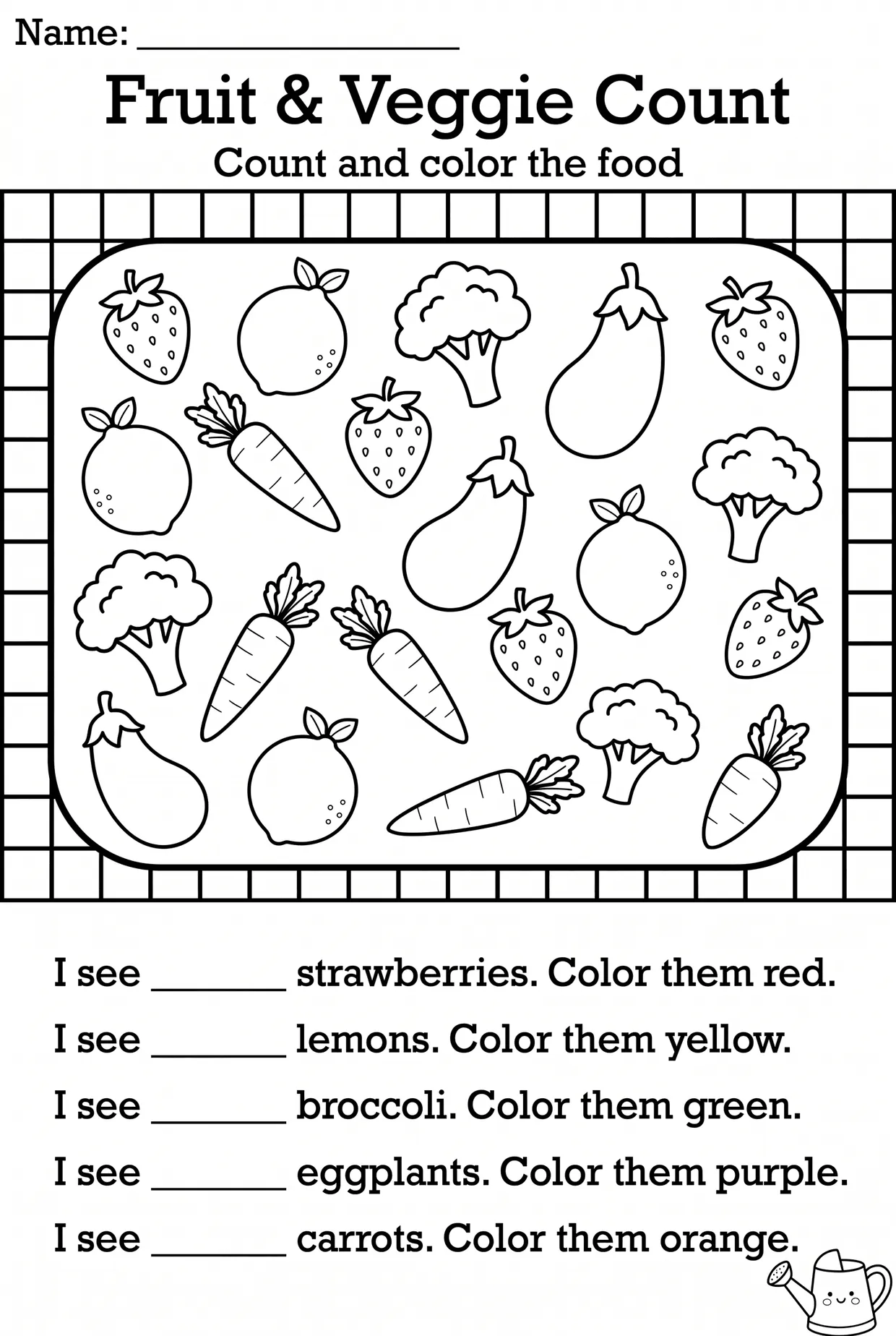
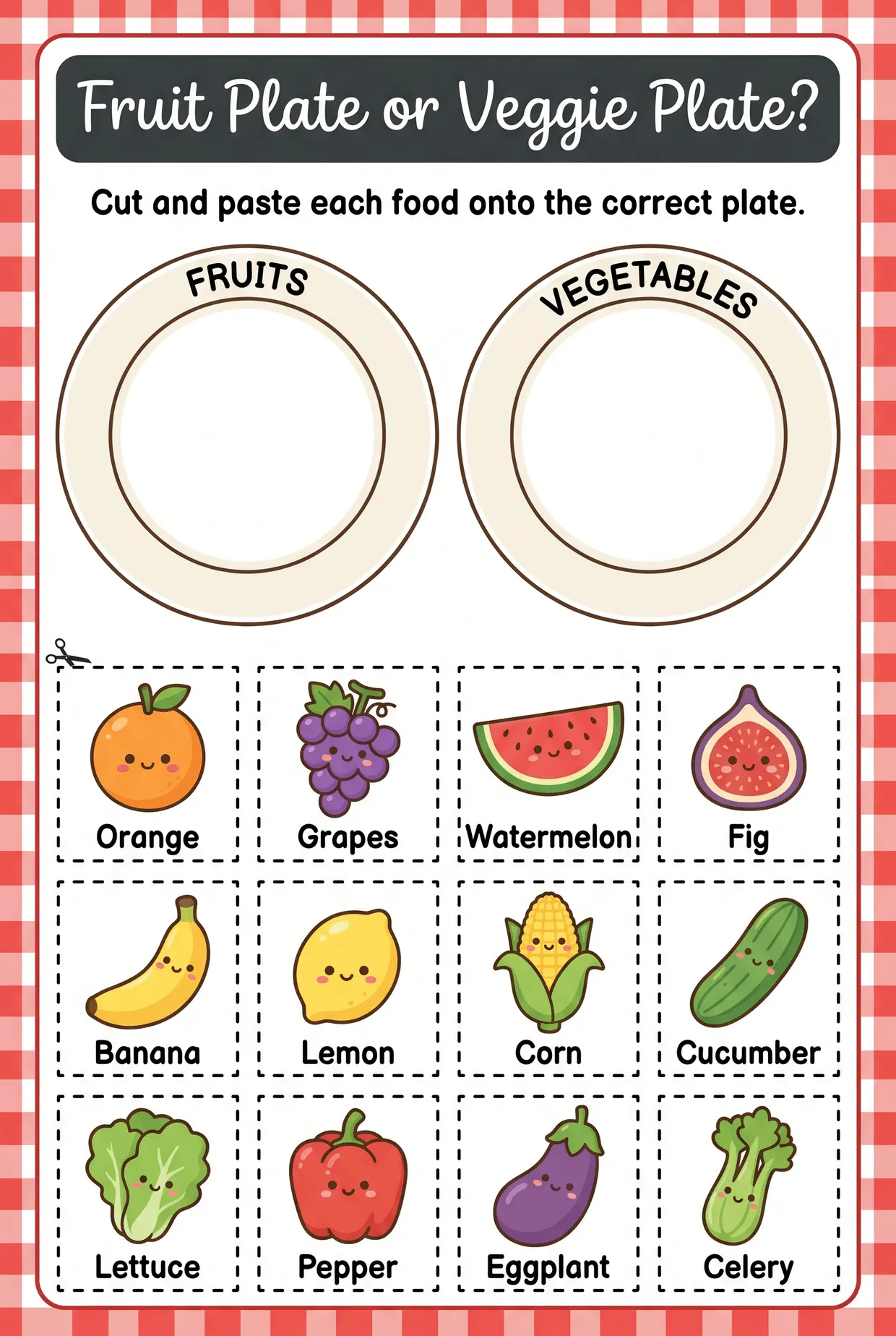
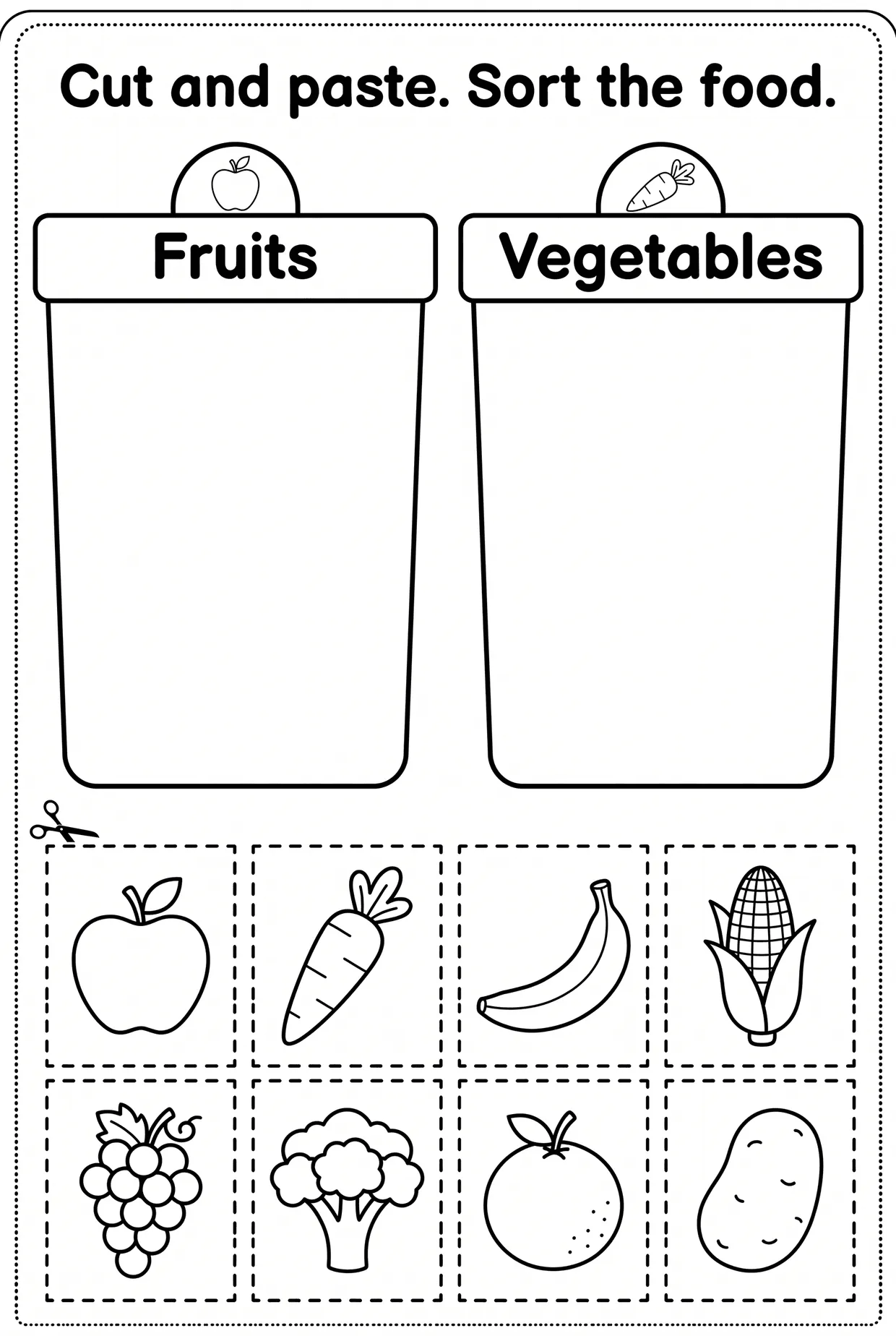
The gentlest pages are the coloring sorts, where a child colors each food red or green, or circles the fruits and draws a square around the vegetables. These need no scissors and ask for one decision at a time. Move to the cut and paste sorts once that is easy, beginning with the pages that have eight foods.
My child sorts by color instead of by type. What helps?
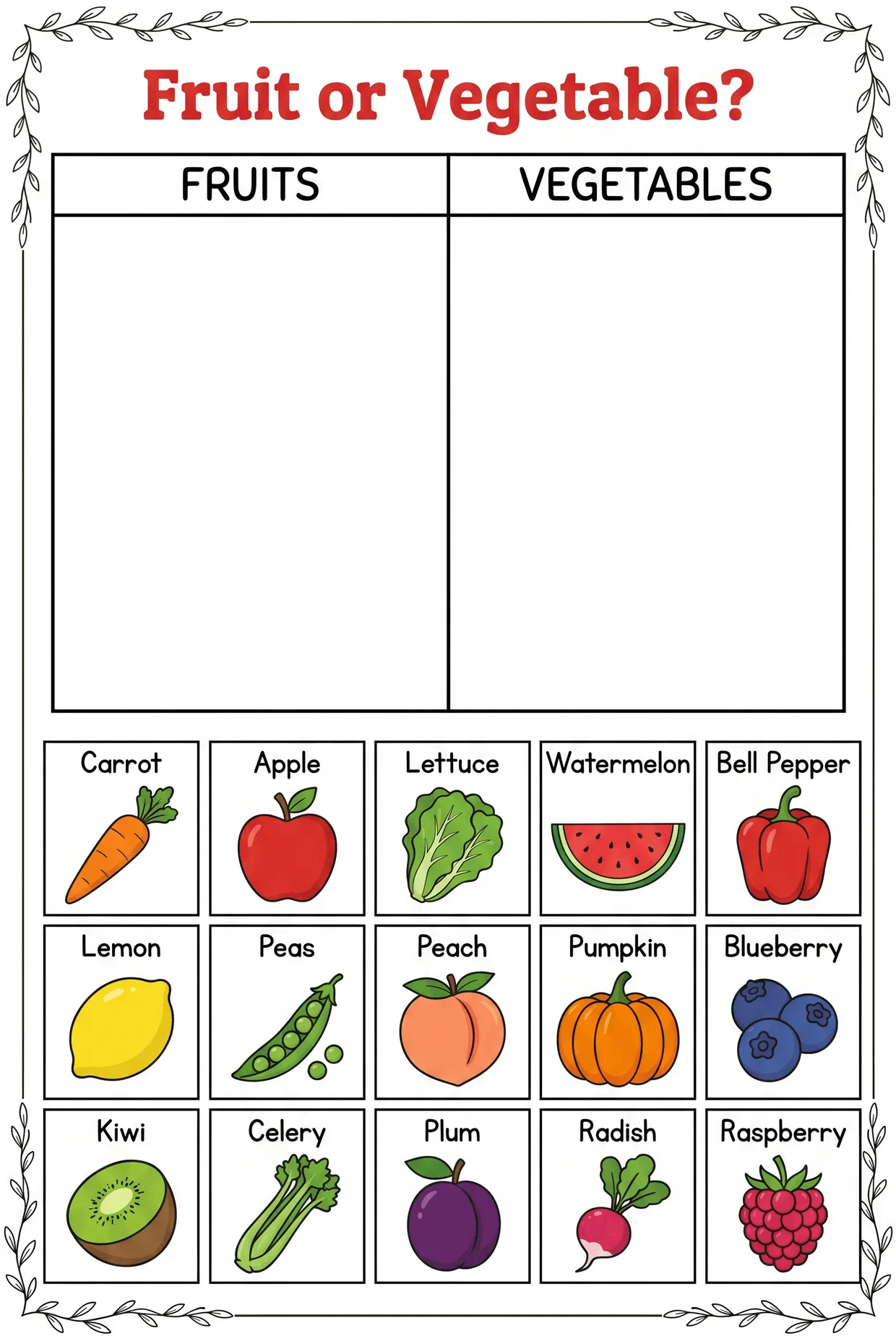
Color is the most obvious thing about a picture, so sorting by it is a natural first step. Put a red apple next to a red pepper, or a green grape next to a green bean, and talk about what is the same and what is different. Seeing two foods of one color land in different groups makes it clear that color alone is not the answer.
How does sorting fruits and vegetables fit kindergarten math?
Sorting objects into categories and counting how many are in each is part of kindergarten measurement and data (K.MD.3). After a child finishes a sort, ask them to count each group and say which has more. One page then covers science talk, sorting and counting at once.