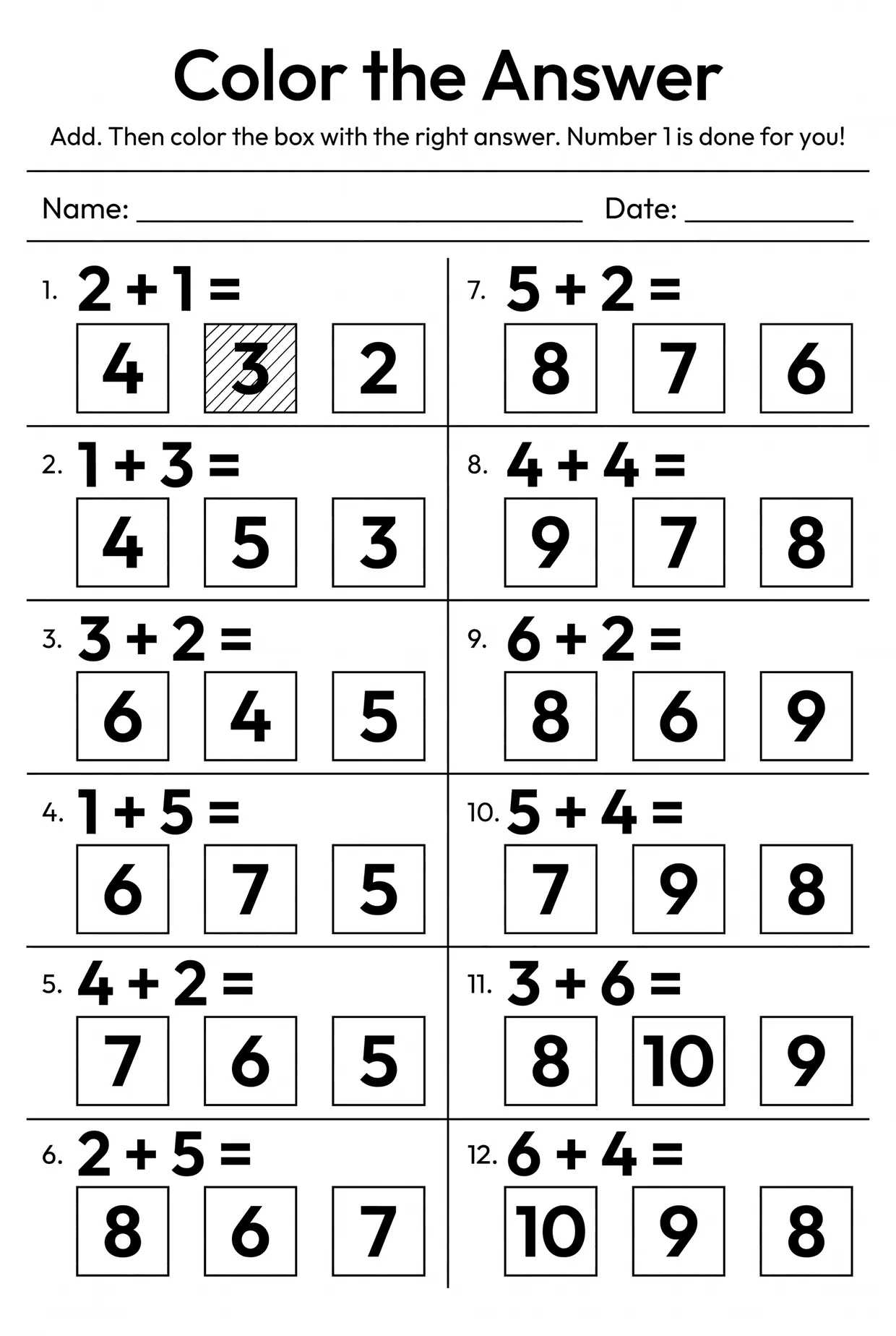
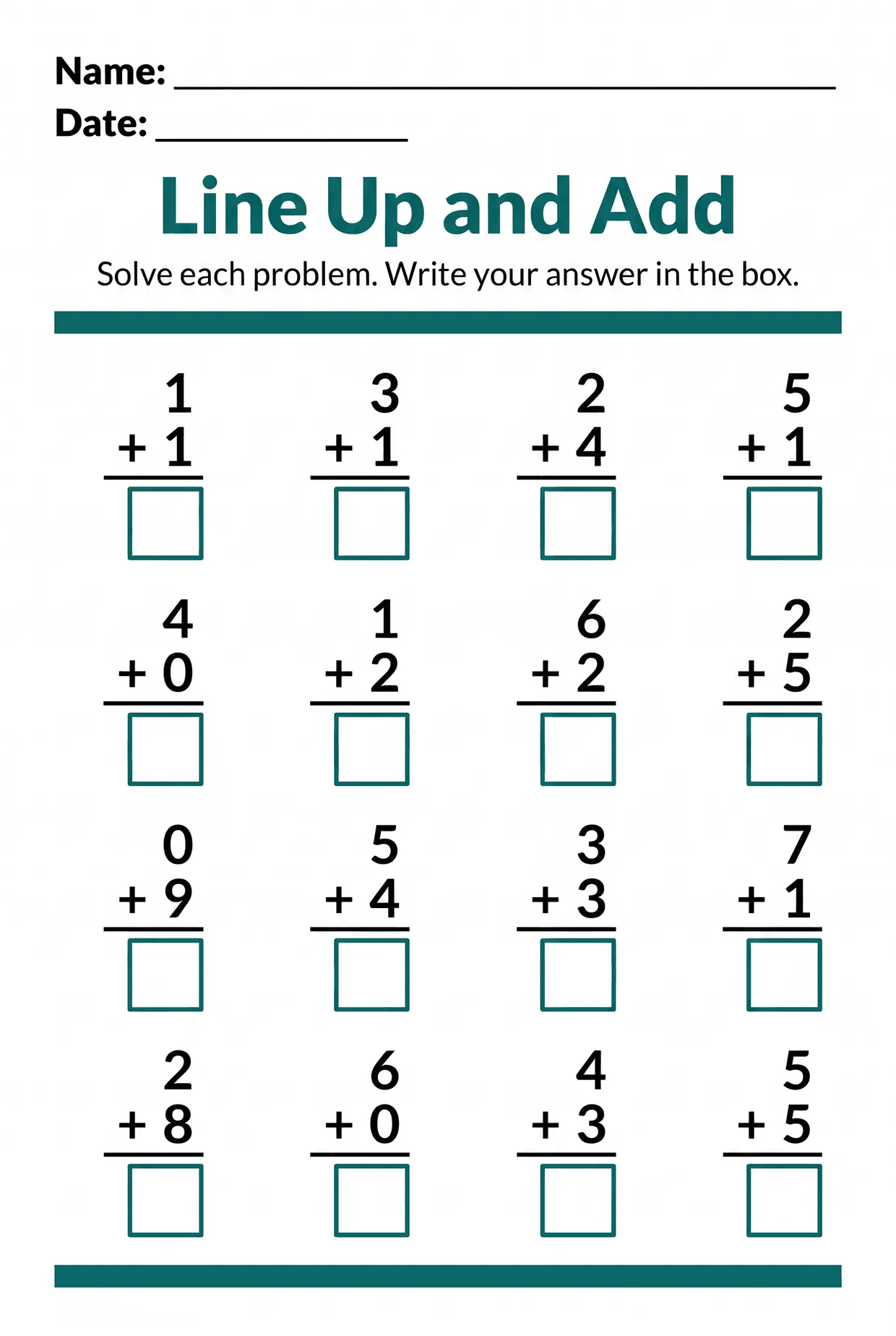
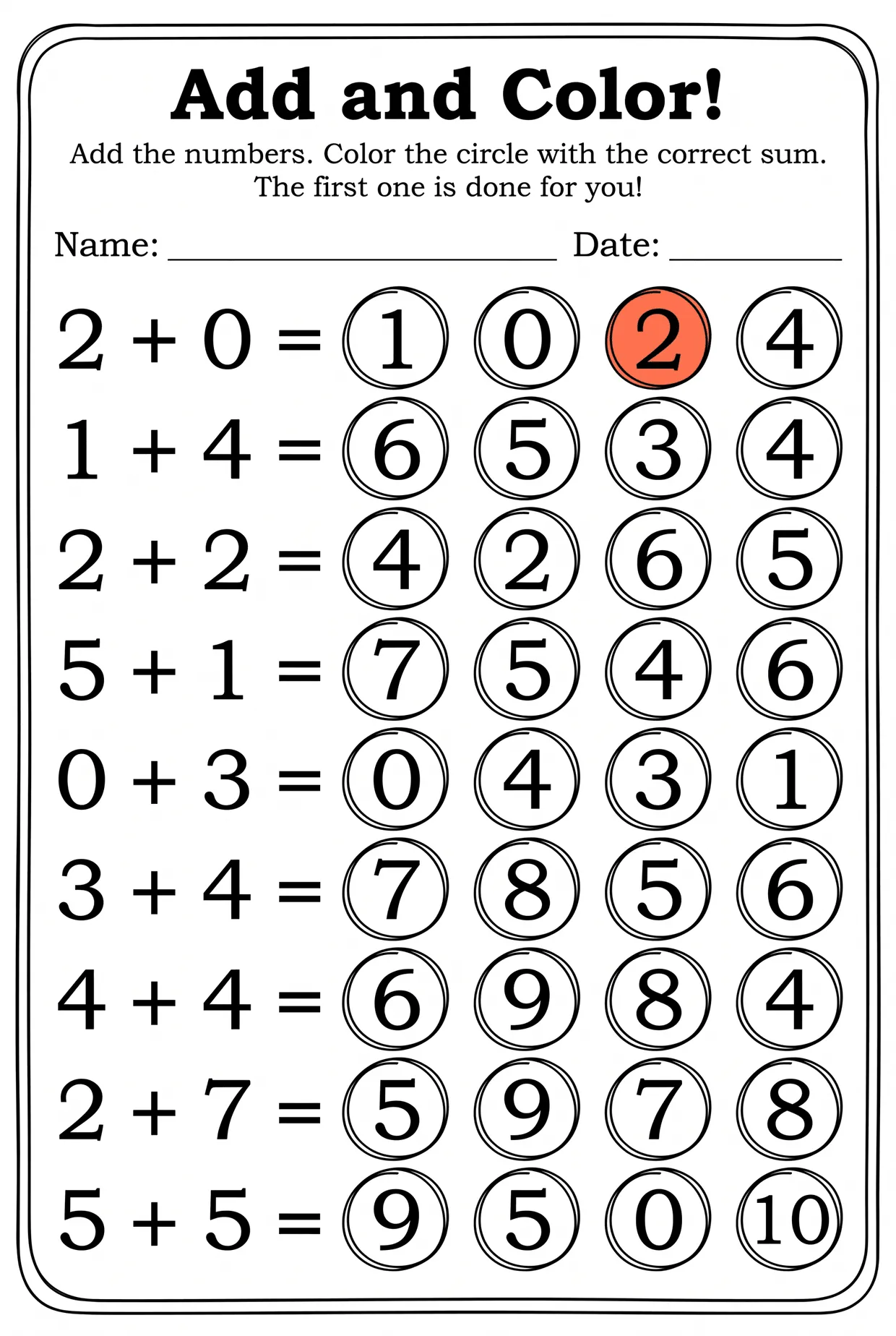
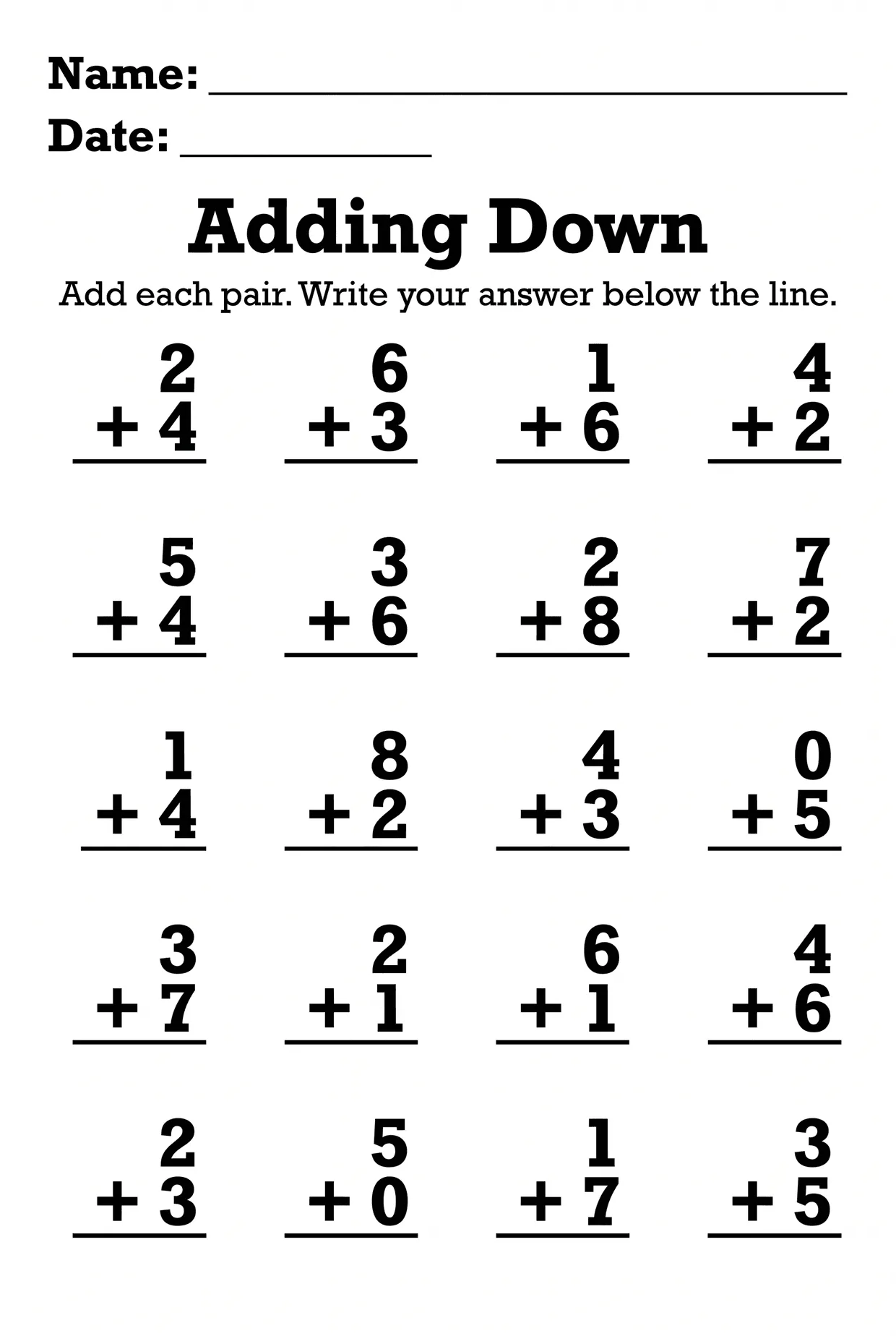
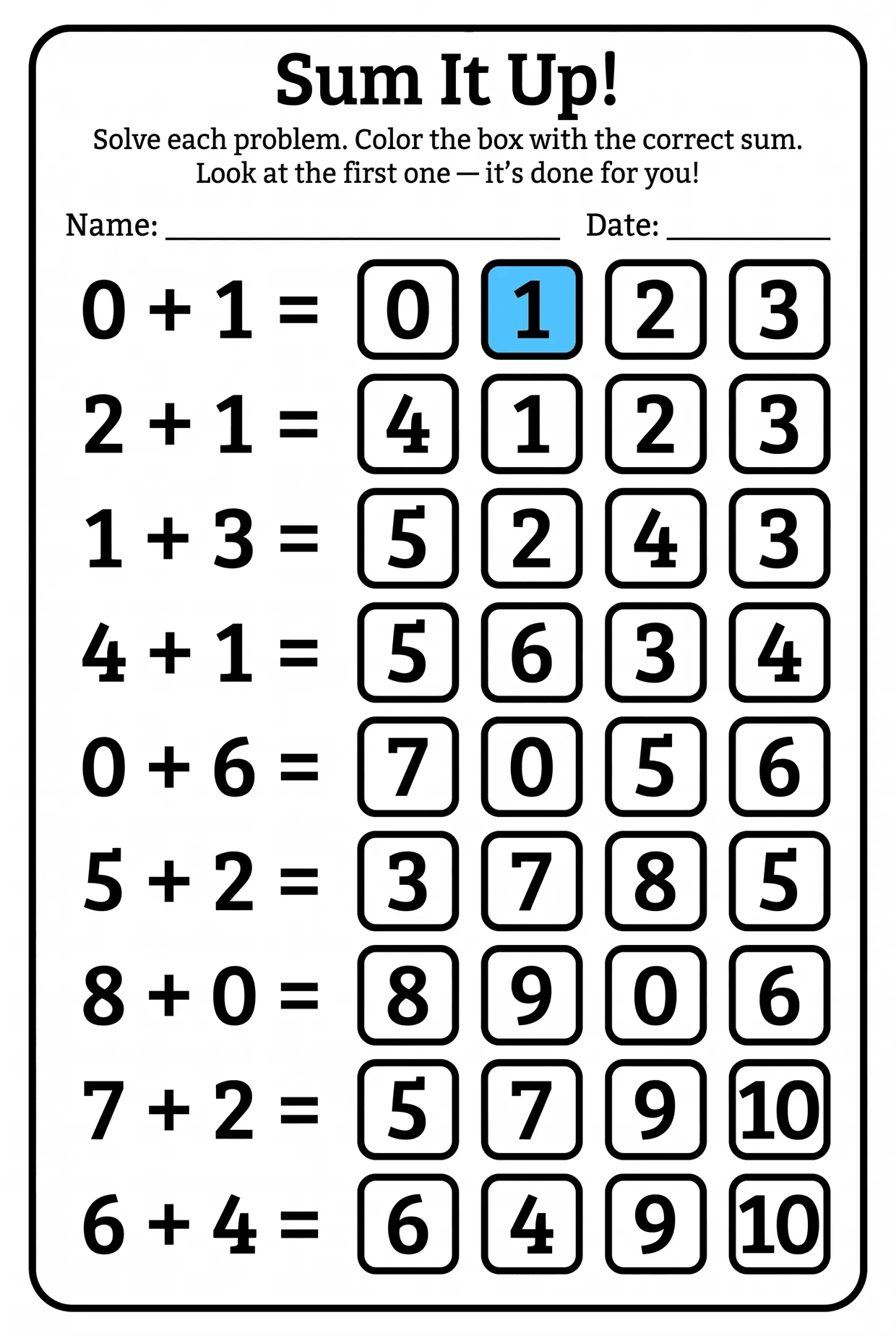
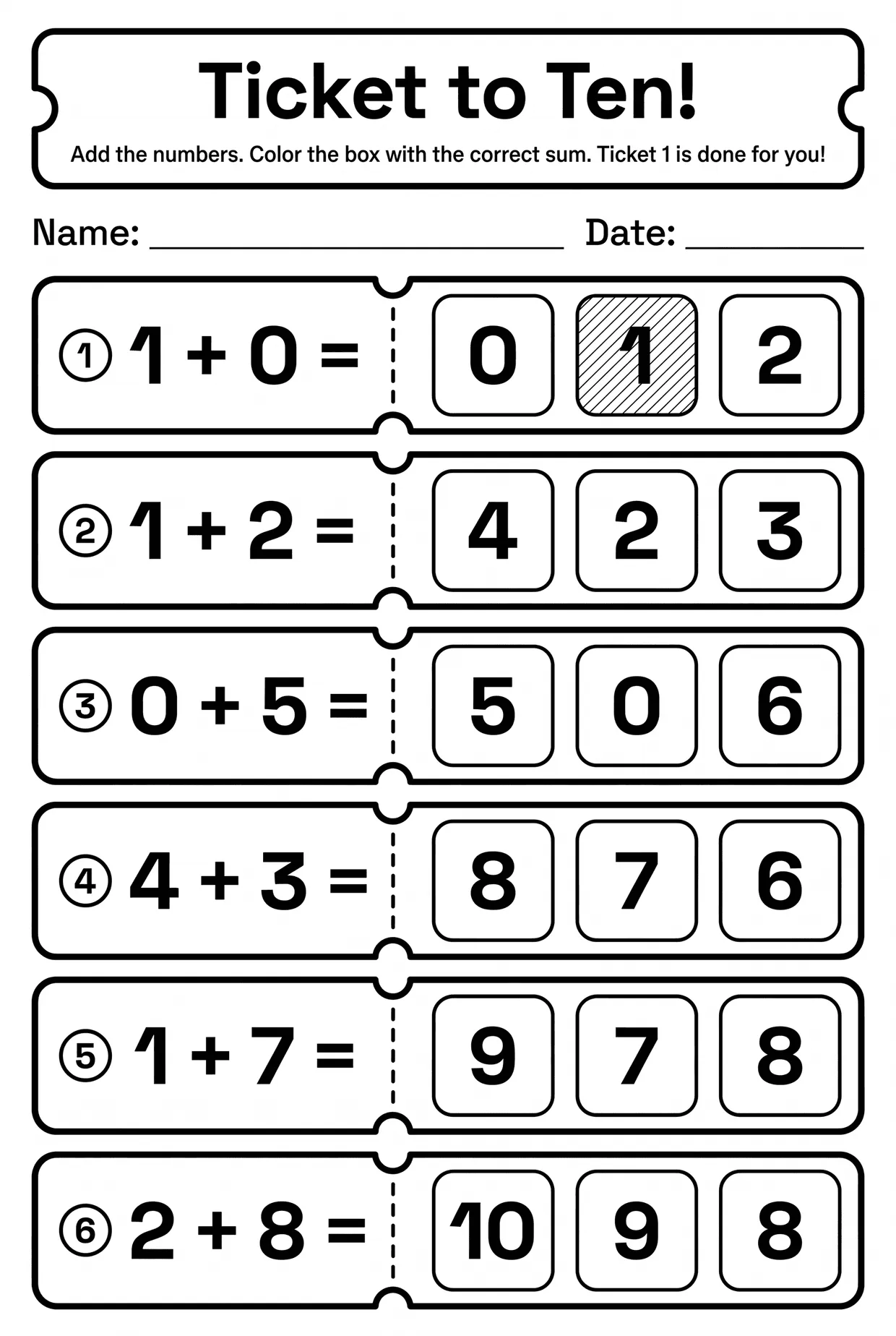
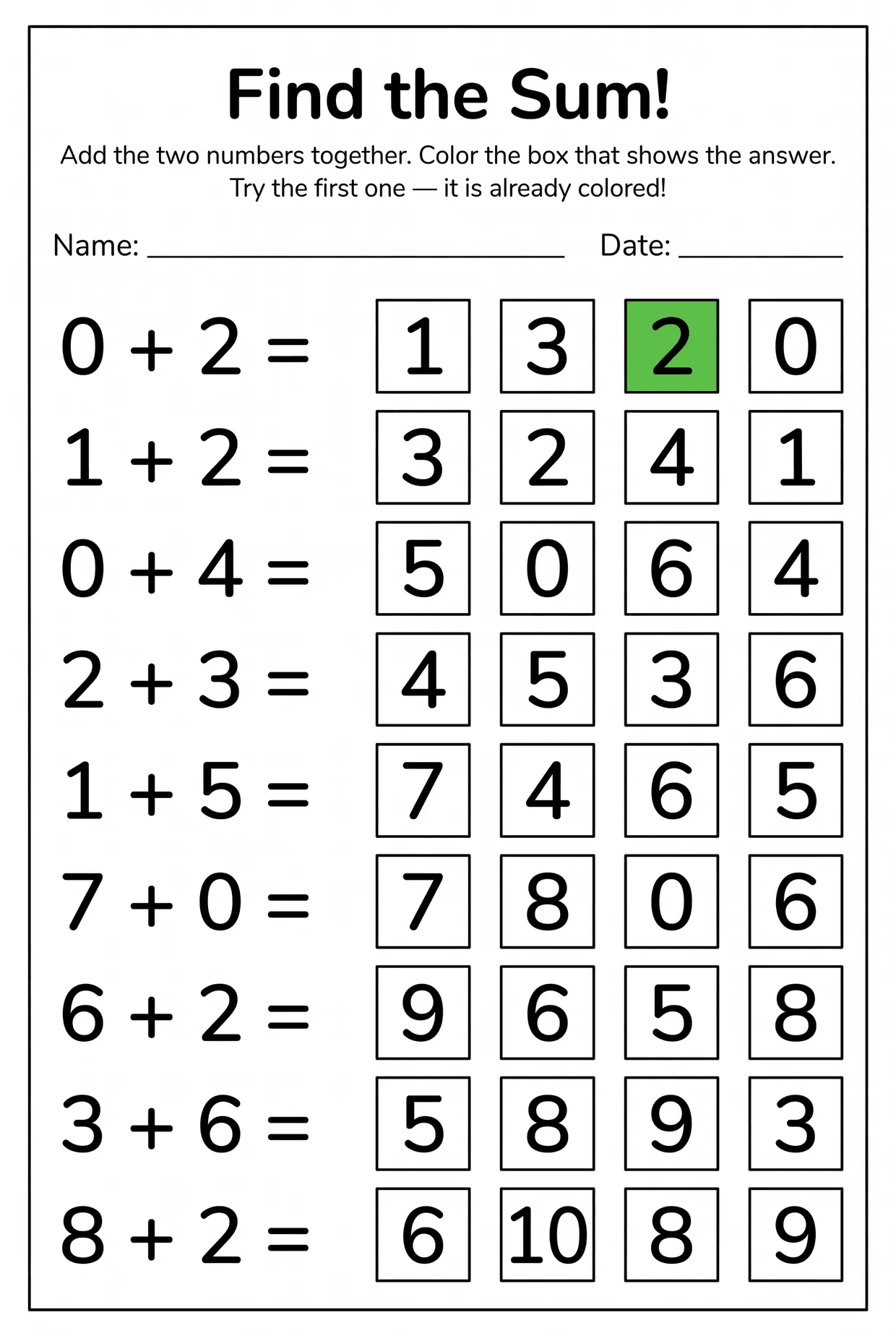
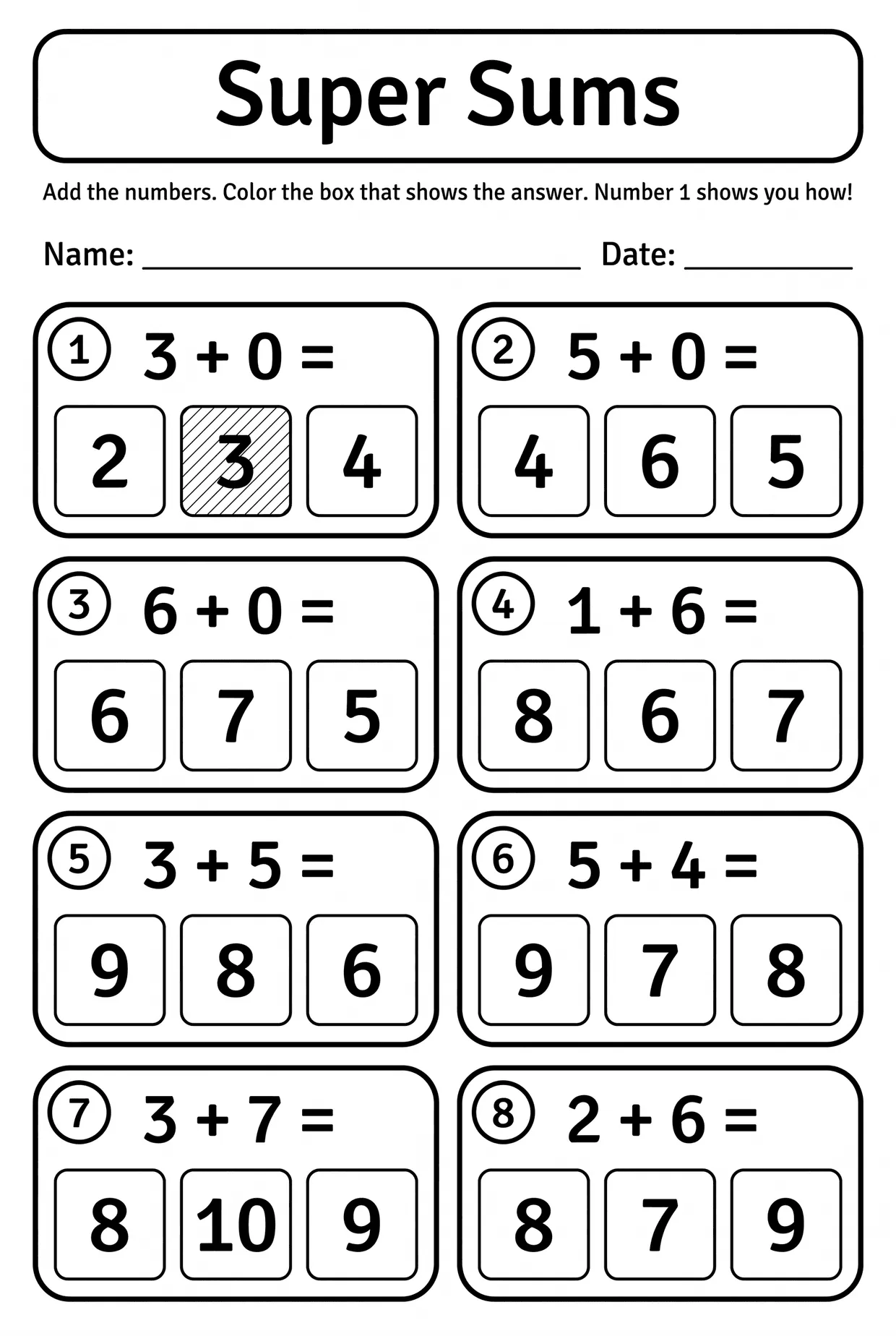

Questions about kindergarten addition worksheets
What addition should a kindergartner be able to do?
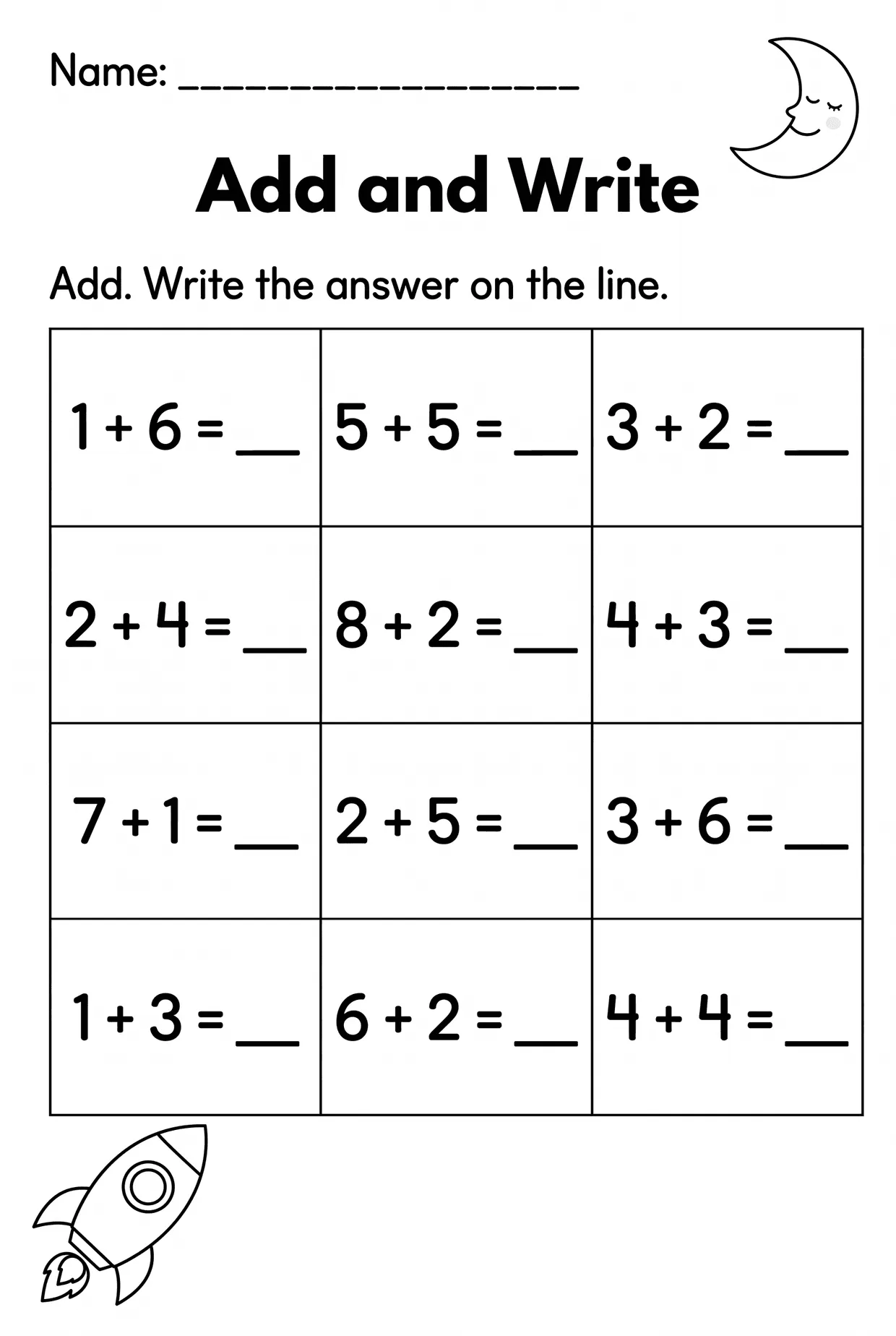
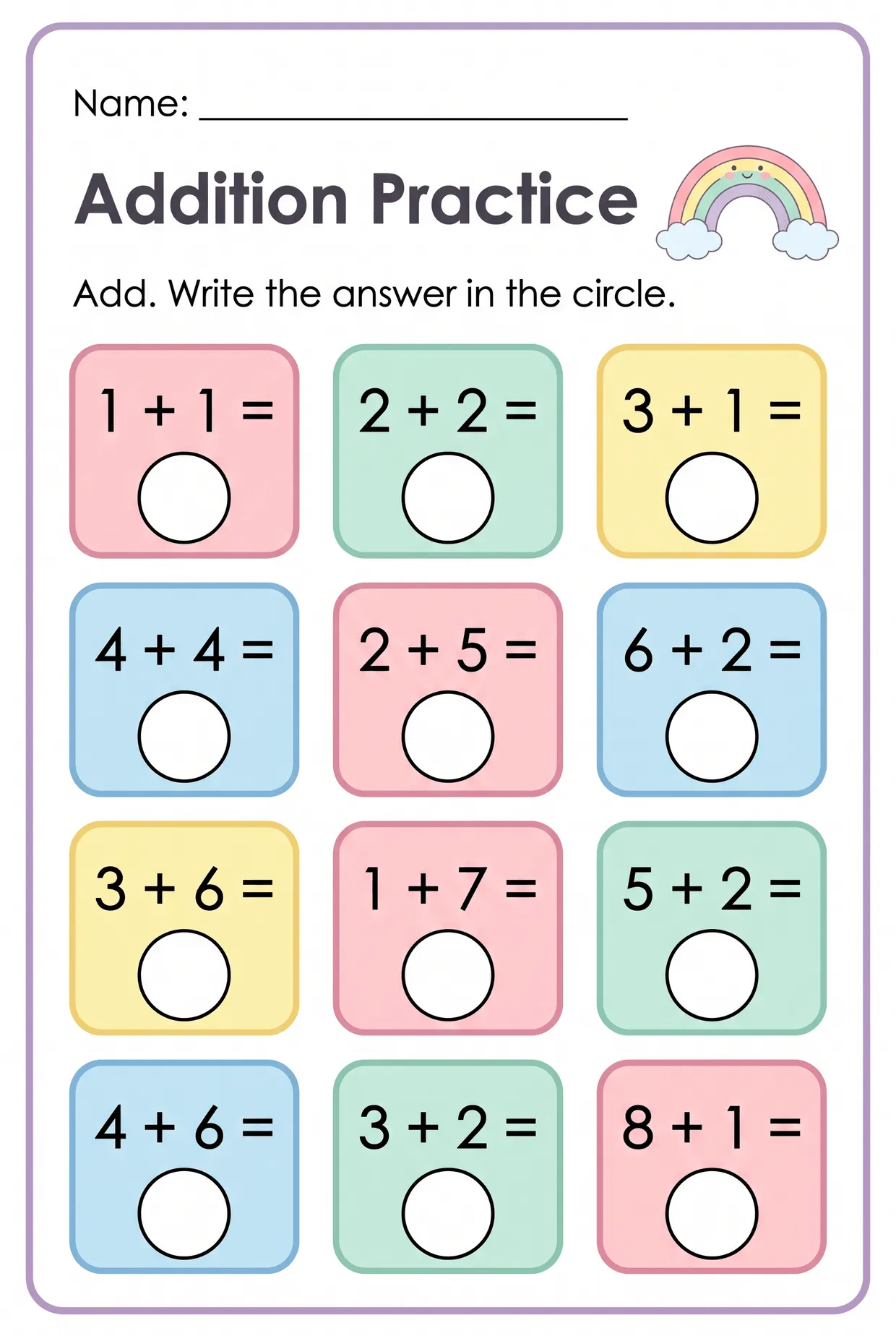
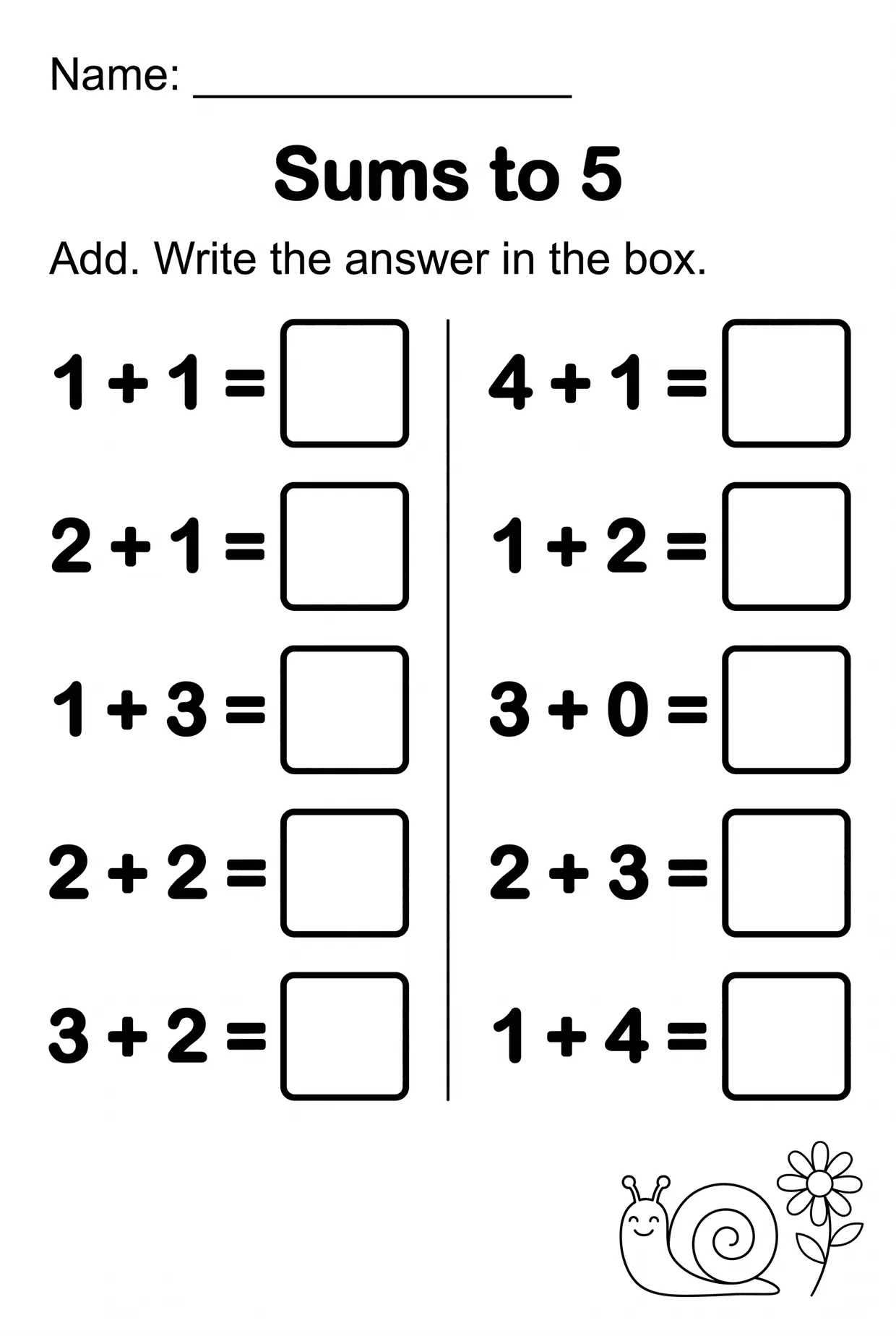
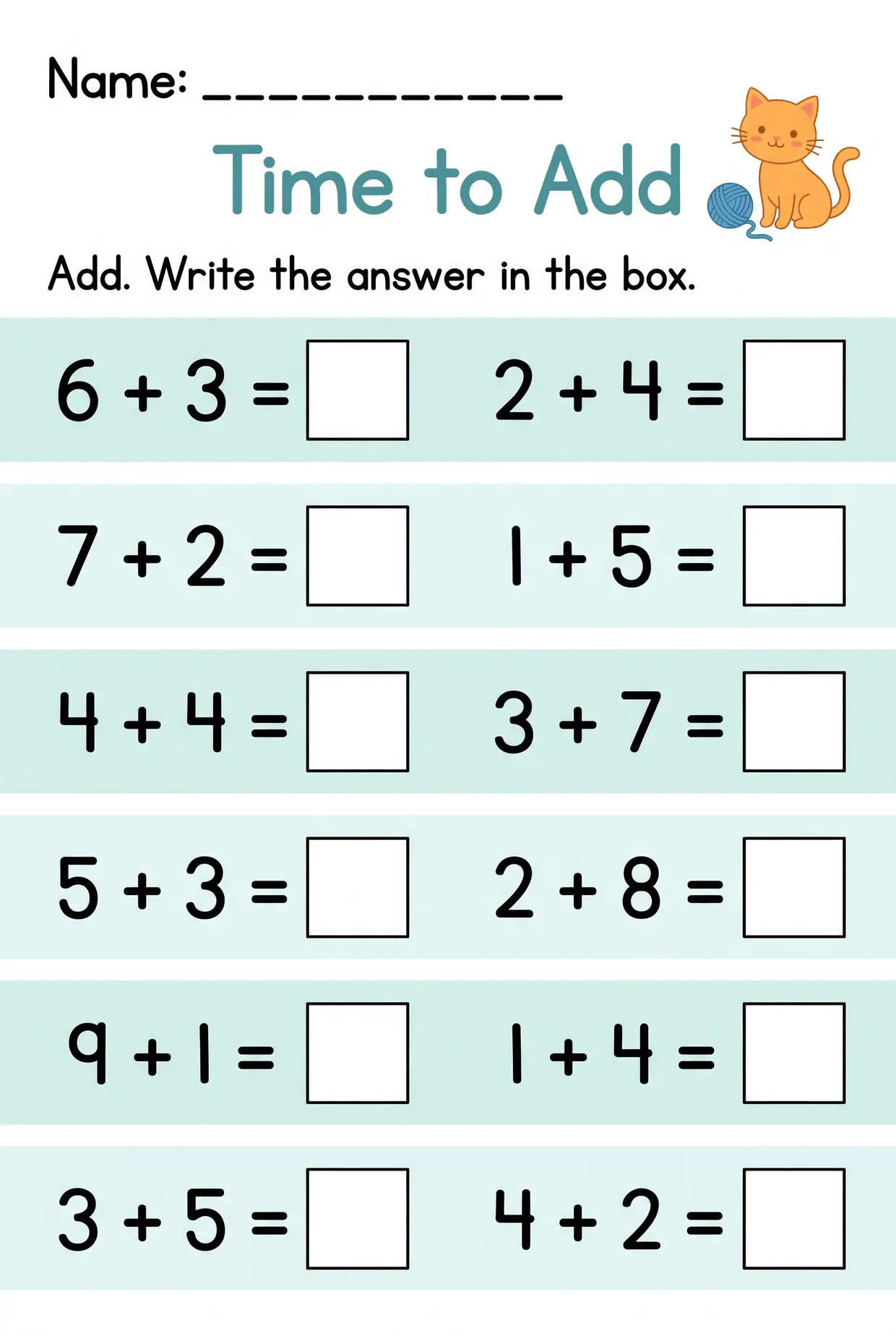
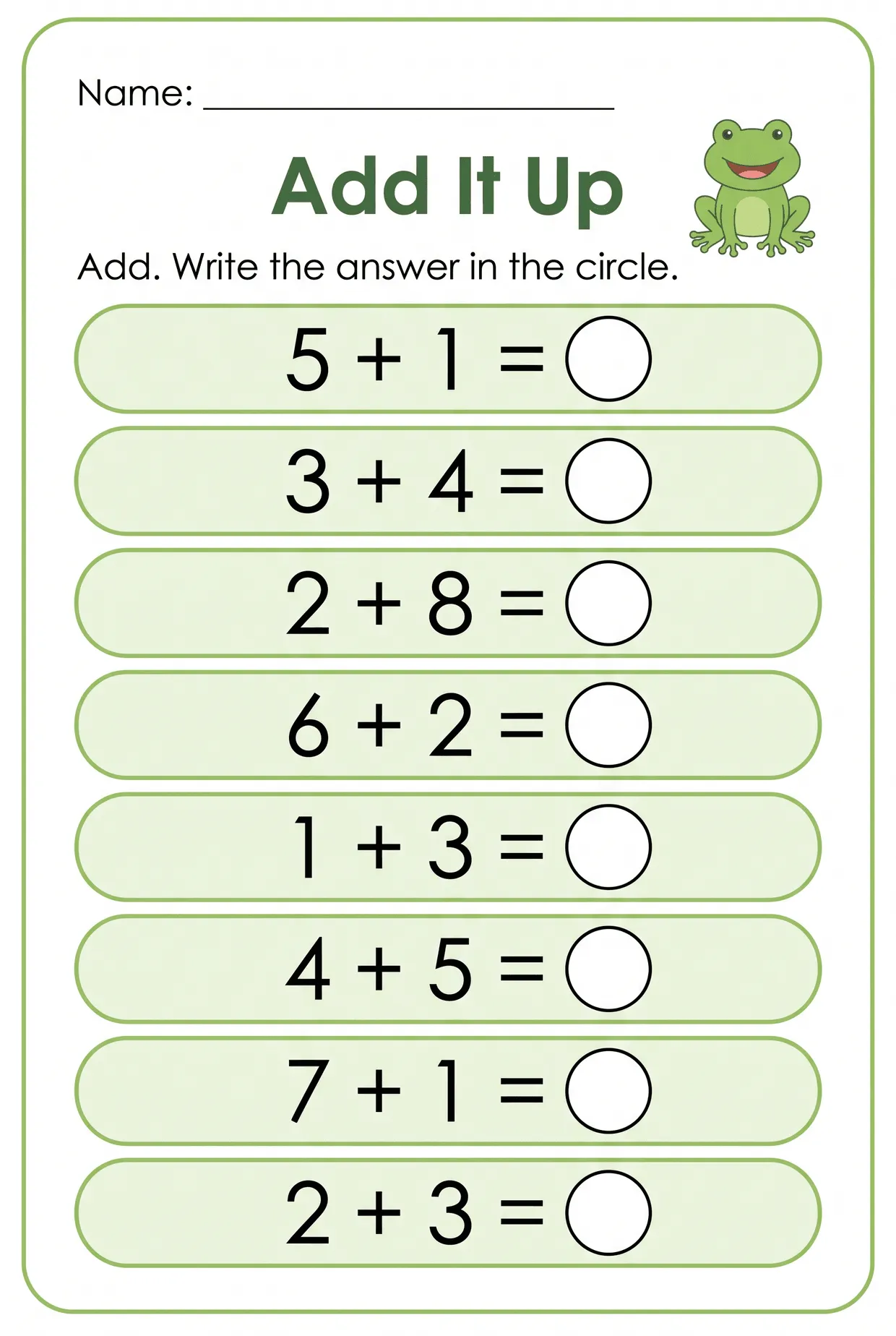
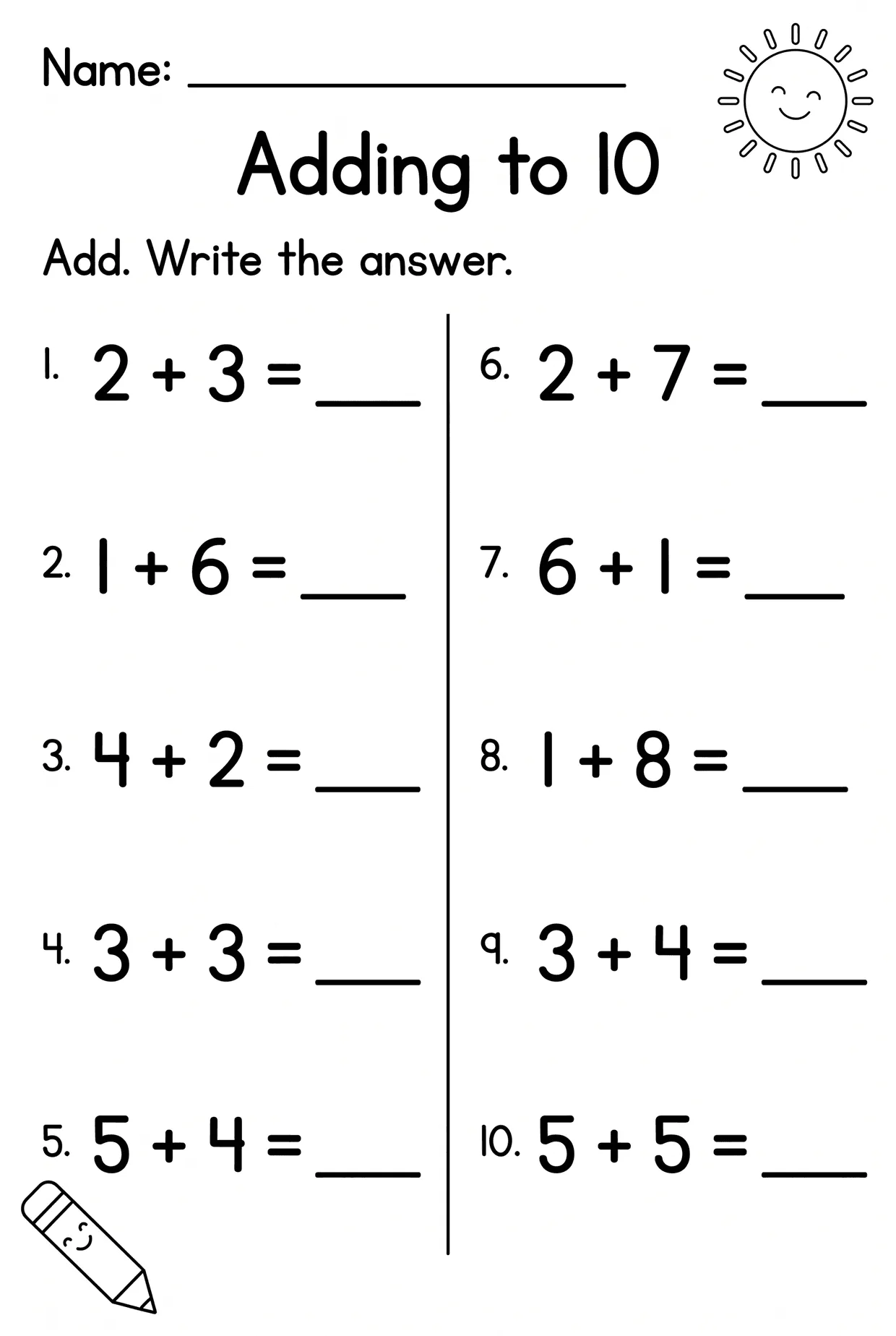
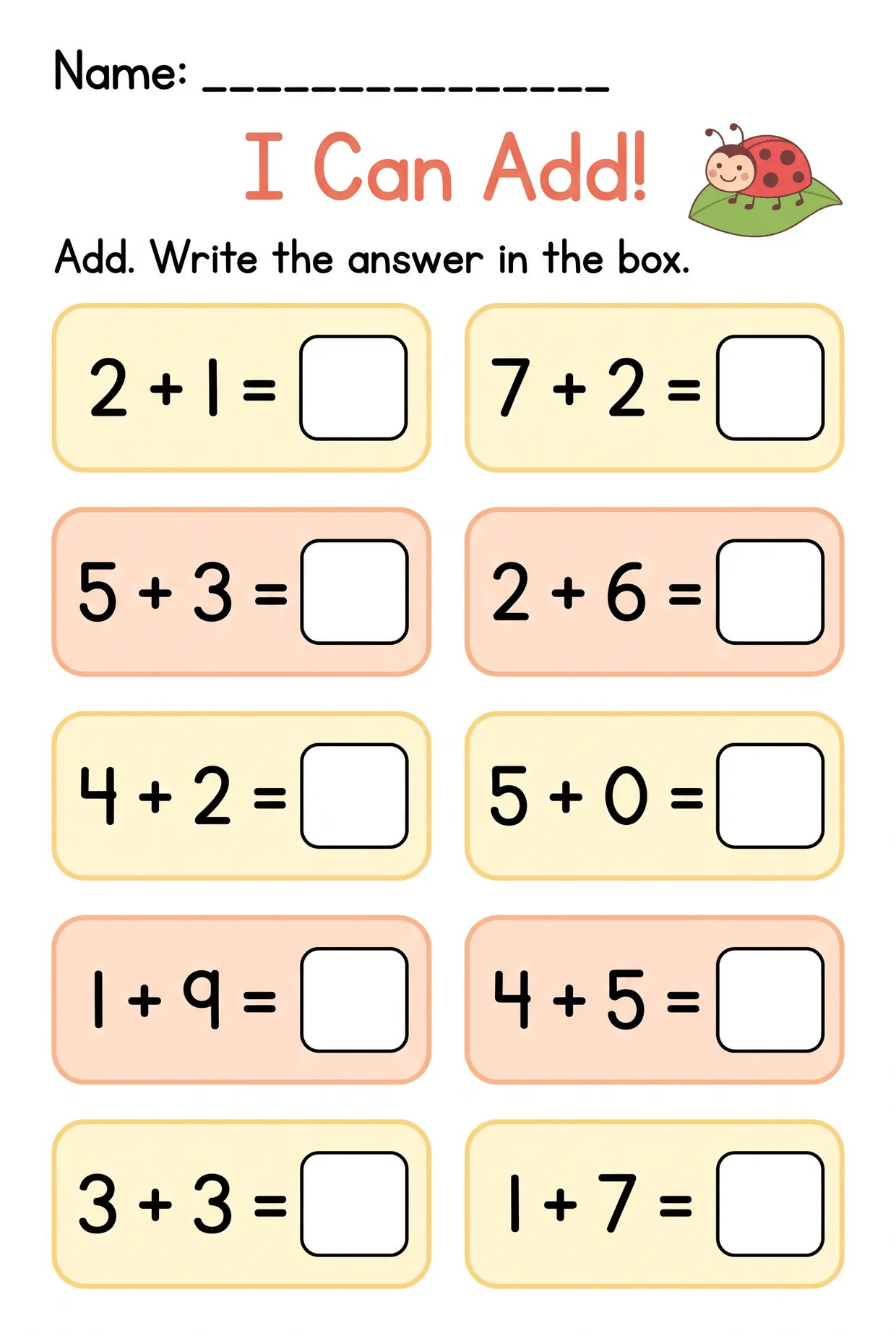
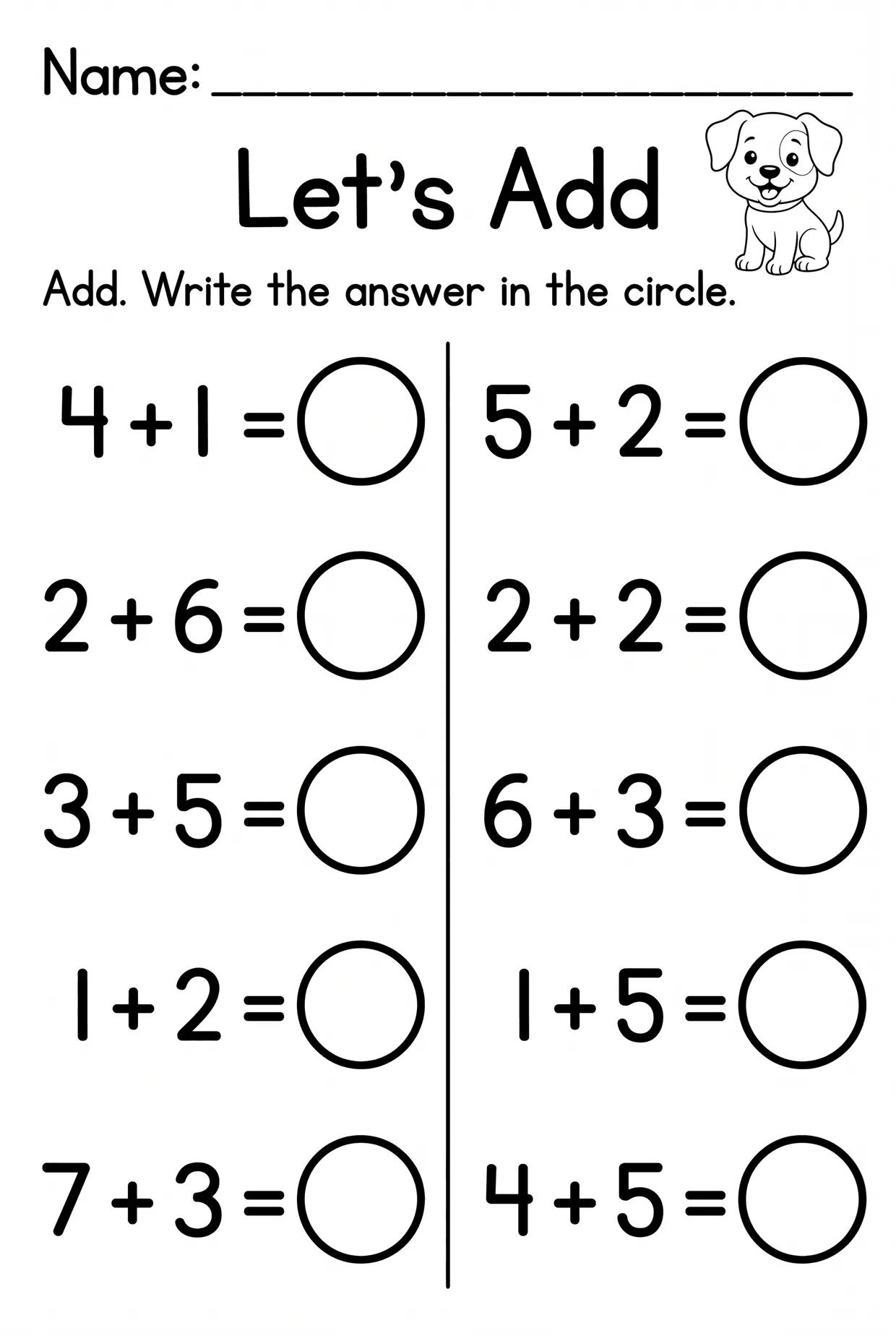
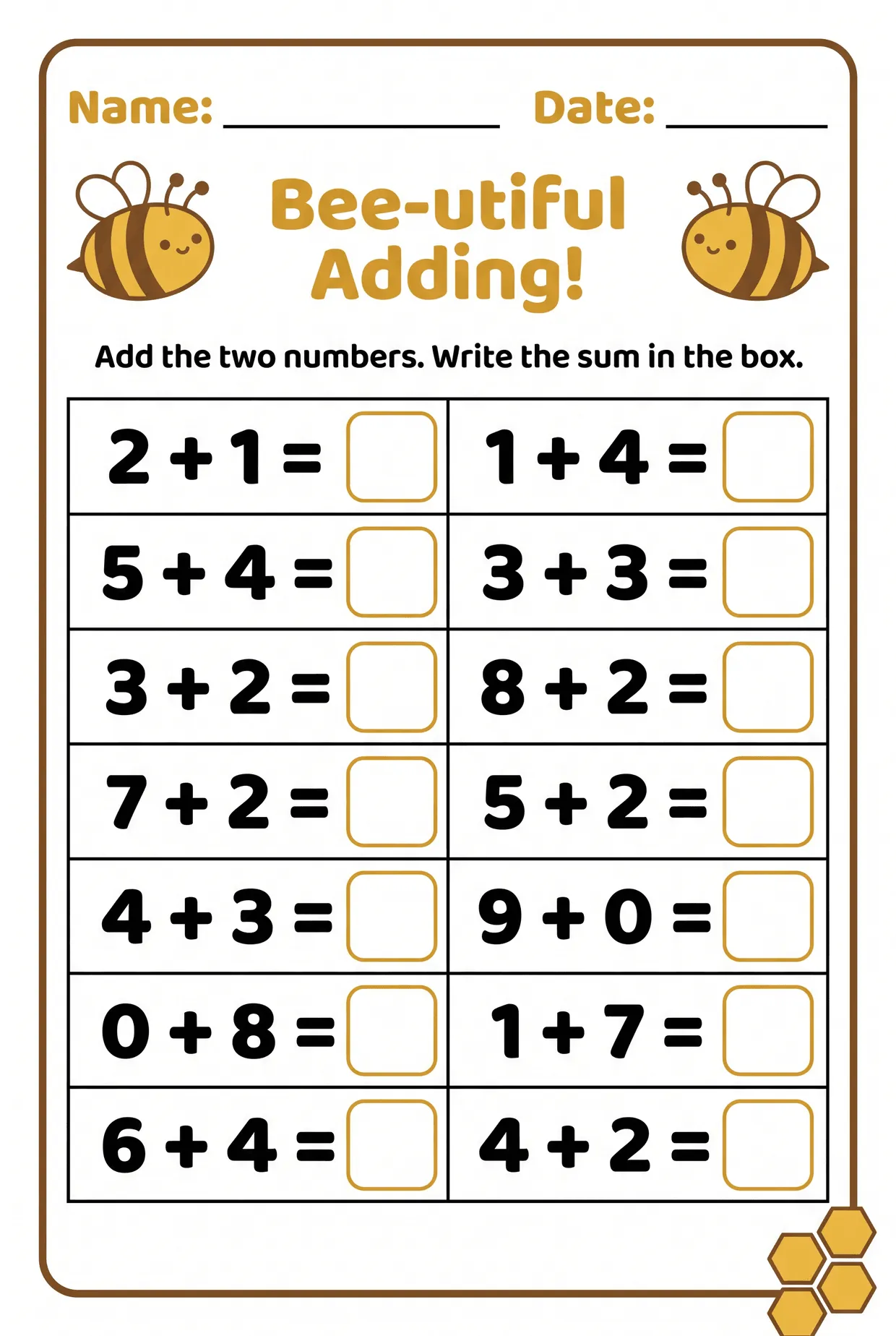
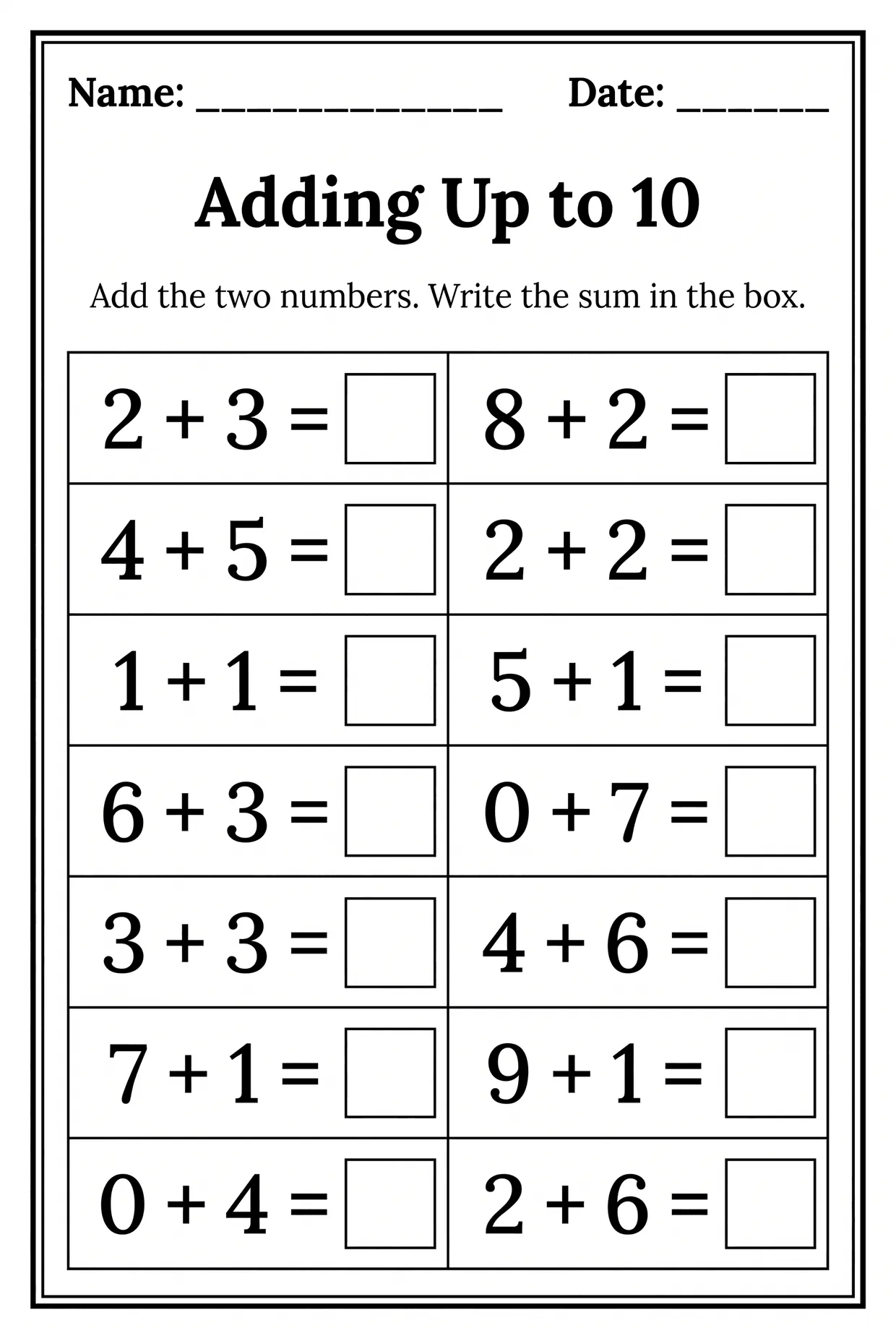
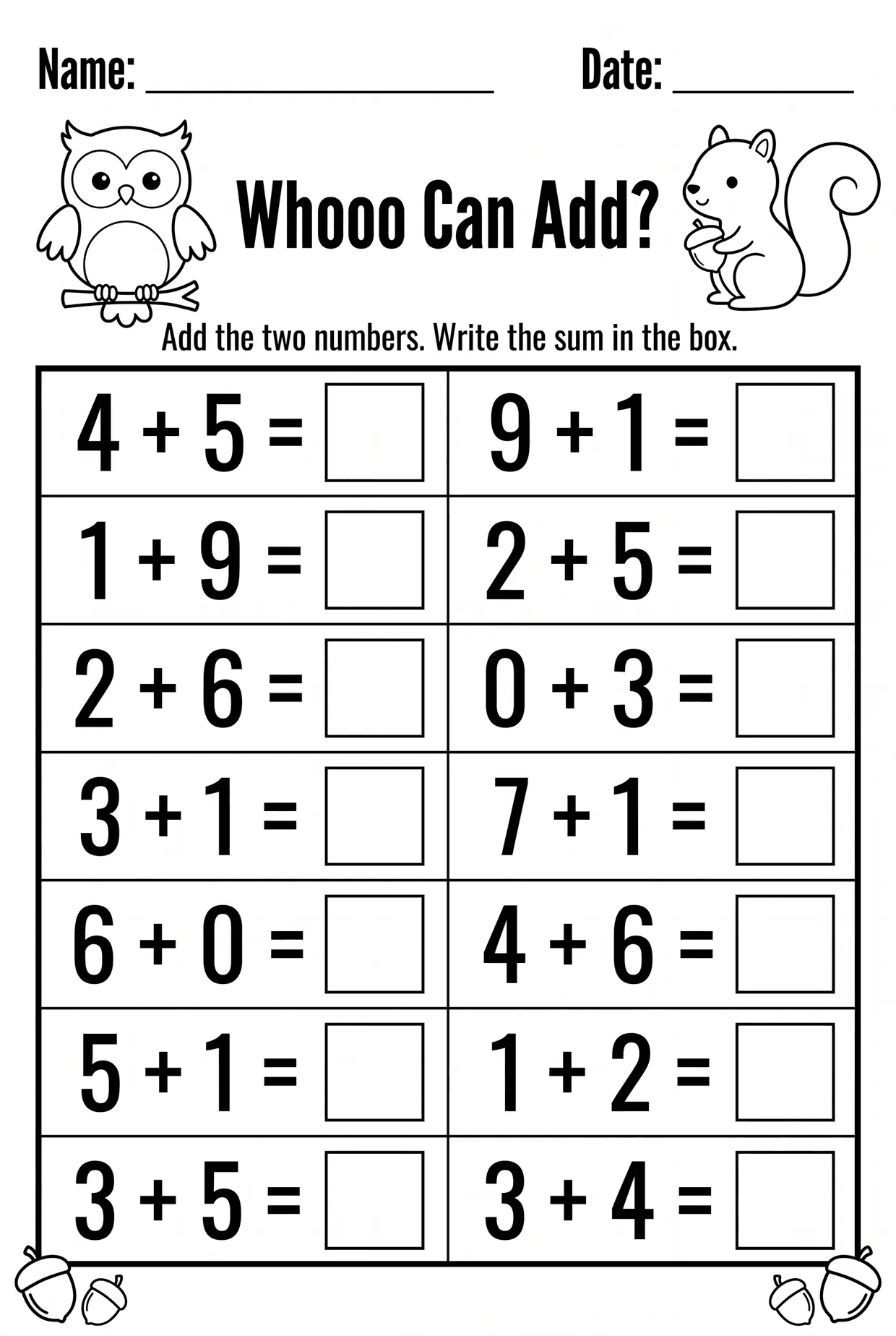
Kindergartners add within 10 using objects, fingers or drawings, solve simple story problems, and by the end of the year add within 5 fluently (K.OA.5). They also learn which number makes 10 with any number from 1 to 9. Every page here stays inside that range, so nothing jumps ahead to bigger sums.
Should my child count every picture or count on?
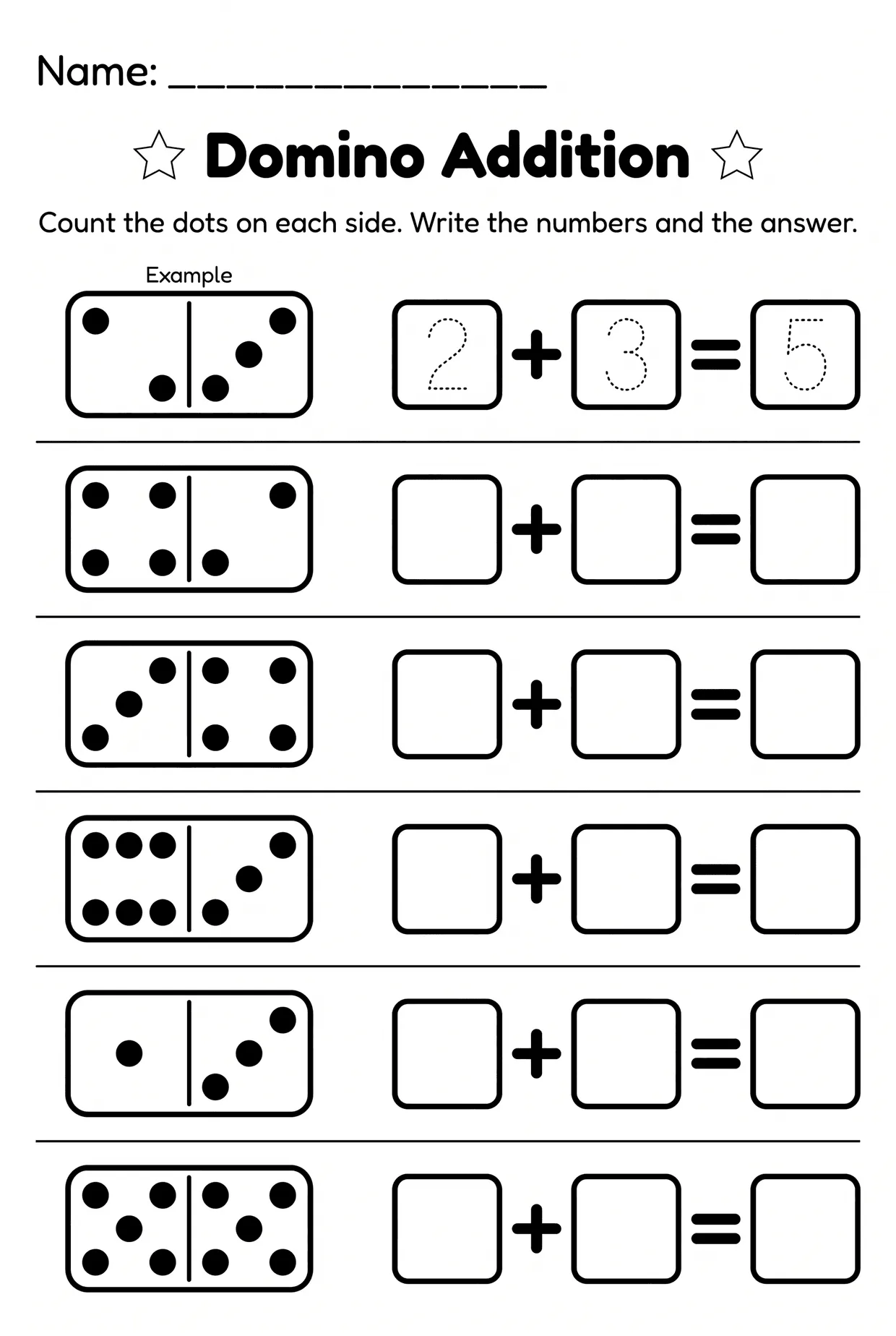
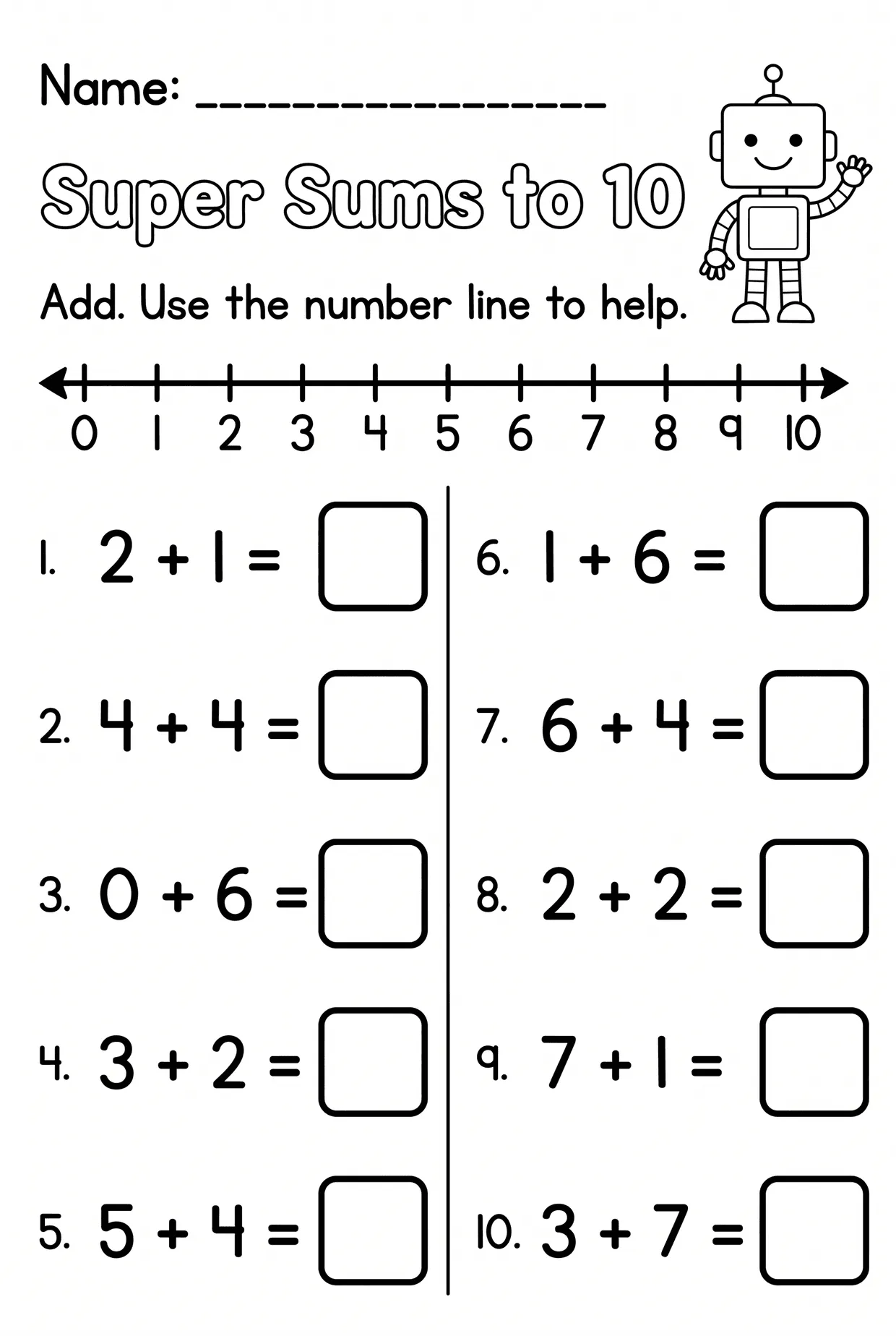
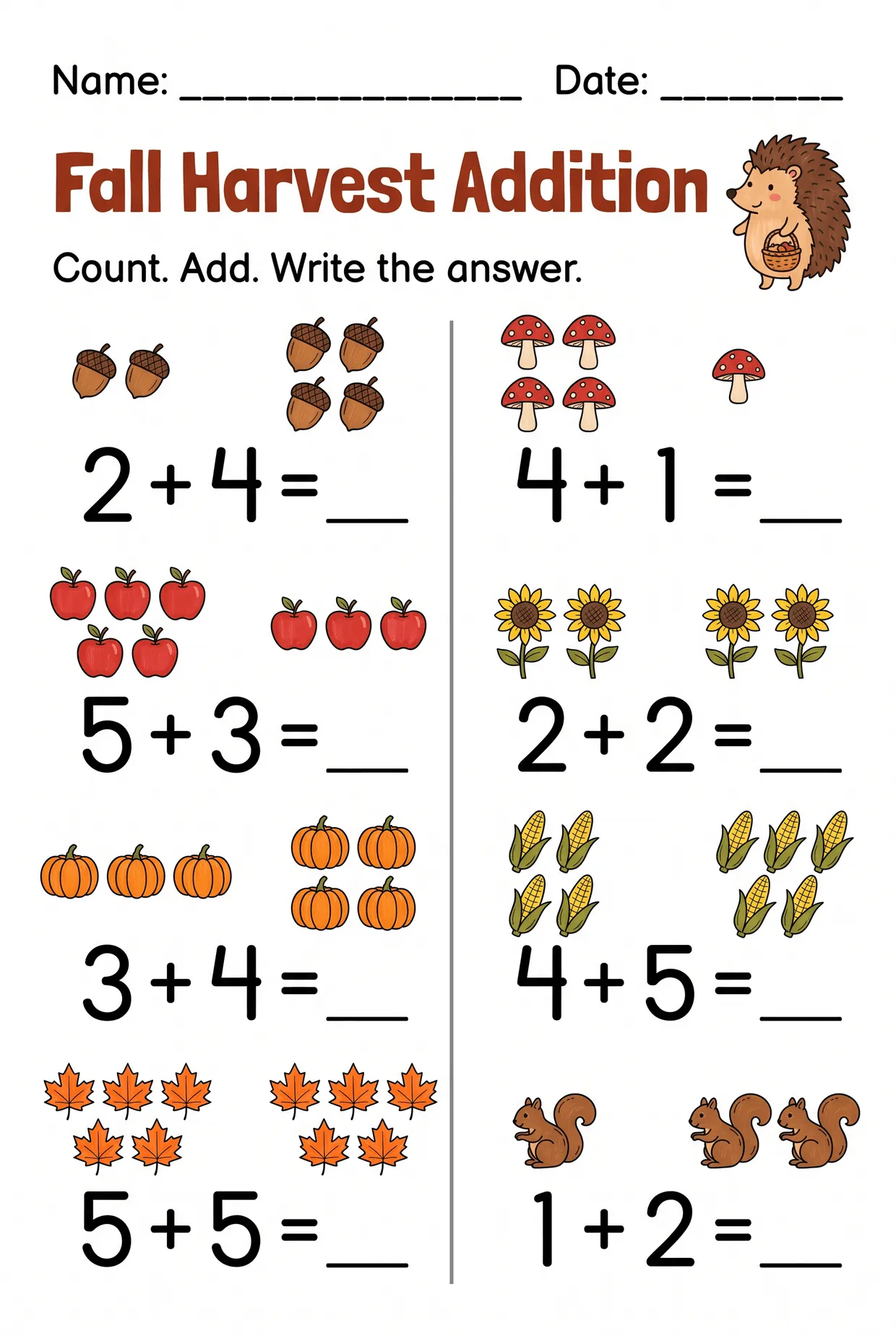
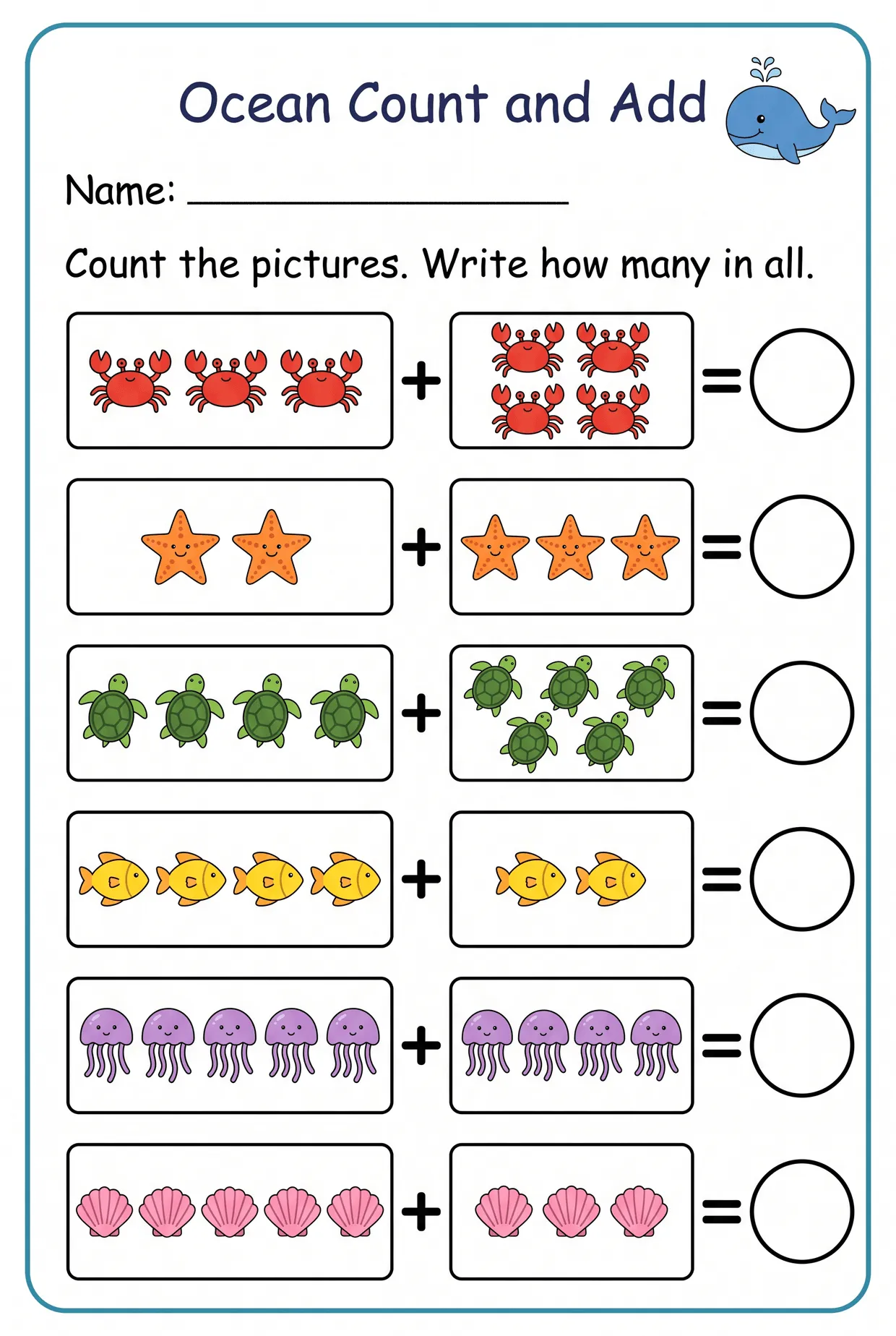
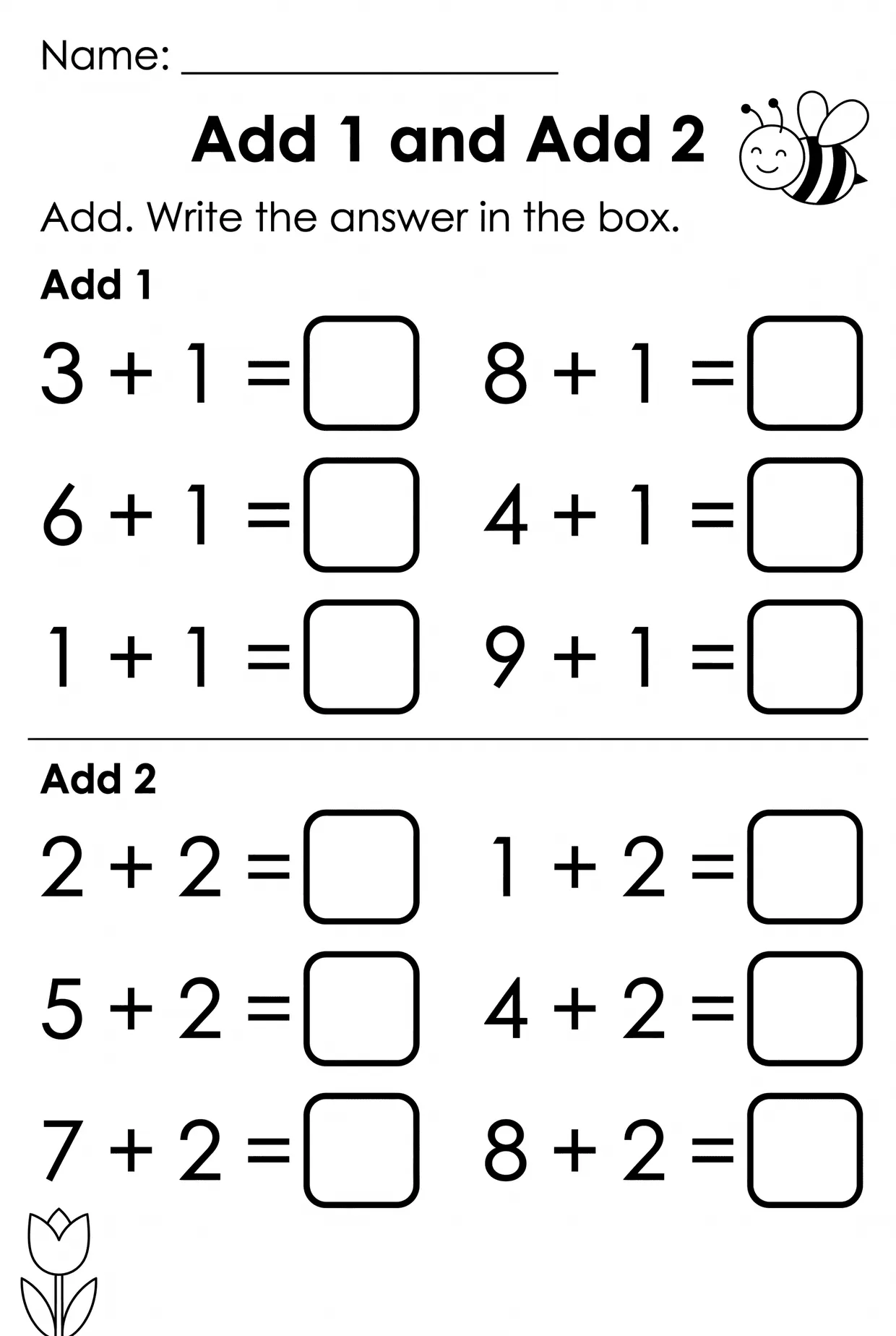
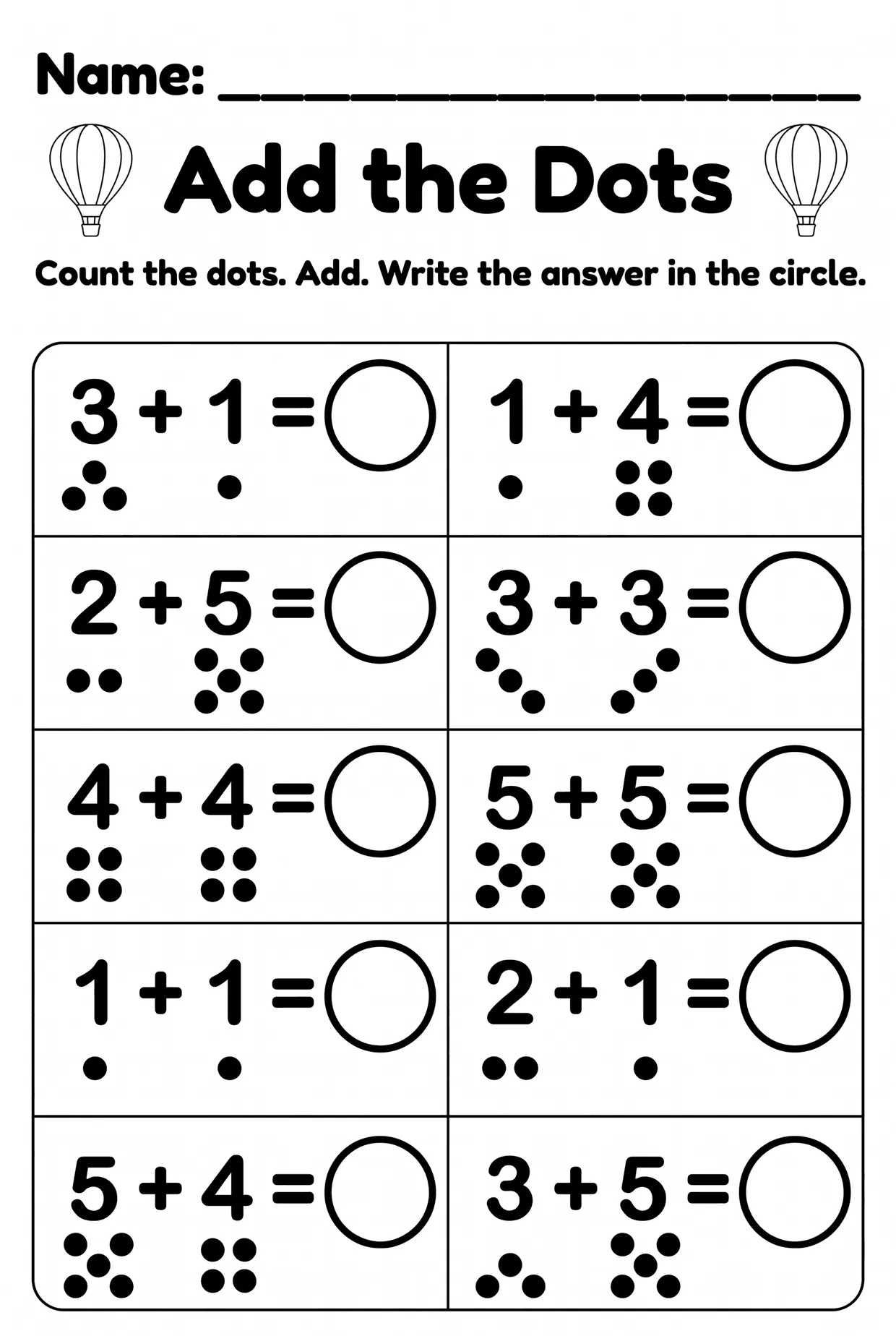
Counting all of the pictures is the natural first step, and the picture and dot pages allow for it. Once that feels easy, show the child how to start from the bigger number and count on from there. The add 1 and add 2 sheets and the number line pages are built around exactly that move.
Why practice doubles and making 10 so early?
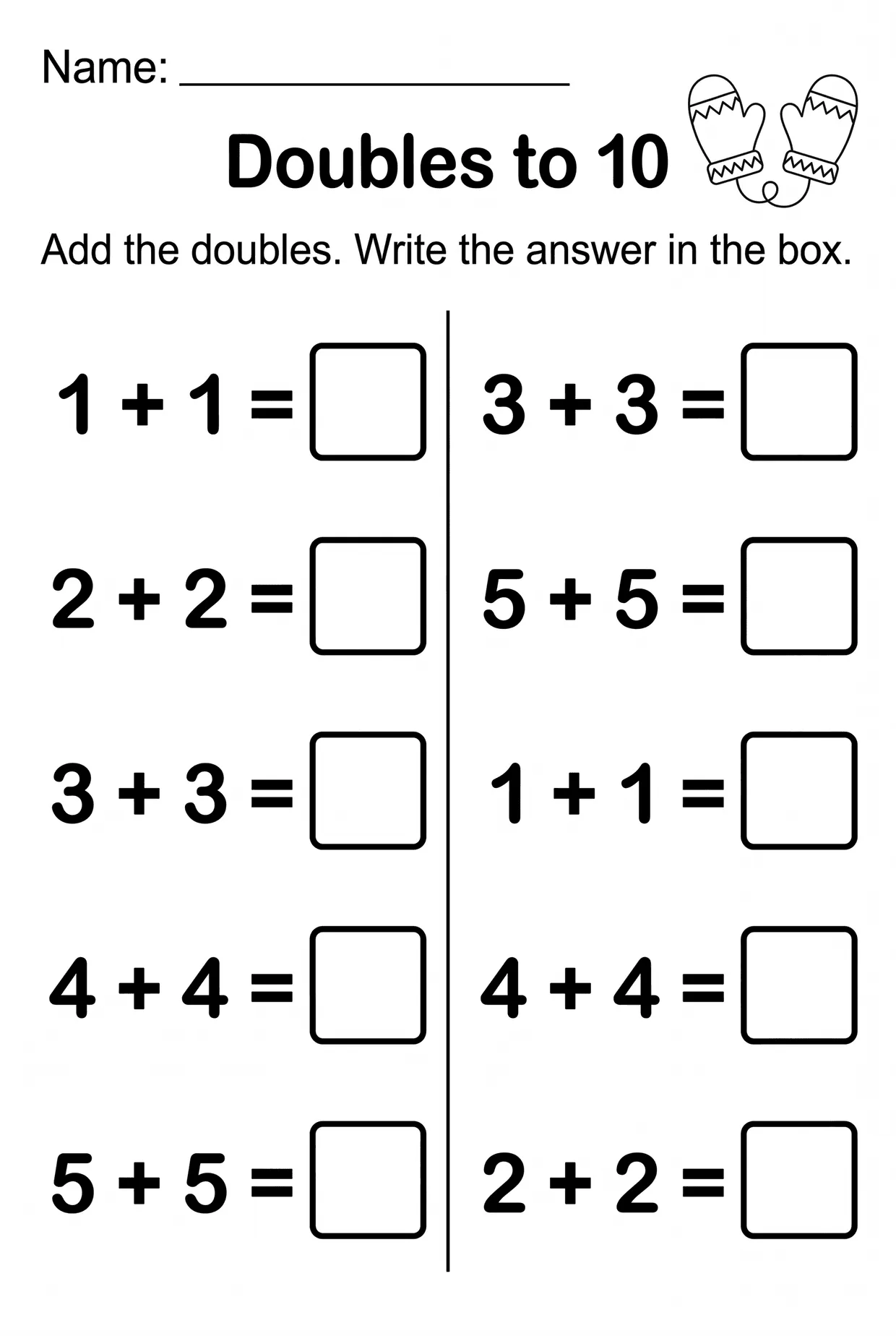
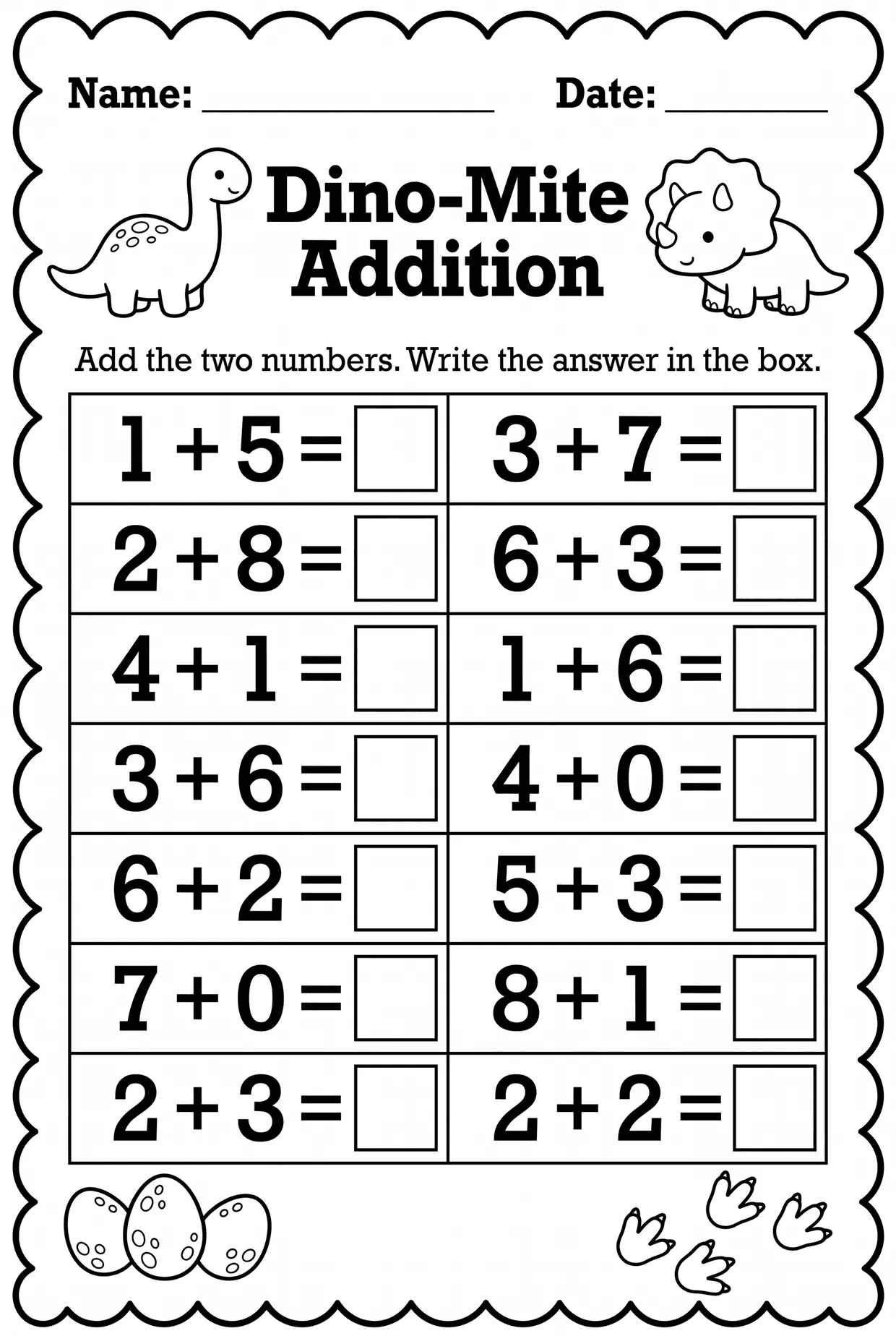
Doubles like 3 plus 3 and the pairs that make 10 are the facts children lean on later to work out harder sums. A child who knows 4 plus 4 is 8 can reason that 4 plus 5 is one more. Learning them now, while the numbers are small, saves a lot of counting in first grade.
When is my child ready for stacked column problems?
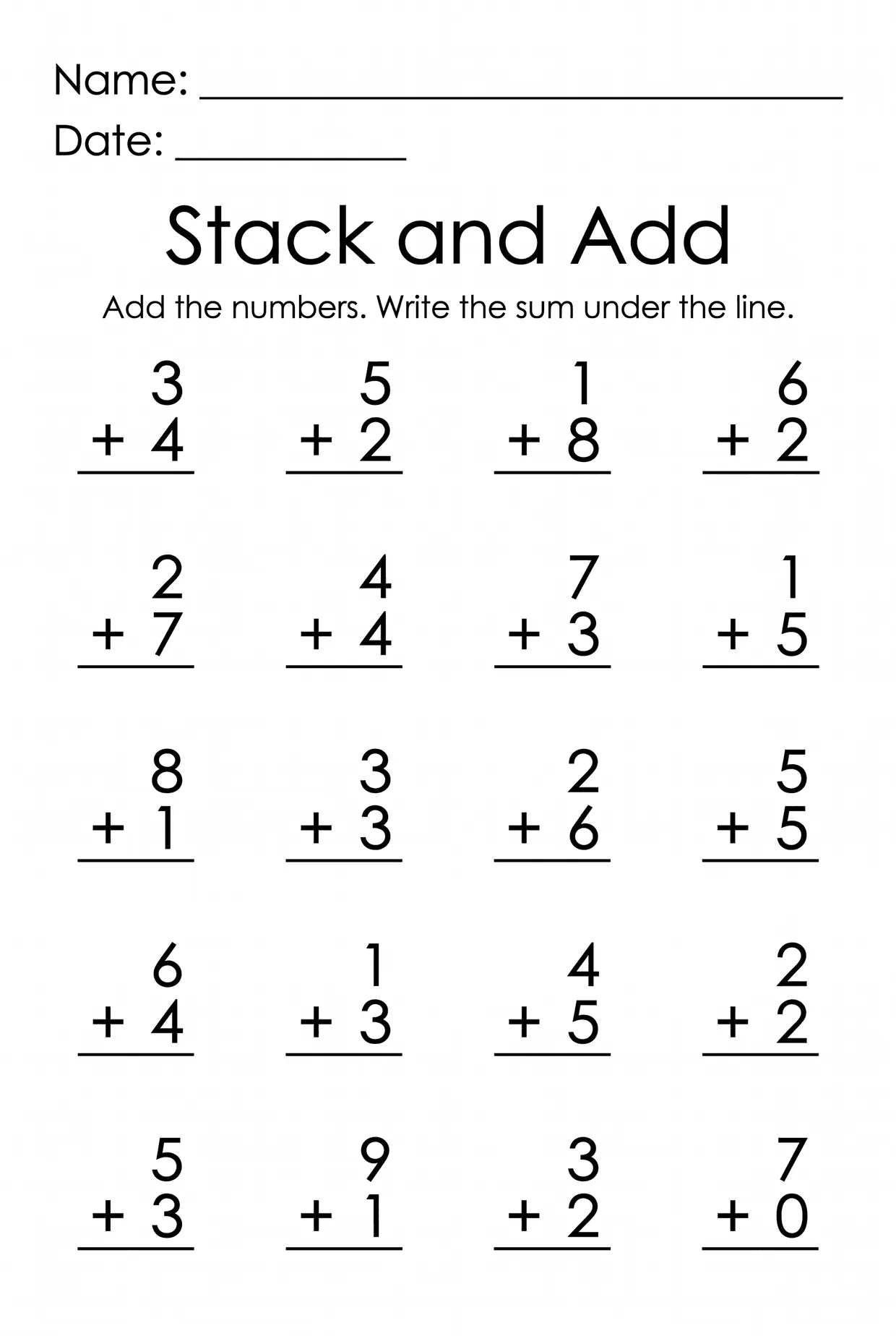
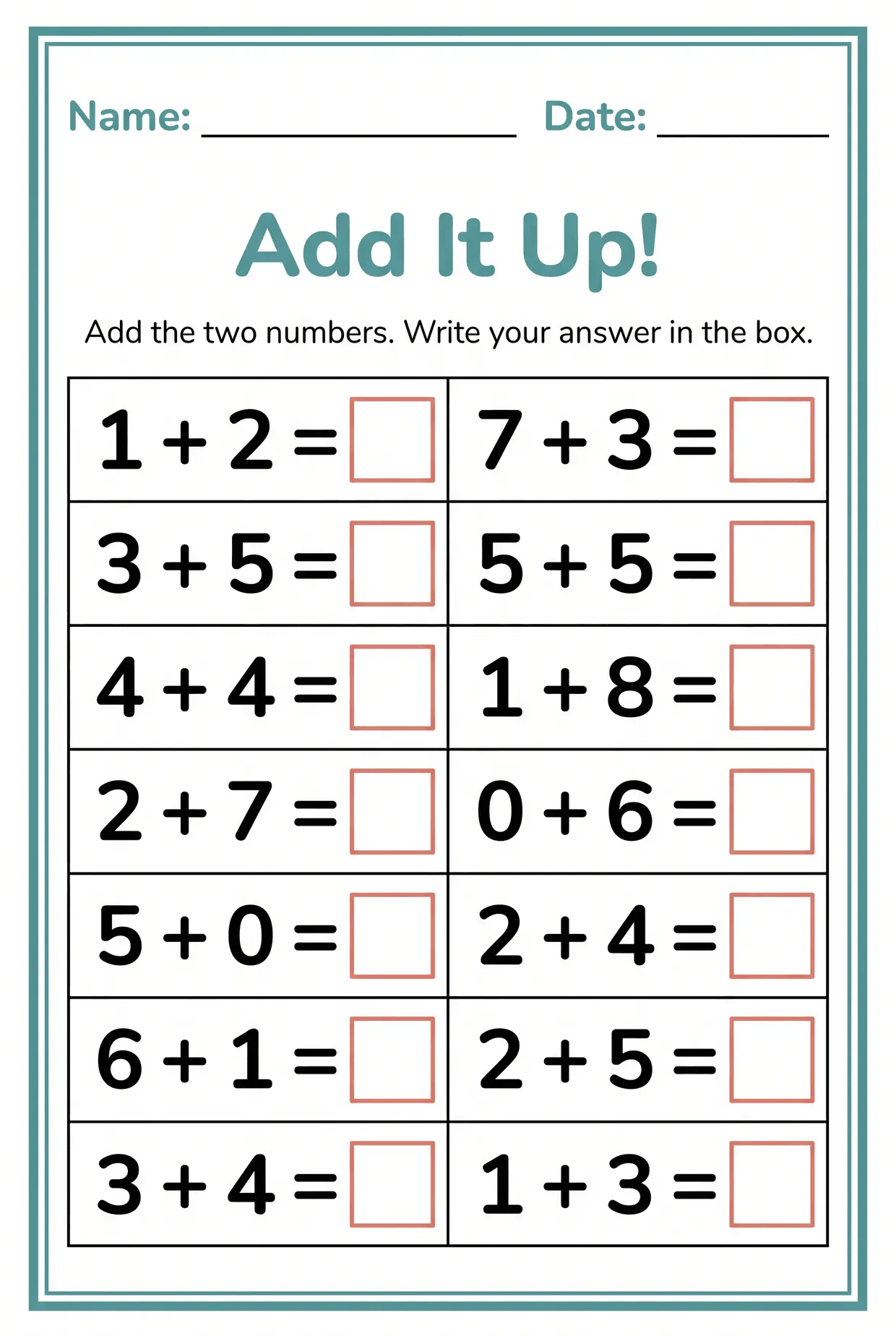
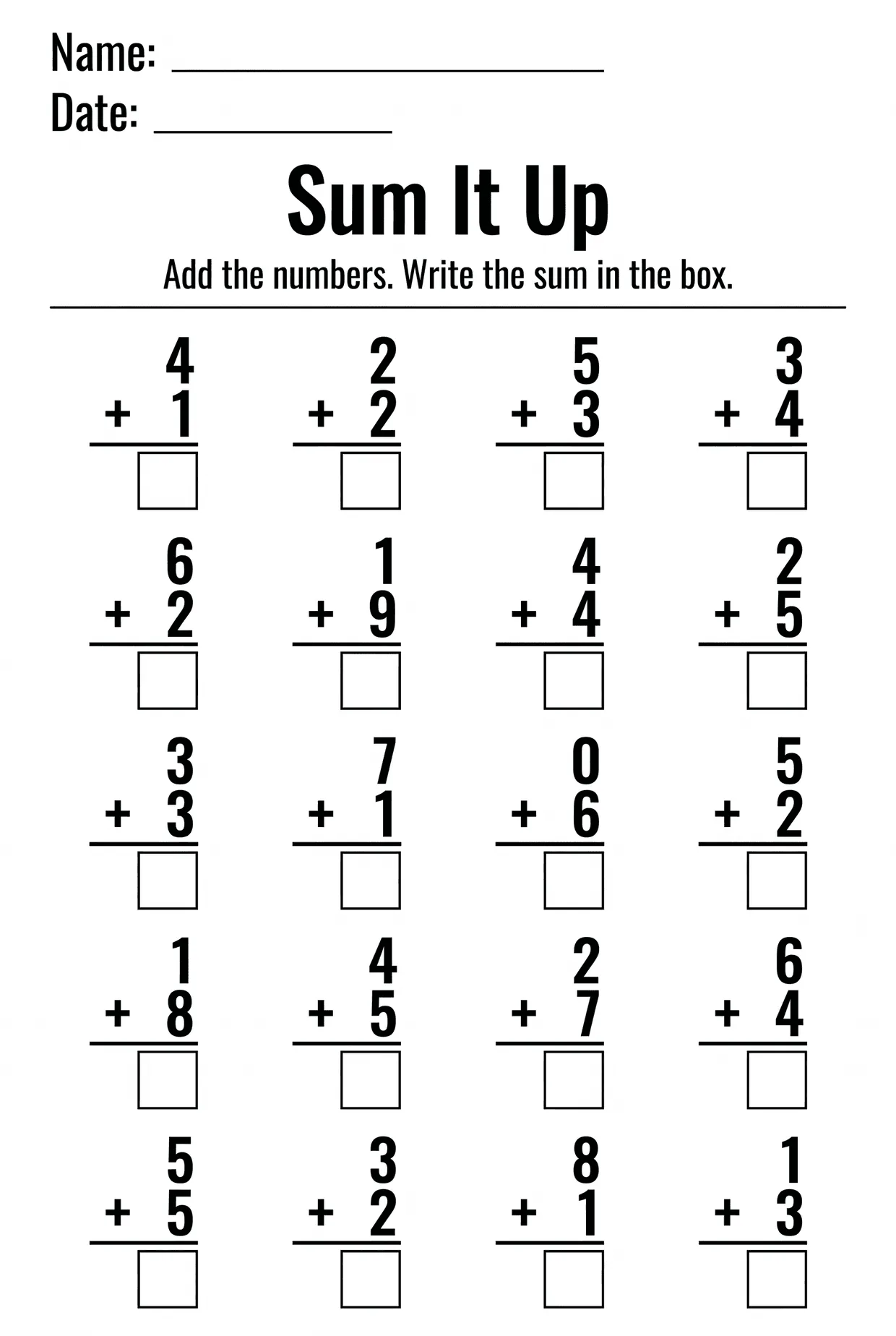
When they can add across without counting on fingers for most sums to 10. A column problem is the same addition turned on its side, and meeting it early makes two-digit addition feel familiar later. If stacking the numbers causes confusion, go back to problems written across for a week or two.
How much addition practice is enough in kindergarten?
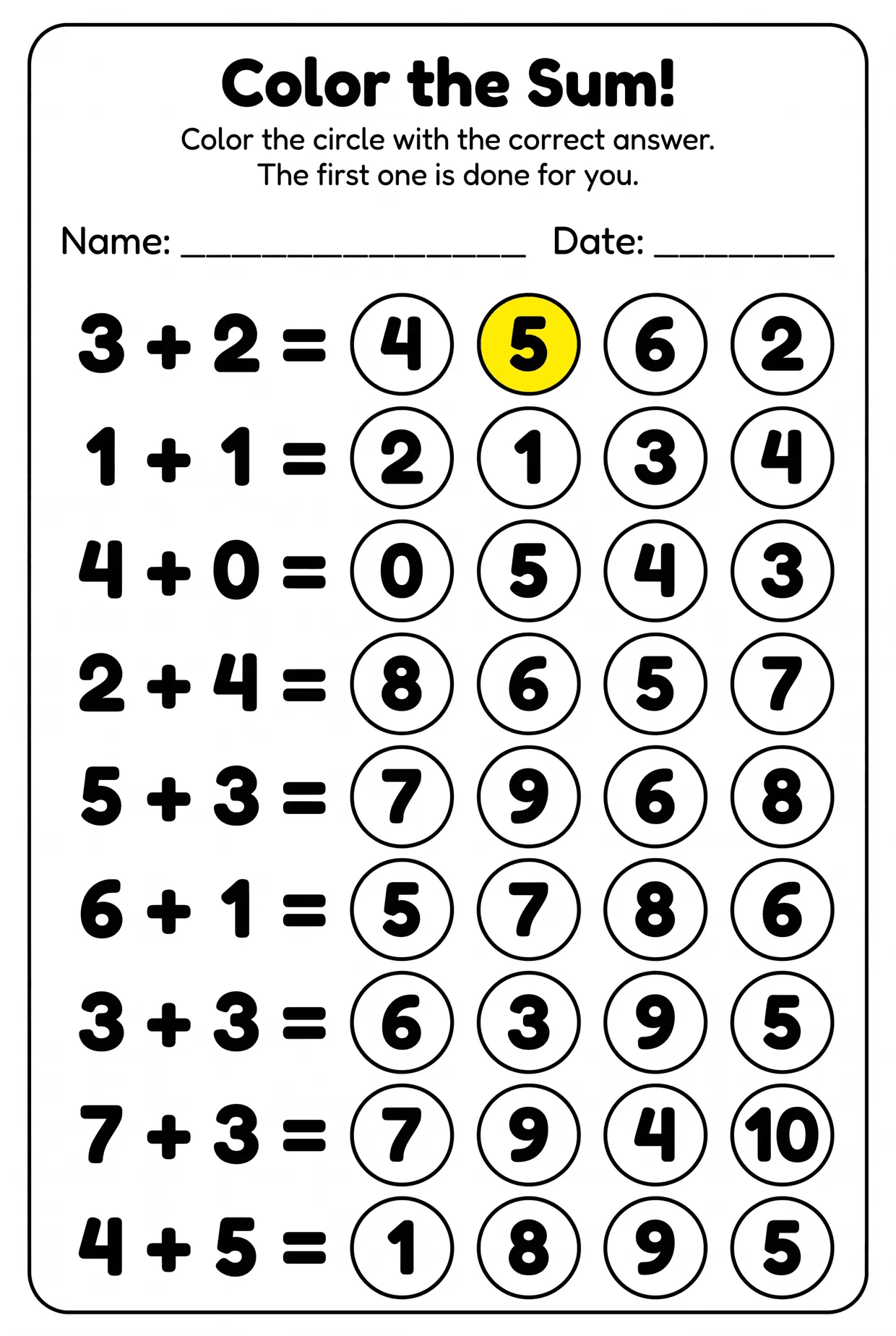
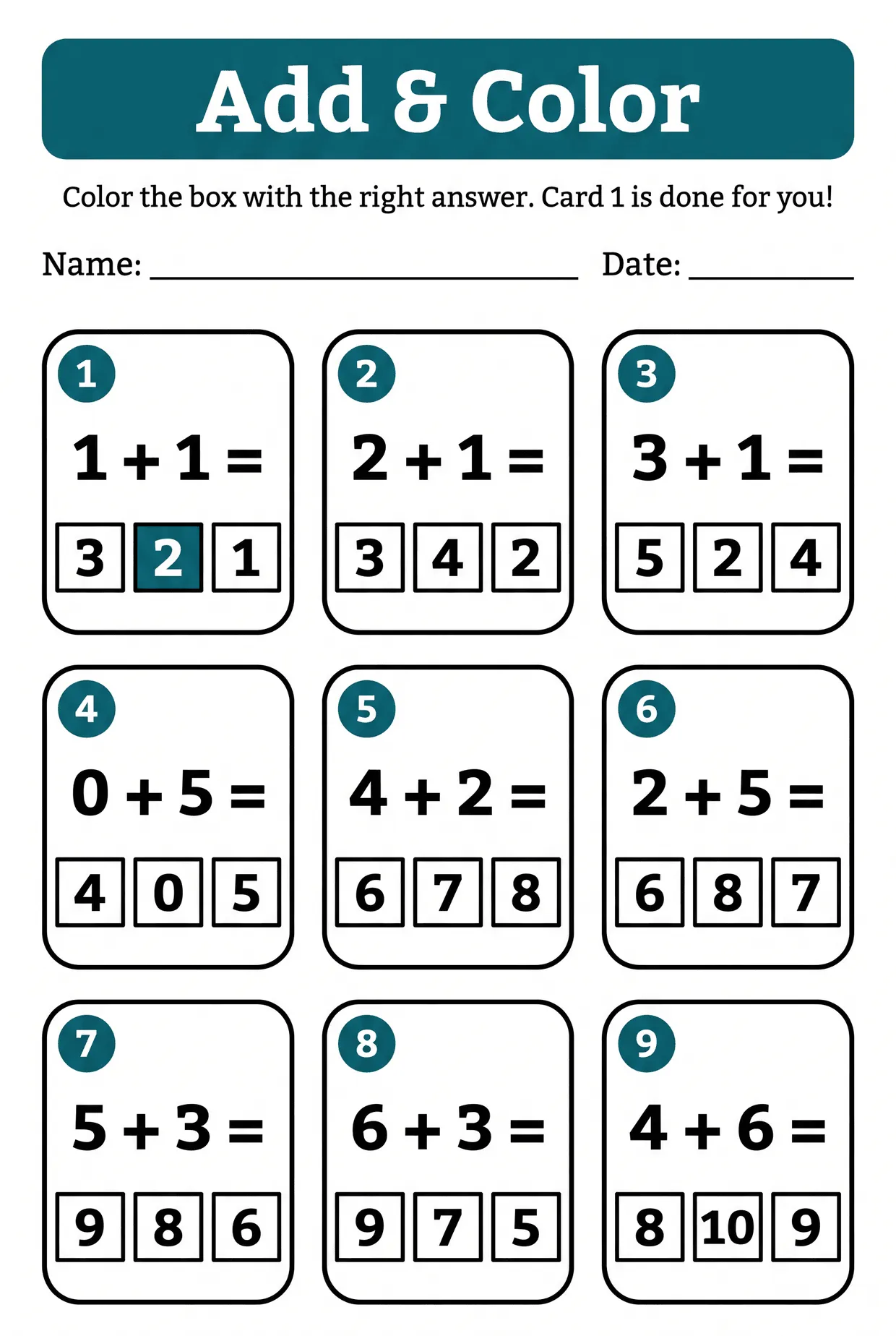
A single page, or a few focused minutes, is plenty on most days. Short regular practice builds recall better than one long session, and stopping before frustration sets in keeps adding enjoyable. The add and color pages are a good choice on days when attention is short.