Questions about kindergarten greetings worksheets
Why teach greetings in kindergarten?
Greetings are some of the first social words children use every day, at drop-off, at lunch and at home time. Learning to read and write them links speech to print with words a child already knows by heart. They also open up easy conversations about being polite and friendly.
What is the difference between good evening and good night?
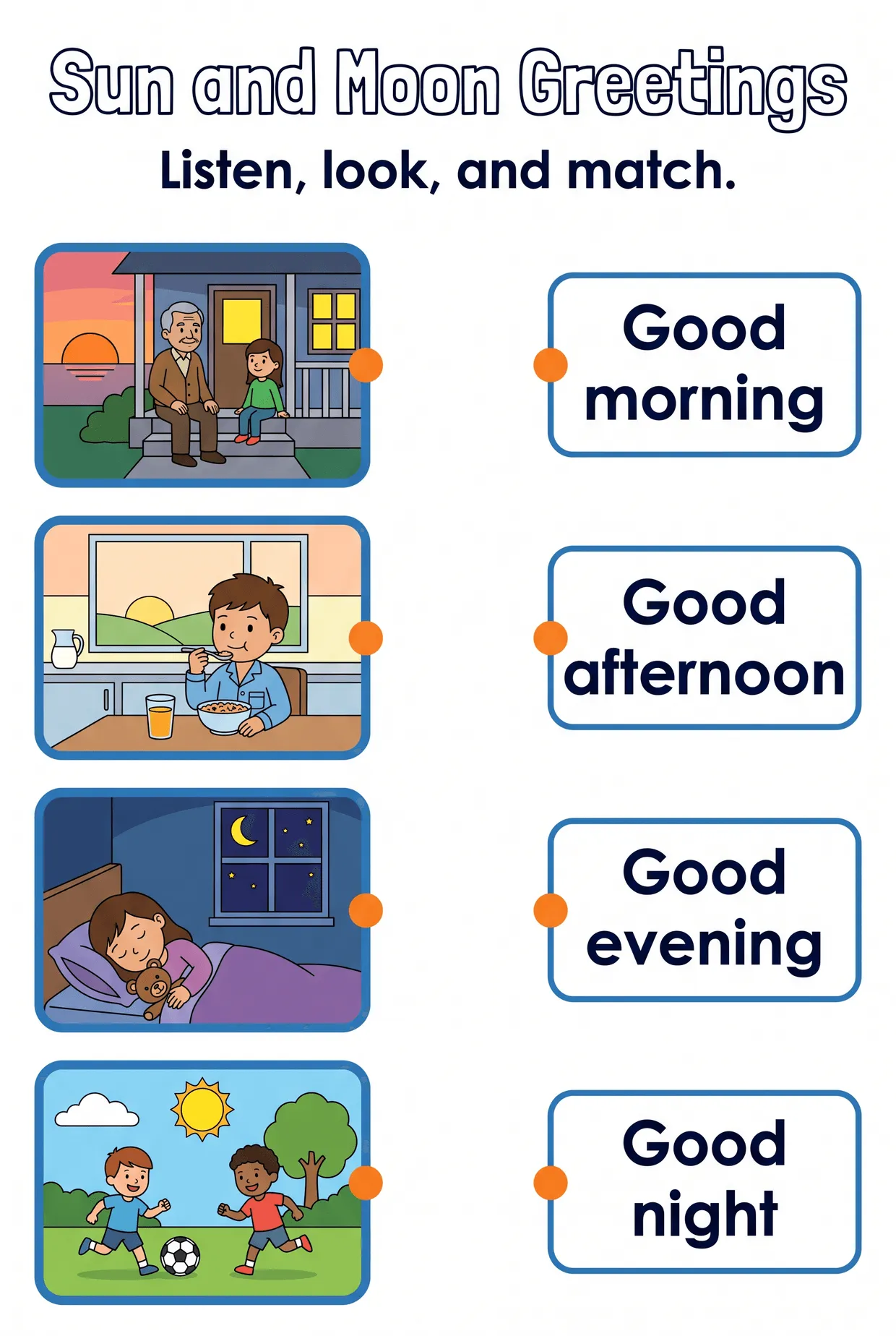
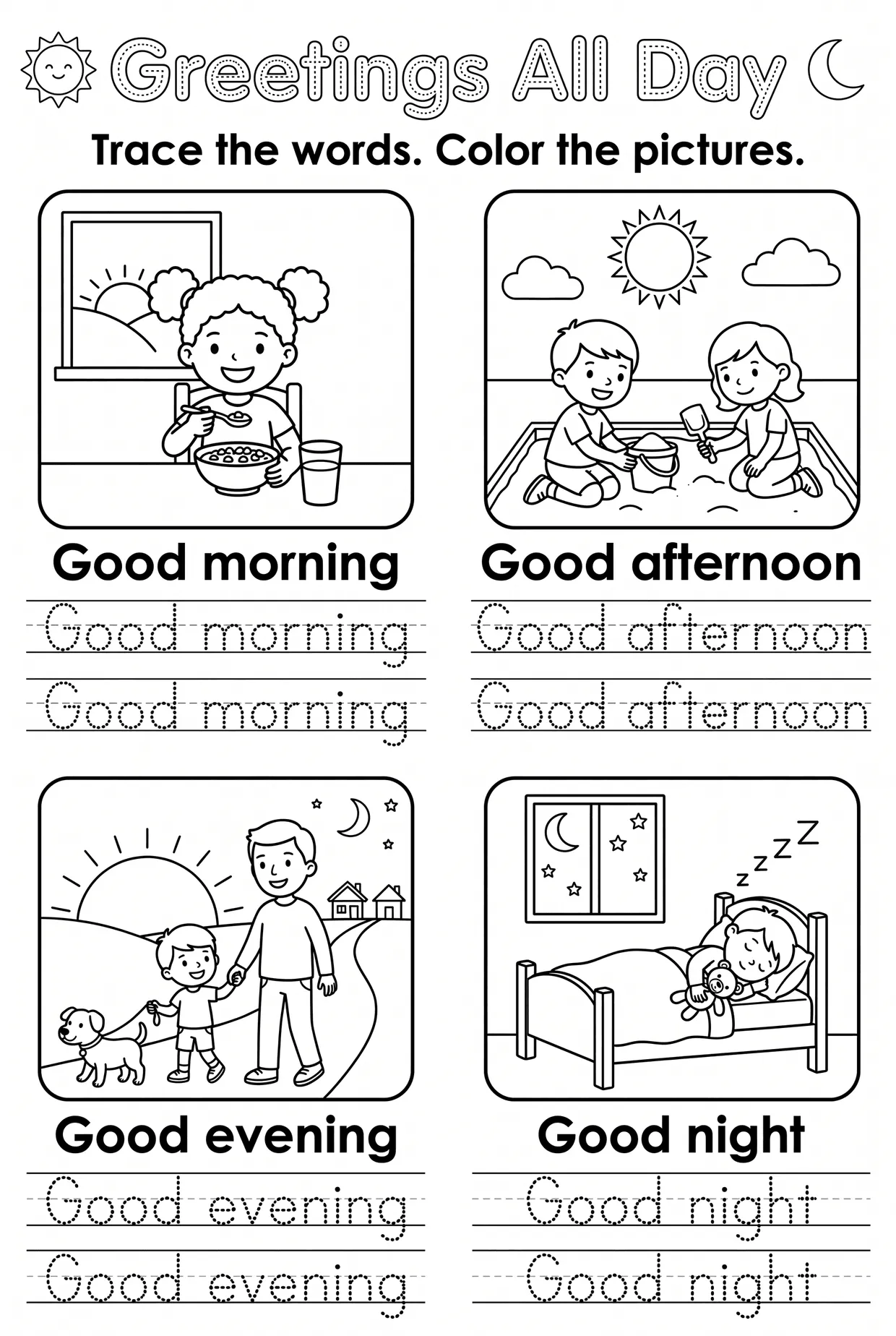
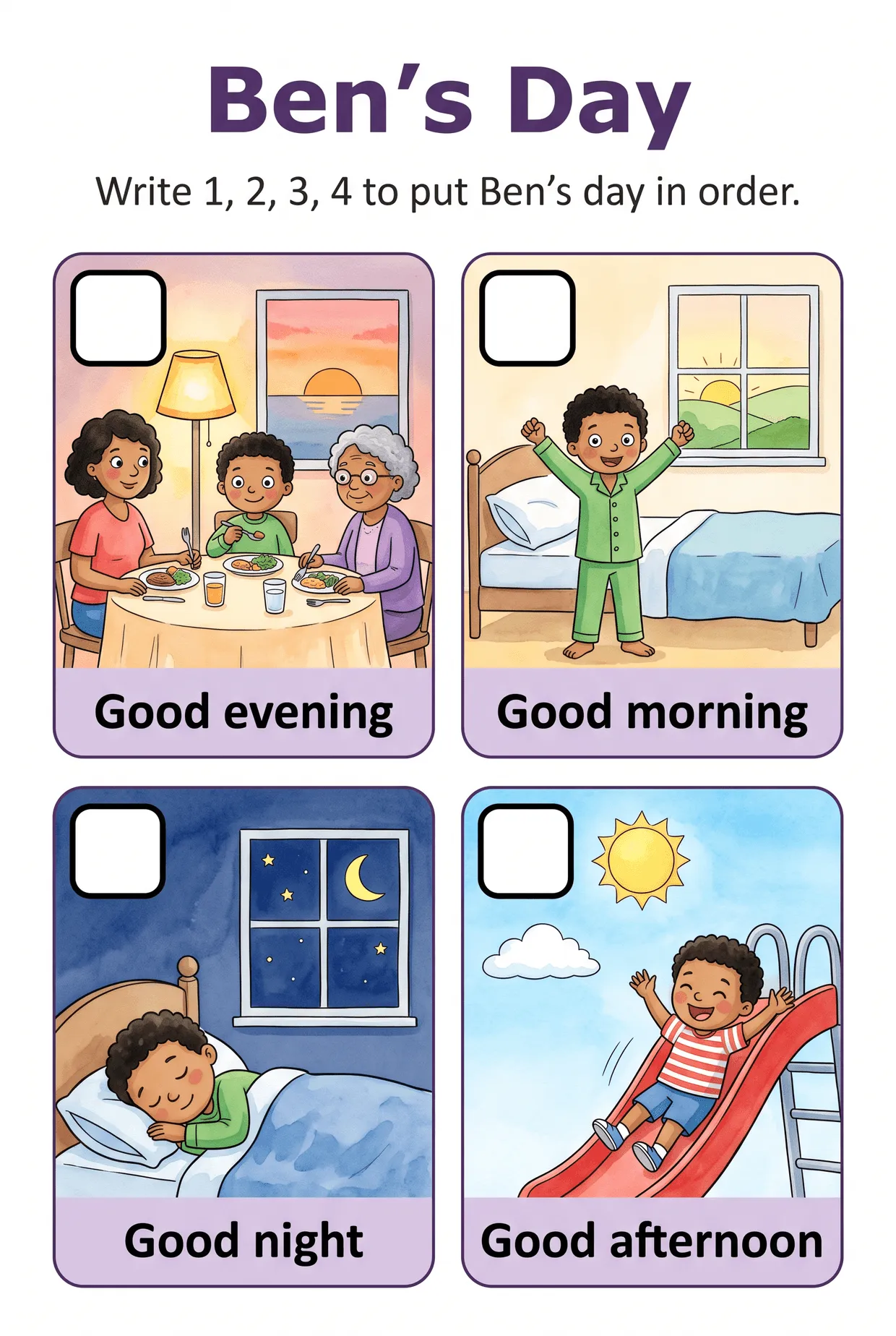
Good evening is a hello, used when meeting someone later in the day. Good night is a goodbye, said when leaving or going to bed. It is the pair kindergartners mix up most, and the pages that put four parts of the day in order help sort it out.
Are these useful for children learning English?
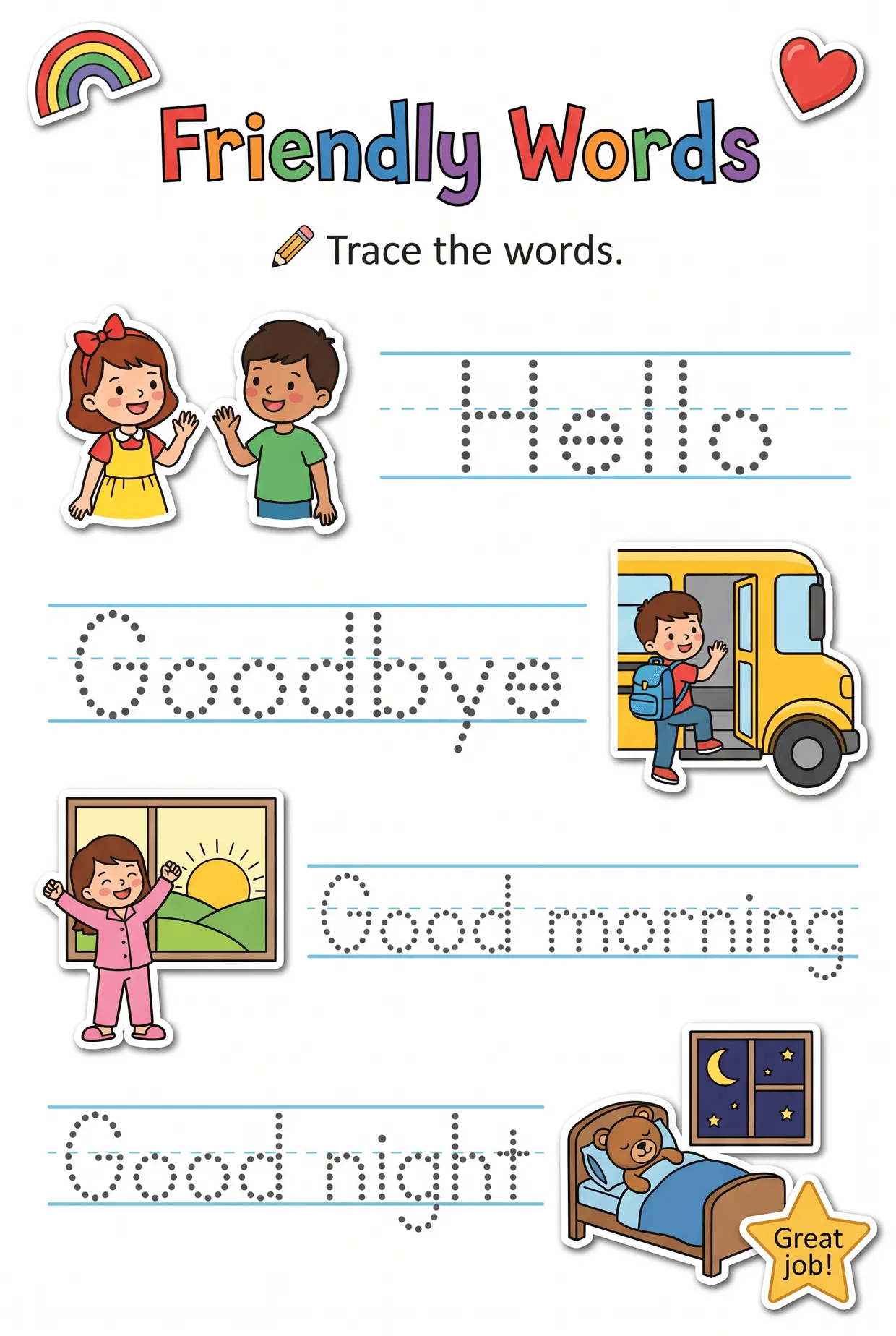
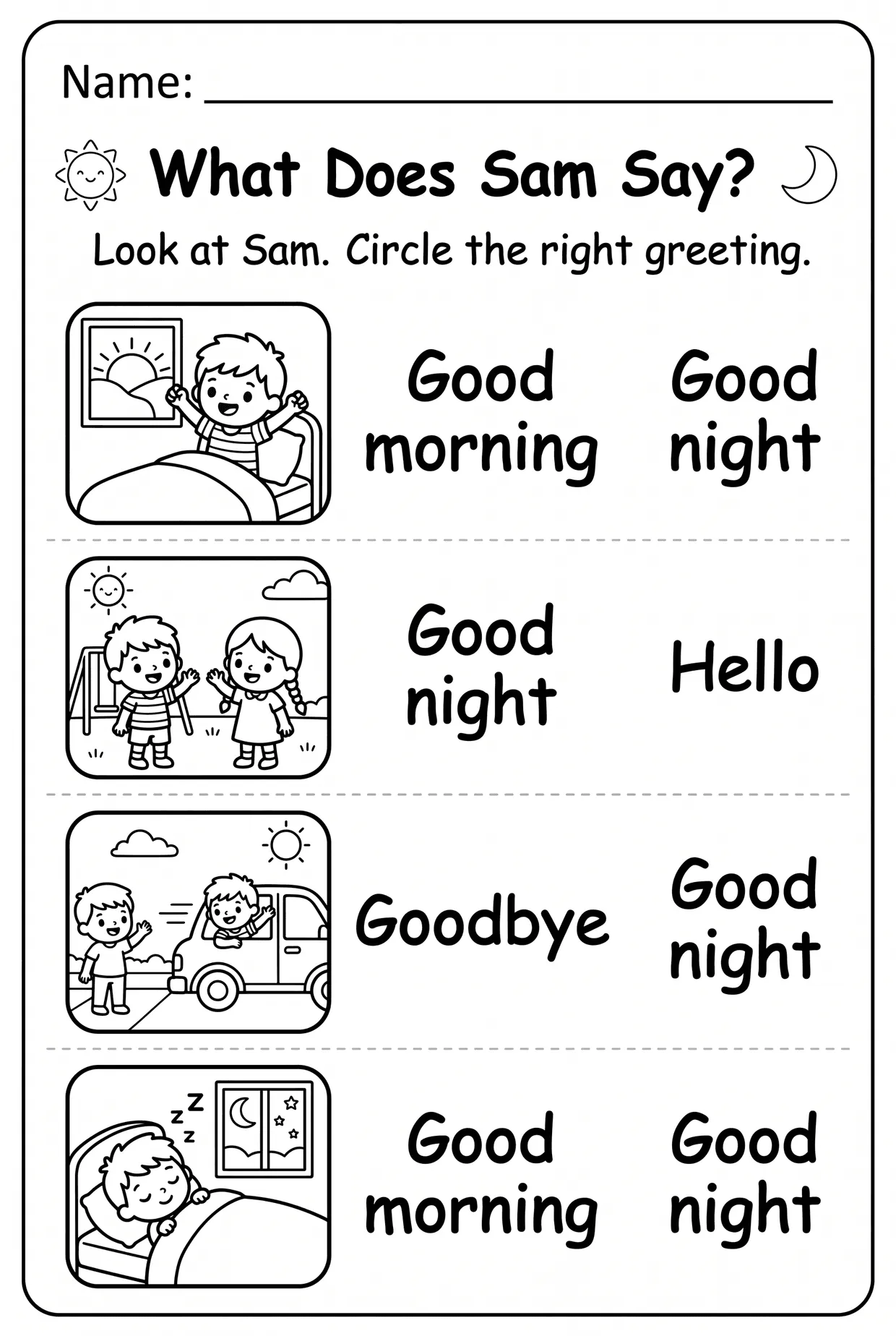
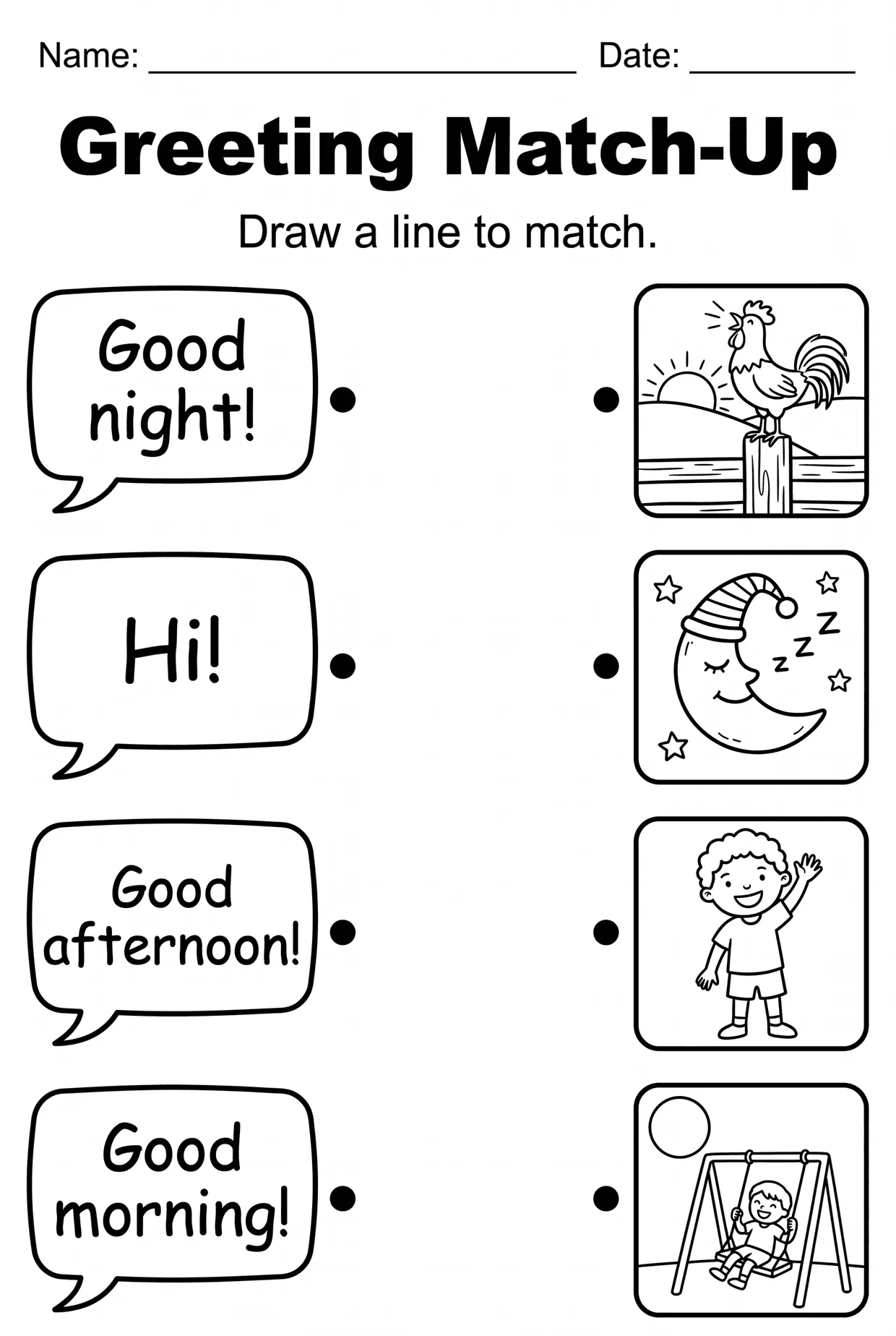
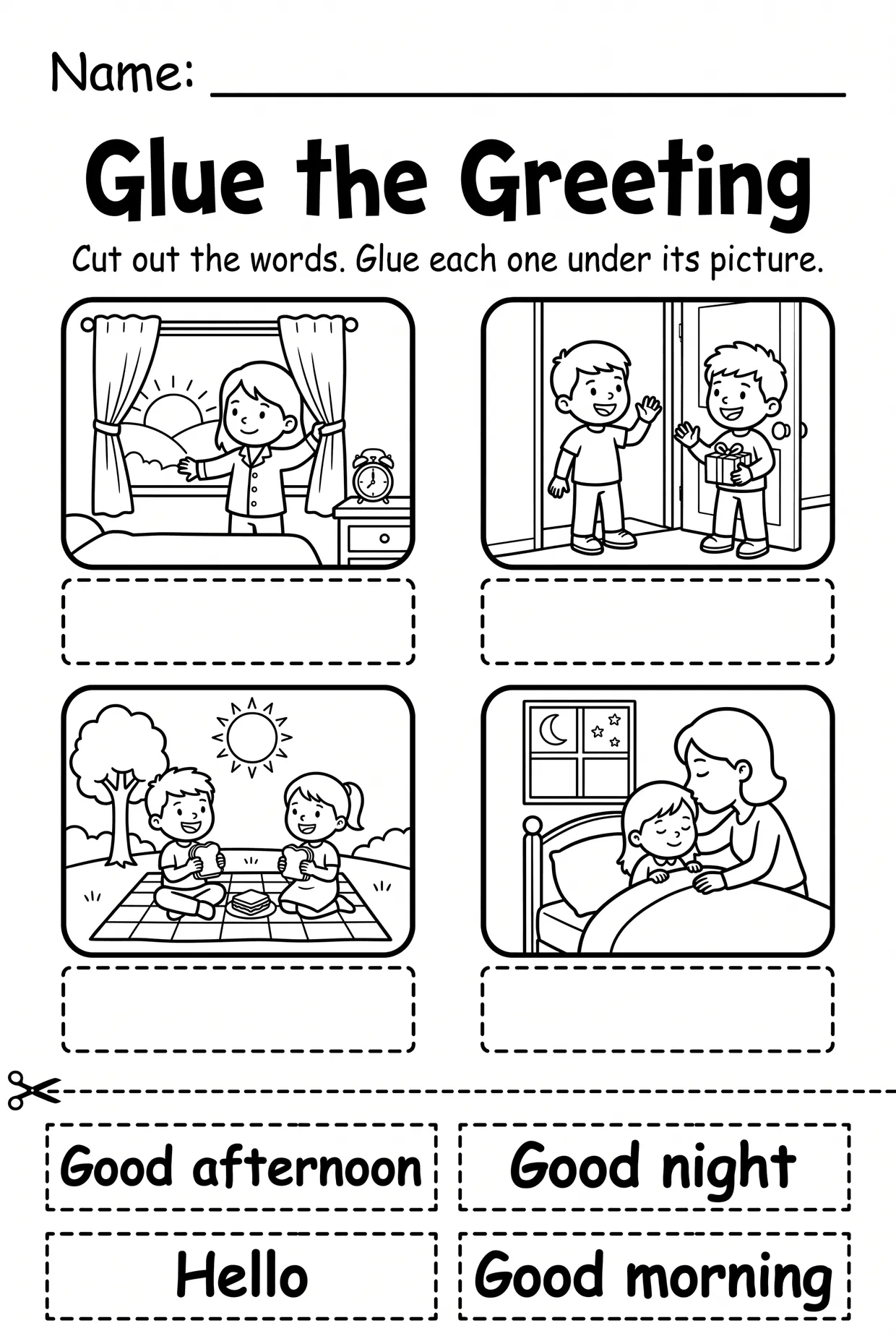
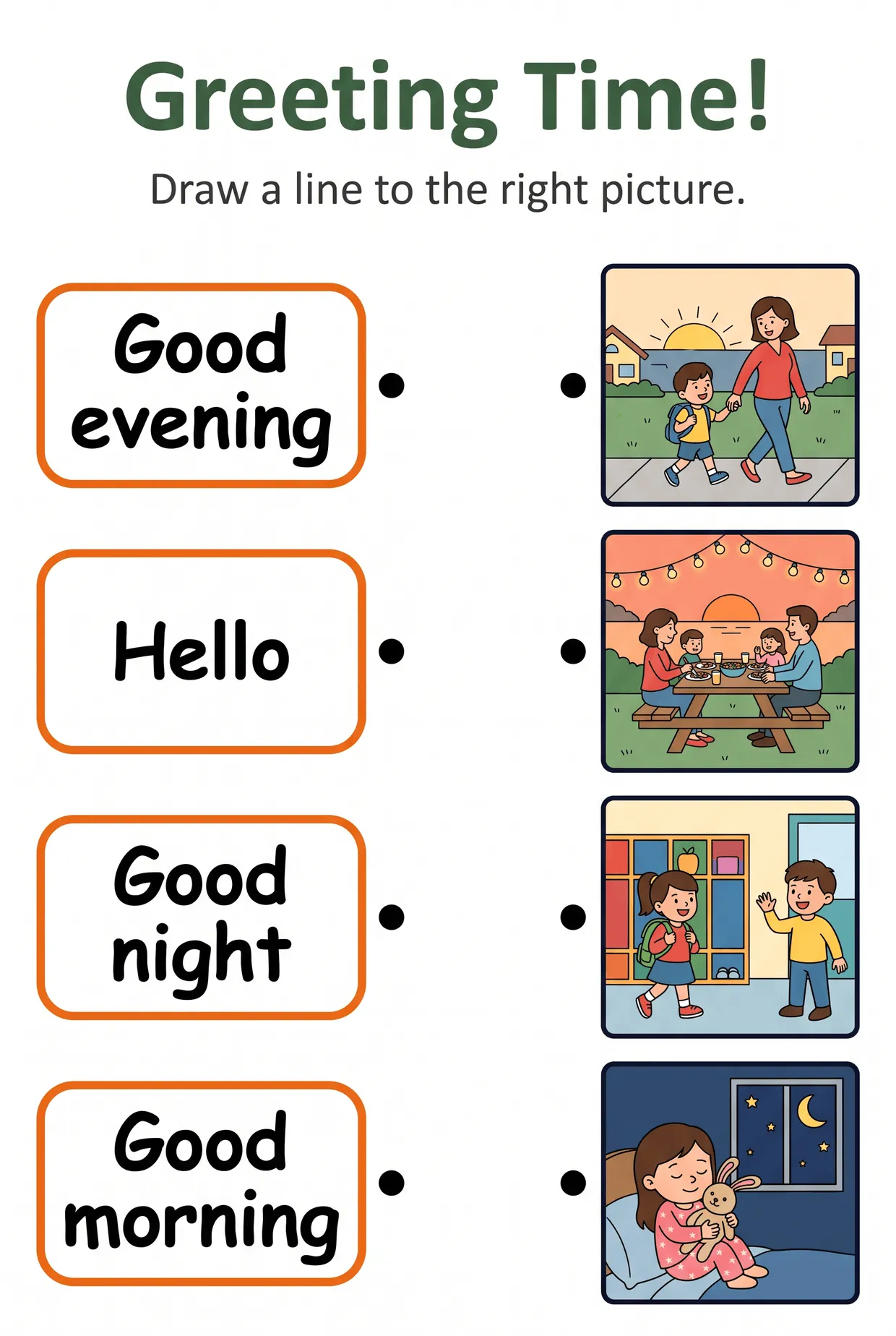
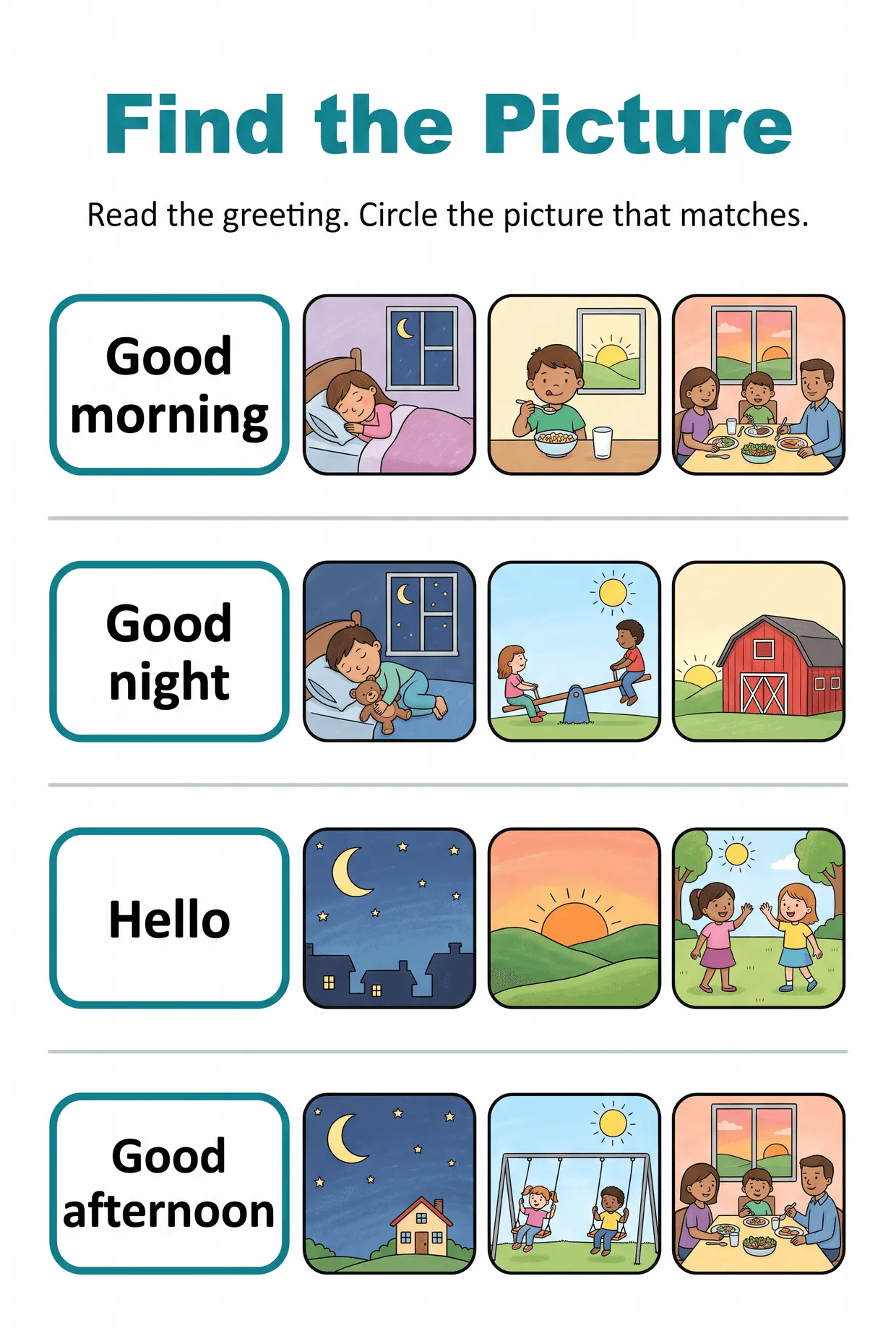
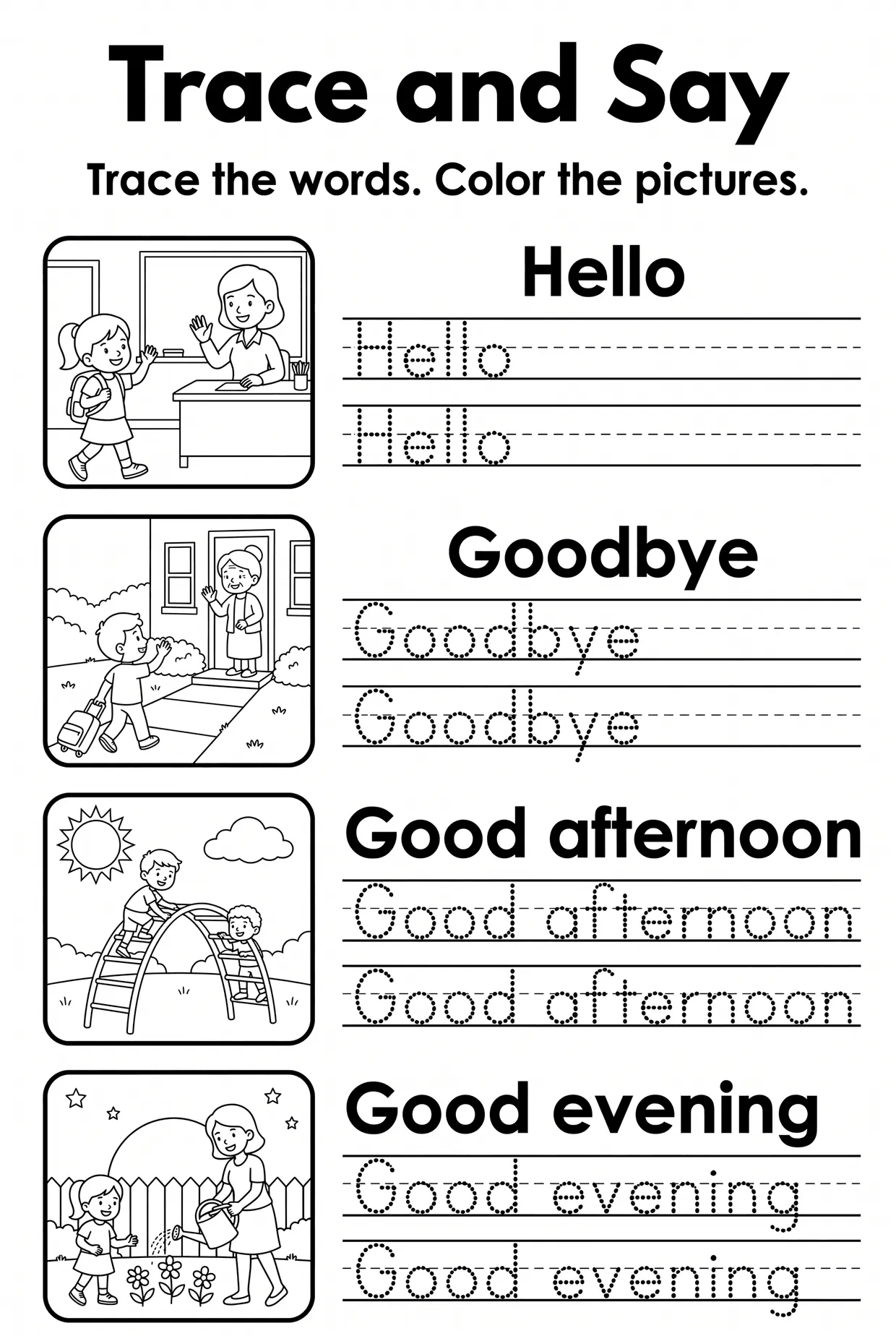
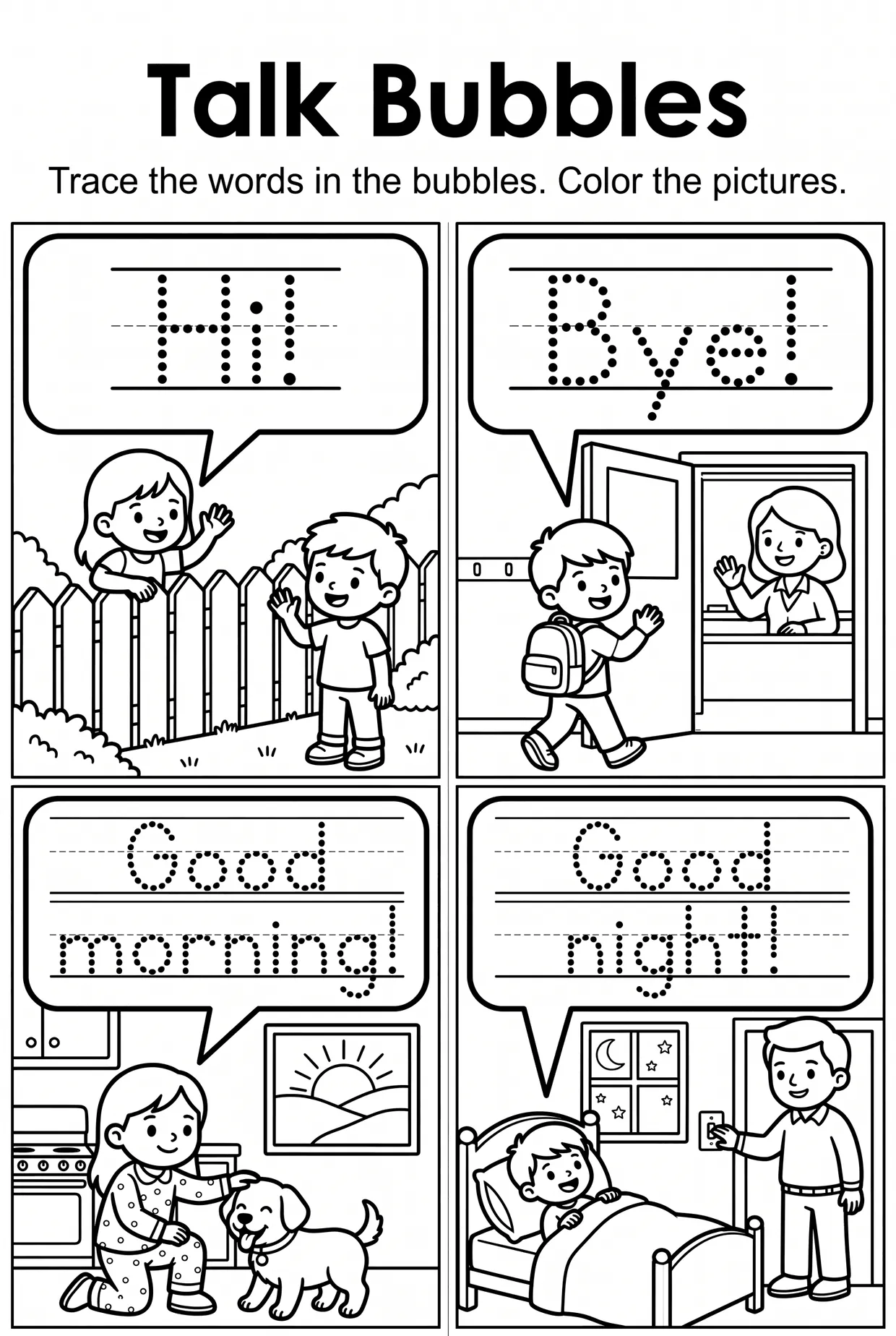
Yes. Each phrase on these pages comes with a picture, so the meaning is clear without long instructions. Start with the tracing and matching pages, and say each greeting out loud together, since hearing and saying the words matters as much as writing them.
My child knows good morning but not good afternoon. Where should we start?
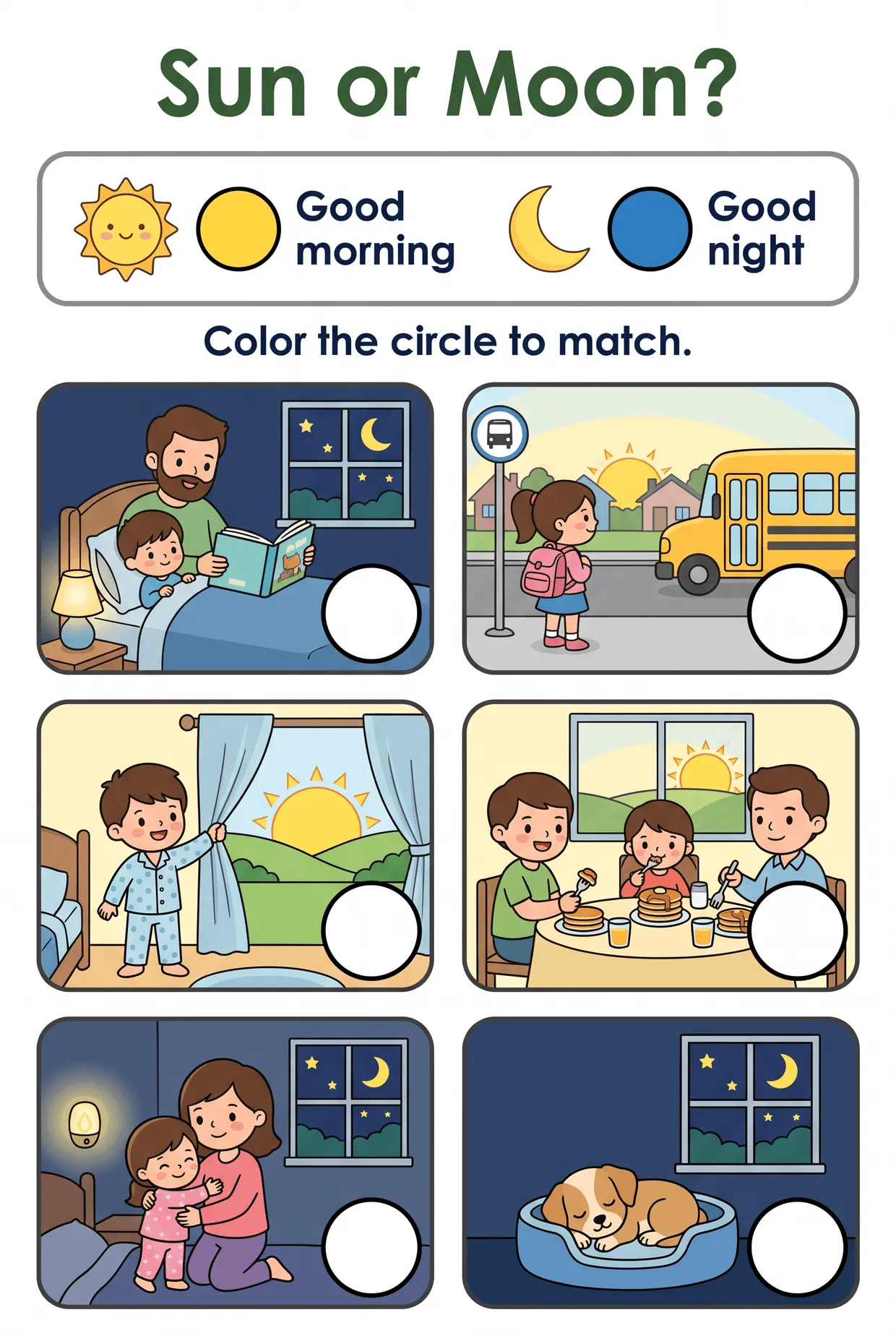
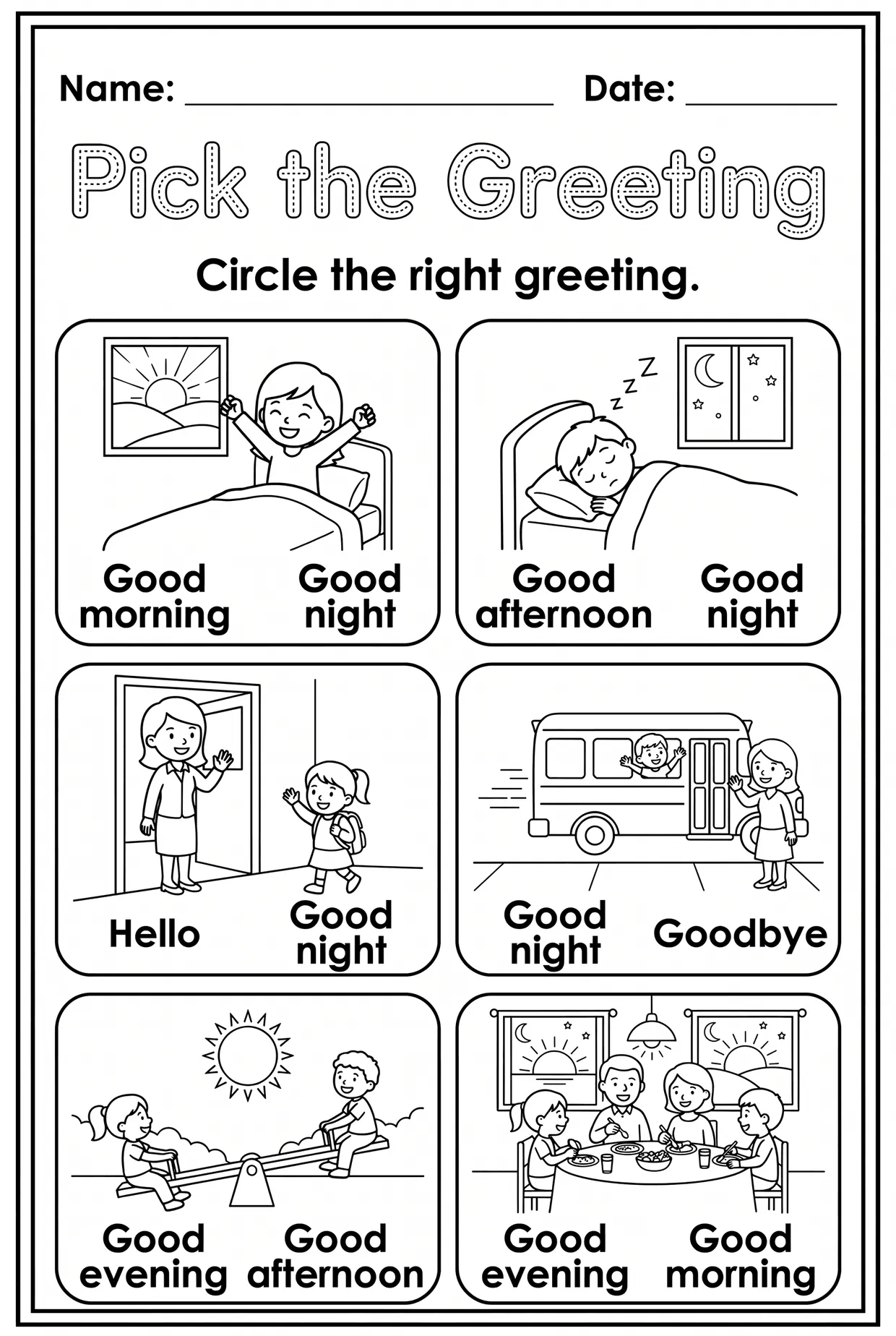
Start with the sun or moon sort, which only asks for good morning and good night. Once that is easy, add the matching pages with all four parts of the day, using the sun in each picture as a clue. Afternoon usually clicks when you tie it to something real, like the time after lunch.
How can we practice greetings away from the page?
Make a game of it through the day: greet each other at breakfast, after school and at bedtime with the right phrase. Role play with toys works too, with one toy arriving and another leaving. The sequencing pages then become a quick check of what a child already uses.