Questions about kindergarten rhyming words worksheets
Why does rhyming matter for learning to read?
Rhyming teaches a child to notice the end of a word separately from its beginning. That same skill later lets them see that cat, hat and mat share a chunk, which makes word families easy to read. Kindergartners who can hear rhymes usually find phonics comes more smoothly.
My child picks a word with the same first sound instead of one that rhymes. What helps?
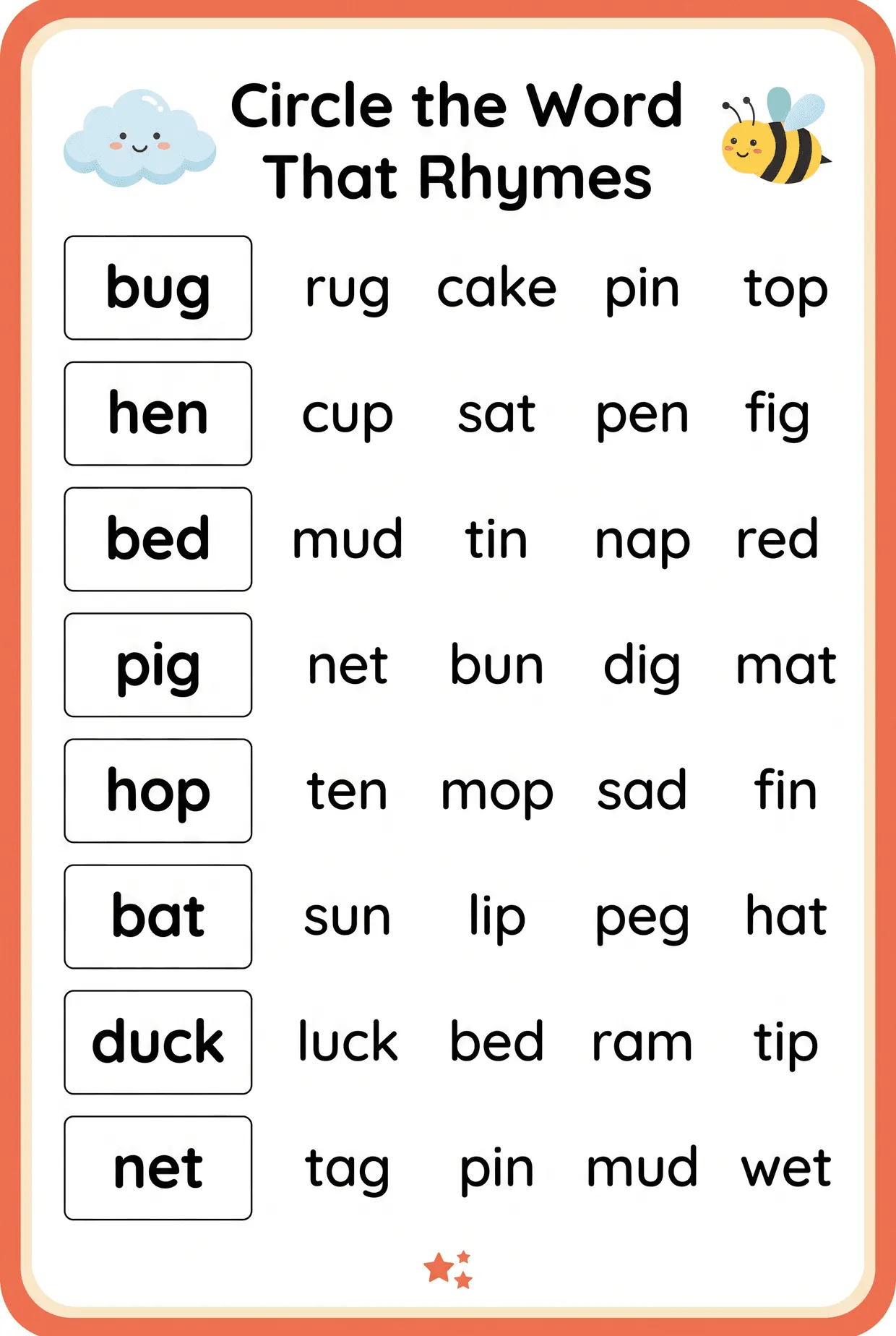
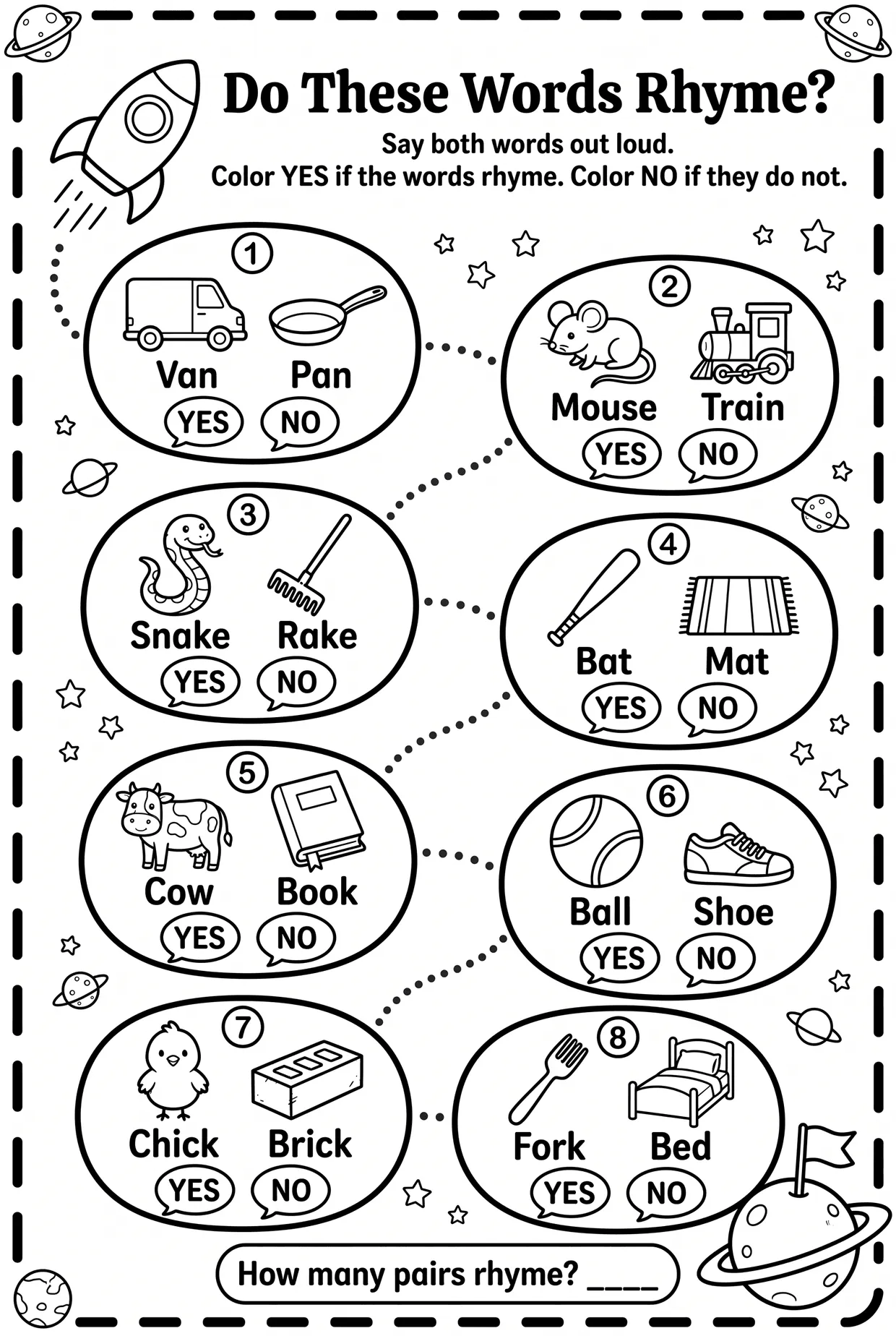
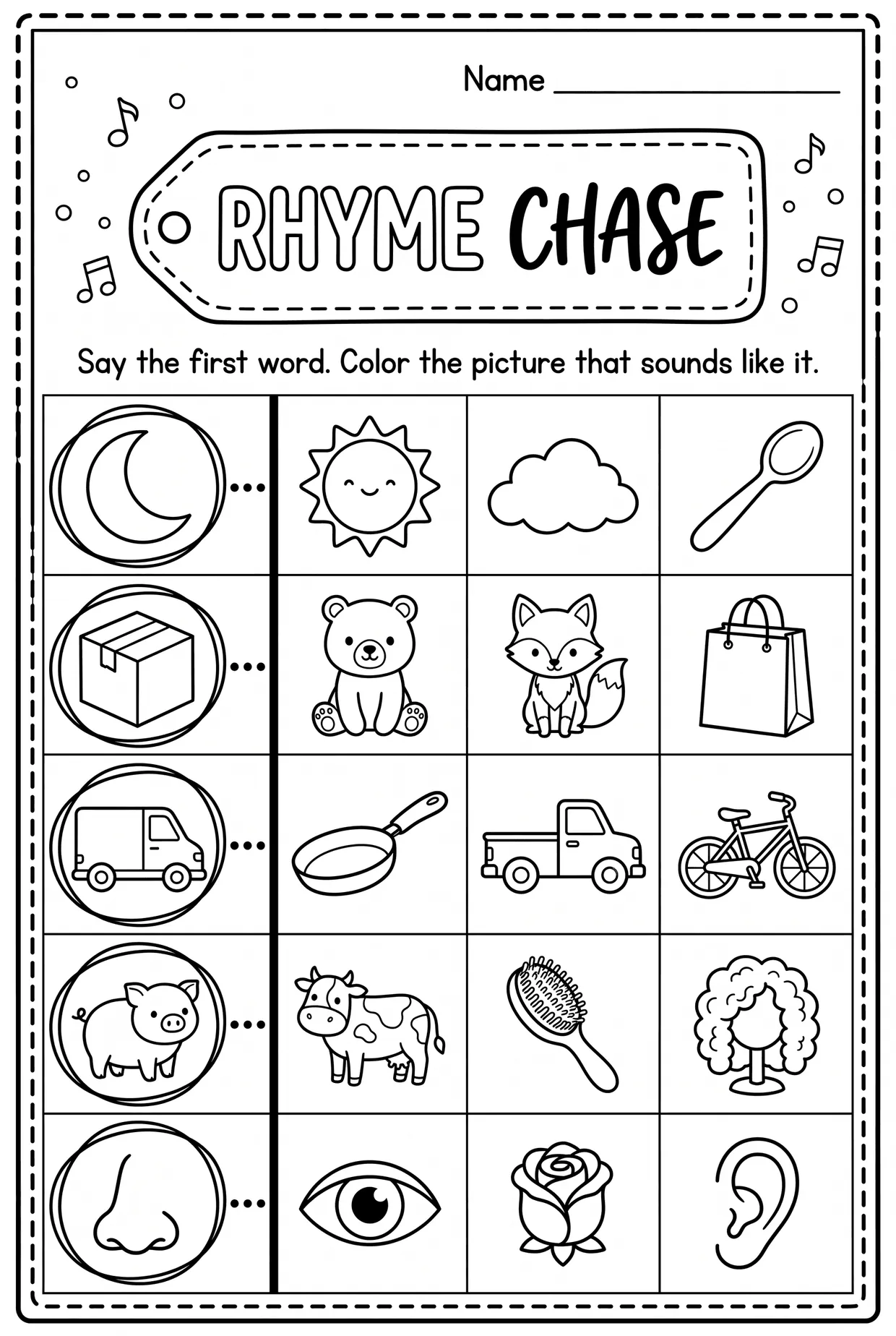
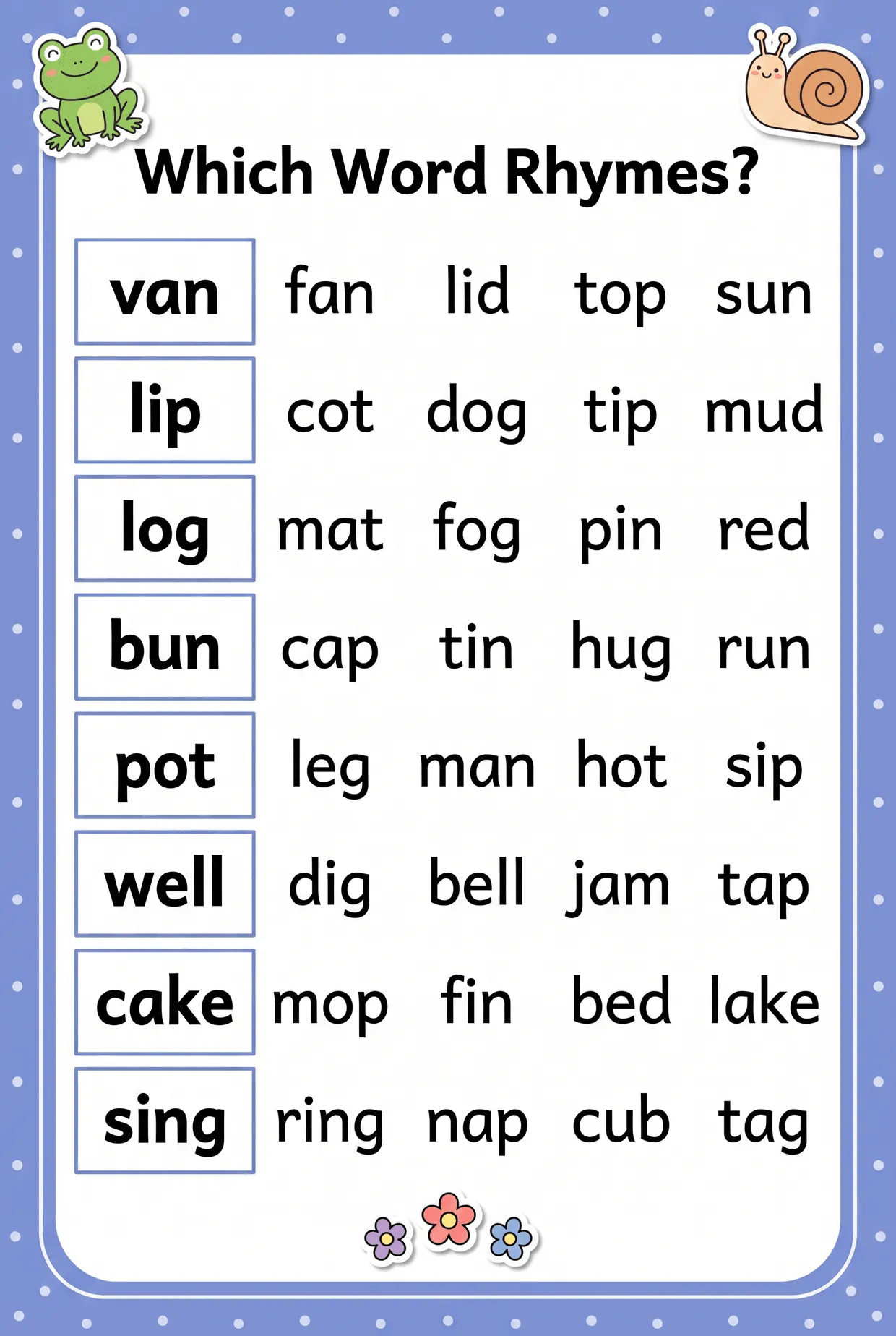
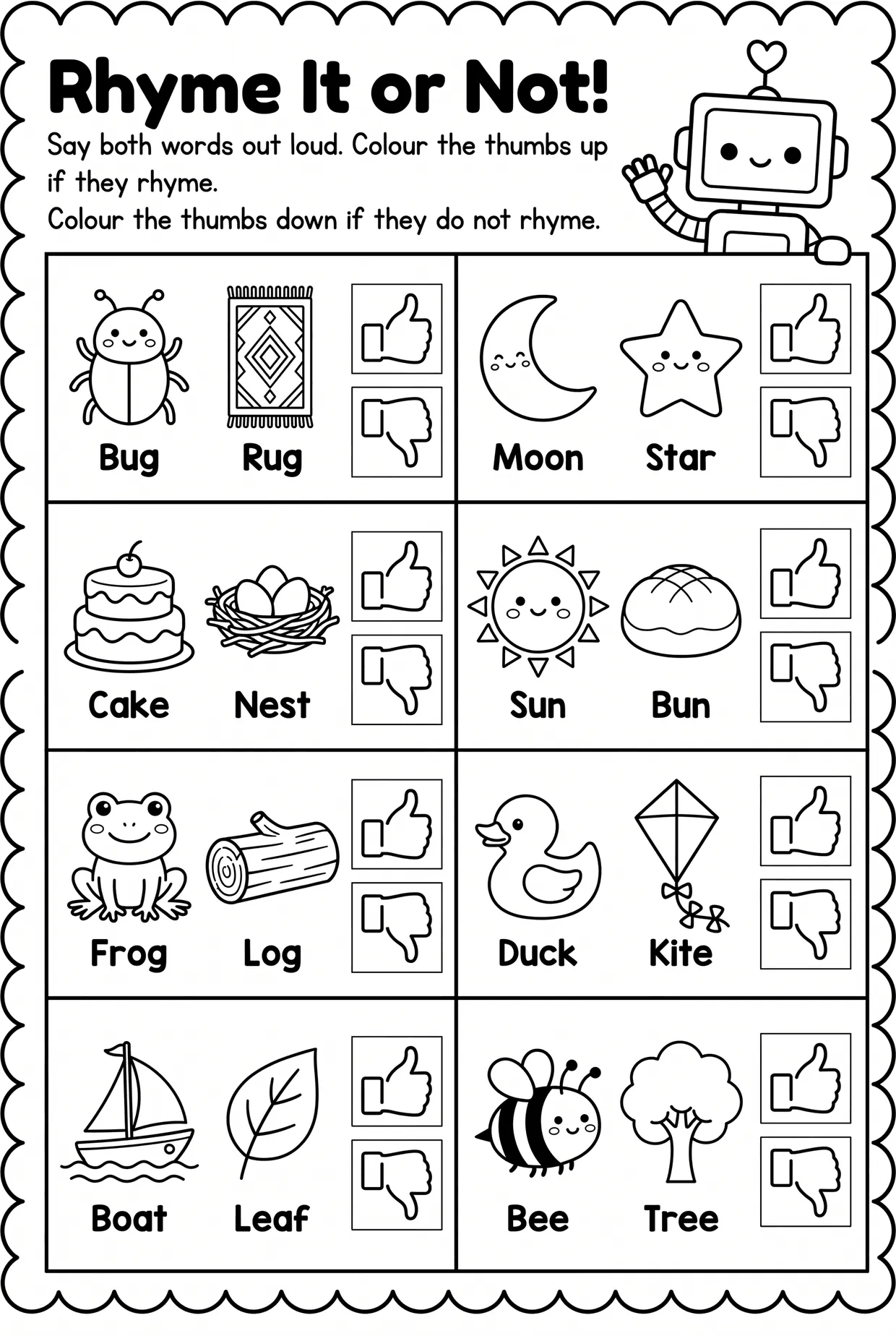
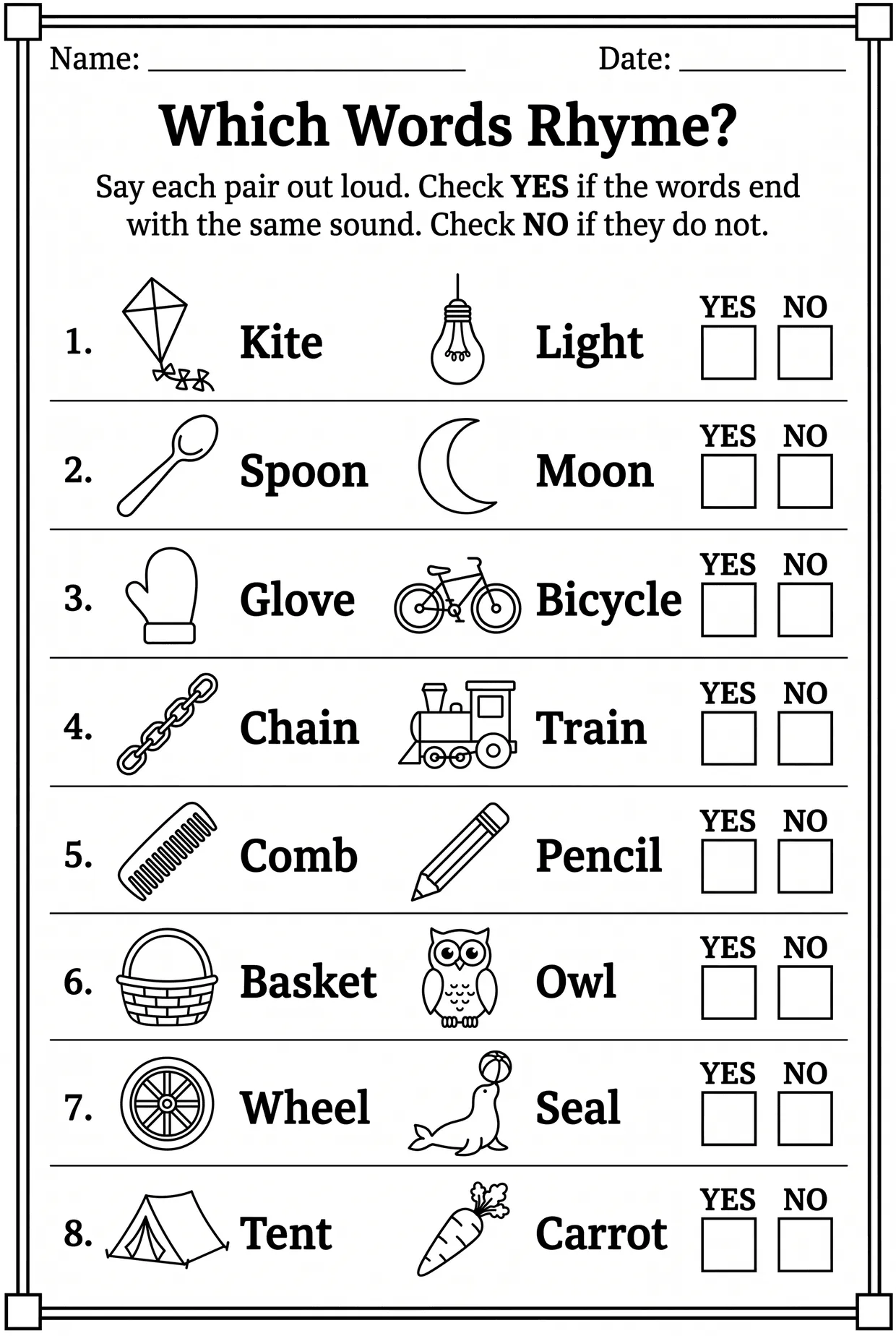
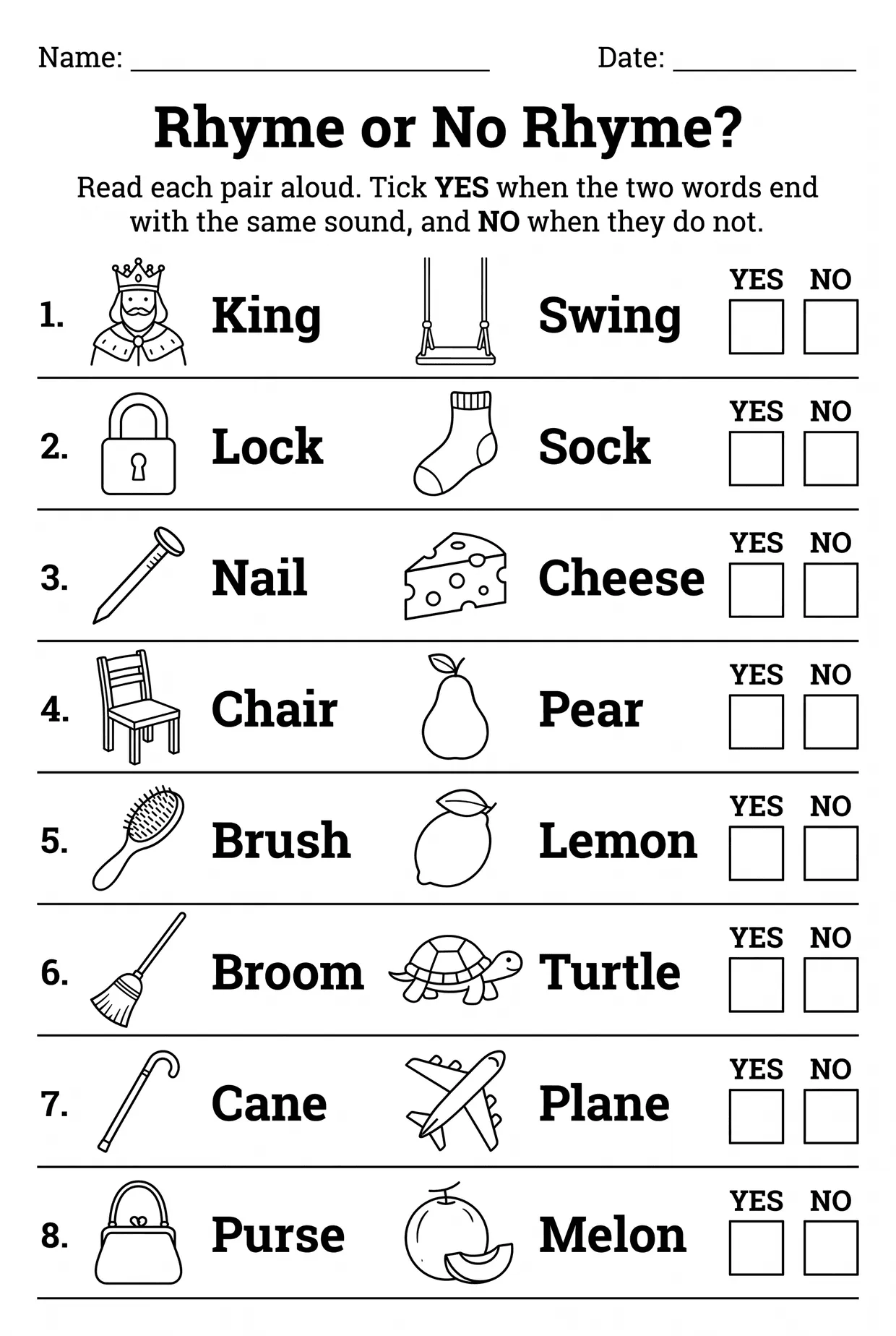
That mix-up is the most common one, because the start of a word is easier to hear. Say both words slowly and lean on the ending, like mmm-oon and spp-oon, then ask whether the ends sound the same. Several of the picture pages include one that shares only the first sound, so a child gets practice ruling it out.
Should a kindergartner be able to make up rhymes?
Yes, the Common Core expects kindergartners to recognize and produce rhyming words (RF.K.2a). Recognizing comes first, and that is what these pages practice. Once a child picks the rhyme reliably, ask them to add one of their own to each row, even a silly made-up word.
Which pages work for a child who cannot read yet?
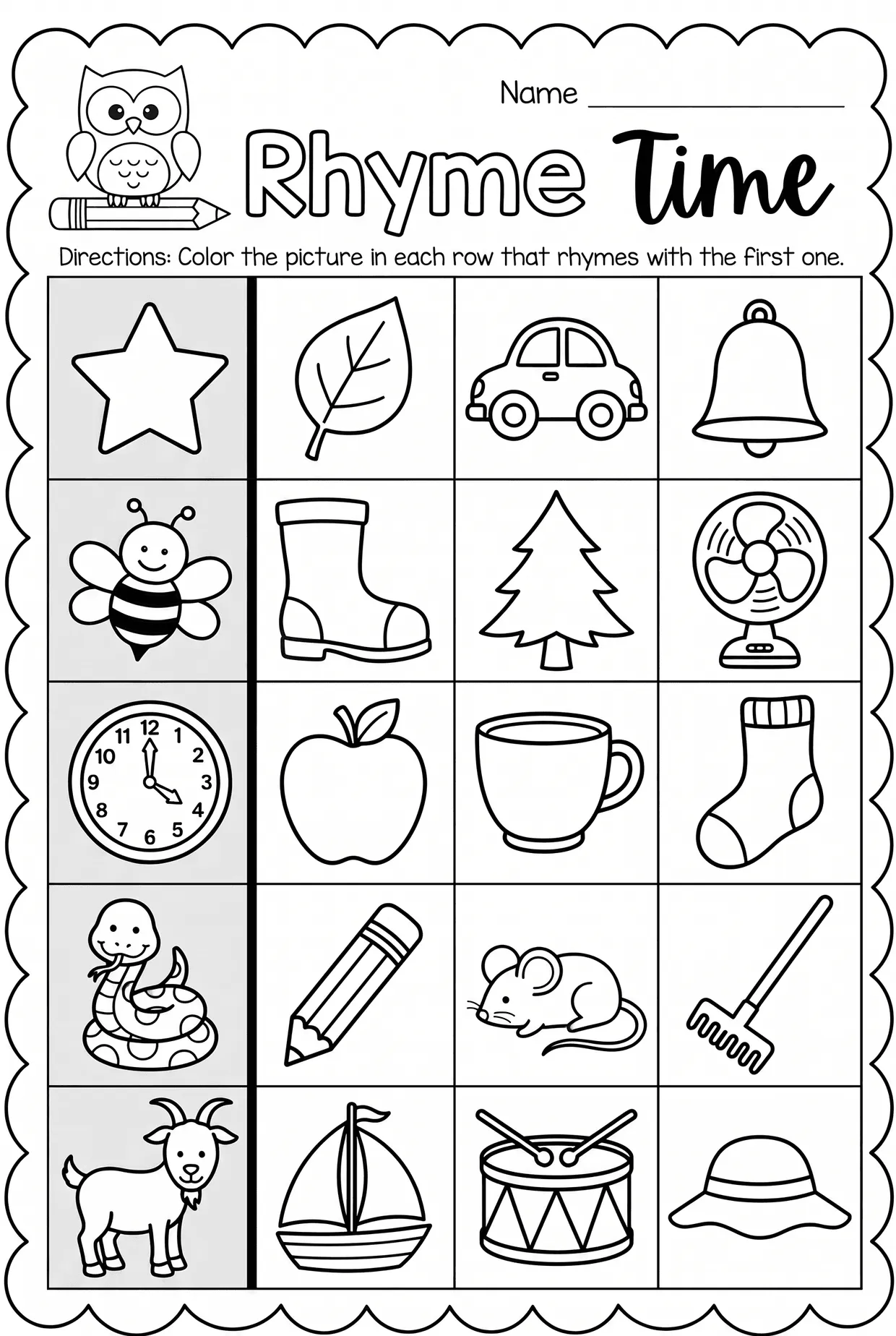
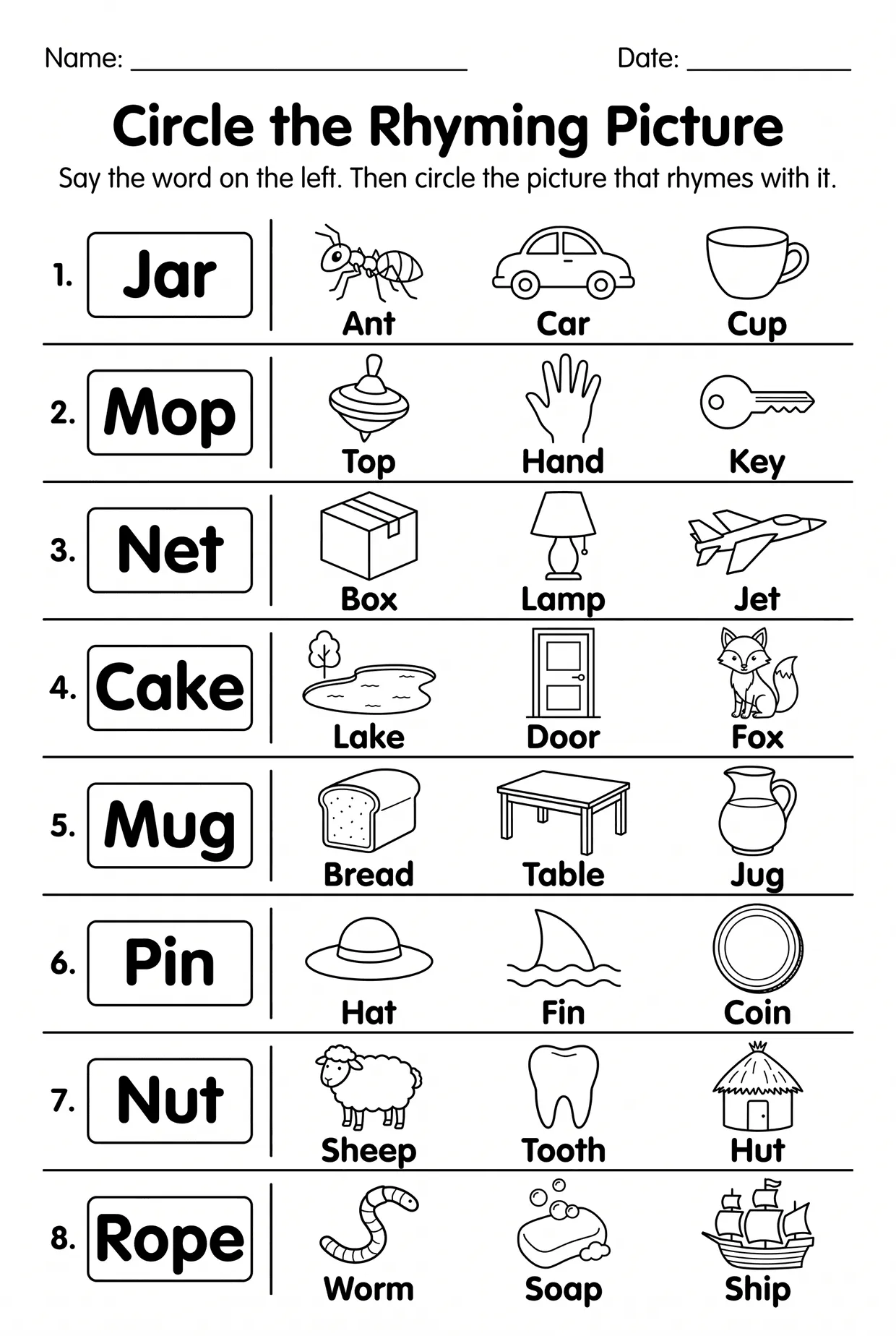
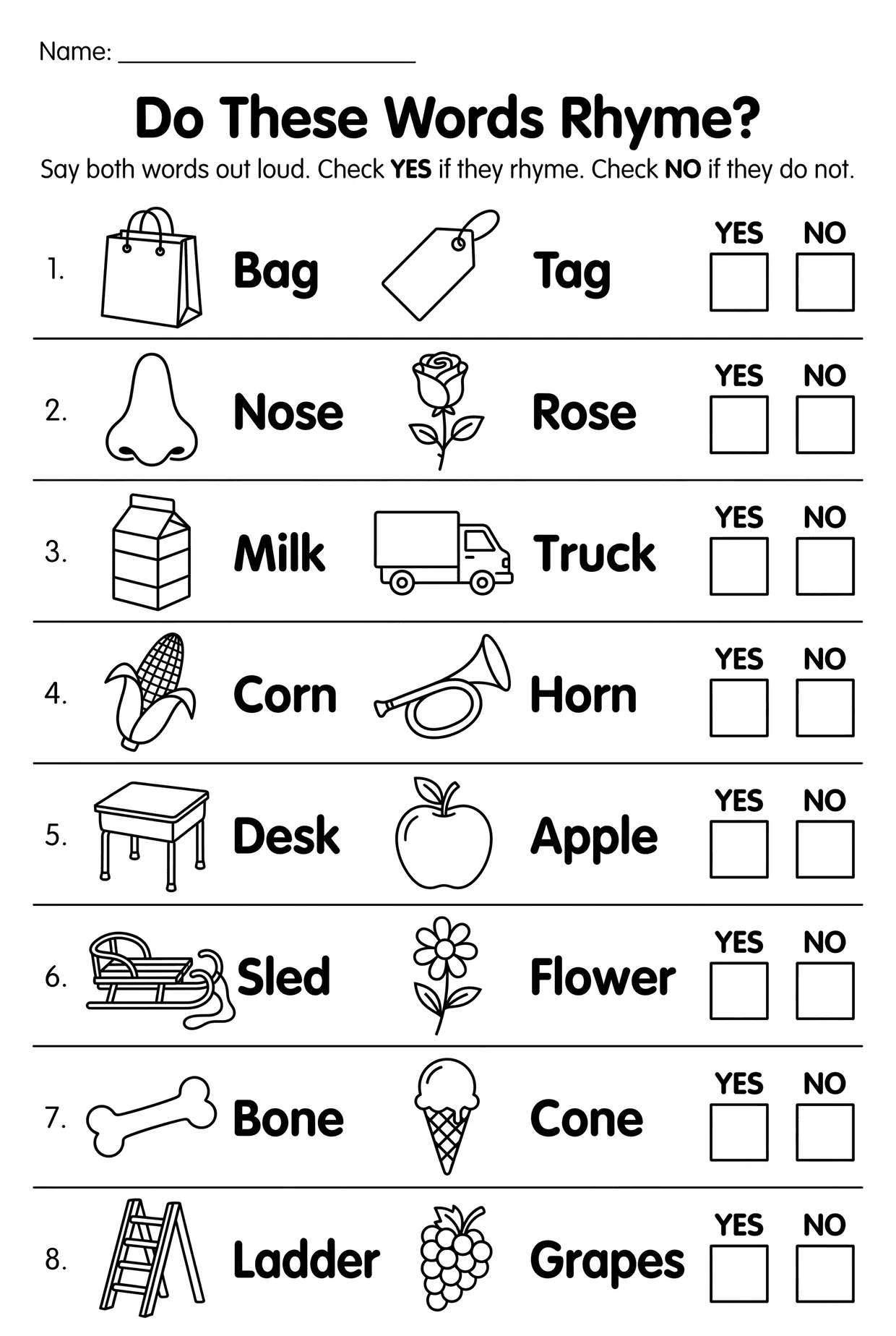
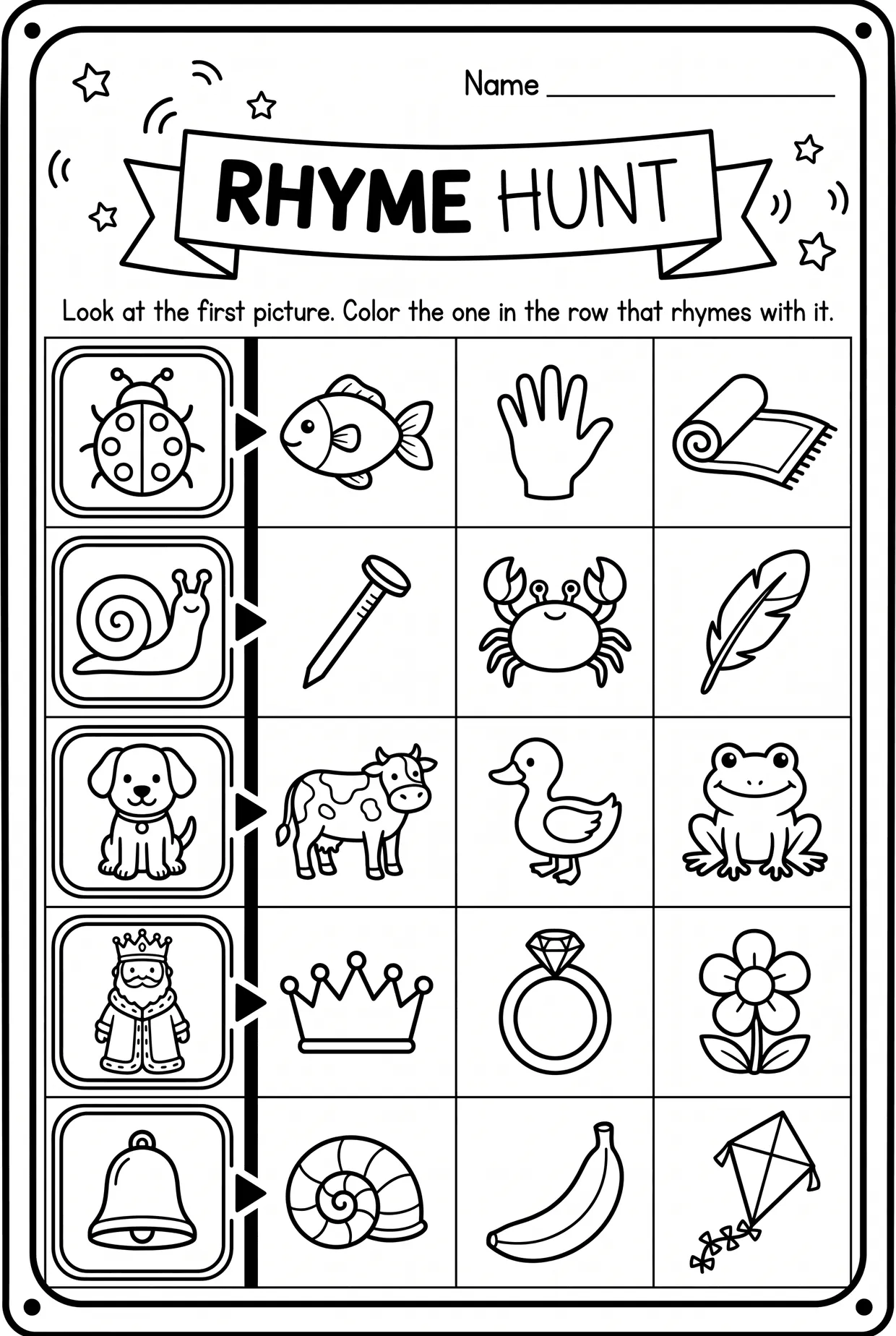
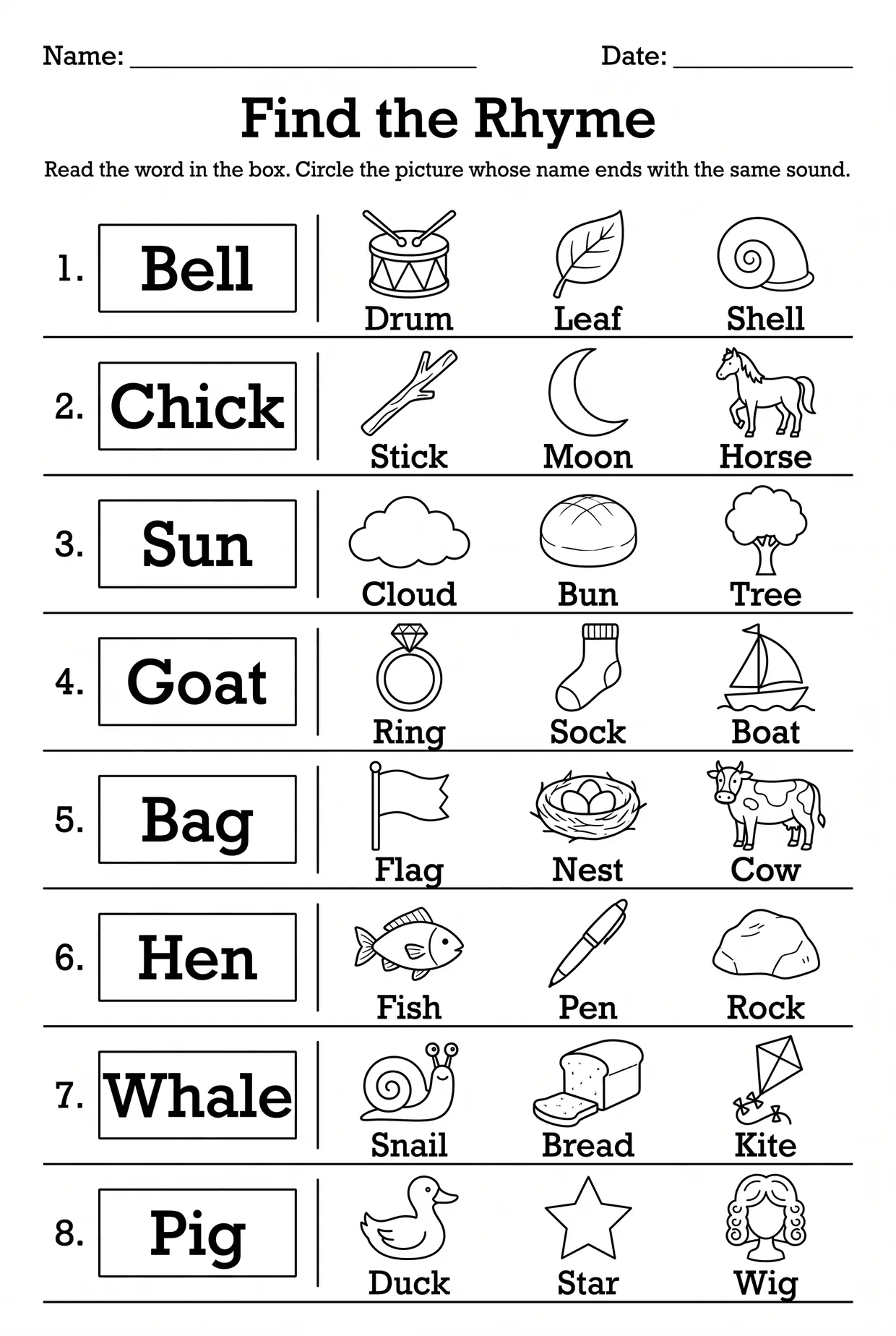
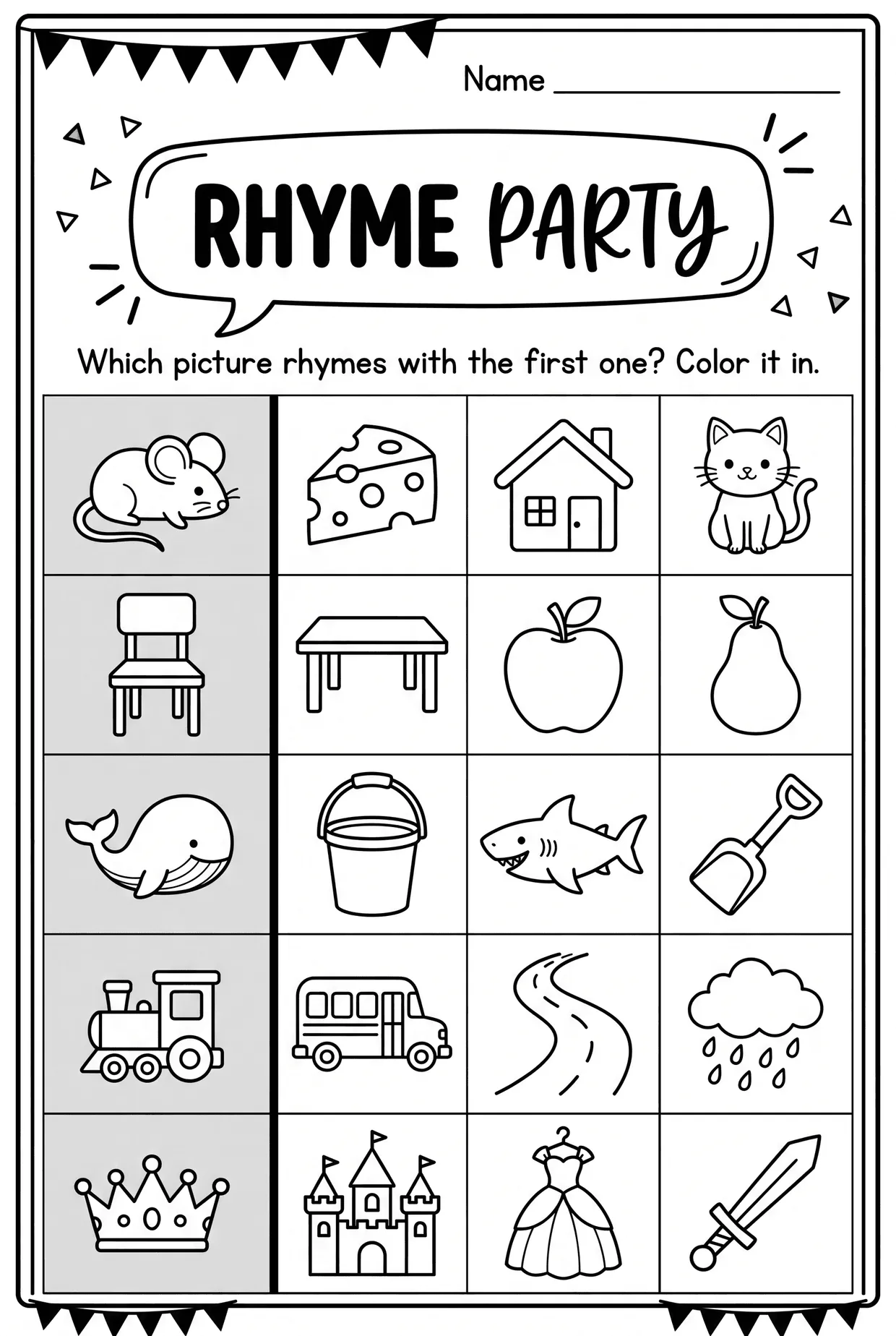
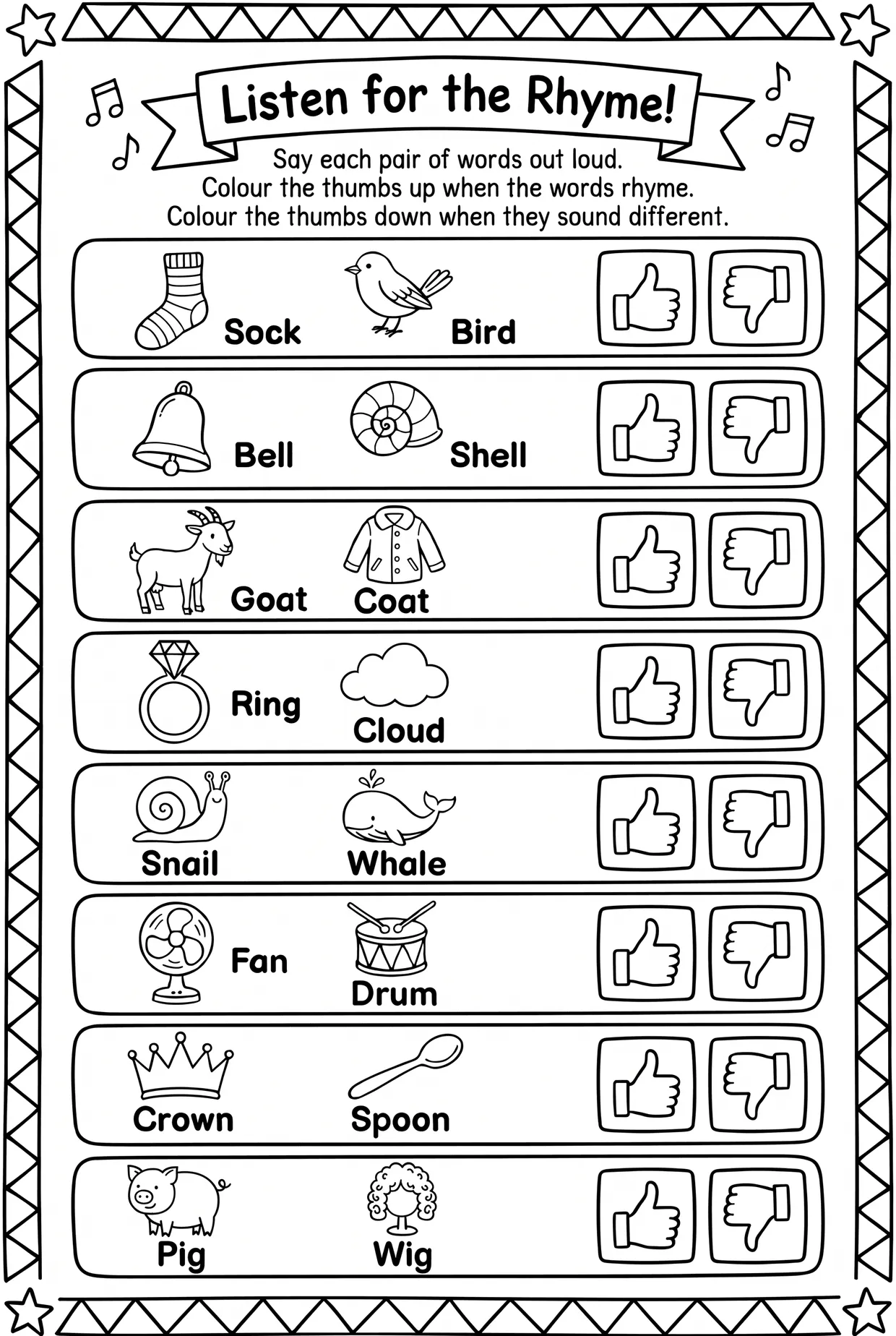
The coloring pages with pictures only, like Rhyme Time and Rhyme Party, need no reading at all. The thumbs up page meant to be read aloud is also a good fit, since a grown-up says each pair. Save the pages with written choices for when a child can sound out short words.
Is it fine to practice rhyming out loud instead of on paper?
Very much so. Rhyming games in the car or at bath time do as much as any sheet. The pages are useful as a quick check, and as a quiet way to practice the same skill with a picture to hold on to.