Free Kindergarten Vocabulary Worksheets

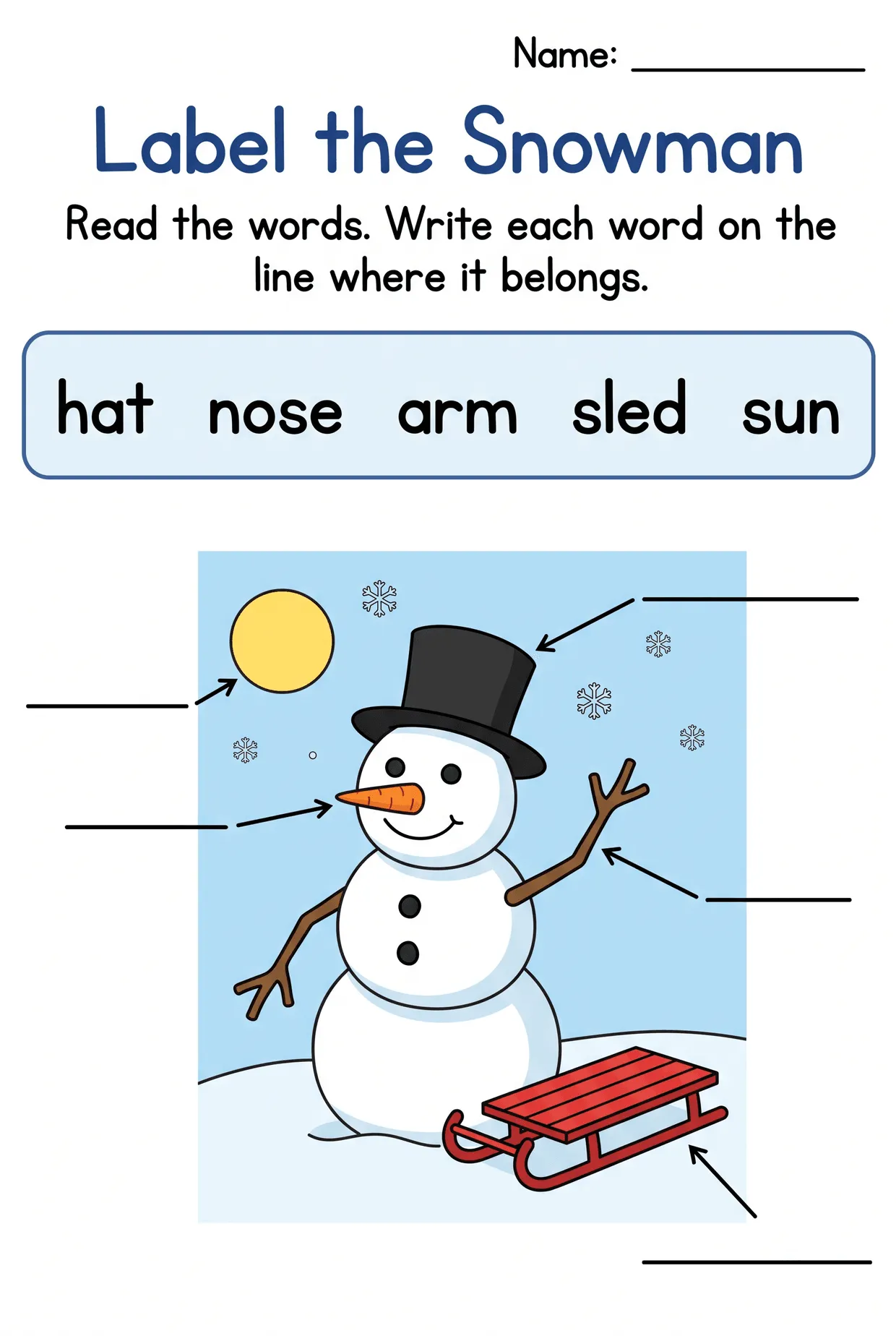
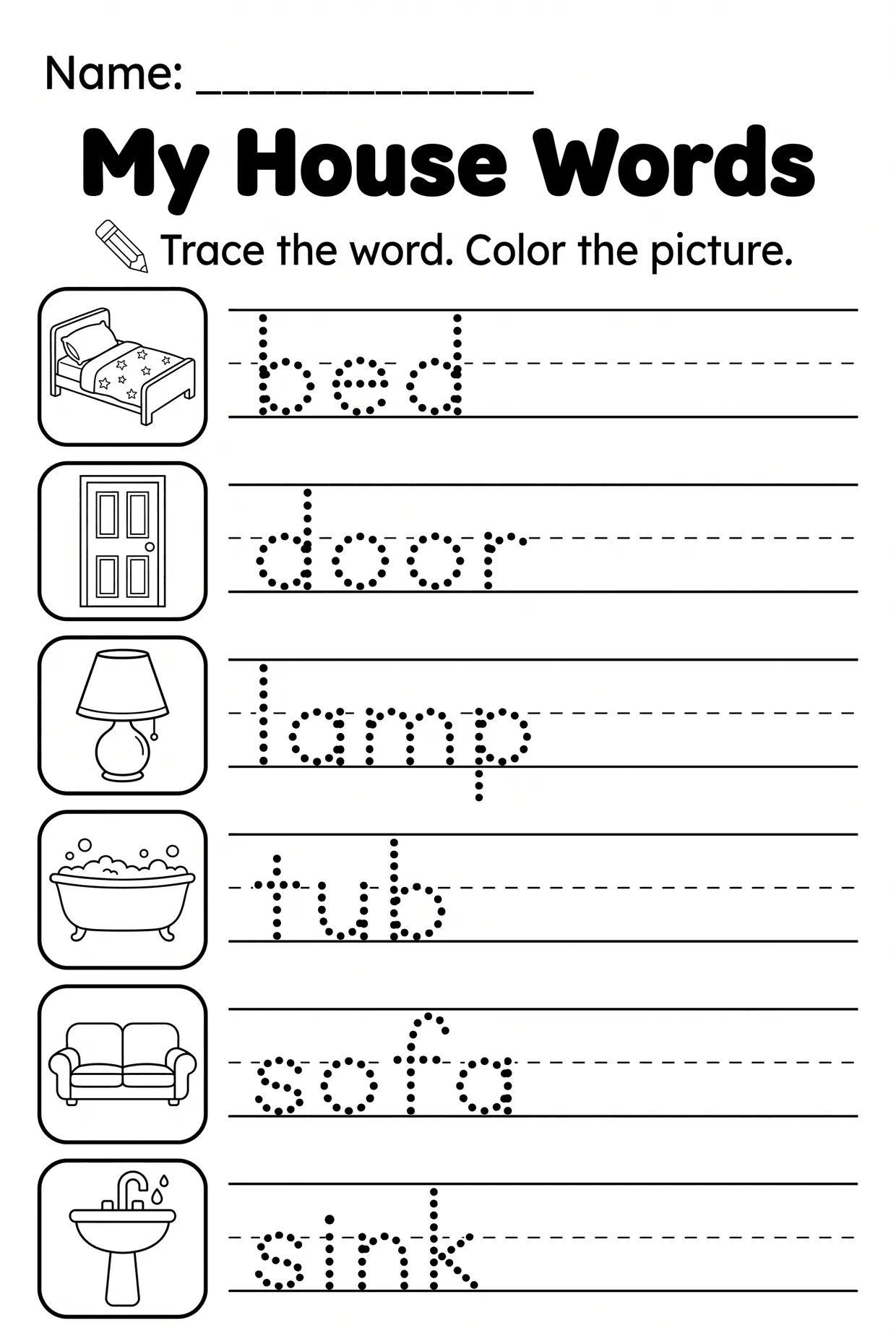
A five-year-old in the bathtub will happily point and announce everything in sight: tub, sink, toothbrush, toes. Saying the word is the easy part. Finding it written down, reading it, and matching it to the thing it names is the step that kindergarten vocabulary worksheets practice, using words a child already says every day.

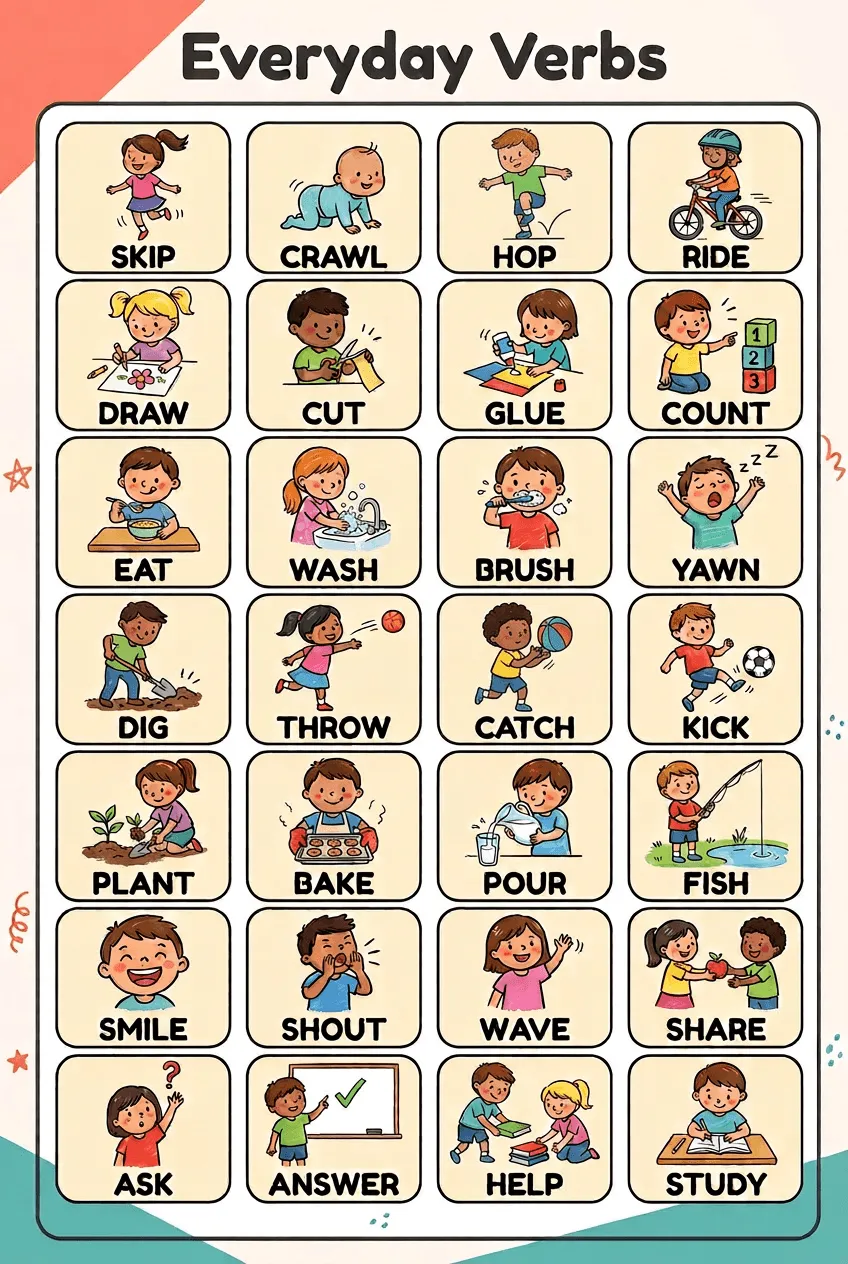
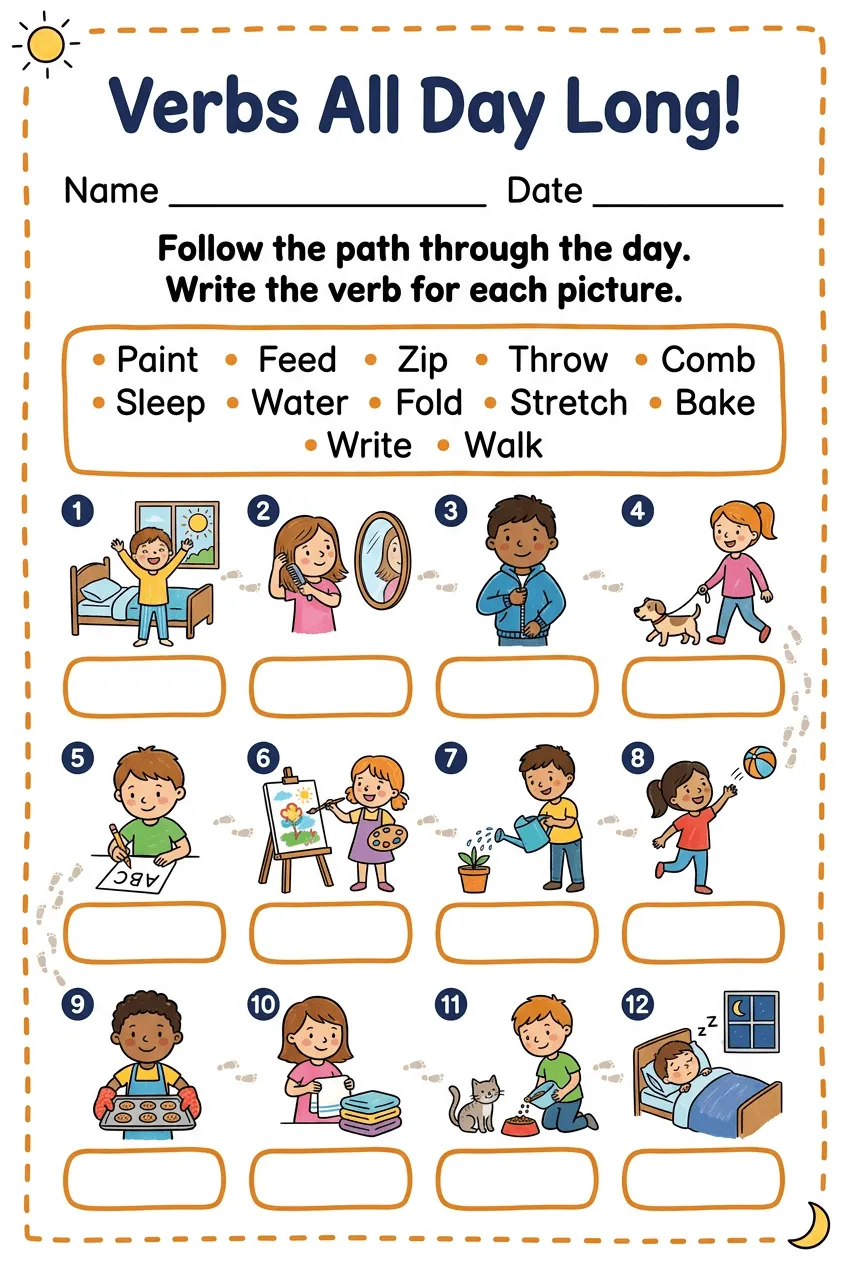
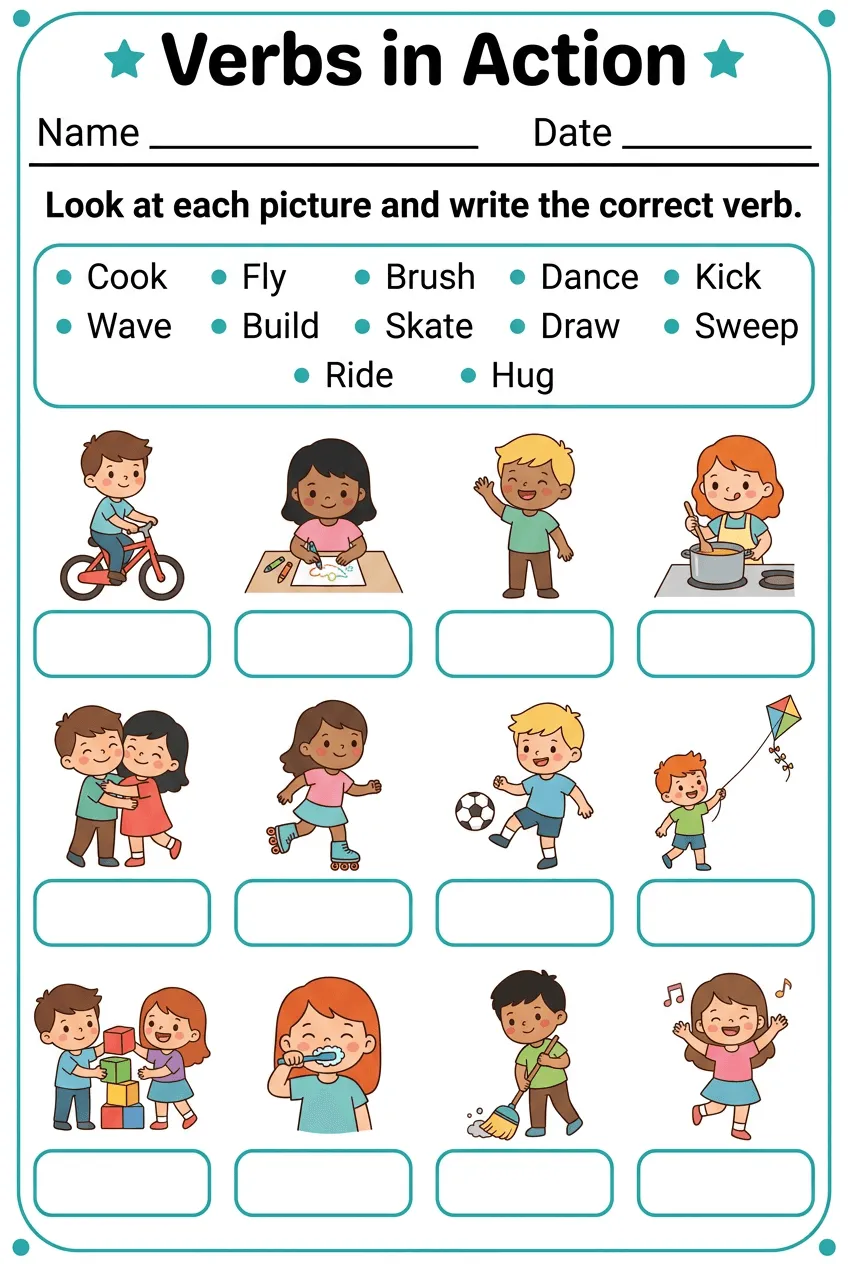
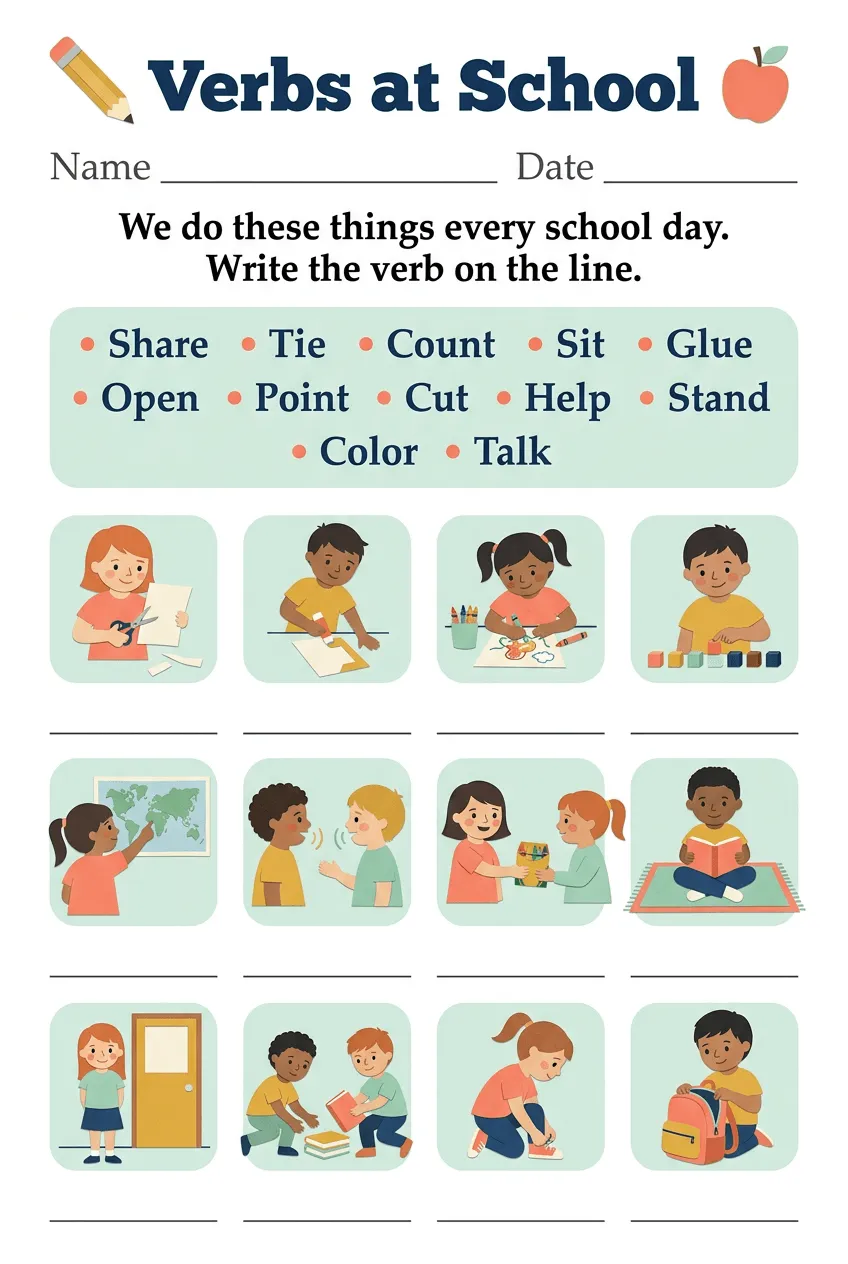
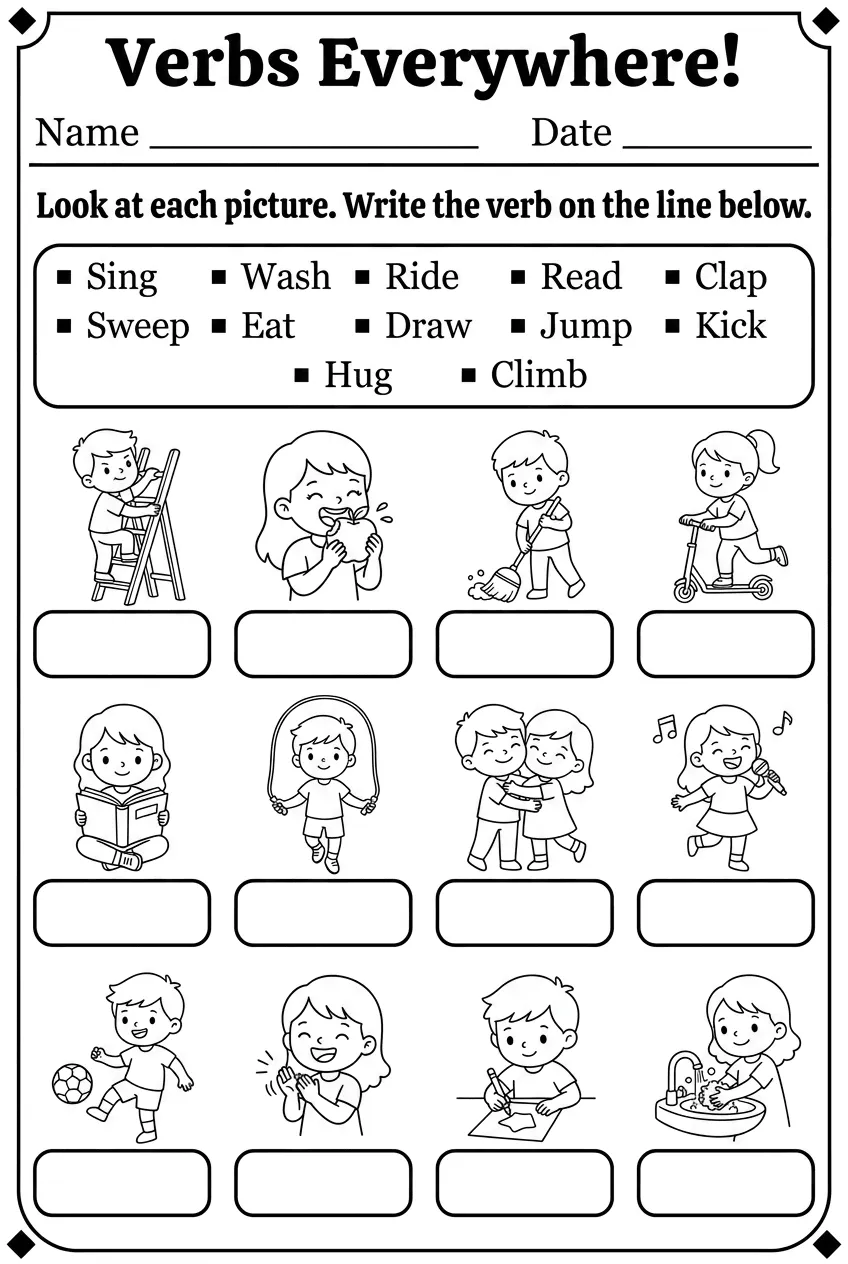
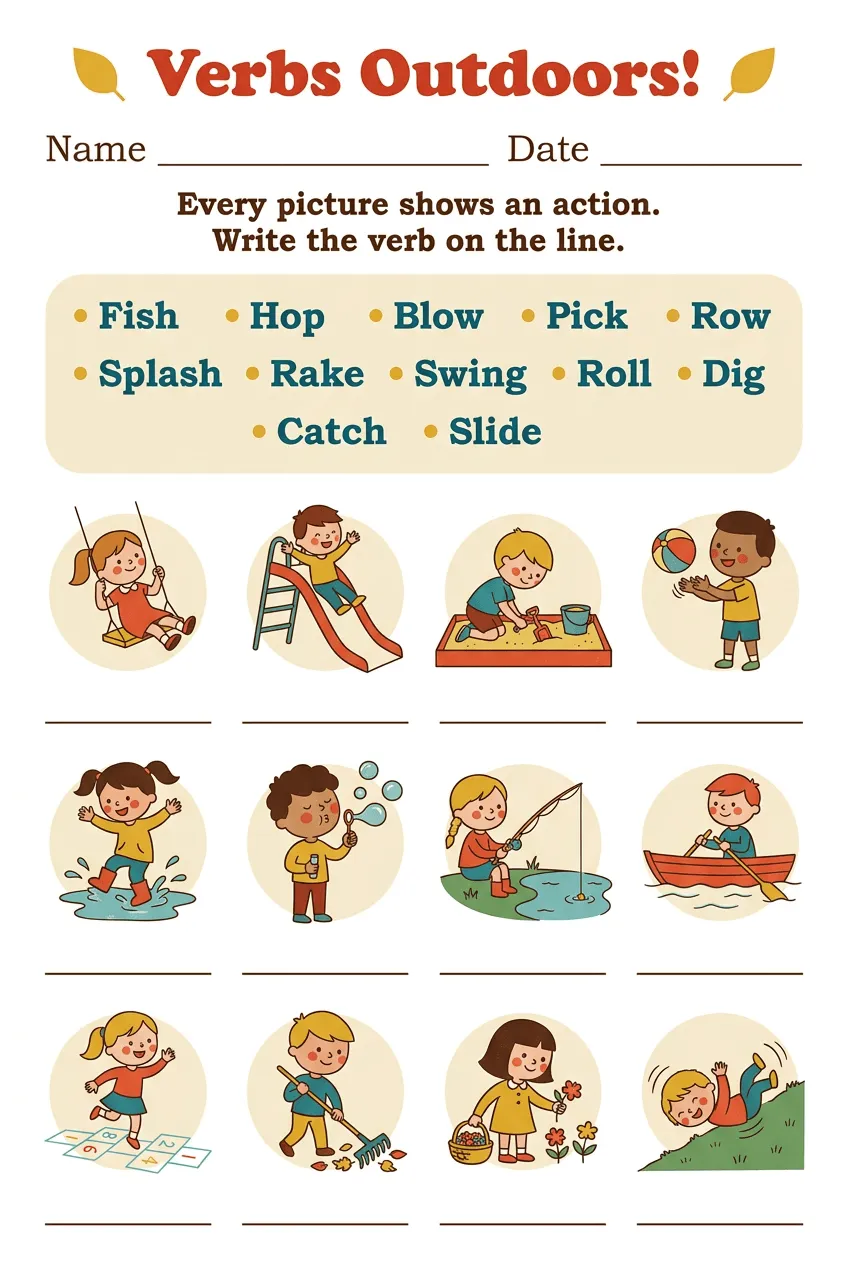
Action verbs make up the biggest group. Picture word banks cover outdoor play (swing, splash, dig), the classroom (glue, share, tie) and a daily routine that runs from waking up to falling asleep, so the verbs can come out in conversation before any writing starts. A picture chart of everyday verbs can stay taped up by the writing table as a spelling helper, and a black and white verb page doubles as coloring.

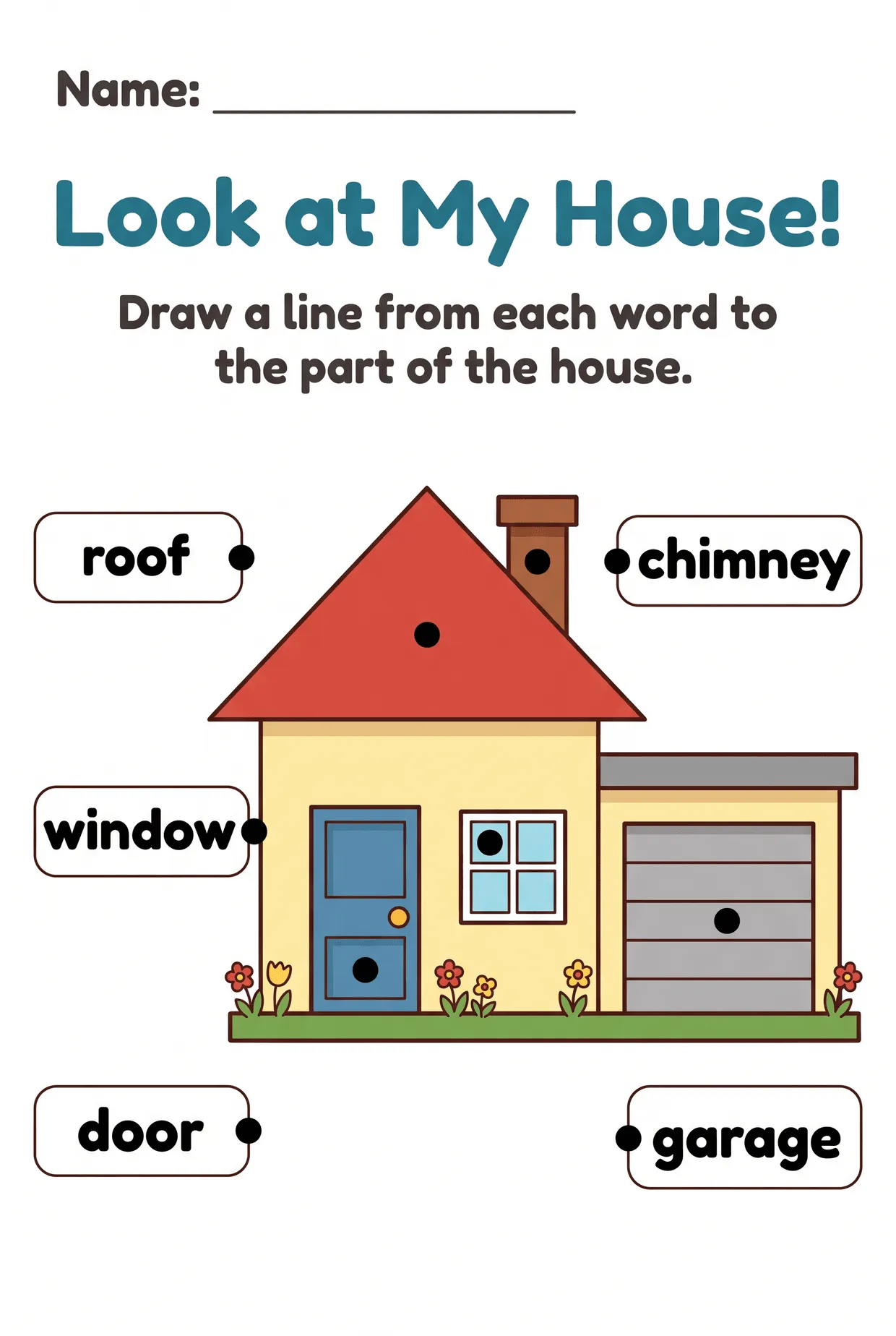
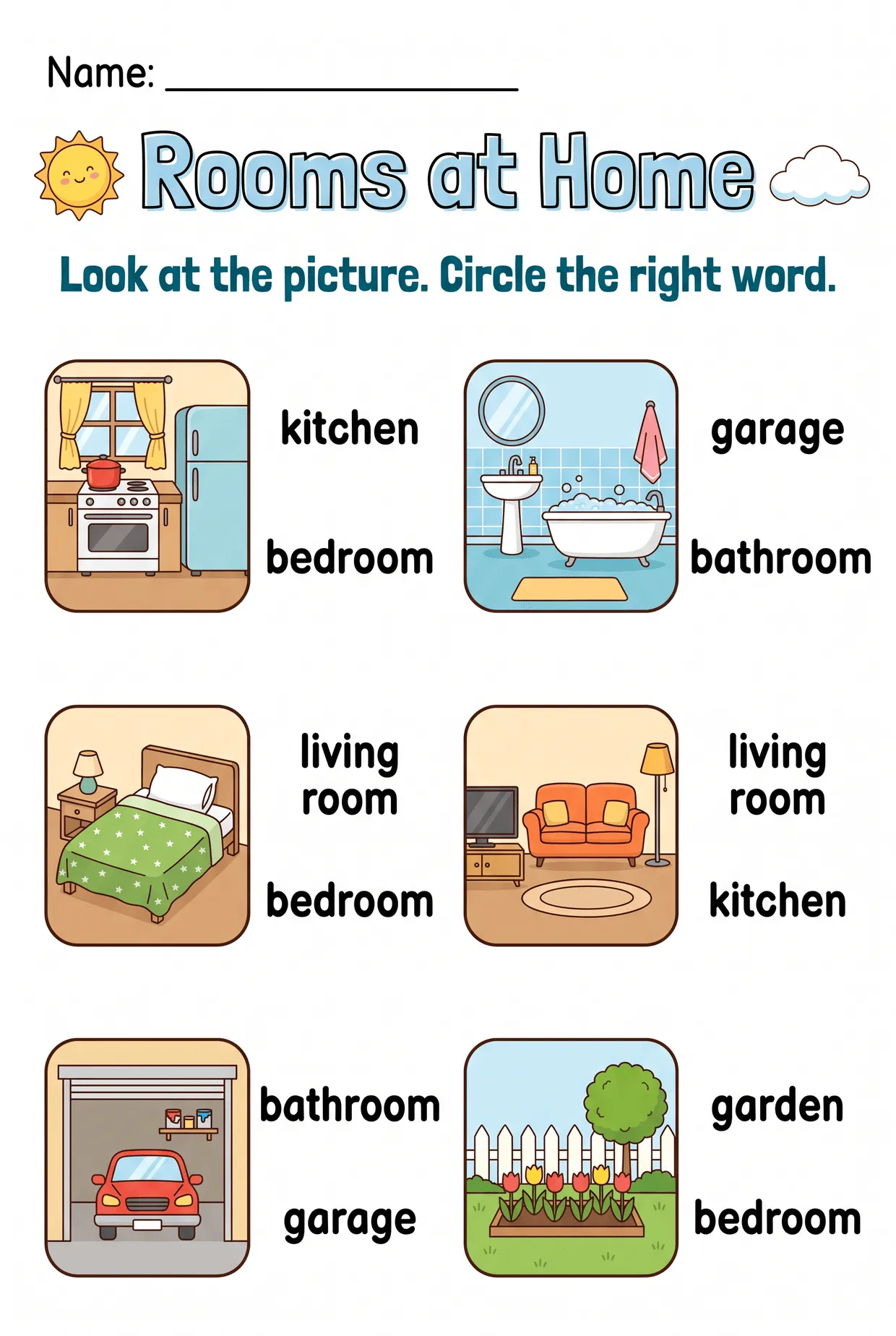
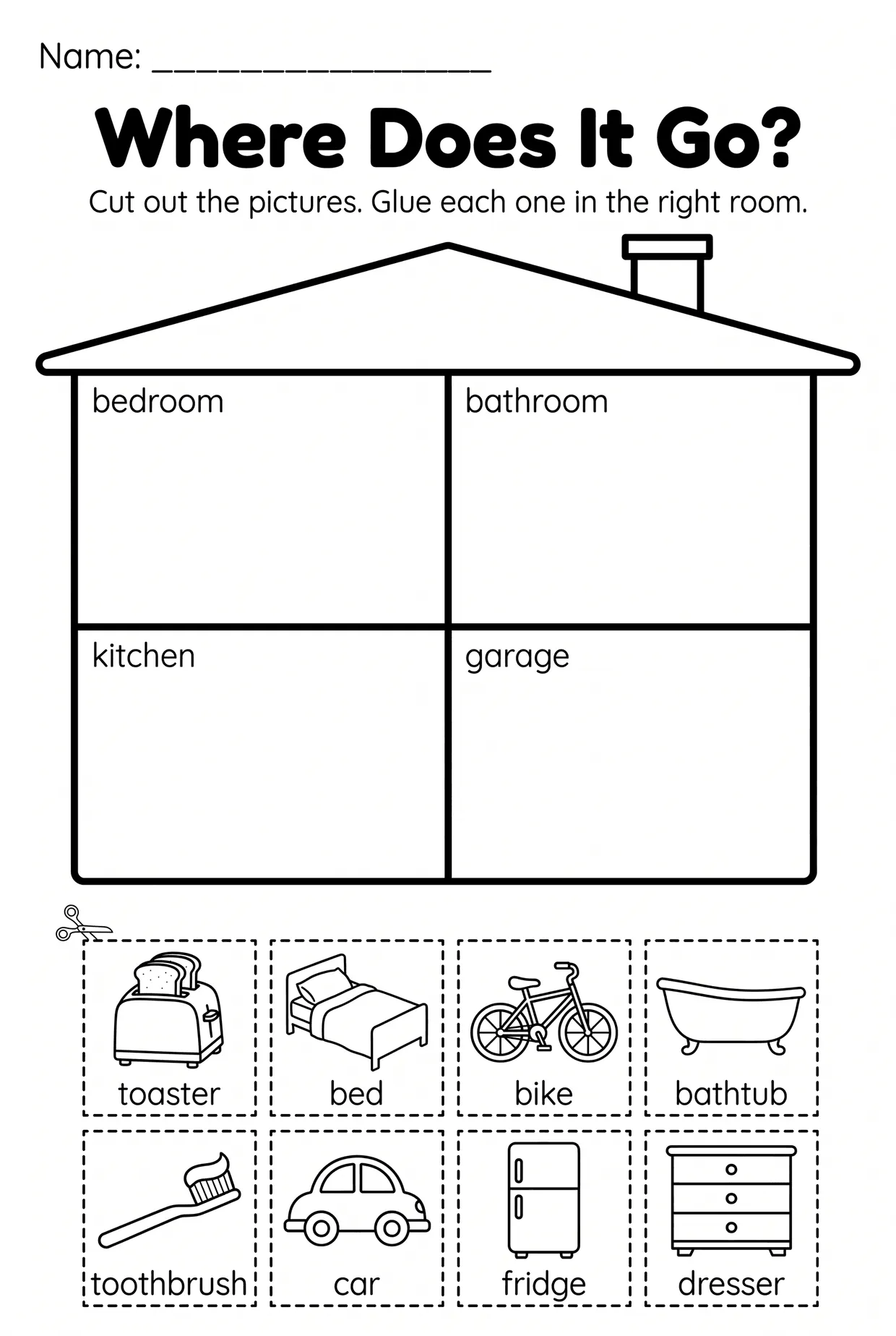
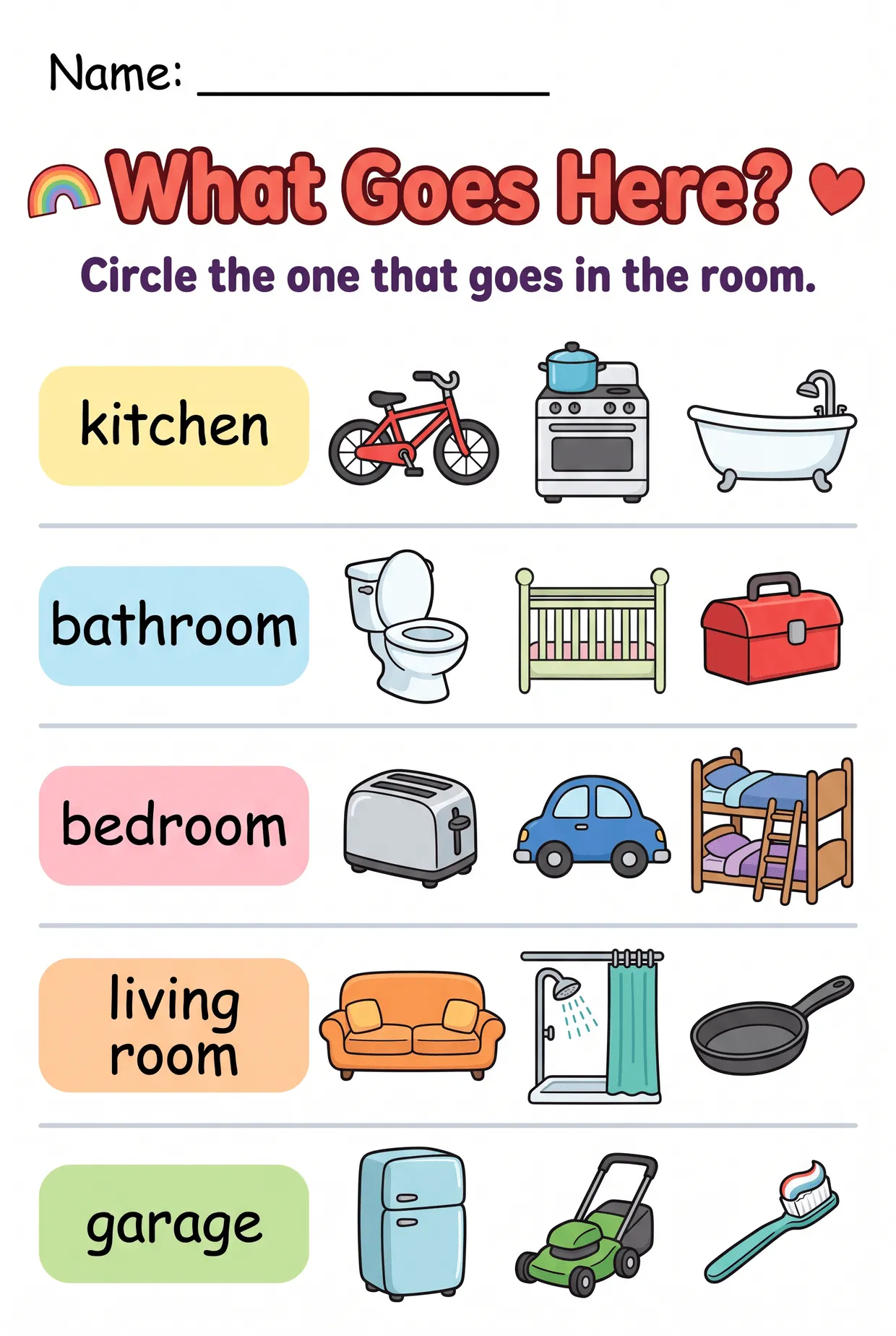
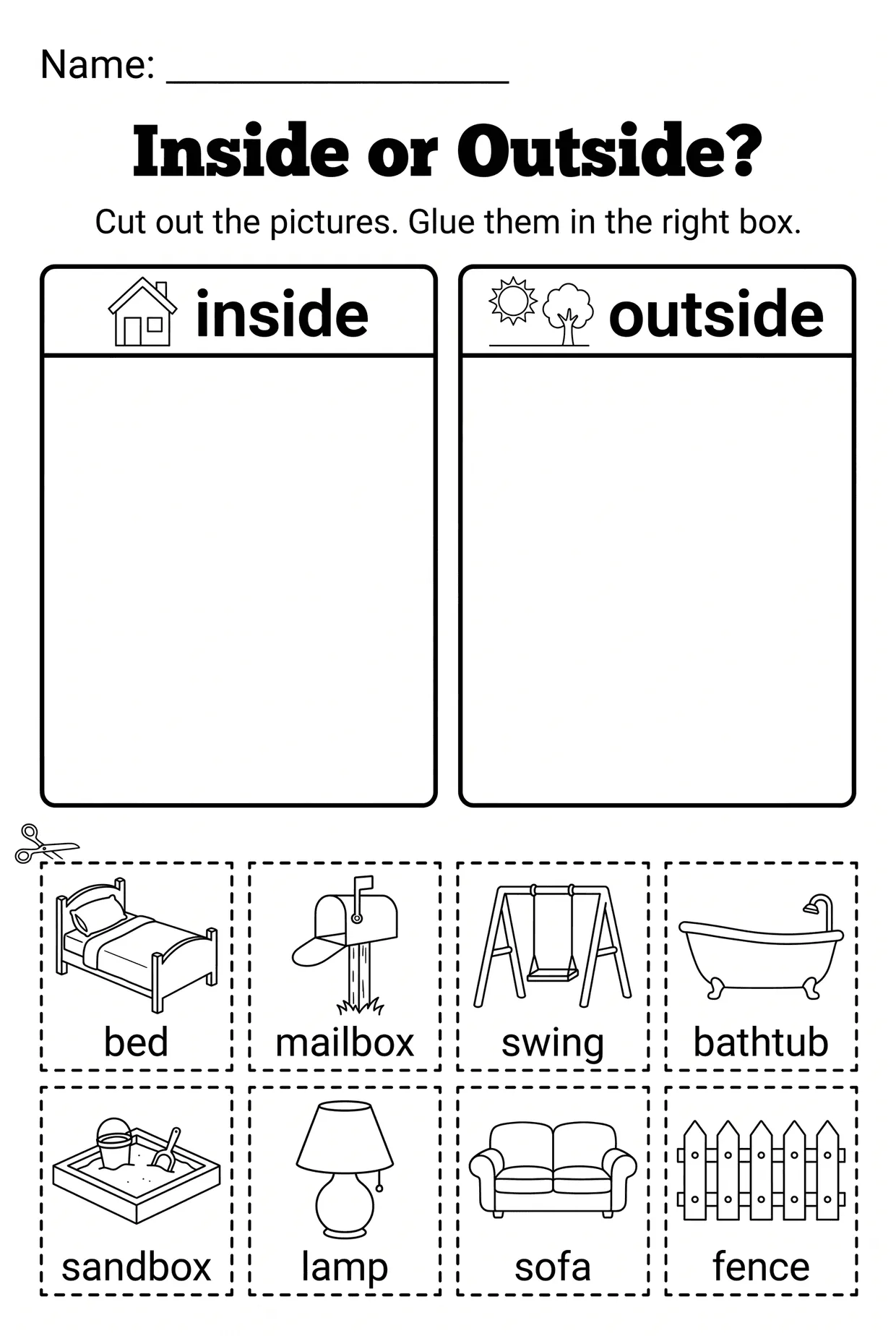
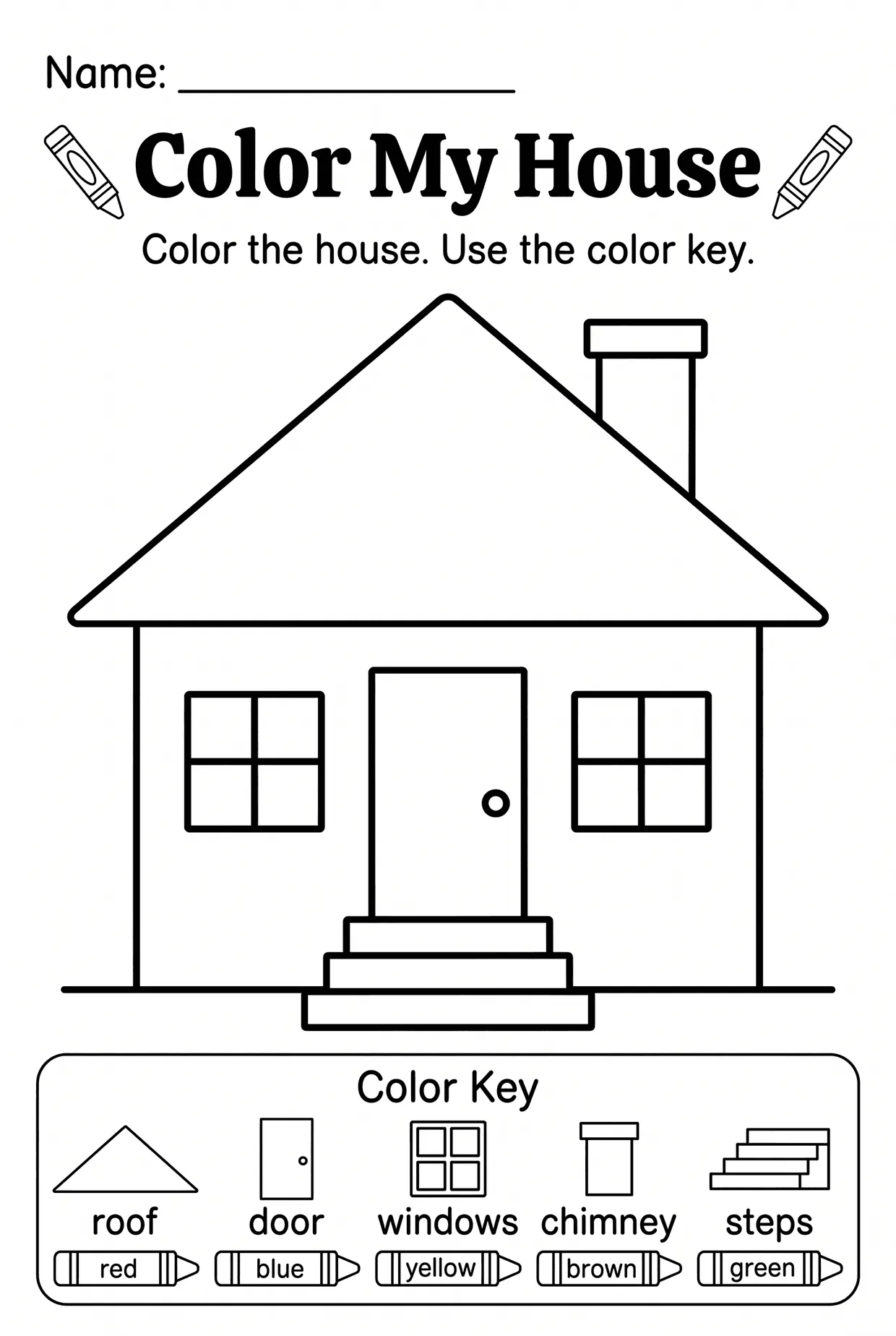
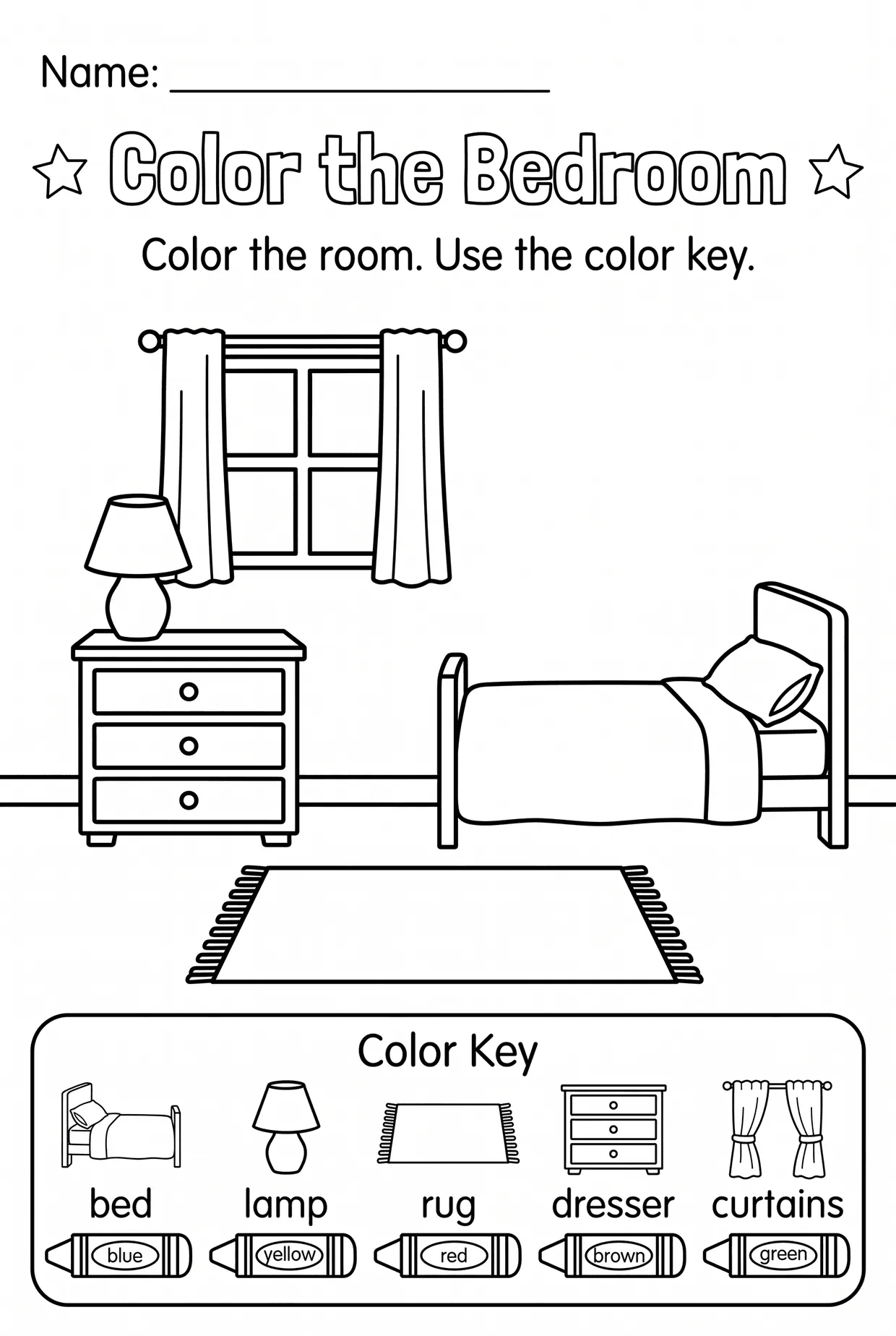
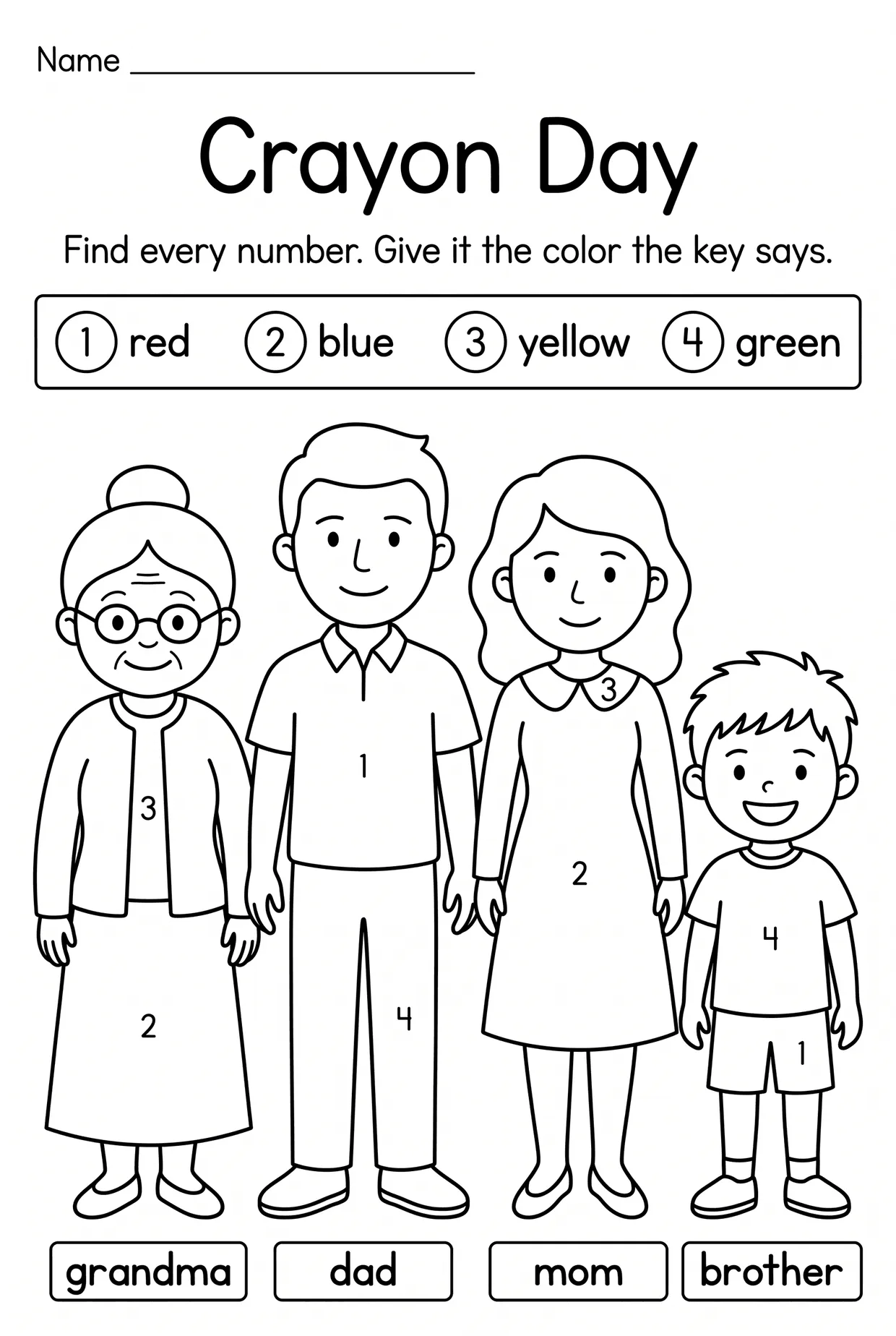
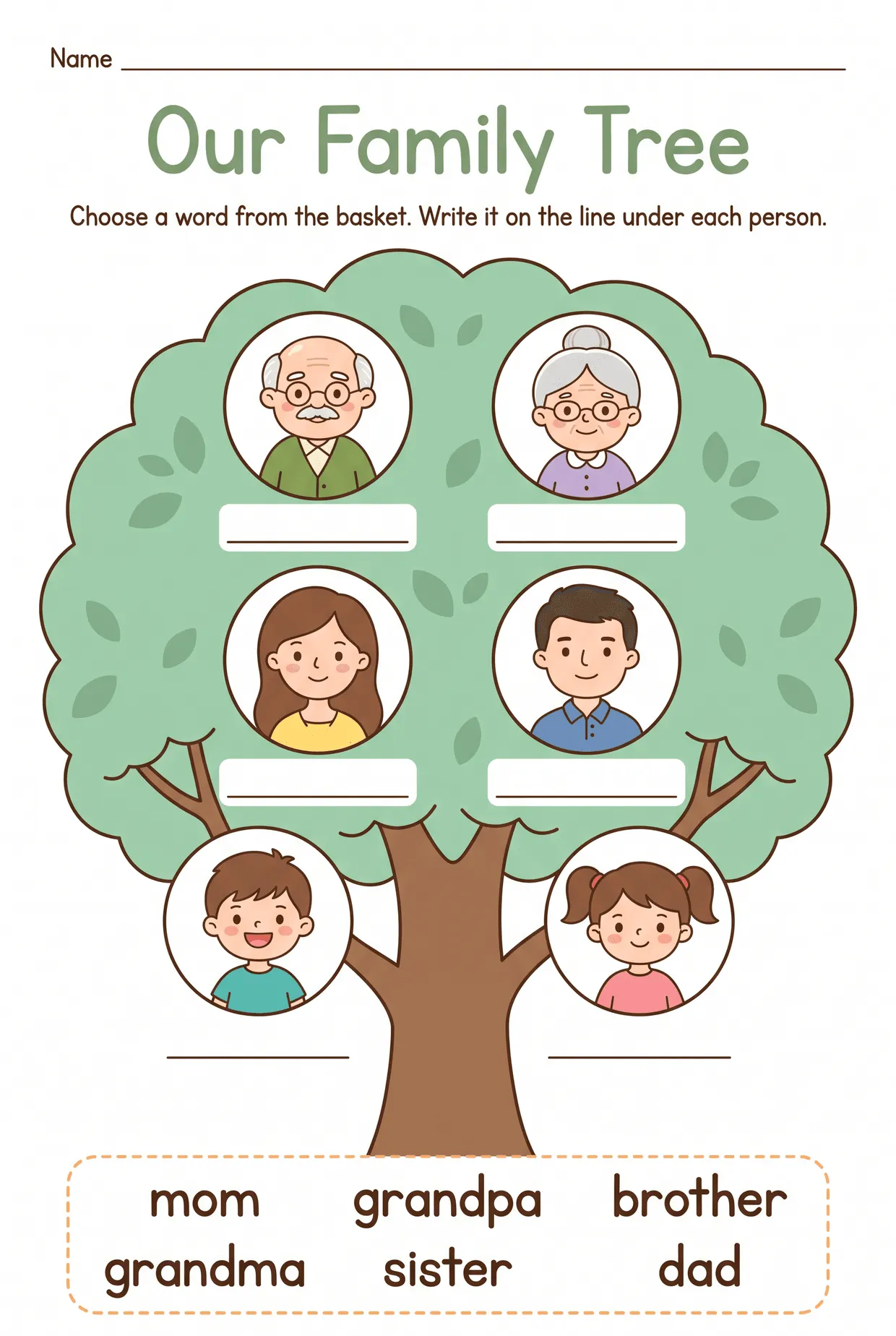
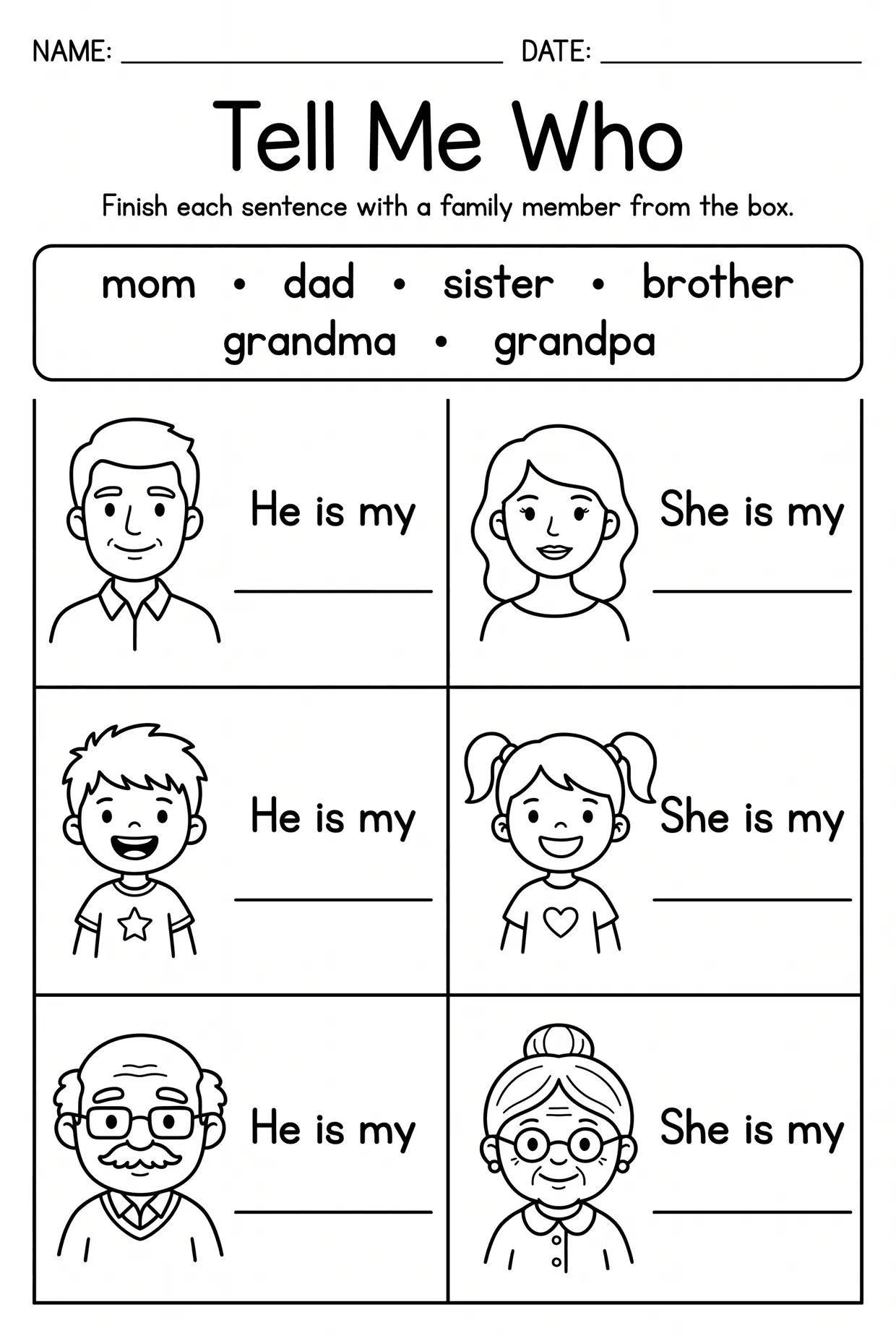
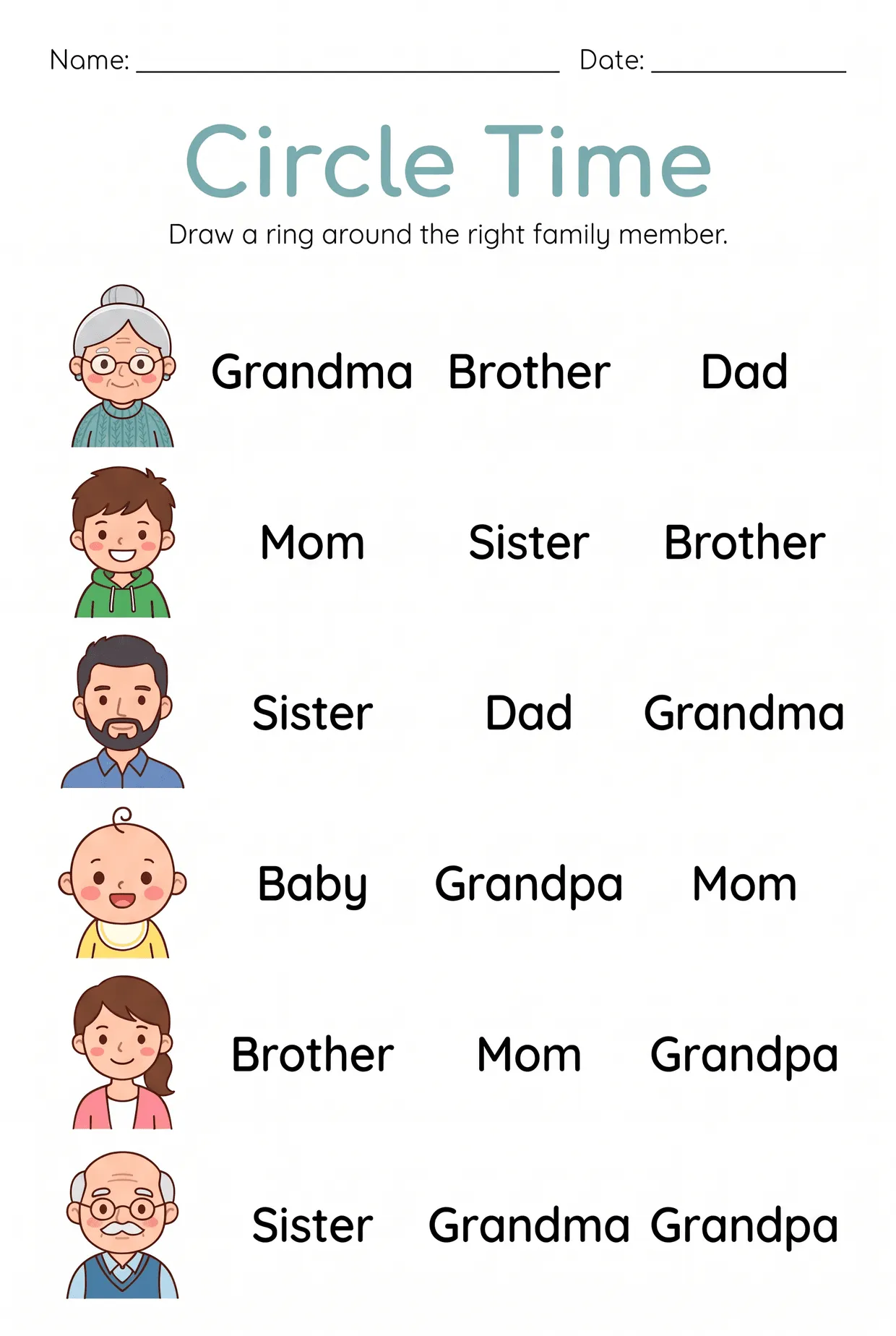
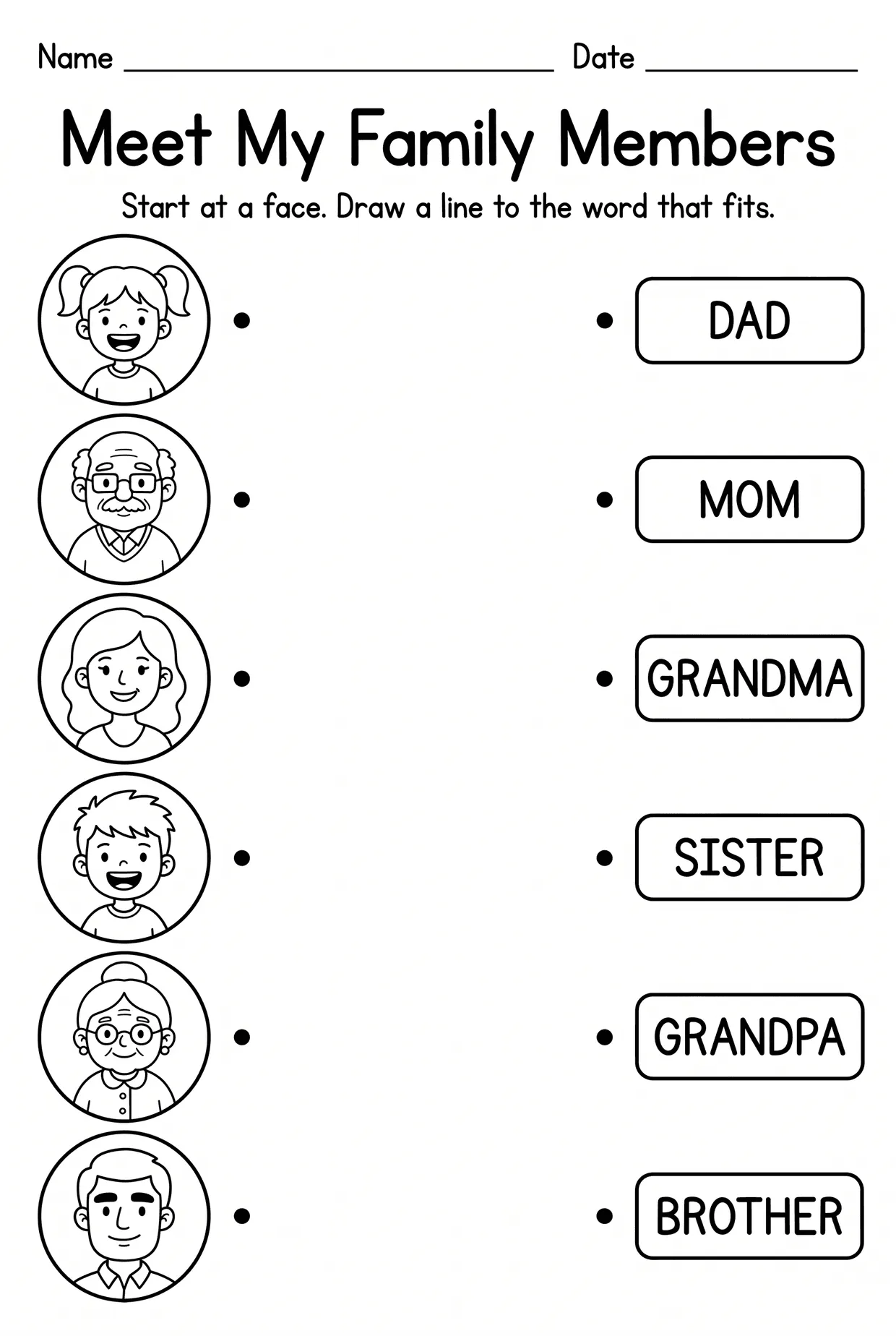
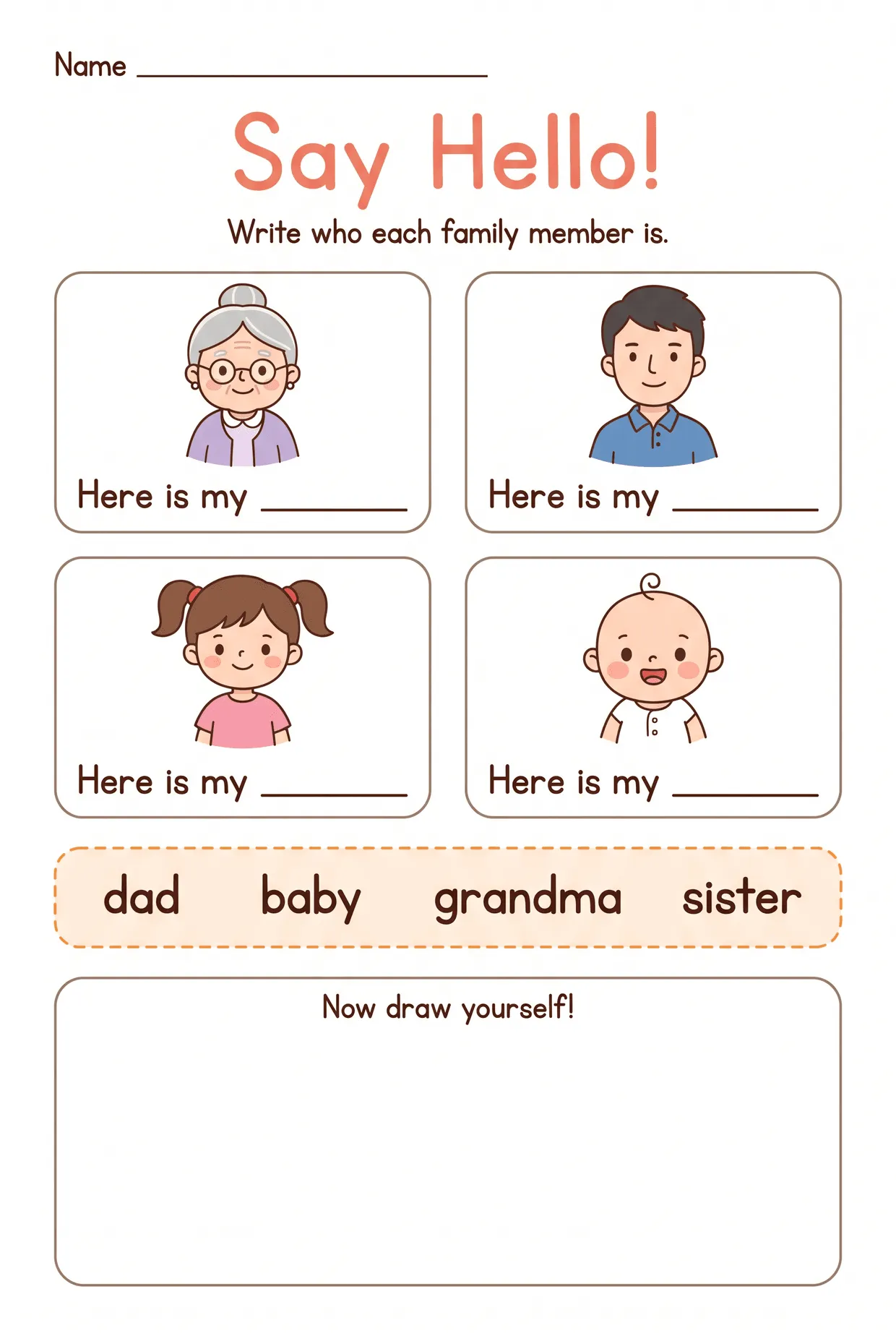
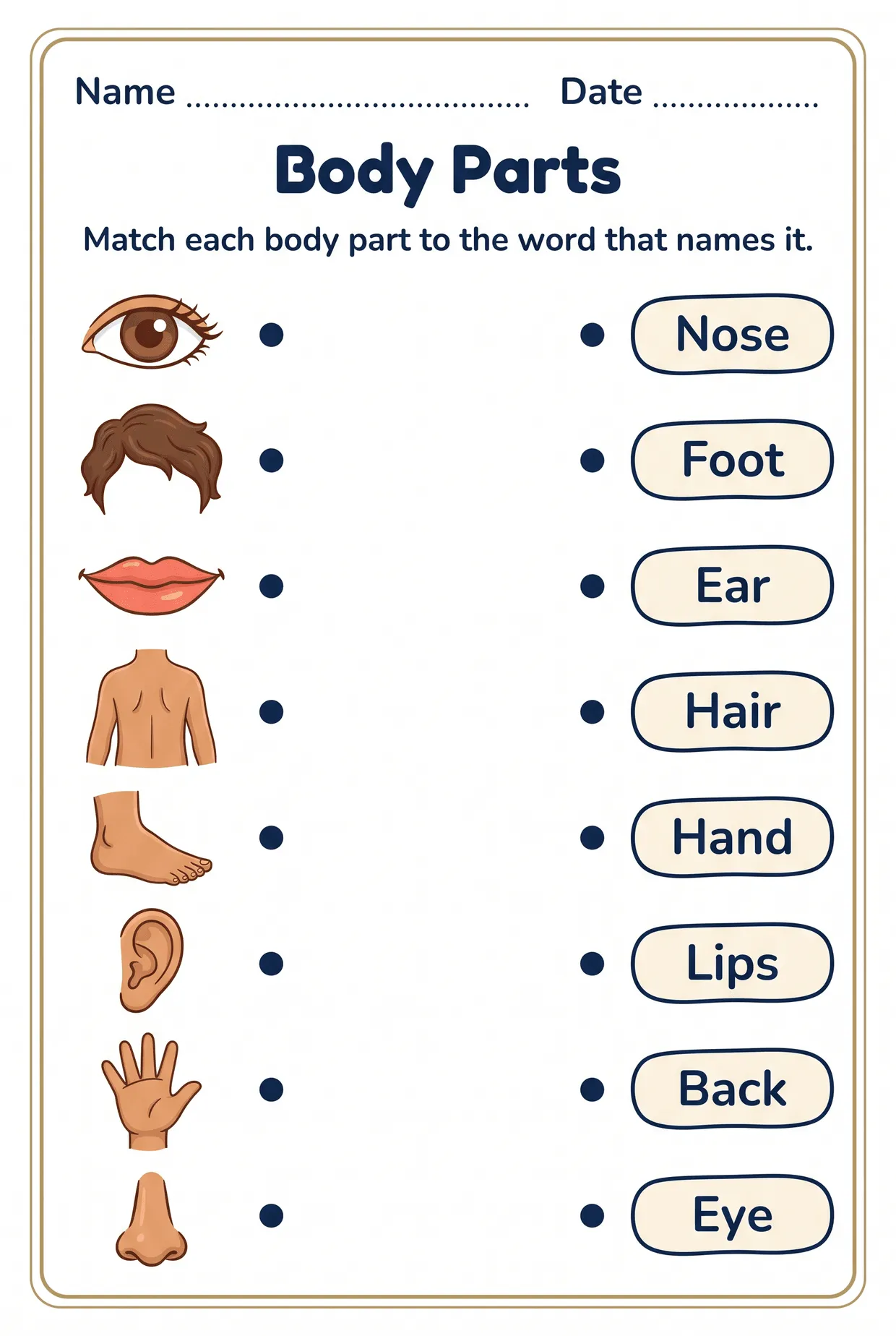
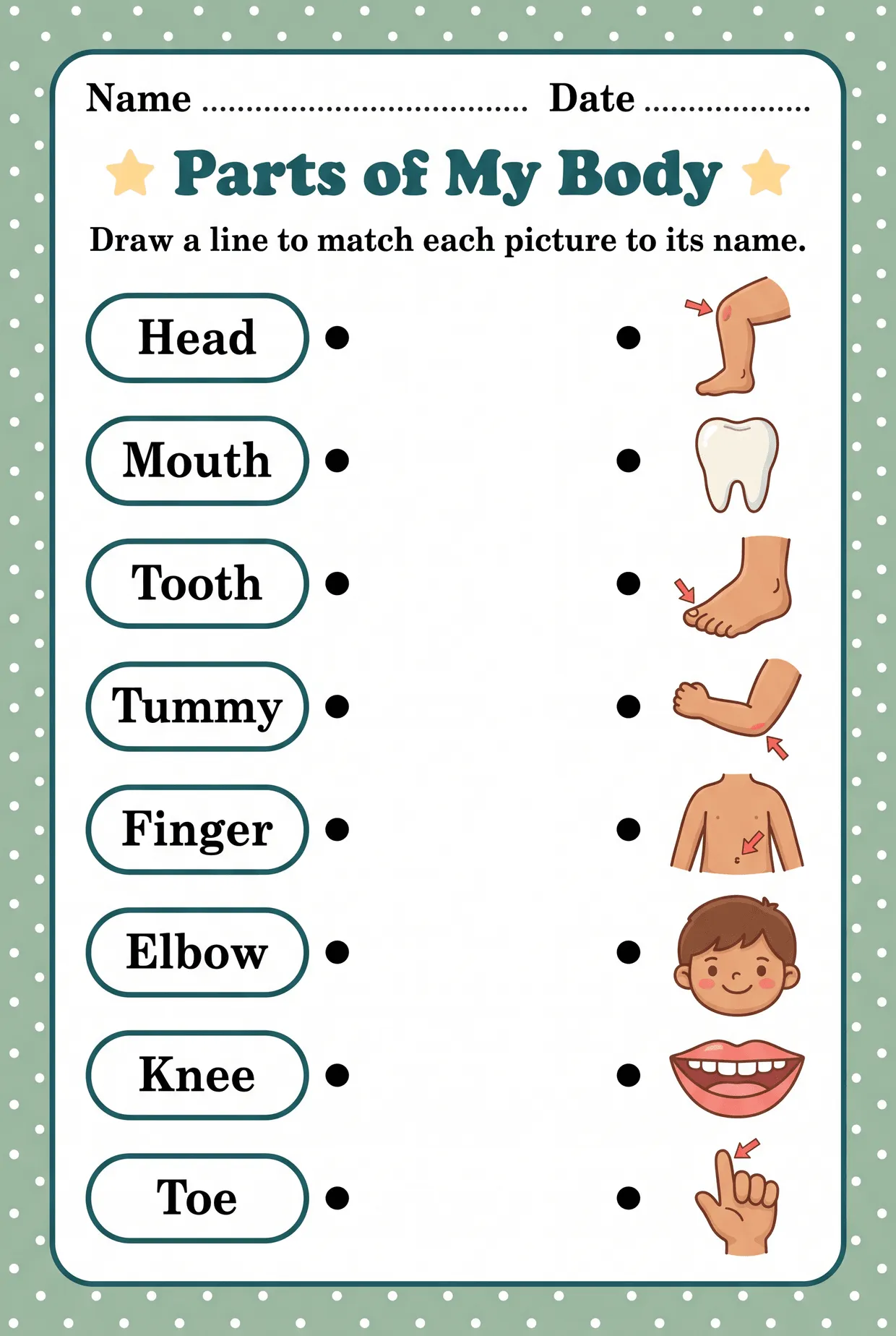
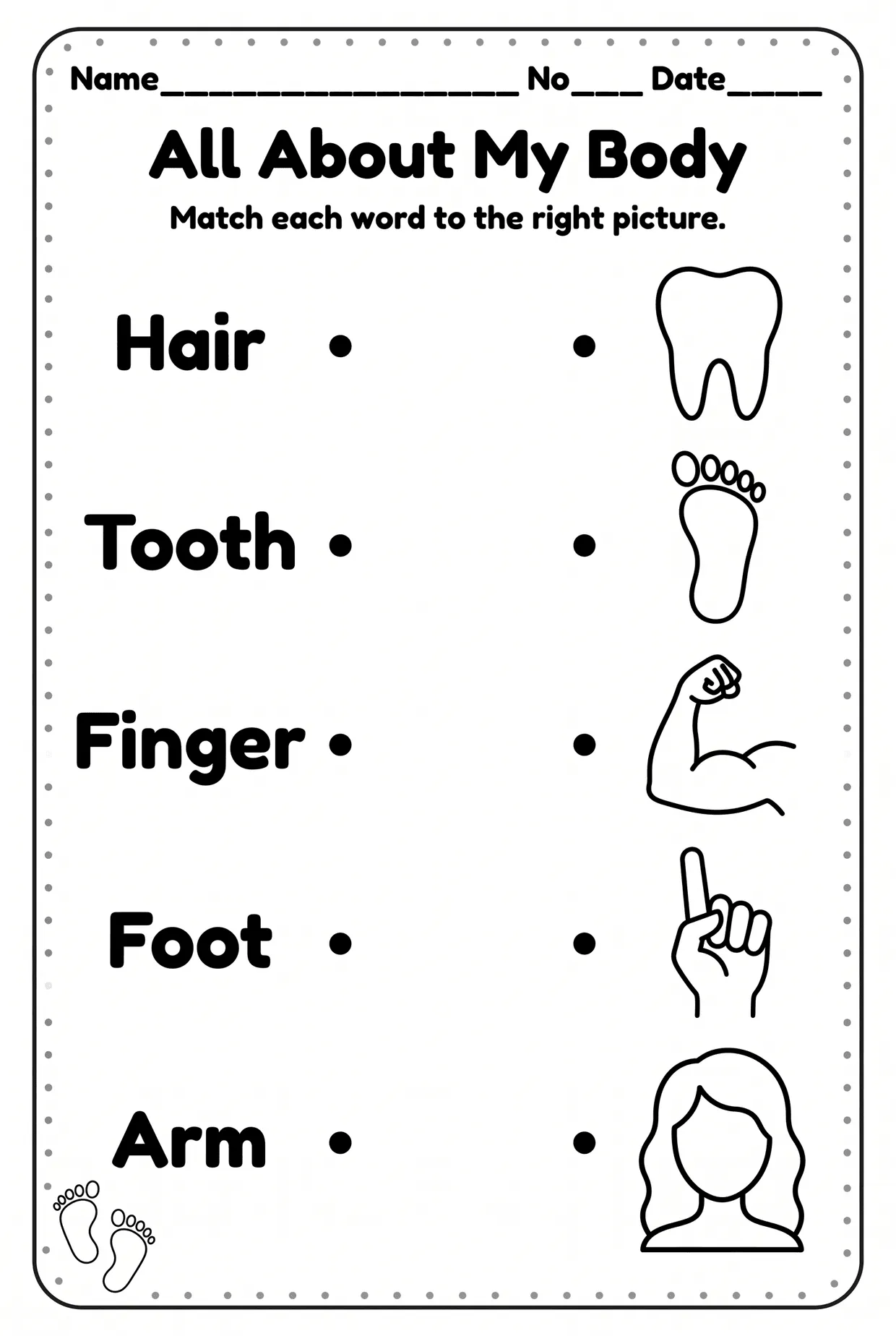
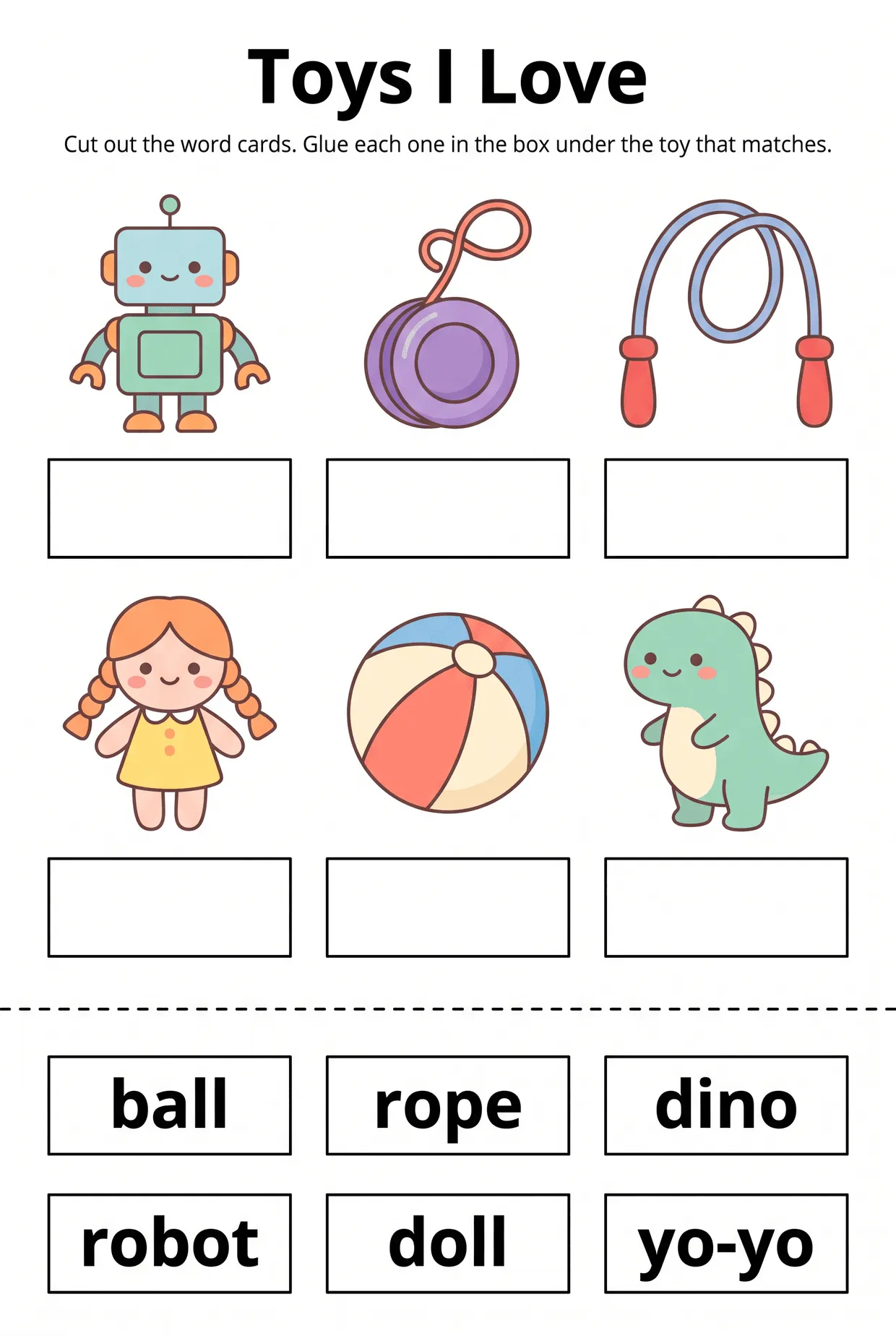
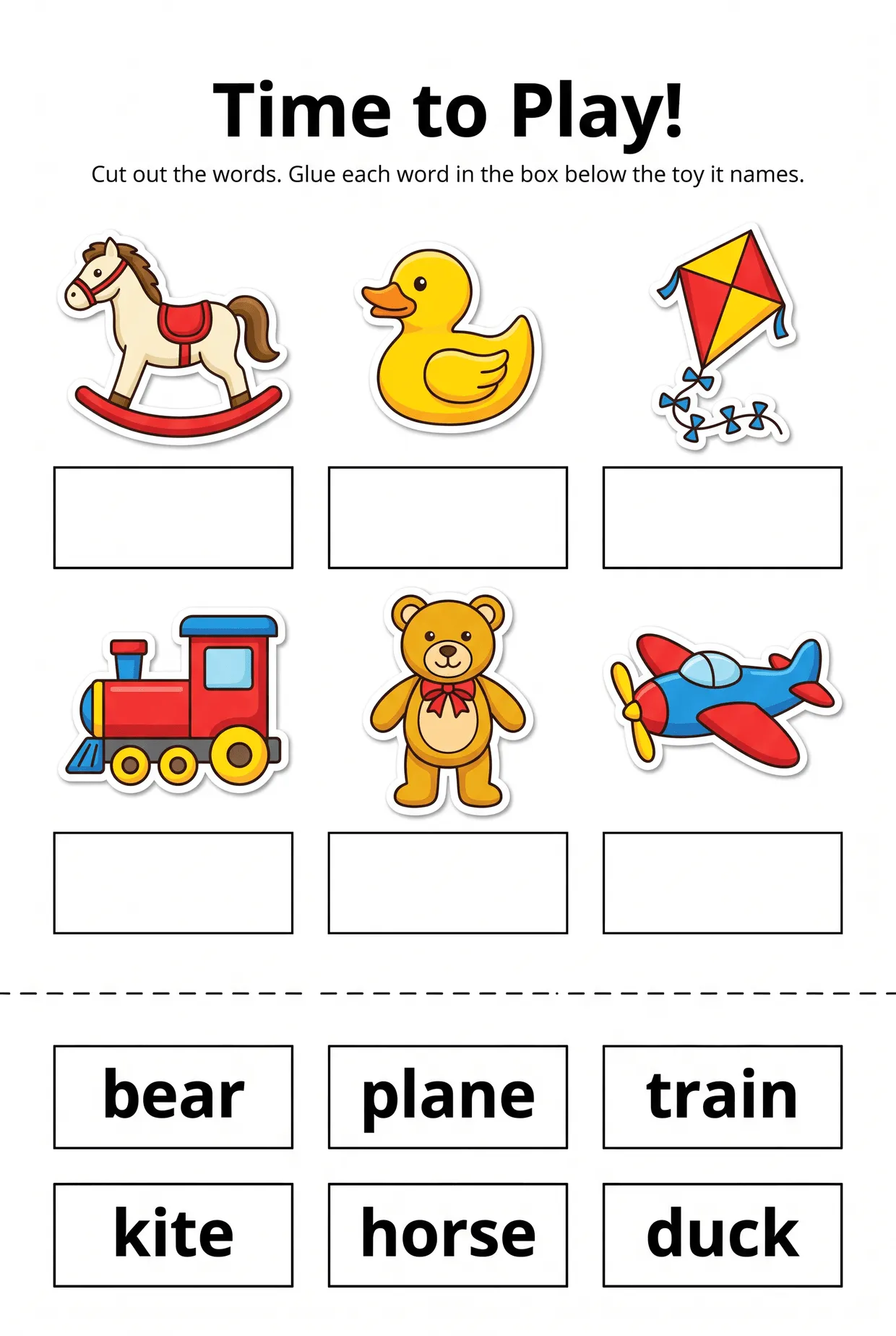
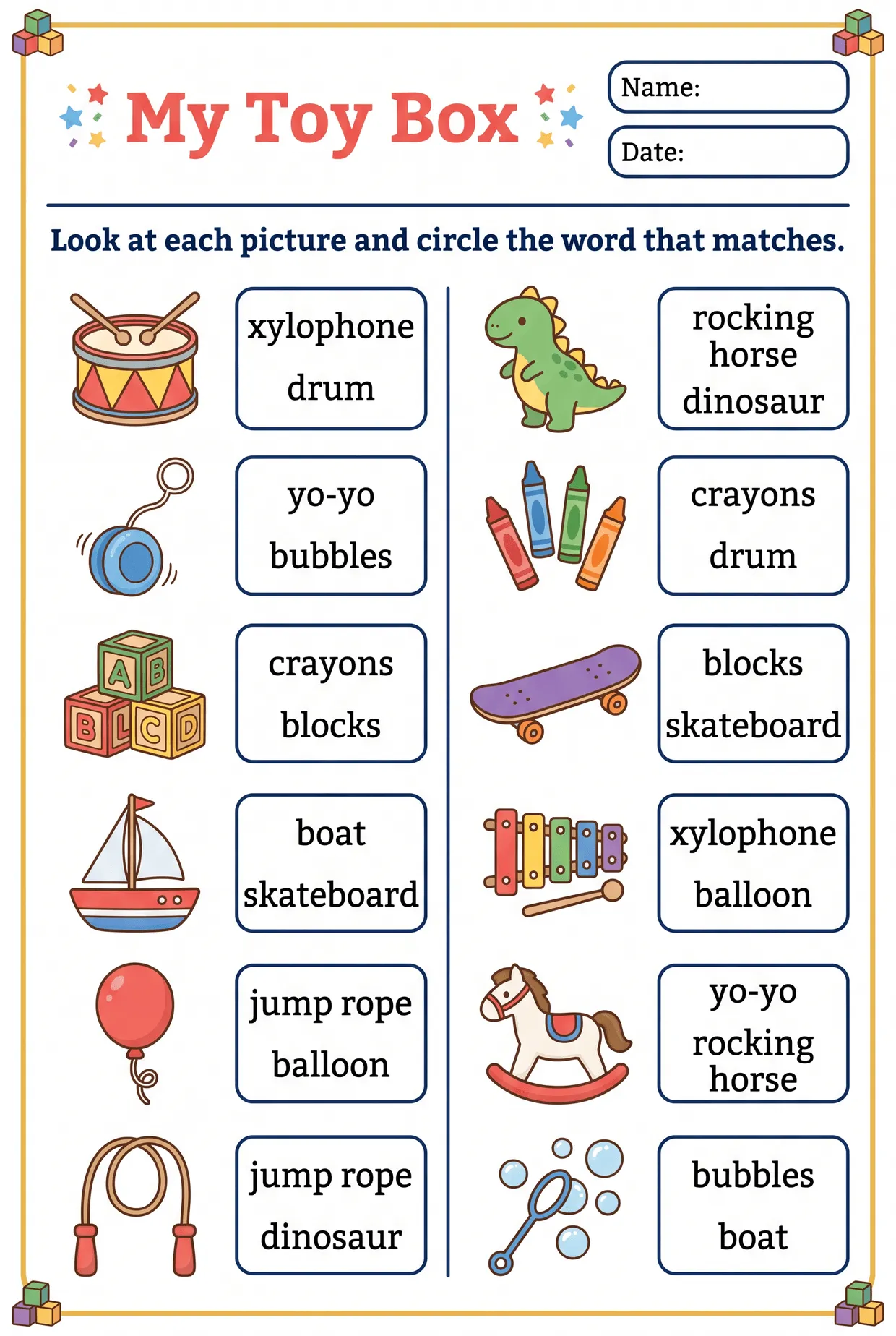
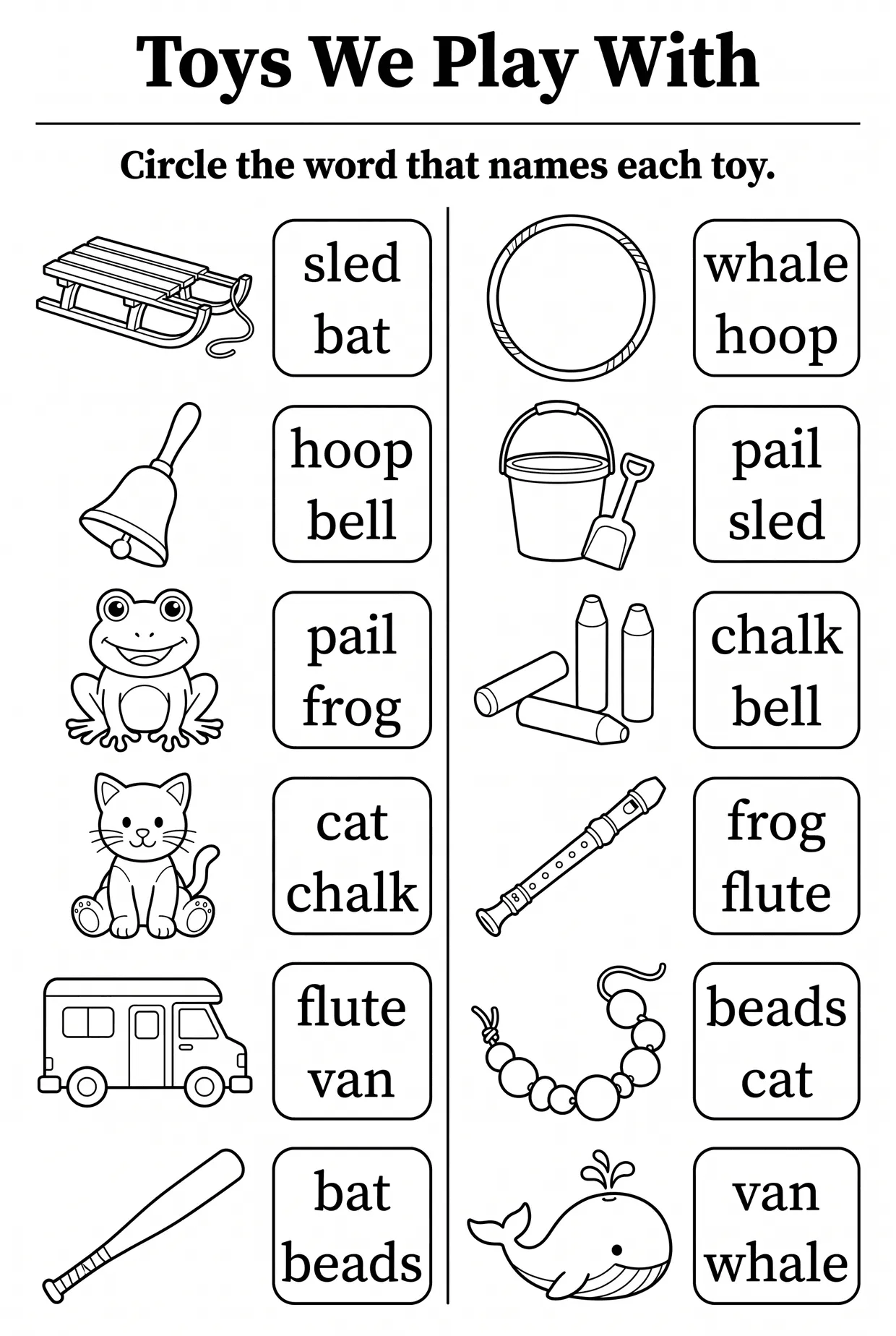
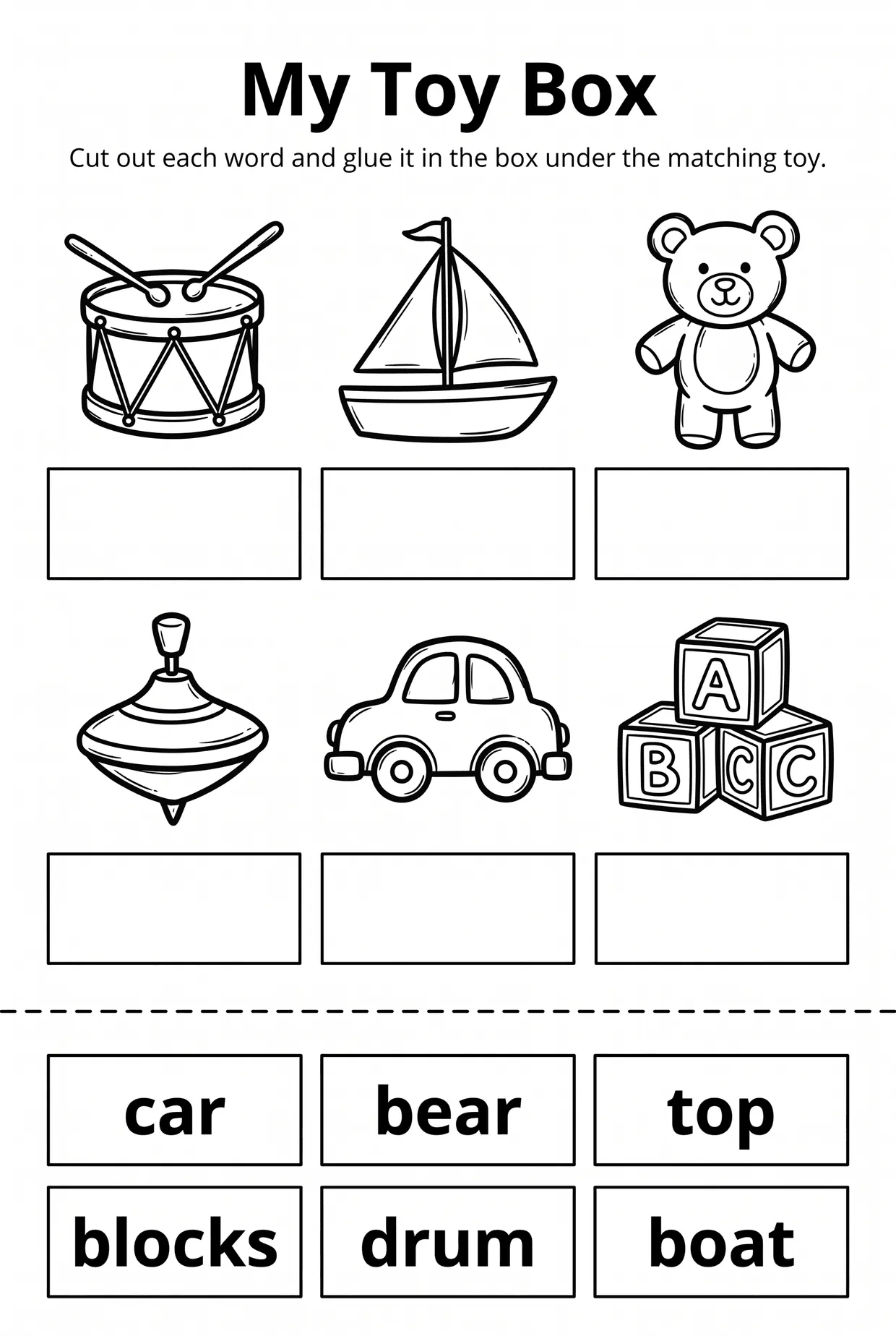
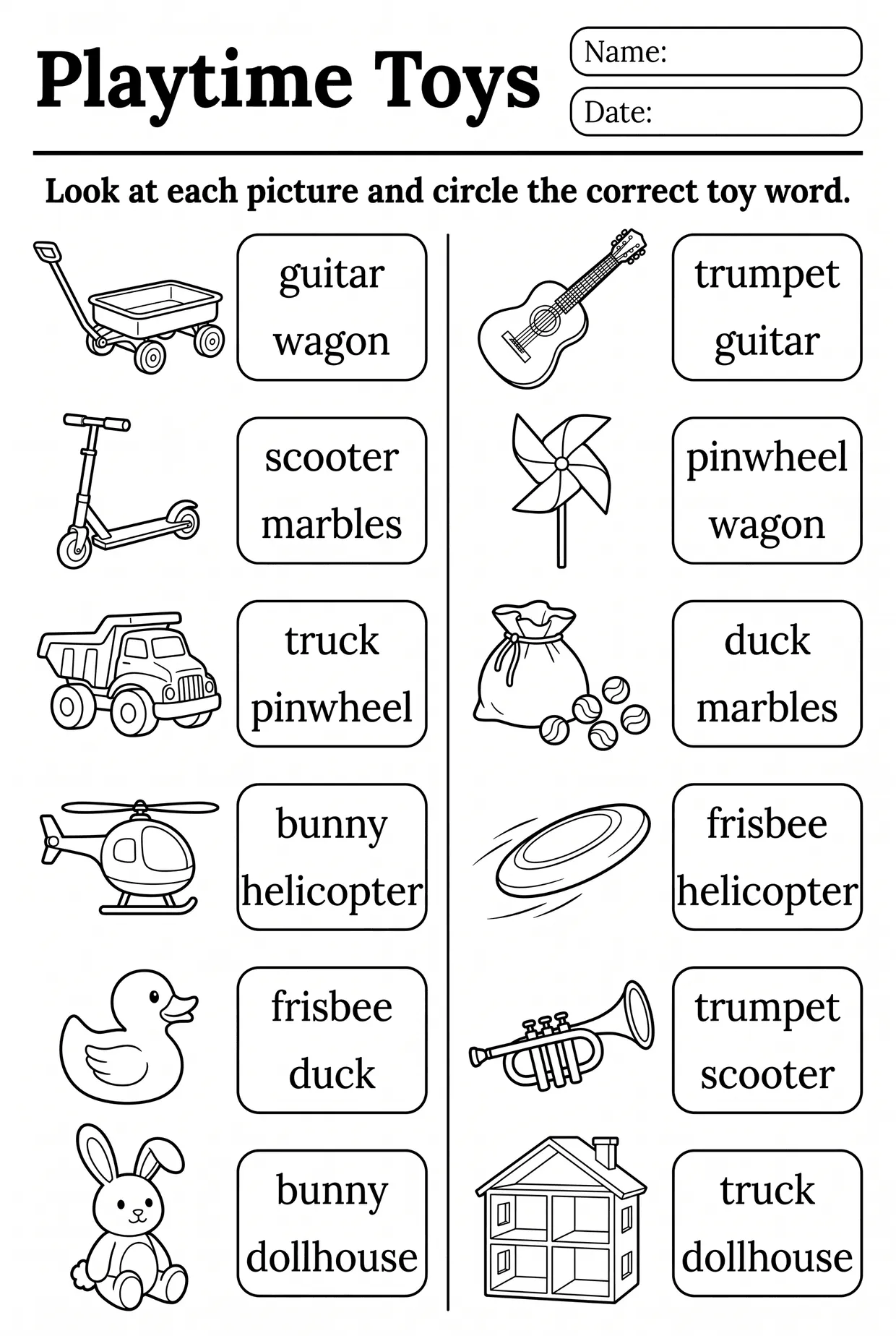
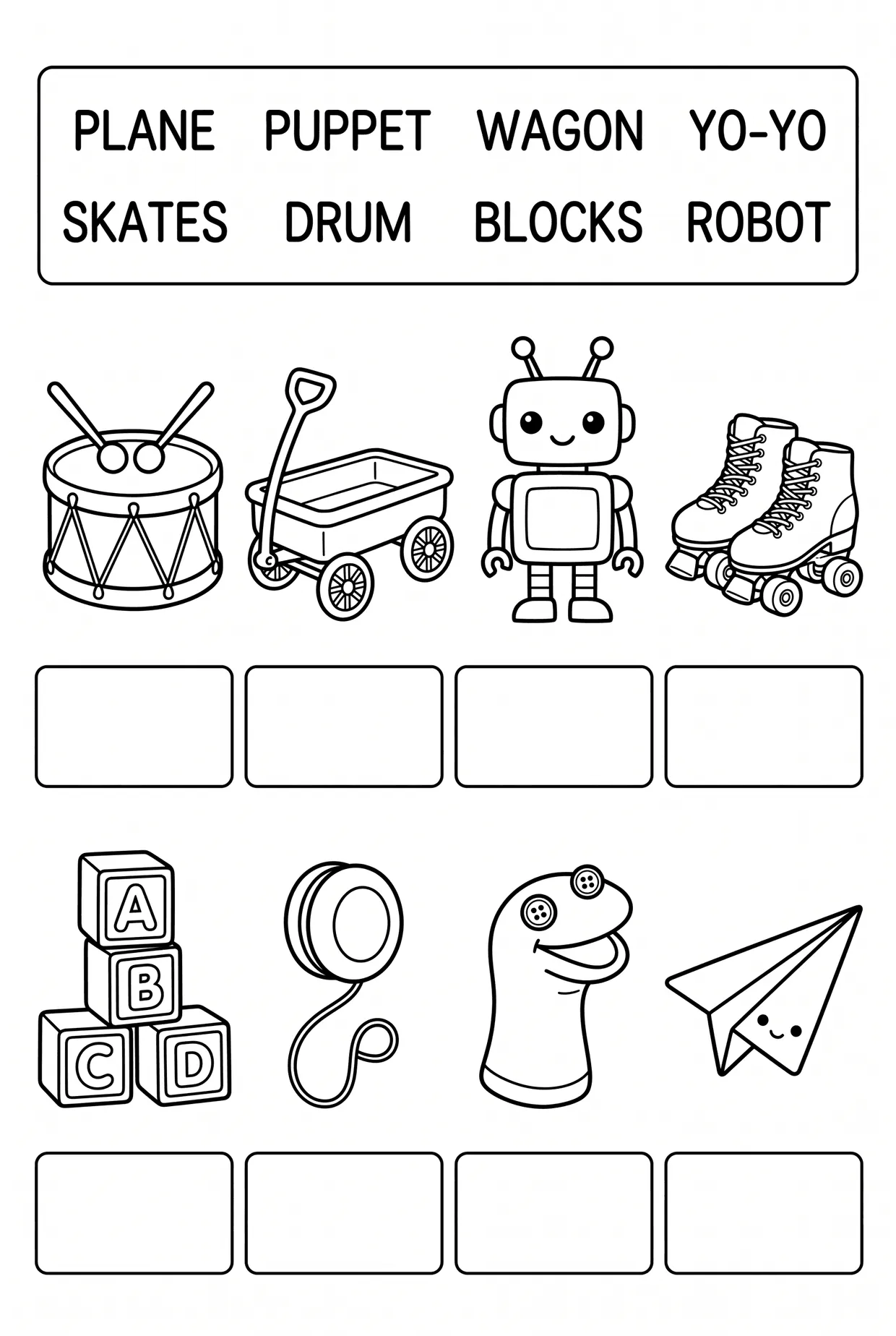
Nouns fill out the rest. Body parts pages pair words like knee, elbow and tummy with pictures, and the house pages move from the roof and chimney outside to sorting a stove into the kitchen and a bed into the bedroom. Toy pages have a child circle or cut and paste names like kite, wagon and yo-yo, and the clothes pages read short sentences about a yellow hat or sort a coat from sandals by the weather. Family words such as mom, grandpa and sister get a full page of their own in kindergarten family worksheets.

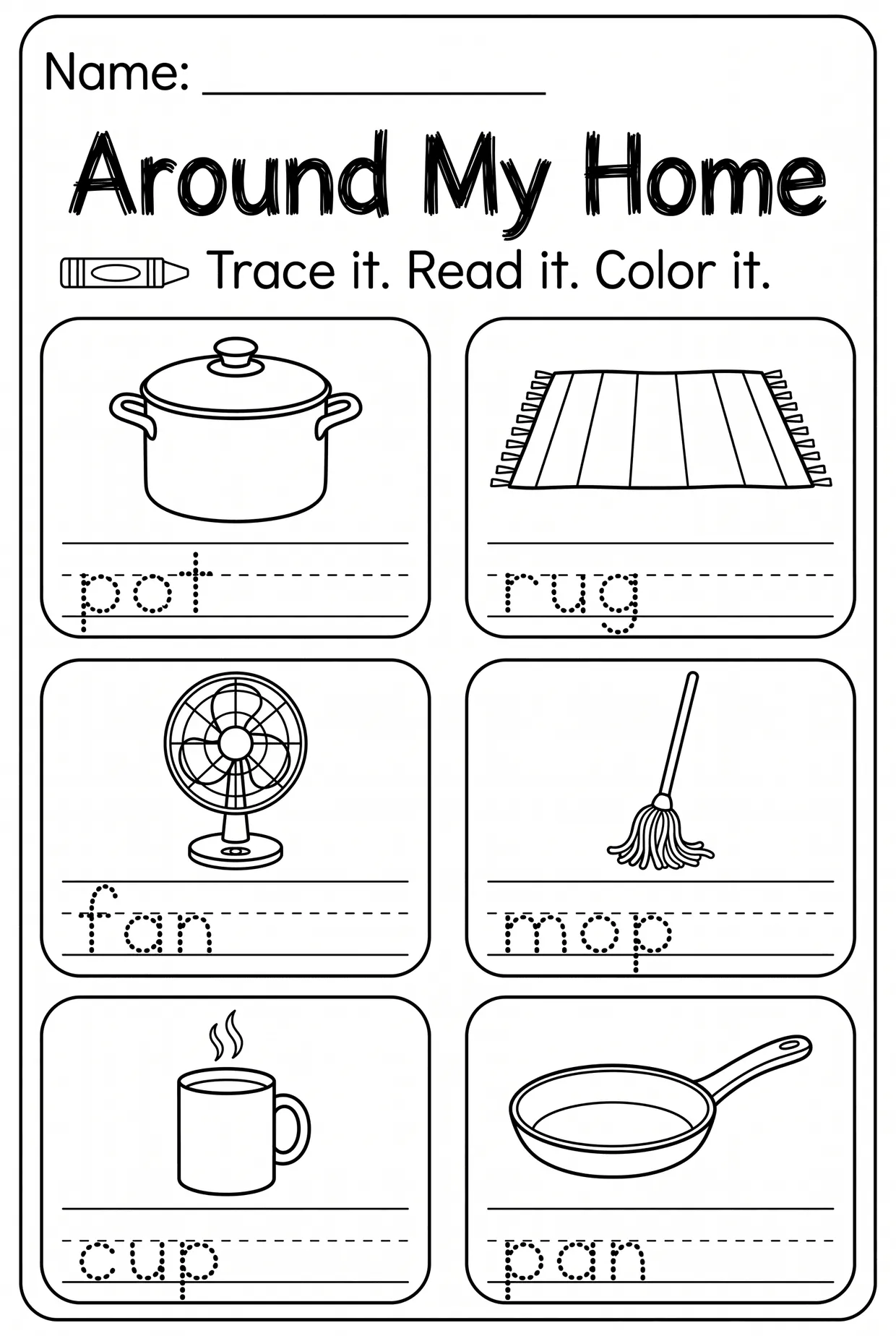
Nearly every word bank and two-word choice here can be solved from the picture plus the opening sound, which keeps the work within reach of an early reader. Saying each word aloud together before the pencil comes out turns a quiet page into a short chat about the playground or the toy box. For more reading practice at this age, browse kindergarten reading worksheets or the short vowel words in kindergarten CVC worksheets.

35 free worksheets kindergarten Newest added November 2026
Free sets on this skill 10 Free Parts of the House Worksheets for Kindergarten 1014 Free Toys Worksheets for Preschool and Kindergarten 14
Format
More kindergarten skills Kindergarten addition worksheets 33Kindergarten subtraction worksheets 29Kindergarten shapes worksheets 18Kindergarten CVC worksheets 18Kindergarten vowels worksheets 17Kindergarten food worksheets 15Kindergarten greetings worksheets 15Fruits worksheets for kindergarten 14Kindergarten ordinal numbers worksheets 14Kindergarten pattern worksheets 14Kindergarten rhyming words worksheets 14Family worksheets for kindergarten 11Kindergarten reading comprehension worksheets 11

Questions about kindergarten vocabulary worksheets

Which words should a kindergartner be able to read and name?

Everyday nouns and verbs from a child's own world: parts of the body, rooms and furniture, toys, clothes, family members and actions like run, eat and wash. Common Core asks kindergartners to sort common objects into categories and to connect words to their real use (L.K.5). Grouping the words by theme, as the sheets here do, follows that same idea.

My child cannot read yet. Can they still do a word bank page?

Usually, yes. The picture tells the child what the word is, and the first letter narrows the bank down, so a child who knows letter sounds can find skate by looking for the word that begins with s. Read the bank aloud together once, then let them do the matching.

Are action verbs too advanced for kindergarten?

Not at all. Kindergartners use verbs all day when they talk, and the only new part is seeing them written down. Verbs are also easy to act out, so asking a child to hop, wave or sweep before writing the word ties the meaning to the spelling.

How are the matching pages different from the cut and paste ones?

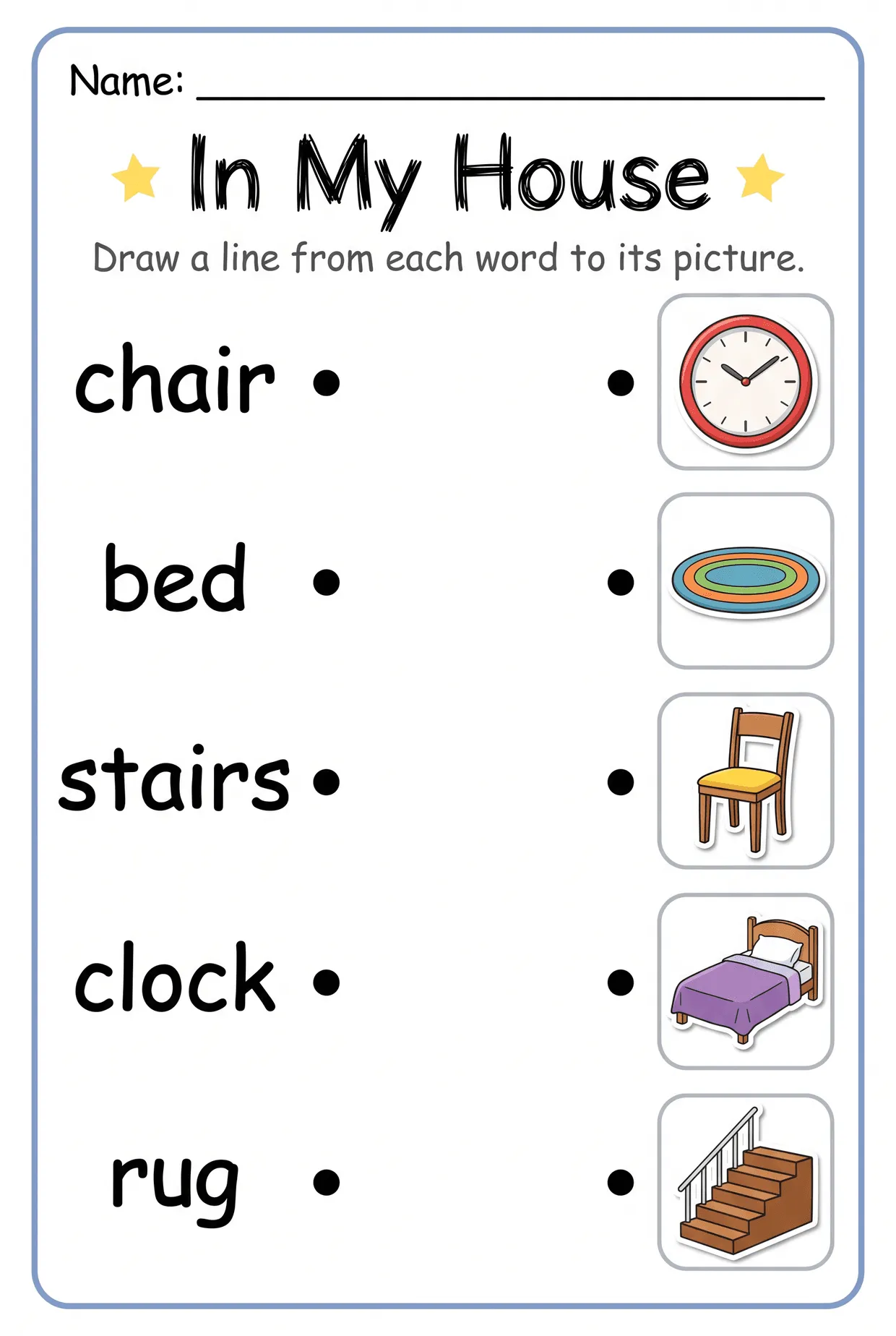
Matching asks a child to read a word and draw a line to its picture, with no letters to form, so it suits a child who is not yet writing with confidence. Cut and paste adds scissor and glue work, which is good fine motor practice but takes longer. Circle-the-word pages sit between the two, and writing a word from the bank asks the most.

How can we keep new words going after the page is done?

Take the words off the paper. Label a few things around the house or classroom with sticky notes, play point and name on a walk, and ask the child to use a new verb in a sentence at dinner. A word met in three places sticks far better than one met on a single sheet.