Ordinal numbers look like a small topic and then turn out to have a trap in them. First, second and third are vocabulary, and a child can learn to say them in order long before they can answer “which one is the fourth?” The gap between reciting the words and using them is where kindergarten ordinal practice actually lives.
The bigger trap is direction. Position only means something once you know where counting starts, and most worksheets never mention it, so children quietly learn “first means the one on the left” and it works until the day it does not. Several of the sheets below put an arrow on the page and then move it, which is the cheapest way to turn that habit into an actual idea.
The ten free worksheets here run in the order I would hand them over. Learn the words on their own, count with the direction marked, stretch out to tenth, then count upward, count from the right, and finally write the position with nobody naming it first. Every one is a printable PDF with no account and no watermark, and six of the ten are plain black and white line art, so a class set costs almost nothing in ink. Start wherever your child already is; the first two pages are worth skipping for anyone who can already read fourth without pausing.
Match the Ordinal Number Words Worksheet
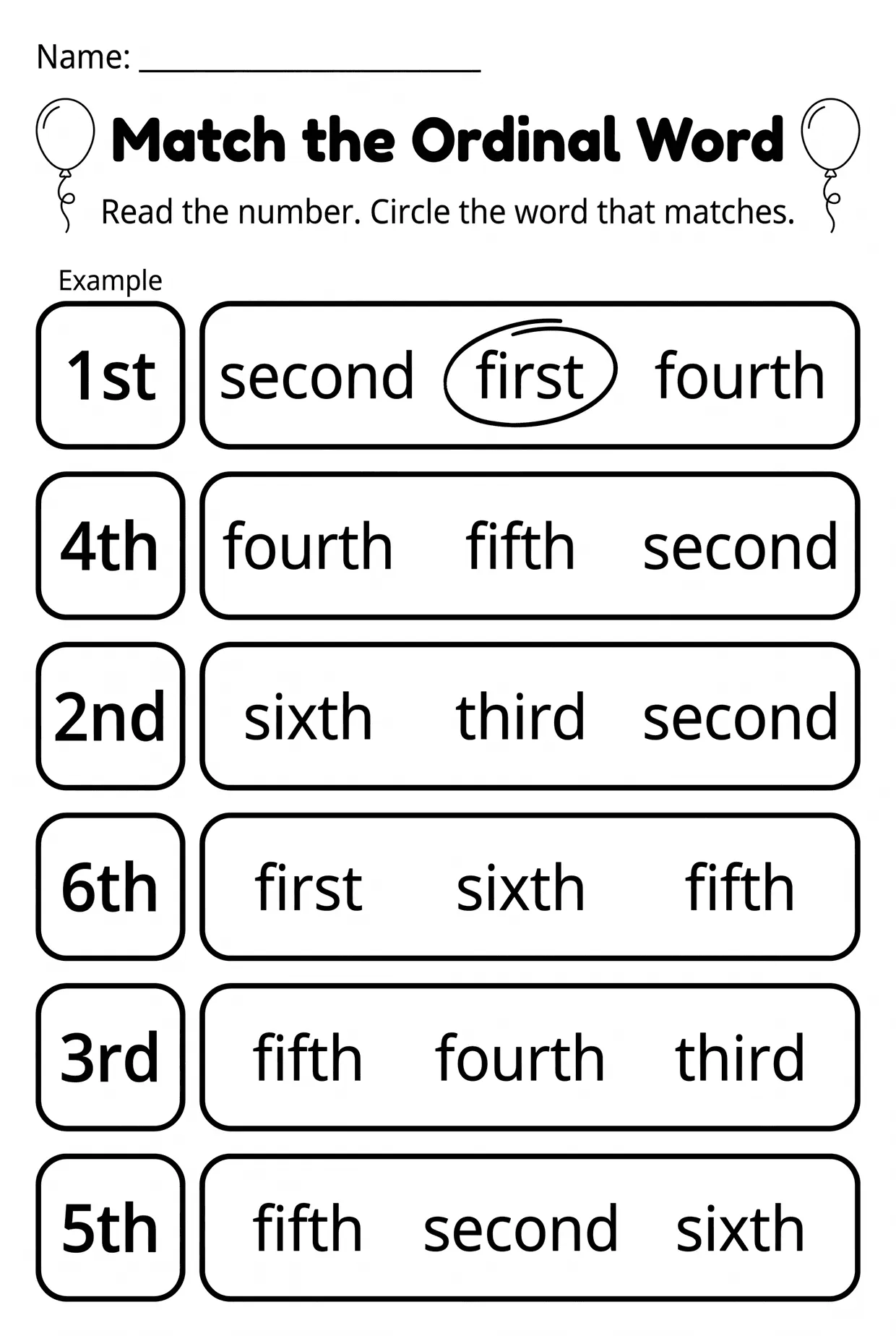
Before a child counts anything, they have to know that 4th says fourth. This page does only that: a numeral on the left, three written words on the right, circle the one that matches. No pictures, no rows, nothing to count.
The wrong choices are picked to be tempting rather than silly, so fifth sits beside fourth and sixth beside second. A child guessing from the first letter gets caught, which is the whole point of starting here.
Autumn Ordinal Numbers Tracing Worksheet
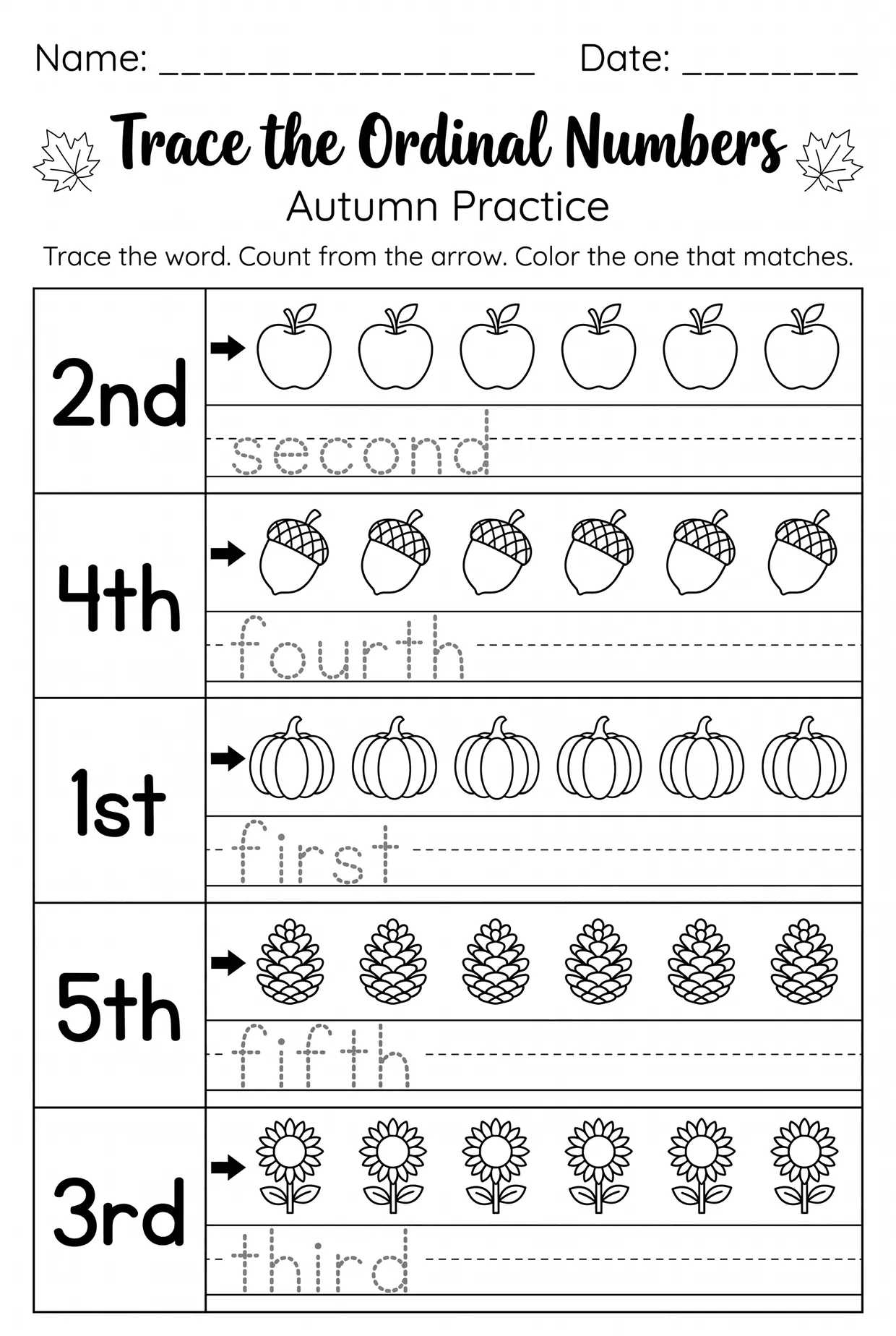
Now put the two forms side by side and make the hand do the work. Each row shows a bold numeral, a row of apples or acorns or pumpkins, and the word in dotted letters waiting to be traced.
Tracing second while looking at 2nd is a slower, stickier way to learn the pair than reading it. The rows are deliberately out of order, so the sequence cannot be recited instead of read.
Transportation Ordinal Numbers Coloring Worksheet
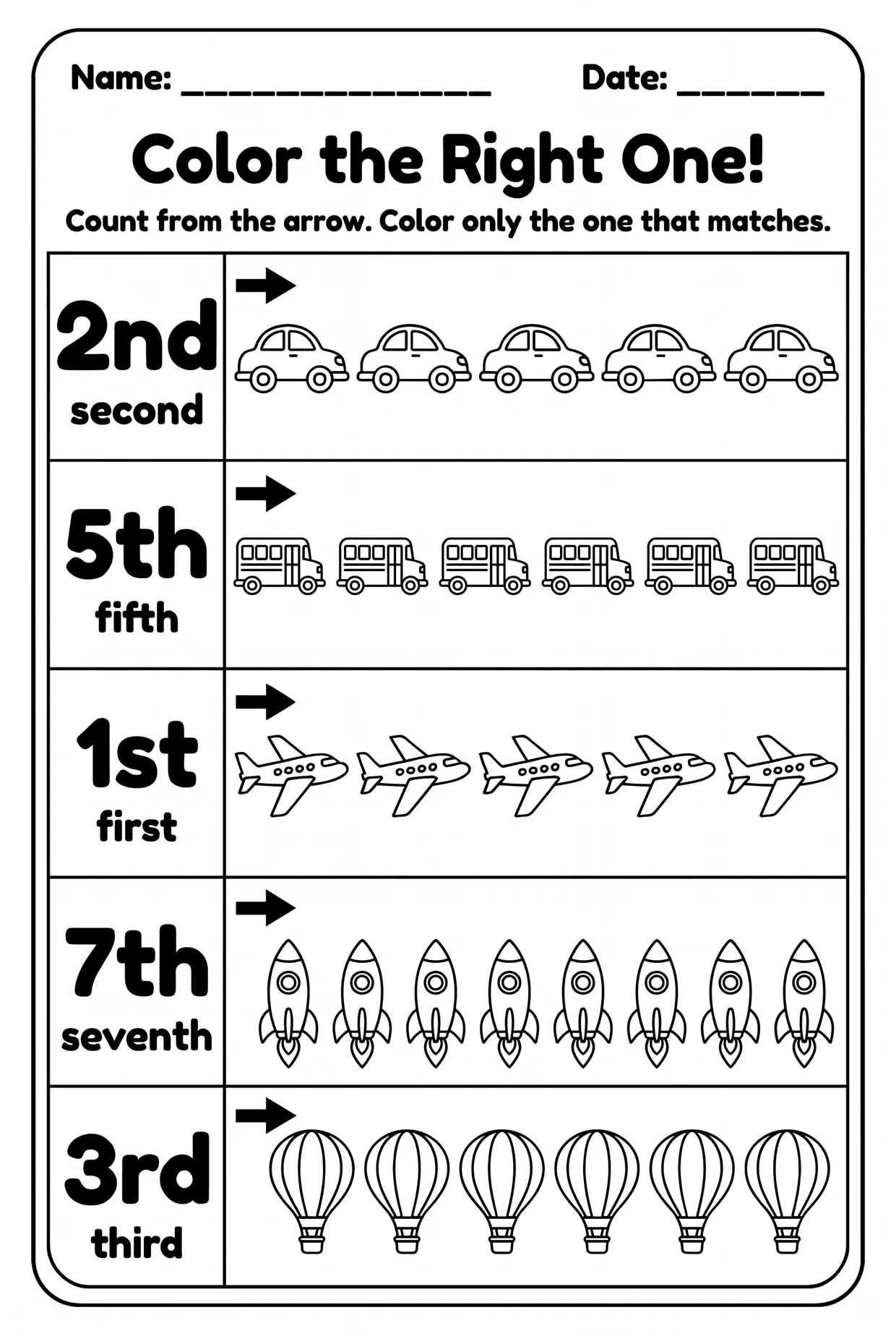
The first page that asks a child to actually count along a row, and it keeps every support in place while they do: the position appears as a numeral and as a word, and an arrow marks where counting starts.
Cars, buses, airplanes, rockets and hot air balloons, one colored per row. The rocket row runs to seventh, which is a genuine stretch and the row worth sitting next to a child for.
Garden Ordinal Numbers Worksheet: Circle the Picture
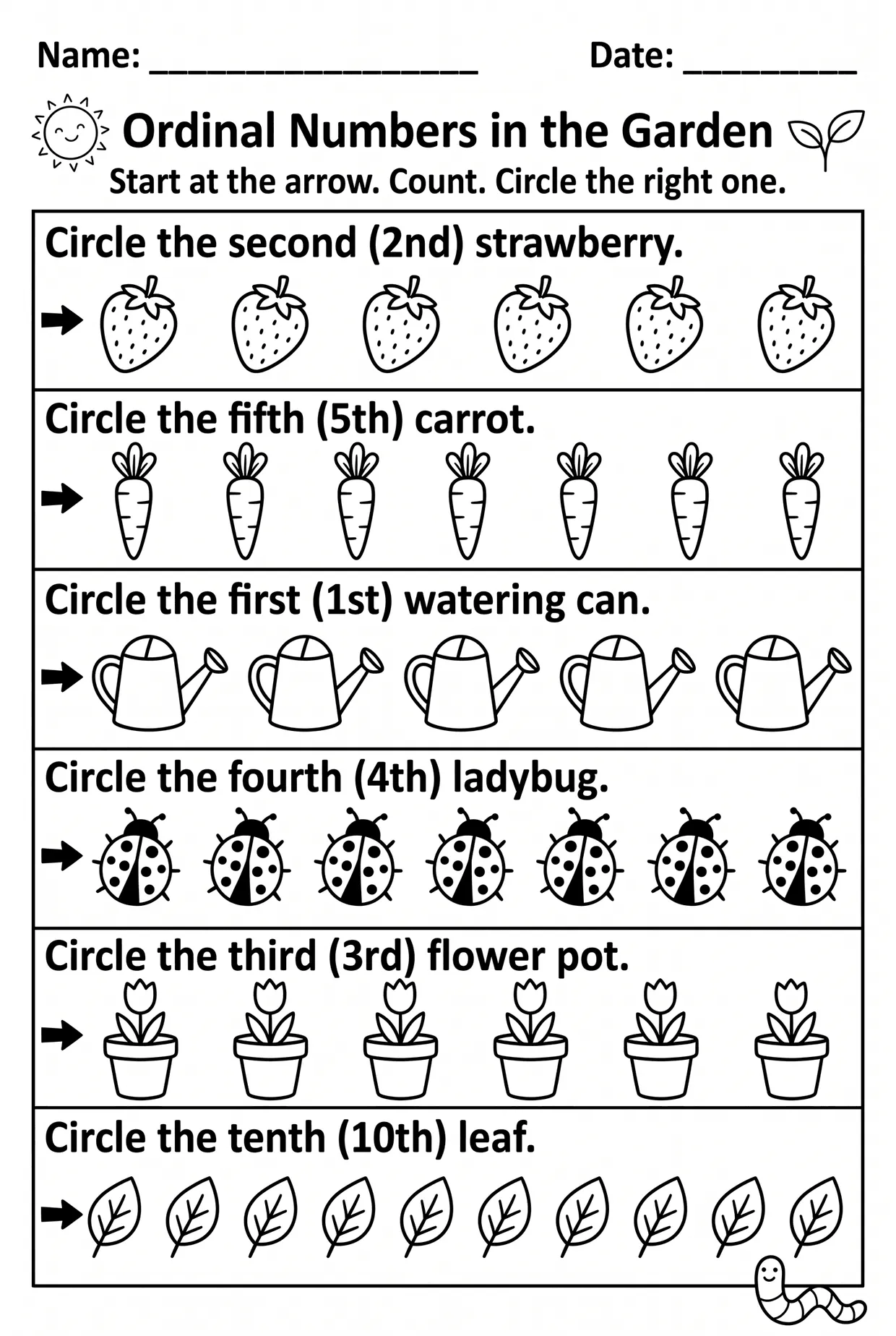
Same idea, longer reach. Six garden rows with instructions naming the position in words and numerals together, running from the first watering can all the way to the tenth leaf.
The rows are different lengths on purpose, from five pictures to ten, so a child cannot shortcut by grabbing whichever one sits at the end. Counting past fifth is where most kindergartners start losing the place and reach for a finger, which is fine and worth letting them do.
Color by Ordinal Numbers Worksheet: Socks and Balloons
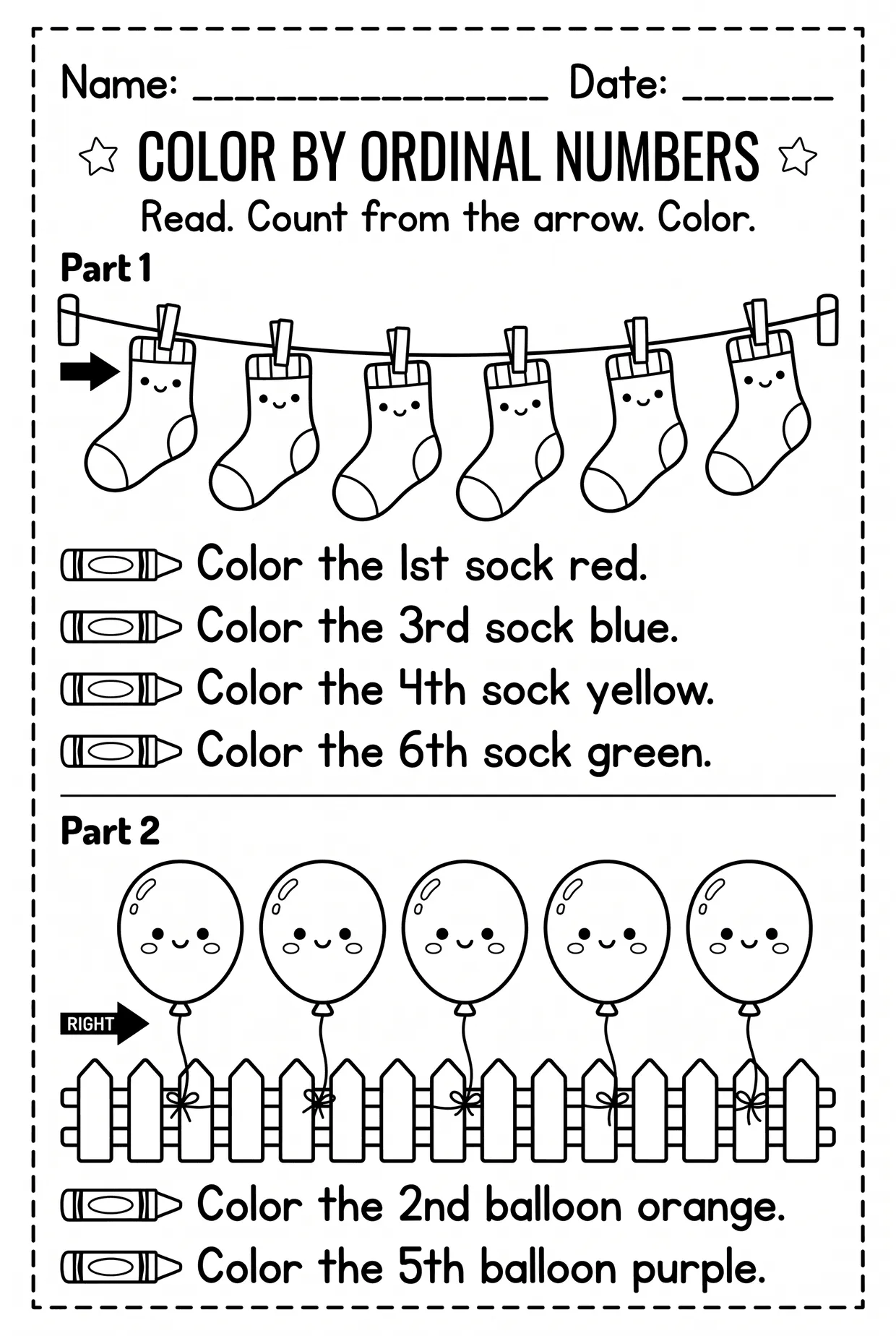
Six socks on a clothesline and four written instructions, each naming a position and a color, jumping about so the line cannot be worked through in order. Reading the instruction is now half the task.
The second half moves to balloons above a fence with the arrow pointing the other way. It is the first quiet hint that position depends on where you start, and it catches a surprising number of children who sailed through the first half.
Animal Race Ordinal Numbers Worksheet
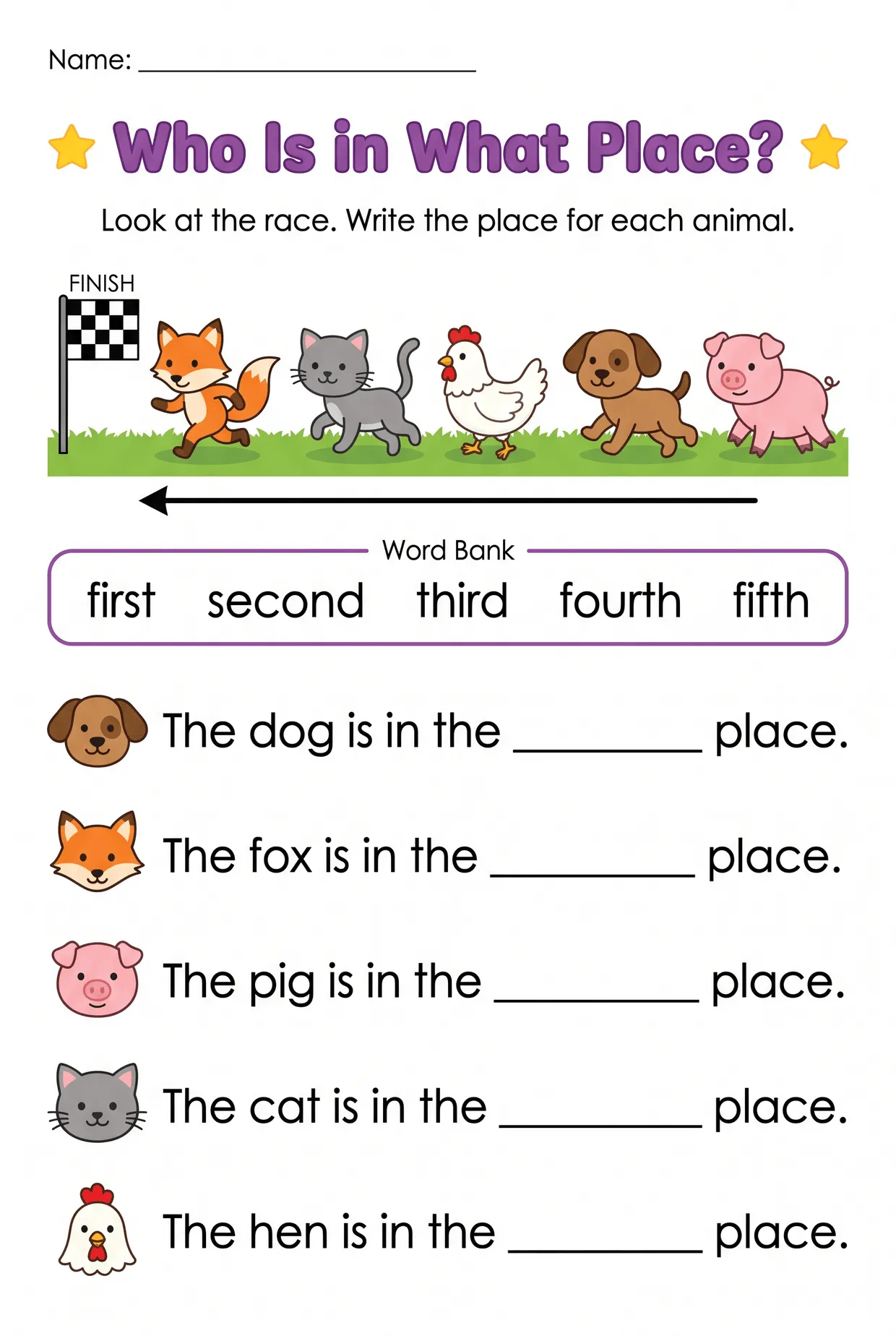
A fox, cat, hen, dog and pig strung out along a track with the finish line on the left, so the leader is first and the straggler is fifth. An arrow under the track shows which way to count.
Five sentences below name the animals in a different order from the race, and a word bank supplies first through fifth in full. The child is writing position words now rather than circling them, with the spelling handed to them.
Ordinal Numbers Train Cut and Paste Worksheet
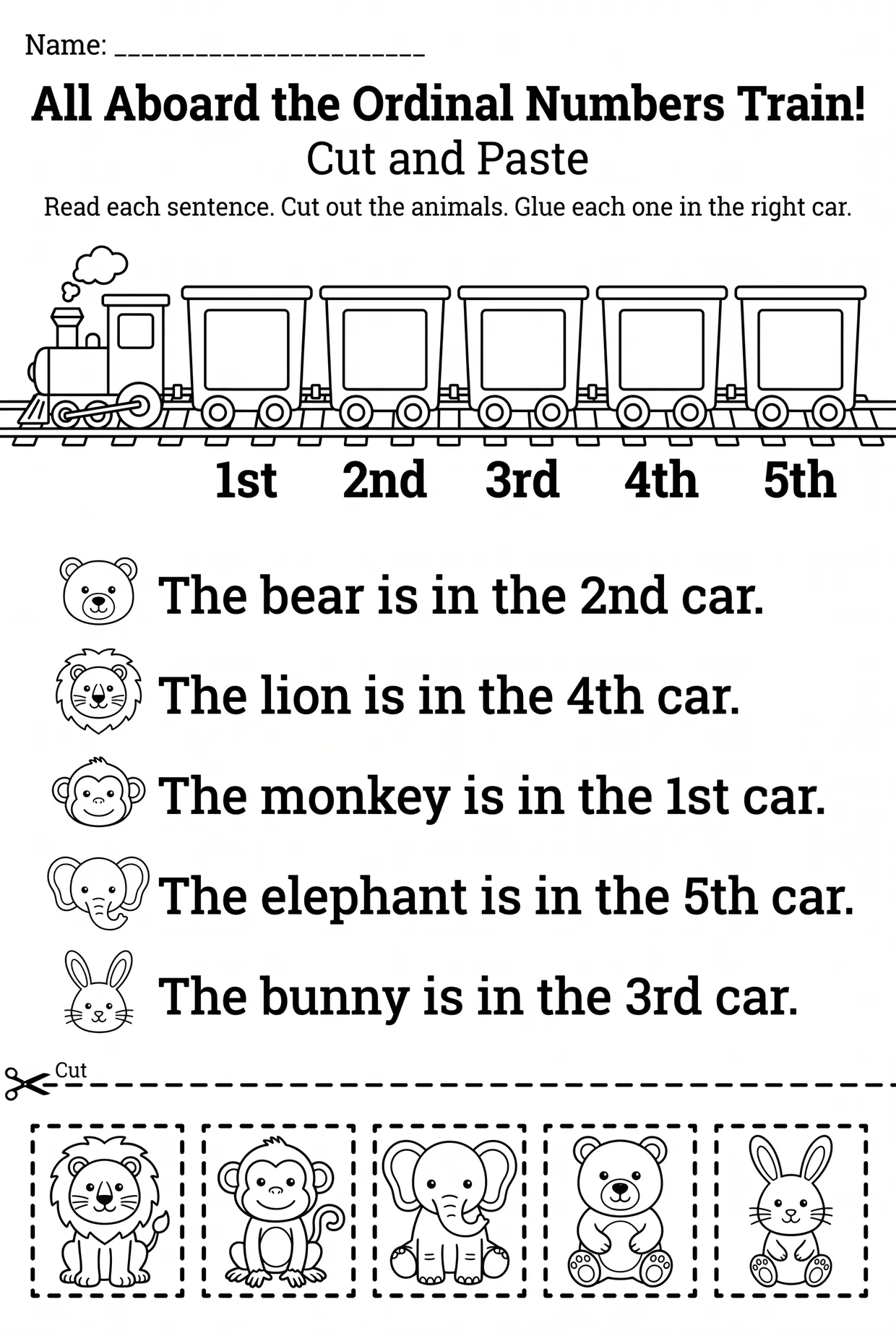
A change of pace without a change of skill. Five train cars labeled first through fifth, five sentences saying which animal rides where, and five animals to cut out at the bottom.
The animals are named out of order, so the train cannot be filled front to back. Cutting and gluing slows everything down, which helps: a child can hold a card over a car and check before any glue is committed.
Ice Cream Stack Ordinal Numbers Worksheet
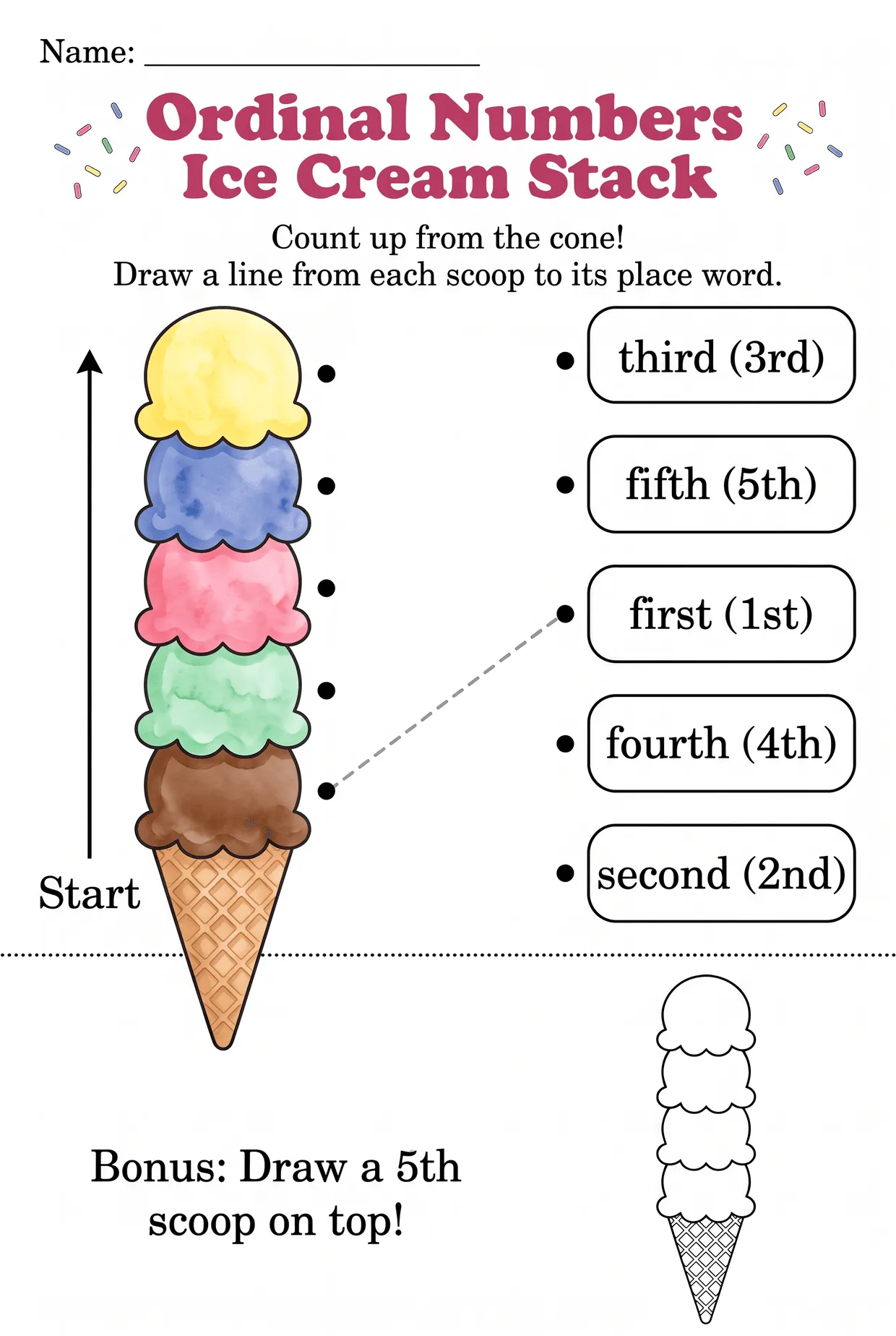
Here is where the props start coming away. Five scoops stand on a cone and counting runs upward from the bottom, which is the same skill pointed somewhere unfamiliar.
Each scoop joins by a drawn line to its word and numeral, with the first one joined already as a model. A blank cone at the end asks for a scoop of the child's own in a named position, which flips the task from reading a position to producing one.
Pond Ordinal Numbers Worksheet: Which Way to Count
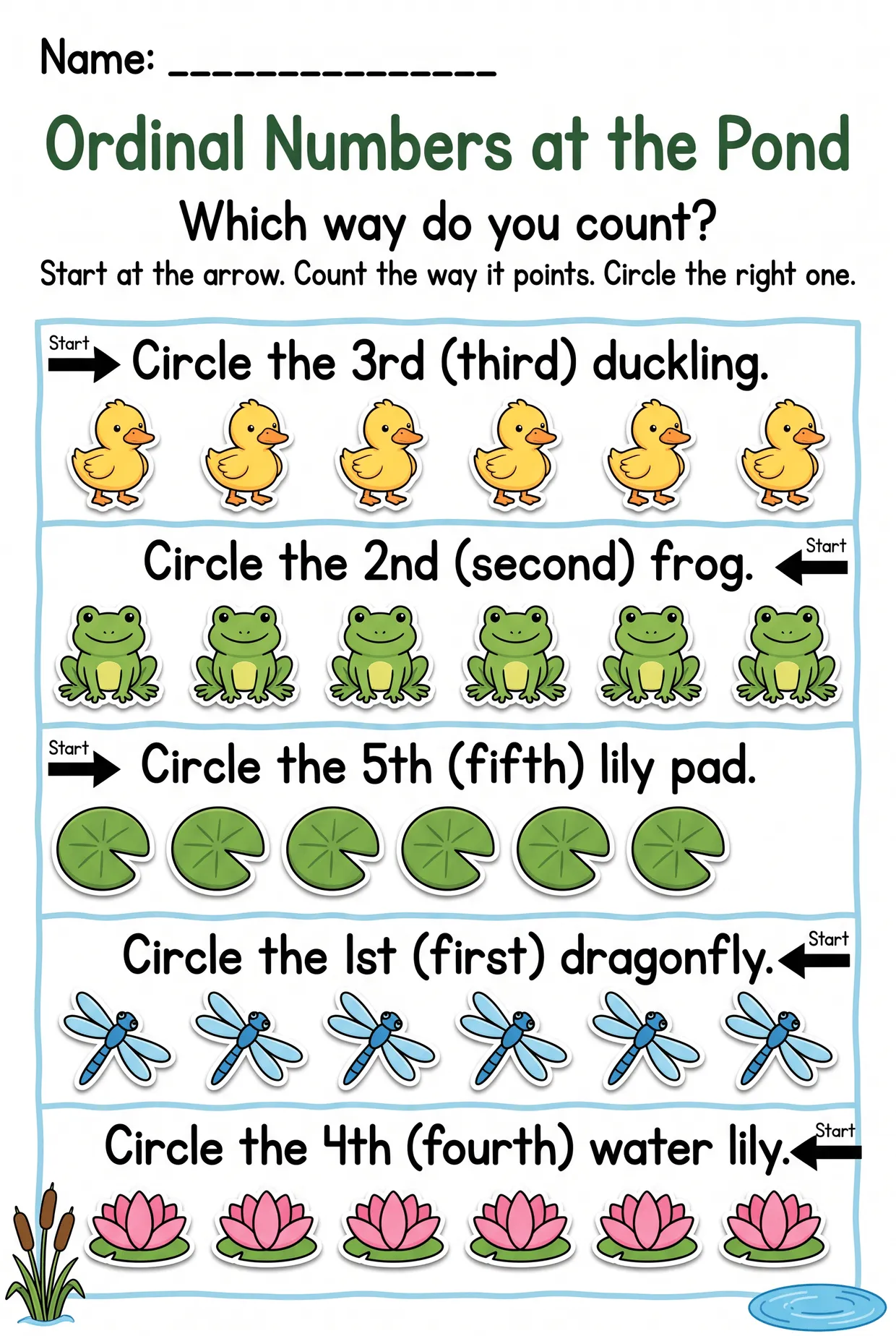
The arrow moves every row. Ducklings counted from the left, frogs from the right, lily pads from the left again. A child answering on autopilot gets three of the five rows wrong, and that is by design.
Every row holds six pictures while the questions only reach fifth, so the answer is never simply the one on the end.
Under the Sea Ordinal Numbers Worksheet
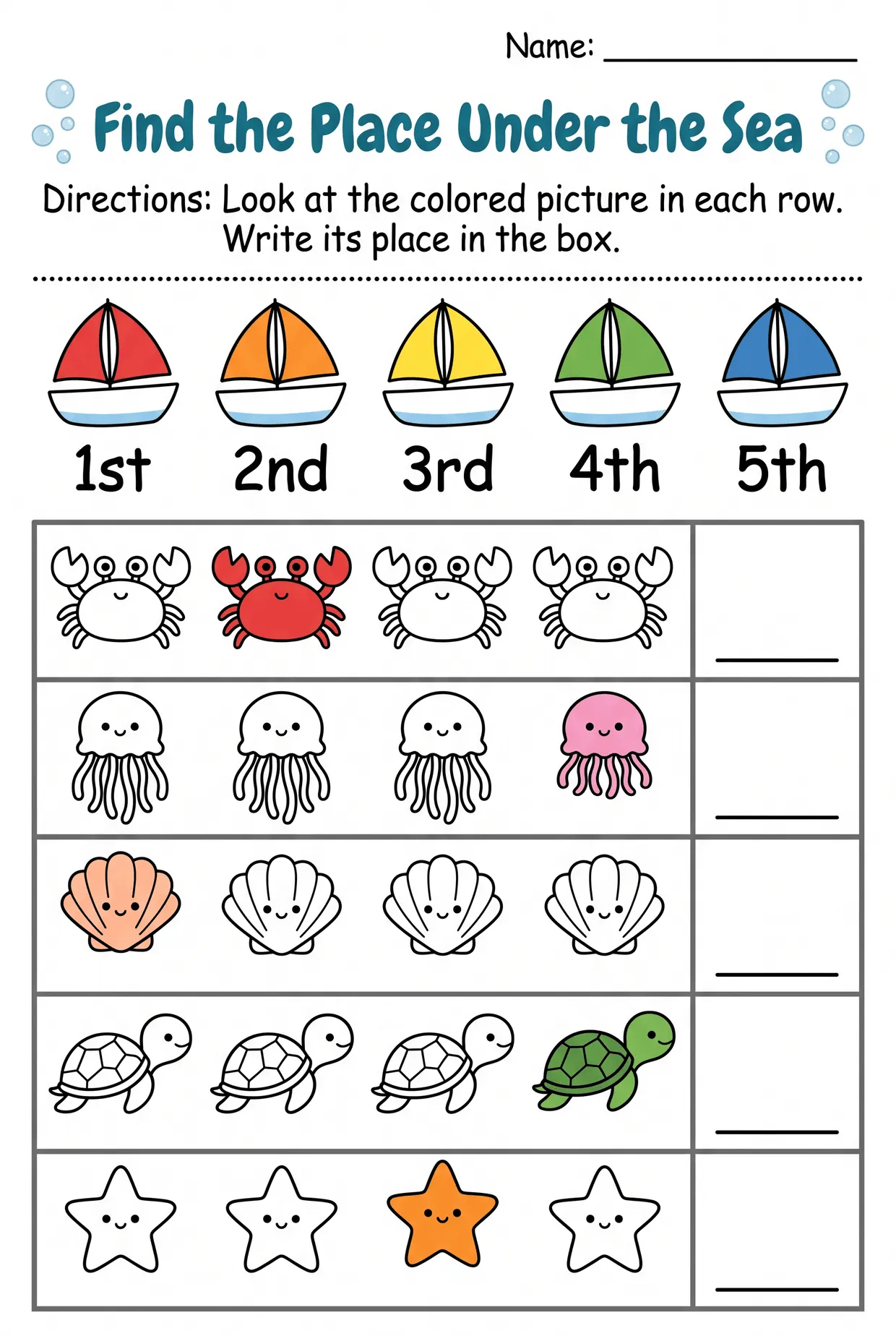
The last page runs the whole exercise backward. Nobody names a position: one crab, jellyfish, shell, turtle or starfish is colored in each row, and the child works out which place it sits in and writes that down.
A row of sailboats across the top holds first through fifth in order for anyone who needs a reference, without giving the answer away. Producing the ordinal is harder than finding it, and a child who can do this one has the idea.
One more thing.
If your kids finish a unit and you're not sure what to do next, my honest advice: don't move on yet. Spend a week mixing these in as warm-ups. Fluency isn't a unit, it's a habit, and the sheet that builds it is usually the one they ask to do again.