Questions about 3rd grade reading comprehension worksheets
What changes in reading comprehension in third grade?
Answers now have to come from the text (RL.3.1 and RI.3.1), not just from memory. Children also explain why characters act as they do and work out unfamiliar words from context, and the questions on these sheets build in all three.
Any tips for getting my child to use evidence from the passage?
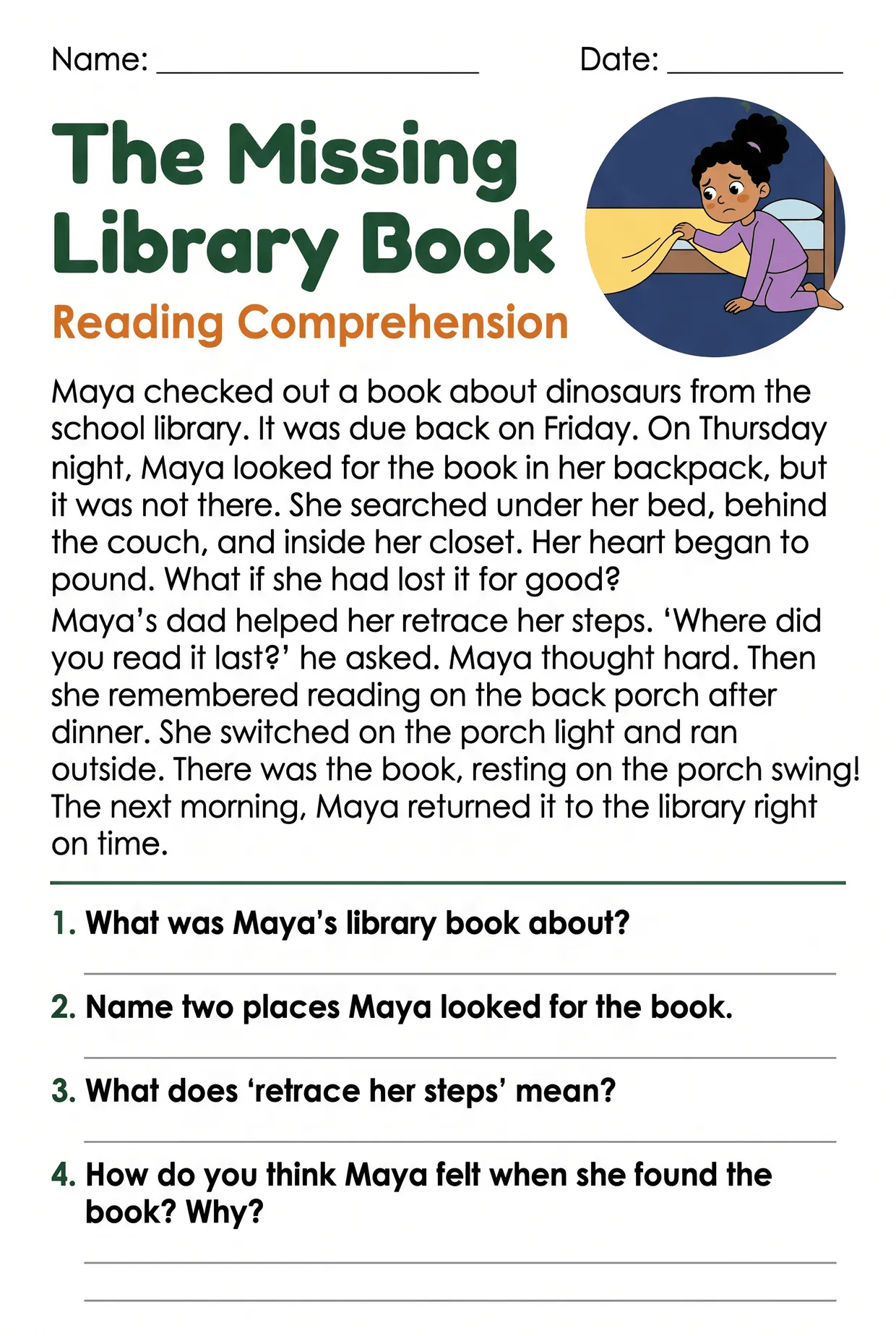
Ask them to underline the sentence that proves each answer before writing it. At first, the answer can simply be that sentence put in their own words. The missing library book page asks for two details to answer one question, which is good practice in looking for more than one clue.
How can my child work out a word they do not know?
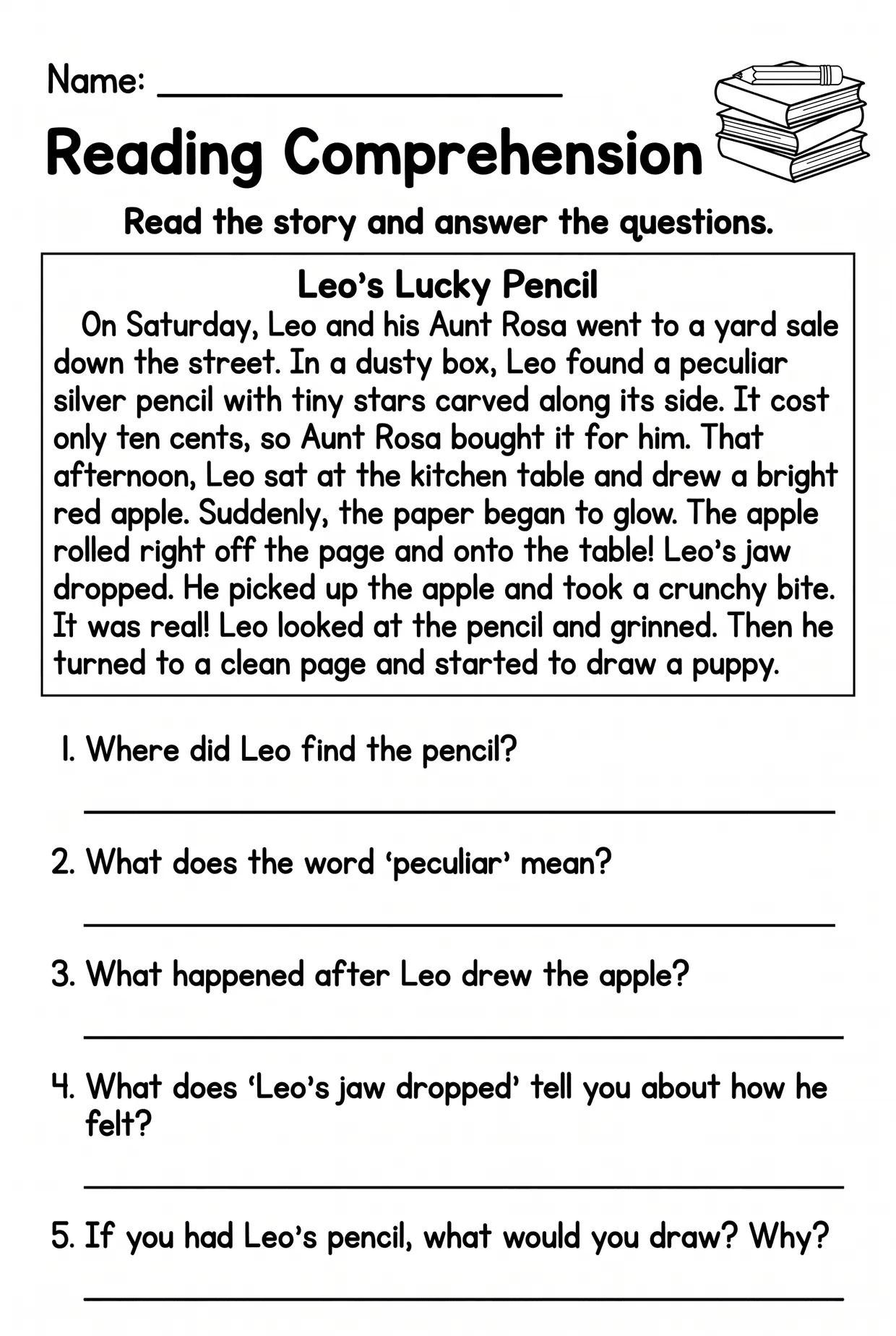
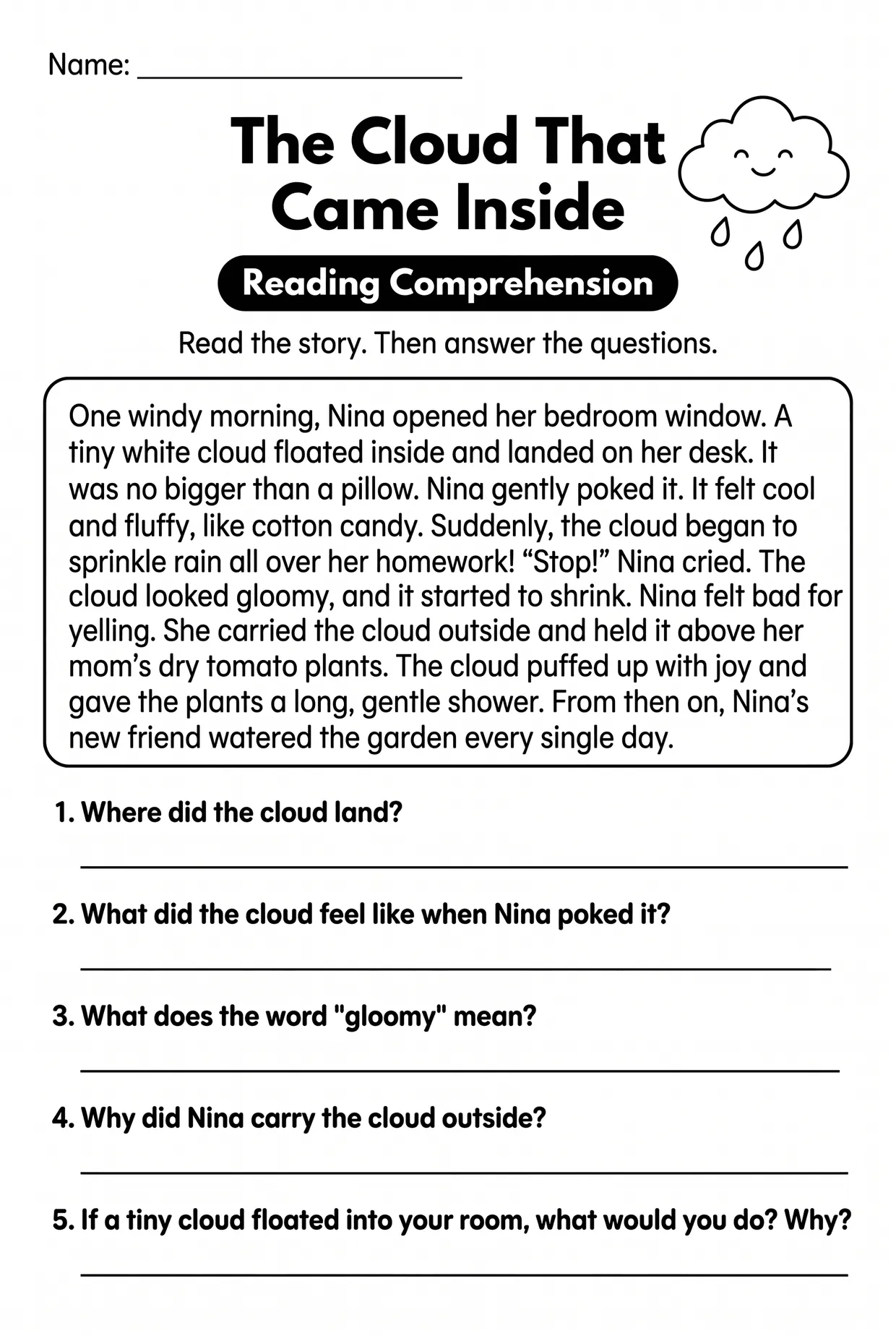
Reread the sentence and the one after it, then try a word that would fit in its place. If the swap still makes sense, the guess is probably close. Leo's lucky pencil and the cloud story both ask children to do this with words like peculiar and gloomy.
Are multiple choice questions easier than written ones?
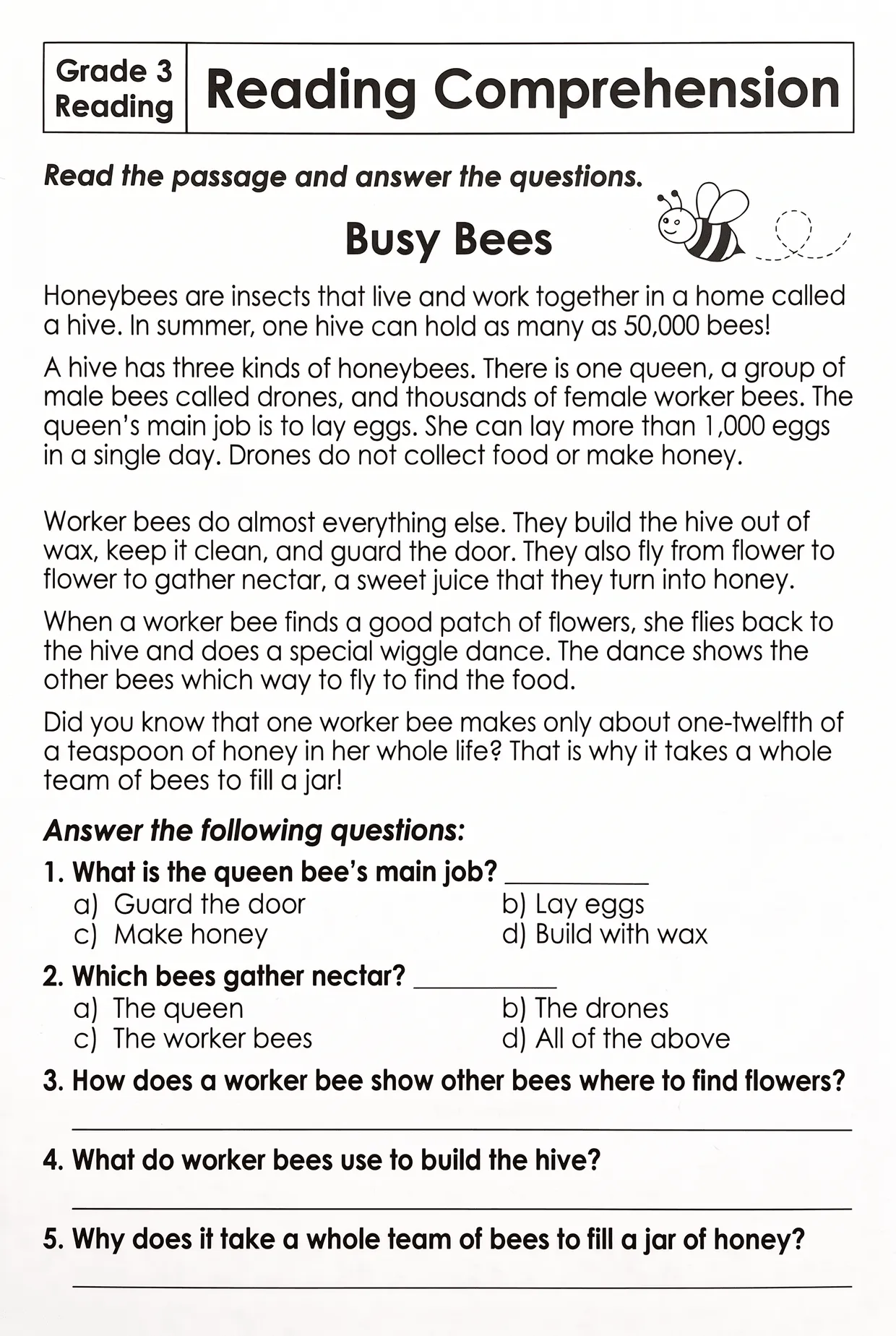
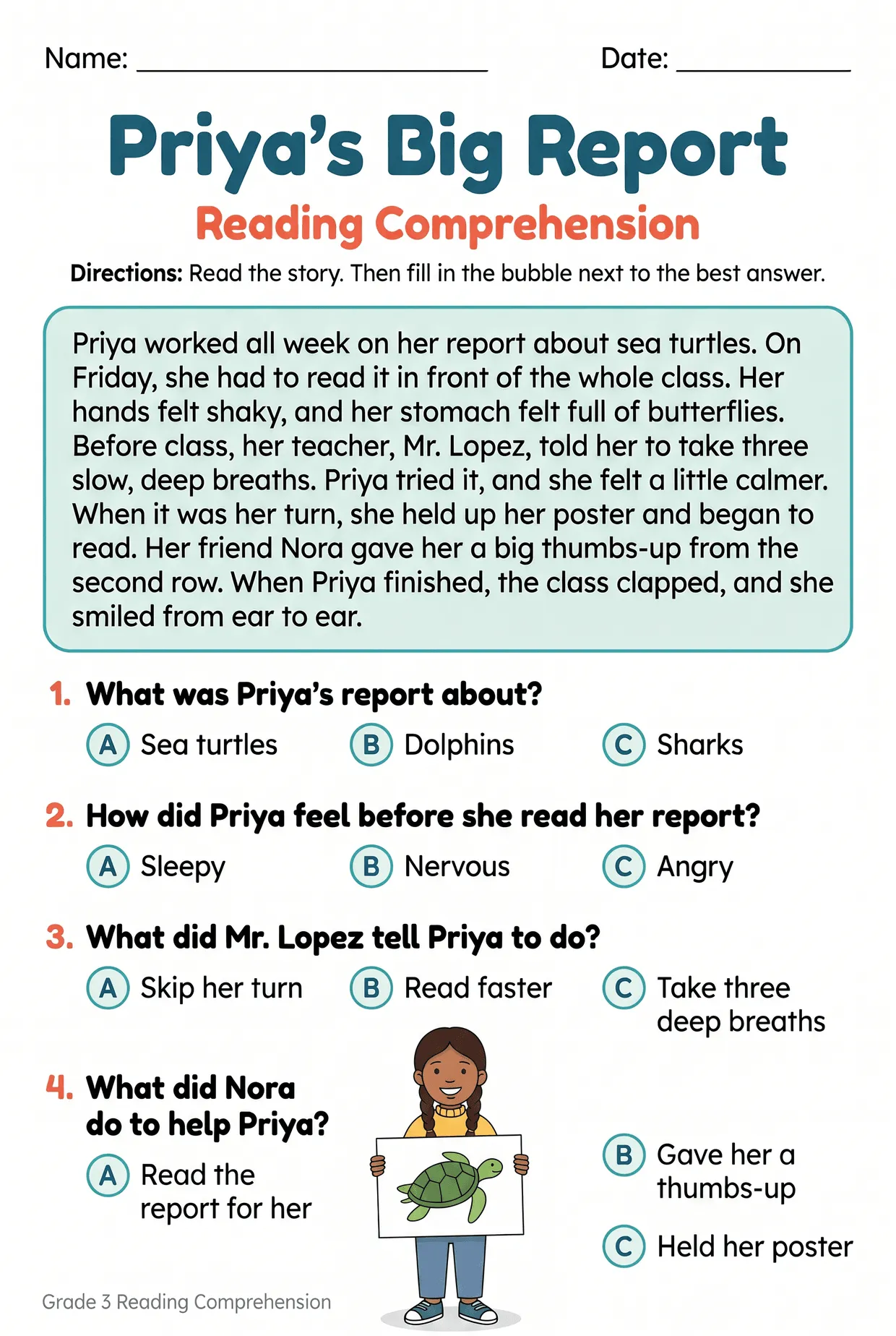
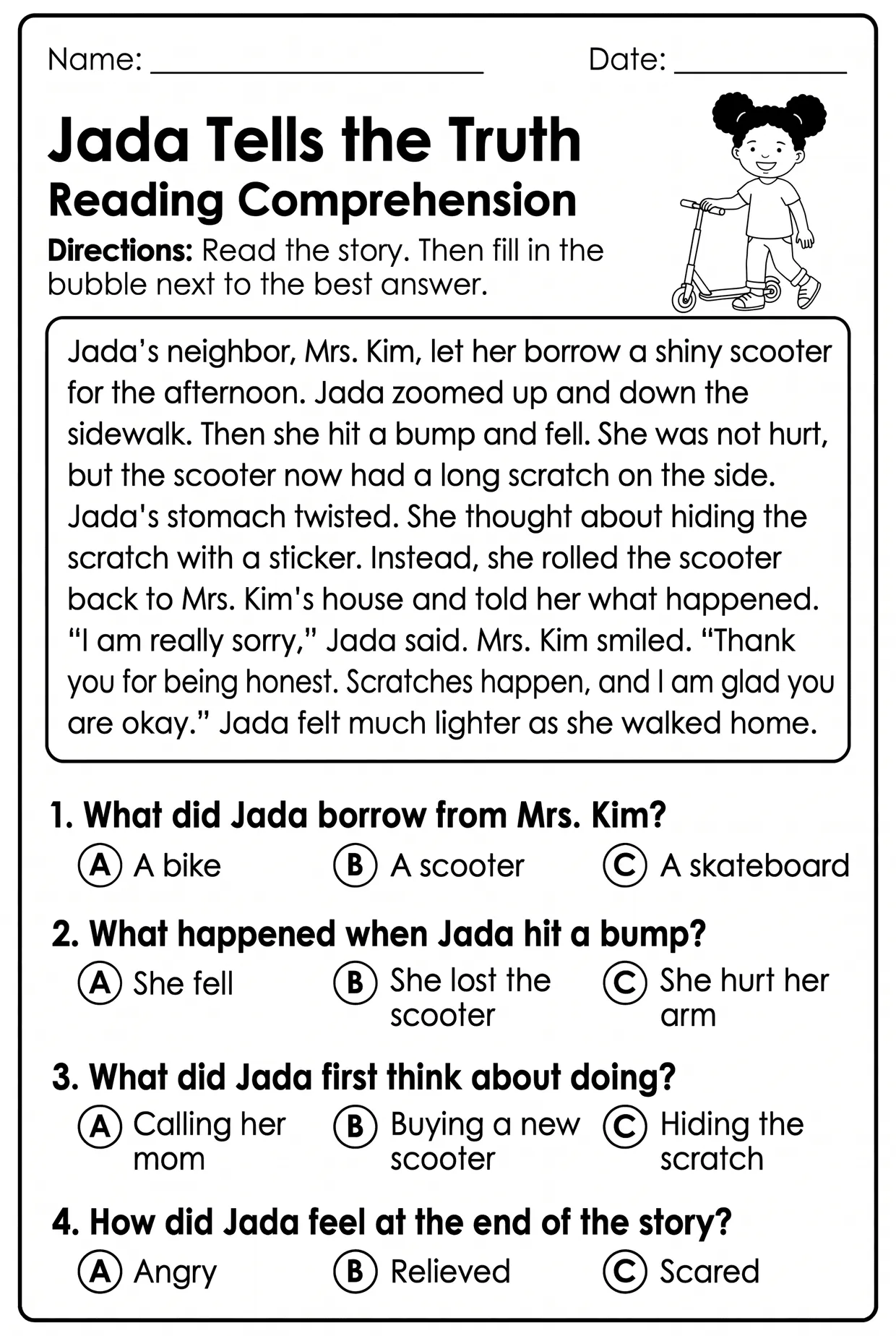
Usually, because the right answer is already on the page. They are a gentle start for a child new to longer passages, and Priya's report and Jada's honesty story both use them. The trap is guessing, so ask your child to say why each of the other choices is wrong.
What is cause and effect in a science passage?
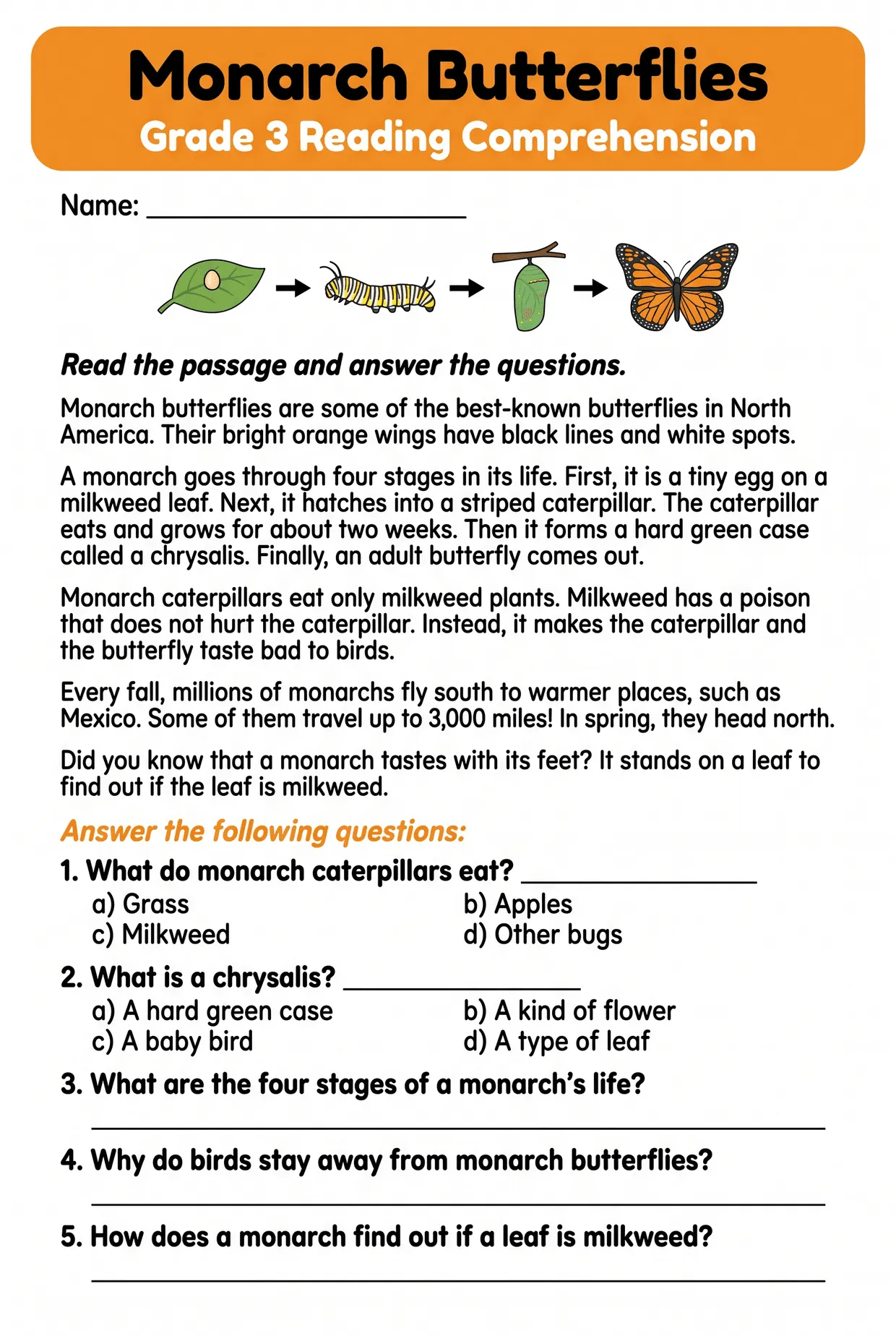
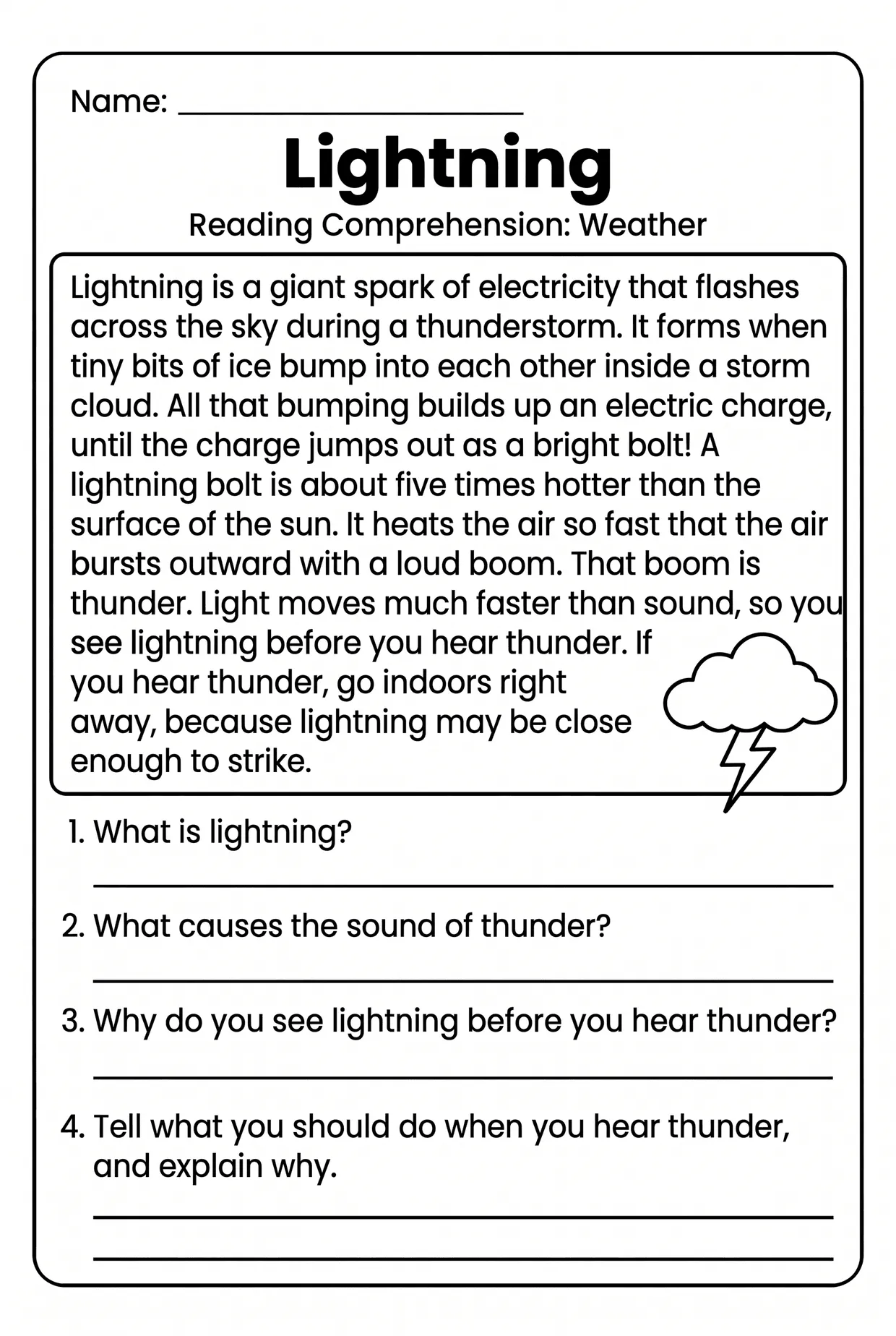
One thing making another happen, like a flash of lightning heating the air so fast that we hear thunder. The lightning page asks about this directly, and the monarch page asks why milkweed keeps the butterflies safe from birds. Signal words like because and so are clues worth pointing out.