Free 3rd Grade Adverbs Worksheets

An adverb adds detail to an action, telling how someone ran, when they left or where they hid. Quickly, soon and outside are all adverbs, even though only one of them ends in -ly. The adverbs worksheets for grade 3 in this set help third graders explain what these words do in a sentence and use them in their own writing.

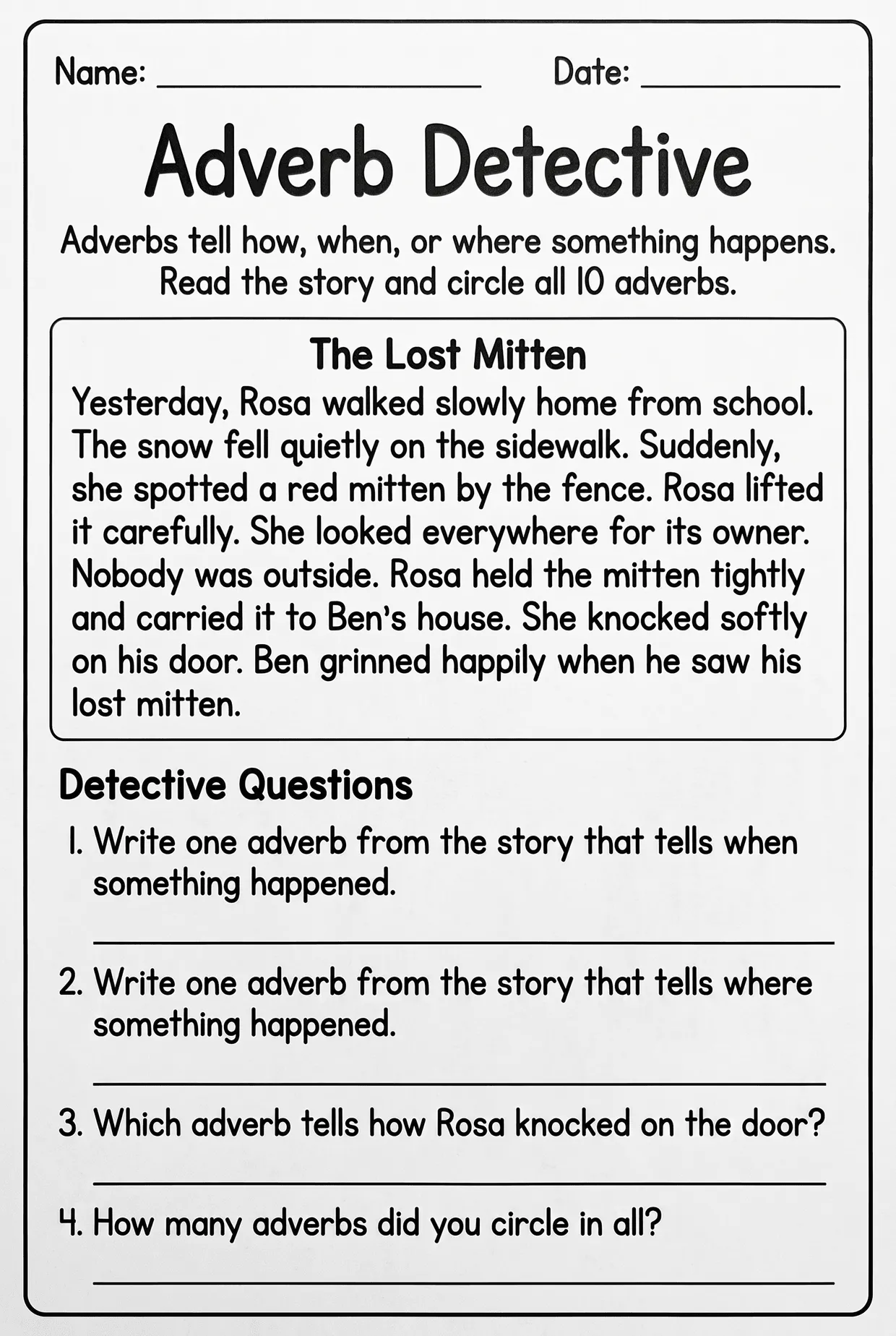
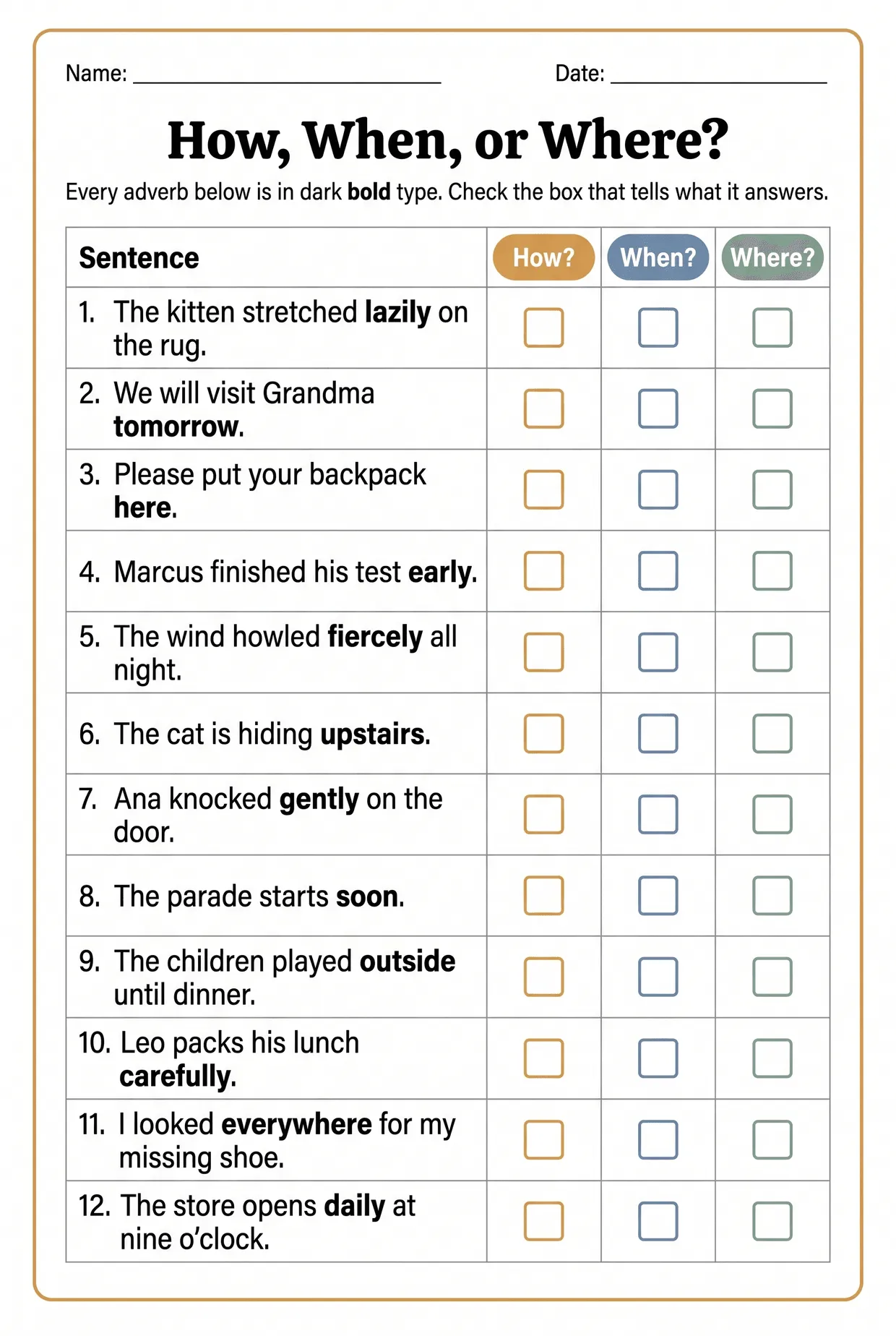
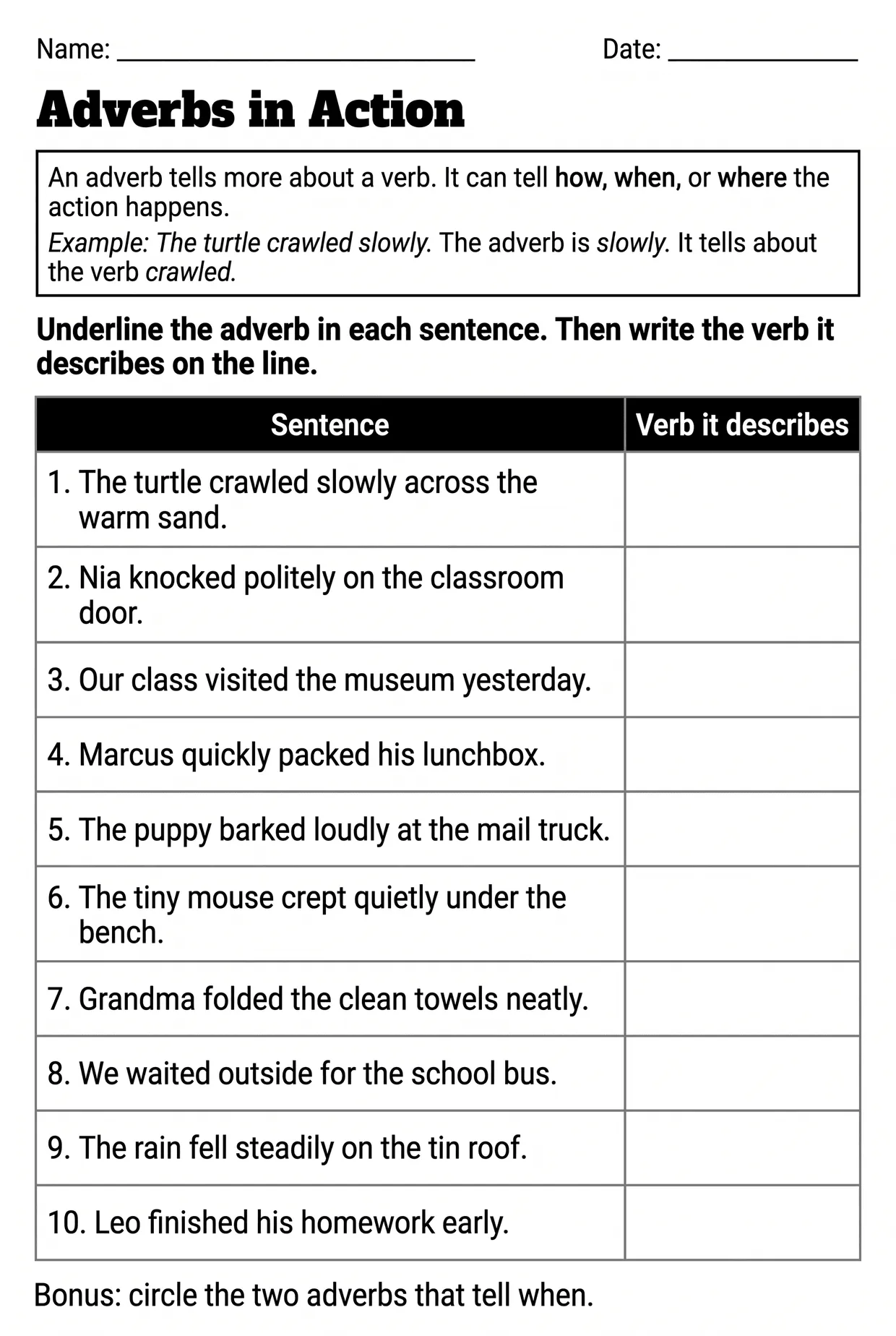
Underlining the adverb and then naming the verb it describes shows a child what an adverb is for, not just what it looks like. The how, when or where page marks each adverb already, so the only question is what kind of detail it adds, and the adverb detective story hides them inside a connected passage instead of single sentences.

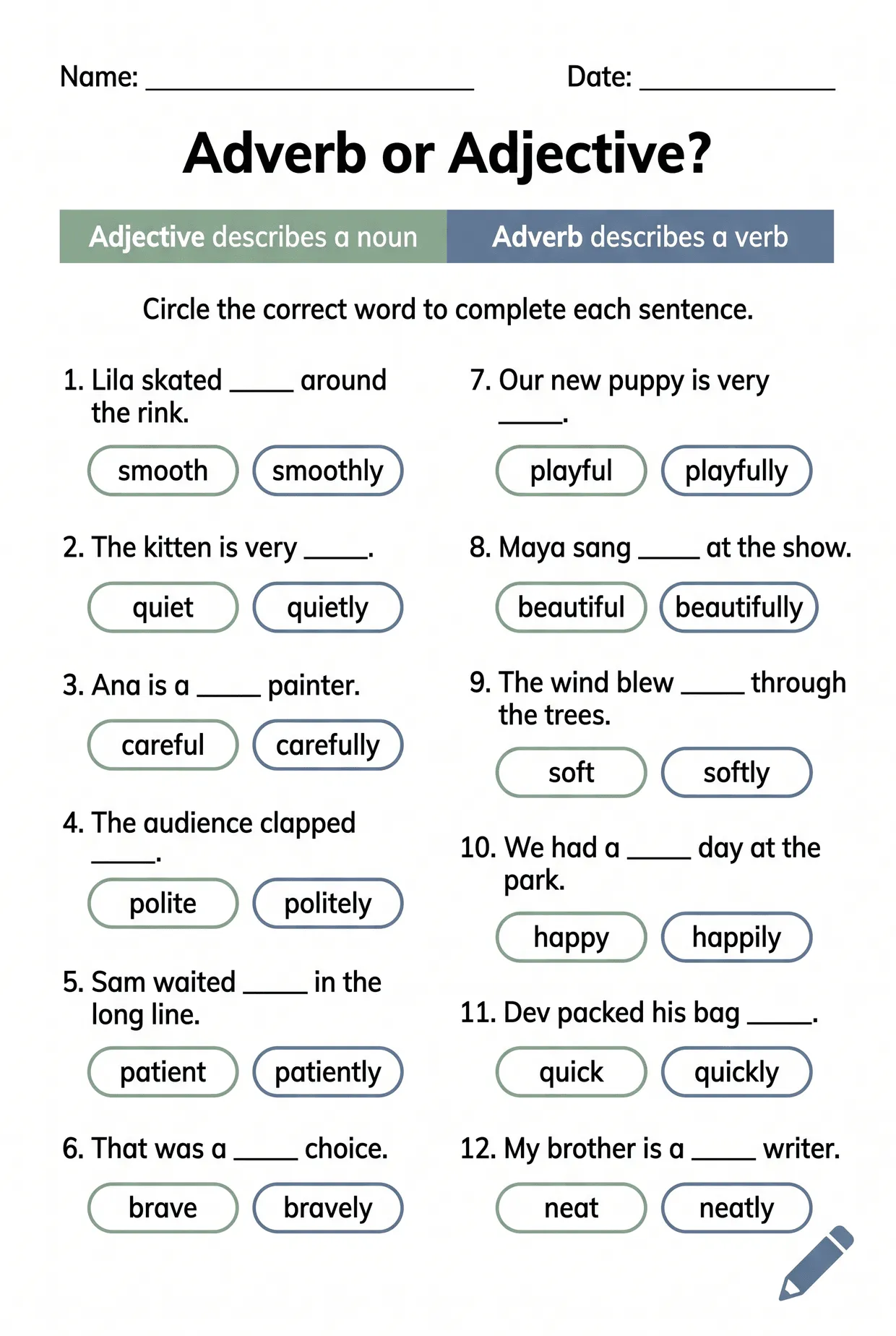
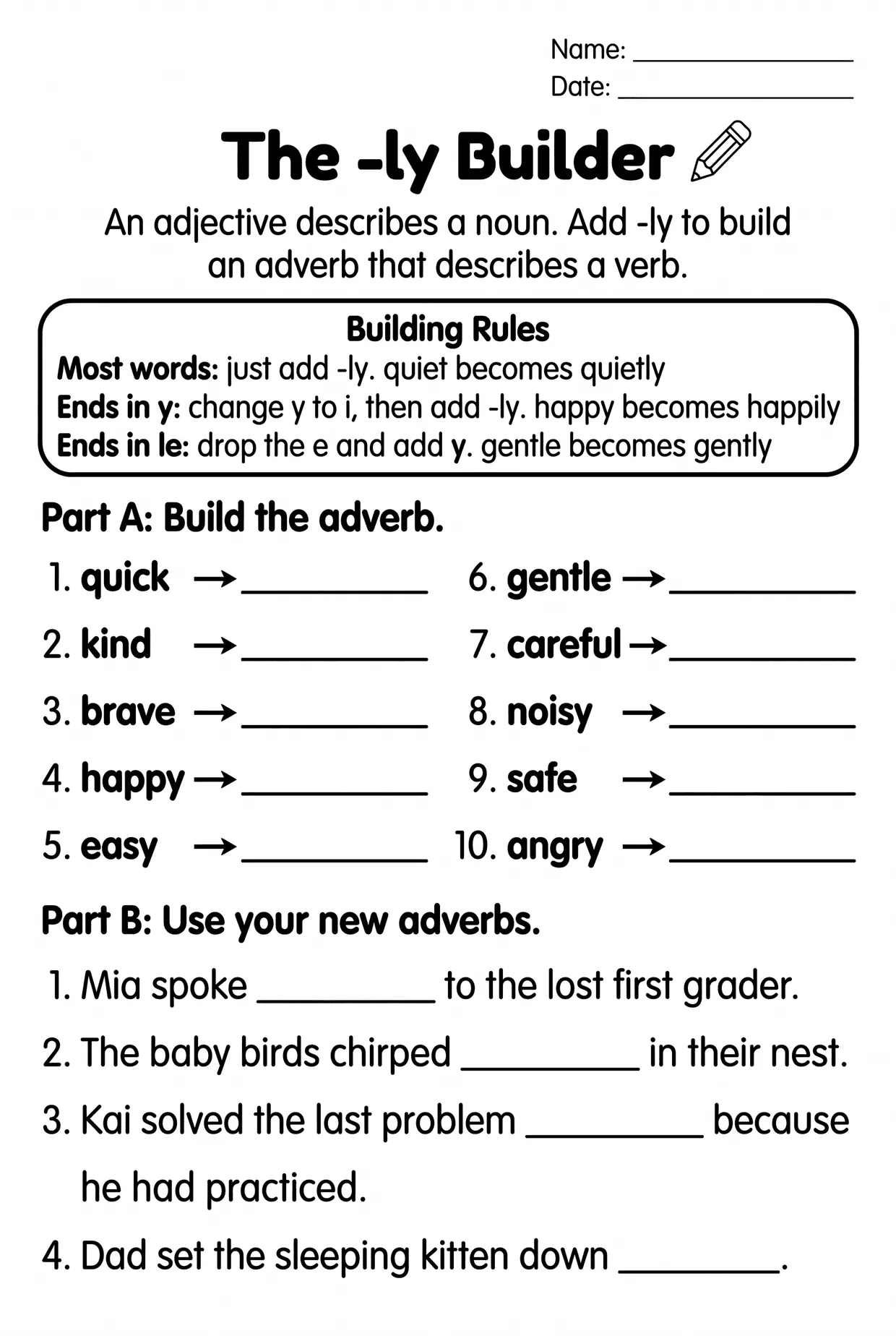
A spelling page turns adjectives into adverbs by adding -ly, with the changes in happy to happily and gentle to gently. The adverb or adjective page then sets the two forms against each other, so a child decides whether smooth or smoothly belongs by asking whether the word describes a noun or a verb.

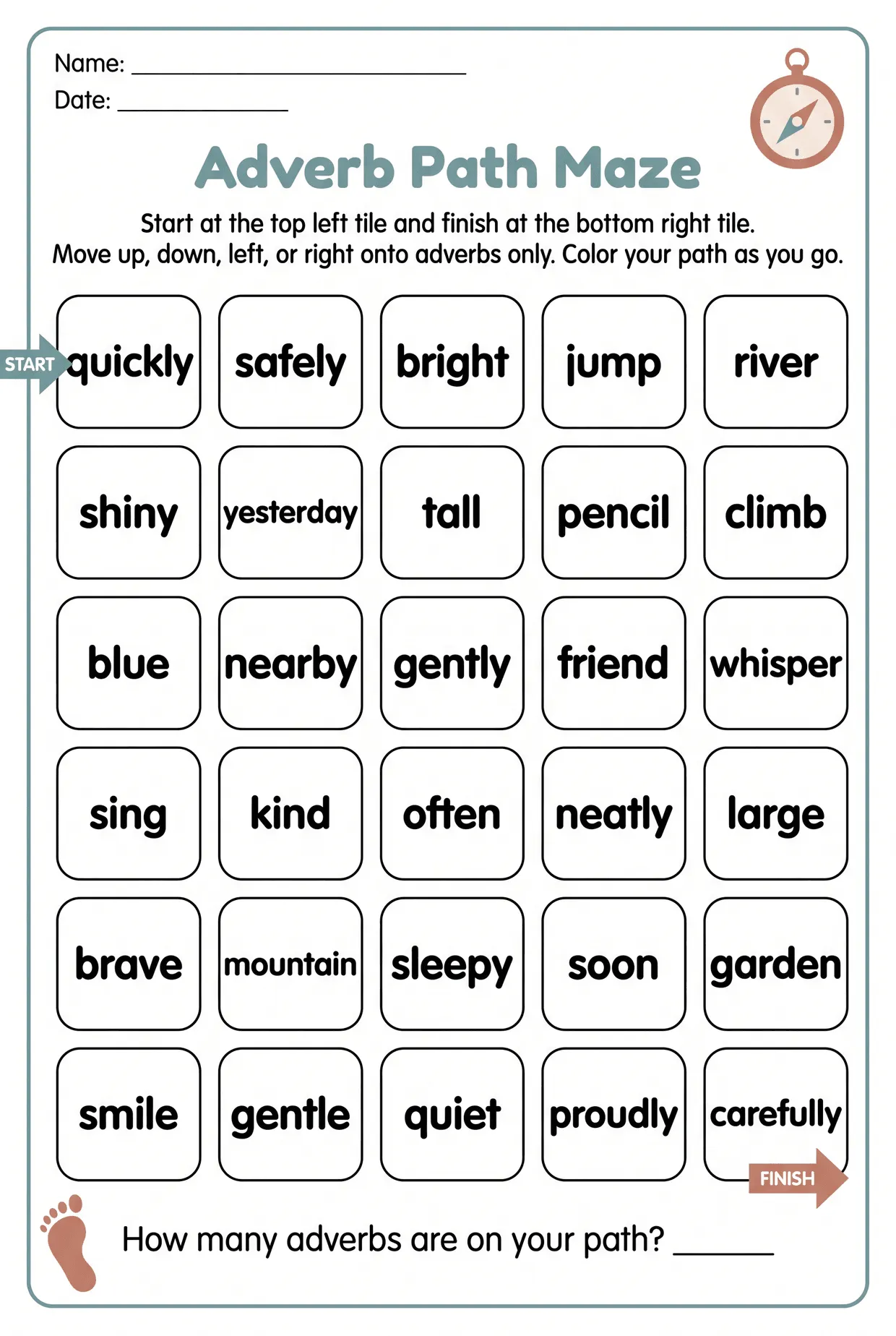
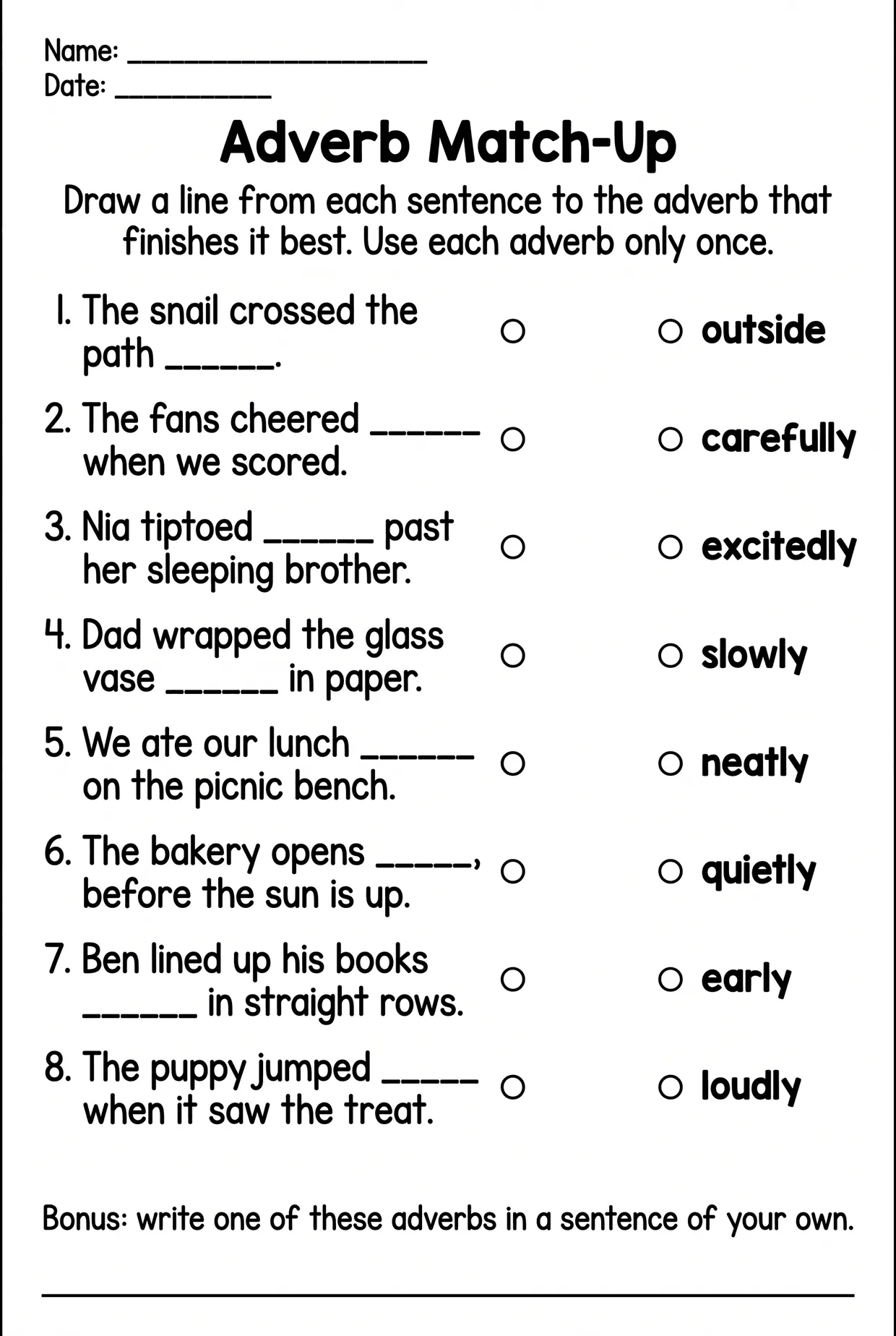
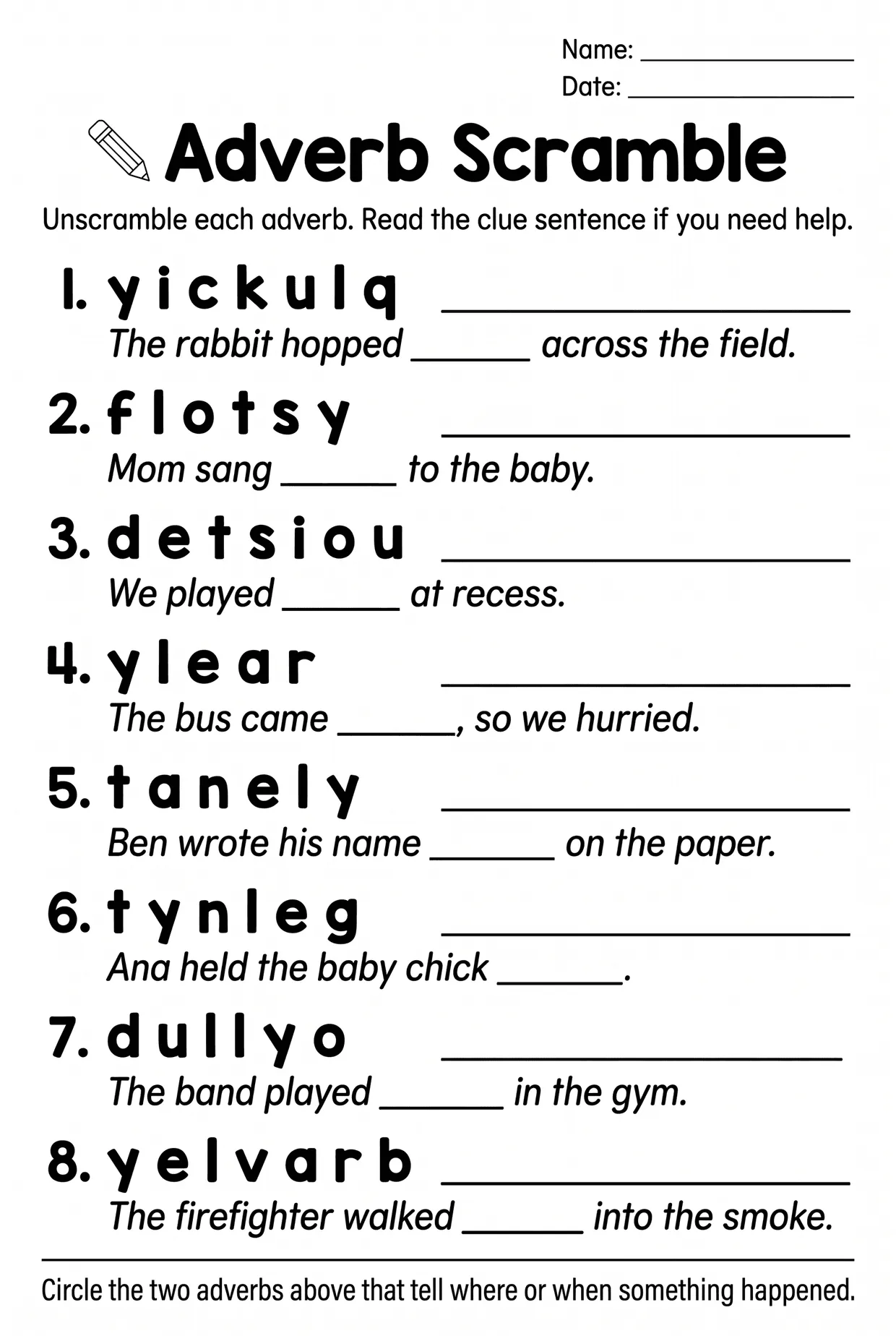
Matching, a maze and a word scramble keep the same ideas light. The scramble mixes in adverbs of time and place, a useful jolt for children who have come to expect -ly on everything.

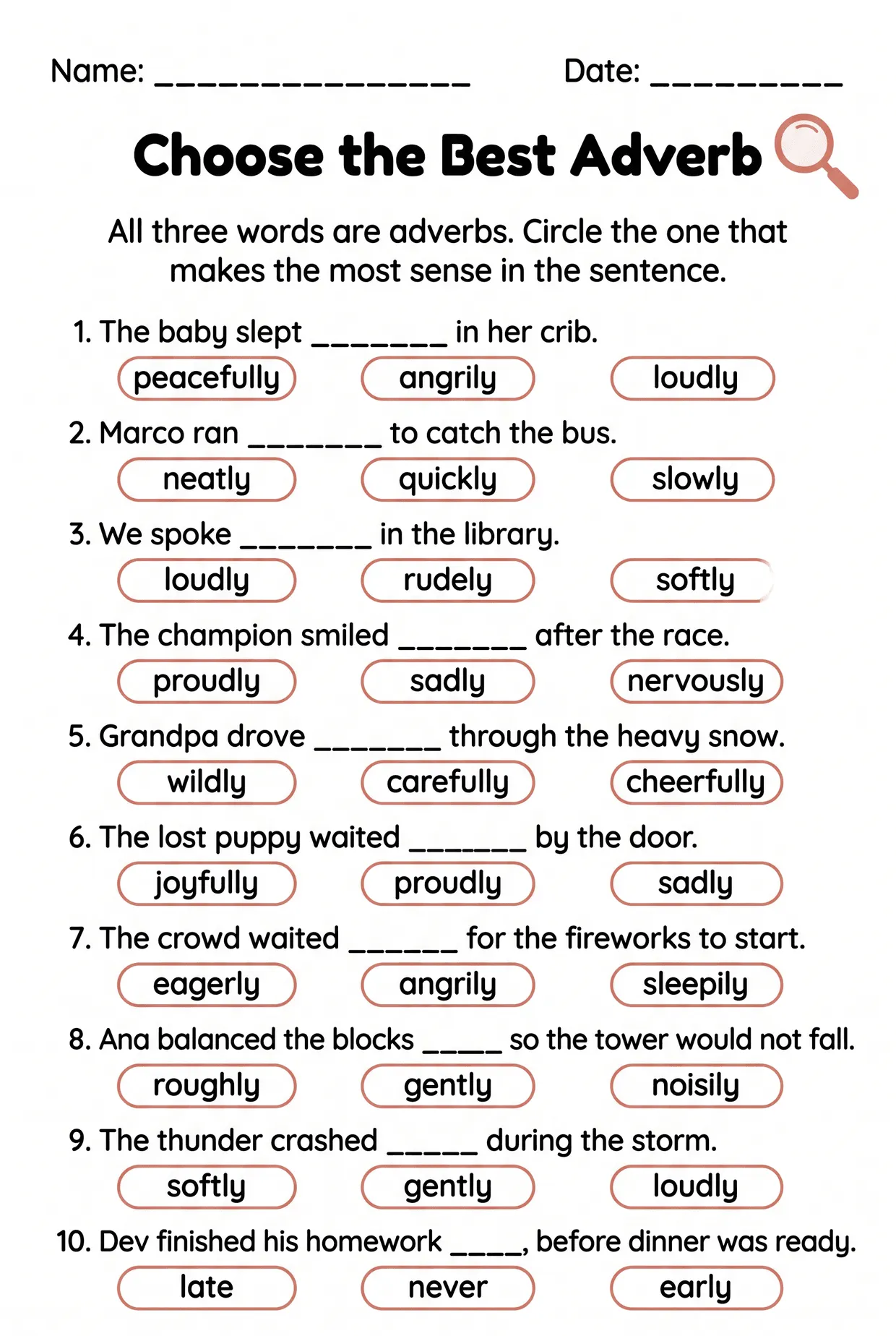
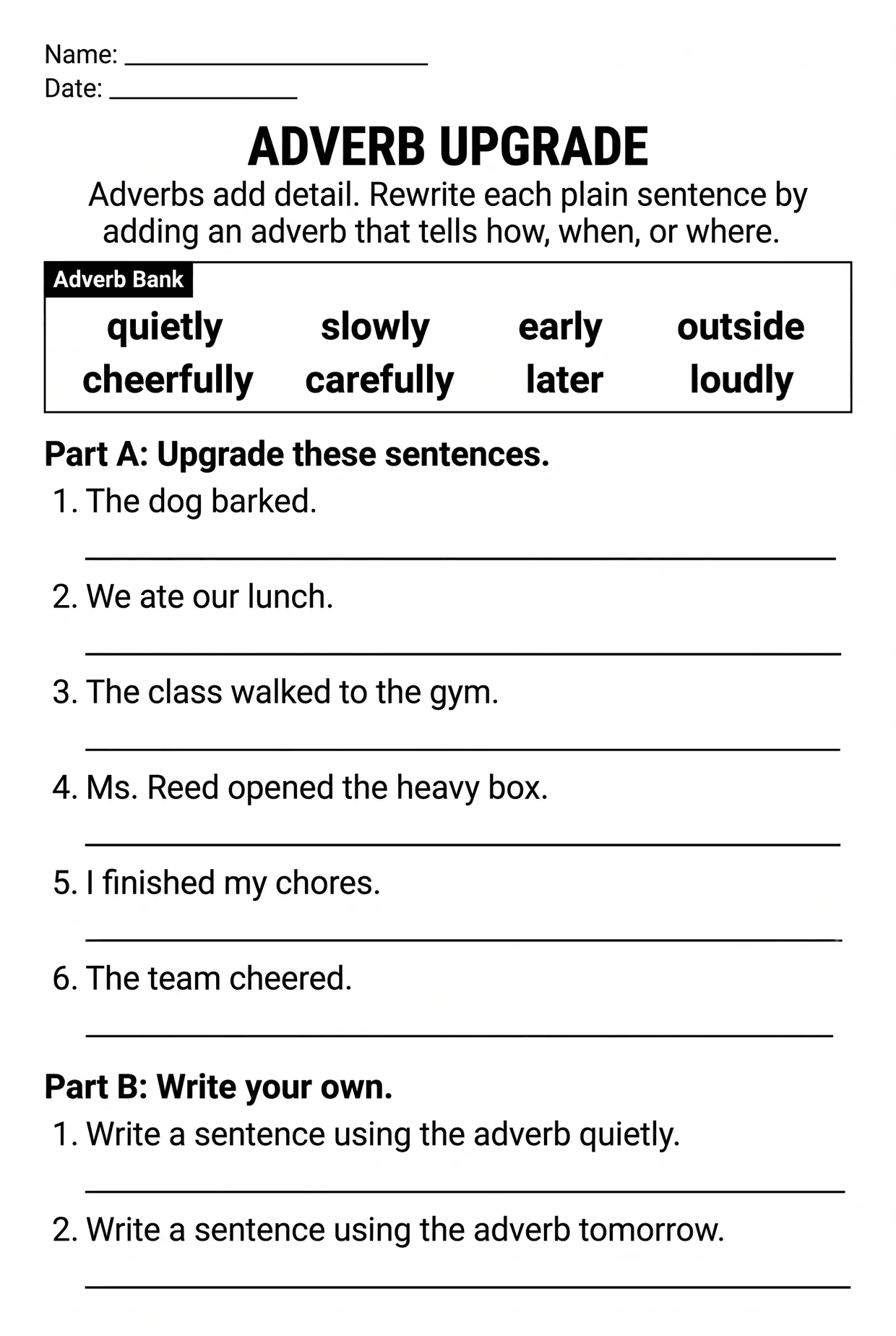
Every option on the choose the best adverb page is a real adverb, so the ending gives nothing away and the meaning of the sentence has to decide. Children also rewrite plain sentences with an adverb from a bank and write sentences of their own, which is where the word choice starts to show up in their writing.

10 free worksheets 3rd grade Newest added September 2026
Free sets on this skill 10 Free 3rd Grade Adverbs Worksheets 10
Format
More 3rd grade skills 3rd grade multiplication worksheets 183rd grade division worksheets 153rd grade conjunctions worksheets 103rd grade reading comprehension worksheets 10

Questions about 3rd grade adverbs worksheets

What do third graders need to know about adverbs?

They should be able to explain that an adverb tells more about a verb, often how, when or where it happens, and use adverbs in their own sentences (L.3.1a). The set also covers the difference between an adverb and an adjective, which is where most mistakes happen.

Do all adverbs end in -ly?

No. Many adverbs that tell how do, like quickly and softly, but words like soon, later, here and outside are adverbs too, telling when and where. Children who rely on the ending miss them, which is why several sheets mix in adverbs of time and place.

My child writes quick when the sentence needs quickly. What helps?

Ask what the word is describing. If it describes a thing, like a quick rabbit, it is an adjective. If it describes an action, like ran quickly, it needs the adverb. The adverb or adjective page pairs the two forms in every sentence, so the choice becomes a habit.

How do you spell adverbs made from words ending in y?

Change the y to i before adding -ly, so happy becomes happily and easy becomes easily. Words ending in -le usually drop the e and add y, so gentle becomes gently. The adding -ly page practices both rules before asking children to use the new words in sentences.

Which adverbs sheet should we save for last?

Choose the best adverb. Every option is a real adverb, so a child cannot lean on the -ly ending and has to think about what the sentence means. It is a good test of whether the idea has really clicked.