Free 3rd Grade Division Worksheets

Dividing means sharing a total into equal groups, or finding how many equal groups a total makes: 24 cookies shared by 6 children, or 24 cookies packed 6 to a bag. From that picture, these division worksheets for 3rd grade work toward quick recall of division facts within 100 (3.OA.7).

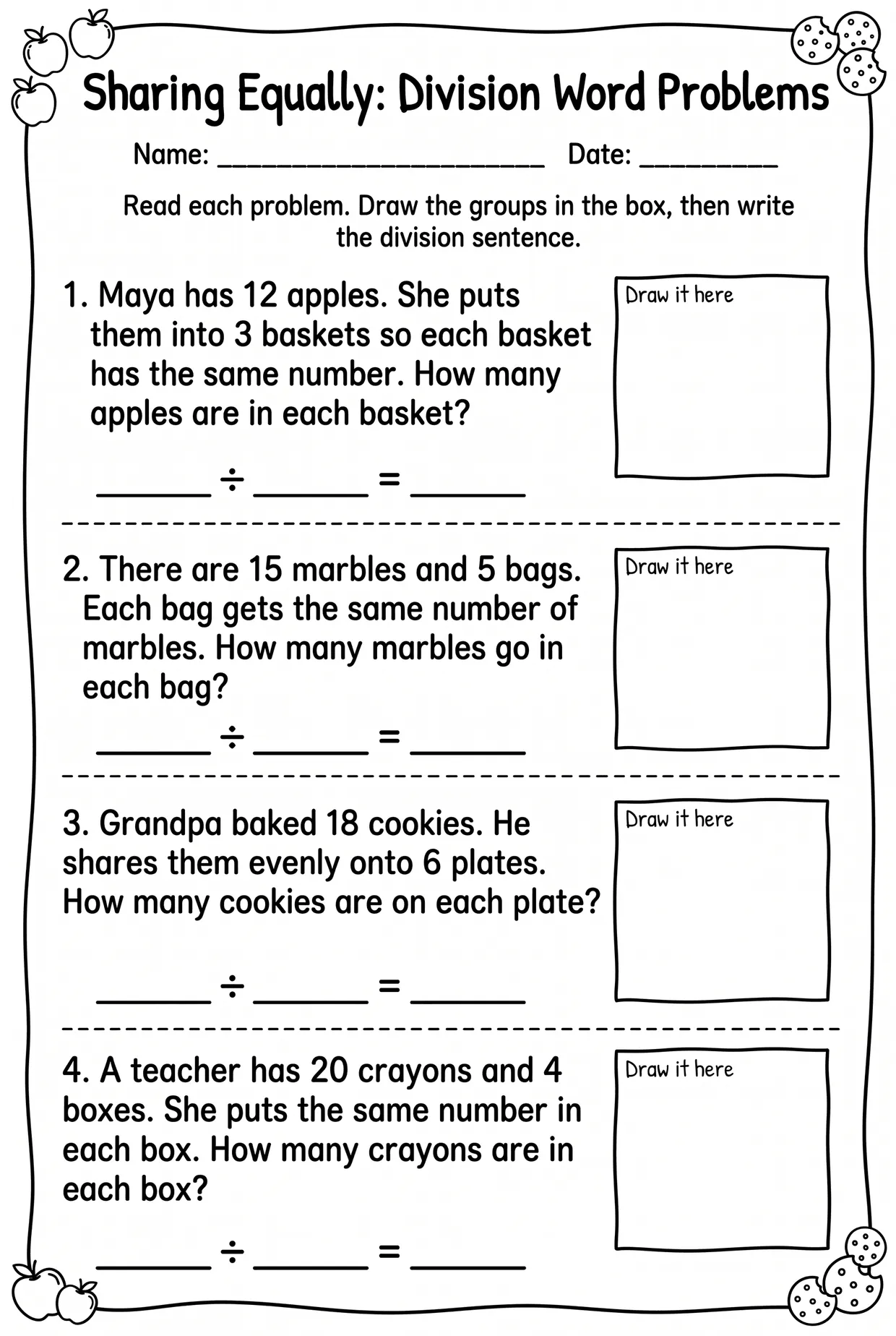
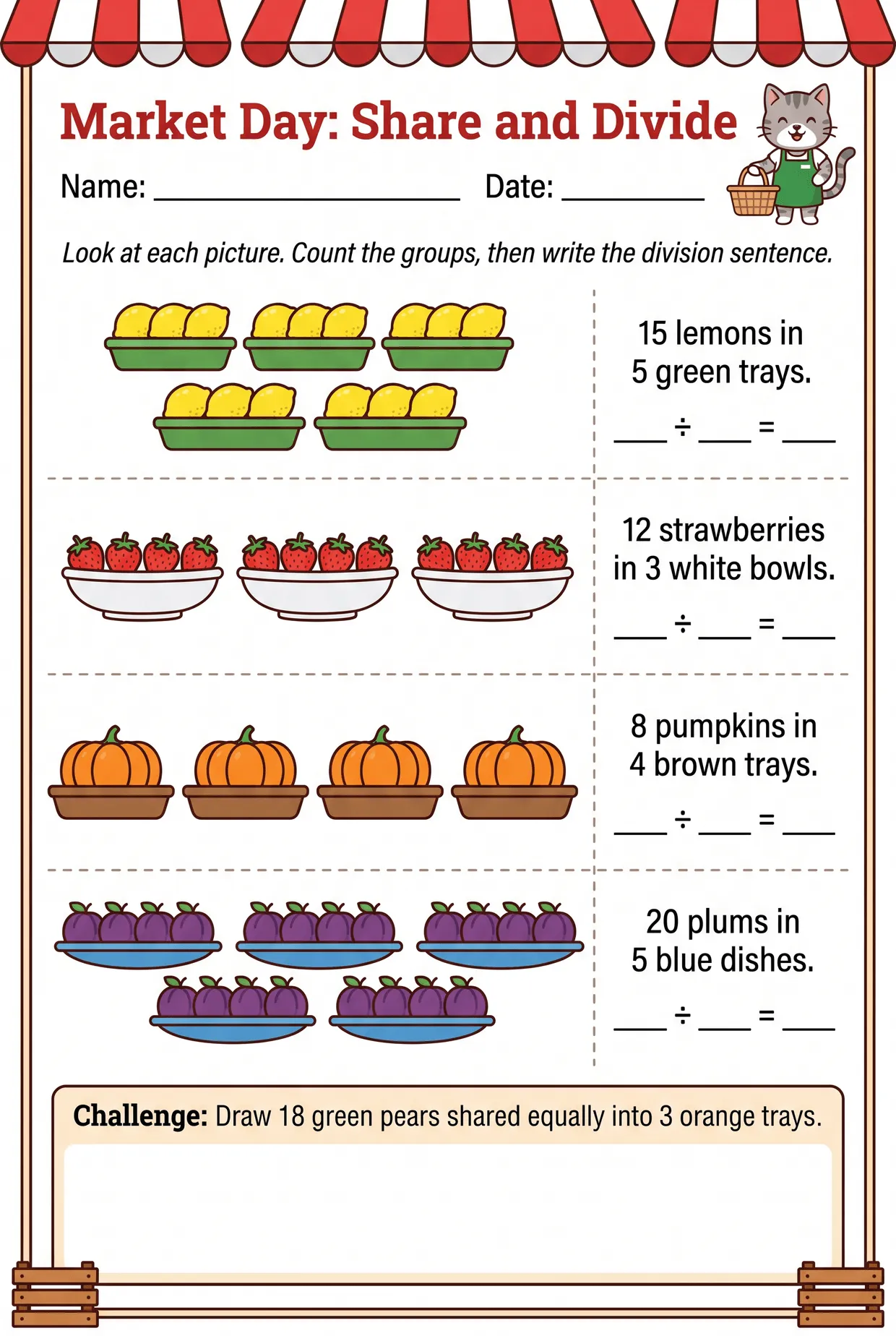
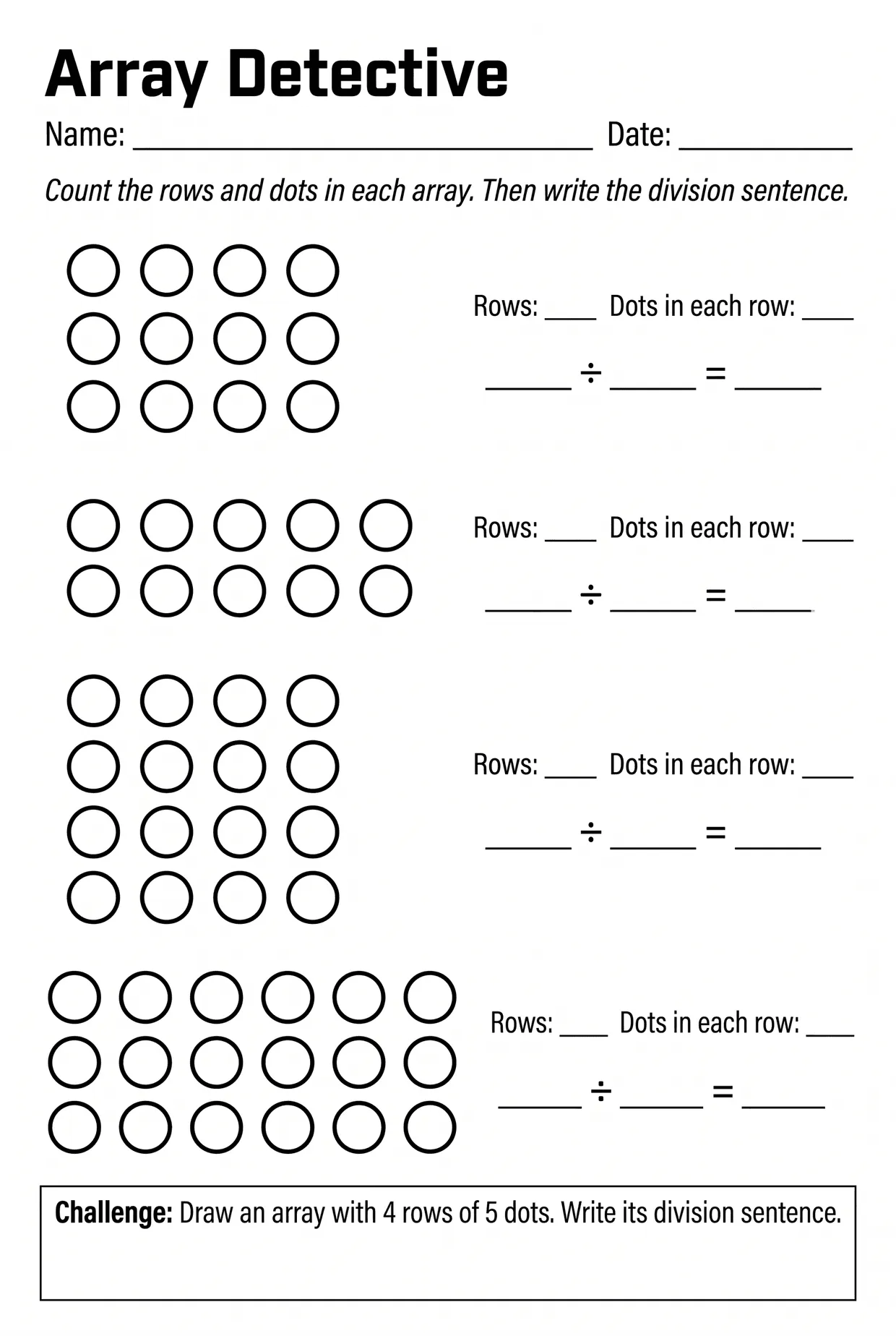
Drawings and arrays carry the early pages. Market day equal groups and array detective show a total split into equal groups or rows and ask for the division sentence that matches, and the division word problems page leaves room to draw the groups for each sharing story.

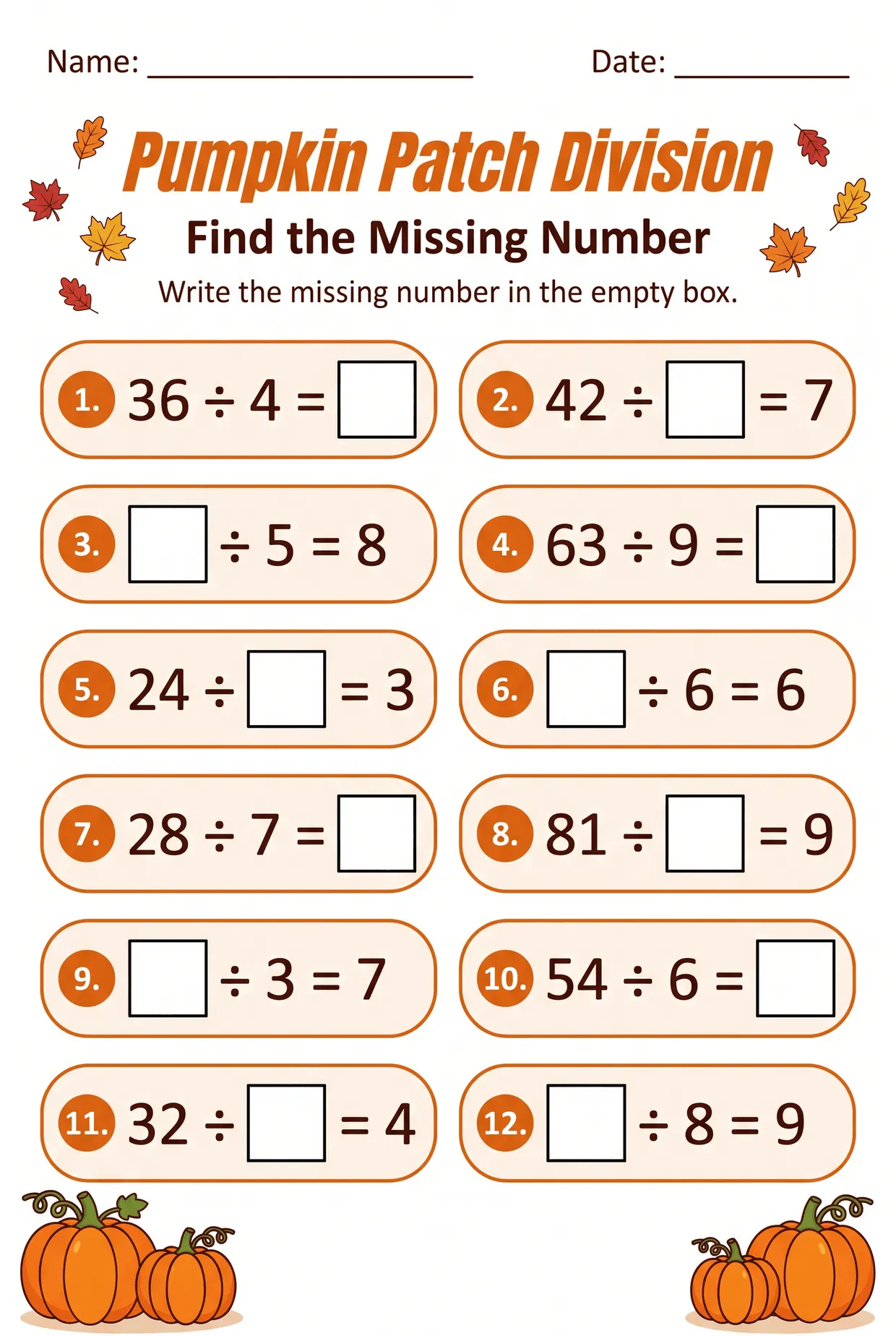
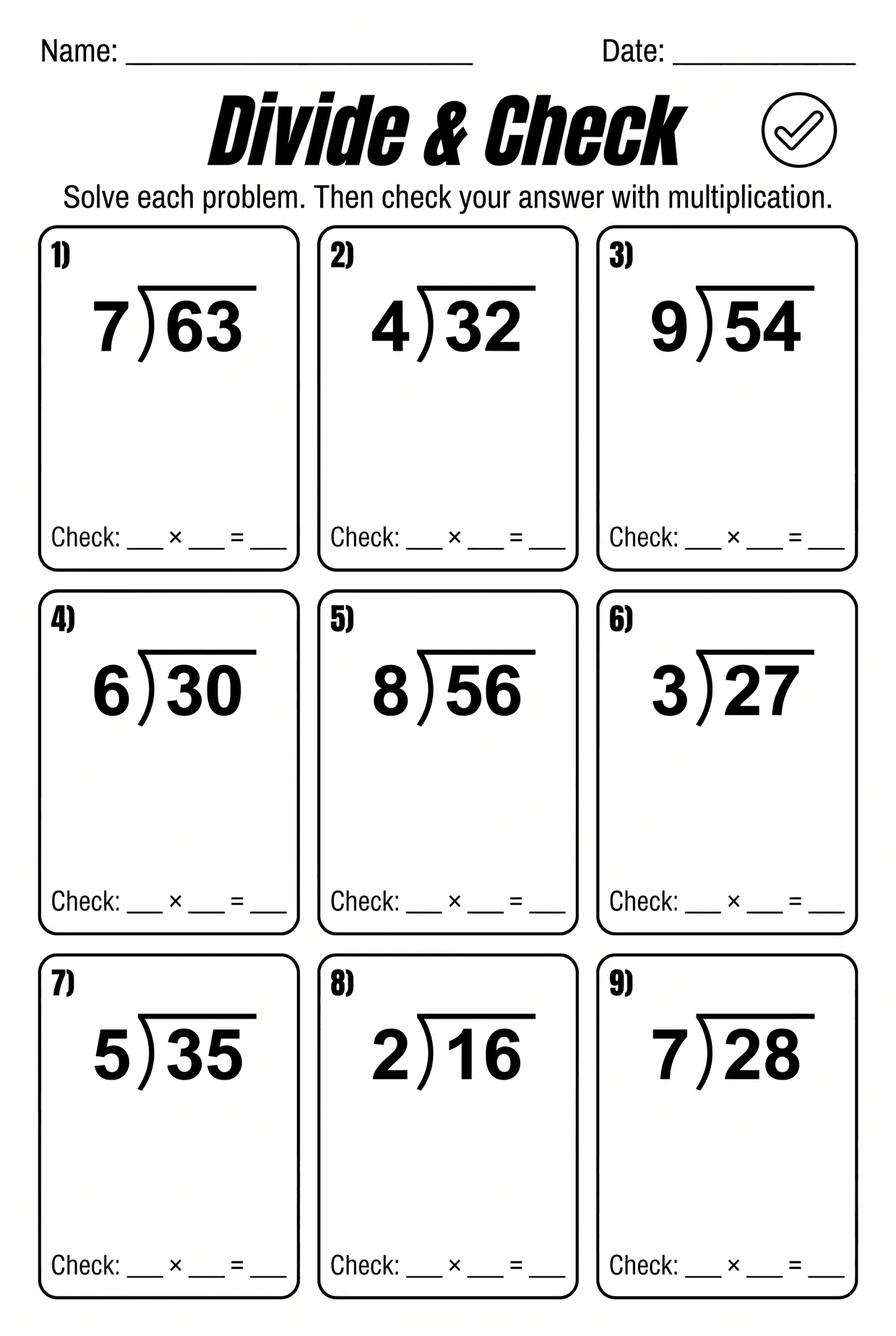
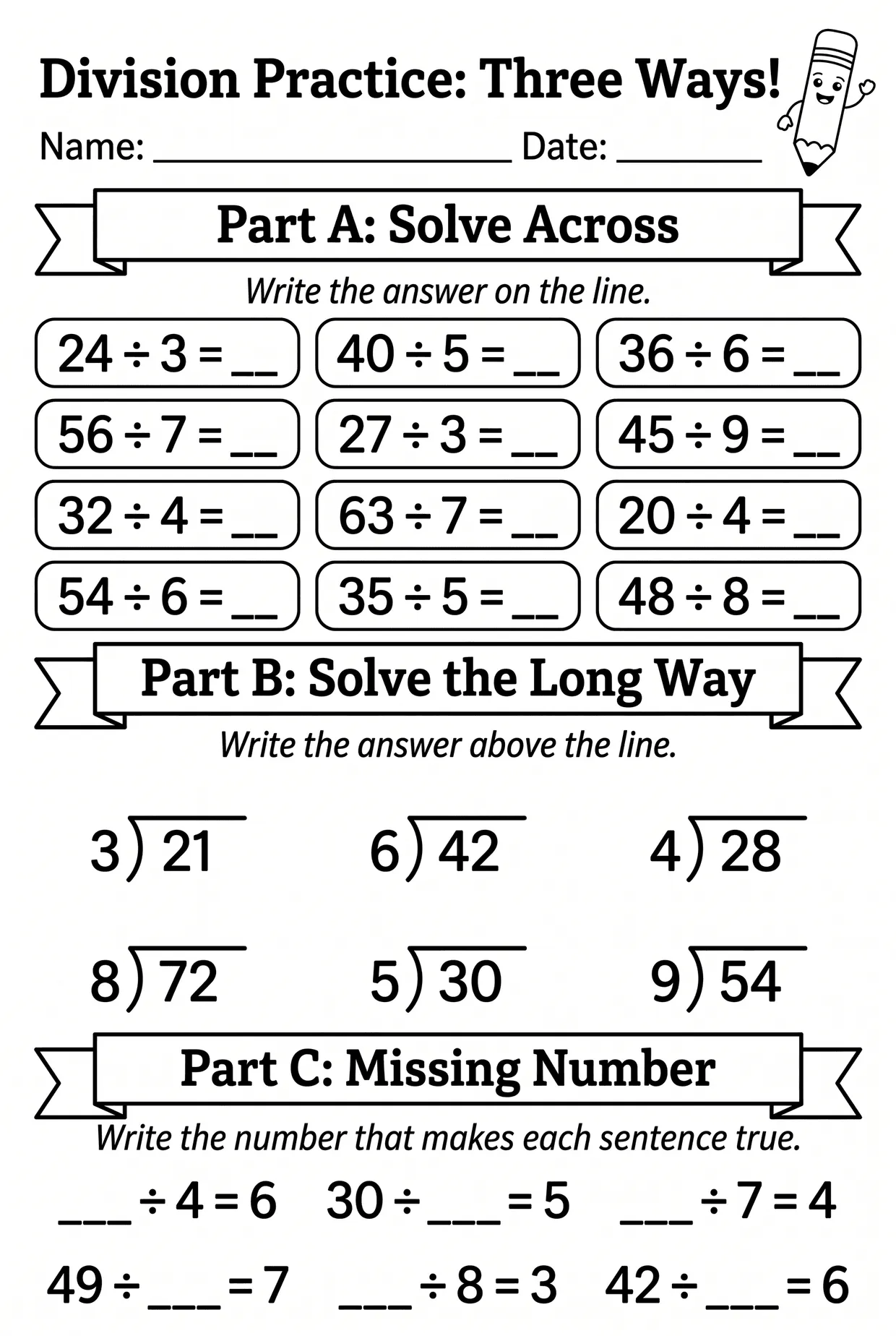
Because every division fact is a multiplication fact read backward, the middle pages keep both in view. Divide and check asks for a multiplication sentence after each problem, the pumpkin patch page hides the quotient, divisor or dividend so a child has to think in both directions, and practice three ways mixes the long division bracket with missing number sentences.

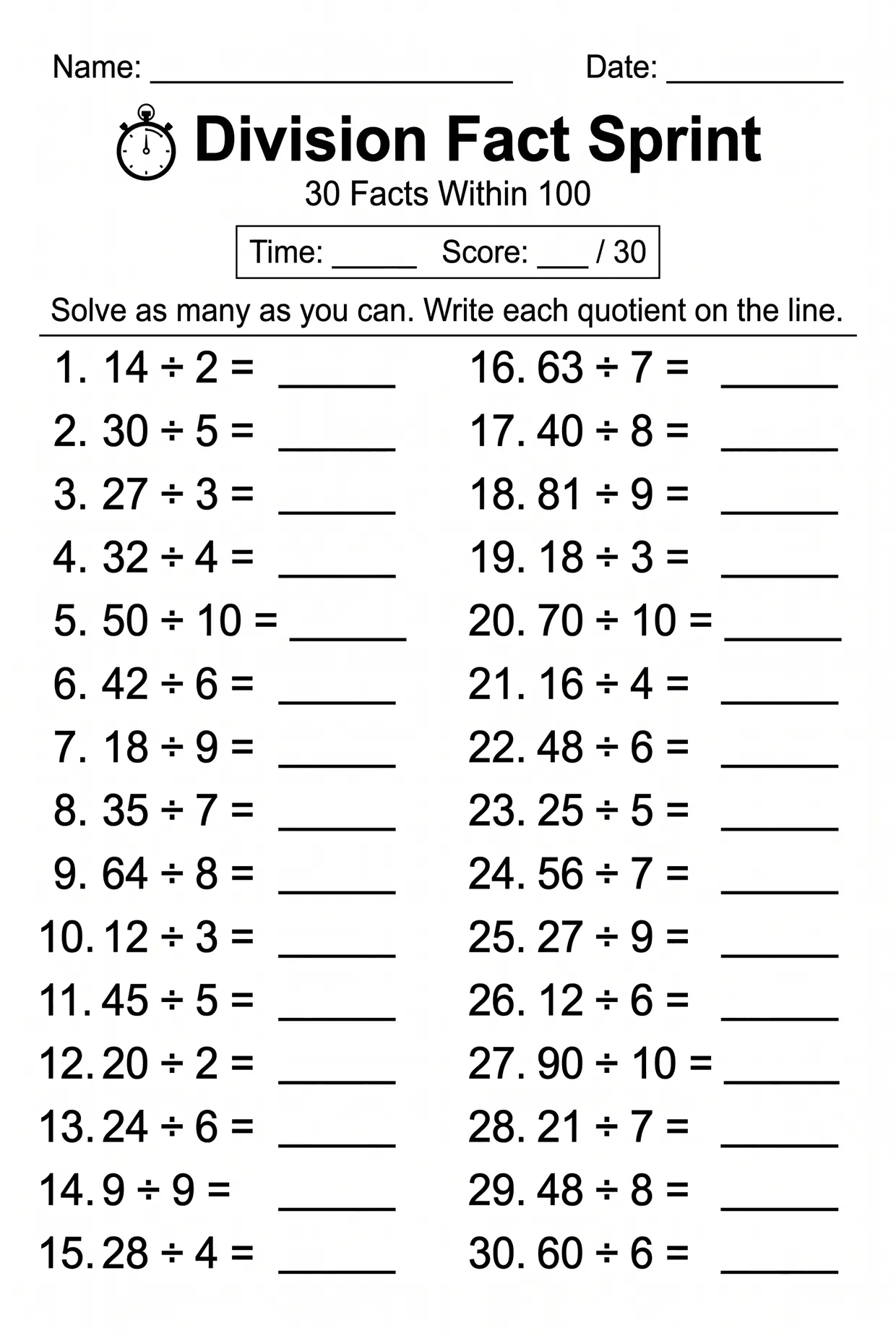
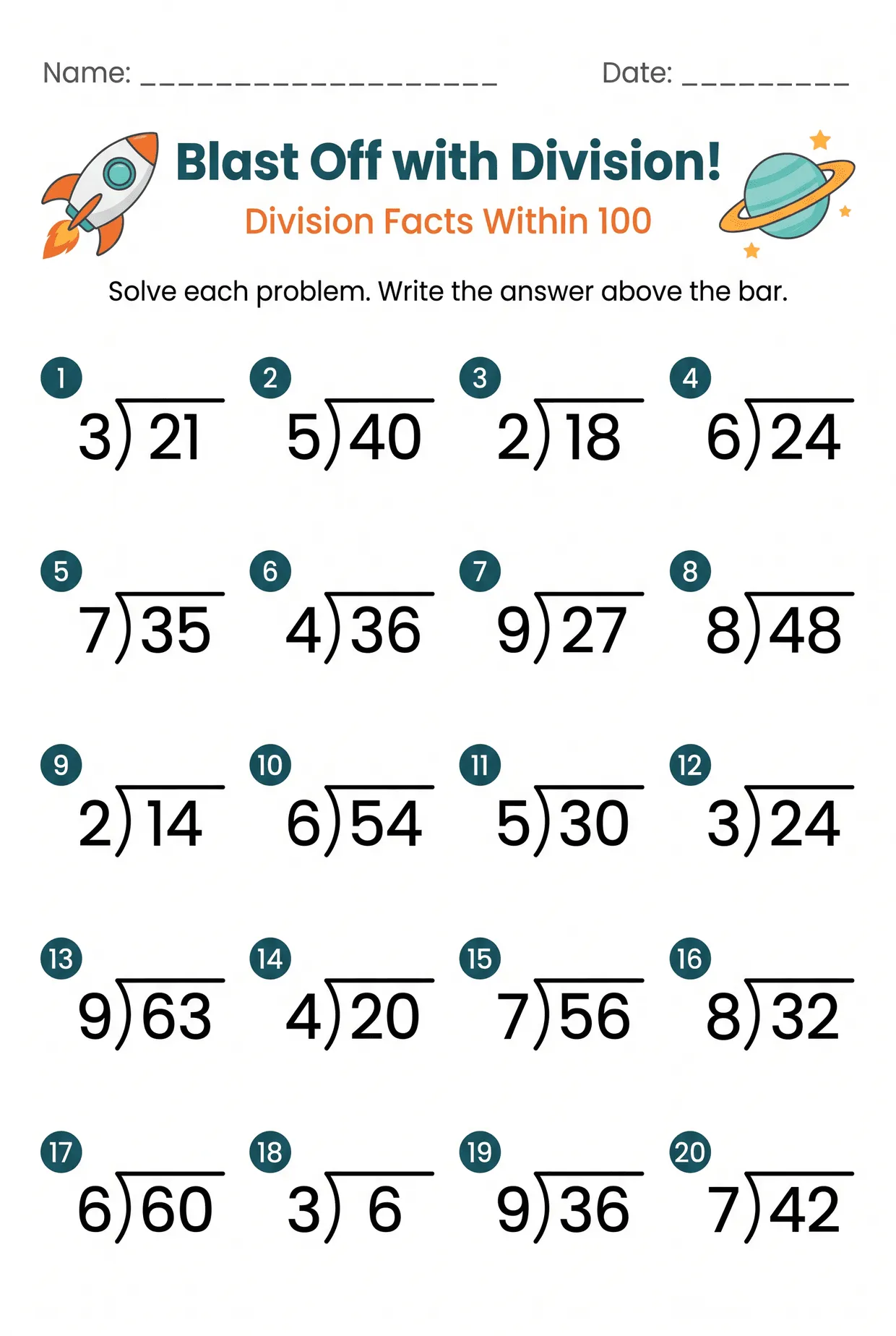
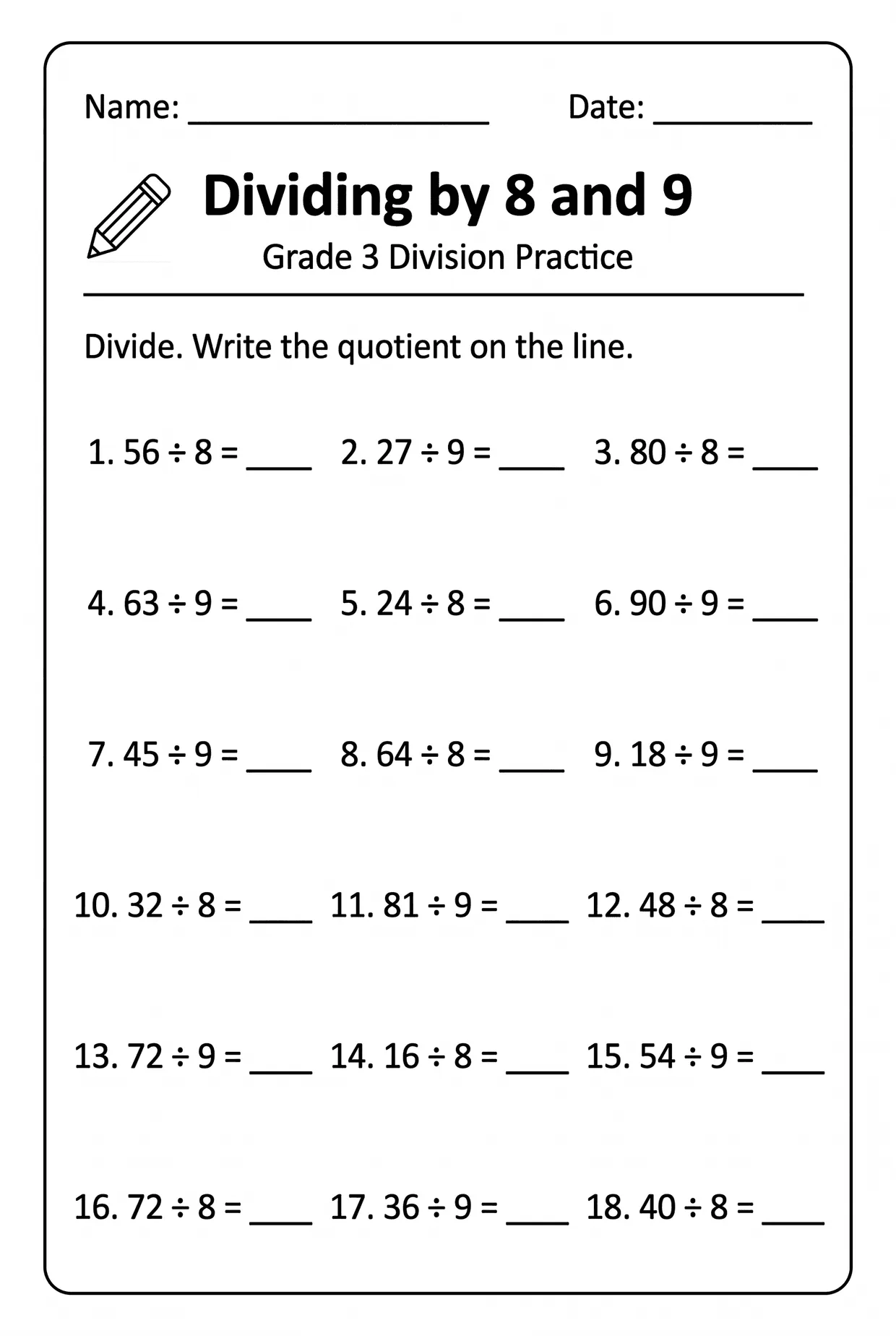
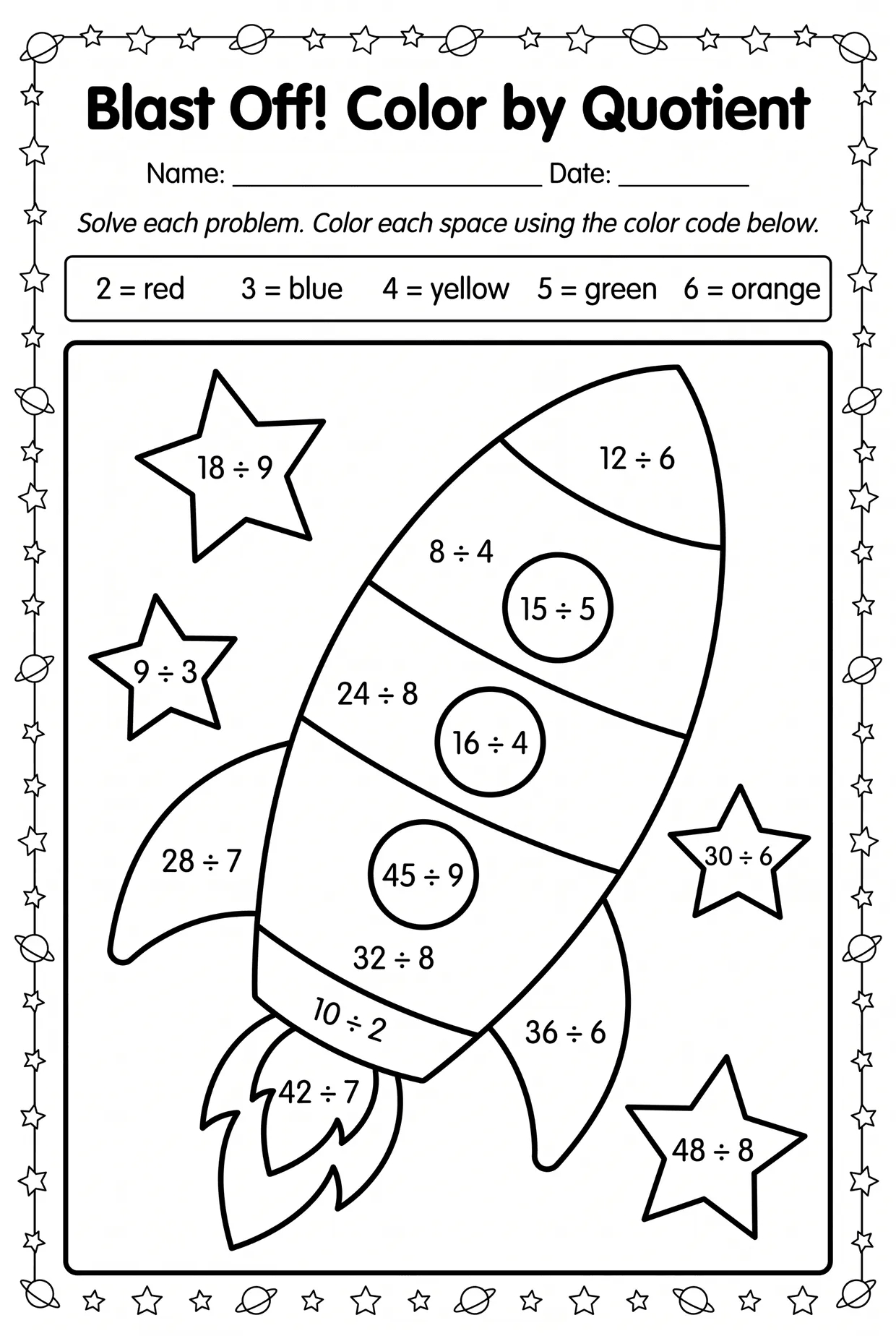
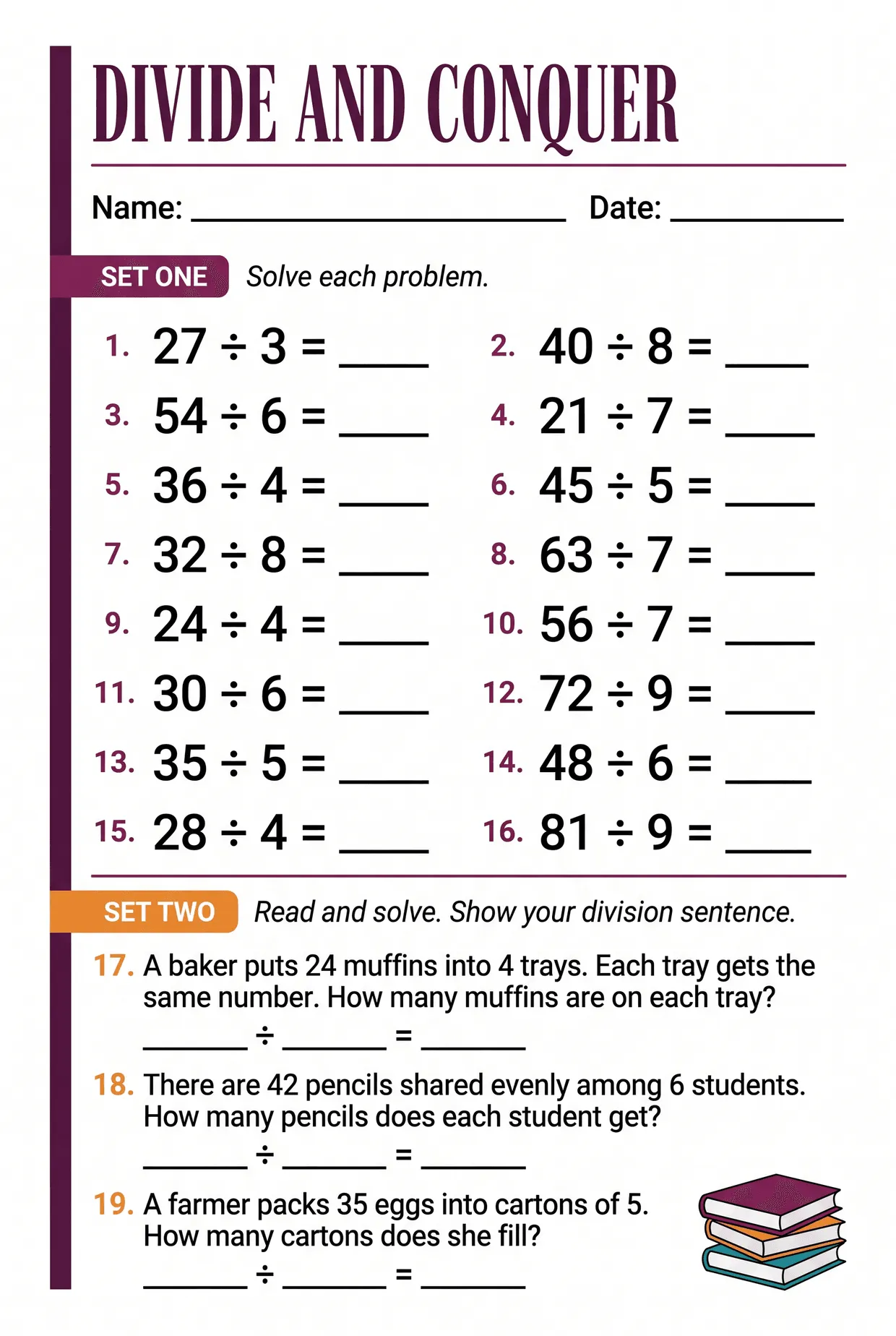
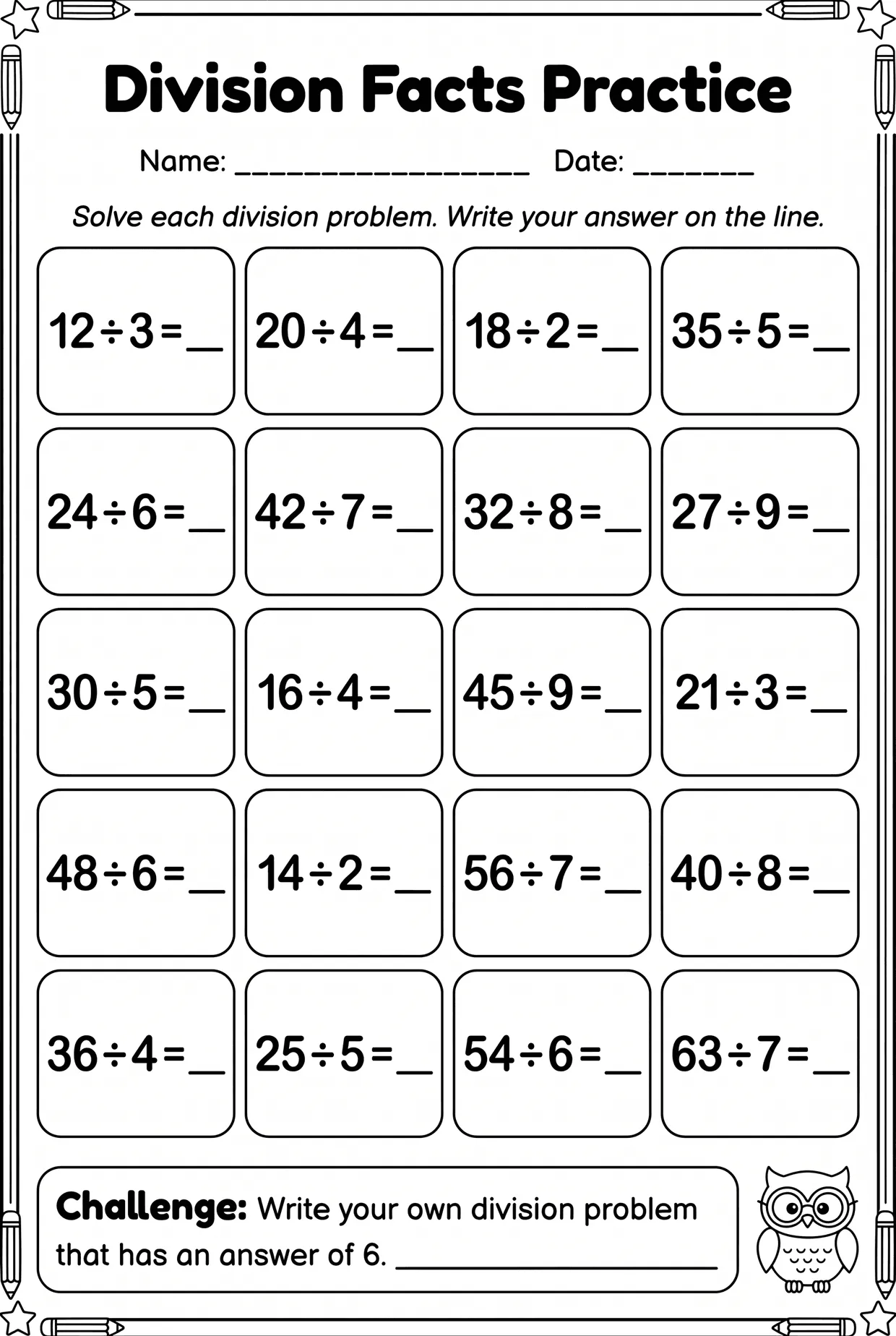
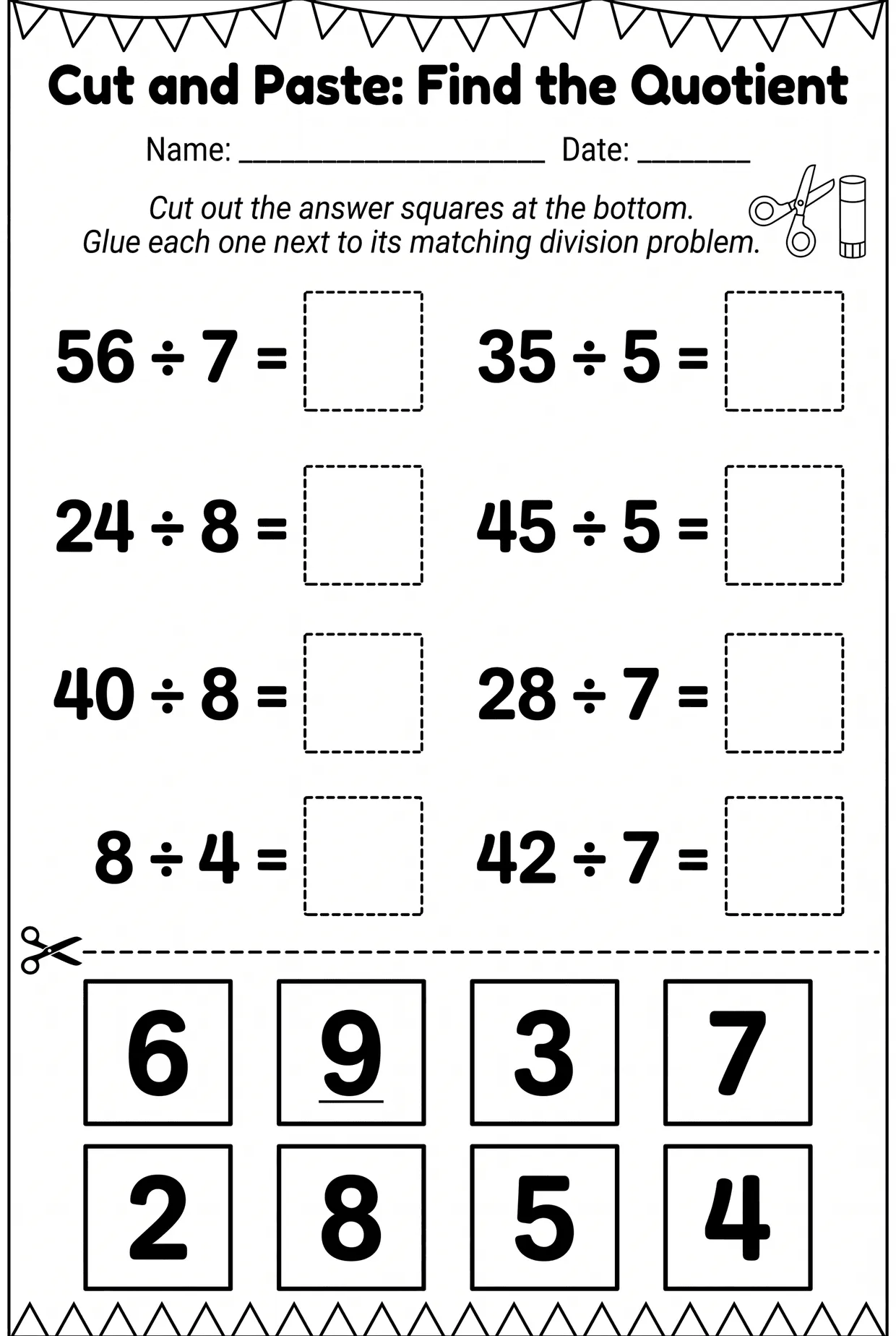
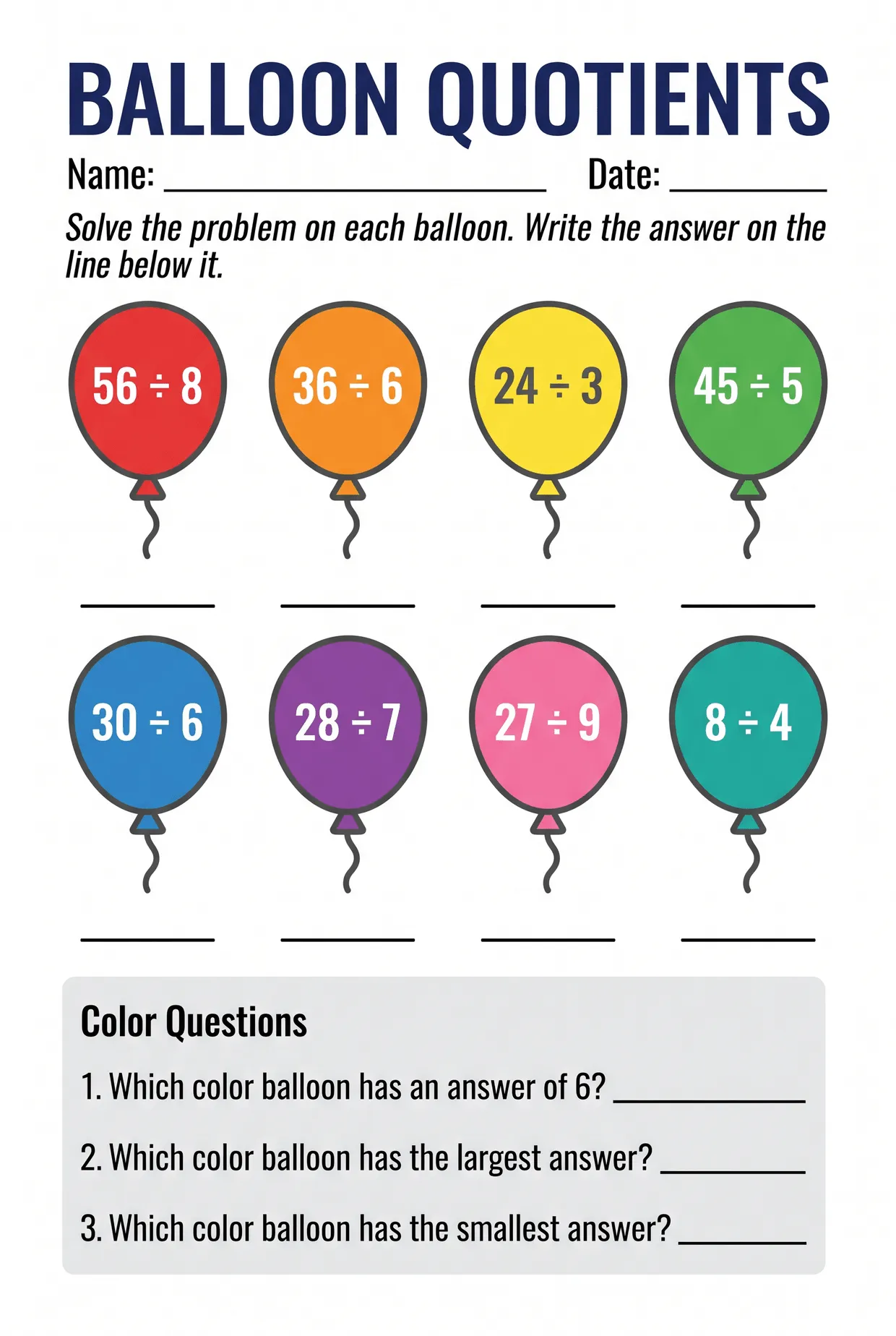
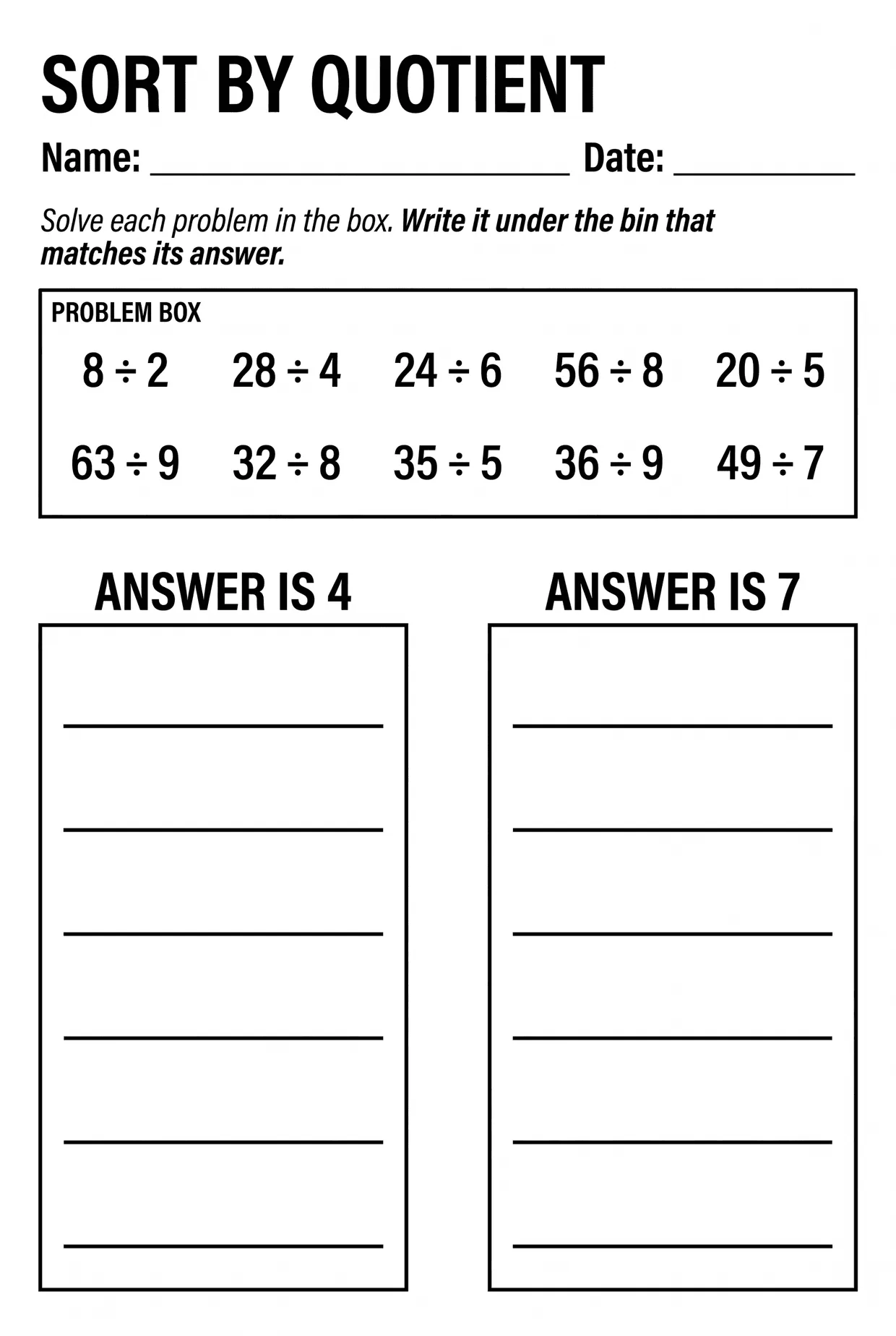
With that link in place, speed becomes the aim. The facts practice and blast off pages cover divisors 2 through 9, dividing by 8 and 9 targets the two hardest tables, and the fact sprint adds a time and a score. Rocket color by quotient, cut and paste matching, balloon quotients and sort by quotient practice the same facts in a way that feels more like a game, and the matching and coloring ones show a wrong answer right away. Divide and conquer rounds things off with a few word problems, a good check that the facts a child has learned still hold up inside a story.

15 free worksheets 3rd grade Newest added October 2026
Free sets on this skill 10 Free 3rd Grade Division Worksheets 10
Format
More 3rd grade skills 3rd grade multiplication worksheets 183rd grade adverbs worksheets 103rd grade conjunctions worksheets 103rd grade reading comprehension worksheets 10

Questions about 3rd grade division worksheets

What division should a third grader know?

By the end of third grade, children are expected to divide within 100 fluently, leaning on the times tables they know from memory (3.OA.7). They also solve sharing and grouping word problems. The pages practice each of those, starting with pictures and ending with timed facts.

Should my child learn multiplication before division?

Mostly, yes, or at least alongside it. Division facts are multiplication facts read backward, so 56 divided by 8 is really asking what times 8 makes 56. A child who knows the 8s table will find dividing by 8 quick, and one who does not will be counting up every time.

Which number goes first in a division problem? My child keeps mixing them up.

Reading order is part of it: in 24 divided by 6 the bigger number comes first, but in the long division bracket the 6 sits outside on the left. Have your child say each problem as a sharing story, 24 cookies shared by 6 children, before solving. The practice three ways page mixes both layouts so a child gets used to reading each one.

Which division facts are hardest?

Dividing by 6, 7, 8 and 9, since those come from the times tables children learn last. The dividing by 8 and 9 page gives those two divisors a page of their own. Practicing them separately, then mixing them back into the fact sprint, works better than meeting them only in mixed sets.

How should a third grader solve a division word problem?

Draw it first. Sketch the total as dots, share them into the number of groups the story names, and count how many land in each. The division word problems page has room for exactly this, and drawing becomes unnecessary once the facts are solid.