

Questions about 3rd grade multiplication worksheets
Which times tables should third graders know by the end of the year?
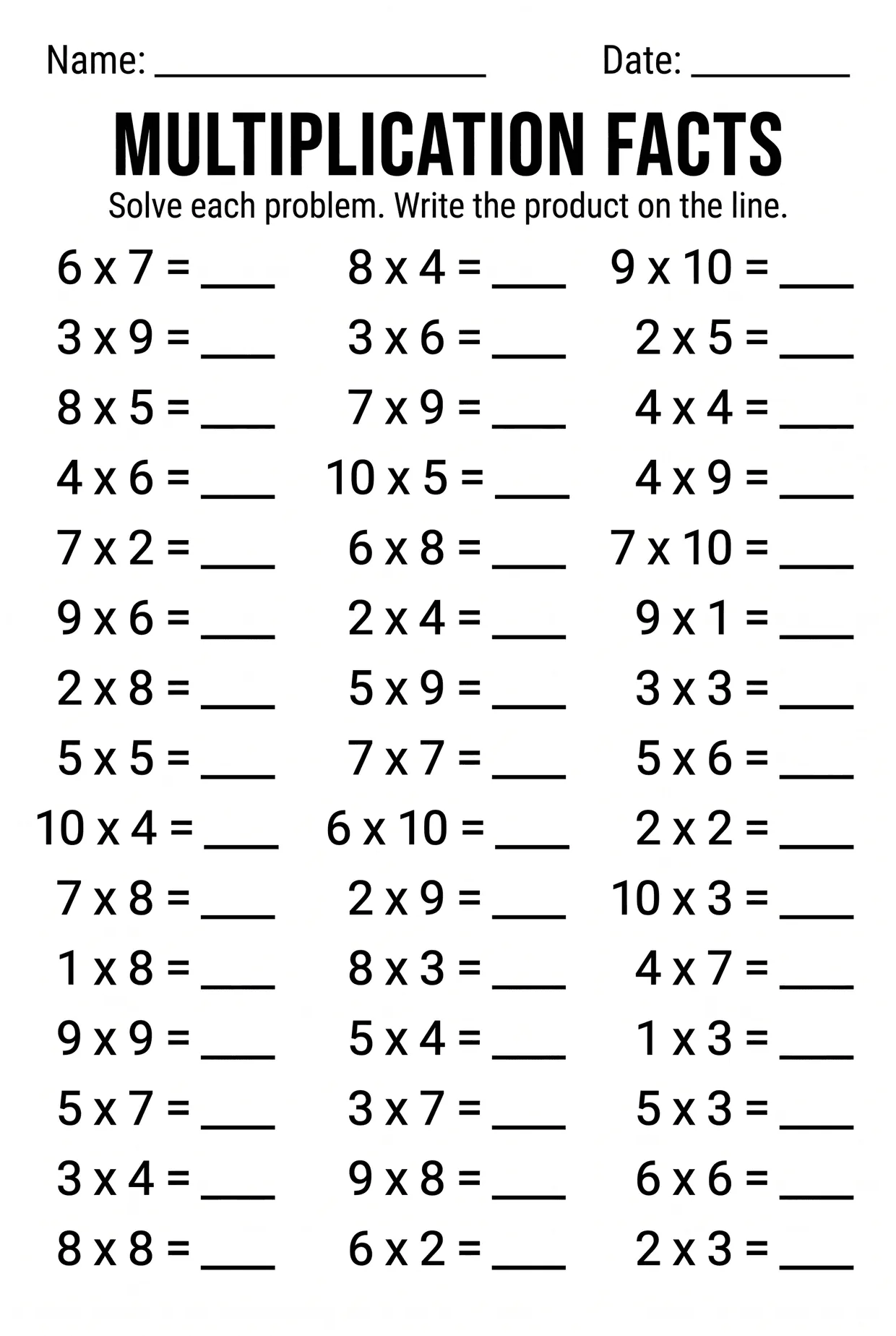
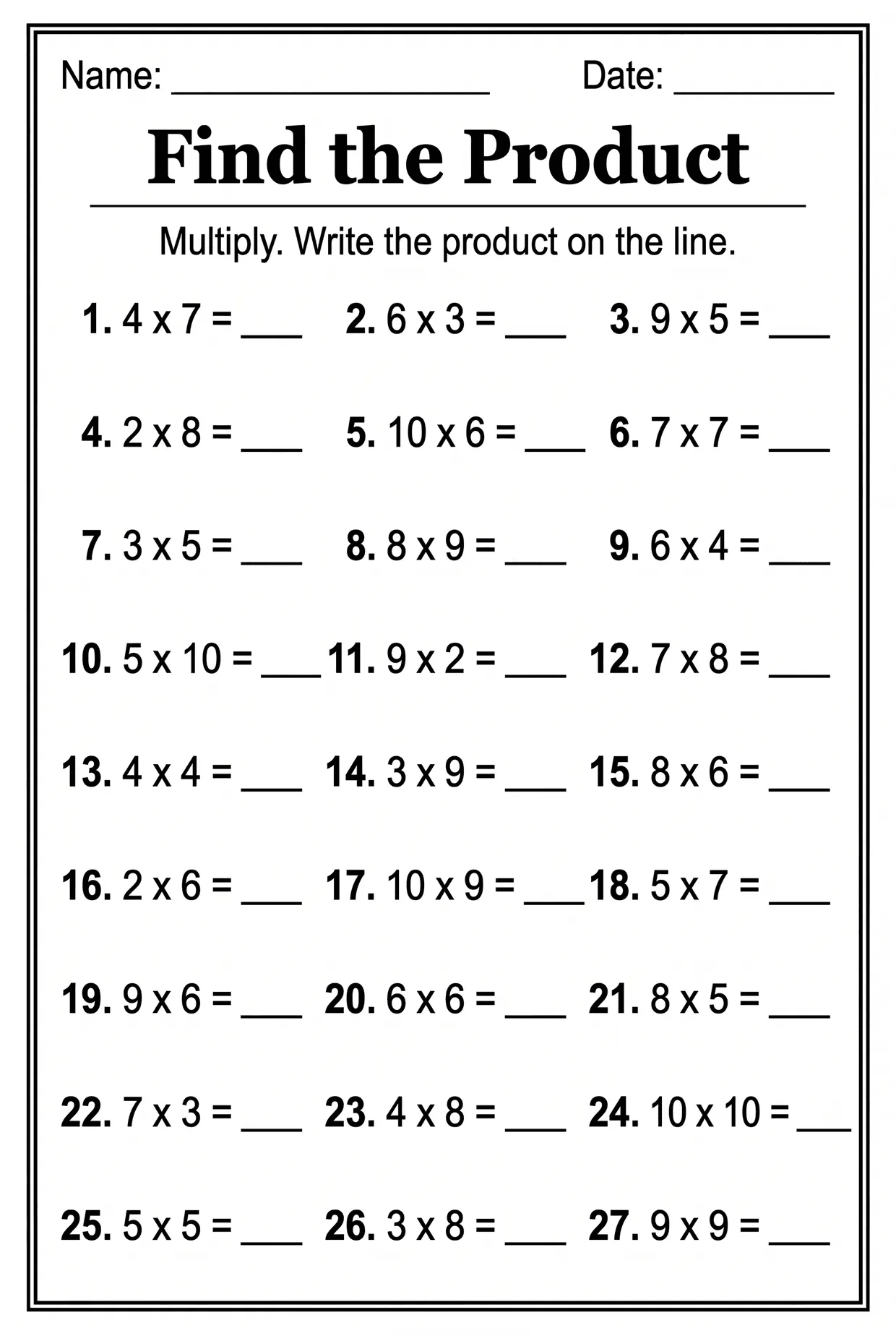
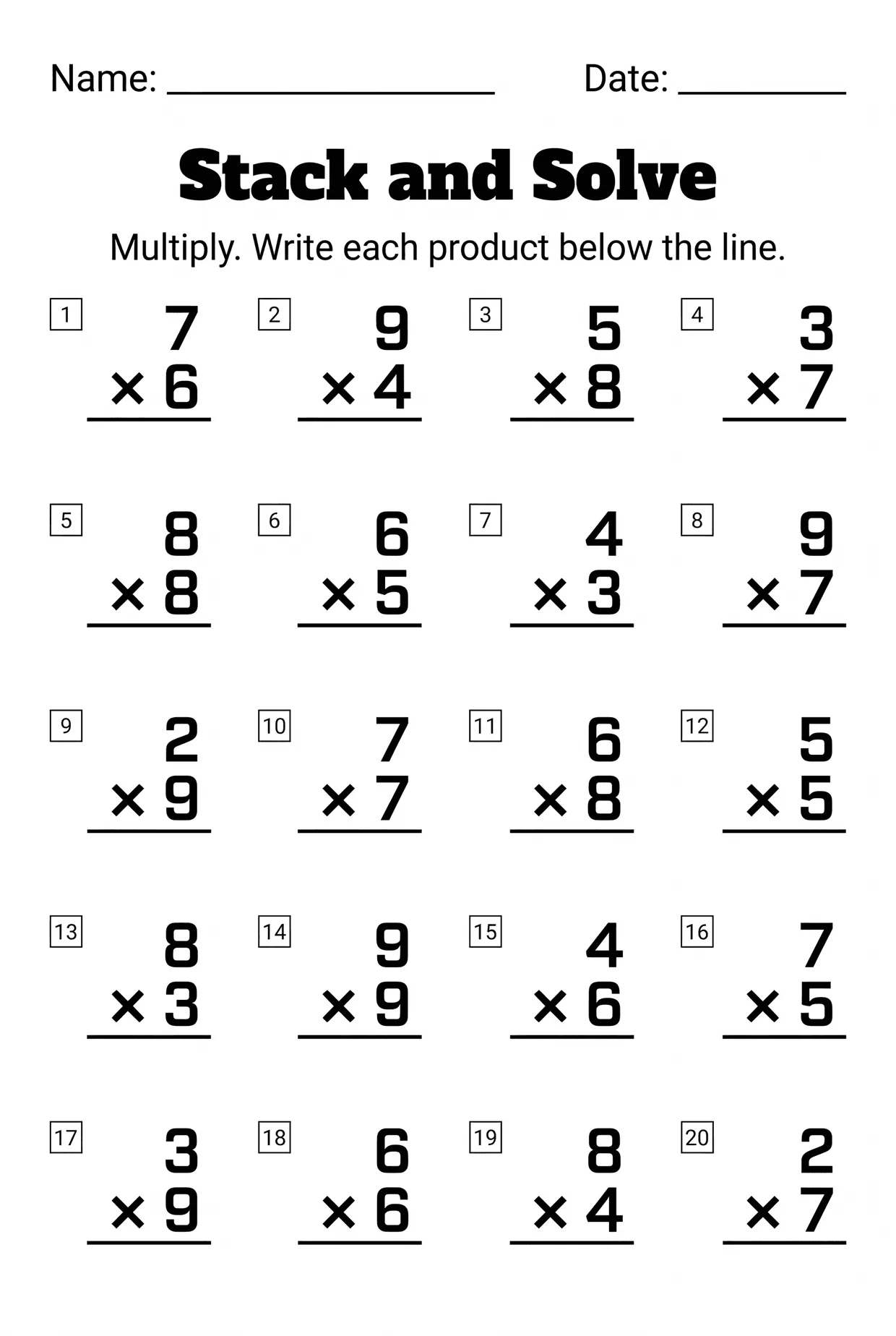
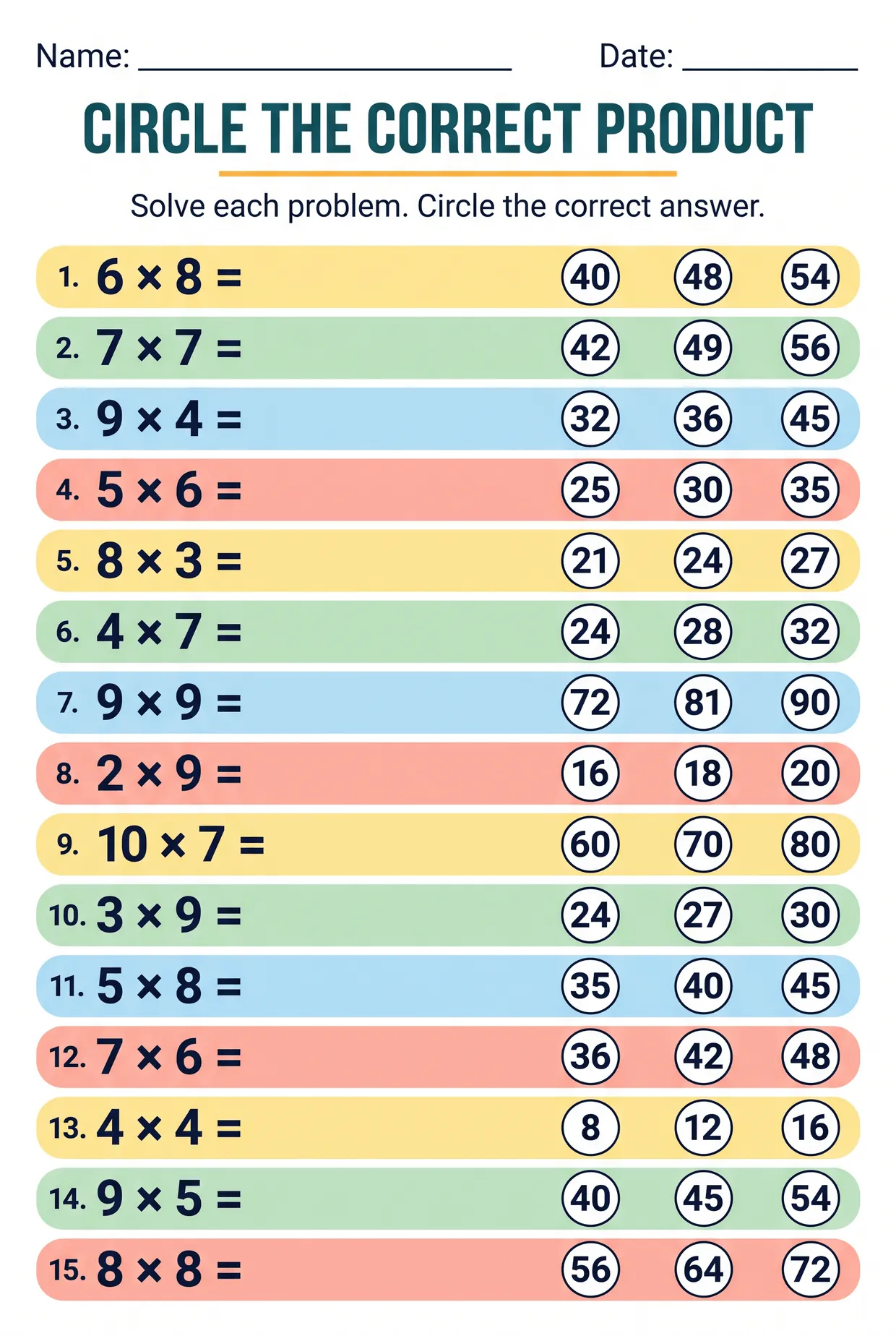
All of them from 0 through 10. The standard expects children to know every product of two one-digit numbers from memory by the end of third grade, and the pages here work through them, from the easy 2s, 3s and 5s to the 6s through 9s.
What order should my child learn the times tables in?
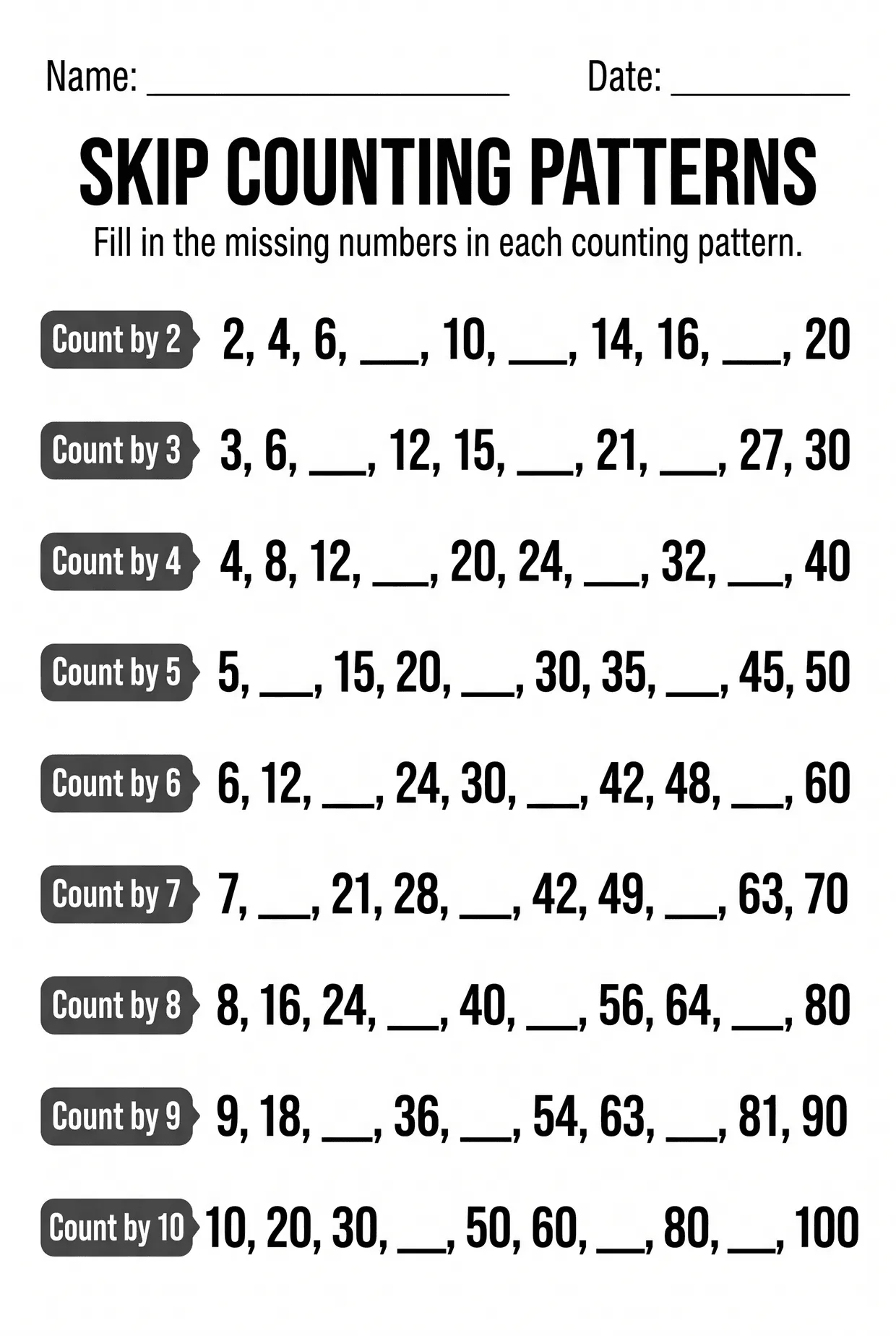
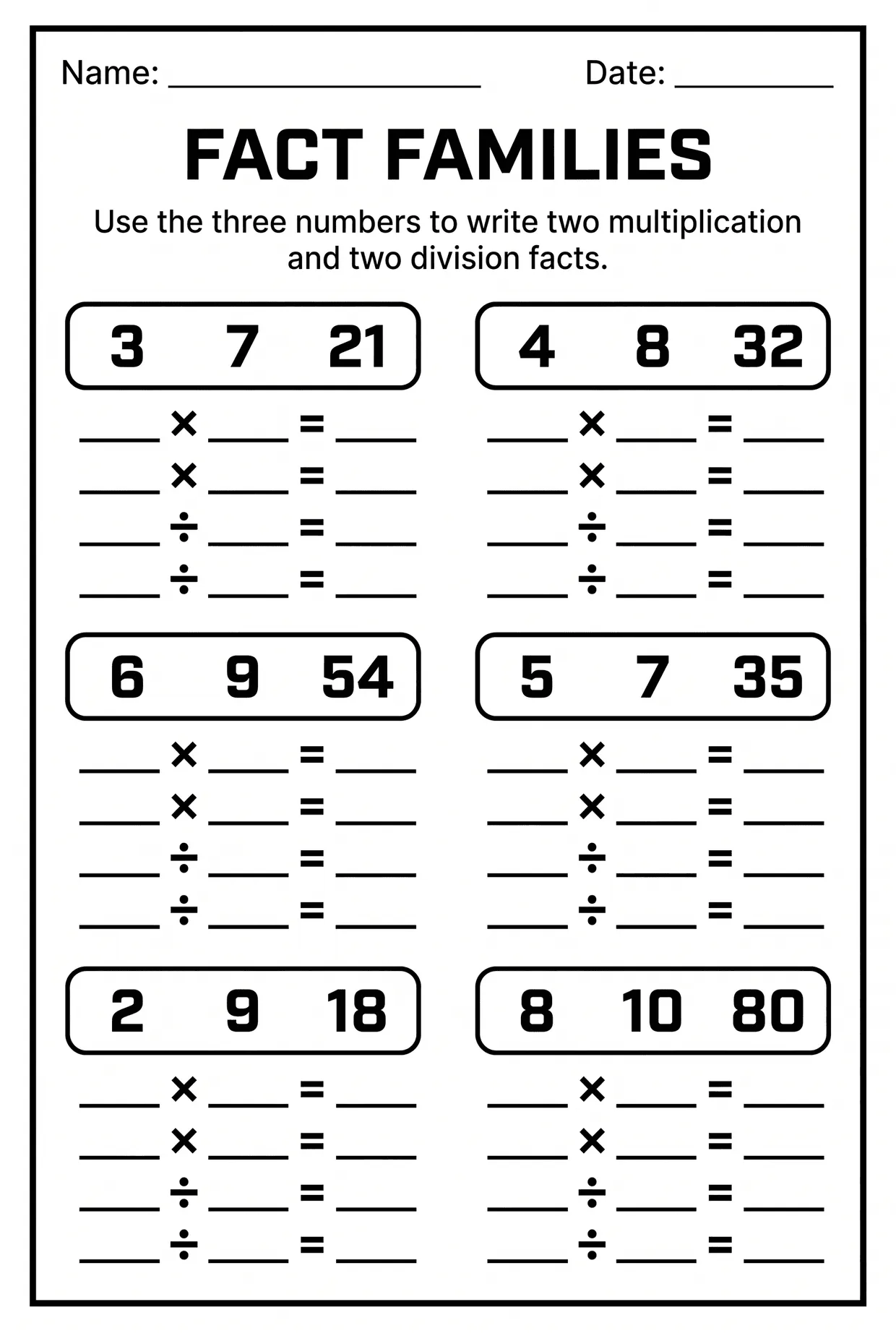
Start with the 2s, 5s and 10s, which follow skip counting, then the 3s and 4s. The 9s have a handy pattern, and square facts like 6 times 6 tend to stick. The 6s, 7s and 8s that are left are fewer than they look once a child knows the factors can be swapped.
How do missing factor problems help?
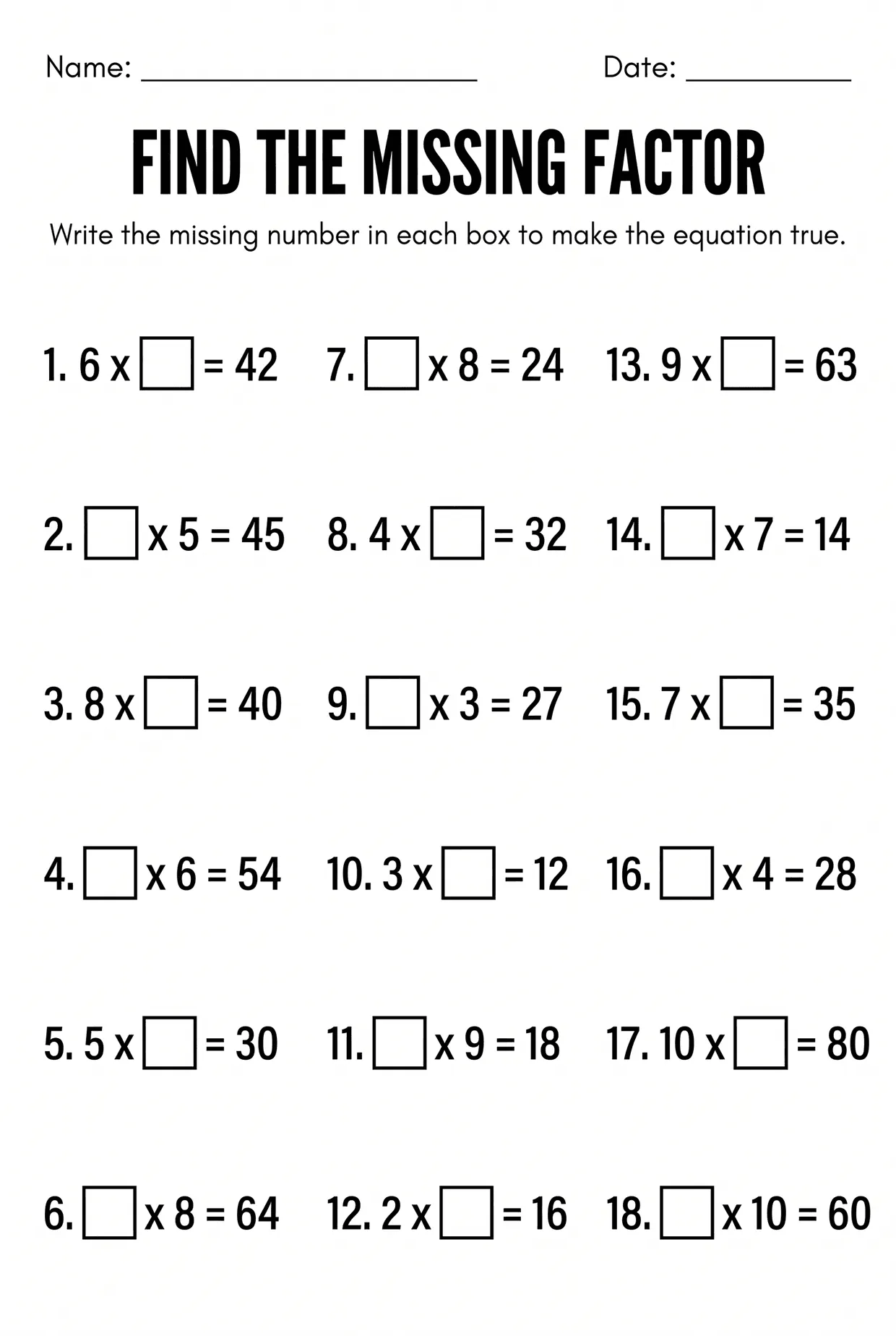
A problem like 7 times what equals 42 asks a child to think backward from the product, which is exactly what division does. Practicing it in multiplication form first makes division feel familiar rather than new. It also shows whether a child truly knows a fact or is only reciting a table in order.
My child skip counts to find every answer. Is that a problem?
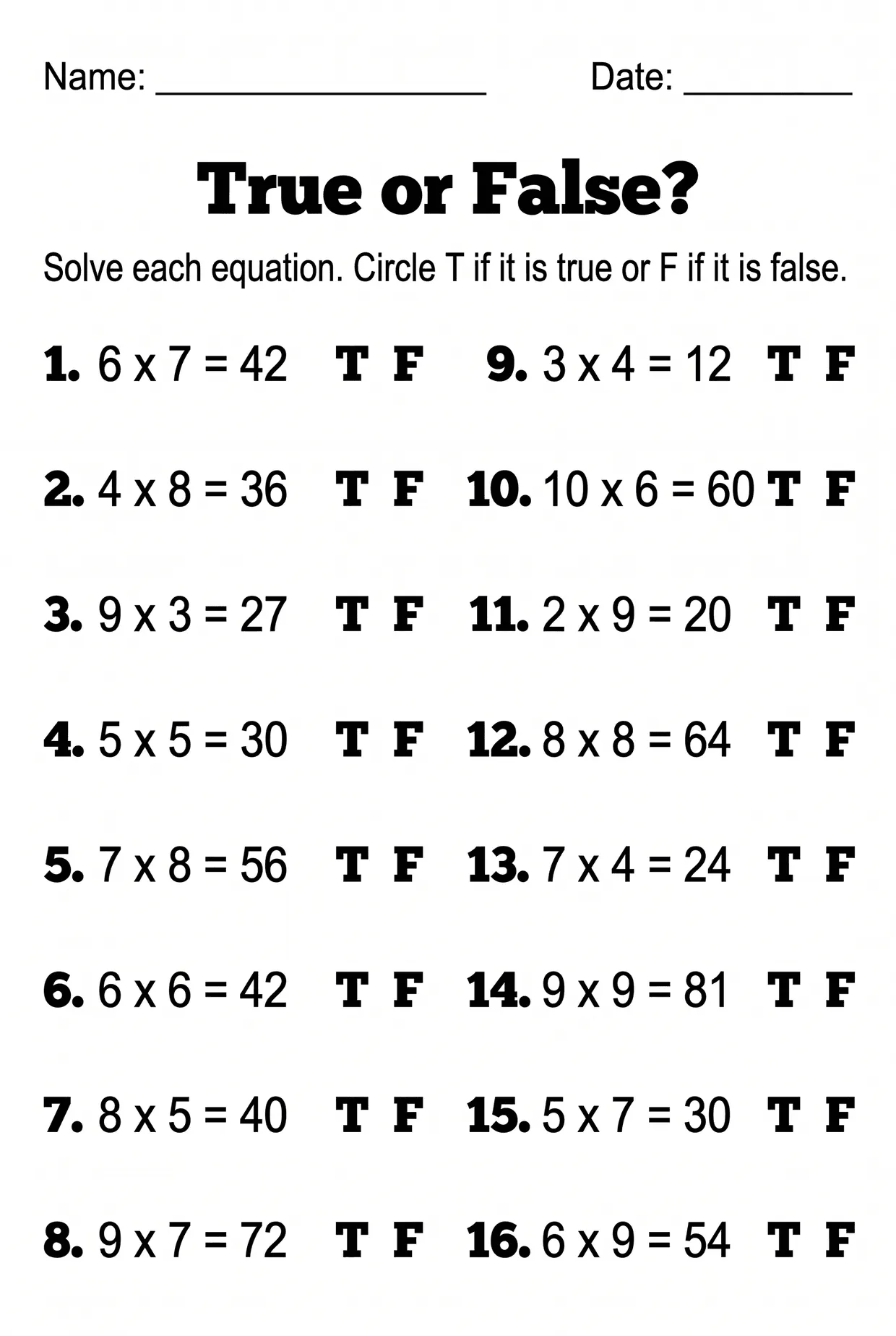
Skip counting is a fine way in, but it gets slow and error-prone past the 5s. Pick a few facts a week to know by heart, and practice them until the answer comes without counting. The true or false page is a good check, because a child who is still counting will often accept a close but wrong product.
How long should times tables practice take each day?
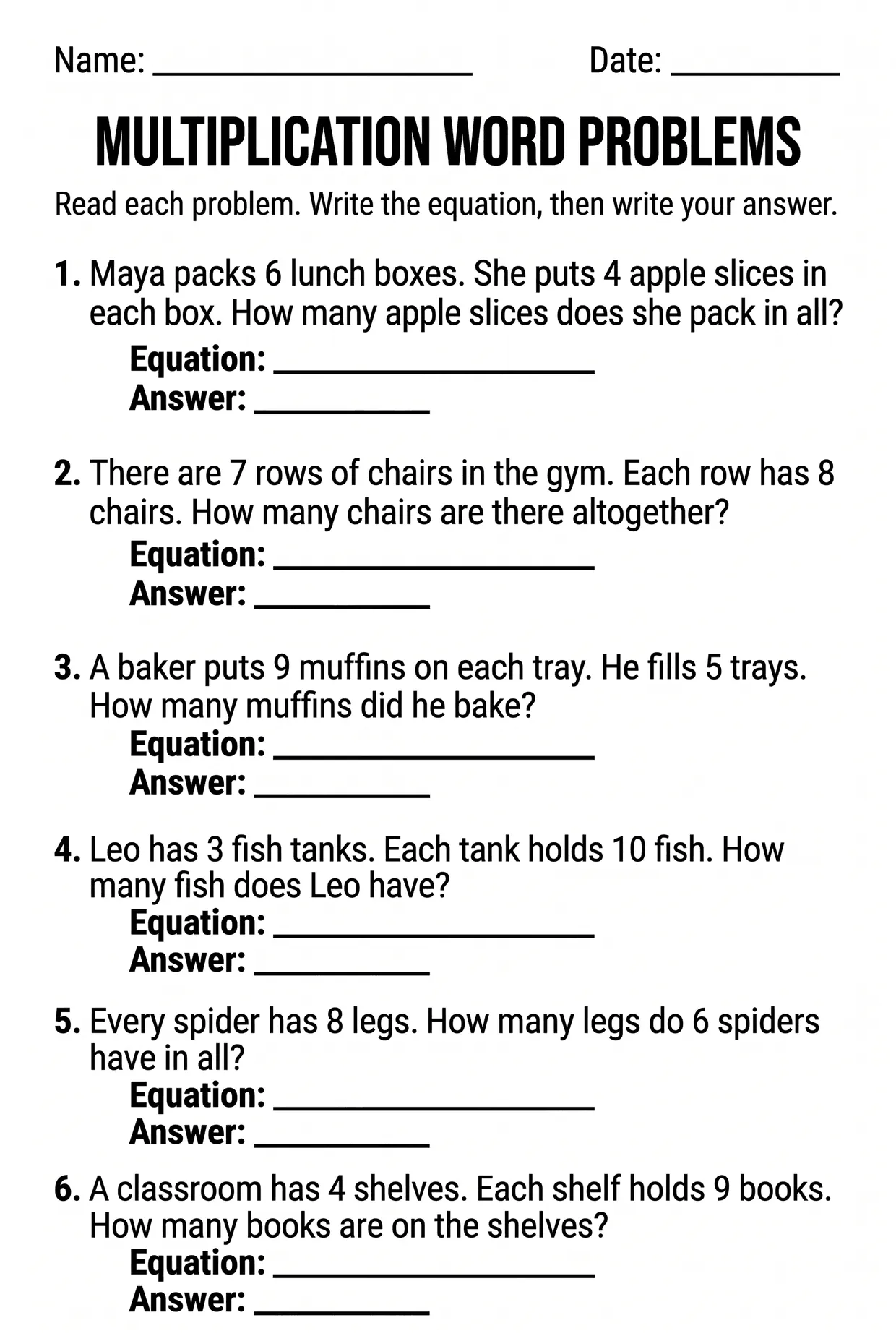
Ten minutes is plenty. Short daily sessions on a handful of facts beat one long weekly session, and one page done carefully is better than three done in a rush. Mix in a word problem now and then so the facts stay connected to something real.