Every sheet in this set lines up with one second grade Common Core standard, 2.MD.C.8: solving word problems involving dollar bills, quarters, dimes, nickels and pennies, using the $ and ¢ symbols correctly. The standard packs a lot into one line, which is why the set builds up to it. Counting and comparing come first, dollar bills and the dollar sign arrive in the middle, and the actual word problems are saved for the end.
If a child gets stuck partway through, go back to the coin trains. Nearly every mistake with money comes down to counting on from the wrong coin, and sorting the coins from biggest to smallest first fixes most of it.
Nine of the fifteen are plain black on white and download as true vector PDFs, so they print sharp and are light on ink for a class set. The other six are in color.
Count-On Coin Trains: 2nd Grade Money Worksheet
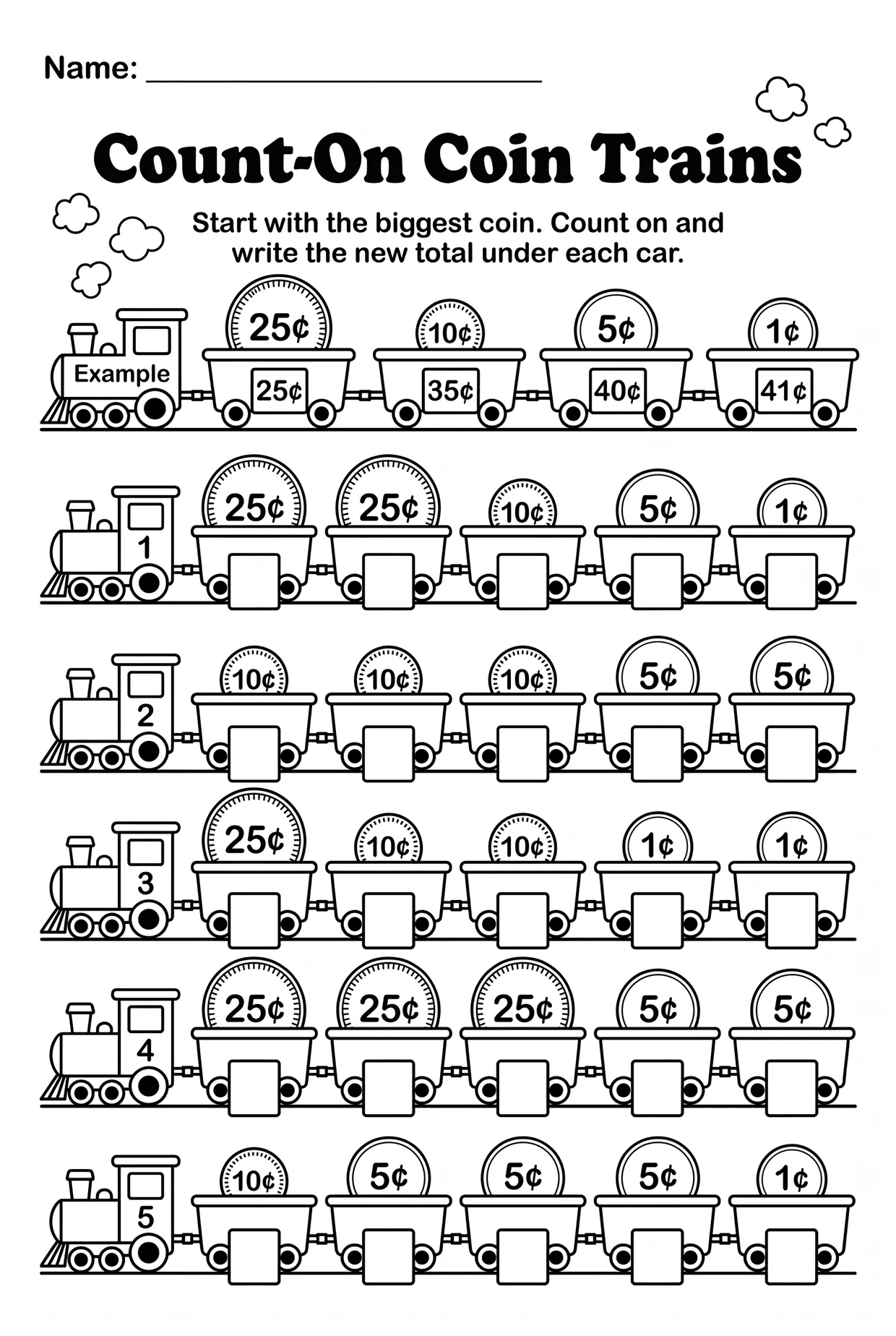
Begin here. Each train carries five coins already sorted from biggest to smallest, and the child counts on car by car, writing the running total under each one. A worked example at the top shows the whole method before the first train.
Bake Sale Coin Matching: 2nd Grade Money Worksheet
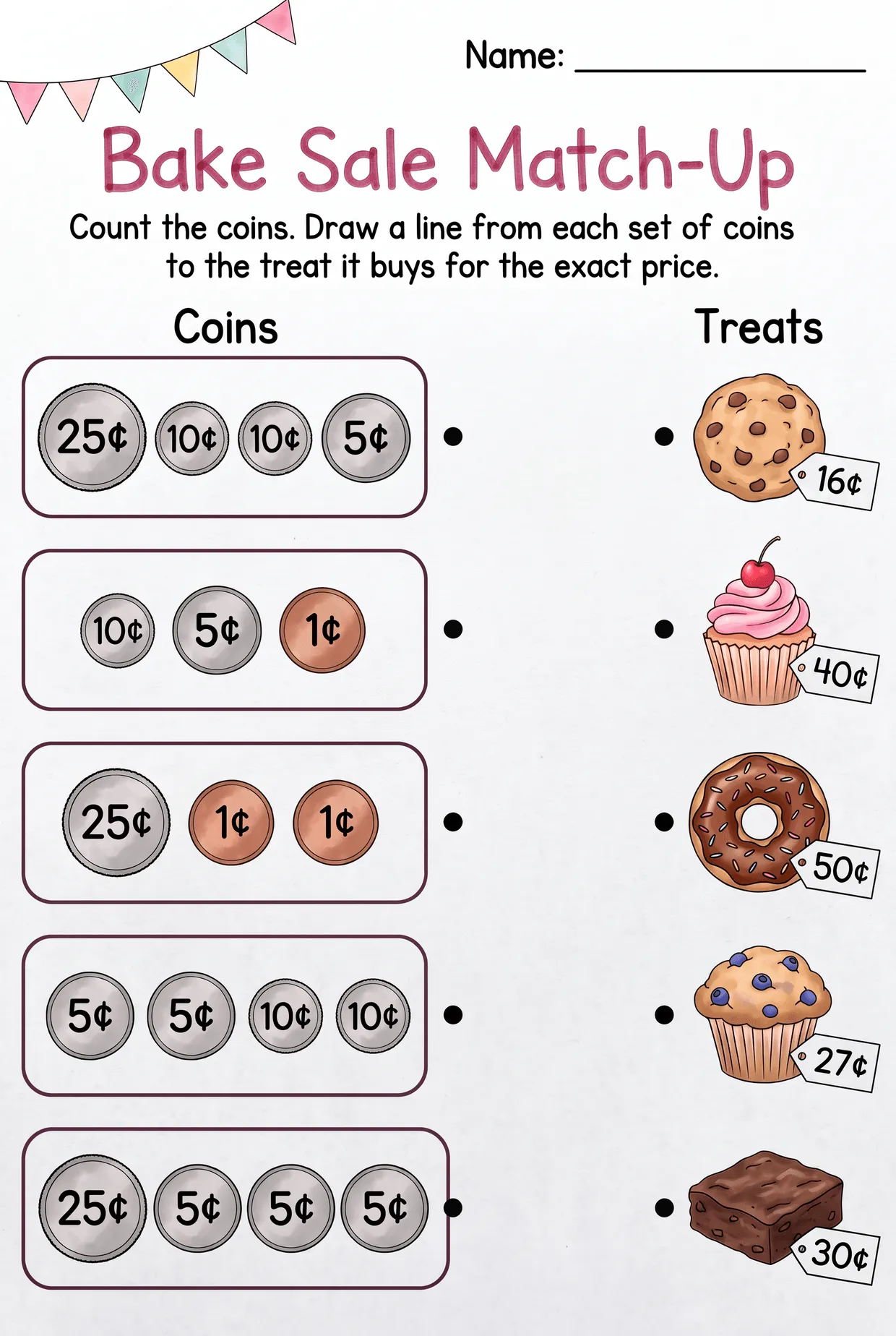
Five sets of coins and five bake sale treats with price tags. Count each set and draw a line to the treat it buys for the exact price. Now the coins arrive unsorted, so a child has to put them in order before counting on.
Coin Jar Savings: Grade 2 Counting Money Worksheet
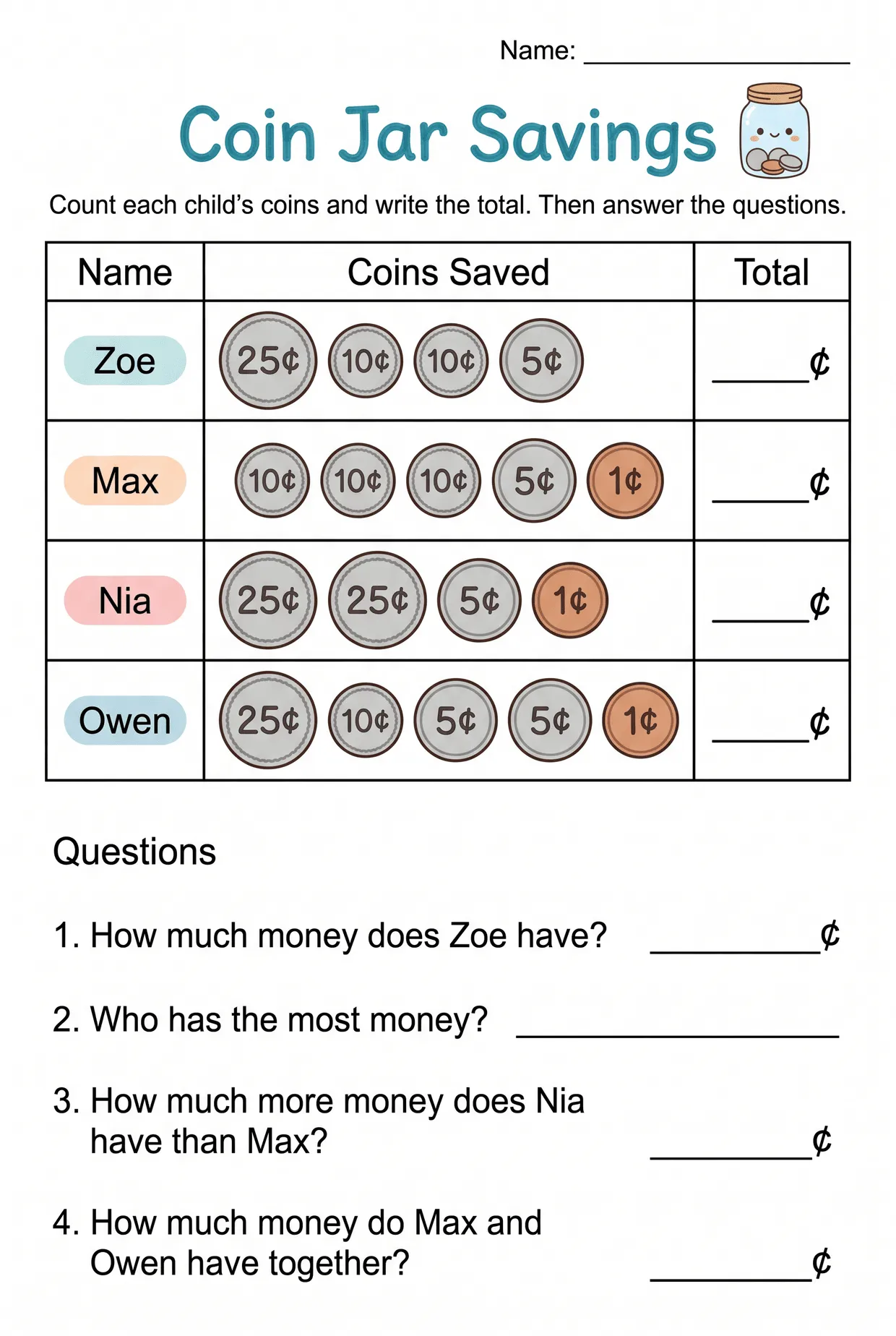
Four children's coin jars to count and total, then four questions that use those totals: who has the most, how much more one child has than another, and how much two of them have together.
School Store Do I Have Enough? Grade 2 Money Worksheet
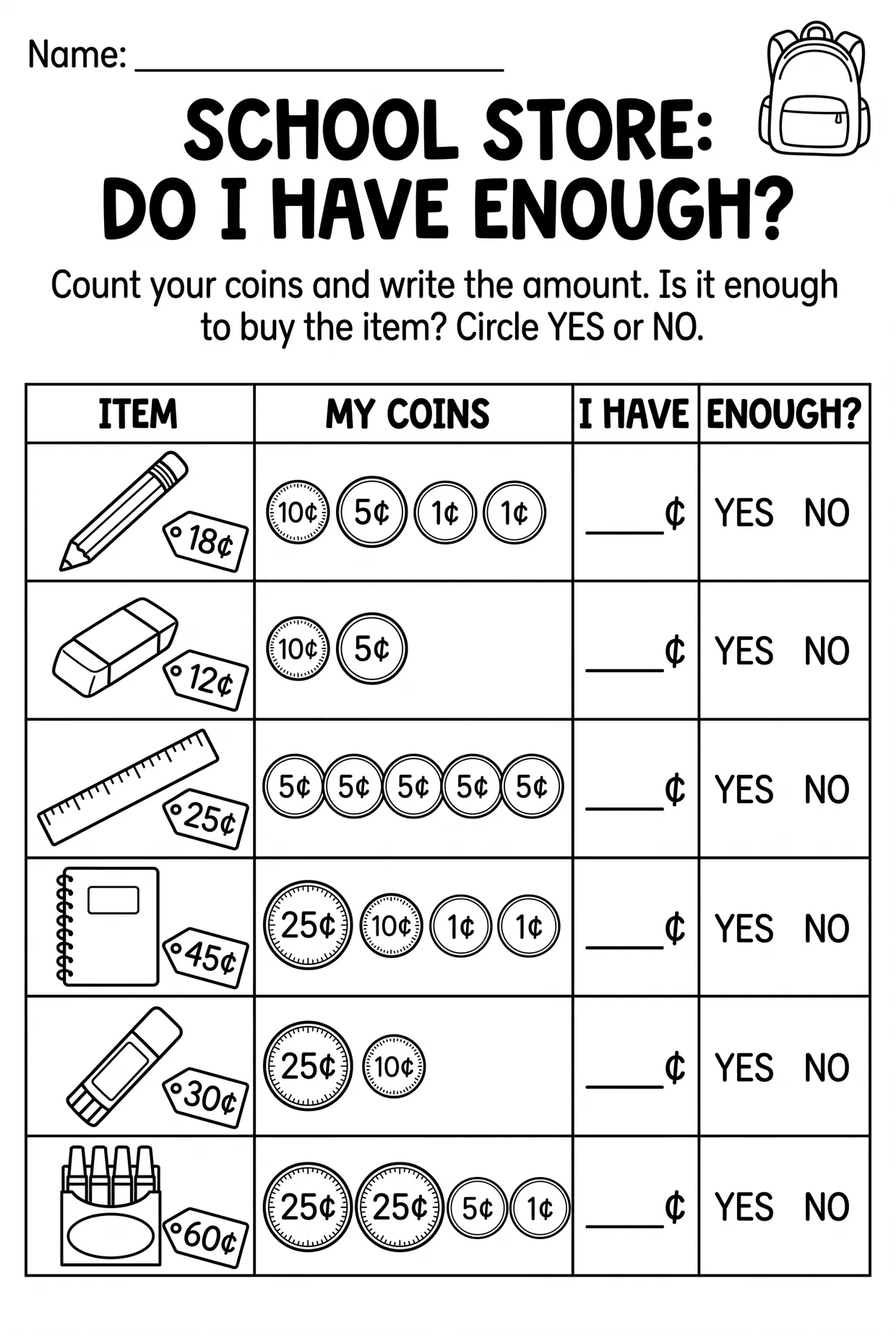
Six school supplies, each with a price and a row of coins. Count the coins, write the amount, and circle yes or no for whether it is enough. Three come out yes and three come out no.
Compare Coin Amounts Money Worksheet for 2nd Grade
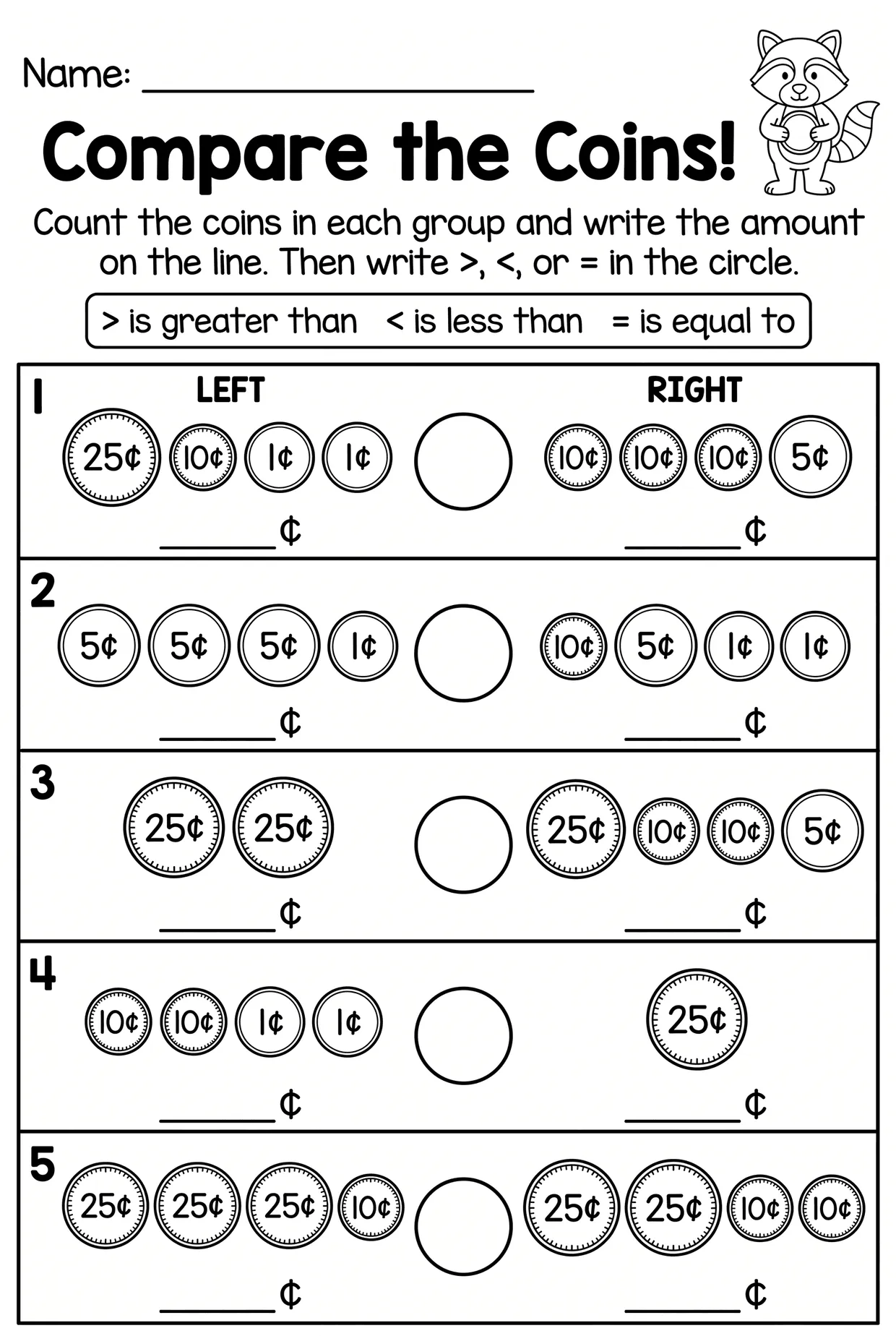
Five pairs of coin groups. Count both sides, write the amounts, and fill the circle with greater than, less than or equal to.
Treasure Chest Coin Sort: Cut and Paste Money Worksheet
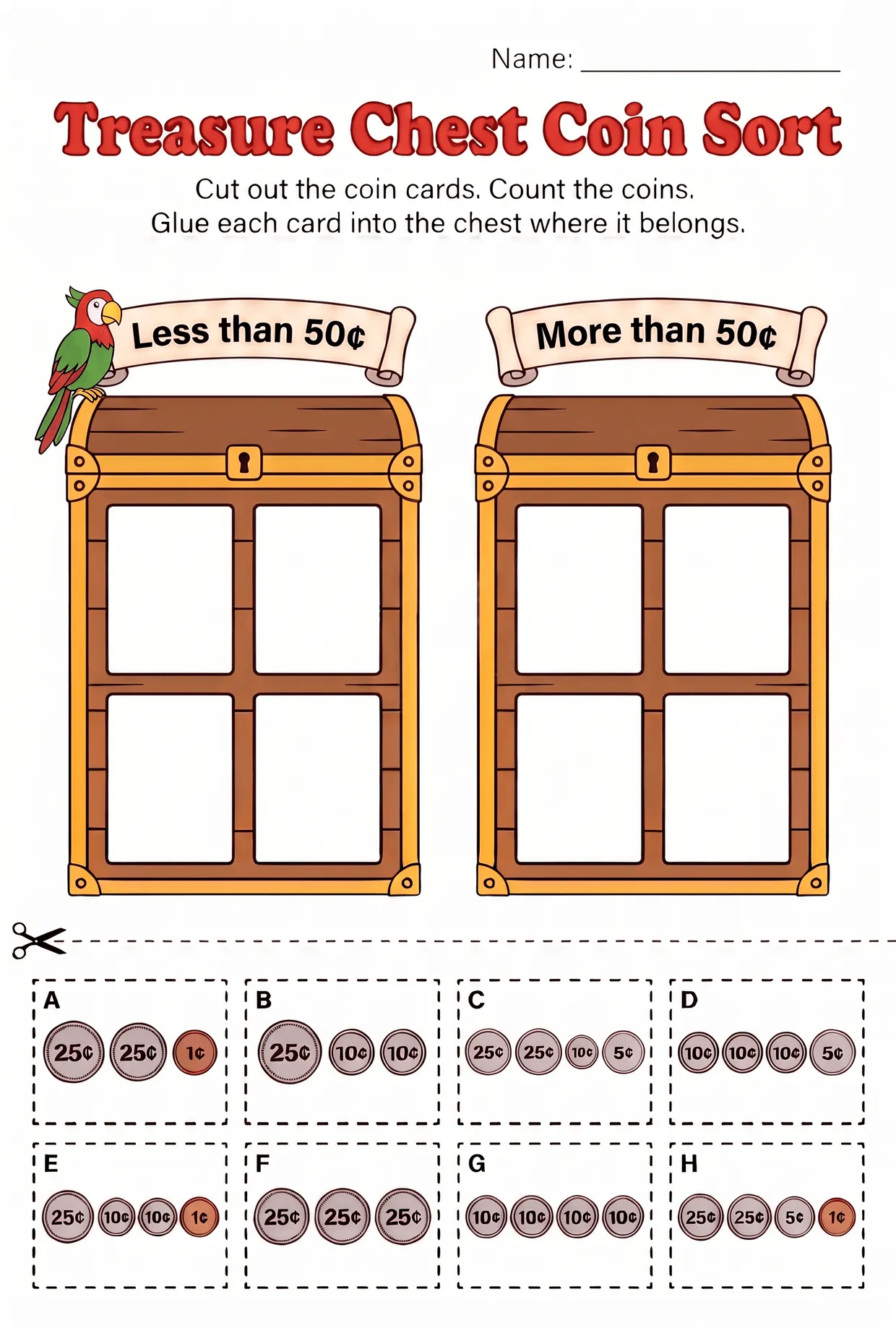
Eight coin cards to cut out, count and glue into one of two treasure chests: less than 50¢ or more than 50¢. The split is four and four.
Counting Coins and Dollar Bills: Grade 2 Money Worksheet
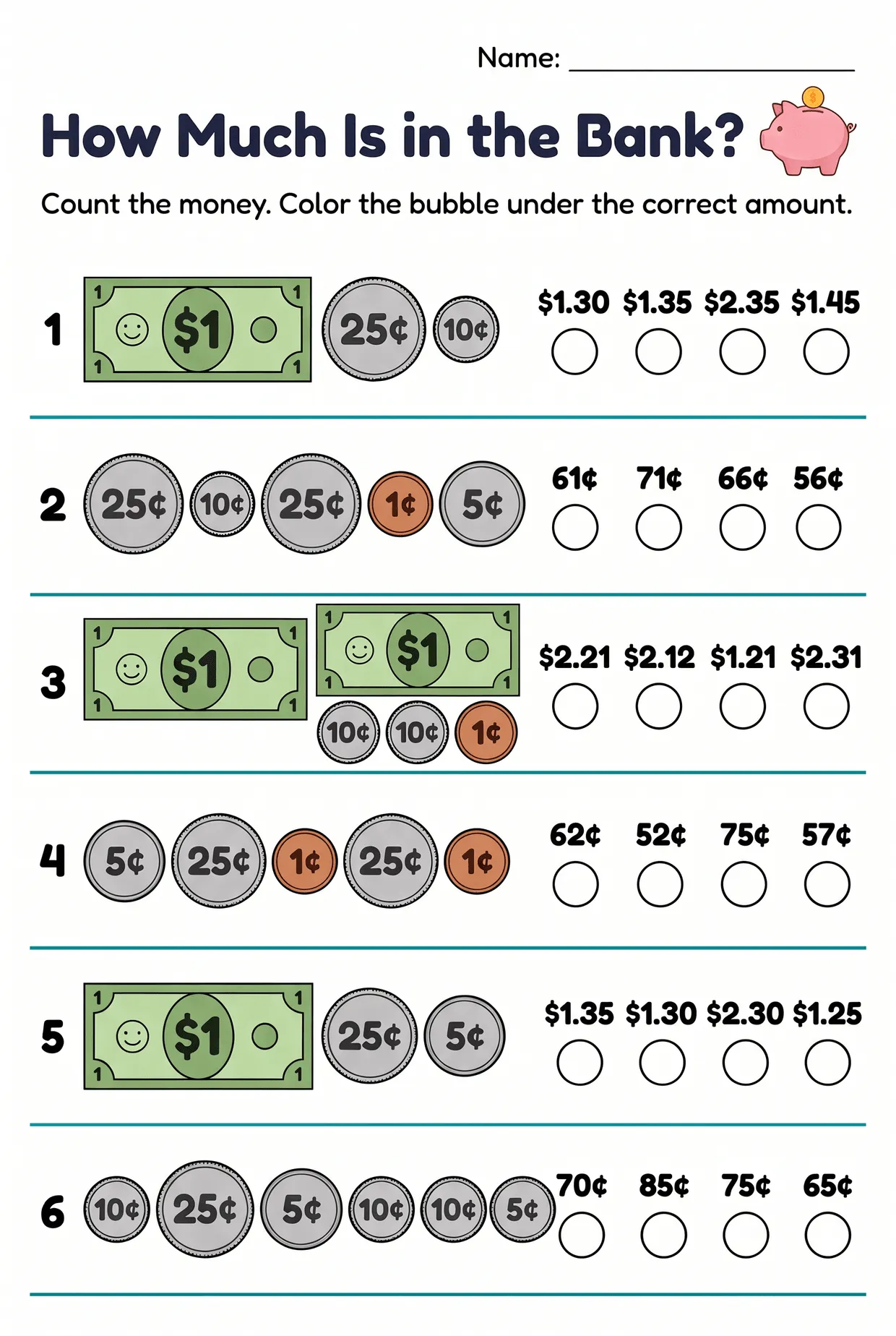
The first sheet with paper money. Six piggy bank totals mix one dollar bills with coins, and the child colors the bubble under the correct amount from four choices. Amounts with a bill are written in dollars, like $2.21, and the rest stay in cents.
Toy Shop Exact Price: 2nd Grade Money Worksheet
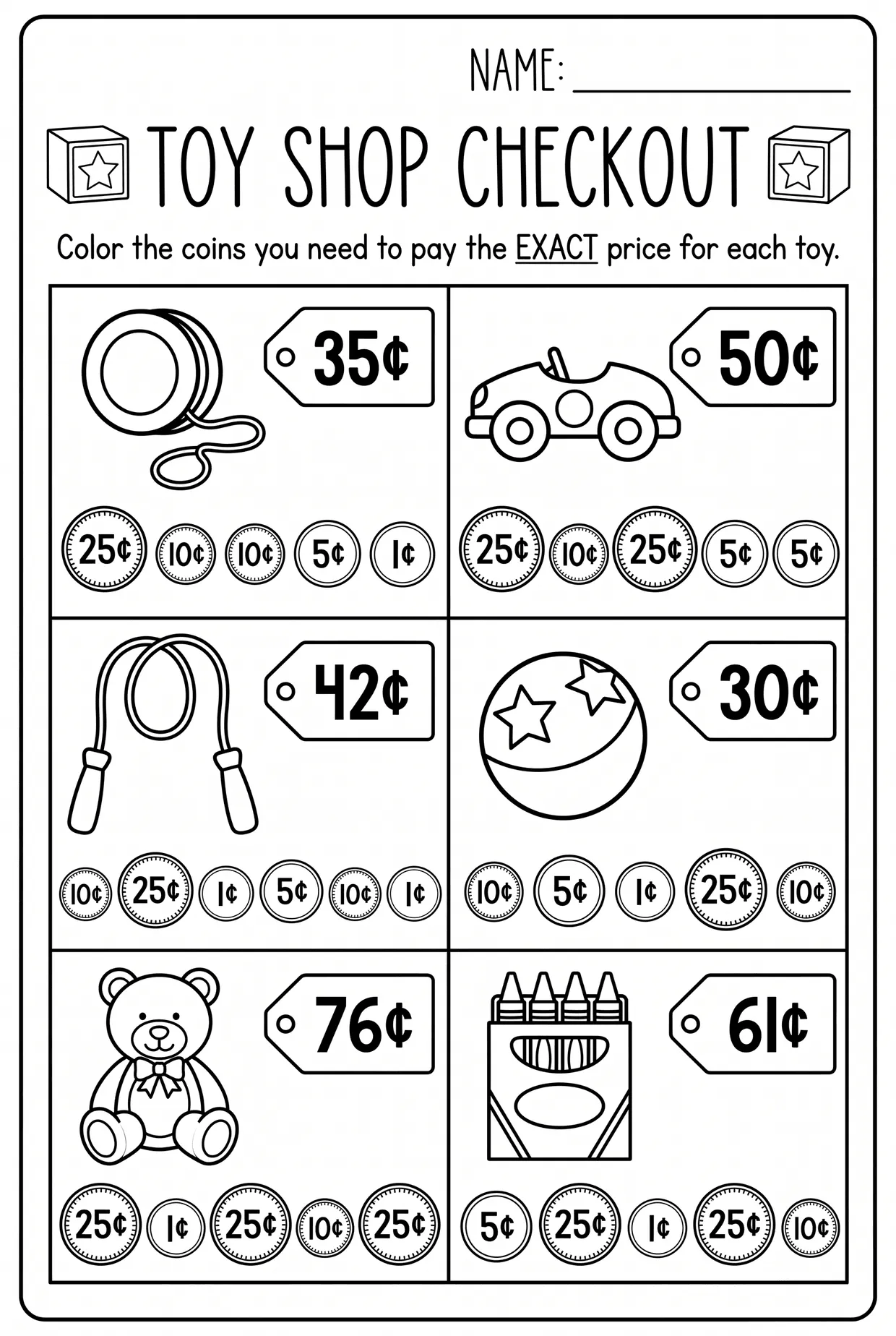
Now the job flips. Six toys each have a price and a row of coins, and the child colors only the coins needed to pay the exact amount. Every row has at least one coin that should be left out.
Pet Shop Show It Two Ways: 2nd Grade Money Worksheet
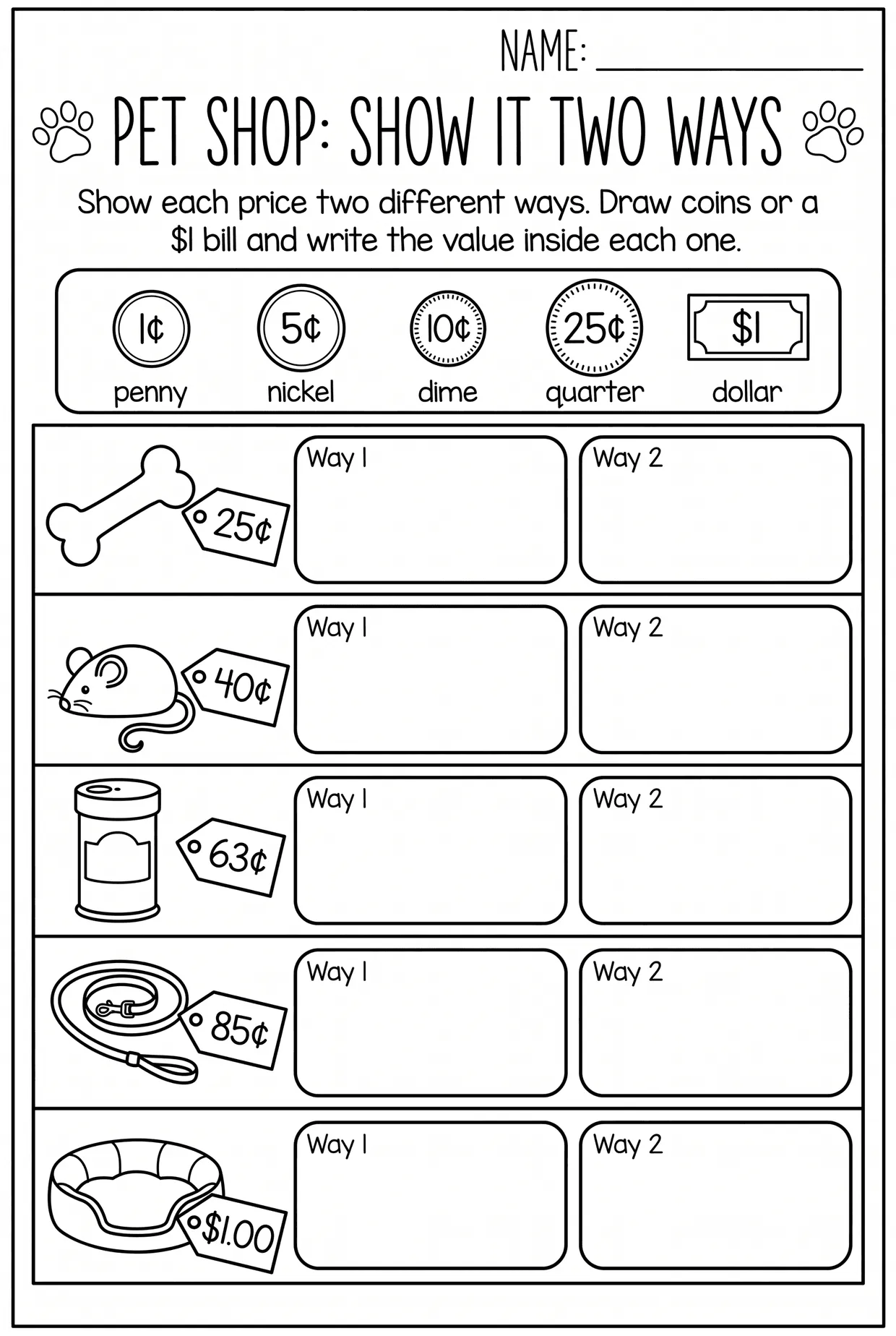
Five pet shop prices, each shown two different ways by drawing coins or a dollar bill. A 25¢ dog bone can be one quarter or five nickels, and the $1.00 pet bed can be a bill or four quarters.
Mystery Missing Coin: 2nd Grade Money Worksheet
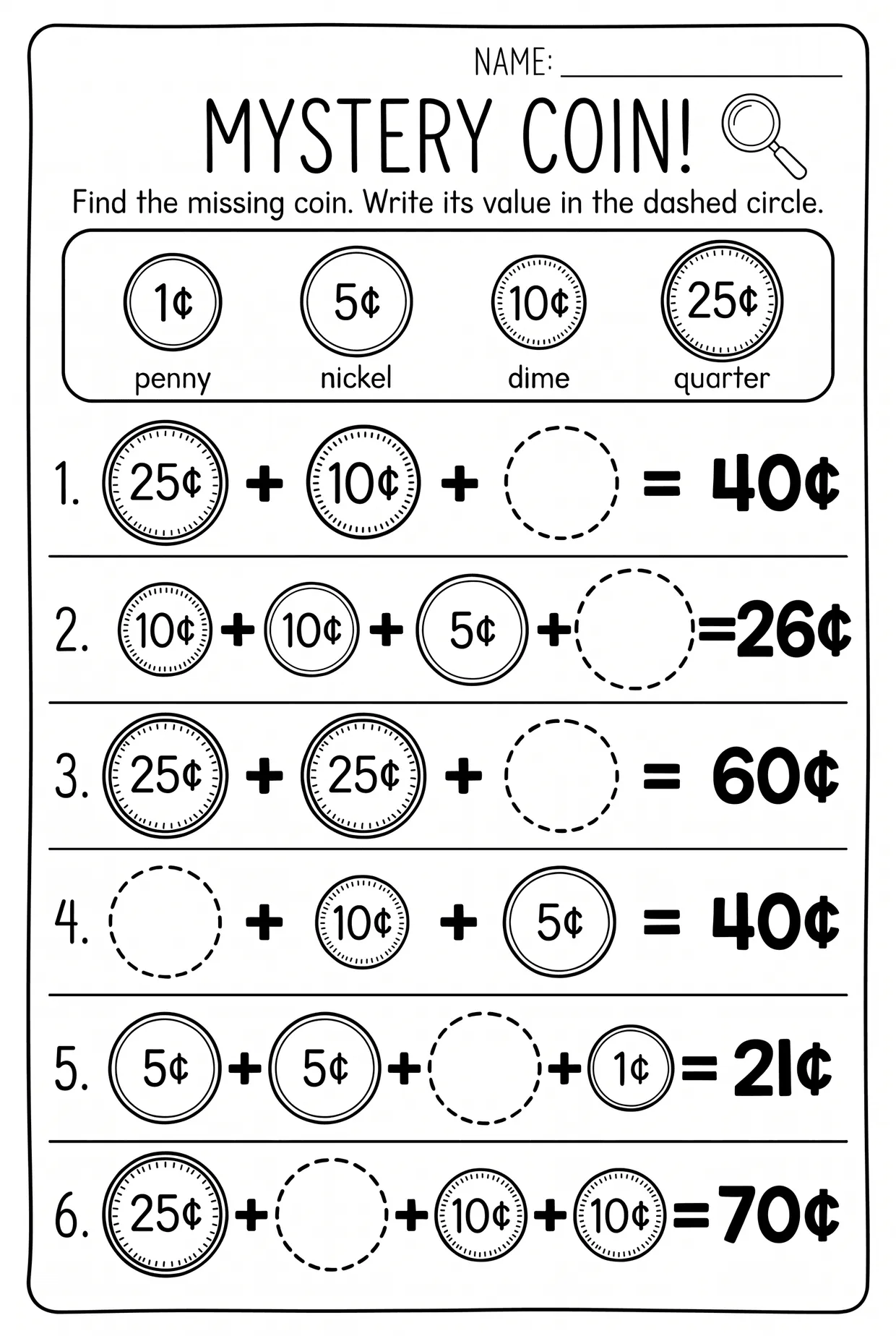
Six addition sentences, each with one coin missing. The child works out which coin fills the gap, and every answer is a penny, nickel, dime or quarter.
Quarter Quest Coin Maze: 2nd Grade Money Worksheet
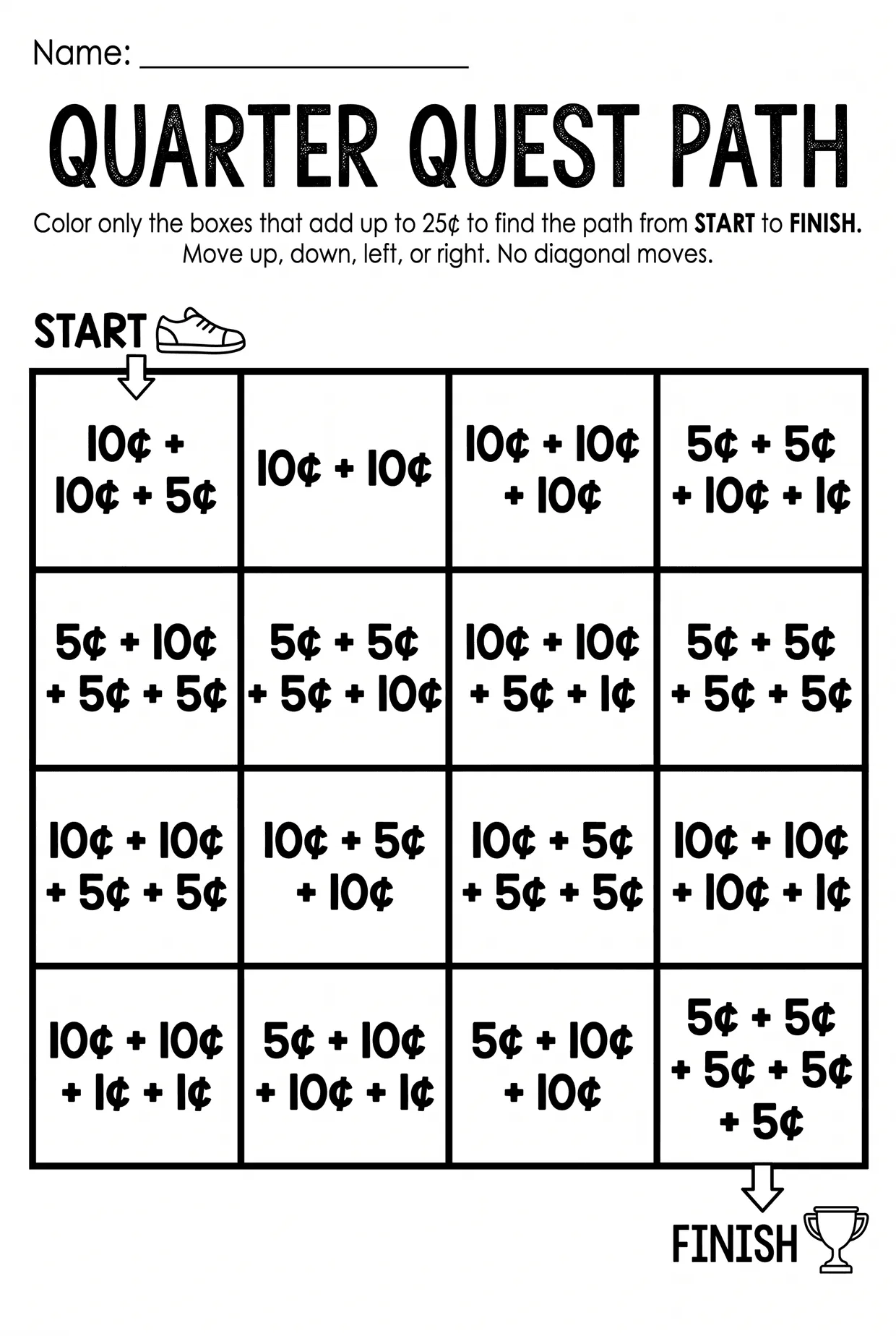
A coin maze. Add the coins in each box and color only the ones worth exactly 25¢ to find the path from start to finish. Boxes worth 26¢ and 30¢ sit right beside the path.
Count Up to a Dollar: 2nd Grade Money Worksheet
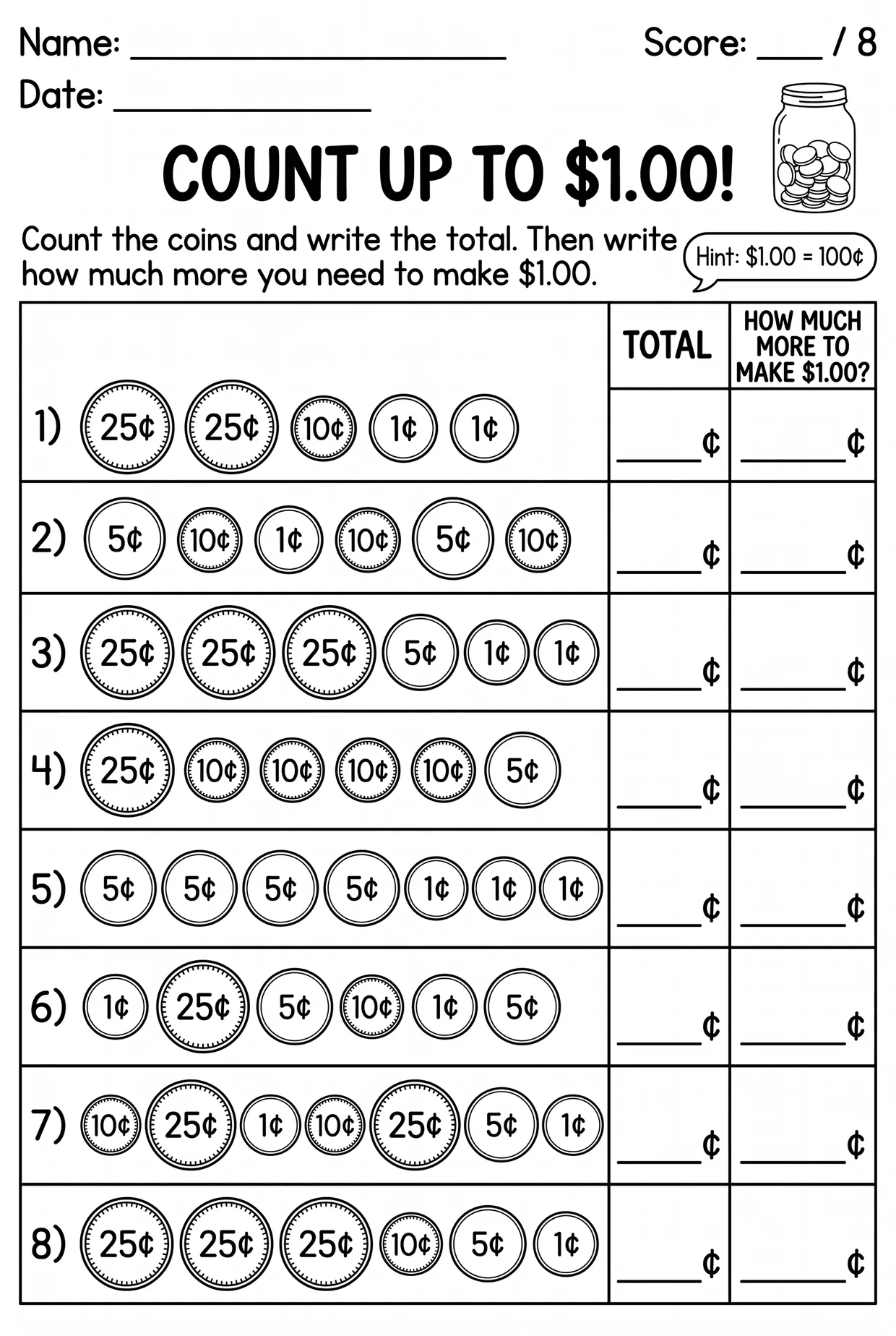
Eight sets of coins to total, then a second column asking how much more it would take to make $1.00. A hint reminds the child that $1.00 is 100¢.
Garden Shop Dollar Pairs: 2nd Grade Money Worksheet
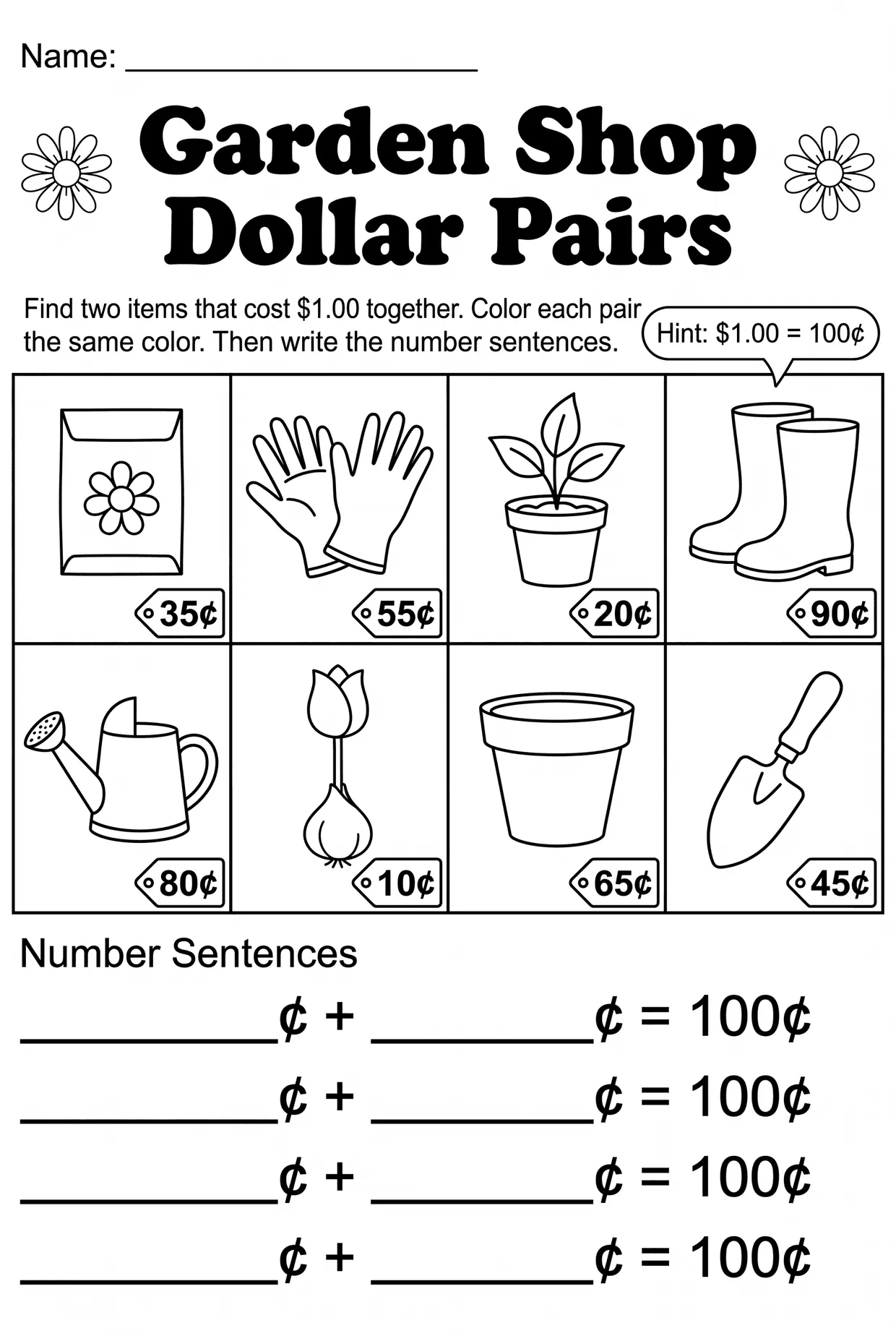
Eight garden shop items with price tags. Find the four pairs that cost exactly $1.00 together, color each pair to match, and write the number sentences.
Market Day Adding Cents: 2nd Grade Money Worksheet
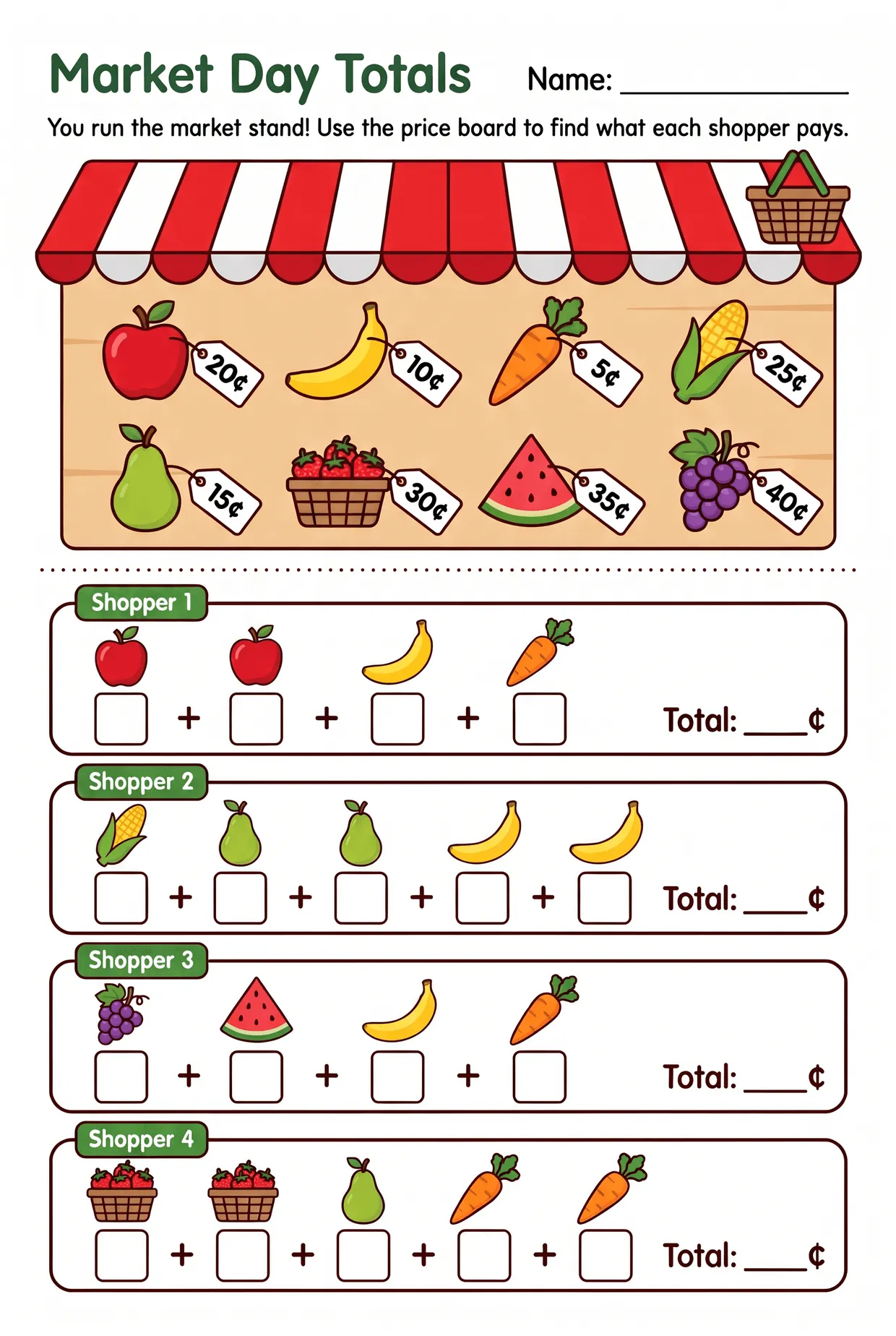
A market stand price board and four shoppers. Copy each price into a box, add them up, and write what each shopper pays. There are no coins on this page at all.
Lemonade Stand Money Word Problems: Grade 2 Worksheet
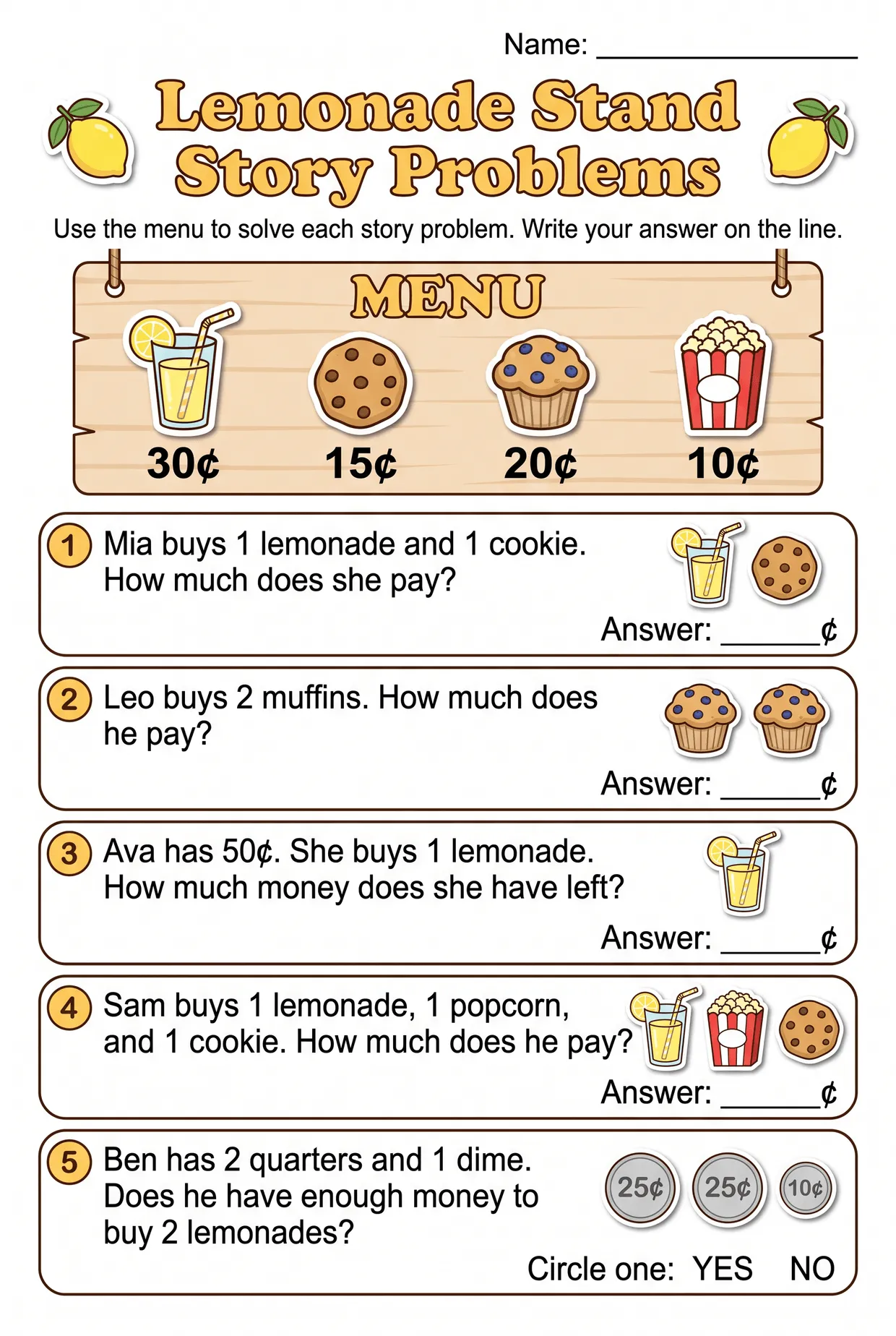
Five story problems built around a lemonade stand menu: adding prices, working out money left over, and deciding whether two quarters and a dime are enough for two lemonades.
One more thing.
If your kids finish a unit and you're not sure what to do next, my honest advice: don't move on yet. Spend a week mixing these in as warm-ups. Fluency isn't a unit, it's a habit, and the sheet that builds it is usually the one they ask to do again.