Most of this set lines up with the first grade Common Core reading standards. RL.1.1 and RI.1.1 ask children to answer questions about key details in a text, which is what nearly every sheet here practices. RL.1.2 is about retelling a story’s events in order, the job of Ben’s Birthday, and RI.1.3 covers the steps in a process, which is where How a Seed Grows comes in. The kite and magic crayon stories touch RL.1.3 and RL.1.4, describing characters and noticing the words that hint at how they feel.
If a child is struggling with a written sheet, step back to one of the circling sheets at the start. It usually turns out the reading is fine and the writing is what is slowing them down, and that is worth knowing.
Seven of the thirteen are plain black on white and download as true vector PDFs, so they print sharp and are light on ink for a class set. The other six are in color.
Ruby's Rainy Day Reading Comprehension for Grade 1
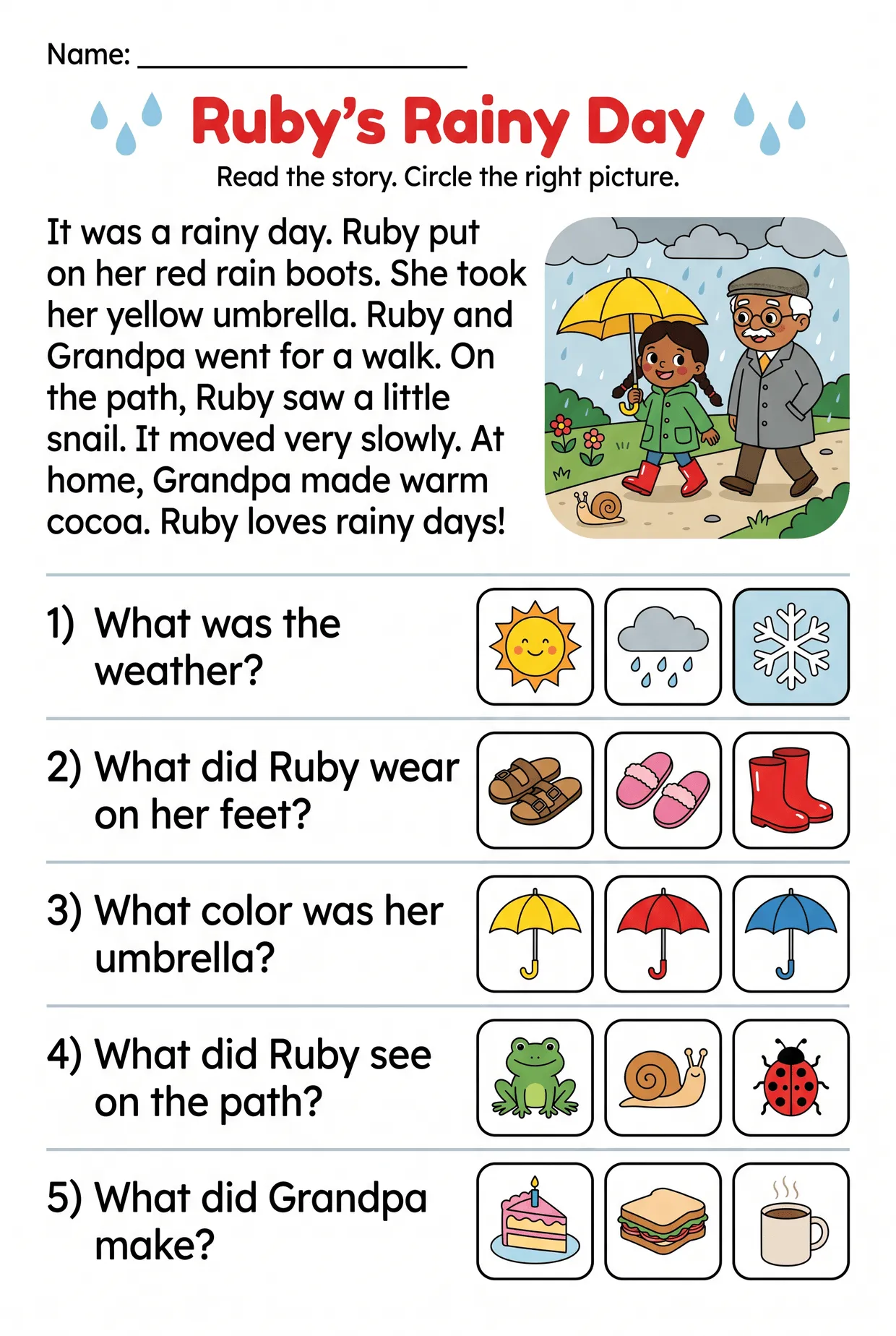
Begin here. Ruby pulls on her red rain boots, takes her yellow umbrella and walks with Grandpa, spots a snail on the path, and comes home to warm cocoa. Every one of the five answers is a picture to circle, so a child does not have to write a single word.
Trip to the Zoo Yes or No Reading Comprehension Grade 1
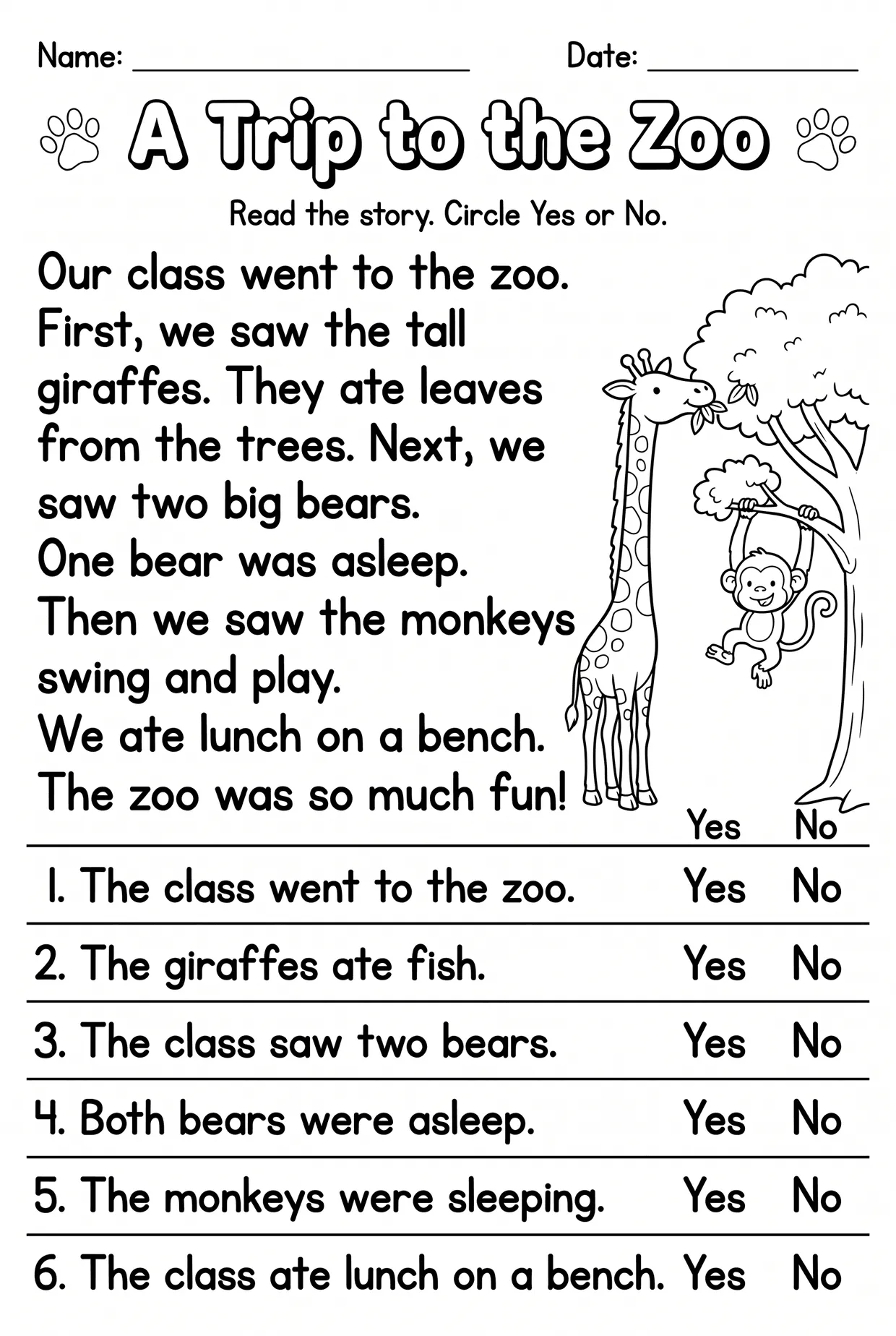
A class trip to the zoo: giraffes eating leaves, two big bears, monkeys swinging, lunch on a bench. Six statements follow, and the child circles yes or no for each. Three are true and three are false, so circling one word all the way down gets nowhere.
Pip the Penguin Reading Comprehension for 1st Grade
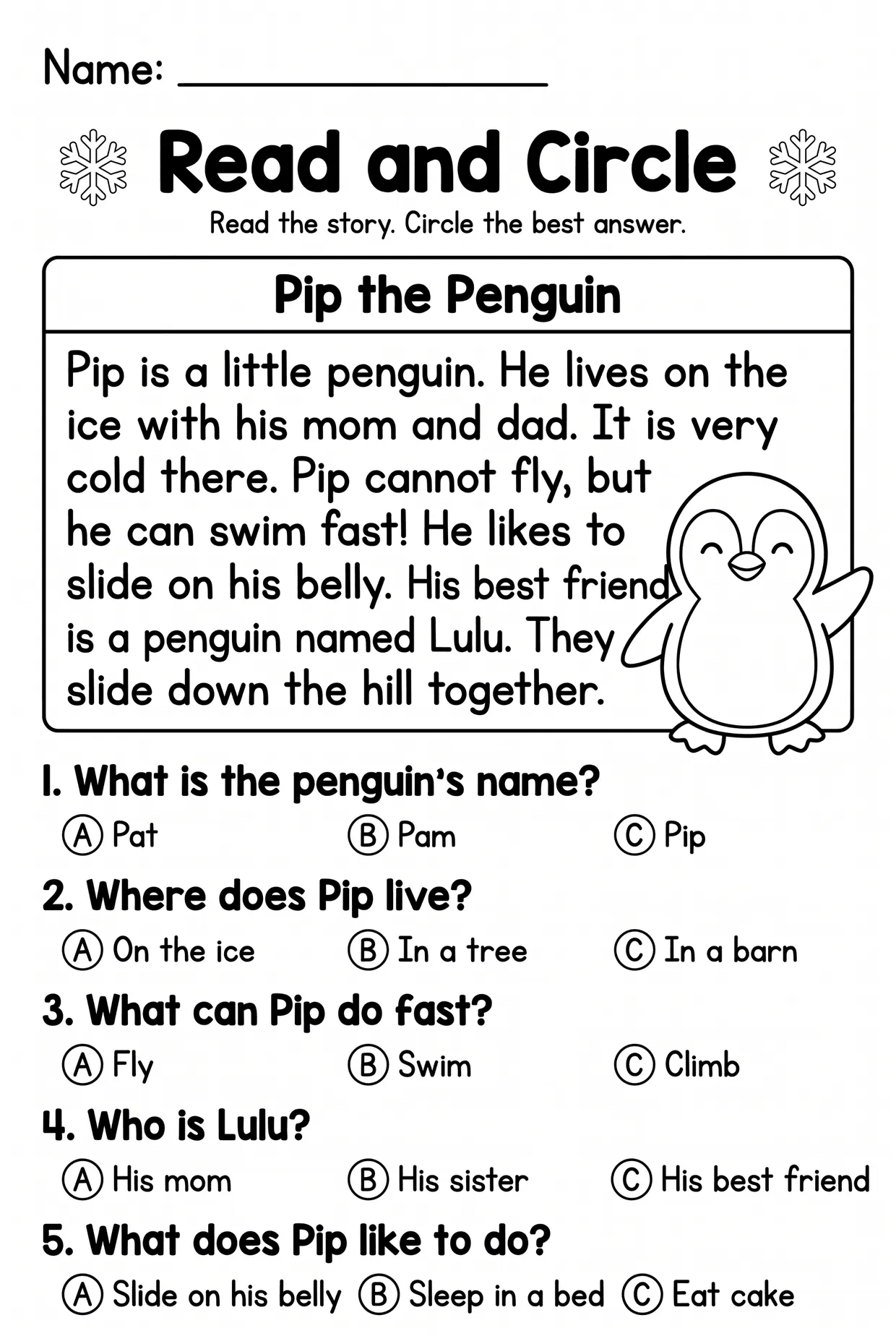
Pip the penguin lives on the ice, cannot fly but swims fast, and slides down the hill on his belly with his best friend Lulu. Five multiple choice questions, three choices each.
Firefighters Word Bank Reading Comprehension Grade 1
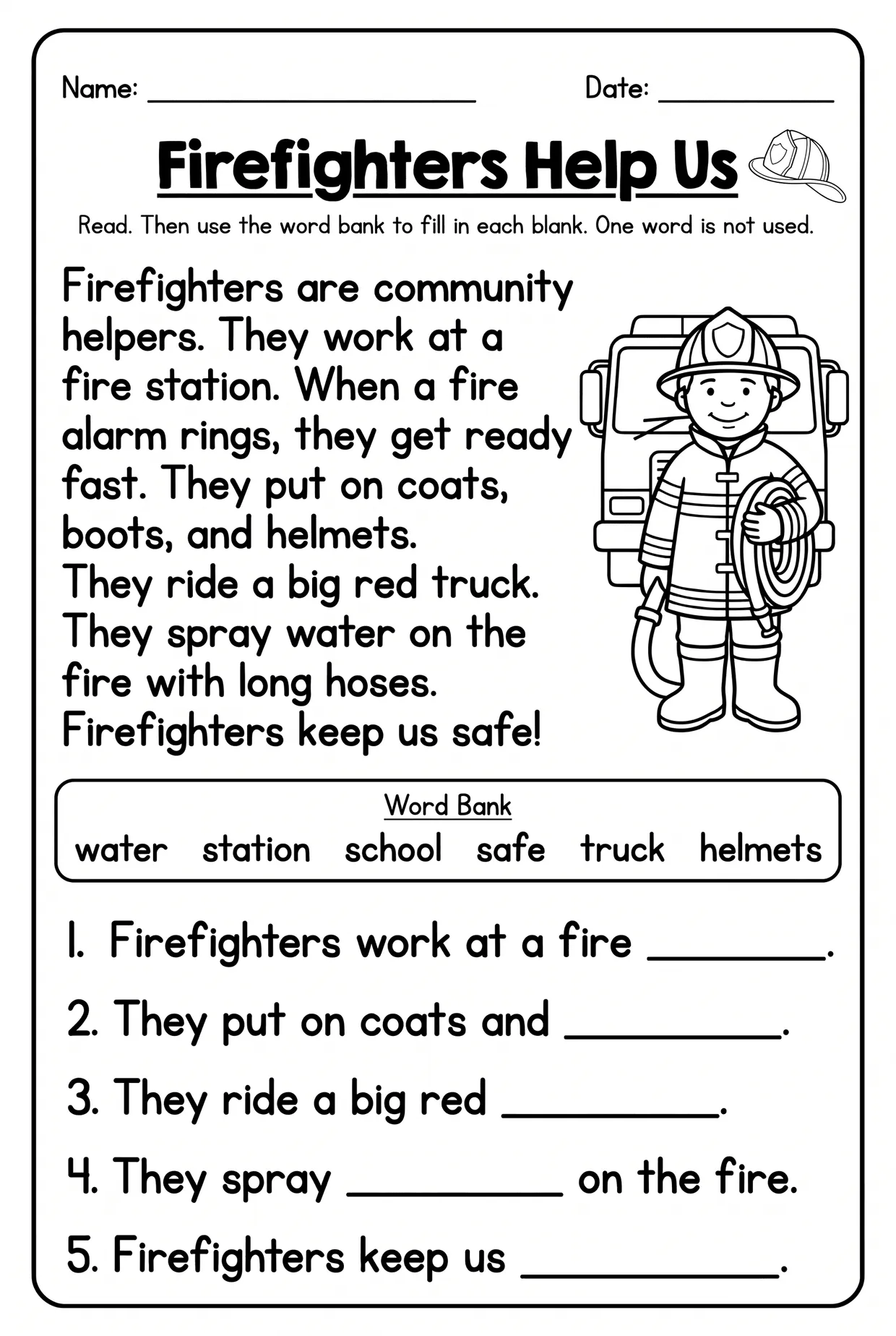
The first nonfiction passage, about firefighters as community helpers: the station, the coats and helmets, the big red truck and the long hoses. Five sentences each have one blank, and the word bank holds six words.
Sea Turtles Nonfiction Reading Comprehension Grade 1
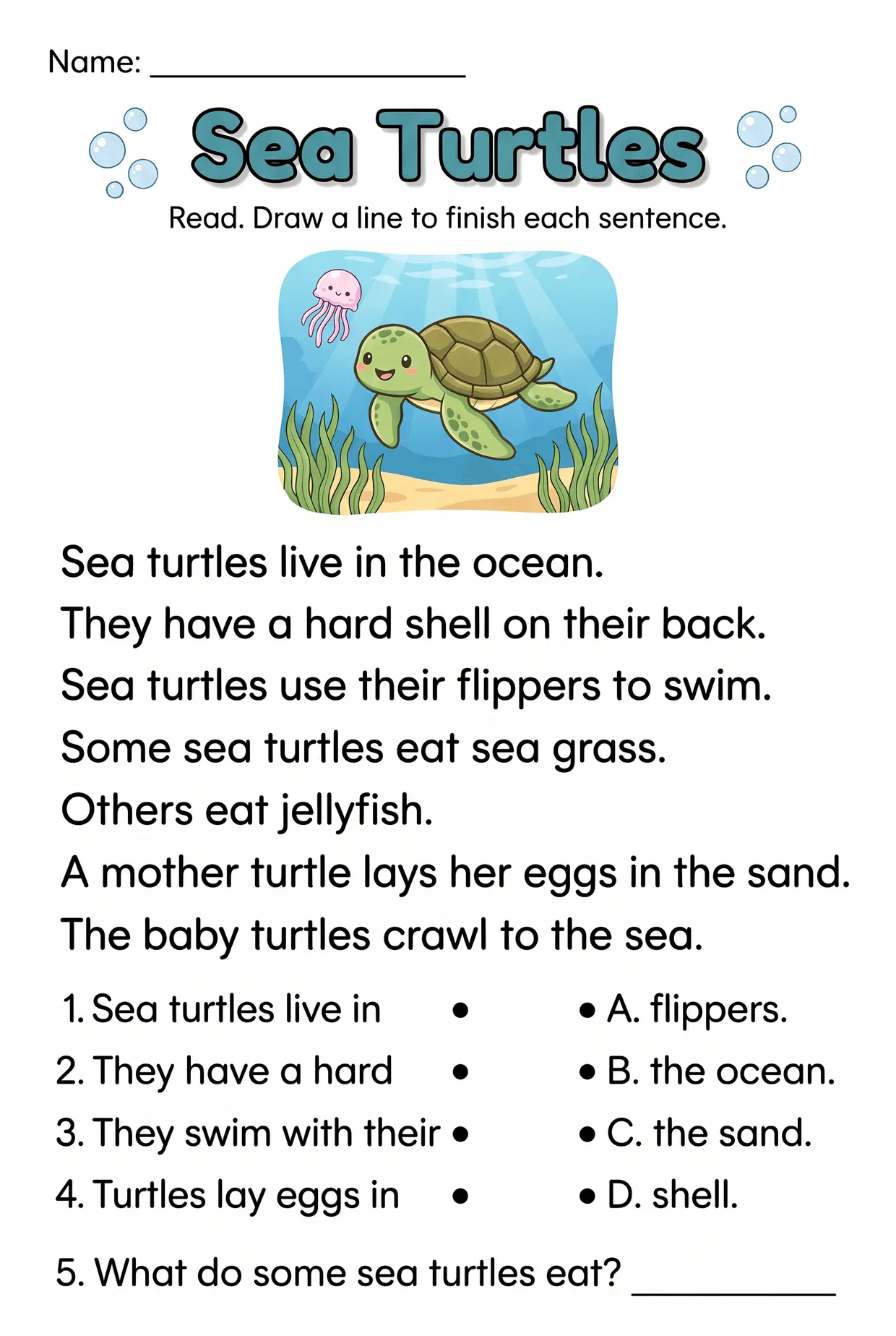
Seven short facts about sea turtles, one per line: the ocean, the hard shell, the flippers, what they eat, and the eggs in the sand. The child draws lines to finish four sentences, then writes one answer.
My Toy Box Reading Comprehension Worksheet for Grade 1
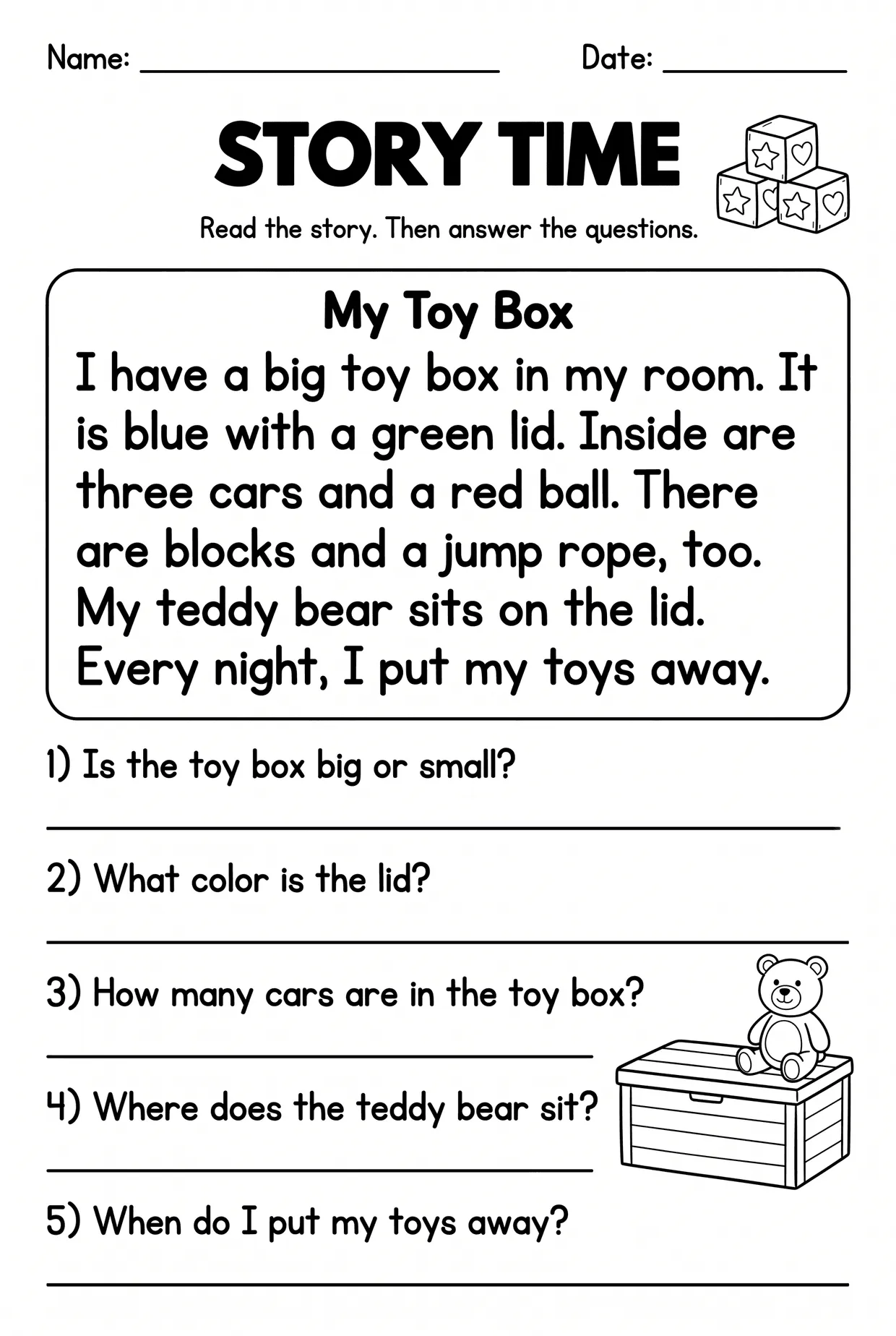
The first sheet with written answers, and the gentlest. A child describes their blue toy box with the green lid, the three cars, the red ball and the teddy bear on top. Five questions, and every answer is a word or two.
My Best Friend Reading Comprehension Worksheet Grade 1
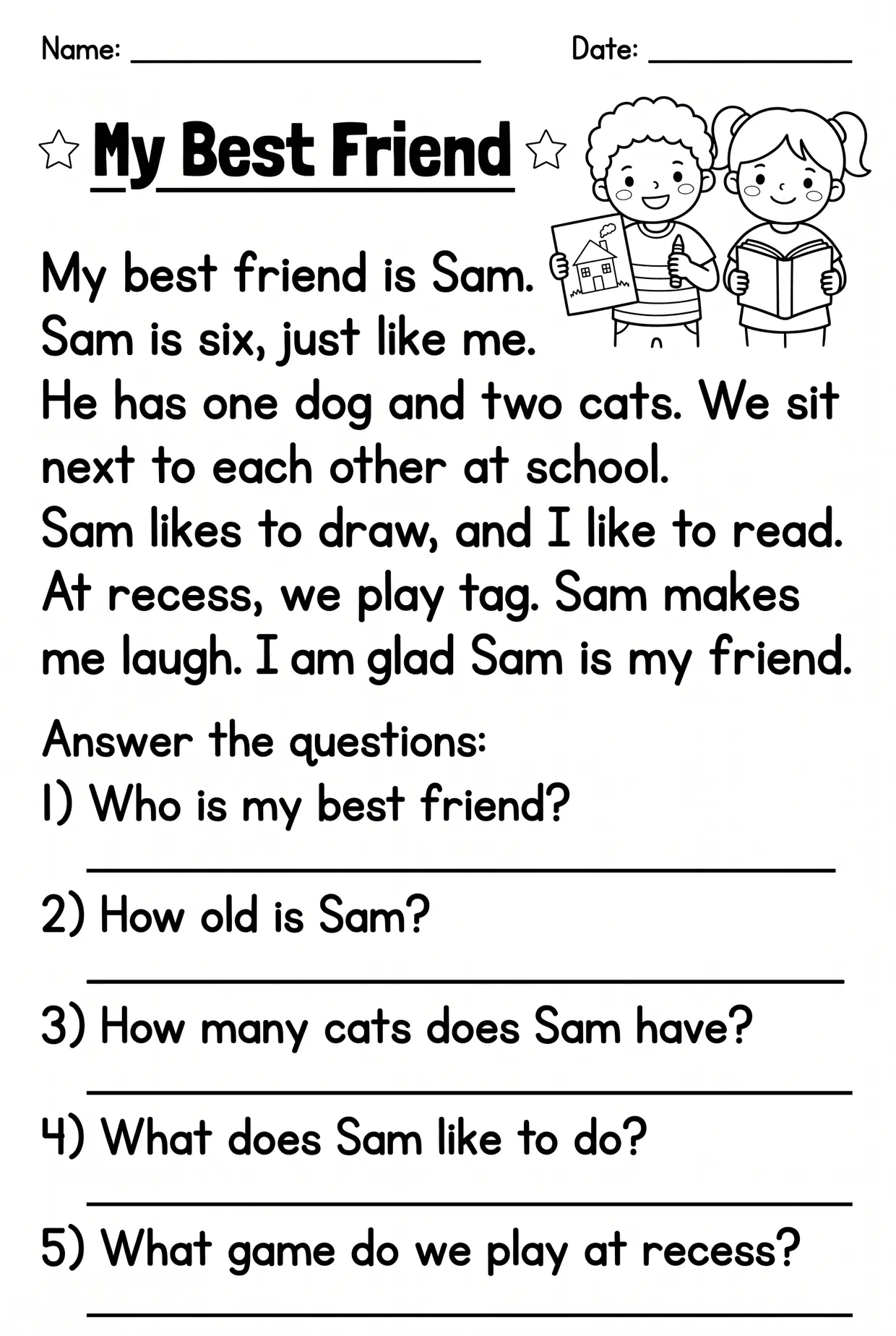
Sam is six, has one dog and two cats, likes to draw, and plays tag at recess. Five questions, each starting with a different question word: who, how old, how many, what and which.
Pancake Morning First Grade Reading Comprehension
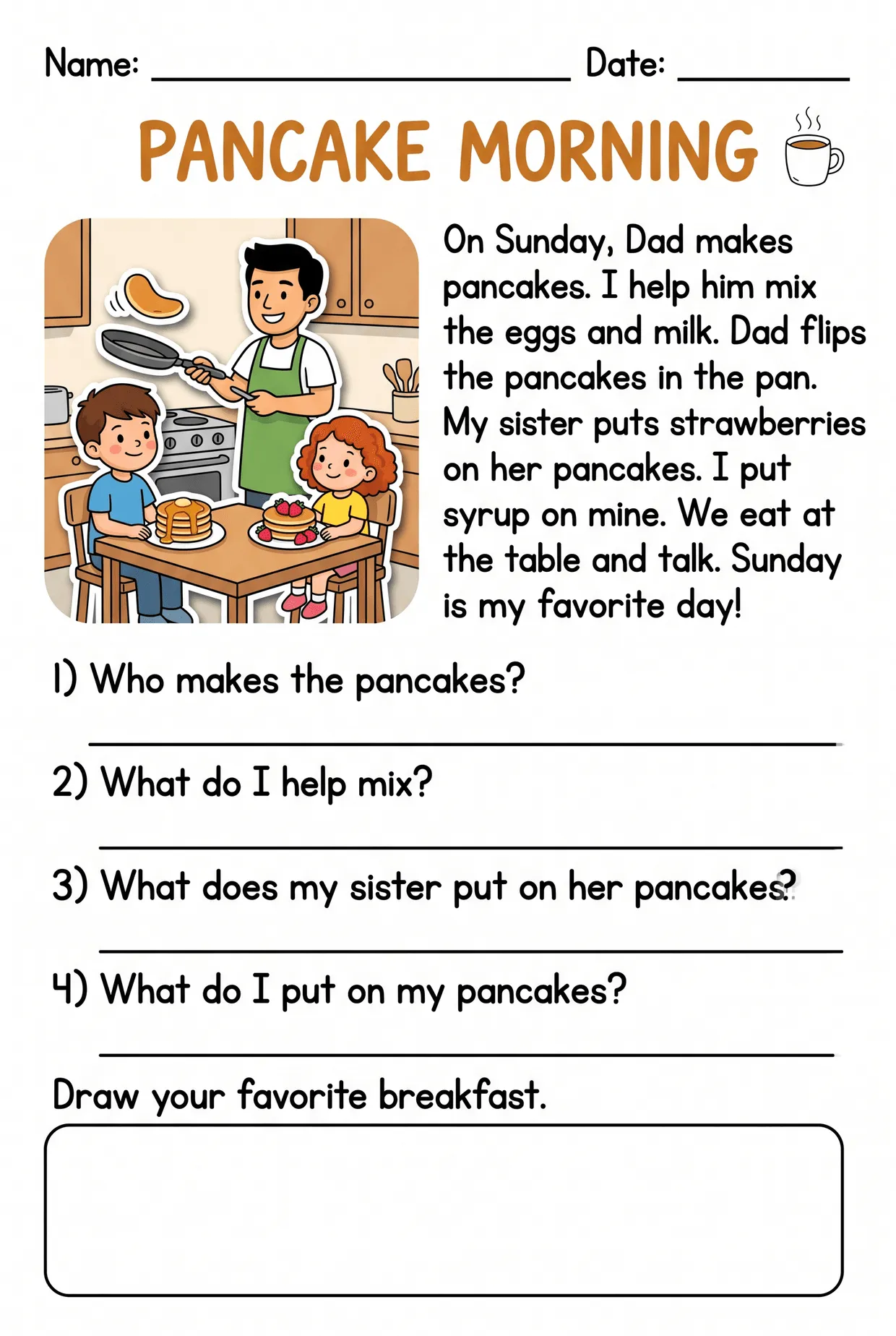
Sunday pancakes with Dad. The narrator helps mix the eggs and milk, a little sister adds strawberries, and the narrator goes for syrup. Four questions, then a box to draw a favorite breakfast.
Tess and Her Kite 1st Grade Reading Comprehension
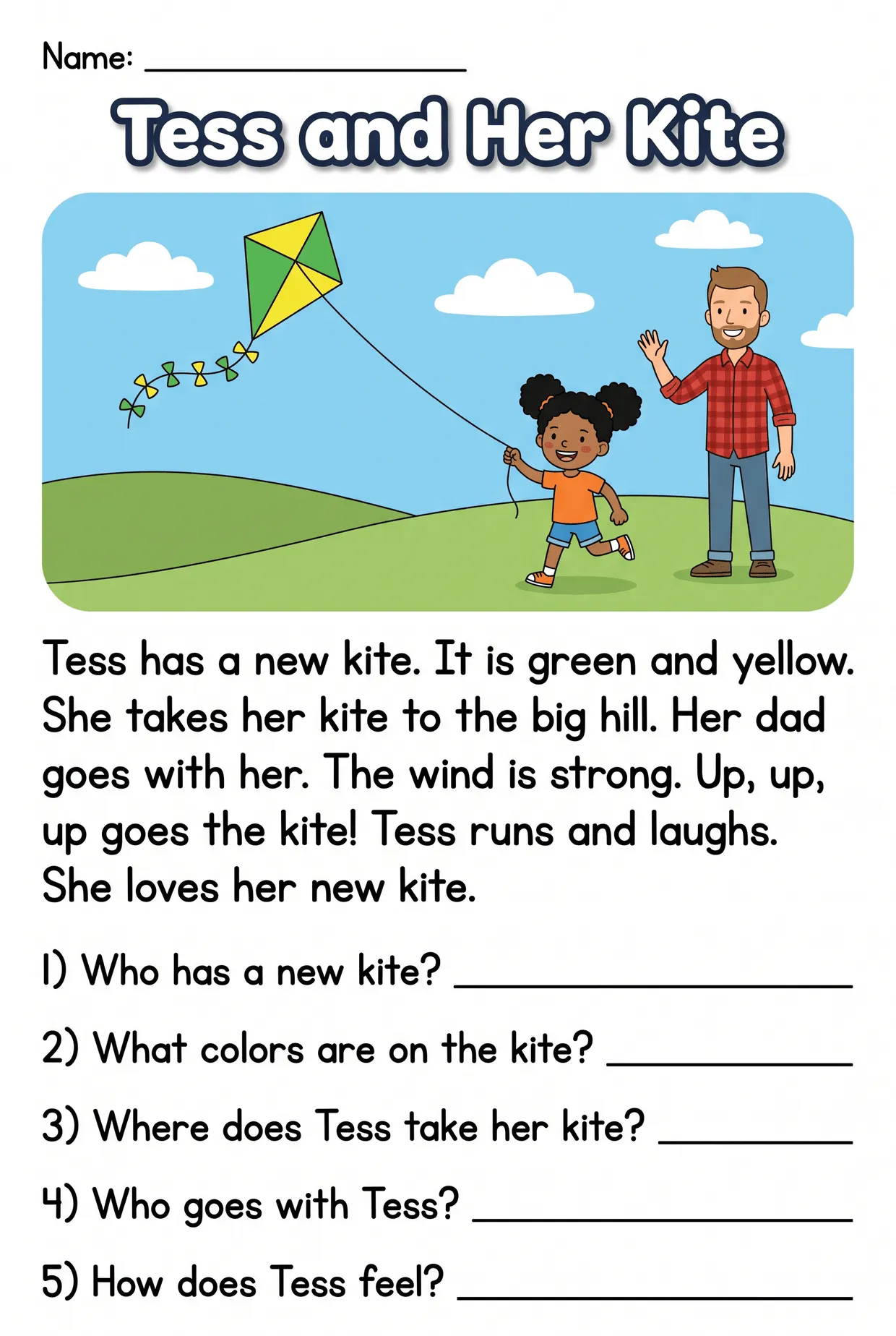
Tess flies her new green and yellow kite on the big hill while her dad watches. Four questions are answered straight from the text, and the fifth asks how Tess feels.
Ben's Birthday Sequencing Reading Comprehension Grade 1
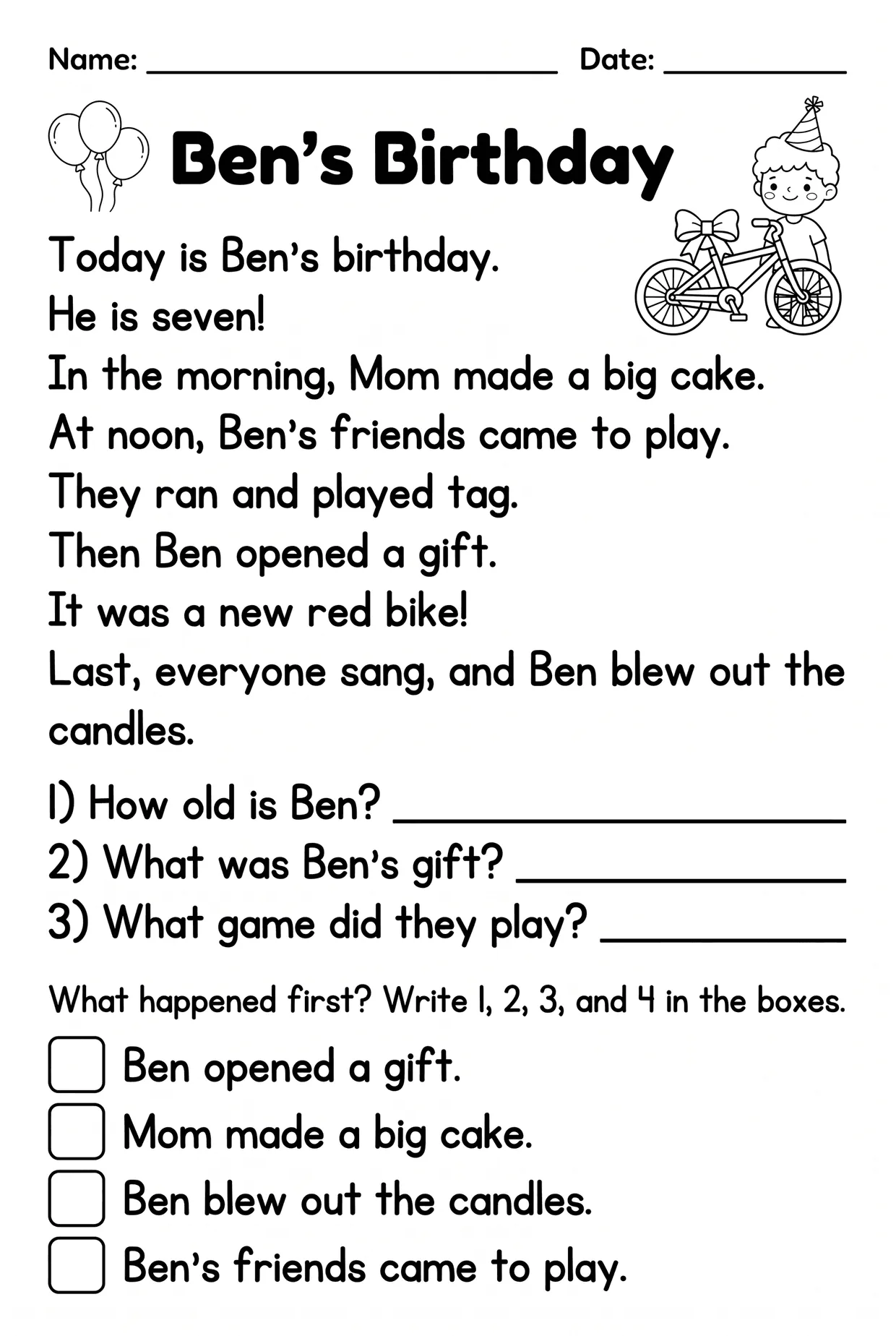
Ben turns seven: a cake in the morning, friends and tag at noon, a new red bike, then candles. Three short questions, then four scrambled events from the story to number 1 to 4.
How a Seed Grows First Grade Reading Comprehension
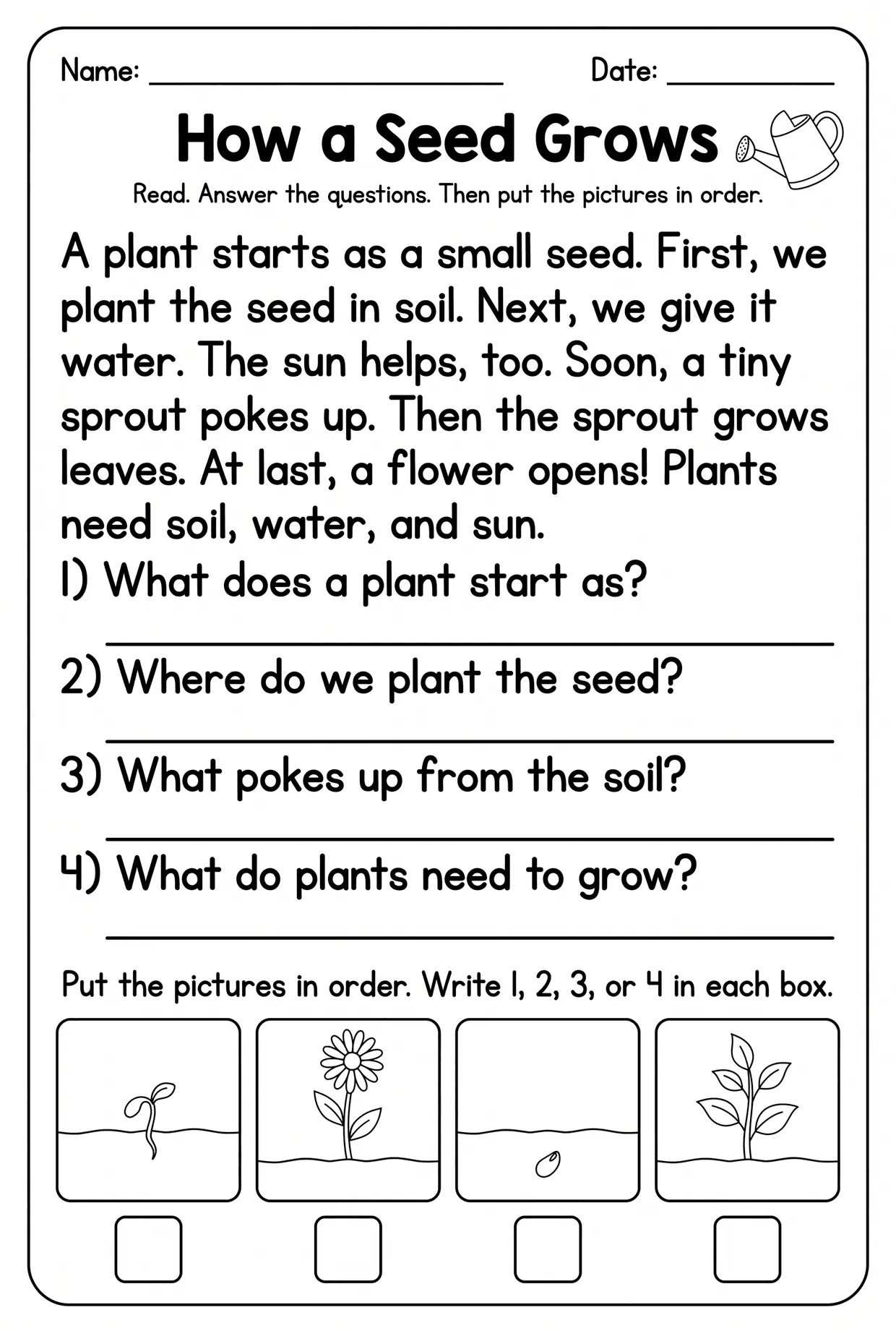
The same skill in nonfiction. A seed goes in the soil, gets water and sun, sprouts, grows leaves and finally flowers. Four questions, then four pictures to number in order.
All About Bees 1st Grade Nonfiction Reading Worksheet
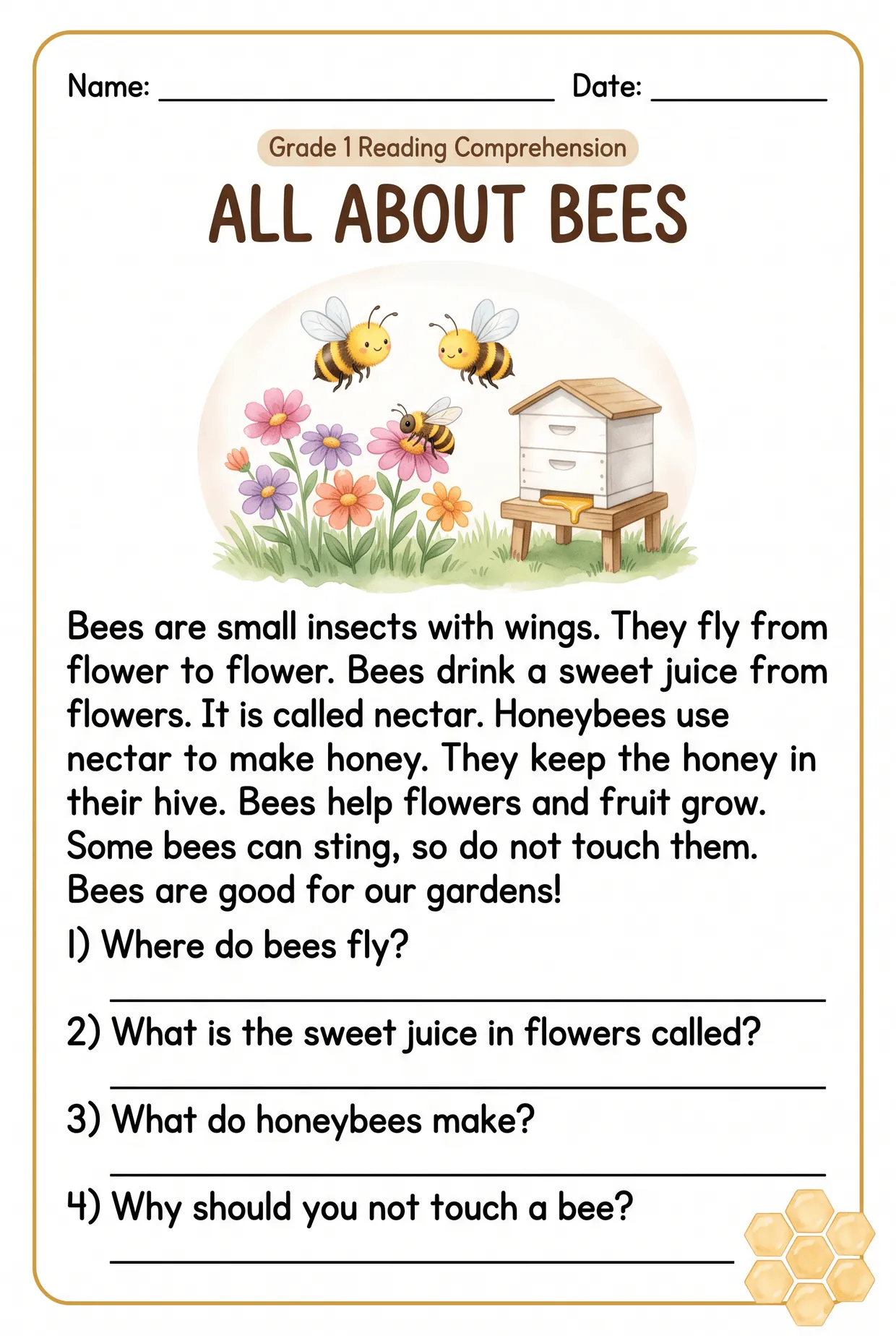
Bees fly from flower to flower, drink nectar, and turn it into honey in the hive. Some can sting, so it is best not to touch them. Four written questions, the last one a why question.
Mia's Magic Crayon Grade 1 Reading Comprehension Story
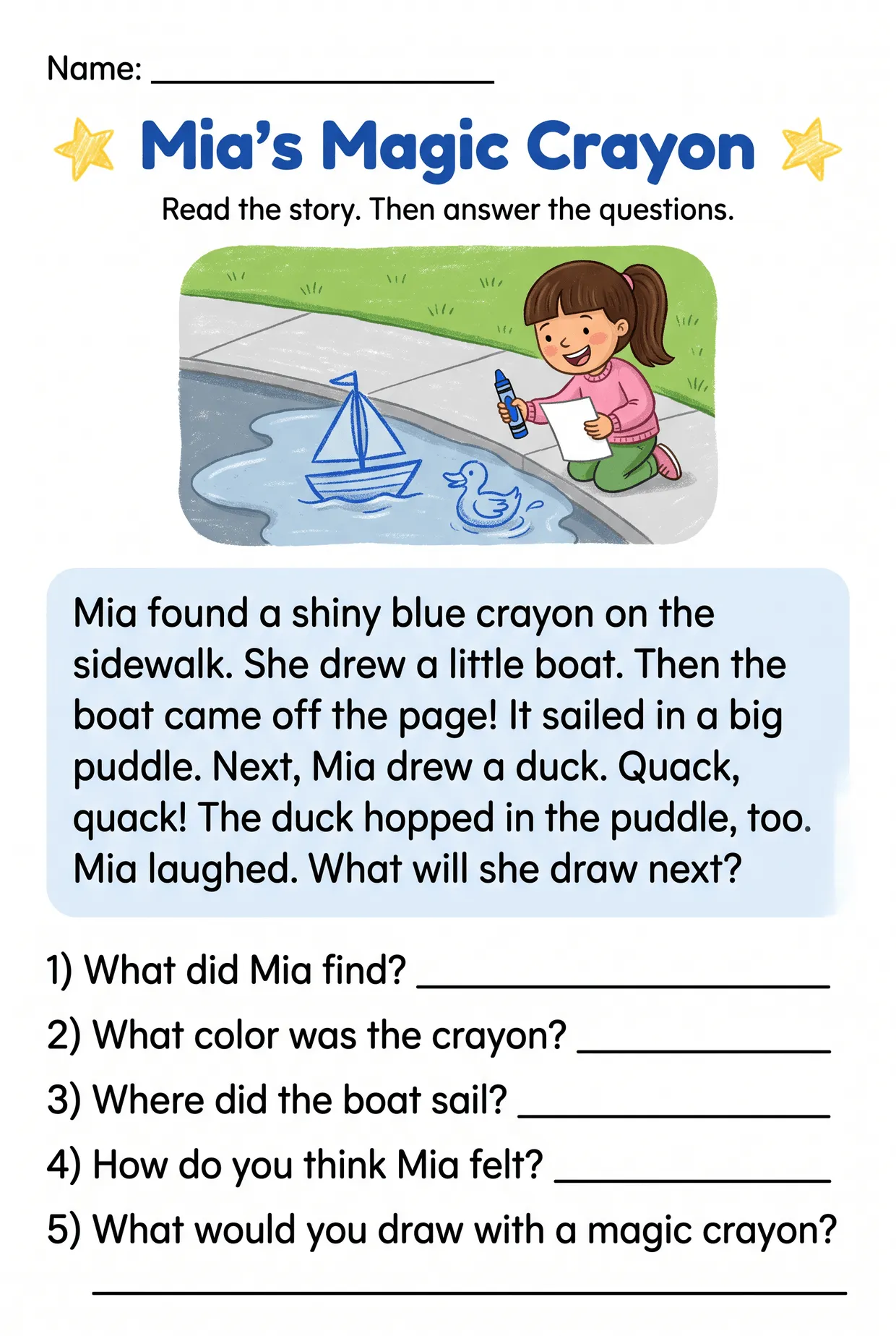
Mia finds a shiny blue crayon, and the boat she draws sails off the page into a puddle, followed by a duck. Three questions from the text, one about how Mia felt, and one about what the child would draw with a magic crayon.
One more thing.
If your kids finish a unit and you're not sure what to do next, my honest advice: don't move on yet. Spend a week mixing these in as warm-ups. Fluency isn't a unit, it's a habit, and the sheet that builds it is usually the one they ask to do again.