Possessive adjectives are CCSS L.1.1d, which asks first graders to use personal and possessive pronouns. In practice the trouble is never my or your. It is its for an animal, and their for two people, and those two are what this set keeps circling back to.
The order matters more than usual here. Four of the ten give a word bank, three give pictures that settle it, and the last two take all the help away. Working through them in order means a child meets the rule with support, then without, rather than being asked to produce all seven words cold.
Six of the ten are plain black on white and download as true vector PDFs, so they print sharp at any size and cost almost nothing in ink for a class set.
Cut and Paste Possessive Adjectives Worksheet
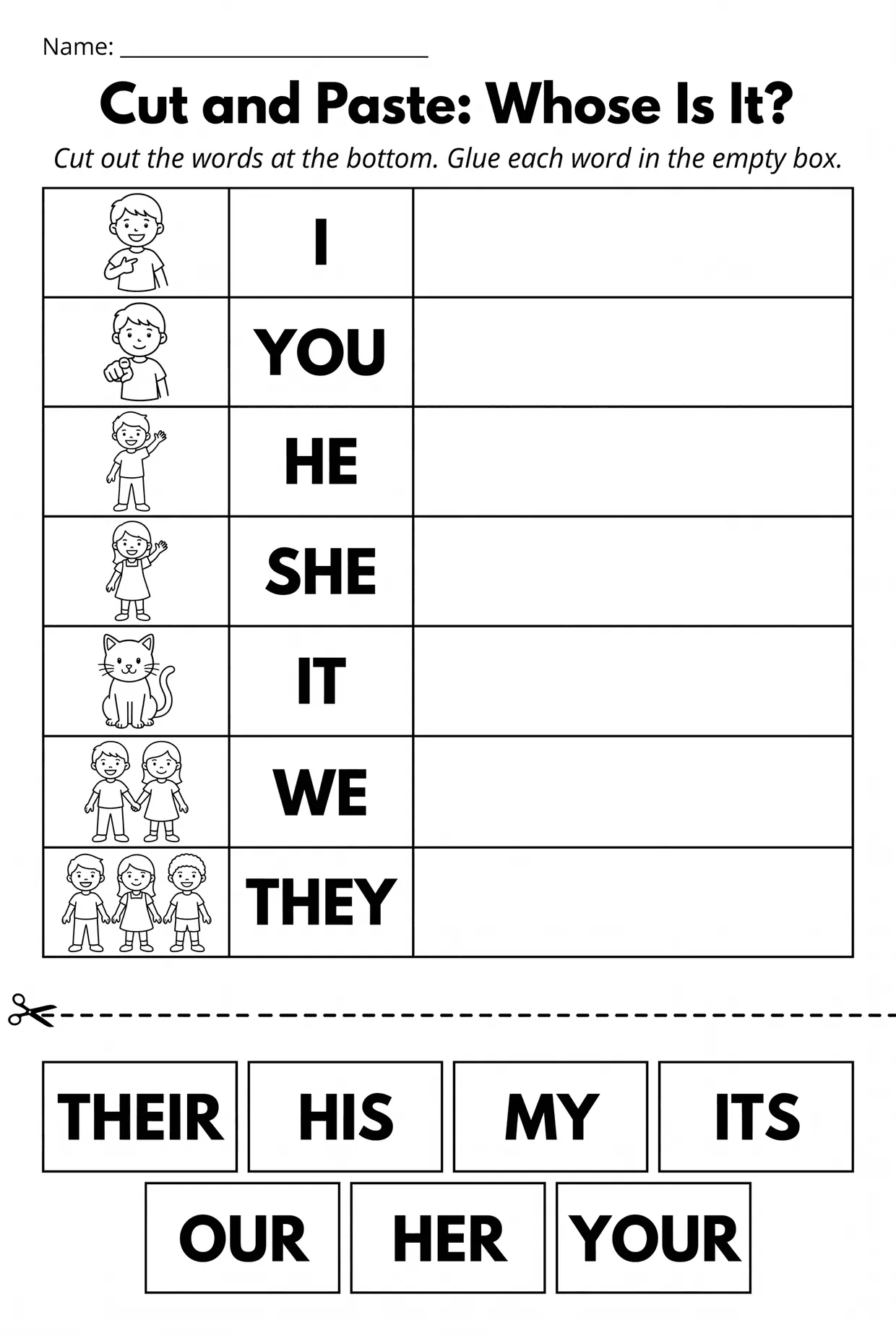
Start here, before any sentences. Seven rows headed I, YOU, HE, SHE, IT, WE and THEY, and seven words to cut from the bottom of the page and glue alongside. This is the only sheet in the set that shows the whole system at once, so the shape of it is visible before a child has to use it.
Circle the Correct Possessive Adjectives Worksheet
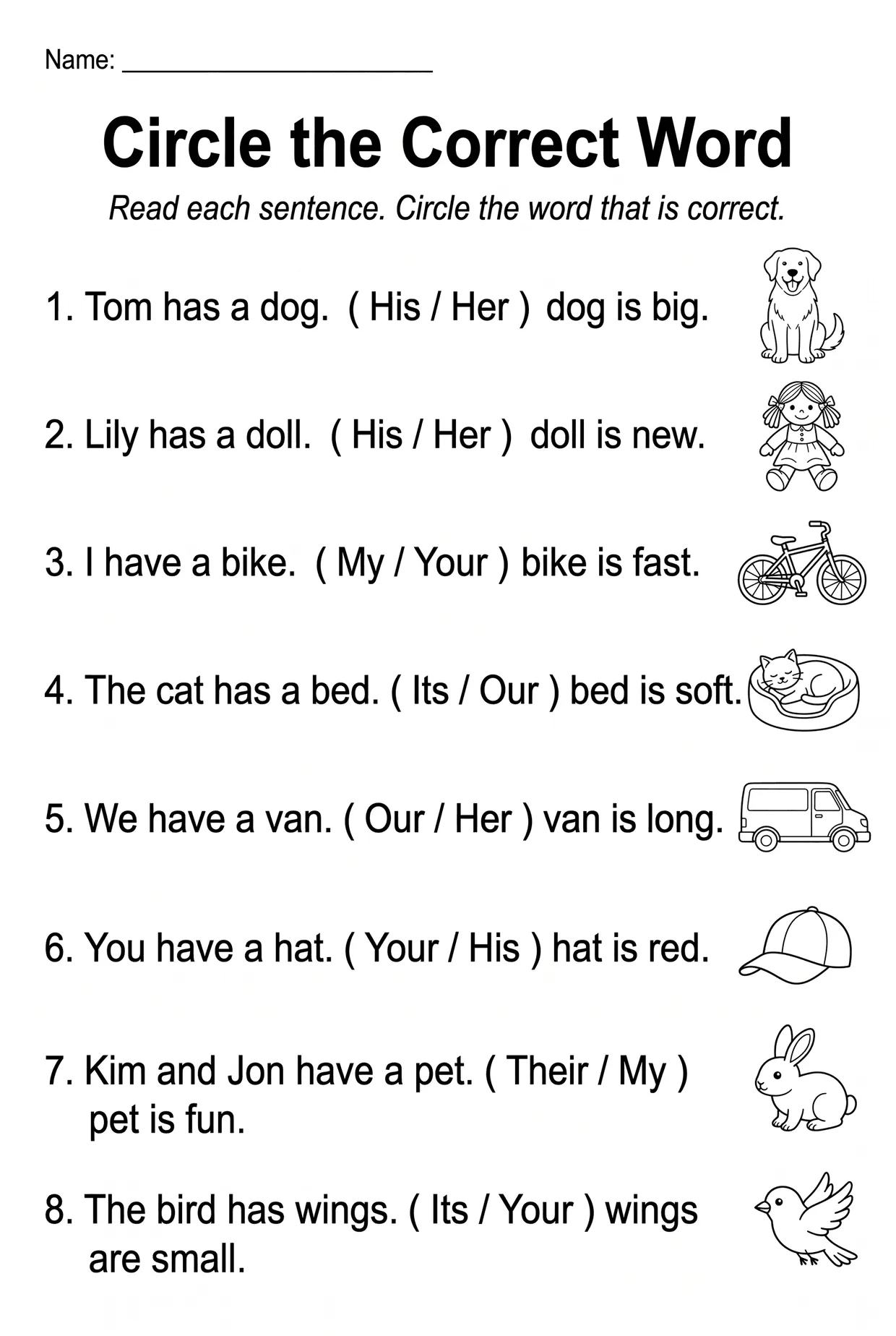
Eight sentence pairs with two words in brackets. Tom has a dog, so his dog is big. The first sentence always names the owner, so a child does not have to hold the rule in their head, they just notice who was mentioned and pick to match.
Match It Up Possessive Adjectives Worksheet for Grade 1
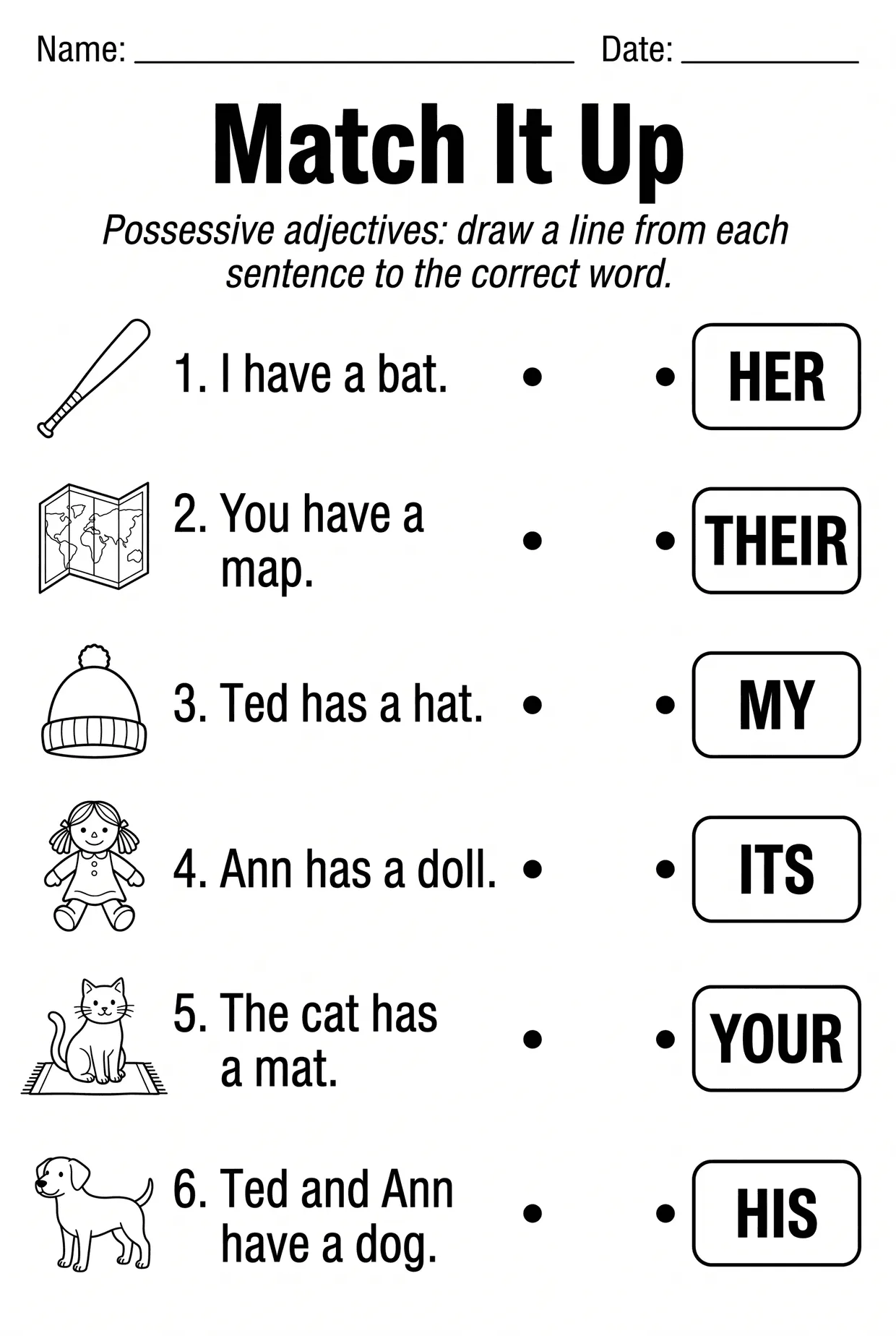
Six sentences on the left, six words on the right, join them with a line. Every word is used exactly once, so the two that children find hardest, its for the cat and their for two people, are the ones elimination rescues.
Trace and Write Possessive Adjectives Worksheet
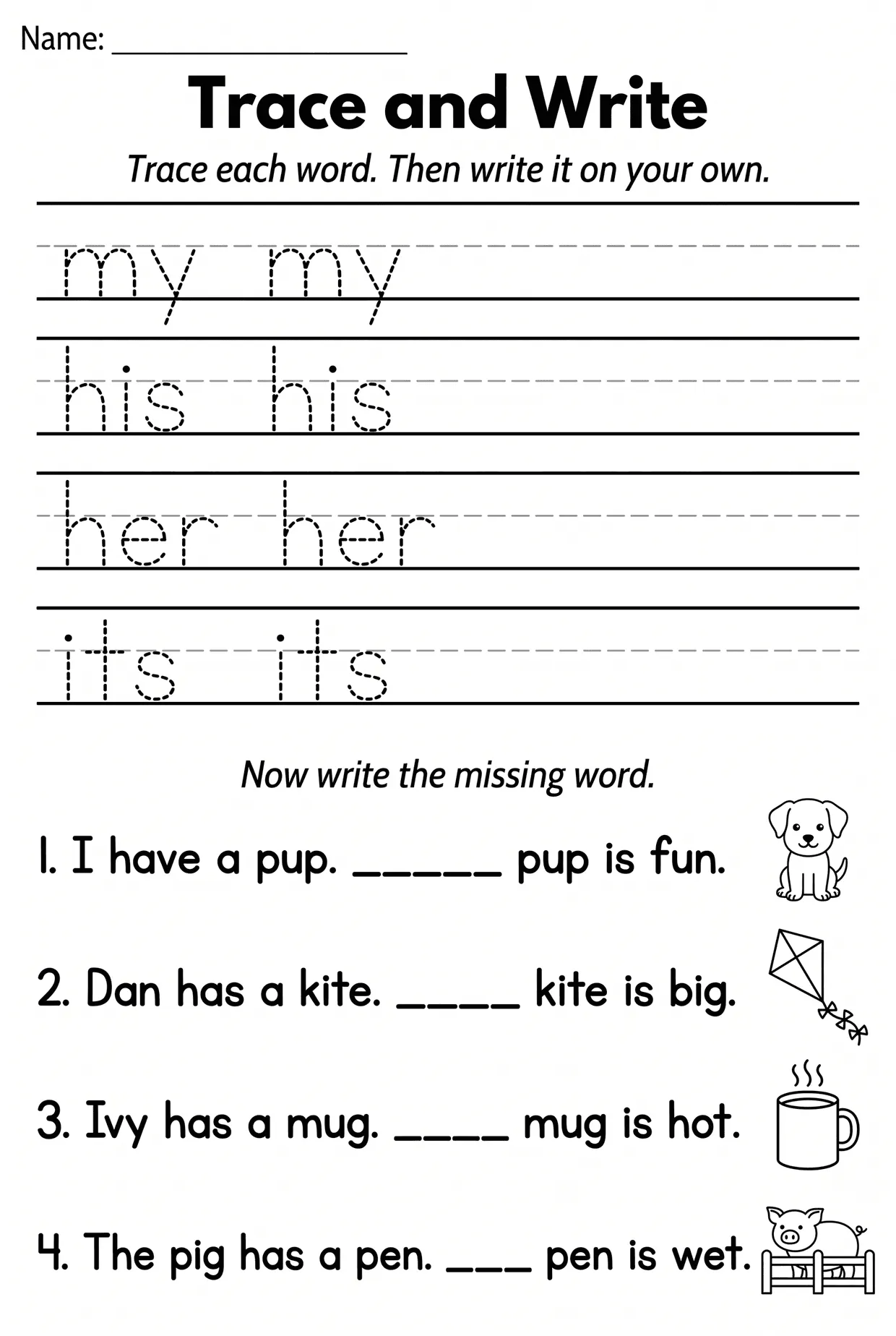
The top half is handwriting lines with my, his, her and its in dotted letters to trace and then continue alone. The bottom half is four sentences with a blank and no word bank anywhere on the page.
Having traced all four words a few minutes earlier is the only support a child gets, which is the whole reason the two halves share a sheet.
My His Her Its Possessive Adjectives Worksheet
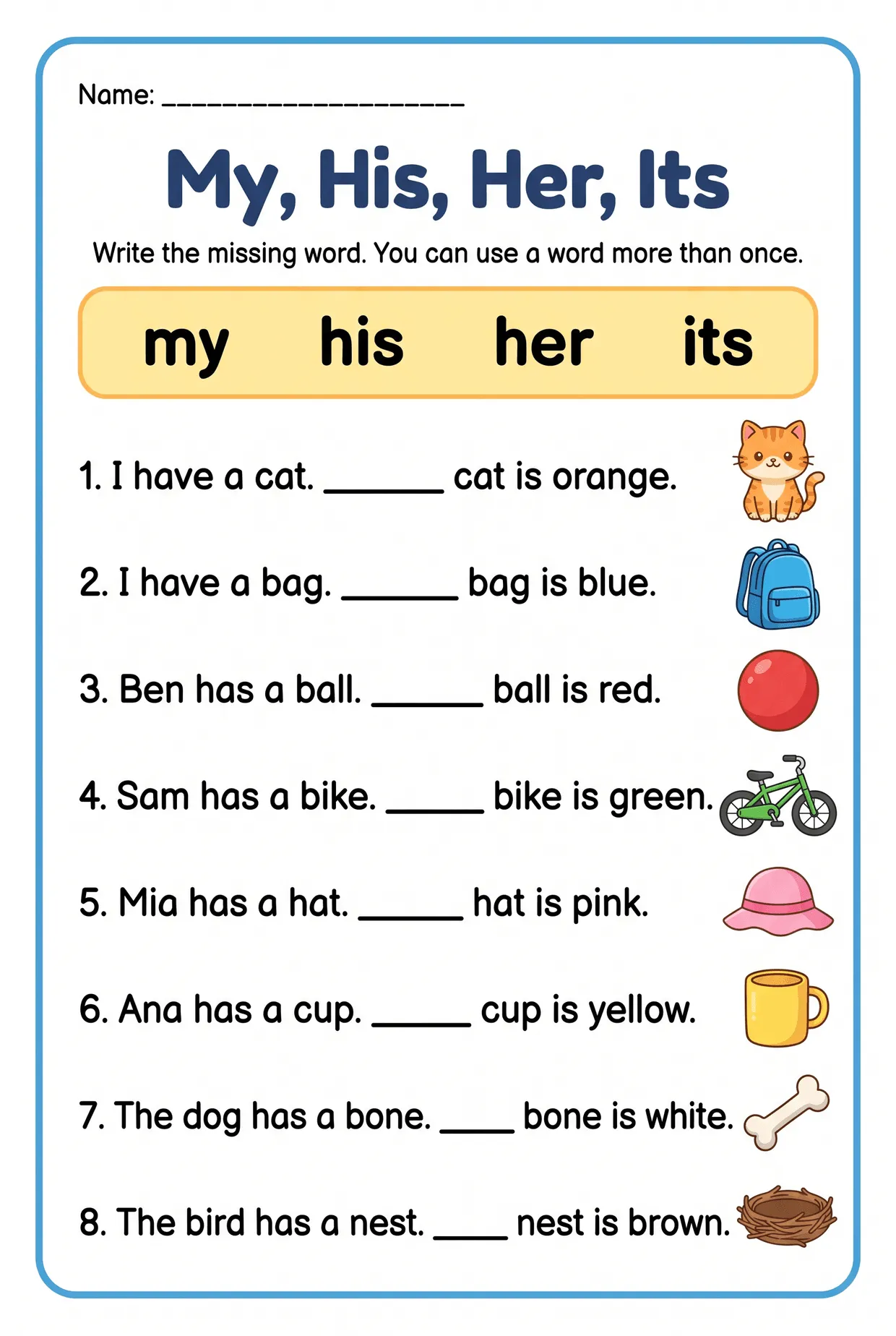
Eight sentences and a word bank holding only my, his, her and its. Our, your and their are deliberately held back so the page does not become a memory test the first time a child writes rather than circles.
Color by Code Possessive Adjectives Worksheet
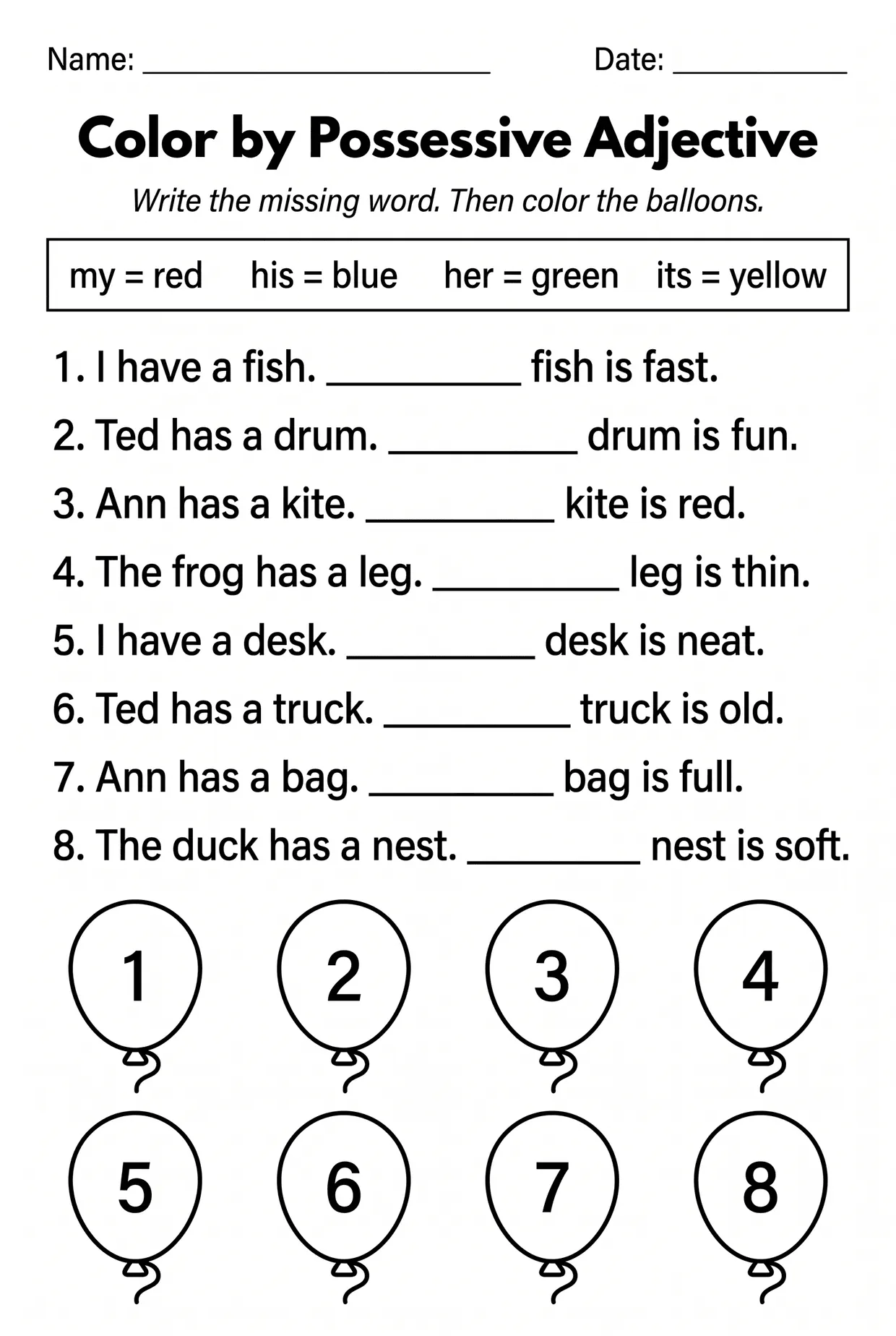
The same four words, but each answer now decides the color of a numbered balloon. My is red, his is blue, her is green, its is yellow, and each word is the answer exactly twice.
So a finished page has two balloons of each color. A child who ends up with four blues can see that something is wrong without being told, and goes back over their answers to find it.
Possessive Adjectives at the Park Worksheet
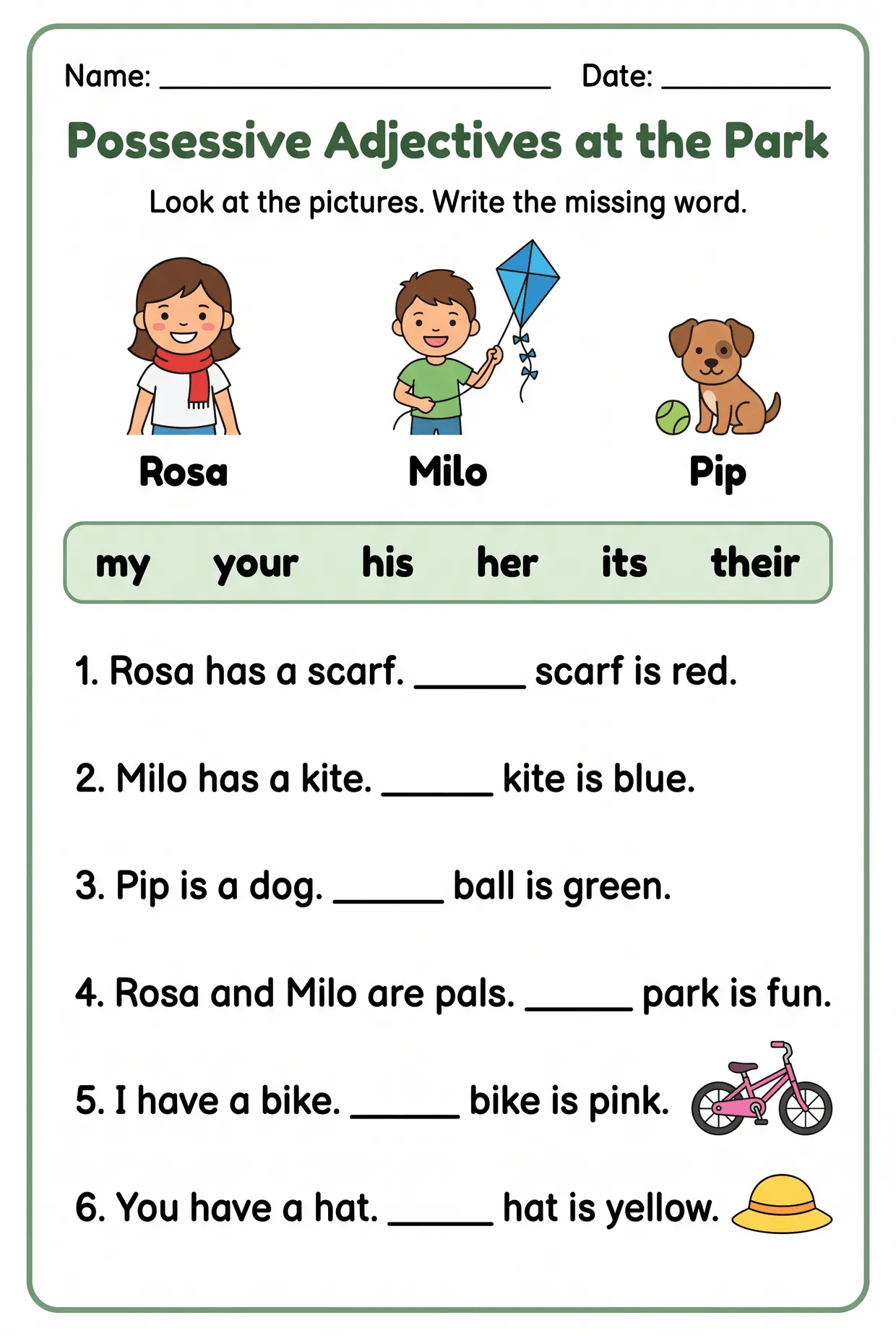
Rosa, Milo and Pip the dog, with the full bank of my, your, his, her, its and their, and six sentences that use each one exactly once. Meeting your and our for the first time does not stall the page, because a child sure of four can reason out the last two.
Meet Jax and Nina Possessive Adjectives Worksheet
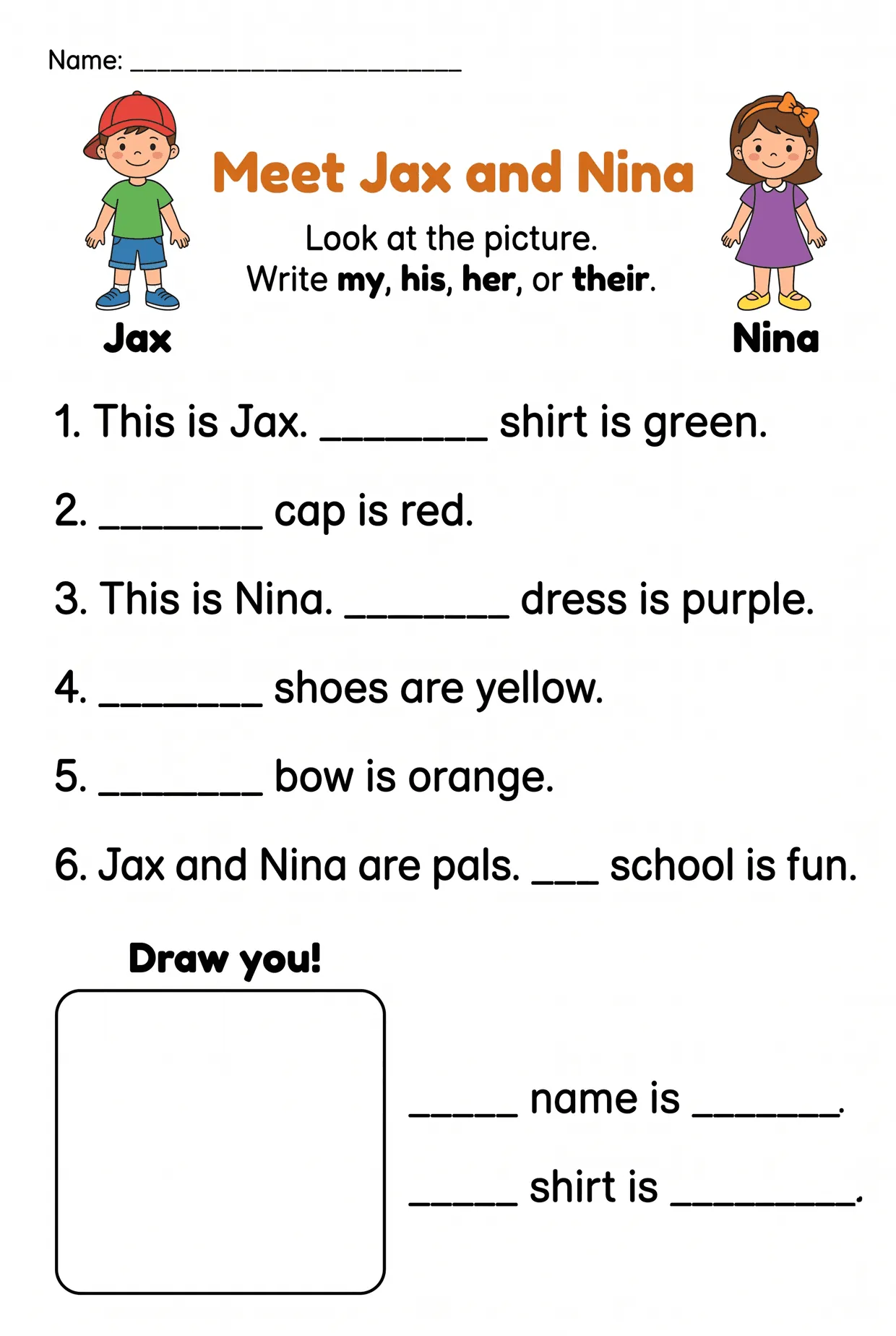
Six sentences describing two characters, but the subject is not repeated each time. Sentence one names Jax, then sentence two just says the cap is red, so the child has to carry him into the next line. That is a real step up from matching one sentence at a time.
A box at the bottom to draw yourself in, with two lines starting my name is and my shirt is.
Sort the Possessive Adjectives Worksheet Into Four Boxes
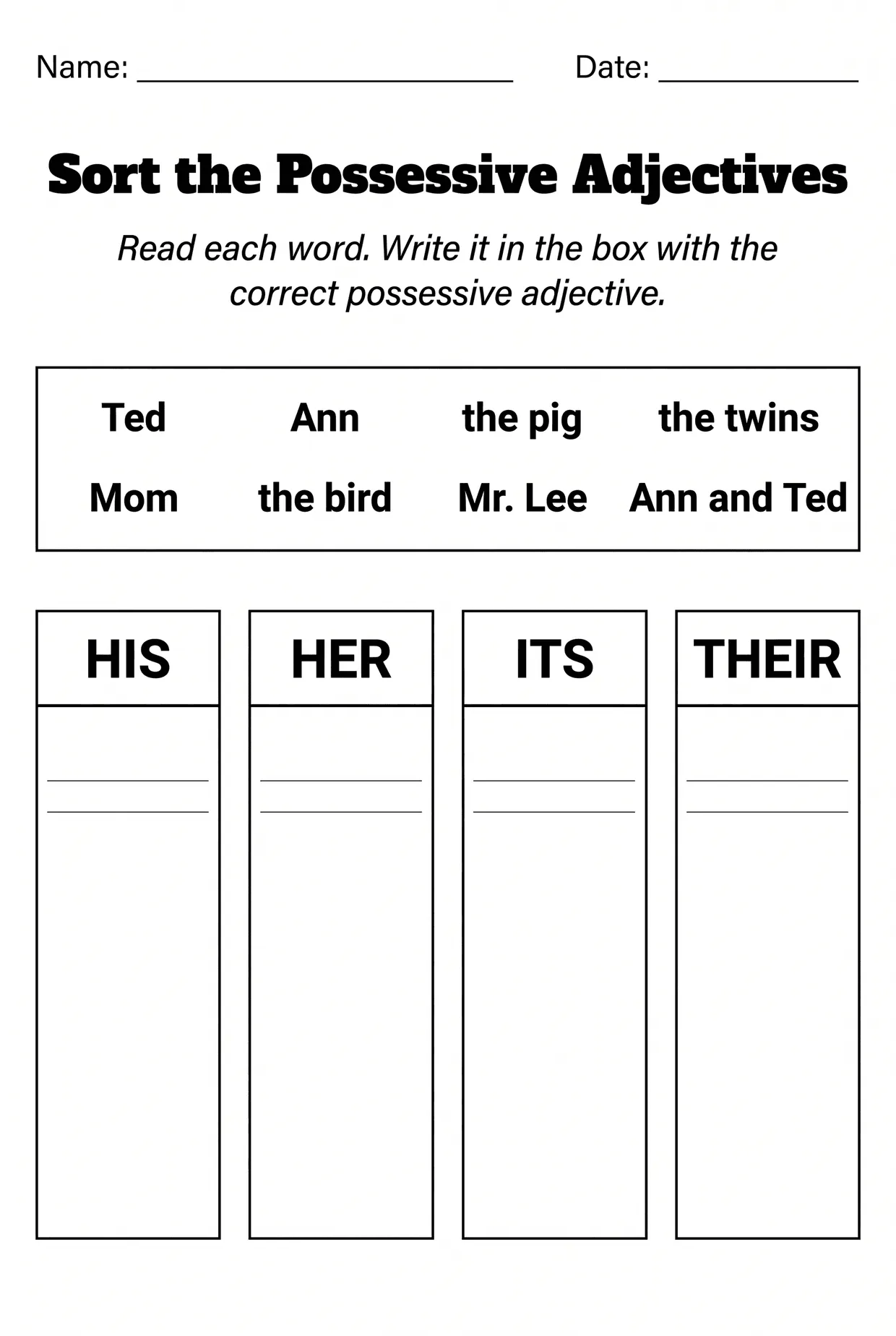
Eight owners and four columns headed HIS, HER, ITS and THEIR. No sentence, no blank, no context to lean on, just the owner and which word goes with it. A child who has been getting right answers off the pictures elsewhere finds out here whether they have the rule.
Yes or No Possessive Adjectives Worksheet
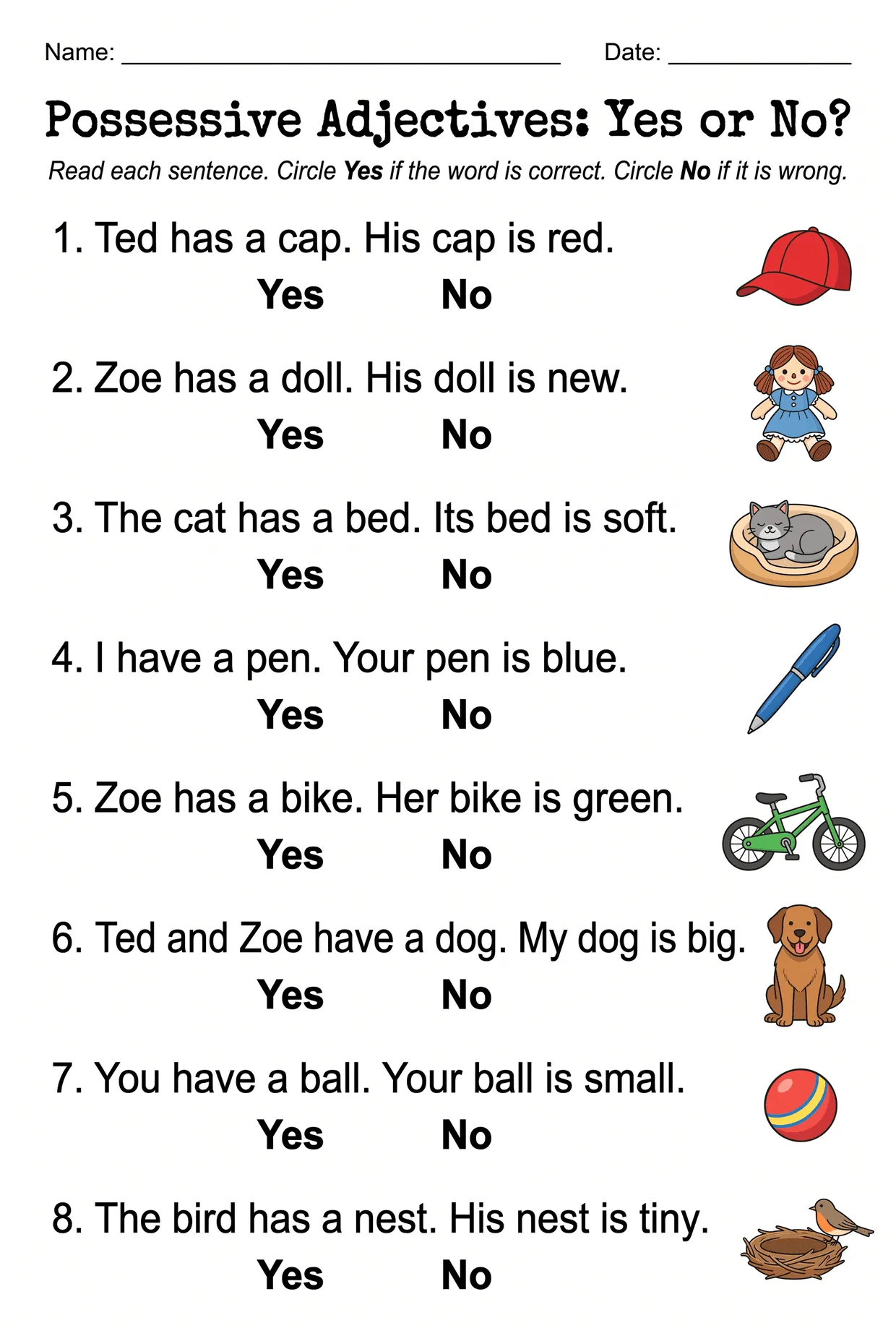
Eight sentences, each already filled in, and the child circles Yes if the word is right and No if it is wrong. Spotting a wrong word is harder than supplying a right one, because a child has to hold the sentence against the rule and judge it rather than just find something that fits.
Four are right and four are wrong, and each wrong one is wrong differently. A boy's word for a girl, your where my belongs, my for two people, and his given to a bird.
One more thing.
If your kids finish a unit and you're not sure what to do next, my honest advice: don't move on yet. Spend a week mixing these in as warm-ups. Fluency isn't a unit, it's a habit, and the sheet that builds it is usually the one they ask to do again.