All About My Body: Body Parts Matching Worksheet
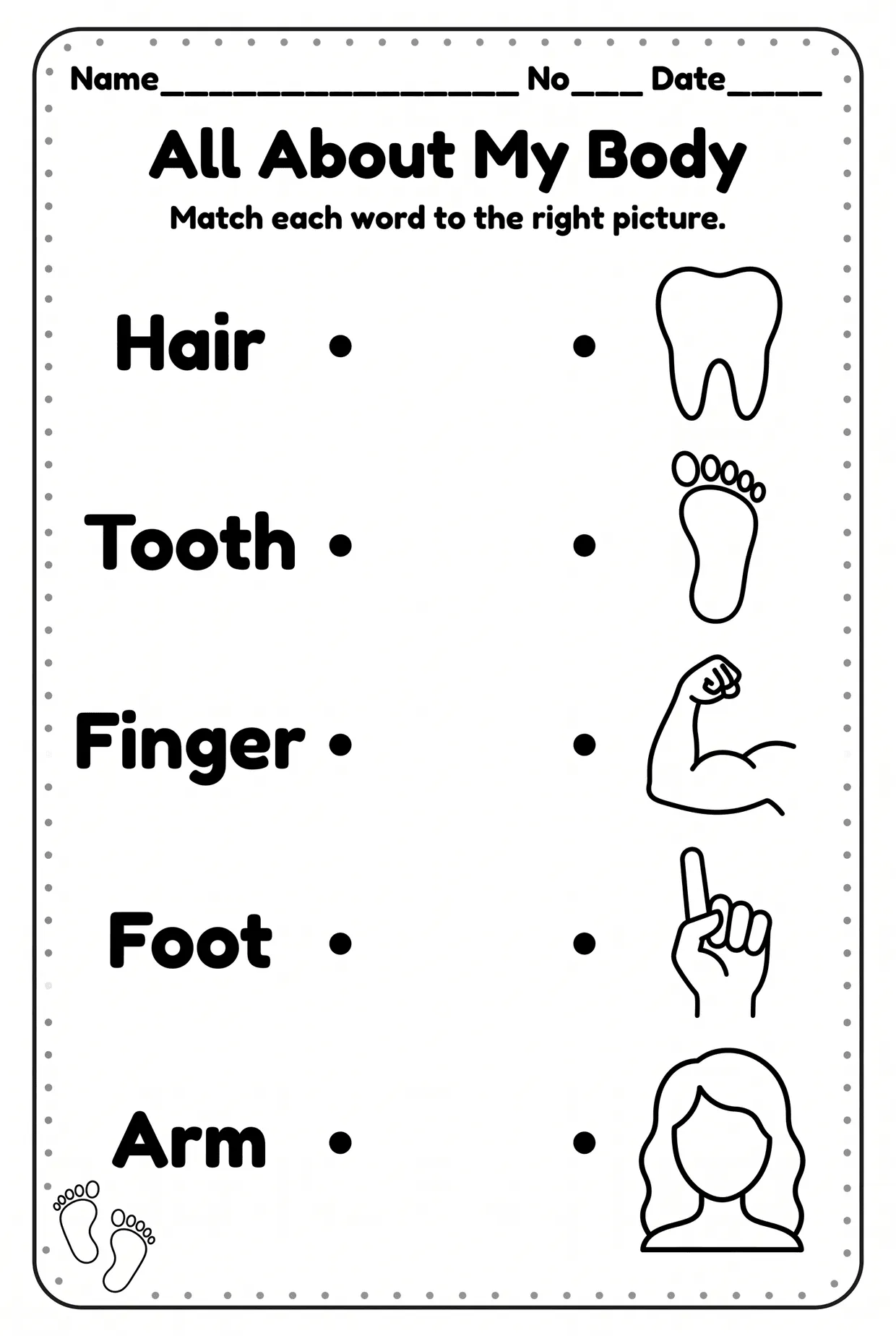
Five words down one side and five line-art pictures down the other: hair, tooth, finger, foot and arm. Join each pair with a line between the dots.
Five is the right number for a first matching page. There is enough room to work through every word slowly, and the drawings are plain enough that a wrong line means the word was misread, not that the picture was confusing.
Body Parts Worksheet: Match the Picture to the Word
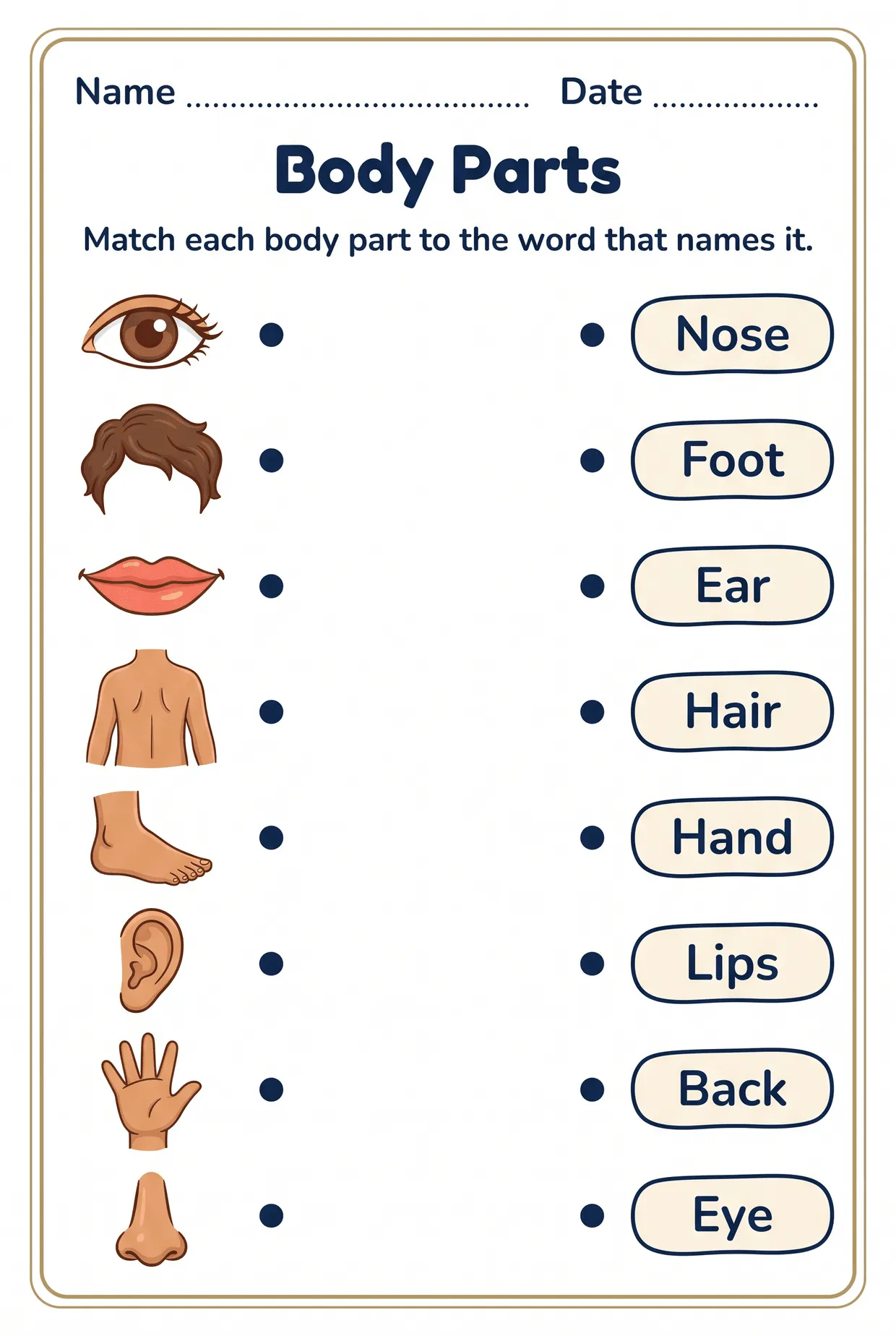
Eight full-color close-ups on the left, eight words in cream buttons on the right: eye, hair, lips, back, foot, ear, hand and nose.
The close-up framing is the difficulty, and it is there on purpose. Cropped away from the body, a hand and a foot share a shape, so a child who skims will join the wrong pair.
Parts of My Body: Picture and Word Matching Worksheet
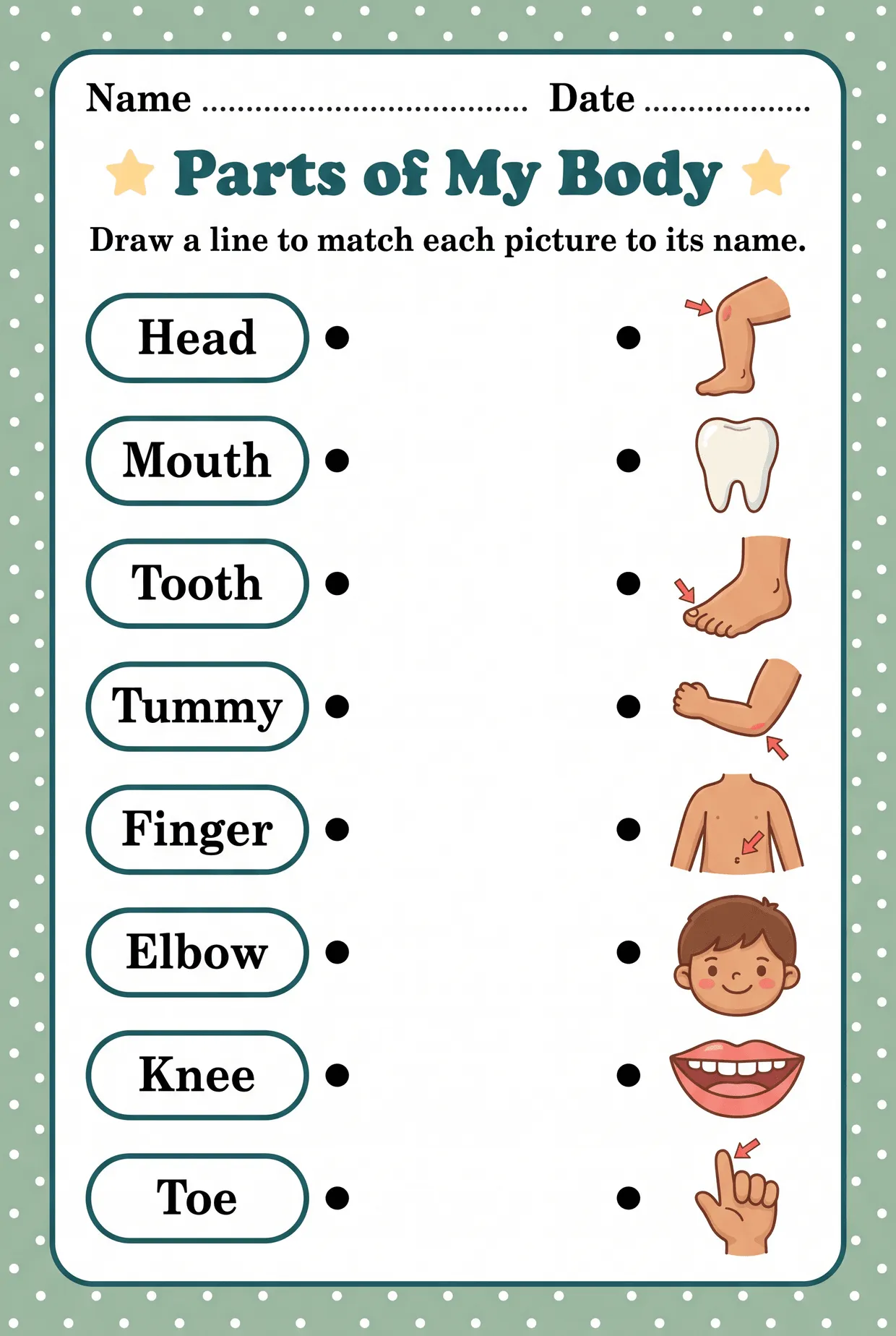
The same skill pointed the other way, with a new word set: head, mouth, tooth, tummy, finger, elbow, knee and toe. Small red arrows mark the exact spot on the pictures that need one.
Those arrows are what make elbow, knee and tummy usable at this age. Naming a part in the middle of a limb is a step past naming a whole hand, and without a pointer a child is only guessing which bit of the arm is meant.
Label the Body Parts Worksheet With a Word Bank
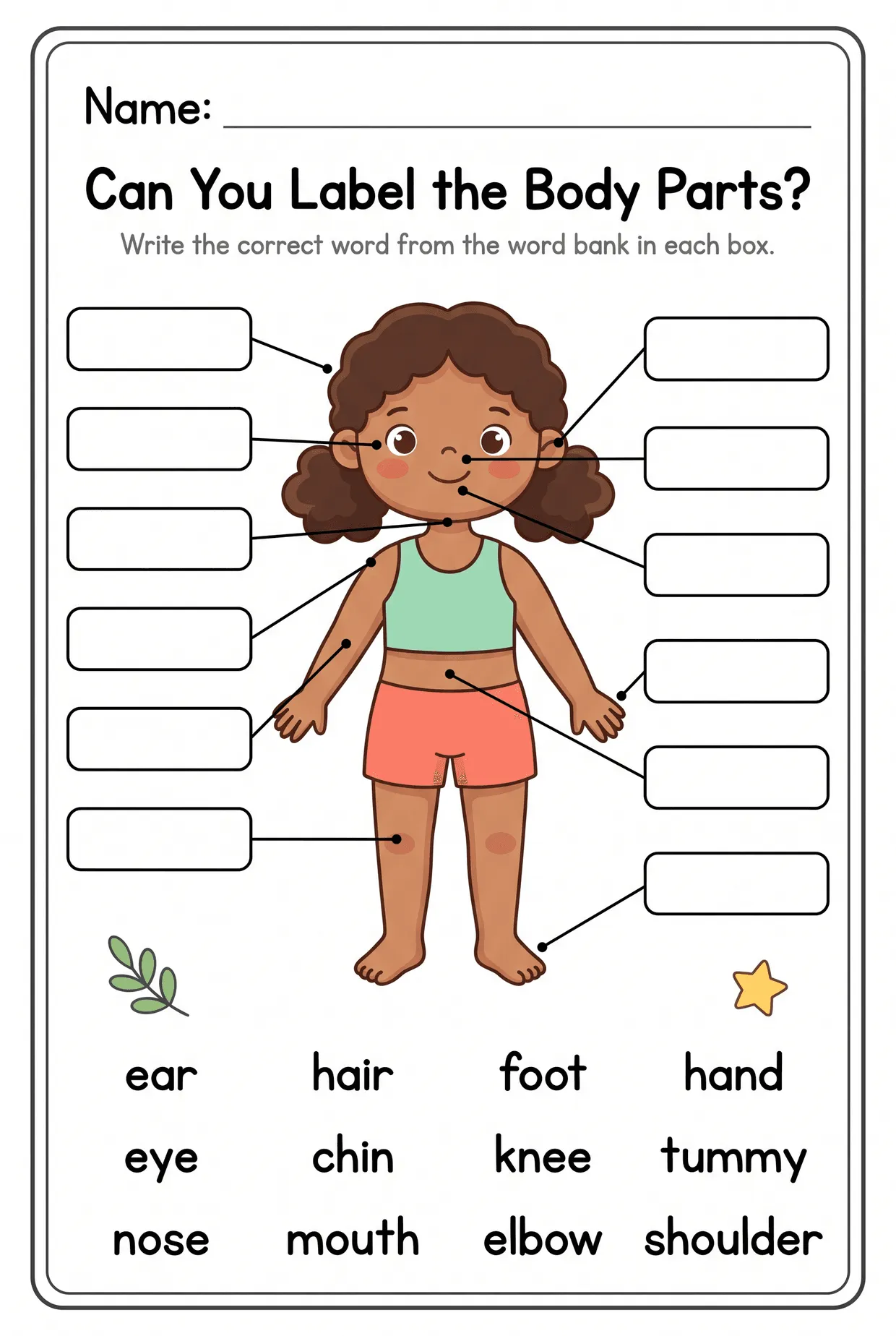
A full-color girl with twelve empty boxes around her, a line running from each box to the part it names, and a twelve-word bank at the foot of the page: ear, hair, foot, hand, eye, chin, knee, tummy, nose, mouth, elbow and shoulder.
This is the first sheet in the set that asks for writing, and the word bank is what keeps it fair. Nobody has to produce a spelling from memory, so the thinking goes into following the line and the hand work goes into copying neatly.
The Human Body: Label 10 Body Parts Worksheet
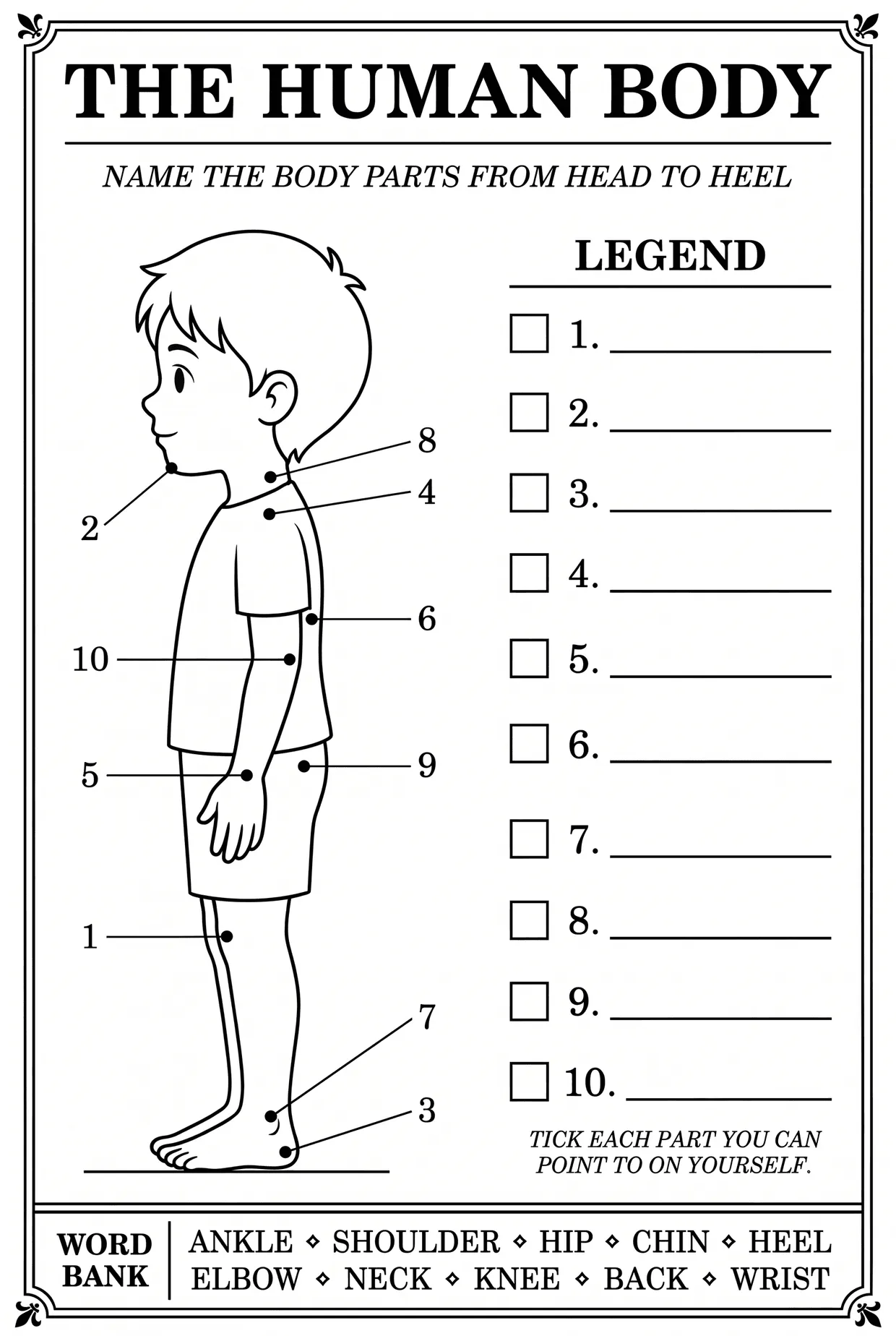
A boy in side view with ten numbered pointers running from chin to heel, a numbered legend to fill in, and a word bank holding ankle, shoulder, hip, chin, heel, elbow, neck, knee, back and wrist.
The profile view is the step up. A side-on figure hides the landmarks a child normally keys off, so the wrist, the elbow and the heel have to be found by where they sit rather than by recognising a familiar front-on picture.
Body Word Hunt: Circle 16 Body Parts Worksheet
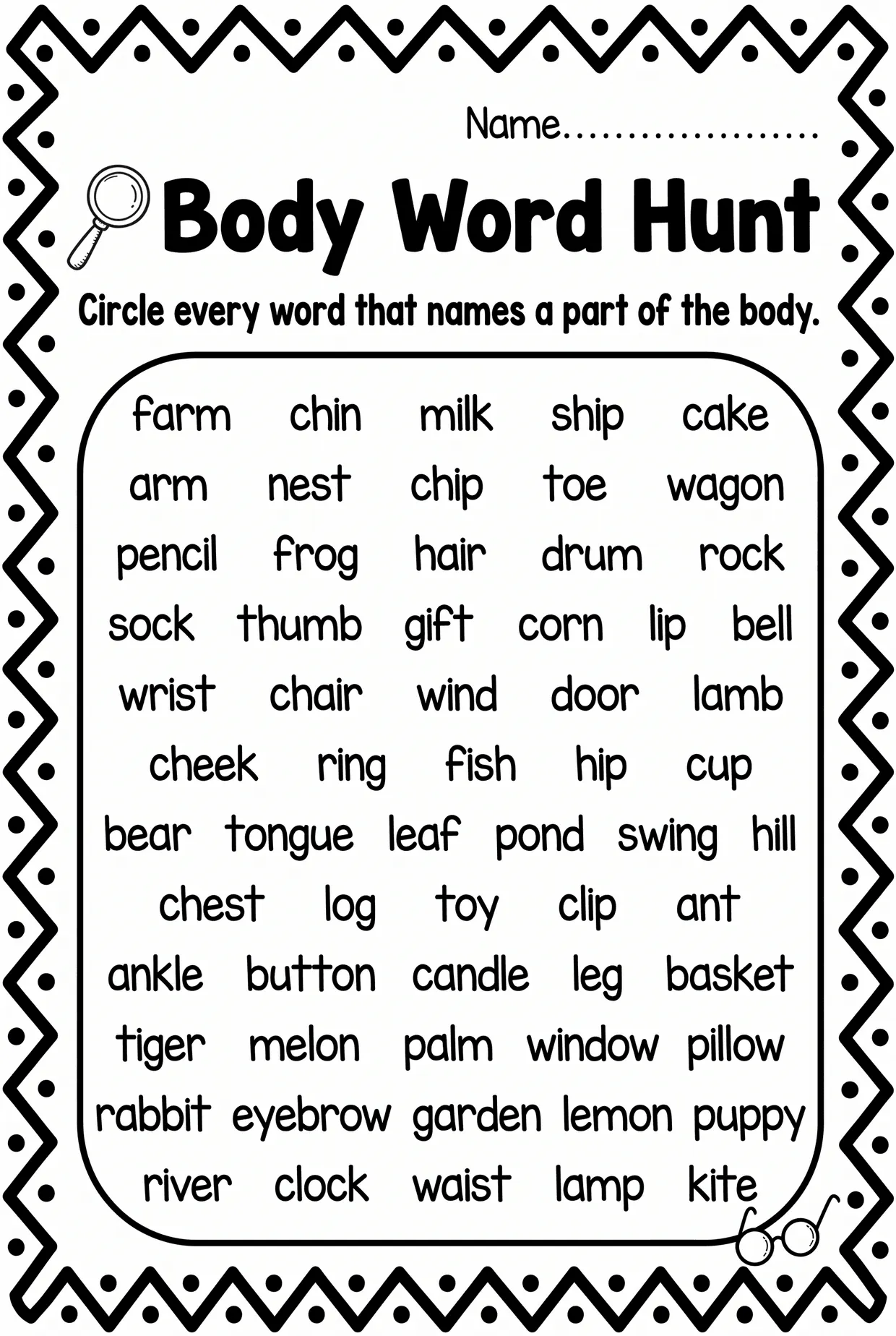
Sixty-two short words in a box, sixteen of which name a part of the body: chin, arm, toe, hair, thumb, lip, wrist, cheek, hip, tongue, chest, ankle, leg, palm, eyebrow and waist. Everything else is ordinary first grade reading, from wagon to lemon.
There is no list to check against, which is the whole point. A word search hands over the answers; this one asks a child to read a word, work out what it means, and decide.
Head to Toe Body Parts Word Search Worksheet
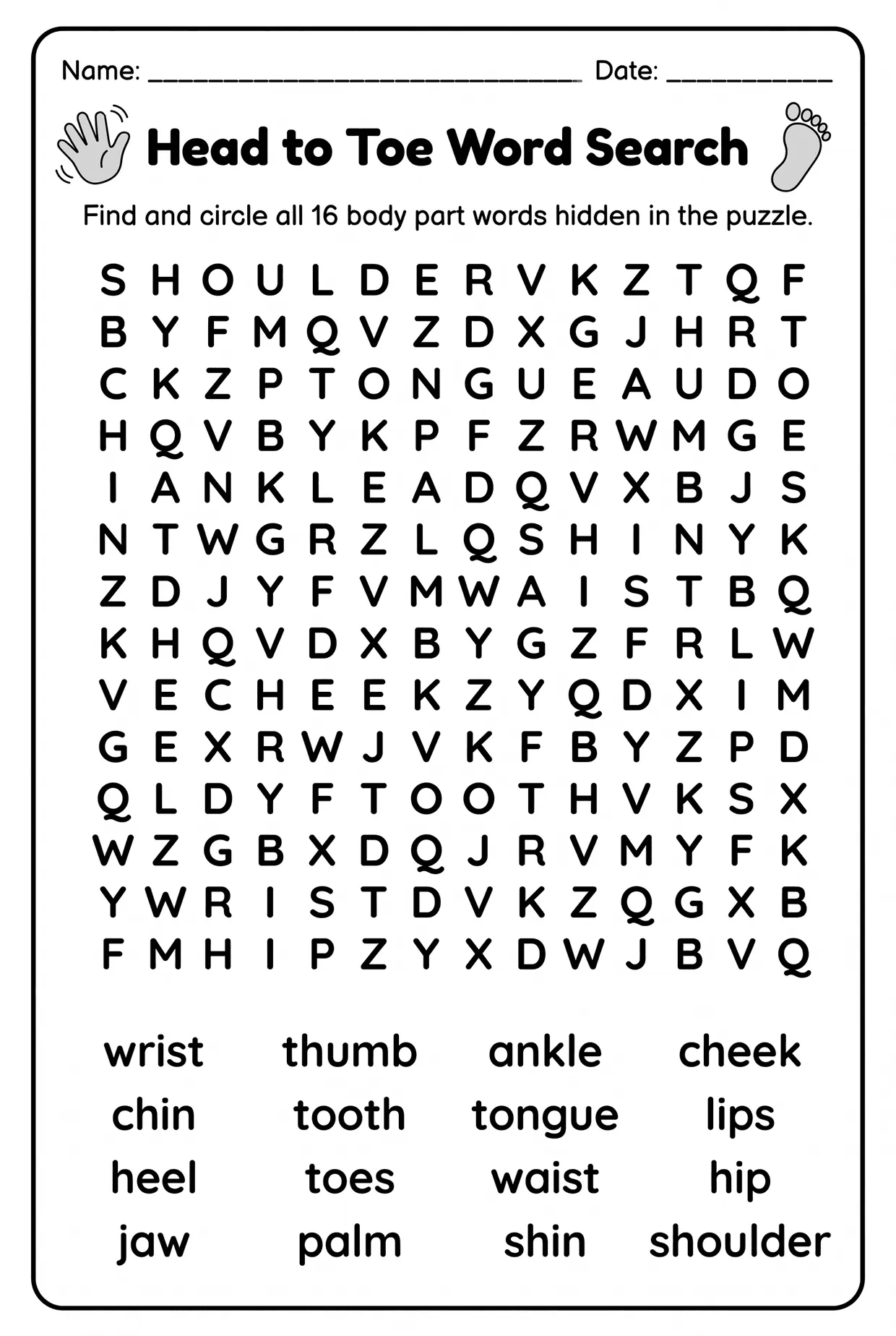
A fourteen by fourteen grid with sixteen words hidden across and down, no diagonals: wrist, thumb, ankle, cheek, chin, tooth, tongue, lips, heel, toes, waist, hip, jaw, palm, shin and shoulder. Shoulder runs along the top row as an easy start.
The word list is what puts this at second grade. Waist, jaw, palm and shin are heard rarely and read even less, and a grid is a forgiving way to meet them, because it confirms the spelling rather than demanding it.
Spot the Body Parts Worksheet: Inside and Outside
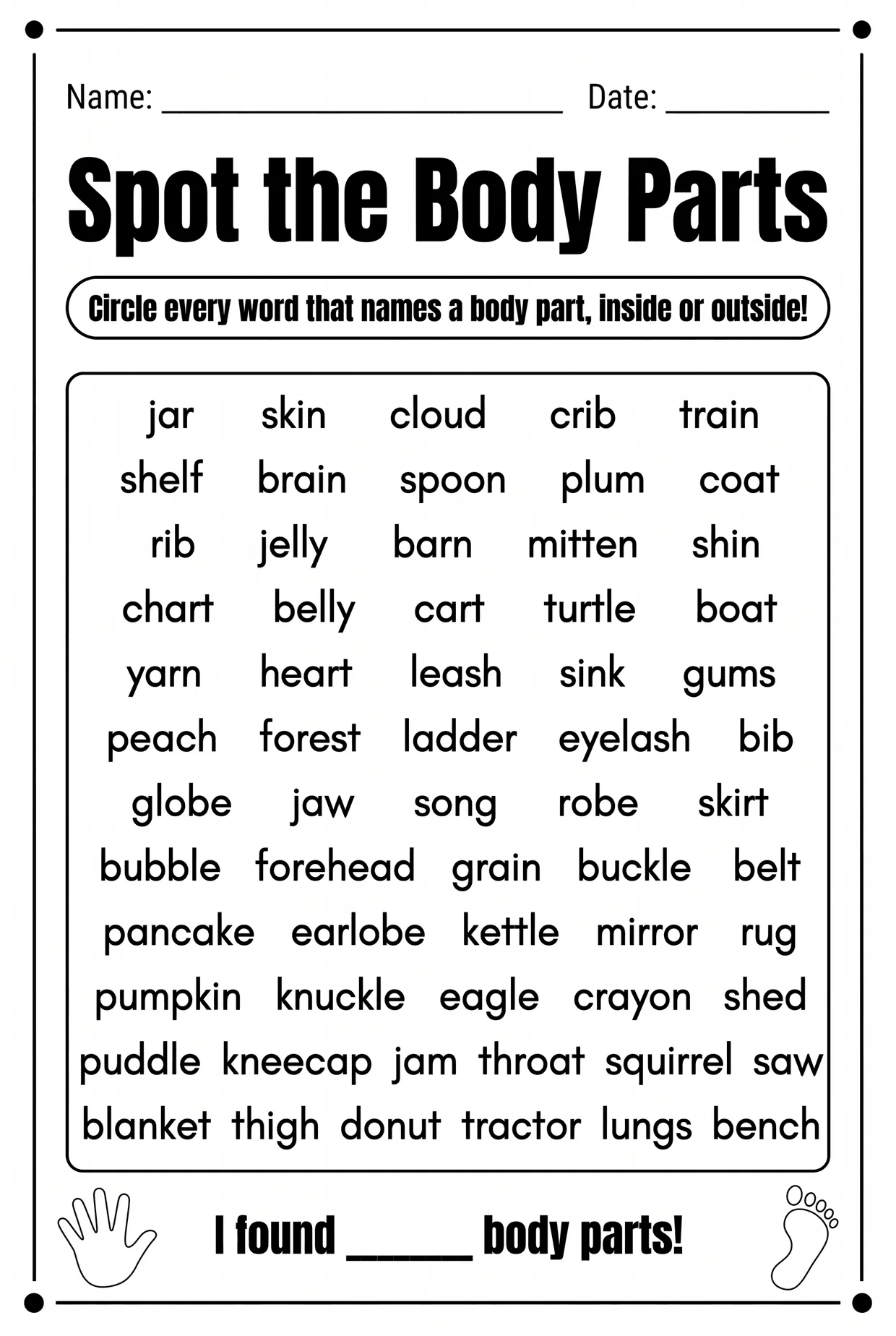
The same hunt as sheet 06 with one phrase added to the instruction: circle every word that names a body part, inside or outside. Now the sixteen include skin, brain, rib, shin, belly, heart, gums, eyelash, jaw, forehead, earlobe, knuckle, kneecap, throat, thigh and lungs.
Inside or outside changes the whole task. Brain, heart, lungs and ribs cannot be pointed at, so a child has to hold a definition in mind instead of picturing a spot on their body.
What Am I? Body Parts Fill in the Blank Worksheet
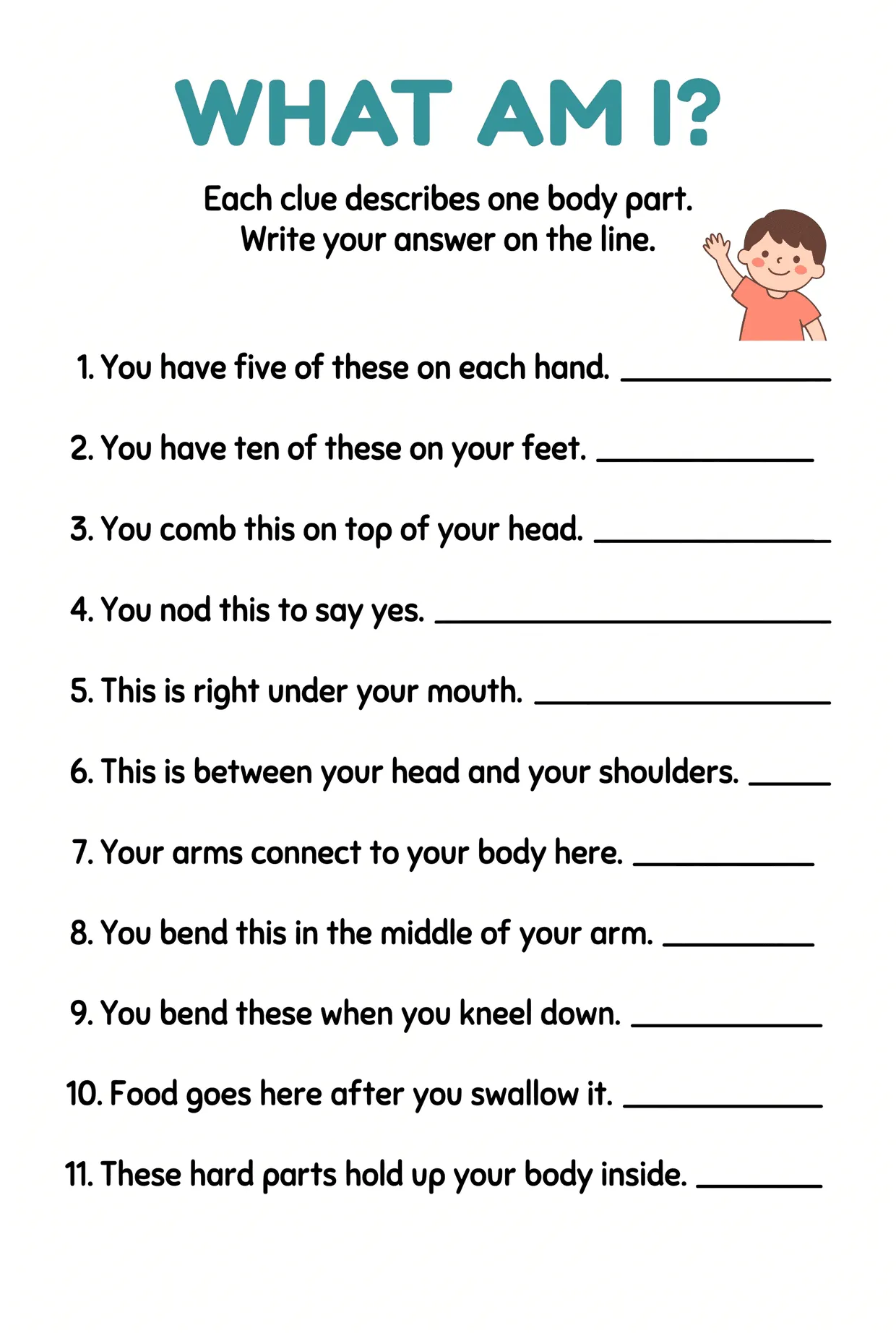
Eleven clues with a line beside each. They open gently, with five of these on each hand and ten of these on your feet, and close somewhere else entirely: food goes here after you swallow it, and these hard parts hold up your body inside.
No word bank appears anywhere, and that single omission is what lifts it past first grade. Shoulders, elbow and stomach have to be arrived at and then spelled unaided.
Name the Body Part Worksheet: 11 Riddle Clues
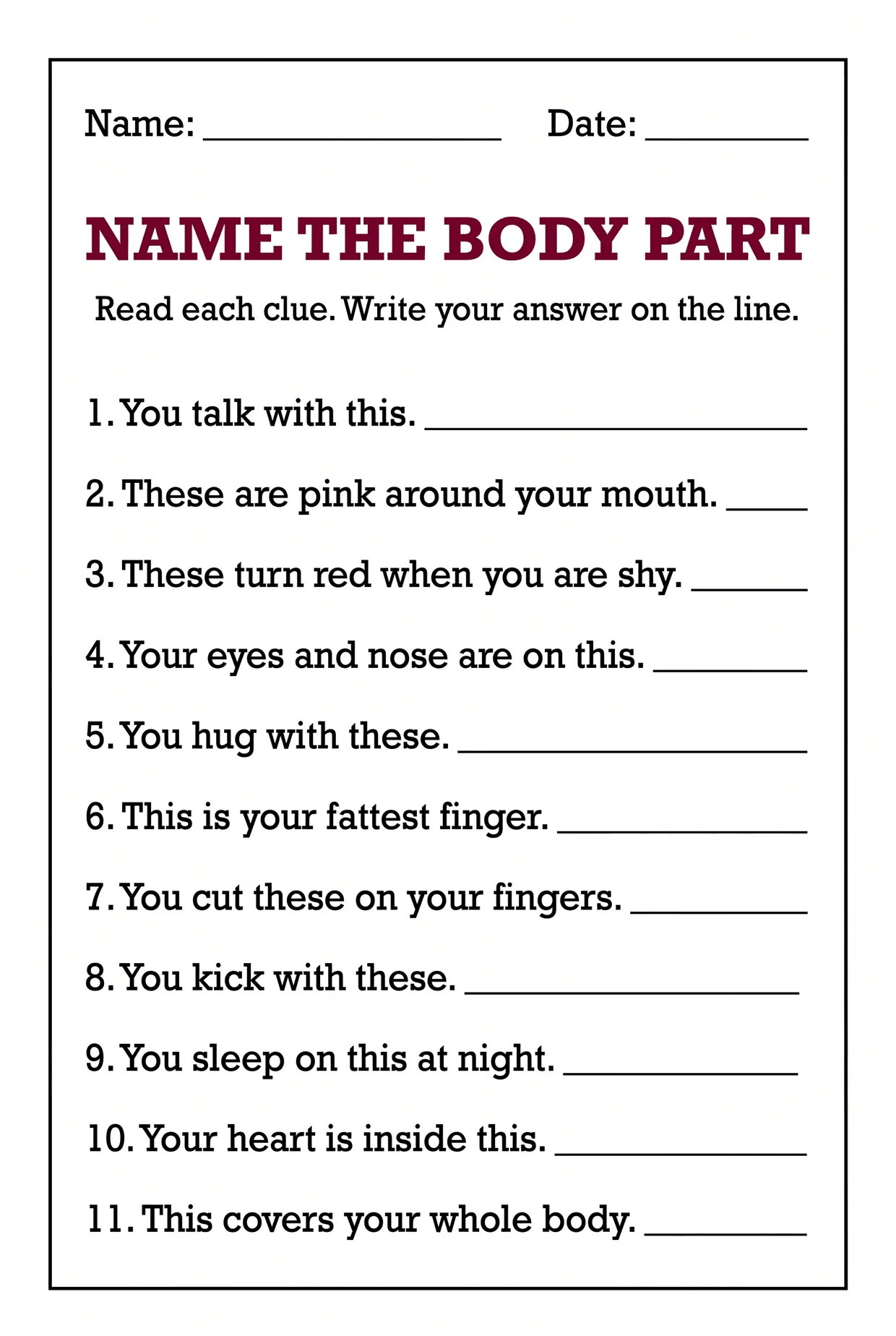
Eleven more clues, this time describing every part by what it does. You talk with this. These turn red when you are shy. This is your fattest finger. Your heart is inside this. This covers your whole body.
Nothing on the page can be answered from a picture, so a child runs each clue backwards from a job to a name. Cheeks, thumb, nails and skin all come out of reasoning rather than recognition.
One more thing.
If your kids finish a unit and you're not sure what to do next, my honest advice: don't move on yet. Spend a week mixing these in as warm-ups. Fluency isn't a unit, it's a habit, and the sheet that builds it is usually the one they ask to do again.