Free 1st Grade Pronoun Worksheets

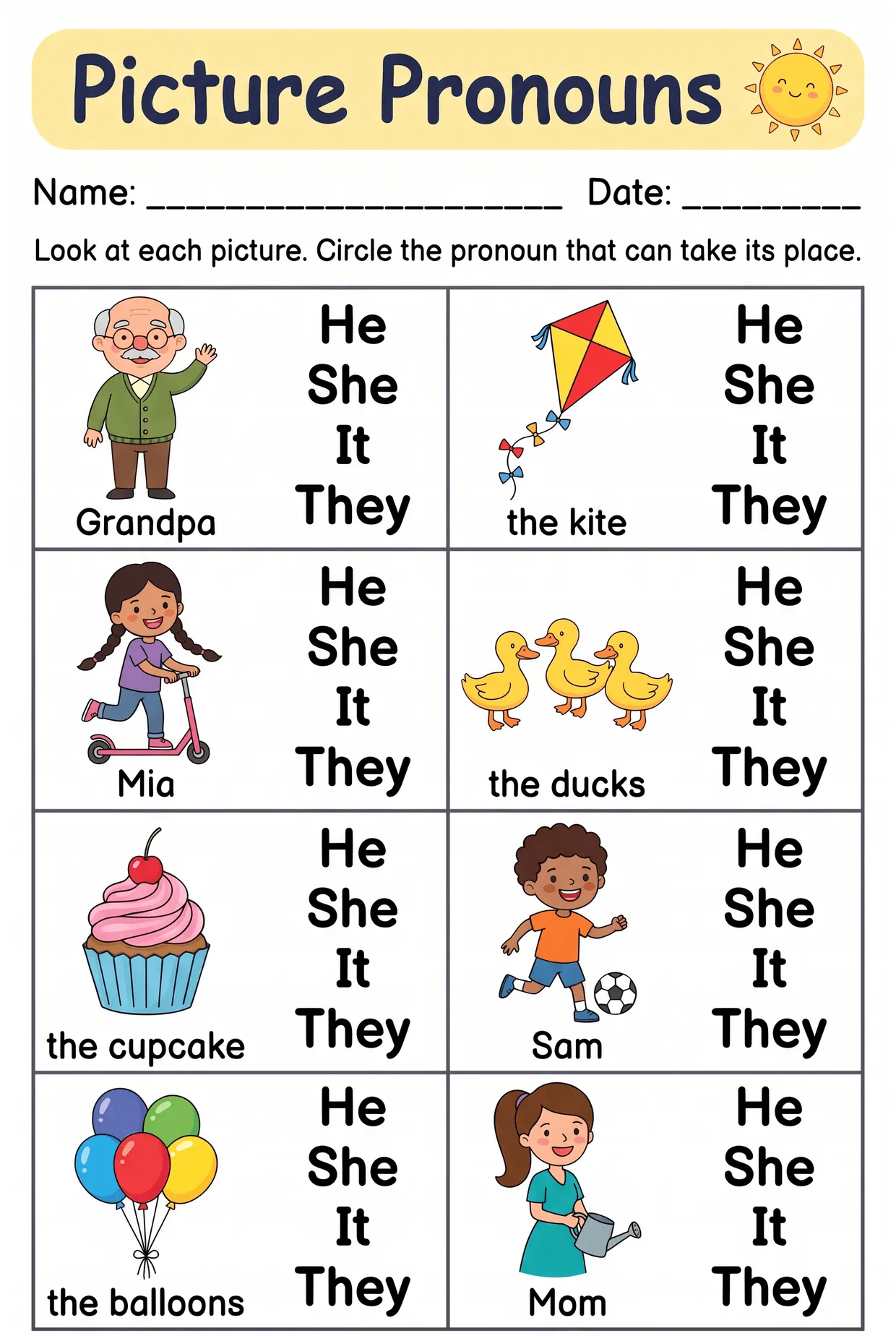
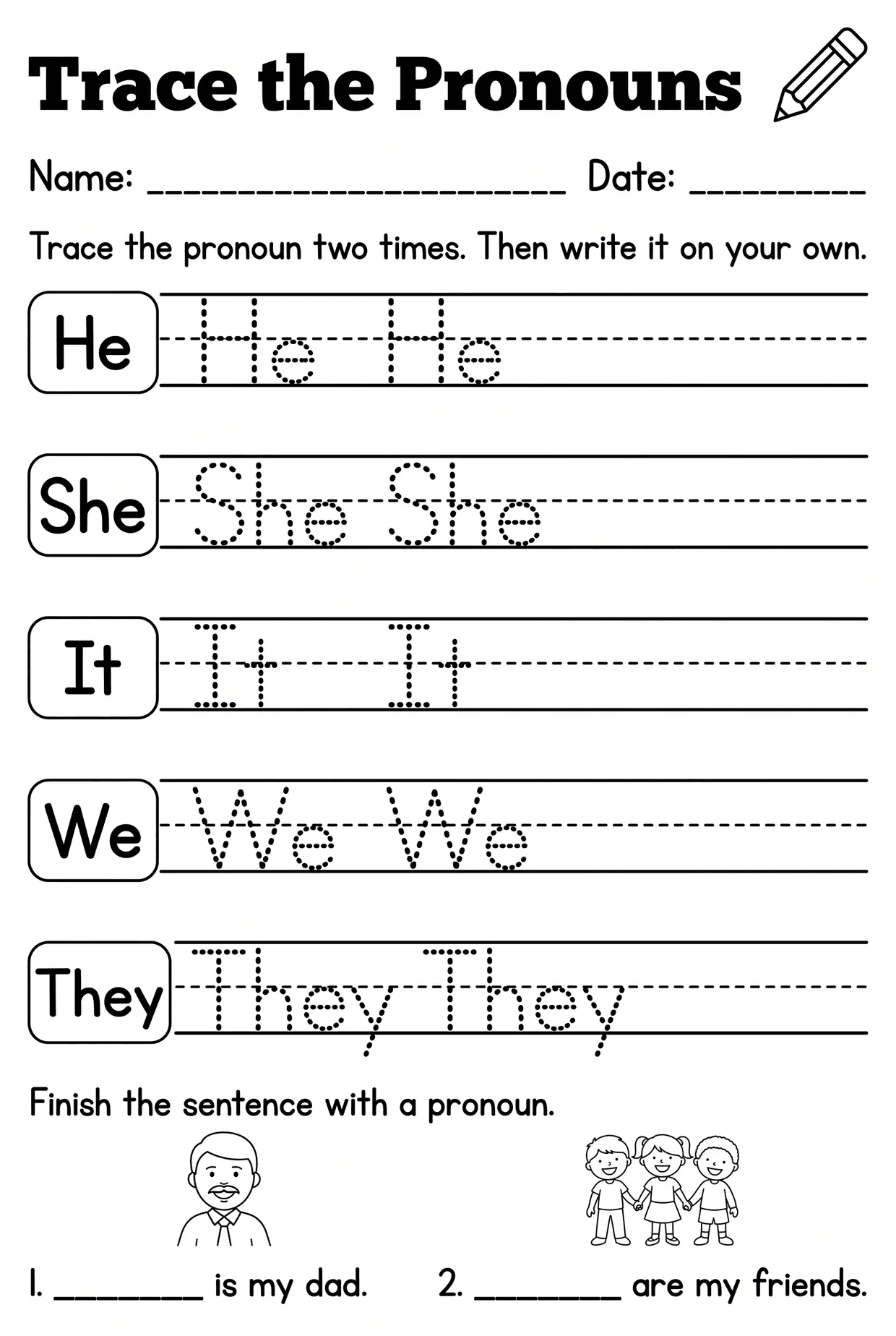
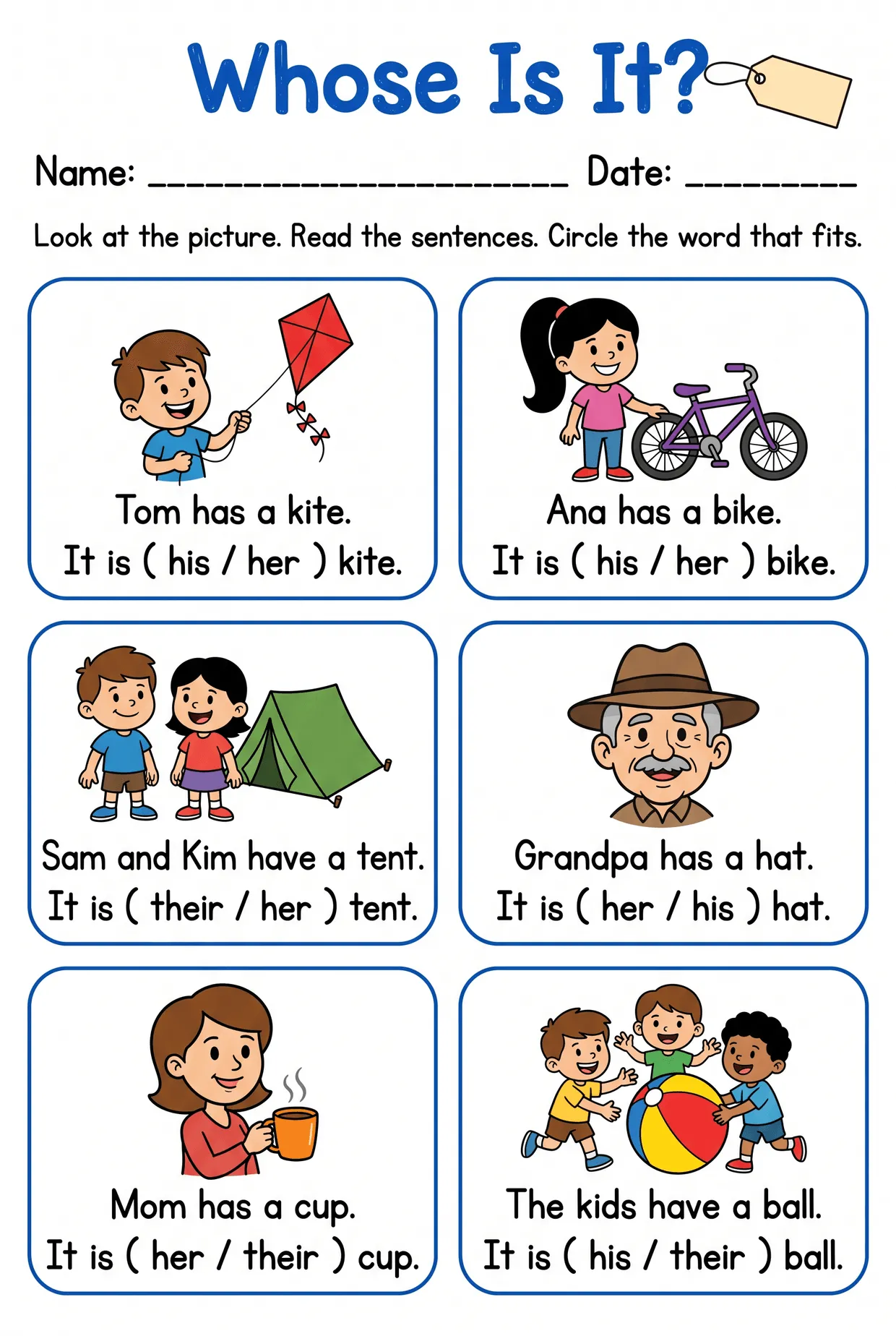
A pronoun is a short word that takes the place of a noun, so a sentence can say he instead of repeating Grandpa over and over. Our grade 1 pronoun worksheets work on the everyday ones, he, she, it, we and they, plus his, her and their for showing who owns something. Most first graders use these words easily in speech, and the trouble starts on paper.

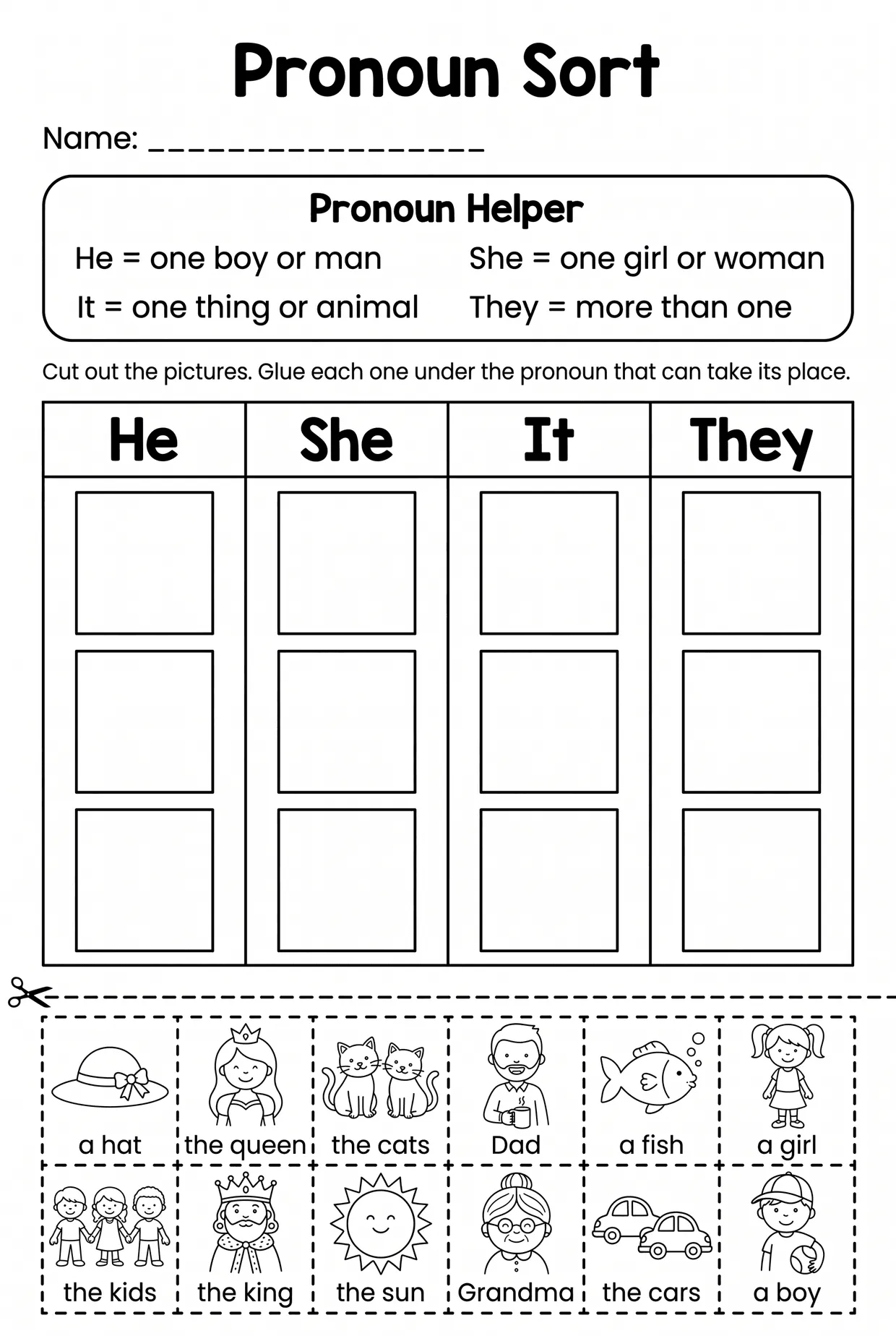
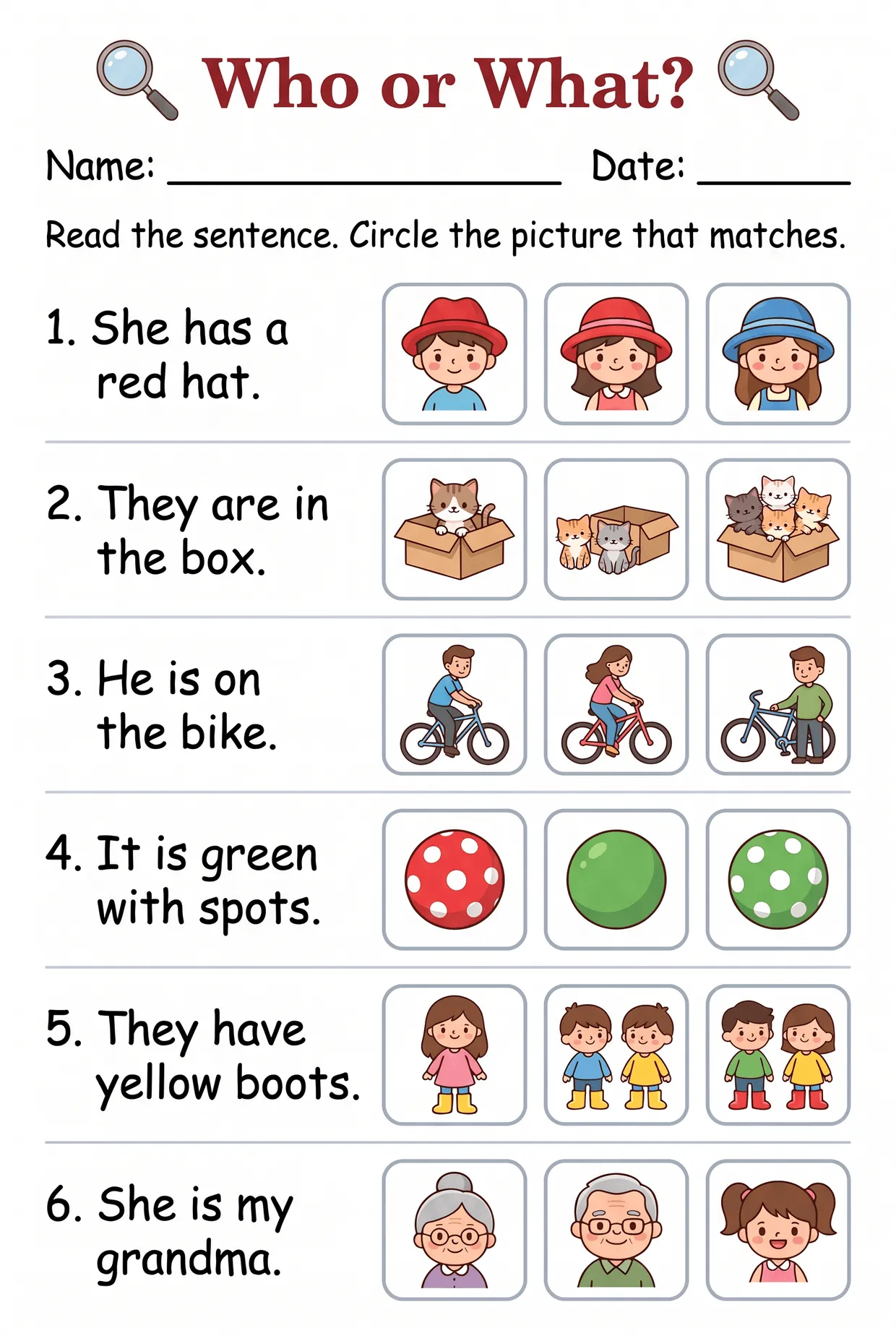
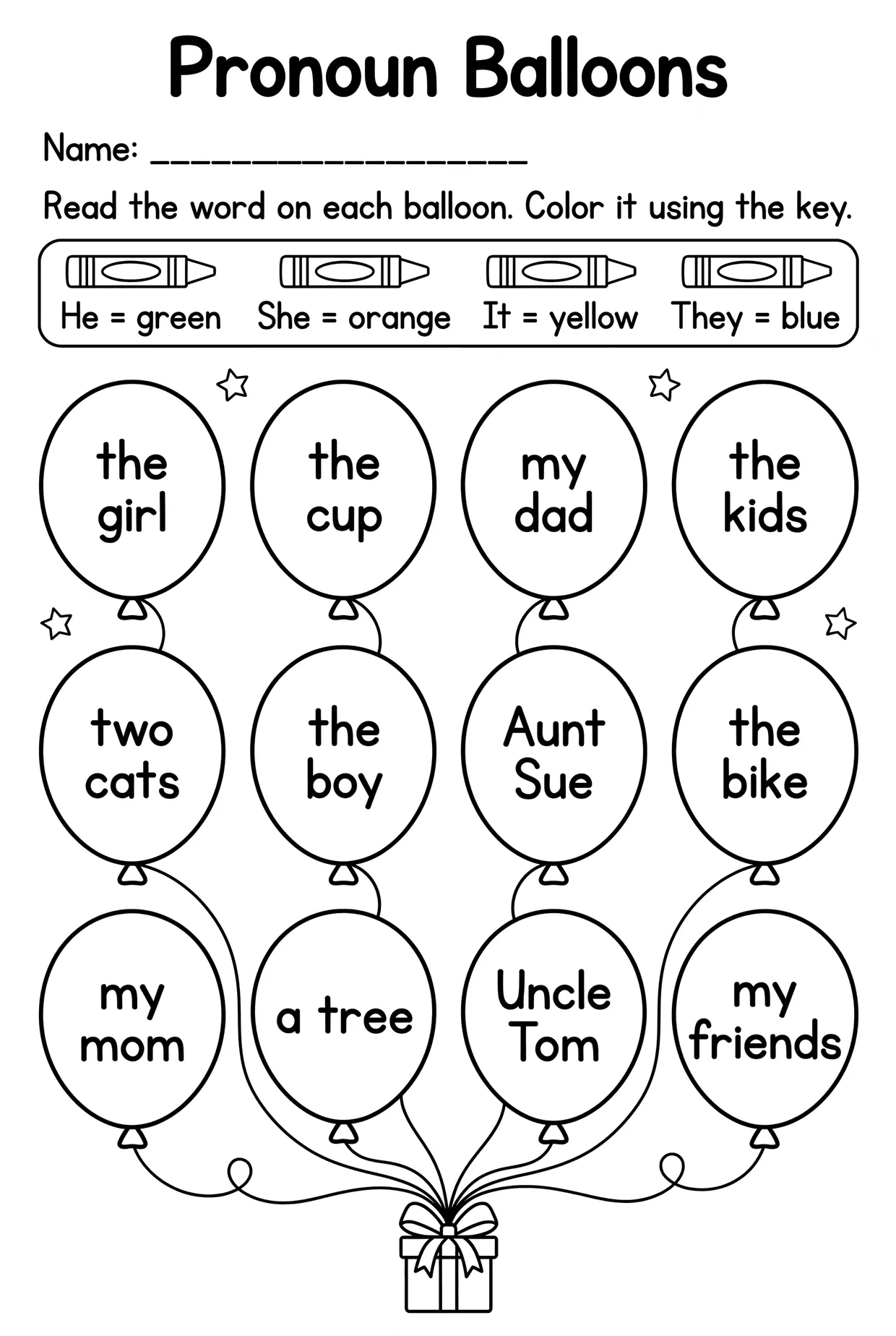
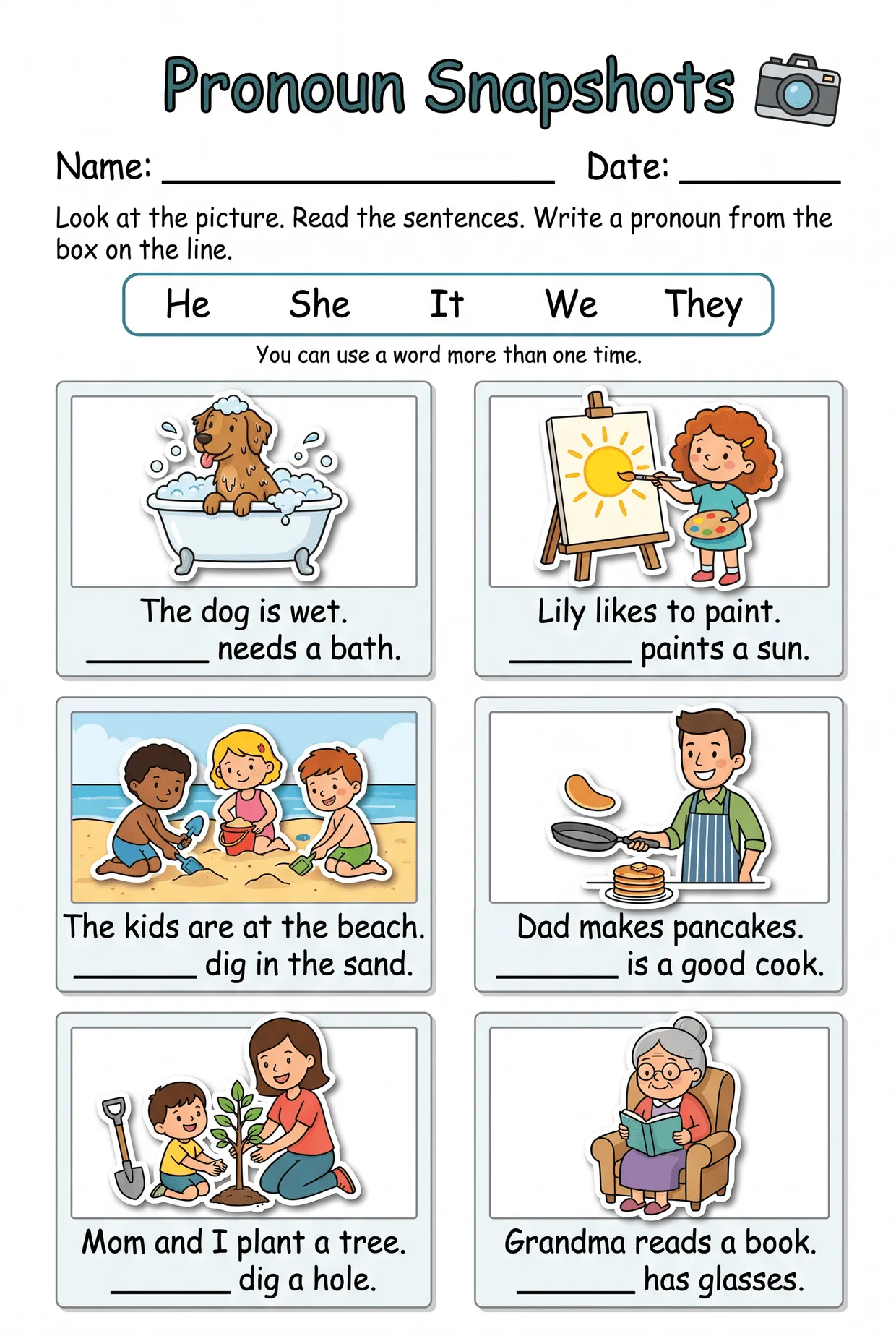
Using it for a person, or he for a cat, is the mix-up that turns up most. Picture pages settle it by putting Grandpa, a puppy and a bunch of balloons in front of a child and asking which word fits each one. Sorting cards under he, she, it and they and coloring balloons by pronoun give the same practice in a lighter form.

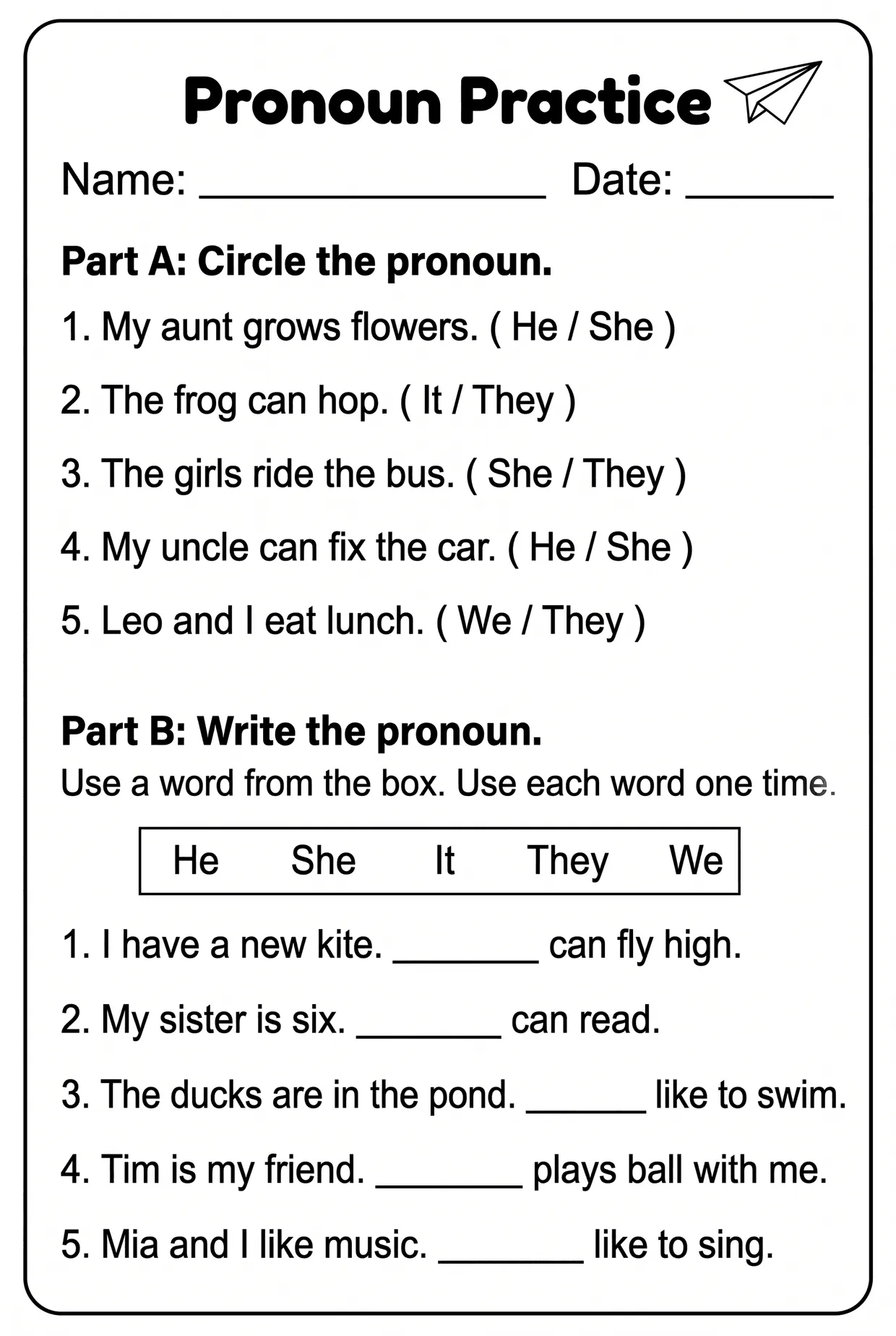
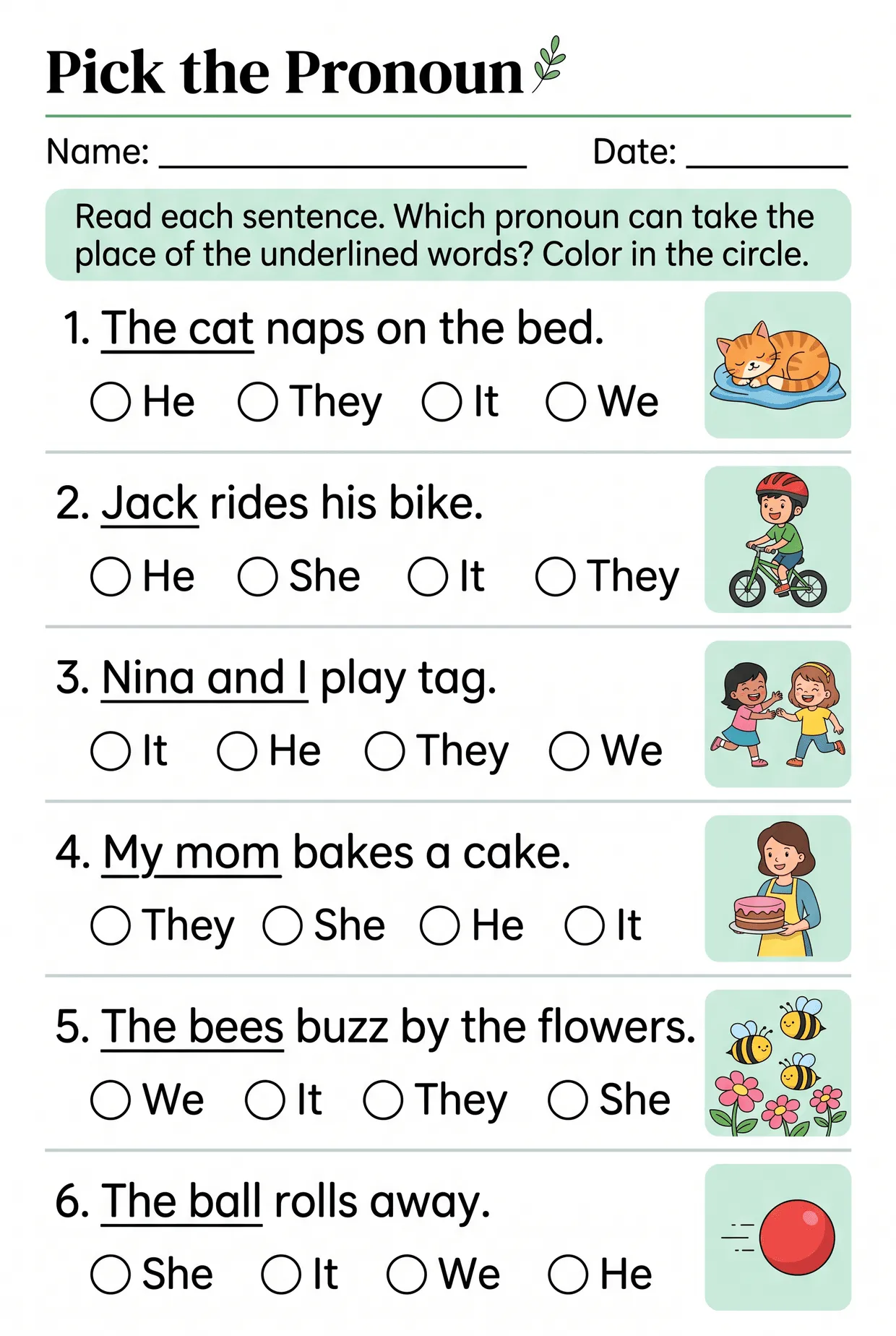
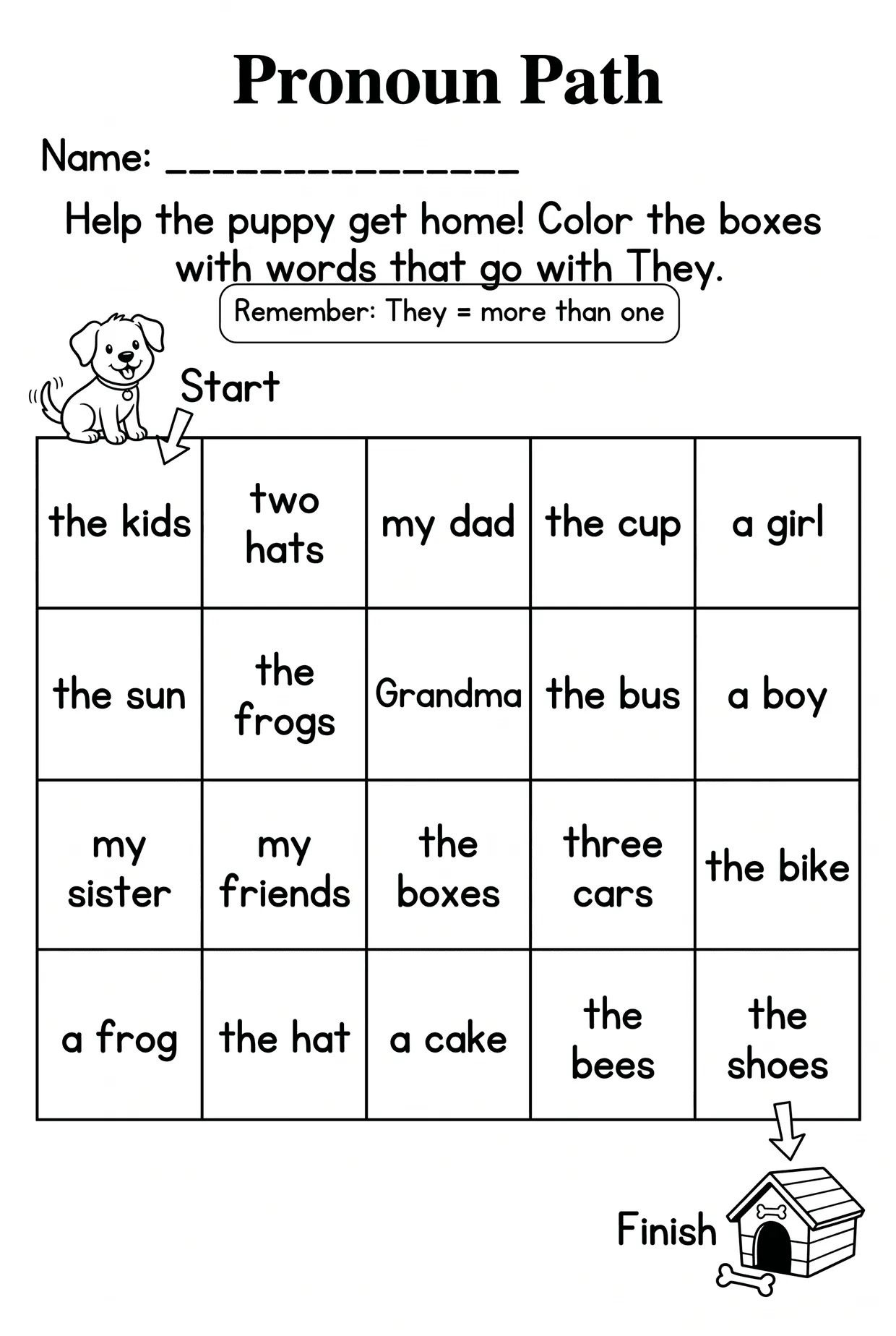
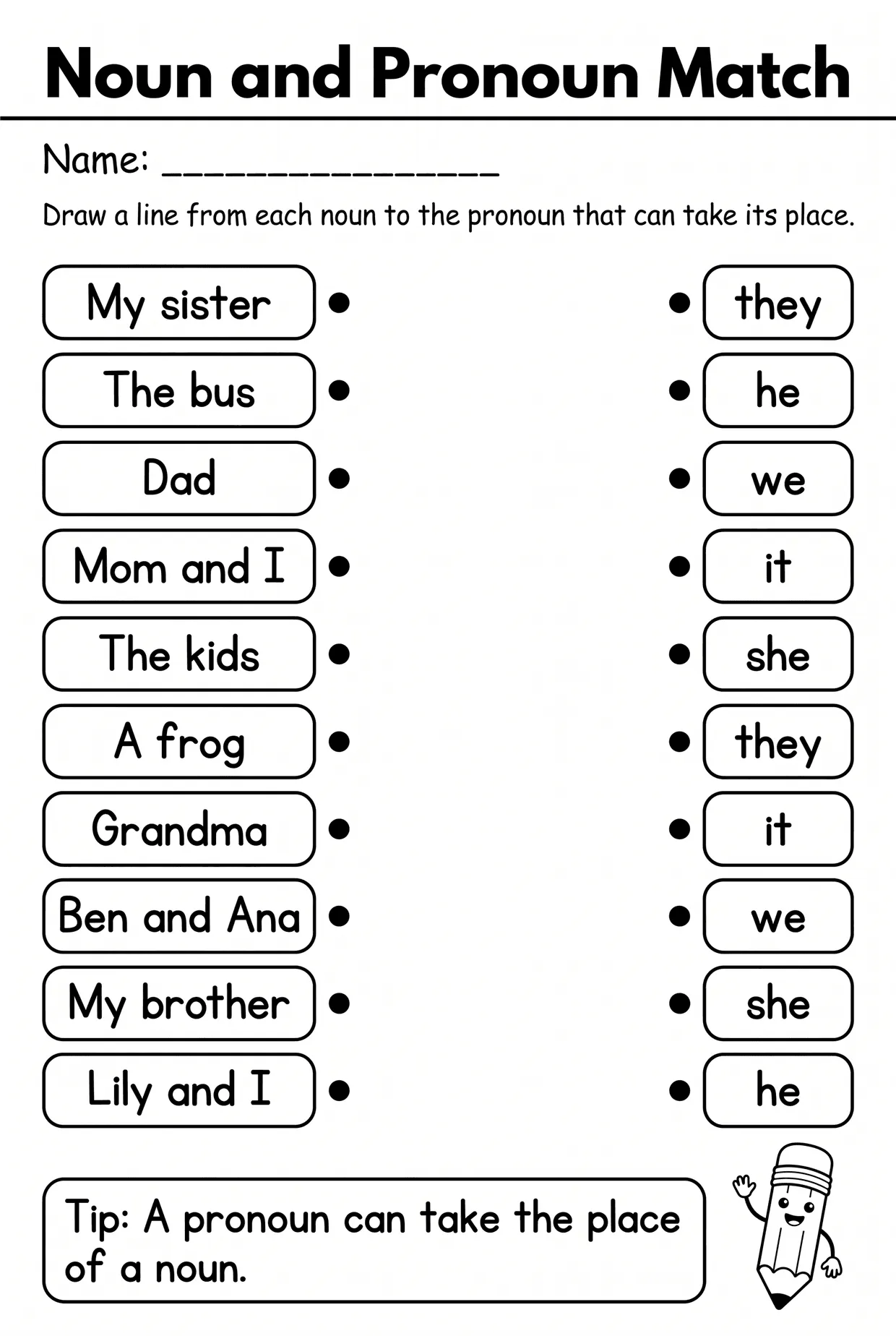
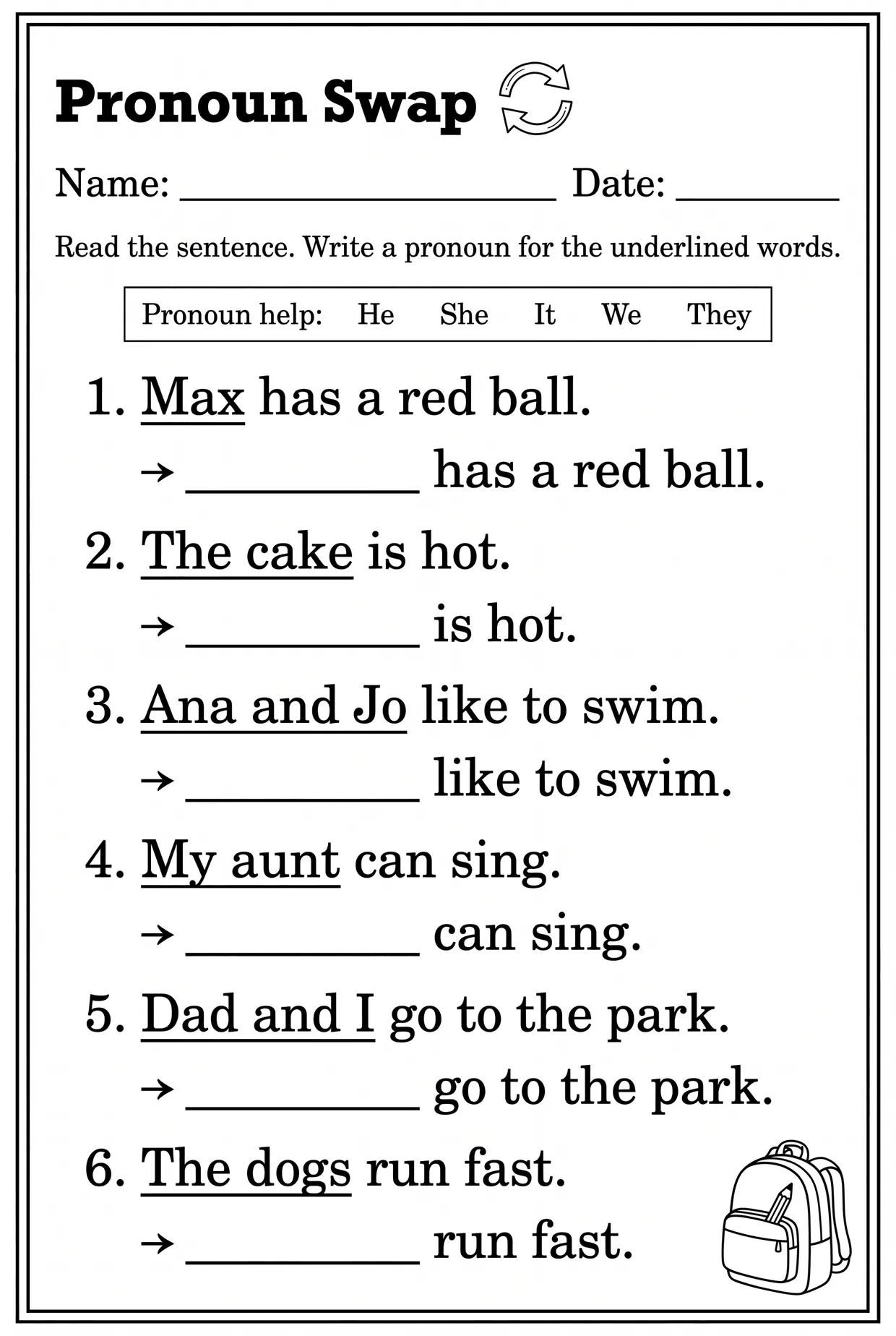
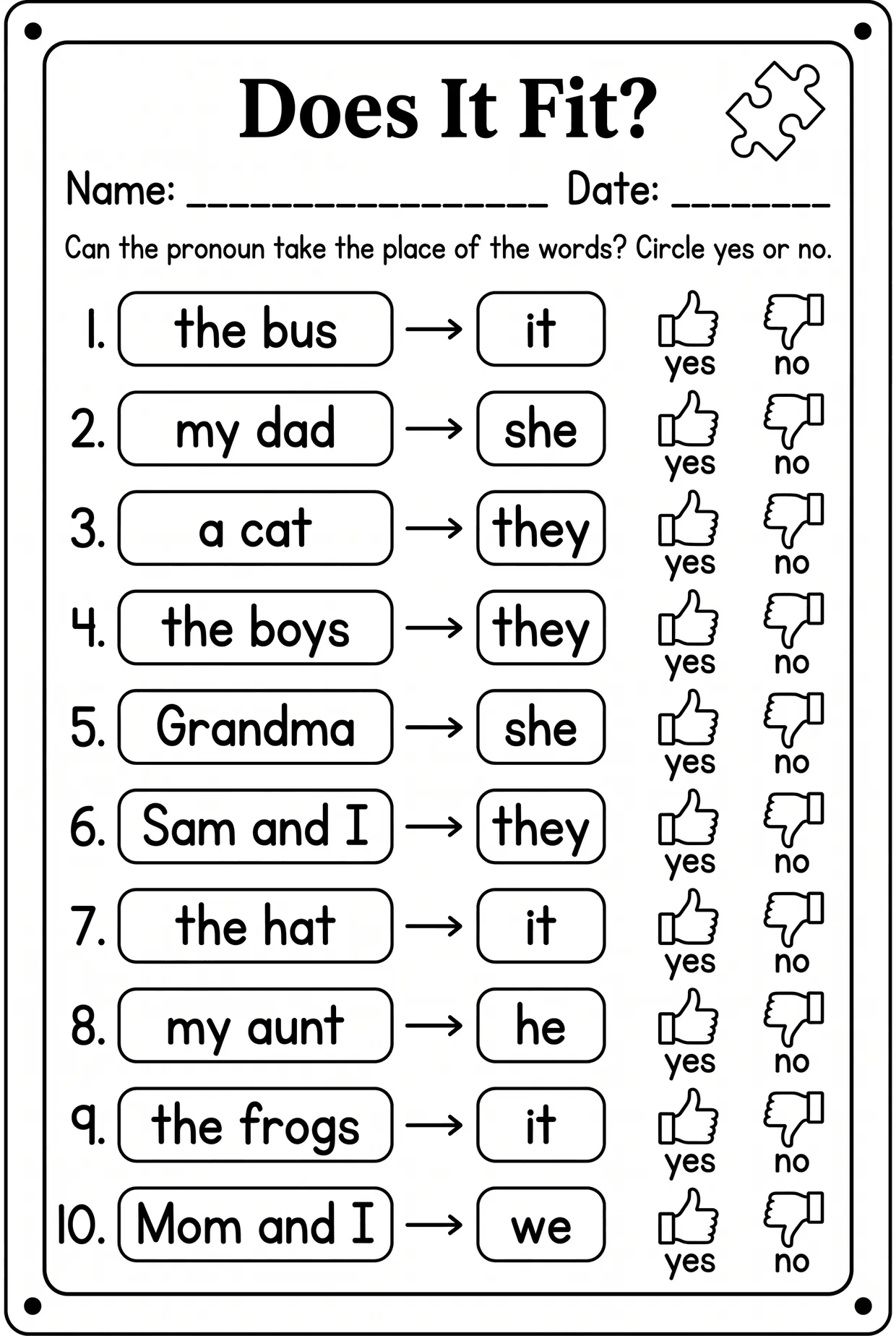
A child looking at three cars may call each one an it and forget that together they are they, which is why the they maze practices nothing but groups. Swapping pages build on this: a child matches Mom to she, replaces underlined words with the right pronoun, and reads the new sentence back to hear whether it still makes sense. We joins in for any group that includes the child who is talking.

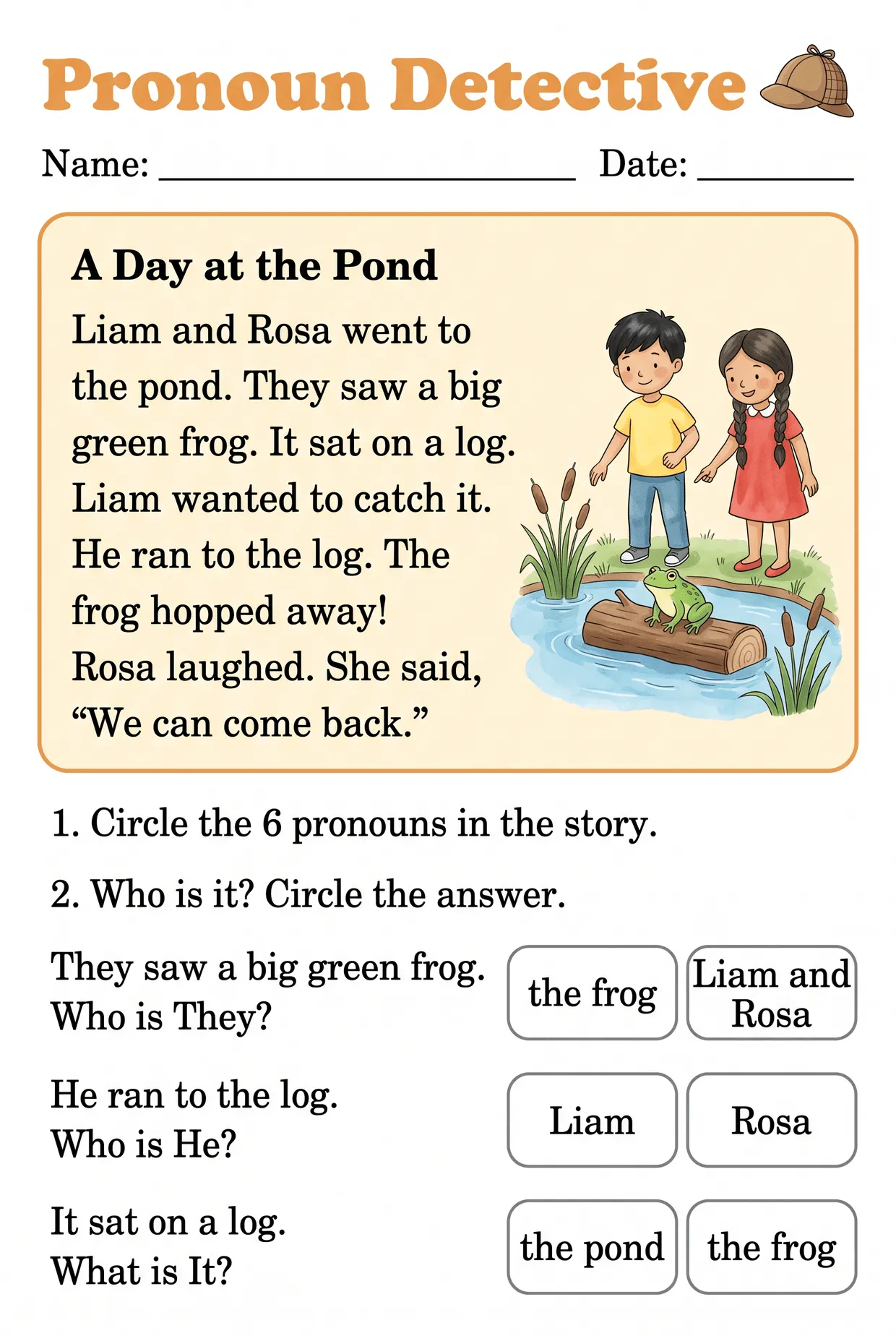
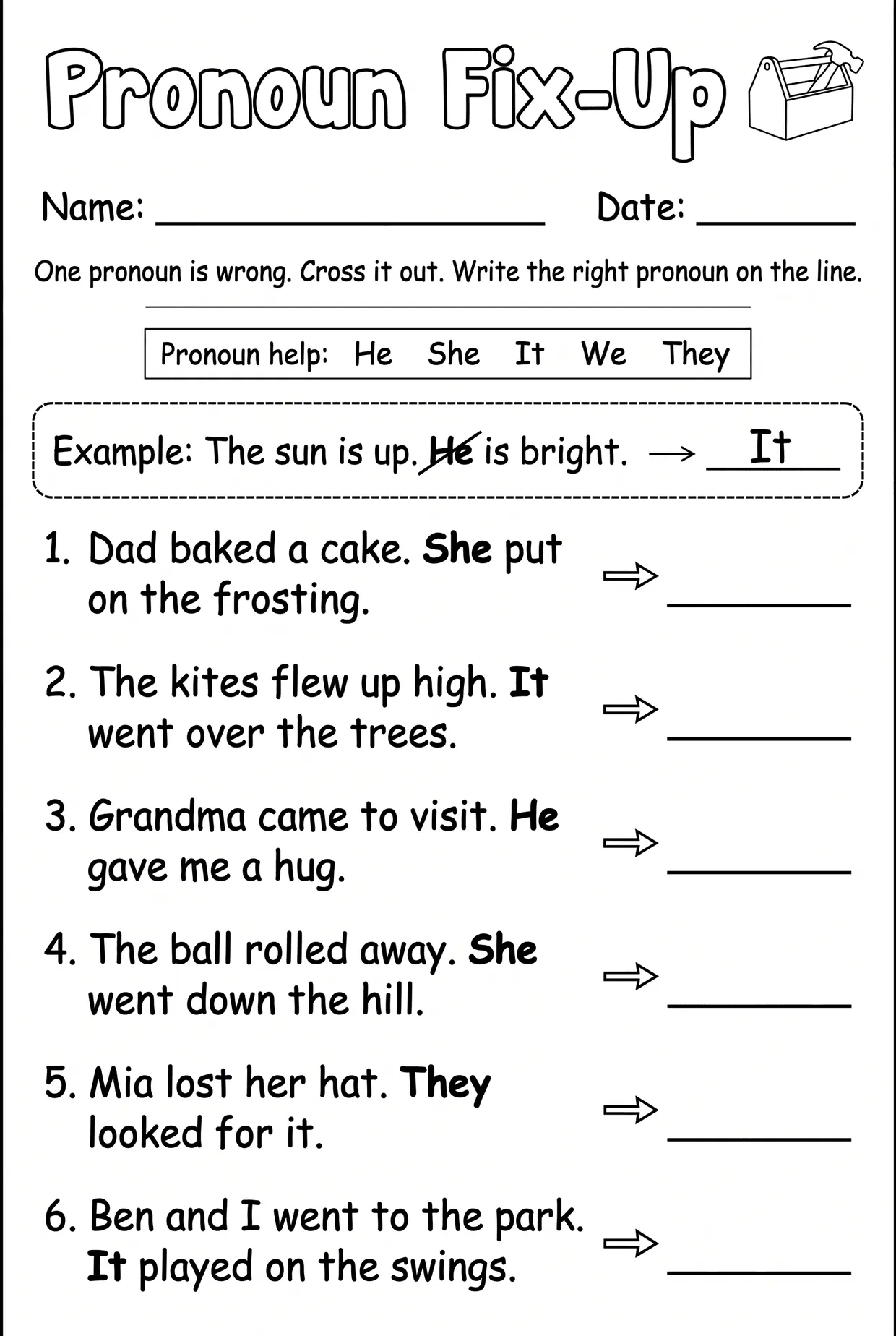
Knowing who a pronoun points back to is the skill that lasts longest. In the pond story, children circle each pronoun and write who it means, and the fix-up pages ask them to spot the wrong pronoun in a pair of sentences. Keeping track of who she or they means is how readers follow characters through a book.

15 free worksheets 1st grade Newest added October 2026
Free sets on this skill 15 Free Pronoun Worksheets for Grade 1, From Tracing to Editing Sentences 15
Format
More 1st grade skills 1st grade subtraction worksheets 421st grade nouns worksheets 271st grade addition worksheets 261st grade adjectives worksheets 211st grade reading comprehension worksheets 151st grade phonics worksheets 131st grade preposition worksheets 111st grade jobs worksheets 10

Questions about 1st grade pronoun worksheets

Which pronouns do first graders learn?

Under the first grade standard (L.1.1d), children learn personal pronouns like he, she, it, we and they, possessive ones like his, her and their, and a few indefinite ones like anyone and everything. The sheets here focus on the personal and possessive pronouns, since children use them in almost every sentence they write.

My child uses it for people. How do we fix that?

Go back to the picture pages and say the rule out loud together: he for a boy or a man, she for a girl or a woman, it for a thing or an animal. Sorting cards under he, she, it and they is a good hands-on reset, because a wrong card stands out in its group.

When should a child use they?

Whenever the noun means more than one, whether that is two people, three cars or a pond full of frogs. Some children reach for it when there are several things, because each one alone would be an it. The pronoun path maze practices nothing but they, so it makes a quick check.

What does it mean to work out who a pronoun refers to?

In a story, she or they points back to someone named earlier, and a reader has to keep track of who that is. The pond story page asks children to circle each pronoun and write who it means, which is a reading comprehension skill as much as a grammar one.

How can we practice pronouns away from the worksheets?

Retell a favorite picture book together and swap the names for pronouns as you go, then ask who each one means. It takes a few minutes, and it makes the sentence pages feel familiar when your child comes back to them.