Free 1st Grade Reading Comprehension Worksheets

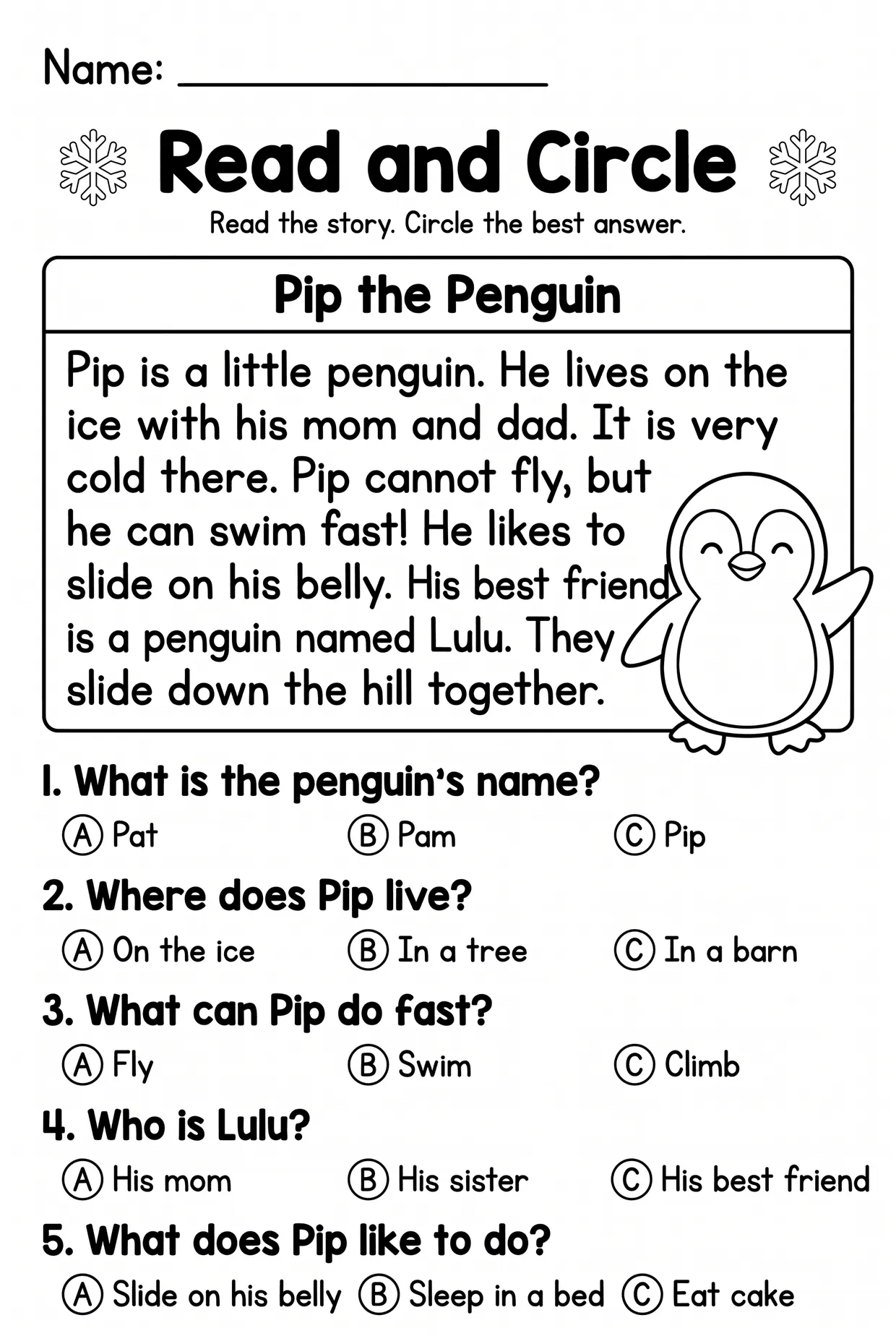
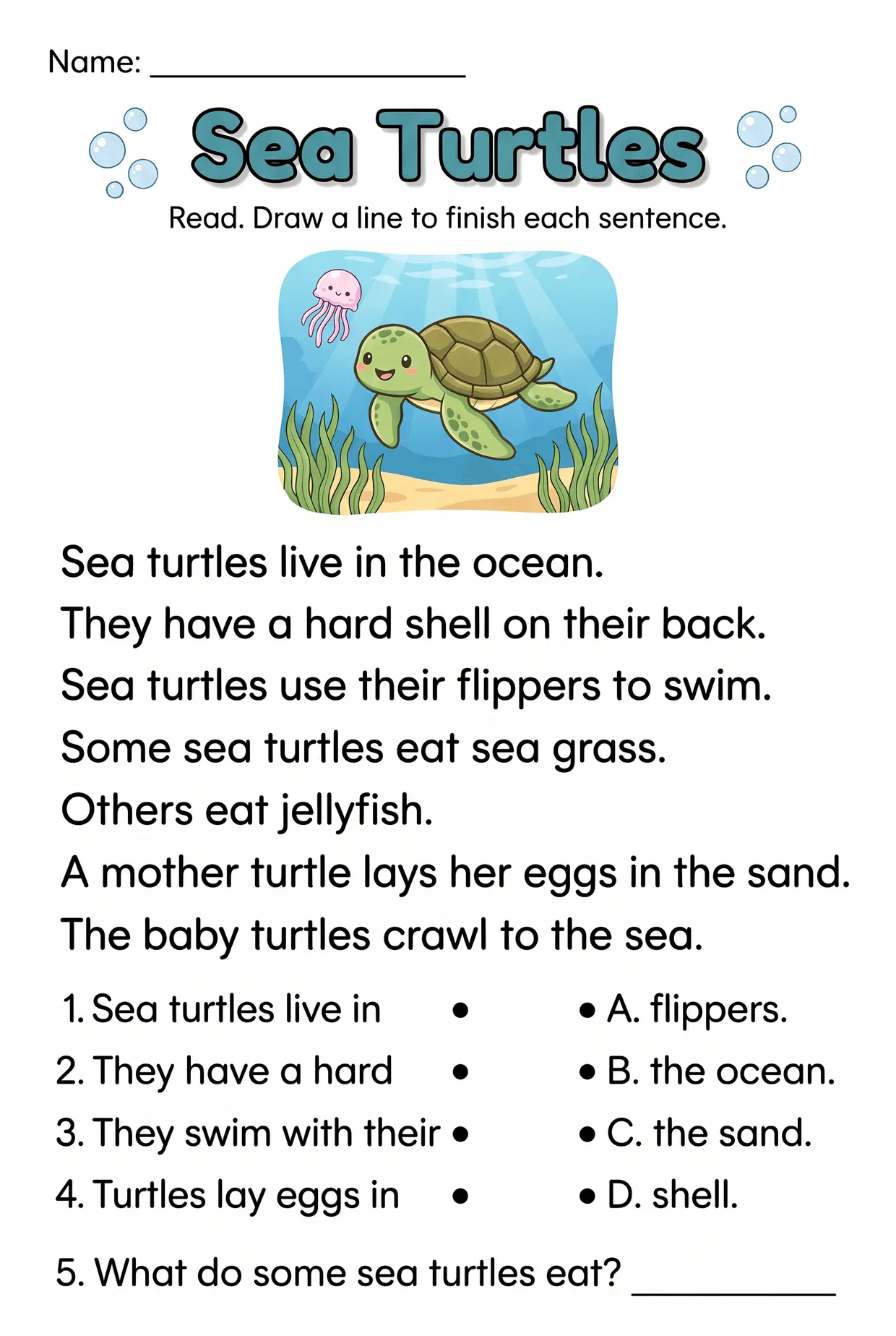
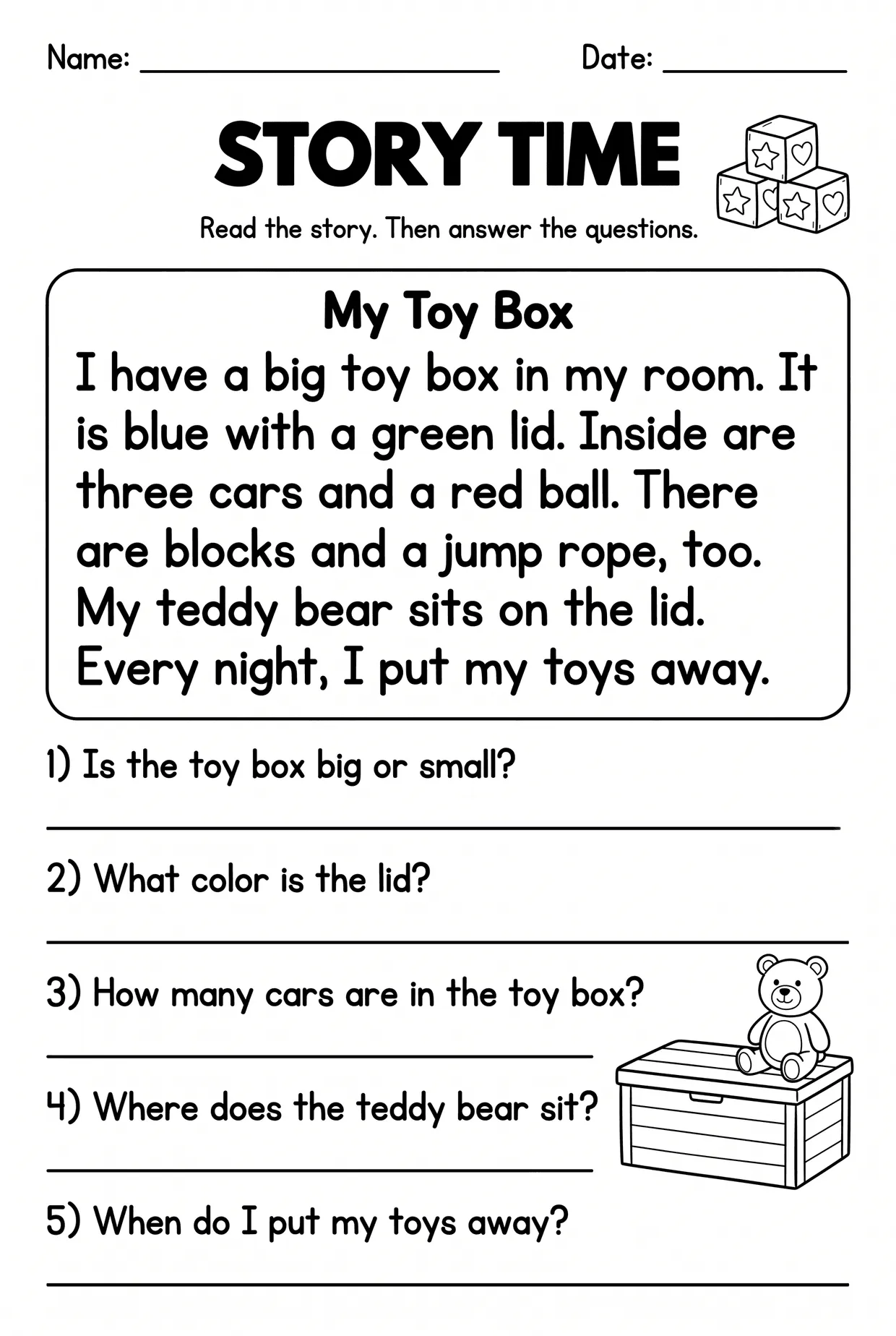
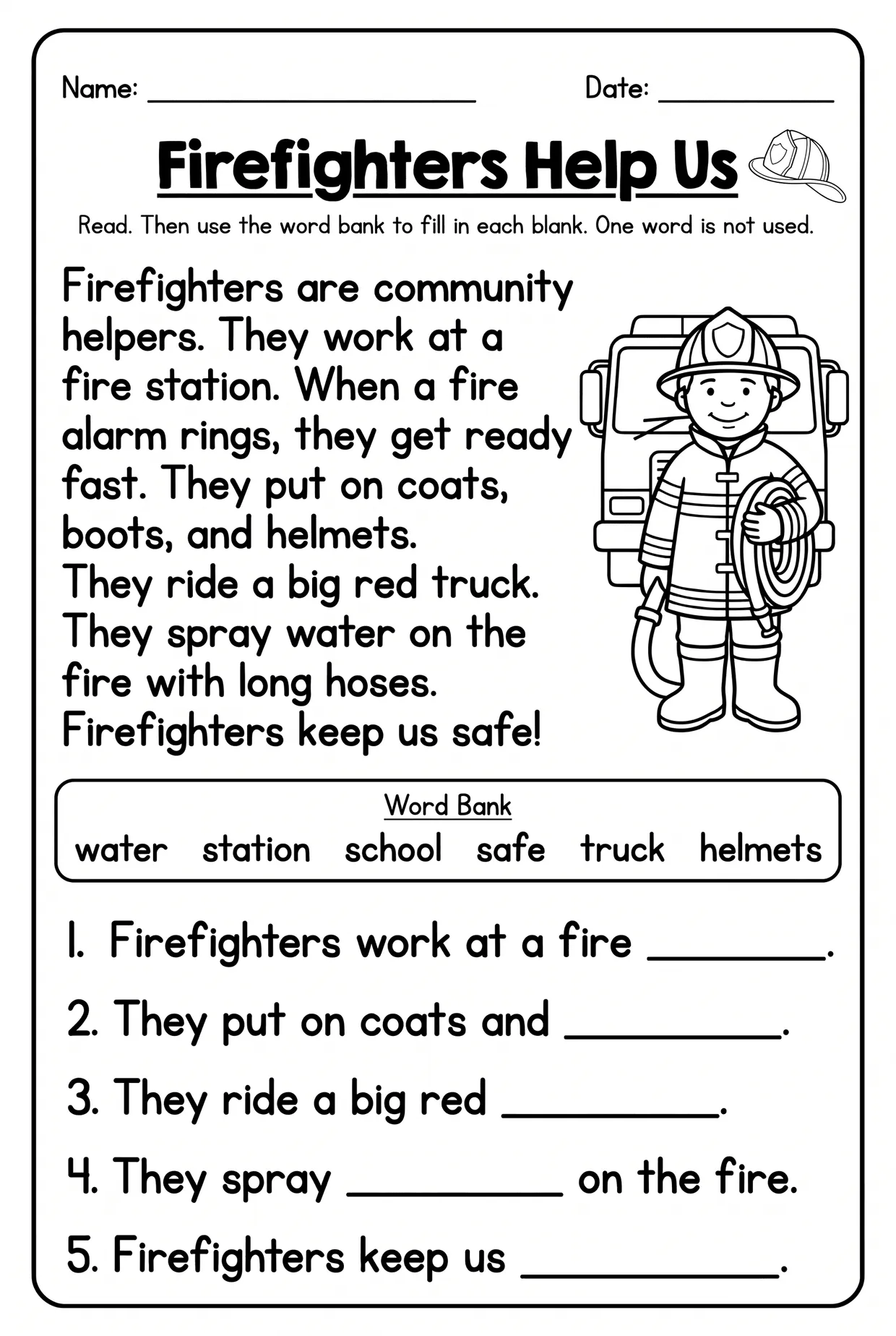
Sounding out every word on a page is one skill, and knowing what those words said is another. Practice with the second is what a grade 1 reading comprehension worksheet should give a new reader, and these pair a very short passage with a few questions. Little stories about Ruby’s rainy walk with Grandpa, a blue toy box and Pip the penguin sit alongside easy nonfiction about bees, seeds, sea turtles and firefighters.

A shared first read takes the pressure off. Read the passage aloud together, then let your child reread it alone before looking at the questions. The shared read can fade as decoding gets easier.

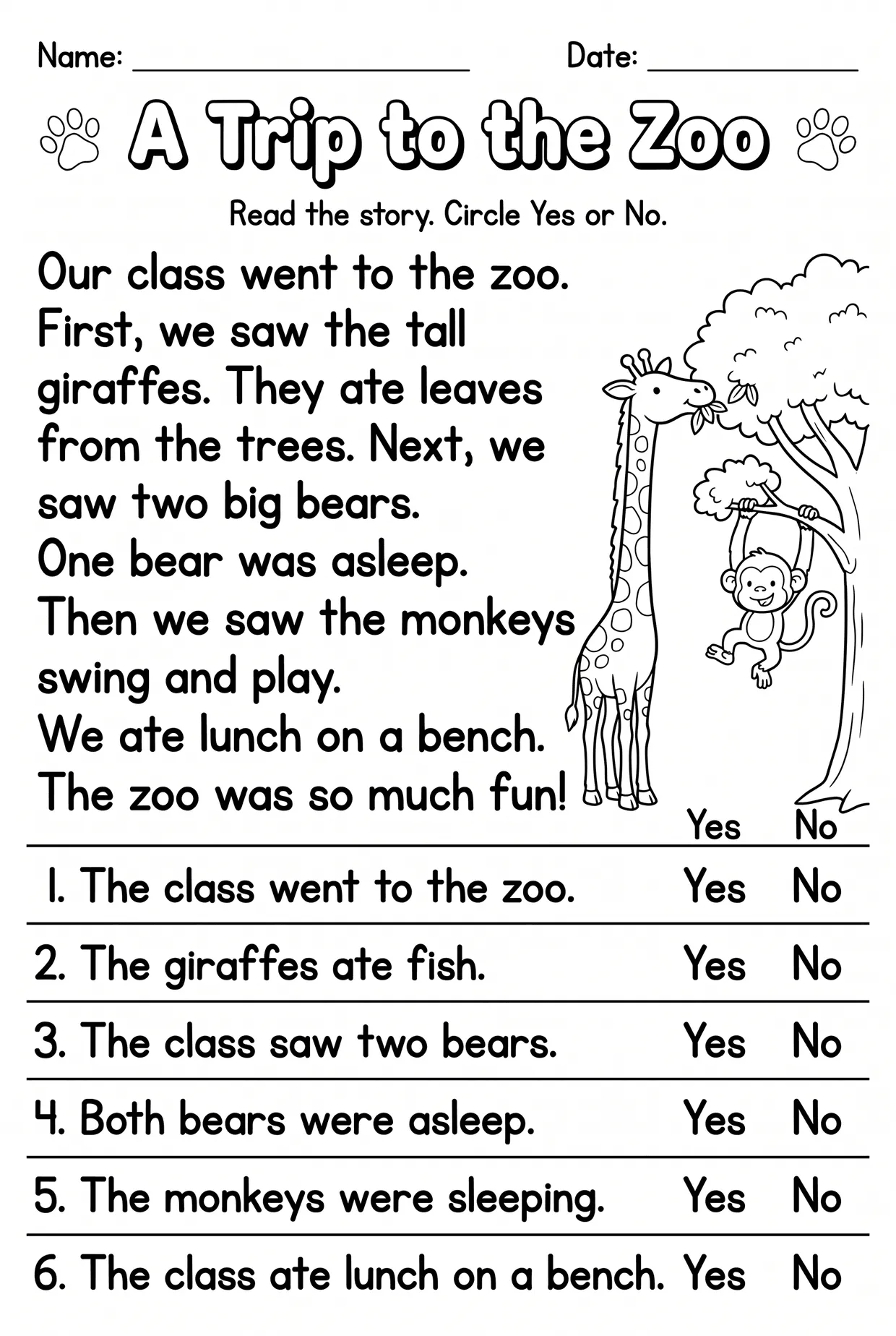
Before your child answers, ask them to put a finger on the sentence that holds it. At this age most answers sit right in the text, so who, what and where questions become practice in looking back rather than remembering. The zoo trip page rewards this, since its yes or no statements turn on small details.

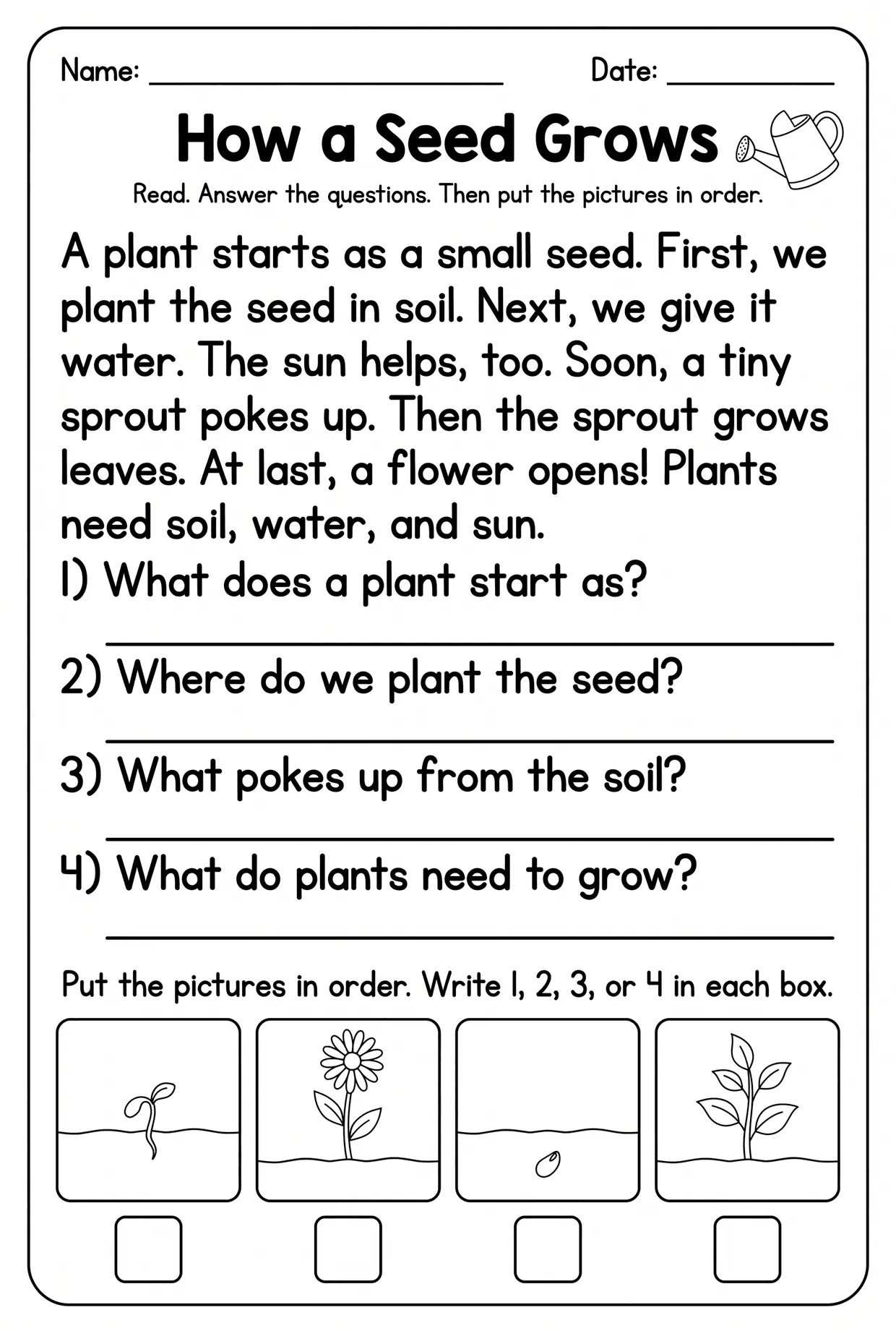
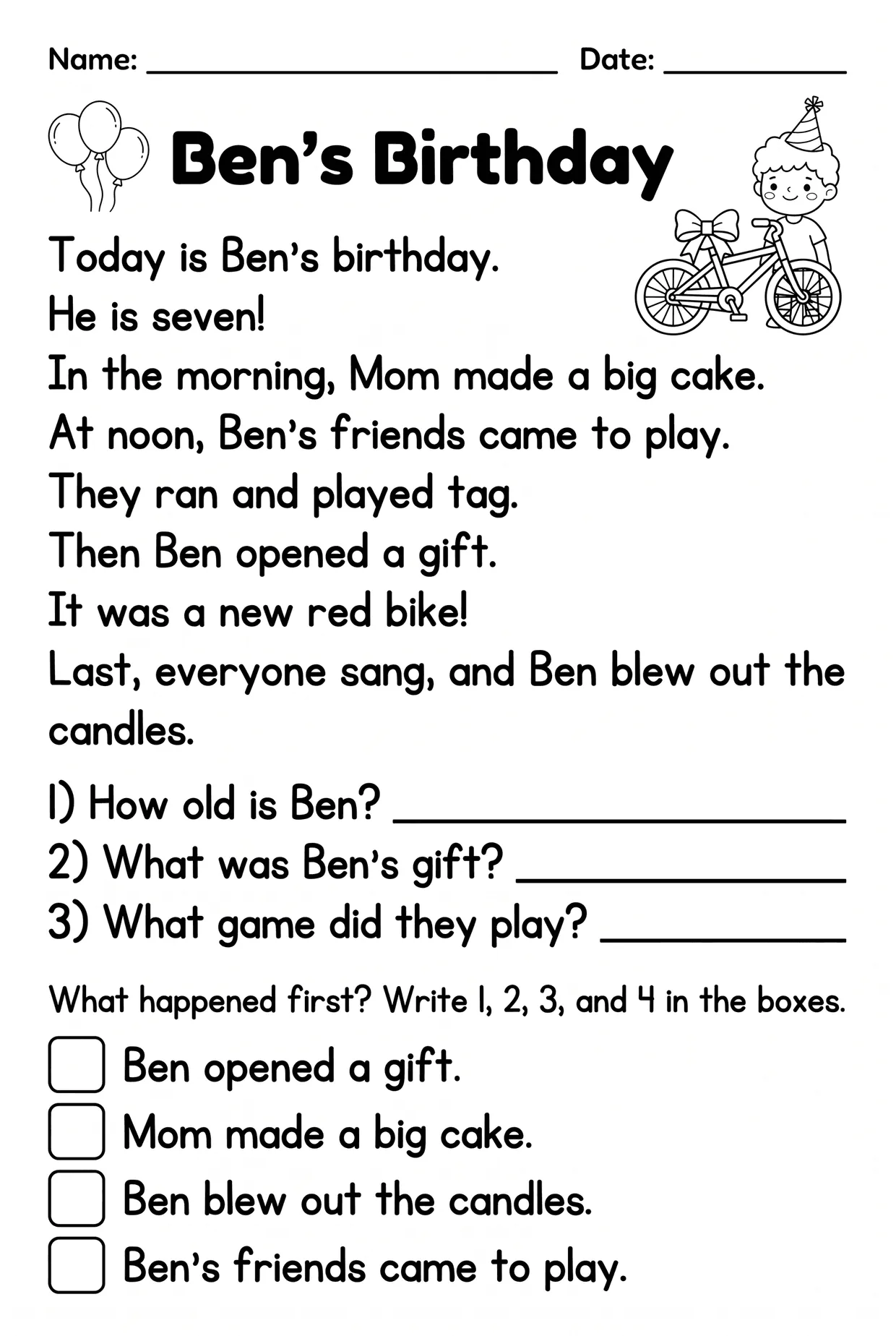
Writing can wait for a child whose handwriting is still settling. Many pages need only a circled picture, a yes or no, or one of three choices, and the sequencing pages ask children to number the events of Ben’s birthday or the steps of a seed growing into a flower.

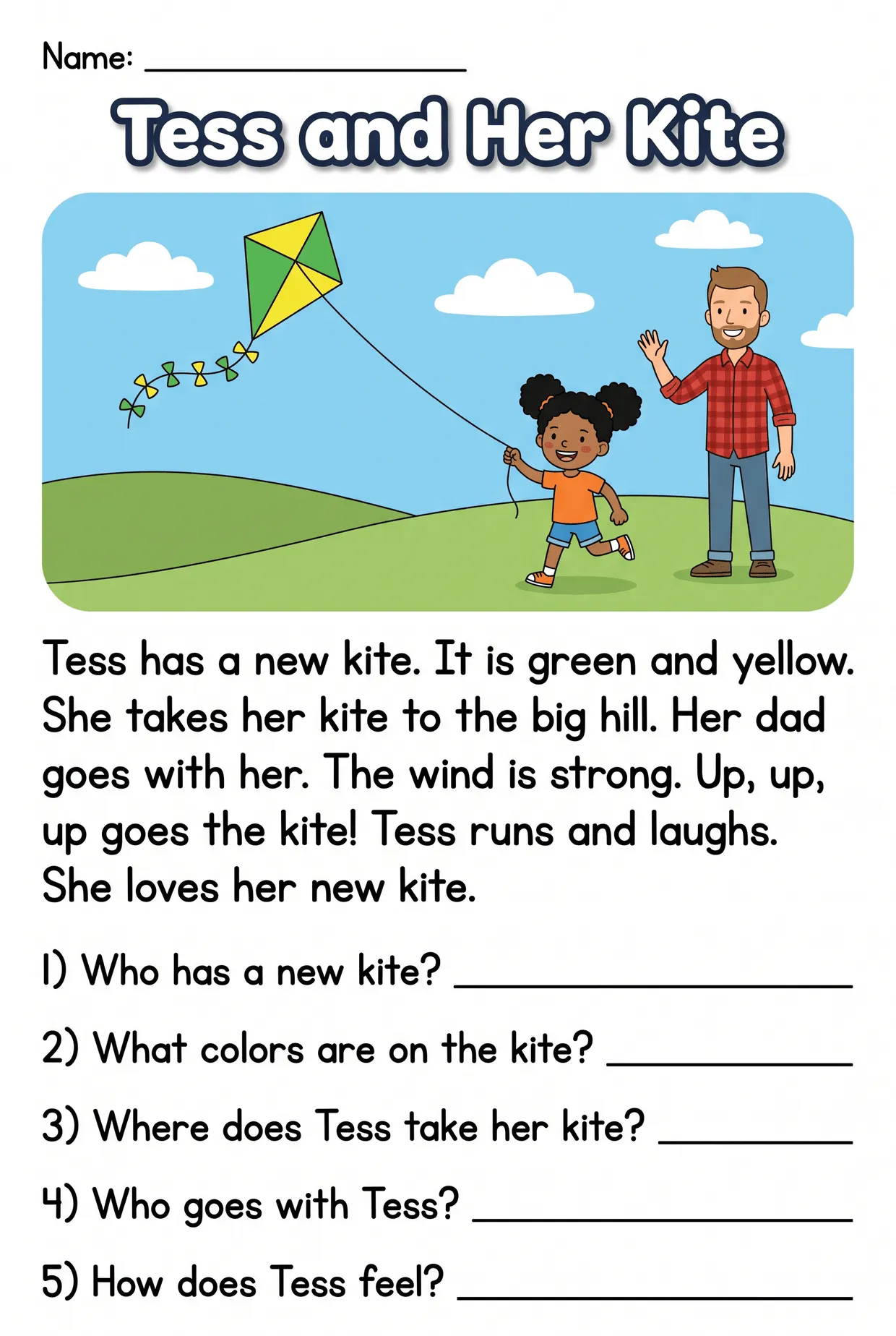
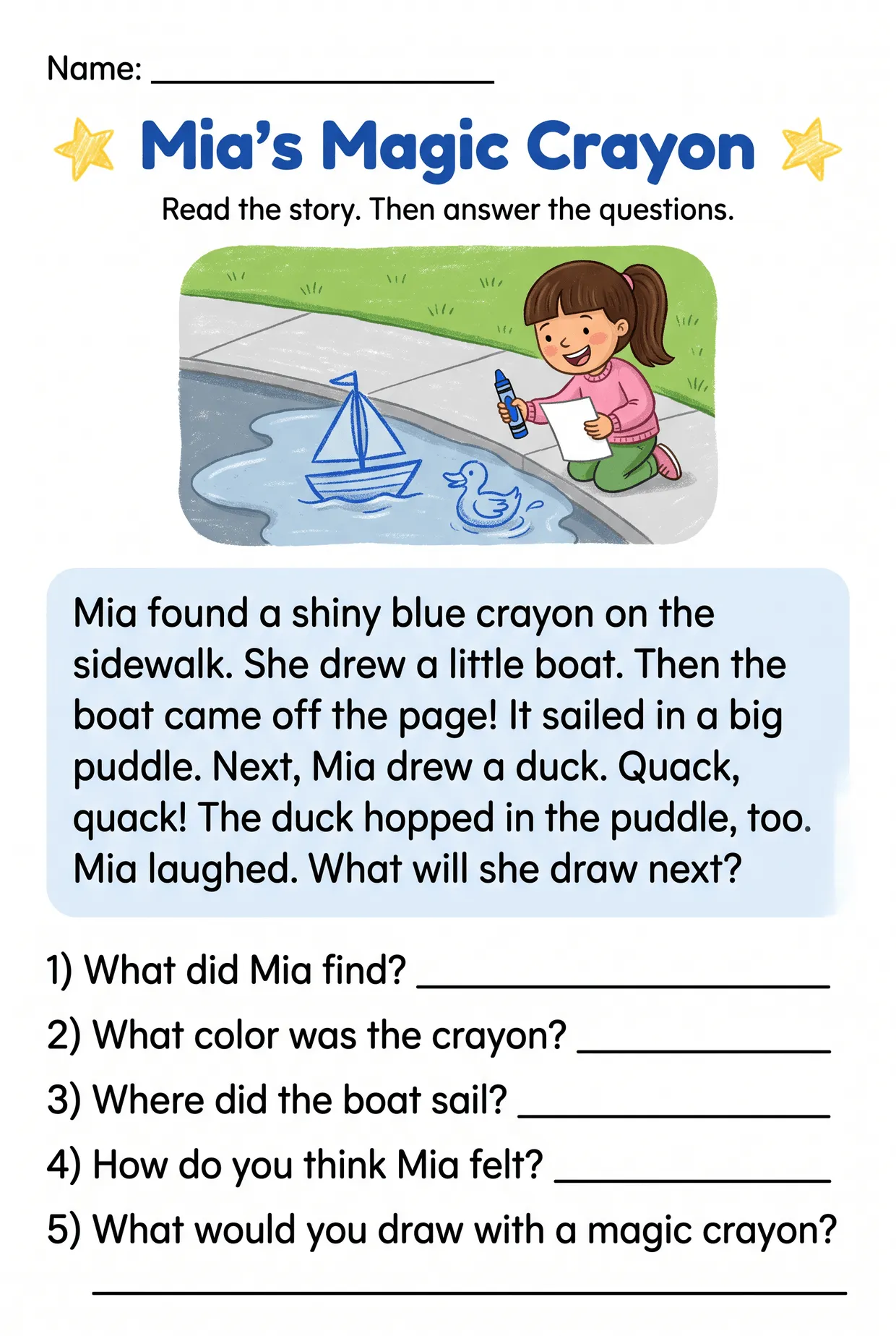
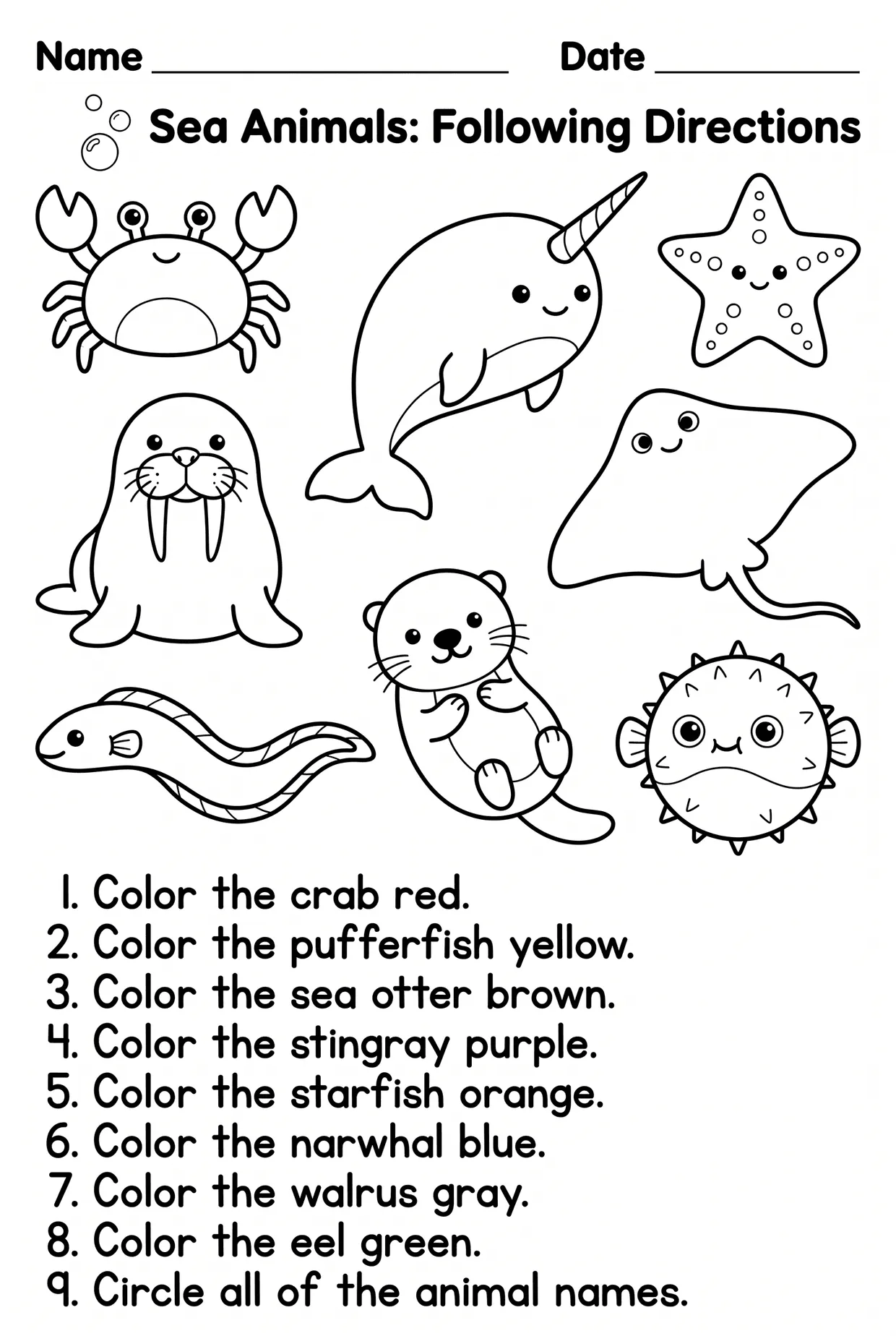
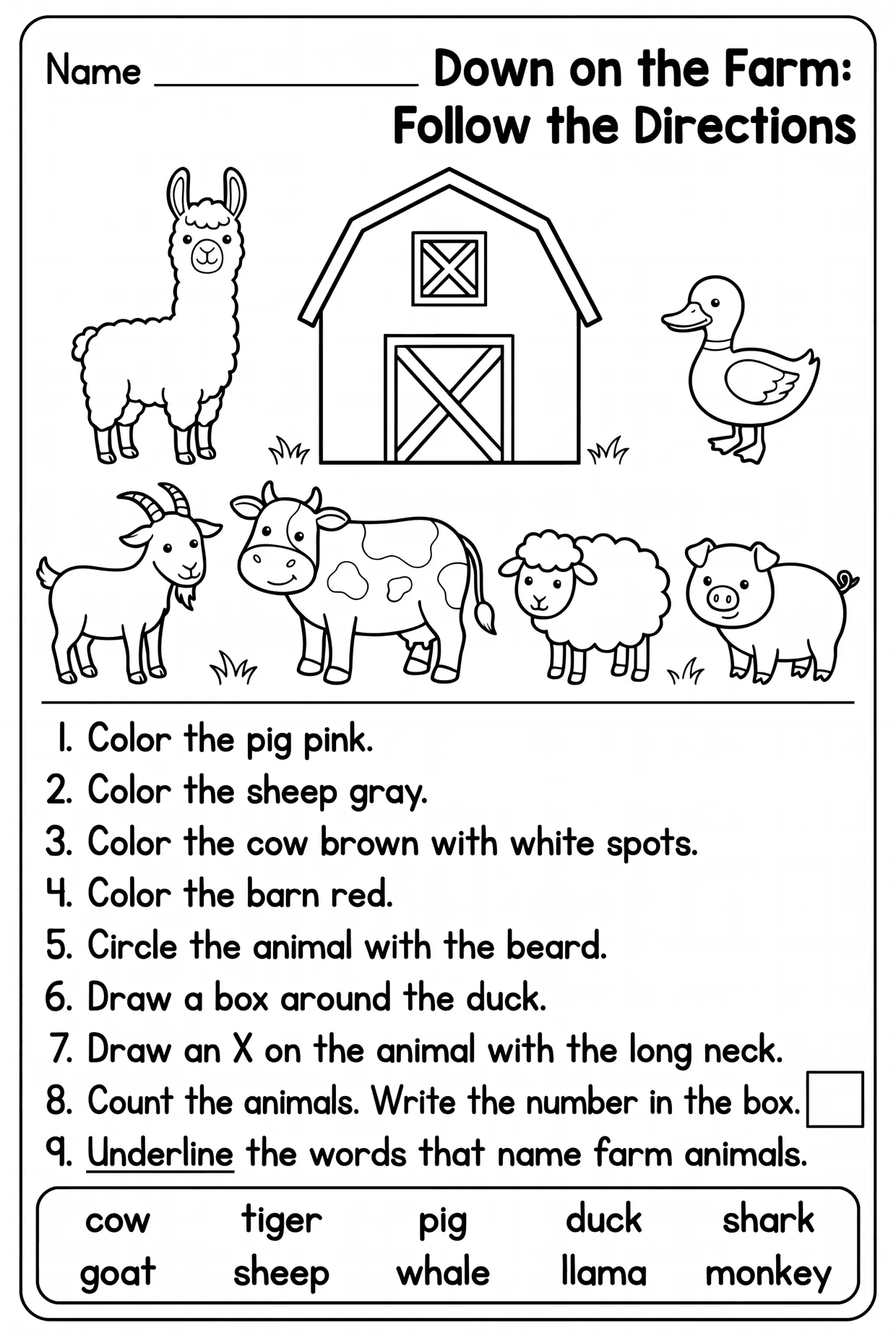
Some pages are worth talking through out loud. The magic crayon story ends with a question answered from imagination, and the kite story asks how Tess feels from what she does. The follow the directions pages for farm and sea animals turn every sentence into an instruction, so a careless read shows up straight away in the coloring.

15 free worksheets 1st grade Newest added September 2026
Free sets on this skill 13 Free Grade 1 Reading Comprehension Worksheets 13
Format
More 1st grade skills 1st grade subtraction worksheets 421st grade nouns worksheets 271st grade addition worksheets 261st grade adjectives worksheets 211st grade pronoun worksheets 151st grade phonics worksheets 131st grade preposition worksheets 111st grade jobs worksheets 10

Questions about 1st grade reading comprehension worksheets

What does reading comprehension look like in first grade?

Asking and answering questions about key details in a short text (RL.1.1 and RI.1.1), and describing the characters, setting and main events of a story. The passages here stay short and the answers easy to find, so a child can focus on understanding rather than decoding.

Should my child read the passage alone?

If they can decode most of the words, yes, but it is fine to read it aloud together first. The goal is understanding, so a shared first read followed by a solo reread works well early in the year and can fade as reading gets easier.

My child answers from memory instead of checking the story. What helps?

Ask them to point to the sentence that holds the answer before they write anything. The zoo trip page is good for this, because its yes or no statements turn on small details, like one animal versus both, that only show up if a child looks back.

Which sheets suit a child who is not writing much yet?

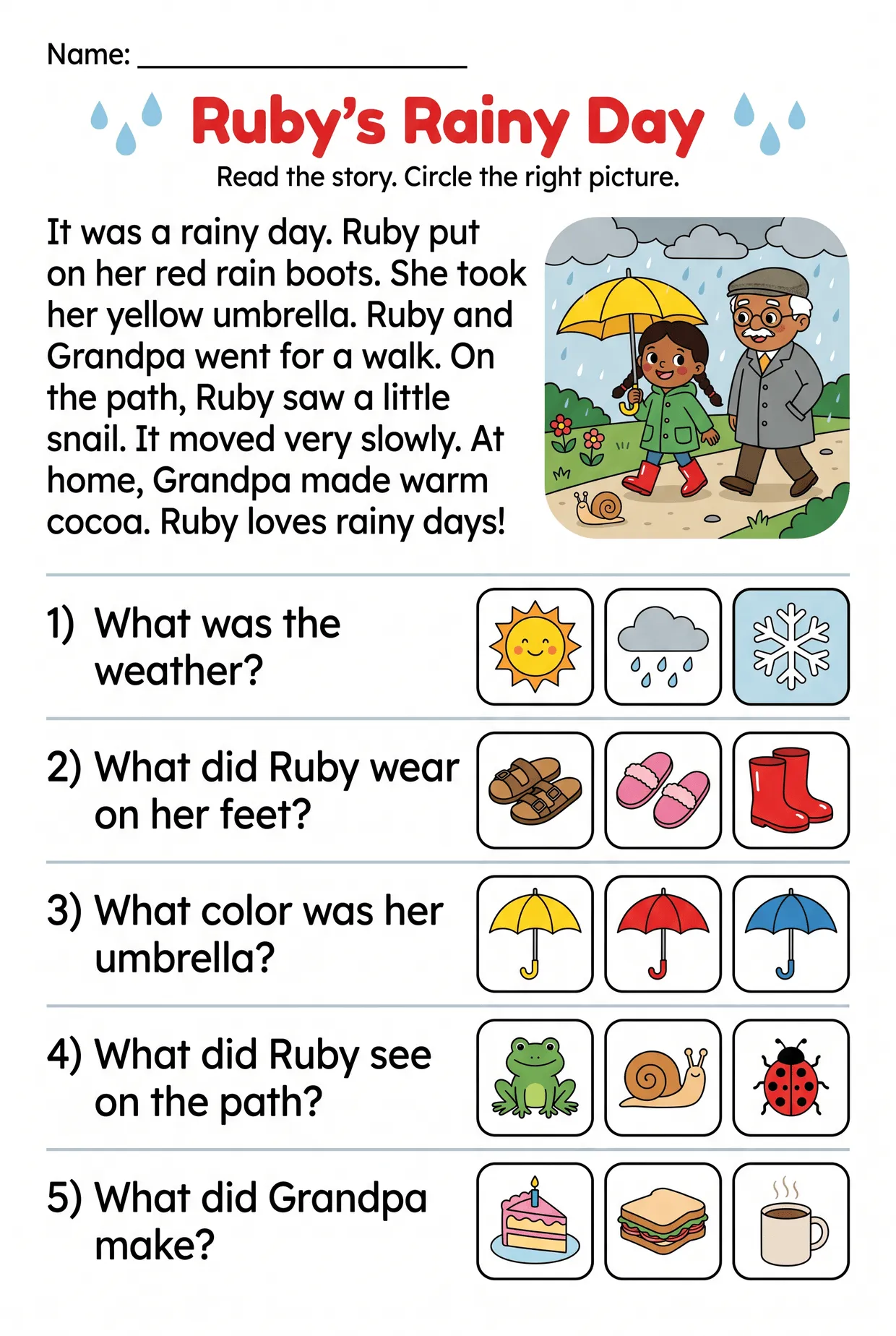
Picture answer and yes or no pages suit them best, then multiple choice. Ruby's rainy day asks children to circle a picture for each question, so a child can show they understood the story without writing a word. Move to the lined answer pages once handwriting settles.

Why mix stories with nonfiction in first grade?

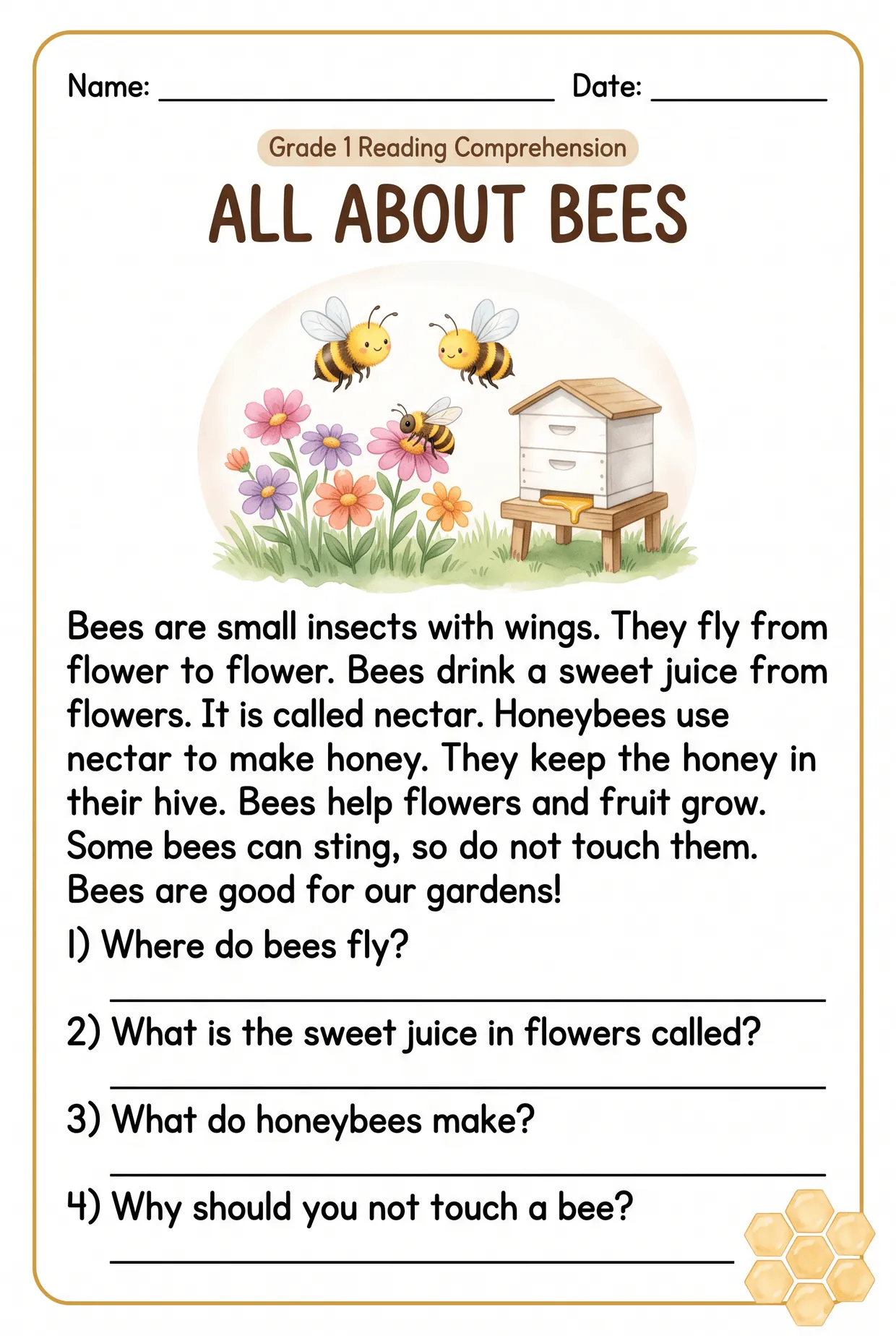
A story has characters and things that happen to them, while nonfiction teaches real facts, like how a seed grows or where bees find nectar. First graders read differently for each one, following a plot in one and collecting facts in the other, so meeting both early makes the switch feel normal.