Free 1st Grade Phonics Worksheets

Sounding out a word only works if a child knows which letters stand for which sounds, and building that match is what phonics practice does. In first grade the words get harder: a reader meets goat and sheep, not just cat and hat, and has to decide which letters make the sound in the middle. Two skills run through 1st grade phonics worksheets on this page, vowel sounds inside words and rhyme.

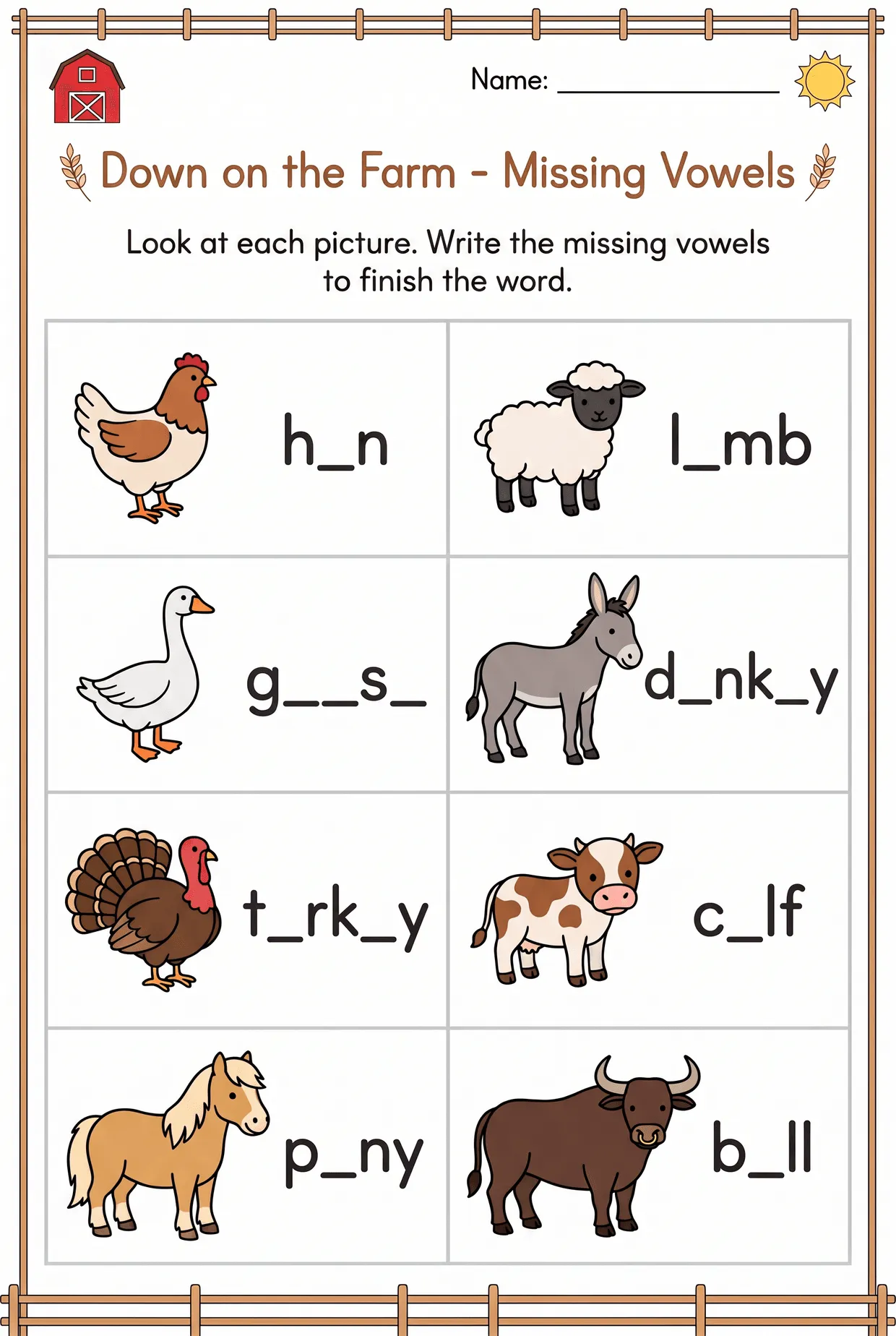
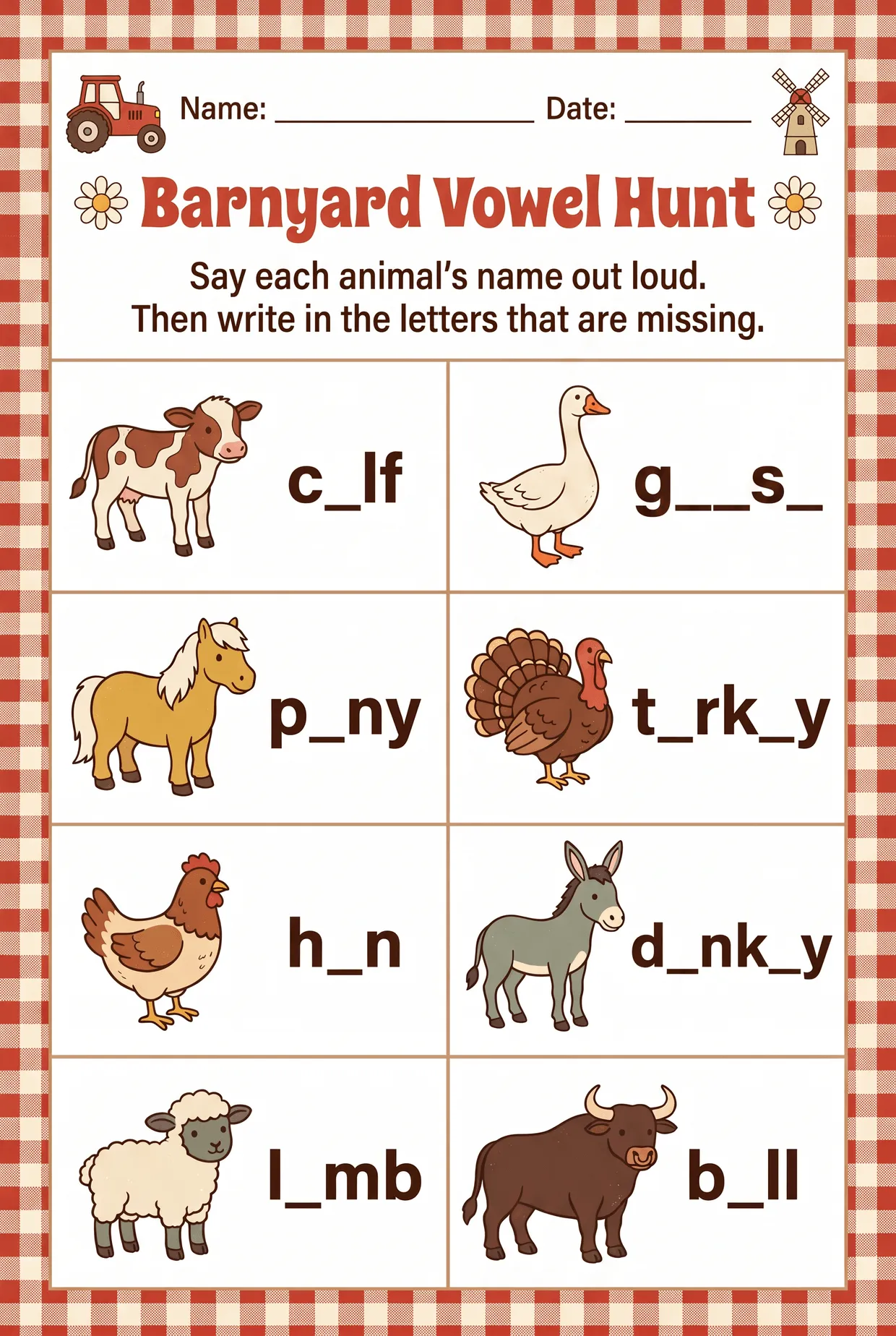
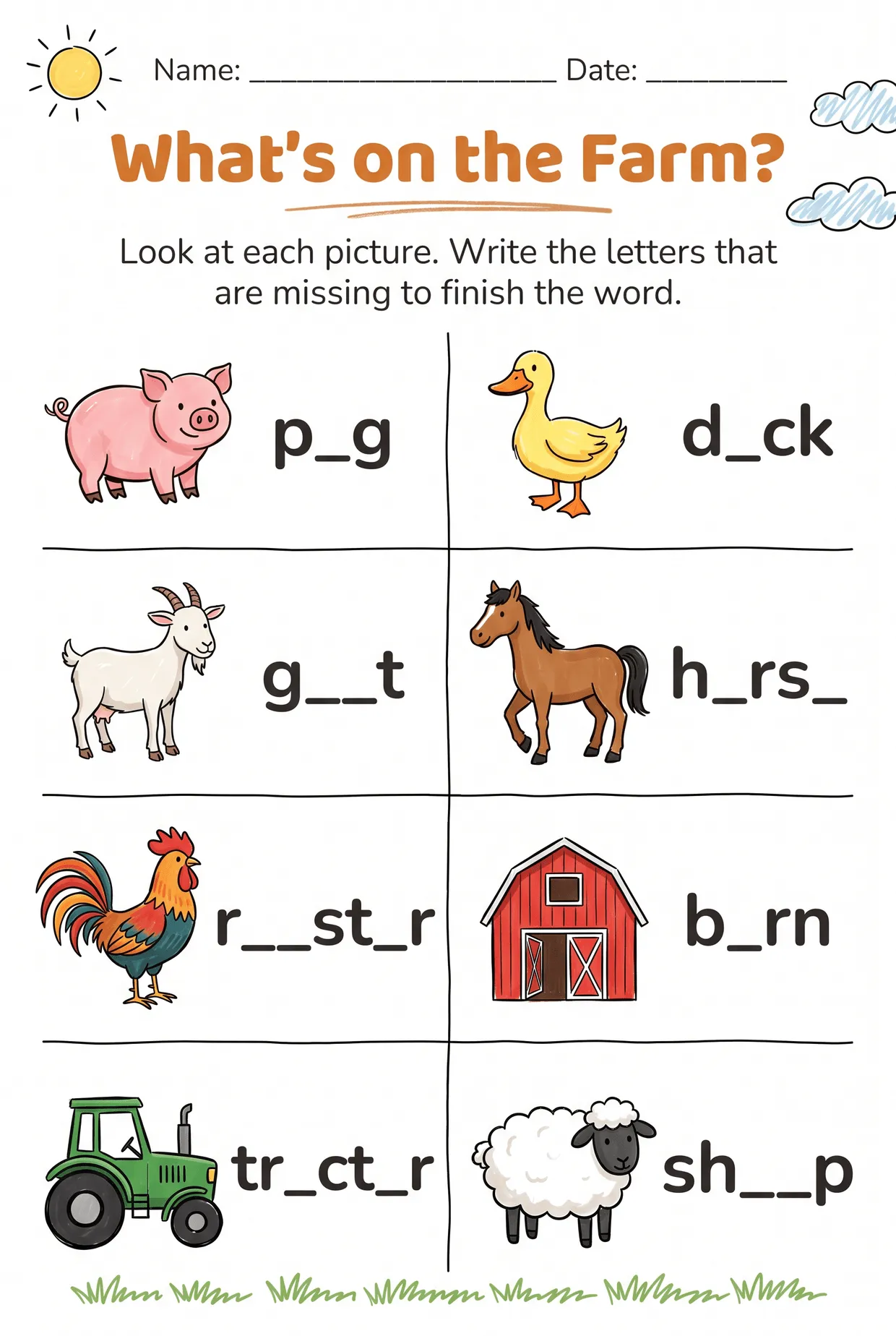
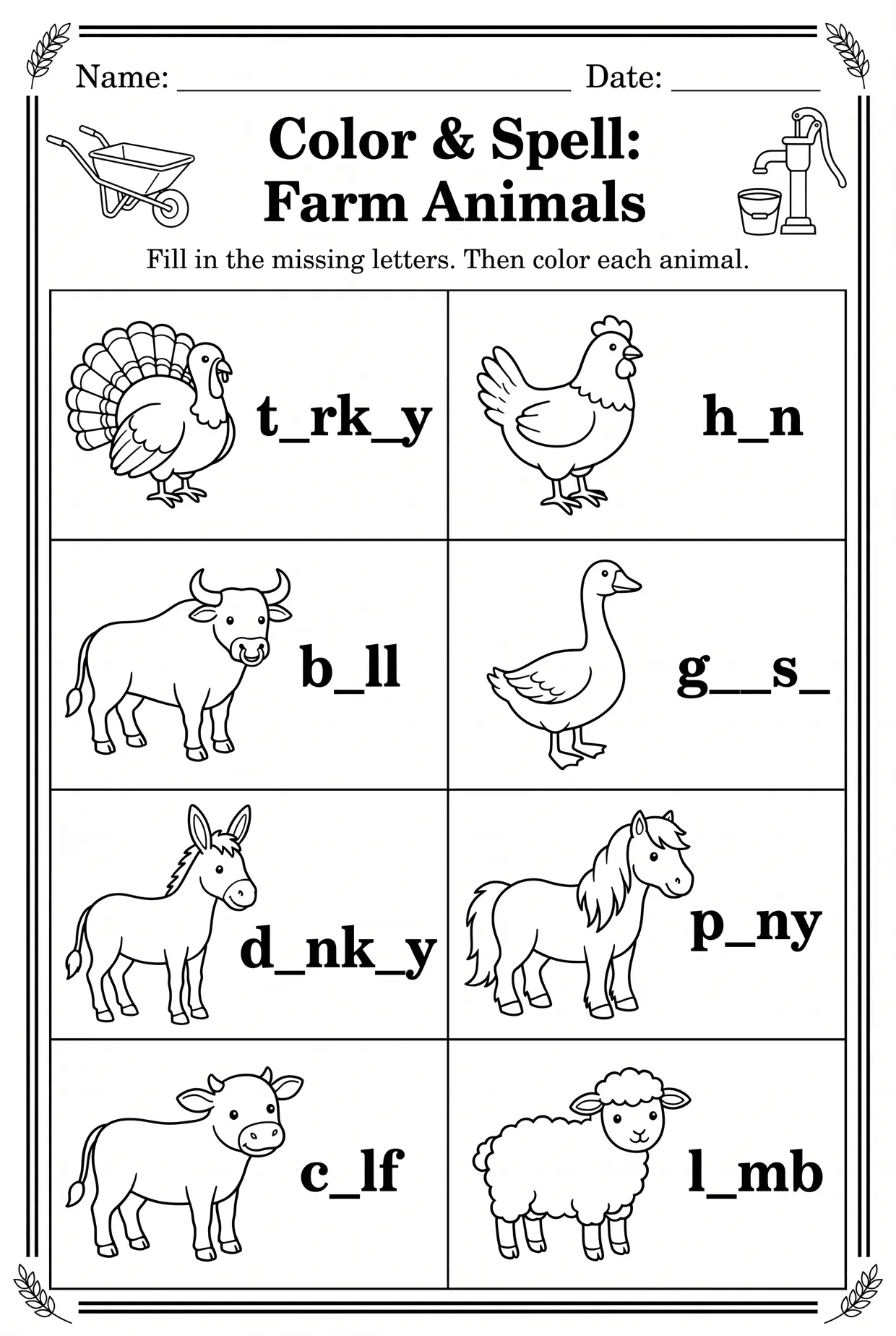
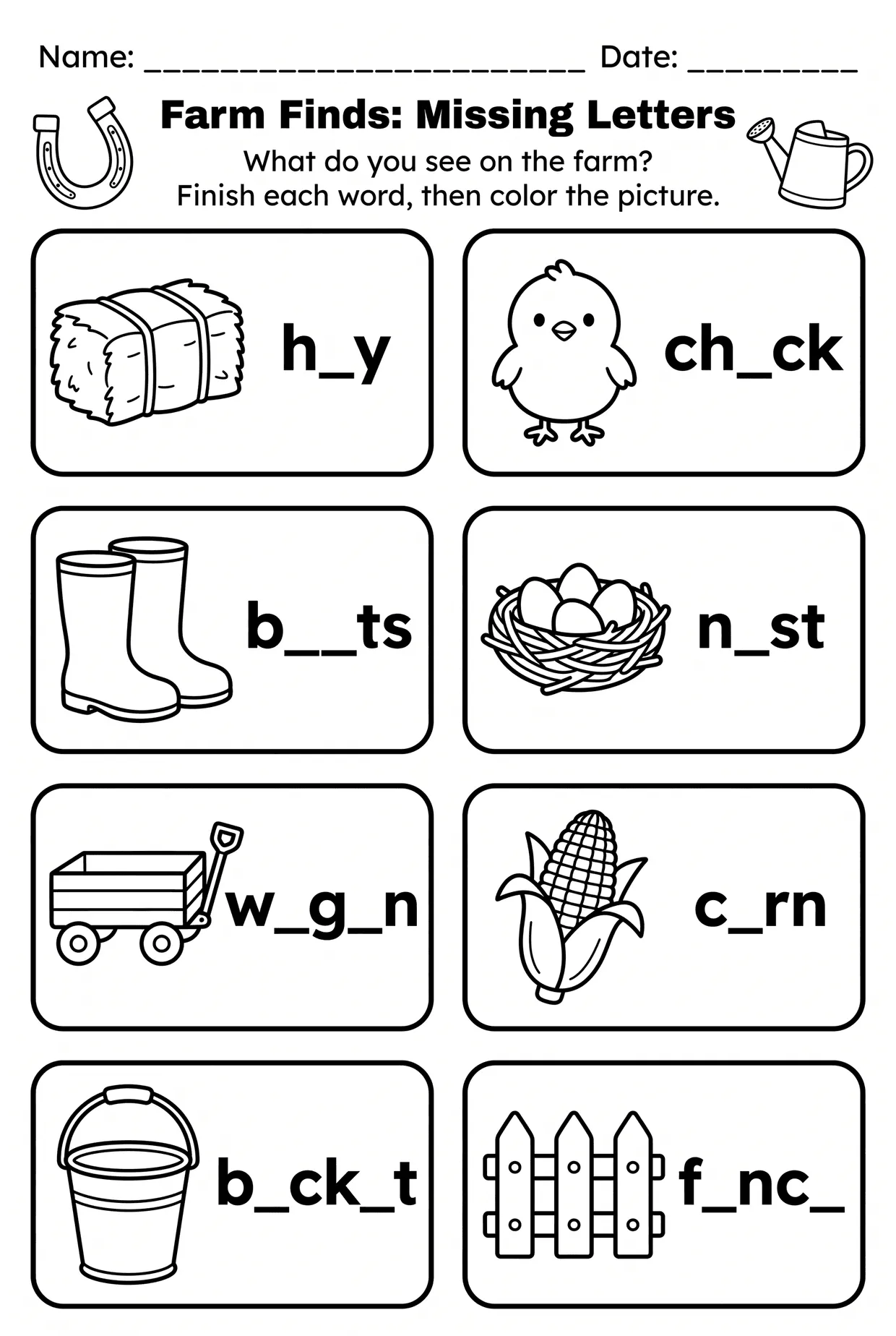
Missing vowel pages lift the vowels out of a word and leave the child to put them back. A picture grid of CVC words like fan, web, mop and bug reviews all five short vowels. The farm pages push further, since goose needs oo, goat and sheep need a vowel team, and turkey and donkey end in ey, so a child spelling by short vowels alone will write shep. Saying each animal’s name aloud first means the sound arrives before the spelling choice. Farm finds like hay, boots and wagon go past the animals. A child who still mixes up short sounds may do better with kindergarten vowels worksheets.

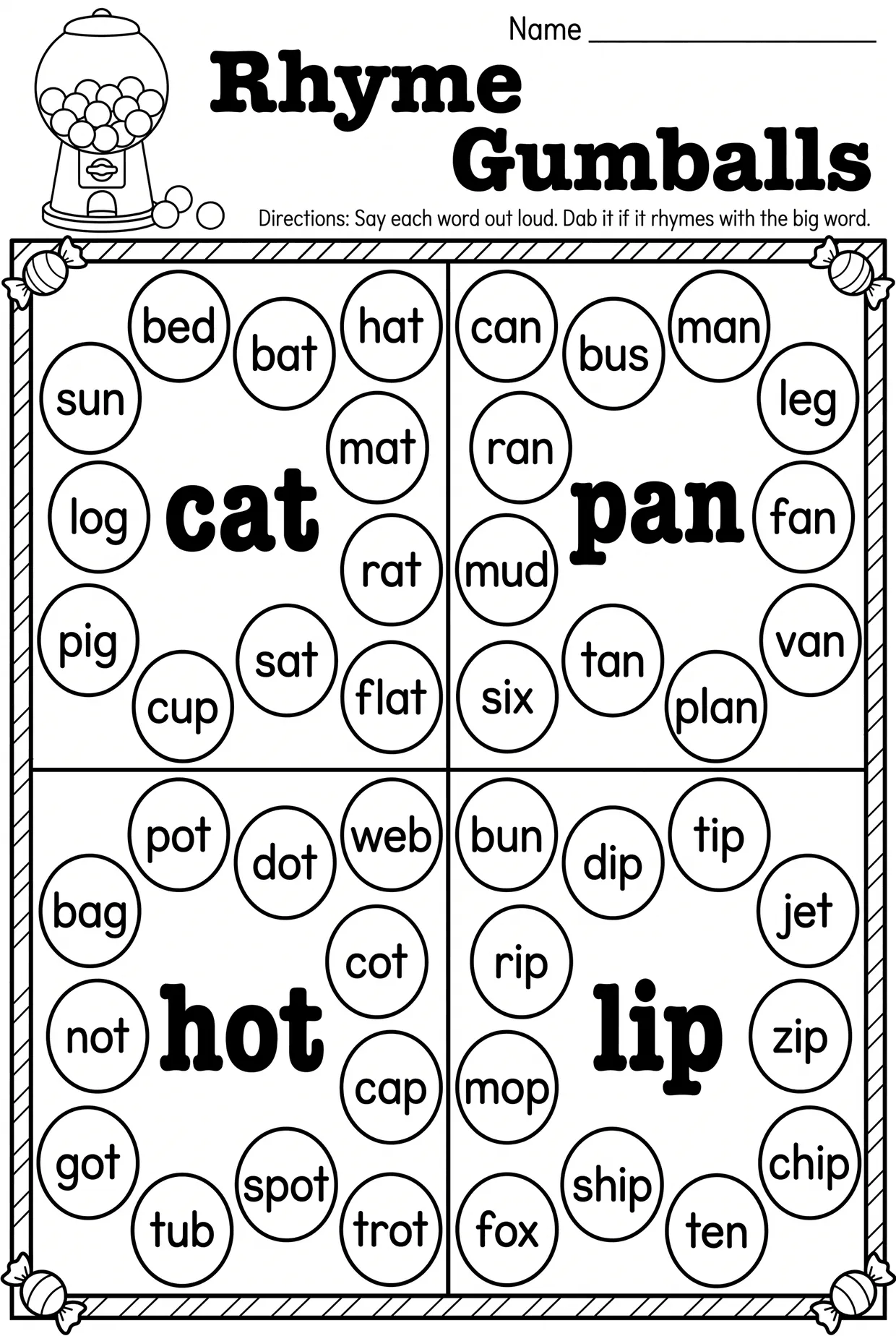
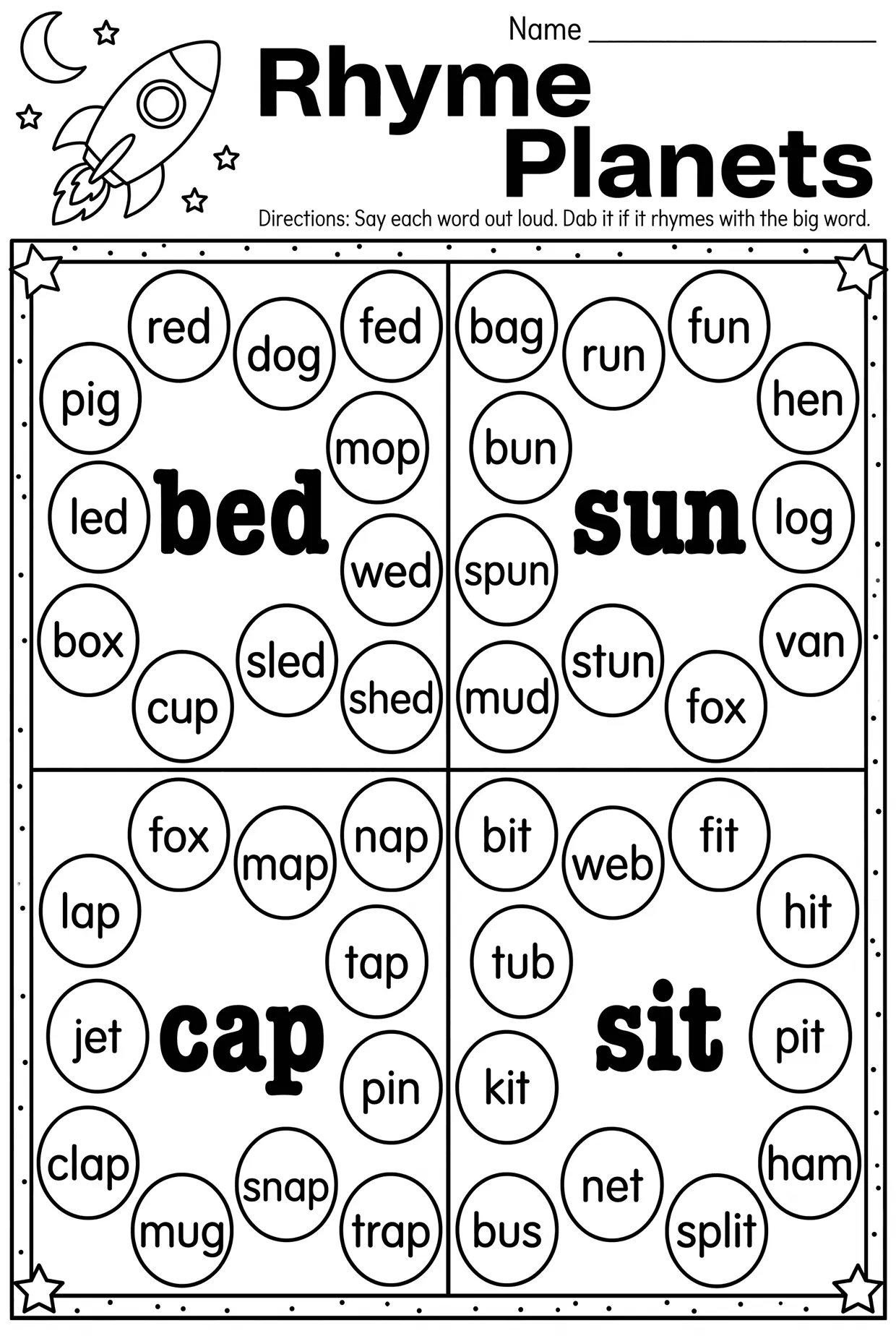
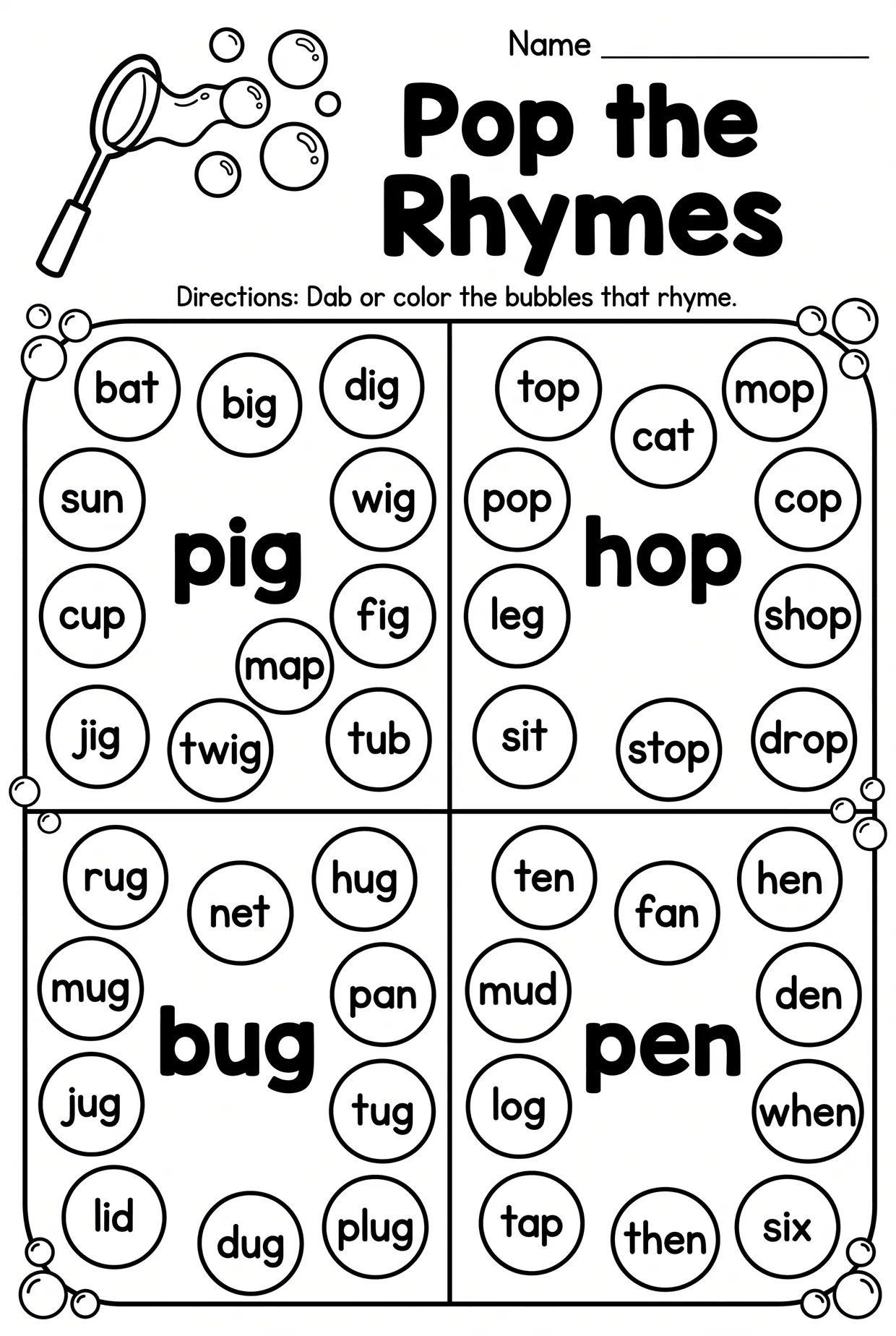
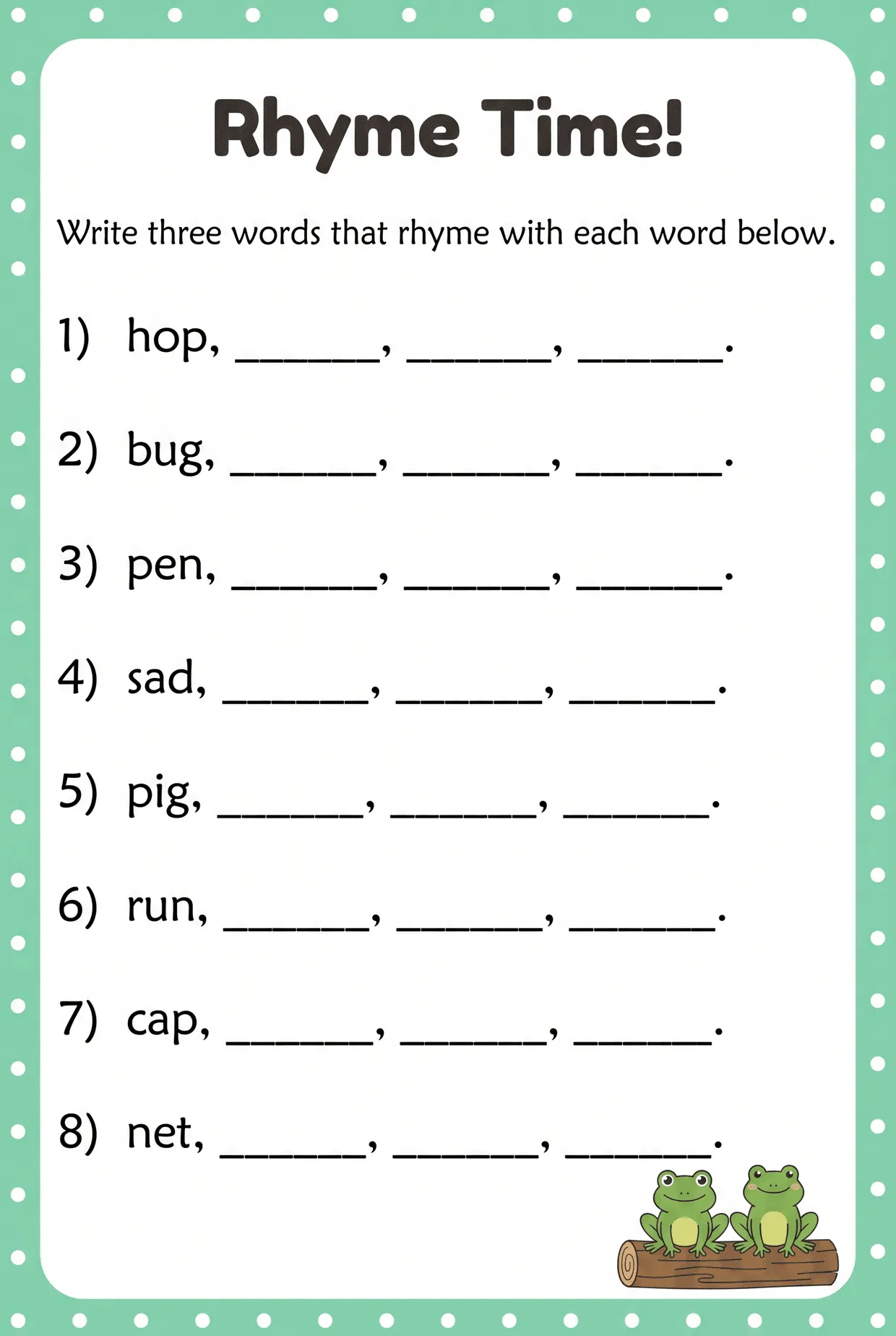
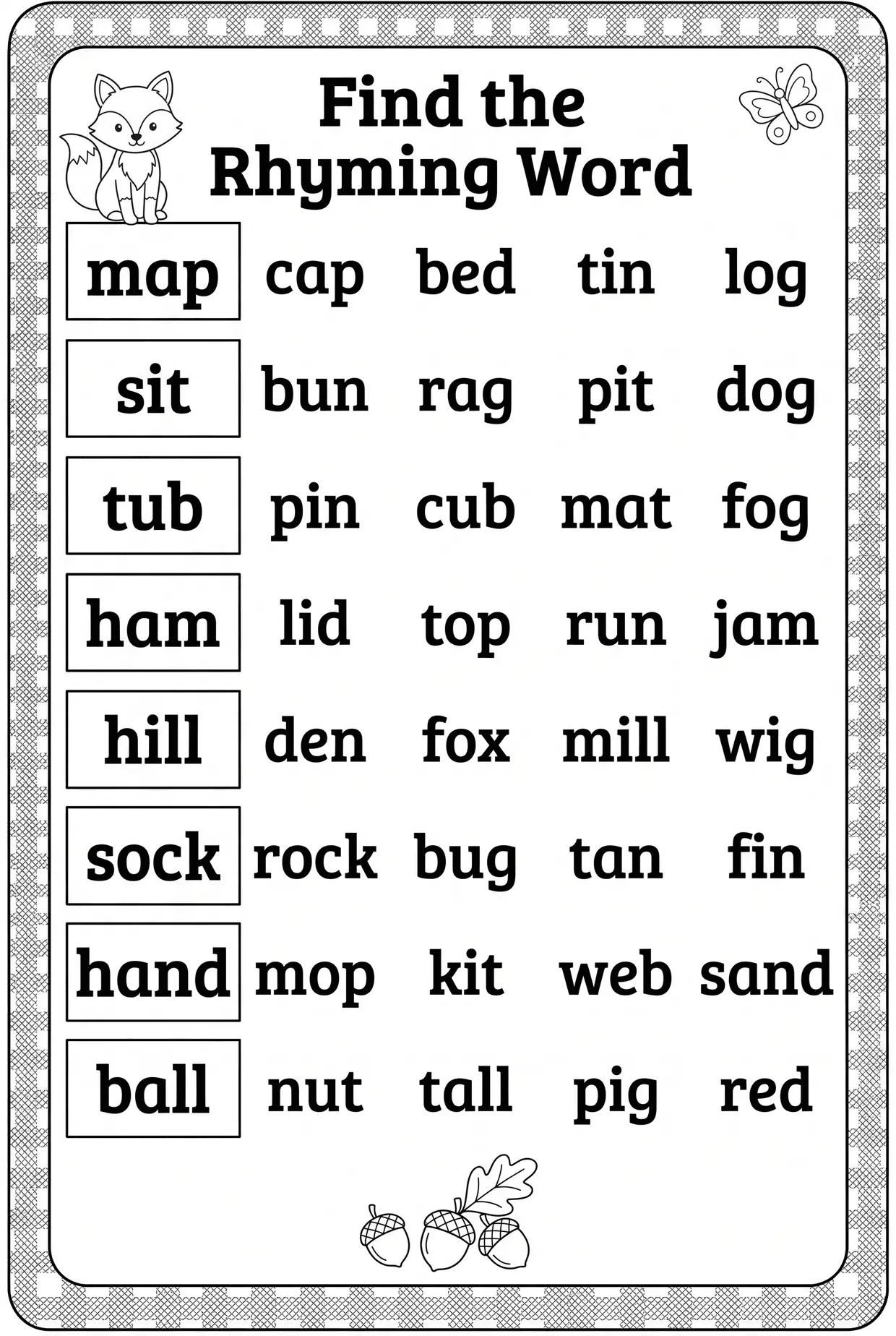
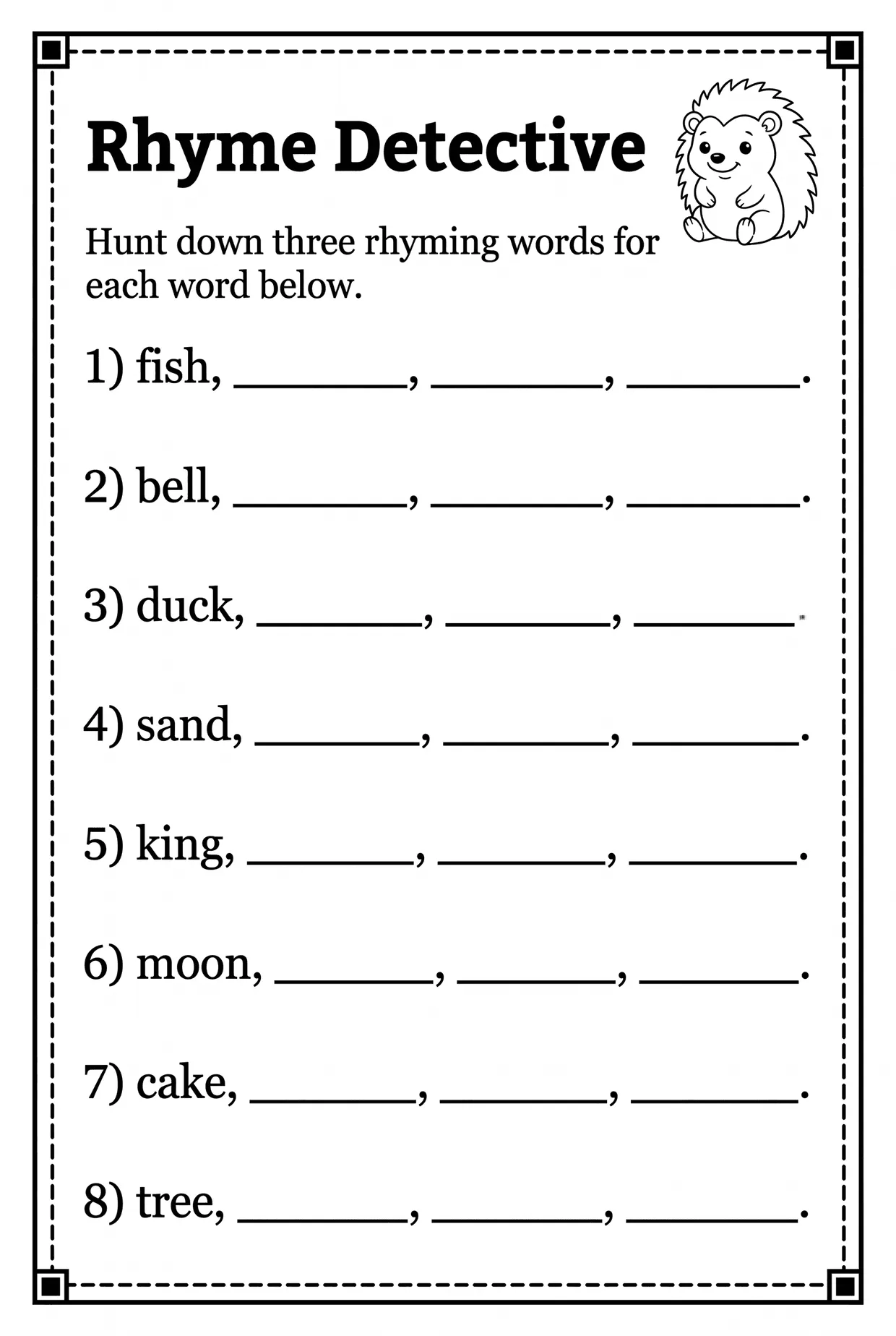
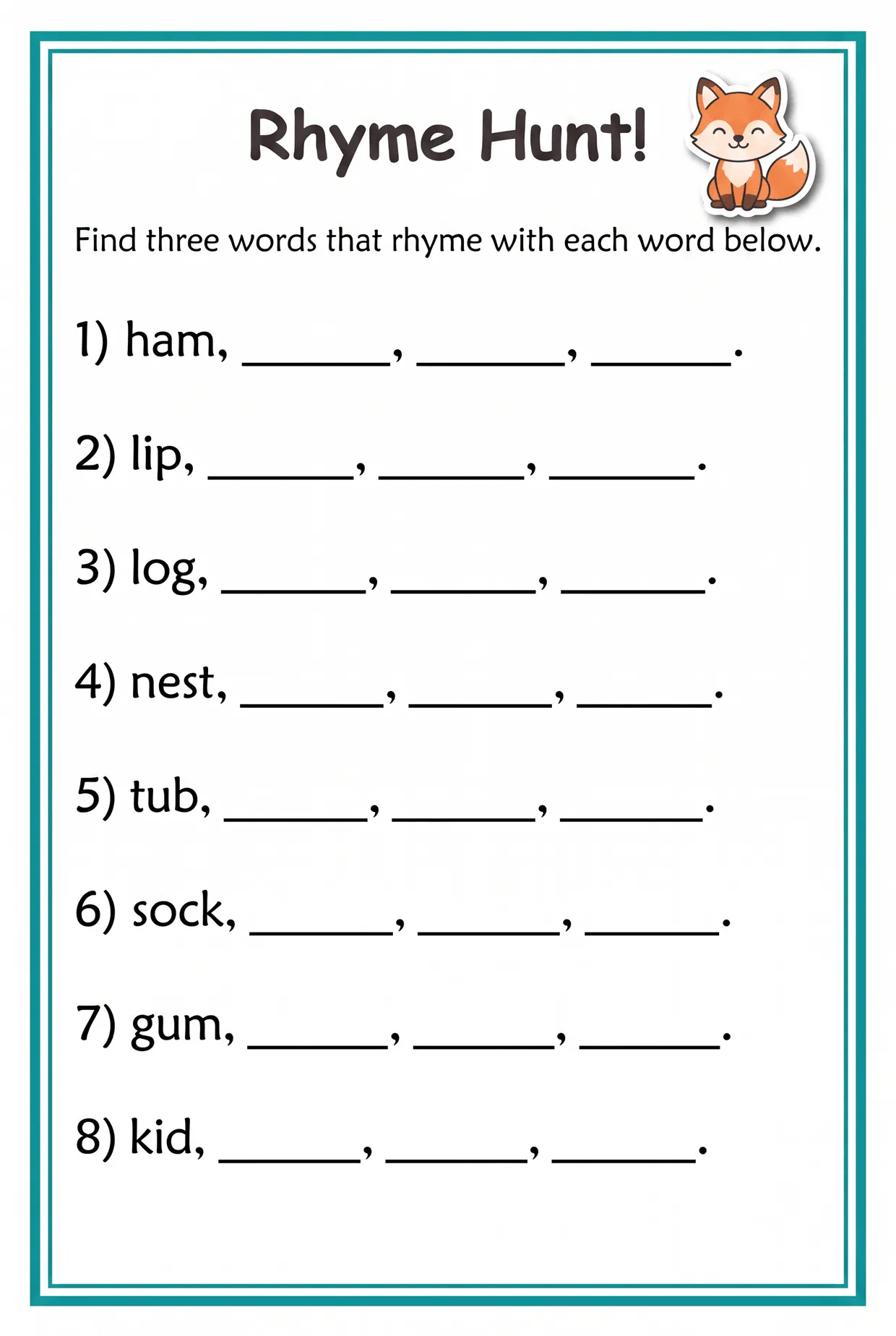
Rhyme trains the ear on the end of a word, the part that word families are built on. Dab-a-dot pages ask a child to find every word that rhymes with pig, cap or hot among words that do not, with blends like clap, spot and shed mixed in. A find-the-rhyme page has a child pick the match from a short list, and the write-your-own pages ask for three rhymes for words like nest, fish and moon, which is far harder than spotting one. Nonsense words with the right sound are fine on a first try.

Short sessions with plenty of reading aloud suit this work. More practice for the year sits in 1st grade reading worksheets.

13 free worksheets 1st grade Newest added August 2026
Format
More 1st grade skills 1st grade subtraction worksheets 421st grade nouns worksheets 271st grade addition worksheets 261st grade adjectives worksheets 211st grade pronoun worksheets 151st grade reading comprehension worksheets 151st grade preposition worksheets 111st grade jobs worksheets 10

Questions about 1st grade phonics worksheets

What phonics should a first grader know by the end of the year?

Common Core RF.1.3 expects first graders to know the common consonant digraphs, decode regularly spelled one-syllable words, and learn that a final e and common vowel teams spell long vowel sounds. Short vowels from kindergarten should be solid by then, and two-syllable words start to appear. The farm pages lean on the vowel team step with goat, sheep and goose.

Why is my first grader still writing shep for sheep?

Spelling by ear with a short vowel is exactly what a child who learned CVC words should do, and sheep simply follows a different pattern. Point out that two e's together say the long e sound, then hunt for another word with the same team, like feet or tree. Expect the slip to linger for a while, since vowel teams take many meetings to settle.

Does rhyming still matter in first grade?

Yes, though the job changes. A kindergartner mostly hears whether two words rhyme, while a first grader uses rhyme to read and spell, since knowing cat helps with flat and that. Producing rhymes on paper, with no list to choose from, is a good check that the ear and the spelling are linked.

Which rhyming page suits a child who is new to rhymes?

A dab-a-dot page, because every answer is already printed and the child only has to listen and choose. Read each word aloud next to the anchor word, like pig and wig, and let the ear decide. Writing three rhymes from scratch is best saved until spotting them feels easy.

Can a first grader work through the missing vowel pages alone?

Most can once the pictures have been named together. A child who reads the picture as cow instead of calf will spell the wrong word with total confidence, so a minute of saying the names first saves a lot of erasing. The rhyming pages need almost no setup beyond reading the anchor word.